Topics / Production
Costume & wardrobe
111 commentaries in the archive discuss this, with 315 total mentions and 72 sampled passages on this page.
Filter commentaries
Filter this topic by the film's decade or the type of commentary.
By decade
Across the archive
ranked by mentions · click any passage for the moment in the transcript
-
-
And I'm Ted Tally, the screenwriter of this motion picture. Thanks for watching our DVD. I got a call from my agent who said Stacey Snider wanted to send me a script. Stacey called me directly. Stacey is the chairman of Universal for those of you who don't know. It said Red Dragon, and I said, "Red Dragon. Is this "the prequel to Silence of the Lambs?" I was familiar with the book but hadn't read it. At first, I was very insecure and said, "Am I like the 'Go-to' guy on sequels? "Why is she sending this to me? 'Cause no one can mess this one up?" And then, I saw Ted's name on it and said, "This is the guy who wrote Silence of the Lambs, "but didn't write Hannibal. "So, this must be special. "Why are they sending this to me? I'm not a dark guy. "I don't make dark movies. I do comedy." -/ think they sent it because you're cheap. - Exactly. So I read it, and I was completely blown away. Not to blow any smoke up anybody's butt in my presence, but the truth is the script was amazing. I called up Stacey and I said, "I want to do this." She said, "Now you get to meet Dino De Laurentiis." And I said, "Dino De Laurentiis "of Fellini fame?" - Scary thought! So I went to his house and first thing he says to me is, "Why do they like you? Who are you? "I never heard of you. What is Family Man, Rush Hour? I don't know these movies." I said, "Dino, I'm a talented guy. Trust me." And thank God, Ted had seen Family Man and Rush Hour, and his kids or someone in his family was a fan. Brett might not have been an obvious choice but Brett is an incredibly talented director and clearly ready to try something new that he'd never done before. He is a great fan of Hitchcock and of thrillers, and brings a tremendous energy and confidence to his work. I was such a big fan of Silence of the Lambs. You know what I was excited about? Most people asked, "Weren't you scared "of following in those footsteps?" First of all, I had three brilliant directors Michael Mann, Jonathan Demme, and Ridley Scott, who made three movies in the exact genre, but completely different. I was excited about it because, by watching those films, I knew what not to do or what I didn't want to do. I was able to decide on the type of movie that I wanted to make. And it helped me choose the tone of the movie. I realized I wanted to make a movie more like Silence of the Lambs. More Hitchcock-inspired. A movie that scared you by what you didn't see more than what you did see. I've read that the most important single decision you make in directing a movie is tone. - Absolutely. Because it's the direction of the film. It helps you with every choice that you make as far as the wardrobe, the production design, the music. The tone, to me, is really everything. Dante calls it, "The language of the film." We have to integrate what we're seeing now, Kristi Zea's set design with its dark, rich color in Dante's cinematography. The choice is even of the props. The integration of all of that, the wardrobe. It's sort of overlooked by people and it should be something that doesn't call attention to itself. But when all of those elements are integrated... Look at this moment here. You get a much more powerful movie if nothing sticks out. If everything is consistent in tone. Special Agent Graham. What an unexpected pleasure. I'm sorry to bother you again... If you see on the left-hand side over there, a little detail, I found this book of Sigmund Freud's office in, was it Vienna? That's where I kind of modeled Hannibal's office. I modeled the tchotchkes, the details.
0:08 · jump to transcript →
-
But I think the actors and Brett were able to sell that scene. Everyone asks me about this shot, 'cause it's in the credits that we used this shot from Silence. That's literally the shot. - Because when we went back to shoot it, that building wasn't there. Half of it was gone. Torn down? - Yeah, half of it. And people are confused as to why there's a mention. Here is Anthony Heald, everybody's favorite slimeball in this movie. He's a wonderful man. - Wonderful guy. He's a great actor. I wanted to make his hair match like it did in Silence, so I put him in a wig. Writing this stuff was a lot of fun for me, because it was revisiting a character I'd already killed off in the other movie. He's someone the audience loves to hate and an actor who's just funny to me. Kristi kind of duplicated... For example, starting from this cell block. See, I had to duplicate Lecter's asylum and the cell block. She no longer had her original design. She had to get the plans from MGM, which is why MGM's name is on the movie. Not only MGM, she had to go to the American Museum of the Moving Image. To get the plans. Because her plan for Lecter's cell is already part of film history. She had already done what was asked for. And there's Frankie Faison... - Playing Barney again. It was so nice of him to do this for us. The only actor who's been in all of them. - Including Manhunter. He's the only actor to be in all of the Hannibal Lecter movies. I didn't realize Frankie'd be in this movie, or I'd have made Barney a bigger part. Last minute I called up Ted... - We only got him at the last minute. I felt terrible when I knew Frankie was to be in this movie, because I would've given him two or three real scenes if I had known it. This was interesting. This was the thing I was most scared of, because this to me was the most powerful part of Silence. These scenes with Tony Hopkins. Well, and you've got to work on this tiny little set. There's not a lot of options as far as angles go. As far as the body movement of the actors and the angles, it's a very difficult thing to shoot multiple scenes. Pretty straightforward. Behind Edward there's light on the wall, that was Dante. I was very resistant to it because I said, "This is, like, underground." And I do want to make it look just like Silence. But there's a stairwell there or something. - There's a stairwell. There is some daylight coming in, but I said, "You've got to justify it for me." He goes, "Brett, there's these little slits on top of..." The bars, the gratings. And the daylight is kind of seeping in. It looks really beautiful. I like the way you've staged Tony Hopkins' re-entrance into the story here. Of course, in the book, this is the first time we meet the character. There has been no preliminary scene and this is his first meeting. This is the first appearance of Hannibal Lecter in literature or in film. This moment. And we did a Iot of tests with his wardrobe because... This is actually, I think it's a green jumpsuit but it photographs blue. I wanted all the elements to stay true to Silence as far as the set, the art on the wall, which we couldn't get all of it, but we got most of it back. It was also before, so he could have had other drawings up. All the details here are very... You know, that sink. Like I said, the art and the wardrobe. lt was a strange feeling to see this set. - It was like déja vu. It was déja vu for me and I wasn't even there. The last time I saw this set had been 12 years ago in Pittsburgh. And now it's actually in a Hollywood museum. The whole set. What Hollywood museum? - Isn't it in... Mark, isn't it in the Hollywood museum? We can go down and check it out. We should go see it. They have pictures from Silence. This stuff... Tony did a great job here. When I met with him, he said something great to me. He said, "I've done this shock already." I said, "Your relationship with Edward's character "is much different with Will Graham than it is with Clarice Starling "because this is the guy that put you away, that captured you. "And you can't be your old, charming, regular self here." It's strange to play a monster that the world has fallen in love with. And one of the challenges in this movie for Tony and for us was to sort of put the teeth back into this character. It's easy to make this character baroque because this character's so loved. Tony does incredibly well in this scene. If you watch the close-up here, on the big screen, he's literally tearing here, he's so angry. The fire's coming out of his eyes. He's really... There's tears in his eyes, his anger's so intense here. And Edward, I got to be honest, I was a little nervous, I had a lot of discussions with him, I said,
28:30 · jump to transcript →
-
This is one of my favorites. This was, like you said, is it easier to do the visuals? Not a word in this scene. Originally, there was dialogue. I said, "Let's just try to sell it in their faces." Now she's having to defend herself. He's brought this horror into his family. - And she totally sold it. Atlanta P.D. nailed him. Phil Seymour Hoffman has nothing to do. He's just being slimy. He's just dropping cigarette ashes everywhere and slumped in the chair and... I'd like nothing better than to see the dirt sandwich pulling five at Leavenworth. But maybe there's a better way to handle this. Yeah? What's that? I think we ought to give him a story. The Tooth Fairy's ugly, and he's impotent with members of the opposite sex. This guy on the left is Alex Berliner. He's a real paparazzi from all the premieres, everyone recognizes... This is the one guy that takes everyone in Hollywood out of the movie when they see him. He's a real paparazzi who harasses them at every premiere. That's a tip we got from Dr. Lecter, by the way. So it's true that Lecter's helping with your investigation? Anthony Hopkins actually came down to the set on this day. I'm like, "What are you doing here today?" He's like, "I just wanted to see Philip Seymour Hoffman work." He's such a big fan of Philip Seymour Hoffman's, that Tony came down just to watch him work. Actually, Philip reminds me of a young Tony. Same kind of discipline, same kind of focus, same kind of preparation. I found out later that Tony reads the script like 250 times before he shoots. I feel like Philip does the same thing. I didn't ask him, but it seems that way. He's so prepared. He comes knowing... He comes with his character kind of in his bones. If my story draws the Fairy in an attack on Graham and you nail the scumbag, I get an exclusive. Fuck you, Lounds. I think that's Philip's own wardrobe. It's very distinctive. All right, it was a pleasure doing business with you, chumps.
1:08:08 · jump to transcript →
-
-
director · 3h 43m 4 mentions
The Lord of the Rings The Two Towers (2002)
Peter Jackson, Fran Walsh, Philippa Boyens
-
that we wanted to re-establish the concept that Saruman's army was growing bigger by the day, therefore the threat was growing bigger. This is a woman, this one, isn't it? Yeah, the orc with the long neck. She's fantastic. The orc with the long neck is a great-looking orc, and it's actually a lady inside there, yeah. Quite a few of the orcs are women, you know, they're not all blokes. What are you saying? I don't know what I'm saying. They didn't bring their own costumes. This scene establishes the whole concept of Fangorn.
20:41 · jump to transcript →
-
We had all these extras were brought in from the various farming communities within a sort of 50-mile radius of the set. Well, they were amazing. They got up at 2 in the morning to get on a bus in Christchurch to be driven to the set. And that would be two or three hours of travel. And then they would be in wardrobe and makeup at 6 in the morning or something, ready to set by 7.30. So they really didn't sleep, those extras. No, they were fantastic.
1:36:09 · jump to transcript →
-
to find an opportunity to make sense of that because it's also a beautiful line reprised by Sam in this extender cut. Sean Bean's wearing his costume from the Fellowship of the Ring here which is the linking component that I really like that you know the first time we see him in Fellowship is when he gallops in through the Rivendell gates and he's wearing the same outfit and this is him heading off on what would be a five day journey between Osgiliath and Rivendell. We always wanted to have a scene
2:22:21 · jump to transcript →
-
-
-
You got off lightly with the costumes. - Me? Yeah, you. - I had one. Well, then I got screwed. Why? - With my second costume. I remember some producer trying to get him into a beige cardigan. What was it? - Yeah. Yeah. That was the first time I ever met you. That's right. Horrifying. - Yeah, I think Richard had brought in.... We were talking about how much rain there was going to be... ...and all of that. And so he comes in with a... I think it was a beige sweater from... I think it was, like, a Gap sweater. I wasn't liking it. No offence to Richard. That was quite funny. We used to have meetings about whether we should shave you or not. We still do. - Oh, we did. What, shaving my face, my head? Do you know we had conversations about that? We did the test. We did a test, you still had the scruff... But it looked stupid. With the lighting, it didn't look right. I agree. No, actually, I remember, because we... - You couldn't decide. You were so damned attractive. Because we went up to my room, and we checked oult.... We checked out that tape. And there was some younger pictures of you. Oh, yeah, those horrifying... - No, you looked nice. I think I didn't decide to actually shave your beard until the day... ...of the first-- The first day. - Pretty much. Who's that? What's going... - That's your best friend. Have you seen this movie, Scott? - Who is that guy? What was his name? - Oh, him. Erwin. Erwin. - Erwin Leder. Loved him. - Erwin, the set poet. How do you pronounce his name? - Leder. Yeah, it is, right? - Yeah, I guess. He wrote, like, three poems a day. He did? - Yeah, he did. Did you read them, ever? Well, a lot of them were in German, so I had a good try.
17:50 · jump to transcript →
-
Oh, and you weren't here for this whole... Were you very glad, because the other babe was there? Yeah. That helped take some of the pressure off... ...but the-- Well, actually, this whole costume, we had a "wardrobe flaw"... Her whole boob escaping. - ...aS Janet Jackson would say. Poor you. Poor baby. - I rushed in as soon as I heard. Yeah, you're really good like that. How have you done that? That's CG, right? That's CG, which I don't think you've even seen yet. We shot that practically, and it just looked horrendous. It looked like three blind mice kind of popping up. And this was all a reshoot that we did. - Oh, really? Yeah, this was all back in L.A. We had a good time. It was just blood and guts. That's me throwing the paint across the window. Oh, is that you? - Yeah. Can you do a bit, like, when my coat flaps around, you're flapping it? That's the prop guy. - Very hands on. Yeah. What were you thinking right here? - "Is it nearly lunchtime? Should I buff my bottom? Am I gonna worry about my camel toe?" Remember how many people were on camel-toe watch because of that suit? No, it became "CT." I would just yell out, "CT," and, "Okay!" There were four people who made it their mission. This is new. This is a new shot here that's just showing Speedman... ...dreaming about the Olsen twins. And so we had some flashes that were supposed to happen right there. This is in the original. Coming up, there's a section where Viktor takes out some of the implants... ...and you see him unhooking himself from that stuff... ... that we had cut out of the original. This isn't it, right? - Yeah, this is. These shots, though.... These, I did all those in post. None of those shots... We didn't take any of the lights down. lt was something we did as an afterthought... ...and just darkened it to make it look like all the lights went down. It actually worked okay. I was worried I wouldn't catch it. I didn't have my glasses on. I couldn't find the takes to put on the outtake reel, but... There weren't that many, because I'd been practising like crazy. Oh, it didn't show. - Oh, really? Look at that. Yeah, look at that. Look at that now. - I was so proud of that. lf someone throws something at me, I tend to duck and wince. The amount of windowpanes we had to replace in the background.
1:14:38 · jump to transcript →
-
He'd try that, though. He'd try to get the scarf and maybe a little piece... ...of jewellery or whatever. - He'd come out... ...of the wardrobe trailer, "And what do you think about these bracelets... ...and these earrings?" I was like, "I don't think it fits with your character." He liked that pink spectrum and the fuchsia. Remember when he kept coming out... He wanted to wear the eyeliner... ...and with the eye shadow... - Which would've looked so dumb. No. Like, "Scotty, nobody else is wearing lip gloss." So.... And also, remember, he wanted, like, the really blown-out hair, like...? You know, he wanted his hair longer. Yeah. He had this obsession with the whole Dukes of Hazzard... ...and getting that very.... Maybe we shouldn't out him like that. - Of course I should. His own daughter. He was a chick in the movie, and he didn't get any of the cool chick stuff. I can understand him being upset. - No, I can too. He'll have a pocketbook next time. He'll come into his own in the sequel. He's gonna have Hello Kitty accessories head to toe. Nice pink boots. Great hair, though, right? - Yeah. It was worth fighting with him on that one.
1:36:54 · jump to transcript →
-
-
-
And they also worked very well with Beatrix Aruna Pasztor, our costume designer. And this is the one scene in the film that I think is a nod to the costumes from Peter Chung's animated series. Yeah. Because in the animated series, Æon Flux wears very little and bears quite a lot of skin.
12:23 · jump to transcript →
-
in the look of her character, in the costumes, in the hair. And I think it's also interesting to be able to see the post-production process of being able to work with digital color timers at E! Film to create this interesting enhancement of the character so that you're always wondering, is she real or is she
13:49 · jump to transcript →
-
I also just want to kind of just point out the team who came up with, you know, again, like Gale said, in the animated world, it's so different. And Beatrix, you know, did such a great job with the costumes, but also the hair that was created for Æon Flux. Absolutely. You know, the animated series.
40:02 · jump to transcript →
-
-
-
just because when you spend that much time on something, you start to amuse yourself. And that mannequin, that girl that we focused on, became a big thing. I remember in pre-production, our costume designer, you know, we knew we were looking for mannequins, and he was walking by some clothing store on Broadway and saw her and thought, she's the one. We've got to have her as the mannequin. And I remember it became this big ordeal because there was this shop owned by this Italian family, and Akiva, your assistant, spoke Italian, and so she went down there to go speak Italian and say that their mannequin could be in this big movie.
20:44 · jump to transcript →
-
went out and spent a day. Some very cool stuff. There is some really cool stuff in there. And interesting, good scene work, too. And nobody notices the wardrobe jump. On Elisi, right. Because of time passage. Yes, exactly. Although, God, I seem to remember we were concerned about it. Yeah.
1:13:07 · jump to transcript →
-
then Akiva, you wrote the speech, which was great, and then we decided to name Willow's character Marley, and we started to use the songs, and I'm just so excited that we got to use, nobody uses Bob Marley songs in movies. And it's unbelievable, and especially Redemption Song, we get Redemption Song in there as... There's a little costume gap there, that's actually the, he's wearing the shirt from the first day, but we decided to... Tweaked it in the DI. Yeah, a little bit.
1:17:22 · jump to transcript →
-
-
-
Tom Hooper
There we go, a reminder of where Valjean came from. And Paco Delgado, our wonderful costume designer, was brilliant at capturing the look of the convicts with their sort of faded, distressed clothes that really felt they'd been worked in for years, not just made yesterday. He had a whole aging department to make that possible.
40:11 · jump to transcript →
-
Tom Hooper
And we took inspiration from the tradition in the show of Thénardier having an old military costume. In the book, he actually makes an appearance at the Battle of Waterloo where he steals stuff from dead soldiers.
48:59 · jump to transcript →
-
Tom Hooper
in the Richard Attenborough stage. And I basically said to the students and the extras, you know, build a barricade action. And they ransacked this set for every bit of furniture, every table. There was furniture being thrown from the windows, which they were ducking. It was kind of mayhem. And the camera operators were basically disguised as citizens and peasants and with their cameras wrapped up in bits of old cloth. And the focus putters were also dressed in costumes so that they could be immersed in the action.
1:39:23 · jump to transcript →
-
-
-
These ancestors and their costumes. Oh, by the way, there's a werewolf back there. Maybe you can see. There's a nice little Easter egg. But because in many of the sagas, Vikings who are berserkers have some werewolf blood in the family. But in any case, the Oseberg Tapestry is, you know, one of the few stories that's actually from the Viking Age, not a story in the sagas that has...
15:24 · jump to transcript →
-
her costume, which is probably the most theoretical costume in the movie. This headdress is based on bridal headdresses from a later period in Ukraine, but we tried to do our own spin on it and make it more primitive. And these cowrie shells
32:01 · jump to transcript →
-
you know, mild insecurity is nowhere to be seen here. And so I hope that you feel that Amleth has a formidable foe. The Valkyrie costume,
1:46:10 · jump to transcript →
-
-
-
David Kalat
It's a wonder he even made it that long. Playing Godzilla was no easy gig. At the end of each shoot, he would drain a cup's worth of his own sweat out of the costume. During the course of production, he lost 20 pounds. Both he and Tezuka suffered heat exhaustion, experienced blackouts, and that was on a good day.
57:43 · jump to transcript →
-
David Kalat
The costume was built by the Yogi brothers, who erected a frame of bamboo and wire mesh and then proceeded to layer latex rubber onto that frame until they built up the creature to match Taizu Toshimitsu's model. They called in Haruo Nakajima to do a fitting and a trial run. He came to the workshop and crawled into the costume through a slit along those famous dorsal plates. The instant he was inside, he started to stifle.
58:03 · jump to transcript →
-
David Kalat
He could barely move at all and began to panic involuntarily. He managed to take just a couple of steps before he fell over and had to be extracted from the costume by anxious special effects guys. That first suit was just impractical. It weighed over 220 pounds, for Christ's sakes. Not willing to throw it out, Tsuburaya had it sliced in half. Top half used for scenes in the bay as Godzilla swims around, and the bottom half was fitted to a pair of suspenders that Nakajima could wear like a pair of giant clown pants as he trampled the streets.
58:27 · jump to transcript →
-
-
-
Alan K. Rode
She then became a presence in Republic westerns like Hellfire, but as she told Eddie Muller, Republic mogul Herbert Yates was, quote, too busy chasing communists to promote his films, unquote. Marie played a lot of bad girls, but her turn as Sherry in The Killing was something special. She invited Kubrick and the cast over to her house for dinner and noted, as many people did, that Stanley's limited wardrobe was worn everywhere he went. Clothes and his own appearance didn't matter.
11:34 · jump to transcript →
-
Alan K. Rode
but wardrobe for his actors did.
12:01 · jump to transcript →
-
Alan K. Rode
And here we come to the abrupt end of a very bad marriage. And Marie looks stunning in that black negligee. She's just a delicious package of sociopathic desire. Her wardrobe makes me recall Eddie Muller's line about Marie's superstructure, quote, statuesque with a balcony that could support a double run of pinochle. Indeed. We had to be stupid.
1:16:09 · jump to transcript →
-
-
-
Francis Ford Coppola
And then the sun would come out and we'd shoot and shoot, but it took us a week to shoot this scene because of that. And the great trauma I remember is if you look at Lee Strasberg's shirt, the great trauma that since we were shooting it, waiting for the sun and trying to come out, one day his shirt disappeared and no one knew what had happened to it, but it just vanished, the costume, and they didn't have a second one and we were stuck because half the scene was shot in it. And so they got a white sweater like that
1:21:39 · jump to transcript →
-
Francis Ford Coppola
And I think, realize what a tremendous costume job that this was. And, you know, to do it out of a number of different countries where the resources, you know, were all these clothes made there, were they shipped there? I don't even know at this time, but I can just see from looking at the movie what a lot of work it was for the people who did it.
1:44:28 · jump to transcript →
-
Francis Ford Coppola
I guess we were on a dolly on a building across, you know, either on track. In this case, the camera was on the dolly track. And maybe it was on a dolly track across from the building so we could move with it. Fanucci had a good costume. I like his costume here. These are, of course, the puppets.
2:00:17 · jump to transcript →
-
-
technical · 1h 35m 3 mentions
Steven Lisberger, Donald Kushner, Harrison Ellenshaw, Richard Taylor
-
One little anecdote here is that the cameraman that was up on the platform shooting this, the viewfinder of his camera was broken, the pellicle mirror had shattered, and he couldn't see anything through the camera and he just aimed and shot. He didn't want to slow down the production by telling anyone that he couldn't see anything, and held his breath all the way till dailies, and the shot worked out. Oh, that's right. 'Cause there weren't very many 65-millimeter cameras available, and all this was shot in 65 millimeter. Yeah. When we opened these cameras, they still had the sand of Lawrence of Arabia in them. Well, Flynn's arcade was in Culver City. Yeah, it's across the street from the old MGM lot, which is now the Columbia lot, but now renamed as Sony Pictures. Now, there was actually a loft at the location. But then the re-shoot... The close-ups were the re-shoots on a stage. Yeah. That's the... The actual... The practical location. Space Paranoids. Space Paranoids. I take my son to the arcade in Westwood. We go once in a while. I have to bring my earplugs. But I've never seen an old couple like that in a video game arcade. That's right. We knew that Bally was going to release a video game simultaneous to the release of the picture, and therefore we wanted to have the design of the game in the arcade and the game in the real world that people would actually play be very similar. So, we go to Flynn's, and we see Flynn playing the electronic game and fighting off a Recognizer. That is the console which we created for the film that represented the game that Bally was going to create. Although, obviously, at that time, there was no way that a computer game could have real-time, interactive, full raster graphic imagery. So, it was a prediction of the future of the way games were going to evolve, and that is what we're now seeing in CD-ROM games and the games that are in home computers and arcades today. Jeff did get very good at video games. We had some on the set. Yeah, he was remarkable, and one day you suggested that we videotape him while he was actually doing it. And look at the neon in the back. I'd forgotten about that. OA, right. I don't think any of the actors actually went so far as to get themselves a computer and spend hours backstage... Programming. -... learning how to program and... That didn't happen, but they got as far as games. Battle Tank. We used to play a lot of Battle Tank. Battlezone. Yeah. Battlezone. There you go. Now, as! recall, you... We re-shot this sequence. Yeah, and I don't even remember... The lighting... To match, I think, the lighting of the game arcade. Well, I think, actually... - We changed dialogue. Did we? - Changed dialogue. And here's a little secret. We told the studio that we needed to redo it to match the lighting. Well, see, /... Still using the same excuse. That's right, you're still... You're still well-programmed... - /'// never tell. The lighting didn't match. The casting process was interesting. Originally, I'd pictured Jeff's character being younger and the Tron character being older. We were affected by some things that were definitely outside of our control. Tron predates Splash, and people forget that, really, Disney was having a hell of a time getting popular actors to work for the studio. And it had been a tough time for Disney. And it didn't help that we were saying, "Yeah, we want you to wear these funny costumes." And Jeff was always enthusiastic about being part of the picture. The Tron character... Bruce was... I don't think Bruce was quite as adventuresome at first, although he got into it after a while. I would have liked to have seen Bruce possibly be a little, I think... I had pictured him as sort of a younger Kirk Douglas. I think he would have been better if he had been a little older like he is now. I like the way he looks now. And I think Jeff... I was surprised at how physical Jeff was. I thought that... I pictured Flynn being a little more geekish or a pencil neck, and Jeff is very physically strong. So, in that sense, the two became somewhat similar, although their personalities and what they represent are completely different. One little anecdote is that... I can't point back at the character of Tron and say, "There were all these actors." Or, "It was between this one and that one." But I do remember one surprising actor who really wanted to play this part, and it was Peter O'Toole. - Yes. Oh, he wanted to play the part of Dillinger. No, it was Tron. Tron, that's right. I think we wanted him for Dillinger and he said, "No." And I had this amazing scene with him in the Beverly Wilshire Hotel where... In his hotel room where he said, "I can do this!" And he started leaping from one piece of furniture to the other and screaming that, "I want Tron on my tombstone right next to Lawrence of Arabia!" And who knows, maybe he would have been great, maybe I really missed it right there. All these interiors... Shooting them, these low-light interiors, in 65 millimeter is very difficult, because the depth of field, the focus plane is incredibly short, and it was a real struggle. And some of the close-ups, we actually had to run light stands up the backs of the actors through their jackets as braces, so that they would stay in the exact same spot, so that we could keep their eyes and faces in focus. You know, if your file was in there... - Hey, wait a minute. If we can get in there, I can forge us a Group 6 access. Well, shall we dance? And ENCOM was shot in downtown Los Angeles. I forget the building. Of, the Transam building? Oh, yeah, the Transamerica building. At the top of that was the helicopter pad. This sequence between these two heads of the company really expresses the philosophical problems that the other characters are going through. Again, the office is designed to mirror the other world in terms of its graphic look. Wasn't there something about the cold, corporate look as well, Steven? There's your door. - There's the door. The scene where they sneak into ENCOM and open the door that is 10 feet thick or 12 feet thick, that's a real door, that's not a prop movie door. That's an actual radiation door at Lawrence Livermore. ENCOM isn't the business you started in your garage anymore. In one scene, you see a number of things flip up into four corners. Images. That was a traditional optical that had to be done, and opticals in those days would take two, three, four, five weeks at least, and it was a big task. It was like making its own little movie. You know, you can remove men like Alan and me from the system, but we helped create it, and our spirit remains in every program we designed... That line is one of the key lines in the whole script, about the human element that the programmers put into the system. And it's this discussion between those two characters that really elevates the picture well beyond a video game movie. Now, the reverse was shot, actually, on the Iot, so there's a reverse... Getting into the Disney vaults? Yeah. Lawrence Livermore was quite proud of the fact that although this door weighed tens of tons, or whatever it was, it was so well hinged that you could open it by just pushing it. One person could. In fact, you found... I believe you saw that door as we were taking a tour of the facility and you Said, "This would be a great place for them to sneak in." So, you kind of re-wrote the scene to accommodate that huge door. And the irony is, as he punches the buttons, that the giant door opens, and no strength is exerted, but it's opened automatically. I kind of inherited the job of not only setting up the giant rear projector and the mirror and all that stuff, but I also had the job of putting together what would end up going onto the desk. That's an actual wireframe on there, for the carrier, as you See... Right. - ...in the film. I began searching around for footage to go onto the desk, and it was getting late, and we were about to shoot this thing in a couple of days, and I just ran out of stuff, so I put the flowchart from the film on there, and probably things out of my address book and anything I could... I was down to pulling things out of Life magazine and re-photographing those. I was just running out of stuff to put on the desk. What's interesting about this protagonist, Jeff Bridges' character, is that he's actually, um... He's a creative, technical type, and he's fighting for his creations, he's fighting for his work. I think that's pretty unique. He is somewhat of a paranoid character. But with some reason. With some... Yeah. - Some good reason. Dillinger will never know we've been in here. Good luck, hot shot.
16:15 · jump to transcript →
-
When we came to make a decision about what film format to use for Tron, we felt very strongly that we needed to shoot it on a larger negative than traditionally done. And it came down to a choice between 65 millimeter and VistaVision for the whole show. But the availability of 65-millimeter cameras was far better than the availability of VistaVision cameras, so we made the decision to shoot the entire show in 65 millimeter. And to keep a certain consistency, and as long as we had rented the cameras, we felt that we might as well go ahead and shoot the real world in 65 millimeter and not in 35 millimeter. It was kind of one of those nice to have things, and nobody objected strenuously to it, and also it would be the first time since Ryan's Daughter that a film had been shot entirely in 65 millimeter. And I think you can see the results. I mean, it looks wonderful. In the monitors in Lawrence Livermore, one of the things that Triple-/ had to do was create lots of imagery that appeared on monitors, and that imagery had to be shot and created long before we got to production. So, there was a lot of planning in creating all of the monitor imagery, and Triple-I did a great job on that. Spent a Iot of time on this shot. To accomplish the effect, what we did was get a 4-by-5 still camera and photograph Jeff Bridges in his position after he's been zapped, and then immediately moved him out and took another photograph, which was the background by itself. So, as you pull away chunks of Jeff, you see the background behind him, and then to put the laser and the grid and all that on top of him was basically the effects animation of John Van Vliet. When Flynn is de-rezzed and pulled into the computer, we go through one of the most interesting sequences in Tron, which is the real world to electronic world transition. This sequence was created by Robert Abel & Associates, primarily under the direction of Kenny Merman. It was a sequence which I had designed, knowing that the way that Robert Abel & Associates was making these computer graphic images with the Evans & Sutherland computers, and, really, using vector graphics to create this particular look, would give us a look that would be unique just for this transition. The three-space transition, the movement through all these binary bit patterns and this polygonal landscape, was done by making multiple passes through a traditional animation camera that was pointed at a high-resolution, vector graphic, Evans & Sutherland computer screen, and making multiple passes, frame by frame, using different colored filters, coming back, making multiple passes of rewinding other filters, until you finally end up with this, which seems to be solid objects. But it's really made out of lots of tiny, tiny lines put together to make solid blocks of color or objects. Oh, man, this isn't happening. It only thinks it's happening. When Flynn says, "This isn't happening, it just thinks it's happening," it's a key line, because it means that the reality that he finds himself in now, not even he can fully believe exists. And if anyone should appreciate and understand this alternate reality, it's him, and now he finds himself trapped in it. All right, now we see Sark standing on the bridge, and all of a sudden, he is enclosed with these shrouds of light as he begins to have his conversation with the MCP. The database for the MCP was a human figure that we had created at Triple-/ called Adam Powers and was originally on the Information International sample reel. And if you look at that sample reel, you'll see a juggler character who was juggling balls. Well, that face of that character is the face of the MCP. So, the first time that you see him, he is a polygonal drawing of a face. And that's basically the underlying database of the face. So, it's made of polygons. And those polygons, we play them out on the Triple-I computers as the line-drawing polygons, and made 12-and-a-half by 20-inch stills, high-con stills of those. But we created the mouth positions for the vowels and the syllables so that you could take these interchangeable transparencies and lay them down and make him Say, by whatever order you put them in, whatever you wanted him to say. 'Cause he was voicing a lot of different dialogue. Then those were backlit, and then we applied an effect to those line drawings of putting a steel mesh screen over the taking camera, and it made it have that much more, kind of, complex look. And then we also animated the exposure occasionally. Early on in the film when I started working with Steven, we did a lot of experiments to work out how these characters were created. The thing that we finally decided was that the characters needed to have this energy inside themselves. They are obviously in this electronic world. Now, these costumes were unlike any costumes anyone had ever created for a picture before, in that they were costumes designed to have effects treatments done to them. They were white with black drawing or black lines over them. All of the black elements on the costume were turned into circuitry which could be backlit and light could be pushed through there. We originally shot a 65-millimeter image of these people, live-action photography of them on these black sets. Then from that 65-millimeter film, we created some photo-rotoscope machines, which basically could project the 65-millimeter film down to large pieces of film, which were pre-punched with animation punches. This film was created by Kodak for us, and we would project down with these photo-rotoscope machines, which would hold this film into a vacuum frame and make a continuous tone positive print of each frame of the film. Then these continuous tone prints were taken to a light table, it was a vacuum light table, where they were contact printed to high-con film to make a number of high-con positive and negative images. So that you basically have for every character a large cel and you have high-con positives, negatives, and a continuous tone positive. Then these high-con elements were hand-inked and painted to isolate the circuits on the body, the whites of the eyes, the whites of the teeth and any other circuits that we wanted to treat as a separate exposure. The characters are more often than not... The live-action characters are shot on an all black stage. When there is a set, the set is also black, but is measured out to conform with what we're seeing in this artwork. So that if a character appears elevated in a shot, like this shot, there was an elevated platform for him to walk on, but it didn't look at all like the set. Then we would composite these actors over paintings, transparencies, and once that was done, we would add the light and the color separately. And to simplify it, you can describe it as a sort of perfect blend between live action and animation in that we took live-action film, photographed it in a way that we could break it down to individual frames, then blow up those frames into large slides or transparencies. And we had 75,000 of these, which seems like an appallingly large number, but it really isn't if you compare it to an animation film. And because we were at Disney, they were not overly swamped. That's an actual Frisbee, by the way, and those are actual Frisbees on their backs. We had a excellent Frisbee coach, Sam Schaiz. I like the fact that the deadliest weapon in Tron is a Frisbee. A Iot of effects animation in this sequence and in the film. And that is the animation that makes the glows, and as the Frisbee gets brighter, and you see the reflections of it on their costumes, all that has to be done frame by frame. This is hand-drawn animation that, although it is drawn, a negative is made of that, and it is placed over a light source and then re-photographed, and the ability of the effects animators was such that we were never waiting on the effects animation on the show. They always performed very well. It was never a problem. They did very few redos, and that's because they had had experience doing this beforehand, whereas everything else that we were doing, outside of the effects animation, was the first time through. So, that had a much tougher and steeper learning curve. In the holding cells for the game grid, those are backgrounds that are entirely hand-drawn by the background department, again using Rapidographs and line drawing and airbrushing and then turning those into high-cons. But those drawings are all drawn to match the actual physical sets, which were built so that when someone passes behind something, or leans on something, those are actual physical sets that were built. But again, the sets were just black on black. They're as if they were made of black velvet. Part of the interesting thing as a cinemagraphic problem that was presented to Bruce Logan was that he had to shoot, unlike anybody had ever shot before, sets that were entirely black with white line drawings and white characters running around on these sets. Bruce Logan's job in photographing these people was very difficult because, unlike most photography for most films, you try and get as much chiaroscuro in the picture as you can. You let there be a lot of dark and you create shadows and you create this moodiness, which a cinematographer takes great pride in. In this film, during the sequences in the electronic world, basically, he had to light them so that we could see as much of the costume as possible with as little shading as possible because all of the shading and all of that were done by hand by making different masks and airbrush elements that were used under these costumes in post. The ring game was an interesting technical exercise. The set itself, again, was black flock paper with the rings drawn on this paper with tape. The actors had to realize which rings were there and which ones were not as they acted out the sequence, imagining that they were hundreds of feet above the ground. One of the inspirations of Tron is the movie Spartacus. And there's quite a few similarities to the persecuted people who had to fight in the gladiatorial games. This game, of course, was inspired by Pong and jai alai. I think one of the interesting parts of Tron was the synthesis of new games that were created. The design, for example, of the glove that's being worn here, we took a traditional jai alai glove and then rebuilt it and made it out of foam, added other elements to it to give it a more technological quality, and then again, I put the designs over the outside of that to make it blend with the rest of the costumes. Shooting in 65 millimeter, from a director's standpoint, is a lot of trouble. The cameras are huge and bulky. The format requires an enormous amount of light to fill that negative, so if you are shooting Lawrence of Arabia or Doctor Zhivago and you've got lots of snow and big exteriors, it's fine, but in low-light-level situations, it's very troublesome. The depth of field is sometimes as little as a half an inch, and you find your cameraman is asking you, "Now, which part of the eye do you want in focus? "Do you want the front of the eye or the back of the eye in focus?" Or if the head of the actor is not square to the camera, they ask you the really insane question of, "Which eye do you want in focus? "I can give you the front eye in focus or the back, "but the other one's gonna be blurry." Now a lot of these shots where you see actors talking to each other and we're doing over-the-shoulders, the camera couldn't hold focus for the blow-ups to be made, and I had to shoot the actors on separate passes. So, in a shot like this, where you see all three actors talking to each other, it wasnt filmed that way. I filmed them separately and they were composited. And there's quite a few shots like this. Whenever you see them walking around and they're separated by more than a couple feet, those are all separate shots, and then the actors are composited. So, it's very difficult for the actors because not only do they not see the environment they're in when we're filming, all they see is an all black stage, but they don't even see the actor they're talking to. Forming of the Lightcycles, again, is almost entirely done by hand-done animation done by the effects animation department in creating the way that these cycles form around these characters. We built an object that the actor could sit upon, and it was literally a mechanical shape that was the seat and the handlebars, so he could sit down and it would thrust his arms forward and pull him down into that locked position. So that everything that he sits upon and touches, it was, again, drawn by the animation department, and not until you see the final completed cycle, which is actually a CG/ rendering of the cycle, is any of it done by computer. The Lightcycle sequence was done by MAGI. Their way of creating an object were to take basic geometric shapes, cones, cubes, spheres, cylinders, and make an object by collaging those particular pieces together and creating an object. And that's how the Lightcycle was created. All wide shots that you see are computer-simulated. All of the shots, other than the very tight shots of the figures inside the canopies, are computer-simulated. The shots inside the canopies are actually hand-drawn artwork of parts of the Lightcycles, and the animation that's happening over the Lightcycle windshields is hand-done animation to give them a sense of speed. But virtually every scene that you see of the Lightcycles is entirely computer-generated. And there's not even effects animation in those scenes. If there's an explosion when a Lightcycle hits the wall and a tire bounces across, I think those were basically all CGI. Syd Mead worked really hard on designing these motorcycles so that they would incorporate the characters. But if you look closely at them, you'll see that the second half of the bike is flattened and sort of two-dimensional, and that was done because the computers couldn't handle too many compound curved surfaces. So, we restricted those curves to the wheels and the windscreens, and then the rest of the bike was simplified. The ability to move the camera through 3D space with these computer-graphic-looking landscapes is just great. The Recognizers are a sort of King Kong. There's a little head on top of that gate structure... Suggestion of a face, but it, sort of, got lost. The Recognizers were created by MAGI-Synthavision. As I mentioned, there are graphic vector lines, red lines outlining all of these objects, the same way with the tank. The tank was another unique design of Syd Mead, who is a futurist, a fabulous designer. Once Ram, Tron and Flynn have escaped the Lightcycle grid and are off through the canyons being pursued by the tanks, we cut inside the tanks and see another example of a Syd Mead set that was built as a three-dimensional set, again with black background, and all of the elements on there graphically put on so they could later be treated. So the camera, you can see, is moving through scenes in ways that no physical camera or no model shot could possibly do. The animators that I worked with to create the choreography for all of the CG/ sequences were Bill Kroyer and Jerry Rees. But to communicate all this information to the computer technologists, the people that are sitting at monitors at that time, took a new language which we had to create. So, what we did was, first of all, we had to think of each sequence as a real physical reality. Not only would they draw the point of view that they saw as an animator that we would work out together, that was the story point that Steven wanted to make, and also the point of view that we wanted to take. But after we would draw the original storyboards in a traditional, kind of, storyboard manner, we would have to go back and draw a top view, side view and front view of the objects, where they were in time, where the camera was in time, and what the camera's point of view was. So, we really had to define everything to the CG/ technologist in a three-world, three-dimensional space. And that was the first time that that had ever been done. They must've gone right past us. We made it...this far. Now, all of this, this revolt, it's all being led by the user who's gone in the system, Flynn. The Tron character and Ram character, they would have toed the line and gone through the software the way they're supposed to. We'd better, Null Unit. Null Unit. Get the computer dictionary out. Look up "Null Unit." What does that mean? In this sequence, you can really see some of the flaws. I don't really mean the flaws, but the imperfections in the cels, little bits of dirt that pop on and off. Yeah, but they're few and far between considering. Yeah. Come on, you little bugger. Come on. Look at that. A lot of pops and a lot of glitches in there that we would always Say, "Well, that's what happens in an electronic world." When we started there were going to be no differentiations between the flesh tones and the rest of their uniform. But at a certain point they looked, well, not very good. So as a result, that added, approximately, 120,000 extra frames, extra elements to the shot, so it did grow in many aspects. The cave sequence where Flynn, Tron and Ram finally re-energize their selves with this liquid energy was a very interesting technical problem to solve here. In the sequence in the cave when the water is being handled by the actors, literally, frame per frame, rotoscope animation is isolating the water from the body so that it can be treated with a different filter and a different exposure. And again, this is an example of how light is used to portray motion or energy, as Tron drinks and you see his circuits light up and they become energized. The set itself was a complex geometric shape, which was designed by Peter Lloyd, and we built into this set, basically, water channels, and the water itself was reflecting light sources that we put in angle so they would reflect to the camera, and the water was in black tanks so that all we're really seeing are the highlights on the water. Yeah, but the biggest problem at that time was do we fill this with colored water or clear water? Had to do tests, you know. - Right. That was your problem. Do we put milk in there and make it purple? I think that what Flynn is surprised now, ironically, to see that there's parts of this mirror world that are more alive than he anticipated. So, it's not just the harsh computer reality, there's something living about it. It's a very complex shot, again, with all the elements. Probably about 30 different elements, 30 different separate exposures for each frame. Normally in a special effects movie, you get a very bad bottleneck effect in that all these things have to be composited through one or two optical printers. Now we have digital compositing machines. But by putting it into a manufacturing system like this, where it became like an animated film, we could use 14 or 15 animation stands, and we could use a slew of effects animators and ink and paint people to do all of this work simultaneously. As far as I know, we still have more shots with human beings composited into an artificial environment than any other movie. I believe there's 1,100 special effect shots in the film and 900 of which have human beings composited in them. And that number is just very, very large. Just the organizational task alone was monumental, not even considering the creative side of it. For every frame you would have an additional five to 15 cels that isolated the different colors and the different... We had body mattes, we had face masks, continuous tones. You made print backs on top of print backs. So, those 75,000 original cels grew to over half a million. I think we ended up with something like 600,000 cels, all of which had to be kept in order. We had to pull trailers, literally these large house trailers, kind of, industrial trailers onto the lot. We ran out of space and we ended up with 10 trailers that would house all these cels and had to be organized and sent over... 80% of them were sent overseas and had to be numbered and then painted and kept in order. At one point we thought if we had 1,000 scenes, and this was around Christmas time, the film was going to come out later that summer, and we had no idea of how we were going to get it all done in that short a period of time. And we thought, "Well, it's summer vacation. We have two weeks. "We'll get college students, 500 college students in a room." We really believed this might happen. We discussed this for about an hour and we Said, "You'd have 500 students in a room. "We'll teach them how to do inking and painting and rotoscoping, "and they only have to do two scenes each. "And so they do one scene a week. "At the end of that time, we'll be done, "and we'll just go and shoot them on the animation stands." It didn't work out. So, we brought on Arnie Wong, who was an animator. We put him in charge of supervising Cuckoo's Nest, which is a ink and paint service that was in Taiwan. Approximately 80-some employees in a single room. And what we did is we went through and we made a videotape of every situation and what to do in that situation. So that if an inker over there, who didn't even have to understand English to do this, could go to a TV monitor, roll to this particular problem and see exactly what you'd do in that situation. And then he was there to answer questions that were unusual. And the most interesting thing, and one of the things that I'm particularly proud of with this technique is that in spite of what a pyramid it was to build, we managed to get all of this post-production done in six to nine months. And that is using a technology that we had developed. It had never been done before and we developed it and used it on this picture and delivered on time. And that was only possible because of this manufacturing technique. It's interesting the computer animation iS the simpler part of the set. - Yes. Ironically, one of the things that was a creative philosophy that we enjoyed and were proud of was that we were taking computer animation and letting it stand on its own. We weren't trying to make computer animation mimic reality. And the job was then to make reality, the actors and the sets, look like the computer animation. We used to say, "Well, if you've got lemons, make lemonade." Everybody else, and certainly since this point, has been going nuts trying to make computer animation mimic reality perfectly. And I found that the limitations of computer graphics at the time were the most exciting thing. If computer graphics... If computer animation is no longer different from reality, maybe we've lost something in that. Certainly you gain special effects technology and you can do certain things, but it's the limitations, I find, to be the creative challenge. I think at the time we were using four computer animation companies... Yes. -... which were probably the only animation companies that existed in the country at the time. Yeah, I had been visiting some of these companies for two years before we started making the movie. Maybe even longer than that. And I used to show up at their doorstep and Say, "One day I'm gonna make this movie. "You know, we're gonna do this and this is gonna be great." And they'd say, "Yeah, yeah, yeah." I'd come by every six months and say this is really gonna happen, and I think they were more surprised than anybody else when we really did this movie. And they got to show their stuff. The way the de-rezzing effect was created, for example, when Ram passes away and he's in the cabin of the Recognizer, there's a combination of the original photography of the character, and then that is overdrawn with literally hand-done, line-drawing animation done by the animation department. And between that animation and light exposures, you can make it just, basically, run off, dissipate and fade away. Also, upon viewing this again, for so many years, you tend to kind of lump it all together visually in your memory and we forget, I forget, how much detail, how much layering of texture was put into this film. - Mmm-hmm. Ai! these shots are all completely storyboarded. Even the electronic world and all the simulated shots were all on storyboards. There must have been thousands of storyboards. Yeah, it was very detailed. Because rendering times in computer graphic imagery, the time it takes for the computer to draw each frame, are high. They're even high by today's standards. It takes sometimes as long as an hour or more for each frame of film. Probably the most complicated CGI images that were in Tron were done by Information International. The Solar Sailer hangar, the Solar Sailer, its formation, the walls of that environment, that's all CGI. As far as Cindy Morgan's involvement, she was very brave to get involved because a lot of actresses Said, "What am I going to wear? "You're going to put what on my head? "I've got to have a helmet and headgear "and wear all this spandex?" And that scared a lot of actresses away. Yeah, it was very hard to get anyone to take us seriously. You'd call people up, they'd come in for casting sessions, and Steven would do his best to present the film, and they'd look at you askance, think you were crazy. You'd run some video on them, and they just didn't believe it was going to happen. And as a result, it was very, very difficult. And I think that was one of the last major parts that was cast. Yes, it was two or three days before the first shot or something. Yes. - It was very close. And one of the people we tried was Deborah Harry. Right. We screen-tested Deborah Harry. The Bit was created by Digital Effects Incorporated, and we didn't have the time to choreograph a CGI Bit for every scene. So, what we did was created a series of stills that could be cell flopped, and these transparencies were created by Digital Effects so that the Bit could be rotating and have these different pulses in it, and then when it wanted to express itself, we flipped to the next sequence of stills, which would make it become more spiky or change its shape, and literally those were cell flopped and then flown around by moving the animation camera on the object to give it its motion from left to right or up or down or wherever it moved, we got it closer to you. That was all put in by moves on the animation camera, on these stills that were being cell flopped. These characters were very interesting. I especially liked the one that looked like a vacuum tube. Other programs... - Other programs and... ...in the system. The Recognizer sequence is another set that was built based on designs by Syd Mead. The interior of the Recognizer, as the interior of the tanks, was all a physically complex shape that the actors moved around on with white line-drawing vector material over the surface of it, and isolated animation coming back and colorizing and animating those elements. I think one of the most successful pieces of computer choreography in Tron is the whole Recognizer sequence, when the Recognizer hits a bridge and becomes multiple pieces and Flynn pulls them all back together with his energy and the choreography of the way those parts all fall back into place and tumble. The thing that people don't realize about computer simulation, especially at this time, is there were no programs that imitated the effects of nature on choreography. Every piece and every part of every computer-simulated object had to literally be choreographed frame per frame by an animator. When the Recognizer moves along and bounces off the ground floor and the pieces separate and then come closer together and have that real, elastic, rubber-banding kind of quality to them... Simple things in choreography... I mean, when an object goes around a corner, does it just swing around the corner or does it have back animation? Does it weave left and right? Does it back animate before it moves forward? Those are the things that the animators brought to this and that the computer-simulation people did a terrific job of interpreting.
28:30 · jump to transcript →
-
Sark's carrier is an interesting object. It was designed also by Syd Mead and rendered by Information International. But because MAGI-Synthavision"s images had a line-drawing quality around the edges of them, which was an intentional design that we created, their software allowed them to do that very easily. So that there was a similar quality to the objects that were created by Information International, all those vector lines, or those little line-drawing edges that are put around the edges of Sark's carrier, for example, were all done by actually going back and beveling off the corners and having to create an actual rastographic type of beveled edge to give it a line-drawing kind of quality. That was the difference in the software between the two companies. When people get mad in the electronic world, they get red. When Sark is being tortured by the MCP, there are mattes that are being cell flopped underneath his costume design to create those moray patterns which move through his body. Then there are exposure changes happening to him and color changes happening to him, again, to create that kind of feeling. The environment here that the Solar Sailer is flying through was... The Sea of Simulation was all created... All these scenes were created by Triple-l. When you see the down views of Flynn and Tron looking down at the landscape below, those are fractal mountains. And that was the first time that Triple-/ had ever tried to do anything like that. And it's one of the few places where more complex CGI was used. There's some texture mapping going on. There are little hidden things, these hills and towers were all, in many cases, a first-time attempt at creating something with CGI that nobody had ever really done before. When you fly over the Sea of Simulation there, there is... At one point, the Solar Sailer flies over a lake that actually has the shape of Mickey Mouse's head. There's giant Mickey. - Giant Mickey. This whole sequence on the Solar Sailer that we did little things to keep it alive, there's a lot of dialogue that was going along here and a lot of standing around on the bridge talking. So, I came up with this idea of these zingers that go wailing by in the background. These electronic comets that blast by just to add the potential for sound to give you a sense that they're moving more, and just to create something interesting in the background, which we've tried to do a Iot. I mean, it was a simplified reality where we were here. It certainly isn't as complex as the real world we're in every day. And to keep it from being just monotonous and boring, you know, we were always trying to come up with little things in the background, things that could help keep it alive. It's interesting how bicycle helmets have evolved. I wish we had those helmets when we were doing the picture. And it's funny, the bicycle world is nothing but helmets and spandex now. Right. - We didn't know it, but we were pioneering Rollerblade and bicycle technology.
1:10:32 · jump to transcript →
-
-
-
Jim Piddock
the human face. And this fellow in the interesting wardrobe is on his way, leaving us with the sad man, leaving him to his thoughts. Some more chortling as he goes from the first fellow, and rather a lot of chairs piled up there. Tables and chairs, which I suppose will do for set dressing in a pinch, but then why wouldn't there be tables and chairs? So very commonly used as furnishings, aren't they? And now let's pay very close attention, because here, here is a...
9:16 · jump to transcript →
-
Jim Piddock
might have been. And yet, this actor, so strong. No complaints from the filmmakers. You get the actor you can afford and get on with it. Marvellous actor. At any rate, the wardrobe would have hung off a stair like a gunny sack. And so, no looking back. And here we are again, a new day, and again the actor playing the unpleasant fellow is squatting just out of camera range with his Dixie cup. A familiar drill at this point. The rim of the cup possibly somewhat worn at this point, or...
36:12 · jump to transcript →
-
Jim Piddock
Thank you, brave actors, for showing us ourselves. No blame attaches to you if that story which lent meaning to your pantomime has been butchered and violated and mocked. You donned your wardrobe and wielded your guns, your cigarette lighters, your money wads and walruses and all the rest of Thalia's arms. Soldiers in a cause the surrender to which ennobles us all. And in return you ask but for your modest pay and modest place in the credit crawls.
1:31:35 · jump to transcript →
-
-
director · 1h 29m 3 mentions
Jeff Kanew, Robert Carradine, Timothy Busfield, Curtis Armstrong
-
into the frat house. Bobby still has the original pen holder that he swiped from the costume department. Hi, girls. Bobby has got the full nerd pack, which if you look in the nerd manual, he's got a slide rule. He's got the pen holder. He's got the belt installed, calculator, everything a nerd would need.
18:00 · jump to transcript →
-
Ted McGinley suggested the do you know karate thing. You know karate? No. Good. Okay, I programmed him with all the rental units in the area. To achieve optimum efficiency, I've assigned each of you a different... We had a great costume designer on this movie, a guy named Eddie Marks, who's done a lot of great work. And a lot of the stuff that you're looking at is his ideas. And now you're going to see a montage of
24:48 · jump to transcript →
-
Not gay and not happy. Because they asked him if he would be an extra, and he agreed to it. And then by the time he got out of wardrobe and makeup, they'd made him Larry's. And the crew would not leave him alone. Thanks. Where are all those good-looking sorority girls you're supposed to have dates with? You know women. This was something we came up with right on the set, this song. We did? Yep.
38:01 · jump to transcript →
-
-
-
And it's got that Dashiell Hammett feel about it. So the reason for the look, the costumes, you know, it's got that 40s, 50s flavour. And that's what we were going for. So all this nonsense about MTV, frankly, is quite irritating. And I hope people take that on board.
13:41 · jump to transcript →
-
I quite honestly don't know how he achieved it. He did the same on Rawhead, you know, a very underfunded art department, and creating miracles as far as I could see. Even Jeff, Jeff Sharp, the costume designer, I mean, most of these clothes were specially made in a 40s, 50s noir style, you know, based on the old...
1:01:40 · jump to transcript →
-
detective stories of that period, the noir detective stories. So the art department, incredible how they managed to achieve what they achieved for the money that we had. Did you work closely with them in terms of devising things like, you know, for instance, Nicole wearing this kind of sort of semi-bridal veil sort of appearance? Or was that something that the costume department said, how about if we try this? And you were just there to say...
1:02:08 · jump to transcript →
-
-
-
They say, oh, from the back. But it's still, let's say, showing as little as possible and slowly making the audience aware of what the costume will look like. Of course, remember that in the scenes when he is, the subjective scenes that are before the scene.
30:28 · jump to transcript →
-
The first thing we shot with RoboCop was that scene in the police station. Yeah, that's right, grabbing the keys. It took 11 hours to get Peter Weller into the costume. And then, of course, because of the rubber glove, the keys just bounced right out.
33:52 · jump to transcript →
-
It was a big tragedy up in San Francisco. So this was kind of based on that idea. Of course, this has a much more happy ending than the real outcome did. Getting Robo in and out of the car and up the stairs, Paul... Took some time. Well, actually, the truth is, every time he's getting out of the car, he has no pants on. Because he could never get out of the car in the costume. And you could never shoot the costume from behind because the butt wiggled. Right.
38:22 · jump to transcript →
-
-
-
The worst misogynistic character you could have come up with, but he still made it lovable. That's what's so interesting. And plus the Van Halen guitar glasses was a nice touch, I must say, by the costume department. And then, of course, Del Close, the formidable Del Close, who was, I didn't know this until recently, I forgot he was in Beware the Blob. How are you? He was. Yeah. I still don't know it. Yeah.
13:27 · jump to transcript →
-
The brake light that's now above the truck. Oh, okay. In the 80s, that was like a new thing. So these guys are all carrying utility belts, which are actually batteries. They're carrying their own batteries for the movies. And they're lighting their own faces, because it's a giant plastic plexi screen. Do you guys know that these costumes are still being used today at Universal? Yeah. I was there last year shooting a show, and when you walk through that costume department in Universal, it's just like walking through time. There's a whole department...
52:39 · jump to transcript →
-
with these costumes. Do they acknowledge the blob or no? I asked the lady, I'm like, do you know these are from the blob? She's like, actually, they've been from this movie, that movie, this movie. They've been in so many movies. This is like the first time. Joseph Porro did this. He should be getting residuals for about 100 movies. This was, again, a team effort. Because one of the big problems was, done wrong, they're constantly would foam up, smoke up there, mist up the inside. So Joe had to work out the science with us and mark the lighting. You can see that.
53:09 · jump to transcript →
-
-
-
as the costume designer for Paul Schrader's American Gigolo. He created all of Richard Gere's suits for that movie, which was hugely influential on both other films and American culture in general in the 1980s. Another one of Armani's most important films was Brian De Palma's The Untouchables, which has extraordinary period costumes. But he designed for a ton of movies.
24:46 · jump to transcript →
-
For a specific actor, as he did here for Joanne Wally Kilmer. You know, for Inglourious Bastards, for example, he designed Brad Pitt's evening wear. And then he also contributed wardrobe to Streets of Fire, which Rick Rosovich was in. And Bill Paxton in like a small role. That came up too. Oh, okay. And yeah, and he did Christian Bale's non-Batman clothes in The Dark Knight, Schrader's Comfort of Strangers, you know, among other stuff.
25:12 · jump to transcript →
-
comtois i hope i'm pronouncing that right i don't know if it's comtois or comtois c-o-m-t-o-i-s and veronica hadfield um who they had actually worked together 10 years earlier on roger spottiswood's directorial debut the jamie lee curtis horror movie terror train um on that film guy was the production designer and veronica was the costume designer um she was actually credited on that film as penny hadfield though penny rather than veronica you know but anyway um
1:38:07 · jump to transcript →
-
-
multi · 2h 24m 3 mentions
Alex Thomson, Terry Rawlings, Alec Gillis, Tom Woodruff Jr. + 3
-
Yeah, there's that... There's all those cuts now. So now we're back into footage that was shot with the creature in LA. And this was actually... We built what we called a teenage alien and retrofitted it to use in this scene. Originally we built what we call a "Bambi-burster." That's the teenage alien which spits acid at one of the guys in the vent shaft and served us double duty here. And we built a little rod-puppeted version. This is a CGI version, which we had the benefit of the CGI in the 21st century here, which we didn't really. We built a rod-puppeted version, and we also tried a little dog in a costume. We tried a whippet in a costume. And he did pretty good at the audition. Then once you got him in front of the camera with all the rubber on, he kind of froze up a little bit. It was pretty funny. He was a nervous little doggy. And once we got him in situ, with all those frightening chickens around him in their cages, he kind of seized up and couldn't perform. But we built a Bambi-burster rod puppet, which was a one-to-one scale rod puppet, which had some mechanical stuff in it. I think we may have shot some elements with it. But it was never comped, it was never completed. The decision came down that they were going to go... Use the Rottweiler instead. And then when we got back to LA, we started building Rottweilers and mechanical dog parts and stuff like that for the scene.
29:33 · jump to transcript →
-
We had the one on the ceiling? - Yeah. Tom could actually run through shots in his suit. I remember you standing there with your Adidas shoes on, other than the alien suit. They were Nikes. I still get sponsorship money from Nike. But we built at one-third scale. There it is. That's the suit still. This was a fun shot where you can see the alien up on top tearing into this guy. We were up there for a good part of the day because I had to have leg extensions on because there's one leg hanging over the wall. We got to a lunch break, and I stayed up there in costume during lunch. And this is the mechanical Bishop. This is one we built animatronically. We talked with Fincher and decided to go animatronic on this, as opposed to makeup, so that we could really crush the head in. The idea was that she jump-starts him by hooking him up to some battery devices. Parts of this are... That's our gelatin guy again, a dummy guy. That's my hand, right there. We built one in London for these connecting shots, but we didn't feel that we would have the opportunity, the resources to build it quite the way it needed to be to do lip-synch and this kind of facial emotion, so when we got back to LA we built one. Dave Nelson was the mechanical designer. David Anderson did a sculpture of the Bishop character, basically working from reference from an old head cast, but it's got about, I think, 25 servo motors in it. Fincher really wanted you to feel real pathos for him, he kept saying like Robert Kennedy when he was shot. We had all the white blood pumping out. It was a great sequence, guys. - Real hand in the foreground, um... Again, translucent skin materials. This was urethane. This was before silicones. We really started using silicones with animatronic skins on Death Becomes Her, which was about six months after this. So this was urethane. It was stiffer, but still had some translucence. There was a beautiful profile shot of this that Fincher opted not to cut into the film, but it really showed the translucence of the skin. There's a scene in here where the Bishop doll is all trashed up. I did that voice for the doll. I was quite pleased with this practical lamp, which is creating the source of light on Sigourney's face, as you Can see by the moving shadow on her forehead, created by the practical lamp. I'm pleased because normally you'd like to film a scene with the lamp itself but the source becomes so bright it flares out the lens and doesn't give you the effect required, so you have to augment it with another kind of lamp. But you really get the feeling that she's lit by this lamp. The separation between the shadow side of her head is created by just lighting a bit on the wall behind her, so that you see the shape of the head. I think it's quite an effective shot. Not on this particular picture, but when you have actors with false hairpieces, often you can see the join. You have to help it with the lighting by just shading it a bit or changing the angle of the light so that you can't see the neck join, in a wig for example. And quite often contact lenses are quite noticeable. If the light's at an acute angle, you see the edges of the contact lens, so you've got to help that as well. Those little things, you know. You have to keep your eye on the actors all the time because they're not aware of how they look, and also they get so absorbed in playing the part that they forget quite often their instructions about lighting. You can only suggest it, you can't tell them what to do because you're there to help them.
55:01 · jump to transcript →
-
Was Fincher on set when you puppeteered those shots? For some of it, not all of it. But Laine Liska and his four cronies, Bill Hedge and... Forgotten the other guys' names now. Rick Fichter was my cosupervisor on the show. Did real good work. There's another good shot comin' up here where it runs across the railroad tracks. For some of these, you had plates shot, where I would run through the scene in the alien suit, for lighting reference. And I remember this one, running through, and I had to... I was almost blind in the costume, looking out through holes in the neck. And I had to run over the tracks, and also make it through the doorway, and there was at least one take, where I slammed into the side of the door. I was bruised for weeks. My whole shoulder. Slammed into it at full speed. In the take I bounce back, take a couple steps, and then run through the door. Here he comes. This shot is over in about... It's comin' up. I was disappointed you didn't have the model alien bounce off the wall. There he goes. 20 frames. - If that, huh? The very warm light at the far end of the set, I had red filters on the lamps to try and suggest heat cos they're trying to induce the alien into that pit so they can destroy it with the molten lead. So I was trying to give the feeling of terrific heat in there.
2:00:16 · jump to transcript →
-
-
-
Tony Scott
And Val looked just like Elvis. He, you know, he put on a little bit of weight. We had the hair right, the wardrobe right. But in the end, nobody can play Elvis other than Elvis. So the first morning, it was a two-day shoot in the bathroom. Actually, it was a three-day shoot in the bathroom overall. And at the end of the first morning at lunchtime, I said to Val, I said, Val, come on my trail. We should talk. And I said, listen, you're great. You know, you are Elvis, but...
23:41 · jump to transcript →
-
Tony Scott
he's in trouble but the scene i think with that music guy's personality and and it was actually cut from christian's point of view really puts you around the edge of your seat and i think it's a really that's a really it's a powerful sequence young guy's wardrobe i struggled with guy's wardrobe i thought wow guy's so wiped out and so outrageous so can i
27:58 · jump to transcript →
-
Tony Scott
with time and with age. Wardrobe is easier to do. Sets are easier to do. But cars are particularly hard to do. So I ended up, I saw a real pink Cadillac driving around. Actually, it was in Hollywood. And I got the number and got the guys to track it down. We bought it. And we found a second one of the same age and painted it the same color. So that was our backup. And we transported that Cadillac to Detroit and then brought it back to LA again.
42:11 · jump to transcript →
-
-
-
I'm glad we remembered it. I have to say a word about costume here. It was by a gentleman called Charles Node, who, what a find. I mean, he was able to put all this together at a reasonable rate, believe it or not, and have it look good in interviewing costumers.
1:14:04 · jump to transcript →
-
We shot one shot in Arizona. It was the frontal shot where the horses really hit the spears in the front, where you see spears breaking off on them and stuff. We couldn't get these horses to come close enough to the camera, so we got them to come close enough in Arizona. We put the costumes on some Western-type wranglers, and they got right in there. They boogied in, and we were able to digitally manufacture the spears, impaling them and so forth.
1:28:17 · jump to transcript →
-
and all have their place. That took a tremendous amount of organizational skill. Again, you know, ten points for David Tama, you know. He's got the Guinness World Book of Records for having the most people ever in a crowd scene. He did 300,000 people in Gandhi by simply throwing a camera out there on a holy day when the people of India went to the Ganges, and essentially the wardrobe hadn't changed for 30 years, so he was in safe territory there. But he's a smart guy, and he...
1:53:36 · jump to transcript →
-
-
multi · 1h 54m 3 mentions
Jean-Pierre Jeunet, Hervé Schneid, Alec Gillis, Tom Woodruff Jr. + 5
-
There is a funny story. You will see Kim Flowers, the woman. She dives after the other character. I had to find an idea because the first day of shooting Sigourney wasn't happy about her costume. She saw the costume of Kim Flowers and she said "But that's exactly what I wanted." I said "But Sigourney, we show you the sketches and you refused this costume." She said "I didn't understand. I want this." In one day we had to build another costume for Sigourney. But this day we had to shoot with Kim Flowers. She had no costume at this time. We had to invent another costume for her. I had to find another idea to justify she was late because she is not on the next shot because we had to build a costume this day. You know this kind of story? The water was very warm. I remember when we first got into the water it was too transparent. They had to pour in milk and garbage in order for the camera to pick up the actual substance of water for the light to hit it and give it texture. We were virtually blind under here. You would swim towards a light. That was it. You could not identify a single object underwater. You couldn't see your hand in front of your face. No. I think they put flares down on the ground for us to see. You'll never get a shot of them but...
1:09:16 · jump to transcript →
-
Has anyone other than me broached the idea of... of peeing when we were stuck in that pool for two weeks? Did you pee in the water, Leland? - It was kind of an honor system. I never broke it. - It's five years later. On the record, I never peed in the pool. I'm never gonna speak to any of these people again. Did you pee? I never peed. There were times when we were in there for an hour and a half, two hours. Under our costumes were wet suits. - I didn't pee. It wasn't that I was uncomfortable peeing in the pool, but in my own wet suit. So you did pee? - No. Not for the sake of the pool. For the sake of the suit. That's a little makeup where we had to put Gary into an appliance to show his face all eaten away by acid.
1:15:55 · jump to transcript →
-
There's what Jean-Pierre called "the vipers' nest" - a seething mass of alien texture. We built a 20 by 40 set piece that had articulated pieces worked into it. Tails and I think we had... I don't know if it was Tom. Was that you in an alien suit? Yeah, we had me and Mark Viniello in costume. Empty heads lying there. Sigourney was lowered down through a diaphragm and she disappeared. We've had people ask "What exactly is that?" and we said "I don't know." It's kind of like a nest, kind of like a... I don't know, a Spawning ground. Who knows what it is? I love this shot. Sigourney too. I remember the studio wanted to - do you remember? - cut one or two of them. These shots? - Yeah. I called Sigourney and she said "If they want to cut this scene I won't make the promotion." And we kept it. With the music it's pretty nice. Kind of romantic, though, isn't it? - Yeah. I made that instead of another action scene. I prefer this kind of poetry. It's pretty weird, pretty strange.
1:30:17 · jump to transcript →
-
-
-
But Ryan here, I'm almost sorry that I had to cut into what he did for reactions. I also shot from inside the van. Oh, really? And got this great shot of him looking through this murky, milky window talking about his past. Really? Do you have that on tape? I'd like to see that. Oh, sure. I'll send that to you. Okay. I'll call your agent. Okay. Call my peeps. And again, Ryan had a great deal more going on in this scene. It was overwritten. He did all of this straight through. Exactly. Hey, now let's talk about costumes for a second.
1:14:22 · jump to transcript →
-
Yes. Before we get to the gunfight, talk about costumes a little bit. Because your wife did the costumes. She did. And she did a great job. She did a phenomenal job. How much design, I guess, did you conceive for the costumes, and how much of it was like, let the people do their jobs and just comment on it? The basic order of the day for every single department was, if I see what you're doing, you're not doing a good job. Right. And everything was about extracting...
1:14:50 · jump to transcript →
-
But as for costumes and cinematography and production design, it was always about minimizing, just being as real as humanly possible. I think I was the only one in the film allowed to break that rule. Yes, and in the beginning you were not. It was only when we realized that something had to break in order to save the film
1:16:10 · jump to transcript →
-
-
-
Jonathan Lynn
so that it would look different from other gangster films. Unfortunately, on the day we came to shoot, it was raining heavily, and we weren't sure that we'd be able to get away with it. But in the way that David Franco exposed the film, he was able to sort of blow out the light outside the windows, and so you can't really tell that it's pouring out there. It did mean we changed a costume. Natasha was going to originally enter
24:44 · jump to transcript →
-
Jonathan Lynn
Sensuous. I think she managed to do all of those things superbly. And of course, you know, look at her. She won the Jean Poole lottery. The costume designer, Edie Jaeger, helped, of course, by dressing her in a sexy but elegant style throughout the picture. Kevin makes a huge impression in this scene. He's only got a couple of scenes in the film.
26:42 · jump to transcript →
-
Jonathan Lynn
Otto was sort of a genius with his own costume. And I like the idea that as a Hungarian or Polish gangster, he has a crucifix around his neck. I'll explain everything to you when you get back, okay? In the meantime... He is, after all, a gangster with morals. Although his job is to kill, he certainly doesn't believe in divorce.
29:48 · jump to transcript →
-
-
-
Noah Baumbach
I always feel very uncomfortable talking about people's costumes and wallpaper and things because I feel like the thing I get accused of is putting too much into those things and somehow it distracts and takes away from the rest of the movie. But I think, for me, I mean, obviously I'm an interested party now because I collaborate with you, but before I did that, I always felt that that's an extra-- That is an extra texture. It's about people's, you know, ideas of who they are, and you kind of represent it in very striking ways by, you know, making uniforms a big part of how people do that. And in the case of Cate Blanchett's character, her whole sort of look comes from Jane Goodall in her chimpanzee documentaries, and I think that relates to this thing that doesn't really exist anymore, which is these wildlife documentarian-scientist stars, which are rare now, but there was a time when there were a number of them, Marlin Perkins, and Goodall, and also people like Carl Sagan. That's right. And shows like Nova that were sort of, you know, more commonplace on... It was PBS but still on regular TV. - Right. That was something I think we talked about when we were, well, how are we going to deal with the science and the fish in the movie? I mean, part of it is we don't really know anything about that stuff so we were making it up, you know, because we were working in an Italian restaurant with no research materials. But I think the other part of it is that the Discovery Channel and things like that have made, you know... Seen it all a million times. - It's so amazing, that stuff. Yeah, you can't compete with it. So I think it became, you know, a good reason to fake it. Yes. - And make it deliberately fake. We're better at faking it than we'd have been at reporting the truth. Definitely. I'm intellectualizing it now, but it was more just playing to our strengths. Yeah, hopefully. You know, this-- Zissou's compound, which we call Pesecespada Island, probably inspired by a special the day we were naming his compound. Pescespada, I think, was on the menu. Means swordfish, right? - It's a swordfish. But this was filmed at a place called Torre Astura on a military base between Naples and Rome. And what exists here is a medieval castle that is built on the ruins of a Roman fish farm, essentially. They raised, you know, it was a place they raised fish to eat. And then there's a villa, the house that's painted partly aquamarine, which was built around the turn of the century, I think. And then we built, for instance, the bunkhouse where Owen and Cate are playing this scene.
23:37 · jump to transcript →
-
Noah Baumbach
Is that him? Maybe we should talk briefly about Milena Canonero, the costume designer, who... I feel like I have-- Tend to have a lot of details and concepts about the costumes because I feel like there are elements of the character in it, and then elements of making a world that the characters live in that's not quite reality. That goes into the design of the movie and the music and the costumes, and... But Milena, what I liked about Milena was Milena brought a kind of-- Brought some reality and some variation to it that I don't think I would have instinctively had. She brought her own set of details to it, and there are many of them, and she also accomplished a lot in getting the things done, because it's a big movie that took a lot of-- It's a big movie, although it's an intimate and strange movie. There's a lot to, you know, making silver wetsuits and all these uniforms, and working with an unbelievably large amount of polyester. She managed to get all this done. She'd also worked with Kubrick. She started with Kubrick in A Clockwork Orange, Barry Lyndon. She'd done Chariots of Fire and all kinds of interesting films.
57:41 · jump to transcript →
-
Noah Baumbach
Well, I hope we don't sound phony and pretentious on this thing. I hope not. We talk a lot about ourselves. - Yeah. And about work. And some intellectualizing that we never would have... - Done in any other circumstances? Nor stuff did we think about when we were writing it because we tried to write it just more as honestly as we could without really overthinking anything. We're trying to make it something funny and entertaining. But you can't say that for two hours, so you keep trying to say-- And then you talk about wallpaper and costumes. Then you start saying things like, "Well, he's an invention of a child's imagination, trying to connect to..." But I don't know if that's true. We just thought he was a funny character. You know, I'll say one thing here. This thing they're walking on, we were out, and this is in Naples, where they're walking along this and the credits are going. We're driving along and we see this breakwater thing with rats on it. I asked if we could get off there, and the guy didn't want us to. He said the cops were gonna come, and then I said... Anyway, he let us get off. And this is the most strange, bizarre thing. It doesn't connect to any land. It's just a cement thing in the middle of the water. I said we have to shoot something here. This is what I came up with, which is a, you know... It's almost, you know... You would say it's inspired by, if not stolen, from the end of Buckaroo Banzai, which is why I said Jeff Goldblum was in it too because he's in that as well. We probably talked about Buckaroo Banzai, you know, and using this kind of idea before we knew Jeff was gonna play Hennessey. That's true. - So in some ways, Jeff playing it makes it seem less of a steal and more of an homage, but it's pretty much just a steal. I wonder if we'll ever get to see this ship again. Where is the ship now? - It's in Malta, in drydock, and Ian, the marine coordinator, theoretically owns it now. But it was such a beautiful ship. It was such an amazing thing to be able to go on. This must be totally boring for people to hear me say this. And then there's Ned smoking the pipe, up at the top. Yeah. There he is at the top. In whatever dream this is. This is something that Bogdanovich had talked about. He used it in The Last Picture Show, which I feel like you do in a lot of your movies. But it is that idea of a curtain call, of like, you know... Someone might argue that, you know, when you finish a movie, you wanna sort of throw people into the credits and their own lives. And for different movies, then there's this idea of, you know, letting people ease their way out of the movie by giving a kind of, you know, whatever a film version of a curtain call. Yeah, and also, you know, with Ned, because he dies and everything, it's kind of nice to bring him back at the very end. Yeah. And nice to see that Werner joins the team. And the intern becomes official. And he didn't get an incomplete. Who cares what he got because he's dropping out. And going full-time. And this is Seu Jorge playing in the opera house in Naples. We didn't have a real plan for exactly how all these Seu Jorge performances were gonna work in there. I was shooting them wondering, "Am I really gonna make this work?" But somehow, his energy and this thing of it... For some people, it's probably, "Oh, no, we're gonna cut back to the guy playing these songs again? They don't have enough story to tell?" But I think for a lot of people, he works. He weaves something together in the movie, and for me, anyway, he brings something special to it. That makes me wanna go back to him over and over. It's funny, what you were also saying about Roman's second unit stuff, it's funny how when you're filming a movie, sometimes, you know, you shoot some stuff on a whim, and then it ends up becoming a huge part of, you know... A whole other texture to the movie. Yes, it was only because of Roman's second-unit work that made it possible for us to do this thing day one. You know, setting at sea, and day 14, you know, the Belafonte, et cetera. Roman collected a lot of these shots, and the movie needed that sort of simulation of structure that it kind of provides. Instead of it seeming like a basic stream of consciousness, which is closer to what it was. Makes it seem like it's not stream of consciousness. Although we do think structurally, but it's a different structure. Yeah, it's our structure. - Yeah. What we see as structure instead of what Eric Rohmer might refer to as structure.
1:52:47 · jump to transcript →
-
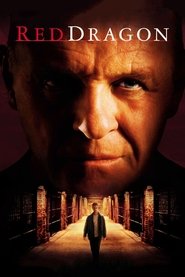
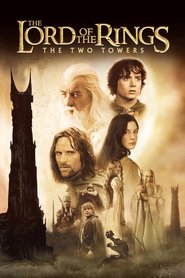
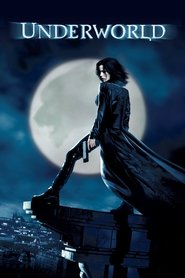
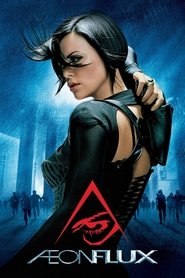

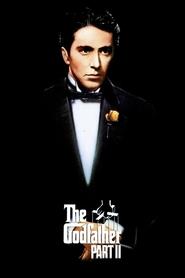
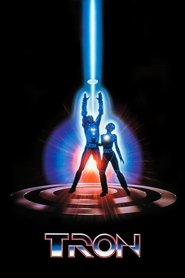

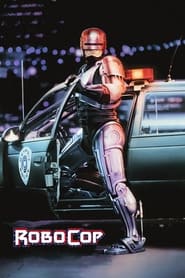


Related topics
Other topics that frequently come up in the same commentaries.