Topics / Writing & development
Adaptation & source material
141 commentaries in the archive discuss this, with 1,321 total mentions and 56 sampled passages on this page.
Filter commentaries
Filter this topic by the film's decade or the type of commentary.
By decade
Across the archive
ranked by mentions · click any passage for the moment in the transcript
-
-
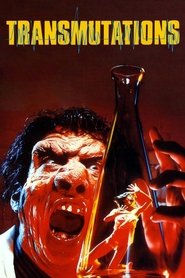
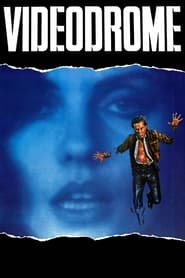
Now here in this scene, Bain is brandishing the drug to Motherskille. I think in the original drafts, and I think even into the Caplin draft, there was more emphasis placed on the hypodermic, and that was going to pay off later on, wasn't it? That's correct, yeah. So in Clive's screenplay, which we'll come to later at the end,
44:57 · jump to transcript →
-
the mutational effects of the drug and helping us to put together some of the pieces of what we've learned so far. There was a change in the script, which in the original, in Clive's draft, used a phrase called plastic dreaming, a very interesting phrase, plastic dreaming, which I think seems to have disappeared from the screen version. Do you remember anything about that? I think it was Clive's term for...
49:12 · jump to transcript →
-
I quite honestly don't know how he achieved it. He did the same on Rawhead, you know, a very underfunded art department, and creating miracles as far as I could see. Even Jeff, Jeff Sharp, the costume designer, I mean, most of these clothes were specially made in a 40s, 50s noir style, you know, based on the old...
1:01:40 · jump to transcript →
-
-
-
Gary Goddard
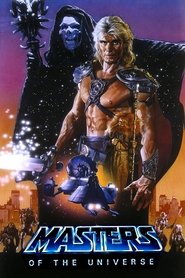
And the role of Gwildor was one of the original characters we created for this. To some degree, Gwildor was created to replace the character of Orko. And if I took any heat as a director from die-hard animation fans, it was like, where's Orko? Where's Orko? Orko is an animated character, floated around, was very comical, and would have been hard to adapt into live action at the time, and also would have been prohibitively expensive on our budget because essentially every time you appear, you have to fly around. And on top of that...
7:27 · jump to transcript →
-
Gary Goddard
the tail end of the schedule, we didn't get everything we wanted, but we did get a lot of use out of it, not as much as I'd wanted, but that's why you see so many levels there. They were designed for what the final battle would be. The eye in the back also, that was a last add in the original script that David O'Dell wrote. There really wasn't a ticking clock. I felt a need to put a ticking clock on this, and we came up with this kind of eye, this door on the universe. The eye opens on the universe. They're coming. Get back there. Keep working.
12:27 · jump to transcript →
-
Gary Goddard
So I'd like to thank everyone for watching this and for listening to me as I reminisce. One thing the movie was always known for is at the very end, as you're going to see here in a little bit, there was, if you stuck around until after the credits, there was one final moment. And it really worked because everyone always said, stay for the movie. There's my original band, the original Illusions. That was my band in high school. Anyway, here it comes.
1:44:47 · jump to transcript →
-
-
-
Stephen Prince
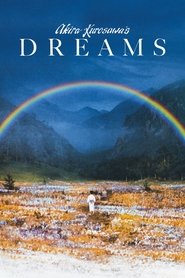
And so if you build your environment rather than going on some location and shooting, you can often get results that are stylistically very close to hyper-reality. One of these other characters is played by the actor Masayuki Yui, who played Tango, the loyal retainer in Ron. But it's really impossible to pick him out because you just can't tell based on the costuming.
42:19 · jump to transcript →
-
Stephen Prince
Based on what he wrote in his autobiography, he seems not to have had strong feelings about the war or the nation's long slide into it. He described it as a dark time, and for a brief period he affiliated with a left-wing group and its illegal anti-government activities. But his motivations seem not to have been strongly ideological. In comparison, the director Masaaki Kobayashi, who made trenchant anti-war films that included The Human Condition,
55:27 · jump to transcript →
-
Stephen Prince
Streams has been a very personal work throughout, and this last episode is no exception. The village and its stream are based on memories Kurosawa held from a period when he was in middle school and visited the village where his father grew up. Toyokawa Village was in Akita Prefecture, and as Kurosawa describes it, it was rural and remote and had a simple beauty to it. A brook flowed through the center of the village, as we have in this episode.
1:52:12 · jump to transcript →
-
-
multi · 1h 54m 3 mentions
Jean-Pierre Jeunet, Hervé Schneid, Alec Gillis, Tom Woodruff Jr. + 5
-
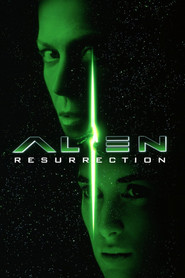
Pitof, was that making fun of Americans, the way those soldiers are chewing gum? Yes, sort of. It's very Jeunet. And they're chewing in sync. And it's... Yes, it's... - Making fun of Americans. Tom Woodruff and Alec Gillis made this fake Sigourney. It was a real pleasure to work with this guy. Here's our first shot. The body of this little girl was based on photographs of Sigourney as a child. Then we worked them into a sculpture based on a life cast of an actress that the casting agent got for us. Look at this beautiful morph. Oh, yes, indeed. We morphed to Sigourney as an adult. That face looks an awful lot like the way she looked in Alien 3, when we took a life cast of her. That's right. And we used a body double to cast the body, didn't we? That's right. And we used a body double to cast the body, didn't we? This is the surgery scene. That was a nice little mechanical chest I made with some digital help there. The laser beam is digital. So it's part of my stuff as a second unit director. That's right. This was a fun little surgery scene, with some of the interactive tissue. Silicone chest that was laid on top of Sigourney. I love the look of this. Darius Khondji did a great job. The way the slime looks is almost metallic-looking. It's got such a beautiful reflectivity. Isn't that great? I love this. It's really disgusting. How it's... Then pop! The head pops.
3:31 · jump to transcript →
-
This idea about the bullet on the roof - it's a little bit later - it was an idea from the first version of The City of Lost Children. We didn't use it. I don't remember. In fact, it was a very good pool player, and he used a gun to kill the people, shooting on the roof exactly like this. I used this idea on this film. Yeah, but you didn't shoot it. No. It was in the first draft. Suddenly I thought I was going crazy. The weapons were based on existing ones. I remember leafing through encyclopedias of guns, which were given to me by Steve Cooper, art director. I guess somebody thought "We'll get around to the weapons." Actually, I jumped off the storyboard on to the weapons because panic was setting in. People were saying we needed to get them going. So Steve Cooper brought in all these volumes of books on handguns, rifles, whatnot. I started doing little sketches one afternoon. I think I did one page with eight or nine guns, and out of that one page almost everything came out. We showed them to Nigel and he said "Why don't you expand that one?" Then we started detailing them, and then finding ways to stick them into the wheelchair wherever possible. This was great, cos Tom would always play the hero alien. We had Mark Viniello in one of the other suits, and David Prior was in another one, but Jean-Pierre wanted to keep Tom as the main performer. That was that torso we made with all the guts and the... That's self-explanatory, isn't it? This was a neat effect. This was a prerigged floor with an elevator that would lower all the guts and so on. It would appear as if the thing was melting, but it was a simple little rig. See? They never learn in these movies, do they?
38:37 · jump to transcript →
-
I was thrilled when I watched this scene, because Ripley was carrying my gun. I can't tell you what a charge that was. It was great. I was, one night, looking at Sigourney Weaver and she was harnessing this gun, and I thought "I designed this." I was back to being a kid watching the first Alien movie, and thinking about Ripley running down the corridors, dreaming about what that meant. Many years later, here I was in Los Angeles, and Sigourney Weaver was playing Ripley, and she was harnessing my gun. It's hard to explain, but it's such a high. This is like traveling through time and grabbing the kid inside of you and saying: "Here's what you've been missing." "Here's something for you and for years of frustration - wishing to make something out of your life that's very specific, and the obstacles." And suddenly there's this woman - she doesn't know I exist and couldn't care less - but she's got a prop, and it can mean the world to somebody. Nigel Phelps, the production designer, designed chunks of corridors, and this was really the essence of what the set of The Auriga was about. Some chunks of it were actually reusable. The whole idea about this set was that you can make it go on endlessly - there's different layers and levels. One of the original design ideas that Nigel had, which he explored with Darius Khondji, was that as the story progresses and as the characters go through the ship the walls change colors and become more and more ominous. Since Darius uses a very specific lighting and processing technique for his film - by which he extracts the blacks and reprints them later to get that very very crisp, sharp contrast - the idea was that the walls would be painted and the paint change as the film progressed. They actually tested this and Darius shot plates, and we experimented with the exposure, etc. They collaborated closely. Ideas that one had were integrated by the other. Frequently, Darius would come down to the set as it was being built, and Nigel would explain some of his intentions. Darius would make suggestions and they would create opportunities for lighting. It works extremely well, actually. You could walk through that set and it was prelit. You could have taken a home movie and it would look like a million dollars. It was unbelievable. I remember, Sigourney laughed at this time because I misspelled a word. Instead of saying "Easter bunny", I said, for two or three takes, "Eastern bunny".
51:13 · jump to transcript →
-
-
director · 1h 42m 3 mentions
Len Wiseman, Patrick Tatopoulos, Brad Martin, Nicolas de Toth
-
um tony in the medieval village right yeah that was the original beginning right and the problem is there there's you know screened it and with uh there's you know a lot of people not knowing who singe was if singe was a lichen and just the a little bit more of the background of of underworld one needed to be stated first the human descendant of corvinus yes all of this was created way after the fact because we shot it i mean you shot it
8:59 · jump to transcript →
-
with that original transition in mind. Yeah, what the original plan was, there was a sequence where we just held off on this. It was going to be the Underworld wrap-up, where Marcus, when he awakens, he bites Kraven's neck. Through those genetic memories of biting Kraven, he ends up getting what is basically the Underworld 1 wrap-up, and kind of last time on Underworld so that everybody gets to speed. And it just, it was a bit too long to wait for that to happen at that point.
9:27 · jump to transcript →
-
Well, there's the original original one, which was Selene as a child running into the barn, and then the medieval sequence, and then the eye. Yeah, the script went through many revisions. And Kate and Scott. I wish Kate and Scott were with us. Yeah. That's a big bummer. We had a really good time with them, and they're both... Kate's in Nova Scotia shooting a movie right now, and Scott, I believe, is...
9:55 · jump to transcript →
-
-
-
Joss Whedon
It became apparent that the two of them walking into a dark room, looking for something, and then talking to someone who had clearly called them there, gave us the information that we needed, and also kept them a little more mysterious. The scene was so mundane, and they were So... Just such normal bickering siblings, that it didn't... Didn't really add to their grandeur. This is the first time we see Ultron. And I look back, and I'm... The fact of him sitting in that chair is very, sort of, based on the great, sort of, John Buscema kind of... "The tortured king and the weight of the throne" kind of thing. But then he stands up, and that's how he's revealed. And I thought, "That's less cinematic than it could have been," after the fact. Children... This little bit that he says here is also really important in the theme. Simply because one of the first things I ever wrote when sort of just freestyling about Ultron in my head, was that children all kill their parents, because once you have them, you no longer care as much about yourself. You accept your place in the cycle of the world, and you know that you'll die, but there's something more important to you than that. And then, in parenthesis, I wrote, 'cause I was sending this out as a memo, "Don't worry, nothing like that will ever appear in the film." And then it actually did. But I do think that a connection that even I didn't make is because so much of this is about power... Yet also, so much of it is about family, and the responsibility we have not just as leaders or as heroes, but as parents. There is no time when anybody in the world understands what the truly powerful can do and go through, unless they're parents. Until the moment they're parents. And then, suddenly, they have complete mastery over somebody's mind. Not forever. In the case of my kids, not even for that long. But there is the ability to uplift or destroy. It is a perfect connection between what is going on in this movie, politically and thematically, and what is going on personally. This shot here is one of my favourite shots in the film, just the way Ultron listens. Again, ILM, they had James Spader's performance to work off of. They had face-capture on him, so he wore cameras on his face the whole time. But they really took it and used it, and managed to make a man who's made out of metal not just sound, but move like Spader and give the performance. When James took the gig, he said, "I don't wanna do voiceover work. "I wanna be able to give a performance." And, my God, he did. And they did such an extraordinary job of capturing it, so much so that when he is standing there doing nothing, I cannot stop looking at him. I developed a huge... Not even a man-crush, like a teenage girl-crush on Ultron. Like, I want a picture of him over my bed, and I wanna write about him in my diary, and I wonder if he's thinking about me. He's just gorgeous. 'Course, there's a lot of gorgeous to go around. This bit, there was a lot more of. We played the mystery of "What's up with Barton?" a lot. Is he still possessed? Is he villainous? Is he something terrible? Ultimately, we just kept the fact that he says, "I don't have a girlfriend," and then later says, "Girlfriend." My issue with it was simply... I mean, people felt, "Can we get some time out of here?" My issue was, I've just felt that people would only think that he was talking to Fury. Since he had been a S.H.I.E.L.D. agent, and we've never seen Fury, and we know that S.H.I.E.L.D. is gone, that they wouldn't think that he was up to something dire. They would just think, "Oh, he's listening to his old boss." And the dancing I would have to have gone through to make that clear that he wasn't just didn't seem worth the effort. So we kept just a little bit of it. I miss it. I miss the idea of, "What's his dark secret? "What's his dark secret?" 'Cause I think it's important. His dark secret is obviously the crux of the film. And, I mean, the fulcrum, the thing upon which the entire film revolves, um, changes.
36:29 · jump to transcript →
-
Joss Whedon
I wrote him before as, I would say, polite. And here, he has his own thing, his own agenda that goes beyond humanity. And later on has what is, for me, the most important moment in the movie, based on his understanding of life beyond us and our agenda.
1:35:47 · jump to transcript →
-
Joss Whedon
This was exactly what I pitched, again, before the movie. Loki failed, Red Skull failed. Ronan failed. So, it's time. Third movie, it's time, which is somebody else's problem. There is one more thing I have to say. I'm not going to speak through 48 minutes of credits, though you should watch them all because every person listed in them did extraordinary work, and I'm enormously grateful. And I apologise to all the people I didn't mention because I should've. But I did promise that I would say something about an Easter egg. I dont... Usually, I try not to be self-indulgent. I just had a feeling there was a connection between the evils of this world and the evils of all worlds. And there is that one shot in Thor's dream of three guys in an archway, wearing three masks, and the masks are very expressionistic, so it might be hard to see exactly what they are, and we only held on them for a moment. And they were originally seen over a line of Thor's that was taken out, where he says, "It's been a long journey, and dark forces followed me." And the idea that there is something bigger at stake, which we hit in his revelation of the jewels, but "dark forces" was when you cut to those guys. Basically, though expressionistic, they are based on three animals, a wolf, a ram, and a hart. And some of you might know what that means to me. Thank you for listening. We're done.
2:13:24 · jump to transcript →
-
-
multi · 1h 25m 3 mentions
Marcel the Shell with Shoes On (2021)
Dean Fleischer Camp, Jenny Slate, Nick Paley
-
Nothing was gross. It just was textured. Wow. I love these spiders. I do, too. Yeah. They're great. I remember getting a photo from you, like, four years ago of a jumping spider and being like, this is so cute. Yeah. That being the origin of that. Yeah, totally. I think that was, like, six years ago now. Okay. These are all, these little tree houses, or many of them, are either built by or based on the art of an artist named Jed Volz. Jedediah Volz.
3:39 · jump to transcript →
-
Yeah, I know. One of my favorite things about the process is that I don't think any of us could possibly tell you, well, not with any reliability, what parts were fully written, what was improv, what was written based on improv. And, you know, it's cool. I think we did a great job of blending that.
18:24 · jump to transcript →
-
This is in Liz's apartment, but I think it was based on a whiff we'd done earlier. Because I remember Caroline congratulating me, being like, wow, you know it's really hard to sing flat. And I was like, that's the best I can do. Well, you're really not singing a note at all. You can't sing any notes. I can hear myself trying not to laugh. Is this song from Summer Camp? Yeah. Yeah.
1:06:17 · jump to transcript →
-
-
-
Thank you. Bob, one of the things you said that I want to bring up... I think one of the earliest phone calls, maybe even the first phone call, you said, "You could end the film "right with him riding the bus, defeated, deflated, "and that could be a great short film about a day where nothing went right." Yeah. And that's the attitude that stayed with me throughout. The idea that this is a godsend. This moment of these guys... I think the original plan was to have Ave Maria playing in the background for this moment 'cause it was literally a godsend. It was amazing. That person yelling "bus," the character's Teddy Kuznetsov, played by... Aleksandr Pal. - Aleksandr Pal. And that man right there is Daniel Bernhardt. Daniel Bernhardt is the man who trained me to fight for two years. That guy right there. He's one of the... He's the greatest. He's maybe the best stunt actor working for the last 10 years. Man, he's great. And you might know him from the TV show Barry. And you might know him from the big fight in Atomic Blonde. And you would know him from John Wick movies and Hobbs & Shaw and every other great action movie of the last 20 years, 'cause he's the best, and he's a great actor too. Bringing a lot of character to this whole sequence. But from the moment things got real with the possibility of me doing an action movie, I started to train, 'cause I was a comedy writer for 25 years, and I did a normal workout of any suburban dad.
25:14 · jump to transcript →
-
Hutch here. Last night, that was you, huh? And then here, we got a great phone call with RZA calling his brother from who knows where and... I think, originally, he was supposed to be on an island. That's what we had in one of the lines. But then we kind of thought, "Well, how does he get there from an island so quick?" So it was changed to a nondescript location. I always like how you step into the shadow when you take this call. Yeah. - Hopefully it's not too on the nose, but I kind of like that the family's light in the back, and then here you are in a little bit of darkness. And he mentions The Barber. - The Barber. And that was not what he said in the original script. No. This is where... So this is act two and act two was very, very different. And I don't know how much in detail we should go, 'cause there's a lot of them. But the idea is that now Hutch gets the call, gets the message to go see The Barber, he gets the phone message, a text message, he goes, and basically what we used to have Is... What we have now is a compact montage of a much bigger act two than we originally had shot and envisioned, which makes the film much, much better. And that was something that David Leitch set down with Evan Schiff, our second editor. I finished... This is right as Corona was hitting the US, and we all had to go home, and I flew home. And David spent time working with Evan over Zoom to put the sequence together. By the way, if you pay close attention to the clothes on Hutch's character, you'll see that it's very lucky that he's always wearing blue. And may I say the reason why you're wearing blue, Bob? Yeah. So, early in preproduction Bob said that, "Guys, I think we should get some blue stuff on me." I'm like, "Why?" He's like, "Well..." I think you said your mother saw you wearing blue... - In the Spielberg film The Post. She saw The Post, she liked it. And she goes, "Your eyes aren't that blue." And I go, "Actually, yes, they are. They pop blue more if I wear blue." You see the blue in my eyes if I wear blue. They're kind of a blue-green, I think. SO anyway... So your mother... We have to thank your mother for putting us in this direction because it saved us in the cut. She will not be seeing this movie. Really? - No. Can we do a cut-down version without... She's 84 and does not watch violent films at all. ...
42:46 · jump to transcript →
-
Can we just talk for one second about our black Russian? Araya. Araya is a great actor, Araya Mengesha. Yep. And he has a great part in here, and he plays it so well. Now, is he a stuntman? - No. He is an actor from Toronto. Yeah. - A great guy. And I give him a lot of credit because he... When I talked to him, I said, "Look, I want him to be... "I want Pavel, the black Russian, to be speaking Russian "and to sound as Russian as possible." Yeah. - 'Cause he's based on... I don't know how to pronounce it. "Amalgamation"? Yeah. - Of a few Russian black guys that I know. 'Cause, obviously, we don't... You know, we're mostly predominantly a white nation. Right. But the story that Pavel, or Araya, the character talks about how he's the son of an Ethiopian Olympian from the Moscow Olympics. That's all... There's a certain group of people in Moscow or in Russia who were the result of the Olympics. Just people came over, had sex and left. And so these hyper-athletic kids from Olympian fathers or mothers, fathers, they grew up with a very different skin color in a country which... People were not used to that in the slightest. So they had a very, sort of, in a way, great experience 'cause they were getting the right kind of attention. But obviously, with the right kind of attention also comes, usually, the wrong kind of attention. So he is based on a real concept. Yeah, yeah, yeah. So I said, "Araya, it'd be great if you can, you know, spend some time "and I'll coach you a little bit and let's get the Russian right." And he did. Like, we spent, before recording, you know... Yeah. Twenty minutes a day just going over... - He's fantastic in this. Such a great guy. A joy to work with too. As were all these guys, but... This is a team of people, mostly Canadian stunt people, but overseen by Greg Rementer and Daniel Bernhardt, who did some of the fight choreography, all the fight choreography. Well... - It was Daniel and Kirk together. Yep. - Well, together. I mean, Greg Rementer is this... What is his title here? - I think he's both... He's the stunt choreographer and the second unit director. Yes. Anyway, it was a team effort.
48:18 · jump to transcript →
-
-
-
Tim Lucas
$50,000, a pay increase of $35,000. In today's money, that's roughly half a million dollars, making the title of this film fairly literal. It was at this point that the original Italian version placed its intermission between the two halves of the film, identified as primo tempo and secondo tempo.
1:08:04 · jump to transcript →
-
Tim Lucas
Bianco's challenge starts out looking like pretty even odds, but the odds change as he advances. Strangely enough, of all the possible images that could have been used from this film, the original Italian poster art by Franco Fiorenzi, arguably the most beautiful issued on this film, pictured these three men in the distance behind a foregrounded portrait of Eastwood.
1:28:18 · jump to transcript →
-
-
-
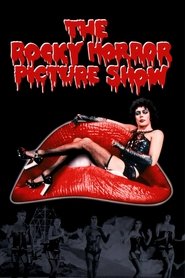
Oh, look. Nice car, that, that woodie. Yes, and what was the tape playing? Was it Nixon? Nixon's-- which I... I don't like that speech being played, actually because it locks the movie into a time frame. I thought it was terribly clever. And that late November evening wasn't in time with Nixon's speech. Speech. And, you know, there's lots of things. Now we see this motorcyclist here. Those people who played Transylvanians were on the back of those motorbikes. They would have to go to the studio this very night, dress up, put all their Transylvanian gear on, and then put motorbike leathers on as well. Yeah. - And then go out on these motorbikes. They didn't drive them themselves. No, no. They had motorcyclists. They paid pillion passengers. Yeah. And, as Ramon Gow said, you know, I said, "Why are they coming in to do this? It could be anybody wet in the dark. And he said, "Could be a gorilla with a pipe, luv." Gorilla with a pipe? But I'll never forget the first day I saw the Transylvanians, 'cause they were rehearsing in a room in the house. And we didn't have Transylvanians in the play, and suddenly this door was open, and I don't want politically noncorrect, but it was so freaky because they were freaks. Sorry. - As indeed we all are. No, speak for yourself. And in the amazement of tall, small, fat, thin, you Know... You lost a sense of norms, you do. Sense of center. Yes, and I saw all these people dancing doing the "Time Warp," and I almost collapsed. I couldn't believe it. I thought... Because I didn't know they were going to be in this. I didn't know there was a cast of Transylvanians. No. - No. Well, when I went into the room and David Toguri was rehearsing them, Well, when I went into the room and David Toguri was rehearsing them, Well, when I went into the room and David Toguri was rehearsing them, and Barry Bostwick and Susan Sarandon was standing amongst these people, with hugely different, physically, SO very... I'll never work again for using the word "freak." It seemed to me that Susan and Barry, who most people would say are relatively good-looking human beings, seemed just as freakish. There was no standard. The standards had disappeared. Yes, that's what freakish-- yes, right. And that was interesting.
12:03 · jump to transcript →
-
And this was cut from a lot of the original versions. This song was cult. 2 Toftind the truth ? And we cut straight to the narrator's verse. He says to tell the truth and never lied. We cut Brad and Janet's verses in this song and went straight to the narrator's verse on the original movie. And it made no sense whatsoever. - I see. 'Cause we needed this. There was a very long intro that Richard Hartley had devised for this song. And I suggested they cut straight to Brad's verse. And they cut straight to the narrator's verse, which was cutting both Brad and Janet's verse, which was rather stupid because it's kind of nice to have these two verses. Make the whole thing tie up, the whole song tie up.
1:34:35 · jump to transcript →
-
-
-
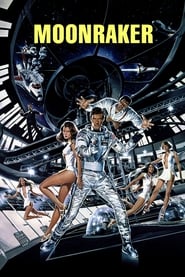
Roger Moore
This was not the first time I had been in Venice. I remember distinctly the first time I was in Venice... ...Was in 1961. And I had been offered by Lew Grade a series called The Saint... ...and had read the script out there. My agent came out to talk to me about it. And I said that I thought it was just a little long... ...for a half-hour series. I said, "It is a half-hour series?" He said, "Oh, yes." I said, "Well, let's find out." He checked back with an assistant... ...who no longer.... Who shortly after that was not an assistant. Because when it came to... All my contract was built on... Based on it being... ...a 30-minute series. And, in fact, it was an hour. Then I came out of the press conference... ...We did a little readjustment, Lew Grade and I. I remember Venice very well for that. But it is the most beautiful city. It has this extraordinary history. It's a wonderful place to work if you like boats. Not if you like swimming. And I went in the canal a couple of times... ...Which is not quite as bad as falling in the klongs in Bangkok.
34:00 · jump to transcript →
-
Roger Moore
In 1950, we were in a production of Mister Roberts... ...with Tyrone Power and Jackie Cooper... ...at the Coliseum theater in London. People who know the play, they probably know the film. Mister Roberts was wonderful with Henry Fonda and James Cagney... ...and Jack Lemmon.
1:41:20 · jump to transcript →
-
-
-
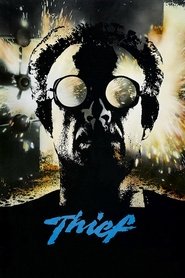
It's actually based on a friend I grew up with, my friend's grandfather, who was in the scrap business, who said exactly those lines. And he was able to just pick the stuff up and smell it and taste it and tell you what the metal was composed of.
49:36 · jump to transcript →
-
By the way, Leo's character is based on two Chicago organized crime figures who are now dead who were fences and ran crews of thieves and were certainly no less vicious than Leo's characterized here. They're Milwaukee Phil Alderisio and Leo Rugendorf. Milwaukee Phil.
1:51:11 · jump to transcript →
-
-
-
desks, gathering the old gear. And then ticker tape, of course, became a really handy way of dealing with these people. And then we had no shame about doing cheap jokes of heads bonking into windows and blah, blah, blah. The music which John Dupre did is based on Eric Korngold's work. Korngold did the Seahawk and many of the great epics with Errol Flynn in them.
3:39 · jump to transcript →
-
They're harder to do than you can imagine. I forgot, we had another set here. We had this bit here, the modern building. Now that I'm looking at this thing, I realize why it costs so much. It just keeps expanding. It goes on and on, endless shots. The good thing on this DVD is the soundtrack is much better than it was in the original film.
10:00 · jump to transcript →
-
-
-
Tim Lucas
Civic TV was inspired by Toronto City TV, launched there in 1971 on UHF Channel 79, very much a progressive maverick station. One of their early distinctions was a Friday night broadcast called Baby Blue Movies, which ran softcore erotic features after midnight. Because of the City TV connection, it's often said that Max Renn was based on its founder, Moses Znaimer, but that's not really true. Max's partners, Moses and Raphael, are played by Reiner Schwarz and David Bolt.
4:48 · jump to transcript →
-
Tim Lucas
Tales of Ordinary Madness, also released in 1981, making it ripe as a source of influence. Based on the book by Charles Bukowski, it shares some of this film's fascination with the protagonist as derelict, and Ornella Muti's character of the self-destructive hooker Cass has a lot in common with Nicki Brand. Also like this film, it ends by the seaside. On the set, Debbie Harry was considerably less accessible than James Woods. She didn't really pal around with the crew.
21:02 · jump to transcript →
-
-
director · 1h 31m 2 mentions
Alex Cox, Michael Nesmith, Victoria Thomas, Sy Richardson + 2
-
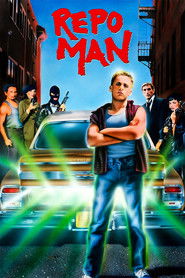
riding bob richardson's motor guzzi and i'm doubling fox and now now robbie muller is shooting the original part of repo man with fox in the car varnum behind because this opening sequence is a composite of two different days of shooting the first shot by robbie muller who did this shot and the second day done months later by bob richardson
3:00 · jump to transcript →
-
But this is based on those experiments they would do with people where they would pretend to be torturing people in experiments and pump up the juice and stuff like that. And they found that nine out of ten people will just keep on turning up the electricity until the alleged subject is dead. And there were experiments done at universities with actors pretending that they were being given electric shocks. Wow. That's a good fireman's carry, Del. Yeah, Del. See, he didn't need to worry.
1:18:05 · jump to transcript →
-
-
director · 1h 29m 2 mentions
Jeff Kanew, Robert Carradine, Timothy Busfield, Curtis Armstrong
-
Get your father's good looks. OK, profiles, profiles. They have the same nose. And that was kind of a gift in the casting process. We didn't cast based on the nose, but it was a plus. Little sound effect coming up here. Not believable, but got a laugh. I remember I didn't like that sound effect.
5:34 · jump to transcript →
-
into the frat house. Bobby still has the original pen holder that he swiped from the costume department. Hi, girls. Bobby has got the full nerd pack, which if you look in the nerd manual, he's got a slide rule. He's got the pen holder. He's got the belt installed, calculator, everything a nerd would need.
18:00 · jump to transcript →
-
-
-
Sweet Bird of Youth, I don't know. What was the play? Yeah, she had done that at the Taper. Yeah, Sweet Bird of Youth. Maggie the Cat. She hadn't done anything big before and back home. She came and auditioned and got the job. Yeah. I mean, that's an extraordinary talent. I saw her in that. She was wonderful. For someone to reach on down through the sleaze and the slime, pick him up and hose him off. I mean, who knows? If we fail with even one shot, we might be losing the next Ted Koppel.
8:40 · jump to transcript →
-
He saw Old Bob. That's the original Old Bob, which came back. You can see the filament hanging off the end of it. Now he went and got it, brought it to you. Now this, he decided to do. Why? I don't know. Well, we started licking each other here at the end. I know, but why did he decide to get in there? That was an ad lib. We didn't expect him to do that. And we didn't expect you to do that either. That's as good an ending to a comedy as I've ever seen.
1:33:41 · jump to transcript →
-
-
-
Barry Levinson
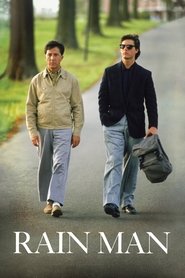
We went back to Cincinnati at the conclusion of principal photography and spent a day picking up a couple of scenes. This was one of the scenes that we can improve upon from the original version. Dustin always said that we reshot the first three weeks of the movie. I kept telling him, actually, we only reshot about, all told, probably about two days.
19:42 · jump to transcript →
-
Barry Levinson
based on some discussions that I had with the actors. One of which, it came up, they said, well, what about Raymond? Does he ever change his clothes, his underwear, or whatever? And you want to at least present the idea that Charlie is somewhat concerned about him. So we talked about the fact that he gave him some underwear as an idea that began to stimulate this...
54:52 · jump to transcript →
-
-
-
real New York voice. It was very funny. I said, oh, he's pissed now because he's doing his New York voice. Well, we have James Lawrence from Street Trash there. Exactly. Wonderful actor. I cast him just based on that. And Frankenhooker, I said, this guy's got to be in the movie. Great choice. So, yeah, if we want to talk a little bit about Remy Ryan there and her character, because I have to admit, when I first saw the movie,
16:26 · jump to transcript →
-
I wasn't crazy about her being in the film either. It felt like it was a deliberate attempt to get kids to relate to somebody in the picture. Well, in fact, that's not true. Really? The original script, her name was Keiko, and she was, I think, full Japanese and should have been younger. I mean, when I was thinking about this character, I was thinking of Frank's drawings. And I was really...
16:54 · jump to transcript →
-
-
-
Tony Scott
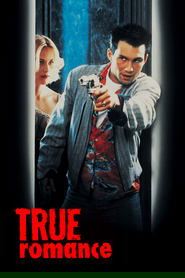
You know, it's funny that the script is almost verbatim, word for word, from the original script that I read in Italy, you know, after I finished Last Boy Scout. Other than the very end of the movie, the end of the movie, I'm a romantic, I think, in the end of the movie. I struggle with, because in Quentin's end, Christian dies, or the clown's character dies, and...
37:15 · jump to transcript →
-
Tony Scott
except it's more deluded, you know, it's better. Again, I constructed the set. The set was based on that set, the Sahara Motel, which was the real motel down off Van Nuys in the valley. But then I put the Hawaiian motif on the walls and put mirror on the ceiling because I knew that when I was storyboarding the sequence ahead of time, I knew that I wanted Patricia, who'd been badly beaten, to be able to see the elements in the room.
1:19:28 · jump to transcript →
-
-
director · 1h 31m 2 mentions
David Steinberg, Dave Foley, David Higgins, Jay Kogen
-
I always like that line. And there's the other album. Right. Well, I believe... Does this take place in Texas? Is that what's the idea at this point, right? Yeah. So we're almost in Mexico. There's a tunnel. Right. Well, this was the idea in the original as well that we'd make our way to Mexico. It was also funny because you're on the Canadian border and then he makes his way to Mexico. Yeah. Which we thought was...
1:19:38 · jump to transcript →
-
We did a sketch where we copied Reservoir Dogs, and I had dinner with him once, and he was very excited that that was based on it. The Fell on My Keys, of course, was an homage to the producers. Sure. Just doing my job. I do, however, have a few questions. Gene Wilder falls, and then I fell on my keys. Spent some time in New York City. Yes. Well, Bob and I are going up there next week, and I was wondering if you could suggest a show. Of course. Moby the Musical, a must-see.
1:26:19 · jump to transcript →
-
-
-
The acupressure. I don't know how that works, but it's always in the novel, always in the movies. This is the standard. If this were set in New York, it would just be focused on their sinuses.
35:36 · jump to transcript →
-
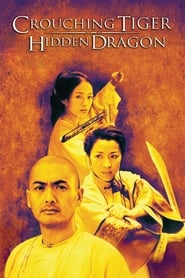
No, in the book, Yu Jiaolong, Jen's character is a tomboy. It's very male-ish, kind of very boyish, aristocrat woman. And I realized shooting in the desert, even if I beat her to death, I couldn't make her that way. And this is the scene I realized she is sexy, very feminine. So it sort of gives you bad ideas. It took you that long to figure it out, huh? Okay.
1:04:18 · jump to transcript →
-
-
-
Jonathan Lynn
This is the only scene in which we made substantial changes after our first test screening. In the original script, Oz, towards the end of the scene, made a long declaration of love to Cynthia. We had never questioned this, but when we saw it with an audience, we realized that it happened too soon. It was only his second meeting with her.
33:41 · jump to transcript →
-
Jonathan Lynn
It's in the same key as the original Max Steiner score. So we've got the old Max Steiner music and the Randy Edelman score playing together here and intertwining with each other. Looking for a new way to have a shootout, I thought it would be really good if Bruce shot in silhouette. Of course, the script called for this
1:06:17 · jump to transcript →
-
-
-
To me, I think that shot could have even been more effective. But you live and you learn, and it worked. This next sequence coming up is very interesting because it employs some photography from the first picture. This is new photography. When Steve conceived of this sequence, he always wanted to use photography from the original movie so that it would rhyme with it exactly. And you'll see that it does.
1:10:13 · jump to transcript →
-
you see how Oded has really learned how to ride the horse. He does a fantastic job in this sequence. And once again, when we get into the battle here, he's fighting things, and all these men are fighting things that aren't really there, which makes it very, very difficult. In this wide shot that's coming up here, if you were to see the original plate, there's all these guys in blue suits that are standing there
1:44:47 · jump to transcript →
-



Related topics
Other topics that frequently come up in the same commentaries.