scholar
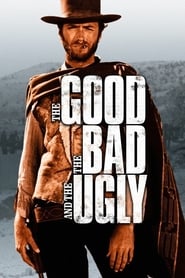
The Good, the Bad and the Ugly (1966)
Release The Good, the Bad and the Ugly 50th Anniversary Edition (Kino Lorber Studio Classics, 2017)
Tim Lucas discusses the US theatrical cut, title design, cast, Spanish locations, deleted scenes, Civil War imagery, photography, and the bridge explosion. He compares the film with Leone's other work. His analysis of the cemetery sequence explains how Morricone's music, framing, performance, and editing control the duration and tension of the confrontation.
- Duration
- 2h 41m
- Talk coverage
- 84%
- Words
- 23,072
- Speaker
- 1
Commentary density
Highlights
Topics
People mentioned
- Damien Leone 67
- Ennio Morricone 15
- Sergio Leone 14
- Luciano Vincenzoni 13
- Robert M. Stevens 8
- Nino Baragli 4
- Eugenio Alabiso 3
- Quentin Tarantino 3
- Akira Kurosawa
- Peter Jackson
- Randall Wallace
- Tonino Delli Colli
- Agenore Incrocci
- Arnold Schwarzenegger
- Dick Pope
- Frank Miller
- John Landis
- John Milius
- Massimo Dallamano
- Orson Welles
The film
- Director
- Sergio Leone
- Cinematographer
- Tonino Delli Colli
- Writer
- Luciano Vincenzoni , Sergio Leone , Agenore Incrocci
- Editor
- Eugenio Alabiso , Nino Baragli
- Runtime
- 161 min
- Also on
- OneSheet ↗
- External
- IMDb ↗ TMDB ↗ Find on Amazon ↗
Transcript
23,072 words · 60 flagged as film dialogue
Hi, I'm Tim Lucas, and I'll be your guide to this viewing of Sergio Leone's The Good, the Bad, and the Ugly. First, I need to follow Maestro Leone's lead and walk you through the setup and introductions of the main characters. The main titles for this film were the distinctive work of Iginio Lardani, whose credit is yanked off-screen almost as soon as it appears to make room for Leone's director credit. It's modest acknowledgement, but like pride of place, considering that Lardani was not credited at all for performing the same duties on the previous $2 pictures. Lardani was the most influential Italian titles designer of his era. He was born Eugenio Lardani in Ascoli Piceno on Christmas Eve 1924. Leone considered himself perhaps the first post-modernist film director, and Lardani's titles are similarly post-modernist. A melange of animation, high contrast photography, double exposures, optical overlays, oil effects, coffee grounds filmed against white paper and negative, strange fonts and stark polarities of color tinting in black and white. They don't represent the film so much as evoke a fever dream of it. Therefore, it embodies a great complement to the picture we're about to see because it tells us we're sure to want to watch it again. On first viewing, these images don't mean very much to us.
but they are fraught with iconic gunpowder on secondary viewings. Lardani was already successful as a commercial graphic designer when he first allied himself with Leone, but the Dollars films made his work still more in demand. He designed the titles for numerous other Westerns, including Day of Anger, Face to Face, Run, Man, Run, and The Big Gundown, and some non-Westerns as well, including Casanova's Seventy, A Special Day, and Gillo Pontecorvo's Burn. Lardani's trademark style was, like all popular things, widely imitated. A company called Diamante e Grisanti, for example, used his techniques to create the trailer and main title sequence for Mario Bava's Hatchet for the Honeymoon in 1969. And you can also see his influence in pop artist Guy Peellaert's main titles for Alain Jessua's The Killing Game. Eugenio Lardani died in Rome on May 15, 1986, at the age of only 61. He left a great mark on cinema. Al Mulock's head dials into frame, settling at high noon. Even before we see him, we hear the bloodthirsty cry of a coyote.
which Ennio Morricone will incorporate into his score, replicated by human voices, this being the story of human jackals. Mulock's face looks dead, merciless, as he stares us down. For dramatic purposes, this location is supposedly a Texas-Mexico border town called Paso Negro. In fact, it was a small village called La Sartenilla in the municipality of Tabernas in Almería, Spain.
Here we have two bounty hunters, played by Spanish actors Frank Braña and Saturno Cerra. Both men were highly experienced in Spanish westerns. Prior to this film, Saturno Cerra, who lived from 1924 to 2015, was featured in A Lone and Angry Man, Seven Guns for the McGregors, and Johnny Yuma. His subsequent credits would include Django Does Not Forgive, Joe the Implacable, and Cemetery Without Crosses, as well as Luis Buñuel's Tristana and the cult horror favorites A Bell from Hell and The Hunchback of the Morgue. This was the third Leone appearance for the silver-haired, blue-eyed Braña, who lived from 1934 to 2012. He had been a veteran of such films as Nicholas Ray's King of Kings, Alberto Di Martino's Medusa Against the Son of Hercules, and Jess Franco's Rififi in the City. before joining the Baxter gang for A Fistful of Dollars. He was also a member of Indio's gang and For a Few Dollars More. He and Chera previously rode together in A Lone and Angry Man, Taste of Killing, and The Ugly Ones, and they would both make appearances as part of Henry Fonda's entourage in Leone's 1969 masterpiece Once Upon a Time in the West. So we open with three outlaws, three bounty hunters, banding together with the common purpose of striking it rich.
A rough sketch, if you will, for the story we're about to be told. But these three are bottom feeders, setting their sights a good deal lower than our heroes will do. This sequence also anticipates the opening of Once Upon a Time in the West, three outlaws on the lookout for a fourth, with no music on the track but the howl of wind and the crunch of boots on gravel.
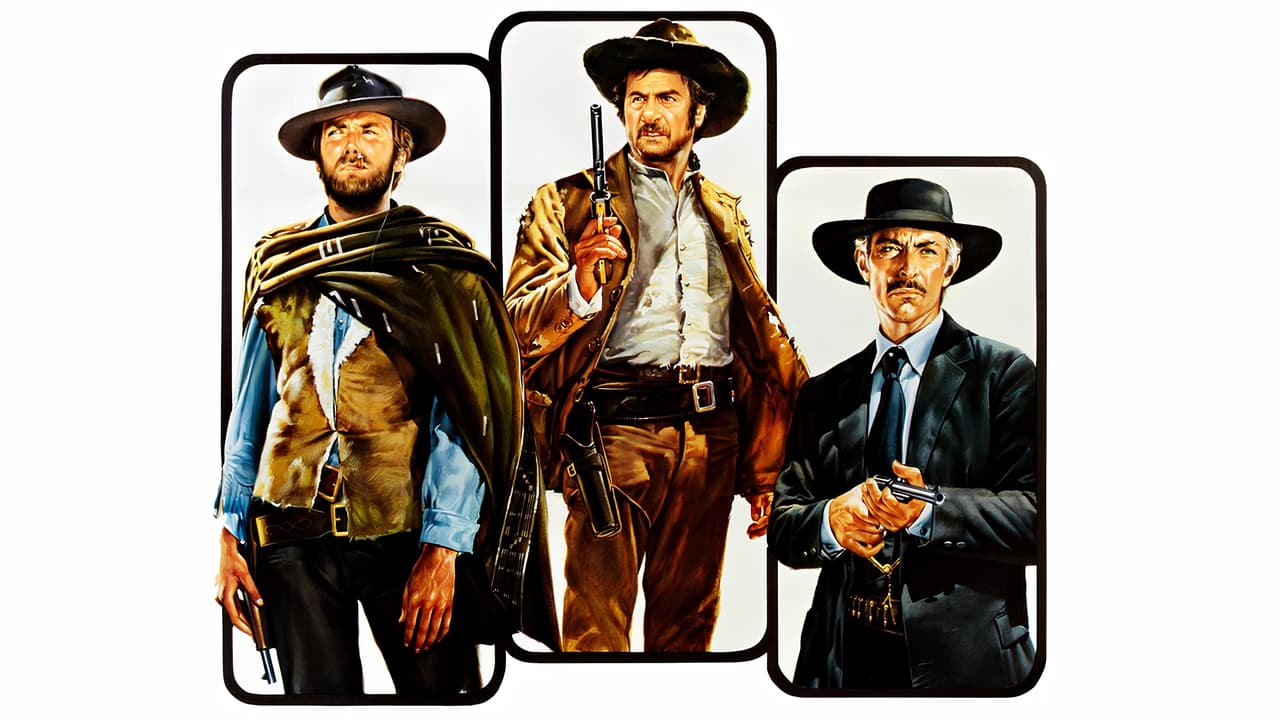
And here's the great Eli Wallach as Tuco, the first, but in some ways third, of the film's trinity of heroes, classified as the ugly. He was apparently surprised while biting into a turkey leg, still clutched in one hand with a bottle of wine and a six-shooter in the other. Only five shots were fired before he crashed through the window to his freedom, so those bounty hunters couldn't have been able to fire more than a couple of shots before he put them down. The arrival of Tuco spurs the arrival of the music score, because Tuco is our story.
The scene now changes to Cabo de Gata in Almeria. According to Peter J. Hanley's indispensable book behind the scenes of Sergio Leone's The Good, the Bad, and the Ugly, this farm is known as the Caserío del Campillo de Doña Francisca, and its antique water wheel, called a noria, still stands today. This boy, Antoñito Ruiz Escaño, had previously appeared in For a Few Dollars More. The music you were hearing is called Il Tramonto, The Sundown, and its guitar soloist is Bruno Battisti D'Amario. The character of Angel Eyes, played by Lee Van Cleef, is introduced with a long ride into close-up, much like Omar Sharif in David Lean's Lawrence of Arabia, a film that, like The Good, the Bad, and the Ugly, was largely shot in Almeria, Spain. In the original script by Luciano Vincenzoni, Angel Eyes is referred to as Banjo, possibly in response to the popularity of the baleful Italian western hero Django, introduced in 1965.
In the Italian version of the film, he is called Sentenza, meaning sentence or judgment, which curiously relates him, at least nominally, to Judex, the ambiguous crime-fighting hero of two Louis Feuillade serials of the 1910s, whose name was the Latin form of judge or judgment. The farmhouse interiors were shot at El Cortijo di Ahoya, Altica, also in Almeria.
The character of Stevens is played by Antonio Casas, born in 1911 in Galatia, Spain. Stevens' wife is played by one of its more conspicuous cast members, Cuban-born Chelo Alonso. Born Isabel García, Alonso was a former folie bergère dancer and one of the most prominent female stars of the Italian sword-and-sandal films of the 1960s, yet she plays this Mexican housewife and mother without a hint of glamour. It hasn't any of her former iconography, but it might be her finest screen performance. She was more or less retired from films at this time, her roles in films like Goliath and the Barbarians long behind her, but she was present on the set as the wife of production supervisor Aldo Pomilia, whom she had met on the set of the Steve Reeves film Morgan the Pirate. She told historian Peter J. Hanley that she didn't want to play this part.
that Leone courted her for the role relentlessly and that she was finally tricked into doing it when another actress, who had supposedly been cast, had to withdraw at the last moment. It was a two-day job for her. It's not mentioned in the film, per se, but Stevens wears a gray, weathered military shirt that, in combination with his stiff way of walking, suggests a man who's been excused from military service by some kind of wartime injury. It's the film's first acknowledgement that the story occurs during the time of the US Civil War, which lasted from April 1861 to May 1865. He is also not to be trusted. As Henry Fonda says of another character in Once Upon a Time in the West, I could never trust a man who wore both a belt and suspenders. A man like that doesn't trust his own pants. The look of the Stevens character reminds me a lot of Jason Robards's Cheyenne in Once Upon a Time in the West.
The graying beard is the same, but it's mostly that soulful, hangdog look about the eyes that they share. Antonio Casas might have made a good Cheyenne. Casas' association with Leone went back as far as Mario Bonnard's The Last Days of Pompeii in 1959, which Leone had assistant-directed, and also his 1961 directorial debut, The Colossus of Rhodes. His other films prior to this included Juan Antonio Bardem's Death of a Cyclist, and a number of West German crime pictures, including The Carpet of Horror, Hypnosis, and The White Spider. Strangely, no German director ever had the vision to cast him in a Karl May western, though Franz Josef Gottlieb later cast him in Wild Kurdistan, an adaptation of one of Karl May's Orient adventures. It took his casting in Sergio Corbucci's Minnesota Clay to get him started in westerns.
and he went on to make A Pistol for Ringo, The Return of Ringo, Left-Handed Fate, and The Big Gundown, to name a few. Like Saturno Cerra, he was later featured in Luis Buñuel's Tristana. He died at age 70 in 1982. In the original trailers for this film, it was Angel Eyes rather than Tuco who was designated as the ugly, perhaps because Lee Van Cleef was the third name down on the billing. But is Angel Eyes really ugly? I would say contrary to his nickname that he has the devil's good looks. Lee Van Cleef has the face of a satyr. There's a force of frankness in his eyes, a perfection about his hawk-like features that makes him almost uncomfortable to look at, and it's a quality that Leone milks to the breaking point in this sequence. This scene supposedly takes place at sundown, but just before Angel Eyes helps himself to his first spoonful of food, a rooster's crowing is heard on the soundtrack. Why would a rooster be crowing at sundown? I did a little research and learned that roosters actually crow for a variety of reasons other than to greet a new sunrise. Another of the big reasons is to warn others about predators approaching their families.
When I start off to find somebody, I find them. That's why they pay me.
Why is Baker paying you?
Is that your family? Yes. Nice family. Leone lends some whiplash to this veiled threat by suddenly enlarging the close-up on Lee Van Cleef's face. Visually, we're made to feel that what he said has had an intimate impact on Stevens.
That's what he calls himself now.
The story we're about to be told unfolds under cover of the Civil War, so to speak, and the $200,000 in gold that Stevens unwittingly mentions to Angel Eyes, stolen by another Confederate, a one-eyed man named Jackson, who has since gone into hiding under the name Bill Carson, is the centerpiece of an earlier story of theft and chicanery that took place under cover of the war. involving yet another three men, Baker, Jackson, and Stevens. We will never be told this story, though it's probably just as picaresque as this one, but Leone seems to say that it's better to tell a story that stands on a couple of other broken backs, no? As soon as Stevens reveals, to angelize all that he knows, he realizes his life has no further value and tries to buy off his assassin with $1,000 in loose cash.
When Stevens is shot, Leone cuts to where the violence is most deeply felt, not to the bloodshed, but to a close shot of Stevens' wife. A new score bolts from the tense silence, a sustained, dizzying interjection of shrill, high-pitched horns and strings. Angel Eyes may be evil, but he has expressed and comported himself with some morality. He kills Stevens because he always does the job he was paid to do, and indeed Stevens drew on him first. In departing the farmhouse, he must also kill Stephen's oldest son, who responds to the gunfire with a rifle cocked for action. Again, he's acted in self-defense, yet this sequence anticipates Frank's attack on Brett McBain's farm in Once Upon a Time in the West, though here the youngest son is spared. Other than the scream inherent in the music, the scream we expect from the wife never materializes, just a loss of control, a faint, and a fade to black. The black screen carries us and Angel Eyes to Baker's room.
The jacket and hat we've just seen belong to the Union Army. Baker is played by Livio Lorenzon, a beloved actor of the Hollywood-on-the-Tiber years of Italian production, a burly, robust fellow who made some early screen appearances under the name of Elio Ardan. He was born in 1911 and made his first known screen appearance in 1952. Early screening credits include Giacomo Gentilomo's version of Siegfried, with special effects by Eugenio Bava and Carlo Rambaldi, the first Italian science fiction film, The Day the Sky Exploded, an undercover directing debut for Mario Bava, and even some movies with Chelo Alonso, including Goliath and the Barbarians and Hercules, Prisoner of Evil. I've always liked him, especially in the Gladiator films he made, such as The Invincible Gladiator and Gladiator 7. in which he played older mentors to the hero, Richard Harrison. Lorenzon was acting in Italian Westerns even before Leone started directing them, and he sometimes hid behind the Americanized names Charles Lawrence or Charlie Lawrence. He made a half dozen Westerns before making this film, including the title role in Roberto Mauri's Colorado Charlie. He made another half dozen Westerns after this, of which the most notable was 1968's Ace High, starring Eli Wallach.
He died in 1971 at the age of only 48. This pillow shooting was a dangerous thing to do, even with a blank firing pistol. The pillow was padded with metal for the actor's safety, but Leone demanded so many takes of the shot that Lorenzon is said to have suffered some hearing loss as a result of his death scene.
who the bad is. When Angel Eyes says that he always sees his pay jobs through, this is a defining statement. He's not a good man, because we see him play his card savoringly with conscious sadism and cruelty. Yet to his own way of thinking, Angel Eyes is consciously operating within his own system of moral laws. He sees himself as an assassin rather than a murderer, a distinction that clearly means something to him, or at least suits him. Before the film introduces us to the good, it brings us up to speed regarding the fate of the ugly. Tuco is making good his escape when he's suddenly shot off his steed by yet another group of bounty hunters. First thing he does is to reach for his balls to make sure they're still there, which is so Tuco. Tuco is obviously vile, not someone you'd want to have in your life, but as a character on screen, he's irresistible. He's resourceful, he's victimized, he's a son of a bitch. He's a real character.
We hear Clint Eastwood's voice before we see him. He's the only character in this story's trinity to be introduced subjectively until he steps into frame. There's no mistaking him, but Leone takes his own sweet time revealing him. It is directorial decisions such as this that make a star, that make an audience crave to see an actor to cheer his return. Eastwood's character is so amiable and he keeps company that's so much worse than himself that we may lose track of the fact that he's not really a good guy either. He's a mercenary, he's a killer, and there's real menace in his opening words and actions. This location was in Madrid. It's called La Pedriza de Manzanares el Real. Wallach's first close-up tells us a lot. Tuco may be endlessly wily, but he's a character who's never in charge of his own fate. He's like a ball, even a pair of balls, constantly being kicked around by circumstances and the restlessness of our country's history.
Thank you.
How much
are you worth now?
How much?
Two thousand dollars. Clint Eastwood's first facial reveal coincides with the spoken sum of two thousand dollars. Like everyone else Tuco has met in this film so far, his savior is a bounty hunter. But this is a new kind of bounty hunter. Blondie, as he's called, is a man ahead of his time, a 20th century frontiersman, even more so, a 21st century frontiersman, which is to say he's a crook on the right side of the law, the kind of man who knows how to exploit the law for his own purposes, how to milk the system for all it's worth, including the price on Tuco's head, which he has noticed goes up each and every time he cheats the hangman's noose and is tied to more deaths. So why not profit from the letter of the law? Isn't that the American way? Clint Eastwood felt some trepidations about accepting this role, given the no-show status of the first two films in the United States, which had a certain impact on his career at home, and also the fact that he would now be sharing the screen with two other protagonists. Sergio Leone assured him that Tuco would be his Sancho Panza, his water carrier,
But the decisive reassurance was $250,000 and 10% of the film's net profits from Western territories. So Eastwood actually made this film for the equivalent of the treasure in its storyline, and a few dollars more. But as he flew to Rome, he had a strong feeling that it would be the last time he and Leone would work together, and he decided to just enjoy the experience as much as possible. If Tuco is the undoubted highlight of the picture, Eastwood's Blondie is just as clearly its heart and soul. Neither character would seem complete in isolation of the other. They are like Don Quixote and Sancho Panza, Candide and Cacambo, even Gargantua and Pantagruel. They're larger than life, temperamentally opposed and very much chained to each other, even when separated for great lengths of time.
The Good, the Bad, and the Ugly is often described as a spaghetti western, a label that I dislike, and which Italians tend to generally dislike, because it trivializes a lot of fine and serious work. But it takes more than 20 minutes to reach the first of its scenes to be shot in Italy. This western town was a standing set built at Elios Studios in Rome. As part of their new con game, Tuco agrees to be hanged and rescued at the last minute by Blondie. Each time he's about to be hanged, a judge reads off a list of Tuco's crimes, which music or dialogue prevents us from hearing clearly. The first judge, and doesn't he remind you a bit of Peter Cushing, recites the following text. Wanted in 14 countries of this state,
the condemned is found guilty of the crimes of murder, armed robbery of citizens, state banks, and post offices,
the theft of sacred objects,
inciting prostitution, kidnapping, extortion, receiving stolen goods, selling stolen goods, passing counterfeit money, and contrary to the laws of this state, the condemned is guilty of using
marked cards and loaded dice.
Therefore, according to the powers vested in us,
we sentence the accused,
Tuco Benedicto Pacifico Juan Maria Ramirez, and any other aliases he might have to hang by the neck until dead. May God have mercy on his soul. Proceed.
This dialogue doesn't exactly jibe with what is heard on screen, but it comes directly from the original dubbing continuity sheets, scripted by Mickey Knox. That one's pretty good, but wait till you hear the second one.
Here the film begins to show its hand as the rollicking story of a couple of confidence men, but it goes way beyond that. Leone himself said that all of his films were most fundamentally about friendship, but I see The Good, the Bad, and the Ugly as a film primarily about human character, and how character flaws sometimes impede the progress of the individual and human progress collectively. Tuco is evolved enough to relish Blondie's clever scheme for taking financial advantage of the price on his head, but having half of anything leaves him feeling cheated. Tuco must have it all, all or nothing, and his loyalty to his own greed takes precedence over everything else, even his personal relationships, and this will ultimately be the cause of his undoing. This location is the Tabernas Desert near Almeria.
You may notice that Tuco has a silver tooth on the left side of his mouth. When he's beaten, later in the film we see him fishing around inside his bloody mouth. I think he's making sure that he hasn't lost this valuable accoutrement. In 1960, Eli Wallach played a Mexican bandito named Calvera in The Magnificent Seven, which Leone insisted was not the reason why he wanted him to play Tuco. And yet if you see The Magnificent Seven, you'll notice that Calvera has a prominent gold tooth on the other side of his mouth. For this second hanging scene, the list of Tuco's crimes found in the dubbing continuity is one of the funniest pieces of writing I've ever read. Here we go.
Wanted in 15 counties of this state
that condemned standing before us, or sitting before us,
Tuco Benedicto Pacifico Juan Maria Ramirez
has been found guilty by the 3rd District Court
of the following crimes. Murder. Assaulting a justice of the peace. Raping a virgin of the white race.
Statutory rape of a minor of the black race. derailing a train in order to rob passengers, bank robbery, highway robbery, illicit traffic in firearms and explosives, attacking and injuring county, state, and federal officials, counterfeiting and passing United States currency, Mexican currency, and French currency. The condemned has also been in various rebellions against the local, state, and federal governments, and the accused in doing so utilized trusting and unwilling farmers and peons. The condemned has also received stolen goods, used marked cards and loaded dice. He has promoted prostitution. He is also guilty of abusive and obscene threats against private citizens and people in high places of authority. He has stolen a stagecoach and used it to make illegal postal pickups. He is guilty of unlawful detention for purposes of blackmail, detention and selling of fugitive slaves, burning down the town hall of Amarillo, the El Paso jailhouse and the sheriff's office in Sonora. The condemned also hired himself out as a guide to a wagon train and after receiving payment in advance deserted the wagon train on the hunting grounds of the Sioux Indians. He also stole a steamboat on the Pecos River and after throwing the pilot overboard sank the boat because of lack of skill at the wheel.
The condemned is also guilty of cattle rustling, horse thievery, supplying Indians illegally with beverages containing alcohol, and misrepresenting himself as a Mexican general in order to claim salary and living allowances from the Union Army. For all these crimes, the accused has made a full and spontaneous confession.
Therefore, we condemn him to be hung by the neck until dead. May the Lord have mercy on his soul. Proceed.
This text was kindly shared with me by film director Jim Wynorski, one of this film's biggest first-generation fans. When Jim first read me this litany of misdeeds, I thought I was going to die laughing. He interrupted his reading to note, you're laughing because you know the character, and that is exactly the point. Clearly, many, many more films could have been made about Tuco, and audiences would have loved each and every one of them.
This getaway ride is accompanied by Ennio Morricone's famous theme song, which is somewhat less in the tradition of classical Western music than in a vein closer to contemporary Western music, namely the moody surf instrumentals of the early 1960s, Walk Don't Run by The Ventures, Pipeline by The Chantays, Apache by The Shadows, and greatest of all, Telstar by The Tornados, which was written as an ode to the space race, but to my ears, has always evoked the Old West as well. As everyone knows, this film is the third feature of a trilogy known as the Dollars Trilogy, preceded by A Fistful of Dollars and For a Few Dollars More. A Fistful of Dollars went into production in April 1964, but its U. S. release was withheld till February 1967, owing to prolonged negotiations with Akira Kurosawa, whose film Yojimbo had been its basis.
This film was shot in 1966, but its U. S. release was withheld until Christmas Day, 1967. When I first accepted this assignment, I was a little annoyed that my first commentary had to be for the last film in this trilogy. I prefer to approach these things chronologically. However, the events in this film appear to precede those in the two films that come before, so in a strange way, this film is the first of the three. Bastards! Come here!
Come here! Cut this rope off! Get off that horse!
The Good, the Bad, and the Ugly was the first of the three films that most American fans saw thanks to the strong pull of a TV saturation ad campaign that made prominent use of Morricone's music. It really pulled people in. The first $2 films had come out only months before and didn't get a lot of attention, but this was the first of the three that United Artists actually co-produced to the tune of at least $1 million, so they weren't about to let this one get away. Suddenly, there was a huge audience for the first two, which were subsequently sent out on a double bill. We're almost 30 minutes into the picture when Leone finally gives us the information that we've been squirming for, the identification of the good in this unholy trinity. Of course, Blondie first demonstrated his goodness about 10 minutes ago when he rescued Tuco from those bounty hunters, but as with the other two fellas, Blondie's not entirely what his title claims to be.
The late critic Richard Schickel could find no reason for Blondie to abandon Tuco in the desert, but I think his reasoning is pretty clear. As he says as he lets Tuco slide off their saddle, yes, it's getting tougher. Tuco is a pain in the ass, and Blondie has probably been through enough of these partnerships to recognize that this guy is not going to be worth what he brings in, and he'll always have his eye on the half he's not getting. So Blondie's not being cruel, he's just preempting a worse thing from happening as he abandons Tuco, in the El Tablazo region of the Tabernas Desert. At this point, a woman evidently abducted and raped by members of the 2nd Cavalry is being dropped off at her home. This is Maria, supposedly the sweetheart of Bill Carson, played by Trieste-born actress Rada Rassimov. Rada was the sister of actor Ivan Rassimov, and had previously made an Italian western for Sergio Leone's assistant director Tonino Valerii, A Taste of Killing.
Her best-remembered roles are as one of the murder victims in Dario Argento's The Cat o' Nine Tails, 1971. She's not treated much better here. And as a compelling white witch in Mario Bava's Baron Blood, 1972. She has more recently worked as an award-winning producer and executive producer of Italian television productions. Lee Van Cleef recalled that Rassimov gave him permission to really slap her, but he refused, saying that he would never strike a woman. His stuntman was evidently summoned to provide some genuine contact, but sound effects carry Van Cleef's non-contact lows. Rassimov's performance was dubbed in English by Joyce Gordon, the wife of actor Bernard Grant, who has also dubbed various roles for this film. Joyce was also the voice of Claudia Cardinale in Once Upon a Time in the West. This scene was reduced to a single slap in the UK, and stayed that way through the film's 1999 video release.
Women don't fare very well in Leone's films. The abuse heaped upon Maria recalls the brutal treatment doled out to Claudia Cardinale in Once Upon a Time in the West and Elizabeth McGovern in Once Upon a Time in America. As Leone once said in his own defense, there was not much room for female characters in his films because his milieu was the epic, which was a genre of male fantasy.
Of course, Tuco survives the desert, presumably through sheer cussedness. The wobbly bridge he must cross to reach the nearest town seems to embody his literal return to life from death, which this Ennio Morricone cue, the rope bridge, underlines with dark disorientation and sparkling menace. Bruno Battisti D'Amario's guitar plays an ostinato passage, its repetition plucking out the monotony of the desert and mirroring Tuco's dogged persistence. Thank you.
Topkeeper, who in the original script is named Mr. Jackson, is played by Enzo Petito, born Vincenzo Squitieri in Naples in June 1897. His other films include Dino Risi's Il Vidovo, The Widower, 1959, and Il mattatore, Love and Larceny, 1960, Sergio Corbucci's Totò Comedy, Chi si ferma è perduto, 1960, and Vittorio De Sica's Il giudizio universale, The Last Judgment, 1961. This was the last of Petito's 19 recorded screen appearances. He died the following year, just one week before his 70th birthday. These two actors play off each other beautifully, and this scene is one of many in this picture that could be described as influential. It reminds me a good deal of a scene in James Cameron's The Terminator, with the cyborg Arnold Schwarzenegger walking into a gun store where salesman Dick Miller introduces him to some of the weapons for sale. In fact, in 2003, when he was directing a film called Mystic River, Clint Eastwood had the wonderful idea of casting Eli Wallach in the film as a gun store owner.
Here's where I keep the best ones.
Here. Remington. Colt. Root. Smith-Wesson. Colt. Navy. Jocelyn. Another Remington. That's enough. Up to now, we think of Tuco only as a wily scoundrel, someone who has survived more untimely betrayals than skill. But here Leone shows us Tuco as a real technician of his craft. Supposedly Wallach, who knew nothing about guns, improvised all of this action after simply being told by Leone to have fun. He spins the barrels of these locks like a master safecracker listening to the tumblers of a combination lock. And note how Wallach concentrates his performance through his eyes. The shopkeeper has clearly never seen a customer like this as Tuco proceeds to dismantle an assortment of handguns and reassemble them into a Frankensteinian combination of the best qualities of several weapons. It's in moments like this that Leone's masterful eye for detail and stage props comes to the fore. When Tuco asks for ammunition, Leone begins to tease us. He lets us imagine we know where this scene is headed. We don't, but that's all part of the fun, having Leone engage us in a bit of cat and mouse. Leone loved leading people around by the nose. The actors who worked with him remember that he always invited them aboard his various projects by relating their stories.
in tellings that would drag on and on as the sun slowly arced across the sky. There's something of a sadistic streak in this, but it's also something to do with a need for total control. You can see this tendency today in the films of Quentin Tarantino, who lists this film at the very top of his personal list of favorites.
This leather strap that Tuco appropriates for his new gun was conceived by Leone to hold the weapon at his groin level, but Wallach refused to spend the entire production with it swaying and banging against him bodily, so Leone told him to just stick it in his pocket.
That's all I've got. Coming up is another moment that seems to forecast important gags or story points in Once Upon a Time in the West. As Tuco prepares to leave, he takes the closed shingle off the door and makes the shopkeeper open wide and clench it in his mouth. This moment rhymes with Charles Bronson's placing his harmonica in the mouth of Henry Fonda at the climax of Once Upon a Time in the West. the moment when the answers to the film's troubling questions finally come into focus. The story now cuts to Santa Fe in Texas skipping over an omitted scene in which Tuco visits a subterranean grotto with a dead chicken in hand, hoping to recruit three Mexican banditos to support his vengeance. It was photographed at the Grotte di Salone beneath the streets of Rome, a location used in other well-known Italian pictures of this period like Hercules Unchained and even Caltiki the Immortal Monster. This scene, filmed in the studio location in Almeria known as Mini Hollywood, is the film's first really foregrounded acknowledgement that our insignificant little story is taking place against the backdrop of the Civil War.
One of Leone's favorite films, a film he sometimes boasted of wanting to remake, was Gone with the Wind, another story that takes place in the Civil War. The war is on its last legs here, with these Confederate troops shown evacuating Santa Fe amid warnings of the imminent arrival of Northern forces. This is the regiment of General Sibley, and you'll remember that in the scene between Angel Eyes and Maria, he learned that the man going by, that the name of Ben Carson, the man who can lead into the treasure, is riding with this regiment. The scene is present to tell us this, but it soon withdraws inside this hotel where the hypocritical hotel owner, played by Jesús Guzmán, expresses hatred for the soldiers fighting on his own behalf. The scene then pulls back another step to bring Tuco into the scene, now flanked by his gang of cutthroats. He's looking for Blondie, who's rooming at this hotel. So this cleverly designed sequence has begun by zooming out to introduce the evacuating troops,
then zoomed back through additional layers of drama to bring us back to our principal cast. Speaking of Texas, one tends to think of the Civil War as concentrated in the eastern states, but the state of Texas did in fact secede from the United States in February 1861 and join the Confederate states a month later. Over 70,000 men served in the Confederate Army and still more were picked up in New Mexico as General Sibley's ill-fated campaign to seize the wealth and weapons from a chain of forts. When did its way toward Denver, Colorado? What we're seeing here with the arrival of Union soldiers imminent would date the story somewhere in the vicinity of June 1865. We see Blondie upstairs in his room cleaning his Model 1851 Navy Colt revolver. This tells us in another compact visual that Blondie is Tuco's equivalent in terms of knowing something about the mechanics and care of his handguns.
The next shot of the passing Confederate troops is shown from a higher angle, apparently the vantage of Blondie or his hotel room window. But as we will soon find out, there's a third option for a point of perspective. As the boots of Tuco's men ascend to Blondie's room, their spurs, which will defeat their purpose, are there to be seen and heard, and editors Eugenio Alabiso and Nino Baragli cut from these henchmen to the Union troops passing by. To make clear that he's not merely cutting from one to the other, but drawing an actual comparison, Leone contrasts the gunman's legs with those of the passing horses. The implication is that these men bound for death are Tuco's beasts of burden. The montage of this sequence offers us great insight into how the cinema, especially cinema like Leone's, made an incalculable impression on graphic illustration in later years, particularly in the illustration of graphic novels.
A brief burst of mosquito-like music. The dying gunman looks to his killer as if for an explanation of what he did wrong. He doesn't ask the question. We have to look for it. Blondie tells him, you're Spurs. In this moment, we not only have the point of origin for the idea of the harmonica revelation in Once Upon a Time in the West, but also that great moment in Don Siegel's Dirty Harry when the shot street punk says to Harry Callahan, he gots to know. Then Blondie finds out that there was an even more important pair of spurs that he failed to hear, the ones behind his back. So as we see, that previous high-angle shot of the passing army was a foreshadowing of Tuco's placement outside Blondie's hotel window, one of the movie's many sly little tricks. Mine isn't.
Even when Judas hanged himself, there was a storm, too.
Tuco mistakes the sounds of approaching bombinations for an approaching storm, which coaxes a biblical analogy from him. He's actually a religious sort of fellow. This line lays some groundwork for his later relationship with his brother as well. Tuco is not a godless man so much as a man filled with hate for a god who could have allowed him to be abandoned at such an early age. But the explosions serve a dual purpose. As Blondie intuits, they do indeed come from approaching cannon fire, and it's his recognition of it, in a sense, that will shortly liberate him from this tight corner. When Blondie believes something, it's usually correct. Tuco may speak of biblical storms, but he has no real recognition of them. They're just an analogy of his egoistic drive for vengeance. It's an interesting recurring feature of this script's construction that we are presented with one interesting scene only to discover that it is wrapped inside another, so to speak. Another interesting story or a breathtaking vista that is unfolding just off to the side of a scene we initially consider to be enclosed and finite. That's very good.
It's too big for your neck,
huh?
We'll fix that right away. I have another system. A little different than yours. I don't shoot the rope. I shoot the legs off the stool.
Adios.
In another masterful display of Leone's orchestration of materials, Tuco aims his revolver at the legs of the stool supporting Blondie, and there's a match cut to the mouth of a cannon. The cannon we've heard throughout this scene, which is now revealed as a parallel to the spurs a few minutes ago. The cannon fire has been steadily approaching, and Tuco's thirst for vengeance has blinded him to the possibility that anything in this situation might be more dangerous than he. Blondie is serendipitously saved, just as Tuco is serendipitously thwarted, and we can't help thinking that perhaps what signifies the good in Blondie is sheer dumb luck, the blessing of the gods, if you will. And when he was lending his marksmanship services to the occasions of Tuco's hangings, he was sharing with him a bit of his own innate luck.
It's at this point that two continuous scenes were cut from the U. S. version. In the first, Angel Eye's pursuit of Bill Carson leads him to the ruins of a raided fort. This scene contains some of the most beautiful cinematography in the picture, notably a camera move around Angel Eye's head that seems to use the brim of his black hat as a dolly track. In this ruin, he meets a wild-eyed drunken Confederate sergeant played by the wonderful Spanish character actor Victor Israel. The sergeant knows nothing of Carson but speculates, given Canby's recent successes against the Confederacy, that he might well be bound for the concentration camp called Betterville. This was to be followed by a sequence never included in any released version set in the town of Socorro, where Tuco undertakes a one-man shakedown of the village, depositing their cash and valuables in his overturned sombrero.
Meanwhile, unknown to him, Blondie is bedding a local woman in a nearby hotel when he overhears Tuco strong-arming the saloon's bartender for drinks. With the help of the woman he's with, Blondie arranges to swap out the goods collected in Tuco's sombrero with one of his cigar butts. We don't need to know how long this search has taken because we know that Tuco will never give up, but here he lucks into the evidence that he's been waiting for, a cigar that's still giving off smoke. He can actually draw from it. It's a taste that Tuco knows, but only we remember that he knows this taste because it was once offered to him out of friendship. Here Leone slyly cuts from Tuco's crafty I've got you expression to a shot of Blondie leveling his Winchester rifle in his direction, a shot and a cut that seem to say, no, I've got you. In fact, we've jumped forward in time to a place where Blondie has taken up with a new partner from the Wanted posters, Shorty Larson. Shorty is played by José Terón, though we don't get much closer to him than this. This was shot in the village of Cortijada del Higo Seco in Cabo de Gata, Almería. And Shorty?
Sorry, Shorty. Move. Come on, let's go.
Tuco's meanness extends to insisting that Shorty die, not because he has anything in particular against Shorty, but because he wants to affect Blondie's mortal betrayal of his friend, something he knows will actually hurt him more than, say, cracking him over the head with the butt of his rifle. Eastwood's reading of the line, Sorry, Shorty, is concise, but genuinely remorseful, sketching in a friendship that the film doesn't otherwise detail.
They say people with fair skin can't take too much.
This is the same desert where Blondie was shown abandoning Tuco, an area known as El Tablazo, in the Tabernas Desert in Almería, Spain. During this scene, Morricone's music cue, entitled The Desert, uses a bedrock of shimmering strings to evoke the vast expanse of this hell, with isolated musical notes dropped in, which seem to melt away almost as soon as they are introduced. One of the ways in which this film most deeply influenced Quentin Tarantino is in its depiction of crime and revenge, not as two separate things, but as a single repeated act. Tuco is going to subject Blondie to the same 100-mile walk through Deadly Desert that he formerly survived, which may make sense to him, but for the viewer, it means being subjected to the same story once again. In Tarantino's work, this method is most apparent in his Grindhouse feature, Death Proof, which literally embodies one story and its own Siamese remake, as the survivors of a sadistic crime band together to turn the tables on its perpetrator.
This is a wonderful moment when Tuco's menacing display of macho contempt is suddenly undermined by his unfurling this absurd, frilly pink parasol. It makes one wonder whether it might be attached to another of his crimes. Without provocation, knocked down the wife of a town Sunday school teacher and absconded with her sunshade. This image probably had something to do with inspiring Alejandro Jodorowsky to make El Topo. At this point, Leone turns the film's spoken narrative over to Ennio Morricone and his orchestra for the next few minutes. It's a culmination, actually, of the earlier cue, The Rope Bridge, which accompanied Tuco's return to civilization from the desert, which runs under two minutes. Because he's our hero, it is necessary for Blondie to suffer at greater length than our villain, if we can call so likable a rascal as Tuco a villain. Consequently, The Desert is one of the two longest pieces included in the official soundtrack album release, running 5 minutes 18 seconds. The piece is a record of torment in which the early piano ostinati gradually build to a harrowing dazzle that screams sunstroke. It has a similar turbulence to the soundtrack's climactic gem, The Ecstasy of Gold, but it's infinitely darker as it struggles and labors under that singular doubloon in the sky.
Tuco is going to taunt Blondie in a moment, but if you mentally erase his dialogue, you can see that the music makes his taunting redundant. It's all there in the delirium and severity of the orchestration.
That's not too bad. Come on.
While I'm on the subject, I should mention that a definitive accounting of the original Ennio Morricone soundtrack is yet to be released, after 50 years. The original vinyl release of 1967 was issued on the United Artists label and consisted of 11 tracks, all of which were re-recorded in stereo. Some of these cues were composites or suites of much briefer cues heard in the picture. The original tracks heard in the film were all recorded separately in mono with the orchestra playing charts written in specific response to the final locked-down edit of the picture and conducted by Bruno Nicolai in response to a playback of the film, whereas the cues released on record were re-recorded in strict accordance with the written scores as adapted and sequenced for record by Morricone to produce what the composer considered to be the most listenable yet representative distillation of his score. In an error that has been perpetuated throughout the history of the published music, the tracks entitled Marcia and Marcia senza speranza have always been mistitled in English as March and March Without Hope, though there was no character named March in the picture. Marcia actually means March, not March.
As I said, the first release of the album contained 11 tracks, but the film itself contains a grand total of 39 individual music cues, including a few reprises, none of which is identical in performance to what you hear on the album. The soundtrack album, as it has existed on compact disc since the Capitol Records release of 2004, now consists of 21 tracks, including a handful of cues that were lifted directly from the film's original magnetic track. which I understand were disposed of by the company not long after for being in mono and thus having no further commercial value. At the end of 2011, EMI in Italy released a digitally remastered score, greatly improved, with certain tracks, notably the climactic Il triello, or The Trio, newly expanded.
The soaring vocals on this cue, the carriage of the spirits, is like a chorus of angels. These voices were provided by I Cantori Moderni, the vocal group led by Alessandro Alessandroni, who sadly died in April 2017 as this commentary was being prepared. These angelic voices were heard earlier, just for a moment or two, when Angel Eye suggested to an onlooker that men like Tuco are watched over by a guardian angel. Then as now, the use of I Cantori Moderni and also the heraldic use of horns suggests that just as Blondie was then looking over Tuco, a greater power may now be watching over Blondie and sending him this carriage as an escape from his dilemma. It could be divine intervention or just plain dumb luck. Is there a difference? For the next few minutes, there's no music whatsoever, the only sounds coming from pesky flies and the clinks of the material goods that Tuco sets about plucking off the dead passengers of this coach. The flies in this scene almost become characters in their own right, and may have been in the back of Leone's thoughts as he proposed the pre-credits sequence of Once Upon a Time in the West. This scene was filmed on the Gulf of Almeria, in the Amoladeras Dunes.
I also want to point out the importance of another key player in this film, often overlooked, namely Bruno Nicolai, who is credited on the picture as conductor and musical director. Those of us who love the world of Italian soundtrack music have a special reverence for Nicolai's work, not only as a conductor, but as a composer in his own right. He worked on a level somewhat below Morricone, but his scores were seldom less than superb, and they had great personality and aspect of bravado. and I would also say eccentricity, which can also be heard in this film's music. People wonder how Ennio Morricone was able to turn out more than 400 film scores in his career, and it's because, much like comic strip artists, he worked with associates who finished his work under his strict supervision, freeing him up to focus on the conceptual end. Nicolai worked with Morricone for roughly 10 years, from 1965 through 1975, And if you know his style, you will recognize a dimension of this music that simply cannot be found in Morricone's work after his departure. Bruno Nicolai was one of Morricone's most important collaborators. He died in 1991 at the age of 65.
Leone does not tip his hand with this shot. This seashell compact turns out to be one of the film's most important props. He could have chosen to show us the cushioned inlay embroidered with the name Bill Carson, but that would be revealing everything much too soon. Instead, he introduces the character who turns out to be Bill Carson, which adds a bit more to the running time and makes the whole a somewhat grander proposition. The actor playing Bill Carson is Antonio Casale, who acted in films from 1965 to 1979, beginning with a Machiste picture starring Mark Forrest and ending with Caligula. Under his occasional screen name, Anthony Vernon, he worked with Leone once again on A Fistful of Dynamite, playing a stagecoach notary. And he made a few other westerns, including A Man Called Blade, The Violent Professionals, and The Grand Duel. The bulk of his acting career went to thrillers like What Have They Done to Solange, Autopsy, and Syndicate Sadists. He also had a side career as an assistant director to Antonio Predo, Adelke Bianchi, and Alberto Cavallone, notably Cavallone's The Salamander. Casale also directed one film, the 1972 West German-Spanish co-production Love Play.
One of Leone's guiding principles as a filmmaker was always to be asking himself, how can I make more of this scene? One of the ways he made more of this scene was not only to lengthen it with character exposition, but to have it unfold in tandem with our uncertainty about what Blondie is doing as it unfolds. Blondie, of course, was left back there with Tuco's horse and Tuco's canteen. By the time Tuco leaves the dying Carson's side to fetch him some water, Blondie has been off-screen for nearly six minutes. So on first viewing, we might have cause to think that Blondie was already long gone. But that would have been the end of the story. And when he's only an hour into a picture, the last thing Sergio Leone is thinking about is wrapping things up.
So how did this film come about, and why did it become the biggest and arguably the best of the Sergio Leone Clint Eastwood westerns? Well, it seems to have happened fairly easily, as it was born on the back of For a Few Dollars More, which had surprised everyone by tripling the all-time box office record for any film ever to play in Rome. As Christopher Frayling writes in his Leone biography Something to Do with Death, quote, Fistful of Dollars had been inspired by a visit to a Japanese movie, namely Kurosawa's Yojimbo. The Good, the Bad, and the Ugly was inspired by a visit to a Leone movie, end quote. Screenwriter Luciano Vincenzoni, who was additionally involved in that first sequel's overseas sales through United Artists, had attended a packed house screening with some colleagues, including Arnold and David Picker of United Artists, who were bowled over by it.
Afterwards, they were primed to draw up a contract for the next picture there and then. All they needed was some idea of the story. There was no script for a third film as yet, of course. Vincenzoni hadn't even discussed such a thing with Sergio Leone. But finding himself in a literally no-lose situation, and imagining that he would be doing his friend an immense favor by taking advantage of the psychological moment, Vincenzoni improvised a log line, which he admitted later, may have been inspired by Mario Monicelli's 1959 film The Great War, which also happened to be a United Artists release. In brief, The Great War is a film starring Alberto Sordi and Vittorio Gassman as two rogues conscripted into the Italian army in 1916 at the height of the Austrian-Italian conflict of the First World War. who experienced many comic misadventures against this realistically portrayed historical backdrop before finally being placed in charge of delivering an important communication to Italian headquarters while their unit is attempting to protect the River Piave from Austrian invasion. Vincenzoni told his hosts very simply that his next Leone script concerned three rogues, all of them on the trail of some buried treasure against a backdrop of the American Civil War.
It didn't take much more than that for Vincenzoni to leave the Pickers Hotel suite with a $1 million guarantee, making his inspired spontaneity of that evening one of the most profitable pitches in human history. I said it was a no-lose situation, but as Vincenzoni found out, there is no such thing, especially where Sergio Leone was concerned. What he had failed to factor into his enthusiasm of the moment was that He had excluded Leone from the art of the deal. He had deprived him of the sacred pleasure of holding these money men spellbound with his own storytelling. According to Vincenzoni, from the moment he told Leone of their amazing luck, their relationship began to sour. It was for this reason that Vincenzoni would play no part in the writing of Once Upon a Time in the West, unless you count the several things I've noted in this movie already that were sprinkled over it like an auteurist seasoning.
This is merely an incidental passage, connective tissue between more important points in the picture, but it's also one of the most moving episodes in the picture, orchestrated to a more mournful, effective arrangement of the story of a soldier track. The original soundtrack album was sequenced so that this dreamier instrumental version was heard before the vocal version, but it's far more effective when heard after. It becomes a kind of improved romantic memory of the vocal rendition. In the context of the film, this music seems to underscore the imagery as a reproach to Tuco and his personal greed, as he sees these other men, soldiers who have sacrificed so much for their country. But Tuco is not one to reproach himself for long.
Father, did he speak? Did he say anything?
Tuco may be angry with God for dealing him a shitty hand, which leads to his rootless life of crime, yet he still obviously lives in terror of God. This is a comic moment, Tuco admiring this iconic painting by lifting the eyepatch of his disguise up for a better look, but it's also a rare glimpse of him in absolute humility. Father,
did he ask for me? Did he speak about anything,
Father? Oh,
no, he hasn't spoken as yet, but you mustn't worry.
I'm not sure who provided the voice for this monk, possibly Bernard Grant, but it's the same voice as the elderly cashier in the train station that opens Once Upon a Time in the West. The building that provided this monastery was actually shot in Cabo de Gata at the Cortijo del Fraile, a Dominican monastery built in the 18th century. The building is famous for being central to a crime that was committed in its vicinity in 1928, which was then immortalized in verse by Federico Garcia Lorca's epic poem, Blood Wedding.
When Tuco enters Blondie's room, one of the first things we see is an impressive, all-but-life-sized carving of Christ on the cross, the very image that caused his knees to bend just a minute ago. But now his back is turned to Christ's suffering as he barrels on into his next deception. The makeup artist responsible for these blisters on Clint Eastwood's face was Rino Carboni. Carboni had previously worked on the other two Dollars pictures. He's credited as Sam Watkins on A Fistful of Dollars. as well as Sergio Sollima's The Big Gundown. Carboni subsequently became Fellini's make-up supervisor, working on all of his films from Satyricon onwards. He also contributed to Louis Malle's Black Moon and Volker Schlondorff's The Tin Drum.
You're very lucky to have me so close. When it happened,
think if you've been on your own. Look, I mean when one is... More insincerity from Tuco. He's not all alone in the world, except by choice. Besides which, he's come here to this monastery to see his brother. Sergio Leone valued the familiar, and he first offered the role of Tuco to Gian Maria Volonté, who had played Ramon Rojo in A Fistful of Dollars and the formidable Indio in For a Few Dollars More. Obviously, the casting of Volonté would have taken all of the humor out of the character and made this a very different film. Leone claimed that he got the idea of casting Eli Wallach, who started out in such hard-edged film as Elia Kazan's Baby Doll and Don Siegel's The Lineup. from How the West Was Won, in which he points a gun-like finger at two children and says, bang, bang. Leone recognized himself in this moment. It was something he had done as a child and also as an adult while blocking scenes for the previous Dollars pictures. Yet Wallach had played something of a blueprint for the role of Tuco when he played Calvera, the egoistic leader of a small town-robbing and raping Mexican army, in John Sturges' 1960 film The Magnificent Seven.
a film that had taken its template from a samurai film by Akira Kurosawa, namely The Seven Samurai, much as he, Leone, had done with A Fistful of Dollars, which had been inspired by Yojimbo. According to interviews with Wallach by Christopher Frayling, the actor was approached by Leone at a time when he was not too pleased with the roles that had been coming his way in films, which had been anything but heroic. He took periodic respites from screen work in order to return to the stage where he found more fulfilling, heroic roles awaiting him. He wasn't keen on the idea of playing another violent role, least of all under an authoritarian director who didn't speak much English. But after Leone screened his work for him, Wallach simply thrust out his hand and asked, When do you want me? He never regretted the decision, of course. Tuco is, by and large, the role for which he is now best remembered. He died in 2014 at the age of 98.
Of course, what Wallach learned to do with Tuco was to play this irredeemable villain with humor and gusto, like a man who lived his own life as if he mistakenly believed himself to be its hero. The film's dialogue writer, Mickey Knox, was a longtime friend of Wallach's, and it probably wouldn't be too far off the mark to suggest that Tuco was in some ways their mutual creation, at least as much theirs as Tuco belonged to anyone else signing the screenplay. There's a longer-than-usual fade to black here. This may have been the point of intermission in the original Italian version when the so-called candy butchers came down the aisles selling candy, ices, and cigarettes. I have a feeling that Clint Eastwood's double-played this scene as Blondie seems unusually determined here not to face the camera.
From the way the wounded are pouring into this place,
we'd better get the hell out of here before we get caught up in the war.
This is something I have to look into. It'll only take a minute. Get moving. Where, this way? Yes.
Tuco's brother, Pablo Ramirez, is played by Luigi Pistilli. Gigi Pistilli, as he was known to his friends, was born in July 1929 in Grosseto, Tuscany, and came to films through his work as a stage actor. His first really conspicuous screen work was as Groggy, a member of Indio's gang, and For a Few Dollars More. After that, he got more work in Western co-productions like $100,000 for Lasseter, directed by Joaquín Luis Romero Marchent and written by Sergio Donati, who had much more to do with the writing of the Dollars films than he was given credit for. Pistilli was also in Ferdinando Baldi's Texas Adios opposite Franco Nero. After appearing in Death Rides a Horse, a Lee Van Cleef vehicle also starring John Philip Law, and written by Luciano Vincenzoni, the author of this picture, Pistilli made the occasional western like Sergio Corbucci's classic The Great Silence, but the focus of his work became thrillers, jolly. Some of his best were The Sweet Body of Deborah with Carroll Baker, Machine Gun McCain with John Cassavetes, Cold Sweat with Charles Bronson,
Sergio Martino's The Case of the Scorpion's Tale and My Vice is a Locked Room and Only You Have the Key, Riccardo Freda' The Iguana with a Tongue of Fire and Tragic Ceremony, Mario Bava's A Bay of Blood, and Francesco Rosi's Illustrious Corpses. His post-1975 work became more concentrated in television, Italian miniseries, and then came the devastating Italian film crisis of the early 1980s. In the last decade of his life, Castelli played only seven roles. And in 1996, at the age of 66, he took his own life. It's neither his most important nor meaningful work, in my opinion, but the role of Brother Pablo has become Luigi Pistilli's signature work. The scene between these two brothers tells us something about their shared past, which sheds interesting light on the relationship between Tuco and Blondie. Apparently Pablo left a difficult home life to become a priest, leaving his younger brother in charge at the age of only 10.
Tuco evidently had to hold things together in a difficult situation. Perhaps his father was a drunkard or an outlaw, dead or just never around. Perhaps his mother was an alcoholic whom he had to continually prevent from destroying herself. Maybe there were still younger children involved as well. Whatever the situation, Tuco survived it, and it had a profound effect on the adult he became, a man who was concerned only with what he can grab for himself. He taunts Pablo, telling him that without his personal sacrifice he could never have become a man of God, the sort of good man that he could only become by putting miles between himself and his home. Tuco takes no responsibility for anything anyway, but he makes sure that Pablo knows that it's because of him that he inherited all of the evil of their shared birthright. Of course, we mustn't miss the irony that Tuco is unloading all of this truth into the lap of a Dominican monk while wearing a Confederate Army uniform and an eye patch on his forehead.
I tried, but it was no good.
Now I'm going to tell you something.
You became a priest because you were too much of a coward to do what I do.
With Tuco's backstory now more filled out in our minds, we can better see how the inherent goodness in Blondie is surely a constant affront to him, and it's something that Blondie now understands too, having eavesdropped on their reunion. As Blondie and Tuco depart with the 3rd Regiment's coach, Tuco boasts of how well he has been fed at the monastery, and of his brother's power and authority within its fraternal order, like the Pope almost. This postscript to the scene tells us that deep down, Tuco still loves his brother. He's simply unable to show him that love because Tuco entrusts the truth of himself to no one. Beneath all that bravado resides a very hurt man, a man in constant, unsoothable pain.
Nice guy, my brother. I didn't tell you my brother was in charge here. Everything, like the Pope almost. He's in charge in Rome.
Yeah, yeah, my brother, he say to me, stay, brother, don't go home.
We never see each other. Here, there's plenty to eat and drink. Bring your friend, too. Whenever we see each other, he never lets me go. It's always the same story.
My brother is crazy about me. That's so.
Even a tramp like me, no matter what happens.
I know there's a brother somewhere who'll never refuse me. It's one of my favorite lines in the picture. It gives us the exact measure of how much is really missing from Tuco's life, the emotional void that has to be filled with sacks of gold. However, because Blondie was privileged to witness the truth, much like the religious icons in that room, he does know the truth about Tuco in the midst of his rollicking lies and proves his innate goodness by not flinging that truth right back in his face. Blondie really is a friend to Tuco, not only keeping his secrets but sharing with him the cigar from his own mouth. And how beautifully and with such emotional complexity Wallach accepts it. Friendship, particularly male bonding, is one of the outstanding topics of Leone's work. A recurrence of theme that he personally speculated might be due to the fact that he himself was an only child.
But it really goes a good deal deeper than that. The kinds of friendships that Leone returns to in his work time and again are grating, challenging, sharpening, friendships that are only recognized as such after much aggravation, even at the point of death. A lot of Leone's own relationships were like this because in life and in business he was a hectoring bully, not necessarily mean or cruel, but the kind of person who always had to stand at the center of everything, who always had to be talking, commanding attention, getting his way. He didn't invite other people's ideas until he asked for them, and then he would challenge them, challenge them over hours to the point of exhaustion, till he felt more confirmed in his own thinking. It's the sign of a tremendous ego, and also a tremendous insecurity. In terms of the good, the bad, and the ugly, there's no question that the correspondent to Leone is Tuco. Tuco the loud, the weaver of stories, the one who's out for himself.
His friendship is with Blondie, who is so laconic and easygoing he barely participates in the relationship apart from not walking away from it. He endures Tuco, therefore they are friends. Indeed, many of Leone's closest professional friends were those like Sergio Donati, who kept coming back for more abuse, hoping that this would be the time they would finally see their name on the screen. There was another scene cut from this portion of the film showing Tuco consulting a map and still holding out on Blondie as to the gold's location. In the version of the film reconstructed in 2003, there is a bad edit where the position of the two characters in the carriage is abruptly switched around when the film resumes its original footage. And now the film shifts gears as Blondie and Tuco are blown like a couple of tumbleweeds into a prisoner of war camp for mistaking the dusty uniforms of a Union Army patrol for those of the Confederacy.
Barking out the marching orders is Mario Brega as the half-blind Corporal Wallace. Brega worked as a butcher until his acting career got off the ground under the direction of Camillo Mastrocinque, Lucio Fulci, Dino Risi, and Ettore Scola. He was a burly presence prized by Leone, who used him in all three of the Dollars pictures. In A Fistful of Dollars, he plays Chico and was billed as Richard Stuyvesant, and he was Nino, a member of the Indio gang in For a Few Dollars More. He went on to appear in two later Sergio Leone productions, Tonino Valerii's My Name is Nobody and Damiano Damiani's A Genius, Two Friends and an Idiot. He continued to work through 1991 and died in 1994 at the age of 71. This is Antonio Molino Rojo as Captain Harper. Like the railway baron Mortimer, played by Gabriele Ferzetti in Once Upon a Time in the West, This captain is a leader of men slowly succumbing to his own inner rot. In this case, he's a leader of marching men who has been betrayed by his own legs, which are succumbing to a gangrenous infection. I can't stress how uncommon it was for a crowd scene like this to appear in an Italian picture of this period.
But Sergio Leone was probably the first Italian director to be indulged with a budget of more than $1 million. You might see crowds like this assembled for the Hollywood on the Tiber spectacles of the 1950s, but those were Hollywood films using Italy and its environs as a location. When Italian films needed crowds, they typically used mirrors, or they set up a big sheet of glass covered in jigsaw pieces of black paper that had to be taken off and replaced as a core group of maybe 30 extras was moved here and there, as the film in the magazine was rewound to shoot multiple exposures, turning 30 people into a crowd of hundreds. But there's an authenticity here that's absolutely uncommon to Italian films of this period. When the name of Bill Carson is called out, Lee Van Cleef returns to the film as Angel Eyes. At this point in the theatrical cut, Van Cleef has been out of the picture for close to a full hour, which is unusual for one of the film's main stars. But his long absence was imposed on the film by the removal of that scene about 40 minutes into it, the scene he shared in the ruined fort, which ended with him being sent to this prisoner of war camp.
So in the original cut, he was inserted into the action at very timely intervals that were a bit more disrupted here. But even his long absence works to the benefit of this cut because it intensifies the bond between Blondie and Tuco and makes his sudden return to the story even more of a surprise.
The captain wants to see you right away.
Be sure these two get good treatment. Hey, Blondie, did you hear that? Good treatment.
Yum. The power dynamic that we see here between Angel Eyes and the Captain is exactly that which is seen between Henry Fonda's Frank and Gabriele Ferzetti's Mortimer in Once Upon a Time in the West. Angel Eyes is under the captain in terms of rank, but there's no doubt that his particular brand of menace is running this place. Despite appearances, this captain turns out to be a rather honorable man, and if the film is insistent about anything, it's that we should never trust that which appears to be. I recognize the captain's voice as being dubbed by Dan Sturkey, an American actor who was drawn to Rome by the boom in U. S. co-productions there in the early 1960s and fell into the world of dubbing. Actor Antonio Molino Rojo was born in Valencia, Spain on September 1926. Of all the Spanish actors in this film, Rojo was probably the most experienced of them all. He began working in features in 1951 and made many westerns under a variety of names, including
Tony Chandler, and Red Mills. Unbelievably, he was nearly halfway through his 140-feature resume by the time he and Leone first worked together on A Fistful of Dollars, in which he played a member of the Baxter gang. In addition to playing Frisco, a prominent member of Indio's gang, and For a Few Dollars More, Rojo added a few titles to the Dollars trilogy. $5,000 on one ace, $4 of revenge, and for a few extra dollars, He also appeared in Once Upon a Time in the West as a member of Frank's gang. He made his last film in 1988 and died in 2011 at the age of 85. The Betterville prison camp set was erected in the town of Carazo, near the mountain known as Peña Carazo. Here, Leone gives us a premonition of the pictorial splendor he would achieve in later films, one that's poignantly supported by Morricone's Death of a Soldier theme.
As Wallace crosses this field, peopled with Union Army prisoners, you can really feel the emotion that Leone was going for, showing these men living cooperatively while under duress. Leone was perfectly aware that this was a romanticized vision, not by any means life as it is really lived. As he liked to say when this was pointed out, he was a true son of neorealism. He knew all too well the truth behind such images. He told his biographer, Christopher Frayling, that one of his life's greatest disappointments was discovering it firsthand during the liberation of Italy at the end of the war, the vast gulf between the US soldiers he had idolized on screen and the men in uniform who sometimes trashed neighborhoods and abused women in the course of restoring freedom to his country. This sequence is set up like a bear trap, both for Tuco and for the audience. It gains our trust, it lures us in, and it makes us comfortable, and then it springs its true intentions upon us. It's interesting that the device that should catch Tuco in its snare is Bill Carson's tobacco pouch. It was by tracking Blondie's discarded tobacco that he found his way back to him.
Lee Van Cleef was born in Somerville, New Jersey, in January 1925. His birth name was Clarence Leroy Van Cleef Jr. His ancestry was Dutch, his mother's family name being Van Fleet. In a 1979 interview with William Horner, Van Cleef remembered spending a lot of his younger years outdoors, canoeing, scouting, hunting, and he cited this as the key to his credibility on screen as an outdoorsman. His first job was in accounting, but it was quickly interrupted by the war, which he spent in the U. S. Navy. After the war, he worked in a hunting and fishing camp in Maine, but after getting married to the first of his three wives and becoming a father, he did something he swore he'd never do and took an indoor job as a time study methods and motions analyst. On a lark, he accepted a friend's invitation to visit a local outdoor theater, tried out for a part, and was surprised when he landed it.
He was told that the job began on Monday, which was a conflict with his 9-to-5 job. He had hoped to give his boss two weeks' notice to fill his position, but when his employer learned that he was seeking other work, he fired him on the spot, solving the problem. After playing roles in Our Town and Heaven Can Wait, Van Cleef caught the eye of a talent scout who took him to MCA in New York City, a trip that got him cast in the National Touring Company of Mr. Roberts with Henry Fonda for 15 months. It was this opportunity that led to his casting in his first film, the Western classic High Noon. In this film, he played Jack Colby, one of the three desperados seen waiting at the train station for the arrival of Frank Miller, the scene that inspired the pre-credits sequence of Once Upon a Time in the West. So he was central to Leone's American Western DNA. This debut was quickly followed by two other Westerns, Raoul Walsh's The Lawless Breed and Hugo Fregonesi's Untamed Frontier.
After a memorable supporting part in Phil Karlson's film noir Kansas City Confidential, he ended up firing the killing shot into Ray Harryhausen's Rhedosaurus and the Beast from 20,000 Fathoms. Van Cleef's 1950s were a parade of westerns, film noirs, and monster pictures ranging from The Big Combo to Gunfight at the O. K. Corral to Roger Corman's It Conquered the World, in which he plays a ham radio operator who is seduced into welcoming an alien invasion. With his high-cheekbone Siamese cat features, he was also sometimes called upon to play exotic roles in such films as Princess of the Nile and The Conqueror, the infamous John Wayne as Genghis Khan picture filmed in the Escalante Desert of Utah, where the first atomic bomb tests were conducted. Van Cleef was one of the very few members of that film's cast and crew that didn't die of cancer, though at the time of his death from a heart attack in December 1989 at the age of 64, he was battling throat cancer.
In 1959, Van Cleef was involved in a car accident that shattered his left kneecap. He was told that he would never be able to ride a horse again, but he refused to accept this forecast and regained his riding abilities after six months of persistent training. He landed memorable bit roles in The Bravados, The Man Who Shot Liberty Valance, and How the West Was Won. But by this point in his career, television was the source of most of his employment. He appeared on practically all of the classic TV westerns, and several that weren't so classic. On a series called Frontier Doctor, he played a deputy who turned out to be a member of the Dalton gang in disguise. In an episode of a marvelous series called Yancey Derringer, he played a guy named Ike Milton who turns out to be none other than Frank James. When Sergio Leone reached out to him to play Colonel Mortimer in For a Few Dollars More, he said that he and his family were living on his television residuals, unemployment checks, and what his wife could earn as a secretary.
In fact, he initially told the production company, which was offering him tens of thousands of dollars, that he couldn't join them on their projected start date because he had already accepted a couple of hundred dollars for a painting he hadn't yet completed. So the man behind so many villainous roles was in real life a very good and moral person who took his commitments very seriously.
Luciano Vincenzoni boasted of having written the script for this film in 12 days, but it was then labored over by other writers. For example, the team of Agenore Incrocci and Furio Scarpelli, whose contributions were flatly rejected but credited, and Sergio Donati, whose contributions were wholeheartedly embraced but not credited, not to mention the English dialogue writer Mickey Knox. The film's original Italian title, Il Buono, Il brutto, Il Cattivo, would actually translate as the good, the brutal, the wicked, with no conjunctions to bind them together. This peculiar presentation of the three characters, solitary and without unity, makes them comparable to the Arcana figures in a deck of tarot cards. You can almost hear in those commas the sounds of the cards being dealt.
This scene of the orchestra was inspired by a watercolor of the period by J. E. Taylor, depicting a prison camp orchestra. More feelings.
The prison guard who asks for more feeling was played by Franco Tocci, who more often worked behind the scenes in films. It was he who wore the Carlo Rambaldi monster mask, for example, in Mario Bava's Baron Blood. He was otherwise a key grip and special effects worker. Here, these musicians are being forced to play with the knowledge that their music is being used to cover up the sounds of a savage beating. This, of course, is the lyric version of Ennio Morricone's The Story of a Soldier. The lyrics of this song, credited to Tommy Connor, are as follows. Bugles are calling from prairie to shore. Sign up and fall in and march off to war. Blue grass and cotton, burnt and forgotten. All hope seems gone, so soldier, march on. To die. Bugles are calling from prairie to shore. Sign up and fall in and march off to war.
There in the distance a flag I can see, scorched and in ribbons. But whose can it be? How ends the story? Whose is the glory? Ask if we dare, our comrades out there, who sleep. Over time, this has become an extremely influential scene for the way it contrasts graphic violence with beautiful symphonic music, thus tapping into something both primal and eternal about the subject of human suffering. Alas, for me, it's one scene in the picture I have trouble swallowing. For one thing, if you're using music to cover up acts of violence, why would you choose such a gentle, comforting, low-key piece of music? I also find it hard to believe that such a raggedy, motley group of musicians could produce such polished sound. Even so, the tears of violinist Antonio Contreras at least partly redeemed the scene for me.
This beating of Tuco was cut by roughly two minutes for the film's UK release until it was finally passed there without cuts in 1999. But even this version is cut from a longer version that still exists, though no longer in optimal form. It has been included with the extras on earlier releases of the film, and I suspect this one. And what happens in this more extended cut is that it becomes much more about the song than about the beating, which I feel is a dramatic miscalculation. so the version you are seeing here now is best, I feel. This sequence seems to have been inspired by a scene in the Jules Dassin film Brute Force, in which a sadistic prison guard played by Hume Cronyn plays a classical music recording to conceal the sounds of a prisoner's beating. While it may not be wholly original, a new generation of filmmakers seemed to take inspiration from this scene as it became almost commonplace in later years to contrast scenes of graphic violence with beautiful music
that seemed to weep over the ways of men. Arthur Penn's Little Big Man depicts the Battle of the Washita River, in which many women and children were massacred with lovely pipe music. And then there's Oliver Stone's Platoon, in which Samuel Barber's Adagio for Strings is contrasted with otherwise silent footage of wartime violence. Another notable Western example would be the Knockin' on Heaven's Door sequence in Sam Peckinpah's Pat Garrett and Billy the Kid. Quentin Tarantino often depicts violent acts being covered up by loud music, for example his use of Stuck in the Middle with You by Stealers Wheel during the notorious ear-cutting scene of Reservoir Dogs, or the Rebels' Comanche being played during the Gimp scene in Pulp Fiction. Find $200,000.
I know the name of the cemetery now, and you know the name of the grave.
When Angel Eyes tosses the new clothes into Blondie's arms and tells him
the war's over for you,
the film is putting forth a pointed editorial view that wars are only ever fought for money, and the discovery of a more direct path to money is the only valid reason to end or interrupt a war. When Blondie notices blood on the floor of the room, he knows where it came from and allows him genuine concern for Tuco to show, despite all that the man has put him through, Indeed, we saw Tuco survive his beating only because he named Blondie as his partner, thus exposing him to the same violence. It's another reminder of who is the better man. Eastwood is wonderful in this scene, using his eyes much as Wallach himself does.
And Tuco, is he...
No, not yet.
But he's in very good hands.
You've changed partners, but you've still got the same deal.
I'm not greedy. I'm only taking half. There's two of us.
Should make it easier than just one. Yeah. The zoom into the reholstered gun is intriguing because the zoom seems to brand the moment as a kind of metaphor. Essentially, Blondie has been rearmed, but his gun is at rest. He's been given a reprieve of sorts, and he now has the luxury of time in which to think of a way out of his predicament. This shot is the film's equivalent of the inexpressibly moving crane shot that introduces the town of Flagstone in Once Upon a Time in the West. We open with this vignette of the Matthew Brady-like Civil War photographer. What we see is already invested with depth of focus and breadth of composition. It feels quite complete. We need nothing else. And then the camera crane rises to reveal an unexpected extension of depth and composition that is absolutely majestic. This railroad station sequence was filmed at the La Calahorra station between Granada and Almeria.
but didn't even pay you a penny for your arm. I told you once, friend, if I ever get you down. Even in handcuffs, Tuco can't resist being obnoxious. It's his only freedom. He finds time to insult a one-armed soldier, a man maimed by war, and when Wallace curbs him, he looks up, snarling like a rat and issuing threats. promises of retribution should he ever find himself once again with the upper hand. This Confederate spy crucified on the cowcatcher of the train was based on an actual Civil War photograph.
the station, we see that the rear car has been outfitted with something that looks like a cannon, but it's actually called a Parrot Rifle, as it was designed by Robert Parker Parrot, and its adaptation as the train's caboose was likewise inspired by a surviving Civil War photograph. Leone and Delli Colli hold on it as it shrinks into the distance, causing the sort of dilation of time that reinforces the film's melancholy, wounded nostalgia. I mentioned earlier how Luciano Vincenzoni spontaneously devised the logline for this film at an informal meeting with the two heads of United Artists. Leone's original title for this project was I due magnifici straccioni, or The Two Magnificent Vagabonds, but Vincenzoni later experienced something like a lucid dream in which the title we know today was somehow presented to him. The title became one of those inexplicable keys that seemed to unlock new paths of thinking
and categorizing in the human consciousness. It led to other projects with such titles as The Good, the Bad, and the Beautiful, The Good Guys and the Bad Guys, The Good, the Bad, and the Zombies, The Good, the Bad, and the Weird, even The Good, the Bad, and Huckleberry Hound. There have been episodes of television shows with titles like The Good, the Bad, and the Profane, The Good, the Bad, and the Crispy, The Good, the Bad, and the Ducati. The Good, the Bad, and the Off-Key. The Good, the Bad, and the Smurfy. And mind you, most of this is 21st century television. The references to this title have never stopped. The IMDb tells us that The Good, the Bad, and the Boobs is presently in development.
I can't while you're watching me.
Peter J. Hanley's book tells us that this stretch of track was located about 10 kilometers southwest of the La Calahorra station. This is one hell of a stunt, considering all those rocks on the ground. The stuntmen on this picture included Fabio Testi, later the star of Andrzej Zuławski's The Important Thing is to Love, and future American producer-director John Landis, who said he worked on about 50 Italian westerns in Almeria during the year and a half he spent there, becoming very adept at falling off of horses. Clint Eastwood is said to have performed most of his own stunts. Eli Wallach sometimes inadvertently performed his own, as when his horse once galloped away with him in the saddle with his hands tied behind his back. Tuco's killing of Wallace was cut from the film's UK release, allowing his death to seem the result of his fall, and was not shown there until 1999. As Tuco struggles to separate himself from this lifeless body, the Morricone score briefly and warmly reiterates the story of the soldier.
There's no visible source for the music in this instance, as there was during Tuco's beating. It's not diegetic music, in other words. So what was the point of introducing such music at this point, when it seems so out of step with the emotions of the moment? Well, perhaps it isn't. When Tuco says, You don't want to break our friendship, huh? He's being bitterly ironic, as he struck Wallace's head repeatedly against the rocks. He was avenging his own abuse at his hands, as he promised he would. The reprise of the music is there to remind us of the abuse that Tuco has just avenged. When this film was new, audiences expected a cutaway before the train reached the body of Wallace. They expected anything but to go under the train with him to see his dead body dismantled by the assault of machinery.
The coyote yell we hear at this moment is different from those we hear when things go Blondie's way. This has been Tuco's victory. This shot obviously recalls the Magnificent Seven, with seven riders riding toward the screen. This western village was built for Spanish western use in a region of Madrid called Colmenar Viejo. It was built in 1963 and had previously been used for the White Rock scenes and For a Few Dollars More. After it had outlasted its commercial value, what survived of the explosion seen in this picture was torn down to make way for the headquarters of the Army Air Corps sometime in the 1970s. This execution of the thief Jeff Baines was another episode that Leone clipped from different photographs dating from the Civil War.
As Blondie, Angel Eyes, and his men dismount and take shelter from the shelling in an abandoned, bombed-out house, we're reminded of when Blondie and Tuco found themselves under fire in a similar situation. Perhaps the individual characters are likewise remembering, reflecting on their friendship as, unbeknownst to one another, they are actually coming back into closer proximity. These are some of the most pictorially impressive scenes in the picture, these panoramas of bustling activity. All this orchestrated movement may seem to have nothing to do with the story at hand, except perhaps to diminish it in contrast to a greater national struggle. But it does remind us that the Civil War uprooted and destroyed many lives. All of these people had lives and struggles and faces. And just when we've had plenty of time to forget his face, here's a face that Leone intended us to remember from the very first frame of this story.
Al Mulock's bounty hunter now returns to our present tense, having evidently lost an arm as a result of his past meeting with Tuco. In the original script, the name of this character was given as Elam, a tribute to the great wall-eyed actor Jack Elam, whom we see bothered by a pesky fly in the opening moments of Once Upon a Time in the West. Al Mulock was one of the great grotesques of 1960s cinema, analogous to someone like Skelton Knaggs in 1940s cinema. He was a Canadian actor born in Toronto, Ontario, in 1926. It's in the nature of Italian westerns to wrap their stories in reiterations of classic myths, as great operas have always done, so Mulock's participation in them seems almost faded when one considers that he made his screen debut in Ken Hughes' Shakespearean gangster opus, Joe Macbeth, made in 1955. He didn't quite have a face for love stories, so he ended up playing junkies and hard-bitten tough guys in pictures like John Gillings' Pick Up Alley and Terrence Fisher's Kill Me Tomorrow, before going on to play Sean Connery's fellow weasel in crime in Tarzan's Greatest Adventure and John Carradine's mean-as-a-coot son in Tarzan the Magnificent.
This was Mulock's first Leone picture, and it was followed by his performance as Knuckles in Once Upon a Time in the West, a role on which he reportedly brought the curtain down by committing suicide before his last shot was in the can. The poor man had lost his beloved wife, Steffi Henderson, to cervical cancer only a year before, and reportedly had a hard time adjusting to life without her. Most reports say that he leapt to his death from the window of the hotel where the cast and crew were booked. and that he died wearing his Once Upon a Time in the West costume. He had only one shot that remained to be filmed, but evidently he couldn't wait. Sergio Leone never forgave him. He reportedly stepped over Mulock's dead body, telling the wardrobe man to take off his costume, which was then handed to a stand-in who took his place in that last shot, viewed only from behind. There is some masterly interplay with props here on the part of Mr. Wallach.
Don't you love how this outlaw, commonly known to lawmen as the Rat, prepares his bath with heavy doses of fragrant bath salts? Tuco will probably leave this room smelling sweet enough to stand under that frilly pink parasol of his. The film's production designer, Carlo Simi, assisted by Carlo Leva, created some wonderfully baroque settings for this film, notably this abandoned, bombed-out hotel, the interior of which was filmed at Elios Studios. As was not unusual in Italian cinema, the production designer was also responsible for the film's costumes. In both capacities, Simi specialized in westerns, ranging from that early Franco and Ciccio spoof to Minnesota Clay, Django, the big gun-down face-to-face, Sabata, and Kiyoma, not to mention Once Upon a Time in the West. Was this the first sideways gunshot in film history? You tell me.
But there are also advantages to shooting. As Blondie says in distant recognition,
every gun makes its own tune.
He knows that he's heard Tuco's gunfire and wanders off in search of it. Sent by Angel Eyes to follow Blondie is one of his men, Clem, played by Lorenzo Robledo. Robledo was another Leone repertory player, having played a Baxter gunman in A Fistful of Dollars, Indio's traitor Tommaso in For a Few Dollars More, and one of Jason Robards's duster-wearing men in Once Upon a Time in the West. Jess Franco fans in my audience may be interested to know that he also appeared in the early Franco musical La reina del Tabarín. He died in 2006, and he's about to get it here.
particularly unusual for a European film of 1967. But if The Good, the Bad, and the Ugly had been released in America when it was made, in 1966, rather than on Christmas Day, 1967, the brief shot of Eli Wallach's bum might have been a problem for the MPAA. However, by the time of the film's release, newspaper ads for the picture carried the boxed information suggested for mature audiences. This scene is an exact tit-for-tat reversal of the earlier scene in which Tuco sneaked up on Blondie from behind.
How the hell did you get out of that pigsty? My own way. I'm here with your old friend, Angel Eyes. You talked, you traitor! You talked! No, I didn't talk. If I did, I probably wouldn't be here now.
So only you know your half the secret? Blondie, I'm very happy you're working with me.
And we're together again.
I get dressed, I kill him, be right back. Oh,
listen, I forgot to mention.
He's not alone. There's five of them. Five? Yeah, five of them.
So that's why you came to Tuco.
Tuco realizes that Blondie has seen a way to exploit the situation to narrow the share of the treasure down to two.
They shot him at close range.
The man standing to the left of Van Cleef is Spanish actor Aldo Sambrell, born Alfredo Sánchez Brell, who was in all $3 pictures and had one of the most enduring careers of anyone in this picture. Before his death in 2010, at the age of 79, Sambrell racked up more than 160 screen credits, from King of Kings for Nicholas Ray to Jess Franco's Tender Flesh and Killer Barbies vs. Dracula. He was a fixture of Spanish Westerns before he came to Leone's attention. working for such directors as Joaquín Luis Romero Marchent, Roy Rowland, Ricardo Blasco, and José María Elorrieta. He's Cheyenne's right-hand man in Once Upon a Time in the West and a Mexican officer in A Fistful of Dynamite. He didn't get to appear in Once Upon a Time in America, but it's not everyone who could say that they worked for Walt Disney, Luis Buñuel, Richard Lester, and John Milius, and still had time to pop up in Shaft in Africa.
full of great lines spoken in this film. This is the question that may most specifically define the meaning of friendship to Leone as it's expressed in his films. A friend is someone who deflects everything you can possibly throw at them, shrug their shoulders and march beside you right up to death's door, and the reprise of the main theme is felt as a warm confirmation of their partnership. The long lenses used in this sequence give it an extraordinary sense of depth and dimension that really comes to life. in ways that only theatrical projection could have afforded before now. The street, with its smoke pots, dead trees, and ruined houses, conveys a nightmarish sense of apocalypse to this showdown. It also addresses, frankly, the parallels between the Italian war zones of Leone's youth and his fantasy world of gunslingers. Leone tended to eschew any connection to the Italian style of neorealism, but his westerns are actually quite neorealistic.
if one understands that neorealism itself was a highly stylized form of filmmaking. This entire sequence looks forward to the scene in Once Upon a Time in the West when Harmonica, Charles Bronson, accompanies the walk of Frank, Henry Fonda, through town, saying just enough to tip him off to the killers lying in wait as he walks through the main street. The piece accompanying this sequence is called Two Against Five, percussion, some strings, and intermittent, dissonant woodwinds, but primarily a great deal of space between the sounds, much as there is between the characters on screen. You don't hear him in this sequence, but the harmonica soloist heard during the Betterville scenes, who also played the unforgettable solos in Once Upon a Time in the West, was Franco De Gemini, born in September 1928. De Gemini had previously contributed to Leonard Bernstein's soundtrack for West Side Story, as well as For a Few Dollars More. My friend John Bender shared with me a story that was attributed to De Gemini, who shared it with an early obsessed fan of these films named Richard Landwehr. According to De Gemini, one of the recording sessions for The Good, the Bad, and the Ugly was suddenly disrupted by a recurring sound in the studio that could not readily be traced.
Bruno Nicolai was standing at the podium ready to conduct, de Gemini was standing by awaiting his harmonica cue, and then the sound was heard once again. It turned out that the sound was of someone snoring. It was none other than Ennio Morricone, who had collapsed from exhaustion on a bench off to the side of the orchestra. I think it's helpful to point out to people that great works of art are created by human beings, often pushed by the reach of their vision to the farthest frontiers of their endurance. If you look closely, the note Angel Eyes is left for Tuco and Blondie appears to have been scrawled on the backside of a page of script. As we change scenes, we do so with an especially triumphant reprise of the main theme, with Bruno Battisti D'Amario's blistering electric guitar anointing the instrumentation. Most American listeners first became aware of this theme music through a best-selling cover version by Hugo Montenegro and his orchestra, which reached the number two position on the Billboard pop charts.
and also became the number one song in the UK singles chart for four straight weeks, beginning in November 1968, while occupying the top 40 for 20 full weeks. In later decades, the theme was used to introduce the Ramones at all of their concert appearances. This is a marvelously planned shot. First the two of them come riding up, then Tuco's words are deflated. as the Union soldiers step into frame, capturing them, redefining our sense of the shot and the perimeters available to it. As the group are marched out of shot to meet the captain, the camera slowly tags along, and once again, Leone and Delli Colli stun us with an astounding, picturesque reveal of unexpected grandeur, just a little off to the side of the shot that initially drew us in. The whole shot runs about a minute and a half, but its compositions change several times Entire vistas defining space, not just the positions of the actors.
This alcoholic union captain is played by Aldo Giuffrè, one of the few supporting actors who received prominent billing in the main titles. Aldo Giuffrè was born in 1924, making him 42 at the time he played this role. In his early years, he worked in a couple of Aldo Fabrizi films, Vita di Cani, A Dog's Life, and Guardia e Ladri, Cops and Robbers, both co-directed by Steno and Mario Monicelli and photographed by Mario Bava. He was also in Roberto Rossellini's The Machine That Kills Bad People and several Totò comedies. Aside from the Franco and Ciccio Western spoof in 1964, which actually predated Leone's redefinition of the Italian Western, Giuffrè was successful in completely avoiding Italian Westerns until this role was offered to him. And as with so many other participants, it became his signature role. He was twice married, once to actress Liana Truchet, who died in a car accident in 1981. Giuffrè himself died in 2010 at the age of 86. I believe his voice was also dubbed by Bernard Grant. This scene points to another detail that Sergio Leone remembered of American soldiers in his country near the end of the Second World War, their reliance on alcohol.
This captain offers a swig to both Blondie and Tuco, but only Tuco's hearty guzzling wins his confidence. Wars may be won by men who sip liquor, but it's fought by men who can embrace chaos and come out on top of it. Hey! You've got a career. At the least, I'd say you'll make a lot of Really? Sure.
Like it says in the manual.
You've got every qualification to become an expert in the use of weapons. This, sir, is the most potent weapon in war. The fighting spirits are this one. Volunteers.
You want to enlist?
Let's go. Come on, John. Come on. Shooting hasn't begun yet.
Yes, because soon you can join the gallant heroes of Branston Bridge. We have two attacks a day. Two attacks a day?
Sure. The Rebs have decided that damn bridge is the key to this whole area. Stupid, useless bridge. flyspeck on headquarters maps. When the headquarters is declared, we must take that ridiculous flyspeck.
Even if all of us are killed.
Otherwise, the key will get rusty and just be a spot on a wall.
And that's not all. Both sides want the bridge intact. Intact is how the South wants it. And we want it intact, too.
It'll all turn to dust, but one thing is sure, boys.
Branston Bridge will stand unbroken.
Is it bad
to speak the way I do to volunteers? I've done a lot worse. I've done it. I've blown it up. In here, I've destroyed it all.
We now get our first look at Branston Bridge, called Langstone Bridge in Italian, a location that is only of importance to the film for 15 minutes or so, but casts a long shadow. Here is a direct quote from Peter J. Hanley's indispensable behind-the-scenes of Sergio Leone's The Good, the Bad, and the Ugly. Quote, The Battle of Langstone Bridge sequence was shot about one kilometer down the road from El Monasterio de San Pedro de Arlanza, Don Fulgentio Caranchio, local farmer, said that he supplied around 200 juniper trees to build the bridge. The agreed upon price was supposedly 500,000 pesetas and he duly received a deposit of 200,000 pesetas, but he complained that they never paid him the remaining 300,000 pesetas. Local contractor, Francisco Palacios, transported the trees and locals spent about one month constructing a sturdy bridge The bridge construction consisted mostly of solid timber and stone pillars with very little cement, end quote. This bridge is presented as a great irony of war. This location built to bring two communities together has become the focal point of incessant confrontation and bloodshed between the two opposing encampments. When Blondie proposes blowing up the bridge, the captain says,
if I could do it, I could save many thousands of men.
Of course, Blondie and Tuco's interest in all of this is purely mercenary. The cemetery with its buried gold lies on the other side of the river, and blowing it up can only lessen their chances of being followed. Sergio Leone gives us one of the movie's most impressive historical battle scenes. At some point prior to making this film, Leone met Orson Welles and described to him this still incubating project. Welles actually warned him off, pointing out that no Civil War film had ever made money because the memory of the war was still too painful for American audiences to cope with. He must have forgotten Gone with the Wind. Anyway, it is in this sequence that the Good, the Bad, and the Ugly begins to pay an extended tribute to a film that Leone recalled first seeing during the Mussolini era, Buster Keaton's The General, co-directed with Clyde Bruckman in 1926. The Keaton film is one of the finest American films of the silent era, and it contains the costliest special effect of that era, in which an actual steam locomotive is driven onto a trestle bridge, which then collapses into a river,
under its excessive weight. I don't mean to imply that it was a scale model or a miniature, but it did require some artificial means and incendiary explosives. It was produced at a cost of some $42,000, more than half a million dollars in today's currency. If you love the good, the bad, and the ugly and haven't seen the general, I urge you to do so because it contains some illuminating similarities in terms of its overall look, in its focus on a comic foregrounded civilian character who becomes a witness to history, and particularly in its shared climax involving a collapsing bridge. Clint Eastwood's Blondie doesn't have a whole lot to say in this movie. Eastwood actually campaigned for less dialogue, knowing that Blondie would loom a bit larger as an icon, rather than as a raconteur. But this is one of his most memorable lines.
I've never seen so many men wasted so badly.
From Blondie's perspective, all of this bloodshed simply points to war as what Robert C. Cumbo in his book Once Upon a Time, the films of Sergio Leone, aptly described as, quote, War is a poor alternative to self-centered profiteering, end quote. I have a feeling it's really going to be a good long battle. Blondie? Huh? The money's on the other side of the river. Well, where? Maybe I said the other side, if that's enough. While the Confederates are there, we can't get across. What would happen if somebody would blow up that bridge? Yeah. And these elites would go somewhere else to fight. Maybe. In another example of redefined space, Tuco and Blondie, who's enjoying another of his cheroots, ducked down to clear themselves from flying debris and suddenly come face to fuse with the truth about where they've been standing. The Good, the Bad, and the Ugly was Sergio Leone's first collaboration with director of photography Tonino Delli Colli, replacing Massimo Dallamano, who had just been promoted to the ranks of directors, with the 1967 film Bandidos, starring Enrico Maria Salerno.
Delli Colli was no pinch hitter. He was one of Italy's most prominent and gifted cinematographers. In fact, he was in his mid-40s at the time of filming, the prime of his life, and he had been active in film since the late 1930s when he apprenticed to Mario Albertelli on pictures directed by Leone's mentor, Mario Bonnard. He was the first Italian cameraman to photograph an entire feature film in color, Totò and Colore, in 1952. In fact, prior to this film, Totò was the star of several of his most popular projects, and then he began working quite often for Pier Paolo Pasolini on such films as The Gospel According to St. Matthew, The Hawk and the Sparrows, which also featured Totò, and an episode of the anthology film Ro. Go. Pa. G.. He also shot films for Mario Monicelli and Steno, Mario Camerini and Dino Risi, as well as André de Toth's Steve Reeves adventure Morgan the Pirate,
and The Wonders of Aladdin, co-directed by Henry Levin and Mario Bava. After this film, he shot Ghosts, Italian Style, his crowning glory, Once Upon a Time in the West, The Decameron, The Canterbury Tales, Salò, La Cage aux Folles, Seven Beauties, Tales of Ordinary Madness, Once Upon a Time in America, Ginger and Fred, The Name of the Rose, Fellini's Swan Song, The Voice of the Moon, Roman Polanski's Death and the Maiden, and Life is Beautiful. And these are just the most familiar titles. He died in 2005 at the age of 82.
The film flexes its wicked irony once again as Blondie and Tuco carry this box of explosives through the midst of the battle casualties to the bridge, somehow invisible to other stretcher carriers as they transport injured soldiers to medical aid. The imagery here seems to suggest in a tongue-in-cheek way that in such circumstances the destructive can pass for the constructive.
The low-key vocalizing heard now commences a soundtrack cue entitled March Without Hope. The balance of the piece is played out with simple martial percussion and very limited piano. It adds to the somber funereal atmosphere of this spent battleground while at the same time the scheming figures of Tuco and Blondie cut across this horrific landscape in an attitude of wily humor.
Once we get under the bridge, Delli Colli's camerawork becomes masterfully sinuous as it navigates these wooden supports. The camera operator on this film, worthy of a separate hand of applause, was Franco Di Giacomo. He would graduate to director of photography in 1970, and his credits would include such titles as Bernardo Bertolucci's The Spider's Stratagem, Dario Argento's Four Flies on Gray Velvet, Aldo Lado's Who Saw Her Die, and Michael Radford's Oscar-winning Il Postino. He died in 2016 at the age of 83.
The film was begun with only one editor aboard, Eugenio Alabiso, who had cut For a Few Dollars More. But the task of cutting together such a long picture with a set opening date was more than Alabiso could manage alone, so Nino Baragli was brought aboard. Of the two men, Baragli had the more accomplished career, going all the way back to 1950, and whose past work included many of the Pasolini films that Tonino Delli Colli had photographed. The two editors worked side by side to make the film's deadline. Of the two men, only Nino Baragli worked on Leone's final film, Once Upon a Time in America.
Why don't we tell each other our half of the secret? Why don't we?
You go first.
No, I think it's better that
you start.
All right.
The name of the cemetery is...
The various accounts of the exploding of the bridge differ depending who is telling the story, but everyone seems to agree that the bridge was accidentally exploded first and had to be completely rebuilt. The scene was filmed with seven different cameras set to capture the explosion from different angles, at different speeds, and with different lenses. The bridge was 240 meters long, so blowing it up required 640 kilograms of dynamite, which was provided to the production by the Spanish army. The deal had been brokered with an army captain who insisted on being present for the effect. The crew gave him the honor and responsibility of setting it off. The camera operator, who, as I mentioned a minute ago, was Franco Di Giacomo, told him that he would signal him to do it with the word VI, meaning go. Unfortunately, while standing nearby and giving some last-minute instructions to a member of the Spanish camera unit, Di Giacomo happened to use the word VI in another context, and this captain overheard him, and then this happened. Fortunately, a couple or a few of the other camera units happened to be already rolling.
Others started rolling right away, only capturing the explosion once it had reached its height, and began to settle. This moment, as the captain dies a happy man, marks the introduction on the soundtrack of the legendary soprano Edda Dell'Orso, whose voice is only heard here, and again at the emotional height of the Ecstasy of Gold sequence. Dell'Orso's miraculous three-octave voice is the golden bullet, and Leone and Morricone's arsenal, When it rises up, angels descend. But back to the exploding bridge disaster. Naturally, Sergio Leone was fit to be tied. Clint Eastwood remembered him being redder than red, which may well reflect an already dangerously high blood pressure that may have contributed to his premature death in 1989 at the age of only 60. As cold reason gradually returned, he announced that the bridge would have to be rebuilt and blown up once again. It was estimated that it would take a week to rebuild it. In the meantime, the production would shoot the scenes at the Betterville prison camp, which had been erected in the same immediate vicinity. During that week, the dailies of the detonation were examined, and it was determined that a partial reconstruction of the bridge would be sufficient. But even that would take the full week.
As the smoke clears, leaving a fine dry glitter on Blondie's hat, the first thing we hear on the soundtrack is silence, wind, and then insects, followed by inquisitive birdsong.
As Blondie and Tuco cross the river and emerge on the other side, the whole sound of the film has changed. The aggressive war tensions of the film have been completely diffused, leaving behind a landscape whose calm is paradisiacal. Leone and Morricone use the harmonica in this film to evoke only one feeling, a sense of fraternity among soldiers, For his next film, Once Upon a Time in the West, he would present a character named Harmonica, who would literally wear the instrument around his neck like a brand into his flesh, indeed into his memory, and whose mission, shrouded in mystery throughout the picture, would eventually be revealed as one of fraternal revenge.
In the wreckage of this church, Blondie discovers a dying Confederate soldier. It is in this scene that the cue entitled Death of a Soldier found its name. Of all the things Blondie does in this film, it's in this scene that he really earns his stripes as the good, attending to the comfort of this doomed young man in the last moments of his life. But he also does a good deal more than that. As you'll notice, he removes his coat and uses it to cover this man's open wound. But just as this young man's impending death marks a transformation, Blondie himself seems to transform into another character before our very eyes. Perhaps it is something to do with death.
After this soldier dies, just before he leaves, Blondie takes from beneath the man's head the folded serape that he's been using for a pillow. I'll talk more about this in about five minutes. The second Blondie's back is turned, Tuco rides off in the direction of Sad Hill Cemetery with the name of Arch Stanton engraved upon his greedy heart. Blondie could just as easily have shot him off of his saddle, but Leone always saw ways to make scenes bigger. And the best bigger way to knock Tuco off his horse was with a cannon. He's literally smited as if by the hand of God. The second smiting is like a Zen slap, sending Tuco to the very edge of what he's seeking.
It's here that the film's famous ecstasy of gold sequence begins, named for one of the most moving pieces of music that Ennio Morricone has written in his extraordinary career. What an image.
I don't think there's any question that this film is a glory of art that was extracted from the deeply embedded scar that was the state of Sergio Leone's country at the height of the Second World War. This story takes place many years before the world was sufficiently connected to make global conflict possible. Nevertheless, the shelling that takes place during this story, the bombings, the derelict buildings, the skeletonized churches, It all greatly evokes the shattered landscape of Italy as it stood, for better or worse, when Leone was yet a young man contemplating his future. He has peopled it with the heroes of a more innocent time and made them as crafty as they need to be to live even so little as another year. And here he gives us a powerful vista of the many who were not so lucky, the witnesses of this final showdown, death multiplied around the circle of the gold doubloon.
A relevant quote from Ennio Morricone from his book Life Notes, quote, I believe that if everyone dedicated themselves even to a small degree to music, there would be no more wars, end quote. This is purely and simply one of the most uplifting scenes of, I won't limit it to Westerns or Italian cinema or even European cinema. Let's say the commercial cinema. This scene is a joyous flogging, an open heart massage. It's really not an exaggeration to say that this sequence took an entire generation of moviegoers, ripped them wide open, and changed them for the rest of their lives. They went to the movies expecting a big adventure, not to be taught so much about operatic beauty. We both hate Tuco and are charmed by the son of a bitch. We can now feel in his bones that everything he's ever suffered in life is about to be paid for, grandly, here, on this day.
And because we've all suffered, because we've all dreamed, we cannot help but see ourselves in him. Our hearts bolt high as his run becomes a prance, the prance of a devil, out of an Isaac Bashevis Singer fable, perhaps. And as the scene maddens with anticipation, we actually want him to win. Here's a memory from my Facebook friend, filmmaker Scooter McRae. Quote, I remember the last time I saw a 35mm print of The Good, The Bad, and The Ugly projected many years back. During this swoon-worthy moment, I turned around to see what the rest of the theater looked like when this swirled across the screen. It turned the whole theater into a 360-degree graveyard blur of shimmering light and dark patterns. It added just a touch more immersive ecstasy to the whole experience. End quote. This sequence never grows old. I'm watching this on a small screen, yet my eyes are smarting like hell. Play it maestro. while I compose myself. It is often said that the name Arch Stanton was a random choice, but Stanton was the name of the man who served as Secretary of War under the Lincoln administration during the Civil War years, Edwin McMaster Stanton.
He died at the age of 55 in 1869, only a few years after the war had ended. As for the name Arch, it's an architectural term for a curved shape, as in a support or doorway, and it therefore may point the way to the circular arena where the final showdown is to take place.
This part of the film is Tuco digs, and we see these inserts of his crazed eyes take me into the mood of an Edgar Allan Poe or Ambrose Bierce story. When Blondie reappears wearing the serape he appropriated earlier, A transformation has clearly taken place. He has become the man with no name. This isn't the exact same poncho that Eastwood wears in the previous two films. They're all different colors, although they adhere to the same matching pattern. If the color balance of the most recent transfers is to be trusted, which is in doubt... In A Fistful of Dollars, the poncho was dark brown. In For a Few Dollars More, it was dark green. And here, judging from the reference copy I'm using, which is the 1998 MGM Home Entertainment release, it's a lighter, mossier, greenish brown. However, when the camera cuts from Tuco to Blondie and we see this iconic serape, audiences feel an indescribable elation after going through so much with these characters. Throughout this film, Eastwood's character has been a little different, but here...
Eastwood and Leone give us the character we've come to love, larger than life, and it feels like a gesture of the warmest generosity. The Man with No Name was nothing more than a marketing ploy dreamed up by United Artists to unify the $3 films as a trilogy, something that their James Bond series of the same era was proving to be extremely successful. In the months before A Fistful of Dollars was released, a three-paneled teaser poster showing a cheroot, a gun, and a poncho read, This short cigar belongs to the man with no name. This long gun belongs to the man with no name. This poncho belongs to the man with no name. He's going to trigger a whole new style in adventure, end quote. Sometimes, movie posters keep their promises. This is the man with no name, announced the original poster for A Fistful of Dollars. In his own way, he is perhaps the most dangerous man who ever lived.
When For a Few Dollars More was released a few months later, the poster read, The man with no name is back. The man in black is waiting. It's the second motion picture of its kind. It won't be the last. Another kept promise. Curiously, the advertising for The Good, the Bad, and the Ugly played down the relationship between the three pictures with this tagline, For three men, the Civil War wasn't hell. It was practice. There's some controversy about whether the man with no name is one or three distinct characters played by Clint Eastwood. In A Fistful of Dollars, he's Joe. In For a Few Dollars More, he's Manco. In this film, he's Blondie. Blondie is obviously a nickname, and any of those other names could be nicknames as well. But when Eastwood picks up that serape and puts it on, he gives the three disconnected films a certain continuity. And this continuity...
is supported by the facts of the films themselves, regardless of how anyone involved in the creation of the three films may have felt about it. The events of this film take place near the end of the Civil War in 1864 or 65. We see grave markers with 1864 written on them. In both A Fistful of Dollars and For a Few Dollars More, the dates seen on headstones include 1873, positioning those stories almost a decade later.
At this point, the soundtrack reaches another high point with the trio, and you may notice that this is an entirely different recording than appears on the various soundtrack albums. The acoustic guitar ostinato by Bruno Battisti D'Amario is rougher here than on the official releases, some of which are shorter, while the most recent release is noticeably longer, topping off at more than seven minutes. When the trumpet or bugle breaks in, the music reaches its passionate apogee, This passage is known as the Degüello, the Degüello being a Mexican bugle call used during wartime as an indication of no quarter, that the battle underway was to the death. The trumpet soloist is Francesco Catania. The Good, the Bad, and the Ugly was the first of the $3 films whose circumstances of production afforded Leone the luxury of filming with some of Morricone's music prerecorded and available for playback on the set to accompany and inspire performance.
Morricone has said that these were demo recordings, in other words, rougher than what was subsequently more fully orchestrated and re-recorded. However, only one of the cues heard in the film has always been released on soundtrack recordings at the exact same length, namely, The Ecstasy of Gold. Given this inflexibility of its running time, there is every reason to believe that this cue was complete at the time of filming, and that the film itself was edited to the track. Generally speaking, the music heard in the film is played more emotionally than on the soundtrack albums. You can hear this particularly in the cues The Sundown or The Trio, with their beautifully rough and blistering acoustic guitar, and the celesta work by Alessandro Alessandroni, echoing the pocket watch theme from For a Few Dollars More, which I'm told by Jim Wynorski can only be heard on a special import anthology of Morricone's work with the celesta work intact.
Sergio wanted simple themes, Morricone writes in his memoir Life Notes, music he could fall in love with that was easy on the ear and tonal. I am a terrible pianist, so he would get me to play the themes on the piano, and if even being played that badly he liked them, then he knew we were on to a winner. Sergio would also play the music on set sometimes if I had already written it to help the actors. Sergio gave the music so much more importance than other directors. to the extent that some scenes were purposefully made longer to give time to appreciate the music and allow it to have its full effect, such as the final showdown scene in The Good, the Bad, and the Ugly." In the words of Leone scholar Robert C. Cumbo, quote, the circle in The Good, the Bad, and the Ugly is even richer than the one in For a Few Dollars More. It geometrizes the relationship among the three characters and provides an arena for their reckoning.
It echoes the circle motif established at the beginning when Angel Eyes rides up to Stevens's home, past a round stone floor and a turning water wheel. It comments ironically on the whole situation, summing up the film's cynical view of life itself. Those countless concentric circles of graves are grouped around a large nothing, a big empty circle, a zero. The only answer to the question silently asked by all those dead soldiers. No name on the grave, no name on the rock, and nothing left to do but shoot, don't talk, An audience of crosses, still and absolute, attends this most final of rituals. End quote. The circle is also a geometrical shape capable of containing the triangle while reserving additional implied space for us, the viewer. We complete this diagram. What we don't know at this point is that Tuco, like us, is present only as a spectator, as we are. The close-ups get tighter, more accelerated, even crazy before the fateful shots are fired.
This may have been the end of Angel Eyes, but it was the beginning of the best professional years of Lee Van Cleef's career. Less than one year after the film's initial release, his next major U. S. release, Sergio Sollima's The Big Gundown, was issued with the opening day ad copy, Mr. Ugly Comes to Town Today. He may not have been too keen about the epithet, but by the time he made El Condor in 1970, Lee Van Cleef could command $350,000 and 15% of a picture's gross. You pig! You wanted to get me killed! When did you unload it? Last night.
You see, in this world, there's two kinds of people, my friend. Those with loaded guns, and those who dig.
You dig. This line of dialogue seems to refer back to a line that Tuco speaks earlier in the film, in a deleted scene where he's trying to bait his former compatriots into tracking Blondie with him. He tells them, the world is divided into two parts, those who have friends and those who are lonely, like poor Tuco.
There's no name here either. You see, that's what Bill Carson told me.
It was the grave marked Unknown. The 2003 restoration extends the film by approximately 18 minutes and features a number of the extra scenes I've described. There were another one or two instances I didn't mention, like more of Tuco's taunting of Blondie in the desert, for example. Clint Eastwood and Eli Wallach dubbed dialogue to accompany this footage nearly 40 years after it was shot. with Lee Van Cleef's dialogue ably handled by another actor. Mickey Knox, the film's original dubbing director, was not involved in the new dubbing, though he was still living at the time. He died in 2013 at the age of 91. While it's wonderful to see the restored footage, and some of it is quite beautiful, I'm not sure that it ultimately adds anything to the film as substantial as its own length.
When The Good, the Bad, and the Ugly was first released to U. S. theaters in December 1967, it opened in many theaters on Christmas Day and became a smash success, considerably more profitable than the first two dollars films had been. It ultimately earned $25. 1 million in its first release, which is close to $184 million in today's currency. In response to this enthusiastic greeting, United Artists mobilized a reissue of the first $2 films for indoor and outdoor theaters in the spring of 1968, after The Good, the Bad, and the Ugly had played out. The poster for this double bill, which mirrored a UA re-release plan for James Bond double bills like Dr. No and Goldfinger, proclaimed, Clint Eastwood is back and burning at both ends, if you can take him. Further down the poster were the words, These are the original man-with-no-name classics, the only instance I can recall of a major studio reissuing two of their films after less than a year and calling them classics in the same stroke. The film remained in such popular demand that it never went out of regional release. In my own hometown newspaper, I was able to find listings for the film's re-release pattern.
It was first double-billed with The Private War of Sergeant O'Farrell in July 1968, then, most incredibly, with the Swedish birth of a baby movie Helga, probably because it too was suggested for mature audiences, in October 1968, then with Hengham High, also starring Clint Eastwood in September 1969, with On Her Majesty's Secret Service and Yours, Mine, and Ours in March 1970, Whoever paired yours, mine, and ours with the good, the bad, and the ugly was pretty clever. And finally, with Lawman in August 1971. However, it was in September of 1970 that United Artists seems to have first served up what the movie's fans really wanted, a butt-crushing marathon of all three dollars pictures, sometimes with hang-em-high added as well. It was billed as spend an evening with Clint Eastwood in 32,580 seconds of excitement. By then, the program was rated GP. Incredibly, in February 1972 and as late as April 1973, my local drive-ins were still hosting the Dollars Trilogy, minus the bonus feature. They were not only classics, they had become rituals.
When Blondie and Tuco go their separate ways, I sense an implication in the film that these two just might cross paths once again, because one good double-cross not only deserves but demands another in Leone's universe, and possibly because these two seem chained to one another in a metaphysical way, in much the way that good needs evil in order to achieve definition. Luciano Vincenzoni wrote a treatment for a sequel that Sergio Leone never approved, perhaps out of lingering resentment that he had sold this story by using just a few words without his help. This was the end of the road for Eastwood and Leone, who went their separate ways afterwards, as apparently Clint knew they would when he accepted this role. In 1989, when Leone was slowly dying from an overstressed heart, he and Eastwood met again and mended the bridge that Leone's pride had blown up so long before. Eastwood's Oscar-winning best picture, Unforgiven, was dedicated to Sergio and Don, his great masters, and some have proposed that the characters he played in some of his own later westerns might propose other adventures, other lives for the nameless man once known as Joe, as Manco, as Blondie.
Leone did approach Eastwood to appear in Once Upon a Time in the West. He thought it would be a nice farewell to the Dollars trilogy to have Eastwood, Wallach, and Van Cleef awaiting the train at the station at the beginning of the picture, only to get blown away by Charles Bronson's harmonica, thus launching a new story with a new set of characters. Van Cleef and Wallach were perfectly willing, but Eastwood, perhaps feeling protective of the characters he had so memorably etched in the trilogy, and upon which his stardom had been built, declined. Leone considered filming Tuco's final scream from a helicopter. He wondered his final curse to coincide with him shrinking into distance and nothingness, but a test drive with Clint Eastwood aboard showed that the blades of the helicopter blew too much dust around and would have caused the camera to vibrate excessively. In essence, the shot would have called more attention to the means of its execution than to the point of the shot, so it was done less pretentiously.
It should be mentioned that Eastwood got a chance to participate in just such a helicopter shot in Don Siegel's Dirty Harry as the camera pulls away from Harry Callahan, making his arrest of the Scorpio killer in San Francisco's Kezar Stadium. Even without a pullback, writes Robert C. Cumbo, the ending of The Good, the Bad, and the Ugly compares to the endings of the other three films, A Fistful of Dollars, For a Few Dollars More, and Once Upon a Time in the West, in its deliberately placing the viewer out of, in fact above, the action of the film's subjects. It is as if the God's eye view were being forced upon us. The scenes represent the release and the abstraction, if not the laughter, of Chaucer's Troilus or Homer's Gods. Rarely has a director seemed so unwilling to say goodbye to his characters as in this lingering right away. You can feel Leone's love for what he had created, and for a generation of young viewers, this prolonged ending gave us pause to appreciate just how much we had loved what we had just seen.
In closing, I'd like to thank Sir Christopher Frayling for his groundbreaking research into the life and film career of Sergio Leone, which I've been following since the publication of his book, Spaghetti Westerns from Karl May to Karl Marx in the 1970s. And also Peter J. Hanley, whose book, Behind the Scenes of Sergio Leone's The Good, the Bad, and the Ugly, has been my bible for location information and various interview quotes. I would also like to dedicate this audio commentary to those young Americans who were among the elite number who saw the good, the bad, and the ugly in its first release and thereafter dedicated themselves to carrying its legend forward, extending and enriching the available information about Sergio Leone, his Dollars Trilogy, and the Italian Western in general when mainstream critics were looking the other way. With this in mind, please join me in expressing thanks to Tom Betts, Peter Bondanella, Bill Connolly,
Robert C. Cumbo, the late Richard Landwehr, Craig Ledbetter, Eric Michais, Thomas Weiser, and Jim Wynorski, for all that you have done. With a special shout-out to my good amigo John Bender. And if I've left out a name that you know, shout it out now. This is Tim Lucas saying adios. Look for me at VideoWatchdog. com. The man with no name and I will return soon, in A Fistful of Dollars.
Keep exploring
Other commentaries on related filmmaking topics
-
8 shared topics
The Lord of the Rings The Two Towers (2002)
Peter Jackson, Fran Walsh, Philippa Boyens
-
8 shared topics
The Lord of the Rings The Fellowship of the Ring (2001)
Peter Jackson, Fran Walsh, Philippa Boyens
-
7 shared topics
Les Misérables (2012)
Tom Hooper
-
8 shared topics
Demolition Man (1993)
Marco Brambilla, Daniel Waters
-
7 shared topics
The Godfather (1972)
Francis Ford Coppola
-
7 shared topics
Red Dragon (2002)
Brett Ratner, Ted Tally