Topics / Writing & development
True story / real events
131 commentaries in the archive discuss this, with 408 total mentions and 70 sampled passages on this page.
Filter commentaries
Filter this topic by the film's decade or the type of commentary.
By decade
Across the archive
ranked by mentions · click any passage for the moment in the transcript
-
multi · 1h 25m 4 mentions
Marcel the Shell with Shoes On (2021)
Dean Fleischer Camp, Jenny Slate, Nick Paley
-
One thing that's nice is all of the different textures that you get to see up close that you would probably pass over or not notice as a person in real life. Yes, totally. It's a nice little extra. I think that's what sold us on the house. It just looked perfectly, beautifully lived in.
3:18 · jump to transcript →
-
Arthur There's a real Arthur in real life who is a dog And
10:36 · jump to transcript →
-
Well, we tried to get the real Arthur to be in the movie, but... He's bad at acting? No, it's actually his voice. But he's more of a voiceover actor. Yeah, the dog trainer was like, he's not going to cut it. There's another wonderful joke that we just passed by that I want to flag that sometimes is so low in the mix that some people don't hear it, but he's got hair and all the teeth. I know. That is so funny. That was all you, Jenny. It was so funny. I'm glad. You know, I...
10:49 · jump to transcript →
-
-
-
Nia DaCosta
This is also the only 28 film thus far that does not begin with a set piece surrounded by the infected. And for me, that was really important because it shows, you know, we're sort of shifting what we're saying about this world, which is that the infected, at this point, are just part of the flora and fauna. The real danger comes from people who know better, but don't do better, like the Jimmies. And so we start with a really chaotic, disturbing scene with this.
5:26 · jump to transcript →
-
Nia DaCosta
So here you can see a bit, 'cause of the way Jimmima was moving just then in that scene, that the shutter angle is changed. It's not sort of a standard angle. And that's something that Danny did in the first film. Whenever the infected were attacking, the shutter angle would change, the image would appear more choppy to the human eye. And... Sean Bobbitt, my DP, and I, we really wanted to use that, in a way. It was really the only visual reference from the other films that we took. But because, again, we're starting this film with the Jimmies as the real mortal threat, we thought the Jimmies and the infected should have the shutter angle change when violence happens. And this is the first infected of the film coming up, which, again, wasn't written in, but we added, 'cause we were like, "We need infected." And I like infected scenes and things like that, so, yeah.
6:42 · jump to transcript →
-
Nia DaCosta
So, in my film, I really wanted the infected, if they were naked, to actually be naked, because I didn't want to have to shoot around modesty garments or do VFX and... And because Danny and I shot our film so differently, the way the infected look also had to be changed because I couldn't get away with some of the things that he was able to get away with, just because of the style, you know, shooting on iPhones, all that stuff, so... So, in my film, you see infected that are... more of them are clothed. And my reasoning for this basically was that you could say that, one, we're getting closer to civilization maybe, where we are in this part of the film or whatever civilization is left. And two, that one of these towns has just had, like, a big overtaking by the infected. So, you know, a town has fallen essentially and lost a bunch of people, and that was, in my head, why the infected in this movie have more clothes, mixed with some of the ones who are, you know, naked and skinny. Okay, So you just met Samson, who is great, love him, love his whole journey in this film. And then you meet his best friend, Kelson, his soon-to-be best friend, played by Ralph Fiennes, who is an icon of our times and a national treasure. So, that shot before was the real woman, and this is a dummy, obviously, 'cause we can't just be throwing women off of cliffs anymore.
8:57 · jump to transcript →
-
-
-
And just as Antoine reads Balzac's search for the absolute, so this scene might be said to represent the moment of absolute purity in the film, children being made happy, the norm that ought to exist in the world. Robert Lacheney confirms the accuracy of the boy's exploit to raise money. The typewriter theft really happened because we had to find money to go to the movies with.
1:06:16 · jump to transcript →
-
But after all, there were still times where you had to pay, and so we had to find some money. But the story of the typewriter, that really happened later, when he moved out of his parents' house. He had run away from home and he was living with me. He said to me, you know, I could steal a typewriter that's in my father's office.
1:07:13 · jump to transcript →
-
We talk about movies for a while, but a week later, my father, who had discovered the announcement of the Film Addicts Club in L'Ecran Français, got his hands on me and turned me over to the police. The real article, not the juvenile authorities. I was spent two nights in the central police station, as the boy does in my film. Then they locked me up in Villejuif. At that time, 1948, Villejuif was half an insane asylum and half a house of correction.
1:17:24 · jump to transcript →
-
-
-
But I guess in reality, the reality is on the screen. The shadow was in the real life. If that makes any sense to you, I don't know. Yeah, it sounds rather like Verlaine, who said, I write stories and then let them happen to me. Yes, absolutely. The planned accidents of life. I couldn't agree more. Sure. Candy Clark is an amazing actress. I saw American Graffiti, and she was wonderful in Graffiti.
33:06 · jump to transcript →
-
It's a tremendous film in its sense of reality. All those young people were not like actors. They all seemed the real thing. And from a class structure that wasn't unusual, it was not rich, it wasn't desperately put, it was just like a wonderful... I enjoyed it tremendously. As a foreigner, when I was watching it in England, it had a...
33:36 · jump to transcript →
-
This was after publishing a novel or two that were highly thought of, and he was considered to be an up-and-coming major literary figure. And as his schizophrenia took hold of him, he became more and more part of the world he'd constructed, the crazy world, and less and less a part of the real world so that he finally wasn't able to write at all. And when...
1:12:29 · jump to transcript →
-
-
-
Roger Moore
Now, you might look at this and say, "Well, it's a.... Yeah, it's just a set." But it works. And it is the real thing.
22:01 · jump to transcript →
-
Roger Moore
Here's a beautiful set Ken Adam has constructed here. Matching in comple-- Tying in completely with the real exterior.
48:38 · jump to transcript →
-
Roger Moore
Before this film was made... ... nobody had actually ever made a space-shuttle launch. And if you see the real one today... ... you see this was extraordinarily accurate. I don't think by chance it was accurate.
1:45:16 · jump to transcript →
-
-
-
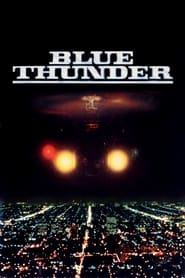
Photographing this helicopter at night was a serious challenge. Because the normal way that they had done it... ...was to have another helicopter fly along... ...and spread light all over the chopper. But it looked just terrible, you know. It looked all lit up and phoney. And Alonzo came up with the idea-- He said: "I'm gonna make this helicopter light itself." I said, "What did you mean?" And he said, "I'm gonna put lights all over it that are hidden... ...and wherever it goes, it will have light on it." So he and his electricians built lights that are... ...hidden along the bottom of the skids of the helicopter. They're hidden up in the tail, all over the place. Just little tiny guys spreading light along the body of the helicopter... ...so you could see it against the real night sky. And it took them a long time to develop it. And they would keep coming back with test footage... ...where I'd say, "Oh, this looks very nice. When do we get to see the helicopter?" And they'd say, "Well, it's right in the middle of the frame." But it was so pitch black. Because we had to make a helicopter... ...that was, like, midnight blue. And, of course, that was terrible. The only thing worse than that... ...would have been if it were painted black. Then we never would have seen it at all. Well, we're actually very lucky, because right now... ...we've just been joined in this session... ...by an absolute genius in the area of special effects. Hoyt, would you introduce yourself?
56:36 · jump to transcript →
-
I understood you weren't really able to fly the Blue Thunder... ...over populated areas? Is that correct too? Because it wasn't really FAA approved. So you had to clear areas out... ...when you flew. That's why you flew on weekends. Was this a rumour, or was that true? - Well, it's-- That's a partially true story. When you fly below 1000 feet... ...you have to be in an area that is controlled. So the Blue Thunder helicopter flew all over Los Angeles. I mean, everywhere, but above 1000 feet. But when we got to Downtown Los Angeles for later sequences... ...that we'll come up on, we were sometimes only at 50 feet... ...flying around. And so those areas were locked off... ...and we could only shoot in Downtown Los Angeles on Sundays. So Sundays in Downtown Los Angeles, unlike New York-- I mean, the place is deserted, and... You know, nobody is down there. Or at least at the time. So we could clear out eight or 10 blocks... ...and just work in that area... ...and control the pedestrians and the traffic going there. John, when you remix this, do me a favour. What? - Put the finger snaps in. Put the finger snaps in. Oh, yeah, this was a big argument with Columbia, constantly. The crack of the fingers that you just heard: How loud should it be? It seemed no matter how much we turned it down... ...people were still horrified by it if you could hear a little bit. They just go: Because everybody knows what that must feel like... ...even if you've never had it done.
1:07:11 · jump to transcript →
-
Now, we're looking at a lot of stunt people running around... ...because they all participated in this sequence that came up... ...as the F-16s lock in on the heat source... ...of our Blue Thunder helicopter. And Scheider gets his plane where it's up against the sun reflection. He's hoping to decoy the helicopter into this. That was the miniature helicopter, too, going across right there. There's the miniature helicopter. Certainly the idea of it going into a building like this... ...was viewed by us as complete fantasy. And it never, ever occurred to us... ...that somebody would actually do something like that, you know. It's just beyond the range of thinking. At the time of 9/11, you couldn't have shown an image like this. Everybody got so sensitive. And then, suddenly, they realised... ...that people weren't as terrified of it... ...as we were saying they were going to be. Remember, people were saying, "We'll have nothing but Doris Day movies." Or, you know, whatever today's version of Doris Day movies is. But then, suddenly, the video stores started telling us... ...that every terrorist movie they had was gone from the shelves... ...that everybody was suddenly fascinated... ...with the very thing we said they wouldn't be... ...which proves William Goldman's old adage of, "Nobody knows anything." And you'll remember, when I talked about the first shot... ...with Malcolm McDowell. Well, here it is. This is the one where he comes... ...and has to jump inside the helicopter and take off. We probably won't be able to get permission... ...to do practical work like was done on Blue Thunder. In other words, I think the laws have changed... ...and people's concern for safety has increased. So we won't be seeing the same kind of amazing, live stunt work... ...which is really, you know, just some of the best ever done. They would depend on visual effects, other methods, to achieve the look... ...but it wouldn't be the real thing, which is what we got here... ...which is a real treat. So he didn't know he had the option of-- No option here. No, no option. But it looks really good. I mean, it looks like he's taking that helicopter off. And the pilot, Karl Wickman, was-- I don't know where Karl was, but I couldn't see him. At that point in Los Angeles, in the early 1980s... ...lots of new, giant structures were being built... ...and here we got to use one where we could shoot through it. And this is where we lost this helicopter... ...this little Hughes 500 helicopter. Its engine blew up. And the helicopter auto-rotated down to the ground... ...onto those parking lots that you see. And only because we had cleared the lots out... ...and had no traffic down there and no cars, no people, was it safe. And we thought we had killed Karl Wickman... ...because the engine blew up. But he was a Vietnam helicopter pilot... ...and he had rehearsed auto-rotating to the ground hundreds of times... ...and he took his helicopter down to the ground... ...and it only bent a couple of skids. And as it hit the ground, he actually was jumping out of it... ...right simultaneously backwards with a fire extinguisher... ...in his hand to put out the flame. But now you can see, we're down 40, 50 feet... ...above the Music Center in Los Angeles. That was not Bill Ryusaki. Good for him.
1:34:03 · jump to transcript →
-
-
-
Tim Lucas
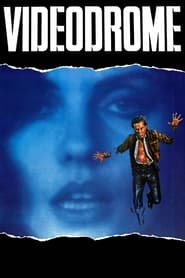
You know, every shot of Debbie that was included in Universal's official still set was from a scene that had been cut from the picture. It was not her fault. The real problem was that the film had to go before the camera before there was a finished script. And as David and Ron Sanders rewrote the picture in the editing room, Debbie's scenes tended to be those that pointed the way to narrative directions no longer taken. But she figures in a number of Videodrome's most memorable scenes.
22:47 · jump to transcript →
-
Tim Lucas
would televise torture when it's easier and cheaper to fake it. Masha's lighting of the cigarette brought Max back to his memory of Nicki's challenge, and it should be pointed out that Debbie Harry now disappears from the film for roughly ten minutes. There were reportedly preview screenings where she dropped out of the film for significantly longer. Now that I think of it, isn't it possible that the real Nicki never comes back?
24:33 · jump to transcript →
-
Tim Lucas
It's a nod to his reputation as what Mark Thomas McGee called the best of the cheap acts. If we think back to the offices of Civic TV with all the Roger Corman posters on the wall, they combine well with Jimmy's proposed ad lib to suggest that Roger Corman and Not City TV's Moses Znaimer might be the real role model for Max Renn. When Barry Convex refers to the eyeglasses that Max is wearing as machinery,
48:48 · jump to transcript →
-
-
director · 1h 31m 3 mentions
Alex Cox, Michael Nesmith, Victoria Thomas, Sy Richardson + 2
-
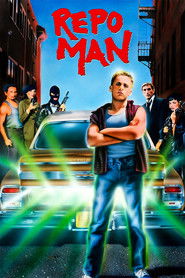
Si's a real cool cat in real life, too. Well, this is my film to try. I had quit acting for two years and did nothing but go to school. So when I came back to this film, it was Si Richardson's doing his thing. I had to find my place in this industry. And my place was supposed to be a black Humphrey Bogart. Oh, yeah. That's the inspiration. So the first thing you do is steal a Camaro. That's what I would do. Yeah.
31:34 · jump to transcript →
-
But you look nothing like Fox Harris. No, I look nothing like Fox Harris at all. It was just so soft, though, you could get away with it. The sheriff hats are hilarious. Well, in fact, they were going to be Dodgers hats originally because they've all gone out with baseball bats. But then the Dodgers wouldn't let us use their hats. I brought the real repo man in to talk to him, Quentin, and he had the sheriff hats and the jackets that he would use when he repo cars. So Quentin Gutierrez loaned us those hats.
1:00:33 · jump to transcript →
-
Well, and I switched bats on him. I gave him a plastic bat when he wasn't looking. Yeah, and he was so mad. He was not happy about that. He was so mad, and it was so hilarious, too, because he wouldn't do it, because you had done that to him, he wouldn't do it again unless he had the real bat. And I remember he even hit the Ford Falcon with the bat. He whacked the Falcon with a big dent in the hood of the Falcon.
1:02:18 · jump to transcript →
-
-
-
I thought very hard about it and sort of figured my job was on the line. I was going to lose in any case, but I had to be honest about it. And I swear to God this is a true story. After Richie made that phone call to me, the next day as I was carrying the weight of this, the actor who was let go was passing underneath my little trailer, and I really... This is a true story. I heard him say...
44:41 · jump to transcript →
-
Once you have two days' work, they can't borrow you. It's my game now. That really happened in time and space. You never told me that. We spent a long time figuring out the right French song.
45:08 · jump to transcript →
-
I think it may be very hard to make out in video how wet he is, but there is the reveal. And this was a much longer scene, as I remember originally, with the sweating developing over a longer period of time. And I think this thing that happened with the map really happened. It was, I believe it was... And then we went back and did... That was a real accident that happened, and then we played with it.
1:25:03 · jump to transcript →
-
-
-
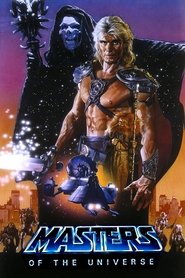
Gary Goddard
This was one of the largest sets built in Hollywood in probably the 10 years or so before that. This throne room set is the real deal. It was so large, we actually used two sound stages. And that hall right there that he's walking by, it connects two sound stages. That's actually outside. That runway you're seeing there is a real runway. Now, of course, we've matted in the upper shots on top. That's a matte painting. But the actual runway and the throne room and the scale of that is all for real.
3:05 · jump to transcript →
-
Gary Goddard
Now we're in that throne room, that throne room that covers two sound stages. I know he's here waiting for us. You're right. This was a pretty elaborate day. We're going to have tons of soldiers. And there again, you look at the depth as they pass this hallway. That's the real thing. That's not a matte painting. That is the real thing. It goes way down there to the big, massive doors. The big, massive doors at the end are actually against the far wall of the second sound stage.
11:35 · jump to transcript →
-
Gary Goddard
except for the shot here where we're going to use miniatures. Not there, of course. He's alive, but there you go. There's your maquette, and this is real, and off he goes. There's the big ship coming down the street. We had the real version of that and then the miniature version, which that is there for this sequence of shots.
1:11:28 · jump to transcript →
-
-
-
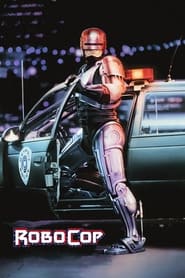
It was a big tragedy up in San Francisco. So this was kind of based on that idea. Of course, this has a much more happy ending than the real outcome did. Getting Robo in and out of the car and up the stairs, Paul... Took some time. Well, actually, the truth is, every time he's getting out of the car, he has no pants on. Because he could never get out of the car in the costume. And you could never shoot the costume from behind because the butt wiggled. Right.
38:22 · jump to transcript →
-
Oh, there, that should be me, but it isn't. And the real shot of Paul comes up here on the gong sound. That's me, that's me. I mean, I was trying to make everybody dance in a frenetic way, and basically at the end of the shot, I was just still stimulating the crowd.
58:21 · jump to transcript →
-
What an elegant solution. It's so great. Thank you, Jon. And then we get to kill the bad guy. Now, I remember some people wanted the... One of the producers said the movie, we had to have the big fight with the robot last because that's what everybody wanted to see with ED-209. And not this scene because who cared about it? My sense was everybody needs to go to the real bad guy and get rid of him. And... Yeah. Then this ends up being the end of the movie. Now, we have some stuff after this that we cut out after this line. What's your name?
1:36:27 · jump to transcript →
-
-
-
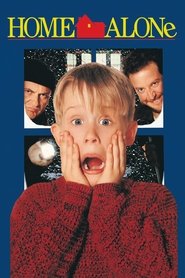
Someone I got to work with, Maureen O'Hara... ...on a picture right after this... - Mm-hm? ...SO... - I did a day on that. Yeah. We cut your big scene with John Candy. You cut all my lines out. - Yeah. It was kind of like we were trying to duplicate Uncle Buck. Yeah, yeah. - I remember that, and it was just kind of... Felt like we had been there, in a sense. Um.... More people saw this picture, so you're Okay. Yeah, no, I'm.... Thanks, Chris. Now, this... - Ha-ha-ha. Thank you. We resorted to stock footage for any shots you'll see of airlines... ...coming up, shots of Paris. We had no money to go shoot those things. And this was a set that already existed... ... that we put back together so we could actually shoot. The, uh-- This is first-class when you could actually have real silverware on the plane. Yeah. - Yeah. Most of our sets, incidentally, were in a... A lot of them were in a high school outside of Chicago. We shot Uncle Buck there too. - New Trier High School. Yeah, yeah. - And, um.... Some of the sets-- I'm trying to remember where the house set was. We were in some warehouse, weren't we? Or was this New Trier as well? It was in the gymnasium. - Yeah. It was all in that school, the interiors. - Gymnasium. We also shot a lot at the house, at the real house. Oh, yeah. - The second one... ...[I think we spent half a day in the real house. Because they... The people who own the real house... ...wanted a little more money in the second one. Everybody wanted more in the second one, and rightly so. Me included.
18:20 · jump to transcript →
-
There's a Barry Bonds baseball card. - Yep. For those who wanted to see Barry in his younger, thinner days. Um.... Now, this was actually the real house here, which was in Winnetka, Illinois... ...and, um.... It was interesting because we were... We were able to shoot a great deal of the film at this house. None of the interiors that you see in the film were shot here... . UM... ...but this house worked out very well for us. Strangely enough, you know, with today's budgets... ...we would've built the back of that house completely... ...because the fact that we did all of those stunts later in the film... ...on the actual location was just ridiculous. And they were very friendly. - They were great. They had T-shirts made up. - They loved it. They used to have hot chocolate and stuff for us... ...and invite us in. They were great. They were a great family. It's incredible because I see... ...the things people do to people's apartments and houses... ...when they rent them out, like, you Know, for production. I'm like, "I'd never do that." - No, I know. Once you learn... Once you've seen it done, you know... Not to discourage any of you guys out there listening... ...to renting out your houses to future productions. But make sure you're paid very well. - Yes. That voice on the answering machine was Raja Gosnell... ...who was the editor of this picture... ...who's gone on to become a director in his own right. I
37:15 · jump to transcript →
-
What money? These would sort of be our split days. We'd shoot you in the morning, the first part of this... ...and then later that night, we'd go back to the house and shoot. Plus, am I--? I think this is the real house... ...and then this is the sound stage, isn't it? Yes, exactly. - Yeah, yeah, yeah. So the, um.... But it really... In terms of shooting the film... ... It was possible to shoot it with someone so young... ...because you were separate from.... And that was really helpful. And we used this gag twice too. I Know, and it worked. It seemed to work twice. Although that's because Danny Stern just brought it to another level... ...when he's at the door coming up, SO.... Yeah, we used... Because of budget again, we used a lot of Chicago actors. This guy was one Chicago actor that we found in the city... ...and then later moved to Los Angeles.
48:28 · jump to transcript →
-
-
multi · 2h 24m 3 mentions
Alex Thomson, Terry Rawlings, Alec Gillis, Tom Woodruff Jr. + 3
-
So, yes, this is the footage of Charles Dance's character approaching, finding the Ripley character on the beach. For this scene, we at Amalgamated, with our U.S. and British crew, had to build a replica of Sigourney Weaver. And it was based on a life cast of her, a head cast only. She had just had a baby when we had a chance to do it. That's actually-- I believe that that is an actress, although I can't tell if that's a stand-in or our dummy. But that, of course, is Sigourney Weaver. But she had told us that she would be losing weight, so we had to... She had just had the baby and we had to extrapolate what her body would look like, and so you can see how accurate it looks in these shots. There it is. There. That looks just like Sigourney. It's funny, because we really labor over a lot of these things and that's the real Sigourney. So I think that's about it for the dummy. But it was a beautiful sculpture. Gary Pollard, who is a very talented British sculptor, sculpted that and it was used to save Charles Dance's back. So that he could carry Sigourney. Those are all the little lice. They're actually crickets, I believe, that ended up in Tom's suit. Because the crickets were all over the place and when Tom was wearing the alien suit, he had them crawling down his neck and into his briefs and all that. And in fact, there's a fake ox here, coming up, that was covered with the crickets as well. And even when we shipped all of our stuff back to LA months later, we opened the crate and there were full-grown crickets in the ox's body. So they're very hardy and tenacious little-- Just like the alien, I guess.
5:04 · jump to transcript →
-
The light coming from the top was a 4K xenon lamp, which gives you very straight beams, which I thought would be quite a good idea. I shot it up through a mirror because you can't tilt them down or the condenser burns. But we had a mirror above the set and I shined it from the floor onto the mirror. This autopsy scene was a favorite of Fincher's, too, because we had created a body of Newt that had multiple layers of tissue, skin and musculature that could be cut through, and the bones opened up. It's a lot of graphic coverage that's not in the final movie. The body of Newt was actually based on... Alec and I had done a life cast of Carrie Henn during Aliens, and while we were in London Bob Keen's shop actually had a casting of the head. We were able to get that and remold it, so we were able to duplicate what the actress had looked like some five or six years previously. There is intercutting here with the real girl as well. She has a lot of fuzz on her face. - Yeah. Backlit fuzz.
17:31 · jump to transcript →
-
And then we had Sigourney on the stage to shoot her in bluescreen, and she signed a picture for me "Help, get me the hell out of this movie!" "Love, Sigourney." - We see bald-cap shots soon, that were shot months later in LA. And Greg Cannom did a beautiful bald cap on her. More than a bald cap - it had to have that stubble. It was much more difficult than a bald cap. You'd think he'd done samurai movies with the quality of the bald cap. This was fun, having Lance back in the role too. And it's so brief, when Lance gets hit with this lead pipe. But we showed his ear had become dislodged, as Fincher wanted to show that this is the real guy, and not a synthetic person. The script had Bishop I and II. And to play the creator of Bishop, who would be this guy, I literally didn't have to do anything, as an actor, because to play the creator of a guy you make Bishop in your own image. You'd build an android in your own image. It's like when you read the Bible - it's God made man in his own image. And I thought the outrageous part was Fincher being... He was a young guy, 27 or something, and when he talked to me about this scene he was so articulate and so supportive, I was shocked, because he was such a young guy. He sort of saw inside you. It was a really amazing thing. For Lance's human character, when it's revealed that he is actually a scientist who the Bishop model was patterned after, Fincher wanted a wound. So we created a torn ear where the whole ear was lifted forward. And Nick Dudman applied that beautiful application on it and some blood tubes and that sort of thing. Obviously I've got flicker boxes working on these lamps, to give the effect of firelight and the hot furnace. You can just see it in the background. You can see the light fluctuating. Just giving the effect. Once again, it's nice to flicker on several sources at the same time, because if you do it just on one lamp, it never looks quite right. It's either too regular or too irregular. But if you use one more than one lamp at a time, it comes across much better.
2:12:22 · jump to transcript →
-
-
director · 1h 31m 3 mentions
David Steinberg, Dave Foley, David Higgins, Jay Kogen
-
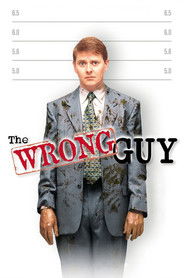
Now, you came up with the premise of a guy on the run from no one. Yes. Right? Yes. On the run from no one. Yeah. And that where they know who the real killer is. Know who the killer is and he just runs. Yes. And we did have scenes that had the girlfriend in it. But coming up as, yeah, this is. And we have Mark. Yeah, but I remember giving you a note to.
9:04 · jump to transcript →
-
And we have the killer actually doing open heart surgery. Making an attempt. Yeah. To save the cops. Yeah. And it doesn't work. He's not good at it. He's not really good. He's not a doctor. No, he's a killer. He's an actual killer. He's the opposite. And they're consoling him so he can't escape yet. What's going to happen in this next frame is something that I do in real life.
42:50 · jump to transcript →
-
This is my wife's least favorite line is coming up. Uh-huh. Not from around here, are you? What makes you say that? Is that it? No. I've lived here all my life, and I've never seen you before. Oh, then no, I'm not from around here. Where are you from? Oh, that doesn't matter. The real question is, where am I going? Oh, where are you going? Can't say. Oh. Is that the one she hates? When she says, do you think I'm pretty? Yeah.
47:37 · jump to transcript →
-
-
-
We also had a mechanical baby that is in some shots that Stan Winston's people made, which was really quite wonderful. Obviously, all the close-ups on the face of the real baby. I've been accused many times of making things too dark. I personally don't think
6:16 · jump to transcript →
-
It took months and months to do. And hopefully it's considered worth it. Again, we had no shortage of actresses who wanted to do this role. And I kept on saying, you understand you're naked. You understand this is, you know, the real stuff. And they all said, it's with Gabriel Byrne. I said, yep. They said, we want to do it. If I had been in high school with Gabriel, I would have been a very, very good friend of his.
40:05 · jump to transcript →
-
This is the real thing. This was New Year's Eve. As cold as anything I ever remember. And this was shot in what was the old Herald Examiner building, the Los Angeles Herald Examiner building, which is a now defunct newspaper. Gorgeous, gorgeous old building. This scene obviously scared me.
1:29:38 · jump to transcript →
-
-
-
This is based on... When we first started this, Alex wrote all these images for the beginning, a lot of which were based on Soria Samora's footage from Sierra Leone, and we debated at one point about using the real footage of terrible civil unrest and death and violence, and we decided rightly, I think, that we wouldn't use anything that involved any real deaths, and the footage that is in there...
0:39 · jump to transcript →
-
That's the one we should have kept, but of course they were south of the river. This was filmed actually in Croydon, and then this is back to the Blackwall Tunnel, which is one of the main routes under the river in London. And we were very lucky to get... The actual tunnel itself is not one of the real tunnels, it's a disused tunnel.
43:30 · jump to transcript →
-
the lieutenant of the, the left tenant of the, the left tenant was, he's the representative at this point of. Well, he's the real evil sod, isn't he? Yeah, I guess he is, yeah. So he gets reserved for him as the best death, I suppose. This was all shot in all these houses in Salisbury, although we, there's a number of pickups in it where we went back later to pick them up. I love the way this, this,
1:40:52 · jump to transcript →
-
-
-
Initially, when we started looking at locations in Moscow, I had a lot of reservation about what we'd find there and what the equipment would be like and what situations we'd find ourselves shooting in. And one of the first places we scouted, and it was actually the first shot of the film, the first shot that we shot of the film, was in the real Moscow, an operating subway.
2:30 · jump to transcript →
-
these actors come out of the reactor and they were obviously already in makeup and performing and yet I found myself imagining the real individuals and the real submariners who had volunteered to go into that reactor and try to do what they could to prevent a thermonuclear event and yet to their
36:06 · jump to transcript →
-
you know, quite proficiently. But it wasn't CG. It's real. Exactly. By the time that the Vostokov, the Harrison Ford character, was being interrogated by the tribunal, he had the real man, Nikolai Zateyev,
2:02:32 · jump to transcript →
-
-
director · 1h 42m 3 mentions
Len Wiseman, Patrick Tatopoulos, Brad Martin, Nicolas de Toth
-
lends itself well to then the CG being applied on top of it, so every frame that you go through and every step of the way, you have a lighting reference, so the CG guys will know exactly what that texture should look like, rather than, say, the whole creature being CG throughout. It's hard to match the lighting of the environment. I think more and more people are aware of that. You always try to bring lighting dummies, if anything. I mean, in this case, it was the actor in the suit, but I think it's a good thing to have the real reference for CG to play with.
30:14 · jump to transcript →
-
That's rich citrone right there that first bit was that I was on See you got a luma CG and the clothes of the real actually is that hurt Carly or is that rich that who is that? That's rich. That's rich to the town. There's another CG guy right here Then we go into practical right there CG knife practical here. Yeah a little wire drag Practical that's an air am right there. This is all practical as well this chain and him swinging him around we actually put a
46:38 · jump to transcript →
-
It's all practical and then CG right there. This move I love in CG. The jump across. The jump, I think that was the best move of the movie. He looks better coming over than he does going, when he goes away. Completely. CG and then the real practical, we just moved the bridge. There's a combination CG and then practical when he lands. All of our miniature there. Miniature and CG.
1:27:38 · jump to transcript →
-
-
director · 1h 36m 3 mentions
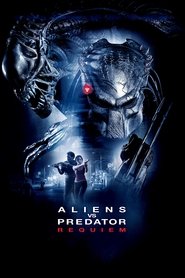
Aliens vs. Predator - Requiem (2007)
Colin Strause, Greg Strause, John Davis
-
He hit the line delivery we want. Well, you know, you've got to have the real down-to-earth quality of this guy. I mean, we were up against the fact that he is a pizza delivery boy. And if you're not careful with who you cast in that role, that could come off a little cheesy. And Johnny did a great job. He really pulled it off. You don't think anything against him because of his job, and that can be a tricky line to walk sometimes. Yeah, and the other thing with him, too, was his—
12:19 · jump to transcript →
-
And that's the real address. That's the real address, yeah. We were shooting it. It was the one thing we didn't look at when we were prepping the house. And that door opened, and we're like, oh, that's really long. And then we're thinking about, should we digitally paint that out so it doesn't look so crazy? And we're like, yeah, we'll just better put the money somewhere else. Exactly. Now, this is the part where Brian Tyler called originally. I don't think he made it on the CD with this name, but he called the score in this section...
17:32 · jump to transcript →
-
To have to have the, we had to dress the real one. Well, first of all, it wasn't even a real one. We couldn't get one from the U.S. military. We couldn't get one from the Canadian military, which had a similar type of model. Because they were all busy. They were being sent to Afghanistan, so there weren't any extra ones available. So we found this thing was like some piece of crap. Prototype. Prototype. It barely ran.
1:15:26 · jump to transcript →
-
-
multi · 1h 33m 3 mentions
Wes Anderson, Peter Becker, Roman Coppola, Jake Ryan + 3
-
Wes Anderson
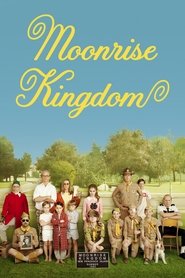
Well, the cameras we had, we used these Aaton cameras, which are Swiss, I think, and one very small camera in particular, the A-Minima, it's called. I mean, these are now all kind of, even now, these are sort of obsolete. But the A-Minimas, I think, were developed with the input of Jean-Luc Godard. And maybe they weren't finished in time for Godard to want to use them anymore. But I believe they come out of a collaborative process that was happening with the guy who owns Aatan. The way these cameras are operated, you don't put them on your shoulder, these little ones, they're underslung. You know, you hold them in your hand like a video camera. You hold them at chest level or even waist level, and you look down through the top of them like a Rolleiflex. Rolodex is another thing. And this was very good because many of the characters in our movie were short. They were 12-year-olds or younger, and it's hard to handhold scenes with someone who's down below you like that. But with this, it was at their eye level. We didn't do the whole movie with these cameras, but we used the Aaton system and it was great. And also, the slow-stock film that we used-- Slow-- The slow-speed Kodak film that we were using, in 16 mm, looks very, very close, almost identical to the fast 35 mm stock. And since we now do the transfers digitally, there's not like a blow-up where you get extra grain. It can look very-- You can get the real feeling of 16 mm, and you don't feel like you're kind of compromising it as you make it into a bigger projection. So anyway-- And that was all part of what went into the-- One aside, when you look at one of the little handheld films I shot on Moonrise, we're about to all get on a boat and go out. There's a moment at which Fran McDormand realizes that the boat is taking on some water, and she starts saying, "We're taking on water, we're taking on water. Does that matter?" And then Nate, our first AD, starts telling people to get out of the boat and try to sort it out. If you watch Wes in that moment, he's not only unconcerned about the safety of the children on the boat or anything like that, he immediately uses it as an opportunity to throw more crew off. As soon as he realizes, you can literally see the moment that a light bulb goes off in his brain and he realizes, "I now have a rationale for getting rid of more people." And he immediately starts saying, "Okay, so who can we lose?"
17:07 · jump to transcript →
-
Wes Anderson
Yes, we had the idea that the real place where they're going was 3.25-- Mile 3.25, tidal inlet, and that they were gonna invent their own name of the place. And Moonrise, I remember, is-- I had seen this movie directed by Frank Borzage called Moonrise, which is a strange word. You don't often hear the word "moonrise." And that was just one little aspect of it we can share with Ryan.
22:05 · jump to transcript →
-
Wes Anderson
I mean, it's quite nice, he does jump from a moving boat here, which is not normally a thing you really do in real life.
1:15:58 · jump to transcript →
-
-
multi · 1h 39m 3 mentions
The Grand Budapest Hotel (2014)
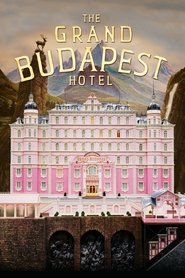
Wes Anderson, Roman Coppola, Jeff Goldblum, Kent Jones
-
Kent Jones
You like to camp out in particular places and build your film out of the real places.
14:06 · jump to transcript →
-
Wes Anderson
Did I say, "Jeff, will you explain to him how actors have to do--? Sometimes you just do a thing you would never do in real life, but you have to do it."
1:06:32 · jump to transcript →
-
Wes Anderson
Which I hope is a good thing, in a way, but I certainly don't know how I would have done it in real life.
1:18:35 · jump to transcript →
-
-
-
stems from the original recording which has got some of the other instrumentation in it and then eventually we go through to the full mix but by that stage we remixed the song really and spread it so that it was in 5-1 so particularly when you're in the cinemas you're absolutely surrounded by this music it was quite a complicated mix I think it's one of the real powers of when
43:53 · jump to transcript →
-
pretty much you know within a week or something like that but we didn't have very much to tell the story with but these stills just going back to that her eyes and her just holding on those shots it felt like you were seeing the real her again at that particular moment there's a sadness in her eyes this is someone who is trying to disappear
1:29:46 · jump to transcript →
-
Nobody wanted to share this material. This is so personal, having his answer messages. It wasn't an easy thing for people to share it, to know that the world would then hear it. And maybe some people would then judge that person for recording it. It was like she left a message for him and he kept it. He's in the music business. And really, I think everybody felt they wanted the world to know the real Amy. I think the reason they did it was because of their love for her and how much they cared about her. And they wanted us to try to get it right as much as we possibly could, which is why they were willing to put themselves on the line in a way by being a part of this film.
1:42:22 · jump to transcript →
-
-
-
David Kalat
The new Japanese constitution placed strict limits of what the real life military could do. They could defend the country from invasion and that was about it. If you set your film in World War II, it meant your soldier characters were on the losing side of a conflict that you were now obliged to depict as deeply wrong. So a film like this created a unique opportunity to show the contemporary Japanese military doing heroic and resourceful things now in the present in a way that the audience could cheer for without any lingering traces of guilt.
50:22 · jump to transcript →
-
David Kalat
Again, they rebuilt the set, this time reinforcing things to be less fragile. So the cameras roll, Nakajima stomps up to the building, starts to claw at it, but the reinforced, rebuilt set doesn't break. Eventually, he succeeded in destroying the building, but it looked fake, and Tsuburaya threw most of the footage away. Instead, they shot a composite mat with Nakajima, superimposed on actual footage of the real Diet, and inserted what clips of the model they felt okay using.
1:04:35 · jump to transcript →
-
-
-
Francis Ford Coppola
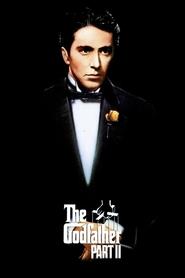
This is Dominic Chianese playing Johnny Ola, and much of this comes out of research as to what really happened with the various factions who were involved in the mob at that time, and not the least being the man that Johnny Ola refers to as our friend in Miami, who is none other than a kind of version of Meyer Lansky, fictionalized in the form of Hyman Roth.
22:17 · jump to transcript →
-
Francis Ford Coppola
Of course, Andolini is the real name of Don Corleone. And this action sequence, as they try to beat their escape, indicates how Don Tommasino was first crippled and why you see him in the wheelchair.
2:49:02 · jump to transcript →
-




Related topics
Other topics that frequently come up in the same commentaries.