Topics / Writing & development
True story / real events
131 commentaries in the archive discuss this, with 408 total mentions and 72 sampled passages on this page.
Filter commentaries
Filter this topic by the film's decade or the type of commentary.
By decade
Across the archive
ranked by mentions · click any passage for the moment in the transcript
-
-
Rob Cohen
The book that's coming up... ...is actually a scroll called The Oracle Bones in the movie. And if you look to the left... ...those bones with the writing on it are the true Oracle Bones. I had to give a form of concentrated knowledge... ...but the real Oracle Bones were discovered... ...in the early to mid 20th century...
6:07 · jump to transcript →
-
Rob Cohen
And, of course, what's a mummy movie without a few mummies? Here's number one. Anyway, all of these ideas in this tomb are based on the real tomb in Xi'an in terms of its layout and the hypothesis of where the army was and where the emperor was actually buried.
18:15 · jump to transcript →
-
Rob Cohen
and hope that the mystery would be even greater by not explaining it at this point. Here we have the Beijing Opera doing the Monkey King. We've really staged the opera with the real Chinese opera stars, and it was a fitting.
47:23 · jump to transcript →
-
-
scholar · 1h 32m 4 mentions
The Night of the Hunter (1955)
Terry Sanders, Robert Gitt, F. X. Feeney, Preston Neal Jones
-
My recollection is it was $800,000 back in 1954. Yes. Now Lawton tried to draw parallels between some of the characters and other characters in the story. For instance, note this shot, and then remember that it'll be repeated when the children's father, Peter Graves, is brought before the judge, so that there's a parallel visually between the real father and the phony father. This is the penitentiary in Moundsville.
4:52 · jump to transcript →
-
And those are the real sounds of the crickets, I believe, that you actually heard at that ranch. It's nice to see how, you know, these significant shots of John walking from place to place and how subtly that does allow him to claim the film and own it as the protagonist. You know, it's his viewpoint and his navigating the world.
25:40 · jump to transcript →
-
It's interesting that you mention that because in real life, Sally Jane Bruce grew up to become a teacher. That's right. In Central California, yeah. And on the other side of Billy Chapin is another wonderful child actress. Yes, Cheryl Calloway.
1:11:41 · jump to transcript →
-
-
-
Francis Ford Coppola
frightened of not getting the scene in time that I focused just on getting the real hardcore scenes, the meat, so to speak, of Al in the corridors. And I didn't shoot any shots of just the empty corridors. And so my friend George Lucas went through the footage and he said, well, you gotta have, to build suspense, you gotta have some empty corridors.
1:02:10 · jump to transcript →
-
Francis Ford Coppola
That actor along who has the lines in the background there is Sonny Grasso, who is one of the real fellows from the French Connection that that story is written about.
1:08:51 · jump to transcript →
-
Francis Ford Coppola
But really, although it has a dramatic purpose, you now know the real reason was Al couldn't speak Italian and I didn't want to have a lot of subtitles on the screen. It works good having the scene be translated. This is a very formal transaction going on here because if the word gets out that there's this young man who speaks English, there are obviously people who are searching for him.
1:42:14 · jump to transcript →
-
-
-
Nick Pinkerton
though that fake limp will connect to the real bum leg that Eastwood's character has and a very real limp that pops up later for Bridges's character. The car he's making a beeline for is a 1973 Pontiac Firebird Trans Am, identifiable by the big hood bird and the egg crate grill. As the used car salesman, here we have Gregory Walcott.
4:26 · jump to transcript →
-
Nick Pinkerton
and Schickel quotes from Wood. It is the essentially gentle Lightfoot with his indeterminate sexuality, his freedom from the constraints of normal gender roles, and his air of a pre-socialized child who constitutes the real threat to the culture. Finally, Biskind again. The lament, he says of the film, for an impossible and fugitive homosexual love
1:24:22 · jump to transcript →
-
Nick Pinkerton
got through. It is revealed that Thunderbolt, in fact, won the Silver Star in Korea, was all along the real hero, though he tried to deflect the attention. And the false hero, Red, meanwhile, speeds toward his final stand, which, as described, is a particularly gruesome one.
1:38:37 · jump to transcript →
-
-
-
John Mackenzie
great weather that year. Now, here we have the gang. Now, half of these aren't actors. Half of them are the real thing. East End guys who've done a bit of bird, done a bit of robbery, done a bit of this, that, and the other. And they were, apart from being very natural actors, well, they're doing their own thing, aren't they? They're doing what they're used to.
53:40 · jump to transcript →
-
John Mackenzie
doing a scene where a gun comes out and one of them said john can i talk to you can i talk to you yeah yeah yeah he said look john he said uh you know i've been told i've been told he said but they really wouldn't do that they really wouldn't take the gun out like that not in this situation he'd take him around the corner wrap him a couple of times and then only take the gun out then he said you know he said that's the real way they would do it so i've been told
54:26 · jump to transcript →
-
John Mackenzie
Where the yanks gone? I've just bought some more brandies. Go home, Harris, go home. Don't look down your nose at me, Victoria. Makes you go cross-eyed. You can't even see that I'm not the real bastard he is. Aren't you? I'll get you a cab home, counsellor. I'll talk to you later. Okay. Bastard.
1:03:53 · jump to transcript →
-
-
-
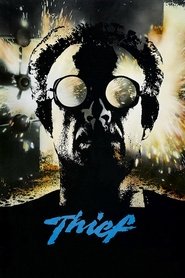
There's a Ronnie card. There you go. Do you remember this night? This was one of the great nights. This thing weighs about 200 pounds. It's a magnetic drill. We had all the real guys there.
3:29 · jump to transcript →
-
a good four weeks before we shot. And I hung around with a lot of the thieves, a lot of the guys in Chicago. This, for example, Willie and I are in real life real good friends. I love the guy.
16:39 · jump to transcript →
-
Uh, including interruptions, very careful. Yeah, this lighter just, this happened. Stuff like this happened. That was so, so great. And the story. This is the real, this was the one of the stories that I told you about that Michael had researched and gotten from this guy. This is really a true story. I got into this problem with these two guys. They tried to turn me out. So I picked up, uh, nine more on, on manslaughter beef, some other things.
38:13 · jump to transcript →
-
-
director · 1h 29m 4 mentions
Jeff Kanew, Robert Carradine, Timothy Busfield, Curtis Armstrong
-
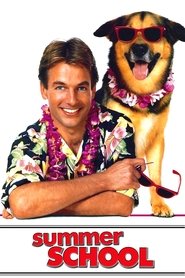
Okay, so that's the real off-ramp by the University of Arizona, which we called Adams College. This was a very specially designed shot to take advantage of noses and glasses. And don't look up near the letterbox, because you'll see that we forgot to put the box on top of the car. I told you not to look. 6,127 students at Adams, 58% of which are girls.
3:03 · jump to transcript →
-
We never get to see them tarred and feathered with molasses or whatever they were tarred and feathered with, but we did shoot that. Now, we're all laughing, but imagine how that must have felt if it really happened to you, which it did. I was in a high school fraternity where I did get tarred and feathered like that, and it's a horrible feeling. And you kind of wonder why you're doing it. I mean, why is it worth taking this kind of abuse and humiliation just to be able to do it to some guys next year? Oh, yeah, that's why.
21:31 · jump to transcript →
-
president of Lambda Lambda Lambda, played by Bernie Casey, former pro football player, an excellent actor, and a brilliant painter, actually, in real life. And the first night on the set, we were shooting the bonfire scene. It was four in the morning. It was cold in Tucson. And I heard him whisper to somebody, I'm sick of this fucking movie already. But we actually had fun working together after that. But he did scare me.
33:28 · jump to transcript →
-
-
-
said let's go for the core here let's go for the real the true mediocre in her face to sniff it you don't find that offensive you don't find that sexist this is 1982. that's right it's 1982 get out of the 60s we don't have this mentality anymore well you should have seen the cover they wanted to do i don't care what they want my favorite moment from the from the pre-production process was we were looking for a cinematographer to shoot it and needed to have somebody with documentary experience and
14:39 · jump to transcript →
-
did this scene, and he now brags to everybody that he meets, you know, I'm the guy. I'm the real artist. I'm the kick-my-ass guy. Come on. I'm not asking, I'm telling with this. Kick my ass. The drug use in this scene is sort of a rare occurrence of that in this movie.
47:38 · jump to transcript →
-
Now he could do it and he wouldn't notice. Rick, our drummer, the real drummer in this film, when we went on the road, one of the things that he expressed most amazement and delight about was the fact that we were staying in pretty first-class hotels. They give you all this free shampoo. I've got a two-year collection of it. He had this huge, this bag full of, like, dozens of little bottles and packets of shampoo. And he really thought he was getting away with something. Like, they don't have a clue. I'm taking all this shampoo home.
56:25 · jump to transcript →
-
-
multi · 2h 34m 4 mentions
James Cameron, Gale Anne Hurd, Stan Winston, Robert Skotak + 8
-
Pat McClung
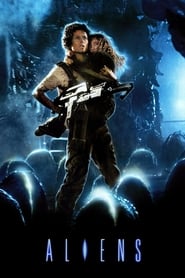
This scene was shot really quickly. It was pretty much all handheld, 48 or 60 frames a second. I think 48. Then Sigourney had to loop all her lines at slow speed, which is always odd. Our first effect in the movie. It's great, because it's what you expected to happen and then it's not what you expect. She was actually under the bed for that sequence. We built an artificial body from her neck down. Someone is under the bed with her. I can't remember who the lucky guy was that created the illusion of the chestburster. Pushing its way through her. It sets up the character. This is her nightmare. You know that she never wants to have to face it in real life again because she's haunted by it in her dreams and her nightmares. This effect is as if you're outdoors. When the camera dollies over, you see it's just a video projection. The idea was that in outer space there would be places you could go to get a feeling you were in a natural environment. So that plate behind her was shot out in the garden at Pinewood Studios. It was a VistaVision plate. Originally, there was supposed to be a birdhouse in the background in that garden, and she would have Jones on her lap and a bird would fly in and Jones would jump up and hit the screen and that's how the audience would find out that she wasn't actually on the earth. This scene was cut from the release version of the film, which became the source of some controversy with Sigourney. She later said in print that she had based her entire character on this scene, and she was devastated when it was removed. At the time she first screened the film, she told me she didn't like the scene, and then we wound up reading interviews where she had a big problem with that. We didn't have a chance to talk about it because of the postproduction schedule. We were working in England, kind of in isolation.
7:47 · jump to transcript →
-
Bill Paxton
Bill, isn't there dialogue that you have on this that people have used in video games? Yeah, I think so. "Game over, man" and things like that. You get anything for that? - I don't think so. I'm not even getting anything to sit here and do this commentary. They expect us to do it for no money. You got a beer out of it, though. No, it's just fun. I got a beer out of it, so that's cool. This was an amazing set, this concourse A. And it was long. And later on when all hell's breaking loose, Jim had that little video camera. He had everybody on the crew having coffee while we would run at him and do different things. It was SO amazing to see this gigantic set, one of the biggest sets I'd ever seen, and there's Jim by himself with this little camera. When did the bust-out almost happen? He was gonna move the movie. When did that happen? I remember there were some problems. There were some union problems. The crew weren't used to working the same way. With Jim. They weren't used to working. That's unfair. They were craftsmen, but they had an indentured way of doing everything. Jim needs something, he just grabs it. If he needs a light moved, he'll grab it himself. We punched a hole through somewhere cos he needed to run a line. He didn't wanna wait around. He just said "Give me a hammer." But this was an ambitious schedule. Jim was running from stage to stage. I think we had about three big sound stages with giant sets. And then there were two sound stages with miniatures. And then there was a stage with all those tunnels. I remember them putting you in that damn tunnel. That pipe. We had gone to the power station to shoot the atmosphere-processor scenes and come back to the set after it had been wrecked. So we're into Adrian Biddle's photography here. He was the second DP. I encouraged Adrian, to save time, to use as much built-in lighting as possible. This is lit by the fluorescents in the set, with just a little additional lighting. Adrian liked to work on a raw and edgy look and work with the practical lights a lot more. This is another thing that is important. With a lot of science fiction movies that are all interior, you often lose track geographically of where you are and it becomes incredibly confusing and it's hard to build the tension and the suspense. Jim was aware of this from the script stage and made sure that we established through the helmet cams, through the motion trackers, where they are, and then ultimately, later on, where the aliens are. Even in this version, you're left to fill in what happened. We don't see the baittle. We'll see plenty of battles later and this is promising you that. We have a shot coming up here where there were acid holes - acid... holes... eaten into the floor by these so far unseen aliens. And, of course, these sets were not double-deck sets. Jim wanted a scene where a character looks down through one of these holes. I think Bill spits down into it to give some perspective. So this down-view we shot on our miniature stage. We layered the set and photographed that. This is where you spit and they did it in miniature. They even did a miniature spit. - Is that what that is? To get that spitting effect, it was actually not spit. It didn't work very well, so it was a combination of milk... Milk and water in an eyedropper right underneath the lens. The complaint from the studio was that the film went on too long without anything really happening. I was winding the suspense tighter before you actually saw anything. The studio said we were just jerking around. Too many movies that I see now, it's all upfront. You start seeing stuff right away and there's no sense of a build. So this is the miniature APC that was built by Bob and Denny Skotak. Pretty good size. I remember it being five or six feet long. Most people don't twig that as a miniature. That's the real APC pulling in. They matched the lighting pretty nicely. I think Jim did some of his live-action stuff undercranked. He ran the camera slightly slower on the APC so that it felt slightly more as if it were a miniature but you knew it was real because you could see people interacting with it. So if any of the miniature stuff didn't quite work for whatever reason, it took the curse off that cos it felt that the two were blended together. I think he wound up undercranking because the APC, the full-size one, didn't move as fast as he wanted it. I think it could only go eight or ten miles an hour. One difficult thing about making this movie was 7erminator wasn't out in England and the perception of Jim Cameron, who looked about 20 when he directed this movie, and myself as the directing-producing team was met with a great deal of resistance because back then the system in England was that you had to put in years and years to rise up to the level of being a producer or a director. And we were simply not treated with a great deal of respect and it was very hard every day of the shoot. We were being second-guessed and every decision we made was questioned and the tremendous thing, of course, having Stan on the film was that... I was old. - No. ...was that you were a cheerleader for both of us. By demonstrating the respect and enthusiasm that you did, I think other people gradually relented. I knew it was the best thing for me and for everybody on that set. There are people that you know, no matter how they do it, what they're doing is special. This particular directing-producing team had been a win for me in my career and stayed that way. I never thought our facehuggers looked as good as the one in A/en. We had to make lots of 'em and they had to run around and do things, but, texturally, the one in the first film looked great. It really held up. The bits of oysters and stuff inside it looked great. But I did wanna see the disgusting thing that had been down the inside of Kane's throat in the first film. You never see it in the movie, in A/en, so I figured we'd gross everybody out. All of Giger's designs have a real sexual undercurrent to them. And that's what horrified people about the alien as much as anything, is it worked on a kind of Freudian subconscious level. And Ridley and Giger knew that and they went for that. This film was never intended to be as much of a horror film as the first one. It was working on a different thematic level but I still wanted to be true to some of those ideas, some of those design concepts. It would be natural to assume I'd wanna work with Giger, but it just didn't occur to me at the time. Maybe it was because we really only needed to design one new creature and I had already designed her by the time I wrote the script. The alien queen. I guess maybe it was my own ego as an artist. I just felt like he'd made his stamp and I knew from what I'd read that he had to do everything his way and I had a very specific idea for the alien queen to extrapolate beyond what had been done before. I got the impression from what I read that I wasn't gonna get the dynamic character that I wanted. In a funny way, part of what attracted me to doing this film was the opportunity to do cool design stuff. So maybe I was just a little bit too in love with the idea of designing the creatures and the weapons and doing all that stuff.
47:57 · jump to transcript →
-
Bill Paxton
These shots of the aliens hanging from the ceiling are just shot upside down. It's just guys standing there in an alien suit. And we set up some alien puppets made out of foam and filled them with gak and guts and yellow goo, and blew the hell out of them, as I recall. Made a big mess. Miniscule things we had to do, like creating burn appliance make-up for when the acid would hit. Here's a case right here. Alien comes up, splats, and the blood is right here. Quick cut. Quick cut. But prosthetics used. John Richardson was the physical effects supervisor. I was at his shop on the lot, and they were testing one of these flame-throwers and it was a real flame-thrower that they had built. This thing would go about 20 or 30 feet. So every time you see flames coming out, it's the real thing. It was a little scary. When we did the fire in the APC, there was something used to age the set, some kind of wax-based substance that the art department had dabbed on to make the set look more like a used military vehicle. And the heat caused it to vaporize and the actors got this strong sense that they couldn't breathe. It caused their throats to close up. Bill tells the story Jenette is going "Ugh!" And Bill remembers thinking "She's coming up with some great stuff." And she really couldn't breathe. I don't remember what we did. Probably just kept shooting. I think we just kept the fire out of the inside, kept going. Because the full-size APC was incapable of spinning its wheels, all those shots of Ripley when she hits the gas and you see the wheels spin and smoke are all the miniature, because the full-size vehicle again weighed some 20 or 30 tons. We had put A-B smoke... A solution on the wheel and B on the ground. And as the tire turned, it would mix that A and B together and give the smoke. We had somebody holding back the front of the APC for a moment, so that the tire'd spin, then we'd let it go. That A-B smoke is really toxic. We don't like to breathe that stuff.
1:17:31 · jump to transcript →
-
-
-
Eleanor Bergstein
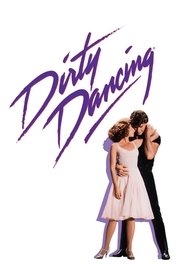
such a tribute to all of them that what the world has responded to is the real emotional precision of their work, which was so careful. And everyone in the crew would come up to me, which I invited, with ideas about what they thought about the characters or what was happening or who was doing what. And you know that wonderful line in Renoir, in this world there is one thing that is terrible, and that is that everyone has his own good reasons. And I wanted...
1:11:25 · jump to transcript →
-
Eleanor Bergstein
And now there are Dirty Dancing Weekends at those two hotels that we took in both North Carolina and Virginia. But as I said, the real Kellerman's doesn't exist. They were bridges that we built. They were a construct of two states. But people do come, and the mimeographed sheets are given out and guided tours and things. And that's only a pleasure, really. We are going to get to...
1:12:14 · jump to transcript →
-
Eleanor Bergstein
that you were there with a girl. But lots of people from the Catskills called me. As a matter of fact, Mrs. Grossinger would say, when we saw that, we knew you really had been to the Catskills. Because that's the real sign that anybody but Lisa would know. And there is Miranda, of course. And then I think maybe we did shoot this at night. I think I'm wrong. And then we're going to have the two magic hour scenes, which I will show you. Shut up, show me no. Shut up, show.
1:15:39 · jump to transcript →
-
-
-
Hey, I mean it. You know, I love this part of the movie because there's no silver lining. They're still going to fail. I know. But the point is they worked as hard as they could. And here's a new Bob. Look, I found Bob. It's not the real Bob.
1:19:54 · jump to transcript →
-
He would only fetch the real Bob.
1:20:22 · jump to transcript →
-
I didn't know. I know you came up with it, but it actually happened in real life. Oh, it did, yeah. That's the story I told you, and then you worked it in, yeah. Yeah, oh, yeah. It's the most fitting ending to this movie, and then an extra goody that was accidental. Well, and then you dropped in, like, those little pieces all the way through, just a use of a chapstick. I think we only did it, like, three times, but it planted it. Right.
1:25:10 · jump to transcript →
-
-
-
That battle armor, all that Ripper material that was designed by Stan Winston, I mean, just brilliant. It was funny. I was always in makeup for 900 hours in the morning, and then the Rippers were in makeup in another room for 900 hours in the morning. I never saw Ice-T and all those guys without their costumes on. No, for months, never. But they saw me in real life, right?
39:09 · jump to transcript →
-
But I never saw them in real life, but they didn't know I couldn't see them. Do you know what I mean? Yeah, exactly. But they'd come up to me afterwards and say, like, hey, Lori, you want to go have a drink? And I would have no idea who that was. And, like, you know, he's, you know, Reggie. You know, it's Reggie Cathy. And I'm like, I think I know your voice. He's like, what are you talking about? We've been working all day.
39:38 · jump to transcript →
-
Well, still am, but really as a kid, I just loved musicals. And so I'm like, I'm going to do a Busby Berkeley, and I don't care. I don't need any justification. I'm just going to do it. I love this Cole Porter song. And we made up new lyrics to the Cole Porter song, and nobody ever said anything. Ouch, right there I cut my finger off in real life. Oh, that's right. You were really bleeding. No, really. And then you'll see me hiding my cast. But fortunately, of course...
52:51 · jump to transcript →
-
-
-
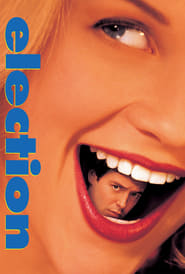
Alexander Payne
They're actually windowless in the Midwest, largely to save on heating and cooling costs in the winter and summer, respectively. But it also gives a sense to high school, gives a visual sense of high school being a factory or a prison, which then asks the question, who are the real prisoners? And maybe it's the teachers, not the students. Preparing them for the tough moral and ethical decisions that they'd face as adults.
5:24 · jump to transcript →
-
Alexander Payne
being a little kid still, and especially in this sexual situation, as being largely victimized. Since I grew up without a dad, you might assume psychologically I was looking for a father figure. And this really is the yearbook office in that school in Omaha. And he made me feel so safe and protected. Papillion La Vista High School. When was the first time somebody ever saw the real me?
10:32 · jump to transcript →
-
Alexander Payne
I want to point out that Reese actually fell and did that little stunt very well in one take. She didn't want to rely on a stunt person, and I didn't want to have to do that either. I like seeing the real thing, and we patted her a little bit, but she did it.
46:48 · jump to transcript →
-
-
-
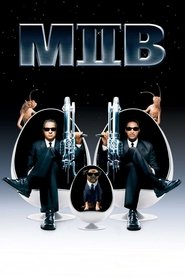
Barry Sonnenfeld
And here comes the toilet-bowl scene. Ever been to a water park? - I don't know. This was a real annoying day to shoot. Tommy doesn't mind getting wet, but Will hates it. I'm sure he bathes or showers, but Will doesn't like this kind of stuff. He's not comfortable around water. This was a big matte painting. And this really happened. This is two tanks with water in Times Square. The only thing we did Is, it looked too bright... ...SO Illusion Arts darkened the sky and added headlights on the cars. But that was not a blue-screen element. We were there at Times Square on that day, shooting that.
34:59 · jump to transcript →
-
Barry Sonnenfeld
Jay! This is a great set designed by Bo Welch. The ceilings are about 5 feet tall... ... forcing any normal human to have to crouch. Some of these shots, the worms are puppets. The puppeteers are underneath the floor. We built the whole stage up about 6 feet. Their close-ups... That really happened. That's a real puppet. That's a real puppet. And they have little worms, or rods, that get removed in postproduction. But when you cut to a close-up of one of the worms... ... that's an oversized 6-foot head. I think we got one of those coming up. That is a puppet shot against blue screen... ...and we added the green bar in the background. But all of these are regular puppets... ...and all the puppeteers are underneath the stage. Watch out, Will. You're gonna get kissed. I think these worms are Jewish. There's a lot of, "Oy." Listen. You're gonna-- In a minute.... You'll hear, "Oy, Neeble" after the guy says, "Your mama." Which one of y'all is Neeble? - Yo, mama! Him, right there. It's fine. At least some of the worm guys are Jewish. Twister!
50:40 · jump to transcript →
-
Barry Sonnenfeld
This is outside the real headquarters in lower Manhattan.
1:03:50 · jump to transcript →
-
-
director · 3h 43m 4 mentions
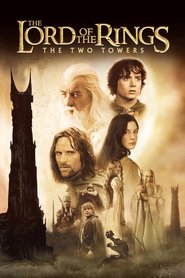
The Lord of the Rings The Two Towers (2002)
Peter Jackson, Fran Walsh, Philippa Boyens
-
Two minutes, two and a half minutes by 737 is taking off about 50 feet away. It was like roaring. The actors just had to keep on going. And if you listen to the real sound, because obviously this soundtrack has been enhanced and changed and there's additional, you know, there's other dialogue been put over the top and so it's all been cleaned up, but the original location sound is just interrupted by the roar of aeroplanes all the time. They could have been Nazgul. Well, they could have been loud Felbys, couldn't they? Yeah.
51:06 · jump to transcript →
-
Now this is an interesting shot because this is basically the set that we built in a quarry filmed with a big crane and half the people again are CG and half are real. The set is being extended with a digital extension blended into the real set. It's a difficult shot but it does really sell the idea of what's happening. You know, again, it was a very important story point to end the battle at that stage with the feeling that everybody was retreating, that the battle was hopelessly...
3:05:27 · jump to transcript →
-
Chromedicates the box 101. The shots of them galloping down the shell slide are entirely CG. It's a miniature of Helms Deep that we're using, but it's CG horses, CG Uruk-hai. It's all very artificial, I guess is the word I'm after. Fake is the real word. No, it's all real, and it did happen. But these ants are real.
3:17:07 · jump to transcript →
-
-
director · 2h 10m 4 mentions
Richard Curtis, Hugh Grant, Bill Nighy, Thomas Sangster
-
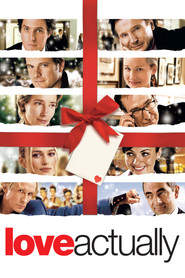
We never decided... Here we go. Stop, Hugh's turned up. Okay, this is the first time they've seen the film. Don't be ridiculous. - No, it's true. I'm just recovering from the sight of myself in that dodgy shirt. Yes, you do, you look terrible. - Yeah, I know. See what I mean. When Hugh first got the film, you were quite cross about Bill's part, weren't you? I'm still quite cross about it. I still think it could be trimmed, to be absolutely honest. You felt that you would take some of the attention. This was a controversial piece of casting. What do you think about this guy, Hugh? Very bad. - Oh, yeah. No, no, no. No, he has been good. - Who is he? He just looks a little long in the fang. I love you. - I Know. SO... - Who's that girl? That's not part of... No, that's Sienna Guillory, who's... -/ think we're watching the wrong film. She's so beautiful it hurts. We in fact shot this scene later. We thought we wanted to know a little bit more about Colin. Oh, good God. Bloody hell. - That was a tough shock. I've never seen this scene. Let's see that... Can we wind back? Right, so... - So what's the idea, that she dumps him? Yeah. That's the girl who, with the brother, dumps... So here we have Liam. It's very odd, just looking at that phone, it was very odd, talking on the phone to Liam Neeson, trying to ask him if he'd do the part. It's such a legendary voice, it strikes you that you're probably talking to an impressionist, not to the real person. Understood. Emma"s very good with vegetables. - Yeah. You used to always have food in your films. Yes, I used to get letters about it from my Japanese fans.
3:45 · jump to transcript →
-
This next one is the one I like most. Look at that. - Yeah. Thomas, there you are! What do you think? Pretty good, huh? - Good sad look. Yeah, I know. It's good, isn't it? - Well done. Did you do that trick of staring at a light for a very long time and not blinking? -/t makes your eyes water. - No, I haven't tried that. You see, Hugh's acting is all tricks. That's the tragedy. That's actually none of the real stuff. I do that sometimes to make me smile or sneeze. - Sneeze? Looking at the sun is... Yeah, that's got a million uses. But it also makes you blind. - ls that why you wear such thick glasses? Yes, quite.
16:25 · jump to transcript →
-
Come on and let it snow." All the people in the world I most admire are people who are honest, like this. I could never be. But it's the sort of John McEnroe type of John Lennon person who alarmingly manages to tell the truth in public situations. in public situations. I've never been able to pull it off. Yes, yes. I fear this is going to be a difficult one to play. Alex. This is when people start to be chilled by the authority of your performance, Hugh. It's when I'm chilled by the fact that you cut out the first half of the scene. Yeah. There used to be a bit where they discuss which record was gonna be number one at Christmas. Hugh said, "I've got a very, very important thing to discuss." But we cut it because it looked like the prime minister was just a joke. But we wanted to make you more serious. - A joke? This is an exact replica of the cabinet, I think. Yes, with some of the real cabinet members in there. See if you can spot them. See if you can spot the actual minister for transport.
22:16 · jump to transcript →
-
-
director · 1h 45m 4 mentions
Eternal Sunshine of the Spotless Mind (2004)
Michel Gondry, Charlie Kaufman
-
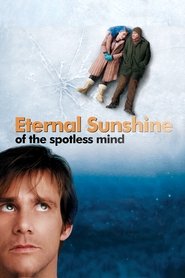
to me was very important because, I don't know, those scenes were very delicate and it's not like much happening. And to shoot in the real place, the place that you had mentioned, meant a lot to me because there's a way I had nothing to grab on. Right. And for a while there, we didn't know if we were going to even shoot in this country. They were talking about sending it to Canada, which was...
3:54 · jump to transcript →
-
about it but that was really perfect for her character because the way they like making fun of her it's exactly the same way she would react in the story and in real life. I like here how she gets pissed off with the delay she carry on being cuddly and kissing him.
45:04 · jump to transcript →
-
This idea that you can drown into your dream and suffocate in real life is really scary. Because that shows that most people would think anything can happen in your dream and you'll be fine, or your memory in this case. But if you find a limit where there is actually some real danger, it makes you feel really the dangerous situation.
1:09:15 · jump to transcript →
-
-
-
The performance with the contact lenses is, for all the people who worked with this, was very difficult, especially for Robert because he, in this moment, he is showing us, you know, that he's infected, but at the same time he's connected with something from the past, which is this woman, and attacking this woman who has given him a lot of suffering. The connection between the rage and the suffering, it's one of the... one of the big concepts in this moment. I think that the eyes, the idea of the eyes, is not only because of the gore. It's not gratuitous. It's the idea of the guilt, no? He doesn't want to see her eyes because he feels guilty. That was the real... the real reason. We know that's really extreme and... Yeah, and how the guilt is putting you in a difficult situation. And, you know, this guilt becomes a kind of rage and you destroy everything around.
44:52 · jump to transcript →
-
It's driving them crazy, because, you know, it's so difficult to see who is infected and who is not infected. And, again, a character taking a difficult decision, which is one of the leitmotifs in the movies... in the movie. A right decision or a wrong decision? But always it's a decision that implies destruction. Yeah, and all these decisions have been taken from the fear. The fear is... Everything is around the fear here. Everybody takes a decision in this... in the presence of the fear, which is moving everything forward. When you're watching the movie you understand why people take these decisions, because I think when we feel this fear in the real life, you're in trouble. It's not a cold decision, it's not a decision taken from a quiet moment. It's... when you're surrounded by something really powerful as the infection. This tune, this theme, was taken - musically - was taken from the first movie. This is a tune we always loved from the first movie, from John Murphy's soundtrack. And we had no time for John's... He had only two weeks to compose the music of the film. This is absolutely amazing to say that, but it's the truth. And we decided to bring this theme again back here in this sequel, and to work it in different ways. For me, it's hypnotical. I... I like the way we use it here. I like the way that John orchestrated and arranged absolutely in a different... It's different from the first one. We are going to hear this tune four times in the movie, in key moments. This is one of them. And that... this sound, this music, reminds that the infection is a building process. The infection is spreading. That's why the music is building up and, you know, getting this kind of big, intense moment with the guitars, which is the best combination with the infection around. On the other hand, the music has a kind of heart, emotional heart, which is telling that this movie is about character, it's about people... who try to survive. Now there's the moment of Doyle's dilemma. Another decision to take, another difficult decision to take, which is to put out of his misery his colleague.
54:07 · jump to transcript →
-
In the script, this sequence was meant to be during night, night-time. It was so complicated to do it, we decided to choose, on the run, to make it in daytime. It was a critical choice, because, you know, some of this stuff at night-time brings another... another flavour. But we had to make a lot of work with the helicopter and we hadn't had permission to do it at night-time. We had to spend a lot of money in trying to light this place - absolutely impossible. And... We decided to do it at sunrise. I think it brings something absolutely different. It's really dreamy. And again, Chediak's photography is absolutely gorgeous. This sequence is important. In terms of storytelling, we are assisting in the beginning, in a way, of a new family. You know, these kids with these soldiers. They are connected and they are trying to escape and... Now we know the real task of these soldiers, which is to take these kids out because they represent a kind of faith in the new vaccine, or in a new way to... The blood of the kids is the key now to save the world, in a way. So there's a mission now.
1:12:01 · jump to transcript →
-
-
-
James Mangold
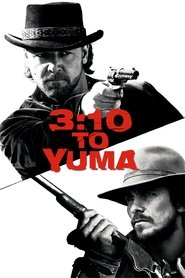
is a villain or a bad guy. But the real truth is he's not the antagonist of that film. He's, in a sense, the associate of the protagonist, trying to help them solve the murders. And that if you frame the movie and you look at the film as simply as seeing as Russell as a bad guy, then I think it's really tough to swallow the journey of the film from that moment on. And I think if you view the film
19:08 · jump to transcript →
-
James Mangold
One of the real challenges for Christian Bale in this movie is to find a kind of tone for his performance of Dan Evans, which is neither pitiable nor heroic, but a man riding the fence between those two places. He could go either way and his life could go either way. But what I admire so much about what Christian did is at the same time, he's a guy who hasn't lost his own pride or his own belief
26:25 · jump to transcript →
-
James Mangold
but actually because it's so imaginatively fruitful a place to drop stories into because it's such a moment of transition. And that when you're making a film like this, this landscape has as much in common with science fiction or fantasy epics like The Hobbit or The Lord of the Rings as it does more than it does with aspects of historical filmmaking in which you're telling the true story of, you know, the Battle of the Alamo.
45:42 · jump to transcript →
-
-
-
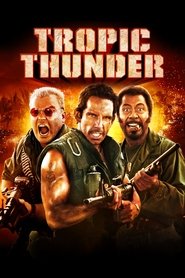
Yeah. Stevie Coogan. Little Stevie Coogan. Little Stevie Coogan. Yeah, fucking pussy. That's what he is. I still think he's a pussy. That really is your makeup person there. Yeah, this is all the real crew. I mean, we didn't go out and hire a fake crew to play the crew. We just literally filmed our own crew. We got Jimmy Rich over there holding the boom. Yeah, now Jimmy Rich's scene is included in the director's cut. I'm glad to hear that. Because he had a very funny scene where he's the boom guy and Coogan gets upset with him. There's our boy now. There's little Cody.
10:21 · jump to transcript →
-
fuck note he's convincing us all get out the thing that's tricky about steve coogan's character is that his part was so funny on the page he had the challenge of making it as funny in real life well he's actually a fairly masculine dude and i see him every day we shot this movie i'm gonna beat him down like a sissy crazy little curly hair some burnt like a motherfucker but he really
20:00 · jump to transcript →
-
This was sort of a change we made late in the script, too. The idea of him discovering that he had real hands early on. It used to be a lot later when they were already captured. I'm getting naughty in 48 hours. That's a man who knows how to be an action scene right there. See that? Definitely. He really does. He's done some crazy-ass classes. He's the real deal. K3 and whatnot, everything. This is Jack's improvs here. Watch Jack handle it. Where did that come from, Jack?
38:34 · jump to transcript →
-
-
-
Matthew Vaughn
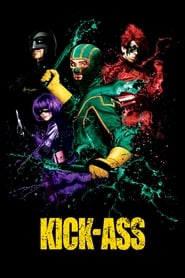
This is Omari Hardwick. The whole point about this scene, you're thinking, oh shit, a cop's just broken in and you're just, you know, you need to put what I call a reality figure into this madness of their apartment and their life. And that's what Marcus is. And this is where we see the real Damon. First of all, you know, we see their backstory in the second on the comic book. But secondly, you know, this is, it's very important to put balance in and this is,
49:03 · jump to transcript →
-
Matthew Vaughn
I just can't believe he's dead, that's all. Oh, I know. And here, this sequence, we nearly did cut, but without it, the audience, what happened is they were so confused that the next scene, they weren't laughing, enjoying themselves, because they were just trying to put two and two together, going, does that mean he's dead or he's alive? What's going on still? Because, you know, and then some smartass said to me, well, how do they know it's a kick-ass impersonation if it's not the real kick-ass?
54:26 · jump to transcript →
-
Matthew Vaughn
That is on location. I think there's one sort of thing where the CG looks fake and it's the real thing. It's like typical.
1:16:33 · jump to transcript →
-
-
-
Tom Hooper
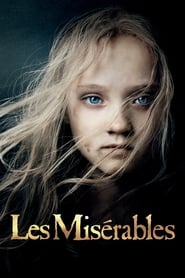
art-directed barricade standing by in the next-door studio, ready to shift in when we finished that sequence. But Eve and I both looked at this thing that the students had created and said, this is so great, it really looks like the real thing. So rather than getting rid of it and weaning in the one that she'd prepared, we stuck a few nails in the one that the students had created and went with it. I must admit I did a bit of art directing, things like the tusks at the front and the two coffins as sort of teeth.
1:40:23 · jump to transcript →
-
Tom Hooper
But I felt in the end it was the real story was the two men coming face to face. And here we did everything we could to try to create the momentary illusion that Valjean might be about to do something to Javert.
1:49:23 · jump to transcript →
-
Tom Hooper
which is so powerful emotionally. It's the real beginning of that unhinging, which you can see in Russell's eyes so brilliantly. In fact, in one of these all-in-one takes, see that sewer entrance where there's a tube that runs from that, which basically came out where my monitors were. So in the middle of this battle sequence, suddenly, Hughie turned up sort of under my monitors covered in mud.
2:03:46 · jump to transcript →
-
-
writer · 1h 35m 4 mentions
Simon Barrett, Adam Wingard, Greg Hale, Eduardo Sánchez + 5
-
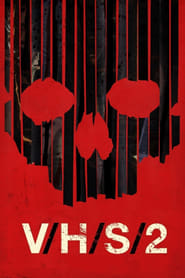
Well, in real life, you don't really see your eyeball go up and down, or your eyelids at all. It really is just like a black frame. And I actually went back and watched Enter the Void and realized it looked like that's exactly what he was doing in that film as well. So that actually was like one of those things that kind of helped out.
14:23 · jump to transcript →
-
I want the real Clarissa, and I want her to explain everything to me. So you don't have to worry. This scene was originally, there was a, I wrote a big expository chunk of dialogue here, part of which kind of played into the overall VHS mythology with her talking about how ghosts are just really electromagnetic impressions of people at their most extreme emotions left on their environment, kind of referencing the stone tape a bit.
19:21 · jump to transcript →
-
And I was like, you know, actually, Simon, you did talk about that short now that I think about it. And I was like, that was a reference point for you. And he was like, oh, yeah, yeah, forget everything I just said. When the camera goes into Adam's mouth here, it's actually the real button camera that we bought for the wraparound attached to the end of a pencil. And Adam is with a little light. I'm deep-throating it. And Adam is shoving it in the back of his throat. Yeah, just shove it in. So, yeah, no digital trickery there.
24:52 · jump to transcript →
-
-
-
Francis Lawrence
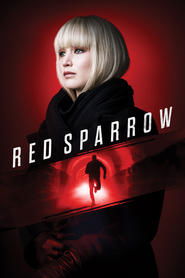
One of the fun things for me about this whole sequence is the intercut. I just thought that it could be a great introduction to the two characters and to the two worlds. And one of the things that I played with throughout the sequence is screen direction. So if you notice even from the very beginning, I typically have Jennifer facing left to right, and Joel facing right to left, as you can see here. It was a trick that I learned. I remember watching old Hitchcock movies, and watching Strangers on a Train, and there's... In the opening sequence, you see the two men who are moving toward one another, and eventually gonna meet. And it's something that I've employed a lot, I think, that screen direction is actually a huge benefit in storytelling. But especially in a sequence like this where you feel like these two characters are gonna end up on a collision course with one another, that narratively, you know that at some point, that they're gonna come together. American! Most of this ballet sequence here was shot in the Budapest opera house. And we had support of the Budapest opera, and the Budapest ballet company. And most of the other dancers there are all dancers with the Budapest company, and from a variety of places. There's some Americans, actually, and some Hungarians. Great group of people. And there was our nice leg break, one of the first specific, kind of, tonal hits in the movie. It was something I wanted to do with the movie, was to not hold back too much in terms of some of the shock, and audacity of some of the moments that take place within the story. And so to see the real damage done to her leg there... I just remember seeing, you know, there's been sports injuries over the years. And not too long before we shot this, there was a French athlete in some, I want to say some Olympic games or something, who had done some vaulting, and just kind of landed slightly wrong and bent his leg at this really horrible angle. And it was really difficult to look at, but we basically modeled the bend in her leg based on the images of this French Olympian. Word is they were vice cops, looking for Chechen dealers... or some family guy getting a blow job in the bushes. They weren't there for Marble. They just got lucky. Chances are they would have questioned you, and let you go. You can see here, one of our really cool locations. Maria, my production designer, was just really fantastic at looking for locations and scouting. And I think she had gone out to Budapest a few months before me. And we had also hired Klaus, who was our location manager for the Berlin portion of the Hunger Games films, and we liked him a lot. And he was nearby, and so he came down to Budapest and they worked together, and they found these fantastic places. These old abandoned hospitals, where the surgery Is, and where she's about to wake up, was this old, abandoned maternity hospital. And this fantastic space is part of a library in the seventh district of Budapest. Undercover narcotics agents saw what they thought... was a drug deal in process. You can see outside of Jen, too, that we really put together a fantastic cast for this movie. Jeremy Irons, who's an icon and a fantastic guy, and I think one of the best actors to have ever existed, was my first choice to play Korchnoi. And luckily he said yes. And Matthias, we brought in. I'd been a fan of his since seeing him in Bullhead and Rust and Bone and things like that. And he's so versatile. But he became a choice when we actually decided to skew the age of Dominika's uncle down a little bit. I wanted to add a little bit of creepiness to their relationship. And so the idea that, you know, maybe her father had a much younger brother, so that, as she was growing up, there was this, you know, charming, handsome, much younger uncle, you know, somebody that she might have even been attracted to, and he might have been attracted to her, was something that I wanted to play with in the course of this. And I thought he was just perfect for it. He's such a fantastic actor.
6:35 · jump to transcript →
-
Francis Lawrence
Here's a little cameo. This is one of Jen's best friends, Laura, who also acted as her assistant on the movie. What a pleasure. May I join you? There's a fair amount of cameos in this movie, probably more than I've ever done in terms of people who work on the movie. And friends, and things like that. If you notice the policeman in the beginning of the film that's on the subway train with Joel, in the furry hat, is actually Chris Surgent, my first assistant director, who I've worked with since I Am Legend. I actually met him on I Am Legend. He was the first assistant director of the second unit, and did all the big New York City lockdown sequences for us, for the opening, and I was really impressed with him. And we've become good friends, and work together all the time now. Tell me the real reason you are here. This was actually a really, really beautiful location in downtown Budapest. It's the New York Cafe, which is attached to the hotel that we used for the exterior. And it's become a very popular tourist attraction, and a place to go eat because of its opulence. But I just thought it would be a fantastic spot for this character, for Ustinov's character to hang out. One of the things that I wanted to do, and also Maria, the production designer, was to show different facets of Russian architecture, right? The kind of classic, opulent stuff like places like this, or the ballet, the kind of socialist, Brutalist structures like her uncle's office. Some of the government housing-type environments like where she lives with her mother. But one of the things that really excited me that we got into was the idea of color. I think, honestly, people tend to expect in movies like this for it to be very gray, you know, just bleak. And what Maria and I found in our research was that there is plenty of color throughout the environments. And we had decided to really try and utilize that, and she pulled, I don't know, hundreds and hundreds and hundreds of photos that we used, that gave us a real sense of color palette and a sense of mood and a sense of light. And we ended up using that also for Jo, the cinematographer and I, in terms of how the movie kind of looks in terms of lighting styles as well. And that led us into a direction of, you know, post-World War I/ Russian art, and found that a lot of the, kind of, colors that are in that art were also found in a lot of these environments that we were finding in Central and Eastern Europe. And we ended up really trying to utilize those. And it was something really exciting for me, because to discover that this movie could be quite colorful was a lot of fun.
19:29 · jump to transcript →
-
Francis Lawrence
One of the things that Trish and I worked on, Trish Summerville, the costume designer, and I was, the different kinds of looks for Jennifer. Because when you think about a character like this, right, she's actually playing two completely different people, right. You've got Jennifer the dancer in the beginning, right. And so dancers have their own culture and sense of style and how they dress when they're not at work and how they dress in rehearsals or how they dress on stage and things like that. But that's the real Dominika. And then you've got the Sparrow, right, in the uniform, and that's a bit utilitarian. And then you've got the young woman who's sent to Budapest that's playing a part, right. And so she's not supposed to be a dancer, she's actually supposed to be somebody else. So, the decision of how do you dress and how do you present yourself to the world when you're supposed to be a young woman from Moscow who's a translator at the Hungarian embassy. It's really interesting to dive in to doing different kinds of things. And also thinking about the seasons, because, you know, we Started in just before the dead of winter and then Sparrow School! took us through the dead of winter and then we decided that Budapest, it was the end of winter, and into spring. We never really wanted to see leaves on the trees at all, but we wanted to sort of get in at a slightly nicer, I would say maybe sort of damp weather, as opposed to icy weather as the story progressed. He told me about what happened at the park after I established trust. Hmm.
1:11:09 · jump to transcript →
-





Related topics
Other topics that frequently come up in the same commentaries.