Topics / Writing & development
Structure
92 commentaries in the archive discuss this, with 205 total mentions and 49 sampled passages on this page.
Filter commentaries
Filter this topic by the film's decade or the type of commentary.
By decade
Across the archive
ranked by mentions · click any passage for the moment in the transcript
-
-
Tom Tykwer
The strange effect that reading the screenplay on me had was that I completely got lost in it immediately and that I so quickly identified with not only the characters but also its structure and the way it was conceived that I suddenly forgot about everything that I had thought before that this would be something I could never connect with because it was Kieślowski's work and all that.
4:27 · jump to transcript →
-
Tom Tykwer
It is something like a prison, a prison's iron that comes out of the structure, that geometric structure that is very much in right angles. And if you look at the city map of Turin, you could think for a first split second that this is something like New York. And have these people in the beginning being somehow in this very beautiful town, but somehow locked in, in a...
1:08:06 · jump to transcript →
-
Tom Tykwer
geographic and topographic structure that is totally over-organized and have them, when they open up and when they start to discover what's deeply and in fact riding them, have them change into a landscape that is much more fluid and much more open, much more inviting to open your mind and the way you look at things. Then to change to Tuscany, which is only like a couple of
1:08:34 · jump to transcript →
-
-
-
The idea to choose District One, Isle of Dogs, as the main place for the new life in the city, is because the vertical structure of that place allows to bring a lot of people and at the same time you can control them, which is, in this process, in this new beginning of the city, is crucial for the militaries to have an area that they can control and they can... they can help these people. It's also the idea that we want to improve something new from the first movie, 28 Days Later, which is a film, well, it's a masterpiece. It's a classic now, and it's really difficult to add and to add new things from this first movie. Our idea was to work in the contrast, no? Because this city is very close to other modern cities in the world, but it is very far from the idea we have of the iconic London. What we like to do in the beginning is to... to bring this city as a character in the first half of the movie, and the second half to work with this iconical and gothic London - Danny Boyle's work in the previous film.
16:46 · jump to transcript →
-
Again, the work of Chris Gill, the editor, is really, really amazing. We found together all these great ideas, because that wasn't exactly in the structure of the original script. Yeah. The parallel editing is improving a lot the tension of this sequence. And... This sequence was really difficult to shoot. It was made in one day. That was the first day of the premiere of Catherine's play.
42:06 · jump to transcript →
-
Jane Petrie was the designer... and that was really difficult for her to work in day-for-night. You have to think about the colours, about the luminosity, the brightness of these... of these shots, no? When you shoot in day-for-night, you need to pay attention to costumes, because the technique implies that you need to reduce the light later on, so that's why you can't use, you know, specific colours, and you need to... you need to control these things. And makeup is very important. - Makeup is very important. Here, for example, we don't see Robert Carlyle's eyes, which is really nice. This first appearance of Carlyle, I think is really cool. It... This movie, in this sense, is a kind of chase. These kids are chased by their father now. And, you know, the run away, in terms of the structure, is clear now, because apart from the fact that the soldiers, the militaries, are trying to kill everybody, the infection and the infected are chasing them. Clearly, with the figure of this father infected, now the moment's more difficult in terms of emotion as well.
1:03:43 · jump to transcript →
-
-
-
In real geography. And he is in that helicopter. Yes. That was shot in the helicopter. Those are real French Special Forces who come with the helicopter. Incredible, incredible guys. It's a great box set. You get the helicopter, the French Special Forces. I know, and the helicopter, he couldn't bring all the weight on it because the structure, so he had to keep it just a little off. Yeah, it was weighted for four tons, and I think that helicopter was 14. Yes. And no helicopter had ever landed on that helipad.
50:33 · jump to transcript →
-
I don't care how many rubber boots you're wearing. And the other thing about the scene that we just went through, it's the exposition that's setting you up for the third act of the movie. We're introducing new stakes yet again. And these scenes are always a challenge. And normally we tend to shoot these scenes in as confined an environment as possible so we can go back and reshoot them and retweak them.
1:42:30 · jump to transcript →
-
We cut to that shot sooner to show your face. And it was Eddie Hamilton who was like, no, no, no, stay with the helicopter. And that was not our instinct. Our instinct was, boom, how do you get to the shot sooner? And it actually had real impact. And this is one of the lovely discoveries that the teams that begin forming in this third act all came from the necessity of who's where and doing what. And the whole design of the bomb and the doomsday scenario all...
1:52:36 · jump to transcript →
-
-
-
Our interview with Marcel Mousty can be heard later in this commentary. The screenwriter explains why Truffaut requested his collaboration and how he was called on to give structure and memorable dialogue to embody Truffaut's novelistic prose. Philippe de Broca, indicated here as one of Truffaut's assistant directors, would later have a successful career in his own right. He would direct King of Hearts, for instance, in 1966.
2:11 · jump to transcript →
-
The fade to black that indicates a night's passage here helps to accentuate the film's sense of structure and rhythm. That rhythm is strengthened by the now familiar shot of Antoine leaving for school the next morning to the chipper melody of Jean Constantin's original music. The snitch or spy whom we've seen watching the boys before now runs into the Doinel's building.
31:07 · jump to transcript →
-
-
-
Francis Ford Coppola
spill out better that way. And he's, well, whose point of view is it? Gordon was a real purist. I said, well, I don't know. It's my point of view. It's Orson Welles' point of view. You know, you can have camera angles like that. I learned a lot from Gordon. Gordon's concept of structure was, you know, very disciplined. And I learned that from him. And I'll always be grateful. I mention the shot of the oranges because whenever I see it, I always think of Gordon. I'm a little embarrassed. I cut that sequence myself, too. And I deliberately...
44:38 · jump to transcript →
-
Francis Ford Coppola
firm ideas about structure and how things should be done. And on the second picture, the second Godfather picture, I think it was much more mutually harmonious and respectful. But, you know, on the first film, I was, like, not really... The crew didn't kind of understand what I was doing there, why I was chosen to be the director. And, you know, the crew, you know, these kind of New York...
1:14:05 · jump to transcript →
-
-
director · 1h 30m 2 mentions
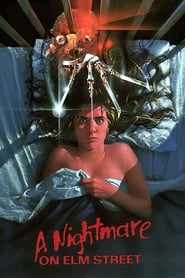
A Nightmare on Elm Street (1984)
Wes Craven, Heather Langenkamp, John Saxon, Jacques Haitkin
-
And this, of course, is later what the character uses to realize that she can bring Freddy himself back if she holds on to him at the exact moment when she's being awakened. I know. The structure is really impressive. It's great the way it all is plotted out. And it was the key point. It was the story breaker. It was the thing that I could not figure out how to... You know, once you have a guy this powerful who is able to be your killer in a dream, how can you not sooner or later sleep and be at his mercy? And it finally occurred to me...
51:21 · jump to transcript →
-
See, even a scene like this, to me, shows good structure. You set up the thing of the mother coming in, you reestablish her character, because later you're setting up for her entrance later. Instead of it just her coming in at that time, that's important. That's what makes it weave nicely. I actually ran into this actress in Oregon at a film festival last year. She's not in the business anymore. Do you remember me? I was Johnny Depp's mother.
1:01:45 · jump to transcript →
-
-
cast · 1h 36m 2 mentions
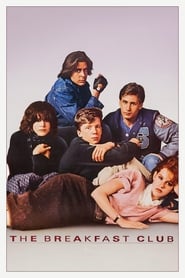
Anthony Michael Hall, Judd Nelson, Jason Hillhouse
-
Judd Nelson
I never did it, either. At this point, too, just where the industry was, there was no video village, so one of my best memories is of John being there. He would just sit behind the camera. He would be sitting on the floor with us, just like the camera operator would be on the floor to get these low angles. He was really there, part of it all. It was great. Was he a good audience? - He definitely was. Yeah. And he was a real audience. He wanted to be moved. In fact, that was a great lesson, to see a director lens his project like that, to be that invested in it. It was cool. It's a tricky thing where you have a director and sometimes it can be, everything you do is great. Like they want you to feel comfortable and they want you to feel like, "Everything you do is great!" But there's a bullshit meter that I think you get as an actor, where you go, "No, it wasn't." And you gotta get that level of trust, where if John says it's good, it's good. Yeah. - That kind of thing. Was he pretty good about that, too? Without telling you, you suck or something. No, that's the thing, you have to be very pragmatic as a director, always aware of the clock, so in lieu of all that, I never felt like he was rushing us. It was just the opposite. I think he would work on your performance with you. It was cool. And he would give us the freedom to try things. He would allow us to know that we maybe tried something that was no good, too. If you did something that was no good, he wouldn't say, "That's not very good." He would look at us and be like, "Yeah, I guess that one wasn't so good." You know what I mean? He would let us find it for ourselves. There's a paternal instinct, I think, that directors need to have. But with him, he felt more like a big brother. He wanted us to shine. He wanted to see us get the best out of it. So, he was never really precious about his words or anything, which I found to be really cool. - It was cool that even after all that rehearsal, even once you get on set, the crew's around, the pressure is on a little bit, like you said, time is a factor, trying to get the day. And he still gave you time, even after all that. You know that classic image of... It was a saying of, I guess, Jack Lemmon's, where he talked about "magic time." John was a director that appreciated that. When the camera's rolling, he was the first audience. He was the guy right there with you, watching as if it was one of your parents in the bleachers or something. So, that was a really cool thing because he was the writer, and, of course, in that sort of paternal spirit, we wanted to impress him, him to be happy with what we were doing. At the same time, it was never any finger pointing. He just guided you through the performance. And he had a great way of, I think, empowering all of us to put our best foot forward. It was cool. His scripts have a lot of heart, and Hughes has a lot of heart. He can hear the truth, I think, and if we did something that had strayed that sounded like that color of truth that he wanted, then it would stay. He also was... I just found him very encouraging. Yeah. - As a person and as a director. And that's like a captain. If the director is the captain of the ship, I would like the captain to be encouraging if we're gonna come upon some high seas or dangerous times. Crunch time, you want the captain to not be treating you like you're something he wants rubbed off the bottom of your shoe. Because I think we would have done anything for him. I think we probably still would. It's interesting, too, because in the structure of the film, it all leads back to these scenes. I guess for everybody it becomes therapy at the end here, where we're all sitting around literally like a group therapy, as is the image of the wide shot. - Yeah, that trust is important. You want your other actors to be alive in the scene. And because this, in real time, came later for us, as it does in the movie, shooting in sequence, you don't have to earn the respect from the people around you. Right. - It's already done. Suddenly, the only redemption that we can find is with each other, and that's the surprise, I think, at this point. Where everyone is peeling away, becoming naked to each other. I think that's part of the reason why it's so important, too, the way they cut this. Emilio is doing the thing, and the camera pans around him, right? And then we go and we get everybody's reaction shot while he's still talking because you guys are going through it, too. - Yeah. He's like this... He's like this mindless machine that I can't even relate to anymore. "Andrew! You've got to be number one! "I won't tolerate any losers in this family. "Your intensity is for shit! Win! Win! Win!" You son of a bitch.
1:10:08 · jump to transcript →
-
Judd Nelson
Hughes was so ahead of the curve on music. Yeah. He would work with it, he would bring in tapes, he would be doing compilation CDs and tapes on the weekend. Yeah, and he would bring them to us on the set. When there were tapes. Those of you younger... Cassette tapes, yeah. - Don't remember tapes. He had cool-looking ones, even, those metal-looking ones and clear. Very cool. - We're old now. We're past CDs, it's MP3s and stuff now, right? Remember when they invented the wheel? That was incredible. People banged rocks together, and we sang. We made this sometime after World War II, I think. The Great War. - Yeah. But he used to take you guys to concerts and stuff, right, Mike? Yeah, he was cool. Like Judd said, he was really ahead of the curve on music. He was into it. He was aware of Art of Noise, which was this Trevor Horn project. People know their stuff now. So, even with that piece of music, I'm sure he was probably trying to go for that kind of thing. How about the fact that in Sixteen Candles, Molly's got a notebook that says "Psychedelic Furs" on it, and I don't think they had an album out yet. Hughes knew. Well, and Pretty in Pink comes out however long after that. But, yeah. And he wrote to music a lot, too, so a lot of times these sequences, I'm sure he knew that there would be a certain piece of music playing through it. Nowadays, it's funny, you watch shows that are network shows, like Grey's Anatomy, it's so much a part of the formula, where they have these musical interludes that tie things up or bring the audience into the third act. It's interesting, there's a psychology to that, just like editing. It's interesting to see it work. It was cool. I like that. I like that the music stops right on that, too. And now we're done. Here's the bit where you're nice to Carl. Group therapy is done. Right, there's that moment, yeah. Tie it all up. It's great. And that pose right there is now a classic janitor pose. There's the guy on Scrubs. That's Hughes right there. That's great. - There is Mr. Hitchcock. There he is, baby! "Mr. Hitchcock." Mr. Hughes. I like that Ally shows inhuman strength pulling this off.
1:30:47 · jump to transcript →
-
-
multi · 2h 34m 2 mentions
James Cameron, Gale Anne Hurd, Stan Winston, Robert Skotak + 8
-
Bill Paxton
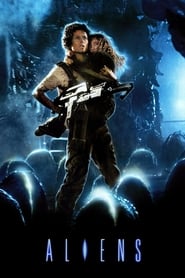
James Horner came up with this music sting here and I always thought it was totally over the top. When I saw the whole film put together with the score, I thought "No, that's what we need." I thought "How can you sting somebody opening their eyes?" But it works. Oh! Mm-hm. She shouldn't have had the bangers and mash. Kill it. Fry it. Come on. What are you doing, Hicks? Bad-ass nasty shot. That's a nasty shot of that thing. That's a good shot of it there getting fried. Gosh. Here they come. I think our chestburster looks a little cooler than the one in the first film. Stan Winston's guys really did a good job on it. John Rosengrant and Shane Mahan. Look who's back. Another one of our problems to solve for this movie was creating the whole army of warrior aliens and being legitimate to the original movie but having to improve on it for movement and for the look of being able to study them. In the original A/ien they were rubber suits and very difficult for the actor to move around in. And yet he was very tall and very skinny. And Jim wanted to do a lot of very interesting moves with the warrior aliens, so we came up with a technique to create the suit that really involved a lot of spandex and pieces on it. And then we designed the set pieces for the aliens to fit into the walls, like the one that is behind him there, so that the camouflage would work. An enormous amount of wirework for all of these stunt alien performers, which required that the alien costumes be extremely user-friendly. This was inspired by the scene in the first film where Dallas is in the air vents and they see the signal moving and get a little freaked, and Veronica Cartwright says "Get outta there" and he makes the wrong move and gets killed. That's one of the most suspenseful scenes in the first film. I took that idea that they're getting these readings that are getting them spooked and then they make some bad moves. Form follows function. This is a perfect example of it. You start with what it is you wanna achieve, and once you have that, you can design it, so the actions and the performance is consistent with what you want in the finished film. Believe it or not, very few people work that way. They just wanna come up with something that's cool, and then you spend hours and hours trying to get it to work for the ultimate film. I happen to agree with Gale. My background is as an actor. I really come from a place where the creatures and the characters are wonderful to look at, but it's always about their performance. We have to figure out how they're gonna be able to act, and create a good performance, or it's a waste. And so that's really always at the top of the priority list when we're creating any creature - what is it gonna do and how is it gonna do it? What he does is create a character, and that's why I think his work is So unique. When you look at a film, you can always tell who's done the creatures, if they actually have a character. Because he creates a character that can act and perform. The whole film builds to this moment, where the power transfers from the authoritarian structure to the individual who takes action. Ripley's not supposed to do anything. She's just there as an observer. We're coming up to a sequence where Sigourney takes control of the APC and this sequence is comprised of live-action shots, but as it comes down this hallway and is banging into pipes and walls and sparking, that's all done in miniature. In some cases, the cameraman - cos the set was mounted at an angle - was on a cart, a wheeled cart, and was rolling backwards as the radio-controlled APC was coming at camera. There was a point when he was just put into free fall, rolling backwards downhill, photographing what was in front of him as he went backwards. Here we go. - This is the shot. This is also miniatures. There was a shot with the full-size when the brakes didn't work, and took out the camera, and luckily it was a remote-operated camera. It was the shot where we were actually crushing an alien warrior, when it broke through. This is the shot, actually, when it took the camera out. Then there's another shot where it takes down an alien.
1:12:00 · jump to transcript →
-
Bill Paxton
A Iot of the shots of it scuttling along the floor were done on our miniature stage. That shot where it just scuttled by was done right next to the twelfth-scale cargo lock. At the base of the twelfth-scale cargo lock there was a little set there. So Jim would have five or six or seven little setups poked in between our miniatures. We'd fog up the stage and get ready to shoot, but he needed to shoot with no fog, so we'd clear the stage, he'd shoot his thing and then we would continue on. So it was like one giant filmmaking unit but we were doing two or three miniature shots simultaneously and he was doing four or five live-action inserts. A concentrated dose of Aliens filming. It's very hard to see Paul Reiser as such an evil guy, after so many years of his TV series. He used to hate to ride to work with me. I used ride to work with him. And he didn't like it? - Hated it. I was like a real primitive. He's a sophisticated comic. - What were you doing? I was always grunting and groaning. Smoking, burping. - He hated everything about me. What a boring ride that was. You've been carrying this baggage a while. This is a good forum. - Let it rip, baby. It was because of the character he was playing. He's such a prissy, corporate guy in this. It's tough in these kind of movies. Especially when you're young, if you're playing a good guy, you're always hanging with the good guys. You don't trust yourself as an actor to be friendly with the bad guys. "One of the bad guys might wreck my big scene." We were too serious as actors to be able to hang with Paul. He was reading the paper the whole time. It was like I was interrupting if I talked to him. You didn't wanna ride to work with me? I was in a different area. You were right round the corner. You didn't want me with you. - Bullshit. We're yanking these facehuggers around. I called them rubber-chicken facehuggers cos they were these floppy ones. The crawling one had a mechanism inside it. That was shot backwards. We pulled the tail off and shot it backwards. There was a pretty good mechanism built into the ones that are really articulated, but a lot of the time we were just yanking them around on fishing line and doing it in cuts. People probably wonder why I had him shoot the window before he jumped through it. The idea was it's tempered glass. You have to get the crystal structure of the glass to shatter before you can go through it. So this is a bunch of grown people fighting a rubber chicken, basically. But, of course, it's the actors that make the effects real in our minds. Great sequence. I love the red light that he uses in this too. The warning light. That happens in the other sequence too when the aliens are coming through the roof. Look. This is another scene that James Cameron sets up as the family scene. There's just the three of us there as a family, ready for Aven 3. David Fincher did a really good job photographically and so on. I think it's really a well-made film, visually. It's just kind of a slap in the face of the fans who invested in Newt and Hicks and all of those character relationships. I understand the instinct, of course, which is you have to make it your own. I just don't think you should make it your own at the expense of what people like, personally. But everybody's gonna make their own decisions. But I had to change some things and make it my own on my film. And I know that Ridley probably watched it and wasn't pleased with a lot of things. He probably wasn't pleased with the fact that he hadn't made it. But I think it's tough. It's tough to see somebody continue on something that you've started. But then you learn to just get over it because that's the nature of this business. I think the trick to this type of film is you just take it utterly seriously. You don't step outside yourself and try to have fun with it and wink at the audience. You take it absolutely seriously and you don't give the audience a chance to question it. And if the actors can sell it, then it works. This is a distinction. I never got the sense in the first film that the alien had an intelligence that allowed it to manipulate their technology, but I didn't see that necessarily as a barrier here because certainly these creatures have been around longer. The alien in the first film had only been alive for 24 hours. It was still an infant, even though it had grown full size. These aliens have had weeks or months to figure things out. There's no reason why they couldn't figure out the electrical system. Not that they're technological, but the rudimentary stuff. The implication is that they're pretty clever. It's clear by the end of the film that the alien queen knows how to operate an elevator. It's amazing how such a low-tech little device that Jim sets up early on really builds the tension. You don't have to see them. You just see that locator and you realize they're getting closer with a little sound effect. This is one of the first films we worked on that we worked with a video to look at our effects. Prior to that you would shoot a shot and go by your perception at the moment as to whether it worked or not and looking at dailies the next day. You didn't see an instant replay. But on this film we used a video tap and offside video camera on some of the shots to analyze what worked and what didn't. It was fairly expensive to have a video tap camera. In most effects stuff, the cameras used were... These old Mitchell cameras were great but they didn't have video tap. It was an expense a lot of times you couldn't afford. More welding. - Just don't look at it. Look away or you'll be blinded. Weld it but don't look at it. Put your hand there. Don't look at it. Is this where you bite it? - Yeah. Well, pretty soon. I'm gonna keep talking, even if I'm dead.
1:48:04 · jump to transcript →
-
-
cast · 1h 36m 2 mentions
The Garbage Pail Kids Movie (1987)
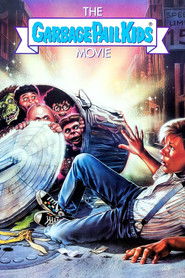
Mackenzie Astin, Katie Barberi, William Morris
-
They were so supportive of us, I think, because the whole cast, I think, just really felt very supportive of the young actors. You know, that was Mac and myself. Just like to point out, I think that's the first act of overt violence, the Garbage Pail Kids. Okay, now it's important to say this, and I'm going to say it. In the original script, all of this stuff that they do,
29:39 · jump to transcript →
-
So also, we're kid actors. And so the structure of the screenplay is the Bible for us. And our job is to go know your lines, say them correctly, say them on time, be there on time, hit your mark, and provide the emotion that is called for by the screenplay. So the idea of improv, I think, gosh, in some ways, probably still to me, is something that you don't necessarily do because you stick to the script.
1:03:19 · jump to transcript →
-
-
-
is second to none, especially back then. She's great. When you were casting the film, you were saying before how Donovan was such a great archetype for the hero, only to subvert that later on, kill him off, and then now we're left with... It's the old Psycho. ...Mullet-tron 2000 with Kevin Dillon. It was very purposeful on my part trying to emulate what Hitchcock did in Psycho, which is Janet Leigh's dead at the end of the first act. How did that go over with the studio, though? We were very... This was...
7:18 · jump to transcript →
-
The audience sees everything in the first act. And not to make it dark and moody and creepy and scary. Because people can see in the dark. You can't scare them from that point on. If you show where everything is and then turn off the lights, then you can scare the audience as well. So you're doing aesthetic exposition. Yeah, exactly. Especially, we just established the bridge in daytime. And here's the tree, here's the thing, and here's the gully. And the can man. And now we're going to see him again at night. And now, oh, we know who this is.
10:55 · jump to transcript →
-
-
-
Setting it into the context of the structure. Maybe in your mind's eye, you think it's all going to play on one close-up, and that's the only thing. So your mind starts to say, oh, they cut away on this line, and that was the important line. I think you just start to be basically neurotic. So if I came in and said I didn't like it, because I think that seems...
42:26 · jump to transcript →
-
What is it like to act with Mahoney, you guys? I've done two. I keep thinking of, you know, jazz music with everybody in the movie and the whole relationship. But no matter what you throw, you know, you're going to get it back. You still come in on time, on beat. I mean, the scene has got a progression. It's got a structure. But within that, you know, there's nothing I ever did that threw John or Ione. I mean, and actually the...
1:01:05 · jump to transcript →
-
-
-
Alexander Payne
Another visual theme that's in the script and that I wanted to bring out a lot in directing is trash and throwing things away, since that's, in fact, later in the film, the climax of the film or the big turning point. So we establish it early on. And if you watch the film, there's kind of an obsessive use of garbage cans and the theme of people throwing things away. This guy, the janitor, actually was the janitor at our offices in Omaha.
3:06 · jump to transcript →
-
Alexander Payne
I have special affection for this scene, I guess because I still wash my car this way. Now, the thing about circles and straight lines here, just before the climax of the film, Jim McAllister makes the largest circle. Jim? Jim? Yeah. Walt wants to see you. Okay, thanks.
1:27:17 · jump to transcript →
-
-
-
over my shoulder, and behind me a gravestone caught my eye. And it was a metallic structure in the form of a kind of ribbon, which is meant to be the honor of the red banner, which is quite a high honor. And on it was written in Russian, but it was translated for me, was three words, wife, mother, soldier.
38:47 · jump to transcript →
-
around at its base, and you see how it's like how ant-like their size is in relation to this giant metallic structure, the submarine. And it really does introduce how formidable a character it is. I mean, most people never have the opportunity to see a submarine out of the water, and it's
44:35 · jump to transcript →
-
-
director · 3h 43m 2 mentions
The Lord of the Rings The Two Towers (2002)
Peter Jackson, Fran Walsh, Philippa Boyens
-
But it would be fair to say that it was given the least amount of thought during the writing because there was so much focus on the beginning of the story of how we introduce everybody. Do we spend too long in Hobbiton before they hit the road? How do we get all this incredibly complicated backstory about Isildur and the ring across? Then on the other side of it, we were focusing on the return of the king of wanting to climax the story in a great way of really trying to shape the end of what happens in the third act, Return of the King. And in some respects, this one slipped through the cracks of it.
3:36:27 · jump to transcript →
-
that we couldn't go through that entire Battle of Helm's Deep and with the climax of Frodo and Sam and then go into what was going to basically be a seven or eight minute sequence of returning to Isengard. And the reason why it's not in either the theatrical version or the extended cut is because it is somewhat anticlimactic. It's a much better beginning for a film than it is a climax for a film. And so therefore we made a decision last year when we were cutting the two towers that that entire sequence of the basically...
3:39:16 · jump to transcript →
-
-
-
James McTeigue
That speech, because it's such a muscular piece of writing... ... It needs to be attacked with great kind of gusto and flair. And passion and belief. And so, if that's all there, it's a wonderful introduction to the classic masked man. He just appears and you get that persona very, very clearly and very, very quickly. I would say there's not enough talking in films, nowadays. And, you know, there's not enough use of language. I think that introduction, you know, when he first turns up in the Fingerman Alley... ... throws the Shakespeare out to you, then you get the big alliteration speech. I think it's, like, it's nice to use words. And, you know, he uses them beautifully. I thought it was a cool way, also, to preserve from the graphic novel... ... how each chapter has a V word, which I love that. And I was like, I wish we could've kept that in the movie. But that sort of structure... ... 1S sort of condensed into that crazy use of V's in that speech. The important thing about that speech Is you're never gonna understand it. I mean, you know. But you're gonna understand the intent of it. The performance gives you the intent of what that speech Is. And then Natalie's reply is sort of, you know... ... you're the audience, you know, "Yes, what are you, a crazy person?" V does say that he's a humble vaudevillian veteran. He's an actor. I mean, he is an actor. The character is an actor. He's an actor activist. Or something. Who has been picked up and chucked inside... ...and then experimented on and tortured. Hugo's ability to use his physicality and his voice so expressively.... You're so intrigued by what's going on behind that mask... ...as an actor, as a character, as an audience member... ... that you're always going, okay, is he crying now? Is he happy? Is he angry? And because you're so, sort of, entwined in his emotions... ... you become V. And at the end, everyone is V. Because they've been trying to figure out his emotions... ... you know, everyone's trying to play him at the time... ...because they're trying to figure out what's going on under that mask... ...SO it's an amazing, sort of, engagement tool. And afterwards, you'll return home safely. All right. When you go up on the rooftop and you start hearing the music... ...I wanted you to be able to look out over London... ...and have some recognizable landmarks... ...even though it wasn't true to the direction that we were looking. We went up onto a rooftop nearby. We shot stills at night that we bracketed to get the full range of lighting information. Then we removed a few obvious buildings. The St. Paul's Cathedral stands out, there. It's very obvious. And just added a few extra skyscrapers and so on. Painted all the lights out for much lower levels... ...to sort of fit in with a late-night curfew. The Old Bailey Justice Courts itself is always a miniature... ... whenever we see it in this picture. And that's partly because the real building, if you go there at night is not properly lit... in any way that you'd, you know, really want to do it... ... If you were focusing on it like we were. We also made some slight design changes to the Old Bailey miniature. We changed the, flattened the, sort of dome roof, slightly... ...and enlarged the statue that's at the top... ...because she's quite an important part of the story, there. I still went with building miniatures for all of the intricacy and detail that you get... ... IN a very complex pyrotechnic explosion. To do that with a computer, although aspects of that are feasible now... ... the simulations are hugely complicated. And there are always these little happy accidents... ...and things that you get from doing something for real... ... that you're not... Not totally in your control. Which is a big reason why we do it. How beautiful, is it not?
6:41 · jump to transcript →
-
Shit. He must have had a hidden trip on his file at the Finger. But how'd he know it was you? What do we do? I'm a cop. I have to know. I think it was a good choice just to have him sitting there. There's no movement. You're forced to listen to what he's saying. And, you know, he knows that Finch is on the cusp of putting it all together... ...but he needs to, like, tip him over the edge. He just needs to go, "Okay, here's all the chess pieces. Here's how it all fits together and, you know, I needed you, inspector." I really love that writing. I mean, it's exposition. But it's really, really important to know it. And you're also finding out a lot of information about... ...particular members of the government... ...and how they got to where they are now... ...and how corrupt the whole government structure Is. From the point of view of the disguise, I'm in that kind of.... It was like dress-ups, you know? This kind of crazy false nose... ... false beard, you know. All sorts of-- A ridiculous wig. - Hat, fat suit. Fat suit, hat, cane. I was like, "Hey, give me a parrot," you know? "Give me an eye patch." I don't quite have enough here to disguise myself. And also, it was relatively gloomy in that particular space. And so, even with all that on... ... you don't really see the face that much. The only time he's on camera you can't see him. And Rokewood, of course, is a name of one of the group.... One of the conspirators from the original gunpowder plot. You know, when they're looking at the computer screen... ...and they're going ""Rokewood" and "Catesby"... ... they're giving you some of the other conspirators of the gunpowder plot. and then imagine that you and you alone have the cure. But if your ultimate goal is power, how best to use such a weapon? Well, it's at this point in our story that along comes a spider. Here's a man seemingly without a conscience... ... for whom the ends always justify the means. He suggests that their target should not be an enemy of the country... ...but rather, the country itself. Three targets are chosen to maximize the effect of the attack: A school, a tube station and a water-treatment plant. Several hundred die within the first few weeks. Three Waters has, in fact, been contaminated. Authorities are attempting to control its deadly spread. sent destruction through the Underground. Fueled by the media, fear and panic spread quickly... ... fracturing and dividing the country until, at last... ... the true goal comes into view. Before the St. Mary's crises... ...10 one would've predicted the results of the election that year. No one. And then not long after the election, lo and behold, a miracle. Some believed it was the work of God himself. But it was a pharmaceutical company controlled by certain party members... ... that made them all obscenely rich. A year later, several extremists are tried, found guilty and executed... ...While a memorial is built to canonize their victims. But the end result, the true genius of the plan, was the fear. Fear became the ultimate tool of this government. Through it, our politician was ultimately appointed... ...to the newly created position of high chancellor. The rest, as they say, is history. Can you prove any of this? - Why do you think I'm still alive? All right. We'd like to take you into protective custody, Mr. Rookwood. I'm sure you would. But if you want that recording, you'll do what I tell you to do. Put Creedy under 24-hour surveillance. When I feel safe he can't pick his nose without you knowing... . I'll contact you again. Till then, cheerio. Rookwood... ...Why didn't you come forward before? What were you waiting for? Well, for you, inspector. I needed you.
1:31:55 · jump to transcript →
-
-
-
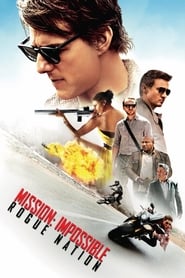
So the story is still unfolding as you're watching this. You know, that whole structure is that wooden structure there that we built. So there's... This was used to sort of get rid of the rest of the team so that Ethan could sort of have the stage in a way. There's the shot where you know where you are. Yeah, you just give a little geography there. Boom. That was fun sliding. That was good. That was fun. And then all of a sudden you see the chopper there. Boom.
1:05:10 · jump to transcript →
-
Yeah, with that helicopter that he's got. Isn't that nice? Ethan, get in. We don't want to use force here. You know we will. Ethan, get in. Tell me you came here. I just like how your structure, you know. Just when this thing is happening, it's like, you know. And reading the script, it was a real page turner. That's where it is. Again, I love your running here. It became this sort of theme in the movie, inadvertently, that Ethan, you know...
1:12:37 · jump to transcript →
-
-
-
Yeah, this is a good... It's a very Hitchcockian way to design the structure of the scene. Now let's see.
1:34:43 · jump to transcript →
-
Since you talked about a lot of people who worked with you in the movie and Dennis Magnusson was the one who helped me out in the final versions of the script with the structure and so on and did that very well. So, Dennis Magnusson. He's not mentioned very often. Here is an idea we tried to... That's really one thing I'm not so happy about. The background turning red and then black again. I think it's too...
1:51:26 · jump to transcript →
-
-
multi · 1h 33m 2 mentions
Wes Anderson, Peter Becker, Roman Coppola, Jake Ryan + 3
-
Wes Anderson
In this movie, there are two of your costars-- You play an attorney. You're married to Frances McDormand. That was my first casting thought of this movie was, "Boy, I would like to have Bill and Fran together, to have them married in this story." And the other interesting relationship I liked was Bill and Bruce Willis, who plays Captain Sharp. Maybe, Bill, you could talk about these two collaborators. Well, the scenes with Frances were... that was like dancing. That was like dancing at night after a few glasses of champagne. It was really-- We were pleasing each other and moving together and doing things effortlessly and exchanging, matching each other's energy and progressions. I think the scene I did, the bed scene I did with Frances, where we're in separate single beds, was one of my favorite scenes I've ever done in the movies. I really enjoyed it. I could have done it all day long. So we just kept doing it. I don't think anyone wanted it to stop. It was really, really a delight. She's really, really talented. Now, with Bruce, that was my first time working with Bruce, although I have some history with Bruce, knowing him. And the first timers in all of Wes's movies have a difficulty with the sort of precision, the insistence on a very specific script, you know. And it's a hard thing to wrap your head around. And Bruce is a kind of a natural, he doesn't necessarily, in most of his movies, he just sort of lets it go, he feels a certain way and he lets it go. Precision dialogue was never something that was too demanded because it wasn't his natural way, and he was able to do it in his own words most of the time. So it was a little different for Bruce doing that in Wes's because it's sort of-- It's very mathematical. It doesn't bounce the same way. So he needs it to be a certain way, and you have to really get on yourself to get the lines right. And there are tongue twisters. There's lots and lots of tongue twisters that are hard to say. I just remember being in a car and doing some car scenes, and just enjoying the heck out of it and saying, "Let's do some more of this." We did many, many scenes of it. Many, many takes. And it was always interesting. I think we were both enjoying it. I really enjoyed being on the other side, you know, just hearing him go. And he has his own funny timing that's, you know, unique. And it was fun to play. "Okay, let's see." And we did just wonderful stuff. He's really wonderful. But I really had fun with it. I really enjoyed it. And when people are giving, you're just like, "Okay, I like that. Try this one." And we just kept throwing them at each other and really having a good time. I've worked with him again since. We really had a wonderful time working on Moonrise Kingdom. And I think I told him when I saw the film that when I saw the ending shot, the climax shot on the bell tower, I laughed. That was the biggest, hardest laugh I've had in movie history. That's the biggest one I've ever seen. It made me laugh so hard when I saw that. Bruce holding on to the kid. It really killed me.
35:14 · jump to transcript →
-
Well, it's one of my favorites, if not my favorite. It's just a spectacular film. And it's sort of what I would aspire to make if I could make a movie like that. I can't remember at this second what the heck I was thinking about in relation to Red Beard. And this-- Oh, we were talking about emotional things that were-- The thing about Red Beard that's so wonderful is the plot is very straightforward. But along the way, these sort of... These sort of little, you know, rabbit snares are set along, these little things are set along the side of the road. And there's a kind of a rhythm to the plot where your internal clock, you know, goes off and says, "Well, it's time for the climax of the movie now." But that's not what happens in this film. What happens instead are that all these sort of subplots, these little sort of traps, these little tricks that are set up along the way, they all go off at once. They all burst into flower at once, one after another, I should say. And there is this emotional, I mean, just a drubbing that you get. You just get just punched in the solar plexus, just repeatedly for several minutes, for like a whole reel that you're not-- You didn't see it coming. You sort of didn't see it coming. And it pounds you because the plot has been so straightforward and clean that your intelligence is elevated and you're available for this emotion that comes all at once, and I think that... That that movie Rushmore had a similar kind of construct, in that it seems like, "Okay, now we're gonna do this stuff." A lot of action has happened, you know, there's been this struggle between the man and the young man and the girl, and you think it's all gonna go off, and then a whole bunch of other things happened.
42:34 · jump to transcript →
-
-
director · 1h 34m 2 mentions
Scott Stewart, Jason Blum, Brian Kavanaugh-Jones, Peter Gvozdas
-
And with Josh Hamilton, the qualities that I was looking for in a Daniel was somebody who, in the third act of the movie, when he buys a gun to protect his family, that this is not something that would be comfortable for him. My father didn't look like an action star, and a lot of people's fathers don't. And so it was kind of about trying to keep true to that idea.
23:29 · jump to transcript →
-
10, 15 years ago, he was like them. Maybe he was like Josh Hamilton's character and had a wife, like Keri Russell, and maybe lost a child. And his whole life went off the rails, but he became committed because he, you know, any parent that loses a child in an abduction situation, we'll talk about this more at the very, you know, as the climax of the film, the end of the film,
1:08:39 · jump to transcript →
-
-
director · 2h 10m 2 mentions
Mission: Impossible - Rogue Nation (2015)
Tom Cruise, Christopher McQuarrie
-
Seat of the pants, I would say. Seat of the pants, but also just being honest with each other. Things that don't work and really trying to keep each other true. Yes. The story, the structure. And when you're not feeling it, it's just... But we had this thing where it was really interesting. For example, Alec is throwing a stack of papers on the table. There's actually just random things stuffed in those plastic sleeves. We didn't shoot the inserts until later. We knew...
24:10 · jump to transcript →
-
Didn't we? Oh, my God. We were talking about that a year ago. We talked thematically, and it all kind of found its way in different ways. Yes. Tonally, the relationship. You spoke about also what you wanted to do with the female character right from the beginning. Yes. You know, we were going over that. It was your idea right from the beginning. She's an outsider, and she's keeping you off balance, and we don't know if she's good or bad. She tempts you to come away. But remember, it was originally a thing where she had all this money in the second act of the movie and was like,
1:02:16 · jump to transcript →
-
-
multi · 1h 25m 2 mentions
Marcel the Shell with Shoes On (2021)
Dean Fleischer Camp, Jenny Slate, Nick Paley
-
yeah that's you're stating like the main challenge of something in this format which is like how do you how do you structure it and control it in a way that a feature requires but not get rid of all the doc-y stray hairs on the couch i mean the one thing in this movie that is
5:43 · jump to transcript →
-
line. I remember we were, like, you know, trying to write and rewrite the climax of the scene. The night before we recorded it. The night before we recorded it. It all just felt, like, way too much. I think we probably had, like, a long monologue at one point. And
56:08 · jump to transcript →
-
-
-
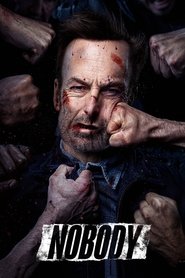
Look at this guy. He's not even gonna eat his frigging eggs, he's so frustrated and blue. One of the additions that we wanted in the script is that Hutch doesn't eat until the morning after the fight, when he becomes himself again, the real Hutch. Yeah. Whereas Yulian eats before and doesn' eat after. And we kind of re-cut some of the Yulian stuff, so that doesn't land. But I've always enjoyed the juxtaposition of you chucking the eggs out in the bin here compared to the second act which starts with you biting into a pancake with bacon. That's right. He's got his mojo back. - Which was my everyday breakfast on set.
10:52 · jump to transcript →
-
This is a matter of need, principle of need." Tough guy. And I don't think the slap was written. I think he came up to me between the takes, said, "Ilya, what do you think of... "It feels like Charlie should be more of an asshole and buddy slap on..." Such a condescending slap. But he was so afraid to suggest it to you. And now you look at him and you go, "This guy's messed with guns before, "and he's not sure he wants one in his life again." But look out. Well, hide it in the fridge. That's always a good place for your extra guns. It's almost like he knew it might come in handy in act three. Yeah. - It's Chekhov's fridge, pretty much. What's that? - Chekhov's fridge. You know, the Chekhov's rifle? Chekhov's gun? If you see it on the wall in the first act, and it fires in the third, well, that's our fridge. Yes, that's right. Michael Ironside. - Yay, Michael Ironside. A great, great actor. - The man, the legend. And he's really good in this role. Kind of supportive, kind of friendly, but also hard on Hutch. Everybody's hard on Hutch. Bunch of hard-ons around him. If I'm gonna sell it, I want it to be... But he's a great actor and he delivers here, big time. Ilya, you put together a hell of a cast around me. Boy, the best. The best. I do. Well, it's pretty easy to get a great cast when you say that Bob is the lead. SO... You know, one thing that was concerning to me, and I love seeing Charlie and I love seeing the father-in-law here, is my character is so down for such a huge chunk of this movie. There's a... I mean, he starts to smile when he starts to cut loose and let out all his rage and frustration. But that's a long time in, and we talked a lot about this. This movie has always been... Has an offbeat construction with this long prelude, longer than most, with a lot of hard feeling and kind of... This guy's got an internal struggle that takes over this whole first 40 minutes, half-hour, 40 minutes. I think in the script, the bus fight used to happen around page 30. And I remember we saying, "Whenever... We'll get to it quicker. "It'll be like minute 25 at most." 'Cause I remember looking at several films as examples, and I think my favorite example was Oldboy, where the first real fight happens on minute 41. But there is a little pre-fight around 27. But it's also a much longer film than this was ever intended to be. Right. So it was that balance of, "Yeah, we want to set up the pins "before we shoot the ball," but at the same time, you're also releasing a film in 2020. Well, now it's 2027. But there's a certain expectation, a certain pace that you can't really rely on as a comfortable pace for a bigger audience. Hopefully, we'll have a bigger audience when it does come out. We are recording this six months before the film hits theaters, which is a little early. But you're absolutely right. There was a lot of discussions on how long and what we should spend time on before we hit what everybody paid to see. It's a different kind of action movie. It's trying to be... Just have more story, more character, more complexity, and I think a more delicate kind of complexity to these family relationships. The son's annoyed with the dad, the wife and the husband love each other but are estranged, but in the house, you know, together, they have a past. We don't quite know what it is. The little girl's oblivious and bringing nothing but sunshine into their lives. And then there's a feeling that this guy just has his own issues, his own challenge of being who he is. And all that turns out to be true and comes clearer as the story goes.
13:26 · jump to transcript →
-
-
-




Related topics
Other topics that frequently come up in the same commentaries.