Taylor Hackford
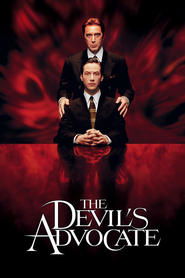
We rehearsed this scene for about a week. It was the one, I must say... ...for Warner Bros., a great thing they did for me. And although we had our differences, I was able to get my vision on the screen. I have no excuses. So, I do thank them. There was a great thing here in that Warner Bros. allowed us... ...to come back from New York. We built this set in Los Angeles. I had a week to prepare the set, to light it and to rehearse with the actors. Al, Keanu and Connie and myself, worked there alone... ...and really kind of built this scene. Tony Gilroy was there also, pardon me. It is not an easy scene to do when you realize it's basically a monologue. How do you keep it moving? How do you keep it visual? And it's basically a confrontation. And again, as I said... ...I want the devil to be confronting us. We all take credit for the things that we do in life that are good. When it's a good decision, "I made that decision. I'll take credit for that." But when they're wrong, we look for people to blame. That's exactly what Keanu is doing here, and Al won't have any of it. Milton is basically saying to him, "Hey. You made every decision yourself. "In fact, I told you not to. I said take care of your wife." I mean, I love the argument. And this is what we were trying to do. I give a lot of credit to my collaborative partner, Tony Gilroy, on this project... ...because this piece was a script that existed with a lot of special effects... ...and not many ideas, and it wasn't worth making. And every Hollywood star turned it down. Al Pacino turned it down five times. What we did with this script, from a page one rewrite... ...is try to give it some ideas, try to make it about free will. Not make it a special effects piece, a ghoul piece, a monster piece... ...but make it about something. Not just about lawyers... ...because lawyers are convenient and they happen to be a major target... ...and I think are the most pragmatic of all professions. However, all professionals find themselves in a position to blame... ...or be able to use their corporate entity, their boss, their organization... ...their professional oath as a screen against having to confront... ...moral realities, personal choices. If you can say "My personal, professional oath," pardon me, not my... "My professional oath says that I'm absolved from responsibility... "...because I have to represent my client to the best of my ability." Or, "My corporation says I need to do this, pollute this lake, and I'm doing it." It absolves you of your personal, moral responsibility. What this whole scene is about is confronting your own hypocrisy... ...and saying your ambition, your own vanity, in a world that's fiber-optically... ...interconnected to satisfy our every eager impulse, "You," meaning, "You humans"... ...as Milton says, "are exactly... "I've succeeded beyond my wildest dreams just by letting you do what you want. "You're so selfish. You're so self-involved." So that's what this scene is about. Kevin realizes that it's true... ...he was responsible for Mary Ann's demise... ...and when he does, he falls apart. Now watch Milton. He starts picking him up. He starts trying to say: "Hey, you know, think of it in a positive way. You have to think of yourself. "She wasn't up to you. Here's a woman who is. She's fantastic. "She happens to be your sister, but so what? She's beautiful. "She's smart. She's intelligent. You know, there's something more for you." And I think at this point, when confronted with the fact that he knows it's the devil... ...and now what Milton is gonna do, is talk about... You know, remember, Keanu is half and half. He's half Judy Ivey. He's half Al Pacino. He's half Alice Lomax. He's half John Milton. He's half God and half the devil, and this is relating to a lot of us. We all have our good side, our bad side. In this particular instance, this next sequence is, I think, really interesting... ...because Al Pacino is basically talking about his father. He's talking about his former boss. He's his own boss now. But if you think of Lucifer, the fallen angel... ...the brightest, the most honored and the most... ...you know, he was God's favorite... ...being thrown out of heaven because of ego, because he didn't want to take orders. That's what Pacino's doing here. Look. He's angry. He's losing control.
2:00:18 · jump to transcript →