Topics / Production
The first day of shooting
107 commentaries in the archive discuss this, with 262 total mentions and 62 sampled passages on this page.
Filter commentaries
Filter this topic by the film's decade or the type of commentary.
By decade
Across the archive
ranked by mentions · click any passage for the moment in the transcript
-
director · 1h 31m 3 mentions
Alex Cox, Michael Nesmith, Victoria Thomas, Sy Richardson + 2
-
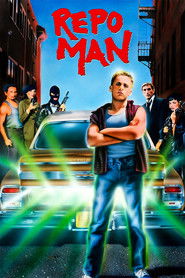
riding bob richardson's motor guzzi and i'm doubling fox and now now robbie muller is shooting the original part of repo man with fox in the car varnum behind because this opening sequence is a composite of two different days of shooting the first shot by robbie muller who did this shot and the second day done months later by bob richardson
3:00 · jump to transcript →
-
It wasn't near as traumatic as when the Malibu got stolen. That was bad. We'll get to that, won't we? Well, this is that car. It is. Because when we started shooting, we only had one of these Chevy Malibus. Yes, and I kept saying, don't rent the picture car. Buy them. Let's buy three. Yeah, but we only ended up getting one. And the Teamsters suggested to me that I should, since I didn't have a car, I should drive that car to the set every day. And this went on for about a day and a half, and then the car vanished.
3:49 · jump to transcript →
-
I like the fact that the Slim Jim makes the car alarm go off inside. It doesn't make them bat an eye. I know. I know. Yeah, you're wonderful on this side. Beautiful. That was my first scene. My very first day. This is the first thing you did? Yeah, first thing I did. That's great. So calm. Because you have to break the steering wheel column, don't you? Yeah. Yeah. But, like, it's very methodical.
31:08 · jump to transcript →
-
-
-
John McTiernan
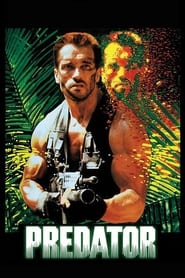
It was very difficult to maneuver in the jungle at all. We just didn't know how. We started with... First day of shooting was the worst nightmare I've ever seen. They had 300 Mexican crew members from Mexico City. Just crowds and crowds of people, and most of them had nothing to do when we didn't have any way of truly organizing, or communicating, in what we were trying to do. So for the first week or so, there were about six of us who were making the movie. And what we did was we negotiated with the, it's called the Cyndicado, the old union down there. It just got much better since, but at the time it was filled with these old lifers, guys who had movies in the '30s, and they're old. And we got the union to send half of them home. We had to pay them but we sent them home. So we got it down to a reasonable number of people, I think we had about 100 crew people.
14:45 · jump to transcript →
-
John McTiernan
This right here, was the first shot I shot in the movie.
35:01 · jump to transcript →
-
John McTiernan
Arnold was a trooper throughout the mud. The mud was disgusting. After the first day of working, it stank. Something terrible. He was great about it.
1:18:56 · jump to transcript →
-
-
-
Oh, yeah. Why does he have to be guilty? If he's not guilty, everybody's having fun. And Jim would be the one that would say, well, there's no movie if he's not guilty. He was great. He was protective and inspiring in the way that you want someone to be. Yeah, and he's fierce, and he wanted to know. He wanted to know why and what. This is all kind of interesting. This was the first day. Oh, yeah. We shot this the first day. I was scared to death.
46:19 · jump to transcript →
-
Yeah, I remember. I didn't want to come out of my trailer. It was like, we filmed the first day. It was like, hey, that's lunch. I'm like, hey, everybody, thanks. I went in my trailer, and I did not want to come out. I was so terrified. This was the first scene I shot. This is so funny. We shot this wide shot. This shot was the first shot of the movie, the first shot I ever did as a director. And Johnny did it, and you're standing there, and it all looked great. And I just kind of went off to the side, and I said, well, it's good. Are we done?
46:49 · jump to transcript →
-
He said, oh, he totally got it. Everything gelled, I think, after this night. When we finished it, I remember we started a night shoot. By the time we started shooting, we were done by 12.30. That's right. We finished really early. We had shot everything we could. We would just take one, take two, this way, and we were done by 1 o'clock in the morning. Look, as to you, I'm not going to be somebody like Diane Corda to kegger. This girl was different, man. When we go out, we wouldn't even have to go out, you know? We'd just hang out.
1:10:29 · jump to transcript →
-
-
multi · 2h 19m 3 mentions
Martin Scorsese, Nicholas Pileggi, Ray Liotta, Lorraine Bracco + 9
-
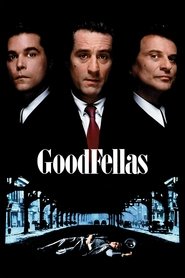
I was more excited about the acting part. I didn't look at it as a break. I didn't look at it, you know, at that time you have no idea how the movie's gonna come out. You just know you're working with legends in the making. I mean, you know, already Bob and Marty had such a massive work that it was great just to be playing make-believe with people who were so passionate about that, because I loved the stories that they were telling. You know, I remember the first day of rehearsal,
46:50 · jump to transcript →
-
I think it was easy for him to jump in that position of my father figure or my older brother that would take care of me in a way. And it's easy for him to get so upset when I get killed in the movie also. Working with Bobby was great. I'd always wanted to work with him. And after the first day we worked together in the scene where we go to get Henry Hill to come back, I remember, and it was very touching to me,
49:10 · jump to transcript →
-
threw himself back so violently at the first shot that he went flying against the bar and cut his hand. They had to take him to the hospital. He cut it on a pitcher that fell. I mean, I think everybody in that room felt, including me, felt like I killed that kid. Sick maniac. I don't know if you're kidding. What do you mean you're kidding? You're breaking my fucking ball?
1:11:41 · jump to transcript →
-
-
-
The stuff John Hughes would write, things that I hadn't heard... ... John must've known by talking to people from Chicago. "Silver tuna." - "Silver tuna." The Big G. You know, these kind of things. First day of shooting. - Yeah. First day of shooting on the picture was this scene. And we knew we kind of had something special... ...with your performance and just the look of the film. We did a tremendous amount of setups in one day. I think probably 31 setups in one day, which was... That's a lot. - Which is a lot... ... for something that wasn't being done for television. And, uh.... "I
38:45 · jump to transcript →
-
And, now, I can't remember if this was you... ...or the stuntman running across the bridge. Or even just-- Or one of the stand-ins. I remember I had like 10 stand-ins. Oh, that's true. That is true. And so then you guys would do a lot of, like, just stuff after I'd go off... ...or at the same time, even. "I'm a criminal." I think this was the first day too. Yeah. - Yeah. This entire concept of the Wet Bandits... ... I'm trying to remember if that was in the original script or not. I don't know or.... I think possibly it was. I thought... For some reason, I had... I have a memory of Dan Stern coming up with it, and I could be wrong. You know, that's why I really wish John Hughes was here because he could... But Dan, for whatever reason... ...was obsessed with the concept of the Wet Bandits. The Wet Bandits and the Sticky Bandits. - Yeah. But this whole look of Dan's is this sort of white-trash, trucker look. It's just something that didn't catch on, unfortunately. And just the contrast in size between the two of them... ...and just height and just build. But the, uh... All of these were little touches by Dan, which, on a movie like this... ...people, you know, don't talk about, don't notice... ...but putting the snow globes from each house with the... You know, attaching them... There's a scene on the deleted sequences... ...where Dan wanted to... He's stolen a cappuccino maker, and they share a cappuccino in the truck. I remember that. - I think it was that scene. This was all shot backwards. - Oh, yeah, that's right. Coming up here. This. So I would scream, and then the car would back out... ...and I would walk backwards. And we did it several times. And it looked pretty awful each time... ...and then finally, that one shot, it worked out perfectly. Well, you had somebody shaking the van, right, you know, at the beginning. And I had to walk, like, backwards, like, heel first or whatever.
40:48 · jump to transcript →
-
Are those microwave dinners.... Uh, it was interesting, I have this funny... You know, you'll sometimes read reviews about films... ...and people will accuse filmmakers and studios of using product placement. But it's such a difficult question sometimes in movies... ... because if you see orange juice that doesn't look real... ... then it takes you out of it. So it's a very... We had no product placement for any of this movie... ...because no one thought it would do any business. I think the only product placement came later... ...with something called Juicy Juice. That was it. - I remember that. But all of this stuff... Well, I-- Remember when I'm doing the--? Saying grace at the table? And we did one where it's like, "Macaroni and cheese dinner"... ...and the other one was, "Kraft Macaroni & Cheese Dinner." We did two different takes of that. - Oh, my God. Okay, this was scripted, and then at the very end... ... you just told her to keep asking questions. I'm just like.... I forgot what it was. I think you ad-libbed that, "You're a stranger." That was... "Can't tell you that, because you're a stranger." And that got, again, a big laugh. Oh, this was good. - Day one. I had to let go of the strings on the inside of the bags. Oh, yeah, you controlled it, right? Yeah, at the right time, I just let go of the strings... ...and the whole bottom would fall out. Earlier I was talking about the furnace. I had forgotten to mention, when you were eating the candy... ...when you were watching Angels With Filthy Souls for the first time... ... you fell asleep. And you woke up to the entire house coming to life and chasing you. So there were nutcrackers and toy soldiers, and it was a... It was just a sequence I storyboarded for months... ...and the studio said, "You don't have enough money to shoot it."
52:47 · jump to transcript →
-
-
-
That father to have a beard, sort of an older guy. And when he showed up the first day, he was cleanly shaven. And I told him, why did you shave your beard? I told you I wanted the beard. But for some reason, he thought he looked better without the beard. So we actually had to put a fake beard on him. So when I look at a close-up, I don't want the audience to not think that I don't notice what they notice. But John was his name. But he was great. He was a great guy to work with.
14:37 · jump to transcript →
-
It worked so well like that. Yeah, I was, I mean, again, I'd said I was a writer and a producer in television for a lot of years, but I'd never directed. And I thought I thought I would be easier. But the first day on a set as a new director, boy, you get you get baptism by fire. But, you know, I had a lot of good people and a lot and a great crew. And and Warwick was terrific. And there's eating the bug. And I love that.
22:00 · jump to transcript →
-
from day one from the very first draft and here it is and his mother was there and he was like eight years old and he had to say it in front of his mother and we got permission but uh... and that's the one where i have a memo that the trimark memo was take it out and i said no it's gonna work and oh it's it's one of the biggest punch lines out there and i do have the memo i might even take a picture of it because i know
1:25:32 · jump to transcript →
-
-
-
I always saw Sally in this part. I don't know why. You know, Wendy Finerman, the producer, suggested her in, like, the first day or first week that I, you know, signed on to do the movie. And it's just like, wow, yeah, Sally. And I sent Sally the script, and I was very worried about it because, you know, she has to play, you know, ultimately Tom. I mean, when you say it, it's not really that way. Say, Sally, why don't you play Tom Hanks' mother?
6:05 · jump to transcript →
-
You know, like, for example, when Kennedy's got the football at the very first shot, that was actually in Rose Garden. But we found that image of him and we put him in the Oval Office with our, you know, background plate. Stuff like that. So we just looked at everything. And then when we found the bits of film, we went back, revised the script to try to weave the story into what we had. And I know the joke of, like, when Kennedy says, I believe he said he has to go pee.
30:52 · jump to transcript →
-
from day one of shooting. He's editing. I don't look at it, but he's there cutting because, you know, there always comes that moment where you got to like maybe see something and see how the movie's coming together to see where you are. So my endless conversation with my editor in dailies is, oh, you know, don't throw that out. Don't use that. That's never going to work. You know, it's like just cut it all out. But there's also that's
1:16:29 · jump to transcript →
-
-
-
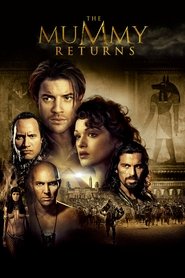
I really wanted to get the feel of Cairo in the 20s, and I think this is about as close as you can get. I don't think Cairo nowadays even looks anything like Cairo in the 20s. And so Marrakesh doubled very nicely, and the people were great, and the extras were very authentic looking. It was kind of a fun scene, especially the next one coming up where we had 500 prisoners. It was a lot of fun. This is, I think, the first day of filming, actually, this scene right here.
19:59 · jump to transcript →
-
leads, they seem to work with the audience. Especially this little thing right here where Brendan about gets his head blown off. I added this the night before we started shooting it right here, this whole thing. And I was just hoping that they wouldn't take Brendan's ear off before I finished shooting the movie. I'd say that actually looks quite dangerous. I think the look on his face was, I'm going to kill the director. I mean, those squibs are awfully close to his head, but you know, whatever. Yeah, Brendan was such a trooper, but no...
30:39 · jump to transcript →
-
The first shot of the CG mummy. Although Arnold Vosloo, who plays the mummy, plays Imhotep, he was a little disappointed because he was hoping it would be like, you know, gooier or scarier. But being PG-13, we had to, you know, there was a certain limit as to how gooey and scary and disgusting a mummy could be. These next special effects shots, we shot them at dusk, right as the sun was setting.
1:00:32 · jump to transcript →
-
-
-
This was John Hannah's first day of filming. It was real fun to get back together with him.
26:29 · jump to transcript →
-
And so even though it was slightly out of focus, it just had all the elements. That was the best. And in fact, the take had Arnold Vosloo in it, and he was painted out. This was when I'd been in Morocco a few weeks shooting. I'd already gone to Jordan and Egypt, and this is when Rachel, John, and Brendan show up for the first. This is their first shot in the movie. One thing you'll notice about that previous shot, that big shot, it was one of those horrible white...
55:52 · jump to transcript →
-
But I thought it'd be so much more... There was about three weeks before he started shooting, I thought, I came up to Allan Cameron and said, Alan, wouldn't it be more dramatic if there was blasting flame and steam and everything was moving and rocking? And he got all excited about it, but of course the set hadn't been designed for that. So, well, we had a lot of nervous firemen standing behind Cameron during the shooting of this entire sequence because there was four guys with World War II flamethrowers in the backgrounds of each of these shots, blasting flame all over. And many times the set caught on fire.
1:43:46 · jump to transcript →
-
-
-
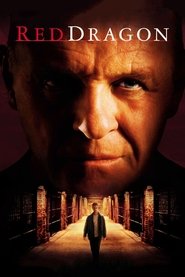
Mr. Metcalf, do you still have the Jacobis' check stubs and credit card statements? We're looking for any kind of service call or purchase that might've required a stranger to enter the house. A repairman or a delivery guy. When you would watch these dailies with Dino and Martha, I was only there once or twice, but again, it seemed to me like they had a very shrewd sense of where the best takes were. Their shrewdness came in length. Dino is very sensitive to pace, I think. - Right. He, like myself, likes to get on with things. Not just within an act or within the whole movie, within a scene. Within a scene, yeah. - A true sense of what you can do without. Yeah, exactly. Sometimes you get lost. When you're making it, you get too close... Where I got the most out of Dino was right before we wrapped the shoot. He started going through the script with me, he started pulling pages out. Remember we... - He would say, "We already know this. "We'll understand this without it being said." I guess if you've made as many movies... - Making 600 movies, you Kind of... ...aS Dino and Martha you really begin to learn something about storytelling. They were a huge help in that way. It's Chromalux. This was a great stock shot. We just got a fax. This is the first thing I shot. First day of shooting. It wasn't in my first cut. I ended up putting it back. Because it helped explain that... - That Dolarhyde is in some transition. Or, maybe, he's trying to stop. - Maybe. Which helps us explain the story of why he's eating that painting. But, unfortunately, which comes later. If it came before or while seeing the scene it would have helped more. But here... - You weren't happy with the way that scene came out in some versions. It seemed like very important information, emotionally. I love this location. This is a real photo lab that we just took over and... This is a long nighttime shoot. - Yeah. This exterior and the interior of this location are two different places. This is why I wish she was hurrying more, so that it would catch his interest more. Why is she running into the office? - That was my fault. That was one of the days we didn't talk on the cell phone. I would usually call Ted and say, "Ted, this is what I'm doing." Pick his brain.
1:40:42 · jump to transcript →
-
That was a little storytelling thing, you know, helping, because you really couldn't hear her lines. Of course. There goes Grandma. There was a very complicated lighting set up for this. I read a cinematography article where Dante talked about how many different kinds of banks of lights that he had to set up for this one shot, right here. This is a real fire, but we enhanced it with CGI. This is a real fire. He's got this fire, but he's got to light the actors with extra instruments that are hidden out of shot. He's got the natural light of the cars. The lights flashing around. Francis Dolarhyde! Where is he? Look how many things are happening with light in this one nighttime shot. I put my hand in it. He set fire to the house. It's all justified because the headlights of the... It's red, it's blue, it's yellow. That was such a big explosion. You had to be half a mile away from it. All these stuntmen... I guess some people are wondering, "Why is there such a big explosion?" Actually, in the book, Dolarhyde has dynamite stored in this house for some unspecified future project. And you'd written a shot when we looked in the safe... I'd written a shot where we saw the dynamite, it didn't end up in the movie. We finally just decided, it's an old house, it's got... Let's lose the dynamite and keep... It's got oil tanks in it and the tanks blow up. I love this close-up of Emily. She just... What a face. Who could resist a charmer like me? You know, whatever part of him was still human... We really wanted that hair job to work, so we went crazy. You didn't draw a freak. Okay? It's a good scene for Edward, too. ...with a freak on his back. I should have known. No, sometimes you don't. Trust me... Initially, this scene was written as a sort of voiceover. Actually, it was one of Brett's, you know. Brett is very, very good on text, too. Just like Dino and Martha. And Brett said, "The audience loves this character "and we have to honor her by having a farewell with her." We have to see her. We have to give her some closure with him. They have to have a real scene together. The last time we saw her she was crying outside the house. And it was one of the best ideas that Brett had as the script was being revised, before we even started shooting. Dr. Voss, please call Pharmacy 4421. I love this scene that we came up with. This helped pay off the end. This is setting up the ending in a way that's not really in the book, I don't think. We needed for him to have knowledge of Dolarhyde that he could only have if he'd seen this big journal. So we went back and forth about how could he find this journal if that house blew up. Finally we thought, if we put the journal in the safe, it could conceivably have withstood that explosion. We were torn between, do we do a kid's drawing or a picture?
1:49:42 · jump to transcript →
-
This whole thing was in the script. The first shot was exactly the way it was in the book, which was, it took place on an open beach. Right. I said, "Ted, I just feel like... "I don't know how to shoot suspense on an open beach. I just don't know." We changed the ending of the book, and everybody had a contribution. Dino and Martha said, "The boy has to be in more jeopardy. "The son has to be in more jeopardy, that's what will make this work." Brett said, "It has to be more claustrophobic. "Interiors are scarier than exteriors. "We have to have hallways with doors where he could appear from anywhere." And then this great, great moment with the mirror which is pure Brett Ratner. It was not in the screenplay originally. It was Brett's idea that the reveal to this character should be the broken mirror. It was wonderful. This sequence is an excellent example of how a screenplay evolves from the producers, from the director, and from the writer. And what I wanted, which was not in the original ending of the book, was for Will Graham to be more heroic. And then we added... In the ending of the book, he's injured by Dolarhyde on the beach. The kid hooks Dolarhyde with a fishing rod. Graham Is injured on the beach and runs away and hides, leaving his family to deal with the bad guy. And I wanted Graham to be more heroic at the end here. So we each had a shopping list for this sequence and got what we wanted. I also wanted Graham to show cleverness here. He can't overwhelm Dolarhyde physically. But he can outthink him. That's what he's good at. And taking all this, because Ted even said to me, "Brett, I don't write action. I don't really do that." And so I said, "Okay." I sat down with my stunt coordinator, Conny Palmisano. We went through beat by beat of what could possibly happen physically. We called Ted and went through it, and he came up with this whole thing... Where he stabs his leg with a... He's got a second knife hidden. But the whole thing about him using what he saw in the book, which is much more heroic than anything else he could do physically. This was where we took quite a leap. And tried to use things that the book suggested but didn't actually dramatize. And it really worked. And Tyler Patrick Jones who's... Wonderful little boy. Who did an amazing job and went through hours and hours of being thrown to the ground and being yelled at, berated. And very smart and... He's the sweetest little boy. We should have put at the end, "No children were harmed during the making of this." It's not his first movie. - Yeah. He actually worked with Spielberg on Minority Report. He had a small part. He said he actually liked me more than he did Spielberg. So I was happy about that. Don't cry at me, you little faggot! He said my beard wasn't as big as Spielberg's. Nor your bank account. "I'm a freak." Say it! No. - Say it! Dad! - Say it, or I will cut it off! "I'm a dirty little beast." Ralph did a great job here, and he was nervous about this. "Is this gonna work, Brett?" That was his question. And I said, "Let's shoot it and find out." - We won't know until we finish. Sound Dogs did a great job on the sound design here. They did Family Man with me, and they work... I love how you drove this whole sequence. This just goes like a freight train, this sequence. It's a classic. It's like the end of Psycho or something. It's just a great, great suspense sequence. Every shot selection and the pauses. Josh? - Mom? Will? Where are you guys? I thought I heard some kind of... Will? Great set. It was great. It was modeled after a real house that we saw in the Keys. It had very narrow hallways. These types of doors. Rattan louvered doors. We needed the doors to be louvered, because Molly has to be able to reach through the door here in order to unlock it.
1:53:32 · jump to transcript →
-
-
-
Noah Baumbach
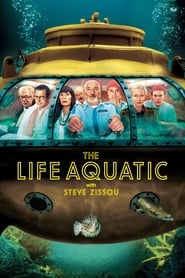
Was there a picture of Antonioni also? Yes, Antonioni and some Avedon photographs that were taken in Italy. I'm just gonna comment further on Roman. Roman Coppola, who then-- Roman kept saying he would help us with the second unit of the movie, which I'd never had second unit before and I never knew what to ask him to do. And finally, Roman just showed up and started shooting things, and ended up shooting all kinds of shots. Shots of the boats at sea, from the helicopter, and things that were difficult to get, and things that we couldn't do, and Roman made a great contribution to the movie with a variety of shots, and did it with a lot of enthusiasm. That's true. What happened to me? Did I lose my talent? Am I ever gonna be good again? This sequence is set in Ravello, above the Amalfi Coast. It's supposed to be Alistair Hennessey's villa. Villa Hennessey. - In West Port-au-Patois. West Port-au-Patois, maybe kind of like Haiti or something. In the background, down below here, when Zissou and Eleanor are on the balcony at Hennessey's place. There's a guy who she calls Javier, her research assistant. His name is Muzius, and he lives there. He was the guy who showed us the place. So we cast him in the scene because he sort of comes with the house. I was thinking, like, "What perfect casting." But he actually came with the house. - He was local. That was also based on a photo. There's two cigarettes kissing. Yeah, it was.
1:15:53 · jump to transcript →
-
Noah Baumbach
And I remember when you were in Rome, when you started shooting, you played me "Queen Bitch" over the phone. You said, "What do you think about this for the ending?" And it really has a great energy. You know what? I think it's Bowie during a period of time when he was hanging out with Lou Reed or something. It almost sounds like it could be a Velvet Underground song. Is this on Hunky Dory? I feel like I might have read somewhere that it's about Lou Reed. Is that possible? "Queen Bitch." - Could be. "I'm up on the 11th floor and I'm watching the cruisers below."
1:52:11 · jump to transcript →
-
Noah Baumbach
Well, I hope we don't sound phony and pretentious on this thing. I hope not. We talk a lot about ourselves. - Yeah. And about work. And some intellectualizing that we never would have... - Done in any other circumstances? Nor stuff did we think about when we were writing it because we tried to write it just more as honestly as we could without really overthinking anything. We're trying to make it something funny and entertaining. But you can't say that for two hours, so you keep trying to say-- And then you talk about wallpaper and costumes. Then you start saying things like, "Well, he's an invention of a child's imagination, trying to connect to..." But I don't know if that's true. We just thought he was a funny character. You know, I'll say one thing here. This thing they're walking on, we were out, and this is in Naples, where they're walking along this and the credits are going. We're driving along and we see this breakwater thing with rats on it. I asked if we could get off there, and the guy didn't want us to. He said the cops were gonna come, and then I said... Anyway, he let us get off. And this is the most strange, bizarre thing. It doesn't connect to any land. It's just a cement thing in the middle of the water. I said we have to shoot something here. This is what I came up with, which is a, you know... It's almost, you know... You would say it's inspired by, if not stolen, from the end of Buckaroo Banzai, which is why I said Jeff Goldblum was in it too because he's in that as well. We probably talked about Buckaroo Banzai, you know, and using this kind of idea before we knew Jeff was gonna play Hennessey. That's true. - So in some ways, Jeff playing it makes it seem less of a steal and more of an homage, but it's pretty much just a steal. I wonder if we'll ever get to see this ship again. Where is the ship now? - It's in Malta, in drydock, and Ian, the marine coordinator, theoretically owns it now. But it was such a beautiful ship. It was such an amazing thing to be able to go on. This must be totally boring for people to hear me say this. And then there's Ned smoking the pipe, up at the top. Yeah. There he is at the top. In whatever dream this is. This is something that Bogdanovich had talked about. He used it in The Last Picture Show, which I feel like you do in a lot of your movies. But it is that idea of a curtain call, of like, you know... Someone might argue that, you know, when you finish a movie, you wanna sort of throw people into the credits and their own lives. And for different movies, then there's this idea of, you know, letting people ease their way out of the movie by giving a kind of, you know, whatever a film version of a curtain call. Yeah, and also, you know, with Ned, because he dies and everything, it's kind of nice to bring him back at the very end. Yeah. And nice to see that Werner joins the team. And the intern becomes official. And he didn't get an incomplete. Who cares what he got because he's dropping out. And going full-time. And this is Seu Jorge playing in the opera house in Naples. We didn't have a real plan for exactly how all these Seu Jorge performances were gonna work in there. I was shooting them wondering, "Am I really gonna make this work?" But somehow, his energy and this thing of it... For some people, it's probably, "Oh, no, we're gonna cut back to the guy playing these songs again? They don't have enough story to tell?" But I think for a lot of people, he works. He weaves something together in the movie, and for me, anyway, he brings something special to it. That makes me wanna go back to him over and over. It's funny, what you were also saying about Roman's second unit stuff, it's funny how when you're filming a movie, sometimes, you know, you shoot some stuff on a whim, and then it ends up becoming a huge part of, you know... A whole other texture to the movie. Yes, it was only because of Roman's second-unit work that made it possible for us to do this thing day one. You know, setting at sea, and day 14, you know, the Belafonte, et cetera. Roman collected a lot of these shots, and the movie needed that sort of simulation of structure that it kind of provides. Instead of it seeming like a basic stream of consciousness, which is closer to what it was. Makes it seem like it's not stream of consciousness. Although we do think structurally, but it's a different structure. Yeah, it's our structure. - Yeah. What we see as structure instead of what Eric Rohmer might refer to as structure.
1:52:47 · jump to transcript →
-
-
-
This was shot the first day. Yeah. It was the first... the first week. And always it's difficult to start, in terms of the shooting, to start with a sequence that demands, you know, a lot of emotional implication. But I think Imogen and Mac, they acted very well. And they delivered, you know, the feeling of: "Mum is not here now, but we need to bring back, you know, our stuff." "We need to see our house again to accept that now everything is different."
33:50 · jump to transcript →
-
Again, the work of Chris Gill, the editor, is really, really amazing. We found together all these great ideas, because that wasn't exactly in the structure of the original script. Yeah. The parallel editing is improving a lot the tension of this sequence. And... This sequence was really difficult to shoot. It was made in one day. That was the first day of the premiere of Catherine's play.
42:06 · jump to transcript →
-
These kind of sequences are always on the verge of the ridiculous because this is going to be the transformation of Robert Carlyle into something else. Especially because according to the reality that we would like to introduce, we shot in this quarantine cubicle, which was a tiny place. And, you know, the pact with Robert was: "OK, let... you know, let your feelings out with all the power of the rage," which is so difficult in this space. But I think Robert understood that... that this reaction should be in this extreme way. And, in seconds, we see how this man is passing through... through the sad and love... to the... to the violence. The kiss is... this is one of the highlights in the script, was one of the highlights, and I think it's still one of the highlights in the film. When we see this through a normal projection screening in the Chinese Theatre, Juan Carlos and I bought a ticket the first day of the release of the film in the USA, and we assist... We were very happy to see how the audience Is reacting to this sequence. It's a very, very extreme moment of the movie. Especially because in terms of... in an emotional way, the infection is here again for the characters, as I mentioned before. And... and in a way, we see how this family is cursed, and they are bringing the hell to this place again.
42:43 · jump to transcript →
-
-
director · 1h 36m 3 mentions
Aliens vs. Predator - Requiem (2007)
Colin Strause, Greg Strause, John Davis
-
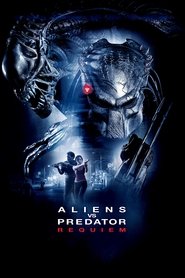
in a forest we found outside of Vancouver that just happened to be almost the shape of a ship impact. And they let us go in there with big bulldozers and cranes and stuff and actually smash trees and kind of art direct the whole thing to look like where the crash site was. And then the ship was put in all digitally in post. As a producer, this was literally the first day of shooting some of this. And I was really heartened to see these dailies because the bros...
4:41 · jump to transcript →
-
really understood the genre well. They were unbelievably prepared to do this movie, but until they rolled a foot of film, we actually had no idea what we were gonna get. And literally seeing the first day and these dailies and how they shot it and the DP they picked was great and his visual style and the way they boarded and shot this scene, it was the first beginning of a sense of, oh my God, this could be and will be a great film. These guys really not only know this,
5:10 · jump to transcript →
-
that if this predator has come down to Earth to cover up all the tracks, this doesn't make any sense. We were like, eh, let's just practice for them. Two things here. One, the predator's coming to clean up any evidence of aliens, so leaving a skinned human isn't evidence of that. And two, it's just cool. We had to have it. So any chance to put skinned bodies in the movies, we took that chance. Now, there was a little funny note, something we didn't notice while we were shooting on that first shot where the bag was being zipped up.
35:56 · jump to transcript →
-
-
-
Matthew Vaughn
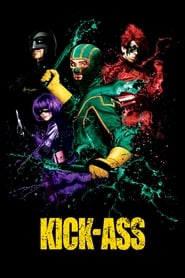
intrigued. This is my ace in the hole every time. And this is the scene that Hollywood said they could never shoot, or I could never shoot. It's the first day of filming. We're in a Victorian sewer, which stank. So I think we shot the scene in about four and a half hours, because we just couldn't breathe. And Nick Cage is a great, great actor.
12:24 · jump to transcript →
-
Matthew Vaughn
So we shot this scene in Toronto. I was furious, because the first day we turned up, the so-called gangsters... I mean, my mother would have been more threatening. So I threw them... I cancelled shooting that day. We had to recast, and... It was quite hard, because Canada is quite... Everyone's nice in Canada. It's quite hard to find people that even know how to look threatening. But we finally got there. This cat was pretty cool, by the way. It did as it was told, which I thought would never happen.
29:04 · jump to transcript →
-
Matthew Vaughn
And you see those Warhol guns, how they changed colour? That was a screw-up. This is the first day of filming on the set, but they came out wrong. I think they look sort of grey there and then they're white in the next scenes, but...
1:06:08 · jump to transcript →
-
-
-
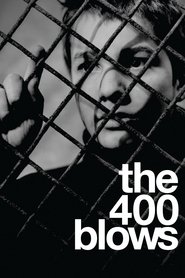
the famous theoretician of film who had been like a father to him and who had died unexpectedly at the end of the first day of this film's shooting. We will need to talk more about Bazin and about Truffaut's own childhood as our story proceeds. The story begins with the schoolboy's forbidden image of the pinup girl as we follow its circulation through the classroom. The power of images, both to fascinate us and to get us into trouble,
3:04 · jump to transcript →
-
Starting with this very first shot, which lasts nearly a full minute, you can see Bazin's protege, Francois Truffaut, striving for a kind of sincerity in his film, exactly as the master would have suggested, by prolonging the integrity of the individual shots. The 400 Blows is a treat for students of film and of what is termed visual literacy in many ways, not the least of which is the film's use is here of what we will refer to as expressive editing.
4:17 · jump to transcript →
-
-
-
20th Century Fox did all these marvelous films in Technicolor. And one day, one of the smart accountants said, you know, we're wasting valuable lab space because Technicolor has three negatives. And he said, let's just dump the negatives and print them all on Eastman stock. And they said, great idea. So they printed it all on Eastman stock.
3:22 · jump to transcript →
-
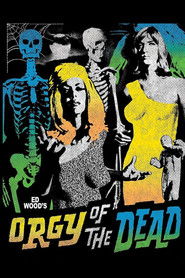
That's 69 Rue Pigalle. Okay. The money didn't come in at the last minute. Well, listen to this. Possum says, that's an address in Paris where I used to live. He said, it's a murder story like Rue Morgue. So I cast the picture, and I built the sets. Beautiful sets. It's the same place we shot Orgy. So the day before we started shooting, my art director tells me, boss, the checks are bouncing. The checks are no good.
1:00:48 · jump to transcript →
-
-
-
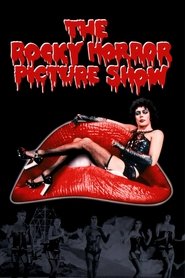
Do you know that we wanted to use this logo? This is against Richard Hartley's piano playing, I think. Of the 20th Century Fox theme. - Yes, maybe I will... We wanted to use that for the denouement. Ah. - Instead of the RKO sign. So that was interesting. Michael White and Lou Adler's names there, our producers. Yes, that's correct. - Erstwhile people. I'm rather... And now whose mouth do you think this might be? Ooh. M-m-m-mine. Yeah, it is. Now, interesting... - There we go. Course, when we did the stage play, it was you that sang this song. That's right. - And then they offered you the part of Magenta in the movie, and what did you say to them? I said-- well, they told me that I wasn't going to be able to sing the song 'cause they couldn't have an usherette open the film, so I'd lost my song "Science Fiction." And, um, I said, "Well, you can take your movie and shove it up your..." Where the sun don't shine. Yes. - Mm-hmm. And they were very amazed 'cause they'd taken me to a restaurant Yeah, yeah. - Jim Sharman. Always do it after lunch. Always tell them no after lunch. Yeah, after lunch. And I said I'm not interested. Don't want to do it. Then they took me round to John Goldstone, one of the other producers, round to his house to see the sets. They said, "No, please, Pat, come and see. Come and just have a look." And then they showed me the pink room, the laboratory. And then they showed me all the drawings of the costumes and whatever, whatever, whatever, and, um, I said, "I can't wait." "I'll begin tomorrow." I didn't mind about the song. Yeah, well, I didn't know anything about that until this moment in time and, uh... Well, I have blamed you for it ever since. Well, you see, I got along to the studio, and they'd done the backing tracks... Richard Hartley and the crew had done the backing tracks at Olympic Studios. I love my name dripping like that. Oh, yes. And... Sorry. It was a bit of a drip. And... - I said-- They said "We want you to sing the opening title song because you're the author of the show," and I said, "What do you mean, as a backing, guide vocal for Pat?" They went, "No, we want you to sing it." And, um, so I did, but until that moment in time, I had no idea that I was... Well, ladies and gentlemen, or whoever's listening, today is the first time this has been revealed in how many years? Oh, um, 25? So in all these years, I have begrudged you taking my song. And in all these years, I've begrudged you for being you and having that delightful mouth. Thank you. I mean, look, it's a wonderful mouth. One wonders, you know, oh, well, wonders, just wonders, really. Has your dentist seen this movie? Yes, I really wanted to give her a plug today. Veronica Morris. Because, really, she's been keeping my teeth in great order. This is marvelous. And Veronica'll be so pleased. This mouth, of course, is Brian Thomson's idea. It was the Man Ray photograph of the mouth and the sky is where he got that from. Yes, it... Is ita photograph or was it a painting? It's a photograph. - It's a photo. Lios Over Hollywood. Yeah. - Is that what it is? That's what it's called. It's over the Hollywood sign-- a mouth. Man Ray picture. - And this was the first mouth. I mean, I'd never seen a mouth this symbolic before. The Rolling Stones got a mouth after that, didn't they? Yeah, they got a mouth after. Not a mouth before. Bit mouthy. - A bit mouthy. No, no, and it was wonderful when they asked me to do this 'cause they asked me to do this mouth on the very last day of the film. Mm-hmm. Jim Sharman came up to me, it was a wrap, finished. We'd done it, and he came up and said, "We've got an idea about this mouth." Yeah. - "And will you do it?" And they painted all your skin black. Yes, they did, And I went out to Elstree Studios... - But your timing was perfect. I mean, your lip-sync is fantastic. Yes, well, I'm good at that. And I sort of know how you do things. So, uh, so we... We, uh... Ramon Gow. Look, the hairdresser, Ramon Gow. We'll talk about Ramon a little bit later on. Yes, he was wonderful. - Yeah. He kept us happy. Did he keep you happy? And Pierre. Pierre did the makeup, didn't he? Pierre La Roche. Oh, God. He did Bowie's makeup. You know, for what was that Bowie thing? You know, when he had the makeup. - When did Bowie never have makeup? All right, with Bowie. Ziggy Stardust. Yes, and it was fantastic. And I thought Guy La Roche will give me the most fantastic face in the world. And he looked at me, and he said, he gave me no bones... No, Pierre La Roche. - Pierre. Pierre La Roche. Guy de la Roche is... - I beg your pardon. Pierre La Roche. And I was so shocked that he just said, "We're going to totally whiten the face." And what-- here we are. And what-- here we are. And what-- here we are. The fade into the cross there. - Fade into the cross, yeah. And down the old... And now this is interesting 'cause this was just a facade, wasn't it? That little room-- There's a little room on stilts behind that door. Just tiny little room. There's darling Henry Woolf. He's just such a darling friend. A great, um, Pinter. Pierre Bedenes in the front here. Now, Perry was the boyfriend of Brian Thomson at the time. Uh, we should say... that little girl there, where is she? She's gone now, but that was... what's her name? She was the photographer that went out with Prince Andrew for a while. What was the name? - Koo Stark. Koo Stark there, yeah. She's in the back there. She's there. Uh, I was gonna point at the screen as if that made any difference. Yes, -Gaye Brown. There's Pierre. And Henry. - And Henry. Henry was in my house the other evening. He now teaches in Saskatchewan. Yeah. He's been over here doing the Harold Pinter plays, hasn't he? That's right. He was in the first play that Pinter wrote. He made him write it, actually. Well, there they are. - There's our Brad. The two lads-- so very butch. Ouch, that hurt. And there she is, Susan Sarandon. We didn't know either of these people when they arrived, did we? No, we didn't, but they... - Weren't familiar with their background. Although he'd been doing Grease on Broadway. Great dancer, great legs. But it was wonderful. - Wonderful. There's my wife there jumping up and down. My ex-wife. My first wife. Is it Kimi? - Yes, in that little plaid dress there. Yes, and that lovely handbag. - With the bangs. Yes. Gorgeous. And this is Rufus Thomas, I think, driving the car. Rufus was with the-- there he is. He was with The Living Theatre for some years. He choreographed Jesus Christ Superstar in its first British incarnation. Gosh. Such class we had in this. Oh, yeah, we were all, yes, very groovy. - I remember those two. Now there's us in the background being American Gothic. Yes, which was such a surprise to me, and it was freezing cold that day. And I swore I'd never talk about the cold again on this film... We were walking to that set the first day we ever walked to that set, and we'd smoked something rather exotic. And I'd never smoked before. - No, no. Richard really led me into really bad ways. It was a bit difficult clinging on to reality, wasn't it? It was wonderful. I loved it. Ah, there we go. - There's our signs. In the graveyard. - "Denton." "The Home of Happiness." "Dammit Janet." "Dammit Janet." "Dammit Janet." She looked very pretty. Sue Blane did some wonderful costumes, and they've really hung on, even though we do the stage show 20... well, it's longer than 25 years from the movie, the stage show. But we still use Sue's designs. She reinvents them, and it's still the same kind of look. Well, I must say, the thing... she's stunning-- is at the time... I demand that Sue Blane invented punk, and this film invented punk. And down the road was Vivienne Westwood with a shop called Sex, and she thought she'd started it, but no, sorry. She'd copied us from up the road. We were on the stage at the time. I think there's a certain amount of truth in what you say. I think we were a precursor of Malcolm McLaren and Vivienne. That's correct. - But then again, you say, as Coco Chanel said, "Anyone who thinks they're original has got no sense of history." 2 If there's one fool for you Then lamit > Janet 2 I've one thing to say And that's damn it, Janet > Now look at that heart there. I want you to see that heart there, 'cause when we go back and rub it out, I think this is... Maybe it's the same heart. I thought it was a different one. Maybe they got it... There's a boom microphone shadow we'll see, I think, soon. Somewhere out there. - Why do you point out the faults? Well, why not? You know... I mean, that's what the fans do. - Do they? Yes. Oh, look, she dropped it. What a shame. Wasn't she meant to? I have no idea. - Or was she not? Now, this is interesting. This room, we could only afford this end and the other end. The altar end, and we didn't have any sides to the room, so we could only shoot it looking this way or looking the other way. We couldn't pan around 'cause there were no sides to this room. 'Cause we didn't have enough money. So there we go, you see, walking towards camera without background. Good heavens. And walking away from camera to there, but there were no sides. > Oh, Janet 2 For you? 2 I love you too } They were very good, these two, weren't they? When you consider we'd been doing this for the show... We were like a family, and they came in, and they joined in, like, so easily, so quickly. I find them astonishing. This must be... I don't want to go into detail, but it's a very small coffin, isn't it? Oh. - One does wonder. About what? Could have been a rabbit in there probably. Well, every day was a great surprise to me on Rocky Horror. I never knew what was going to happen next. Yeah, me neither. I mean, I didn't know what even American Gothic was. Till I saw the painting in the hall a few days later. I thought, "Why am I dressed like this?" Were you not familiar with that picture? - No. There we are... three good-looking people. And those opticals were rather good I thought. And those opticals were rather good I thought. And those opticals were rather good I thought. They really were mechanically derived by... But, you know, today, of course, you'd have optical wipes and all sorts of things with video. There's dear Charles Gray who's departed from us recently. Yes, Charlie has parted from us. And I loved it when you said to me it'd be wonderful if you and I were Charles Gray and Ava Gardner. We could visit each other often. Yes. - 'Cause they were great friends. They lived next door to each other. And I thought they've both gone. So we've got to now move into the same street. I think they're probably on a similar street in the sky somewhere doing the same things.
0:05 · jump to transcript →
-
Oh, look. Nice car, that, that woodie. Yes, and what was the tape playing? Was it Nixon? Nixon's-- which I... I don't like that speech being played, actually because it locks the movie into a time frame. I thought it was terribly clever. And that late November evening wasn't in time with Nixon's speech. Speech. And, you know, there's lots of things. Now we see this motorcyclist here. Those people who played Transylvanians were on the back of those motorbikes. They would have to go to the studio this very night, dress up, put all their Transylvanian gear on, and then put motorbike leathers on as well. Yeah. - And then go out on these motorbikes. They didn't drive them themselves. No, no. They had motorcyclists. They paid pillion passengers. Yeah. And, as Ramon Gow said, you know, I said, "Why are they coming in to do this? It could be anybody wet in the dark. And he said, "Could be a gorilla with a pipe, luv." Gorilla with a pipe? But I'll never forget the first day I saw the Transylvanians, 'cause they were rehearsing in a room in the house. And we didn't have Transylvanians in the play, and suddenly this door was open, and I don't want politically noncorrect, but it was so freaky because they were freaks. Sorry. - As indeed we all are. No, speak for yourself. And in the amazement of tall, small, fat, thin, you Know... You lost a sense of norms, you do. Sense of center. Yes, and I saw all these people dancing doing the "Time Warp," and I almost collapsed. I couldn't believe it. I thought... Because I didn't know they were going to be in this. I didn't know there was a cast of Transylvanians. No. - No. Well, when I went into the room and David Toguri was rehearsing them, Well, when I went into the room and David Toguri was rehearsing them, Well, when I went into the room and David Toguri was rehearsing them, and Barry Bostwick and Susan Sarandon was standing amongst these people, with hugely different, physically, SO very... I'll never work again for using the word "freak." It seemed to me that Susan and Barry, who most people would say are relatively good-looking human beings, seemed just as freakish. There was no standard. The standards had disappeared. Yes, that's what freakish-- yes, right. And that was interesting.
12:03 · jump to transcript →
-
-
-
The first day of shooting was we drove through the mud to go to Nate and get the tool made to cut the safe in Los Angeles. The Burning Bar. Which was the Burning Bar, yeah. The infamous Burning Bar. Actually, Nathan Davis is Andrew Davis's dad. He's an old Chicago actor. This is Robert Prosky's first film performance.
1:22 · jump to transcript →
-
I just came on the set and was frank, you know? Which is a reason I should always do that kind of work, but I don't. This was truly a labor of love, I think. I don't think, I know. We worked real hard, but... Yeah, by the time we started shooting, you were frank.
27:42 · jump to transcript →
-
-
-
I love what you said about Spicoli has to be the spice. It's so true. Because people have... I know you've probably been bombarded over the years on people saying, hey, let's do a Spicoli sequel. Just Spicoli. You remember the first day we saw the movie in Westwood, and I guess, who was it from the studio? Was it Thom or Sean? Somebody said, okay, guys, Spicoli goes to college. Yeah, they were just ready to go. They're ready to go. It wouldn't have been the same. Spicoli without Brad.
29:26 · jump to transcript →
-
I can't let you go unless you have a ride home. Oh. Actually, the head of the studio one day pulled me in a week before we started shooting and saying, we can't make this movie. We got a letter from a stockholder saying, this movie's not going to make any money. And how could you have these first-time people making a movie? And what are you thinking? And we've all seen these California kids in their hot tubs and all of that. And it's like, enough.
1:06:33 · jump to transcript →
-
-
-
This sequence, I was told by the assistant director... ...would never wind up in the movie because it was too silly and too crazy. But it is definitely one of my favourite, favourite scenes in the movie. And, yes, it's silly, but, you know, it's just great fun. This is-- Hoyt, you were there shooting. - That's my first day of shooting. Kind of woke me up, because after the explosion... ...we looked at our matte box and it had melted the front element of it... ...so it got pretty hot.
1:31:49 · jump to transcript →
-
Now, we're looking at a lot of stunt people running around... ...because they all participated in this sequence that came up... ...as the F-16s lock in on the heat source... ...of our Blue Thunder helicopter. And Scheider gets his plane where it's up against the sun reflection. He's hoping to decoy the helicopter into this. That was the miniature helicopter, too, going across right there. There's the miniature helicopter. Certainly the idea of it going into a building like this... ...was viewed by us as complete fantasy. And it never, ever occurred to us... ...that somebody would actually do something like that, you know. It's just beyond the range of thinking. At the time of 9/11, you couldn't have shown an image like this. Everybody got so sensitive. And then, suddenly, they realised... ...that people weren't as terrified of it... ...as we were saying they were going to be. Remember, people were saying, "We'll have nothing but Doris Day movies." Or, you know, whatever today's version of Doris Day movies is. But then, suddenly, the video stores started telling us... ...that every terrorist movie they had was gone from the shelves... ...that everybody was suddenly fascinated... ...with the very thing we said they wouldn't be... ...which proves William Goldman's old adage of, "Nobody knows anything." And you'll remember, when I talked about the first shot... ...with Malcolm McDowell. Well, here it is. This is the one where he comes... ...and has to jump inside the helicopter and take off. We probably won't be able to get permission... ...to do practical work like was done on Blue Thunder. In other words, I think the laws have changed... ...and people's concern for safety has increased. So we won't be seeing the same kind of amazing, live stunt work... ...which is really, you know, just some of the best ever done. They would depend on visual effects, other methods, to achieve the look... ...but it wouldn't be the real thing, which is what we got here... ...which is a real treat. So he didn't know he had the option of-- No option here. No, no option. But it looks really good. I mean, it looks like he's taking that helicopter off. And the pilot, Karl Wickman, was-- I don't know where Karl was, but I couldn't see him. At that point in Los Angeles, in the early 1980s... ...lots of new, giant structures were being built... ...and here we got to use one where we could shoot through it. And this is where we lost this helicopter... ...this little Hughes 500 helicopter. Its engine blew up. And the helicopter auto-rotated down to the ground... ...onto those parking lots that you see. And only because we had cleared the lots out... ...and had no traffic down there and no cars, no people, was it safe. And we thought we had killed Karl Wickman... ...because the engine blew up. But he was a Vietnam helicopter pilot... ...and he had rehearsed auto-rotating to the ground hundreds of times... ...and he took his helicopter down to the ground... ...and it only bent a couple of skids. And as it hit the ground, he actually was jumping out of it... ...right simultaneously backwards with a fire extinguisher... ...in his hand to put out the flame. But now you can see, we're down 40, 50 feet... ...above the Music Center in Los Angeles. That was not Bill Ryusaki. Good for him.
1:34:03 · jump to transcript →
-
-
director · 1h 30m 2 mentions
A Nightmare on Elm Street (1984)
Wes Craven, Heather Langenkamp, John Saxon, Jacques Haitkin
-
The strange thing about being in these movies is that you see things that actors do that you sometimes have never seen in real life, and you're sitting there looking at a hanging man and you say, is that what a hanging man really looks like? You know, and you yourself don't really even know. So now my image of a hanging man is Nick Corri hanging from a sheet. Wasn't this the first day of, for me, I remember the first day of shooting was the cemetery. Was it? I believe so. Which cemetery was this, Wes? You probably know more. This is Boyle Heights.
45:29 · jump to transcript →
-
You know, people will always say, well, I didn't know you had that in you, Robert. No, he takes it so seriously. From the first day I met him, I realized he was so perfect. He carried it through seven features. The other issue was, I remember on Nightmare 2,
1:30:06 · jump to transcript →
-
-
-
The look we wanted was a graphic novel style look to it, and hence the lighting, the gels, the colours. So we have Steven Berkoff here, who was riding high very much so at the time with, I think his play West had just come out, hadn't it, just before you started shooting this? Yeah, I think he just came off Beverly Hills Cop. He had indeed, yes. And he complained that he felt his acting was constrained and he was, you know...
14:02 · jump to transcript →
-
So next for you was Rawhead Rex, and that was pretty quickly afterwards, was Rawhead Rex in, I think you started shooting that, didn't you, within about six months of finishing this? Yeah, about eight months after this. About March and April of 1986, I think. That's right. So yeah, just a few months after the London Film Festival screening of Underworld. And that was a surprise. They just suddenly announced, hey, we're shooting this. I was in Paris at the time.
1:29:54 · jump to transcript →
-
-
multi · 2h 34m 2 mentions
James Cameron, Gale Anne Hurd, Stan Winston, Robert Skotak + 8
-
Bill Paxton
Here's a panning shot of the armored personnel carrier. This was done with the twelfth-scale armored personnel carrier. We had the camera flat on the ground and at the beginning of the shot, behind the APC, is the fiftieth-scale colony complex. Because we're flat on the ground, the audience doesn't see the scale differential that's going on there. Literally, the bumper of a twelfth-scale was next to a fiftieth-scale. The shots of the APC driving into the atmosphere processor were also done as miniatures. There was no full-size entryway that was built for the film. That's why we built one as a miniature. The sequence inside the atmosphere processor is a location that was a decommissioned power station at Acton, inside London or just outside of London. Rather than building a set from scratch, they used what was there and then added the alienesque bits to it. Look at that. - This was my first day. At Acton? - First day ever on a film. You won't see me there. - Ever on any film. I'd no idea what "back to one" meant or anything. What does it mean? 30 years later I'm still trying to figure it out. That's a real gun. That's a German Sten gun. It was cool until we started firing the weapons and then this fine snow started raining down on everybody. I think they checked it out. - It was just asbestos. We had to practice shooting flame-throwers. We did the close-quarter battle stuff. Approaching a building or going down a hallway, you leapfrog along. We did that. Al Matthews who plays Sergeant Apone had some kind of military background. I think he had served in the Vietnam War, and after the war he had come to England, where he'd become a radio disc jockey, I think. He was either really good at bullshitting us, but he seemed to know what he was doing. His orders were so authoritarian that we followed him.
1:04:49 · jump to transcript →
-
Bill Paxton
Another technique that's not used any more to create the size of that set. A hanging miniature that was the previous shot, where you saw the expanse of the inside of this alien virtual universe, which is what you're seeing here, setwise, the cocoon aspect of what these aliens do. A hanging miniature, which is a technique, is a small set piece that hangs in front of the camera and then the full-size set is behind it and the actors are behind it. The illusion is that the set is huge and expanding up and over everyone, when, in fact, the foreground of the set piece is a miniature, the background of the set piece and all the actors is normal size. It's basically a forced-perspective shot. This is my first on-camera line coming up. This was the first day. We started at Acton. We started here. I thought you guys had already been shooting. They had to reshoot. We went back and picked up here. I see. And Dick Bush, the cinematographer, was replaced by Adrian Biddle somewhere in this area at the same time. A few changes were made in the lineup about two weeks in.
1:07:05 · jump to transcript →
-
-
-
Good to see you. Thank you. You know, there's some facts that you can't deal with. You can say it, and people nod. I didn't have Holly Hunter until two days before we started shooting. And there's no way that sentence conveys what it should.
1:43:12 · jump to transcript →
-
And I think therefore, you know, almost everybody connected with the picture, their lives are a little different because she walked in two days before we started shooting. Did he really? Yes. What? Come here. Come here.
1:43:47 · jump to transcript →
-

Related topics
Other topics that frequently come up in the same commentaries.