Topics / Editing & post
Deleted scenes
83 commentaries in the archive discuss this, with 238 total mentions and 36 sampled passages on this page.
Filter commentaries
Filter this topic by the film's decade or the type of commentary.
Showing 17 of 83 commentaries
Clear filtersBy decade
Across the archive
ranked by mentions · click any passage for the moment in the transcript
-
-
That's a scary cut right there. That jump in on Evie. Ah, you know, we cut a line out. Yeah, every once in a while you... you get stuck, and you just make the cut. Everybody knows this story.
18:20 · jump to transcript →
-
This scene is actually very similar to the way that it was first cut also. With the exception of the end of the scene, there's actually a fair amount of stuff that's cut out at the end. The curator goes for the key that Evie had found the map in and we cut all that out for both pace reasons and also to not tip our
18:42 · jump to transcript →
-
attempting to make the tone a little bit less jokey than how we'd originally had it cut, although a lot of the stuff was very, very funny that we cut, and in some ways unfortunate, but you have to do that sometimes to make the tone more appropriate. Right, we had to ease into the humor as much as possible because eventually the audience seemed to really, in theaters, they love the humor, but we didn't want to have too much of it right up front
20:58 · jump to transcript →
-
-
-
gag that was cut out. By the way, three guys that paint is the reason it's there. They said, what should be on the side of the truck? I couldn't think of something. They needed it immediately, so I said three guys that paint. Besides that, what's coming up is the car is going to take away right here and then we cut to this. Warwick was supposed to come up after the car ran over and he had tire tracks all up and down him. I remember we did that at the end of a day.
33:11 · jump to transcript →
-
optically so it looked like he was going a long distance because it could only get like three pogos and you'll see why we coming up why he kind of built it in editorial and slow-mo and yes and and by the way we cut this on 35 millimeter on a moviola I didn't even have a cam I had a moviola and Christopher Roth and I just sat there and with tape and cut it right on on a tiny little moviola excellent
36:00 · jump to transcript →
-
He falls, and I don't know, you were there, Gabe, but I don't know if you remember. That was an accident, but we kept it in. And I think it's going to come up when he runs back after he makes the phone call. That's right. It'll be coming up. Now, I, for some reason, thought this was when we cut to him right here. I love this.
52:43 · jump to transcript →
-
-
-
Taylor Hackford
At this point, seeing a guy walk up to him in the bar, Keanu is completely convinced... ...that one of his friends has put this guy up to it. And this actor, who is Ruben Santiago Hudson... ...is a fabulous actor. He won the Tony for an August Wilson play, Seven Guitars. I saw him on stage and just felt, "I want to work with this guy." So when the role of Leamon Heath came up, you know, I had Tony Gilroy... ...kind of tailor the role to fit Ruben, and then convinced Ruben to do the film... ...because he has a very unique quality. He's not your totally assimilated black character. He may have gone to Harvard, he may have gone to Yale... ...but he's maintained a lot of his own roots and integrity, and at the same time... ...he's smart like a whip and he knows he's got Kevin hooked. The next scene that you're about to see hot cut to Kevin's roots: A Southern church, and this congregation is real. Judith Ivey, who is being introduced here as Kevin's mother. You know Kevin was raised in this church, he's coming... ...and taking a look back at his past, was totally fundamentalist... ...and deeply, deeply rooted in Jesus and God. Judith Ivey is part of this group. I had to spend a lot of effort convincing Pastor Lovell and his church... ...in Gainesville, Florida to participate in this film, because I feel that... ...you know, the things that they believe in, the things they're after... ...have everything to do with establishing good and evil in the world... ...and fighting the devil, and that's what this film is about. But they were fabulous, and they really got the spirit of God in them. And I thought it was important to see that Judith Ivey is a believer. She is one with her God, she loves Him. And, you know, she's a formidable presence for good in this film. At the same time, she's a tough mother, and you can see that... ...she has raised him in a certain way and she doesn't particularly approve... ...of what he's done with his life. He's a lawyer, and you establish his wife... ...over at the car, Mary Ann, who obviously is a party girl, a liver, and not... Neither one of them are in church this morning, and Mother is not that happy. This sequence is important to understand that Kevin Lomax understands scripture. He may have made a choice at this point to stay outside the church. If you notice, he's half in, half out of the light. Tony Gilroy wrote this in the script. Kevin Lomax stands outside the congregation. He's half in, half out of the light. He is part of it and at the same time... ...he can't bring himself to walk in. There's a dichotomy in him, which you'll discover later. But in this instance, when his mother calls up and says: "Quote the Bible to me and mention scripture," he can quote it back to her. He knows what he's talking about. He was in that church and a devout member at one point. Now you get a sense of Mary Ann. She is a good person. She's trying to help this character. She doesn't want to get the company to repossess her car. But she's tough, and she's a businesswoman. You also have a sense, right here, of the fun that these two people have. Keanu, you know, biting off her earring and handing it back to her... ...that was totally spontaneous. He came in, did that. It was quite wonderful. Now you have a sense of the married couple. They've got Mother-in-law... ...and Mary Ann's no dummy... ...she knows exactly that she's persona non grata in that household. It isn't that she doesn't like her mother-in-law, but she understands... ...what she needs to do, like have a child. And right now you establish another theme of the film: "Let's give her a grandchild and everything will be all right." Mary Ann is ready. She's working. She's professional. But she's ready to start to have a family. But you hot cut to Kevin Lomax who's taken the deal. He's in New York. At the beginning it's just a vacation. He's going to consult on the selection of a jury. You see Foley Square, the seat of judicial power in New York... ...all the Federal buildings, the State buildings, the local... Everything is right there in one space. It's a very, very sobering look at the power of the legal community in New York City. And at the same time, for a guy from Gainesville, Florida, it's very impressive. Kevin's here. He's excited. He is working as a consultant... ...to one of Manhattan's best and most famous criminal trial attorneys. His name is Meisel, played by George Wyner. And in this moment I wanted people to see that Kevin Lomax truly has a talent. When you talk to criminal attorneys, you realize that they say... ...that between So to 95 percent of winning a case is selecting a jury. This is a scene that I think talks about the inside of lawyering... ...and the reality of how you win. You win by psyching-out everyone that's gonna be on that jury. Those are the people that are gonna make the decision of whether you win or lose. This is where Kevin Lomax shines. He has an intuitive spirit. At the end of the scene, you realize he's got something else. He's got a sixth sense. Now, it's important, when we see this courtroom, to understand... ...that I wanted authenticity in this film. You're in New York. You have some of the best looking courtrooms in, I think, the United States. At the beginning, Warner Bros. wanted me to go to Canada and shoot in Toronto... ...which is an entirely different judicial system and the courtrooms... ...don't look the same at all. I fought to shoot this film in New York... ...not only for the fantastic exteriors, but also for these interiors. This is a film about big-time lawyering, and you want to feel, when you see the sets... ...and these aren't sets, they're locations. You want to feel that this guy is in the big time. He's gone from Gainesville, Florida to the top of the food chain. We shot in probably seven or eight of the best courtrooms... ...you could find anywhere in the world. Look at these paintings up on the wall here in New York. You feel that this is the justice system. Now Kevin is exhilarated. He comes out of his first day... ...in the New York courtroom and he knows he's done well. He didn't know how he would measure up, and how he measures up is... ...he's smarter than they are. I mean, he has to feel great. He's walking down the street. He's saying I'm a guy from the hicks, and someone's watching him. This is the introduction of John Milton, who's played by Al Pacino. It was important to me to establish a very nice introduction to him. One thing that Al did, and you'll start to see into this... ...he chews on licorice all the way through this film. You don't explain it. You know he's doing something. And instead of just walking away, getting in a limousine, he goes downstairs... ...into the subway. Why would he do that? He's well dressed. That's it. But immediately I go into a time lapse sequence... ...and I wanted to see day and night change. I wanted it to also say that this trial's been going on for a long time. When Kevin walks in, Mary Ann says, "You're home early for a change." Time has passed here. You've seen it pass. But more importantly, you see Al Pacino going down into the subway... ...and you see that the next images are not real. There is a certain kind of power that this person... ...we don't even know who he is yet, exudes. I thought that the time lapse would be both unique in terms of time passage... ...and, at the same time, extraordinary in terms of the potential power... ...that this man has. Now you've got Wife and Husband in... Mary Ann's got room service all over the room. Clearly, they've been there for a long time. She's watching TV. She's having a good time. She's been shopping. She's been to a lot of things, but her husband's been gone every day. And now you see the way they play. Kevin looks like he's defeated. It looks like he's lost the case. She feels badly for him. You can really see how she would, you know, how warm and wonderful... ...and sweet she is. But he's kidding her. You can really see the slyness, I think, in Keanu Reeves here. And, at the same time, he killed 'em. He actually chose the jury... ...and won the case, almost an impossible case. It was like a savings-and-loan fraud. This is white-collar crime. The guy sitting there in the trial, with his white hair... ...looks extremely legit. But the fact is that, you know, he's like Charles Keating. You know, he stole not millions, but tens of millions of dollars. And in this instance, the next shot is, they are in John Milton's domain. This is Milton, Chadwick and Waters, and I wanted a location that immediately... ...established the power of this law firm. This is a real building. It's the Continental Plaza in Wall Street, in the financial district, Downtown... ...and you see what New York power is all about. That view is a three-bridge view. You're gonna see all the way up the island of Manhattan. But the important thing here was, this location was used before in other films. I didn't want to use that same look. There's a unique design look here. Bruno Rubeo, who is my production designer and my collaborator... ...on the last three films I've done... ...we spent probably six to eight months before this film began... ...talking about what we wanted from this film and the look. Right now you're looking at Christabella, the first time we see her... ...and if you notice as she walks forward, I slowed down. It goes in real time. There's no cut there. We ramped so she starts in real time... ...she slows down... ...and comes back out in real time. And Kevin Lomax, he doesn't know why he's fascinated by her. We'll find out later. But look at the design in this. It's ultra modern. We used both an Italian architect and a Japanese architect. This is the Italian. He used prefab concrete in the walls. Milton's office. You know, the rest of the building is very impressive... ...but this office is something else again. It's cold, it's austere, and it's incredibly impressive. Look at that fireplace in the background. It's set up off the floor. Bruno had a design in mind. The furniture in this place is... You have a big, massive place. But look at the furniture. That little settee in front of the fire: it's delicate, it's small. This whole room exudes taste and a certain stylistic quotient. John Milton, you know, it's a huge room, devoid of furniture, very minimal... ...this is a man who has real taste and real choices that he's made. At the same time, this whole law firm is very, very modern. For the design quotient of this film, I want you to be able to see this sequence... ...and then later on, when you see where Milton lives, see the dichotomy... ...the difference. This is cutting-edge modern architecture to the nth degree. What Bruno wanted to do, and I wanted to do in this instance... ...is establish Milton's environment. Here it's cold, corporate, but, at the same time, undeniably impressive... ...austere, ultra-designed. Milton is very smooth. You know, Al Pacino always gets this rap: "Oh, gee, he's over the top." He's not. Al Pacino can play everything. And everything he did in this film was calculated. I mean, it was one of the great experiences in my life to work with an actor of... ...his deep, deep ability, his deep, deep talent... ...and his uncompromising attitude towards all his work. At the same time, Keanu, who had this... I'm saying this because here's these... ...two actors meeting for the first time. Keanu, who had done a lot of young-man roles, a lot of teenage slackers... ...in this film is anything but that. Kevin Lomax is precise. He is not a Harvard educated, a Yale educated guy. He came from a small school in Florida, went to a small law school. But all criminal attorneys that are really great usually did that. They come from the street. He's street smart. He thinks on his feet. And he's up against a guy, for the first time, that seems to have a little bit more... ...on the ball than even he does. He's never met anybody before that is his equal. And Milton keeps blowing his mind, like he does right now. You see this office. All of a sudden, he goes and taps on the door... ...opens up, and I wanted this sequence to truly be a moment... ...that would blow everybody's mind, not only Kevin Lomax's. He walks out on a roof terrace and, effectively, I'm using... Again, this is from a Japanese design. Bruno and I saw an architect... ...that had a pond on the roof in Japan, and I said that is a perfect idea... ...for what we want to do here. Here is a man who has such a sense of design and such a sense of grandeur... ...that he has created for himself a balcony, if you will, a terrace, a park on top. But does it have greenery on it? No. It has water. He calls it calming, placid. And at the same time, he's going to take Keanu out there... ...and he's going to talk about his past. He's going to find out a little bit more about him. He asks about his father. Keanu says, "I never had one." He asks about his mother. And in this instance he's, you know, if you look at Al's reactions here... ...this is a long, talky sequence. This is what you do sometimes. By the way, this is real. This is not blue screen. We didn't put the artists in a studio. I fought to get this scene. I fought everyone, including Warner Bros. Nobody wanted me to go up and get this shot. It's on the roof of the Continental Tower. They had re-roofed the place. The building didn't want us up there. I just knew that this sequence was going to define this initial relationship... ...between Kevin Lomax and John Milton. And the two actors are basically 50 stories in the air right now. They're standing on an eight-foot platform. No, it's not right on the edge. It's about eight feet from the edge. But the fact is that they're standing there. We had to get this whole thing in one day, and they have to do... ...a very personal scene while they're perched on the top of this building. You can see Al, at that moment, trying to let us know a little bit how precarious it is. But do you notice any kind of nervousness from Pacino? Not at all. He's easy. And the whole essence here is that Keanu's sitting out there. One, his mind is blown... ...at the beginning, and then somehow he finds himself getting into it. And at the same time, he looks right here and says: "My God, John Milton's standing like a foot from the edge of a 50-story precipice. "What kind of guy is this?" He also wears elevator shoes, which I think is interesting. But the fact is, right here is what the film also is about. It's about pressure. It's about professionalism. And what John Milton has done is taken Keanu Reeves... ...or Kevin Lomax, in this case, up to the precipice. He's showing him: "All this can be yours." And what is it? It's Wall Street. It's the seat of capitalistic power in the world. And he's basically saying, you know, I know you're a hotshot... ...but can you take the pressure? Can you sleep at night? That little speech that Tony Gilroy wrote, I think, fits all professionals in this instance. When you have to deliver on a deadline, you know what he's talking about. Basically, Kevin is there. He's ready. He said, "What about money?" Milton laughs. "Money? That's the easy part." Kevin doesn't have any problem. He can sleep at night. He's a lawyer. He knows how to do it. We cut from that to Carnegie Hill, which is Fifth Avenue in the Nineties in New York. It's probably the most exclusive address in New York. Central Park is on one side. You have these beautiful, beautiful buildings with fantastic apartments inside. And the Heaths. You're meeting Jackie Heath for the first time. I reveal her with that wipe from the elevator, you see her in close-up. Leamon Heath and Jackie Heath, they are absolutely New Yorkers. They've maintained their integrity as black people, but at the same time... ...they are not about to resist the temptations of the city. They want it. They know how to deal with it. They're very sophisticated. Look at the clothes that Jackie's wearing. Leamon makes the money and she knows how to spend it... ...and she doesn't have any qualms about it. This apartment, I wanted to basically establish the sense of awe. You know, John Milton owns this building. He has it for his employees. Although it's usually for partners, and for Kevin Lomax to get an apartment first up... ...shows that he's a little special, and you can feel, right here... ...that they're a little jealous. "Took us six years to get in here." Every New Yorker will understand that when they really want to get into... ...a big building. This is a film about New York. Tony Gilroy, who lives in New York and understands it incredibly well... ...is able to put these nuances in here that are maybe not aimed at everyone. But certainly, you know, you make a film in New York... ...it was important to me that you do something real. Now, you know, Kevin has basically been offered the job. He's got to now sell his wife on it. And this is a big test. If she, you know... He says, "I'll take you home if you want." Of course, if she did, God knows what he'd think. She knows him. She knows what he wants. And at the same time, how could you turn this down? It's very important right now, at this moment... ...to understand that Mary Ann wants this as badly as Kevin does. I mean, who would resist? Come on. They're too big for a small pond. They both want this and, my God, she's looking at this and saying: "Hey, I want to have a family." She says right now, you know, she mentioned kids again. She's mentioned it in the back of the apartment... ...and she mentions it again right now, and she's saying, "I'm in. Let's go for it." And that moment is one of the last moments of true happiness... ...you're going to ever see them have. Now you're at the law firm, and I want to be able to show... ...what big time lawyering is about. These are all partners. It's an international law firm. John Milton has called a meeting. From all over the world, these partners have come. There's Eddie Barzoon, played by Jeffrey Jones, who is Milton's chief lieutenant. He's the managing partner of the firm. There are affiliate offices in major capitals all over the world... ...and you get a sense of what law is all about. It's about copyrights. It's about real estate. It's about EEC and EUC and those kinds of relationships.
11:08 · jump to transcript →
-
Taylor Hackford
You're looking at their first case. It's a videotape of a raid... ...a health code raid on a religious sect in Harlem. Delroy Lindo, I think people will recognize there. And at this point, this is the first case. Kevin Lomax realizes that, you know... ...he came all the way from Florida, what, to get a health code case? It's an insult, and Pam Garrety is saying, hey, you know, everything's a test. Now we cut, simultaneously you see Mary Ann's life. She's starting to decorate the apartment. She's in with some heavy sharks here. She's a little bit over her head. This isn't Gainesville. It's New York City. You know, I think she, at this point, is intimidated, but Kevin shows up. He was pissed that his first case was such a trivial thing, like a health-code case... ...and he came out to help her. And it actually shows. This still is a nice scene. As I said before, it was the last good scene. But it's a moment where he has actually, as busy as he is... ...shown her that he is still in the marriage, he's still there. Cut from that to Harlem, and that is Harlem that you're looking at. We shot it there on location. And in this instance he's entering the world of Phillipe Moyez... ...which is a very strange, mysterious and undeniably powerful world. It may be in Harlem, but Phillipe Moyez seems to have... ...some kind of strange power here, and the people around him also. Kevin Lomax, is taken into something very bizarre. He's coming here to see a client... ...and immediately, what he's faced with is the most bizarre of situations. But, at the same time, he's in New York now. I cut to those boots again, saying, well, he's changed his suit. He'd better change those boots soon. They're becoming a point of ridicule. And if you see, slowly over the course of the film, Kevin's outfits... ...and his entire attire change. Downstairs he is in a ceremonial area. These are basically real African icons...
30:23 · jump to transcript →
-
Taylor Hackford
You know, it's wordplay. It's foreplay. And, as every woman knows, the best foreplay is good words to put somebody... ...in the mood, and in this instance... ...it works with Mary Ann, as you can see. Now we cut and we're on the balcony, outside. There is Manhattan, the reservoir which is right across from Carnegie Hill. You see Downtown Manhattan on one view. You see the George Washington Bridge on the other. And in this instance I must admit to the fact that this is a green-screen sequence... ...because it was freezing cold. Connie's wearing no underwear and a beautiful dress with a lot of skin showing. To be able to get the kind of comfort I needed in this scene, we shot plates of... ...meaning views of this actual location, and then did it on a stage. I think the blue-screen work is very good. But it was important to kind of show... ...the grandeur of New York with these two people out here. Meanwhile, inside the party, you have the motto of the law firm: "Let's ride 'em as long as we can and then eat 'em." You get a sense of the ruthlessness of the law firm... ...and in the background you see the ruthlessness represented by that tapestry. Connie Nielsen is a wonderful actress and, as I said before... ...she speaks five, six languages. She is Danish, but lived in Italy for a long time. She is very sophisticated, and I think what Kevin Lomax is coming up against... ...is Christabella, who calls a spade a spade. She asks him if he's alone. He doesn't, he demurs, he kind of comes up with it and she says: "You're married." She basically is not about to play along. And at the same time she flirts. "You like to be on top," an unquestionably sexual innuendo. And he likes it. He's ready to pop, except Milton interrupts. And Milton has a sense of pride here. He's the head of a law firm. He owns a law firm with two really bright, young lawyers in it, but it's more than that. There's something that you'll discover as the film goes on. There's a relationship between these people he's particularly proud of. And I think, in this instance, you know, Al Pacino's smooth, he's walked around. He's spent about an hour at the party. He's talked to Mary Ann. He's talked to the senator. He's talked to the women. He's in no hurry. But in reality, he's got something else on Kevin's agenda.
46:47 · jump to transcript →
-
-
-
The other thing about this, which is interesting, is that we relate, somehow we relate to Wesley Snipes' character because he is a breath of fresh air in this kind of over-sanitized world that we see. Yeah, I mean, Sandra Bullock has that great transition line. What would I do for some action? What I wouldn't give for some action? And I think the audience is thinking the same thing. And then we cut to Wesley and it's perfect. And this was very early computer graphics. So I remember shooting this
18:49 · jump to transcript →
-
Now, Stallone's got a missing daughter. We can talk about this more, but the missing daughter element never really... I mean, we ended up shooting something where he actually finds his daughter, but we cut it out because it was dragging the movie and with great actress Elizabeth Ruscio. But when you come to the sex scene, everyone in the test audience thought Sandra Bullock was going to be Stallone's daughter. So they're all like pulling their hair out and groaning. So we had to do some ADR to...
35:47 · jump to transcript →
-
And that was one of the first examples of computer graphics. And then we cut to a dummy head here, obviously. And then as he comes around, this is all film opticals. Heads up! This was using a camera called a Photosonics film camera that could shoot at 400 frames per second.
1:47:41 · jump to transcript →
-
-
director · 1h 31m 3 mentions
David Steinberg, Dave Foley, David Higgins, Jay Kogen
-
that it wasn't about the guy with the goatee. Would you tell that guy? We did throw the Canadian crew off. He went from one jumpsuit to another jumpsuit for no reason at all. Yeah, there was no reason for the change. And it took us so long. But we like the idea that he went through all this stuff to not be followed, and then there's security cameras. I think we cut out in editing like four other things that he did. Oh, that's quite possible. Yeah, yeah, yeah. And then that gentleman had some lines before the...
12:02 · jump to transcript →
-
Right. We started from the kitchen. And my ankle was hurting from gout at this point. But we went through a whole thing of the Goodfellas opening and this really long shot. Yeah, all the way through, all the way up. And then we ended up cutting. But we shot it like 14 times going through. You know this, man? Everyone's so quiet. It was one of the better scenes. I think we're seeing the scene that this was as shot.
25:32 · jump to transcript →
-
of committing murder and made it more scary. Isn't that coming up somewhere? No, I think that line was in there before the kiss. We think we cut it out before. Sorry, we just got a call. Hold it. Richard Chevolleau. Richard Chevolleau. Yes, yes. Yes.
1:06:32 · jump to transcript →
-
-
-
Alexander Payne
back on my relationship with Mr. Novotny. What I miss most is our talks. We cut the scene here, but scripted and shot was a whole sequence in the bedroom where you see them taking off in tight close-ups their articles of clothing and Tracy lying on the bed, not actually enjoying herself very much, waiting for Dave to get into bed with her.
12:02 · jump to transcript →
-
Alexander Payne
suggests even more this Lady Macbeth sense of her hands, and it cuts to Tracy in the bathroom washing her hands and washing, and she can't get the blood out. Then she kind of puts her hand over her mouth like Anthony Perkins in Psycho, and then gets a garbage sack. But we cut that out. And I've come to fall in love with the rear screen projection, and here you see rear screen projection, which is really fun.
47:54 · jump to transcript →
-
Alexander Payne
We had other scenes in this area of Tracy being interviewed on local TV about the scandal and Jim McAllister holed up in a motel room and eating a bunch of takeout stuff and drinking beer and just living in complete abandon, but we cut them out. Senior year was great. Sure, I didn't get to play ball or be president, but I got elected homecoming king and prom king.
1:30:27 · jump to transcript →
-
-
-
Someone I got to work with, Maureen O'Hara... ...on a picture right after this... - Mm-hm? ...SO... - I did a day on that. Yeah. We cut your big scene with John Candy. You cut all my lines out. - Yeah. It was kind of like we were trying to duplicate Uncle Buck. Yeah, yeah. - I remember that, and it was just kind of... Felt like we had been there, in a sense. Um.... More people saw this picture, so you're Okay. Yeah, no, I'm.... Thanks, Chris. Now, this... - Ha-ha-ha. Thank you. We resorted to stock footage for any shots you'll see of airlines... ...coming up, shots of Paris. We had no money to go shoot those things. And this was a set that already existed... ... that we put back together so we could actually shoot. The, uh-- This is first-class when you could actually have real silverware on the plane. Yeah. - Yeah. Most of our sets, incidentally, were in a... A lot of them were in a high school outside of Chicago. We shot Uncle Buck there too. - New Trier High School. Yeah, yeah. - And, um.... Some of the sets-- I'm trying to remember where the house set was. We were in some warehouse, weren't we? Or was this New Trier as well? It was in the gymnasium. - Yeah. It was all in that school, the interiors. - Gymnasium. We also shot a lot at the house, at the real house. Oh, yeah. - The second one... ...[I think we spent half a day in the real house. Because they... The people who own the real house... ...wanted a little more money in the second one. Everybody wanted more in the second one, and rightly so. Me included.
18:20 · jump to transcript →
-
There was a lot of this in the film that ended up being cut... ... first from the script, and then there are a couple of deleted scenes on the DVD... ...where we were cutting back to the family. And we found that preview audiences didn't care that much about the family. They wanted to hang out with you. They wanted to be in that house, and we... There was a restlessness to get back there. They wanted to get back there time and time again. They wanted to see what you were gonna do.
47:06 · jump to transcript →
-
-
-
Paul M. Sammon
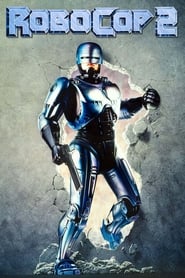
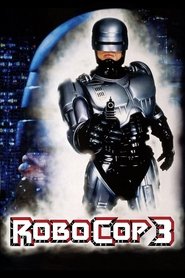
I had so many jobs on this film. This, of course, is a dummy, and it's attached to the electromagnet by strings, really, and other things. And again, here we have, now we cut to Peter Weller. Now, all this RoboVision stuff, again, is videotape with an overlay of...
37:30 · jump to transcript →
-
Paul M. Sammon
And they had this thing, and it was supposed to, of course, go in Ram Robo 2. What you will see is a cut between the real thing and then the model that was built by Phil Tippett, a miniature, to Ram. You can see the arms extend there. You see he has four arms and two legs. So he's actually a six-limbed creature. So what you just saw was a miniature, and now we cut back to the live action. And everything was cool.
1:44:16 · jump to transcript →
-
-
-
continue the investigation. He helps shield her from the head of the FBI. And a lot of that stuff was shot, and you can see the deleted scenes on this disc probably. But I do want to make the most insane segue as I can, which is to say that Hedwig and the Hangry Inch famously has a wig in a box. And here we are with a head in a jar. That's not even the trans link.
26:33 · jump to transcript →
-
I would say Crawford meets more of his match with that version of Dr. Danielson versus this, the screens version of Dr. Danielson. Yeah. The scene with this Dr. Danielson was shot, but left out of the final film and it should be in the deleted scenes on this disc. But again, like as much as this material is important in, you know, giving some depth to Buffalo Bill, to James Gunn,
1:06:12 · jump to transcript →
-
-
-
Yeah, the answer to your question is we cut a reel out. Really? Yeah, we cut out a reel. And it was, I kind of, it's fuzzy now, it's so long ago, but I realized after we had shot, you know, six minutes, seven minutes, that there was no information, there was no new information in that reel. And once again, script problem. I really think he should be keeping his eye on the road and driving.
1:11:41 · jump to transcript →
-
Do you have anything like with a countdown? Of course, yeah. Do you have the briefcase with the countdown? Oh, perfect. Do you want a red digital clock or a green digital clock? Stop motion. Yep. I did like him burning his feet. That was pretty, that was good. And this was Burt Lovett's idea. It's like, what do we cut to negative film?
1:35:12 · jump to transcript →
-
-
-
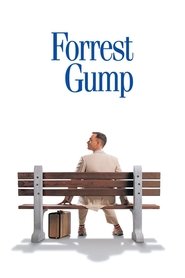
And then we cut the movie with all that film narration that we had. And then once we had to really start to fine cut the movie and hone it all down, then Tom went back again and we wrote new narration to link scenes, take things out, tighten things up, you know, weave in and out of scenes. There's a scene in there where he's talking about Bubba's mama not ever having to work in anybody's kitchen anymore.
34:06 · jump to transcript →
-
but where we go as we cut away and how we tell this part of the story. Again, you know, just the staging, it's very simple, but later on in the movie, we're going to be by the tree with Jenny, but there we were still knowing that we're in the South because of the Spanish moss and the old oak trees.
1:27:56 · jump to transcript →
-
-
-
some incredible stuff, but we did, now, when I talk about mistakes, we spent really a long time shooting this stuff, and I think that we probably could have made it a little bit shorter and had a couple of the other action sequences be bigger, but given that we had to cut a lot, we ended up cutting a lot of stuff. And then they cut plot, you know, and then they started cutting plot stuff and saying...
1:13:54 · jump to transcript →
-
Yeah. It's huge. It's from one of the parties. I have it in storage somewhere. Wow. So you've got stuff that I haven't seen in 18 years. Catherine, though, showed me, she showed me some of the, I sent over some of the original designs she did for some of the stuff, and stuff that ended up cutting out. I remember that in Liquid Silver she designed this see-through waterbed which had breasts inside, totally clockwork orange.
1:21:17 · jump to transcript →
-
-
-
Now we see the rooftops here at night. And look at this. They all, and it's all within 10 or 15 seconds, they all landed on that roof together. It's not because we cut it like that. It was reality like that. And that was pretty amazing. How many takes was that? Just one. We only had, you see the sky has still a little bit of light to it. We shot it in that one window you have of about 20 minutes. So there's still some light in the sky. So you do it like this.
3:42 · jump to transcript →
-
before complete darkness, and then it's not black. You see a little bit of the sky, so we only did it once. How many camera shots? We had, I think, six cameras for that, and then we cut it together. And now we are inside here of this great... That's a building also in Cleveland, so it's not Kazakhstan, but don't tell anybody. Fooled me. Yes.
4:11 · jump to transcript →
-
-
multi · 2h 24m 1 mention
Alex Thomson, Terry Rawlings, Alec Gillis, Tom Woodruff Jr. + 3
-
-
-
multi · 1h 54m 1 mention
Jean-Pierre Jeunet, Hervé Schneid, Alec Gillis, Tom Woodruff Jr. + 5







Related topics
Other topics that frequently come up in the same commentaries.