Topics / Cinematography & lighting
Composition & framing
139 commentaries in the archive discuss this, with 726 total mentions and 71 sampled passages on this page.
Filter commentaries
Filter this topic by the film's decade or the type of commentary.
By decade
Across the archive
ranked by mentions · click any passage for the moment in the transcript
-
-
Tony Scott
I, because my background is painting, spent eight years in art school, do my homework by doing storyboards. So I sit there, and as I'm drawing out each scene for the day, I'm not just thinking about the look of the scene. I'm thinking about who the characters are, how they interact, what the focus of the scene is, what the energy and the drama of the scene is. It's just the way of me exercising and, say, doing my homework. And also, pictures speak much louder than words, because when you get to a set, you give out
7:40 · jump to transcript →
-
Tony Scott
we shot all the exterior of the whorehouse in Detroit, on the outskirts of Detroit, with the city in the background, shot at a twilight, which gives me maximum depth in terms of seeing the city. All the interior of the whorehouse we shot actually in Watts in L.A. And this, the actor that brings clowns in the doors, is an actor we found in New York, and it's funny, he was a guy called Paul.
25:07 · jump to transcript →
-
Tony Scott
a little bit different, yeah, so the guy in the car is a little harder to move the camera, so the camera's more static, where Christian, we've got a phone box in Six Flags Magic Mountain, so I did a circular track around Christian at the telephone booth, yeah, so the background, the environment's always changing, which is a contrast to Saul Rubinick sitting in the Porsche. But you know, no matter what I do with the camera,
1:08:52 · jump to transcript →
-
-
multi · 2h 12m 4 mentions
Andrew Sarris, James Ellroy, Brian Helgeland, Michael Nathanson + 10
-
Lynn Bracken's house is going to be Spanish-style, and there's going to be a palm tree in the background. And we had set out by looking at those typical, very well-known, all-in-Hollywood, Spanish-style, beautiful apartment complexes, all of which slammed the door in our faces, sent us away,
1:06:36 · jump to transcript →
-
There was a question actually about the Formosa Cafe over the last 10 years about tearing it down, and thankfully it was preserved. The complexity of this movie with what we talked about is 80 locations shooting in a compressed period of time, most of these scenes at night. Very rarely were all three actors in the frame together, but their characters are all interlocking from each cut to another cut.
1:10:20 · jump to transcript →
-
gets kind of turned on their head one way or the other. I was always more interested in just those guys, especially the Bud character. I mean, it struck a chord with me because he's a guy who thinks he could be a detective, and no one thinks he can be a detective. And I always, as a screenwriter, I come from a blue-collar background and came out to L.A. to work in movies, and I think always felt like no one had too much expectation of me.
1:17:58 · jump to transcript →
-
-
-
Alexander Payne
If you need a reaction shot, you're kind of getting it in the corner of the frame with Tracy reacting.
41:36 · jump to transcript →
-
Alexander Payne
And we have to learn that our actions, all of them, can carry serious consequences. Here I love the glimpse of a tub of, I can't believe it's not butter in the background. I agree. And I also think that certain young and naive people...
55:55 · jump to transcript →
-
Alexander Payne
I mean, there are barely any people of color at all. And typically George Washington Carver is the name of a high school in a black part of town, but not here. And in fact, early in the film when there's a pep rally and Jim McAllister is playing like a cowboy villain, in the background you see a guy dressed up as a peanut.
59:06 · jump to transcript →
-
-
-
Kat Ellinger
But Despentes's cultural background is from a very working class background. It's a background I also really feel kinship to and identification with because it's not dissimilar to my own experience. Despentes, as Gen X came out of the punk scene, she grew up in a working class family. She was raped at 17 and went off to Paris, left home, went off to Paris, became a sex worker for a couple of years.
7:50 · jump to transcript →
-
Kat Ellinger
was really immersed in this scene, this kind of underbelly. And I think if you've experienced that world, you know, my own background is I was in and out of local authority care. And Despentes was actually institutionalized as a teen as well by her parents. But I was in and out of local authority care. By the age of 15, I was on the streets. I was living in squat communities. I was sleeping rough.
8:18 · jump to transcript →
-
Kat Ellinger
perhaps from a good background, middle-class background, who is assaulted, raped. It's seen as such a terrible thing, such an awful tragedy. And yet this kind of thing happens in these kinds of communities all the time. And there's almost a sense of the commonplace of normality to it, which is why Manu's reaction...
10:16 · jump to transcript →
-
-
-
It's pretty much up to that, and all Beijing photos, drawings. And the usual lousy background action. Sorry. Some things just will always bug me. Those two guys, like, fighting back there. What is that? What were you thinking? This is good stuff, though. I like this.
22:59 · jump to transcript →
-
That's my idea of a detective story. Like that. Well, it's also she's a great detective because she's empathetic. Because she actually can project her own feelings onto Zhang Ziyi's situation. Cinematic power, photogenic. Both women has that. They carry different things. That actually, I'm sorry to say, has nothing to do with acting. I came from a theatrical background. I used to believe in acting totally. But, no.
26:19 · jump to transcript →
-
This is also another first day of shooting. First day of shooting. We got the dailies back and everybody in the editing room was like, are they on some stage? Is that green screen, Dan? I mean, it looks so fake. Glacier in the background.
1:09:56 · jump to transcript →
-
-
-
Somewhere around here there's one of our deliberate mistakes coming up. I've always imagined that there's a car moving somewhere in the background. It's not here. Where is it? It's along the embankment. Alex is convinced there's a car somewhere there. It was while you were talking. We think he's just trying to undermine the film.
9:37 · jump to transcript →
-
This is a very busy part of London, Tottenham Court Road and Centrepoint, famous empty building, or partially empty now. When we originally, we used, we didn't use music at first in this sequence and that used to, that moment with the alarm going off used to give you a heart attack if you didn't have some kind of background music. So we used this track from Godspeed You Black Emperor, this French-Canadian anarchist who gave us permission to use their music, this driving, apocalyptic music.
11:54 · jump to transcript →
-
I think that's Frosty the Snowman you can hear in the background there on the music. That's the most expensive bit of music in the whole film. It's cost some phenomenal amount of money to pay for that. Really bizarre the way these things trip you up. Later on you suddenly find out something's hugely expensive. And suddenly there's just this big injection of warmth into the film as soon as Brendan Gleeson appears. Big smiling guy.
35:06 · jump to transcript →
-
-
-
To me, the relationship between these two characters was always the heart of this movie. It was a huge emotional part of the book. It had not been really dramatized to this extent in Manhunter, which had other concerns like the police procedural main plot. It was really Will Graham's Story. I thought, "Well, the book is "almost as much Dolarhyde's story as it is Will Graham's story." I was fascinated by this kind of Beauty and the Beast Iove story and the idea that he feels something very close to a strange love for this woman because she is not judging him, because she can't see the ugliness inside him, that he feels everyone can see. This is kind of the beginning of the relationship between Reba and... This shot coming up is my favorite shot with the people with the umbrellas, kind of silhouette in the background. This is a huge step for this character to take. He's scared she's... She has no reason to be scared, but he's terrified. This is actually the first thing -/ shot with Ralph and Emily. - Really? Yeah.
52:18 · jump to transcript →
-
Clever work on his note, by the way. This mirror was kind of really disturbing, looking at it. It had this weird distortion. Put me next to him! That was tricky. It's similar to that shot in their first scene together. Where the character in the background is out of focus. Go on, then. I love that one. "Seduce me with your wares." It's not in the book, but it's the kind of thing that you figure out... He never says anything in the most simple and obvious way. There's always some kind of game going on where he's amusing himself with his word choice, too. Bit measly, don't you think? Tony did not change a word of this. I love this. He's an actor who does every line as written.
1:22:41 · jump to transcript →
-
He's breathing heavy. It's probably the first time he's ever kissed a woman, or a living woman. Now, would you show me where the bathroom is? Then we went back and re-shot this. Why? For this insert. And that's digital blood in the water, believe it or not. It's done by the computer. It's just a wonderful little moment, because she can't see the teeth in the jar, or the shattered mirror. She doesn't realize the increasing danger she is in. Again, you're telling a story with visuals and not with dialogue, that really means very much. I have to do a little work. If I'm keeping you from work... - No. ...I'll go. - I want you to be here. I do. It's just a tape I need to watch. It won't take long. This is similar to my scene in Family Man, where he's watching the videotape. Another family movie, right! - Another family movie. I did the same thing with Danny, where he transitioned the recorded music on the tape into score. So now, this music in the background... - Right. Which is Duke Ellington. - Duke Ellington transitioning into the score. Right. No, it's great.
1:29:23 · jump to transcript →
-
-
-
Andrew Niccol
There are times when people work for nothing on a movie. In this case, people actually paid the production to work on the sequence. The background plates were done in three days without a motion control camera, which is something of a miracle and something none of us want to try again, especially my gifted cinematographer, Amir Mokri, who had to operate himself.
2:08 · jump to transcript →
-
Andrew Niccol
Yuri's journey, Nicolas Cage's character. He also starts life in Ukraine and eventually is responsible for the death of child soldiers. Hopefully this sequence sets the tone for the film. I wanted the film to be subversive. It's the reason this peacenik anthem is playing in the background. It's the same with Yuri's narration in the film. The narration was...
3:06 · jump to transcript →
-
Andrew Niccol
Coming up, this shot of the ship leaving harbor. You can see Cape Town's famous Table Mountain in the background. Again, I was going to remove it digitally, but that budget thing again.
51:41 · jump to transcript →
-
-
director · 1h 37m 4 mentions
John Cameron Mitchell, Justin Vivian Bond, Sook-Yin Lee, Paul Dawson + 1
-
with the short bus going by as we zoomed. It was actually when school was out when we started shooting that. How? Maybe they had a little summer trip. All buses in New York City are short buses, actually. Which means... Except for the one that's just about to pass in the background. Okay, so you see those two Chinese characters behind me? Oh, yeah. They are...
9:59 · jump to transcript →
-
you know, trying to teach and learn wherever she can. And so she watches pornos, right? And in the pornos that I watch for, you know, background knowledge for the character. Of course. The straight pornos, people are always slapping their wahoos, you know? Their what? Their what? They're either spitting on their snatches or slapping their...
49:28 · jump to transcript →
-
This was a scene that we also went way off script to have fun with and just loosen it up. And remember right after it, I ate pussy for the first time on that same couch. You did. I'm glad you did it after. I'm so anti-woman. I'm telling you, John, we're going to get ourselves some nice girls out of this thing. In the background is Dirty Martini, a Miss Exotic World 2000-something.
56:50 · jump to transcript →
-
-
director · 1h 36m 4 mentions
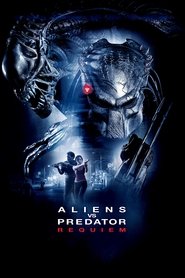
Aliens vs. Predator - Requiem (2007)
Colin Strause, Greg Strause, John Davis
-
our nickname for the Predalien. And he's establishing his dominance over the little newly shedding warriors. Bitch-smacked the warrior around and then gets to have his way with the homeless lady. And this is one of the homage shots, the original Predator. It's very, you know, the whole layout and composition of the shot was very similar to the opening of the original film. And again, obviously, this is a visual effects. You want to talk about Hydraulx a second, guys?
19:22 · jump to transcript →
-
You know, they have the same evil sort of sense of humor as us. We got along with them really well. And they also come from a similar background from us. I mean, they both own the company, like me and Greg own Hydraulx. And they're also both artists, which me and Greg also still are. So it's like everything we do, we're very much in tune with each other. And, you know, it's just in different parts of the same field, basically. So this is the extended scene inside of the Predator crash ship.
20:48 · jump to transcript →
-
And why did you pick the name Hawkins? Well, it's a little throwback to Predator 1. Okay. You know, if you actually read closely, there's actually a couple of the guys from Predator on some of these tombstones here. On the different tombstones. Somehow they all managed to come back to Colorado to be buried. Yeah, I think Jesse Ventura's character was in there as well, but it was in the background. I don't think I ever really see. But we thought the Hawkins thing was kind of just a cool little, you know, a little throw-in for people that noticed it to get a little chuckle out of it. This is also our anti-smoking PSA. Yeah.
57:50 · jump to transcript →
-
-
-
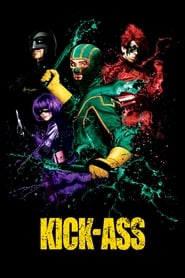
Matthew Vaughn
Hopefully you don't notice the visual effects in this film, because this is, um, you know, we didn't shoot it in New York. I mean, these are all sound stages, and we put New York in in the background and stuff, and, you know, DNEG did the work, and I think they did a fantastic job. We had hardly any money. I mean, I think we ended up, I think we budgeted for 100 visual effects shots. We ended up doing 820 and, uh, around 820, and, um,
42:24 · jump to transcript →
-
Matthew Vaughn
I think it's very important, pacing-wise, just to have a little bit of a calm before the storm, and a huge storm is now coming over the hill. It's pretty obvious what's going on here, why the framing is. And we cut an earlier scene where you see he used to go to the graveyard to read comics at his mother's grave, but Mark Millar was in the shot as well. Trying to do a Stan Lee.
1:09:59 · jump to transcript →
-
Matthew Vaughn
back office, which we ran out of money and we couldn't afford to build another set. So we just nicked all the guns from the set we had built and changed the color of the background and put them all up again. So low-budget filmmaking at its best. If you look at the radio, I mean, that really is a crappy little storeroom in Elstree.
1:20:24 · jump to transcript →
-
-
-
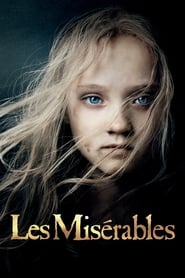
Tom Hooper
periodocs that we needed, but also just the complications of shooting at night and capturing live sound. We thought it'd be better to commit to doing some of these big set pieces in a studio environment where we can control it. And so what we do is we do sky replacements where in shots like these, the foreground separates it off the studio ceiling and we put night skies in.
23:52 · jump to transcript →
-
Tom Hooper
In the musical construction, Valjean is singing something over the top. So I never really heard those lyrics. And when I was reading the lyrics for the first time, I saw the huge power of this idea that Javert comes from exactly the same background as Valjean. And in fact, in the novel, we learn that his father was a convict and he grew up in a prison. And early on in life, Javert felt he had two choices in life.
45:02 · jump to transcript →
-
Tom Hooper
And here, another addition in the film is the role of the grandfather that's actually explaining something I thought was very interesting, that Marius is from a wealthy background and has given his wealthy heritage up in order to pursue his political cause and lives in this, you know, shithole of a slum by choice.
1:09:42 · jump to transcript →
-
-
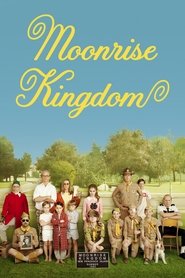
multi · 1h 33m 4 mentions
Wes Anderson, Peter Becker, Roman Coppola, Jake Ryan + 3
-
Wes Anderson
Exactly. The thing I love working with digital effects and things is compositing things. It's the ability we now have to take something and replace it, or reposition it, or change text, or modify things in the frame that are absolutely indistinguishable from if we had filmed it that way. All the time we rewrite text and it disappears. But that's a different kind of effects work, I guess. You know, it's often the signage. Probably, I would say, 80% of the shots in the movie have some kind of visual effect. And that all happened in postproduction.
6:42 · jump to transcript →
-
Roman Coppola
Well, yeah, I wouldn't even-- You know, what could I say? Bob is a very... He wants-- You start. - [Anderson] I have one thing. First of all, over all these years we've done different kinds of movies together, but more and more we've kind of geared ourselves towards being more free and being a little more New Wave with the way we make the movies. Well, this particularly takes advantage of... one of Bob's especially great strengths, which is he's a very, very good camera operator. One of the best. And very dynamic, and he can do things that other people just-- that I've seen other people incapable of doing. And he's-- - [Becker] Camera movements? Keeping the frame you want to see through movements?
59:46 · jump to transcript →
-
Peter Becker
Can we talk a little bit about music for a minute? You know, we move fairly seamlessly, especially in this film. And here I'm hearing in the background...
1:19:44 · jump to transcript →
-
-
-
From this point on, from this point on, we stop looking at him in the same way. Yeah, he also becomes... Yeah, there is... He's also mad. I mean, that's... Yeah. He's right and he's romantic, but he is also insane. Isn't there a touch here of Jack Nicholson in The Shining that really he's pretty much over the edge right from the beginning? Oh, yeah, yeah. There's nowhere for him to go. He's Bruce Dern. In fact, Jack Nicholson wouldn't have done this film because he was a bit... He'd moved on to doing different types of movies. But he would have been in the frame for the casting.
28:04 · jump to transcript →
-
Yeah, I suppose it's sometimes now when we look at visions of the future, what we see are the absences of things like the internet and mobile phones that we absolutely now have as central to our lives, but mysteriously will have disappeared by the time of the Star Trek series. Something we haven't talked about here, as we see the drones on the screen, is that there's currently a furore about actors playing something which is outside their own actual ethnic, whatever, background. Yeah.
35:24 · jump to transcript →
-
the thing that runs throughout his films. And it's odd that we were talking earlier about how the science fiction aspect of this film, the background, the world building, is very poor. But on a micro level, the technology is very good. It's very credible. And it's almost like that was what he was interested in. I mean, the writers of this script, who are a very...
41:23 · jump to transcript →
-
-
-
Francis Ford Coppola
And so what we did is we looked through all the shots and after I had said cut, there would be maybe a few feet of just empty corridor and we took those. And you'll see later in the sequence when you cut to an empty corridor, those are just the little ends of shots that happened to be after the actor walked out of the frame, there was a little piece. So advice to directors, very often the most important stuff that you get
1:02:33 · jump to transcript →
-
Francis Ford Coppola
That actor along who has the lines in the background there is Sonny Grasso, who is one of the real fellows from the French Connection that that story is written about.
1:08:51 · jump to transcript →
-
Francis Ford Coppola
We of course didn't go to Las Vegas for the sequences in Las Vegas. These are second unit shots of signs of the period and we actually shot the scene, the interior in the hotel in New York. This is one of those really cheap second unit shots we did. I was very embarrassed by this because in the background you see there's like hippie looking guys that are not correct for period. Now we're in New York where we shot the Las Vegas sequence.
2:19:19 · jump to transcript →
-
-
-
And I had this really, really bad flu. I could barely stand when we were shooting this. And I was just in the background saying, oh, my God, I wish this day would end. Dual aspect. So with an actor like Stephen Berkoff, who presumably could command a reasonable salary at that point, how many days were you able to book him for across the whole film?
16:11 · jump to transcript →
-
really yeah we only have 30 days to shoot this whole film and uh there's a lot going on frankly uh quite a few locations it must be quite difficult to shoot directly into such a bright light and yet preserve detail around the edge of the frame that's quite a quite an ambitious shot really and comes off perfectly so
52:29 · jump to transcript →
-
questions about how on earth you can make a character who's a pimp with such a questionable background work as a heroic character, he would have found a way and said, yes, I guess you're right, let's see if we can pull him up by his bootstraps a bit and sort that problem out. I think he would probably have gotten in there with a bit more time, solved those problems with and for you. I believe so, yeah. But that's...
1:14:36 · jump to transcript →
-
-
-
Beautiful backing there, by the way. That's fake. Yeah, that looks as real as anything. Okay, he jumps. Now, we were actually going to do a stunt and put him on a rappel line with a camera and follow him all the way down. Oh. And the night before, I could see Dick just had little beads of sweat on his brow like, okay, this will be great. Yeah, Fred, I'm looking forward to it. And then we just decided, you know what, it's really funnier if we just see him in the background splat to the ground.
46:57 · jump to transcript →
-
A gag, which was a gag that ended up being repeated in The Shadow about a year later. Oh, is that true? Yeah, there's a very similar gag where someone is thrown out a window and then they cut two characters walking out and then you see them in the background falling. Was that Russell Mulcahy? Yeah. Yeah, he stole it. Bastard. Now, we talked about tone earlier and the first Robocop movie, it's a very specific tone and I don't think...
47:30 · jump to transcript →
-
just do these really big wide shots and just do this really... This part of the movie feels really expensive. Well, that's very heartening. This was basically just a street in Atlanta. Yeah, and it feels... It's got a nice lived-in quality to it. Now, that tower in the background, that's actually a hotel, but it resembles a tower in downtown Detroit, does it not?
1:22:40 · jump to transcript →
-
-
-
And this is all Los Angeles. Air One, make a final sweep. This is Los Angeles and actually the buildings in the background were added in because it was a wide open street.
15:47 · jump to transcript →
-
rooms lead into other things. I'm fixated on the depth of a frame. The width of the frame is not as important to me as the depth of the frame, and I like having a fairly dark foreground and having an archway or a doorway that leads into a lighter area. It's not the most unique thing in the world. It's been done by people far greater than I, except I like when the eye is drawn to the depth of the frame.
33:28 · jump to transcript →
-
and you didn't want to see him put in this position. You'd be amazed what you agreed to when you're on fire. Don't do it, Bobby. You're better than this. You're better than him. You know, considering how you've lived your life when this is all over... I love long lenses. I guess you could see that because this film was shot with long lenses. It's gonna happen. Why shouldn't you have the best seats? Look what it does, though, when you take a close-up and you push in on somebody and you... Everything in the background is soft and the eyes are pin sharp.
1:36:45 · jump to transcript →
-
-
-
Simon West
Now, the company wouldn't actually lend us one of their cars for the film, so I had to go to a private owner. But unfortunately, the insurance was so steep and expensive to have that car on the set that I could only afford it for one day. So we had to make a polystyrene double for the car. And so all the wide shots in the action sequence in the background, the McLaren is actually just a very crude styrofoam version of the sports car.
31:13 · jump to transcript →
-
Simon West
operator David Emmerichs flying so the shot looking between the guys is all I had of the rocks falling towards us and the frame later all you see is the camera hitting the ground and then clouds and sky so I think David was very upset that he didn't manage to get the great shot from the front and I had one take at it but that's why you have three or four cameras because I had the side angles and they work perfectly as you see so that's what ended up in the film.
42:46 · jump to transcript →
-
Simon West
that I would love to go back and shoot there again. Now, when Lara falls through the hole in the ground and she's tumbling through the earth, I shot this in one of the oldest techniques possible. It's not blue screen or green screen. It's not CGI. It's literally her standing on the ground with a rolling background
44:51 · jump to transcript →
-
-
-
Yeah, that could be a real problem. Now that I know you better, as well, how am I ever going to look at you? Here's the scene that was cut... This is something I think... - What's she got on? A flesh-coloured bra? - Right now. When you're watching at home, you're not gonna see.... We're watching something that doesn't have the letterbox. I don't understand. What do you mean? She has pasties. - Yeah. And so they-- You can actually see them in this cut. But once everybody watches at home, like now, they're not gonna see that. What does that mean? You digitally removed pasties? No, no. It means that the letterbox.... The black bars on the top and bottom of the frame... Oh, I see. Right, okay. - It's within that frame... ...So you're not going to see it. It's cut out. But we did. We saw them. - We did. You knew that was going in the trailer as soon you saw my shiny bottom. I told you that day. - Yeah, I was so pleased. I think I even apologised upfront to say... ...that this will be in the trailer. - Why would you apologise? It's an ass shot. - Yeah. It also shows the mansion. It's also a dynamic shot. But if she was wearing a coat, it wouldn't be in there. Okay. Well, all right. If you wanna get all cynical about it.
1:06:42 · jump to transcript →
-
Oh, and you weren't here for this whole... Were you very glad, because the other babe was there? Yeah. That helped take some of the pressure off... ...but the-- Well, actually, this whole costume, we had a "wardrobe flaw"... Her whole boob escaping. - ...aS Janet Jackson would say. Poor you. Poor baby. - I rushed in as soon as I heard. Yeah, you're really good like that. How have you done that? That's CG, right? That's CG, which I don't think you've even seen yet. We shot that practically, and it just looked horrendous. It looked like three blind mice kind of popping up. And this was all a reshoot that we did. - Oh, really? Yeah, this was all back in L.A. We had a good time. It was just blood and guts. That's me throwing the paint across the window. Oh, is that you? - Yeah. Can you do a bit, like, when my coat flaps around, you're flapping it? That's the prop guy. - Very hands on. Yeah. What were you thinking right here? - "Is it nearly lunchtime? Should I buff my bottom? Am I gonna worry about my camel toe?" Remember how many people were on camel-toe watch because of that suit? No, it became "CT." I would just yell out, "CT," and, "Okay!" There were four people who made it their mission. This is new. This is a new shot here that's just showing Speedman... ...dreaming about the Olsen twins. And so we had some flashes that were supposed to happen right there. This is in the original. Coming up, there's a section where Viktor takes out some of the implants... ...and you see him unhooking himself from that stuff... ... that we had cut out of the original. This isn't it, right? - Yeah, this is. These shots, though.... These, I did all those in post. None of those shots... We didn't take any of the lights down. lt was something we did as an afterthought... ...and just darkened it to make it look like all the lights went down. It actually worked okay. I was worried I wouldn't catch it. I didn't have my glasses on. I couldn't find the takes to put on the outtake reel, but... There weren't that many, because I'd been practising like crazy. Oh, it didn't show. - Oh, really? Look at that. Yeah, look at that. Look at that now. - I was so proud of that. lf someone throws something at me, I tend to duck and wince. The amount of windowpanes we had to replace in the background.
1:14:38 · jump to transcript →
-
I think you arranged that hair yourself, didn't you? Oh, I always arrange the hair. We gotta figure something out for the sequel, some kind of moulded shell... ...some helmet that looks perfect, that doesn't move. I might do that Olsen-twins movie myself. Well, it sucks because there's so many elements in a shot... ...and the fact that the hair makes you do the shot over is really frustrating. But if the hair falls in your actor's face... ... you just can't use it. And it was just an ongoing battle. Did you ever let the art department do this... ...or were you busy all over this thing as well? No, I let them do it. For these shots, I would arrange it... ...and just pick a bunch of stuff off and put it together. They went crazy around the office. Actually, the first attempt to do that bulletin board... ...which I said should look like some really creepy homicide board, was... They went and took a lot of pictures of people in the production office. You actually see people at drafting tables. And other people are kind of looking and smiling into the camera. And I said, "It's supposed to be surveillance photos." It's a little bit too chummy. - Yeah, a little bit too aware. You've got a guy with an illustration of a crypt set in the background.
1:27:19 · jump to transcript →
-
-
-
We are all used to a lot of, especially in American movies, we're used to a lot of words. And it was really exciting to strip them down in rehearsal, in the making, and even in the editing of the movie, just to let the composition, performance, and story architecture sort of shine through. Yeah, but we had to be very, very specific too in the creation of the scenes and the layout and what kind of information emotionally we're sort of doling out. You know, are we doling out the feeling of family?
10:31 · jump to transcript →
-
You know, we wanted to shoot this in front of Grand Central. It was one of the trickiest things. The city had never shut this viaduct down before, and we needed it for six days. So they let us do it over three consecutive weekends, six days. So we would actually shoot for two days, go away for a week, shoot for two days. We really lucked out again with weather. You know, there was one moment where you see the mannequin move, and we had actually had a little thing running where we cast people to play our mannequins. And in the background of some shots, you can see they're real people playing the mannequins and not
46:17 · jump to transcript →
-
This is fine. There's a gas tank. That's an actual practical explosion and things being pulled with wires. And that's not a real person. Yeah. I like that bit there. Yeah. And that's surprisingly, like, stunts usually suck the first time you do them, and that was the first time. That was actually kind of nice, that whole explosion and Will in the foreground. You just said splosion. Explosion? Explosion. Boy, he's fast. Yes.
1:23:31 · jump to transcript →
-
-
-
Rob Cohen
including sharing proprietary software, passing backgrounds and foregrounds back and forth, depending on who was responsible for what. So there you have a Rhythm and Hues background and a Digital Domain Under-Mummy, and here we're back to a Rhythm and Hues terracotta mummy.
1:06:31 · jump to transcript →
-
Rob Cohen
We built this huge head of Jet in the deserts of Tianmo, a very inaccessible place, way above Beijing. It's a site where the original wall actually still ruins of it. You can still see the northern wall and that wall that you see in the background we built.
1:24:47 · jump to transcript →
-
Rob Cohen
Oh, that was Marc Pitre dancing by there, my co-producer, right-hand man. Thought I'd give him a plug for all the hard work. That's Derek Spears, the little guy looking down the girl's dress. There to the right are Brendan and Maria. Maria in a beautiful silver lamé dress that Sanja designed. Vic Armstrong is dancing with his wife in the background. And if you go back and you see this bald little guy dancing with the tall, beautiful pregnant goddess,
1:40:34 · jump to transcript →
-
-
-
be aware where weapons are. So, you know, great, you can composite a shot, but can you walk and chew bubblegum as well? And Dave is one of those rare, I think, camera operators that can do both. Very, very rare. He's kind of brilliant because in and around all of that, he will just also have this framing instinct at play.
30:20 · jump to transcript →
-
So there's noise, there's danger, there's movement, there's complex choreography, but he's framing at the same time. And other things besides as well. And he's tough in a good way. He sort of like runs to it. You know, he's a man. He took some hard falls. Yeah, he ate shit a bit one time. He went fucking flying a few times, yeah, absolutely.
30:47 · jump to transcript →
-
Because it's... I don't know if that is the right word. Because artsy sort of implies like interpretation or like... Well, yeah, but we use like that lens that you like. You know, you get into the... I guess it gives us the freedom to kind of go into this, you know, what you're about to see, which is like things go quiet. It's like slow-mo, dreamy world. I guess maybe artsy is the wrong word, but it gives us... By framing it of like they're concussed, it allows you...
54:02 · jump to transcript →
-
-
-
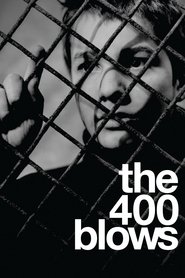
Note that the signature shot, that is, where the director places his own name, occurs at the unique moment of perfect framing by the base of the Eiffel Tower. The film on many levels will seek such a balance of the unsteady handheld look of cinéma vérité, the disorderliness of life itself, and yet the perfection of form, the balance that comes only from art. It's one of the light touches of mastery that gives The 400 Blows its charm. As if it were a novel and he its author, Truffaut dedicates his film to his mentor, André Bazin,
2:35 · jump to transcript →
-
Without denying the imagination, the artistry, and the great filmmaking craft that have gone into the making of The 400 Blows, such biographical background helps us to understand the ways in which the film's story is so deeply felt and so sincere.
1:22:29 · jump to transcript →
-



Related topics
Other topics that frequently come up in the same commentaries.