Topics / Writing & development
Adaptation & source material
141 commentaries in the archive discuss this, with 1,321 total mentions and 72 sampled passages on this page.
Filter commentaries
Filter this topic by the film's decade or the type of commentary.
By decade
Across the archive
ranked by mentions · click any passage for the moment in the transcript
-
-
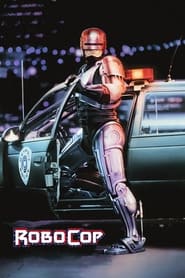
And so this is really about the kind of the buildup of the military industrial complex. And in fact, coming up here, we're going to have Dr. McNamara, who is based on Robert McNamara, the Secretary of Defense during Vietnam era. And ED-209 coming up here is based on kind of a Huey gunship idea, although obviously Phil Tippett and Craig Hayes, who designed it, actually made it work. This is still a big prop.
9:41 · jump to transcript →
-
Well, you get the laugh, but less so than when we saw it the first time in the preview, when it was still the original version. And I realized that without, I mean, without taking a backseat here, me, that really the gruesome, bloody scene where the guy on the table is killed by a 209 was mostly directed by Jon Davison, who added so much blood to that scene that it is merely disgusting.
12:47 · jump to transcript →
-
Mostly based on the fact that the Brazilian steel got so cheap, isn't it? Yep. So that the Americans couldn't compete anymore. Well, of course, you know, we have a labor force by now that won't do things for nothing. Right. You know, we have entitlements and everything. Now, this is an interesting thing here. This is Pittsburgh. But by the time they go downstairs to that bottom area there, we will be in Long Beach in another industrial space where we shot the special effects sequences involving Peter or Murphy's death.
17:47 · jump to transcript →
-
-
-
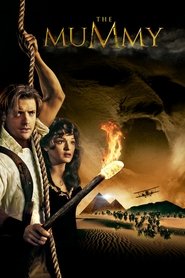
It really grosses the audience out, which I think is interesting. Yeah, they actually think they see his tongue being cut off. They don't see a thing. Now this, Arnold really, he was such a trooper, but it's really creepy being mummified like this because you can't move very much, you can't really breathe. It kind of freaked him out a bit. Here we have a little ILM work here, CG scarabs. If you see the original plate for this shot, the guy who walks in there dumps out about half a dozen plastic...
5:53 · jump to transcript →
-
scarabs just as place markers. ILM did a great job on that shot. Now this next shot's a combination of every trick in the book, first unit photography, second unit photography, ILM, so you went from here to miniatures, models, matte paintings, the whole thing. And then a main title by Kyle Cooper,
6:23 · jump to transcript →
-
it's very well executed too it's interesting because i mean it's it's one of the the cheapest gags in the right in the book i mean it's it's a really it's it's shameless in fact but but it works it's it's fun to be in a preview audience or or even better with a paying audience and sitting there watching them all jump when he uh pushes that mummy out now i shot this scene in this in the script i told john hannah that he was going to be drunk
16:20 · jump to transcript →
-
-
director · 1h 36m 12 mentions
Aliens vs. Predator - Requiem (2007)
Colin Strause, Greg Strause, John Davis
-
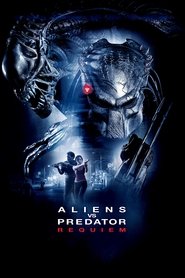
Especially down in this scene when we murder children. Yes, this is one of the better parts. Exactly. Now, this is my favorite scene in the movie right now. I love this, and I love what's about to happen with the kid also. To me, it just reminds me of all the original Alien movies. It's my favorite part of the original Alien movies. And pop. Exactly. And a lot of this we did...
14:52 · jump to transcript →
-
our nickname for the Predalien. And he's establishing his dominance over the little newly shedding warriors. Bitch-smacked the warrior around and then gets to have his way with the homeless lady. And this is one of the homage shots, the original Predator. It's very, you know, the whole layout and composition of the shot was very similar to the opening of the original film. And again, obviously, this is a visual effects. You want to talk about Hydraulx a second, guys?
19:22 · jump to transcript →
-
So you get the interesting look to the optical distortion when he's cloaked. These here were a couple of these are green-screen shots actually shot on a stage, and then we put in the matte paintings of the lake location. Right, and by the way, both the aliens and the predators went back to the original house that had done AVP1. Yep, and Alien 3 and Alien Resurrection. Yeah, Amalgamated Dynamics. And those guys were just kick-ass as well. I mean, Tom and Alec are like...
20:18 · jump to transcript →
-
-
-
Len Wiseman
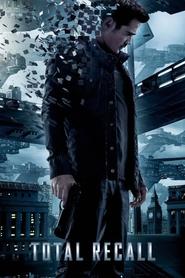
Hello, I'm Len Wiseman, director of Total Recall, and we are watching the director's cut, which I'm very excited about. I'm really happy with the theatrical cut. There's just things that, as a filmmaker, that you put a lot of time into that you really start to miss from the original cut, and so it's great for me to be able to work together with Sony. They were very supportive of putting out a director's cut.
0:02 · jump to transcript →
-
Len Wiseman
that was cut out of the original. And this was, it was a moment that, you know, it was to establish that this was the first time that Colin's character, as Hauser actually, it was the first time that he had confessed or revealed that he loved Melina. And that kind of informs also why this is the memory that he holds onto, why after everything
17:02 · jump to transcript →
-
Len Wiseman
you know, just analyzing his whole trip and what he was going to go through. And I felt it was also so much like the original. It wasn't the same dialogue, but it was just kind of the same idea of here's what you're going to do on your mission. You're going to, you know, X, Y, Z. You're going to save the girl. You're going to do this. And it kind of maps out what is going to happen. I just was never really into even in the script. I shot it. We're there. You know, it's a great thing about dialogue is that it's unlike, I guess, action set pieces where...
23:00 · jump to transcript →
-
-
-
William Friedkin
the Iranian terrorist on the roof at the beginning of the film, that's something that I don't recall being in the book at all. It was something that came out of my discussions with Jerry Petievich, who was a Secret Service agent and did write the book. I remember asking Jerry what were sort of the typical
4:10 · jump to transcript →
-
William Friedkin
Obviously, the Secret Service doesn't want to give people any ideas. But this was based on a threat to the president, one of many that occur every time the president goes out and makes a speech somewhere. And the Secret Service is alert to these guys, and they're very good at spotting things that seem to be out of kilter in what would otherwise look like a normal operation, say, of a hotel.
5:06 · jump to transcript →
-
William Friedkin
to set up and manipulate on location than the original cranes were. A studio crane is too bulky and too unwieldy to take to a place like a bridge. It was only possible to do a shot like that because of this portable, lightweight crane that was originated in France and that they had a very few copies of
9:27 · jump to transcript →
-
-
-
I assume he was auditioning for Empire of the Sun before this. I don't know what it was. And, of course, this is before he really hit it big with Dead Poets Society, so it must have been cool to see him make it, you know, suddenly have a big hit not too long after this came out. Right. And he really carries this whole film. I mean, he's in virtually every scene in the movie, you know, so it's kind of a make or break based on his performance. Well, yes, and that became a problem because during the movie he came down with mononucleosis. Oh. And...
3:32 · jump to transcript →
-
Now, one of the more interesting things about this cast, not at the time it came out, but later, is the fact the two moms in this movie have a really great connection together. You've got Fannie Flagg, who wrote the novel Fried Green Tomatoes at the Whistle Stop Cafe, and then you've got Kathy Bates, who starred in the movie version of it. And, of course, Fanny was also one of the people who adapted the screenplay. So just kind of a funny coincidence that they had a huge hit after this together. Yeah, well, oddly enough, Kathy had been our original choice.
5:26 · jump to transcript →
-
to see her and she was quite a talent and she was actually writing um her book on while we were doing well she's written a series of books uh but fried green tomatoes she was writing uh while she was doing this and there's actually a story that i had told her that she included in the book which i thought was kind of fun really yeah and uh
7:22 · jump to transcript →
-
-
director · 1h 24m 11 mentions
The Naked Gun: From the Files of Police Squad! (1988)
David Zucker, Robert K. Weiss, Peter Tilden
-
He did all this. There he goes. He wiped that guy's forehead himself. Here's our homage to the Three Stooges. Not many people realize this movie's based on Shakespeare's The Tempest. Yeah. Which started the same way.
2:20 · jump to transcript →
-
Can we cut that answer out? I'm not at liberty to say it. Actually, Leslie was in the television show that these movies are based on. I believe there may be a couple people who don't know that Naked Gun is based on the failed TV series Police Squad, of which six... Now, I love this joke. Is it safe to say I filmed that part? Did you go out and do that second unit? That was second unit. Bob directed that part. I couldn't convince you to do that. You know how long that was? 45-minute trip. I know. Bob did all the breast jokes.
9:11 · jump to transcript →
-
And that's important to future writers? It is. Fluker dialogue? Know your Fluker. How many pages of Fluker dialogue is in a good script? Most of it. That's right, we have the whole glossary of terms. I know. Well, we might talk about some of those. Terms, rules, well, nothing worked. And here comes the joke from the set-up. This actually happened to our rabbi. Was it based on that story or did it happen after the fact? He was with the mayor guarding the queen. Life imitating art.
14:33 · jump to transcript →
-
-
-
Now they're not resisting. No. When I'm drunk, I like to Google Demolition Man underrated and all these great things happen because I think the movie is getting more appreciated now than it ever was. Absolutely. It's become something of a cult film, especially in the UK. So the opening was actually based on this kind of post-riot apocalyptic present day.
0:33 · jump to transcript →
-
which was in the future, obviously, and it's in San Angeles. So San Diego and Los Angeles merged into one giant metropolis. And Sylvester Stallone is the old school police officer who's in charge of taking down the crime lord, Simon Phoenix, played by Wesley Snipes. Yeah, I think it was the original script was by Peter Lenkoff and it was definitely a solid.
0:59 · jump to transcript →
-
action futuristic thriller, and this opening scene is definitely of the mold that the original screenplay was in. As you'll see, I kind of came in like green pepper, only three weeks of work, but I made it into something else that I think people enjoy, but this is the pure action part of the movie.
1:28 · jump to transcript →
-
-
-
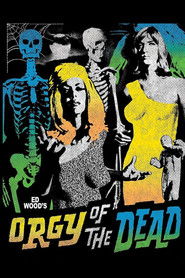
Hi, everybody. This is Frank Henenlotter, director of Brain Damage and Frankenhooker. And we're here watching Orgy of the Dead with the man who wrote the book on Ed Wood. And here we are with the star of the film, so to speak. He gets top billing. And it is Criswell. Now, I guess most of you people watching this probably only know Criswell from Plan 9 from Outer Space.
0:12 · jump to transcript →
-
Well, this is, wait a minute, let me interrupt this for a minute. This is Pat Barrington now here. Yeah, okay. Doing the Golden Girls sequence, which Apostolof said was done, you know, obviously based on Goldfinger. I'll get back to what he was talking about. With John Andrews as one of the giants, and I think John Bealey is the other guy. Yeah, and let me just... Well, you mentioned that John Andrews, of course, plays the wolf man. Yeah. Yeah, now Pat, I think this is her first film.
24:50 · jump to transcript →
-
This is Apostolof saying from Vraney's interview. He said, on the last day I shot the scene with the Golden Girl, which of course was based on the scene in Goldfinger. Somebody, I don't remember who the son of a bitch was, but somebody said that if you paint a body with gold paint, the person will suffocate because their skin can't breathe. He calls her Barrington. Let me change it to Barrington. He said, Pat Barrington, who played the Golden Girl, started getting real nervous. Well, yeah.
29:45 · jump to transcript →
-
-
-
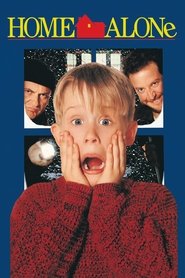
Hey, that's you. - That's me. So this was, uh-- I guess we... We could start about... Talking about the beginning of how this whole movie came about, really. I was in dire straits at the time, in terms of my career. I had just come off of a complete disaster, a big bomb. I didn't know if I was gonna direct again. I thought I'd have to go back to writing. So I was in Chicago staying at my in-laws' house... ...and my first daughter was just born... ...and John Hughes sent me, out of the kindness of his heart, two scripts. One was called Reach the Rock and the other was called Home Alone. One of them, it was rumored... I think it was this one. was written over a weekend... ...which some critics would probably jump on the bandwagon... ...and say, "Well, we always knew that." - Exactly. Ha, ha. So I read Home Alone and immediately responded to it. I thought it was just a great, great piece of material. And it talked about some of the things that I was interested in making a film about. Now, we had a meeting, I remember, in New York. I just-- It was-- You and my father were talking most of the time... ...and I was just imitating everything you were doing. Everything I was doing. - Yeah. You'd drink your water, I drank my water. Like that. I think I did that... I think I way overdid it. I think I just kept doing it the whole, like, hour. Well, you know, the interesting thing is we... Again, it was the kind of situation where we looked at hundreds of kids, again. And I was like-- Even though I didn't know if I'd ever direct a film again... ...I was like, "Well, you know, Macaulay was in Uncle Buck... ...and I don't wanna just cast him based on John Hughes producing the movie... ...because then it looks like I'm gonna give in to John Hughes and be a wimp." And I met all these... I met hundreds of kids. And when I met Macaulay, there was just no one else who came close... ...to what we needed for this film. I mean, really, in terms of an actor... ...a Child actor, at the time, you were the most unique, original kid I'd ever seen. So that was pretty... - Oh, thank you. I mean, I totally agree with you, but thank you anyway. But it really is-- It's sort of, uh... Because it was the fact that you, um... The camera loved you, obviously. You see the shots from the film. The camera loves you, but at the same time, uh... ... you were relatable to every kid in America... ...because you weren't an idealized version of a kid. Kids are used to-- Accustomed to seeing this ridiculously... Shirley Temple, and the curls and the whole thing, you know. And there was just something enormously real about you. That, and I could remember my lines and I had a lot of energy. That is true. You did have a lot of energy. Almost a sad amount of energy. It was, I mean.... Still do too. Uh, now, do you remem--? Like, this particular scene. We're starting from the beginning of the film. And I'm curious, because there were so many scenes in the film... We were talking before we started. where we would shoot your coverage first and then send you home... ...or I'd still be in jail. - Child labor laws. Yes, I'm still well-versed in the child labor laws. So there are obviously certain elements of the film-- Like this. Do you remember this being shot? - No. Because you weren't here. - I remember we did the whole... There was a whole sequence with, you know... ...people coming up the stairs, down. - Right. He's there, and the pizza guy's there. I remember that, and just like, you know, trying to coordinate that whole thing. But, no, in general, there's a lot of stuff... There's a lot of holes in it... In my memory. And this guy went on to do something on Nickelodeon. My kids know him. Yeah, Pete & Pete. - Yeah, Pete & Pete. Is it still on the air? - No, no. It lasted a couple years. It was actually a really kind of neat show. Yeah, my kids loved that show. But what was interesting about the whole look of this film... I guess we could talk about it a little bit. You'll even notice... Some people will think, "Well, this wasn't intentional." But we intended the film to feel like Christmas sort of. I wanted the house to feel very warm. You look at... - Greens, reds. Macaulay's wearing greens, a green and red shirt. There's a green and red jumper sweater on this guy back here. The wallpaper is all... - That's very clever. All conveying a warmth of Christmas and something that, uh... It just was interesting to us. So it wouldn't be over-the-top, but it'd feel warm. I wanted the house to feel like a warm place. Joe Pesci. What do you remember about Joe Pesci? What is, like, your first--? My first-- Gosh, I don't even... I have-- I still show this. I have a scar on my finger. - Uh-huh. We'll get to that part near the end... - Ha-ha-ha. ...when, you Know, he says, you know: - Okay. "I'm gonna bite each one of your fingers off, one at a time." During rehearsal, he actually bit my finger a little harder than I think he thought. I still have a little scar on my finger. It's my little Joe Pesci tooth mark. I'm telling you something, I believe... And I know Joe would probably get a little upset with me about this... ...but there was a little professional jealousy from a lot of the actors on set... ...because you were the star. There's this little kid who was the star, who we were all paying attention to... ...who was carrying the film. And there was a lot of passive-aggressive stuff going on. And I don't think Joe meant to bite through your finger... But, heck, you know, you never know. He was not particularly happy during the course of making this film. And I don't-- I think he would probably say the same thing. He had just come off of Goodfellas and Raging Bull, and he was... I don't know, did he win the Academy Award? He won for Goodfellas. His acceptance speech was, "Thanks," and that was it. Okay. Well, there you go, so, um.... And when he... I remember I was such a fan of his. Asking him to do the Goodfellas... The clown speech, you know. "Make me laugh," you know? "What do--? Am I funny to you like a clown?" And he would do that every day, and it was great. But at the same time, I could feel it from the actors. Because there's always a sense of rivalry between actors. There was this feeling of, you were the star of this movie, and that was un... That was not really common at the time. - Yeah, yeah. It created an interesting tension on the set, I have to say. Yeah, see, I never really felt that, but I was 9. Everyone around here knows he did it. It'll just be a matter of time... ...before he does it again. What's he doing? He walks up and down the streets every night... ... Salting the sidewalks. Maybe he's just trying to be nice. No way. See that garbage can full of salt? That's where he keeps his victims. The salt turns the bodies... ... Into mummies. Wow. - Mummies!
0:21 · jump to transcript →
-
This is a good place to bring up the score. John Williams was not the original composer. If you have one of the early posters of Home Alone in your attic somewhere... ...It says "Composer Bruce Broughton." And Bruce Broughton was the original composer... ...on a film that I wrote called Young Sherlock Holmes. And I loved his score for that film, so I met with him and hired him for this. He was not available to do this... ...and he essentially was doing The Rescuers Down Under. I think that's what it was. So we lost him. So we had no composer while we were shooting... ...the second half of this film. And we went to John Williams thinking, "He'll never do a film like this." But he saw the film, loved it and decided... Amazing what he did. - His score is unbelievable. The score is beautiful. No. - He doesn't miss. Well, the thing is, comedy's very difficult to score... ...because it can always sound stupid or goofy. And John never really let that happen. I think one of the great things about John Hughes' screenplay here... .IS that John really filled in every possible... ...logic hole here. - Yeah. Little loophole. Any-- You know, in other words, by putting this kid into the back of the van... ...he took care of the fact that you would be counted... The head count worked. Also adding Buzz here, confusing her... ... Just added to the... I don't wanna say the reality... ...because the film has a heightened reality, but the reality of what's going on. Yeah, and how it all happened. - And the audience always bought it. They bought the fact-- Particularly, we were concerned about mothers... ...because mothers would say, "How can you leave your kid alone?"
14:15 · jump to transcript →
-
Now, this is the situation, John Heard was reading this book... ...and he said, "I'd like to be reading on-screen." We had no rights for the book, and we were... Of course, I got a call from Legal at Twentieth Century Fox the next day. We didn't clear the book, but luckily it was... It was okay. - It was all right.
25:19 · jump to transcript →
-
-
-
Ron Howard
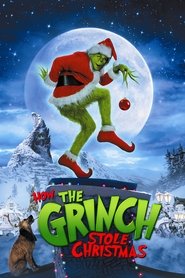
that Seuss's book give us. And so our idea was to do the pre-story, to kind of let the first half or so of the movie be the prequel to the book. In doing so, we had to take a lot of creative license, including creating the myth of how the Grinch came to live on the mountain. It was fun and interesting in the writing, and also I was always very proud of the way audiences responded to this particular sequence that deals with the young Grinch.
24:12 · jump to transcript →
-
Ron Howard
trying to sort of weave the book together with the new material that we were going to be developing to try to expand the story, and to really keep working on Seuss's original theme. In analyzing all of Theodor Geisel's children's stories, what you begin to see is that they're all fables, and one thing that he often did was work through an innocent character, in this case, Cindy Lou Who. So even though the book, How the Grinch Stole Christmas, does not use that device,
32:50 · jump to transcript →
-
Ron Howard
again, didn't exist in the book whatsoever, but they're a real outgrowth of what we've developed through the first half of the story and provided a great performance opportunity for Jim and for Taylor. Look at that walk. Jim is so physical. When we were rehearsing this movie, of course, without the costumes, air-conditioned sets, Jim in a T-shirt and jeans,
41:25 · jump to transcript →
-
-
-
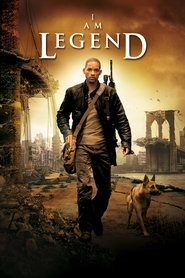
He had shown me some pictures and I didn't like the original pictures he showed me of some of the choices because the faces, the dogs didn't look warm and nice enough. And I wanted a German Shepherd with a lighter face and lighter eyes and that had a warmth. And then he found her. And I think he had about a month and a half to work with her and with Will to, you know, she didn't even know her name when she started. It's just amazing how great she was to work with.
19:32 · jump to transcript →
-
You know, we had a rule on set that she wasn't allowed to deal with anybody except Will and the trainer, so she could keep her focus. But man, she was so, so easy to work with. This is a scene that's inspired really by the original Omega Man that we took as our source material, both the Matheson novel and the second adaptation.
19:56 · jump to transcript →
-
this we actually our dog trainer had these Mexican hairless dogs that were pretty frightening looking and so we based these off of the Mexican hairless dogs and me and the visual effects supervisor went up to his ranch and we videotaped this dog being sort of taunted by this bone and snarling and hopping around and that's what the movement of these dogs was based on which is uh
52:09 · jump to transcript →
-
-
-
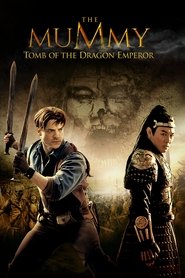
Rob Cohen
the boundaries of the Han Chinese Empire were at constant civil war. And ultimately, each king tried to become the emperor and rule the other six. And here, based on some true history, assassins were sent out to murder the one king that would be able to
1:52 · jump to transcript →
-
Rob Cohen
...unite the country and dominate the entire political system... ...which is the character Jet Li plays. And, by the way, the assassination attempt was the subject of Jet's movie Hero... ...which was also loosely based on the history of the Qin dynasty and that emperor. Here, in short strokes, I was trying to show the misery and ruthlessness...
2:20 · jump to transcript →
-
Rob Cohen
The book that's coming up... ...is actually a scroll called The Oracle Bones in the movie. And if you look to the left... ...those bones with the writing on it are the true Oracle Bones. I had to give a form of concentrated knowledge... ...but the real Oracle Bones were discovered... ...in the early to mid 20th century...
6:07 · jump to transcript →
-
-
-
Francis Lawrence
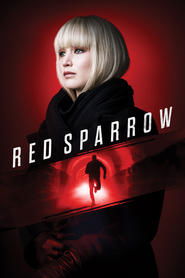
Red Sparrow was a novel by Jason Matthews, and it was sent to me by Fox as I was finishing working on the Hunger Games movies. I think we were actually in post-production on the final Mockingjay, and had actually started to promote the final Mockingjay film when the book landed on my desk. I took a look at it and immediately fell in love with it. I've always loved spy movies. And this spy story I thought was quite unique. It's by far I think the most genre-specific story that I've ever done. But I just found the character of Dominika, as you can see here, played by Jen Lawrence, to be quite a unique and unlikely hero, and a really unique way in to a spy Story. It becomes a much more personal spy story with her in the lead. I actually, even while reading the book, Started to think of Jen immediately for the part. You know, she and I had done three Hunger Games films together over the course of five years. I thought she was a fantastic actress, and we had a great time working together. So I thought it would be fun to find something new to do together. And specifically, because we had done this... We'd been working together with the same character over the course of five years it would be really fun to do something totally different, use different muscles. And I thought she could also look Russian, but thought it would be fun for her to look different and speak differently and move differently, and push herself into new territory. So when I had read the book, and I was gonna go pitch the studio, I actually called her first, and said, "Hey, hypothetically, would you be into doing a Story like this?" And she said yes, and, you know, I just pitched it very briefly. And then made my pitch to Fox about my approach in the story, which was to make Dominika the kind of heart and soul of the story, and to follow her story, and I had a couple of tweaks that I wanted to do to the last act of the book. And also spoke a lot about the tone, and the kind of hard-R quality that the movie... I thought the movie was gonna need. And everybody agreed. We got cracking, and I went to work with Justin Haythe, who is a writer that I've known for a long time, and we had developed something together before that had never been made. But we had a great time working together. And he also saw eye to eye with me in terms of the tone and the point of view of the story. And so we got working and it came together really quickly. So that by the time we had finished and released the final Mockingjay film in the Hunger Games series, we were pretty ready to go, and we were almost ready to start prepping this. We ended up bringing a bunch of people from the Hunger Games film with us. Jo Willems, the cinematographer that did my three films came with us, and our camera operator, who's worked with me since I Am Legend, and has also done numerous other films with Jen, 'cause he does the David O. Russell movies, came with us, and Trish Summerville, who did costumes. The new big addition for me, in terms of crew here, is Maria Djurkovic, the production designer. She had done Tinker Tailor and many other great films, and I just really enjoyed her work. And we really bonded over the references that we had found, and the kind of color palette that we both thought that the movie should follow. And she joined us, and we shot the film in Budapest. And primarily all practical locations. Some little set builds within locations, but primarily all practical locations.
0:22 · jump to transcript →
-
Francis Lawrence
One of the fun things for me about this whole sequence is the intercut. I just thought that it could be a great introduction to the two characters and to the two worlds. And one of the things that I played with throughout the sequence is screen direction. So if you notice even from the very beginning, I typically have Jennifer facing left to right, and Joel facing right to left, as you can see here. It was a trick that I learned. I remember watching old Hitchcock movies, and watching Strangers on a Train, and there's... In the opening sequence, you see the two men who are moving toward one another, and eventually gonna meet. And it's something that I've employed a lot, I think, that screen direction is actually a huge benefit in storytelling. But especially in a sequence like this where you feel like these two characters are gonna end up on a collision course with one another, that narratively, you know that at some point, that they're gonna come together. American! Most of this ballet sequence here was shot in the Budapest opera house. And we had support of the Budapest opera, and the Budapest ballet company. And most of the other dancers there are all dancers with the Budapest company, and from a variety of places. There's some Americans, actually, and some Hungarians. Great group of people. And there was our nice leg break, one of the first specific, kind of, tonal hits in the movie. It was something I wanted to do with the movie, was to not hold back too much in terms of some of the shock, and audacity of some of the moments that take place within the story. And so to see the real damage done to her leg there... I just remember seeing, you know, there's been sports injuries over the years. And not too long before we shot this, there was a French athlete in some, I want to say some Olympic games or something, who had done some vaulting, and just kind of landed slightly wrong and bent his leg at this really horrible angle. And it was really difficult to look at, but we basically modeled the bend in her leg based on the images of this French Olympian. Word is they were vice cops, looking for Chechen dealers... or some family guy getting a blow job in the bushes. They weren't there for Marble. They just got lucky. Chances are they would have questioned you, and let you go. You can see here, one of our really cool locations. Maria, my production designer, was just really fantastic at looking for locations and scouting. And I think she had gone out to Budapest a few months before me. And we had also hired Klaus, who was our location manager for the Berlin portion of the Hunger Games films, and we liked him a lot. And he was nearby, and so he came down to Budapest and they worked together, and they found these fantastic places. These old abandoned hospitals, where the surgery Is, and where she's about to wake up, was this old, abandoned maternity hospital. And this fantastic space is part of a library in the seventh district of Budapest. Undercover narcotics agents saw what they thought... was a drug deal in process. You can see outside of Jen, too, that we really put together a fantastic cast for this movie. Jeremy Irons, who's an icon and a fantastic guy, and I think one of the best actors to have ever existed, was my first choice to play Korchnoi. And luckily he said yes. And Matthias, we brought in. I'd been a fan of his since seeing him in Bullhead and Rust and Bone and things like that. And he's so versatile. But he became a choice when we actually decided to skew the age of Dominika's uncle down a little bit. I wanted to add a little bit of creepiness to their relationship. And so the idea that, you know, maybe her father had a much younger brother, so that, as she was growing up, there was this, you know, charming, handsome, much younger uncle, you know, somebody that she might have even been attracted to, and he might have been attracted to her, was something that I wanted to play with in the course of this. And I thought he was just perfect for it. He's such a fantastic actor.
6:35 · jump to transcript →
-
Francis Lawrence
And off to the side, in some side room, was this broken down bathroom that had this really strange tile. And you can see the tile here. We duplicated it. But it's based on a tile that was actually used in a bathroom. And it was this green, splotchy tile. And if you were to see the detail of it it actually looks wet, which I thought was really strange, because it basically makes it look like the bathroom is wet and moldy. And Maria and I really fell in love with it. And she did a mock-up of it. And at first, this is the only set that she and I went back and forth on a little bit. The rest we were in complete agreement right away. But this one, for a while, I was worried was too striped. It wasn't the color that bothered me, and it wasn't the tile specifically, but it was once you put all the tile together, it felt a little too designed for me. And what we ended up doing, and Maria ended up doing, was working on the contrast between the dark green stripes and the lighter stripes in the middle, so that it didn't become sort of too hypnotizing. It was almost gonna be too distracting before. I'll be able to take care of us now. You don't have to do this. Sparrow School. It was so well-described in Jason's book as being this place out in the middle of nowhere. And I think in the book, you actually have to take a hydrofoil over some sort of water to get there. But here we didn't do that. We just had that big snowy landscape with that drone shot of the car driving. But we found this place about an hour and a half away from central Budapest called Castle Dég that was a private estate at one point. And then I think, post-war, it became an orphanage. And oddly, I think an orphanage for Greek boys or something, which was really strange. But now it's, kind of, a museum and empty, and they really let us use it a bunch. And this was toward the beginning of our schedule. It was quite cold, and everybody was really sick. Pretty much people were sick from the first day we started shooting, but by the time we got here, which was about three weeks in, it had really spread like wildfire, and everybody was really sick. Which of course had to marry up with primarily shooting outside in sub-zero temperatures, which was pretty brutal. But I loved this location. And of course, this was the beginning of our work with Charlotte. I'm a huge fan of Charlotte's work, always have been. Loved her movies, think she's a fantastic actress. But the idea to cast her as Matron came when Justin Haythe and I were working on the script, and he had seen 45 Years, which had come out recently, and suggested I see it. And I did, and just fell in love with it, and just started to think about her. I mean, it's completely a different character, but just started to think about her for this role. And so we sent her the script, and at first she was interested and she was intrigued, but she thought that her character was a little thin. And Justin and I had some ideas, and so we ended up flying out to Paris where she lives and meeting her in an apartment that she uses to paint in. And we had a great little meeting. And I think sat with her for maybe an hour, hour and a half, and pitched her the take that we had on her, and some of the secrets that I have about her. So that if we get to make another one of these, that we can carry on into new stories. And then she said yes. And we got very lucky. And it ended up being really good for Jen, because she was there for one of Jen's, probably Jen's hardest scene to shoot in this movie, which was something that's coming up in, I don't know, 15 minutes or so. But it was great for Charlotte to be there for Jen.
28:11 · jump to transcript →
-
-
-
Alan K. Rode
Cook remembered Barbara Stanwyck in a scene from the play Noose in 1926, where the governor was going to electrocute her husband. Cook said Stanwyck was so good, quote, I went down to the bathroom and vomited. She was just so great in this scene. I'll never forget it. If anyone influenced me, she did. Marie plays Cook like the proverbial violin. Of course, Cook was nothing like his Casper Milquetoast screen image.
13:30 · jump to transcript →
-
Alan K. Rode
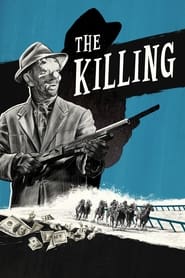
In the book, the guy that Sherry's involved with is also manipulating her and won't have much to do with her until she leaves her husband George, at least initially. Vincenzo Eduardo Zoino, i.e. Vince Edwards, was cast by James Harris, who knew him from New York. Edwards came out of the tough neighborhood of Brownsville, Brooklyn, and had that dark ambience so suited for playing gangsters as he does here.
15:21 · jump to transcript →
-
Alan K. Rode
In the book, Johnny Clay questions Sherry and she seduces him into some hurried sex. Lionel White felt that Johnny's fidelity to Fay had been apparently weakened after all the years behind bars. A piece of fudge, I love it. Jim Thompson had an unusual career in that his best work, his greatest books, for the most part,
24:52 · jump to transcript →
-
-
-
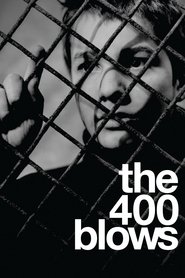
Truffaut, who was 27 years old when he directed this, his first feature-length film, takes credit for the original story of The 400 Blows, and fairly enough since it retells in fictional form the story of his own childhood. But then he gives an adaptation and dialogue credit to Marcel Moussy.
1:53 · jump to transcript →
-
As a passionate moviegoer all his life, Truffaut is more saturated than most directors with the films that preceded him. We are not far removed in this scene, for instance, from the classroom scenes in Josef von Sternberg's classic film The Blue Angel, where a girly postcard gets some other boys in trouble with the teacher. This teacher, called Little Quiz in the script, humiliates Antoine publicly by assigning the class a sentence to conjugate based on Antoine's clumsy graffiti.
6:48 · jump to transcript →
-
In the summer of 1992, we located Robert Lacheney at his country house in the Oise district of France and talked at length with him about the origins of this film. You can hear translated portions of that interview later in this commentary, as well as in the original French elsewhere on this disc. After stoking the coal fire, central heating is still a thing of the future in post-war France, Antoine gives a comic demonstration of bad manners in wiping his hands on the curtains.
11:53 · jump to transcript →
-
-
multi · 1h 59m 9 mentions
David Naylor, Guy Hamilton, Tom Mankiewicz, John Barry + 14
-
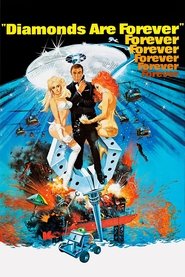
So we started this, to lay this in for later on in the picture. As Tom Mankiewicz explains, plastic surgery was a topical subject. Everybody was into plastic surgery then. It was really starting to become a huge deal. Most of what's here is not in the book, Diamonds Are Forever. By this point, Cubby and Harry had already started the tradition of taking the title and maybe the spine of the story or the setting
3:47 · jump to transcript →
-
They wanted a young writer. I was only 27 years old. And I had written the book for a Broadway musical of Georgie Girl. And they wanted someone who was American, who could write in the British idiom. And I was signed on a two-week guarantee. And it worked out. So I was thrilled.
5:42 · jump to transcript →
-
And Sean says, I was referring to the original vintage on which the sherry was based, sir. 1853, unmistakable. Lots of people in Bond trivia books and so on have pointed this scene out and given me tremendous credit for one of the great little sort of sophisticated Bond touches, which really only came about because I was totally unaware that there wasn't a year on a sherry bottle. And if it hadn't been for Cubby's lawyer, I never would have.
9:17 · jump to transcript →
-
-
director · 1h 28m 9 mentions
Don Coscarelli, A. Michael Baldwin, Angus Scrimm, Bill Thornbury
-
Sphere sequence. I've never spoken with him since. This was a moment that was a little more expanded than the original screenplay about Mike chasing after his brother. It was kind of a subplot, which a lot of people really responded to about these brothers living alone. Well, that's what I meant before when I said that that's the subplot that I always really liked. About the two brothers. When Mike goes to the fortune teller, he goes there to talk to her about his brother leaving. I just always thought that was a pretty interesting...
12:50 · jump to transcript →
-
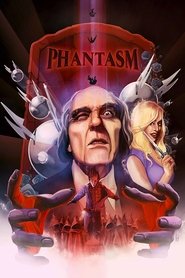
Trying to sort of distort reality and having this kid having these nightmares, you know, waking up in the middle of a graveyard and really deluding the audience and thinking they're still in his bedroom. And you pull back and you find out Rory has great pains to try to match everything. There's a couple of crew members of them. And there's Rory's posture from the poster. That's right. Yeah, they used that for the original key art in the domestic release.
25:12 · jump to transcript →
-
A lot of bell bottoms in this film. A lot of bell bottoms, yeah. Now we're coming up on another sequence, which is, in my mind, one of my favorites. And it was also one from the original conception, was of this kid wandering down Main Street. You know, and I really got to compliment Mike on his acting, because just the little
25:45 · jump to transcript →
-
-
cast · 1h 36m 9 mentions
The Garbage Pail Kids Movie (1987)
Mackenzie Astin, Katie Barberi, William Morris
-
So, you know how the book is always better than the movie? Yeah. My contention is that that's because the human imagination is the most powerful supercomputer that exists. And...
2:10 · jump to transcript →
-
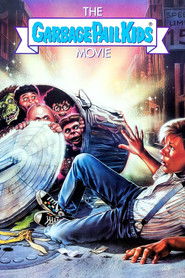
They were so supportive of us, I think, because the whole cast, I think, just really felt very supportive of the young actors. You know, that was Mac and myself. Just like to point out, I think that's the first act of overt violence, the Garbage Pail Kids. Okay, now it's important to say this, and I'm going to say it. In the original script, all of this stuff that they do,
29:39 · jump to transcript →
-
with everything that had happened to them throughout the film. But in the editing, they decided to put these little pranks in the middle because they felt like the kids might get bored. And to this day, kids, I mean, child viewing audience. To this day, it concerns me when studios come in and the editing department or the marketing department says, no, the original story isn't going to fly. Well, we don't know that. You know, it's narrative. And when we sign on to a project...
30:25 · jump to transcript →
-
-
-
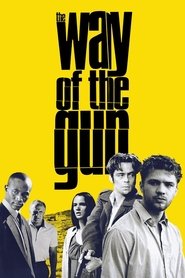
Been through so many people for Dr. Painter. Here's Joe Sarno picking up the trail. Yeah. People miss that. People miss it. Oh, believe me. People miss a lot of stuff in this movie. People miss the movie. Now, here's, talk about. Timing? Well, talk about Benicio and writing. Those three lines were the last three lines of a three-page scene. Right. That I wrote based on a discussion with Benicio. Is he saying how can you kidnap someone with honor?
26:44 · jump to transcript →
-
purpose of of calling for the doctor and it was it went on forever it was this big argument but i wrote it based on benicio's need to have clarity for this character right and when when i finished it and handed it to him he says you know this whole scene is about these three lines you can cut out the rest of the scene yeah let's talk about that for a second or go ahead great benicio great touch with the wallet yeah it's really nice well he's really got the body language of parker down
27:38 · jump to transcript →
-
further than you did as a writer. Well, I mean, the original rough cut of this film was one hour and 45 minutes long. No, no, no, it was much longer than that. I'm sorry, two hours and 45 minutes long. One hour. We went out and shot more. Only Peckinpah shoots movies that take longer to watch than they do to shoot. Oh, yeah, and by the way, my apologies to Sam Peckinpah and his estate for making any comparison. I think it's completely unfair to Sam Peckinpah that this be called a Peckinpah film. Right.
30:41 · jump to transcript →
-
-
-
Andrew Niccol
I mean, one thing is getting the idea, but executing it's another. Shot required placing a 100-foot crane on a very rickety wooden pier. In the original script, we got to see Yuri's childhood in Ukraine. Ten-year-old Yuri comes up with the idea to pretend to be Jewish to escape the Soviet Union. But that part of the story had to be cut for budget reasons.
4:37 · jump to transcript →
-
Andrew Niccol
And potatoes, they seem bizarre, but it's actually based on the real precedent. South Africa, but it's supposed to be in Colombia, of course.
22:59 · jump to transcript →
-
Andrew Niccol
This legal loophole that Yuri uses in this scene is based on actual incidents I came across when researching the film. Arms dealers really do try to pass off military helicopters as rescue helicopters. In fact, during shooting, Mark Thatcher, son of former...
47:15 · jump to transcript →
-
-
-
This shot itself was shot about 1,000 miles away from the actual location because the original shot was damaged and we had to do it again. And this is the moment where James... Oh, okay. Now, his reaction was at the original location, so that's cutting back to Flagstaff.
10:24 · jump to transcript →
-
I've tried to do as much as possible ever since. Here it was necessary because we had overlapping dialogue. Oh, yeah. So that's Alan Vint. Yes, yeah. That's the best poor state I've ever seen. Sir, I work for these boys. I'm their manager. So the original script was...
1:09:48 · jump to transcript →
-
was taken from a short story. Is that correct? No, it was taken from a screenplay. Oh, it was taken from a screenplay. There was a screenplay by Will Corry, and we got Rudy Wurlitzer to rewrite it, but in essence, he never even read the screenplay. He wrote a new screenplay just based on the concept of a cross-country race. How did you get inside how this would go down in a town?
1:10:12 · jump to transcript →
-
-
-
Paul Davis
Hi there, I'm Paul Davis, and I'm the director, producer, and writer of the Beware the Moon documentary, which is also on the Blu-ray release, and the author of the book of the same title, which followed a few years later, which was a limited edition, so if you managed to get one, I hope you enjoyed it. If you didn't, sorry, they're about 800 quid on eBay now.
0:03 · jump to transcript →
-
Paul Davis
the book and the documentary, I found out that it was actually minus, it was recorded as minus 11 degrees on the 28th of February in London, where they filmed that night. So it was cold. And those poor guys, they were the only two that had to get wet under those, under the rain trees. And the scene was lit by the DP Bob Paynter,
13:38 · jump to transcript →
-
Paul Davis
Now this kid was called Colin Fernandes. I did actually find him. It was one of the creepier reveals while making the... I think it was when I got to the book. I found him on Facebook and I sent him a message, but he never read it. This moment's wonderful.
58:20 · jump to transcript →
-
-
director · 1h 30m 8 mentions
A Nightmare on Elm Street (1984)
Wes Craven, Heather Langenkamp, John Saxon, Jacques Haitkin
-
Um, it probably looked really cheesy and stiff. No sugar coating. I'd never really done an on-screen kiss with Johnny Depp before and probably never will. Oh, that's right. You tore your clothes off or something like that? That's right. This is based on a real incident in my life when I just, uh, the first time I ever sort of was away from home, I slept in an artist's studio in Chicago, and I heard...
10:58 · jump to transcript →
-
the couple who were in my house making love nicely in the next room when I was a complete virgin. It was like the most miserable night of my life. This sequence is, of course, one of the scariest, I think, that had been... A lot of people told me that they either were not able to stay in the theater for this or they just haunted them for a long, long time. And it was based on the theory that
11:26 · jump to transcript →
-
Oh, the close-ups, yeah. Yeah, the close-ups. That's right. Because we didn't have time to get the close-ups back. In Venice on the... This is an actual Army manual, too. Here we go. What are you reading that for? I'm into survival. I guess it was cut out, but it was in the original. I found it at this great survivalist bookstore. Booby traps and anti-personnel devices.
55:24 · jump to transcript →
-
Related topics
Other topics that frequently come up in the same commentaries.