multi
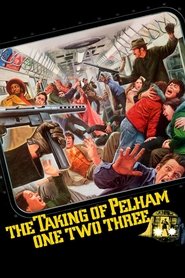
The Taking of Pelham One Two Three (1974)
Release The Taking of Pelham One Two Three 4K UHD + Blu-ray (Kino Lorber Studio Classics, 2022)
Film historians Nathaniel Thompson and Steve Mitchell treat Pelham as both an exceptionally lean adaptation and a street-level record of 1970s New York. They trace Peter Stone's character-based humor, the film's precise above-ground geography, the practical compromise of shooting Manhattan subway action around Brooklyn's Court Street station, and the actors, sets, wardrobe, winter light, and transit detail that make the city feel lived in. The track's strongest idea is that New York is not background but another protagonist: location reality grounds an audacious hijacking story while comedy grows from the city's everyday rage.
- Duration
- 1h 43m
- Talk coverage
- 98%
- Words
- 16,875
- Speakers
- 2
Guided collection
Cities as narrative pressure
Nathaniel Thompson and Steve Mitchell map the lived infrastructure and period texture that ground Pelham's New York, while William Friedkin explains how Los Angeles locations, a fast crew, mechanical stunt work, sound, and editing turn the city into pressure.
Part 1 of 2
- 01 The Taking of Pelham One Two Three Now reading
- 02 To Live and Die in L.A. 1985
Commentary density
Highlights
Topics
People mentioned
The film
- Director
- Joseph Sargent
- Cinematographer
- Owen Roizman
- Writer
- Peter Stone
- Editor
- Robert Q. Lovett , Gerald B. Greenberg
- Runtime
- 105 min
- Also on
- OneSheet ↗
- External
- IMDb ↗ TMDB ↗ Find on Amazon ↗
Transcript
16,875 words · 4 flagged as film dialogue
Nothing gets the blood pumping quite like that David Shire music. Welcome to The Taking of Pelham 1, 2, 3 from 1974. My name is Nathaniel Thompson from Mondo Digital. Joining me today is my frequent fellow commentator and much more importantly, extreme New York City locations junkie, Steve Mitchell. Hi, Steve. Nathaniel. Yeah, this is one of those movies where my being from New York and having grown up in New York sort of matters. And this movie is very special to me in a lot of ways because the New York that it tells the story about is the New York that I used to live in. And I don't know if New York is quite the same today, but one of the things that a friend of mine said to me when he went back for a visit, he said,
You know, New York's the all-pissed-off city. And I said, yeah, watch The Taking of Pelham 1, 2, 3. It's probably the most accurate movie about what people are like in New York City. And, you know, when you see Pelham, you know what New Yorkers are like. And you get a sense of the rest of the city, of course. But this movie is based on a novel by a guy named John Godey. His real name is Morton Freedgood. And Godey, let's say, was a real subway buff. And this novel and the film also came out during the so-called, as someone put it, the golden age of skyjacking in the United States. That skyjacking was kind of a thing back in the late 60s into the late 70s. And New York also, and they cover this in the movie, especially when the city is held up for ransom, that New York was having a financial crisis. You know, crime was up also. And the subway back in the day, certainly as you saw in, say, the Michael Winner movie, Death Wish with Charles Bronson, that the subway was neither safe nor reliable. Now, when I lived there,
The subway was mostly reliable and it depended on when and where you rode the subway and at what time. This movie takes place during the middle of the day and this is real everyday New York. Just because Martin Balsam just sneezed, Peter Stone, the screenwriter, came up with Harold Longman having a cold. and uh it was a great device because it pays off towards the end and it was not in the book one of the things that's interesting about having revisited the book is that John Godey or Morton Freedgood uh wrote a novel that you you know was destined to be a movie it's so uh crisp and cinematic in fact it's written in an interesting style where the narrative propels forward but every sort of little chapter or mini chapter is from a point of view of a character in the story. Now, this whole scene in the beginning where the conductor is talking to a senior conductor about the job and the whole notion of a test that he's gonna have to pass. So he's saying, well,
I know everything there is to know. And it's a very, very clever way for Peter Stone to get a lot of exposition out for people who don't ride the subway. I mean, I found this information interesting, but for people who don't ride the subway or don't live in New York or live in a major city with a subway, this is all kind of interesting stuff. And this is great. You know, you take my advice, kid. You know, there's just great New York attitude. And the motorman is actually the driver of the train. I read someplace that very few other subways call their driver a motorman. But you have a motorman and a conductor. And that is basically the crew on any and all New York City subway trains. There's Hector Elizondo, who is kind of hilarious in this picture.
Yeah, yeah, very young, but he's got a lot of great attitude. But this is a great bit here where the senior conductor after... This is just a great little device. And again, this character, this actor, is just so... And I'm going to say it a number of times during the commentary, so New York. You know, I know that's an actor, but I guarantee you when I've ridden the subway, there was a guy like that either... as the motorman or the conductor. In the book, Joe Welcome is also as interested in the opposite sex, and they make a whole lot more about that. In fact, there is a hooker character in the car, the hostage car, which has more page time, let's say, in the book. But since it's a character that's more textural and not Part of the narrative doesn't quite get the play in the film. One of the things that's so nice about this screenplay is Peter Stone wound up taking a book that was a natural for a feature film. And then ultimately what he did was just say, all right, I got to stay with the good parts and stay with the part of the story that propels.
And I did meet Peter Stone quite a few years after this movie came out at a Mystery Writers of America evening. And my nature is, even though I've interviewed famous people, I don't like to bother famous people when it's not a formal interview. But he was leaving the same time I did. And I said, I got to say what I got to say about Pelham. And I just told him, I said, listen, Mr. Stone, I'm a big fan of yours. He had also written charade. I think he got nominated or won an Oscar for father goose. And he was like a major screenwriter in the sixties. And, but I said to him, I said, but Mr. Stone, I just loved your screenplay for the taking of Pelham one, two, three, you took a great book and you turned it into an even better movie. And he thought about, he smiled. He said, thank you. And he said, well,
I added a little humor to it. And one of the things that this movie has is it has a lot of humor, but it's all character based. And, you know, again, I've watched this movie a gazillion times and I never get tired of the quality of the writing and the screenplay. That's James Broderick, who is not a real motorman, but they're letting him drive a subway train, which I thought was kind of cool. Anyway, but Stone was very gracious. And the one thing he really caught was the nature of New Yorkers. Everybody's pissed. If something gets in the way of your routine or where you're going or your habits, everybody gets bent out of shape. And as we will see through the movie, hopefully you've watched it, everybody is bent out of shape by these guys ruining their day by hijacking a subway train.
Now, Nathaniel, you didn't grow up in New York City. When you saw this movie, did everything play for you? Were you as amused by it as I was and many people tend to be? It did. Well, I should add that I didn't grow up there, but I did have an aunt who lived there. And so I went to visit her as a kid. So I actually got to see some stuff on Broadway and whatnot, like in the late 70s, early 80s. So I got a bit of a taste of it. The first time I went to New York was around, it was like the Warriors Dressed to Kill era. Sure. So not too far from where we are here. But yeah, it definitely rang true. And I love the fact this is just a snapshot of New York at that time. You get a nice tour pretty much across the whole city. It's almost kind of like it's moving sort of like Quick Change. It's not like Bill Murray where you go all over the city. It's a nice sort of cross section and all the different kind of people there. I could make a double feature actually.
yeah it definitely it clicked for me for sure and what i found fascinating was seeing the way that the subway system worked at the time because it's not quite the same i mean it has the same vibe when you ride the subway there in new york when you go underground because they haven't really updated that but the trains themselves are different the process is a little different
If you ever go to the New York Transit Museum in Brooklyn, for example, you can see, you know, all the trains over the decades and how they evolved. And, you know, the ones they used in the 70s, you know, because the seats were different, kind of just the whole vibe of it was different. Of course, they don't have the graffiti on the trains. They're all cleaned up. If you go to the museum, they don't want to look scrunchy like they do in the Warriors, for example. But, yeah, it definitely felt very clear to me. I had no, you know, I totally got into it the first time I saw it when I was a kid. And, you know, it's a movie I go to, you know, every couple of years. I love showing it to people who have never seen it before, and it always clicks with them.
And it's a movie that I think in some ways kind of gets better with age. I mean, I saw it the day it opened in a theater in New York. By the way, you see the wideness of the platform. The train is not as wide as it needs to be because this was, even though this is the IRT line and the trains on the IRT line were narrower, this was photographed, or a lot of the train stuff was done... in and around the IND Fulton Street line and the Court Street station, which was in Brooklyn. So even though the story takes place in Manhattan, it was mostly filmed in Brooklyn, all the stuff in the trains and the tunnel. This whole construct with the Japanese directors of the Tokyo subway system is a construct by Stone. It was not in the book. This actress who is having a hard time with the names
You would see someone who looked like her walking the streets of New York and riding the subways every day. She is so prototypical, you know, in kind of a great way, that period haircut and everything like that. It was fantastic. And again, some of that little humor that Stone is introducing is great. Now, Matthau is playing a character named Zachary Garber, who's a transit police lieutenant. Now, Garber was the name of a character in the book that really had the job that Jerry Stiller has, you know, that he plays another transit authority lieutenant. And the Garber in the book was not an important character. And when Matthau came on board, they sort of beefed up his part. And again, it's another one of those examples where the screenplay is compressed a little bit. But also one of the things about the book is there is no real star in the book because the points of view keep changing. They said, well, we have to have kind of a movie star type part. And so Garber ultimately...
who had the smaller part in the book was called Garber and had the larger part, which Matthau plays. And there was a character named Clive Prescott, who was a transit authority lieutenant who was talking to the kidnappers, which again, hopefully you've seen the movie and you know that that's a strong part of the story. And what they did is that they made Garber the main character who was dealing with the kidnappers. This really cracks me up because... You know, he's trying to sort of seem enthusiastic about what's going on, and he doesn't know. The great joke is he doesn't know if they speak English. And, you know, again, if you know anything about New York, New Yorkers like to slack if they don't have to. I love the fact the guy's drawing on the cup. And then there's Jerry Stiller in the background as Rico Patrone. And so he is, in essence, Garber's partner.
uh in the film and it's uh it's again it's very effective because it helps create a lot of humor but again all of this is exposition for people who don't know anything about the new york city transit authority and though and then you know mr Rico Patrone who on weekends works for the mafia which got a huge laugh in the theater and i love the fact well the joke that comes up here is well we had a bomb scare on the bronx yesterday
but it turned out to be a cantaloupe
which in its own way is very New York. And then after he says that, he says, come on, Zeke, can't you see I'm busy reading the New York Post? Again, this picture was getting a lot of laughs in the theater then, and it gets a lot of laughs now because it's all character-based humor. And I'm busy, Zach, okay? Yeah, it's really effective stuff. And this set... even though it has the feel of a governmental kind of office, not deluxe in any way, it's a workspace. This was a set along with the set they are probably just about to enter, if my memory serves. Now we're going back to the train, but when they come into the TA Command Center, which again, until I saw that it was filmed at a studio at the end, I kind of thought it was the real thing.
You know, it has that sort of work a day, you know, fluorescent lighting, you know, office chairs and desks that have probably been there for decades. You know, the New York City subway system has been around for a long, long time. This tunnel, by the way, is again in and around the Court Street Station. And as you said before, Nathaniel, there's a New York City Transit Museum. And this was the station's that you see Pelham 123 going by, which are supposed to be on Lexington Avenue and then Park Avenue, were actually not filmed at those stations. And because I was a New Yorker, each line, again, there was the IRT, the BMT, and the IND, which are now all part of the transit authority in New York today, but they were originally created as separate railroads. That's why the IRT cars are smaller and narrower. the ind cars and the bmt cars hopefully i'm not being too confusing with this but uh but an ind station or a bmt station looks different than an irt station so i was smelling even even as a young man i'm going that's not the station i know but it's still new york and it's still legit and it's still real right
And now, later on, there's, of course, a sequence where they're chasing the car in real time across the city, which I assume is geographically correct. You would know better than I would. But it feels better to me than most movies set in L. A. where they kind of play very fast links with the geography, people suddenly leaping from Sherman Oaks to downtown and the blink of an eye and things like that, which gets ridiculous. Or they go from Hollywood, all of a sudden they're in Malibu or whatever. But as far as I can tell, I think this plays it pretty realistically location-wise. Would that be correct? Yeah, it's completely correct. Basically, the movie starts on Lexington Avenue at 59th Street when Martin Balsam is going into the station. And the famous department store Bloomingdale's is right across the way. And then as the train progresses downtown, they're dealing with the stations. And the stations themselves, again, are in Brooklyn. But the geography of the picture...
especially the geography above ground, is all completely accurate. And I'll talk a little bit more about that later on when we get to it. Again, this is a set. And one of the things that's so amazing about this picture, well, there's so many things amazing about it, starting with the casting. That guy who's at the board is a guy named Robert Weil. who is somewhat famous for appearing in the Hot Rock as the guy who says the immortal words, Afghanistan, Bananastan. You know, and he's just one of those New York faces. If you like movies from the 70s, you'll see him. The actress who was sitting at the desk is an actress named Beatrice Winde. It's W-I-N-D-E. Again, if you watch New York TV and New York movies, she'd show up. This is an actor named Tom Pedi, not to be confused with the rock star. It's P-E-I. And Tom Pedi is a guy who I recall from seeing in the original Naked City movie. You know, he's been a guy who's been part of the New York landscape for a long, long time. And Martin Balsam, of course, who, if you don't know who Martin Balsam is, you don't watch movies or television.
But again, in the car here are some familiar faces. There's a character who I think is known as the Wasp. They don't have names. They have sort of designations. And it's an actor named Barry Snyder, who is also a very familiar face in New York TV and features. And speaking of names, of course, as I'm sure most viewers have noticed, the device is having the heist. involving participants who were named after colors, of course, was later used by Quentin Tarantino in Reservoir Dogs, which was like a pretty overt nod to this movie, I think. Yeah, and created for the film. Yeah. It wasn't in the book. Right. Now, since we're talking about the adaptation from the book, this was an interesting time because I think The Godfather, of course, had been a huge hit, but that was kind of one of the first examples where Hollywood sort of figured out how to adapt a book and really actually make it strong in the movie. They would sort of pare it down and kind of retool it and sort of accentuate what was good about it
And they came up with something better. Probably the most famous example of that would be actually Jaws, which is a rap of this. Absolutely, probably the greatest example of that. Right. And I would actually, maybe The Exorcist as well, but it was this period where they were taking these books and really just sort of polishing books that had a lot of potential, but they weren't quite there, but they made them even better. You know, as opposed to something like Rosemary's Baby, which is a great book and a great movie and about 50, you know, even. But the 70s was filled with all these things where they would take these books and just make these sort of masterpieces out of them, out of books that you normally wouldn't think would lend themselves to that, which just seems to be an art that's a bit lost. I think the last one I could think of that really pulled it off was Silence of the Lambs, you know, which is also, I think, is a much better, you know, experience than the book. And it really just pairs away all the self-advocacy you don't need. It really kind of just makes it a lean, mean viewing experience, which is what this does as well.
One of the things that the job of a screenwriter in adapting a book is to get what's best of the narrative and the characters in front of the lens and to take the internal life and the textural life of characters in a book and then just find a way to service that, but it's not the narrative. You mentioned Jaws before and this book and this film. These are two of what I call the great, great movie stories. A writer once said to me, a well-known writer, there are only really 10 stories. And I said, well, I don't know if I completely agree with that. But a lot of great movies are variations of stories you've seen. No one's ever done this story. and and it was inspired again as i said by the fact that planes were being hijacked you know the in fact there's a great joke here he says what are they going to do with the with the train fly it to cuba um that was very timely and again one of the things that's so nice about this set is that it's uh the the dressing uh and this is the command center
The dressing of these sets. Now, that's not actually not a set because that's a real train going by, but that's probably shot in Brooklyn in and around, you know, what is now known as the Transit Museum. But again, all of the textures, all of the props, even the wardrobe, everything seems old and used, which... These are little things that when you get them right in a movie go a long, long way. Another detail that they changed from the book is that while the guys, the robbers did have disguises, they weren't sort of all designed so they look like the same guy. What the mindset is, the witness says, what do they look like? Well, they all had plaid coats, they all wore big glasses, they all had mustaches, and they all wore hats. and they carry their machine guns and like artist portfolios and musicians, you know, something you put an instrument in. The idea of that drunk woman there, I don't believe that was in the book, but the whole idea of somebody who was doing some day drinking in New York City and being in a subway car and being out, I saw a few of those in the years that I wrote those trains.
Again, the beauty of this, by the way, that's James Broderick, who was probably best known for the Aaron Spelling Series family. But he is one of those guys who was a New York character type before he kind of became a star on television. And Robert Shaw, of course, who was... Very busy at this time. I mean, he wound up doing Jaws about a year or so after this. But Shaw was, you know, famous for From Russia With Love as Red Grant, which is also a lot of his scenes take place on a train, the Orient Express, which is a little nicer than a New York City subway car. Slightly. Yeah, slightly. But Shaw's character in the book was an American. He wasn't a Brit. And I think it just, the casting of Shaw and bringing that aspect of the character to a mercenary soldier, I thought was a just nice little choice. Somebody once said to me, a successful movie is all or are all the little things you do right. Well, you know, in casting somebody like Shaw and then Matthau and Hector Elizondo and Martin Balsam, et cetera, et cetera, these actors bring a lot of the character's life
to the movie. And, you know, now that we're in the darkness, you know, I found some interesting things from cinematographer, Owen Roizman. Now I got to know Roizman, not personally, but his work when I saw the French connection, which is also, this would be a great movie to run with Pelham as well. The Owen Roizman gritty street double feature. And, but Owen Roizman, really gained a very remarkable reputation in a very short period of time. French Connection was his first movie. And didn't he do The Exorcist right after that, Nathaniel? Yep, yeah. I imagine doing those like back to back to back. Yeah, that's quite the one-two punch. And then, of course, he did Pelham. And then, of course, well, I say of course because I know it, but Tootsie is something that he did in the 80s. He also did Network for Sidney Lumet.
Roizman was one of the premier DPs back in the day. And by the way, that actor who's bowing and scraping to the Japanese visitors is an actor named Christopher Murney, who is probably more famous for his voice than his face. He does a lot of voiceovers. Again, one of the things that's interesting about this set is it was built in Harlem at a place called Filmways Studios, which was a very well-known New York stage was around since the early 20s, I think. I think MGM may at one point have owned it. And The Godfather was also shot here. But when you look at that set, you don't believe it's a set. But going back to Owen Roizman, what was interesting, The Wiz was also shot at Filmways, as was Manhattan and Butterfield 8.
And as I said, of course, the Godfather. But Owen Roizman has said that when he went to that set, he didn't have to light it. They would turn the lights on and they had these fluorescent lights and they really did little or no lighting. They would use like a white bounce card occasionally, but the fluorescents were probably, you know, brighter than normal fluorescent lights, but he didn't have to light this. And, you know, one of the things about this movie is It's lit mostly from practicals. Now, when they're in the subway tunnels, you will see these little lights periodically going away from camera. And those are real subway tunnel lights. But what Roizman did, which was really kind of ingenious, at least I thought so, was he put in... just need to find this note okay because i want to get it right yeah they swapped the bulbs out in the tunnel with 250 watt photo floods and then what they did is they used a thing called streaks and tips which is kind of a hairspray that's sometimes used to dull things and so the the subway lights gave enough illumination
they didn't really do much lighting and also the other thing that they did and the laboratory movie lab helped them with this is they did a thing called pre-flashing where they exposed the negative a little bit and before they shot with it and so what it did was uh by the way this is a huge laugh here not only because of math house expression but because you never knew that they spoke english But they pre-flashed the film, and so Roizman was able to get detail in the shadows. And even though this movie is shot mostly with available sources, you still get a lot of image quality, even in the darkness. So... That was one thing they did. The other thing that Roizman talked about was originally the plan was to shoot this movie in the 1. 85:1 ratio, which is more of your traditional rectangular rationale. By the way, those vending machines were all over the place back in the day. You can't find a vending machine anywhere in New York City today. Well, at least in the subways. But the whole idea was the aspect ratio was more of this rectangle ratio.
at figuring that the height of the ceilings and the tunnels and stuff like that was the way to go. But Roizman had an idea. So what he did is he took two movie cameras to a train station, put them next to one another, and one had a non-anamorphic lens, which is a widescreen lens. And then he had another camera with an anamorphic widescreen lens, and he shot... Just footage of people going about their day in the New York City subway and then screen them the next day for everybody and everybody saw them and they all agreed that the widescreen anamorphic look was much, much more impressive and they all went with it without any discussion at all. And, you know, I... If I was going to make this movie, and of course I wouldn't be allowed to do such a thing, but if I was, my thinking would have been also to go with the more rectangular 1. 85:1 ratio. Probably more technical than we need to be, but it's nice when you can find these things out. And again, Roizman, once he sort of figured out how to shoot this movie mostly on available light, he would sometimes have window cards.
actually white bounce cards, but if you look at the lights now, the tunnel lights, you see how bright they are? You don't even think about it when you're watching the movie for the first hundred times, but now that I know, it's a little bit more obvious to me. By the way, the attitude that he's getting from the passengers, oh, this guy,
you work for the subway, mister?
Tell them I'm going to sue. I'm going to sue their ass off. laughter That is so prototypically New York. Everybody's pissed because they've been inconvenienced. Now, I should also mention, Roizman wasn't really known for shooting anamorphic at the time, so this is kind of a new thing for him, but he actually returned to it with another film that I think would actually lump in with these, which is Three Days of the Condor, right after this. the Sidney Pollack film, which he also shot anamorphic in it. I kind of got a sort of a similar kind of expansive effect with it, I think. And he didn't really use it that much after that. Occasionally he did with Sergeant Pepper's Lonely Hearts Club Band, of all things. But for the most part, he tended to shoot flat a lot of the time, you know, Tootsie. And like with Pollack, he would go scope sometimes. But other than that, he mostly went flat. I think Tootsie was actually in scope, wasn't it? Yeah, I'm saying, yeah, with Pollack he went scope, like with Tootsie.
You know, he did. But generally, no, not with most of his films. He didn't really shoot scope all that much. Yeah, I know Pollock loves scope because he he I remember reading at some point he said, I want to see what's to the left and to the right of the close up. He always wants to get a sense of the set and the people. Again, all of this stuff of Garber in the command center. This is what's happening here. happens in the book. But again, Stone making the decision to be kind of the conduit to Robert Shaw, it's great because you have these great opponents. That's Dick O'Neill, who I think is referred to as the Lord Byron of the subway system. Dick O'Neill is another great New York face. I mean, look at that sweater. That is a lived in sweater. In fact, all the wardrobe in this picture just feels so authentic so everyday new york um that as a new yorker it's just the authenticity of this is i think what makes this movie work so much better than the two remakes that were done one was on television um which was shot in toronto
Which is your number one mistake right there. Yeah. Well, listen, I have no axe to grind with Toronto, except the fact that Toronto just doesn't look like New York. And their train system is futuristic by comparison to New York. And you don't shoot this story in Toronto. No, you don't do it. You just don't do it. And that wasn't terribly successful. And then Tony Scott did it in 2009. And the one thing that bothered me about Tony Scott's version, there were a lot, many things, but he played fast and loose with the geography. The thing that's so great about this is the frame for all of the geography is laid out in the book, and then it is held sacred by the production and Joseph Sargent, the director. By the way, that is Gracie Mansion, which is actually one of the few freestanding places in New York City. It's a real place. It's where the mayor lives. Although I don't know if all New York City mayors live there now. This actor has a frightening resemblance to one of the old mayors of New York City, Ed Koch. This is an actor named Lee Wallace.
who is also one of those guys that if you watch New York City movies from the day, would be in almost every one of them. He's also on the hot rock. He's the doctor who prescribes, as they call it in the movie, stomach junk for Robert Redford, who's got too much stress. And this sequence, strangely enough, is mostly in the book with sort of the heavy level of sarcasm. except the mayor in the book is known as Sam, and Lee Wallace is playing a guy named Al, which just is so prototypically kind of New York, and he looks like an owl. And this scene is very funny, but again, I don't know that it's really off model for reality. Even in the novel, the mayor was sick, And there was this sort of cynicism and this concern about what people think, you know, how it's going to play politically. And then, of course, there's the bottom line is where are we going to get the money? Because New York City was broke for the most part. New York City didn't have any money. It's hard to believe, but it's true. And it's interesting to sort of go back and see that.
that New York often considered the greatest city in the world by certain people, was falling apart. And in point of fact, the city was falling apart. I mean, as I said before, crime was really an issue. Now there's certain neighborhoods that if you went to, you didn't really have to worry about that. All the years I lived in New York, I was never mugged, I was never robbed, but it's just, you go back and you look at these films and you think of a different city in a sense than it was. And then Pelham is much more accurate to that. Now, Nathan George is playing the transit cop who's following down there. And transit cops always wore leather jackets. Not every New York City police officer wore those leather jackets. It seemed to be a trope that a wardrobe choice
that the TA cops had maybe to sort of separate them from the regular cops. Today, there are no transit authority police. All of the cops in the city, whether you drive in a squad car or you work a subway train or a subway platform, are all part of the New York City Police Department. This whole thing, I guess I got us on the scorecard. And the gum, let's face it, gum is great. It's a good bit of business for your actors. Oh, yeah. And that, by the way, the other member of the kidnapper party is Earl Hinman, who I believe was the neighbor who you never saw on Home Improvement. Right. And who had actually earlier than that, he was also in some very trashy, sleazy, New York roughy films for the exploitation market. Things are made by Michael and Roberta Finley. So if you want to go back in his career to the 60s, he gets pretty sleazy.
I did not know that. Yeah. You'll see a very different side of him in those than you were in Home Improvement. By the way, just in case you were curious, apparently the crew wore surgical masks while they were filming the tunnel scenes. Robert Shaw's biographer, John French, wrote, there were rats everywhere. And every time someone jumped from the train or tripped over the lines, clouds of black dust rose into the air. making it impossible to shoot until it had settled. And you don't have to be in the tunnels to know that there is this sort of crazy, greasy sort of dirt dust that lies across the floor. While I love watching this movie and I love every moment, I love every location, I have to believe that it wasn't terribly easy working in those tunnels. And Walter Matthau, who only had one scene in the tunnel said,
There are bacteria down there that haven't been discovered yet and bugs, big, ugly bugs from the planet Uranus. They all settled in the New York City subway tunnels. I saw one bug mug a guy. I wasn't down there a long time, but long enough to develop the strangest cold I ever had. It stayed in my nose for five days, then went to my throat. Finally, I woke up one morning with no voice at all and they had to shut down production for a day or for the day. So, yeah, not a fun place to shoot. And here's the great, and I do mean great, Tony Roberts. He just worked with Roizman on Play It Again Sam. Yeah, he's great in Play It Again Sam. He's great in Serpico. He's great in Annie Hall. He's just great. And he's got this, you know, his voice is sort of perfect to play the guy who's really running New York City.
and um the buck stops the unit goes oh shit um but the character is playing in the movie is named warren lasalle which is a far more waspy version than the name of the character in the book which was murray lasalle um and you know at the time especially if you were casting out of new york if you were casting wasps you would cast tony roberts or william devane uh again uh guys who um Just you put them in front of a lens, they sort of bring the story. And he's also a very big, he's a big theater guy. He's a lot of Broadway work. Oh, yeah. You know, for decades. With one major misstep, they cast him in the Robert Preston role in Victor Victoria when they brought to stage, which was really a bizarre choice. If you've ever seen his performances, that he's not Robert Preston. But other than that, his Broadway career is pretty much impeccable. Yeah. And Tony Roberts, I think, had a great career without ever really being much of a star.
Just going back to Gracie Mews, this was an interesting thing. Gracie Mews, Gracie Mansion. Gracie Mews is a restaurant that was across the street from my apartment when I lived in New York. Shout out to those guys. But the interior of Gracie Mansion was actually not a set. I thought it was a set. And it was filmed in a place called Wave Hill. which is a 19th century mansion that sort of overlooks the Hudson in a neighborhood called Riverdale. Probably the inspiration for Riverdale on the Archie Comics universe. But yeah, they used Wave Hill as the interiors for Gracie Mansion, which I didn't know, and I was very surprised. But Riverdale is a neighborhood in the north... uh west part of the bronx and it is a very very upscale um neighborhood and um it's it's hard to believe it's actually part of new york city again all of this stuff driving uptown from police headquarters um uh this is all pretty much accurate you know usually what happens is you get an angle and oh
The great Kenneth McMillan right in the middle of that maelstrom of people. You know, again, all of these great faces, you know, they're like your pals. And again, with the proper attitude. And I wonder if some of those onlookers in the back are extras or real onlookers. Sadly, there's the World Trade Center in the background there. and the newly born world trade center yeah yeah i mean the thing is that the world trade center in some movies wasn't even finished yet like the hot rock um but um rudy bond is playing the police commissioner who basically is referred to as phil and rudy bond is another guy who was just one of those regular faces you would character faces i mean i would see him on uh plays on shows like the Naked City series, because there was a series in the late 50s, early 60s based on the famous movie. And then you would see him in character parts in other movies. Again, when I look at this scene, I'm just going, oh, this is Gracie Mansion. The doubling is great. And I love just the way that Tony Roberts is kind of corralling these guys
and steering them. But again, most of what's here was in the book, although Doris Roberts from Everybody Loves Raymond, who plays the mayor's wife, Jessie. And Remington Steele. Yeah. And she is sort of a construct for this scene. But again, Stone not missing opportunities for real humor. And again, What happens in the scene is more or less what happens in the book. But Stone, who used a lot of dialogue, by the way, from the book, I was very surprised. Some really great lines, which I sort of assumed they were Peter Stone lines, were written by John Godey. Now, this guy, this sort of caricature of the cheap accountant might be one of the few moments that's a little cartoonish to me, but it doesn't feel inauthentic. But, I mean, it's not so far off. You know, it's okay. Well, sort of caricature. Yeah, a little bit. That's not too far. It doesn't throw anything out of whack, I don't think. And this whole thing about, Al, you've heard the three wise men, and then he's going, what are they going to say, Warren? You know, wondering what the political ramifications are. And what's great is that Doris Roberts, with her ultra-dry, sarcastic delivery, gets the real payoff line.
And he goes, Jesse, what do you think? And he says, well, I'm paraphrasing, but he says, you'll get 18 sure votes. This is supposed to be a democracy. We're trying to run a city, not a democracy. All this is great stuff by Peter Stone. But again, it doesn't wander too much from the book. I think what
a million dollars sounds like a lot of money
in today's world, it doesn't sound like anything. You know, it's the craft service budget on a Tom Cruise movie or something like that or a major studio picture. But, again, Warren LaSalle basically is the deputy mayor. You never see the deputy mayor, you know, at press conferences. You never hear about the deputy mayor in New York City. But clearly he's the guy who's running the city. Mm-hmm. And there's this great line here. He says,
I think I handled it all right,
Doris Roberts, with that dry, dry delivery. A regular Fiorello LaGuardia, who was a very well-known and much beloved mayor of New York City. And an airport. Yeah, yeah. You mentioned earlier that you thought this was a new kind of story. But you can sort of feel the DNA from this kind of trickling down to other films because it's almost kind of a disaster film in a way, along with a heist film and a cop film. But you can sort of see how it would influence things like, well, Juggernaut, for example, the Richard Lester film, and then you've got things like Die Hard and Speed. They all have just a little bit of Pelham kind of sprinkled in them in different ways. But, yeah, I can't think of anything before it that really felt like this too much. Yeah, because it's a heist movie, but they're not robbing anybody's house, right? They're not robbing anybody's bank. They're not robbing anybody's safe in a mansion. They're basically holding a city for ransom. And it's just, somebody once said great ideas are right in front of you. You just have to be able to see them. And if you rode the New York City subway train, I got to believe that at some point,
many of the writers probably myself included before this movie even showed up you know might have had sort of a thought about this kind of story but this is just a very unique it was incredibly fresh as a novel and it was incredibly fresh as a movie and interestingly enough here we are um close to 50 years later is it it's still pretty damn fresh yeah And I understand why they tried to remake it because, you know, every generation sort of has its version of a great story. But, you know, the remakes were, well... There's only one Pelham as far as I'm concerned. Yeah, although the Tony Scott is considerably better than the 98 one. Oh, yeah. I mean, Tony Scott, no matter what, I mean, I don't think he ever made a really worthless film. I think the guy just had directorial chops no matter what. I mean, I don't think it's anywhere near his best work, but it's a worse thing for the Tony Scottiness of it. But yeah, I definitely can't touch this one. Well, you know, to be fair, I mean, John Travolta was really good in it as Ryder, and that was the name of the character in the book.
Denzel Washington, you know, is just like a national treasure, and he was fantastic in it. In point of fact, Clive Prescott, the character who is sort of doing what Garber does here, was originally written as a black transit detective. But Denzel Washington is great. I thought James Gandolfini was particularly good as the mayor in the movie. My issue with it was the liberties they took with... the reality of the subway system. I could never get past that. But it just, if you like Tony Scott, it's an interesting movie. If you hadn't seen this movie, it might play better. But this is still the one and only version of this story that's really worth checking it. And still to this day, when I meet people who've never seen it, I said, you want to know what life in New York was like in the 1970s? Watch The Taking of Pelham 123.
And I've got to give a shout out because we just saw him on screen. He pops up a few more times. The great Julius Harris was talking just a few minutes before, who is probably best known as Tee He and Live and Let Die. But I love seeing him in just about anything. He's just this absolutely fantastic presence on camera. He never really became a leading man, but he's one of those just brilliant character actors who just really elevates everything that he's in. Just a wonderful, wonderful actor and a genuinely sweet guy. He actually... Spent his last years at the much bigger television home, which is actually where my day job is. But he was just one of the most beloved guys who ever lived there. Just a real sweetheart. Yeah, he worked with Larry Cohen on Black Caesar and Hell Up in Harlem. And Larry had nothing but great things to say about him. And, you know, again, there's something comforting about watching a movie with all these actors who you know. And...
The whole thing with the timeline here and the ticking clock and everything, this is almost exactly the way it was done in the book. But again, Matthau brings extra New Yorkness. And then even Robert Shaw's character sort of brings a little extra sinister quality to the request. Now, there's a character there with long hair and kind of a poncho. He's referred to as the hippie in the end titles, and he is an undercover police officer. And that character in the book is a major player in terms of the hostages. The whole storyline was, well, should he be a hero or is he going to get killed? Should he just wait for the moment or try and shoot a couple of these guys and maybe get the others to give up? And so he was a character that Godey cut back to many times in the course of the story. By the way, it was very interesting to find this out. And apparently the weight of the $1 million in the number and denomination of the bills that were demanded by Robert Shaw is 33 pounds.
So technically, if you were to put together a million dollars in these denominations, it would weigh 33 pounds, which it ain't too bad. It's doable. So if you have to carry a million dollars around, you know it's only going to weigh 33 pounds. That's a titsy. Well, you know, happy to sort of share. i want to go back to a couple of things about the the production history of this movie that um you know initially the transit authority of new york city refused to allow the film to be shot in the actual new york subway there apparently was some concern or fear that it might actually give somebody the idea to commit a crime like the crime in this picture um and then uh It's interesting that that was validated, not with this movie, but the movie The Money Train, which was in 1995, which had Woody Harrelson in it. And who am I forgetting, Nathaniel? Well, Robert Blake was in it. And Wesley Snipes, of course. And wasn't Jennifer Lopez in that too, I think? Yes. Apparently, somebody did try and rob a subway train or the money train. And by the way,
If you travel the New York subway back in the day, like I did late at night, every once in a while, you would see this old dilapidated yellow train come through the station. And, you know, this is again after one o'clock in the morning, maybe even later than that. And the first time I saw, quote, the money train, it was a couple of very old cars and no passengers. And then the train would pull in the station. The doors would open. Then TA employees wearing pistols. You know, they had holsters where pistols came out and they collected money from the token boots. Back in the day, everything was cash. Cash was king. Now you can't use cash to get on a New York City subway train. But anyway, the TA finally, the transit authority finally did cooperate. But it was because Mayor Lindsey, John V. Lindsey, who wanted to bring Hollywood to New York, kind of stepped in. But apparently United Artists had to buy, and who knew that this even existed, anti-hijacking insurance. So they had to pay a certain amount of money to rent the subway property, but they had to pay insurance as well, just in case this movie put an idea in someone's head about actually doing what they did.
One of the other things that the producers were forced to do by the transit authority, and this got a laugh back in the day, was to show subway cars without graffiti. New York City subway cars were the canvas for graffiti artists back in the day. Other movies have shown subway cars with graffiti. And basically, the reality is every inch of this car where somebody could use a magic marker, or a spray can was covered in some way and in point of fact a lot of trains themselves would be parked in these big yards um i grew up in queens and there was a big yard in queens where a lot of uh off-duty subway cars rested until they were needed and graffiti artists would sneak onto the transit authority property with their spray cans and um
you know, graffiti up the outside. So graffiti was everywhere. And a lot of other movies, uh, that did shoot in the subway, uh, have those cars that were all graffitied up. So the first time we saw this ultra clean car, everybody in the theater laughed. Yeah. Yeah. Like, yeah. Like what I was saying earlier about the warriors, I think is much more like what Newark was like. That's pretty much it. Yeah. Yeah. Um, anyway, so it, it's, uh, uh, but, The studio had a hard time negotiating, and it took about eight weeks to negotiate the deal. And, you know, Joe Sargent was talking about, and he's the director of the film, and I think this is probably Sargent's best movie. Sargent is primarily, or primarily was before and after this, a TV director. But Sargent did an amazing job with this picture, and Sargent said that we're making a movie, not a handbook on subway hijacking.
hijacking. And then he goes on, he goes, I got to admit the seriousness of Pelham never occurred to me until we got the initial transit authority reaction. They thought it potentially a stimulant, you know, and then Sergeant goes not to harden professional criminals like the ones in our movie, but to kooks. And that's the word you use kooks. You know, he goes on and says, cold professionals can see the absurdities of the plot right off, but kooks don't reason it out. That's why they're kooks. Yes, we gladly gave in about the dead man's feature, which is sort of the trick that the robbers pull off, which I don't believe is actually truthful. But they had to have this one kind of almost MacGuffin-like device so that they could get away and not get caught. Anyway... Sargent goes on and says, any responsible filmmaker would if he stumbled onto something that could spread into a new form of madness. You know, he would just sort of, he just kind of accepted it. And again, in that insurance policy, it was known as kook coverage. I read that and it was in quotes. And again, referencing later, in later years, the kook coverage was
Somebody tried to rob a money train based on that later feature. I guess the transit authority was concerned about the image of their subway system. You go, if you rode those trains, you go, really? I think a lot of things to be worried about aside from being hijacked on the subway. By the way, one of my favorite lines coming up from the cops racing uptown with the money. as I think the line is, I'm probably paraphrasing, says, look at Al, we're scaring the shit out of everybody. Such a Peter Stone kind of line, such a New York kind of line. Just to put a pin in this, one of the things that was also interesting about these cops in the book is they said, well, why don't we take some of the money? How are they going to know? And the cop of conscience said, yeah, but they might count it and then they might start killing somebody.
And by the way, the geography of this sequence is mostly correct, except they're passing City Hall. That was that building on the left side of your screen. And that wide shot, that sort of shot with scale, should have been a little earlier in that journey uptown. But for the most part, you know, they don't really cheat the geography. You know, it's interesting, another movie which has got a big chase in it, The Seven Ups, That sequence here, that's Wall Street. That's actually south of City Hall. So, yeah, the Wall Street scene should have been the one that should have been earlier. But anyway, it still plays. But another movie that had a huge chase scene in New York City is The Seven Ups. And the geography on that is almost totally accurate and perfect.
And I guess the thing is that filmmakers who live in New York or know New York say, well, we better get the geography right or we're going to take a lot of heat from the critics and the fans and the customers. Well, yeah, this is like the golden era of New York City filmmaking, too. So, yeah, if you slip up, people are going to notice it. As opposed to L. A. , which nobody really seemed to care about. But I was going to add, if you want to hear... Steve Chatter about Joseph Sargent somewhere. You might want to check out the commentary he did for MacArthur. And if you want to hear both of us talk about Mr. Stone, you can hear the track we did for Mirage for Keanu Lorber, if you're so inclined. Yeah, it's interesting that Sargent started out as a TV guy and
was very, very well-known and respected. And I think there were certain TV directors that you knew they were better than episodic television. Sargent was one of those guys. Richard Donner, who started as an episodic TV director, graduated to features, but his TV work was always a little bit more interesting. By the way, there are very few long lens shots in this picture because when you shoot in New York, What happens with the long lens is it compresses reality. And sometimes if you have to cheat, the long lens is a great way to sort of pull that off and maybe fool the audience. But with Pelham, the value of this picture and the value of all movies that are shot on location, but also movies that were shot on location in the 70s where they never cheated the real estate. The real estate was, you know, one of the stars of the movie. And in a sense...
the other protagonist of this picture is the city. It's the people, it's the locations, it's the time, it's the place. There's a lot crammed into this movie texturally that affects the narrative of the movie. By the way, this real estate that they're driving through now, this is in Greenwich Village and it's near New York University. And, you know, Okay, yeah, they staged this. And if you pay attention, you're saying, look at the audience back there. I mean, everybody stopped to watch this stunt. But the guy with that sort of bicycle delivery thing, that could have happened because everybody thinks that they're entitled to their own right of way. So it's a great idea. It's a great bit. And I don't believe that happened in the book. I think it was a very canny, um idea to get that action beat in there um and again you get more sense of the city more real estate and by the way one of the things um that's so great about this picture if again if you know the city is the look and the light the light of the exteriors um i don't know why somebody once explained it that because new york and los angeles were on a different geographic plane
The light's different. And one of the things that's so great about this movie is that they started filming this in November 73, and they went through January of 74. So the winter weather is, it affects the characters certainly because of the wardrobe. But the light, winter light is different. New York light is different. And Owen Roizman, in an interview I saw recently, was saying that he hadn't watched this movie in a long, long time. I think he grew up in New York, but I think he moved west eventually. And he said he would go back and visit family, and then he would go back and visit family. And then when he saw the movie again, he said, that's the way I remember it. That's what it looked like. And I watched this picture, and the same thing is true.
That's what it looked like. The city was still mostly the city of the 20th century. A lot of modern skyscrapers hadn't started going up. And if you were to go to New York City today, I would say this, that the shape of the city is more or less the same, but the details are different. And so much of the city has gone towards glass and steel. And that kind of older version of architecture, which was sort of steel and cement, uh doesn't exist now this corner that's the belmore cafeteria in the background which if you know if you've seen another great new york in the 70s movie taxi driver a number of scenes were filmed over there and for those of you who are interested in comic book trivia uh also across the street was uh not near the belmore cafeteria but sort of to the right uh there was a big office building in the middle of the block and that was uh the home in the editorial offices of Marvel Comics in the 80s. So that corner had a lot of significance for me in terms of movies and pop culture. What happened to those Marvel guys? I don't know. Are they still in business?
Something I want to point out also is that recording this for the UHD release, of course, which is coming to 4K, one of the joys of this film is also seeing all the advertising on the subway cars and then when people are just moving around the city. But you see, especially things jump out, I think the Virginia Slims and cool ads, things like that. You can see all the cigarette ads everywhere, which, of course, is something that's obsolete now. But yeah, I love being able to sort of freeze and just look at circa late 73, what was being advertised at the time. And you can see that, again, at the Transmuseum, they left the ads on the cars as they were. So that's kind of like jumping into a time machine there as well, trying to go back to feel like what a 70s subway car was like. But this really captures it nicely, I think. Yeah, well, I mean, I think part of the fun of going back and watching older pictures, especially movies from the 70s, and I mean, I have a fondness for it because the 70s was really when I became deeply obsessed with film.
is that movies were mostly out of the studio and on location. And so one of the things that's great about a movie like this is it's a time machine to take you back to the New York that doesn't exist anymore. And I have a certain fondness for this New York, but also I've seen documentaries recently that took place in New York in the 70s and they were shooting in and around Times Square. Um, and I look at them and I go, wow, I walked those streets. I know those streets. What a dump, what a pit. Uh, it's New York is not attract, not all parts of New York back in the seventies were pleasant and attractive. Um, but again, when you see a movie like this and the French connection and Serpico and death wish and the hot rock and three days of the condor, and even a movie, which is about businessmen, um, like network when they're on the streets,
It's really such a great time capsule of a sort of time and place. Yeah, and if you want to see New York, really, it's sort of the bottom, and it's the easiest. By the end of the 70s, early 80s, that's when you've got stuff like Maniac and Basket Case and movies like that, where it's like New York is just a pitch-black hellhole. Oh, yeah, Vigilante is another good one. Yeah, Vigilante. Yeah, any Bill Lustig film, basically, that takes place in New York. You're going to see a lot of that. And, of course, you mentioned Larry Cohen, of course, who was one of the great New York filmmakers as well. He never quite went as dark as a lot of the other guys did around that time. But, yeah, it got pretty nasty before eventually it turned around. Of course, famously, Times Square, for example, the whole 42nd Street thing eventually died out, and now it's just a big tourist trap, basically.
So yeah, I have no resemblance whatsoever to the New York of the time when this was made. Well, Times Square was ground zero for entertainment. And in addition to the Broadway theater, which still exists, and I'm assuming is thriving to one degree or another in this post-COVID environment. Yeah, it depends on the week that you look at it. But it used to be that the stretch of real estate between, say, 42nd Street and 50th Street along Broadway and 7th Avenue, which are both next to one another. And they intersect and they create Times Square. There were a ton of movie theaters, big movie theaters. Some movie theaters so big that they were split in half and they were still big movie theaters. The Lowe's State, which was a theater back in the day, where most of the A-level pictures from Hollywood played. That's where The Godfather played, French Connection, Dirty Harry, Exorcist, just to name a couple. You could go to the west side of Manhattan to Times Square, and you could pretty much find any kind of movie you wanted. And then, of course, 42nd Street, the famous 42nd Street, which existed between 7th and 8th Avenue, had a whole...
bunch of movie theaters as well which were sleazy and dumpy but they promised great double features and again when i was pretty young i saw quite a few movies there um but you went in there knowing that the denizens in the dark might not be friendly uh it was it was a dodgy time i mean you know to be quite honest new york was not the best place to go to or to live depending upon where you were spending your time but again the flavor and the texture that you get from from the from movies like this with these locations um it certainly makes me a little bit homesick uh a couple of interesting walter mathau notes um when It said Matthau auditioned, which surprised me that he auditioned. But apparently when he went in, he wore a curly haired wig just as a joke to play Garber. I don't know if he fooled anybody, but they probably got a laugh. Also, Matthau convinced Hector Elizondo to stop smoking while they made this picture, which was also pretty interesting. And, you know, they had downtime.
from time to time. And so one of the things that they did was they, you know, spent their downtime on the subway platforms in that area, which is now the museum. And they played a lot of ping pong. Robert Shaw apparently loved playing ping pong and apparently so did Owen Roizman. And Shaw could beat anybody except Owen Roizman. at least according to Owen Roizman. But it was, you know, it's reality, but it's still a movie set. And I guess the production company put up chess boards and card tables in addition to the ping pong table. And, you know, it was just a way for everybody to relax from what is probably a tough shoot. I mean, imagine working in this subway car. If you're remotely claustrophobic, I mean, you've got the crew and then you have the actors. And, you know, it's a tight space. Now, luckily, Roizman didn't have to use a lot of lights. So there was a little room to move. But again, those days are probably pretty long. By the way, for those who are into firearms.
The submachine guns that Robert Shaw and company use are M76 submachine guns, which were sort of popular as a movie weapon. They were created in 1967 from Navy SEALs, but they did not seem to go over terribly well, and Smith & Wesson ceased the manufacture of those weapons in 1974. But it's kind of a cool looking movie weapon. And the other movie where if you want to see the M79 put to use is Prime Cut, the Lee Marvin Americana crime extravaganza that he did with Gene Hackman just before Hackman, I think, got famous for the French connection. And boy, it's a weird movie. It's worth seeing. It is unforgettable. A couple of other things about Joe Sargent, who we haven't talked about too much, is Owen Roizman was talking about the fact that Sargent didn't show up on set with a shot list. He'd pull out his script, find the scene, and instruct Roizman more or less on what he was looking for. And this was a different way for Roizman to work, but he pretty much ultimately got it. And then Roizman said, once I knew what Sargent wanted, I made it work.
It's interesting today when you see making of features and you read making of books about a lot of movies, the amount of effort that goes into pre-production is profound. Well, Sargent, because he came from television, probably didn't do a lot of prep like that. Maybe he had a quickie shot list, but he had to shoot fast. He had to be able to think on his feet. because of the television schedules back in the 60s and the 70s, were really quite short. And so Sargent knew what he wanted. He just would say, Owen, we're going to go do this. I want to push in like we saw that push in on Walter Matthau there. They do push-ins, pullbacks, pans, et cetera. And Roizman did not really complain about working with Sargent. They seemed to get along, and it seemed to work really, really well.
out very and no cops yeah well and they definitely worked on screen so whatever he did it was great i mean sergeant did have some somewhat of a theatrical career you know until the late 70s i think golden girl was kind of the last intended theatrical film that he made although he kind of stumbled back to it accidentally with nightmares which was supposed to be a kind of a tv pilot but it was too violent they wound up sprucing it up and blooding it and went on going to theaters which in turn uh you know led you more to say oh well maybe he can help us do this fourth jaws movie so we kind of got thrown into jaws the revenge we know that turned out but uh You know, so that was officially, you know, his last theatrical film. But, you know, but he had a pretty good TV career, but he had an absolutely glorious kind of like swan song near the end, which is a film called Something the Lord Made, which was made for HBO, but you haven't seen it. I think it's actually one of Sargent's best films. That's Alan Rickman and most of it's.
A really fantastic film. It's fairly easy to find out there. But if you want to see Joe Sargent really showing just an affinity for actors, which I think he had really good touch with actors anyway, but he really had it all the way, you know, till sort of the later days of his career as well. Yeah, he, you know, he was probably one of those directors that became attractive as a feature guy because he was fast and efficient and he could work with actors. He did a really interesting science fiction picture at Universal in 1970 called Colossus, The Forbin Project. And then in 73, he did what... I don't know if it was intended as the pilot for Kojak, but I think it was like a three-hour time slot TV movie called The Marcus Nelson Murders. And the cop who was investigating those murders was a guy named Theo Kojak, played by Telly Savalas. And then he went back to features with White Lightning. And then, you know, he did Pelham. Now, this scene where...
where Garber throws Frank Carell, the Lord Byron, into that chair. I don't think that was supposed to happen the way it was. I don't know if it's true. I just have a feeling that that was the case. And when Dick O'Neill is looking at him, you wonder if that's the character or it's Dick O'Neill looking at Walter Matthau for roughing him up. But regardless, it works really, really well. And... One of the things that's coming up here is that they use the, I guess they called it the contraption, which is the thing that they rig up so the train will move on without a motorman. And Sargent says what Martin Balson does in the film when he sets up all that paraphernalia to defeat the dead man switch, he goes, that's all Mickey Mouse. That's not the way you do it. And I still don't know to this day how it's done. But it's like the major plot point. How do they get away with it? And that's sort of the plan that they beat the system. I love, by the way, that there's a box of Bayer aspirin over there just ripped apart, you know, that Garber is probably, you know, popping them like M&Ms. Oh, yeah, for sure.
Yeah, when it comes to the dead man switch business and all that, I mean, you know, there's no way they would actually put something accurate in there about this, but it sounds so convincing in the way you believe it. I'm sure a lot of people think this is all like a textbook manual of how this would go down in real life, but, you know, thankfully it is not. Yeah, I mean, it's... Because I don't know how subway trains work. That worked for me. And one of the other things that I just want to point out that... these scenes in around 28th street station on the street this is all taking place in two hours and you know mother nature cooperated with them and uh and gave them consistent sunlight you know sometimes when you see a scene that shot on a monday and finished on a tuesday well the shot on monday may be overcast and the shot on tuesday might be bright sunlight well
The sun continuity, the light continuity in this sequence, in addition to the geography, is perfect. Never for a second you go, oh, that was done over a couple of days. Now, Inspector Daniels in the book ultimately comes up with an idea for them to follow the single subway train once the ransom is paid. And what happens is he says, well, let's put a train on the express track. Because basically all the New York City subways had basically four tracks, at least in Manhattan. And so you'd have a local uptown, a local downtown, an express uptown, an express downtown. And so this added maybe a bit more size to the story. And then Robert Shaw's character gets out of the car and he's got hand grenades and he leaves a sort of a hand grenade trap just in case they're being followed and they were and the grenades go off and there's a bit of uh well there's some wreckage and i think it was i think it was a good idea not to use that uh part of the book um for the movie also probably the practicality of doing a subway train wreck um
without using miniatures, which might have cheapened the whole effect. They opted for something that plays a bit more like reality. And let's face it, a great deal of this movie takes place indoors and underground. And so when Walter Matthau decides to come down to 17th Street or whatever it is, this was always one of those things where I went, well, I don't know about this, where Matthau was basically, he just, they have to find a way to get Matthau into the middle of the action. And, but I accepted it. But I think the whole idea about following the train on the street and then doubling back going, that was their plan. That's how they figured out. Again, this is the contraption, which I don't know, it looks pretty credible to me. I, I, I think it was nice that they had some more outside action. And then you could see even more of the city. Now, that place where Inspector Daniels' black Ford was parking, that little area, which is sort of a triangular type area, which is near a park down in Union Square. I think it's called Union Square Park, in fact.
that's still there those little areas there and then of course you know cops will use them as necessary so there's certain aspects of this this movie where you look at it and yeah that place is still there what do you think i don't have the slightest no we should also mention we haven't really talked about math how much where he was this time his career but this is kind of the unofficial end of sort of a trilogy of crime films because he was generally known as a comedic actor you know he was the odd couple guy uh but you know he didn't charlie varick and laughing policeman
And then, of course, you have this one. So it is curious that around this time he set a bit of a reinvention that everyone sort of accepted him as this crime movie guy. Yeah, he did Charlie Varick with Don Siegel as well. Right, Charlie Varick was the first one. Then you have Laughing Policeman. So, yeah, like when Charlie Varick came out, it's like people just kind of bought it. You know, like no one thought, oh, that's kind of weird. Why would you have Walter Matthau, the funny guy, doing this? It just worked. There's something about his persona, like he has that kind of sort of saggy, basset face that just worked. You bought him as somebody who actually could play that role. And it was interesting that the reason why he kind of stopped doing these sort of dramatic-type parts, more physical parts, that's Lower Park Avenue, by the way, and a chunk of it still looks like that today. But, you know, Matthau had bypass surgery in 76, and so I think he was taking less demanding roles after that. Mm-hmm.
Again, the transit police, their cars are black and white, whereas the NYPD's cars were sort of a sky blue and white. And then right behind Matthau was this big truck that says police, and that's an old, that's what they would call an emergency services vehicle. And it would have weapons and life-saving equipment. And, you know, emergency services was mostly the New York name for SWAT, It was mostly weapons. But, you know, they outfitted those trucks and they probably had a couple of them in each borough of the city who could respond to any kind of emergency type situation. Again, I love the fact that this is all played in the car and you get to see the real city outside. No, there's no rear projection. I think there's one moment when they're driving downtown. where Matthau has to do a loop line that just didn't have the acoustics of the car. But I would much rather have a loop line than look at some bad rear projection because it kills the illusion. I mean, part of the success of this movie, it is completely grounded in reality. Real trains, the real place, the real city, real locations, the real light. I know New York light is just different.
And if you don't believe me, watch some early episodes of Kojak, which were shot in California. And then you see some season four episodes, which were shot in New York. And you just, you can just tell, you know, the architecture is different. The light is different. It's just different. And the sort of somewhat preposterousness nature of this story, is so grounded, you totally believe that this would happen. That's Barry Snyder there, the guy wearing the suit. And he was, again, kind of a character actor fixture. And I think we have, it's not too long from now, where the character known as the Hippie reveals himself as a police officer. And what's interesting, and this is another Peter Stone creation. There you go. They don't know whether or not it's a woman cop or a male cop. And I can't envy that actor having to roll around on those tracks with, you know, that stuff, that grimy stuff. But this part of the story,
is almost pretty much the way it was written in the book again part of rereading the book was i was somewhat surprised at how much of the book actually made it into the picture um now this station is i really do believe that's 14th street and that's 14th street on that subway line like the lexington avenue local would be on this track in that station So this is one of the rare instances where they did not shoot a scene in Brooklyn at the Subway Museum station. They went to the real place. Now, one of the other contributors to the reality of this movie, the second unit, and that shot might have been a second unit shot. The second unit was shot by a cameraman by the name of Jack Priestley. And again, if you are a credits junkie like I am and Nathaniel is, Jack Priestley was one of the regular cameramen on the Naked City TV series in the, I think it was, I think he came on board and shot, I think a couple of seasons, like around 60 or 61. And, but Priestley was also just a, you know, a New York cameraman. And I think maybe his kind of masterpiece, at least in my mind,
uh is a great movie called across 110th street and uh man that that is just if you think of the word gritty you might as well just put some frames from across 110th street next to the term because it's just you know pre it it's it's new york and not attractive new york by the way shot by a guy who really understood the city and and knew how to shoot it um By the way, like I said before, this whole sequence, now that's interesting. The train is, no, no, okay, that's not on the express track. No, that's, again, it's accurate. But the sequence with the cop downtown, the cop down on the ground, rather, I got thrown by the location here for a second. You know, that's all right from the book. This was made up by Peter Stone. where he's basically taking Inspector Daniels and Garber and putting them together so that they figure into the climax. I love the wardrobe of these guys. I believe the wardrobe was designed by a woman named Anna Hill Johnstone. And Anna Hill Johnstone was just one of those names that I noticed on lots of New York pictures.
you know, there isn't a moment or a character who is dressed in a way that looks like it's off the rack from a Hollywood studio or wardrobe department. This stuff all looks like it came from the closets of the people that are wearing them. And again, a small detail, but all the little things in this picture really add up. And again, it creates that authenticity, which is so key. Um, Well, their clothes, they're so tactile, you know what the clothes smell like, which is a rare thing in a movie. Like, I mean, you know what that subway car smells like exactly if you were sitting there, like the blend of aromas coming off of those clothes between the leather and the polyester and all that. Yeah, you know exactly what it was like. And the other thing about, again, this is something where if you live in New York, you notice that most people have one winter coat, which they wear every day. And...
They tend to get worn down from repeat wearing. Everything that Garber is wearing, that raincoat that he's got on, does not look new. It does not look like it's fresh from the rack. One of the things that American television used to do, again, in the 70s, is they used to have their characters wear new clothes every week. And then these new clothes look like they were literally just brought to the set for the first time. Mm-hmm. The other thing, yeah. You see that stuff? I mean, it's more than dust. It's more than dirt. It's probably got oil and all kinds of stuff in it. This, again, is almost pretty much straight out of the book that Joe Welcome wanted to take his heavy artillery out on the street, and then he basically takes a bullet. In point of fact, it's so faithful to the book that...
that Shaw's character actually also had the pistol in the pocket and shot him through his coat. So Stone, to his credit, was not ignoring the book. Now, a smart screener, I'd say, well, okay, so they did a bunch of work for me. But I think it's also a tip of the hat to John Godey, who wrote a book that if you were to read it, even though a lot of the moments, because of the shifting point of view, are internal, you go, this is a movie type story. Again, now that I look at these lights, you can just sort of note, you sort of notice how bright they are. You know, there are those, those floods, but again, if you're, if you're thinking about light bulbs, when you're watching this, something's not working for you. I guarantee nobody really gave him much thought. One of the other things in the book is that the, uh, that the writer character, I think he's called Bernard Reier, um,
when Jerry Stiller is talking about him, they go into a fair amount of detail where Ryder, as he was known as the book, Mr. Blue, meets Longman at, I think, the unemployment office. And while Longman had worked for the TA, they got to be friends, and they sort of dramatize, or at least... They show us the nature of their relationship and how this sort of came together. That's a great little tie-in. I love that. And really, from a real estate standpoint, all of what's happening is really only blocks from one another. Really, the hijack takes place around 28th Street, and that's just below 14th Street. It's around 8th Street. So... Again, as you watch these movies and you know the city, they're not cheating the locations, which, again, I think is just so important in terms of storytelling. Mm-hmm. Got it. God, just these faces of people, the casting of this is just so dead on. I mean, even the people, I mean, for characters who really don't even have any names, it's amazing how much just...
how much personality and sort of life they give these people. It's sketched so quickly. By the way, this escape gate, I guarantee you I've walked over it or walked right next to it. And I always wondered what it was for. And that kind of goes back to that bit where a gate is open and one guy says to Cazdolowicz, why is this open? Because people never think to sort of, to use it for anything other than as an exit. Again, I felt that this was a little bit of a construct that they got math out down there and he picks the right, you know, city great to go through. But, you know, he's the protagonist. And so it to me is one of those things that I will accept. It's not that bigger crime. He really, really, really knows the layout. I know he's billed as the hippie, but he kind of looks like a guy with long hair, like James Taylor did in the 70s. Did they even have hippies in New York around this time? I think they were actually called hippies, but long hair was quite in vogue. Wearing things like that kind of poncho was in vogue. A lot of people who were, quote, hippies bought
used clothing at probably a Salvation Army store. I don't know if they had Goodwill back in the day, but it's authentic. And listen, I had long hair in those days, too. This movie has a timeless quality because hair is not that big a deal. You know, the people who work for the Transit Authority, the cops, the mayor, Warren LaSalle, who looks like a guy from today. They all sort of look contemporary in a strange way. By the way, this whole scene... This is the Robert Shaw story. Well, the thing is, if you have the shoe story, you can tell it, but I'll just say that the self-electrocution of this character was not in the book. In fact, Inspector Daniels, I think it was, was on that subway train that got derailed by the grenades continues further on and he shoots uh this character in the book now i personally think that this was a much much better resolution um because the third rail you know they say earlier watch out for the third rail the third rail is where all the power comes through and um
And to this day, people who have not seen this movie, it's a little shocking that he chooses to go that way. Yeah. But also because this movie, even people who haven't seen it, they've heard about the third rail thing just because it got so internalized. Oh, sure. And then there's that great bit where Shaw offers Matthau, what was it, a half a million dollars or whatever it was. And then he says something, he says, no, my accountant says I've taken too much for this fiscal quarter or something like that. pure Peter Stone and pure Walter Matthau. They kind of have it both ways. This is a serious role for Matthau and a comedy role for Matthau at the same time. He has humorous lines, but it's not a comedic character. That's the difference, I guess. He has witticisms, but he's not comic relief. No, he's not, but the thing is, in a sense, this is a movie completely populated by characters that also function in a way...
That's comic relief. Yeah. You know, it's... But the funny thing is, they don't really give you much relief, though. Like, this movie doesn't really let you breathe too much. Yeah, yeah. But the thing about comedy and reality in New York City is they're very closely related. You know, somebody once said the secret of comedy is rage. This got a huge laugh. 22nd Street already. And what's interesting also now about this part of the picture is... it's really invented for the film. Stone kind of realized that Matthau has to go the distance to sort of solve this crime, and it's nice to have him and Jerry Stiller essentially as partners, because they've got great chemistry together, and they're just these mugs. Now, it's interesting that They change, at least when Jerry Stiller says Robert Shaw's name, it sounds like Ryder, but if you see it with the subtitles, he'll say Ryder, which is the name of the character in the book. So I thought that was very interesting. But, you know, I like the fact that they kind of figure out who these potential, the fourth guy could be.
You know, it's just a lot of simple detective work, which I like that. I like to see that these guys are kind of capable and competent detectives. Oh, so should we tell the Robert Schultz? Oh, sure. Why not? Go ahead. He's off screen now. No, go ahead. Oh, do you want to tell it or do you want me to? Oh, well, super quick. Just that, you know, that was obviously a rig that they had an issue there to shoot the sparks off. McLean was being electrocuted, but... I guess when they were rehearsing the scene beforehand, I guess Shaw accidentally banged his toe, kind of stubbed it, and the spark shot out of it. Apparently it just scared the crap out of him. So it's funny to imagine Robert Shaw being terrified by one of his props is an amusing idea. But yeah, apparently he didn't realize exactly what that shoe was going to do. Oh, sure. Yeah, but it's still a funny story. This got a huge laugh. And then...
Oh, he goes, nothing, fella, our mistake. Basically, when you're addressing somebody in New York, you would say, fella. Or if he was, sometimes you'd say, chief. In fact, the black motorman from the beginning says to Earl Hindman's character, hey, chief, we're not going to leave without you. This scene slays me still to this day. This was created by Stone, and... This guy says, I don't work for you guys anymore, and you don't get shit from me. Again, lots of attitude, but what's great is this sort of comic payoff where they're done questioning this guy, and he goes, you still gotta pay, which is so New York. There are no free rides in New York, even if you're a cop. Now, this sequence is a version of what is in the book, but the whole idea of Longman sort of having this kind of ecstasy moment, you know, rolling around in money in bed. And by the way, how perfect is it that that shitty bed is that springy? You know, that he's probably had that his whole life. The other thing I want to quickly bring up is that Godey introduces a police detective who had not been in the story at all.
to go and question Harold Longman. And this whole thing with the cigarette and the oven, this is all pure Peter Stone comedy. But I mean, again, I like that, the sort of kind of slightly bored aspect to their interviewing these guys, that it's just another day in New York City and they just have to kind of put up with what they got to put up. By the way, this is, what they call a railroad flat, I think, where it's really one big room sort of divided, which you would see in brownstones, old brownstones from a long time ago. Not the greatest way to live, but you could act, you know, it was an older version of what would be maybe a studio apartment today. But again, when you see this apartment and you see the set decoration and you see the fact that he's just got cans of stuff lying all over the place. Going back to what you were saying before about the wardrobe smelling, look at that robe. Again, Martin Balsam just playing it to the hilt, just unkempt. Now, the whole thing about him being a forklift operator, that's a Peter Stone creation.
Walter Matthau just throwing away oh yeah that's interesting work continuously right up to the end and then of course let's not forget that Harold Longman had a cold and you know it's interesting he says at one point I know I'm going to die today and Robert Shaw's character says earlier in the movie says well whether you live or you die and that was something that the character in the book would say a lot that, you know, he was a soldier and his whole thing was, you just don't worry about, you know, you're not fatalistic. You just, you live or you die. That was the world he lived in. And again, this is, it's interesting that you have this thriller that does have action beats at the end, but they got us, they just were inspired in taking it all the way for the comedy.
And in the book, what happens is the city detective, not Garber or Patron, is knocking at his door. And what Longman does is he gathers up the money and he goes out the back window and down a fire escape. But the detective outside can hear that. And I think he makes a point of saying, he says, you know, if you only spent a little money on greasing that window, he wouldn't have known that he was even home. But... And here comes the great payoff. And this got an unbelievable laughter in the theater. And anybody who sees this movie for the first time, it's such a great payoff because the last word in the movie is Gesundheit. But basically comparing it to the book again, Longman is trying to get down the fire escape.
And he does a little jump from the fire escape down to the ground. And the detective is there. And the detective says to him, surprise. And that's the last word in the book. But I'm sorry, Gesundheit. And then that shot of Walter Matthau's face. Yeah. You can't beat it. It's like one of the all-time great closing shots of a movie. It really is. It's one of those. Even though the shot is essentially just a close-up, it's just a great movie moment. and yeah it's all you need it's just pure visual storytelling right there it's like the the rest of the story you write in your head right there on the spot you don't even know anything after that it's exactly it's exactly where you drop the curtain yeah well william goldman who is uh is sort of a god to screenwriters says you know come in late get out early after he opens that door and you hear that squeak that's all she needed to write you know
William Snickowski, we salute you. Yes, we admire you, William Snickowski, for rolling around on that ungodly surface, whatever it was. Some of these names are a little familiar to me. Sal Viscuso. Bill Cobbs, the man on the platform. He, you know, was around. Carmine Foresta, I believe. Oh, Joe Seneca. Who? Yeah, he's in The Blob and he's in Die Hard 2. I think Carmine Foresta was a real TA cop who, you know, was part of the background. Great job of casting Alixe Gordin. Alixe Gordin was a New York casting director. And I believe based on the way it's spelled, it was a she. But again, what a great eye. And they make a real big point saying that the transit authority didn't really cooperate. I was going to say, no, thank you whatsoever. By the way, the David Shire music here, it took him a long time to figure out this theme. It basically was something that it took weeks for him to sort of figure out.
And his then wife at the time, Talia Shire, said that you need to have, because the credits are longer, the end title credits are longer than the main title credits, that there is actually a little piece of music that's very pleasant. And she had suggested, you ought to put something kind of romantic in there, you know, just to sort of celebrate what's great about the city. She said, write in an adaptation of the theme something that reflects a more romantic view of the city. In contrast, the gritty sounds used for the film's main score. And so Shire said, well, that's a good idea. It's one of the great scores of the 70s. And there's never been anything remotely like it. No. Thank you, David Shire. Thank you, everybody involved. Yeah, all my faves. Thanks for listening.
Keep exploring
Other tracks with shared craft concerns
-
8 shared topics
The Lord of the Rings The Return of the King (2003)
Peter Jackson, Fran Walsh, Philippa Boyens
-
8 shared topics
The Lord of the Rings The Fellowship of the Ring (2001)
Peter Jackson, Fran Walsh, Philippa Boyens
-
7 shared topics
The Lord of the Rings The Two Towers (2002)
Peter Jackson, Fran Walsh, Philippa Boyens
-
8 shared topics
The Godfather (1972)
Francis Ford Coppola
-
8 shared topics
Les Misérables (2012)
Tom Hooper
-
7 shared topics
Congo (1995)
Kelly Goodner, Jim Hemphill