director
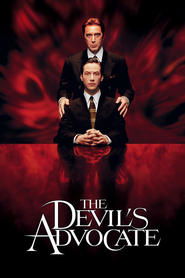
The Devils Advocate (1997)
Hackford discusses filming in Manhattan apartments and using the Continental Plaza as a setting for the law firm. He explains Warner Bros.' agreement to return to New York during production and his direction of Pacino's performance. The track connects location choices and acting decisions to the film's treatment of temptation and power.
- Duration
- 2h 20m
- Talk coverage
- 83%
- Words
- 23,997
- Speaker
- 1
Commentary density
Highlights
Featured in
Topics
People mentioned
The film
- Director
- Taylor Hackford
- Cinematographer
- Andrzej Bartkowiak
- Writer
- Tony Gilroy , Jonathan Lemkin
- Editor
- Mark Warner
- Runtime
- 144 min
- Also on
- OneSheet ↗ OverBlack ↗
- External
- IMDb ↗ TMDB ↗ Find on Amazon ↗
Transcript
23,997 words · 7 flagged as film dialogue
Hello. My name is Taylor Hackford. I'm the director of Devil's Advocate. And. I thought that you might find it interesting for me to give you a little... ... commentary about what went into making this film. The opening credits were particularly important to me... ... because I was not going to have a normal credit sequence... ... meaning two minutes of listing everybody who worked on the film. I wanted to get right into the action, and I asked Richard Greenberg... ... and Lauren Schluter, who are fabulous title designers... ... to come up with something very unique that could speak to the fact that... ... this film is a little extraordinary. It's going to have a little something... ... let's call "supernatural" to it, because we immediately go right into the film... ... which is extremely realistic. It's a courtroom scene. The actress you see in full close-up... ... is named Heather Matarazzo. She is probably known to a general audience as the star of... ... Welcome to the Doll's House. You now see Kevin Lomax, who is the star of the movie played by Keanu Reeves. But you see his boots. I wanted to say, this guy dressed in a wash-and-wear Southern suit... ... has something a little bit wild about him.
Tony Gilroy, who is the writer with... ... my collaborator on this piece, we wanted to basically say this guy... ... may look straight on the upper half of his body. But look at those boots! They're $500 boots. They show that he's got a little flair... ... a little wildness to him, and those are little characteristics that one wants to use. You see him just basically doing his job, supporting his client... ... and then, all of a sudden, you want to feel that this man believes in his client. He's there. He's confident. He's about to take this girl apart. And then he discovers something that completely changes the course... ... of one, this trial and two, his life. He realizes that the man next to him, who he thought was innocent is guilty. That revelation, right now, and this moment of decision... ... is what the film is all about, because this is a moral tale. One has to make these choices, professional choices, in your life... ... where you realize your job says: "I must go forward. In this instance, as a lawyer, I have a professional oath." But on the other hand, you have a personal code of morals and ethics. What the entire film is about is this moment of decision, right now...
... where Kevin Lomax has to decide: "Do I go forward? "Do I take this girl apart on the stand, and do I win the case for my client... "... or do I do the right thing?" And he takes a break, and he takes a moment to think. At this point, we go into what the film is truly about... ... which is moral choices. Kevin's client, Lloyd Gettys, is a math teacher at the local high school. He's played by Chris Bauer, who's a fabulous, young actor... ... I discovered in New York. I didn't discover him... ... but I found him in the casting process. He had gone to Yale. He doesn't look like this. It just shows the chameleon quality... ... of what an actor can do. But at this point, you can really see the passion and the anger in Keanu here. I wanted to establish: here is a guy who thought he was on top of the world... ... who had it all basically lined up. He sat there calm and collected at the table. You can tell he's not at all upset. Everyone in the room thinks: "Oh my God, this girl is gonna take him apart." But right here, he's got to look at himself in the mirror... ...
and realize, "My God, what do I do? "I've never had to make this choice before." I think that maybe some lawyers never have to make it. But I think this is a moment of truth, where you realize: "What do I do, my professional ethics or my personal ethics?" At this moment of choice, in the bathroom enters a character... ... that you will see later in the film. He's the Southern reporter, newspaper reporter... ... a friend of Kevin Lomax's, a drinking buddy. He's played by Neal Jones... ... who's a wonderful New York actor. You want to feel a sense of familiarity here. These are a couple of cynics who like to get together and drink... ... and laugh about life in the courthouse. But basically, right now, he's setting up the fact that this character, Kevin Lomax... ... is unbeaten, he's a hotshot, he doesn't really take anything too seriously... ... because he's got great confidence. But right now, he's about to lose his first case. While looking in the mirror... ... Keanu has to decide, "What am I gonna do?" I thought particularly interesting, and it was an actor's choice... ... Keanu goes through that whole thing. He has his moment of seriousness. He's looking at himself. And then he checked his teeth.
It looks like a smile. It's not a smile. It's a smirk. It basically is saying, and is in the best kind of cynical sense: "Hey, I'm going to do my job. I'm a tough son of a bitch. "And I'm gonna go in that courtroom and I'm gonna take this little girl apart. "Because that's what I do. I'm a lawyer and I'm a winner. "And I'm not about to become a loser here." And I think that choice that Keanu made, it was the only time he did it in a take... ... and I included it in the film. He comes in this courtroom and he starts very nice, very sweet to her... ... and appears to be... You know, she's been warned by the opposition that he's a killer, so be careful. You can tell that Heather is being very wary of him. But she's a little arrogant herself. She tends to feel that she's pretty confident. She's supposed to play a character who's very bright... ... and kind of the leader of her group. I think she feels that she's righteous... ... and in a good position right now. So she challenges him a little bit... ... and then Kevin springs a trap. He has this piece of evidence... ...
which is a piece of her homework... ... where she's doodled and made a derogatory comment about Mr. Gettys. The fact is, however, that this is an unscrupulous bit of professional behavior. If you notice at the beginning of the scene, Kevin Lomax goes over. He doesn't know whether the judge will admit this or not. He turns his back to the jury, holds the piece up so that they can see it. If the judge doesn't admit it as evidence, he's already shown it to the jury. And this, actually, is a lawyer's trick. It is a bit of an unscrupulous trick... ... but it shows how far Kevin Lomax will go and how tricky he is... ... in terms of getting what he wants. He does, at the same time, get it in place, because he is also a very good lawyer. He's able to, as you see, he starts very nice and then he gets progressively tougher... ... and he's nice, kind of nice to her for a while. When the attorney objects, immediately you could see... ... Keanu Reeves jump like a cat... ... in terms of qualifying why he wants the objection sustained... ... and why he wants to win over the objection. Pardon me.
And in this instance, he starts getting tougher and tougher and tougher... ... with Heather. Barbara is the character's name. He is going to take her apart, and slowly the opposition and everyone... ... in the courtroom starts to realize that this guy is not gonna be Mr. Nice Guy. He is perfectly capable of destroying a 13, 14-year old girl.
And in this instance what has happened by them allowing the names of these... ... other children, or the evidence that the other children were... ... molested into the trial, means that he could call those children. He's obviously interviewed those people. He's found out that she has intimidated them... ... and he's basically found out that she lied. Maybe not about her molestation. But, in fact, because she didn't want to be alone... ... she convinced these other children to join her in their attack of Mr. Gettys. Once that happens and once he gets her to admit it right here...
then, in fact, at this point and from this point on, that case is being thrown out. Her father is crazy, because he's just destroyed his little girl. I think, effectively, the opposing lawyer, the district attorney... ... realizes the case is over, it's gonna be thrown out... ... and everyone is stunned because it appeared as though... ... this guy had a sure loser and he's turned it around. This is a crucial first scene, because you see how good a lawyer he is. Then you introduce his wife... ... a real dream, played by Charlize Theron. She's cute as a bug's ear. She's got lots of moxie. It's clear they're drinking buddies and, you know, I just wanted the sense... ... at the very beginning that you realize this relationship. She's a loan officer, a credit manager at a car dealership. She's professional. She's brassy. She's tough on a small-time level... ... a small-town level. At the same time, these two people met. She was the best looking girl in town. He's the hotshot guy, good looking... ... and a great lawyer. They partied. They have a great sexual relationship. You just have the sense that these two people have a lot of heat between them. But they're young and they've just started... ...
and they seem to be on the same track together. You know, this bar scene that we have, again, includes the lawyer. And you see Neal Jones. Basically, again, he's the guy, he's the devil-in-my-ear character. He is the one who knows what Keanu did. He knows, you know, in the bathroom, that he's gonna lose... ... and when he pulls it out, he has a certain respect for him and awe. At the same time, he knows what he did and is willing to call a spade a spade. Now, Keanu, who is dancing with his wife and having a great time getting drunk... ... kind of trying to forget it all, is accosted in a very nice way... ... by someone who comes, you know, comes out of nowhere. It's clear by his dress and his attitude and his attire, he's not from the South. He is Leamon Heath, who is a partner in a New York law firm... ... who is inviting him to come, saying that this law firm has been looking at him... ... for some time, has been interested in him.
At this point, seeing a guy walk up to him in the bar, Keanu is completely convinced... ... that one of his friends has put this guy up to it. And this actor, who is Ruben Santiago Hudson... ... is a fabulous actor. He won the Tony for an August Wilson play, Seven Guitars. I saw him on stage and just felt, "I want to work with this guy." So when the role of Leamon Heath came up, you know, I had Tony Gilroy... ... kind of tailor the role to fit Ruben, and then convinced Ruben to do the film... ... because he has a very unique quality. He's not your totally assimilated black character. He may have gone to Harvard, he may have gone to Yale... ... but he's maintained a lot of his own roots and integrity, and at the same time... ... he's smart like a whip and he knows he's got Kevin hooked. The next scene that you're about to see hot cut to Kevin's roots: A Southern church, and this congregation is real. Judith Ivey, who is being introduced here as Kevin's mother. You know Kevin was raised in this church, he's coming... ... and taking a look back at his past, was totally fundamentalist... ... and deeply, deeply rooted in Jesus and God.
Judith Ivey is part of this group. I had to spend a lot of effort convincing Pastor Lovell and his church... ... in Gainesville, Florida to participate in this film, because I feel that... ... you know, the things that they believe in, the things they're after... ... have everything to do with establishing good and evil in the world... ... and fighting the devil, and that's what this film is about. But they were fabulous, and they really got the spirit of God in them. And I thought it was important to see that Judith Ivey is a believer. She is one with her God, she loves Him. And, you know, she's a formidable presence for good in this film. At the same time, she's a tough mother, and you can see that... ... she has raised him in a certain way and she doesn't particularly approve... ... of what he's done with his life. He's a lawyer, and you establish his wife... ... over at the car, Mary Ann, who obviously is a party girl, a liver, and not... Neither one of them are in church this morning, and Mother is not that happy. This sequence is important to understand that Kevin Lomax understands scripture.
He may have made a choice at this point to stay outside the church. If you notice, he's half in, half out of the light. Tony Gilroy wrote this in the script. Kevin Lomax stands outside the congregation. He's half in, half out of the light. He is part of it and at the same time... ... he can't bring himself to walk in. There's a dichotomy in him, which you'll discover later. But in this instance, when his mother calls up and says: "Quote the Bible to me and mention scripture," he can quote it back to her. He knows what he's talking about. He was in that church and a devout member at one point. Now you get a sense of Mary Ann. She is a good person. She's trying to help this character. She doesn't want to get the company to repossess her car. But she's tough, and she's a businesswoman. You also have a sense, right here, of the fun that these two people have. Keanu, you know, biting off her earring and handing it back to her... ... that was totally spontaneous. He came in, did that. It was quite wonderful. Now you have a sense of the married couple. They've got Mother-in-law... ... and Mary Ann's no dummy... ...
she knows exactly that she's persona non grata in that household. It isn't that she doesn't like her mother-in-law, but she understands... ... what she needs to do, like have a child. And right now you establish another theme of the film: "Let's give her a grandchild and everything will be all right." Mary Ann is ready. She's working. She's professional. But she's ready to start to have a family. But you hot cut to Kevin Lomax who's taken the deal. He's in New York. At the beginning it's just a vacation. He's going to consult on the selection of a jury. You see Foley Square, the seat of judicial power in New York... ... all the Federal buildings, the State buildings, the local... Everything is right there in one space. It's a very, very sobering look at the power of the legal community in New York City. And at the same time, for a guy from Gainesville, Florida, it's very impressive. Kevin's here. He's excited. He is working as a consultant... ... to one of Manhattan's best and most famous criminal trial attorneys. His name is Meisel, played by George Wyner. And in this moment I wanted people to see that Kevin Lomax truly has a talent. When you talk to criminal attorneys, you realize that they say... ...
that between So to 95 percent of winning a case is selecting a jury. This is a scene that I think talks about the inside of lawyering... ... and the reality of how you win. You win by psyching-out everyone that's gonna be on that jury. Those are the people that are gonna make the decision of whether you win or lose. This is where Kevin Lomax shines. He has an intuitive spirit. At the end of the scene, you realize he's got something else. He's got a sixth sense. Now, it's important, when we see this courtroom, to understand... ... that I wanted authenticity in this film. You're in New York. You have some of the best looking courtrooms in, I think, the United States. At the beginning, Warner Bros. wanted me to go to Canada and shoot in Toronto... ... which is an entirely different judicial system and the courtrooms... ... don't look the same at all. I fought to shoot this film in New York... ... not only for the fantastic exteriors, but also for these interiors. This is a film about big-time lawyering, and you want to feel, when you see the sets... ... and these aren't sets, they're locations. You want to feel that this guy is in the big time.
He's gone from Gainesville, Florida to the top of the food chain. We shot in probably seven or eight of the best courtrooms... ... you could find anywhere in the world. Look at these paintings up on the wall here in New York. You feel that this is the justice system. Now Kevin is exhilarated. He comes out of his first day... ... in the New York courtroom and he knows he's done well. He didn't know how he would measure up, and how he measures up is... ... he's smarter than they are. I mean, he has to feel great. He's walking down the street. He's saying I'm a guy from the hicks, and someone's watching him. This is the introduction of John Milton, who's played by Al Pacino. It was important to me to establish a very nice introduction to him. One thing that Al did, and you'll start to see into this... ... he chews on licorice all the way through this film. You don't explain it. You know he's doing something. And instead of just walking away, getting in a limousine, he goes downstairs... ... into the subway. Why would he do that? He's well dressed. That's it. But immediately I go into a time lapse sequence... ...
and I wanted to see day and night change. I wanted it to also say that this trial's been going on for a long time. When Kevin walks in, Mary Ann says, "You're home early for a change." Time has passed here. You've seen it pass. But more importantly, you see Al Pacino going down into the subway... ... and you see that the next images are not real. There is a certain kind of power that this person... ... we don't even know who he is yet, exudes. I thought that the time lapse would be both unique in terms of time passage... ... and, at the same time, extraordinary in terms of the potential power... ... that this man has. Now you've got Wife and Husband in... Mary Ann's got room service all over the room. Clearly, they've been there for a long time. She's watching TV. She's having a good time. She's been shopping. She's been to a lot of things, but her husband's been gone every day. And now you see the way they play. Kevin looks like he's defeated. It looks like he's lost the case. She feels badly for him. You can really see how she would, you know, how warm and wonderful... ... and sweet she is. But he's kidding her.
You can really see the slyness, I think, in Keanu Reeves here. And, at the same time, he killed 'em. He actually chose the jury... ... and won the case, almost an impossible case. It was like a savings-and-loan fraud. This is white-collar crime. The guy sitting there in the trial, with his white hair... ... looks extremely legit. But the fact is that, you know, he's like Charles Keating. You know, he stole not millions, but tens of millions of dollars. And in this instance, the next shot is, they are in John Milton's domain. This is Milton, Chadwick and Waters, and I wanted a location that immediately... ... established the power of this law firm. This is a real building. It's the Continental Plaza in Wall Street, in the financial district, Downtown... ... and you see what New York power is all about. That view is a three-bridge view. You're gonna see all the way up the island of Manhattan. But the important thing here was, this location was used before in other films. I didn't want to use that same look. There's a unique design look here. Bruno Rubeo, who is my production designer and my collaborator... ... on the last three films I've done... ... we spent probably six to eight months before this film began...
... talking about what we wanted from this film and the look. Right now you're looking at Christabella, the first time we see her... ... and if you notice as she walks forward, I slowed down. It goes in real time. There's no cut there. We ramped so she starts in real time... ... she slows down... ... and comes back out in real time. And Kevin Lomax, he doesn't know why he's fascinated by her. We'll find out later. But look at the design in this. It's ultra modern. We used both an Italian architect and a Japanese architect. This is the Italian. He used prefab concrete in the walls. Milton's office. You know, the rest of the building is very impressive... ... but this office is something else again. It's cold, it's austere, and it's incredibly impressive. Look at that fireplace in the background. It's set up off the floor. Bruno had a design in mind. The furniture in this place is... You have a big, massive place. But look at the furniture. That little settee in front of the fire: it's delicate, it's small. This whole room exudes taste and a certain stylistic quotient. John Milton, you know, it's a huge room, devoid of furniture, very minimal... ...
this is a man who has real taste and real choices that he's made. At the same time, this whole law firm is very, very modern. For the design quotient of this film, I want you to be able to see this sequence... ... and then later on, when you see where Milton lives, see the dichotomy... ... the difference. This is cutting-edge modern architecture to the nth degree. What Bruno wanted to do, and I wanted to do in this instance... ... is establish Milton's environment. Here it's cold, corporate, but, at the same time, undeniably impressive... ... austere, ultra-designed. Milton is very smooth. You know, Al Pacino always gets this rap: "Oh, gee, he's over the top." He's not. Al Pacino can play everything. And everything he did in this film was calculated. I mean, it was one of the great experiences in my life to work with an actor of... ... his deep, deep ability, his deep, deep talent... ... and his uncompromising attitude towards all his work. At the same time, Keanu, who had this... I'm saying this because here's these... ... two actors meeting for the first time. Keanu, who had done a lot of young-man roles, a lot of teenage slackers... ... in this film is anything but that. Kevin Lomax is precise.
He is not a Harvard educated, a Yale educated guy. He came from a small school in Florida, went to a small law school. But all criminal attorneys that are really great usually did that. They come from the street. He's street smart. He thinks on his feet. And he's up against a guy, for the first time, that seems to have a little bit more... ... on the ball than even he does. He's never met anybody before that is his equal. And Milton keeps blowing his mind, like he does right now. You see this office. All of a sudden, he goes and taps on the door... ... opens up, and I wanted this sequence to truly be a moment... ... that would blow everybody's mind, not only Kevin Lomax's. He walks out on a roof terrace and, effectively, I'm using... Again, this is from a Japanese design. Bruno and I saw an architect... ... that had a pond on the roof in Japan, and I said that is a perfect idea... ... for what we want to do here. Here is a man who has such a sense of design and such a sense of grandeur... ... that he has created for himself a balcony, if you will, a terrace, a park on top.
But does it have greenery on it? No. It has water. He calls it calming, placid. And at the same time, he's going to take Keanu out there... ... and he's going to talk about his past. He's going to find out a little bit more about him. He asks about his father. Keanu says, "I never had one." He asks about his mother. And in this instance he's, you know, if you look at Al's reactions here... ... this is a long, talky sequence. This is what you do sometimes. By the way, this is real. This is not blue screen. We didn't put the artists in a studio. I fought to get this scene. I fought everyone, including Warner Bros. Nobody wanted me to go up and get this shot. It's on the roof of the Continental Tower. They had re-roofed the place. The building didn't want us up there. I just knew that this sequence was going to define this initial relationship... ... between Kevin Lomax and John Milton. And the two actors are basically 50 stories in the air right now. They're standing on an eight-foot platform. No, it's not right on the edge. It's about eight feet from the edge. But the fact is that they're standing there.
We had to get this whole thing in one day, and they have to do... ... a very personal scene while they're perched on the top of this building. You can see Al, at that moment, trying to let us know a little bit how precarious it is. But do you notice any kind of nervousness from Pacino? Not at all. He's easy. And the whole essence here is that Keanu's sitting out there. One, his mind is blown... ... at the beginning, and then somehow he finds himself getting into it. And at the same time, he looks right here and says: "My God, John Milton's standing like a foot from the edge of a 50-story precipice. "What kind of guy is this?" He also wears elevator shoes, which I think is interesting. But the fact is, right here is what the film also is about. It's about pressure. It's about professionalism. And what John Milton has done is taken Keanu Reeves... ... or Kevin Lomax, in this case, up to the precipice. He's showing him: "All this can be yours." And what is it? It's Wall Street. It's the seat of capitalistic power in the world. And he's basically saying, you know, I know you're a hotshot... ... but can you take the pressure?
Can you sleep at night? That little speech that Tony Gilroy wrote, I think, fits all professionals in this instance. When you have to deliver on a deadline, you know what he's talking about. Basically, Kevin is there. He's ready. He said, "What about money?" Milton laughs. "Money? That's the easy part." Kevin doesn't have any problem. He can sleep at night. He's a lawyer. He knows how to do it. We cut from that to Carnegie Hill, which is Fifth Avenue in the Nineties in New York. It's probably the most exclusive address in New York. Central Park is on one side. You have these beautiful, beautiful buildings with fantastic apartments inside. And the Heaths. You're meeting Jackie Heath for the first time. I reveal her with that wipe from the elevator, you see her in close-up. Leamon Heath and Jackie Heath, they are absolutely New Yorkers. They've maintained their integrity as black people, but at the same time... ... they are not about to resist the temptations of the city. They want it. They know how to deal with it. They're very sophisticated. Look at the clothes that Jackie's wearing. Leamon makes the money and she knows how to spend it... ... and she doesn't have any qualms about it.
This apartment, I wanted to basically establish the sense of awe. You know, John Milton owns this building. He has it for his employees. Although it's usually for partners, and for Kevin Lomax to get an apartment first up... ... shows that he's a little special, and you can feel, right here... ... that they're a little jealous. "Took us six years to get in here." Every New Yorker will understand that when they really want to get into... ... a big building. This is a film about New York. Tony Gilroy, who lives in New York and understands it incredibly well... ... is able to put these nuances in here that are maybe not aimed at everyone. But certainly, you know, you make a film in New York... ... it was important to me that you do something real. Now, you know, Kevin has basically been offered the job. He's got to now sell his wife on it. And this is a big test. If she, you know... He says, "I'll take you home if you want." Of course, if she did, God knows what he'd think. She knows him. She knows what he wants. And at the same time, how could you turn this down? It's very important right now, at this moment... ...
to understand that Mary Ann wants this as badly as Kevin does. I mean, who would resist? Come on. They're too big for a small pond. They both want this and, my God, she's looking at this and saying: "Hey, I want to have a family." She says right now, you know, she mentioned kids again. She's mentioned it in the back of the apartment... ... and she mentions it again right now, and she's saying, "I'm in. Let's go for it." And that moment is one of the last moments of true happiness... ... you're going to ever see them have. Now you're at the law firm, and I want to be able to show... ... what big time lawyering is about. These are all partners. It's an international law firm. John Milton has called a meeting. From all over the world, these partners have come. There's Eddie Barzoon, played by Jeffrey Jones, who is Milton's chief lieutenant. He's the managing partner of the firm. There are affiliate offices in major capitals all over the world... ... and you get a sense of what law is all about. It's about copyrights. It's about real estate. It's about EEC and EUC and those kinds of relationships.
Now, Pam Garrety, who you are just about to meet, or you've just met... ... is played by Debra Monk. She's basically a tough criminal attorney who worked in the Brooklyn D. A.' s office. She knows her stuff and she's been assigned to Kevin Lomax.
You're looking at their first case. It's a videotape of a raid... ... a health code raid on a religious sect in Harlem. Delroy Lindo, I think people will recognize there. And at this point, this is the first case. Kevin Lomax realizes that, you know... ... he came all the way from Florida, what, to get a health code case? It's an insult, and Pam Garrety is saying, hey, you know, everything's a test. Now we cut, simultaneously you see Mary Ann's life. She's starting to decorate the apartment. She's in with some heavy sharks here. She's a little bit over her head. This isn't Gainesville. It's New York City. You know, I think she, at this point, is intimidated, but Kevin shows up. He was pissed that his first case was such a trivial thing, like a health-code case... ... and he came out to help her. And it actually shows. This still is a nice scene. As I said before, it was the last good scene. But it's a moment where he has actually, as busy as he is... ... shown her that he is still in the marriage, he's still there. Cut from that to Harlem, and that is Harlem that you're looking at. We shot it there on location.
And in this instance he's entering the world of Phillipe Moyez... ... which is a very strange, mysterious and undeniably powerful world. It may be in Harlem, but Phillipe Moyez seems to have... ... some kind of strange power here, and the people around him also. Kevin Lomax, is taken into something very bizarre. He's coming here to see a client... ... and immediately, what he's faced with is the most bizarre of situations. But, at the same time, he's in New York now. I cut to those boots again, saying, well, he's changed his suit. He'd better change those boots soon. They're becoming a point of ridicule. And if you see, slowly over the course of the film, Kevin's outfits... ... and his entire attire change. Downstairs he is in a ceremonial area. These are basically real African icons...
things that we did from research, looking at religions of Dahomey. But as Phillipe Moyez says here, played by Delroy Lindo, this is not voodoo. This is not Candomblé. This is not Santeria. This is his own amalgam of a very old religion. Now, in no way, shape or form was this a desire to put down African religions. More importantly, it's to say that individuals, whoever they might be... ... find ways to establish power, and we certainly know this... ... from preachers of all ilks, whether they be Jim Jones or whoever. The fact is that Phillipe Moyez seems to be in a very weird situation here. He's got body parts in the refrigerator. He is using a lot of superstition here. It looks like a very meager and downtrodden place. You'll find out later that he's quite a rich man. What we wanted is a little bit of a creepy situation here that Keanu is faced with. He's a lawyer. He's representing a client, and that client seems to be... ... completely oblivious to him. But, at the same time, the client was interesting. "I thought I would recognize you, but I do not." It's bizarre. Now meanwhile, Keanu's in this situation and he's now having to confront... ...
using his brain, how he's gonna win almost an unwinnable case. They caught him. They caught him dead to rights, sacrificing animals. He's going to have to delve into the health codes. Is he gonna give up or not? You look at this sequence, and what I've done. Mary Ann is redecorating... ... and she's getting one frustration after another, after another. I used digital wipes here to kind of interconnect the two. While she's working and getting more frustrated... ... he's getting deeper and deeper into his research... ... until he finally finds a key that is going to help him in this trial. And Jackie, who is very, very helpful, Miss Helpful, Miss Best Friend... ... and just trying to help. She's very sophisticated. She's trying to help Mary Ann get into what it's like to live in New York... ... and really be a top-rated housewife. But Mary Ann's getting frustrated. Kevin, on the other hand, is getting deeper and deeper into his work. You see him eating hamburgers. She's eating Popeye's Chicken. They're no longer eating together. They're eating separately. They're separate. She's getting more and more frustrated and confused. She needs his help and he's not there.
And in this scene that's coming up, you get a sense now of what her life is going to be. This is a scene in which Jackie kind of lays the law down. "You have to understand, it's a bargain. You've got a job. He's got a job." And this is not what Mary Ann bargained for. And I think Charlize and Tamara Tunie, who plays Jackie... ... Tamara is absolutely fabulous in this role, I think. You know, they're girlfriends. They're talking turkey. They're talking plain. Jackie is truly trying to help her. But there's another level going on here. There's a little bit of... ... an animal of prey and the preyed upon going on here. This decor, by the way, you get a sense of Mary Ann's empty apartment... ... and then you can see what Jackie did with hers. This is right across the hallway. It's done to the nth degree. She's paid a lot of money to a lot of decorators. "Look around, honey. "This is why I do what I do. This is what I get paid." And it's kind of establishing here a kind of life of sophistication in New York City... ... which is not exactly what Mary Ann had in mind in a marriage. Now I cut... ...
directly to the bacon, as it were. Keanu has developed a defense for Phillipe Moyez, and it's based on religion. It's based on the fact that you couldn't have religious freedom. And I must tell you that this case is absolutely based on fact. There was a Santeria case in Florida in which the neighbors attacked a church... ... sued a church. They were sacrificing animals. And it was won on the basis of the fact that this is ritual and religion has ritual. I mean, religion has circumcision, as Keanu says here. You have kosher butchering... ... which is, of course, how he wins the case. He's got a Jewish judge. And he is defiant here. He is arrogant. He is using a system and pointing out... ... hypocrisies within that system. At the same time with this happening... ... his opposing attorney starts to cough. It might just be a frog in his throat, whatever. But remember, Phillipe Moyez was going to put nails in the tongue of that cow... ... down in his basement, and he basically says, "I have done all I can do for you. "I'm not gonna help you with the case. I'm doing what I can do." And in this moment, where you see a really brilliant piece of lawyering... ...
you know, Keanu feels this is below him, but he does do a huge amount of work... ... on health codes and wins the case. He wants to show John Milton: "You may be insulting me with this case, but damn it, I will deliver," and he does. At the same time, his opponent can't talk. Phillipe Moyez, I intercut with Delroy's face, back and forth, and you kind of see... ... there's a moment here in which you start to realize maybe, in fact... ... Phillipe Moyez has more power than we gave him credit for. Maybe there is something else happening here. And these elements of subliminal intrigue, supernatural element, this is... ... in fact it has to have, because it's about the devil, some elements of supernatural. I tried to keep them questionable, are they real, or are they not? Throughout. But they're here. And meanwhile, after they win the case... ... John Milton has been there to watch. He snuck in to kind of watch his new protégé. Look at those frescos in the background. That's a real New York courtroom. You know, just fantastic. Again, another courtroom, a great location. Now I come out and I'm on Canal Street. When you know New York, it's so fantastic. The street life is so incredible.
And to me, Chinatown in New York... ... is one of the great places. Canal Street, which is in lower Manhattan, is alive. It's vibrant. It's also a major thoroughfare. You see these huge trucks rumbling along. You see Chinese fish markets and vegetable markets... ... and all those things happening, and that crush of real New York. Now Al Pacino is the kind of actor... I first saw him in Panic in Needle Park. It was his first film. You see him in Serpico. You see him in Dog Day Afternoon. He is uniquely a New York street animal. And what I wanted with John Milton is a man who is incredibly powerful. He's head of an international law firm. He's smart as anyone you've ever met. And at the same time, he was not born with a silver spoon in his mouth. You know he's from the street. And in this scene, he takes... ... his son to the place that he loves. He wants, he feels the vibrancy here. He wants to say, "I saw you work. You're terrific. You're also arrogant. "You've got those good looks. You're tall. You're not short like I am. "You know what I've got are those eyes. What I've got is that ability." Look at those Pacino eyes.
"What I've got is that ability to fool people. "I'm charming. I have to sneak up on them." What I wanted from my devil is not the obvious. I didn't want a godlike devil. Pacino said, "Why don't you go to Robert Redford or Sean Connery?" I said, "Well, you know, the devil looked like that before. "What I want is somebody who is bored. He needs a challenge. "He has to overcome obstacles," and in this instance, Pacino liked that. He could have got up and walked out of the room, but he loved it. "Because you never see me comin'." That's the key to this... ... and Tony Gilroy understood it, and we made this uniquely for Al Pacino. Now here's a sequence that I thought was another thing that's important. Pacino is a character you meet. He seems all powerful. He seems like a corporate lawyer. Now he looks, seems like a street guy. He speaks fluent Chinese. Pacino speaks five or six languages in this film... ... and every single one of them is accurate. He is speaking Chinese here. I think what you get out of the character is: here's a man who is all powerful... ... at the same time he says right here, "Stay in the subways.
"I only take planes, or the subway. I don't take limousines. That's not me. "That's the only way I travel. Stay in the trenches. Stay close to the people." That's who Pacino is. But you also feel throughout: this is a man who has incredible intelligence. He can learn anything. Cut back to the apartment. There is an evolution happening. Mary Ann is starting to decorate. She's trying to get control of things. She's now become Jackie's friend. She's talking to all the wives in the building. She is building a nursery. That means she's telling him, in no uncertain terms... ... that this is what it's going to be. "I'm staying home.
"You've got to be home long enough to knock me up. "I've got to be able to have a life here." And you want to have a sense... ... of Kevin's saying, "All right. I'll do what I have to do, all right. "I'm having a good time. I'll try to make things work for you." And as they're going up to this party, they're truly intimidated. This is Barzoon's apartment, Eddie and Diana Barzoon. And it's not on the top floor, that's Milton's apartment. It's the second to the top floor and it's the biggest apartment in the building. It's got a huge terrace around it. There are apartments like this in Manhattan... ... in New York City, on Fifth Avenue and Carnegie Hill. Now the fact is that we used an interior on Long Island for this. At the same time, for the scene outside on the balcony, we used a balcony... ... on Fifth Avenue and 94th Street, which is on Carnegie Hill. The view you have over the park is absolutely... This is an example of how you kind of mix locations. But believe me... ... I was in apartments throughout New York that were exactly like this, or bigger. And you are meeting the power people that this law firm, in fact, represents... ...
or has important dealings with. Here, Senator Alfonse D'Amato... ... and Ambassador Charles Gagano, very important people in New York... ... they are there to show that, clearly, this law firm has influence... ... and power, and at the same time, you know, this is the top of the food chain. Kevin and Mary Ann are impressed. They're having a fabulous time. But, all of a sudden, they get separated. Leamon Heath comes in with Jackie. He pulls him away. There are important people for him to meet. When they were holding hands at the beginning, that's been split up. Now they're two operators working on separate sides of the room. Kevin immediately sees Christabella again. She's speaking German. Then she's speaking French. These are-- This is somebody he's never really even could fathom before... ... a beautiful woman with all this talent. Coming into the room is John Milton, and we see the three women. Look at the way they're dressed. Judianna Makovsky, the costume designer... ... dressed these women like beautiful birds of paradise here. They're fantastic. Jackie Heath and Diana Barzoon, played by Pamela Gray, is just wonderful here. Mary Ann is meeting the top honcho. She's meeting John Milton, so smooth... ... so totally comfortable, and a little bit, you know, sarcastic about the women.
You have a sense that there's an underlying relationship there. And meanwhile, in the room there is a lot of business going on. These inserts that I cut to, I keep cutting back to, you see the kind of shorthand. In each of these little moments that you see, something's going on in the room. You understand that this law firm can play tough and sometimes dirty. Everything is maybe legal, but it's just legal. Now you see Mary Ann having a moment of, you know, it's... "This is fantastic. I'm actually sitting with the boss. He's charming. "He's not at all what I thought, and he is actually being very, very, very... "... smooth and nice and incisive, and talking personally with me." And while that's going on, Kevin is working his way across the room... ... following the woman in red, Connie Nielsen, who plays Christabella... ... a woman of mystery and intelligence, a real lawyer, like he is. The difference between Mary Ann, and we're pointing it out with her hair... All the other women here, you know, have these beautiful dos... ... and Mary Ann has this Gainesville do. And it was interesting. Charlize went to Gainesville, Florida with Keanu on a research trip. Keanu was going to the trial, that the courtrooms there...
Starting with D. A. s and defense attorneys... Mary Ann went out and repossessed a few cars. But she came back saying all the girls in Gainesville, not all of them... ... but many of them have this hairdo. And it was her idea to come with this... ... and you'll see, as we go through the film, how this affects things. But in this moment, Al Pacino, in a very smooth and very, very nice... ... but rather insidious fashion, points out her hair, asks her to change it... ... basically, you know, doing something that is probably in her interest. I mean, he's right, by the way. Her hair does look kind of "hickey" in the sense. She's a beautiful, beautiful girl, but it's the wrong do. In pointing it out, however, he is disarming her... ... and, at this point, he also is charming her. And, as you see, Kevin is oblivious to all this. He is inextricably drawn to this other woman. So I'm breaking this scene up and letting you know that the two people... ... are going in a very divergent way. And this is an opportunity right now, where Al Pacino is talking to her. She's looking in the mirror, and you have a sense of how this man works... ...
how seductive he is. He never touches her. He's very close. He's whispering in her ear, and at a certain point you see her close her eyes. She's under his spell and this is a sexual scene without it actually being graphic.
You know, it's wordplay. It's foreplay. And, as every woman knows, the best foreplay is good words to put somebody... ... in the mood, and in this instance... ... it works with Mary Ann, as you can see. Now we cut and we're on the balcony, outside. There is Manhattan, the reservoir which is right across from Carnegie Hill. You see Downtown Manhattan on one view. You see the George Washington Bridge on the other. And in this instance I must admit to the fact that this is a green-screen sequence... ... because it was freezing cold. Connie's wearing no underwear and a beautiful dress with a lot of skin showing. To be able to get the kind of comfort I needed in this scene, we shot plates of... ... meaning views of this actual location, and then did it on a stage. I think the blue-screen work is very good. But it was important to kind of show... ... the grandeur of New York with these two people out here. Meanwhile, inside the party, you have the motto of the law firm: "Let's ride 'em as long as we can and then eat 'em." You get a sense of the ruthlessness of the law firm... ... and in the background you see the ruthlessness represented by that tapestry.
Connie Nielsen is a wonderful actress and, as I said before... ... she speaks five, six languages. She is Danish, but lived in Italy for a long time. She is very sophisticated, and I think what Kevin Lomax is coming up against... ... is Christabella, who calls a spade a spade. She asks him if he's alone. He doesn't, he demurs, he kind of comes up with it and she says: "You're married." She basically is not about to play along. And at the same time she flirts. "You like to be on top," an unquestionably sexual innuendo. And he likes it. He's ready to pop, except Milton interrupts. And Milton has a sense of pride here. He's the head of a law firm. He owns a law firm with two really bright, young lawyers in it, but it's more than that. There's something that you'll discover as the film goes on. There's a relationship between these people he's particularly proud of. And I think, in this instance, you know, Al Pacino's smooth, he's walked around. He's spent about an hour at the party. He's talked to Mary Ann. He's talked to the senator. He's talked to the women. He's in no hurry. But in reality, he's got something else on Kevin's agenda.
He has Kevin's agenda completely planned. Kevin doesn't know it yet... ... he has taken his time, but there's an emergency, a bombshell about to happen. In this scene, Pam Garrety is delivering a message to my producer, Arnold Kopelson. We now go up to the apartment. This is an opportunity to see where John Milton lives. Again, remember the way the office building looked. The office is cutting-edge modern architecture.
Austere. This apartment is the opposite. It's gothic. It's age old. And in the middle of it is a centerpiece. The only piece of art is this bas-relief... ... which looks ancient, like it broke off some temple someplace ages ago. Milton has frescos on the wall from Thai or Cambodian temples. This baronial fireplace... But as the actors say, it's the only room. There's no bedroom. There's nothing else. "Where does he sleep? Where does he fuck? Everywhere." You know, Milton is a very unique individual. They take him totally as a unique entity... ... that is totally all consuming and all powerful. And what he is now about to do is give Kevin his second case. He walked around that party for an hour... ... and in his hands he had this information: Their biggest client, the biggest developer in New York City... ... has now been charged with murder. Why didn't he come right down and call an emergency meeting? That's not Milton's style. And in this instance he really throws... ... a bombshell at Barzoon, because he wants Kevin to handle the case. "You want to call Meisel. You want to call the best, the criminal attorney. "Kevin Lomax has just done a health-code case." You can see Jeffrey Jones and his disdain right here.
This scene is a wonderful moment of confrontation between Milton and Barzoon. Barzoon is the managing partner of the firm. Milton is the chief partner, the owner. But Barzoon has arrogance. He runs things, and he's not used to being second-guessed. And at the same time, Milton is about to stand him down.
And if you look, Barzoon doesn't have... You know, he's angry, but there's not much that he can say. He tries and Milton just keeps pushing.
I think that one of the things was an opportunity to see Milton and Barzoon... ... and the beginnings of their relationship coming apart. There's a new boy on the block and he's Kevin Lomax. Barzoon is just starting to recognize right now... He could never, ever, ever think that Kevin Lomax was any real threat. But now there's something strange going on, and Barzoon guesses it. Heath, who you can see, just from that little look... ... is not about to get in the middle of this. Heath is a survivor. He looks around. He has all the facts and figures in his head and he's going to survive. He's starting to sense right now that somebody might be going down. That moment where Kevin sits there and makes a decision: is he gonna go or not. He's being offered the bait. Of course, he's gonna go. But there's a price. He completely forgot about his wife. He got seduced. He said come upstairs. He got into something. He's offered a case that he could only dream about. This is a guy who was practicing law in Gainesville, Florida and now... ... he's gonna get the biggest criminal attorney case... ... the biggest murder trial in New York City.
No criminal attorney, you know, could even dream of having this... ... except the very, very top, top-line guys. And Kevin Lomax is about to step into the big time. He comes downstairs and his wife is pissed because she was abandoned. She has a perfect right to be. He's saying, "Hey, don't you understand the priorities here? "I'm a professional. "I was there with my boss." She's saying, "You left me alone."
Meanwhile, we cut to a real construction site on the West side... ... and we meet Alex Cullen, played by Craig T. Nelson, and you're used to seeing... ... Craig T. Nelson on TV. This is an entirely different role. This is a very tough, very brutal and very, very ruthless developer. The hardball players in New York City.
This is a real location. Again, this is not blue screen. We're up on the 30th floor of a construction site. There are sheer drop-offs behind us, and you have the most fantastic view. This is what Manhattan gives you as a location. You can look all the way Uptown. You can look all the way Downtown... ... and it was cold up there. These guys are freezing and there's no place for them to go. You can't send 'em down to their trailers. You can't send 'em 30 floors down. There was a little space heater they stood around while we were changing the shot. But it's worth it. It's spectacular. Craig T. Nelson, by the way, has a fear of heights, and I brought him up there... ... and made him stand over by the edge. And as an actor, you know, you just have to gut it up and do it, and he did. Meanwhile, you're seeing Kevin Lomax. At this point Milton stands back. He's got to do it himself. He's got to convince him himself. And at this point, you know, you get a sense... Look at the way Craig T. Nelson keeps looking at Milton. He's looking at this young punk, this young kid, and saying: "Are you kidding? I'm the biggest developer.
I'm rich. "I'm your biggest client. What are you doing to me?" But he keeps looking at John Milton. And what's important to understand... ... and Milton says, you know, and there's a key line coming up later. You know that Milton's been with Cullen since the beginning. You just want to sense it in this scene, that he's always been his attorney... ... that he's gotten him out of every scrape, that Milton, pardon me... ... that Cullen is always, you know, taking shortcuts and breaking the law... ... and Milton gets him out of it. So in this instance, he has to look, and if Milton is saying: "I want you to do this," he has an ulterior motive. And in this instance, he's also saying something about himself. You know, they say he's, it's cut and dried, he killed these people. There are bloody handprints, all these things. But listen to him. He cares about his step-daughter. He feels falsely accused. You want to feel that there's a chance here that he didn't do it. And now there is something right here that Milton says: "He's a winner, just like you were." You want to sense that "I found him, just like I found you, Cullen... "... and I'm telling you, you should do this."
And at this point Craig T. Nelson did a great piece of acting. He concedes. You realize he's been up all night. He's completely up against it. This is a guy who's normally a snake, and at the same time he's vulnerable. But right here he gives you a sense... ... of the cobra. You have a sense of how tough he's gonna be if Kevin screws up. Cut. We're in So-Ho. We're in the cutting edge shopping area of Manhattan. This isn't Madison Avenue Uptown. These are the cutting edge shops Downtown... ... and Jackie and Diana, that's where they shop. And this is Yoshi Yamamoto's place. This is a very famous store in So-Ho. You have a sense that Mrs. Barzoon and Mrs. Heath are regular customers there. They get as much white wine as they want. They spend thousands of dollars. And in this instance they're kind of initiating Mary Ann into the club. "You come down here, you buy it, you wear it once, you throw it away. "That'll loosen you up. Listen. They expect us to spend money." This is a tough, mercenary scene about mercenary people in New York City. And I wanted to establish, and you see on Mary Ann's face here... ...
she's one of the girls, she's having a good time, she's pleased to be with them... ... but all of a sudden she starts to say, "Oh, my God, these girls are tough." We're talking about a little plastic surgery here. I thought Tamara Tunie had to do a very tough scene in terms of doing... ... a scene partially nude here and referring to plastic surgery, and doing it... ... I think, you know, when women get together, and in an instance where... ... people have had plastic surgery, this is a common occurrence. I've talked to a lot of people that have been through this kind of situation. And people are proud. Somehow it disembodies them. Once they've had plastic surgery, they no longer think of this intimacy of... ... there's something in there. They're proud and they want to show that it's real. And the only way to tell that it's real is to feel it. So there's a little sexual innuendo going on here, and that's a surprise... ... and she's saying, "Oh, my God, I'm again over my head." But right in the middle of this whole thing... ... you have the first real instance of supernatural.
Rick Baker, who was my collaborator on this film in special... ... physical effects created some images, some facial images that you will see... ... the first one being Jackie here. My philosophy was to see it very subliminally. You saw it for a split second, and then you cut back and she was back to normal. Although you did see the hands under her skin as the dress came down. That's obviously digital technology. It's Rick Baker doing physical effects... ... and digital technology, seaming it all together. Richard Greenberg, who was head of our special effects group... ... and Stephanie Powell, who was our supervisor... ... I think, did a spectacular job all the way through this film... ... trying to satisfy my desire to be subtle and, at the same time... ... have these things that would be really shocking. Out of that scene, Mary Ann is, she's completely been traumatized. This scene that we now have between Kevin and Mary Ann... ... is another key scene in the film, because Mary Ann is no longer going to play along. She wants to go home. She wants to get out of there. And she knows Kevin. She knows him really well. He is a guy who wins. He's a guy who never stops.
She's been on that train. She's been the one who never stops also. "Let's go." Everything is growth. This is the first real moment where she's saying, "No, I can't do this." And that's not what he wants to hear. He is not about to go home, and, she's been so traumatized and emotional... ... he's trying to cajole her and look, she's hysterical. Look at the look on his face, which I think Keanu did a wonderful job here... ... it's like, "Wait a minute, I just want to go back to work."
You know, what's interesting about this scene is that he comes home... ... his wife is freaked out. But why is she freaked out? She went shopping. She left her friends. She saw things. Come on. There's something weird here. Maybe she's drunk. And what really is the key is she's lonely, and what Kevin is looking at is saying: "Wait a minute, I just got the biggest case of my life. "I've got to go back and I've got to spend hours, days and nights... "... discovering who Alex Cullen is. I can't be here dealing with this. "I can't be babysitting a wife. I have the biggest opportunity of my life." So what is he gonna do? She wants a baby. He says, "Let's make a baby." In other words, it's very tough and mercenary. It's a moment that's not romantic. It's a scene about, "How do I manage this person? "How do I present some management? I guess the way to do it is to knock her up. "That way I'll be able to go back to work." These are things talking about a professional in a marriage, and in the... ... process of doing this, he's going to make love to her in a kind of disembodied way. And what happens? He's having a fantasy.
But the fantasy is awfully real. He's been thinking about Christabella. He's been lusting after Christabella... ... and he's gonna make love to his wife. And what happens is that he's fantasizing, while he's doing it, of another women. Now, this is not an uncommon experience. I mean, sexual fantasies while sex is... ... going on with your partner, it's not the first time you've heard this. But what I wanted to do was play, one, with the fantasy and two... ... with a real sexual sequence, which you're wondering whether it's supernatural... ... it's awfully real, or, in fact, is it a dream? And to intercut back and forth between the dream and the reality... ... between one woman and the other, was what I had intended here and to try to do... ... it in an artful way. You know, if you notice, you see skin, but you don't really... ... see a huge amount in this scene, but it's a pretty sexy scene, I think. The actors were absolutely collaborative with me on this. There are no doubles in this. It is Charlize Theron. It is Connie Nielsen... ... and it's Keanu Reeves. All body parts and all people that you see are them. They were committed. It's very tough to do love scenes.
And in this particular instance it's even tougher, because Keanu was having... ... to do the scene kind of with two women in exactly the same poses. And in order to keep your focus... It's an acting experience. Really, it is. And they were fantastic to work with and to try to keep a sense of reality here. It's a hot scene. They all got along very, very well. They liked each other, which helped, and, at the same time... ... it's never easy to shoot a love scene. And what I was looking for here is a kind of build. Kevin is getting deeper... ... and deeper into his fantasy. Pretty soon that sexual turn on that he felt... ... at the beginning turns into a nightmare, and he just wants to fuck it out. Pardon me. That's what he's doing, until she stops him and realizes... ... you know, "you may be in me, but you're someplace else. "What are you doing? You're not here." And he's caught. And out of that scene we go to his big case and his big client... ... and we discover Alex Cullen. And the location here was crucially important to me. It's a real location. It's the apartment of one of the biggest... ... developers in New York City, Donald Trump.
It was an amazing opportunity to be able to shoot here. Jan Foster, who was my location scout, and if you see this film... ... Bruno Rubeo gets a huge amount of credit for designing... ... but Jan Foster, who found a lot of these locations... ... was such an important collaborator for both of us. She'd had a relationship with Donald Trump in the past. She had done Home Alone III and he owned the Plaza... ... and that film had helped the Plaza a lot. And I'd said "I want to get some views, some photographs of the inside... "... of some big developer's apartments, like Donald Trump or Mort Zuckerman... "... or various people," and Jan said to me: "Well, on Tuesday we're going to see Donald Trump's apartment." I said, "That's fantastic. He'll let us see it. Then we'll know how to match." She says, "No, no. If you like it, we can have it." And I was amazed. But this apartment is like none other in New York. It's amazing. Donald Trump has a sense of baronial power... ... and he lives it. It isn't just in his commercial enterprises, the Trump Tower or the Taj Mahal. It's where he lives. I mean, this room is all glass, marble, brass, gold leaf.
You know, it's amazing. It has views all the way up and down Fifth Avenue... ... from the very top of Manhattan to the bottom of Manhattan. It's the top four floors of Trump Tower. It's astounding. And to be able to get up there... I mean, Warner Bros. gave me a lot of trouble... ... because we shot this in one day and it took a long day. But, I mean, you couldn't possibly build this set at the price we got. And it's real. All those views out the window are not blue screen. They're very real. And at the same time, for Craig T. Nelson's character, Alex Cullen, you get a sense... ... just looking at this place, of his ego, of his sense of grandeur... ... of his sense of invincibility. In the scene, you see that he is a frightened man, that he's carrying a gun... ... that he has a certain arrogance and he's really frightened. And at the same time, all the way through this... ... Kevin is keeping his bottle, as the English say. You know, he takes the gun from him. He does a straight confrontation. You really can see that Kevin is up to the task. He's proving himself to Alex Cullen and to us.
And, at the same time, he's getting very famous. In this scene, it's a time jump. His mom has come to town for a visit... ... and you can see that he's becoming a major name about town. All the paparazzi are there. He is going to plead Alex Cullen not guilty. "And how does it feel to get the biggest murder trial in New York?" He's becoming a real New York personality and his mother's impressed. Now the dichotomy of seeing Alice Lomax... ... come from Gainesville, Texas. The born-again Christian woman in her cloth coat. And what is she confronted with? John Milton and two birds of paradise, Christabella and Giselle. These women are obviously way beyond the pale when it comes to sex. And Milton, smooth and nice, is trying to ingratiate himself with Kevin's mother. But she is intimidated, and we'll find out later why she's so intimidated. I want you to see this sequence, and look at Judy Ivey's face throughout... ... and how she's sneaking looks at Milton and, at the same time... ... totally beyond her level of comprehension in this grandeur.
And this scene in the elevator is one of my favorites. You know, you have to shoot a scene in very close quarters... ... with six people facing each other. And there's a lot of innuendo in this scene, both in terms of... ... what Milton is saying to his mother and what she's saying back to Milton. And, at the same time, there are these silent things that are going on. You know, here's Kevin standing next to his wife, being inches away from... ... the woman that he's lusted after and fantasized over. That woman, he's like raping her with his eyes. His wife sees him looking at them. And meanwhile there's a conversation going on between Milton... ... and his mother that he's not listening to. You know, it's one of those uncomfortable moments that... ... seems to last for an eternity, and they're only going up three floors. Then, as the wife and mother are going in the house... ... Milton turns to him... ... and asks him to come up and discuss the case. Now that's ostensibly what it's about. But what it's really about is these two beautiful women sitting in the back here... ... and obviously hot to trot. There's a sexual innuendo that's not just subtle here.
It gets more and less and less subtle as it goes on. There is a ménage à trois about to happen, and Milton is inviting Kevin to join. He looks back, and what has he got on the other side? He wants to join, but what has he got? He's got his wife. And his wife is no dummy. She knows exactly what was happening. So now the cat is out of the bag. She's seen her enemy. She's sniffed her enemy. She knows who she is... ... and she's pissed at Kevin because Kevin, in fact, is denying everything. But, of course, she knows it. Alice Lomax notices this and we have a transition from night to day. And in the next morning Kevin gets up and, again... ... on the headlines of the paper is the opposition's next move. He realizes that the prenup that Cullen had with his wife who was murdered... ... is now on public record. You know, there was a motive for him to kill her, and in this instance he really... ... has to get to work and deal with it, and what does he find? He finds that his mother's leaving. She's going home. She came for a two-week stay. He was hoping she'd stay longer.
Maybe she'd take care of Mary Ann. He has a real problem with Mary Ann right now. The case is heating up. His mother is here. Maybe she can... In a totally pragmatic way, he's hoping that she will baby-sit. And in reality, he starts to get short with her. She has seen how Mary Ann is reacting. She understands it's not right. She's trying to say it to him and he doesn't want to hear it. So when she says, "I'll take her home," now he has to confront his mother... ... in not a very nice way. "This is home and I'm not going back to Gainesville. "And get it through your thick skull," is what he's basically saying. Now, she comes up with scripture, and at this point the last thing he wants to hear... if you feel it, he's getting deeper and deeper and deeper into narcissism. He's getting deeper and deeper and deeper into his work. And he slams the door and says, "Do what you want." What we cut to is what his work is. These are horrible photographs. Basically, they are photographs that I recreated from real murder scenes. All those photographs were scenes that I researched from Manhattan homicides. And you see, in fact, the brutality of those murders. That's his work.
That's what he's doing. And, you know, he's at it. He's now interviewing Melissa Black, who's played by Laura Harrington. Melissa is the assistant to Alex Cullen. She is a professional woman. She's a divorcee with a child. And she's basically saying, "Listen, I know Alex Cullen. "He couldn't kill those people. I see him every day. He's not an easy man. "But I'm telling you, he can do some tough things, but he's not a murderer." All these little elements are there to kind of convince you that Alex Cullen... ... has the possibility of innocence. Meanwhile, while he's there working late with her... ... he notices that other people are working late. And he comes into this conference room and finds all the young associates... ... all the Nazi Youth, as it were, working for Eddie Barzoon... ... in some kind of very unorthodox and rather unethical procedure. In a law firm, you never destroy documents. You never shred documents. And there's a wholesale shredding going on here. So Kevin is, you know, he sees it. He keeps his cool and responds. He talks about the case, but he clearly saw what was going on. And Barzoon is a little nervous, but he's going to finesse it over. "You didn't see this. There's nothing going on."
And Kevin, who's been so caught up in his own case... ... is completely unaware of what has been going on in this firm. There is an investigation going on, a Justice Department investigation. There is something unsavory, perhaps, about this law firm... ... and this has to do with what was just going on. Barzoon is saying, "You don't even know about it? My God." And out of nowhere appears John Milton. He actually appears over Barzoon's shoulder. But you want to have the sense that at the right moment, he's there. And what he wants to do is take the kid out on the town, go to the fights. And I put things in films that I like, and I love the fights. In New York City there's nothing like seeing a fight in Madison Square Garden. How do they go? They go by subway. Milton travels by subway. You want to be able to say, you know, that we're going to the fights... ... we're with the people. We're gonna go experience the noise... ... and the power and the brutality of fighting, which Milton loves. And in the process, when Kevin asks a hard question... ... Milton basically demurs... ... by staring at somebody else. "Has a lot of fingers in a lot of pies"... ...
like he's looking at somebody else. Milton speaks various languages, and he was listening to that conversation... ... and he defuses and deflects Kevin by starting this thing... ... by staring at a guy that shouldn't be stared at, and this guy is a tough guy... ... he's an intimidator, and you expect, immediately, a guy like Milton to run... ... or Kevin grabs him, "I'm gonna protect you." Milton doesn't need any protecting. He speaks in fluent Puerto Rican Spanish. And what he's saying, Kevin can't understand... ... but the other guys understand, and what he's saying is... ... I think from an audience point of view, we, as an audience, immediately start... ... to recognize here, in this scene, that Milton is not exactly... if we have a question up to this point, we no longer have a question. He's not a normal guy. How would he know about Maricella. How would he know about the guy upstairs? How would he know what was going on right now? And somehow you feel it, and he totally talks these two guys down. He turns the situation. He's not even nervous for a second. You know, Kevin looks at it, he doesn't know what he said... ... but it's all impressive to him. Cut to Roy Jones, Jr.
, I think, pound for pound... ... one of the great fighters of this generation. Milton is showing Kevin what a night out on the town is... ... and Kevin is loving it. And I was fortunate enough to convince Roy and HBO, of course... ... HBO is owned by Warner Bros. , to let us shoot this fight. I mean, right up there in the ring. That's the real stuff. And coming into the scene is one of America's most famous personages... ... Don King. Of course Don King would know John Milton... ... probably been represented by John Milton. I know Don from when I did When We Were Kings. I did that film documentary on Muhammad Ali... ... and it was Don King's first promotion. We cut and we are in a club in Downtown Manhattan... ... and one of my favorite music is flamenco. As I said, if I love boxing, I put it in my movie. If I love a particular type of music, I put it in. But I also felt if Milton's going to show Kevin life outside and... ... Milton's choice of music in terms of all its passion and sex and everything else... ... flamenco is just fabulous. It's noise. The devil loves noise.
And Milton, this is a chance to really see him cut loose. He's showing Kevin, "I'm not just a corporate lawyer. "I can go out and have the best time you've ever seen." And meanwhile, Kevin's in the kitchen, calling home, talking to Mary Ann... ... who's basically saying, "Where are you? What are you doing?" And he's, you know, bull-shitting. He's saying, "I've got to be here with the boss." Baloney. He's out here having a great time. He's making a choice to go be a single... ... guy on the town instead of being home with his mother, and watching Milton... ... every step of the way say, "You want to see what a good time is? "I'll take you to the fights. Let's go here. You want to see some beautiful women? "You want to see some alluring things? Listen to this music." The whole essence of flamenco music is just saying "let loose." And in this table that Kevin comes back to, it's filled with those kind of late night... ... vampires that are around Manhattan, the party people, beautiful women. He's surrounded on one side by a woman. On the other side, Milton has orchestrated that he's got two women on either side... ... who are surrounding him.
And Milton's got a beautiful woman on his arm. And it's called, "Hey, Kevin, domestic life is one thing, but this is real life." And then to take it a step forward, I mean, 'cause I wanted this scene to be really... ... outrageous, you see Milton whisper something in her ear. She goes under the table, and Kevin goes, "Oh my God, what's going on here?" Milton's laughing like, "Hey, you don't know what life is like. "It can be everything your fantasy desires." Back home, Mary Ann's been left. She's sleeping and she wakes up. She hears something. Now in this sequence I'm trying to establish her state of mind. She's been abandoned. Kevin is gone. She hears someone come home. The whole essence of being alone in an apartment late at night... ... and you hope it's your husband that's come home, but you don't know. The idea of double cutting it was to basically utilize a moment of unreality. She is clearly dreaming. I shot this sequence, cut it straight... ... and then at the end I realized maybe we should go back and re-cut it... ... so that you see her see herself wake up, see herself walking away. It's clearly a dream. Or is it?
And this is kind of your classic, "girl with a knife walking down... "... trying to protect herself, and what's at the end of the hallway?" It's building up the horror-suspense element here, but with a little surprise. Instead of a monster waiting down the hall to jump out and go "boo." Alien is basically a film where people jump out and go "boo." There's no monster here. It's a baby. It's absolutely her fantasy. What does she want most in the world? What is she trying to do? She's trying to get pregnant. And in this dream she's dreaming about what she wants most... ... and here is a beautiful little girl in the room... ... without any parent around. It's a strange image and she doesn't know whether she's dreaming or not... ... but it's awfully real. Now, anytime you shoot a scene with children... ... it's incredibly difficult. But in this instance, she's looking, everything seems nice. She starts to play, and then this baby lifts up this horrendous thing... ... these innards, and it is one of the more horrific moments in the film. It has a very, very strong effect on women, as you can imagine... ... and I cut to our time lapse, again, across men... ... across the reservoir. The next morning... ...
Kevin is home after a night on the town, totally guilty... ... listening to what was clearly a nightmare. There's no blood on her nightgown. It was an apparition. It didn't happen. And at the same time, when you realize where he's been and what he's done... ... he's got to be feeling a certain amount of guilt. She is totally hysterical. She has been upset. She has been kind of crazed before, and now she's really going out on the deep end. And he's starting to realize, "I'm in the middle of a case. I went out on the town." Of course, he's not admitting that he went out on the town. He's not admitting his own guilt. He's now completely burying that, because it's easy. She's so freaked out. She's so psychotic at this point, he just like deals with it. "I'm gonna call a doctor. I'm gonna get you some help. "I'm gonna get you sedated. I'm gonna do something." In other words...
at this point, when she says, "They took my ovaries." He starts to realize, "My God, she actually believes this." Now, at this point I think it's the important scene between the two of them... ... because right here he starts to realize, "I may not be able to get her back." You know, one thing that we did with this film is have scene after scene after scene... ... in a very gradual way, starting to see Kevin separate from this marriage. At the beginning, he's still in it. He understands his wife may have seen something, but, you know... ..." Let's have a family. Why don't you get pregnant? "You'll feel better when you have a child." I mean, that's a silly macho thing to think... ... but in his instance, as a professional... ... and I'm sure a lot of men are guilty of it, "I'll just give her what she wants... "... and get her off my back." Now he's starting to realize that's impossible. Now, he hears that she went to the doctor yesterday, and he realizes that the dream... ... came out of her going to the doctor and realizing she can't have children. Therefore, it explains what went on. Now she starts to hear things and he knows that there is no noise.
So at this point he's really up against it. "What do I do? "I'm not gonna get out of this trial. My wife has gone crazy." He should sit there and hold her, but the phone is ringing. And at this moment, where he's saying, "You're crazy... "... and I've got to keep my sanity and I've got to stay in my professional world"... ... I think this is a wonderful piece of acting with Mary Ann. As he kind of looks to her and says, "Hey, it'll be all right"... ... which is obviously no excuse, whatsoever... ... she starts to realize he's gone. Look at her face here, where she starts to realize: "Oh my God, I'm all alone and he's not gonna help me." Meanwhile, he's completely... Again, the call that comes in, there's another twist in the case. He's got to come. He's got to see Cullen. He's got to confront. He's got to keep his case alive. He's got to win.
Now, in this moment with Craig T. Nelson on the street, this was an interesting... ... production moment. We were shooting. I shot half the scene. It was gray and stormy, but it had not started to snow. And then it did start to snow. Now, when you're shooting something, you cannot have it mixed. Clearly, there's snow falling in this scene, and if I start the scene without it... ... and I go halfway through and it starts, it doesn't work. So I went back and the light was going. We had very little time, and I just said: "Listen. I want to re-shoot this scene with the snow." I told the actors. We went and shot every shot again... ... because I felt that you can't buy this kind of production value. But the actors had half the time to do the same scene. They did it. They did it beautifully. And in reality, we got a real taste of New York and the changing seasons... ... which I think is very important. If you look at this film over the course of time, when you start... ... and they're in Central Park, there are leaves on the trees. Now there are no leaves on the trees. You're watching a transition of time.
Time passage works very well without having to put dates on the screen... ... when you see nature changing around you. You know, it's funny. This is a big-budgeted Hollywood movie. Low-budget films have to take what they get. With a big-budgeted film, you can't wait for snow. But if it happens or something happens, you've got to be willing to roll with it... ... and grab something that's quite wonderful, which I think this moment is... ... just from a production value. Forget about the scene. The scene, I think, is good. But I think that the nature of being in New York and having it snow... ... and knowing that this is real, cannot be denied. And it's a little bit of guerrilla film making at the last moment... ... which I think is important. It gives juice to everybody. In that scene where you see him realize that he just believes that Cullen... ... at this point, you know, he's confronted him with the fact... ... Cullen has admitted that he's lied, and he does it in such a way... ... and he sees a certain vulnerability with his daughter. He actually believes, at this point, he'll go forward with the case. Instead, the fact that Cullen lied... And, of course, who wouldn't lie?
Who wouldn't lie about the fact that he was having an affair with his assistant. He wouldn't want the world to know that. Kevin knows, on the other hand, if he uses that, it will work. It will work for his case because it is a perfect kind of alibi. He doesn't want the guy to be a good guy. He wants him to be innocent. And in the next scene, which I think is one of the crucial scenes in the film... ... he meets Milton. Milton has heard about Mary Ann being sick... ... and doing what a good boss should do. "Get off the case. Get out of here. "You shouldn't be doing this. I'm taking you off the case." And look at Kevin's reaction.
He's saying what any boss should say, any responsible boss: "Quit the case and deal with your wife." And Kevin can't do it. And he comes up with an amelioration here. He comes up with something that is a justification for him staying there... ... which is complete bullshit. Look at Milton's face. I love Milton's face and what Al did at the very end of this. He is ensnaring Kevin Lomax... ... but at the same time giving him every opportunity to duck out. Right here Milton looks at him and goes... He basically is getting exactly what he wants. Every scene in this film between the two of them is Milton testing Kevin. Is Kevin up to the task? Does he really have the goods? And Kevin graduates from every scene. He delivers in every scene. He is totally ruthless. He is totally professional. He's totally ambitious. These are the things that Milton... ... who is a Nietzschean devil, he's not a religious devil. Nietzsche who talked about humanism, about full potential... ... about Superman, about maximizing your desires, maximizing your potential. That's what Milton's selling. And Kevin absolutely fits. Now, we go to court. We have the opening statements. We realize that they've got all the guns on their side... ... all the evidence against Alex Cullen.
I needed to establish right here... ... and Tony Gilroy needed to establish right here... ... that Kevin Lomax needs a bold strategy. He is capable of pulling the rabbit out of the hat. And what he does is absolutely anathema to what most trial lawyers would do. You know, he is not going to try to celebrate his client as a holier-than-thou... ... butter-wouldn't-melt-in-his-mouth good guy. In fact, he's doing the opposite. "He's a son of a bitch." And in this scene Kevin had to, meaning Keanu... ... had to be incredibly strong, articulate, and believable as a lawyer. If he fails in this film... Al can be as wonderful as he wants... ... but Keanu has to really establish that he's most comfortable in the courtroom. That's where he's alive. That's where he thinks on his feet. That's where he really gets turned on. And I think Keanu did more research for this film than he has for any film he's done. I put him through a huge amount, almost a boot camp, both in terms of his accent... He met with the top criminal attorneys in this country... ... I mean, the top guys in New York and L. A. He went down to Florida and met with D. A. s and defense attorneys.
These are cynical guys. These are tough guys who are looking at him... ... and putting him through the microscope. You know, Keanu did his homework, and I think in these trial scenes... ... he's very good. And he had to be for this film to work. So this scene I particularly like because it's very interesting lawyering. It's strategy. You know, you can tell, and I do a lot of shots of the jury. I was particularly pleased with the extras in New York. They're really good. And in this, you realize that he does exactly what his client would not expect... ... him to do, which is, is basically indict the moral integrity of his own client. Craig T. Nelson is slapping him up against that wall and sees... ... forces out of him what the strategy is. And now you see who Alex Cullen really is. When he hears the reality, when he sees the kind of bold-faced... ... cold strategy, he loves it. It's just the greatest thing he's ever heard. And he starts to have more and more confidence in Kevin Lomax. So that kind of hard-boiled, cynical attitude, both from the client... ... and the attorney, I think, is... You start to realize you're getting into...
You know, Kevin Lomax has got a lot more cards to play than you initially thought. He's not just a hick from Florida. And now he's confronted with Eddie Barzoon on the street... ... and Eddie Barzoon has finally come to. He's started to gather information, not only what Milton's doing... ... but he's also starting to check records and finds that Keanu's name... ... is on the charter of the law firm. How could his name be in the charter? The charter was formed a long time ago. So at this point Barzoon realizes he's being set up, and Barzoon is no dummy. He's an arrogant... You know, I loved Jeffrey Jones in this film because, you know... ... he's much heavier than he used to be. His face is red. He looks like a ripe... He looks like he has overindulged his entire... ... hedonistic existence and is ready to pop. And it worked particularly well for Eddie Barzoon... ... who is a hedonist, who obviously has been through a lot of wives... ... and a lot of coke habits and a lot of excesses. And in reality here, he's reached the end of his wick. He doesn't know it yet, but Milton knows it, and he's just about to find out.
Again, we're back in Milton's apartment. There's another view. You get a real sense of the size and scope of this that Bruno Rubeo built. I think Bruno's design for this apartment is larger than life and... ... at the same time, it fits. Milton's apartment has to be. That bas-relief there and the way Andrzej Bartkowiak lit it... Andrzej, I think he's best known for his work with Sidney Lumet. But Andrzej is a fabulous collaborator. He understood the look that I wanted in this film. It's a very dark look, but a rich look, and he just came on the film... ... and gave me exactly what I wanted and I was deeply, deeply grateful. I think his lighting of this set is spectacular. Meanwhile, also, in the courtrooms, you get a sense of that deep, rich wood... ... and at the same time, everybody is visible. It's very nice work. The intercut between the office and the reservoir and the sense that... ... when you realize how many thousands of people run around this reservoir... ... in New York, it's a way of life. Eddie Barzoon lives there. As overweight as he might be, he still is out there. He's still a warrior. He still needs to have his stamina and he's out there working.
But at the same time, what Milton is doing is basically showing a guy past his prime... ... out there still trying to be young and then we introduce the special effects. We introduce the supernatural. In this process, Milton is going through a sermon, a righteous sermon... ... a moralistic sermon about the way the world is today, about human beings... ... about the Eddie Barzoons of the world who, in fact, consume, consume, consume. Now, in the guise of criticism, Milton is celebrating the people that he... You know, he wants Barzoon to do this. He's encouraged Barzoon. He created an environment for Barzoon. But in reality, he is giving a very moralistic sermon here about the environment... ... about human beings being selfish and ultimately not caring about things. And then what I did with Richard Greenberg and Stephanie Powell... ... we basically worked with various special-effects houses in town. This sequence is very... It's in the daylight. It's a very real sequence. He's running, and the whole concept is: is this in his head or are these people... ... really disappearing in front of his eyes? Are they running towards him? You know, perhaps, Barzoon is going through some sort of hallucination. Actually, there are those girls. They're just girls running around the park.
And meanwhile, Milton is building into crescendo and Eddie Barzoon... ... is accosted by some homeless men in the park. Now the key to this is important. If Eddie Barzoon just gave them his watch... ... if he just gave it up, but he's not. He's arrogant. He fights them. And, of course, they destroy him. And the question is: Are they real... ... or, in fact, are they messengers from Milton? You see those little looks on their faces and Barzoon looks up and sees that. It's a subliminal look, just a split second that Rick Baker... ... was able to do these masks that we then digitally seamed on their faces. They're really animated, and I think they did some fabulous special effects there. But, in essence: Did Barzoon just get killed in the park... ... or in fact, were those messengers of Milton? Again, the time lapse and the park and where this all happened, you just get... ... a sense that things are starting to move faster and faster and faster. Kevin is having less and less time. He's got to prepare a witness. He's going to trial. This is his key witness, who will prove the innocence of his client. He feels confident that she, in fact, is telling the truth up 'til now.
That, in fact, they were having an affair. As difficult as that would be to admit to the public, it's a great alibi. The fact that she's having an affair with Alex Cullen... ... a man of questionable morals, it's clear. So Kevin is trying, at this point, to prepare his client... ... and let her know how difficult it's going to be with the opposition. They will try to trip her up. This is the preparation. When you go into a trial, a trial lawyer must spend hours and hours and hours... ... with a witness, preparing them. That's what's going on here. And, again, I thought Keanu was very good. He is basically setting her up and then he's springing on her surprise questions. I don't think he has any inkling that she's lying to him. He's just springing questions, at this point, that he thinks... ... the D. A. might ask. And he asks the question.
And I think Laura Harrington's eyes here and how she deflected things... He has a realization at this point, "Wait a minute. Is this woman... "if she's had an affair with this guy, she doesn't know if he's circumcised?" This is a Tony Gilroy idea, which I thought was just terrific. But now the realization hits him. He's been had. He has been jobbed. Alex Cullen, all the way through here... ... and the little bits and pieces that he said, he's arrogant, but he seemed innocent. She's a hard-working girl. She may have been having an affair with her boss... ... but he thought she was telling the truth. Now he realizes he's been completely jobbed... ... just like he was at the beginning of the film. This is the same decision he's gonna face again, except when he comes out... Again, look at the way the scene is shot. I shot it on steady cam. This shot never stops. He's completely unstable. All these things are hitting him, the barrage. If you notice, the dialogue is going back and forth. He's looking around. There's Milton. Milton standing kind of calm and steady at the end of the hall. His shot doesn't move. See? But Kevin's world is constantly unstable and moving around here.
The inevitable is that he's got to go to court. And coming at him in jump cuts is Milton. Now we're back in the subway. This is one of my favorite scenes in the film. By the way, we shot all on real subways in this film and, you know... ... seeing Milton with that world going by him behind, he never moves. He hardly moves. He's stationary. And Kevin's like a caged animal here, walking back and forth. He wants to get out. He can't get out. It's a moving subway. He's being drawn inexorably in this speeding train towards his destiny... ... where he's gonna have to make a decision, the same decision he made... ... at the beginning of the film. And Milton... You know, Al played this scene so beautifully. He just is calm. He doesn't have to... You know, when anybody accuses... ... Al Pacino of overacting, look at this scene. It's the definition of subtlety. The great thing about this is that John Milton is many different personas. He can be somebody walking down the street in Chinatown, full of life. You know why he's full of life? 'Cause he's walking with his son. He's exhilarated. He came to see his son in court and now he's walking down... ...
the street with him, somebody he's watched grow up his entire life. He's excited. Other times, he's basically testing his son, seeing. And if you notice, there are moments of delight. There're moments of satisfaction every time Kevin succeeds and passes the test. Now he's basically saying: "Hey, you can do anything you want. "Maybe this is your time to lose. I'll back you either way." You know, it's all subtle stuff. We don't know yet that Kevin is his son. Kevin doesn't know it yet. But if you go back through the film... ... and you look, you'll see Al seam together a performance that we tried to do... ... step by step by step. When you know the story, you, with the DVD, are able to go over it again. You can see this story and how it was built. You can see the film the first time. You don't know what's gonna happen. You see it the second time, you see. And at this moment he looks for help, and that's one of the best shots... ... I've ever seen of Al Pacino. There's nothing on his face. He gives nothing. It's like stone. He looks at him and he says, "if you're looking for a key... "...
if you're looking for help, you've got to make the decision, baby. It's all yours." And I intercut this scene back and forth, and I think Keanu did a fabulous job... ... because he's just torn apart.
What does he do? He survives. The basic instinct of human beings, faced with all this... ... you know, "Are you morally correct or do you survive?" The whole instinct of a lawyer, the whole instinct of winning... ... the whole instinct of doing what you're supposed to do... ... it just comes out of him. He survives. And in doing so he seals his own fate. He looks up and Melissa Black looks at him and says, "I do." It's a subverting and a lie of the whole process and he's "complicitous." He's participated. Now this scene outside, I wanted to create a sense of... You jump forward. You realize the case is over. It may still be going on, but that piece of evidence... ... that Melissa Black gave has completely turned things around. You know from the reporters, you know from the interviews with Cullen... ... you know by the look on Milton's face that they've won. That Kevin Lomax is going to be the victor yet again. But when he comes home, he can't celebrate that... ... nor does he want to celebrate it. He realizes that his wife has left. There's something terrible that's happened... ... and he's running towards the retribution. He's running towards his fate. Now these are all real locations.
This is a church on Fifth Avenue in the Nineties. I won't mention the name. I want to thank all the religious organizations that helped me in this film. As you'll see, we have the small church in Northern Florida... ... we have this big, established Episcopalian church in New York City... ... we have a Catholic church. You have people understanding what we were trying to say here... ... which is a moral tale, and allowing us to shoot in these things. It gives the undeniable authenticity to the piece. And then the realization, I think, the preacher of this church said: "Mary Ann came to the church for sanctuary. "That's what it's about," and he's totally right. It was a fantastic opportunity. It helps the actors immensely. But in this scene it really comes down to an intimate scene... ... between husband and wife. Now, where he needs her most of all... ... where he has truly violated every principle that he once held to... ... and now he needs to talk to somebody. The only person he can really talk to is beyond... ... beyond help at this point. She has come apart. She is hallucinating, supposedly to him. She is basically... ... admitting that she asked Milton in... ... that he raped her... ...
that she wanted him to, and then, of course, he turned into a demon. And in this process of hearing this horrible thing and realizing... ... he can't... He has to be a lawyer. "When? When did it happen? It happened today." Well clearly, Milton was in court. Milton was right behind him all day.
Now he realizes he's got no one. His own wife, who he needs to confide in right now, he finally is ready... ... to come home and talk, she's not there. She's vacant. She's gone. And at this point, the whole idea of this is to take Kevin inexorably towards... ... a decision. In this horrible moment here, of looking at her body... ... completely ripped open, you know, he's thinking she did this to herself... ... she is really crazy. And that was not an easy scene for Charlize to do, obviously... ... but I believed it was an important scene. I don't believe it's exploitative. I think it was important to kind of see that she has been ultimately raped by Milton... ... and finally by her husband. She's got nothing left. And now, in this terrific scene in the hallway at the hospital. She now has a moment of clarity. She's sedated, but somehow there's clarity that comes through. He's putting her into a psychiatric ward, and she's defining why... ... in a moment of lucidity, why this is happening. The fact that, "We both went after it." She's not saying, "You went after it. "We both went after it. Blood money. We drank it on down."
That sense of a contract that was made, and a pragmatism, and a sense that... ..." We want success and what we give up for it doesn't matter. We want... "We have no social conscience. We have no moralistic conscience. "We have materialism as our God." I think in this instance, she's admitting it and Kevin still doesn't want to hear it. He doesn't want to hear it to the point where he's putting her in and... ... putting her in the ice box, as it were. You see the psychiatric ward there, he's gonna have her sedated. She is crazy, but ultimately, he doesn't opt to take her home and deal with her. Instead, he goes to Barzoon's funeral, which is filled with all the power players... ... and all the people from his law firm. Diana Barzoon... ... again, Judianna dressed her in this fabulous outfit, short skirt, hat. "Doesn't Diana look wonderful?" Jackie says. And, Alex Cullen comes with Alessandra, and, lo and behold, Alessandra is... ... no longer that little girl, that little, vulnerable thing. She's quite a dish. And Alex Cullen has been able to seduce the social worker... ... who before was very much against him. Now, Alessandra's sitting between them. And Kevin is looking at this shot.
I think, Andrzej's lighting on Alessandra's back is fantastic... ... and there is a sense here that Kevin is starting to see for the first time... ... what was right in front of his eyes all along. Mary Ann, is just, she's beyond help, all right? Jackie's sitting there listening, and then... ... he's sandwiched in between these two... ... members of the law firm's female side. And, you know, I think that the words were particularly apropos here. Looking at the cleavage, looking at that look on Christabella's face... ... realizing this is the allure, this is what you get. You can have all the flesh you want. And he's in God's house. He's listening to this man eulogize Eddie Barzoon... ... and I think Tony wrote a fantastic eulogy here. If you listen to the words of the eulogy, it's very funny... ... because obviously this is a man that did not know Eddie Barzoon. And in the process of Kevin kind of being lulled into thinking... ... and looking at her back and seeing this unseemly hand of Cullen... ... on his stepdaughter's back, he comes up and, lo and behold, he sees Gettys. No special effects here. This is just cutting. You know, he has an apparition. Mary Ann's had all the apparitions 'til now.
Now Kevin has one and he realizes, "Oh, my God, what's going on?" Again, is it psychological or is it meant to be happening? Milton's standing in the back of the church... ... and looking at all the iconography... ... around him of the angels. Of course, he's a fallen angel. And this scene, again, out in the street, on Park Avenue... ... is a scene that I particularly like, because when you have expository scenes... ... when you have to get a lot of information out... ... you try to shoot them in ways that are interesting and exciting... ... and not just have two people sitting there. In the scene with Milton and Kevin at the beginning of the film on the rooftop... ... it's of an expository scene, but it's done in such a way... ... you can't take your eyes off of the surroundings and the art direction. In this instance we're on the street and we start moving. Kevin wants to get away. He's panicked. He wants to run as fast as he can from that image of Gettys in the church. And meanwhile, you see Milton, he's in complete control. Vyto Ruginis, who's playing the federal attorney here, is a fabulous actor... ...
again, from Yale, and, he was saddled with the horrible task of... ... having to give all this exposition in this scene. But the fact is, by intercutting it and intercutting it with Milton... ... you're getting these pieces of information about the law firm... ... and what Milton's really into, and then intercutting it with... ... Milton's delight at being in church with his former brethren, the angels... ... and playing with them, enjoying it. And in the process of Kevin discovering what's really going on... ... what Barzoon was trying to hide, why Barzoon was possibly killed... ... and inevitably not wanting to hear it, he's a lawyer. "What do you want from me?" He's just a lawyer. All this can be explained by the fact that he's just a lawyer. He's a businessman. He's doing his work. And then what happens in this instance is the federal attorney uses... ... a piece of information that he knows will stop Kevin. He's basically going to lower the hammer right now. He talks about Gettys, the fact that he got Gettys off... ... and now Gettys has killed a young girl. And he knows that will get to Kevin. Look at him. There's a little smile on his face.
We're all capable of ego, and as he walks across the street... ... ready to lower the boom on Kevin, he doesn't look. Now how's that for a stunt? That's a real stunt. That isn't special effects. That's a real stuntman taking a hit. And it's one of the best I've ever seen, and I included it in the film without a cut. Basically at this point you can explain this death two ways. You can say that Milton stuck his finger in holy water and caused the accident... ... but I have a certain belief that Milton doesn't kill anyone... ... until they ask for it. Barzoon, if he'd given the watch up, maybe those guys wouldn't have killed him. In this instance, when Peter O'Guiness smiles and walks across, he's guilty of ego. We're all guilty of the ego of sin, the sin of vanity and ego. He has Kevin where he wants and he goes to reel him in... ... and he doesn't look left or right. Kevin goes to see his wife. He wants, again, to try to see Mary Ann, to connect... ... with the person that he can really care about, and what he finds is Judy Ivey. Judith Ivey, Alice Lomax, his mother, has come calling, trying to find him... ...
finding out that Mary Ann's in the hospital. He's completely... She's thinking, "Why aren't you there? "Why aren't you at the hospital? What are you doing, Kevin? "This isn't the son I raised." And he comes and sees that his wife is so sedated on Prolixin. Prolixin is the kind of thing that they give to mental patients... ... to just completely knock them down. She's just incapable of communicating with him, or doesn't want to. You can see in Mary Ann's eyes that she really hates him for what he's done to her. And he's now gonna come into the hallway. And, again, these are moments that... ... we're trying, at the end of the film, to explain to you. You've watched the film almost for two hours now, and it's been... ... hopefully, intriguing, certainly mysterious. Now we have to come clear with what the film is really about... ... and who these characters really are. And the characters are not complete strangers to each other. They have had a past. Alice Lomax is explaining to her son that she isn't just the woman... ... that she is purported to be, that she has a past, that his father is not dead... ... that she didn't tell the truth about that.
And, in fact, when she walked into that lobby of the apartment building... ... at the beginning and saw Al Pacino, she had an apparition. She saw the man that fathered her child, and she was looking right at him. I think Kevin's reaction here, I think Keanu's acting is wonderful. I think it's very real and I think you realize the pressure this guy's under... ... what he's been through, and everything that's now coming down on his head. I think he did a great job.
If you notice in the background, you can hear there's people singing... ... a "Happy Birthday" song to other patients. All this is going on and there's something else happening here. It's important that most of the staff is over on the other side of the ward... ... having a birthday party and making a lot of noise... ... because something like this could go on. Now, Debra Monk, who, you know, I love, 'cause she's a wonderful actress... ... and she had a lot of fun with this role, all the way through... ... being a no-nonsense kind of person, she's kind of helpful, she's there... What she really is, is the handmaid of the devil. She's the one that Milton confides in. And if you notice here, she's basically here, and at this point you realize it's not just...
it's not just an accident that these people are having these apparitions. That, in fact, they are happening like that and that Debra Monk, pardon me... ... Pam Garrety, who's the character, is actually creating something to happen. They're setting the stage for Mary Ann to really just go nuts. Mary Ann realizes there's no way out at this point. Her husband has abandoned her. She's in a mental institution. She can't go back. There's nothing left in this. I think, right now, you see. You see the blonde-haired girl at the beginning... ... with the curly hair. You see now the hollow eyes... ... and all the torture that she's been put through. She's the human sacrifice in this film. This is what Kevin... The person who truly loved him... ... and that he ignored and absolutely abandoned... And at this point, she doesn't want to live anymore. So I think that this moment... ... again, very difficult for actors, to put them in a situation where... ... number one, Kevin has to do this very physical and emotional moment... ... of trying to save his wife's life, and Mary Ann has to be kind of oblivious. And although she's focused, "I love you," she really did...
Charlize who, you know, was 21 years old when we made this film... ... I think just did a fabulous job all the way through. She's really a terrific, terrific actress... ... and has in her a professionalism... ... and a steadiness that I think, if she keeps her head about her, she will be a big star. To be able to have all this apparatus on her neck, to be able to actually stab... ... that moment and do it realistically and sit there for hours as we were rigging her. It is a discipline that's quite amazing for a 21-year-old girl... ... who could have easily freaked out. I also think Keanu is very, very believable here. This moment of hysteria, this moment of realization... ... that he's lost the last person, who really he could love and cared about him. So now Mary Ann is in that satchel, all her belongings. She's dead and he's alone, except for his mom.
We shot this scene in Bellevue Hospital in New York. It was a particularly exhausting time. We did not shoot this scene, this film, in continuity. You never shoot a film in continuity. You're jumping around here and there. We were shooting through a weekend. It was cold and freezing outside. We'd done the scene on 57th Street, which you are about to see, the day before. The day before that, we'd been up on the rooftop shooting... ... the initial scene between Al and Keanu. This was on February 10th and 11th in the middle of the winter. Everyone is exhausted. We'd been shooting for months. And now these two people have to do a very difficult and emotional scene. Now, they're both drained in a way they would be drained in this scene. You know, you work with what you have. But, it is again, another culminating scene... ... an expository scene that takes us out at the end. That you discover these revelations and it happens like an avalanche at the end... ... of this film, one after another after another. I haven't mentioned James Newton Howard yet, who is the composer. James is a fabulous, fabulous artist.
I actually gave him his first big break in films on Everybody's All American. We got back together on this film, and he has repaid me immeasurably on this score. I think he created a brilliant score for this film. There's a lot of music. It's a very difficult piece to do. The music has to be the emotional core of the piece. It has to establish how everyone is feeling. And I think there are moments of grandeur, of huge, huge cues... ... and, at the same time, there are many very quiet, very sad moments. And I think the music that's happening in this scene actually complements it... ... and adds to it fantastically. Now we're coming out onto the street. Kevin is going to see Milton. He sees Pam, and if you listen to this cue, it's been one cue... ... going all the way through. It's a long, long, long piece of scoring... ... where you go from the church to the street, to the hospital, to the death... ... and then you come into the scene, between Kevin and his mother. Now we're beginning a chorus with a boy soprano...
and one of my favorite special effects moments in the film. Except it's not a special effects moment. I wanted this film to be realistic from the beginning... ... and then slowly have these moments of surreal quality that happen. They happen as stabs, as subliminal stabs. But over the course of the film it starts to get more and more surreal. Then we have this horrible, realistic scene of Mary Ann killing herself. But when Kevin walks out of that building, walks onto 57th Street... ... which is one of the busiest, if not the busiest street in New York... ... which you've never seen without people or cars, and he walks out... ... and there's no one there, not a person, not a car, nothing. And we shot this at 7:30 in the morning on a Sunday morning, cleared six blocks. So most of what you see is real, and the last five or six blocks we digitally erased. That lets you know, it serves notice, you are no longer in a realistic movie. The next... That is surreal. And from this moment on we go back to Milton's apartment. It looks the same, but it's not the same Milton. Milton no longer has to be a corporate lawyer. He's lived forever.
He's now going to confront us with our own hypocrisies. Us, with Kevin Lomax as our surrogate. And he's now not talking as John Milton the lawyer. He's talking as John Milton the devil. In this scene, which is, I would effectively say this movie is two hours of setup... ... for the last 16, 17 minutes. This is a very bold scene. It's a long scene. It's a very theatrical scene. It's a very funny scene, but I'm deadly serious about what it said. And only with an actor like Al Pacino, only with an actor who must... ... go to the emotional truth of whatever he plays. And what is the emotional truth of the devil? It's evil. He's got to be charming. He's got to be sexy. He's got to be smart. He's got to be totally seductive. But ultimately, he's got to be evil. And Al has the courage to go after it. I mean, the great thing about Al Pacino is that he will risk artistic suicide... ... in every single film he tries. Too many... I mean, how many Hollywood stars settle? They're smart. You know, "Why should I change? "They're paying me all this money to be just the same." Pacino won't do that. He goes after it. He risks everything.
And some people don't like him for it. But who could do this scene, but Al Pacino? This is a dense scene. Tony Gilroy wrote this scene. It's full of words. It's almost a monologue. It is not supposed to be realistic. It's not supposed to be mumbly... ... you know, the new word of Hollywood, realistic acting, real mumbly. No, this guy's articulate. He is bigger than life. He has a lot to say. He's lived forever and he is confronting us and he's confronting Kevin... ... with the realities of the fact that he's the devil. He exists and he's been there all along. And as Kevin initially begins with this... ... to try to come to grips with the fact that he just pumped... ... six to eight slugs in a man and the man's still walking around... ... completely unaffected. He wasn't wearing a bulletproof vest... ...' cause you can see the holes in the back of his coat. He's confronted with something he can't imagine. Satan. But we used humor here. "Call me dad." You know, the whole concept, that's, again, Tony Gilroy. It's the idea, in this instance, you can't have a scene that lasts this long... ... and have it be self-consciously serious. You have to resort to humor. And the devil will.
The devil's gonna be funny. He's gonna be charming. He's gonna be witty. And in this scene, it was a tour de force opportunity for Al Pacino... ... to show some things that he hasn't shown before, I think.
We rehearsed this scene for about a week. It was the one, I must say... ... for Warner Bros. , a great thing they did for me. And although we had our differences, I was able to get my vision on the screen. I have no excuses. So, I do thank them. There was a great thing here in that Warner Bros. allowed us... ... to come back from New York. We built this set in Los Angeles. I had a week to prepare the set, to light it and to rehearse with the actors. Al, Keanu and Connie and myself, worked there alone... ... and really kind of built this scene. Tony Gilroy was there also, pardon me. It is not an easy scene to do when you realize it's basically a monologue. How do you keep it moving? How do you keep it visual? And it's basically a confrontation. And again, as I said... ... I want the devil to be confronting us. We all take credit for the things that we do in life that are good. When it's a good decision, "I made that decision. I'll take credit for that." But when they're wrong, we look for people to blame. That's exactly what Keanu is doing here, and Al won't have any of it.
Milton is basically saying to him, "Hey. You made every decision yourself. "In fact, I told you not to. I said take care of your wife." I mean, I love the argument. And this is what we were trying to do. I give a lot of credit to my collaborative partner, Tony Gilroy, on this project... ... because this piece was a script that existed with a lot of special effects... ... and not many ideas, and it wasn't worth making. And every Hollywood star turned it down. Al Pacino turned it down five times. What we did with this script, from a page one rewrite... ... is try to give it some ideas, try to make it about free will. Not make it a special effects piece, a ghoul piece, a monster piece... ... but make it about something. Not just about lawyers... ... because lawyers are convenient and they happen to be a major target... ... and I think are the most pragmatic of all professions. However, all professionals find themselves in a position to blame... ... or be able to use their corporate entity, their boss, their organization... ... their professional oath as a screen against having to confront... ... moral realities, personal choices. If you can say "My personal, professional oath," pardon me, not my...
"My professional oath says that I'm absolved from responsibility... "... because I have to represent my client to the best of my ability." Or, "My corporation says I need to do this, pollute this lake, and I'm doing it." It absolves you of your personal, moral responsibility. What this whole scene is about is confronting your own hypocrisy... ... and saying your ambition, your own vanity, in a world that's fiber-optically... ... interconnected to satisfy our every eager impulse, "You," meaning, "You humans"... ... as Milton says, "are exactly... "I've succeeded beyond my wildest dreams just by letting you do what you want. "You're so selfish. You're so self-involved." So that's what this scene is about. Kevin realizes that it's true... ... he was responsible for Mary Ann's demise... ... and when he does, he falls apart. Now watch Milton. He starts picking him up. He starts trying to say: "Hey, you know, think of it in a positive way. You have to think of yourself. "She wasn't up to you. Here's a woman who is. She's fantastic. "She happens to be your sister, but so what? She's beautiful. "She's smart. She's intelligent. You know, there's something more for you." And I think at this point, when confronted with the fact that he knows it's the devil... ...
and now what Milton is gonna do, is talk about... You know, remember, Keanu is half and half. He's half Judy Ivey. He's half Al Pacino. He's half Alice Lomax. He's half John Milton. He's half God and half the devil, and this is relating to a lot of us. We all have our good side, our bad side. In this particular instance, this next sequence is, I think, really interesting... ... because Al Pacino is basically talking about his father. He's talking about his former boss. He's his own boss now. But if you think of Lucifer, the fallen angel... ... the brightest, the most honored and the most... ... you know, he was God's favorite... ... being thrown out of heaven because of ego, because he didn't want to take orders. That's what Pacino's doing here. Look. He's angry. He's losing control.
He's a child having a tantrum against a father... ... who he could never quite get the best of and he still resents. He's still angry that he got thrown out of heaven. He made the choice to be down here on the Earth. He's been here since the whole thing began. He's had his nose in. He's encouraged man. He's taken the opposite course. But in this scene, what he's basically doing is drawing the line. He's telling Kevin, "This is my world down here, human beings. And I love them. "Which way do you want to go? Who are you gonna choose?" And I think the idea of "I'm a humanist, the last humanist..." ... there are very funny things here. "Who, in their possible mind, who in their right mind could possibly deny... "... that the 20th century was entirely mine?" When you see this film in a theater, the audience has a big laugh at that point... ... because you have to admit there's been a lot of evil in the world in the 20th century... ... and at this point he's saying, "It's my time. "I'm on the verge of the next millennium and the rest of it's gonna be mine. "Come and join me."
I think that what we were trying to do here, in this scene, is deal with a lot of... ... philosophical elements, trying to make a film... ... trying to make a devil that we deserve today. You know, this is an age-old story, a Faustian tale, and what Tony Gilroy... ... and I wanted to do, and Al, was try to create something... ... that you may not have seen before. And it ultimately builds to something. Kevin is a lawyer. He's smart. After having been so emotional and falling apart... ... he starts to kind of reason, "Why? What are you really after?" And the thing that we're trying to build here is something... ... that you may not have seen in another film. Here is an instance in which, "You're going to mate with your sister... "... and create the Antichrist." Kevin, who up to this point, you think it's for his soul. No, it's not just for his soul. It's something to create... ... a new entity that's gonna sit at the right hand of the devil... ... and rule the next millennium. I know in this film you can see antecedents. I mean, certainly Goethe is there with Faust. You've got Rosemary's Baby. In this instance you've got a little bit of The Omen.
These are all things that draw on the myth, the quotient of the devil... ... and what he represents to man. What we were trying to do was give that a new twist... ... and give it a contemporary feeling. Now, all the scene is starting to build to something. We shot it in segments. It is a long scene. I broke it up and shot one section, then another section, then another section. It's a lot of stuff. There are a couple of masters in this scene... ... where we gave the actors, you know, we were able to shoot... ... as long as a magazine would hold up. Sometimes, we shot out. But, those moments were great because it was like a play. Al, Keanu and Connie did the whole thing in this large stage space. The rest of it's broken up very specifically in a way that you would shoot a film... ... and that means it took place over several days. It's a big, big plate. But what we were trying to do was build towards a moment where he was... ... really making his pitch. And as you see this sculpture in this background, the bas relief... ... Milton is capable of turning things and changing inanimate objects.
We've seen his power to empty 57th Street. Now you really get a sense when the pitch is really made and he's saying: "I want a child." He's now starting to really open things up. And special effects-wise is where... ... we could really try to do things that people hadn't done. I wanted it to be seductive. I wanted it to be beautiful. I did not want something ugly. He's trying to interest Kevin. He's trying to draw him in. He's trying to say, "if you join me, it's gonna be one hedonistic, voyeuristic... "... one incredible, sensual experience." So he turns a seemingly ancient... ... and perfectly benign statue... ... into something else. And he's saying, "Join me. This is what life will be like." Now, at a certain point he starts to get full of himself... ... totally delighted with the fact that Kevin has no way out. He's so happy... ... he turns and starts singing. And, of course, he sings in Frank Sinatra's voice. Old Blue Eyes, I'm sure is no stranger to John Milton. So we thought it was a particularly good choice of music. Now, Al came up with this song himself. We were rehearsing one day. There's not a lot of ad-libs in this piece.
Tony Gilroy wrote it and Al learned it... ... and had a lot of input himself, but when we finally set the script... ... it was done and ready and Al did it. But one day we were rehearsing and he got so excited... ... he started breaking into this song, and I said: "Where did that come from, And it Happened in Monterey? "I haven't heard it for 15 years." And Al says, "I don't know. It just came out of me." I said, "It's in the movie." And I did it. Again, it's a surreal scene. If you're taking it really seriously... ... at a certain point it really shows that it's surreal. The devil is so delighted he starts to sing. Again, it's funny. It's a moment. And also, with a scene like this, where you have so long... ... and so much to say, that it breaks things a little bit. It allows people to have a moment, a breath of entertainment. Now you come back to a sermon about lawyers and about the fact that... ... if the devil were to come to the Earth today and choose a profession... ... what profession would he choose? He'd choose the law... ... and he would choose attorneys, and this is what he has planned.
So ultimately, at this point, with the devil being full of himself... ... Christabella has to finally say, "Shut up. You guys talk to much, both of you. "You're both lawyers." And Connie, at this point, has to be the object of desire. Very difficult thing in a scene to read. She comes in. She takes off her dress. She offers herself up. And I have to shoot it in a way that's both explicit and tasteful, I hope... ... and sacrilegious in this instance. She's striking a Christ pose. I mean, these people are the devil. They have to be sacrilegious in what they do. They're violating it. They're saying what our life is gonna be is one sensual dream...
and we are going to forget conscience. Conscience doesn't exist. "It's a bag of bricks. Drop the guilt." So at this moment, now it comes down to Connie Nielsen and Keanu... ... and our special effects. I want to give credit to Glen Eytchison... ... who helped us design the bas-relief. Ray Prado, who designed it. All of these ballet dancers, they're actually dancers that we shot under water... ... and then were able to key in for the background. I don't think this has ever been done. I noticed some photography of ballet dancers shot under water. It gives a support to the body. They're very interesting. We shot these people in advance. We carved the bas-relief using... ... their likenesses. Then I had to shoot each one of the sequences... ... and the movement that they do, early and then we keyed them in... ... and they came alive in the background then through the digital process. You can see this in the background right now. Those are people under water that we made work... ... and then inserted them into the sequence. These are the ways that you have a problem and try to solve it... ... and to try to make it languid and seductive. And now Keanu has his moment of choice.
How does he beat the devil? By killing himself. He destroys the instrument of the devil. I thought this was something... ... that I haven't seen before in a film. Where you have that moment... ... where he's admitted his own guilt... ... he realizes what he's done, and now he beats the devil. He fools Al Pacino, who wasn't expecting this. Now you see the devil for what he really is. He gets angry and he's destructive, and he destroys his own daughter. The people that are dancing up there and being very seductive... ... you know, turn and burn in flame. And this is our moment of kind of orgasm, if you will, where the devil... ... kind of shows his true colors. And, at the same time, he's very, very... There's something sad and tragic about him. He's tried so hard for a thousand years. He's right on the verge of success. And, in fact, now he's got to go back to the beginning, back to start all over again. And what we did is that we went back. You know, he looks like Keanu. If that's his father, he would. And, in fact, we go back and look at Lucifer... ... and come down in this wonderful moment of phantasmagoria.
And then, shock of all shocks, we're right back at the beginning of the film. That moment that he was looking in the mirror and making a decision... ... of what he's gonna do. Whether you want to interpret this as a flash forward: He looked in the mirror and he had that moment and all this happened. You know, when people talk about drowning they say their whole life... ... goes in front of their eyes. That could've happened. Or maybe, in fact, it did happen, and because he beat the devil... ... he was granted another reprieve. He has to go back and see what he'd do the second time. I'll let you have either one of those interpretations. But in reality here, it was important, because this is a moral tale... ... to return to the beginning and realize that decision that one makes. Every day we make decisions in our lives. We make decisions and then justify them. And we say, "Well, maybe I crossed the line there, but what the hell... "... it doesn't mean anything." These things mount up, until finally you're morally bankrupt. And at this point, he's back at the beginning, which most of us don't get. He gets a second chance. He has to now decide what's the right thing.
But he's looking, you know, at the person that he destroyed. He looks at that sweet face, and he realizes, "My God, she's alive." And at this point he says, "I am now"... ... meaning, "I'm all right, I am now. "I thought I destroyed you. I thought..." You know, it's a reprieve. And in a film, it... This is an allegory. It's a moral tale. You know, you come to the point again, he's got to make the same decision... ... at the beginning that he made. And will it be the same or will it be different? And he has his moment of choice. Again, the score, James Newton Howard used the same cue... ... that he used in the courtroom when he had to make his choice about... ... whether to call Melissa Black or not, which, I don't know whether... ... it's subliminal or not, will make you recall that moment. What is he gonna decide?
At this point I had him come back and make the right choice. He actually made a choice, righteous, and, at the same time... ... he jeopardizes his entire career. If you know anything about lawyers and you don't, you do this... You might be able to withdraw from a case if you go back into the judge's... ... chambers and basically say you need to withdraw, that you've lost confidence. But if you do it publicly, you're gonna be disbarred. You're finished. And he's sitting there, knowing it, not quite knowing why he did it. And, he's cynical here. You know, "Why did you do it? "I did the right thing. I don't have any idea." He's confused. "I don't have any idea what I did, but I did the right thing." And, you know, the look on his face, he's not sure whether he's right. But in this instance, he's back at the beginning, as I told you... ... the lawyer would come back. And here he is. And, Kevin, right now, is basically finished. He's resigned to his fate, which is disbarment.
The whole turnaround here is to say that here you do what you think... ... is going to be self-destructive, suicide, and, in fact, the media says: "My God, I'm just dying for a story. This is gonna be a great story. "A lawyer with a crisis of conscience. It's huge. "I'll put you on the cover of Time Magazine, 60 Minutes." Now here's the temptation: "You're a star. Can you resist the media? "You might have been able to beat the devil, but can you resist the media? "Can you resist being a star?" And, of course, Kevin can't.
And Mary Ann, who's innocent, just like she was in the beginning... ... she's right alongside. What I wanted to do at the end of this film, and that's why at this point... ... you see Neal Jones morph into Al Pacino... ... you realize you can't beat the devil every time. You might win one battle, but he's back there the next morning. I would not leave this film with you having a happy ending. I did that with Officer and a Gentleman. I want to basically say: Every single day of your life you can't get smug... ... and you have to confront morality. I think we all do. And that's why this is a moral tale. I'm not deeply religious and I don't think of this as a religious film... ... but I do think that it is a film of somebody who still feels... ... a certain idealism, and a realization that we have responsibilities in our life. And I think that all the people that worked on the film worked on it... ... in a fairly righteous way. You know, Andrew Neiderman wrote a novel at the beginning. Four writers contributed to the screenplay. And I want to mention the people I haven't mentioned. There's Mark Warner... ...
who is my collaborator, my editor, fabulous collaborator through... ... this process. You can feel the pace of this film. Everybody put themselves into something here. I also want to give credit to Per Hallberg, who was the sound designer. All the way through this I think there are subtle effects in addition to the score... ... that really give you the feeling that there is something else going on. There are a lot of artists that worked on this film, and when you go through... ... the process of collaboration, you have a vision as a film maker... ... and you want to get that vision on the screen. But you can't do it alone. I know it's trite to say this, but you utilize... ... and when someone has a great idea, you grab it. I encourage that, and I worked with a wonderful group of collaborators... ... on this film, and I'm very proud of it. After having gone and talked for two hours here, almost nonstop... ... this must be a lot of dribble. I apologize if, in fact, it's gone on... ... ad nauseam, but, again, we had an opportunity to make a film. I appreciate Warner Bros. was very tough to work for.
We had a lot of disagreements, but they did allow me to make a film... ... and, they did, ultimately, give me final cut of the film... ... so that I was able to make the film I wanted. No excuses. I'm very proud of it. I hope you enjoyed it. Subtitles conformed by SOFTITLER
Keep exploring
Other commentaries on related filmmaking topics
-
8 shared topics
The Lord of the Rings The Return of the King (2003)
Peter Jackson, Fran Walsh, Philippa Boyens
-
8 shared topics
Mission: Impossible - Rogue Nation (2015)
Tom Cruise, Christopher McQuarrie
-
8 shared topics
Mission Impossible Dead Reckoning Part One (2023)
Christopher McQuarrie, Eddie Hamilton
-
8 shared topics
Mission: Impossible - Fallout (2018)
Tom Cruise, Christopher McQuarrie
-
8 shared topics
Phantasm (1979)
Don Coscarelli, A. Michael Baldwin, Angus Scrimm
-
8 shared topics
The Mummy Returns (2001)
Stephen Sommers, Bob Ducsay