scholar
Silent Running (1972)
Release Silent Running Blu-ray (Arrow Video, 2020)
Critics Barry Forshaw and Kim Newman place Douglas Trumbull's ecological fable in the brief screen-science-fiction window between 2001 and Star Wars, where emotional logic could matter more than literal science. They test the film's contradictions rather than smoothing them away: Freeman Lowell is nurturer and murderer, the future is technically persuasive in close-up but incoherent at the scale of a society, and the drones become the story's warmest presences without ever speaking. Along the way, the track connects Trumbull's effects career to large-scale models, performers whose bodies give the drones personality, borrowed aircraft-carrier interiors, a million-dollar budget, Peter Schickele's score, Joan Baez's songs, and a cult reputation that grew long after the original release.
- Duration
- 1h 29m
- Talk coverage
- 98%
- Words
- 13,643
- Speakers
- 2
Guided collection
Making the impossible feel physical
Barry Forshaw and Kim Newman examine how Douglas Trumbull gives an ecological space fable weight through models, performers, practical technology, and found industrial space, while Joe Lynch, Chuck Russell, Mark Irwin, and Tony Gardner reveal how storyboards, creature materials, lighting, compositing, and safety make The Blob's impossible threat tangible.
Part 1 of 2
- 01 Silent Running Now reading
- 02 The Blob 1988
Commentary density
Highlights
Topics
People mentioned
The film
- Director
- Douglas Trumbull
- Cinematographer
- Charles F. Wheeler
- Writer
- Deric Washburn , Michael Cimino , Steven Bochco
- Editor
- Aaron Stell
- Runtime
- 89 min
- Also on
- OneSheet ↗
- External
- IMDb ↗ TMDB ↗ Find on Amazon ↗
Transcript
13,643 words
Hello, I'm Barry Forshaw. I'm the author of such books as British Crime Film, British Gothic Cinema, and various other books on film. And I'm sitting with a man who's very recognizable. Sherlock Holmes is one of the most instantly recognizable characters in fiction, but so is a man who's written some of the very best modern Holmesiana, which is Kim Newman. Kim is a movie critic. He's an author and a broadcaster. He's a contributing editor to Sight and Sound and Empire Magazines. And his many books include some excellent novels, along with Nightmare Movies, Kim Newman's Video Dungeon. Those books include such books as the famous Anno Dracula series. And here we are to talk about Silent Running. So, Kim, Silent Running, science fiction as social commentary. Science fiction as social commentary, science fiction as fable. I think... Obviously, it's a particular kind of science fiction that they do make films like this today, especially with kind of eco-awareness. I mean, recently, the various outer space movies, Moon has a certain feel like this, High Life, perhaps. But this is from a particular period of science fiction. I think it's...
Douglas Trumbull, who we have to say is the auteur of Silent Running, of course, was famous at the time for having worked on 2001 A Space Odyssey. And later on, he was almost equally famous for having turned down Star Wars. And there is a sort of feeling that between 2001 and Star Wars, science fiction was a very different beast as a screen genre than it was before 2001, where science fiction was basically, you know, big bugs and robots, right? And alien invasions and the Creature from the Black Lagoon and Flash Gordon. And after Star Wars, it was kind of back to being Flash Gordon, aliens from outer space. But there was this period between 2001 in 1968 and Star Wars in 1977, 78, when science fiction was seen as a sort of
cerebral, counterculture-friendly genre, which is kind of where this is. Yes, well, on the screen at the moment, we have sort of cute bunnies running around, which lays out the ecological concerns. It's interesting, this film, when it appeared, 2001 had transformed the science fiction film and it was never the same, if you correctly say. What we didn't expect from this film was this kind of ecological plea without too much of the kind of philosophy that Kubrick would put into his film. No, I always think that this is almost a film that people who saw at a very young age, my good friend Mark Kermode, who literally wrote the book about silent running, saw this when he was like 10 or 11, and to this day it's like his favourite science fiction film. And I think it's a film that... children really related to, although it wasn't a film that was particularly marketed or aimed at children. It was almost like the film for thoughtful children. I think you said to me that Mark Kermode, like me, sat in a virtually empty cinema. Yes, that's right. It wasn't a particularly commercially successful film at the time. And I don't think that had to do with its...
science fiction element. It was because it was one of those films that got made by big studios in the wake of Easy Rider, where the thing about Easy Rider is the film that the studios who backed it really didn't understand. They just gave some money to some long-haired kids. who went out and made this film that they didn't get, but audiences, certain audiences liked. I mean, even 2001 was marketed as the ultimate trip, wasn't it? And it was pitched very much to that generation. But the ultimate trip advertising came later. Yeah. So when they realised that people were stoned, sitting on the front row and taking that final trip past Jupiter, that's when the ultimate trip marketing began. Yeah, that's right. But then after that... you got this period where the studios were willing to take a chance on young filmmakers for reasonable budgets. I think the idea was that anything under a million, yeah, you'd get your money back. And it also means that the studios made lots of films that we really like that didn't do any business. Medium Cool is one I think of. I mean, I think that's a better film than Easy Rider. And there are a whole bunch of other films from that era that were made...
by studio executives and heads who didn't quite get it, but just assumed that the young, long-haired creatives knew something and were in touch with an audience. As it turned out, that wasn't necessarily true, because very few of these films did yield big profits. Well, like this one, and it's interesting that this film, when one of this Douglas Trumbull thought... I'm on to a winner here. This is a film which has the concerns of the hippie generation, the ecological concerns did not sell the film to any audience. No, I don't. And I've heard various other reasons speculated as to why this film didn't click commercially, many of which are, I think, actual artistic strengths of the film. One is that it stars Bruce Dern, who was sort of well-known for being a kind of a bad guy actor at the time. But I think that's why Freeman is an interesting hero, because he's also a crazed killer. You also use the word hero there. Now, it's interesting that Bruce Dern makes not the slightest appeal to the audience's sympathy in this film. Yeah, absolutely. We never really like him, do we? You can think that at the time, they could have gone with Peter Fonda or Jon Voight or any other...
kind of long-haired, pin-up type guy. And there were plenty of actors around who had that sort of wounded angel martyr counterculture look. Well, isn't it his very presence in these scenes, which are slightly problematic for an audience, because we're on his side because the guys he works with are all a crowd of jocks. Yes, that's right. And they're deliberately cast. Actually, I understand that the... The other three actors, Cliff Potts was a studio actor. He did some TV work. But the other two guys, Ron Rifkin and Jesse Vint, came from Bruce Dern's acting class. They were like mates of his. And because Trumbull had only ever worked with model spaceships like this before, Bruce Dern was responsible for getting the other actors on board. And in fact, both... Jesse Vint and Ron Rifkin went on to long careers. I mean, Ron Rifkin's probably played more lawyers and mayors. In his middle age years. That's right, yeah. It's like, he's now, I think of him as a three-piece suit actor. He's done a lot of that. But here, yeah, they are supremely, they're not actually...
particularly unsympathetic, but they've got a rapport with each other that excludes Freeman, which is really interesting. Well, isn't the agenda essentially different? They want to go home, he doesn't. Yeah, that's right. And so, it's there... I mean, I actually think that this is something that... If, for instance, this were remade now, they'd be much nastier characters. Yes. But here, we're sort of trusted to be on the side of their murderer without having... I mean, I suppose that one guy did run over his cantaloupe patch, you know, which is pretty bad. But... It's not the kind of thing that justifies murder. We don't have scenes of them doing terrible things or, I don't know, burning babies or whatever. All the kind of stuff that you would see in some other counterculture Vietnam type.
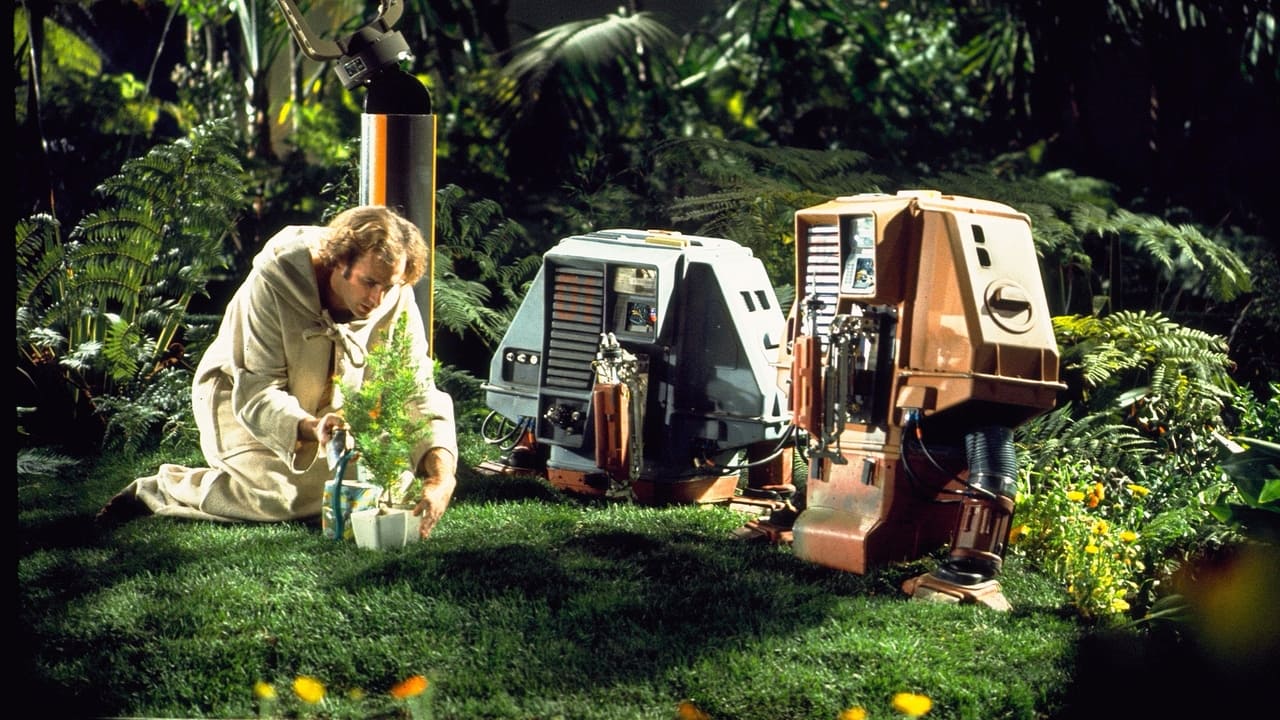
And here we have the scene of them showing some kind of... Yeah, they've been together for all these years. And actually, this crew doesn't hate each other the way the crew of the Dark Star or the Nostromo do. There's a slight feeling in the very scene we're watching which shows that they've been together and they are largely friends. It's interesting, we should point out that at this point we've already seen the drones. Now, audiences of the day, including this viewer... had no idea they were anything other than just machines. Until we see the end credits, do we not know that somebody in those drones? But I like the... Because these characters don't actually have much screen time to establish who they are. They're individuated quite well. You see that there are differences between these people. They don't...
Yeah, Ron Rifkin is just slightly more aggressive. Cliff Potts is sort of a pacifier. And Jesse Vint is kind of going along with it all. So they're broad strokes characters, but they are characters. This does look rather like, as you say, they work together as actors and it has the improvisational feel. So you feel that maybe Doug Trumbull just stood back and let Bruce Dern run with this one. Yeah, I don't think Bruce Dern has actually done... or any direction on film. He may have directed in the theatre. But he came out of... I mean, for him, you've got to think, only a couple of years before this, he was making The Incredible Two-Headed Transplant, right? And Roger Corman, you know, The Trip. And he was doing biker movies and lots of... guest stars. But he was breaking big as a character actor in the early 70s. I mean, for me, King of Marvin Gardens and Smile are his great performances of that era, along with this. But of course, he's not yet a national treasure of that kind of alternative actors. And in fact...
While he was making this, he had just shot the cowboys, and he actually had to go back and do some reshoots on the cowboys while making this. And that made him not a national treasure, but a national hate figure, because he was the long-haired outlaw who shot John Wayne in the back. And it was actually billed... It's not true because John Wayne dies in the sands of Iwo Jima. But it was billed as the first time John Wayne had been killed in a film. And it was a kind of a big shock. And it was sort of a great part. And Bruce Dern gave a great quote about it. He said that afterwards he would like.
go out in the streets and people would look at him and hiss and some would come up to me and give me a hard time because I shot their pal John Wayne. Well, he shot me in the war wagon and nobody gave a shit. I think there's a remark by Wayne to the effect that Wayne didn't understand this kind of actor like Dennis Hopper, who he also worked with, but he knew, he was canny enough to know that he was a very good character actor. Oh, yeah. And he'd look better with a good character actor against him. What about the fact that this film we should talk about The fact that there have been ecological films before or around the same time. John Christopher's Death of Grass was filmed by Cornel Wilde's No Blade of Grass. It's also a little before Soylent Green from Harry Harrison's Make Room, Make Room. And there were other science fiction. I mean, The Omega Man from Richard Matheson's I Am Legend.
Logan's Run from the George Clayton Johnson, William Nolan novel. Even a little later, there was a TV miniseries of The Martian Chronicles from Ray Bradbury. Not a very good series. And these are all around this time. What's the thing that's different about this film from those movies? Go ahead. I've just told you, this isn't based on a novel. It's an original screenplay. And the thing about those other films is... Some of them are kind of what you might say dumbed down in the adaptation. We knew Harry Harrison, and he would always sort of complain about the Soylent Green is people and the murder mystery stuff. He said that that wasn't the point of the book. But in fact, the point of the book is to show overpopulation, which Soylent Green, the film, does absolutely brilliantly. The thing is, all those films, because they have this kind of...
and the groundwork. Basically, a science fiction writer has researched and thought about the world. Another good late friend of ours, John Brosnan, who wrote a history of science fiction cinema, Future Tense, also known as The Primal Screen, has a two- or three-page rant about the science of silent writing, which is one of those things that just gets you, and you look at it and you think... Oh, yeah, it makes literally no sense at all. It's a world that is constructed from its situation backwards to the kind of a future dystopia we have. What we're told about the Earth is just made-up nonsense, seriously. Yeah, anything with a uniform... temperature and climate does that mean the ice caps have melted if there are no forests where does the uh the oxygen come from what are people eating all these kind of things this film has literally no interest in because it's not about the science it's about the fable and i think that that is something that john probably never quite got
about how this film works for an audience rather than how it works for a science fiction audience. And in fact, science fiction fans were sort of a bit sniffy about science fiction cinema. Some still are. And it's always to do with the fact, and even more so after Star Wars, which I would argue isn't even a science fiction film. But when you mentioned John Brosnan, John Brosnan was writing his piece about this shortly after 2001. Mm-hmm. That had established what we all now know, there is no sound in space. Yes. So Kubrick gets around that with great chunks of Richard Strauss and Ligeti. Now here, Trumbull decides to put sound in. Yeah. No, when we get explosions, we actually hear it, which is, it's a strange decision. I wonder if that is a Trumbull decision or if it's something imposed on, because it's still unusual in, I mean, in like,
Star Wars, we accept this is a fantasy world where you have World War II fighter plane tactics in space and all this kind of stuff. And yeah, the explosions are what you get. Whereas Kubrick showed us those big science explosions. This is a film that's worked out what an atomic explosion in space might look like. Although it did strike me as, again, that's one of those backwards thoughts. There's no particular reason to blow up the globes. And if they did... an atomic explosion in space, wouldn't that mean that in a vacuum that every single irradiated particle would be on a trajectory that would never end? Yes, forever. It would spread throughout the solar system, doing no good for no reason. But it's like that's not what this film is doing. No. It's showing you things that make an emotional sense, whether or not they make a scientific sense. And I know that there are, I mean, I know there are people out there who say things like, yeah, I can't take the Battle of Britain seriously because that particular model of fighter plane wasn't in service until three months after. And yeah, all those kind of things are absolutely fair enough.
Maybe experts are not the best viewers for any kind of thing. But one thing in this film that has kind of come into its own in the 21st century, it's a film about the depletion of resources. Yes. Now we have what's happened to the rainforests. This is about the preservation of forests. Yeah, but it's interesting. It's about the preservation of forests, but it's not considered what a world without rainforests would actually be. Here, it's almost as if... The forest purely, and this is a very American counterculture thing, it's as if the forest purely exists in order to be somewhere for a hippie to have a nice time, isn't it? There is no sense of an ecosystem in which we are all dependent. The forest here is very much the forest of folk songs and fables, isn't it? It's something that he has a sentimental attachment to that's irrational and strange and romantic. But you know what? That's fair enough.
That's what this movie is. You mentioned folk songs. That's interesting because we should talk about Peter Schickele, who wrote the score, who is also, of course, PDQ Bach and had a successful... Yeah, you'd better explain who that is because the waters have kind of closed over. They have. Who knows who he is now? So they were a series of popular arrangements of Bach which enjoyed a vogue. Waldo de los Ríos had a similar run and in fact Wendy Carlos who did 2001 but of course the fact is that this film has a prominently placed folk song sung by Joan Baez so you are nailing your colours to the mast by having her sing the song is it too on the nail? I don't necessarily think so I think The use of music in science fiction cinema is a whole fascinating subject, isn't it? Probably the most influential musical score in science fiction in the 1950s would be Louis and Bebe Barron's Electronic Tonalities on Forbidden Planet. And that sort of established that...
But it had no followers. That was a one-off. Well, no, I can think... I mean, the Doctor Who theme by Delia Derbyshire and Ron Grainer. That's still music, though, rather than tonalities. But it's... No, it's electronic music, isn't it? And so that, for a while, was what Outer Space was going to be. And then Kubrick used classical music. It's often said that that's a... Yeah, an unprecedented or a radical thing. Except if you listen to, you know, the original TV versions of Quatermass, use classical music. Yeah, it's... But I get it. There is something about, particularly for Kubrick, the mathematical nature of classical music that sort of fits with space travel. But also it did then mean you have... John Williams' Star Wars score, which is... It's not classical music, is it? It's old-time Hollywood music. It's also pure 19th-century symphonic music. Now, you mentioned Kubrick's use of music, which is interesting to compare with this. So when Kubrick uses Also sprach Zarathustra, he's using music which is about rebirth. This is a film which is almost, correct me if I'm wrong, totally lacking in a philosophical dimension. Oh, I think it has a philosophy, but it is very much a...
Yeah, don't step on the flowers. It's a tie-dye T-shirt philosophy. It is very much of its time. And the Joan Baez song is very much of its time. Yeah, if you look at... Actually, I mean, the use of folk songs, it's like... Pat Garrett and Billy the Kid is set in the 19th century. Why has he got Bob Dylan on the soundtrack? Joan Baez had sung the theme tune for Sacco and Vanzetti about the union martyrs. I think she also did the theme song for The Ballad of Joe Hill, which is a period piece about a union organiser. It's like that was an early 70s... trope. You can find it in many films. I think it works fine here. There's no reason why that particular type of music... It's not diegetic music, is it? It's not something we're supposed to think. Whereas, for instance, in John Carpenter's Dark Star, there's a sort of joke. The use of diegetic music there is there is an outer space country and western song. And that's there to poke fun at 2001. I think...
that Dark Star also slightly pokes fun at this. Yes. I think the character there of the dreamy space surfer and the guy who's obsessed with the asteroids. Yes, could be seen to be like the Bruce Dern character. They're all a bit like this. And you know what? There's one tiny moment with the... the alien beach ball with the creature from the Black Lagoon in her hands does a little finger-tapping thing, which is very like one of the moments with the drones. Very well spotted, yes, the tapping drone. But my guess is that Dark Star was made in 1974, so this was one of, apart from 2001, there weren't that many outer space type science fiction movies. Well, that brings me on to what I was going to ask you about. So 2001 is... because we can't avoid the comparisons with this film, is both about inner space and outer space. This one's really just about outer space, isn't it? I'd argue it's the other way around. I'd argue that this is all about Bruce Dern's character and dreams. I think that the only way of taking the rest of the film is as a projection of Freeman Lowell's character. To the extent that the...
When we get to it, the question of whether the drones are sentient or not, or is he anthropomorphising, is he projecting onto machines? I think we do see them having independent agendas, which he doesn't know about. Yeah, and absolutely. But that's a fantasy notion, not a science fiction notion. I think it's something that comes from Freeman's character. It's not something that comes from the story. Because it's actually a robot achieving self-awareness and sentience. That's like a huge concept. Pretty much all of 2001 is about that. And even then, it's ambiguous in that. It's the dominant story of... I don't know, Frankenstein or Pinocchio. These are huge things. And here, it's a tiny sub-subplot that's not even remarked on in the dialogue. They never talk about it. It's something that sort of happens. Or maybe it doesn't. Maybe we're... And the thing is, of course, we in the audience anthropomorphize the robots. I've seen quite a lot of commentary that refers to them as cute robots.
Yeah, and I do find that the relationships between them, they're presented as being affecting, aren't they? And yeah, it's the one sort of really human connection that Freeman makes is with the robots. But isn't that also terrifying? Yes. You mentioned the human connection. Yeah. And you wonder about what Trumbull's thinking is. Kubrick's 2001 was criticized for the impersonality of the astronauts, which, of course, is precisely the point he was making. That's not the case here. Bruce Dern, A, is thoroughly characterized and undergoes a change. Oh, yeah. Loneliness, grief, regret. And I think, again, that's part of it. There is sort of a suggestion that we never get a backstory for how this guy ended up in space. So we read him as a misfit. This is the right place for him. Yeah, that's right. He's a man from... But do we assume that in his backstory that he wasn't... These guys are astronauts or truck drivers in space, but he's a forest ranger. He's a man whose loyalty is to the vegetation, to the trees, rather than...
Somebody who's a career spacer. And I've got to say, that's something that's... In science fiction, it's something that's not true of 2001, but it's sort of starting to creep in. These guys, right, these three people here, they're space pioneers. They're people who are looking away from the Earth. Although they want to go home, they're committed to space travel. Bruce Dern isn't. Bruce Dern is literally a conservative. He wants things the way they were. And there is a strand in science fiction, Ray Bradbury or Clifford Simac, have this sort of rural, rustic, agrarian, back to a simpler time ethos. But the dominant mode of science fiction was what... John Wyndham called the outward urge, wasn't it? It was, I mean, if not conquering space, exploring space. Yes, because the Martian Chronicles is really about the Earth. Yeah, that's right. It's almost like the irony of the...
The Martian Chronicles is often seen as a novel about or a great collection of short stories, whatever we're going to call it. It's about the wonder of colonizing Mars. It's not. It's about how colonizing Mars would be a really bad idea. That's the thing. And I think that when that book came out, that was a contrast to so many, you know, E. E. Doc Smith or Heinlein or Asimov or all these people who... had thought it would be wonderful to go into space. Arthur C. Clarke. They loved the idea of space exploration and space travel. Ray Bradbury wanted to stay home. He famously didn't like aeroplanes. And I think that this has some of that feel to it. And it happens to, maybe it's the way that the stars come into alignment. It happens to come into alignment with the early 70s and the So the disenchantment with John Wayne, with the American ethos, with the idea of the cowboy or the soldier, and therefore by association with the astronaut. And there is a sense that, no, the real... heroic values we want are those of the easy rider, of the hippie. I actually, I notice it said that earlier we saw Freeman wearing this kind of monkish
which I think is Bruce Dern's own outfit. He wears something very similar in a movie called Psych Out. Well, monkish and hippie-ish at the same time. You remember in Psych Out, he plays this character who's called the Seeker, who's presumably on acid for the whole film, and it's all about his sister searching for him. But there, he's almost the same guy as he is in this. He's got that same sort of monkish robes, and he's out there looking for answers. And Bruce Dern, This is, I suspect, a remarkable bit of stagecraft because it basically makes you sympathise with somebody who's killing the only co-worker who's even remotely nice to him. But isn't this the point at which we are... He is compromised.
From this point on, from this point on, we stop looking at him in the same way. Yeah, he also becomes... Yeah, there is... He's also mad. I mean, that's... Yeah. He's right and he's romantic, but he is also insane. Isn't there a touch here of Jack Nicholson in The Shining that really he's pretty much over the edge right from the beginning? Oh, yeah, yeah. There's nowhere for him to go. He's Bruce Dern. In fact, Jack Nicholson wouldn't have done this film because he was a bit... He'd moved on to doing different types of movies. But he would have been in the frame for the casting. Again, according to Mark Kermode's book, the original casting for this was Larry Hagman. Of course, later on known for Dallas. But at that time, he'd been in I Dream of Jeannie playing an astral, hadn't he? And that probably was... But he decided he'd been offered a chance to direct a film.
which I'm sure you know what that was. I've forgotten. Oh, it was Beware the Blob, a. k. a. Son of Blob. How could I forget Beware the Blob? Actually, it's a really interesting little film. I mean, it's one of those films that tends to get sneered at by people who haven't seen it. It's sort of a satire. But the whole tenor of this film would be different with Larry Hagman. Oh, yeah, it would. Because Bruce Dern is actually quite an interior, thoughtful actor. But he's very expressive. I'm sure Hagman would have played it much more... Probably he would have grown a beard and long hair and tried to come off as flakier than his clean-cut image. Whereas Bruce Dern doesn't really need a clean-cut image. That's why in Coming Home he plays an army officer so he has a short haircut in that. But the... The range of roles he played in the 70s, they were all... I mean, the hustler in King of Marvin Gardens and the beauty contest organiser in Smile, the Vietnam veteran in Black Sunday, you know, there's a Bruce Dern type of... He was the demented cop in The Driver, you know. He was, like, the leading crazy...
But he becomes more sympathetic and more indulgent towards him as he's now a middle-aged man. He's playing roles where we really like him. We certainly don't like him in Silent Running, do we? I think we do. Do you? Here's the thing. I think I like Bruce Dern in almost anything, even when he's playing a bad guy. Are you not just admiring his acting skills? Oh, yeah, absolutely. I think that I relate to him as a performer. And this is... It's partly a critical judgment. It's also nostalgia. It's my feeling about this era of cinema. To go back to it, I think that era between 2001 and Star Wars, it was when I was getting interested in movies. It's when I was a kid but becoming a teenager. And also, objectively, it was a period when there was so much interesting work being done in sort of semi-mainstream ways, invisible ways. And I do think that that...
it's reductive to say that that type of cinema was ended by Star Wars. Well, to a degree it was because I remember seeing the first showing of 2001 after Star Wars. It was marketed, the reissue, as if you enjoyed Star Wars, why not see the film inspired? And of course the audience sat there waiting for the laser battles and they didn't get it. They found it slow moving. And in the same way, this would not play well with an audience wanting Star Wars fireworks. No, but as I've I don't really think Star Wars is a science fiction film. It's a swashbuckling adventure that happens to be dressed up as a science fiction. If you look at Star Wars, the whole thing is it's full of moments where you get something that looks like a cover of a science fiction paperback and then you get a click of recognition. You think, oh no, it's a World War II dogfight. Or, oh no, that's not a strange alien, that's a used car salesman. Or, here's a barroom brawl. And it's
The whole idea is to give you things that in the end are familiar. The canteen scene is straight from Westerns. That's right. Whereas science fiction often goes the other way around. You know, it presents stuff to you and you think, no, this is genuinely a world-expanding, strange, vast... And there were films like this made after Star Wars. I mean, but... I think Star Wars changed the film image of science fiction. Arguably, it dialed it back to about 1935. Yes, indeed. Well, of course, George Lucas wanted to make Flash Gordon and couldn't get the rights. What about the fact, we haven't discussed the fact yet, that we're seeing a film directed by Douglas Trumbull, the man who did the special effects, most of them, for 2001. Several other people worked on that. But he's the kind of star name. Strangely, yes. The special effects he did for 2001, he did the computer backdrops, which is odd because the ones in Silent Running aren't as good as the ones in 2001. Well, that's an interesting point. But he also then did the psychedelic weird stuff at the end. He didn't do the model spaceships. Yes. And watching this again, I'm really impressed with the model spaceships. I'd forgotten how good that...
Large-scale model work was for outer space science fiction because it's now something that's almost completely replaced by CGI whenever you see. And I suppose in recent years, with things like High Life and Moon and Aniara, we've had more outer space type movies. But that was a form of science fiction that... became very unfashionable for a long time, wasn't it? It was like most science... And obviously it's cheaper to make a Mad Max-type movie than it is to make a 2001-type movie. So if you're envisioning the future... Well, you mentioned budgets. Now, one has to say, and I agree entirely, the special effects in this are still terrific. They're not as good as 2001 because he didn't have Kubrick's level of control, he didn't have Kubrick's budget... I think mostly he didn't have Kubrick's schedule. Yes, that as well. Well, the thing about... I mean, I'm sure if you now look at 2001, you can see a few flaws there. But Kubrick never had that thing George Lucas had of having to redo the special effects every five years in order to reissue the film. You do get... Look at those screens there. They're...
just wrong, aren't they? I mean, they're CRT TVs, but everything from the typeface to what we now call a computer desktop. It's an analogue future. But that said, it still looks something in advance of the computer screens in Alien, which also has that kind of feel, isn't it? And... Yeah, I suppose it's sometimes now when we look at visions of the future, what we see are the absences of things like the internet and mobile phones that we absolutely now have as central to our lives, but mysteriously will have disappeared by the time of the Star Trek series. Something we haven't talked about here, as we see the drones on the screen, is that there's currently a furore about actors playing something which is outside their own actual ethnic, whatever, background. Yeah. Here is a film which gives an opportunity to differently abled actors who couldn't get any other work. The irony is that we didn't know until the end credits that the drones were not machines. Yes, true. And it's the thing of casting amputees, people who couldn't possibly fit into the devices. Watching them now, that sort of waddling look is...
personality. I think most in Star Wars, for instance, you have Kenny Baker as R2-D2, but he has these sort of burbling weird noises whereas the drones don't even have hydraulic type noises, the kind of things you'd expect. I've got to say, I think the most impressive bit of tech in this film is the pool table. Yes. Which looks as if it might actually work. Having watched it a couple of times, I think the scenes around it are written such that it never actually works. You always see them finishing a game or racking up. You never get to see it playing. But it looks like something that would actually work. Isn't an inspiration for the use of amputees in the film. I think Trumbull saw Tod Browning's Freaks and realised it was possible for a man to walk with his arms who doesn't possess legs at all. It's interesting that after this, Kubrick, of course, goes on to make another science fiction film, Clockwork Orange, but you might say this is the apogee of Douglas Trumbull's career. Well, he made Brainstorm, which is a really interesting film, flawed by tragedy because the leading lady in Natalie Wood died
During it, there was a thought that it would never be finished. It was possibly going to be written off for insurance money. But it did get released. And actually, it's another film which is full of ideas that have been reused. Certainly visionary ideas. That's right. It's got lots of astonishing stuff in it. I haven't seen it in a while. And I tell you what, I can remember all the ideas. What I can't remember is the actual story. And I know that he, after... Turning Down Star Wars. He sort of became a technical innovator, but he didn't particularly want to direct anymore. He worked in theme park rides. Yes, he did for the New York World's Fair in 64, To the Moon and Beyond, which I'd love to see. And it's difficult to see all those things which were not made for the cinema. Sometimes they appear, don't they, on DVDs? Yeah, that's right. And I think...
probably in the extras of this edition, there'll be bits and pieces of things that he envisioned and didn't make. Well, in fact, Kubrick saw To the Moon and Beyond, and that's what made him hire Trumbull. But I think he's one of those people who, although unquestionably an auteur, wasn't necessarily a born director. He wasn't somebody for whom directing was his great passion. It's something that he did in order to have control over over a project. And you feel that he probably would not have been a great actor's director. It's the nuts and bolts that appeal to him. He is very lucky to have Bruce Dern in this film. My memory is that in Brainstorm, Louise Fletcher is brilliant. But Natalie Wood and Christopher Walken, maybe not so much. Of course, he worked with Wally Veevers, Trumbull, and Tom Howard. So Britain does have this. And you know what? I actually find this simplified instruction book really convincing. The fact that he's got a ring binder with it all. Of course, now, I had to install a...
washing machine last week, and that involved going online to look up the manual to find all the things. I think this bit of tech as well, the microscope in order to tweak microcircuitry, that's actually a really incredible thing. It's quite persuasive, isn't it? Yeah, because it's still... He's doing this sort of miniature soldering or whatever, but it's still... actual credible work and these rather you know they're not floppy disks are they they're kind of rigid disks but they're recognizably what computer programs are and this was a time when I think most movies barely acknowledged how a computer worked you know after this film here because he works on the credits of Candy which I saw recently but I can't remember the credits you know can you Kim no And so that's... But I imagine that was, yeah, it's like Terry Gilliam did the credits for Cry of the Banshee. I imagine that probably took a day or so to get... Yes, and of course he worked on one of the very best modern science fiction films, Robert Wise's The Andromeda Strain. Yes, yeah. He got that job by underbidding. Oh, did he? Yeah. The Andromeda Strain has really good, credible technology, isn't it? And I think that seems to be the...
the thing that runs throughout his films. And it's odd that we were talking earlier about how the science fiction aspect of this film, the background, the world building, is very poor. But on a micro level, the technology is very good. It's very credible. And it's almost like that was what he was interested in. I mean, the writers of this script, who are a very... mixed bag isn't it it's a technique it's Deric Washburn ampersand Michael Cimino so the team of Deric Washburn who is obviously the least known of the writers of this film but he co-wrote The Deer Hunter with Cimino or in Mike Cimino he's built as he is but then Washburn, Ampersand, Cimino, and, spelled out, Steve Bochco. Steve Bochco, later the creator of Hill Street Blues. Michael Cimino and Steve Bochco. There's nothing in this film that would suggest what those two men were going to do later in their career. And similarly, there's nothing in...
both of their filmographies that suggested they had any interest at all in science fiction. Steve Bochco wrote a vampire movie that was a pilot once, which actually is kind of cool, but they weren't science fiction guys. They weren't... I presume that Trumbull, who isn't credited as a writer on this, like Hitchcock, sort of sat in the room and sort of insisted. Do we feel that he was like Hitchcock saying... I'd like a sequence on Mount Rushmore. Find me a way of getting the hero onto Mount Rushmore. I do think that, and for instance, this thing with the robot performing an operation, there's a scene in Ridley Scott's Prometheus that's a bit like this, isn't there? And so it's one of those things, yeah, this whole film feels to me rather like those sort of organic pieces that... that go together in the geodesic dome. It feels to me like a bunch of scenes and ideas have been fit together. And it's like, I'd like to illustrate this idea or this little thing without any particular sense. And I would imagine that the first draft is Washburn and Cimino and then Bochco comes in. And at that time,
He'd not written that much. No. Obviously, later on, he'd be the most prolific of all the writers. And I imagine he came in to punch up the dialogue, probably to work on Dern's character. I think, so far as I know, Trumbull and Michael Cimino worked on the drones, which is an interesting idea. And Bochco, well before Hill Street Blues, you wonder what his contribution was, didn't you, to this film? Yeah. But, yeah... And I suppose Dern has quite a lot of talking to robots, isn't it? And one of the most admirable things about this movie is that the robots don't talk back. No, and also the fact that one thing that was important to Trumbull is he wanted a robot or robots that didn't look like a man in a suit. Yeah. And this is surely the first example of that. I can't think of earlier ones. Gog. Gog, yes, Gog is just a machine. And Howl in 2001. Yes. But this is... I suppose this is one of the first ones that doesn't look like a man in a suit, but also is a man in a suit. Yes. Technically, the Daleks as well, but they're cyborgs, not robots. But, you know...
And here we have the rings of Saturn. My understanding is that an earlier draft of 2001 involved going through the rings of Saturn. Yes, which was not filmed, I think. And so Trumbull decided he wanted the rings of Saturn. But this film was only a million dollars, which is pretty economical by Hollywood standards. And corners had to be cut in the production design. particularly in the interiors of the spaceship. Yeah, there's a wrinkled cyclorama there. Yeah, we can see quite clearly. We're all watching on a very large screen, one has to point out. Yeah, a very large screen and a high-definition Blu-ray. I can't remember if that wrinkled psych was notable in cinemas. And if it was, it was nothing compared to, like, the Mac fringes and all these things that are in other films that aren't in this. You have to say, though, in Trumbull's favour... that he was able to get an actual ship, the Valley Forge. And that is very cleverly used, the interiors of it. Yes. No, borrowing that, I mean, obviously it's believable. There may well be elements of it that don't look like a spaceship. But, yeah, since there aren't spaceships like this, you can't really compare it. But, yeah, no, using a...
Yeah, it wasn't even decommissioned, was it? It was an active aircraft carrier. So the film had a very mixed critical response. Do you think modern viewers will look at it more favourably? Yes, I think so. Well, the thing about the original mixed critical response, there are... And there may still be, in certain... sections of the critical establishment field, but anything with robots and spaceships you can't take seriously. That's just Buck Rogers stuff, right? It's like, and okay, 2001 really, really put a dent in that. But you look at the original reviews of 2001 and there are a lot of sniffy older people saying, you know, this is still stuff for children. It's like nonsense. Yeah. And I suppose the... the space race in the 1960s, the moon landing, all of the various things that are going on in outer space. Tell you what, you can always tell when a producer is talking through his ass, when he says, this isn't a science fiction film, this is science fact. That's one of those real giveaways that whoever's making it actually doesn't understand science fiction, science or drama. But this came at a period, I suppose, when...
Science fiction now, if you've got a demeaning stereotype of science fiction, it's for nerds. Then the demeaning stereotype was it's for eggheads. Yes. And this I don't think is. I mean, obviously, it's not for eggheads, it's for heads, isn't it? But that point you made about the esteem or lack of esteem, I remember speaking to the writer P. D. James, who'd just written Children of Men. She was at pains to point out to me that it wasn't science fiction. Yes, and with all due respect to Dame Phyllis, she was talking out her ass. You can always tell that. I have a lot more... respect for some, I think, one mainstream author who's written a science fiction novel, Robert Harris. Someone said, isn't this a bit like SSGB? He said, no, it's a bit like Philip K. Diggs, The Man in the High Castle, and then reeled off all the other books that it was a bit like. And yeah, I think, yeah, there's always that kind of arrogance where you say, no, this isn't science fiction, this is good.
I don't think that that's an attitude this film has. I think this is unashamedly science fictional. It's not trying to weasel out of it the way that maybe a little earlier or a little later they would. And this, you know, probably it is to do with the... The Shadow of 2001, which was huge. The Shadow of 2001 is lost at this point because what happens to Bowman in 2001, he's under-characterised deliberately. So what happens to him is what happens to the human race. Here we have Freeman Lowell realising he's utterly alone after murdering his fellow astronauts and his remorse now is going to become a key theme of the film, is it not? And the drones will become immensely important from this point on. But I think actually in 2001, Hal emerges as a character, doesn't he? But yeah, here we do get into this sort of going crazy in space. Robert Pattinson in High Life does something quite similar. And I think they...
It's a form I sort of associate with new wave science fiction. There's sort of J. G. Ballard, Brian Aldiss, Harlan Ellison, Michael Moorcock type. People who came along a bit after the nuts and bolts, technical stargazing Arthur C. Clarke science fiction and started to think a bit about what the human consequences of it were. And so I think we are into the... going crazy in space stuff. But I don't think he feels that much remorse. I still think he's more upset that his forest isn't doing well. Yes. As, again, to go back to one of John Brosnan's criticisms, how come the plant expert doesn't realize that photosynthesis is important until very, very late in the film? Although we have got him coming again, and we can't avoid talking about 2001. We are now watching a film in which there is only one human being on the screen for the rest of the film. But 2001 wasn't the first film to do that. You could argue that Robinson Crusoe on Mars, which is another sort of cracking up in space story. Yeah. You mean that Friday is not a human being? Yeah. Okay. Yeah. I'll buy that. Yeah. And in that, Robinson has visions of his dead comrade.
who he didn't kill, but yeah. And subsequently, of course, one of the things that really struck me watching it again recently was having seen The Martian as a current film. The Martian is all about a guy stranded in space, making do and surviving. And the huge rescue effort that's being made by all the people. Whereas there is, in fact, a huge rescue effort coming to save Freeman that he's trying to avoid. And I rather like the characterization we get of the guy. He's talking to Neil, the captain of the Berkshire, who is Joseph Campanella, a very familiar character actor. And he's got a good, rich... But he's authoritative. and reassuring, but also an actual proper science fiction hero, isn't it? He's doing what would be in a movie like Marooned or Apollo 13. Neil of the Berkshire would be the hero, wouldn't he? The man who's doing absolutely everything against the odds to get this one lone guy back. And...
Considering that this whole thing is all to do with the fact that the company would rather return their spaceships to commercial use, presumably Neil is spending a huge budget just to save this one guy who, A, doesn't want to be saved, and B, is a murderer. And I like the fact that this film has a sense that there is a larger story going on out there beyond Freeman cracking up. Yes. What about the fact that we're talking about Douglas Trumbull's post-Silent Running Days? I'm not sure I've ever seen, or if I have, it's gone from my memory completely, Canadian TV series called The Starlost. I've seen one or two of those, yeah. How did that look? It was not well received. Canadian TV, it was very cheap. I know that the... The original brief was written by Harlan Ellison, who may have written a couple of episodes. It was one of those things that should have been better than it was. I think Ellison may have taken his name off it. And that was a... Yes, he apparently hated the results. But it was like... I mean, there are loads of stories. Brian Aldiss wrote one, isn't it? It's a...
Harry Harrison did as well. It's a generation starship. It's a world in a ship going to another world. Well, it has in common with us the notion of an arc in space. Yes, yeah. Which is, of course, a Doctor Who serial. But despite not doing anything as a director that matched this, he did have one great bit of professional redemption, Douglas Trumbull, with Close Encounters of the Third Kind. Yeah. And that really has... It's the definitive alien encounter movie. Yeah. And remains so. Yes, I think so, it was. It's interesting, because it's a film that hasn't had sequels, it hasn't remained an active franchise in the way that Star Wars or Jurassic Park, or even, you know, sort of... concluded series like Back to the Future have, you very rarely hear people refer to Close Encounters anymore. The thing that Close Encounters has in common with this is an everyman visionary hero who's also a complete bastard in human terms. But we in the audience end up being on his side. It's like we are with...
Richard Dreyfuss in abandoning his wife and children. Even when we watch his family weeping at what's happening to him, we still want him to find that mothership. Yeah, yeah. And here, I think that... Yeah. I'll go back to... One of the reasons why this film didn't immediately work. Maybe we're on side with Bruce Dern. Maybe there was a segment of the audience that thought that long-haired weirdo just killed the normal people and we're supposed to sit still for him. Another reason I think this film may have had issues is the title. There'd been a... Silent running is actually a term in submarines. And there's a Clark Gable film, Run Silent, Run Deep. Run Deep, yeah. So people would have seen...
that there was a film called Silent Running coming out and assumed it was a World War II submarine movie. And frankly, in 1972, what people didn't want to see was World War II submarine films. And in fact, it's a total misnomer because it's not Silent Running. No, that's right. Because this is one of those films that has explosions making a sound in space. Yes. Now, have you noticed that the drones, we were talking earlier about the anthropomorphizing of the zones. During this scene, they're moving their arms in a way that's not necessary. They're given a movement. If they were just totally still, we would not believe that they were alive. Another thing they're doing, like the snooker playing robot, is they're not actually very good at the tasks that he's programmed them to do. They can't plant. Don't you find the problem with them also is the fact that when you see an alien which has three tentacled fingers, but without an opposable thumb...
what value would they really have done? Although they do have these things like extrude that can do things. Yeah, that's right. I think they do look to me like, actually rather like some of the robot designs in Star Wars. They look practical. Well, they're the prototypes of R2-D2, aren't they? That's right. They look like they're designed for specific tasks that they can execute. I'm not entirely sure that after the ending of this film, they will be able to maintain... Yes. How long before they rust? Because, I mean, one of the things that they aren't immortal, are they? Another strange thing about this film. I remember somebody saying... Not since The Magnificent Ambersons, as an American film, depicted the motor car as a force for evil, as well as this does. But you know what? Those little buggies, they kind of look fun. Yes. One would like to be on one of those buggies. You can see why people would enjoy. And even at the beginning, it's sort of depicted as something that only the asshole jocks do. But actually, when...
Freeman gets in one. He seems to enjoy it as well. What about another project by Trumbull that I'm not familiar with? A script prepared by David Zelag Goodman, Pyramid. That was one of his unmade films. I'm not sure what it was entirely about. I mean, obviously, Goodman has serious cred in science fiction. I suspect it was probably one of those things that was written off as too ambitious, too strange. But who knows? I suppose everybody has projects that don't get made. But this is a film which does make one think, the audience think, but he did do something called Tour of the Universe, a co-production with Paramount, but it wasn't taken up as a permanent exhibit. So really he is kind of like part of the current ethos of cinema, which is the amusement ride. Yeah, no, you could argue that cinema in the vision of... Thomas Edison or the Nickelodeon or the what-the-butler-saw machine was always going to be part of a fairground attraction. One of the great what-ifs of science fiction cinema is shortly after publishing The Time Machine, H. G. Wells patented...
a time machine, which was going to be a kind of fairground ride where you would sit in it and images would be projected around you and you would be taken to the future. He never made it. But his vision of what cinema might be relates to the theme park ride vision that... I think James Cameron has also done theme park rides. And Francis Coppola directed Captain EO, didn't he? So it's something, and obviously Walt Disney is a great visionary. It goes back even further than you mentioned, Kim. There's the English painter John Martin. His paintings are great disasters. You would be placed in a room where there were lights, there were sound effects, essentially the theme park. Yeah, and maybe that relates to the idea of the... planetarium or the observatory and all these things which um they're sort of like lost futures now aren't they i mean they're all very much with us and they still happen and and but do you think that that idea of an alternative use of cinema um different it's not so much
It's different ways of telling stories, but also of doing stuff that isn't particularly narrative-driven. That's been taken up by computer games as an art form. That's now our alternative. Cinema is still essentially the 19th century novel or the 19th century theatre is its main... narrative form with a few sort of odd things at the artier or stranger end of it that don't adhere to that. But that's still the dominant mode of what cinema is. Well, it's what takes the viewer out of the proscenium much. I suppose a film like P. T. H.' s Bullet suddenly puts an audience in a driver's seat for the first time. What about the fact that we haven't mentioned Douglas Trumbull's post-Silent Running career, another very successful collaboration or you may argue it wasn't, with Robert Wise with Star Trek The Motion Picture. Yeah. I haven't revisited that one in a while, I've got to say. I remember being disappointed with it when it came out, but also finding it more interesting than, say, The Black Hole.
or Buck Rogers, or various other science fiction films that got greenlit in the wake of Star Wars. I remember sort of admiring aspects of Star Trek, the motion picture, and I think that there are... It goes beyond what you could do on television in terms of its immense spectacle. But then it misses the... The story and the characters. That's not to do with Trumbull, is it? Trumbull's contribution to that film is non-pareil, isn't it? Oh, absolutely. It's possibly Robert Wise not being in tune with the material. No, I think Wise was perfectly in tune for what the film was trying to do. It wasn't what Star Trek fans wanted to see. It's a misunderstanding. There was a feeling, and again, it's to do with people's... Relationship with science fiction. There was a feeling that Star Trek was science fiction. It's not. It's a character-based soap opera. And in the same way that the great innovation that Stan and Jack brought to Marvel Comics with Steve Ditko was soap opera. It wasn't how weird their superheroes were. It's that they had continuing and complicated private lives. It turned out why people liked
Star Trek was much more to do with the relationships than with the boldly going. Whereas Robert Wise made a film about the boldly going. It wasn't the problem that the cut price special effects didn't worry people on the TV Star Trek. Whereas when the film produces those effects that were missing from the TV show, it wasn't enough. Oh, I think it was too much. And it's generally accepted that the most successful Star Trek film is Star Trek II, which brought back all the character interplay and the drama from the TV show. That everybody wanted. That's right. And the effects, they're okay. They're not as innovative or outstanding as Star Trek The Motion Picture, but they're perfectly serviceable. But they're in the service of the story. And that's, I think, a thing that... so many post-Star Wars science fiction films have, is in the end there are other types of films. There are a ghost story in space, a war film in space, a murder mystery in space. They're not a science fiction story in space. Whereas, for a brief window...
There was a chance to do science fiction stories in space. You could argue that Alien, one of the most influential, is essentially the horror film in space. It's a horror film in space, yeah. Whereas this is still a science fiction story, even if it is most focused on its character. There's one way in which Trumbull is ahead of his time, how early he adopted the technical possibilities of IMAX. So as we speak, the latest Christopher Nolan film, Tenet, is opening in IMAX. So IMAX appears to be here to stay. Yeah, although it's still a niche distribution mode. And I think that's the thing that... Trumbull probably envisioned a world where... All cinemas would be in IMAX, or it wasn't even called that when he created it. He had other technical terms for it. In the way that after 1927, all cinemas were wired for sound or they went out of business. Or in the 50s, they brought in widescreens or they went out of business. IMAX, like subsequently 3D, has not become...
universal. And I don't know if that's because it's a technological innovation that people didn't... There were practical reasons. Nobody particularly wanted to have a theme park instead of a multiplex. But also for storytelling reasons. There are whole things about IMAX as a film format that are amazing. But do you want to see a Ken Loach film in IMAX? And In this movie, for instance, the outer space stuff would have looked incredible. I'm not sure... This is the scene I most remember from this film, right? The car playing scene is the key scene, isn't it? Yeah, right. And what's going on in this... This is the moment where you have a sense that the robots are becoming sentient. They are starting to think. Or have they been sentient throughout? Well, no, he started to fiddle with the programming. So you can see that he has done this. But he may also have programmed in that...
Turing hypothesis thing. He may have merely programmed the machine to fool him. Yes. On the other hand, the anthropomorphizing is the fact that his facial expressions are designed for human beings, not machines. He's responding as he did to his human companions. Yeah, that's right. And he is. Yeah. And I think this is obviously that I don't I assume Bruce Dern accepted this without qualm because. not many people were offering Bruce Dern solo leading roles, right? Even though he was getting a lot of work at the time. It's like most Bruce Dern films he's great in. He says, oh, and you're with Jack Nicholson. So, you know. But this would be the scene that most actors would pick out of the script and say, this is why I want to do this film. And it's a lovely scene. We haven't mentioned, of course, possibly the last magnum opus of Douglas Trumbull, another great science fiction film, Ridley Scott's Blade Runner. Yes, which may well be the end run of this particular cycle. If we say that we start with Kubrick and Clarke, we end with Scott and Dick. Yes. So in fact, he received an Academy Award nomination for that. And Blade Runner's vision of the future is the one that's stuck.
Yeah, it is. Yeah, although 2001, Blade Runner and this, they all have that thing of using the logos of companies. I think this is the one where most of the companies are still in business, aren't they? Whereas in 2001 and Blade Runner, Pan Am's already gone. Pan Am's gone. But all the companies in Blade Runner are out of business now. I think, you know, I suppose there is a run in all three of those films. leading men didn't realise they were going to be upstaged by machines. Yeah. Harrison Ford, I suspect, hated Blade Runner when he saw it because he realised that his character, the human being, was also kind of the loser in the story. The replicants are so much more charismatic than he is and it's their story. Here, actually, Dern isn't completely upstaged by the robots. But the film is... There is a kind of... a rack focusing from Freeman to the drones as part of the story. I also think that that card game is really important because it's a funny scene in a film that might otherwise be really, really depressing, isn't it? It is the story of a...
Yeah. A psychopathic murderer who dies at the end. If you think about it, if this is the progeny of 2001, there aren't many jokes in 2001. No. There's a zero gravity toilet. I think most Kubrick films are wryly humorous most of the time. You mean there's an undercurrent of wry humor? There's always something funny going on in a Kubrick film, which is why he likes casting actors like Leonard Rossiter. Yeah. Who are just inherently amusing. And sellers of course yeah i think there are things in in 2001 that i find funny and i think you brick found funny as well but they're done so deadpan so straight the way that things are so amazingly elaborate also i mean the you get a whole essentially a 20 minute scene of um hayward floyd going to the moon building up to the most earth shattering meeting that has ever been had um and it's and
Dr. Floyd gets up and says, thanks everyone for coming and talks about the procedural minutes of the meeting and presumably thanks the people who put the biscuits out. And then the film cuts before he says, by the way, we found evidence of life on another planet. It's like the key importance is just skipped. It's humorous. It's just there. And I think that's funny. Yeah, I agree. And the build-up to it is so elaborate that they're not showing it to you. I imagine... Kubrick chuckled at that. I know a surprising number of writers who worked with Kubrick, only one or two of whom committed suicide, you know, or died in mysterious circumstances. But they all said how funny he was. And they all pointed out that he had that, you know, sort of wry side to him. I think this is a film that has to fight to be funny. I think the little...
and say the card-playing game is the big, funny sequence. And I think that Dern, although obviously a serious actor, is bringing stuff to it that has nuances. There's a lightness of touch. And sometimes he just does, in his sort of psycho mode, he's sort of entertainingly crazy, isn't he? Now, the scenes are showing the depleted Forrester. Could a film like this be made... today or would it be earnest in a way we couldn't accept I don't know it it's one of those things because it's a film that's remembered in cult who would have thought they'd make a sequel to Blade Runner you know a film that was a flop yeah they made they've made a sequel to Tron right another film that was a flop and the sequel flopped too yeah and they're talking about making a third one if any any sort of
big science fiction film that lodges in the minds of people who see it when they're teenagers. They sort of remember them being big hits, even if they weren't. It's like, yeah, people remember I don't know, Chitty Chitty Bang Bang is a big hit, but it wasn't. But all kids saw it. The fact that it wasn't as big as The Sound of Music or Mary Poppins. Even 2001 took a while to be a hit. And I think that because that it sort of It's on a list of properties that have a certain name recognition. It's probably reached the point where maybe it's a little too obscure. But you think of other science fiction properties. Westworld is about the same time, and that's just been rebooted as a TV series. Or even Jurassic Park could be said to be a reboot as Westworld. And the Andromeda strain's been remade. Yes.
The Omega Man was done again. I suppose because this is an original screenplay, that's slightly different, although Westworld's an original screenplay too, but by a novelist. Looking at the scene that we've just seen of Bruce Dern running through a forest makes you think of another great science fiction movie of this era, Solaris, Tarkovsky, which takes its time to establish the world that we might be losing. And Solaris has been remade. Yes. I wonder... Because Solaris is before this, but I'm not sure if Trumbull would have seen it. No. Because I'm not sure what... It was still very much an arthouse movie at the time, wasn't it? But also, had it been seen that much outside Russia? Good question. It had a showing in London at arthouse cinemas, The Curzon. Yeah. So I don't think that that's a particular influence on this. But I think, obviously, what it is, is this and... Solaris and Dark Star are all made by people who had seen 2001 and had issues with it. And they all obviously wouldn't exist without 2001, but they all distanced themselves from Kubrick's vision of space in different ways. That's probably true of Star Wars as well. You were saying that there were people who went and saw 2001 and were...
disappointed by it after Star Wars yeah but also maybe people who were disappointed by it in 1968 then got to make their own films they made the films they wanted in their head when they went to see Star Wars yes and I think that that's something that that's true of a lot of Yeah, of great cinema in the way, you know, Howard Hawks sees High Noon and thinks, this isn't what I want from this story and makes Rio Bravo. And Howard Hawks, to a degree, ties in what you said earlier, that Howard Hawks gives Christian Nyby the credit for the thing. Yeah. Because science fiction is a bit embarrassing. Yeah, I know. Weird that. You know, I prefer the thing to quite a lot of Hawks' films of the 50s. And I love Howard Hawks. Yes. But, yeah, I think that cinema, genre cinema, often advances by that. I think that, for instance, there's a relationship between Butch Cassidy and the Wild Bunch. That's, yeah, somebody coming on and saying, that's absurdly romanticised, so let's tell the same story but with ultraviolence. Yes. What do you think? You and I mix quite a lot with science fiction writers. And generally, I think you might...
Technically, I am a science fiction writer. You are indeed. I think of you more as a fantasy writer. I think of myself as a satirist, but we won't go there. But let's say Star Wars is treated wryly, is the best we can say. Yeah, I think science fiction writers tend to... Certainly, science fiction writers of our generation, which is like people who saw Star Wars when they were in their late teens or their 20s or older, and looked at it and thought... no, this is kid stuff, that science fiction has been trying to move beyond that for decades, and it's been said, but they don't take Star Wars seriously. That said, I'm sure there are younger people who came along who saw Star Wars when they were six, for whom it was the great wonder of their lives. It was their forbidden planet. Yeah, exactly. And for me, probably it's...
I don't know, Doctor Who and Thunderbirds and 2001 and You Only Live Twice and Watching the Moon Landings. That's my childhood version of science fiction. And I know also there are writers of generations beyond mine for whom Blade Runner is the most... I mean, Blade Runner is nearly 40 years old now, right? It's officially an old movie. And yet there are plenty of novelists... for whom Blade Runner is the fountainhead of science fiction. Whereas this, I don't think connected with that. I think this is one of those niche things. It's one of those sort of science fiction films that people saw. And maybe I can think of... a good friend of ours, Paul J. McAuley, or Stephen Baxter, they write, technically they write this kind of science fiction. Hard science fiction. I don't think they would like this film as much as we do. That was going to be my question to you, because the people that you and I knew, like Brian Aldiss, Harry Harrison, I'm not sure I ever discussed this with them, in what esteem they held this film. No, I don't think it was a film that was particularly highly thought of in science fiction.
it.
the Hugo Awards, which are like the science fiction Oscars. I mean, they're fan awards. That year, the winner, and I like the Oscars, so it's presented for films made the year before. That year, the winner was George Roy Hill's film Slaughterhouse-Five, which actually is another kind of counterculture. It also... It shares with Silent Running the image of the geodesic dome environment in outer space. But there, it's a trap rather than a wonder. But the other nominees... God, it was quite a year, because it was between Time and Timbuktu, which is this really strange TV version of all his stories rolled into one. A TV movie called The People, from the Zena Henderson's original stories. And you notice... There's a prejudice among Hugo voters for science fiction, which is based on literature. Zena Henderson would have been a name for Hugo voters and meant nothing to anyone else. And Silent Running, which, you know, was, as they lost out to Slaughterhouse-Five. But...
you know, at least was noticed. I don't know what else might have been available to be nominated at that time. You're talking about all the films that have been remade. I wonder how this would be pitched today. For a start, there are no women. And there were no women in 2001, except seen on screens. There are no women in Moon. No, no, indeed. Would that now be a crucial part of a pitch? I don't know how you could do it. Not necessarily. Well, you'd have one of the astronauts as a woman. Yeah. Or even the Freeman character. Freeman as a woman. Yeah, that's right. You couldn't do it. I mean, there have been a run of films recently with all-female casts. The Annihilation, for instance, and a few others. Is it Aniara? That's an all-female spaceship crew? Yes, it is, isn't it? And High Life has women in it. There's a film recently with Eva Green as an astronaut. It's like maybe that is something that at the time, the default image of an astronaut was a bloke. Except Valentina Tereshkova. Or Barbarella. You could argue that this would take quite well to a female makeover.
Because it's about what we perceive as female values of nurturing something. Yeah. If one can still say that as a female value. He's a nurturer. Yes, he is, but he's also a murderer. He's also a murderer. Yeah, yeah. I don't know. I think that they... It's a sense that this is probably a property that would inspire a... different stories rather than be remade. I don't think the name recognition of this project is enough to get it made over again. I don't, I mean, I can see why Westworld is a template for a TV series. You know, you could look at the original, they tried to make a TV series of it in the seventies. They made a sequel to it. You can see why that premise, whereas here, if you were going to make 11 hours of this,
you know, what else do you get? Yes, there are not enough separate narrative strands to run with, whereas Westworld presents a variety of narrative strands that you can go in different directions with. And a show like Lost, in a way. So are there no offspring of Silent Running that we can think of? No direct offspring. I mean, there were plenty of, say, early 70s science fiction films which had, you know, eco-awareness. That was very much written. I mean... you could argue that Silent Running could be taking place in the same universe as Soylent Green. Yes. Because that also has a sort of a sense of banishing forests, doesn't it? Let's talk about that. There's a weird thing at the end of Blade Runner where you find out there is actually a countryside, you know, and Brazil has something very similar, which I think is probably a satire of Blade Runner. Yeah.
You don't have to live in this. Whereas the It's All Concrete or the Enclosed City, I mean, Logan's Run has an enclosed city around that time, but there's a wilderness outside as well. Do you think the depletion of resources theme is less important now that we're worried about viruses that are going to do for us all? No, no, I think it's one of the key... of, I mean, not just, maybe it's current events rather than science fiction, but science fiction is extrapolation, is dystopia. And also I'm not, although this has eco-awareness as a theme, I think its dominant mode is outer space. Yes. Isn't it? This is a spaceships movie, and that's a particular type of science fiction. it's an out there in the stars vision rather than like Soylent Green sort of despairing on Earth. We're much more concerned here with Freeman's relationship with his robots and his ship.
We actually don't see that much of him in his plants after it's established. Doesn't he slightly lose interest? He also seems... I mean, he only eats melon, which I admit I did do for a while while I was a student. But I don't think... But it is interesting that that is the theme now. And so many films of this era, like sort of Ray Milland's Panic in Year Zero... prefigures our current fear of viruses that are going to... In that case, it's the bomb, basically. But it's also the end of society. Yeah, no, I think that that is... But that's always a theme of science fiction, yeah. This actually isn't about a society in collapse. This is a bit more like Brave New World, isn't it? It's a society where... everybody is happy except this one guy. Yes. Which is a particular type of dystopia, isn't it? Whereas the vision of 1984 is, in fact, nobody is happy in that. And probably A Clockwork Orange also has nobody is happy. Here, and I think this is a... It's actually quite an interesting narrative mode. And you find that science fiction...
it does this from time to time the idea of the perfect world only there's one guy who hates it yes yeah um brave new world of course is being remade as we speak yes that's right that that's out there um so another thing that was remade recently fahrenheit 451 that's another yes sort of um yeah one guy is dissatisfied with a world that everybody else is perfectly happy with. Do we not need films like this anymore because science fiction notions have been colonized by other genres like the Bond films or whatever? I don't know. I think that in recent years, after being out of fashion for so long, there's been a modest return with films like Gravity and Interstellar. To Ad Astra, to outer space as a location for science fiction. But there are lots of stories that can be told about outer space. Yes, indeed. Well, hopefully we've given people enough food for thought. Yeah, I find this film fascinating to revisit in a way that I find a lot of films from this era fascinating.
fascinating because it keeps prodding you and saying, what do you really think about this? Is this a good thing or is this a bad thing? Is Freeman a genuine hero or just a lunatic? Or both? Well, for instance, is this a tragic ending? Is this sad or is this happy? Are we supposed to think that they're fulfilling his vision of the future? They will... safeguard the forests for humanity. But in a totally meaningless way. Or, yeah, has he condemned them? Yes. Yeah, these robots he's raised to sentience are now going to be stuck. with a thankless task. Yes, and there we see the actress who played the drones, which was the first time it's given away in the film, isn't it? Yeah, and this last shot is very like a shot in Slaughterhouse-Five. Yes, indeed. Now, this prefigures the final shot of Close Encounters, because the mothership slowly moving into space, and Joan Baez given a... A song sung by, yeah. She was probably the biggest name on this film when it came out. Yes.
But I think it wears well. Oh, yes. There are things that wear less well in it, but that's true of almost any film move. Yeah, yeah. No, I think this... It looks stronger now than it did then, and I'm not surprised that it lodged in the memories of so many people who saw it at the time. And it probably, in this transfer, which we're looking at now, looks better than anything we've seen since the original cinema showing. Yeah, although... Douglas Trumbull was such a perfectionist that I think probably the original cinema showings of this were pretty damn good. And here's something you don't see in science fiction films anymore. The thanks to all the companies that they've credited in space. Absolutely.
Keep exploring
Other tracks with shared craft concerns
-
8 shared topics
Godzilla (1954)
David Kalat
-
7 shared topics
Mission: Impossible - Rogue Nation (2015)
Tom Cruise, Christopher McQuarrie
-
7 shared topics
Alien ³ The Legacy Cut (1992)
Oliver Harper, Rob Hill
-
6 shared topics
Masters Of The Universe (1987)
Gary Goddard
-
7 shared topics
The Lord of the Rings The Return of the King (2003)
Peter Jackson, Fran Walsh, Philippa Boyens
-
7 shared topics
Congo (1995)
Kelly Goodner, Jim Hemphill