Topics / Production
Creature effects
38 commentaries in the archive discuss this, with 97 total mentions and 57 sampled passages on this page.
Filter commentaries
Filter this topic by the film's decade or the type of commentary.
By decade
Across the archive
ranked by mentions · click any passage for the moment in the transcript
-
multi · 2h 24m 13 mentions
Alex Thomson, Terry Rawlings, Alec Gillis, Tom Woodruff Jr. + 3
-
My name is Alec Gillis. I am the co-designer of the creature effects for Alien³ of Amalgamated Dynamics Incorporated. I'm Tom Woodruff, Jr. I'm Alec's partner in Amalgamated Dynamics, co-creator of the Alien effects, and I was in the rubber monster suit. I'm Richard Edlund. I was the visual-effects supervisor on the show. It's the last movie we ever did totally photochemically, actually. Right. This was on the cusp of the digital age. We did have some digital elements. When the alien's head cracks at the end it was a digital shot. That was the only one. Styrofoam floor. - Yes. We had a better Styrofoam floor for that where we'd covered it with metallic dust. It made a more interesting effect. I've always been a little self-conscious of those Styrofoam floors. Plus, that alien juice is pretty mean stuff. I think it's interesting that you can fly through space in a Styrofoam ship! Hey, there's a glimpse... Was that it? That scan, that was a fun scan. There it is - the multilayered sculpture. Are those your star fields too, Richard? - Yeah. I'm Alex Thomson. I was the director of photography on this movie, Alien³. I actually got involved because the original cameraman was Jordan Cronenweth, who did Blade Runner for Ridley Scott, beautifully in my opinion. But Jordan became ill in the first four days of shooting and had to leave the production. I was asked to take over, and I was honored to be able to try and match to his lighting. All I heard, and I wouldn't know if there was any other reason whatsoever, was the fact that Jordan wasn't well. We knew he had got Parkinson's. We knew he had that. You could see he wasn't a fit man obviously when I used to go and talk to him. He was a great character. I liked him very much. I knew him from Blade Runner. I'd met him on Altered States, too, cos Stuart cut that, didn't he? But I'm convinced it was the fact that he wasn't well enough to continue. I know it was a sad loss, but at the same time, I love Alex's work. I did Legend with him. I did Legend with him. Yeah, and I love him anyway. And I did The Saint with him. I love this shot, and I love the fact that it's a model. I just still feel that these miniatures have a quality that CGI spaceships just don't have. Do you think that, Richard, or is that just me? Am I being old-fashioned? Well, it can and it can't. I mean, it depends. On Air Force One I would never have made any models now. It depends on the kind of stuff. This is obviously special effects. These are models shot by the second unit, by Tony Spratling, up in the north of England.
0:59 · jump to transcript →
-
And the warden - was that Brian Glover? Is that who that is? - was a wrestler or something? Cos I know all the British guys on the crew were very excited to see him. They loved him cos he was a wrestler. And everybody was excited from him being in American Werewolf in London, and doing his lines over and over. That's right. - "That's enough." "That's enuff." I think by this time I'd said "Why can't we see the lamp, guys?" And we pulled it into the shot. It had a sort of curious bluey-green feel to it, which I kind of re-echoed in the close shots. This is Lance Henriksen. I bought the big winding staircase from this movie. I had it shipped home and I put it in my house. That big cast-iron staircase. That big cast-iron staircase. The decision to go away from the ox as a vehicle for the birth of the alien was, as I recall, in our postproduction phase, because generally it was felt that an ox is sort of a cumbersome, slow, non-threatening animal. And that a faster-moving four-legged animal, more aggressive animal would be a more interesting host for the alien and that if it had picked up any of its host's characteristics it would be better if it came, for instance, from a Rottweiler than from a beast of burden, which was probably a good move. Although all of this stuff with the ox has much more scope to it, which I love. And there's always something about the... When you go back in and retroactively change a script, it's like a house of cards. If you can keep the whole thing from collapsing that's great. But somehow, sometimes little changes make it a difference. And not always for the better. But it's understandable. I think that the creature... You know, an ox... An ox alien... Eh, you know. Not very interesting. But it's actually quite a nice thing and it was weighted very... We built it so that it had an armature in it that we could just add more weight to it. Sandbags and what have you. It really was weighing at probably about 300 pounds for this scene, because it had to... This actor's kicking it. It can't just bounce around like a foam teddy bear.
23:29 · jump to transcript →
-
Yeah, there's that... There's all those cuts now. So now we're back into footage that was shot with the creature in LA. And this was actually... We built what we called a teenage alien and retrofitted it to use in this scene. Originally we built what we call a "Bambi-burster." That's the teenage alien which spits acid at one of the guys in the vent shaft and served us double duty here. And we built a little rod-puppeted version. This is a CGI version, which we had the benefit of the CGI in the 21st century here, which we didn't really. We built a rod-puppeted version, and we also tried a little dog in a costume. We tried a whippet in a costume. And he did pretty good at the audition. Then once you got him in front of the camera with all the rubber on, he kind of froze up a little bit. It was pretty funny. He was a nervous little doggy. And once we got him in situ, with all those frightening chickens around him in their cages, he kind of seized up and couldn't perform. But we built a Bambi-burster rod puppet, which was a one-to-one scale rod puppet, which had some mechanical stuff in it. I think we may have shot some elements with it. But it was never comped, it was never completed. The decision came down that they were going to go... Use the Rottweiler instead. And then when we got back to LA, we started building Rottweilers and mechanical dog parts and stuff like that for the scene.
29:33 · jump to transcript →
-
-
-
David Kalat
In Kayama's original story, this typhoon sequence would have marked the first appearance of Godzilla. Director Ishiro Honda's decision to delay the unveiling of the monster until 20 minutes into the movie was just one of his alterations, most of which were focused on character development and subtext. But while the instinct might be to get your monster on screen as quickly as possible, Honda opted to build suspense patiently to maximize the effect of the monster's first appearance.
12:45 · jump to transcript →
-
David Kalat
Grant, an A-list star of light comedy and amiable action films whose popularity would keep him a top marquee name for many decades. In contrast to Kochi's insecurity, Takarada swaggered onto the set and introduced himself as the star. The grizzled crew chuckled, Godzilla's the star. And since the monster is the star of the show, to talk about the cast, we really need to talk about the special effects director, Aiji Tsuburaya.
17:56 · jump to transcript →
-
David Kalat
What science and mankind could learn from examining this prehistoric thing is incalculable. This is the way the elderly scientific advisor in Beast from 20,000 Fathoms was depicted. But a better point of comparison would be The Thing from Another World, which opened in Japan in the spring of 1952. In that film, there's a deadly monster threatening the human race, a military expedition trying to kill the thing, and a dissenting scientist who wants to spare the monster for study.
31:04 · jump to transcript →
-
-
-
An end to crime. An end to poverty. Hello, ladies and gentlemen, and welcome to this very special audio commentary track for the film Robocop 3. My name is Michael Felsher with Registered Pictures, and I'm here today with the film's director, the one and only Mr. Fred Decker. How are you, sir? I'm good. So here we are with Robocop 3. We've done your other two films together for DVD and Blu-ray releases, Night of the Creeps and, of course, The Monster Squad, and now we've come to Robocop 3. So...
0:40 · jump to transcript →
-
and their guardians. And that was the edict from the get-go. We want a PG-13 RoboCop. And I think one of the reasons they hired me was that the Monster Squad had sort of straddled that line fairly well as far as being edgy enough and scary enough that it wasn't wimpy, but it also didn't go too far. Right, right.
5:34 · jump to transcript →
-
So when the movie came out, did you feel that, I mean, because obviously Orion at that point was, you know, on its last legs, it was pretty much on life support. How did you feel about the release? Because my perception of it as a moviegoer at that time was they just kind of threw it out there. Movie marketing is really hard. Yeah. You know, we've talked a lot about the Monster Squad, which has gotten kind of short shrift due to its...
1:02:02 · jump to transcript →
-
-
-
imagined it like a fisherman who sort of takes his time de-hooking a fish that's sitting there suffocating on his line, that there's a careless quality about it with the creature's life. Social de-evolution appears complete. Typical human behavior is now entirely absent.
38:47 · jump to transcript →
-
And our Wall of the Dead. Our Wall of the Dead, which is really more significant, although still significant in our current ending, was more significant in our original ending. In the original, right. Did all of them die? Yes. This is the theme which Francis and I have called Who's the Monster? Which is really a theme that's very consistent with the source material, the original novella. And our movie, although I think in its current form
1:13:33 · jump to transcript →
-
We would have needed to have done some reshooting. Like another six weeks in Washington Square Park. And they weren't ever letting us near Washington Square Park again. No. You know, and here again you get this alternation of close-ups that are kind of good and some mediums that are bad. Not so good. Yeah. But some of this is kind of fun. I like some of this sort of chase. Yeah. And I really like it when he goes back upstairs and then you're back into this kind of, you know, the creature in the ceiling.
1:23:00 · jump to transcript →
-
-
-
Paul Davis
of something in the darkness. And they put scotch light in the eyes so that you could just see the eyes glowing in the background. But again, for whatever reason, I guess John wanted to conceal the monster as much as possible. And they kept it out of the movie. That guy laying there, right there, he was the former dean of British stuntmen, Paddy Ryan.
16:53 · jump to transcript →
-
Paul Davis
And John, for the longest time, thought that this clip was something that Frank Oz and Jim Henson made specifically for John for the movie, and that it was a commentary on violence and all this kind of stuff. But it turns out, after 20-something years, I asked Frank Oz about it, and he said, no, that was actually from a 1980 episode in which the special guest was the prolific puppeteer Señor Wences.
31:30 · jump to transcript →
-
Paul Davis
The reason they did it as a post-production thing, it's actually very smart, you know, so that they could then whittle the crew down to the bare minimum, because this was on the sound stage at Twickenham, which was built about four and a half feet off the ground so that they could manipulate the floor, they could puppeteer the floor, and of course David is in the floor in this shot with a fake body.
1:00:08 · jump to transcript →
-
-
cast · 1h 36m 4 mentions
The Garbage Pail Kids Movie (1987)
Mackenzie Astin, Katie Barberi, William Morris
-
So this was the genesis of animatronics for our little dudes. It was unbelievable. I called myself the Snow White of the 80s because I was with the Garbage Pail Kids, and they were all played by the most extraordinary little people actors. Yeah, the other MVPs of the film. The MVPs. Those guys endured. It's just unbelievable what they put themselves through in order to play these characters.
4:07 · jump to transcript →
-
and they did it so beautifully. And we had, this was the genesis of animatronics. Like it was not what we now know of to be, I don't even know if they still use animatronics. Like they use CGI, they use a series of things. No, these were dudes that were behind the furniture, scenery, moving like wires to get their mouths to be open and their eyes to be. Here we go. There's a cutie on the screen.
4:36 · jump to transcript →
-
And they also couldn't hear us when we were talking to them because they got a giant foam head on them with all kinds of stuff happening. Terror and, you know, just... Right, so the animatronics, like, worked, you know, it was simple servos, pneumatic servos that, you know, like... What is it? The switch that you see thrown when the electric chair goes on in a movie. Like, that same size switch...
17:52 · jump to transcript →
-
-
multi · 1h 54m 4 mentions
Jean-Pierre Jeunet, Hervé Schneid, Alec Gillis, Tom Woodruff Jr. + 5
-
Pitof made this shot with the second unit. Pitof was a special effects supervisor for Delicatessen and The City of Lost Children, and now he's a director. At the beginning, he made the shot just for the small things, the creature, and little by little, day by day, he began to make some big scenes. Jean-Pierre said to us that he thought that the eggs in Aliens, I think it was, which we worked on, were lifeless, mechanical. So we said "OK..." So we put all this squirming stuff and bladders in the lips of the petals. So there's lots of organic movement in the lips there, and inflated bladders on the inside. A lot of layers of silicone - especially inside - to you give the feeling of all the gelatinous layers of this inner egg, before we see the facehugger... I was ashamed, Pitof, this day, because I had told you that we'd put a facehugger tail in there. Somehow it didn't get packed with everything. At the last minute I discovered it, and you said "Where's the tail?" And I went "Oh, it's in Chatsworth." Yes, I remember that. You do remember that? I let you down. Sigourney Weaver was so proud to do everything herself. She wanted absolutely to put the ball inside the basketball without special effects. I was very worried, because I thought "We are going to make maybe 200 takes." I said: "Sigourney, we won't use a machine, but please work with your trainer, because I don't want to spend a lot of time." She was so upset about that. She wanted to do so herself, she did that. It was amazing. You will see Ron Perlman... No, you won't see it, because... I had to cut before. The close-up of Ron just after the basket is just incredible. I used it until the last possible frame, because the frame afterwards he was so astonished.
25:26 · jump to transcript →
-
Sylvain Despretz, he works a lot with Ridley Scott's design, this chair. I love the idea with the weapons hidden on the char. These were tough shots - to show enough of the alien, but not give it away. The problem with the alien suit is that if you show too much of it, it's very clearly a guy in a rubber suit, but for wider shots, it was done effectively. Where you see the shadow, it was a matter of lighting so it wasn't revealing the body, but only the shadow across the grid. As an actor, I haven't seen often the monster on set. Remember, Jean-Pierre? As an actor, I haven't seen often the monster on set. Remember, Jean-Pierre? I remember, we changed the sense of the scene during the editing. He was supposed to listen, or to see an alien, and we put some different sound to explain the aliens are escaping from the cell. That's true. I don't like to do that, because an actor plays something, and if you change the sense it's not good. But that was good, because it added to the pressure he had to face, knowing that the complete ship was coming under the aliens' control. Another stupid idea. I love that shot, the Steadicam, where we speed the picture. Pitof put some flames from the guns, because the guns didn't work. Never. The actors had to pretend to shoot. It was a bit breakable as well.
43:33 · jump to transcript →
-
The newborn was supposed to be digital, and, again, for budgetary reasons, it was decided Jean-Pierre would have to do everything with the newborn as animatronic. I think it was a problem for him because initially he wanted to have a real chase. He wanted Ripley to be chased down the halls by this thing. The beast was so big, the animatronic. It was a nightmare to shoot the scene when he tries to catch Winona Ryder. I remember I had to improvise, to change my mind, and it wasn't an easy time for me. I cheat on this shot because it's like a point of view of the newborn and it's fake, he is inside.
1:40:42 · jump to transcript →
-
-
-
Jim Piddock
early in the movie and we've already run across the dog. Anyway, so again, you have to admire the confidence there. If you're wondering, as I did, how they got the dog to do these various things on cue and walk to various places, well, of course, it all looks very natural, but if you think about whether you can get a dog to go to a specific place on cue without so much as a wayward step or glance, I think you'll appreciate that it's not so simple, though the explanation is indeed very simple. The dog you see is animatronic.
12:12 · jump to transcript →
-
Jim Piddock
I have the animatronic dog again. Again, so persuasive ears going up. And now, oh dear, what's all this? A fight or a struggle, more accurately? The return of the unpleasant character. Well, you'd expect a struggle, wouldn't you, with him coming back in? And here it is. All this action, rapid cutting, battle royal, although not really much actually going on. Rather angry acting again from the unpleasant character.
22:55 · jump to transcript →
-
Jim Piddock
And there's a fly. He seemed to have drawn the attention of a fly crawling on his temple. Not a real fly, obviously. There's no such thing as a trained fly. And animatronics were out of the question, the scale here defeating the capabilities of even the finest fabricator. No, no, this fly was digitally created by computer artists long after the scene was shot.
27:41 · jump to transcript →
-
-
-
a couple, two or three days, unfortunately. Do you recall which scenes he tried to address during that period? I think it was in the underworld. I can't remember exactly which ones they were, but it was in the underworld. I mean, in this film, we do get a theme which emerges a lot in Clive's work, which is a commitment to the idea that the monster or the monstrous or the apparently monstrous is not your enemy.
1:00:13 · jump to transcript →
-
of blood and muscle and tissue. And these hypodermic needles erupt through his body. Now, it was an animatronic that was built by Peter Litten's crew. It was all ready to go. And the producer turned around and says, sorry, we can't spend three days filming this. We haven't got the money. You'll have to do something that you can shoot in the morning. And so this was the end result.
1:25:10 · jump to transcript →
-
But, you know, we must have been running out of money by this stage. You know, the money must have been tight. But it's funny, isn't it, that the effect had already been designed and the animatronics were ready to go. So that's a large part of the money that had been spent is now going to go to waste if you don't actually shoot it. It was annoying. I mean, it's sitting there. I could see it in the corner waiting to go, but it needed three days. They said, you can only shoot for a morning. I don't get the logic. And they did the same thing with me on Rawhead, you know.
1:26:05 · jump to transcript →
-
-
multi · 2h 34m 3 mentions
James Cameron, Gale Anne Hurd, Stan Winston, Robert Skotak + 8
-
Stan Winston
I'm Stan Winston. I created the creature effects and the alien effects for A/ens. I remember Jim trying to figure out how he could make the beginning of this movie impressive. He said he wanted to use a robotic laser. It was an afterthought and it wasn't in the budget and I remember having the gall to say to him "If you wanna use it, you have to pay for it." And he did. - Is that right? This robotic arm and the laser came out of his pocket. I wanted a seamless blend from the end of the first film into the beginning of the second film. I certainly wanted to honor all the things that were good about the first film. So I went to school on Ridley's style of photography, which was quite different from mine, cos he used a lot of long lenses, much more so than I was used to working with. But the smoke, the backlight, the textures, the way he forces the frame by putting a lot of equipment, machinery and foreground pieces, I really studied all that. I wanted there to be a stylistic continuity. I also wanted to have my own style grafted onto that so that I felt enough of a sense of authorship to make it worth doing.
2:51 · jump to transcript →
-
Pat McClung
This derelict ship had been in Bob Burns' driveway. He'd been given it by Fox and it was starting to fall apart. We had to put it back together and fix it up. Fortunately, though, it existed, so it saved us a lot of model work because it was there and mostly intact, rather than building from scratch. My name's Carrie Henn and I was Newt. My name's Chris Henn and I was Tim Jordan. It's cool to see what James Cameron had in mind, cos at the time we didn't really know what was going on. Little did we know at this time that our life would change when they came back from inside. That was the first time we saw the facehugger, when we opened the door and we saw it on Jay's - who played our dad - neck. I was really sad for my brother that this got cut out, and for everyone watching it, because it shows everyone why I can't stand the aliens, pretty obvious anyway, but you find out that my dad was the one who brought it back to the colony. It shows how Sigourney and Newt get the connection, too, as mother-daughter, and they have the same enemy. This was interesting, cos it wasn't something we saw filmed. When it happened, they just got out of the car and that was it. It ties it to the first one. It's the same place they went in the first movie. We have another one of our first creature effects that is like the introduction of the facehugger. All of these things were so daunting to me psychologically, because these had now become iconic characters, the facehugger and the chestburster and the warrior aliens. Of course, the queen was brand-new, but we also wanted each of these to have their own life in this movie and at the same time be legitimate to the original. So, to the very discerning eye, if you look at the facehugger from the original, from A/en, and you look at the facehugger in Aliens, there are subtle differences in the detail, more attention to detail as far as the creature itself.
18:16 · jump to transcript →
-
Bill Paxton
We also had to replicate Carrie for this because of all the shots that Sigourney was gonna have to carry her. And she was too heavy. And it was also Sigourney's back. Exactly. So we built a little replication of Carrie's body. It was actually a really beautiful dummy that she carries through much of the scene after she saves her. It's not enough to build a 14-foot queen alien. It's gotta have a head that comes out of its helmet-like head. This was a great shot. This was a combination of miniature and then we built the last part of the egg sac and attached it to the full-sized queen. This is all full size. This is full-size 14-foot queen when we see her for the first time. That's a big puppet. And the extruding head. We had to come up with a new way of doing the teeth, making them translucent rather than metal, as with the alien warriors. When Jim first came to me, he had a painting of the queen alien. Just like with 7he 7erminator, he had already had her designed. I had some ideas and started doing some drawings myself, one of the rear legs. It ultimately ended up being virtually Jim's original design. I'll never forget the two of us sitting on drawing boards at his house where he would draw one part of her and I'd draw the other part, and it would be all coming together. He's one of the most talented artists I ever had working for me. I think he remembers it a little differently. You don't think he'd look at it like that, as an employee of Stan Winston's? I also love this sequence when Ripley is communicating with the queen. "See, I can wipe out your children." I shot that shot. She wants the queen to call off her warriors, and when the queen doesn't, she goes to town. Kill the eggs. Wasn't there a puppeteer whose hand was dropping the egg? That was Nigel. He would push it out. It was on a plex rod underneath the egg. Somebody was under the set to place it, otherwise it would roll over and fall down. My job was to take that egg and shove it back in. I know Sigourney still has liberal guilt over this whole scene. But this is the classic cathartic purging with fire. You purge the nightmare by burning it out. And the idea that this is the only way she's ever gonna have psychological closure. Not, by the way, a new idea in films. And probably one that doesn't have a whole lot of basis in real human psychology. It feels right to the audience, but if you're that traumatized, it wouldn't help you that much. But she sure unleashes holy hell on these guys. We had a sharpshooter fire a real bullet into the miniature egg sac. This is a miniature. That's a front projection shot. A lot of smoke in the air tends to take the edge off of it. It was a bit heavy. Obscuring the plate.
2:13:24 · jump to transcript →
-
-
-
That was kind of like the weirdest part. It's bordering on, I suppose, the creature he would design for species in that regard. Somewhat sexualized it a little bit with the third one. But this one basically kind of looks a bit like the arms and legs are a bit longer. It still just kind of looks like a xenomorph.
1:18:32 · jump to transcript →
-
is so much more work, and so much more goes into that than might be obvious. Because if you just let, because they obviously had this, so they shot the monster as a rod puppet against blue screens, and they shot clean plates on the set, and they used some sort of primitive version of motion control by the sounds of things to marry the two up and stick them together. And it sounds, or it looks to me like that's what they've done. They've just stuck them together.
1:22:45 · jump to transcript →
-
that shot, it gives it away. I think that shot we saw, it hangs on it too long. And it's not lit right either. And that shot, that scene there is a prime example because there's all this fire around and looked in detail. I dare say they've done something clever to try and reflect that fire in the surface of the monster. But whatever it is they did wasn't working for me.
1:24:02 · jump to transcript →
-
-
-
you would have the mechanism of the creature kind of lying all in pieces between takes. And this was an actual person in there. So they kind of wanted to treat her like she was an actor and like she was always there and she was always Amy. And they kind of, you know, again, she was like their pet. But Ernie Hudson tells kind of a crazy story. It's not really connected to this movie, except that...
29:30 · jump to transcript →
-
I don't even know if you'd call it turnaround, but Frank Yablans still had the rights to it until Jurassic Park. Right. On Jurassic Park, which Kathleen Kennedy produced, she was on the set with Crichton and sort of started out, he started telling her the whole saga and she began to think, oh, well, you know, with technology, like Jurassic Park obviously was a landmark film in terms of special effects technology. And so between the animatronics and the CG dinosaurs and all that, she thought, well, maybe this is the time to do it.
37:27 · jump to transcript →
-
So they had worked together before, but Stan Winston had gotten more into animatronics, which culminated in Jurassic Park. Actually, initially, Peter Elliott, the ape man, he was hired to play Amy himself.
1:07:03 · jump to transcript →
-
-
director · 1h 26m 3 mentions
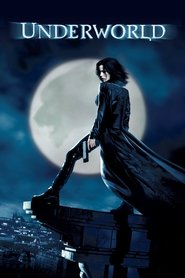
Underworld Rise of the Lycans (2009)
Patrick Tatopoulos, Len Wiseman, James McQuaide, Richard Wright + 1
-
My name is Patrick Tatopoulos. I'm the director, this one. And I have something to do with the two other ones as well. Hi, Richard Wright, producer of all three. Gary Lucchesi, producer of all three. James McQuaide, VFX supervisor of all three... ...and executive producer of all three. See, we don't stray far from the family. We like to keep this in-house. - That's right. This is the first time you're gonna see a Sketch Films logo. I just want you to know that. - Won't be the last. My family and friends all cheered in the premiere at that. Viktor increased his army, creating... So, Patrick, do you remember the original concept... ... for how far we were gonna start, how far back we were gonna go? We were gonna go to the beginning of the story. I mean, the plague, with Corvinus and everything. But the thing is, we had a plan to actually shoot... ...some little elements of that and get to the little sequence at the beginning. So we'd see actually part of the plague... ...part of the first bite, you know, William. And, yeah, ultimately, we had to concentrate this... ...on something a little tighter, and that's what we got. You know, just ran out of money. And you know, when I first saw that baby right there... ...when I saw the dailies, I thought it was animatronic. When it was next to the werewolf. - It is. Actually, we were watching and... Real werewolf, though. - Yeah. I thought there's no way they're putting a real baby... ...next to a terrifying creature. What price stardom?
0:20 · jump to transcript →
-
We went for, like, one... One big transformation that I really like is the one where, you know... ...when Lucian regresses. We often see transformation one way, from a man to wolf. This time, it was like from the creature to the man. I was really pleased with that. Michael again gave us the whole choreography there. Beautiful shot. And Dan built us so many corridors. This is all like... I mean, we had a big chunk of corridors. We kept playing, turning around corners. lt was actually quite a big set. It was huge. lt was a three-storey set... ...basically all the way up to the ceiling of the thing. And with short ceiling on the lower floor... ...and then in the dungeon chamber, two storeys. And again, that's the big set. - The courtyard set. And this next action sequence too is an example... ...of just really squeezing everything out of what you've got... ...to make a sequence. I think we had, at the time... ...maybe two practical arrows that came in and maybe two hallways. And one real firing arrow, and just... We were able to be creative and make a whole sequence out of it. Well, this was one of the sequences that benefited the most... ... from Clint coming back with more money. I'm so glad we did that shot of the man in the face too. It was... - Excellent. Again, only one crossbow actually fires. Everything else was, you know, just editorial. You know, there's a huge culture of the weaponry... . like the machine gun in Underworld 7 and 2... ... that when you do a period, you just have bows and thing. lt was important that we have big bad-ass crossbow. They were more like machine guns than anything else. Just because I'm sure the audience liked what you had... ...with the guns, and the rifle and the other one. And that sort of like replaces it in some ways. The very powerful... We played with sound a lot there. So they look like when they shoot, they're really massively powerful. Same arrows. - Same arrows, yup. And who did the CG for the actual men that are getting pierced? We did extensive post vis with a company called Proof. And they had never done final VFX shots. Oh, Proof did that. - They came in and did the finals. They did a great, tremendous job. - Yeah, they're great. No! My lord. I wanted to do that shot so it feels like how big the corridor. I think it's kind of cool to see them walking across. It's a bit of an homage to Jacques Tati. Some things he's done, we see people walking for two hours before they... It's risky, but it sort of worked well with Bill in the foreground.
43:56 · jump to transcript →
-
I remember there was a whole other piece of sequence... ...before he actually landed that we cut out. Just didn't... I think it plays great without it, though. This is practical and CGI mixed together for the wolf again. With Luma not doing the effects. And it's... This was the one we struggled with the most. When the creature starts crawling up right here. You need to tell the story of him climbing to the top. Some angles just looks like a man in a suit. Completely. We just kind of cut around. I do love the breathing Mike Babcock did for this as well. I mean, this little breathing of... Before he.... The howl. - That's right. Call to the-- Call to arms. So that's a mix of, like, a bunch of different sounds together. Gorilla, tiger, lions and things. That's what he did, I think. Yeah, that right there you're talking about, right? With the nose. And the snarl. Yeah, that's cool. I love that. That little sound that he makes. This is unfortunately one of the places... ...Where you had to cut a bunch of effects shots out. Like the wolves arriving. No matter how much money they give us, you always need more. When it's your peak you have to kind of be selective... ...and just sometimes it's a better trim. Still, I would have loved to see them coming from the back there. Yeah.
1:12:18 · jump to transcript →
-
-
-
before 2001, where science fiction was basically, you know, big bugs and robots, right? And alien invasions and the Creature from the Black Lagoon and Flash Gordon. And after Star Wars, it was kind of back to being Flash Gordon, aliens from outer space. But there was this period between 2001 in 1968 and Star Wars in 1977, 78, when science fiction was seen as a sort of
1:51 · jump to transcript →
-
the alien beach ball with the creature from the Black Lagoon in her hands does a little finger-tapping thing, which is very like one of the moments with the drones. Very well spotted, yes, the tapping drone. But my guess is that Dark Star was made in 1974, so this was one of, apart from 2001, there weren't that many outer space type science fiction movies. Well, that brings me on to what I was going to ask you about. So 2001 is...
20:55 · jump to transcript →
-
-
-
John McTiernan
And the external set of jaws that the creature has, I did not want him, would not have countenance to a racial suggestion as to what the predator look like.
1:29:40 · jump to transcript →
-
John McTiernan
The monster suit was physically really difficult and I think they found
1:37:37 · jump to transcript →
-
-
-
Good evening, everybody. Welcome to the blog. We're already off to a great start. I already regret inviting you. That was my blog voice. That's all I got. And next to Mark, we have makeup effects maestro, creature effects maestro, and all-around great guy, Tony Gardner. Hello, everybody. And we also have... This is like the dating game. I know. Door number three. And the man, the myth...
0:44 · jump to transcript →
-
It's within stunt crafts. Now, how did you engineer this blobular thing? Was this miniature with a hand? That's a big miniature puppet. That's Mark Setrakian and his team doing a miniature animatronic that was dressed with a blob quilt. It's not really a hand. It might have been, but it was a... You mean the blob anus? It's a little anus-y. It was actually a mechanical rig on a piston that came up and had flower petals that froze.
1:12:23 · jump to transcript →
-
-
-
Stephen Prince
Record of a Living Being was not terribly popular when it came out, whereas Godzilla memorably translated these fears into a format that endured, the monster awakened by radioactivity that goes on a rampage, destroying civilization. So Kurosawa pays homage to Honda's achievement in Godzilla by using his visual rhetoric of spectacular destruction and hysterical mobs of people running from a scale of disaster that is overwhelming.
1:17:14 · jump to transcript →
-
Stephen Prince
They provide an indicator of the creature's anguish. This scene amalgamates various folkloric and religious strands in which demons or ogres are a malevolent force in human affairs and inhabit either a world of the dead, a hell, or a zone between living and dying.
1:35:21 · jump to transcript →
-
-
-
clear level of sympathy there that the character in other hands probably would not have gotten yeah like i think sometimes the most effective sort of stories and even the sort of fairy tales stories of taking down the monster there is at least some sort of dimension to the monster and i think there that is achieved here in this film
1:39:49 · jump to transcript →
-
beautiful beautiful just a beautiful scene and the light comes out we are out of night vision um oh just so effective still plays and clarice is just her eyes are bulging her eyes are on the prize she's essentially killed the monster
1:49:11 · jump to transcript →
-
-
-
the creature in there, it'll be perfect framing. Patricia was exceptionally good in working without her co-star next to her. This stuff is a lot harder than it might seem. I asked Alan Armstrong
39:49 · jump to transcript →
-
The creature sounds here for the pygmies are a great piece of work by Leslie. We always felt that they were somewhat comic creatures, but they also had to have some bite to them, which makes it a rather difficult thing to design their voices, and I think he pulled it off.
1:33:05 · jump to transcript →
-
-
-
I remember when Speedman first called me. He was really nervous about how much of a wolf he was gonna have to be... ...because he'd never played anything like this. And the conversation was all about, "Lam gonna have to roar?" When we went to the creature shop to get fitted for our teeth... ...and you were in Budapest, they made us, for the photos, roar. I was so horrified, and Speedman was even more horrified than me. Yeah, I think they had Guy Himber... We laugh about it now. I think, to get him into it, they had him crawling around or on all fours... ...IS the story I've been told. It may or may not have happened. And it just freaked Scott out... ...and he thought that's what he'd be doing in the movie. I like the little slow-mo thing there. The what? - That little slow-motion thing. Yeah, a little bit of Mountain Dew that we used in the syringe. Was it? - Yeah. All the blood was cranberry, right? - Yes. I'm really picky about blood. The colour, once again. It needs to be, like, a dark, almost brown, brown-red. I hate blood that looks like Kool-Aid or is a bit too bright. This is a new scene. Oh, yeah. I haven't even seen it. Was that longer originally? It was just to let the audience know he was actually calling for Selene... ...and that he's a bit nervous that he has to confront him... ...and let him know that he's screwed up once again. I sent for Selene. Bill's great. I had such a great time with Bill.
1:23:34 · jump to transcript →
-
So in the original one, he doesn't find him there? He finds him here, but what we were just talking over a second ago... ...when he comes in, and Speedman's hooked up and singing an A-Ha song... ...and leaves him there. And this as well. Again, just a lot of little pieces, going down these stairs... ...and all this stuff was cut out of the original, for good reason, I think. Run here, run there. Yeah, I had you guys go up and down those stairs... Because I didn't know, exactly, the geography of the underworld... ...when we were shooting that, I didn't know exactly what was on... ...the first level and second level when we were shooting. It's so random. And so I just had them do every version. I'd have Kate and Scott run up... - Run about. ...with guns, run up without guns, run single, run, you know. Lip gloss, no lip gloss. - Yeah. He practised for so long, those whips. - Oh, yeah. I remember, Scotty, he showed me... ... his whole whip routine at his apartment... ...1n the parking lot, and it kind of sold me on the idea, he and Danny. With the transformations that you have, I still get that fear every time I see it: "Oh, God. It's gonna be cheesy." And then it isn't. Because we've seen so many cheesy werewolf transformations in films. You did a really good job with that, because it's not at all. I was really happy with how they turned out in the end... ...because I wanted it to be shaky and look painful. I didn't want it to be smooth. I was telling the guys to try and make the transformations look... ...as much like an animatronic effect as possible. Actually, if it looked like there were guys in there with bladders and.... "Bladders"? - Bladders. What's a bladder? Come on, you know what a bladder is. Every woman knows what a bladder is. No, basically, It's a.... How can you toss a bladder in and not explain yourself? It's a balloon that, in the old days, where they'd have a transformation... ... you'd blow into them and make the cheeks and everything expand by air. They'd inflate these bladders. Stop saying bladders. - Do we have to take a break... ...because I said bladders? - I have to pee now. You have to dismiss yourself? This is a new scene with you. Again, cut for pacing. Again, it's just wandering about. I thought it was just... I remember you making it, and I ran up and down that thing so many times. Another one. "I'm not exactly sure... ...S0, again, 16 different versions of running about." I'm glad it finally got used. And that was cut out. It's an homage to Blade Runner.
1:43:00 · jump to transcript →
-
-
-
-
-


Related topics
Other topics that frequently come up in the same commentaries.