scholar
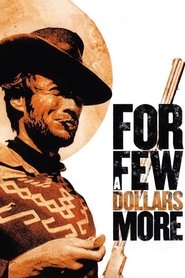
For a Few Dollars More (1965)
Release For a Few Dollars More 4K UHD (Kino Lorber Studio Classics)
Tim Lucas discusses Leone's production and release history alongside his use of delay, repetition, paired characters, and recurring images. He examines Mortimer, Monco, and Indio through their gestures, violence, the two pocket watches, and Morricone's score. Lucas also argues for the importance of Lee Van Cleef's performance and Mortimer's history to the film.
- Duration
- 2h 11m
- Talk coverage
- 84%
- Words
- 17,384
- Speaker
- 1
Commentary density
Highlights
Topics
People mentioned
The film
- Director
- Sergio Leone
- Cinematographer
- Massimo Dallamano
- Writer
- Sergio Leone , Luciano Vincenzoni
- Editor
- Eugenio Alabiso , Giorgio Serrallonga
- Runtime
- 132 min
- Also on
- OneSheet ↗
- External
- IMDb ↗ TMDB ↗ Find on Amazon ↗
Transcript
17,384 words
An animated ball of fire dances at center screen, perhaps reminding us of the tip of Clint Eastwood's Toscano cigar as we fade in on this vast western plain. There is a saying that comedy is the sum of tragedy plus distance, and there is a comic aspect to this opening shot. If we squint just enough, we can see a rider out there. On first viewing, we might assume this is Clint Eastwood riding into the second of his illustrious dollars adventures, but stop looking for a moment. Just stop and listen. Those sounds that we hear are not being made by the writer in the distance. The whistle, the striking of a match, the sounds of something being assembled. That whistle, by the way, was provided by Sergio Leone himself. But these collective sounds amount to a personal portrait and trumpet the arrival of new technology in the Old West.
There is an interesting playful confusion here about whether the gunman off screen is firing at the horse, what film scholars would call diegetic information, or at the non-diegetic animated titles which he's actually hitting, like the floating targets in a carnival sideshow. We don't see this mysterious marksman, indeed we won't see him for another several minutes, but this scene actually puts us inside the skull of one of this film's two protagonists. It will take a good deal longer for us to meet the other one, the fellow we actually came to see. But all this breathing space in a story about the exploitation of people who have stopped breathing is evidence of Sergio Leone's ripening as a storyteller and filmmaker. There is an exquisite sweetness about a storyteller who, much like a lover, denies you satisfaction until they are good and ready. On first pass, it may seem to you that this pre-title sequence is much ado, or indeed very little ado, about nothing.
like it's there for no better reason than to be droll, but it's actually quite significant, as we will soon see. Sergio Leone was a master raconteur, and it was in this film, made in the wake of the immense European commercial success of Per un pugno di dollari, A Fistful of Dollars, that he could first afford to indulge himself as a storyteller. For this film, the budget jumped from $200,000 to $600,000. Whereas the previous film told a story cribbed from Akira Kurosawa's Yojimbo, which required at least as much fidelity to Kurosawa as to Leone, this was an original script by Luciano Vincenzoni, which he boasted of writing in only nine days, but further embellished by several different hands, notably those of Sergio Donati, the later author of Once Upon a Time in the West, The Big Gundown, and Duck You Sucker. This is an Italian Western at its most Italian.
Pronto. I'm film historian Tim Lucas, and this, of course, is Sergio Leone's Per qualche dollaro in piu, For a Few Dollars More. It was filmed in the spring of 1965, right after Clint Eastwood completed his seventh season run as Rowdy Yates on TV's Rawhide. It was first released in Turin on December 18, 1965, just in time for Christmas, but under its export title For a Few Dollars More, it didn't reach America until May 10, 1966.
Sergio Leone's billing is shot down to a pair of snake eyes, as they say in Rolls of the Dice. Snake eyes means you're out of the game. It means death. But it's also two of a kind, and this story is about what happens when two of a kind meet. On first viewing, this epigram makes us look forward to the story we're about to be told. But on second viewing, we begin to realize its relevance to what we have already seen. There must have been a price on the head of that rider in the distance. Note that the term bounty killers is used here rather than the more common term bounty hunters. Indeed, this film could be described as the story of how a bounty killer becomes a bounty hunter. Our story seems to begin aboard this train with a close-up of what some people call the good book, known for giving us ideas like an eye for an eye and a tooth for a tooth.
It may be an innocent omission, but the absence of the word holy on the binding is somewhat in keeping with Leone's ironic treatment of religion, and particularly the church in his other films. I couldn't help hearing you're going to Tucumcari. I peddle goods around here, and I better tell you you're on the wrong train. I think the nearest stop to Tucumcari is Amarillo. Am I getting off at Santa Fe? Here's our first look at Lee Van Cleef as Colonel Douglas Mortimer. His surname embodies the common word for death in other languages. Mortimer in French means to love death. The carpetbagger who assumes him to be a reverend is played by Jesus Guzman, one of the great caricature-like faces of late 20th century Spanish cinema. He would return in the series as the hotel manager in The Good, the Bad, and the Ugly. He made a lot of Westerns during this period, including Hands of a Gunfighter, Up the McGregors, and One Dollar Too Many. Tucumcari is a real city located in Quay County, New Mexico.
However, it wasn't actually founded until the year 1901, which seems a bit late if we're to believe that Clint Eastwood's character Monco is a true continuation of the men he plays in the other two films in this series. This film also shows us telephone wires introduced in Boston in 1877, so this storyline would have to take place at the earliest, about 10 years after the American Civil War, whose waning days provided the backdrop for The Good, the Bad, and the Ugly. This would tend to support the view that Clint Eastwood's character is not a continuation of the others in this series, but rather the return of a great heroic archetype, much as Duccio Tessari did with his two Ringo films, A Pistol for Ringo and The Return of Ringo, both made around this same time, with the same cast playing very different characters.
With a series of minimal but effective touches, Colonel Mortimer has already defined himself as a man who lives according to his own rules, rather than the laws laid down by weak and corruptible men. The second appearance of those snake eyes, you will find it's something of a motif. The Tucumcari station clerk is played by Roberto Carmeldil. He played the role of Cersei in Leone's first feature, The Colossus of Rhodes, but you may remember him better as the sheriff from The Big Gun Down. or as the character named Sorrow in Django Kill. The handsome mustachioed gent on the Wanted poster in no way resembles the Guy Calloway who Mortimer successfully tracks down. This was not a continuity error. It is Leone slyly poking fun at the Old West's tendency to generate and glamorize its own legends, a theme that Clint Eastwood would later explore in his Oscar-winning film, Unforgiven, and one that would also be touched on through the Kid Chalene character played by Lee Marvin in Cat Baloo, which won him a Best Actor Oscar in 1966. Leone had actually approached Lee Marvin to play the role of Colonel Mortimer, but he had to refuse because he had already been contracted to play Kid Chalene, a good thing he did, too, for all concerned.
When Mortimer pauses here between the saloon doors, I can't help remembering Henry Fonda standing in an identical pose in Once Upon a Time in the West. Fonda was actually Leoni's first choice to play Mortimer. One might assume from Mortimer's grim manner of dress that he really is a reverend, but this is never actually confirmed or denied. Is the Bible we see him reading a disguise or an actual source of comfort? This is a question we could mull over for hours. These questions may well have led to Lee Van Cleef being cast in a pair of Italian westerns as the anti-hero Sabata, the so-called man with the gun-side eyes, who wears much the same clothing and whose name means Sabbath. The bartender here is Ricardo Palacios in a very early screen appearance. He went on to much bigger roles. In fact, this same year, he managed to get bit parts in Dr. Zhivago, as well as a funny thing happened on the way to the Forum.
and he found work again with Richard Lester some 25 years later in Return of the Musketeers. He had a similarly long association with Jesus Franco and Paul Nashie, and Leone would have him back for The Good, the Bad, and the Ugly and Once Upon a Time in the West. He became a virtual staple of Spanish-Italian co-productions in the Western genre, often playing villains in Joe the Implacable, Up the McGregors, Day of Anger, and Run, Man, Run. He died in 2015 at the age of 74. We don't know this yet, but this scene is drawing us a map of Clint Eastwood's introduction, which will later follow, as a means of illustrating the points shared in common by these two men, the two dice that mean snake eyes to El Indio.
The man fleeing through the window is meant to be Guy Calloway, played by José Tiron. The shy lady in the bathtub is Dion Robito. Note that Mortimer in no way exploits or even sexualizes the situation. He conducts himself as a gentleman with the lady, paying her no inordinate attention and apologizing on his way out for the disruption. Pardon me, ma'am. Guy Calloway, who if you'll remember boasted that the price on his head was too low and added those extra zeros to his bounty, is revealed here to be more of a coward than a formidable foe. He manages to make an admirable leap from the balcony to the ground, however. Now Leone begins to bring the story's haze a bit closer to clarity with an auspicious reveal of Colonel Mortimer as a James Bond-like master of gadgets. He's a man capable of surgical precision murder.
We realize now that he's the man we didn't see taking part in the pre-title sequence. José Terón, what a remarkable face. It's a kind of deliverance face, isn't it? In an interesting case of similar ideas happening independently at the same time, the first season of a new CBS television series was still in production. As For a Few Dollars More was being filmed, it was called The Wild Wild West and starred Robert Conrad as James West. a two-fisted Old West James Bond with lots of unseemly Q-like gadgets. It premiered in late September 1965, almost a full year before we saw this film in America. So to first-generation American eyes, this film might have looked like it was ripping off the Wild Wild West a little bit. We must assume that Calloway is a good shot, but here we see how distance can ordinarily dilute the precision of an ordinary revolver. His last attempts at surviving this confrontation are wasted. Then Mortimer demonstrates how skill plus technology are unbeatable.
This is Tomas Blanco as the Tucumcari sheriff paying the $1,000 bounty offered for Guy Calloway. Mortimer collects, and then he sees another wanted poster promising a $2,000 Dead or Alive award. What do you know about Cavanaugh? About a week ago, he was seen at White Rocks. Thanks. If it's of any interest to you, somebody else dropped in to see me about him. Who? I've never seen him before. His name is Manco. The dubber, Bernard Gordon, says Manco, but all the reference books say Monco, so we'll go with that. In so many words, the Tucumcari sheriff informs Mortimer that he has a shadow self. Ordinarily, a doppelganger would be walking in his footprints, but this one is several steps ahead of Mortimer in terms of killing and collecting bounties.
He's already in the next town of White Rocks. What has up to now been a living for Mortimer now becomes a competition with this man. The sheriff has given his name as Monco, but we'll never hear it again. Monco means monk in Italian, which may refer to the character's lone nature, while in Spanish the word carries the more intriguing meaning of one-armed. As we will see, Monco is not quite the same fellow as Joe in A Fistful of Dollars, but he is arguably the kind of man that Joe could have become over time. It's a point that some fans like to argue. He's introduced from behind with a focus on the wrist-strengthening leather glove adorning his firing hand. A strange fellow, this, who shoots with his right hand, but otherwise lets it hang dead, doing everything else with his left. Whether or not Monco is really Joe, it was important to Sergio Leone that he not be perceived as such, and maybe just a little perceived as such. The reason has a lot more to do with business than with art.
According to an interview with Eastwood by Erskine Johnson, published in the April 16, 1965 issue of the Fort Lauderdale News, Eastwood left Hollywood to shoot this film just two days after he had finished filming scenes with actress Julie Harris for a Rawhide episode called The Calf Women. And he had every intention of playing the same, quote, big slob and opportunist, end quote, he had played in A Fistful of Dollars. However, Sergio Leone made the second film after an angry parting of the ways with his producers at Jolly Film, who reportedly had refused to pay his salary on that enormously successful picture unless he promised them a sequel. So Leone angrily walked away from his salary and took up with new producer Alberto Grimaldi, who made him an extremely lucrative offer. Jolly Film, in turn, sued Leone when they heard he was making this film with Eastwood.
so changes were made to make him an arguably different character. The cigar-smoking man in this poker game is screenwriter and future film director Fernando de Leo, who worked on the script, uncredited, and wrote dozens of well-known Italian westerns before the times demanded he modernize his stories, which then became classics of the contemporary urban crime genre known as Polizioteschi. It should come as no surprise to us that Baby Red Kavanaugh looks nothing like his wanted poster either. He's played by Jose Marco, who you may have seen in the Richard Harrison costume pictures, The Invincible Gladiator, Gladiator 7, and The Secret 7, all pretty good pictures. He also played the role of Paris in Ricardo Freyda's now rarely seen 1964 adaptation of Romeo and Juliet. In later years, you could find him in Compañeros, The Horrible Sexy Vampire, several Paul Nash-y werewolf films, and toward the end of his career, Women on the Verge of a Nervous Breakdown.
Leone makes you look. He's not going to tell you what's going on. He puts it up there for you to see yourself. What's happening in the card game between the players and even how Cavanaugh's backup team is assembling outside this gaming table. Didn't hear what the bet was. Your life
Eastwood literally fends Kavanaugh off using only one hand, his left, which makes us wonder if his right hand is actually useless. The whole one-handed deal with Monko is never really adequately explained, and one has to wonder if this is due to deleted information, or perhaps to Leone adding just enough subterfuge to deter Jolly Film's attorneys. Alive or dead, it's your choice. Here, Eastwood looks up directly into camera, and it has the effect of creating a kind of illusory mirror. He seems to be able to see the men who have assembled behind him. The amusingly half-shaven man is played by Roman Ariznavareta, who returns as a bounty hunter in The Good, the Bad, and the Ugly. The IMDB lists this character as a bounty hunter, but he seems to be another outlaw in support of Kavanaugh, to whom Eastwood deals out the coup de grace. Here's another instance of that twinning I mentioned about our two protagonists. We see Monko collecting his $2,000 from the local sheriff, played by Guillermo Mendez, who says it's equal to three years of his earnings.
We've seen the same basic scene played out before with Mortimer, so in some ways Monko may be ahead of Mortimer, while in others he is only mimicking what Mortimer has already done. We know, because it is the language of cinema, that any two lines running so closely parallel are bound to converge.
As critic Richard Schickel noted, the moment of Monco stripping the White Rocks sheriff of his badge for failing to be courageous, loyal, and above all, honest, and dropping it in the street for any dog to collect, echoes High Noon, while also looking forward to the downbeat finale of Don Siegel's Dirty Harry, in which Eastwood, as Lieutenant Harry Callahan, removes his badge in disgust and consigns it to the bay, along with the dead body of the man who called himself Scorpio. This sheriff was guilty of cowardice, of letting a known outlaw take shelter in the town he's been sworn to protect. Harry, born to another town and a different set of rules, discarded his badge because he was fed up with having his courage and moral code continually reprimanded by bureaucrats. Okay, now we're almost 20 minutes into the picture and we're feeling on pretty solid ground.
We know our two principals. We know they are both following the Dead or Alive wanted posters offering the highest bounty, so they are bound to meet. We have seen demonstrations of their comparable competence. Now Leone knows the time is right to tell us some more of what we don't know. Just as we've begun to accept that this film will be about the opposition of these two characters, Leone ups the ante by introducing a tremendous villain. We see shadows moving furtively in the dark, scaling the side of a building that turns out to be a jail. We see a man inside, a prisoner played by Dante Maggio, who is comporting himself nervously in the same cell with a man asleep under his sombrero, the classic archetype of a lazy Mexican good-for-nothing, often seen in films and cartoons of this vintage. If you've seen this film before, and obviously we have, there is a clue to the mystery of these proceedings in Ennio Morricone's score, which is serving us a dolorous suspense cue that actually lays out the bare bones of El Indio's pocket watch melody. We see sentry guards stabbed to death.
And now we see the cell invaded by its liberators, who address themselves not to the pacing man, but rather the lazy man. This is Jean-Marie Volanté as our third principal character, El Indio, destined to be our next poster boy with an even higher bounty on his head. He will become the shared quarry that will bring our two competitors together.
The thing about El Indio is that he is not the rational criminal whom Volonté portrayed in A Fistful of Dollars. Indio is a fascinating antagonist because his actions are so unpredictable. He's psychotic and a psychopath. We expect that the man sharing his cell will also be liberated, but Indio instead shoots him at close range. Who knows why?
How are you, Nini? Better when I see you. Go on, go ahead.
This is a remarkable, half-lurching, half-meowing crime cue by Morricone. I imagine that it had some influence on Quincy Jones' later score for In Cold Blood. Speaking of In Cold Blood, Indio has a parting comment for the warden of this jailhouse.
This is day-for-night photography, of course, but it could pass for an evening with a bright full moon. And what better time for Indio to be on the loose? I'm letting you live, hero. That's so you can tell everybody you've seen what takes place here. Clearly, Indio is a man who lives to become legendary. His spur-of-the-moment reasoning, his maniacal laugh, confirm that he's a madman, but it would be a mistake to summarize such a complex character in a single word. A thrilling bit of montage coming up now.
exhilarating, such a daring stylistic advance over anything in the first film, and thrilling not only for Morricone's inspired frissons of sound, but in part because it confirms something that we won't actually learn for another couple of hours. Leone shows Mortimer and Manco occupying the same or at least similar space, and then he proceeds to contrast the laughing eyes of El Indio on the poster with Mortimer's pleasured bloodthirst as he identifies his next quarry. What we won't learn until much later is that, like Mortimer and Monco, Mortimer and Indio have a great deal in common. Lorenzo Robledo plays Tommaso, the member of Indio's gang who betrayed him. The baby in this scene, dropped into the middle of all this violence, is Sergio Leone's own daughter, Francesca. Robledo, you may recognize, is the head of the Baxter family gunman. He's the first man to taunt Clint Eastwood as he rides into town on his mule.
He had a great face, somewhat like a Spanish James Cagney, and his early films included Jesus Franco's musical comedy Lorena del Taberín, Harold Reinold's Creamy, The Carpet of Horror, Alberto Di Martino's Medusa Against the Son of Hercules, and Henri Dequan's Casablanca, Nest of Spies. He made many Italian westerns, including Navajo Joe, The Big Gun Down, The Mercenary, Cemetery Without Crosses, and the gory Paella western Cutthroats Nine. He was also back as Clem in The Good, the Bad, and the Ugly, and he's one of Cheyenne's duster-sporting men in Once Upon a Time in the West. I know. I'm sure you hate me just enough. As this scene shows, there is sometimes method to Indio's madness. Off-screen, he has murdered Tommaso's wife and infant daughter. But his comment afterwards confirms that he only did this to fan the flames of Tommaso's hatred. He wants to even the odds of the duel that they must fight now. I believe that subconsciously, Indio is seeking Mortimer, the only man who knows what it's like to be him, who is equal to him. And Tommaso has to be worked up to that level. When you hear the music finish, begin.
Are you saying you can? Let's start. Robledo played this scene so memorably that Lucio Fulci had him remake it, in effect, in his 1975 Western The Four of the Apocalypse. Lorenzo Robledo died in 2006 at the age of 85.
It is in this masterful scene that we really begin to get a sense of our villain. Whenever he finds himself in a situation like this, a life or death situation, a situation that he has himself created, we mustn't forget. He pulls out his fetish, a pocket watch that plays a simple but taunting music box melody. The melody is a key to Indio's broken mind. It takes him back to the cherished secret place where he first became the man he is. It unleashes in him the same savage animal that his murder of this family will hopefully unleash in Tommaso, because India would actually welcome death if it was dealt to him by someone who was as ruined and vengeful as he. This cue is called la resa dei conti, which means a settling of accounts. Morricone brings out powerful pipe organ accompaniment that drowns out the tender incentive like so much righteous anger, but the pocket watch returns for a final iteration, before they reach for their triggers. Each note is a drop of blood from a broken heart. The spitting man is Cuccillio, played by Aldo Sembrell. Sembrell played one of the Rojo gang members in A Fistful of Dollars, a member of the Angel Eyes gang in The Good, the Bad, and the Ugly.
and Cheyenne's right-hand men in Once Upon a Time in the West. I'm sure you've caught a glimpse of Klaus Kinski as another of the gang members. I'll talk more about him later, but you knew that. This hulking fellow is Nino, played by Mario Brega, who played a similar role as one of the Rojo gang in A Fistful of Dollars, and would go on to play the brief but important role of Corporal Wallace in the bridge sequence of The Good, the Bad, and the Ugly. Indio impatiently gestures toward his mouth, saying now, rather like, Basil Rathbone's immortal Sherlock Holmes quote, Quick, Watson, the needle. As the air itself sounds wounded with the shrieks of escaping angels, Indio is desperate for the soothing he gets from marijuana. One puff and Indio becomes strangely familiar to us. He basically becomes Robert De Niro in the closing shot of Once Upon a Time in America. This scene shows Colonel Mortimer interviewing the manager of a Tucumcari bank played by Sergio Mendizabal.
Mendizabal had been active in Spanish films since 1955, and his busy filmography includes such films as Buñuel's Viridiana and Tristana, Michael Carreras's The Savage Guns, and the horror films Face of Terror and The Lorelei's Grasp. He demonstrates an unexpected light comic touch in this scene, which in what would become a Leone tactic is not about what it appears to be about. Mortimer has no real interest in this bank or its holdings. He's after information. He's looking for Indio and figuring out which banks Indio would see as his greatest challenge and biggest payday. The art direction on this film was the work of the gifted Carlo Simi, who held that responsibility for all of Leone's films, and many other notable Italian westerns, many of which featured Lee Van Cleef, such as The Big Gun Down, Day of Anger, and Sabata. He also designed Django and Face to Face.
His team did a lot of work to create this set, but it's just a stepping stone taking us here to the town of El Paso. The El Paso scenes and its bank scenes were shot in Tabernas in Almería, Spain. The exteriors of this main street were built with connected interiors. Carlos Simi's design of this virtual city was considered so visionary, so complete, that it would never be torn down. Instead, it became a standing Western town set and source of revenue that came to be known as mini-Hollywood. And it would be used again in The Good, the Bad, and the Ugly. Mortimer has obtained his information, so we expect to see him ride into town. That would be simple continuity of storyline. But instead, it's Monko who appears. We don't know how he found his way here, but we can imagine it was much the same way that Mortimer did.
Manco is greeted by a little hustler named Fernando, played by Antonito Ruiz, who the following year would be cast as the youngest son of Stevens, the boy we see riding the mule in circles to operate a watermill in the opening scene. As you know, this film is going to set up a kind of father-son relationship between Mortimer and Manco. And in this relationship between Manco and Fernando, we see a kind of son-grandson relationship taking shape. Both of these characters are motivated only by money. Fernando quickly learns how to turn a little money into a lot, much as Manco lives from one wanted poster to the next. Manco humors the boy's greed. He remembers being this age. Here, Mortimer and Manco become visible to one another for the first time, but nothing about this sighting really identifies one to the other. This will happen later.
This hotel lobby is an actual interior connecting to the exterior El Paso Street shown previously. Ordinarily, this scene would have to have been filmed on a soundstage at Cinecittà, with the exterior provided as a rear-screen projection on a screen positioned outside the saloon doors. So what we're seeing here is unprecedented spatial realism in the Italian Western. Character actress Mara Krupp plays Mary, the hotel manager's buxom wife. An Italian actress, this was her second film, and it gave her enough notoriety to lead to more work in Westerns, Sugar Colt, The Handsome, The Ugly, and The Stupid, and A Man Called Amen. One of her last films was the amusingly titled Il Ritorno di Clint il Solitario, The Return of Solitary Clint, which was shipped out internationally as A Noose is Waiting for You, Trinity. Of course, with a face and bosom like that, she couldn't help but attract the attention of Federico Fellini, and he cast her in an orgy scene in 1969's Fellini Satyricon. Her husband is played by German actor Kurt Zips, who provokes a hearty laugh when he steps down to reveal his true stature. He worked almost entirely in German television, and this Italian western appears to be unique in its exception.
I can't find a distinct identification for the actor playing this ousted hotel guest, addressed as Señor Martinez. Let's appreciate the beautifully layered composition of this shot. For a few dollars more was photographed by Massimo Dallamano, who shot A Fistful of Dollars so brilliantly. He had already photographed close to 40 films, but this was his last major assignment before he graduated to the position of director. He appears to have taken more than a year off from his duties to exclusively pursue this ambition, which only came about after he had written an original screenplay called A Black Veil for Lisa, a pre-Argento Giallo thriller filmed in 1969 with John Mills and Bond girl Luciana Paoluzzi. He managed to direct only 11 features before his death in 1976 at the age of 59, including Venus in Furs, Dorian Gray, and What Have You Done to Solange.
The transition from the wanted poster being studied by Manko and the shot of Indio unconscious with a spent spliff in his mouth is another study in contrasts. Indio's public status as a raucous criminal is somewhat at odds with his personal reality as a fragile man haunted by his past and needful of narcotic oblivion. Indio's men are growing restless with anticipation for their next job, turning their impatience against one another, throwing knives and firing their guns. Indio is awakened just in time for the arrival of his lieutenant, Grogi, who makes his presence known by firing at the church bell outside and at another man's spur. Grogi is played, con mucho gusto, by Luigi Pistilli, making his debut in a Sergio Leone film. He would subsequently play the key role of Father Pablo Ramirez, the brother of Tuco in The Good, the Bad, and the Ugly.
Castillo made only one known feature before this one, and it was made about five years earlier, during which time he garnered a great deal of attention as a stage actor. You can see this in his near-effortless commanding of this large space and its crowd of supporting players. This five-minute sequence takes place inside the hideout of Indio's gang, which happens to be an abandoned church. The actual location was the Castillo de Rodoquiar in Almeria. but I believe this interior was shot on a stage at Cinecittà. The IMDb's trivia page on this film contains a glaring inaccuracy. It claims that Gian Maria Volante performed his own voice for the English version. He was actually dubbed here by former Tetra Sound Studios legend Bernard Grant, who relocated to Rome in the early to mid-1960s with his wife Joyce Gordon,
Together they looped dozens of parts for the Sergio Leone Westerns, and I mean dozens in individual films. Bernie's voice was particularly flexible. He voiced most of the supporting male parts in all three Dollars Pictures. Whenever there's a woman's voice, it's usually Joyce, whose most famous dubbing job was that of Claudia Cardinale in Once Upon a Time in the West. Luigi Pistilli's role is reportedly dubbed by Ray Owens, who was the voice of Inspector Blooper on Gigantor. Dr. Elephant on Astro Boy, and the narrator of Kimba the White Lion. Moved by the atmosphere of this church, India was going to tell his gang about their next caper in the form of a sermon. It adds the word messianic to his list of complexes. Let's not overlook the fact that he begins his story with Once Upon a Time. Once upon a time there was a carpenter. You don't think a carpenter can make money, huh? No, you're wrong. This one did well because he was a builder of safes. There was a banker once who decided he must have his iron safe disguised to look like a wood cabinet... to get it made.
The banker goes to our carpenter for the job. And one day, as destiny has it, the carpenter's in El Paso. He happens to walk into the bank there, and what does he find? The cabinet. Since he'd worked on the cabinet, he spotted it right away. From that day on, he couldn't work anymore. Pity, because there was something he had to do. It was this crazy idea. And it stayed. And it stayed. To put his hands on the money inside. Get in there and grab all the money. Sure? You think that carpenter was lucky the way things work out. That he was lucky to go and joust that bank. It wasn't true. His good fortune stopped that day. Because later... As a prisoner. He ran into me. The carpenter told me the story and I tell you. The body isn't in the safe, it's right in this.
Indio gives us a great deal of verbiage to prepare us for a single, simple visual, proving that a picture is literally worth a thousand words. And there is a bit of Alfred Hitchcock in this moment as well, because Leone cuts from the maquette in Indio's hand to the disguised safe as it presently appears in the office of the El Paso bank manager, who is played in a winking cameo by the film's production and costume designer, Carlos Simi. The cut is Hitchcockian in the sense that he would increase the suspense around a bomb by showing it hidden and suitably disguised, yet in plain view of the unsuspecting people around it. Nothing is going to explode here, at least not yet. Leone is giving us a dose of irony, especially when we recognize Lee Van Cleef's voice on the soundtrack, which means that Colonel Mortimer was being served from the liquor cabinet of the very safe he is seeking to identify as Indio's next target. What he's trying to identify is right there in front of him. Yeah. Or a complete madman. The four horsemen of the forthcoming El Paso apocalypse ride into town, which means there is money to be made by our young friend Fernando.
The hotel manager's wife now sees Fernando whistling to summon her upstairs guest. She is one of several characters in the film like Fernando who function as audience surrogates, existing on the same plane as the actors, but observing them as if they are movie stars on screen, rather than people passing through their own lives.
We see that she's very interested in him, but when he passes back through the lobby, he shows absolutely no interest in her. Indeed, no awareness of her at all. She's one of those people out there in the dark. Fernando is going to try to milk the stranger for as many coins as he can, but he'll soon change his tune. There was another stranger I didn't tell you about. Listen to me, you sawed-off little runt. I want to know how many men there are altogether. Well, there were two. Now there's two more. Where? In the saloon. The bartender here is played by Joseph Bradley, a native English-speaking character actor who could also be seen in The Good, the Bad, and the Ugly as an old soldier and, most memorably, as the elderly train station master in the celebrated pre-credits sequence of Once Upon a Time in the West.
Monko strikes a match using one of the column supports inside the saloon, which reminds us of a tendency also exhibited by Mortimer, whom we saw striking a match for his pipe on a bank teller's desk in the Tucumcari Bank scene. Monko now has Mortimer in his sights, and Mortimer is about to pick a fight with a similar disregard for etiquette. He strikes a match on the shoulder strap of Juan Wild, a hunchback member of Indio's gang, played by the unmistakable Klaus Kinski. not someone that most people would dare to strike a match on. Kinski was born on October 18th, 1926, in Danzig, Germany, which means that, like Lee Van Cleef, he was pushing 40 at the time of filming. Almost 40 years old, and yet up to then, he had only appeared in German films, and the only ones that had any kind of international release were Edgar Wallace thrillers and Carl May westerns, which in those days mostly went directly to television in America.
Kinski, also a renowned stage actor, had no respect for that trash, as he called it, and likely thought of himself as a failure at this point in his career. Yet this film turned things around for him forevermore. This was the first film he made that was literally shown everywhere around the world to great success. It was followed by David Lean's Dr. Zhivago, which I believe he actually shot first, but it happened to be released later. and it led to spy pictures, dramas of international intrigue, and lead roles in several important westerns, including The Great Silence, Twice a Judas, and Antonio Margheriti's And God Said to Cain. Kinski's character was dubbed in English by Gilbert Mack, who also voiced the diminutive hotel manager, and Joseph Bradley as the bartender. He was a New York-based voice actor with his roots in radio, who had most recently been lending his talents to animated cartoons dubbed at Tetra Sound Studios, including Astro Boy as Cacciatore, the stromboli-like ringmaster of a robot circus, Kimba the White Lion, and the unforgettable Gigantor, for which he provided the voice of Dick Strong. He died in 2005 at the age of 93.
This is a remarkable sequence that finds the principles of Indio's men separately, but simultaneously timing how long it takes three of the bank's guards to patrol the outer perimeter of the building and return to their starting point. Each setup brings each character's face into extreme close-up while maintaining deep focus in the backgrounds, the spy and the spied upon. Massimo Dallamano captured these shots with a deep focus lens, but compositionally the shots have the same impact as a split diopter shot.
Then, to our surprise, the scene enlarges as the same count continues with Colonel Mortimer, who is unknowingly synchronized to their countdown. He also spots Indio's three men on the street, but only after his count ends at 33 seconds. Those guards must be pretty fast, or that building is a lot smaller than it seems.
comes the biggest surprise of all in a nod to Alfred Hitchcock's rear window. Our bounty hunters have now officially met and in a way that visually underscores their essential equality. They look at each other as they might look at a surprise mirror image of themselves. While perusing back issues of the El Paso Tribune, Mortimer discovers evidence of a man with no name story that Sergio Leone somehow never told, in which his fellow bounty killer, his shadow self, brought down the Morton brothers. Again, death lurks in that first syllable of the Morton name as it does in the Mortimer name. It might be worth mentioning that Sergio Leone served as an assistant director on the set of Ben-Hur in 1959. working on a unit supervised by the man in charge of its famous chariot race sequence, Andrew Martong. Leone never forgot that he had his only opportunity to see a genuine Hollywood western filmed when, after a day of shooting the chariot race, William Wyler prevailed on Charlton Heston to suit up for an insert that had to be shot for their previous film, The Big Country, then in post-production.
It was just a single shot later inserted into the legendary fist fight sequence between Heston and Gregory Peck. But Wyler took the shot multiple times and Leone witnessed something he never would have seen otherwise had he not been hired by Andrew Marton. The name Marton must have stuck like a burr in Leone's brain out of gratitude. He used the name Morton here and he would use it again for the name of the diseased railroad baron played by Gabriele Frazetti in Once Upon a Time in the West. Speaking of railroads, this is Joseph Egger, the coffin maker from A Fistful of Dollars, the man who nicknamed Eastwood Joe, in a comic scene as the Old Prophet. While Mortimer has been learning more about Monco from old newspapers, Monco has come here, we eventually find out, hoping to learn something about his bait noir, Mortimer. He's initially treated to a tragicomic story about the Old Prophet's stubborn refusal to sell his property to a railroad baron,
which has led him to the kind of sleepless night you see here. The scene is so abruptly introduced and so broadly comic in tone that before we understand its purpose in context, it has a somewhat gratuitous feel, as if it's a surviving fragment of a scene perhaps more indulgently treated in the rough cut and kept in for mostly sentimental reasons to do with Egger himself. However, as often happens with Leone, the scene is actually taking the scenic view around the point that it will finally make. Where are you going, huh? I guess I better leave before you go and lose your temper. What's the matter with you? Why are you so dang stupid? Hurry up. Give me that pistol there. Yeah, right there behind you. Hurry. Yes, yes, that's the one. Now hand it over. That's it. Give me that gun. The man you asked about. There's only one question. How does he carry his gun, huh? He wears it here across his belly?
Why didn't you tell me that in the first place, my boy? Of course I know the man you're trying to find out about. Of course I know him. He's Colonel Douglas Mortimer. Mortimer. A brave man. A soldier. He was known as the best shot in the Carolinas. A great soldier. Now he's reduced to being a bounty killer, same as you. Because of trains. Because of the damn trains, damn them! In other words, the point of that comic scene is to deal as a piece of Colonel Mortimer's backstory. He was once a widely respected veteran of the Civil War, until the introduction of trains in the Carolinas took away his former trade, forcing him to become a bounty killer. Talk about a well-cast character part. This film is full of them. Mortimer, as we have seen, is a master of his trade and a master of his tools.
He's a dapper man of the Old West, and he appears to take the same top-shelf approach to his pipes and tobacco as he takes with his firearms. His pipe, incidentally, is a Meerschaum pipe with an amber stem, and believe it or not, if you Google Lee Van Cleef pipe, you'll be led to a few different companies who sell a variety of replicas of the darn thing, the variety having to do with slight variations in the main bowl's patina. so you can get pretty much the one you remember seeing, however you happen to see it, more than 50 years after the film's release. You can find variations of the pocket watch, too. The world's a strange and wonderful place, don't you think? And now we come to the inevitable meeting of our two protagonists. It's like Manco has decided, all right, we can't both be the best at our job, so let's determine once and for all who's going to bring Indio in. And the kids, Fernando and his chums, scramble for front row seats under the porch.
mirroring those of us who first saw this film on the big screen at a weekend matinee. Take it to the station. The gentleman's leaving. Hold it. It's hilarious. This poor guy can't bear the tension in the midst of this battle of wills. The action is shown near ground level, capturing the vantage point of those kids under the porch. Leone wants you to be looking up to these two men. We're not worthy of standing on equal ground with them, at least not at this moment. And there is equality in the way Dallamano framed their boots. Mortimers were closer together, mancos wider apart, but they both accommodated the space required by their opponent. A detail that kind of telegraphs the fact that after a certain amount of sniffing around each other, these two are going to end up working together. When the first dare is taken, Morricone's score drops out, replaced by the sound of crickets. especially effective in the five-to-one sound mix. By taking out the music, the scene becomes more intimate and the two men feel more exposed, more out in the open. We're going to see what they're really made of. Just like the games we know. They have been behaving up to now, just as children do, but that's about to change.
At this point, Monko begins to playfully shoot Mortimer's hat out of his reach. This is a very canny aspect of this competition because it shows Monko trumping Mortimer in the realm that he has shown to be his own expertise, the realm of depth. He can kill from a distance, and now distance is being used against him. It also tells us a great deal about the character of these two men that Monko was showing himself to be persistent. while Mortimer is showing himself to be patient, two sides of the same coin. But what Monko doesn't know is he keeps firing at Mortimer's hat and sending it farther and farther out of range, is that he's giving Mortimer a continual advantage, the advantage of distance.
Finally, Monco's bullets reach that point in the distance where their precision starts to become hit or miss, and this contest falls squarely into Mortimer's favor. And now we arrive at one of the greatest and craziest moments in the history of Western cinema.
The soundtrack accompaniment, if you'll notice, is completely non-realistic. It's at once musical and cartoonish, ending in a hyperbolic instrumental crash. And the winner is declared by that Jews harp reverberation, that boing, that seems to ironically accompany Mortimer whenever he scores the upper hand. Forgetting one thing, Colonel, I was shooting at your hat. Well, I was only shooting at yours. But I recall firing first. Boy, I've reached almost 50 years of age with my system. Not many men last long in these parts. How long do you expect to last? Monko hasn't quite lost the swagger of his youth, and Mortimer puts his victory in terms he can't quite argue, the victory of age, of having survived in this way of life to the ripe old age of almost 50. And he can flaunt this victory by calling Monko boy. Would you believe that in the late 1800s, the average life expectancy for a white American male was only 41 years of age? In 1900, only 12% of American men lived to the age of 65. Despite all this volleying back and forth about age, there was actually only a difference of five years between these two actors.
and their early careers had a fair amount in common. They both achieved stardom in early middle age, and they appreciated it all the more for having spent so many years just trying to have a sustainable career as an actor. Lee Van Cleef's first picture was Fred Zinneman's High Noon in 1952. He immediately stood out as an unforgettable character actor. Then he went over to Universal International and played a down-the-list part in Untamed Frontier. Then came Kansas City Confidential, a great crime picture for Phil Carlson, followed by the lawless breed for Raoul Walsh at Universal International. Eastwood remembered as a young actor seeing Van Cleef on the studio lot and thinking that he had a lot going for him. But the closest thing he got to a starring role in many ways was his part in Roger Corman's It Conquered the World, made in 1956, as a naive ham radio operator who unwittingly opens the doors to an alien invasion.
But he had one of the screen's great faces, and it showed up in a number of 1950s westerns that Sergio Leone idolized. The Quiet Gun, Gunfight at the O. K. Corral, The Tin Star, The Bravados, and Guest Spots in just about every TV western you could name. He even did two episodes of Rawhide, though his two episodes featured series lead Eric Fleming rather than Clint Eastwood. In many ways, Van Cleef came to working for Leone with more cachet than Clint Eastwood did. But when their time came to go to bat, they were both hungry. And the results would mean that they were never hungry again. Clint Eastwood is still making films in his 80s, but Lee Van Cleef's time in the sunlight of stardom was much briefer. He died in December 1989 at the age of only 64. These two play this meeting of the minds so well.
It carries a hint of their history as two former Universal International rookies and is opportunity to savor their mutual respect for the seasoned actors they've become. One of us will have to join Indio's band. Why are you looking at me when you say one of us? Because they don't know you. Wild sees me in this humble kitchen fire. Tell me, Colonel, how do you propose that I... Maybe bring him a bunch of roses? Well, you could do that, but I'd suggest you take him... Sancho Perez. Who's Sancho Perez? A friend of Indio's. Right now, he's cooling off. He's cooling off in Alamogordo jail. How do you know all this? I've got my information, too. Naturally, you'll have to arrange for his release.
Naturally. Tell me, Colonel. Were you ever young? Yep. And just as reckless as you. Then one day something happened. Made life very precious. Notice that Leone doesn't put all of his cards on the table here. Not yet.
As Mortimer says, the question isn't indiscreet, but the answer might be, and it's not the Colonel's way to be indiscreet. For that, Leone must cut back to Indio, sedating himself once again with cannabis. In a way that Leone would hereafter claim as his own, we follow this tormented figure into the most decisive moment of his past, the moment when Indio the Lover became a killer. Mind you, this film was made in the spring of 1965, yet this scene, literally rinsed in tears, is possessed of a trait that would become common, even central, to the giallo thrillers that came into fashion in the late 1960s and early 70s. In most cases, the giallo killer would be unmasked and revealed to have a backstory much like this, a sweet and tender memory that somehow blackened and pushed them over the edge. We see Indio discovering this betrayal not only through tears but through bars, indicating how restricted, how arrested by this memory he has become psychologically. This young lady, beloved by two men, is played by Rosemarie Dexter, who had been the female lead in Ugo Gregoretti's 1963 science fiction comedy Omicron, and Juliet in Ricardo Freitas' 1964 Romeo and Juliet.
She receives no credit for this part, which was actually well beneath an actress who had starred in films already, but this turned out to be the biggest film she ever made. This kind of scene was not original to Leone. I believe it may have originated in 1945 with Alfred Hitchcock's Spellbound, but it was subsequently picked up by the Edgar Allan Poe films of Roger Corman, William Castle's Homicidal, John Huston's Freud, and the Robert Bloch scripted The Couch, just to name a few examples from this period. It was not even new to Westerns, with traumatic flashback structures having been utilized in films like Raoul Walsh's Pursued and John Ford's Sgt. Rutledge . But Leone found what we might call their Baroque quality, their fetishistic dimension, and Ennio Morricone's experience in lyrical and atonal forms of music helped him to find a median wherein he could bathe such sequences in a mood of twisted, acid, romantic sickness. This tone was without precedent, and it inspired a lot of imitation. Manco has agreed to ingratiate himself into Indio's gang, more or less reprising the hero's strategy in a fistful of dollars.
To do this, he's going to spring Sancho Perez, another incarcerated member of Indio's gang, from the clink. This is Greek actor Panos Papadopoulos as Sancho Perez. He has no idea what's going on, much like an audience watching a Sergio Leone movie for the first time. But he'll be very pleased in a moment. I love the way Eastwood plays that moment in the window.
When I first screened this film in preparation for this commentary, I looked at this explosion and immediately told myself it had to be a scale model special effects shot. And then Sancho himself appeared in the hole blown into the side of the building, which means this jail was actually built and blown up so that Sancho Perez could leap into freedom. Here you see the difference made possible by Leone's leap in budget. Who is that with you? He got me out. And a friend of mine.
Why did he help you, did you ask him that? Yeah. Amigo, why did you help him? Monko takes the dare of answering Indio's question honestly. Well, it's such a big reward being offered on all you gentlemen that I thought I might just tag along on your next robbery. Might just turn you into the law.
Indio reacts by toking up, which once again unleashes Morricone's banshee-like strings. Indio uses the dope to look into himself for an answer. Do I believe him or do I not? It was moments like this in which Clint Eastwood showed the charisma of someone who could be a smartass under pressure that made him an international movie star. But it's important to remember as we watch for a few dollars more that this was Clint Eastwood's first film as an active, conscious movie star. A Fistful of Dollars hadn't been released in America yet, so he was still just a TV series co-star in America. But when he flew back to Europe to make this picture, he got his first taste of what was to come.
After completing this picture, Eastwood told Doris Klein of the Associated Press, and I quote, the first time I went to Italy, I just sneaked in. I had a beard, but it didn't matter. Nobody knew me anyway, and no one paid me any attention. But this time, I was mobbed. I'd walk down the Via Veneto, and people would come up and ask me for my autograph. I was wined and dined and treated like a king, end quote. He was 35 years old and pocketing, quote, a bundle, end quote, in salary. $50,000, a pay increase of $35,000. In today's money, that's roughly half a million dollars, making the title of this film fairly literal. It was at this point that the original Italian version placed its intermission between the two halves of the film, identified as primo tempo and secondo tempo. When Monko taps and rubs the nub of his cigar, I think he's prefacing what's about to happen as a retort to the gang member who shot his cigar down to size earlier. That man, the one in the center, now addressing Monko, is played by Frank Braña, a Spanish repertory player in Leone's westerns. He's one of the three bounty hunters seen in the opening sequence of The Good, the Bad, and the Ugly.
He's a bit younger here, but as he aged into the 1970s, his silver hair and steely blue eyes made him even more of a distinctive screen presence. This scene, which posits one man against three, echoes throughout Leone's filmography most memorably in the opening sequence of Once Upon a Time in the West.
Inside the men were three bullets. Better make it four. Morricone's soundtrack lends a kind of winking whimsy to Monco's character by using pan pipes, an instrument that he would emphasize once again in Once Upon a Time in America. When he rides, Morricone adds electric lead guitar over a chorus of acoustic guitars driven high into Valhalla by the bravura vocal stylings of Icantori moderni. Mortimer's character has a counterpart to Monco's pan-piped trill, the sped-up, spring-like sound of a Jews harp. These are just two of the many ways that Ennio Morricone added to the film with musical sound effects as opposed to music. This elderly character actor playing the telegraph operator is Giovanni Tarallo, His earliest known screen appearance, but he went on to play a starving peasant in Pier Paolo Pasolini's The Hawks and the Sparrows, a wedding photographer in Sergio Salima's The Big Gundown, and the elderly paparazzo who is knocked down by Terrence Stamp's Toby Dammit in Federico Fellini's episode of Spirits of the Dead, also produced by this film's producer Alberto Grimaldi.
This film runs approximately two hours and 12 minutes, so it's surprising that Ennio Morricone wrote so little music for the picture. Somewhere between 15 and 18 minutes worth if we go by the official soundtrack, which is really quite remarkable when you consider how permeated, how defined this movie is by its musical content. The for a few dollars more score began to appear on record as early as 1965. when RCA Italiana released a soundtrack single consisting of the title track and La Ressa dei Conti, which is the full baroque treatment of the pocket watch theme, including the full orchestra, i cantori moderni on the vocal chorus, and the blasts of the pipe organ. A Japanese release came out that same year, followed by French singles in 1967, 1968, and 1971. During this period, there were certain albums that tried to fool the public into thinking they were something they were not, like the Japanese release entitled Perqualque de Laro in Piu, and then in Very Small Type, and other movie themes. The music included on these recordings were re-recordings of the music heard in the film itself. This music was recorded in stereo and should not be confused with the music heard in the film itself, which was recorded in mono.
while the later stereo re-recordings were arranged to make a more ideal listening experience. As best I can determine, the first full-length soundtrack album was released by RCA Records in 1971, padded with music from A Fistful of Dollars. In 2004, there appeared a CD released from RCA Victor Europe, which lifted the mono tracks, replete with sound effects, directly off the film soundtrack. It had a running time of only 15 to 16 minutes, but it filled a crucial gap for any Morricone collectors. There is other music in the film, but those cues tend to fall under the heading of sound effects rather than music per se.
For a few dollars more was the first time that Sergio Leone had Ennio Morricone compose and record the film's music before he began filming. And this, I believe, is the reason behind this film's tremendous leap in musical imagination. Morricone was not tailoring his music to the action on screen. Leone was tailoring his images and indeed his actors' performances to Morricone's music, which the maestro could now approach from the purer vantage point of composition. He read the script and scored what he experienced in his imagination. Of course, Leone had to be agreeable to the directions he was taking first. They had a simple way of synchronizing themselves. Morricone would play for him, very badly, he said, the basic themes that he had in mind on the piano. And if Leone felt moved by them, even in the context of a poor piano performance, he was told to go ahead with the full composition.
And of course, this was the first time that Ennio Morricone's soundtrack music was credited to his real name on a Leone picture. Credited as musical conductor is Bruno Nicolai, born in Rome on May 26, 1926. Many of us who have listened to Morricone's work throughout his career hear a special kind of energy, inventiveness, and heightened color in the scores that Nicolai conducted. And a number of us have theorized that Nicolai's contribution must amount to more than preparing the orchestra and coming in and waving the baton. Nicolai began working with Morricone on two westerns made prior to this one, A Pistol for Ringo and The Return of Ringo, both directed by Duccio Tessari. Before that, he had worked previously in similar capacities for Carlo Rustichelli, Fiorenzo Carpi, and De Gisto Macchi. Then there was a third Ringo film that he scored by himself, $100,000 for Ringo, directed by Alberto Di Martino.
After that, he didn't work solely for Morricone, but his work during the balance of the 1960s and early 70s was mostly divided between his own scores and the music factory that was Ennio Morricone. Bruno Nicolai died in August 1991 at the age of only 65. Of all the interior sets designed for this film by Carlos Simi, the interior of the Bank of El Paso is particularly magnificent. If you're familiar with much of the Italian cinema of this period, you'll know that it tends to be filmed in one of three places. One, on exterior locations that are either impoverished or familiar tourist spots. Two, sets or exterior constructions left over from other more expensive pictures. Or three, fairly rudimentary interior sets. This is a remarkable set, a kind of gauntlet that Leone was throwing down to show the world that even a Western could be visually imaginative, and throwing down to Italy in particular to show that he had arrived. A standalone shot of the disguised safe reminds us of the purpose of this sequence.
and Morricone underscores it with a heavy piano chord limbed with bass viols and bell. Thanks to its specific musical accompaniment, we can actually watch this sequence with our eyes closed and know exactly when the safe is on screen. It's going to appear five times, and the fifth appearance is loud. This spare musical approach works ideally for Leone because he doesn't want you to be coached in your observations by the music. He doesn't want the music to lead you. He wants the viewer to be on the same terms as Manco and Mortimer, who were standing guard with their senses peeled, waiting to see what's going to happen and hopefully to get wise in time to prevent it and bag their bounty on the gang's collected heads. Indio splits up his team, telling one group to take the other side. Even with this information, of which our heroes are deprived, we have no idea what's going on. I can't help thinking, at some point Lee Van Cleef was in a screening room, watching this film for the first time, and right around now, he had to be thinking,
God damn, I finally made it. This was the first film he'd made in three years, and he was paid a good deal less than the proven Eastwood. The figure I've seen was $17,000. So that's basically what Eastwood was paid for his first dollars picture, plus respect, or inflation. But within a few years, he would be commanding $350,000 per picture. And Clint Eastwood in that same position must have felt extremely pleased that he decided to work for Leone a second time, These guys are fine actors, but much like Morricone's music, they needed the right conductor. Someone who knew exactly who they were, why they were important. Someone who knew how to use that and when to let it simmer. Some actors, I would even say most actors, wait for that conductor a whole lifetime and he never shows up. But with Sergio Leone, Lee and Clint got this in spades.
But as I mentioned earlier, Sergio Leone was a raconteur and he loved to inflate the stories he told and retold and retold again until they were at their breaking point. And so it happened as he went about telling people what it was like to work with Clint Eastwood. In the retellings, he began to take more and more credit for his performances for the effect that he had on audiences. Eastwood got wind of this and he was understandably a bit resentful and a little of Sergio Leone began to go a long way. When Eastwood returned to Rome to do the good, the bad, and the ugly the following year, it didn't help that he had become one-third of the narrative equation now, and he'd already made up his mind that it would be their last collaboration. Leone's penchant for exaggeration and ingratitude wasn't the only reason Eastwood wanted to move on. He would soon reach the point when his man with no name would become equivalent to Rowdy Yates. He knew from having done Rawhide
that he could continue playing this character or variations on it for another 10 years. However, with the substantial salary that he would receive for The Good, The Bad, and The Ugly, $250,000, he had finally amassed the comfort necessary to take the risk of stretching himself in new directions. He was ready to prove himself as an actor in American productions. But right here, right now, This remains a pinnacle of both actors' careers, and it's not for nothing that many fans of these pictures regard For a Few Dollars More as the very best film in the series. If this movie had been made just a year earlier or by another director with less success than Leone, This bank explosion would have had to make use of maquettes and hanging miniatures. And in defense of Italian special effects, it could have been done that way just as well. But Leone could now afford to stage the effect full size, which would reflect well on the production and reflect very well on him. Because he was now one of the very few Italian film directors who could commandeer such action.
It looked like the beginning of a beautiful friendship, the bounties that were going to be collected as a result of this attempted bank heist. But both Mortimer and Monko were caught unprepared for the audacious robbery that's taken place. El Indio will later make sense of Monko's cluelessness when he points out that he recognized Monko as a bounty killer from the very moment they met. He was supposed to be working from inside the gang while Mortimer was outside, but he was outside all along. And as we see Manco riding out of town, hell for leather, he's riding alone, followed at a distance by Mortimer, who thinks to take a different route. This area is called the Valle Rodalquillar, a beautiful spacious valley nest between picturesque mountains.
And this road is located in the mountains above Mini Hollywood. Mortimer is about to cut Monko off at the pass. Sergio Leone maintained that he made films about friendship, the friendships between two men. He was an only child who often wished for a brother, and the films he made became a form of wish fulfillment. We get this to a minor degree in A Fistful of Dollars in Joe's relationship with the barkeep, Sylvanito, but the two of them are never exactly on the same level. Even so, they connect on a very deep level, because in effect, they resurrect one another. Joe lives to kill Ramon Rojo, and Sylvanito lives to fire the final shot in the war that threatened to take over his town. In this scene, we have the remarkable moment when Monko is ready to desert Mortimer to go off on his own, and Mortimer reasserts their bond by shooting Monko, just enough to graze his neck. Van Cleef would suffer the same wound in his subsequent film, The Big Gun Down.
Mortimer wasn't able to think through Indio's likely plan for the bank robbery, but what Monko doesn't know, and what we don't know either at this point, is that he has thought through what to do in the event the robbery was a success. And he knows that Monko will not be trusted to return to Indio's gang without his three fellows, unless he's wounded in a way that he couldn't have done to himself. What this moment says about the measure of a friendship is poignant, because the best friendships have a way of surviving adversity. Differences of opinion, the abrasions brought to bear by other friendships, or just plain time. This particular friendship isn't going to outlast the end of this film, but this gunshot and Monco's ready acceptance of it is a testament to their mutual respect. El Indio and his gang, trying to open the safe and failing miserably. This setup was shot in Las Palmeras.
Speaking of friendships, Leone had a very good friend and his assistant director on this picture, Tonino Valeri. Leone was about five years older than Valeri, but the first two films in this series were the fruit of this essential partnership, with Valeri serving not only as his first assistant, but as a contributor to the screenplays, one of several embellishers, so to speak. It would be a mistake to underemphasize Valeri's contribution to these films because he went on to direct a number of significant Italian westerns in his own right. A Taste for Killing with Craig Hill, Day of Anger and The Price of Power with Giuliano Gemma, A Reason to Kill, A Reason to Die with James Coburn, and above all, My Name is Nobody with Henry Fonda and Terence Hill, a film produced by Sergio Leone which is often singled out by critics. as the best Italian Western after Leone. I think the fact that the friendship between Leone and Valeri was able to survive career independence, perhaps even rivalry, and find its way back to mutual support makes Valeri more of a friend to Leone than most. Tonino Valeri died in 2016 at the age of 82. Let's go. Which way we headed? North. North? Along Rio Bravo Canyon?
Why not? Seems like a good place for an ambush to me. When Monko says, seems like a good place for an ambush to me, we think he's playing the same card he played when he joined the gang. But when he suggests south as an alternative direction to take, we immediately know that he's playing against Mortimer once again. However, Indio opts for east to a place called Agua Caliente, which would translate as hot springs, or as just plain hot water, which is what Monko is about to find himself in, all the way up to his eyeballs. Monko's return without the other three gang members has made the others understandably suspicious, and Endio realizes that they have accepted him without even seeing how well he can shoot. So they set him to a test, at least that's how they set things up. I'm sure they at least half expect him to fail and get his hide filled with lead. But Indio orders him to ride ahead into Agua Caliente, where they don't like strangers, with no more introduction than his gun, like a fraternity hazing. How's that? Going to town alone, amigo.
I'm sure you'll recognize this humble, whitewashed town as the outer limits of the village where a fistful of dollars takes place. This is Albericoque, Spain, and this particular road down the center is called Calle Rodauquiar, the street bearing the same name as the surrounding valley.
Bianco's challenge starts out looking like pretty even odds, but the odds change as he advances. Strangely enough, of all the possible images that could have been used from this film, the original Italian poster art by Franco Fiorenzi, arguably the most beautiful issued on this film, pictured these three men in the distance behind a foregrounded portrait of Eastwood. Speaking of poster art, Eastwood naturally dominated the European publicity materials because he was now a celebrity over there. There's a gorgeous Quattrofolia poster that shows him standing with his hand ready to shoot, draped in the famous serape, and another style that shows him driving the wagon from the end of the film, loaded down with corpses. The American campaign shows a man who only incidentally resembles Eastwood, identified as the man with no name. opposing a fairly good representation of Lee Van Cleef, who is identified as the man in black. German posters for the film added a third head to this western Mount Rushmore, that of Klaus Kinski, depicted wearing a hat and a serene expression, and he wears neither in the film. When Monko draws his gun, it is not to kill but to perform a good deed, shooting some apples off of this tree. It's a way of demonstrating his prowess to the greeting committee,
and also a sly way of bringing Colonel Mortimer back into the story. And then, after exchanging glances of reconsideration, the three amigos actually recede back into the shadows from whence they appeared, like the cardboard targets in a shooting gallery.
Again, this is the key to Leone's inflated sense of storytelling. We get one story, we suspect another, but we end up going somewhere else just because.
This is Klaus Kinski's last scene in the picture. Kinski had made a couple of German Westerns prior to this, the so-called Spätzle Westerns, like The Last Ride to Santa Cruz and the second of the Carl May Westerns, Winnetou, Last of the Renegades, which put him on the radar in terms of this genre, and Leone, who loved strange faces, cast him in this just after Kinski had completed his work on Dr. Zhivago. So he was on a roll, already in progress. But in addition to making further crime thrillers and spy pictures, Kinski went on to make Damiano Damiani's A Bullet for the General, also with Gian Maria Volante, Luigi Bazzoni's Pride and Vengeance with Franco Nero, Giorgio Capitani's The Ruthless Four, Gianfranco Parolini's If You Meet Sartana, Pray for Your Death with Johnny Garco, Sergio Corbucci's The Great Silence, and the Sergio Leone-produced A Genius, Two Partners, and a Dupe. directed by Damiano Damiani and starring Terrence Hill. One of the unforgettable faces in cinema, Klaus Kinski died at the age of 65 in late 1991.
We don't know how Indio is going to react to the shooting of one of his best men, and to thicken the suspense over this matter, the soundtrack teases us with an orchestral reprise of the pocket watch melody. We can tell from Monco's expression that he's as much in the dark about what's going to happen as we are. When Indio asks, who are you? The question resonates with a meaning that takes us ahead three years to Once Upon a Time in the West when Frank, played by Henry Fonda, persistently asks harmonica played by Charles Bronson, who are you? And he answers that he will answer only at the point of dying. And when Frank lies on the ground at the point of dying later in the picture, his answer comes in the form of a harmonica set between his teeth to play its harsh music on the breath of his death rattle. When Indio asks, who are you? In Leone's language, he's acknowledging a bond with Colonel Mortimer that has something to do with death.
and it is somehow written in the music box melody that we hear arise behind the action. Of course, Colonel Mortimer would have the scientific tools to tackle this job, just as he has all of the latest firearm accessories. He makes himself invaluable to Indio as a man who knows how to free the money from the safe without destroying a sizable measure of it.
During this part of the picture Clint Eastwood is briefly allowed to become almost a supporting character as Mortimer and Indio begin their interactions. He has proven his worth to Indio a lot faster than Monko ever did. The film's editors wisely keep inserting watchful reaction shots of Monko to maintain his presence, but this is a time when it must drop back, because this film is really about the connection between Mortimer and Indio, rather than Monko and Mortimer. They have a connection too, but it's not a connection with death.
Indio is about to lock the spoils away, which gives Massimo Dallamano another opportunity to stack an image in depth. The interior of this storage area is rife with detail, but more important is its depth. And let us not forget that depth is the realm in which Colonel Mortimer excels. Visually, we're being told that Indio is unaware that he's playing into Mortimer's advantage, just as Monco did when he shot the Colonel's hat into the distance.
The screen has gone black, as has the sky. But as the story continues, a trill on the pan pipes tells us that Monko is feigning sleep. The music in the background conjures suspense through monotony. The chord and its tone are stretching rather than changing. But it is subject to influence. When a sleeping bandit stirs, his restlessness triggers the introduction of another sighing instrument. The music seems to be gathering force, preparing to conjure something.
exterior night is actual night, not day for night. Mako seems to be traversing a moonscape on the sly. He's got an idea to break into that storage area through its roof to get at the loot. And there's something about this presentation that recalls the Thief of Baghdad and other tales of the Arabian Nights.
Leone plays a trick on us here as the scene cuts to a studio interior. Evidently, the dark studio was not enough to conceal Lee Van Cleef's identity, and Leone needed this face to be unrecognizable, to conjure fear. So Lee Van Cleef was blacked up with makeup to give his eyes the appearance of hovering in the dark. Manco is slowly coming around to the idea that Mortimer is way ahead of him on the back end of this caper. And remember, we were alerted to this as viewers when this storage room was first introduced to us in depth, in matters of which Mortimer has had a distinct advantage since the very first shot in the film. It's all right here. Go ahead.
Here's another little moment that we're going to see now, somewhat elliptically, but it's going to make sense when Indio manages to open this chest later in the film. What Mortimer is placing inside the chest is tantamount to his own victory laugh, but that laugh is somewhat premature. It has to be denied him a while longer before it's truly earned. Lee Van Cleef's hand movements really sell this moment. They look so capable and accustomed to this kind of work. as indeed they were, as he was making a meager living at the time as an artist and carpenter. And here we have the proverbial oh shit moment that Eastwood would later employ again and again in his own pictures. You shouldn't have shot the op-ins of that truck.
Now it's time for our heroes to take as good as they give, or even worse. It's an aspect of each of Sergio Leone's westerns that his heroes require some form of crucifixion in order to relay to the audience the satisfaction of their resurrections.
member of the gang is Slim, played by German actor Werner Abrelot. This was only his second film, and his next would be an erotic comedy entitled The Fountain of Love for director Ernst Hofbauer, with whom he would work later on various of the so-called report movies, like Schoolgirl Report 3, Secrets of Suite 16, and Sex in the Office. He also worked with Jesus Franco in The Bloody Judge and The Castle of Fu Manchu. He died in 1997 at the age of 73. There was a notable difference between Clint Eastwood and Lee Van Cleef that I'd like to discuss, as the two of them are being beaten senseless. Eastwood seems to have had an uncanny knowledge of the characters he played, how they should be played, and how far he could take them before he would begin to lose popular interest. He subsequently parlayed this knowledge toward greater control, becoming a director in his own right. He would be the first to say that he learned a great deal from Sergio Leone, but that he also taught Leone some important lessons as well.
Now it's different with Lee Van Cleef who came to this job after three years off-screen, years in which he had given up on someone else coming along to tell him what to do in movies. If anything is obvious about this wonderful film, it's that Leone understood what Lee Van Cleef could be on screen. Leone invested him with poise, dignity, and mystery. He made him seem both warm and dangerous. And if this movie has a narrative arc, as others have pointed out before me, it's the story of a bounty killer's decision to retire, to turn his back on the way he's lived in bitterness toward his fellow men. As Lee Van Cleef made this film, he signed a contract with this film's producer, Alberto Grimaldi, who immediately put him in another Western called The Big Gun Down, directed by Sergio Salima. One of the very best Italian Westerns after Leone, it had the benefit of many of the artisans associated with Leone's crew, including Carlo Simi and Ennio Morricone. In fact, the Italian title of the film was La Ressa dei Conti, which is the title of the climactic Morricone cue heard in this film.
Then Van Cleef had another tremendous success with Leone on The Good, the Bad, and the Ugly, playing a much nastier character. Outside the contract with Grimaldi, Van Cleef explored a similar father-son relationship with young gunfighter John Philip Law in Giulio Petroni's Death Rides a Horse. But a particularly telling character came along in the two films he made about the man with the gunsight eyes, Sabata and The Return of Sabata. One look at this film tells you where the nickname came from, and Sabato wears the same clothes as Colonel Mortimer, more or less. But the director of those films, Gianfranco Parolini, working as Frank Kramer, clearly took no notice of the care that Sergio Leone took with presenting Lee Van Cleef. In this film, even the shot of his being released from Indio's cell looks meticulously choreographed. There's never a moment in this film when Lee Van Cleef doesn't seem to be supported in some way by Leone,
or the cameraman Dallamano, or the composer Ennio Morricone. Granted, at least 70% of that work is Van Cleef's, but the remaining 30% is pretty essential. In Sabata, Van Cleef has no mystery. He laughs openly, he's generous with strangers, he seems approachable. And the individual touch that makes Mortimer magical, his way with guns, is spread among the supporting characters, which includes a knife-throwing alcoholic, an Indian acrobat, and a sharpshooter acquaintance who fires bullets from his banjo. In Sabato, Van Cleef is more the ringleader of a circus than a foreboding individual. The point I'm getting at is that Lee Van Cleef had a great face, but if you were casting him in more responsible and ambitious roles, he needed careful handling. Don't get me wrong, the Sabato films are a lot of fun, but he needed a director who was fully understanding of and committed to showing him at his very best.
He made some good movies after working with Leone, but there's no question he was never better than he was in Leone's hands. Thanks to this film in particular, he made such a global impression that echoes of his character not only continued to resonate through his own later work, but he also became the model for the wonderful character Elliot Belt in the French Lucky Luke comic strips by René Gauchini and Morris. It's available in English now. Look for Lucky Luke, Volume 26, The Bounty Hunter. At first we think that Nino may have grown a heart, that after beating these two men within an inch of their lives, he's decided to let them go, returning their guns but holding on to their ammunition. Then we discover that Nino is just as much in the dark as we are. I want you to listen to Ennio Morricone's punctuation of this dialogue scene. I know you don't like questions, Ennio, but why are you doing this? Nino, how long have you known that Monk was a bounty killer? You might call these thundercords, but they also chime. They carry a weight of judgment, if not justice.
These chiming chords echo the sound we heard underscoring the shots of the bank safe just before it was stolen. They were emblematic of Indio's plan to steal that very safe. And here, once again, Indio is putting a plan into effect. Sergio Leone reportedly had some difficulties working with John Maria Volante, who was an experienced stage actor and accustomed to being entirely responsible for the effect of his performance on audiences. Time and again, Leone would shout, and retake the scene after pleading with Volonté to reel it in a bit. This scene shows us very well the extent to which less was more for Volonté, and the extent to which his performance was supported by other departments like Morricone's orchestra.
This is a very nice example of Massimo Dallamano's colored lighting gels helping to tell the story. He gives us warm amber light for the living and blue light for the dead in the foreground. And that same blue surrounds Indio's little bubble of warmth, implying that he's surrounded by death. Cucilio is awakened and brought in, and we think Indio and Niño will misinform him about Mortimer and Manco and claim that they committed the murder. But Cuccillio recognizes his own knife in Slim's body. It's mine. And it shouldn't be there, should it? Which implicitly gives Indio the permission to kill him. Once again, the pocket watch comes out. Aldo Sembrello has one of his most memorable screen moments as he tries to reason with this madman for his life. I am in, sir. One of your horses is outside. Let's see if you can get to it.
The castanets in Morricone's orchestra provide his death rattle. This diagonal slash across the screen dividing the frame between the inhabited interior and the ascent into exterior evening, an ascent into the next life for Cacilio, adds a great deal to the scene. The lighting makes an eloquent comment about what it means to be under El Indio's protection and without it. I should mention that the name Cucilio was subsequently used for a prominent, charismatic character play by Thomas Milian in a couple of outstanding westerns directed by Sergio Salima, The Big Gundown, and Run, Man, Run. One of the chief screenwriters on the first film was Sergio Donati, who had a silent hand in the writing of this picture.
It's said that when Lee Van Cleef first arrived to start filming, Sergio Leone asked him what he thought of the script, which he was told to read on the flight over. His response was, I think it's Shakespearean, which Leone took as an empty, meaningless comment. However, as Indio begins to fracture and turn against his own men, there is a very real echo of certain Shakespearean heroes and their dilemmas, notably those of Macbeth and Othello.
is done now prepare to get out of here this is a wonderful understated moment with our heroes whose empty guns have found their way to ammunition what's wonderful is that neither of them is talking we are being shown something important in their relationship that it can endure defeat disappointment the embarrassment of a shared beating and even silence their mere act of reloading is eloquent They look diminished by their experiences, but they have yet to give up. They are prepared for their next meeting with Indio, and they know it's coming. We fully expect the remainder of Indio's story to be told with Nino at his side. Nino has killed for him and stood beside him through the recent turns of events, but no, no more. Gragi, who has always been Indio's proper lieutenant, a dangerous and sober man in his own right, senses what is happening and now steps forward to claim his share. This is the only time in the film when Indio looks afraid in the presence of another man, which tells us all that we really need to know about who Gragi is.
Now Leone allows the other shoe to drop, and we get to see the surprise that Colonel Mortimer left inside the cash box for Indio. Note that we actually hear laughter, the ironic laughter implied by the surprise, which is technically a non-diegetic sound. It has no rational or visible source in the image on screen. It's a non-diegetic sound, and therefore ghostly, or a sound allied to Indio's own madness. Even so, Groggy finds it infectious.
Our heroes are basically waiting to live or die, and the time is rapidly approaching. Both of them, looking in different directions, see groups of Indio's men surrounding them or taking position for a surprise attack.
I defy anyone to find me two better line readings than that. It's a remarkable moment. The friendship forged by these two, through shared ability, shared survival, and ironic humor, can be measured in that single exchange. Mortimer has expressed a wish to take Indio down himself, but he's still not explaining why. And Mako accepts this without hesitation. He's not asking why. He's letting it be. This movie tells us a lot of things, but why is always saved for last. I wonder if that's the same cat that tears out of the Rojo gang's room in A Fistful of Dollars. The humor that comes into these films might have been Leone's way of inviting laughter. on the off chance that he might do something unintentionally funny. Though he prided himself on having an encyclopedic knowledge of the Western genre and later amassed an admirable library of lore pertaining to the Old West and the American Civil War, he didn't always know what he was doing at this stage of the game. Clint Eastwood told Associated Press reporter Doris Klein, and I quote, I kind of acted as technical advisor. I had to.
The Italians aren't too up on Western customs. For instance, they have some scouts in the film, and they dress them in coonskin caps. Well, no one in Mexico would wear a coonskin cap, so I told the director and he got sombreros instead." It's important to note that the friendship between Mortimer and Monco is here being contrasted with that of El Indio and Groggy. One gets the sense that our bad guys came together in much the same way as our heroes, that they were rivals who decided to work together, even though neither of them was exactly trustworthy. In the dialogue of this scene, we get our clearest view of their dynamic. Groggy has intelligence, probably more so than Indio, but Indio has instinct. When he tells Groggy that he has a plan, Groggy listens, and he even surrenders his well-founded suspicion that Indio was betraying his men. Groggy's ultimate failure as a bad guy is that he's a little too honest. This particular street we're looking at now is known today as Caye Clint Eastwood, or Clint Eastwood Street.
which I suppose just goes to show that the central concept of Dennis Hopper's film, The Last Movie, is not so far-fetched after all. That a small community where a Western is shot can forever be changed by having once played host to a film crew. I'm sorry, but I can't guarantee that no cockroaches were actually harmed during the making of this film. I don't think Volonté actually squashed it, but the later continuation of the scene suggests that the bug had a leg maimed in the process. Which may be worse, it's your call. Go on. Here, Leone welcomely alludes to a major scene from Fistful of Dollars as Mortimer sends this wagon full of barrels crashing through this door of the stable, then bursting in himself to deal out more permanent damage.
Lee Van Cleef pulls a variation on this clever trick in his film Sabata, but the Italian westerns that were made in the wake of Leone's success were so plentiful that most every trope and trompe-l'oeil had to be plundered again and again. And now we start to come to the answer why.
Once again, snake eyes. We have seen this scene elsewhere in the film, played out by Mortimer and Monko. I think most people watching this film consider these two to be about the same age, but Groggy is actually younger than Indio, whose hair is graying. And so as Indio zones out into his compulsive memory, as he does with his soothing marijuana, we finally get to the bottom of his psychological scars. For the first time, we see that the pocket watch contains a photographic portrait of the woman played by Rosemarie Dexter, who plays such a central role in Indio's memories, it has become virtually his only memory. The sequence we have seen before is here compressed with added dissolves to rush us closer to the inevitable. Morricone's electronic music sounds like the music box theme as if shattered in a broken mind.
If you step through the frames of this scene and its later reiteration, you'll find a frame or two of bare-breasted nudity that was not unprecedented, but was still quite uncommon in a mainstream film of 1966. At the time, I believe the offending frames may have been cut from the US United Artists release. We see through these imprisoning bars once again that Indio is raping this girl, and we see her reaching for the gun at his side. Again, we are most likely anticipating one thing, but we get another. Of course, Indio is still with us, so the truth had to be this. Notice that the flashback is bracketed by blood-red tinting, a device that Dario Argento would later use in the killer's formative memory scenes in Tenebrae. Argento, of course, co-wrote the story for Leone's Once Upon a Time in the West. But he had nothing to do with this one, so we can chalk that up to influence.
Throughout this film, Indio has invited this painful memory back into his life, as I say, luxuriating in its pain and using it to become someone that causes pain to others. But now a voice allied to that memory is here, and it's calling him out. It's a bit like what I was saying before about diegetic and non-diegetic content. He's been using this non-diegetic memory, which ended in reality long ago, as a self-perpetuating crutch. But now a vestige of that diegetic reality is insisting that he take responsibility. Indio has never attempted to take his own life, but Colonel Mortimer is willing to do that for reasons of his own. Mortimer and Monko are snake eyes, but so are these two. Both of these men carry the same timepiece, counting down the seconds of their respective lives, and one of them is about to stop.
That was groggy, of course, creating a diversion and going down. Finally, Mortimer and Indio face one another, two faces looking back at the same event from different perspectives. But how different are they really? Both men have become killers, killers for profit, killers so they will never forget.
When the chimes end, pick up your gun. Try and shoot me, Colonel. Just try. And so begins one of the most powerful and haunting sequences in Sergio Leone's filmography. The weight of pain and bitterness in Lee Van Cleef's eyes, shown in counterpoint to this bittersweet, simple melody, is pure poetry. You can't help wondering what do actors like this draw on to produce that kind of expression. Even Indio in the reverse angle seems to be diminished by the power of it. Sergio Leone was adamant that this final confrontation take place inside a circle. It's possible that he wasn't fully conscious of the reason why. Perhaps answering the question would overwhelm its mystery and logic and remove its poetical aspect. To me, I think this arena, in fact a threshing circle located near the Calle Almería in Albericoque, Spain, places Indio and Mortimer on the face of a large symbolic clock. The Italian word for these threshing circles was era, a word that conspicuously appears in the Italian titles of various Sergio Leone movies, which can mean age, time, or ancient times as in eons, so it is in fact related to time.
As the chimes end, they begin again because Manco has found his friend's pocket watch and lifts it into frame, equidistantly poised between them, seeming to balance their scales with equal anger and loneliness and despair. The orchestration is here joined by a very ragged, haggard-sounding acoustic guitar. Eastwood here is performing much the same function as he would in another arena near the end of The Good, the Bad, and the Ugly, having effectively disarmed one of the other three men in the arena of his bullets. Here, he has deprived Mortimer of his watch. He is not involved in this particular contest, but he steps in to ensure that the duel is played out fairly. And in doing so, he surprises us, this mercenary rogue, by revealing his own unsuspected code of honor.
He loans Mortimer his own gun bolt and holster, the implication being that his usual trick guns would give him an unfair advantage in this duel, which must be conducted fairly if it's to mean anything. And with the unspoken rules declaring, to the death, the DiGaio trumpet sounds, and the stakes are raised as high as they can go.
Van Cleef's expression in this scene is almost unbearable in its poignancy, and how its vulnerability is peeking through the chinks in his outward armor, and yet we still don't know his stake in this contest. Monko briefly looks down at the photo in the pocket watch, and we're reminded of what has brought both men to this point.
I know you guys want me to talk through this, but I'm in church. We expect Indio to have been shot dead, but he scrambles to sit up to fire back before Leone deals us and him one last surprise.
I don't know how many people get this, but when Mortimer twirls and holsters his gun, his expertise at this kind of shooting knocks Monko back on his heels a bit. He hasn't just learned the new tricks, he knows the old ones too.
Mortimer is about to give us the information we've been waiting for, that he is in fact the dead girl's brother, which takes us by surprise because he's been called Old Man so many times and we've never really seen Indio as old, despite his graying hair. There seems to be a family resemblance. Here. Naturally. between brother and sister. My gun? Mortimer has a surprise for Monko, but it won't be the film's last. My boy, you've become rich. You mean we've become rich, old man? No, it's all for you. I think you deserve it. What about our partnership?
So what is it that makes Mortimer turn his back on a career of killing? Were all of his quarries no more than substitutes for Indio? Does he not wish to collect money for this death because Indio's death has already repaid him in the most important way? Or did he perhaps see into Indio's heart when he looked inside his pocket watch and found the equivalent of a mirror looking back at him?
As Monko hoists the dead body of Indio onto a cartload of corpses, the crane shot descends to reveal Groggy unexpectedly returning to the scene, not dead after all. About five years after this film was made, Mario Bava cast Luigi Pistilli in his giallo, Bay of Blood, in which he also played one of the last survivors in a kind of pyramid game of greed, in which another pile of murdered characters was stacked up pretty much like this. And in the last scene, he got blown away too. 27. Any trouble, boy? No, old man. Thought I was having trouble with my adding. Few movies have carried a more understated title. For a few dollars more, proved an even more resounding success than its predecessor. In Italy alone, by 1971, the film proved the most successful of all Sergio Leone's films to date, having grossed a sum equivalent to 25,200,000 euros. And after it came to America, it grossed another 15 million dollars. That's 120 million dollars in today's U. S. currency on a 60,000 dollar investment, which works out to about half a million.
And I don't believe that figure takes into account its subsequent June 1969 re-release, or its December 2003 re-release. Not to mention the various re-releases it's enjoyed all over the world. And I've only mentioned Italy and the United States, just two countries, and it played the world over, confirming Clint Eastwood as one of the world's great movie stars. And from today's standpoint, possibly one of the last great ones. It has since been released multiple times in all the different home video formats, generating even more money. Considering that Clint Eastwood was given points on the film, it's quite possible he could have lived comfortably just for making this one picture. But fortunately, he kept working. Still more significant than its earnings were its offshoots, for a few dollars more, engendered film production in Spain and Italy on a level that remains unduplicated. Because of it, hundreds of Westerns were produced each year for several years,
and the trend continued for roughly a full decade. So it should be acknowledged that this film, and in a larger sense, this trilogy, not only greatly and deservingly enriched the people who made it, it refortified the very soil of the Western genre itself, giving work to countless filmmakers in numerous countries, entertaining audiences, and enriching the world of popular filmmaking for decades to come. And for all of that, Sergio Leone, we say bravo. I'm Tim Lucas, and I thank you for riding at my side.
Keep exploring
Other commentaries on related filmmaking topics
-
8 shared topics
Navy Seals (1990)
Jim Hemphill, Kelly Goodner
-
7 shared topics
Exotica (1994)
Atom Egoyan, Mychael Danna
-
8 shared topics
Dr. No (1962)
John Cork, Ursula Andress, Eunice Gayson
-
8 shared topics
Aliens (1986)
James Cameron, Gale Anne Hurd, Stan Winston
-
7 shared topics
The Way of the Gun (2000)
Christopher McQuarrie, Joe Kraemer
-
8 shared topics
The Good, the Bad and the Ugly (1966)
Tim Lucas