Topics / Studio & business
Release & marketing
66 commentaries in the archive discuss this, with 120 total mentions and 22 sampled passages on this page.
Filter commentaries
Filter this topic by the film's decade or the type of commentary.
Showing 14 of 66 commentaries
Clear filtersBy decade
Across the archive
ranked by mentions · click any passage for the moment in the transcript
-
-
treated like an independent film. And honestly, the release was also treated like an independent film, which is unfortunate. TriStar was changing hands, and I was very disappointed with the kind of non-opening. But the fans have supported it, and the audience has grown for this picture over the years. Well, that's the thing, too. Speaking of which, if you look back, now when you talk to any horror fan, if you go to any horror convention or go on any horror blog or on Twitter or whatever,
7:47 · jump to transcript →
-
And that's stuff being shoved up his nose while it's being pulled back. He was such a good sport. We had an air tank in there for him, and he was game for all of it. There were safeties, but it's still a little bit probably like being waterboarded. It's a waterboarding visual effect. But it did elicit the shot that's in the movie, in the trailer, of Shawnee seeing him for the first time and being affected by that, right? And I also kept her off the set until that moment. So that's...
23:24 · jump to transcript →
-
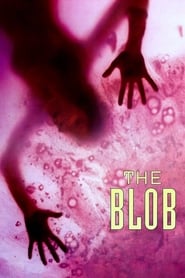
Oh, dude. I'm coming over to your studio. I got to see those. We've got a lot of old video, too, that maybe we could pull out and share. These are all storyboards. Oh, we have to. I got to say, these are all storyboards. Now, I firmly believe that if anyone saw the poster for It Follows, there was the poster of It Follows where it's the side shot of the car, right? That's the shot from the blob. It's right there. You're right. Erika Eleniak, who, Playboy Playmate, great, great role, great moment here. And I think
29:50 · jump to transcript →
-
-
cast · 1h 36m 4 mentions
The Garbage Pail Kids Movie (1987)
Mackenzie Astin, Katie Barberi, William Morris
-
with everything that had happened to them throughout the film. But in the editing, they decided to put these little pranks in the middle because they felt like the kids might get bored. And to this day, kids, I mean, child viewing audience. To this day, it concerns me when studios come in and the editing department or the marketing department says, no, the original story isn't going to fly. Well, we don't know that. You know, it's narrative. And when we sign on to a project...
30:25 · jump to transcript →
-
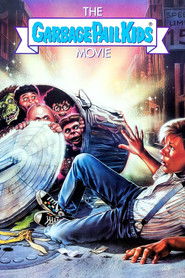
like posters that we were given when the movie came out. So from 1987, full-size, you know, whatever that standard one-sheet poster size is. I have three of them. You have three? Yeah, but don't talk to me about the poster. I'm still angry about the poster. I was supposed to be in it. All right, I'm sorry. I brought it up. You know, they're getting... Mac is just trying to get a word in edgewise in the first time. See, some things never change.
1:17:56 · jump to transcript →
-
What is he taking? He's on Oak, I think he's on Oakwood or something south of Santa Monica. And he's like blowing stop signs, which is not my dad's behavior. By which I mean, he was doing the California stop, like almost stopping and then going through. But I think I still ended up being late to that. No, we had, well, we, I didn't, I know we didn't stop before you got there. I don't remember whether or not we were late. This is like the small, the screening before the release of the film. Correct. It was just, it was inside the Atlantic building.
1:21:07 · jump to transcript →
-
-
director · 1h 30m 3 mentions
A Nightmare on Elm Street (1984)
Wes Craven, Heather Langenkamp, John Saxon, Jacques Haitkin
-
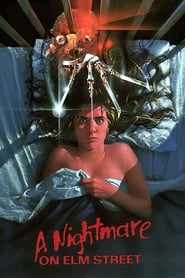
You have a lot of hair. It made it sort of into the poster even. I know. There's something about your hair that's very powerful. In fact, I didn't want to tell you this, but it attacked me several times. Like Medusa. That's why we were there, Mom. Maybe at this point I should mention that this entire idea for this film came out of a series of newspaper articles in the LA Times about teenagers from Southeast Asia that had emigrated with their families to the United States.
20:09 · jump to transcript →
-
They had rented Wim Wenders' apartment for me. This miserable little German cell. Ronnie's husband. Yeah. And I would watch the Olympics at night. I got tickets to the Olympic field hockey, I remember. That's all I could get. I'll have to do a separate laser disc. I'm just on the Olympics. Here comes the poster shot. I was off. And now I lay me down to sleep.
1:14:31 · jump to transcript →
-
And it's always interesting how the newest technology always finds its way into movies. You know, how the first cell phone used in a film was kind of... Now it's almost in everything you see. This is a great shot. I love it. Is that a freeze frame? Oh, no. That was used in the poster. Yeah, that was the poster shot. Grim determination.
1:15:24 · jump to transcript →
-
-
multi · 2h 34m 2 mentions
James Cameron, Gale Anne Hurd, Stan Winston, Robert Skotak + 8
-
Pat McClung
This scene was shot really quickly. It was pretty much all handheld, 48 or 60 frames a second. I think 48. Then Sigourney had to loop all her lines at slow speed, which is always odd. Our first effect in the movie. It's great, because it's what you expected to happen and then it's not what you expect. She was actually under the bed for that sequence. We built an artificial body from her neck down. Someone is under the bed with her. I can't remember who the lucky guy was that created the illusion of the chestburster. Pushing its way through her. It sets up the character. This is her nightmare. You know that she never wants to have to face it in real life again because she's haunted by it in her dreams and her nightmares. This effect is as if you're outdoors. When the camera dollies over, you see it's just a video projection. The idea was that in outer space there would be places you could go to get a feeling you were in a natural environment. So that plate behind her was shot out in the garden at Pinewood Studios. It was a VistaVision plate. Originally, there was supposed to be a birdhouse in the background in that garden, and she would have Jones on her lap and a bird would fly in and Jones would jump up and hit the screen and that's how the audience would find out that she wasn't actually on the earth. This scene was cut from the release version of the film, which became the source of some controversy with Sigourney. She later said in print that she had based her entire character on this scene, and she was devastated when it was removed. At the time she first screened the film, she told me she didn't like the scene, and then we wound up reading interviews where she had a big problem with that. We didn't have a chance to talk about it because of the postproduction schedule. We were working in England, kind of in isolation.
7:47 · jump to transcript →
-
Pat McClung
Even though I liked the symmetry of the fact that she had had a daughter and lost her - that's Sigourney's mother, so there's an interesting inversion here. She's looking at the face of her mother but playing it as her daughter. As an actor, it allowed her to work the connection. All my movies are love stories. This one is about parental love, protectiveness and a sense of duty, and the ultimate sacrifice that a person would make, given that sense of duty. That was a nice touch. That was Sigourney's idea. This was one of the seminal scenes in the movie and was one of the ones that had to be deleted and omitted from the theatrical version because of length. We didn't have multiplexes, and there were only so many showings a day that you could have of a film, and we had to get it no more than two hours ten minutes in order to get the maximum number of screenings per day. Peter Lamont came up with a simple and austere look for our future sets. I watched this film recently and I was amazed at how little we see of the conventional future world, as opposed to the spacecraft interiors. She's actually on Gateway Station here. She hasn't returned all the way to earth. She never sets foot on earth in the whole series of films, which is interesting. This is as close as she gets until the end of the fourth movie, where she's re-entering the atmosphere. But this is earth for all intents and purposes. This is everyday life circa a couple of hundred years from now. And Peter came up with a very spartan look. It's not overworked at all, which I think was quite clever. We wanted to do it minimalist. We didn't have her walking around corridors. We didn't create a world because we weren't interested. We were interested in the through-line of her story and her character's dilemma and problems, the fact that she's not believed, that she understands there's this great threat. The same applied to the costumes. We didn't wanna suggest a wildly separated future from our present one. This might be one of the first science fiction movies where men still wear coats and ties. The thinking was people will still wear coats and ties. They may not look exactly the same. We turned up the collar on the jackets. It's no big deal but it's a subtle change. We wanted to have a place to go. We wanted the space environment once they get to the colony planet to be exotic and so we didn't wanna overwork earth. We also wanted to understand who these people were, and a Suit Is a suit. These characters are suits and we wanted to reinforce that. If everybody's in Star Wars type costumes, it's harder to relate to them as characters. I was thinking more of a writer than a designer when I was making my picks of what things should look like from amongst the suggestions made by the costume designer. Denny, did they shoot at 25 frames per second for all the video playback stuff? Do you remember? They did. The 24-frame issue was messy. It can be done, but it's such a big procedure. Shooting 25 frames per second on the camera puts the video in sync with the film camera very easily. There's a slight speed differential but it's almost impossible to perceive. In Britain they have a different television system, a 25-frame-per-second system. 625 resolution instead of 525. Later in the film there's some video footage that was used, appearing on video monitors. But the PAL system is better than NTSC, which is our system here in the United States. It almost looked like a slightly too fuzzy version of film, sort of in between. It's not as good as it should be for film, but it wasn't obvious it was video. Jim realized and made the video images noisier or break up more often so it was more obvious. The tag of this scene is gonna be a throw to this big sequence that takes place on the colony which is before the aliens attack. That's cut out of the release version, so coming up Is the biggest single change from the release version of the film. It's an entire reel. I'll never forget Gale Hurd, who was my wife and producer at the time, trying to shorten the film by 20 minutes. I just could not see how it was possible to do a cut here, a cut there, a few seconds, a bit of a scene, the tag of a scene maybe. She said "I've been thinking about this for days." I said "Go ahead." She said "Reel three." Which starts here. "You can take out reel three." I immediately rejected that as completely absurd. Then I thought about it. Reel three ends with Newt's scream when her father has the facehugger on his face. It works flawlessly. It's a brilliant cut and I have to credit Gale with that. I had poured a lot of energy into the design of these scenes and the alien derelict ship. The problem for me was that I couldn't imagine this film without the cognitive tether to the first film of the alien derelict, but it turns out that it works perfectly. A little dialogue bridge and it works fine. I like this tractor a lot, this tractor with this articulated leg design. This is one of my favorite effects. You see the big tractor driving by and in the background you see these people struggling to put a tarp over that tractor. That was done in perspective. There were full-size people back there, and a miniature in the foreground with distance between. It put everything in camera all at one time without any opticals or anything beyond that. The trick was that the actors had to act at double their normal speed of acting, because the camera was running at 48 frames per second. We had a Ritter fan on them to really kick those tarps around in excess of what it would be in real time, but because we were overcranking, that motion would then look normal. The multi-wheeled vehicle at the beginning is a fifth-scale miniature, radio-controlled, that Jim designed. On the airplane coming over from Los Angeles to London he just doodled it. Ron Cobb, I believe, fleshed it out.
10:08 · jump to transcript →
-
-
director · 1h 24m 2 mentions
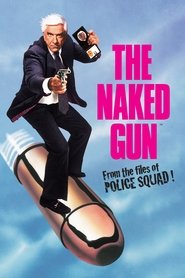
The Naked Gun: From the Files of Police Squad! (1988)
David Zucker, Robert K. Weiss, Peter Tilden
-
Again, in the tradition of film noir detective movies. Every script we put in a lonely walk and it gets cut because they don't mean anything. Except it stayed. Well, actually, we have a tradition of using stuff that was cut out of the movie and subsequent versions of the film or things that were for the trailer that then turned into scenes. Yeah.
35:10 · jump to transcript →
-
There's the big guy with no lines again. Exactly. That's the way we like him. Now this would be Reggie Jackson? Oh, you ruined the reveal. I'm sorry. I hope they can slip better. Oh, jeez. Slip better. Moving back. You can back that one up. How hard to get Reggie? Was he expensive? Actually, you know, in our movies we make the poster and all the stars are in little boxes at the bottom. And we put a little thing under each box, like, you know, the mayor, she ruled the city, the way she made love with an iron fist.
1:14:23 · jump to transcript →
-
-
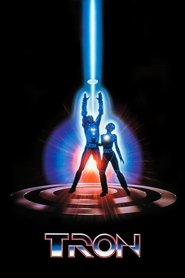
technical · 1h 35m 1 mention
Steven Lisberger, Donald Kushner, Harrison Ellenshaw, Richard Taylor
-
-
-
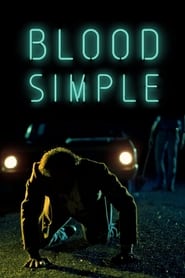
director · 1h 31m 1 mention
Alex Cox, Michael Nesmith, Victoria Thomas, Sy Richardson + 2
-
-
-
-
-
Related topics
Other topics that frequently come up in the same commentaries.