technical
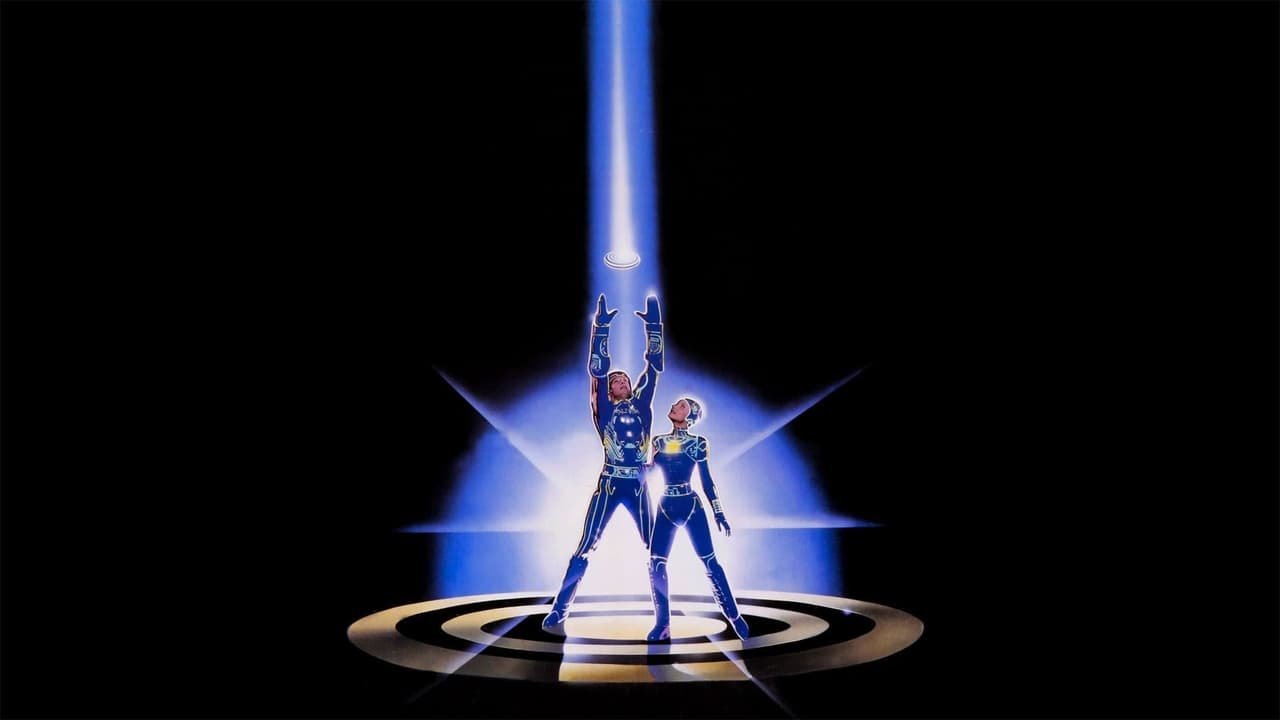
Tron (1982)
Lisberger, Kushner, Ellenshaw, and Taylor discuss TRON's early use of computer-generated imagery and the back-lit animation process. They explain Digital Effects Incorporated's work on The Bit, Disney's concerns, and the production's "no problem" motto. The track describes the techniques and decisions used to complete the film's unfamiliar visual effects.
- Duration
- 1h 35m
- Talk coverage
- 82%
- Words
- 14,096
- Speakers
- 4
Commentary density
Highlights
Topics
People mentioned
The film
- Director
- Steven Lisberger
- Cinematographer
- Bruce Logan
- Writer
- Steven Lisberger , Bonnie MacBird
- Editor
- Jeff Gourson
- Runtime
- 96 min
- Also on
- OneSheet ↗
- External
- IMDb ↗ TMDB ↗ Find on Amazon ↗
Transcript
14,096 words · 11 flagged as film dialogue
Greetings, programs.
This is Steven Lisberger, writer/director of Tron.
This is Donald Kushner, producer of Tron.
This is Harrison Ellenshaw, visual effects Supervisor and associate producer on Tron.
This is Richard Taylor, I was one of the special effects directors on Tron, and I was the director of the computer simulation division on Tron. And we're here to provide you with some audio commentary on Tron. The origin of Tron dates back to early work we did in animation experimenting with characters, animated characters who would be made out of light, who would be not rendered in ink and paint and put on cels, but actually only exist as light imagery. And we were looking for a place where characters like that could be part of a Story. And I saw a Pong game, and it reminded me of gladiatorial games. And at the time, I had been trying to keep up to date on what was happening with early computer graphics, 'cause it was part of animation. And so, all of those things came together very nicely, the Pong game, the characters made of light, and the computer animation was the environment. And through computer animation, we got to know computer people and programmers and computer technicians. And the more I got to know them, the more the story accommodated their personas in the electronic world. I think one of the original guys was one of the guys who created...
Or one of the creators of the PowerBook, that was... Yeah. - Yeah, Alan Kay. And Alan, the alter ego for the Tron character was called Alan, named after Alan Kay. And what impressed me about these guys was that they were pioneering this new reality. And that with pioneering that world, certain frustrations had taken them over. They felt that they were fighting a losing battle in certain areas. Alan Kay was trying to convince the world that people were going to have small, portable computers that they were going to carry around, and no one would believe him. Other computer programmers I worked with were doing computer graphics, and they thought that their stuff was going to be in movies one day and hold up, and nobody would believe them either. So, I looked upon them as a group of warriors and believers in their own abilities, and fighting and... Characters who were fighting a good fight, and... It's a little difficult for the audience because I think the audience doesn't necessarily relate, didn't relate then, it relates a little more now, to a group of people who speak computer talk, who are interested in computers, and who are fighting to make cyberspace, or the electronic world as we called it, a good place.
Basically, Steve and I had worked in developing it for over a year. We had developed the script, and we had done a promo reel for the film of certain computer effects and certain kinds of digitized effects of what the electronic world would look like. And we put together a little booklet, I think, of storyboards, and also photographs, and then went to see Tom Wilhite, who was head of the studio at the time. And in our first pitch meeting, he really got it. You know, say that... When we first pitched it to him, he got the idea right away. We developed this movie before he went to Disney. I think in the back of our minds, we always Said to ourselves, "This would be the perfect Disney movie, "so, therefore, they won't buy it." But I think they got it right away. Yeah, originally it was our dream to try to make this film as our independent film. But it got too big for us and... I think at that time we invested every nickel we had developing the script, the effects techniques... And a couple nickels we borrowed, too. Don't remind me of that. You have in...
If I may, a commentary about Donald's influence on the film was that as producer, he and Steven came to the studio. I was brought onto the show because I had been at the studio at Disney before and was, kind of, to be the connection between... To help be the connection between the studio and this new type of filmmaking that was going to take place. And so, a great deal of Donald's input was bridging the gap, and the gap was quite large between a traditional studio used to making either pure animation or live-action films, and doing this film that was... You couldn't describe. It was not a typical film by any means. And everything from the hiring of the people and moving them through a traditional studio system became something that Donald had to deal with on a daily basis. And the producer is as much an enabler as anything. I can remember... I can remember Tom Wilhite calling me into his office and describing this project, this was before I met Steven and Donald, and said that he was going ahead with a film about a video game, about players in the video game, and I thought, "Well, that's going to be great, but how are you going to do it?"
And he said, "/ don't know, "I thought you were going to tell me how we were going to do it." And it went from there. And I... You know, we had an idea, and Steven brought the concept of how it would be done, how it would be inked and painted. But we really never sat down and faced the reality of it. And I think if we had, we never would have started it. Now, here we're really getting into the mind of a hacker, of a computer type in the early '80s. He's communicating with the computer, which in this case is anthropomorphisized as an alter ego. What's happened here is that he has an agent program, and agent programs are a technology that's only now really being discussed about, in terms of whether it's going to be used in a mainstream way. And he sent his program in to get information to prove that Dillinger has been stealing things from him through the computer system. So, as a hacker, he's breaking in and trying to prove this in the computer world. And he got caught. The Recognizers are the cops.
One little thing I noticed... I mean, I didn't catch it when I was directing Jeff with this, is that when he plays Clu, he plays it with this strange computer accent, this mechanical accent. And now, when he's being tortured, he loses that, and I wonder whether he noticed it. We got so caught up in being in the scene that nobody realized that at the time. Clu's torture sequence is a great example of how light is used to create emotion. Lots of different filters were used on him as a part of that torture sequence. There are, basically, ripple glass effects, there's silk screen steel mesh, exposure changes, hand-done animation. When he's energized by the MCP, there are other filters that were used on the camera to give him that multiple-effect look. In this particular case, it was silk screen mesh, steel silk screen mesh that was on the taking camera and was spun around on the lens as a part of that effect. Dillinger's arrival to ENCOM in his personalized chopper was an interesting sequence. I took drawings of the chopper, schematic drawings, and created the design motif that you see on the chopper. And then over a two-day period, I applied these designs to the chopper myself with these varying sized, 3M reflective tapes.
So, when we are shooting this sequence, what we are basically doing is flying air-to-air in another chopper parallel to this chopper. And we have a very low-intensity light source right near the lens of the camera, which is shooting across and reflecting directly back at the camera off of this 3M material. And it was a red light source, so it gives you the appearance that the chopper is either backlit or has some kind of neon lighting system on it. Again, there was the attempt to, for the outside, the window, to have the grid type of atmosphere and, kind of, cross-pollinize the electronic world with reality. Oh, I remember this stuff. Nice desktop computer built right into the glass. Touch screen. - Touch screen. I still want this desk. This was done with rear projection under the desk. The whole set had to be built up on the stage so that we could put a giant mirror under the set and project it in the old-fashioned way. There were technicians who were basically controlling light switches to different light boxes underneath this desk to light up different areas. The type itself, when it writes itself on, is actually matted into the scene from a computer graphics created type.
And again, the view behind Dillinger is indistinguishable from the electronic world. And whose voice is the MCP? It's David Warner's voice. - Yeah. Yeah. It was just electronicized a little bit. End of line. Someone pointed out that they finally figured out that the reason that Bruce Boxleitner's character was wearing glasses is because he was supposed to be a little bit of a nerd. I think that was the intent. Just the readouts on the computers in the real world had to be pre-programmed ahead of time so that they wouldn't have rolling bars on them when we photographed them. Here you see another attempt to link the electronic world with the real world. The cubicles that the office workers are in are not dissimilar to the cubicles that the game players are in. And the intent was to have them go on forever or almost for infinity. Now, what thematically is happening is that at the time, computer people... Programmers were very concerned that the IBMs were going to take over the world of computers and exclude people. That they were going to be... That the system was going to be tyrannical. And what we're trying to show here is that the...
Corporately, they've put a stranglehold on the system, and that the programmers are not being allowed the access that they want. And access for them is vital for their work. This character, Alan/Tron, is still inside the world of ENCOM and is more in balance. He seems... He's one of the people that's going to deal with the system from the inside. He's got a very methodical program in Tron, whereas Flynn is no... He's a renegade now. He just doesn't fit in and he's at war with the Dillinger character. The name Tron is derived from electron. Some programmers think it refers to "trace on, trace off." But that... We learned about that afterwards. There's a program in Japan called TRON, which is an educational school program, which has been running since 1985. And ENCOM was the only name we could find that wasn't already registered as a corporate name. Whereas Alan and Flynn are aligned with their counterpart programs, Dillinger has aligned himself with the tyrannical Master Control Program. So, the MCP is the ultimate controller, the big mainframe, the antithesis of the personal computer. The sequences that take place at the Lawrence Livermore Laboratory were interesting in their concept and in production. It was a very complex place to work.
It was a very tight area, and we worked on this film with 65-millimeter equipment. And Bruce Logan, the DP, had his hands full. Sixty-five-millimeter film technology is quite cumbersome compared to Panaflexes and Panavision cameras. The size of the camera body itself, the limitations of the lenses, blimping the cameras... They're huge, so to get them in these cramped quarters was difficult. We were the only ones... Only film company ever allowed access to shoot in there. And nobody's been back since. A lot of this was lit, practically, by the fluorescents that are in there. It almost looks like a set. Yeah. We were very lucky that Lawrence Livermore let us use this facility. Because the cost of building a set this elaborate would have been astronomical. The Lawrence Livermore Lab is where they had the largest laser in the world. I don't know if it still does today. And they did a lot of research for NASA. Lawrence Livermore Lab was very cooperative with us, and allowed us to, really, kind of, run free through this particular area of the laboratory, which was their linear accelerator.
So, we went into the one particular area, which we found most interesting for the area where Flynn gets de-rezzed, and where you first see the matter transportation effect, where the orange is digitized and deteriorated and then reassembled. In this particular case, we are seeing an orange, which was created by CGI by Triple-l. Animation that was done by the effects animation department, which was headed up by Lee Dyer and the effects animators, John Van Vliet, and John Norton, Barry Cook and Michael Wolf, Chris Casady. The name of that laser, by the way, Is Shiva, the Hindu goddess of creation and destruction. The 16 billion-year life cycle, she's got the drum of creation in one hand and the fire of destruction in the other. ... femain suspended in the laser beam. Then, when the computer plays out the model, the molecules fall back into place and voila! So simple. Why didn't I think of that? - That's right. Use that on Star Trek all the time. It's funny how they just kind of, just blow it off. Another afternoon's work down in the lab. Exactly. - Teletransportation, okay. Just digitized matter, no problem. Tomorrow we'll do watermelons. In a week, a human being. No, that comes sooner than that. A-ha! Oh, you're giving it away now.
One little anecdote here is that the cameraman that was up on the platform shooting this, the viewfinder of his camera was broken, the pellicle mirror had shattered, and he couldn't see anything through the camera and he just aimed and shot. He didn't want to slow down the production by telling anyone that he couldn't see anything, and held his breath all the way till dailies, and the shot worked out. Oh, that's right. 'Cause there weren't very many 65-millimeter cameras available, and all this was shot in 65 millimeter. Yeah. When we opened these cameras, they still had the sand of Lawrence of Arabia in them. Well, Flynn's arcade was in Culver City. Yeah, it's across the street from the old MGM lot, which is now the Columbia lot, but now renamed as Sony Pictures. Now, there was actually a loft at the location. But then the re-shoot... The close-ups were the re-shoots on a stage. Yeah. That's the... The actual... The practical location. Space Paranoids. Space Paranoids. I take my son to the arcade in Westwood. We go once in a while. I have to bring my earplugs. But I've never seen an old couple like that in a video game arcade. That's right.
We knew that Bally was going to release a video game simultaneous to the release of the picture, and therefore we wanted to have the design of the game in the arcade and the game in the real world that people would actually play be very similar. So, we go to Flynn's, and we see Flynn playing the electronic game and fighting off a Recognizer. That is the console which we created for the film that represented the game that Bally was going to create. Although, obviously, at that time, there was no way that a computer game could have real-time, interactive, full raster graphic imagery. So, it was a prediction of the future of the way games were going to evolve, and that is what we're now seeing in CD-ROM games and the games that are in home computers and arcades today. Jeff did get very good at video games. We had some on the set. Yeah, he was remarkable, and one day you suggested that we videotape him while he was actually doing it. And look at the neon in the back. I'd forgotten about that. OA, right. I don't think any of the actors actually went so far as to get themselves a computer and spend hours backstage... Programming. -... learning how to program and...
That didn't happen, but they got as far as games. Battle Tank. We used to play a lot of Battle Tank. Battlezone. Yeah. Battlezone. There you go. Now, as! recall, you... We re-shot this sequence. Yeah, and I don't even remember... The lighting... To match, I think, the lighting of the game arcade. Well, I think, actually... - We changed dialogue. Did we? - Changed dialogue. And here's a little secret. We told the studio that we needed to redo it to match the lighting. Well, see, /... Still using the same excuse. That's right, you're still... You're still well-programmed... - /'// never tell. The lighting didn't match. The casting process was interesting. Originally, I'd pictured Jeff's character being younger and the Tron character being older. We were affected by some things that were definitely outside of our control. Tron predates Splash, and people forget that, really, Disney was having a hell of a time getting popular actors to work for the studio. And it had been a tough time for Disney. And it didn't help that we were saying, "Yeah, we want you to wear these funny costumes." And Jeff was always enthusiastic about being part of the picture. The Tron character... Bruce was...
I don't think Bruce was quite as adventuresome at first, although he got into it after a while. I would have liked to have seen Bruce possibly be a little, I think... I had pictured him as sort of a younger Kirk Douglas. I think he would have been better if he had been a little older like he is now. I like the way he looks now. And I think Jeff... I was surprised at how physical Jeff was. I thought that... I pictured Flynn being a little more geekish or a pencil neck, and Jeff is very physically strong. So, in that sense, the two became somewhat similar, although their personalities and what they represent are completely different. One little anecdote is that... I can't point back at the character of Tron and say, "There were all these actors." Or, "It was between this one and that one." But I do remember one surprising actor who really wanted to play this part, and it was Peter O'Toole. - Yes. Oh, he wanted to play the part of Dillinger. No, it was Tron. Tron, that's right. I think we wanted him for Dillinger and he said, "No." And I had this amazing scene with him in the Beverly Wilshire Hotel where...
In his hotel room where he said, "I can do this!" And he started leaping from one piece of furniture to the other and screaming that, "I want Tron on my tombstone right next to Lawrence of Arabia!" And who knows, maybe he would have been great, maybe I really missed it right there. All these interiors... Shooting them, these low-light interiors, in 65 millimeter is very difficult, because the depth of field, the focus plane is incredibly short, and it was a real struggle. And some of the close-ups, we actually had to run light stands up the backs of the actors through their jackets as braces, so that they would stay in the exact same spot, so that we could keep their eyes and faces in focus. You know, if your file was in there... - Hey, wait a minute. If we can get in there, I can forge us a Group 6 access. Well, shall we dance? And ENCOM was shot in downtown Los Angeles. I forget the building. Of, the Transam building? Oh, yeah, the Transamerica building. At the top of that was the helicopter pad. This sequence between these two heads of the company really expresses the philosophical problems that the other characters are going through.
Again, the office is designed to mirror the other world in terms of its graphic look. Wasn't there something about the cold, corporate look as well, Steven? There's your door. - There's the door. The scene where they sneak into ENCOM and open the door that is 10 feet thick or 12 feet thick, that's a real door, that's not a prop movie door. That's an actual radiation door at Lawrence Livermore. ENCOM isn't the business you started in your garage anymore. In one scene, you see a number of things flip up into four corners. Images. That was a traditional optical that had to be done, and opticals in those days would take two, three, four, five weeks at least, and it was a big task. It was like making its own little movie. You know, you can remove men like Alan and me from the system, but we helped create it, and our spirit remains in every program we designed... That line is one of the key lines in the whole script, about the human element that the programmers put into the system. And it's this discussion between those two characters that really elevates the picture well beyond a video game movie. Now, the reverse was shot, actually, on the Iot, so there's a reverse...
Getting into the Disney vaults? Yeah. Lawrence Livermore was quite proud of the fact that although this door weighed tens of tons, or whatever it was, it was so well hinged that you could open it by just pushing it. One person could. In fact, you found... I believe you saw that door as we were taking a tour of the facility and you Said, "This would be a great place for them to sneak in." So, you kind of re-wrote the scene to accommodate that huge door. And the irony is, as he punches the buttons, that the giant door opens, and no strength is exerted, but it's opened automatically. I kind of inherited the job of not only setting up the giant rear projector and the mirror and all that stuff, but I also had the job of putting together what would end up going onto the desk. That's an actual wireframe on there, for the carrier, as you See... Right. - ... in the film.
I began searching around for footage to go onto the desk, and it was getting late, and we were about to shoot this thing in a couple of days, and I just ran out of stuff, so I put the flowchart from the film on there, and probably things out of my address book and anything I could... I was down to pulling things out of Life magazine and re-photographing those. I was just running out of stuff to put on the desk. What's interesting about this protagonist, Jeff Bridges' character, is that he's actually, um... He's a creative, technical type, and he's fighting for his creations, he's fighting for his work. I think that's pretty unique. He is somewhat of a paranoid character. But with some reason. With some... Yeah. - Some good reason. Dillinger will never know we've been in here. Good luck, hot shot.
We just passed a Cray computer, that large, refrigerator-like computer. That was, at the time, the most powerful computer in the world. This Is... - Was this set at Triple-/? Where is this? No, this was picked up at... Wasn't this picked up at Lawrence Livermore? Yes, I think this is right, this is Lawrence Livermore. And again this is another kind of discovery. As we were getting the tour, you said, "Well, we could use this for their transition." This is a Set. So, af this point we've got two hackers, one, in essence, illegal, and the other one legal, both trying to correct the system, get on the network, what we now call the Internet. Bruce Logan, the cinematographer on the film, and Peter Anderson, the cinematographer on the second unit, did a miraculous job of lighting up the set with a lot of light, but taking all the light off of the desk so that you could see the rear projection come up through it. It's pretty clever.
To achieve this camera move, we put the camera on the overhead crane that was permanently installed above this laser. Actually, this is a series of lasers, all of which focus down to one point. I think that... And it's for fission or fusion. I think it's for fusion. That crane helped construct this laser, and I think was rated at something like 5 tons, which was just enough to lift our 70-millimeter cameras.
When we came to make a decision about what film format to use for Tron, we felt very strongly that we needed to shoot it on a larger negative than traditionally done. And it came down to a choice between 65 millimeter and VistaVision for the whole show. But the availability of 65-millimeter cameras was far better than the availability of VistaVision cameras, so we made the decision to shoot the entire show in 65 millimeter. And to keep a certain consistency, and as long as we had rented the cameras, we felt that we might as well go ahead and shoot the real world in 65 millimeter and not in 35 millimeter. It was kind of one of those nice to have things, and nobody objected strenuously to it, and also it would be the first time since Ryan's Daughter that a film had been shot entirely in 65 millimeter. And I think you can see the results. I mean, it looks wonderful. In the monitors in Lawrence Livermore, one of the things that Triple-/ had to do was create lots of imagery that appeared on monitors, and that imagery had to be shot and created long before we got to production.
So, there was a lot of planning in creating all of the monitor imagery, and Triple-I did a great job on that. Spent a Iot of time on this shot. To accomplish the effect, what we did was get a 4-by-5 still camera and photograph Jeff Bridges in his position after he's been zapped, and then immediately moved him out and took another photograph, which was the background by itself. So, as you pull away chunks of Jeff, you see the background behind him, and then to put the laser and the grid and all that on top of him was basically the effects animation of John Van Vliet. When Flynn is de-rezzed and pulled into the computer, we go through one of the most interesting sequences in Tron, which is the real world to electronic world transition. This sequence was created by Robert Abel & Associates, primarily under the direction of Kenny Merman. It was a sequence which I had designed, knowing that the way that Robert Abel & Associates was making these computer graphic images with the Evans & Sutherland computers, and, really, using vector graphics to create this particular look, would give us a look that would be unique just for this transition.
The three-space transition, the movement through all these binary bit patterns and this polygonal landscape, was done by making multiple passes through a traditional animation camera that was pointed at a high-resolution, vector graphic, Evans & Sutherland computer screen, and making multiple passes, frame by frame, using different colored filters, coming back, making multiple passes of rewinding other filters, until you finally end up with this, which seems to be solid objects. But it's really made out of lots of tiny, tiny lines put together to make solid blocks of color or objects. Oh, man, this isn't happening. It only thinks it's happening. When Flynn says, "This isn't happening, it just thinks it's happening," it's a key line, because it means that the reality that he finds himself in now, not even he can fully believe exists. And if anyone should appreciate and understand this alternate reality, it's him, and now he finds himself trapped in it. All right, now we see Sark standing on the bridge, and all of a sudden, he is enclosed with these shrouds of light as he begins to have his conversation with the MCP. The database for the MCP was a human figure that we had created at Triple-/ called Adam Powers and was originally on the Information International sample reel.
And if you look at that sample reel, you'll see a juggler character who was juggling balls. Well, that face of that character is the face of the MCP. So, the first time that you see him, he is a polygonal drawing of a face. And that's basically the underlying database of the face. So, it's made of polygons. And those polygons, we play them out on the Triple-I computers as the line-drawing polygons, and made 12-and-a-half by 20-inch stills, high-con stills of those. But we created the mouth positions for the vowels and the syllables so that you could take these interchangeable transparencies and lay them down and make him Say, by whatever order you put them in, whatever you wanted him to say. 'Cause he was voicing a lot of different dialogue. Then those were backlit, and then we applied an effect to those line drawings of putting a steel mesh screen over the taking camera, and it made it have that much more, kind of, complex look. And then we also animated the exposure occasionally. Early on in the film when I started working with Steven, we did a lot of experiments to work out how these characters were created. The thing that we finally decided was that the characters needed to have this energy inside themselves.
They are obviously in this electronic world. Now, these costumes were unlike any costumes anyone had ever created for a picture before, in that they were costumes designed to have effects treatments done to them. They were white with black drawing or black lines over them. All of the black elements on the costume were turned into circuitry which could be backlit and light could be pushed through there. We originally shot a 65-millimeter image of these people, live-action photography of them on these black sets. Then from that 65-millimeter film, we created some photo-rotoscope machines, which basically could project the 65-millimeter film down to large pieces of film, which were pre-punched with animation punches. This film was created by Kodak for us, and we would project down with these photo-rotoscope machines, which would hold this film into a vacuum frame and make a continuous tone positive print of each frame of the film. Then these continuous tone prints were taken to a light table, it was a vacuum light table, where they were contact printed to high-con film to make a number of high-con positive and negative images. So that you basically have for every character a large cel and you have high-con positives, negatives, and a continuous tone positive.
Then these high-con elements were hand-inked and painted to isolate the circuits on the body, the whites of the eyes, the whites of the teeth and any other circuits that we wanted to treat as a separate exposure. The characters are more often than not... The live-action characters are shot on an all black stage. When there is a set, the set is also black, but is measured out to conform with what we're seeing in this artwork. So that if a character appears elevated in a shot, like this shot, there was an elevated platform for him to walk on, but it didn't look at all like the set. Then we would composite these actors over paintings, transparencies, and once that was done, we would add the light and the color separately. And to simplify it, you can describe it as a sort of perfect blend between live action and animation in that we took live-action film, photographed it in a way that we could break it down to individual frames, then blow up those frames into large slides or transparencies. And we had 75,000 of these, which seems like an appallingly large number, but it really isn't if you compare it to an animation film. And because we were at Disney, they were not overly swamped.
That's an actual Frisbee, by the way, and those are actual Frisbees on their backs. We had a excellent Frisbee coach, Sam Schaiz. I like the fact that the deadliest weapon in Tron is a Frisbee. A Iot of effects animation in this sequence and in the film. And that is the animation that makes the glows, and as the Frisbee gets brighter, and you see the reflections of it on their costumes, all that has to be done frame by frame. This is hand-drawn animation that, although it is drawn, a negative is made of that, and it is placed over a light source and then re-photographed, and the ability of the effects animators was such that we were never waiting on the effects animation on the show. They always performed very well. It was never a problem. They did very few redos, and that's because they had had experience doing this beforehand, whereas everything else that we were doing, outside of the effects animation, was the first time through. So, that had a much tougher and steeper learning curve. In the holding cells for the game grid, those are backgrounds that are entirely hand-drawn by the background department, again using Rapidographs and line drawing and airbrushing and then turning those into high-cons.
But those drawings are all drawn to match the actual physical sets, which were built so that when someone passes behind something, or leans on something, those are actual physical sets that were built. But again, the sets were just black on black. They're as if they were made of black velvet. Part of the interesting thing as a cinemagraphic problem that was presented to Bruce Logan was that he had to shoot, unlike anybody had ever shot before, sets that were entirely black with white line drawings and white characters running around on these sets. Bruce Logan's job in photographing these people was very difficult because, unlike most photography for most films, you try and get as much chiaroscuro in the picture as you can. You let there be a lot of dark and you create shadows and you create this moodiness, which a cinematographer takes great pride in. In this film, during the sequences in the electronic world, basically, he had to light them so that we could see as much of the costume as possible with as little shading as possible because all of the shading and all of that were done by hand by making different masks and airbrush elements that were used under these costumes in post. The ring game was an interesting technical exercise.
The set itself, again, was black flock paper with the rings drawn on this paper with tape. The actors had to realize which rings were there and which ones were not as they acted out the sequence, imagining that they were hundreds of feet above the ground. One of the inspirations of Tron is the movie Spartacus. And there's quite a few similarities to the persecuted people who had to fight in the gladiatorial games. This game, of course, was inspired by Pong and jai alai. I think one of the interesting parts of Tron was the synthesis of new games that were created. The design, for example, of the glove that's being worn here, we took a traditional jai alai glove and then rebuilt it and made it out of foam, added other elements to it to give it a more technological quality, and then again, I put the designs over the outside of that to make it blend with the rest of the costumes. Shooting in 65 millimeter, from a director's standpoint, is a lot of trouble. The cameras are huge and bulky.
The format requires an enormous amount of light to fill that negative, so if you are shooting Lawrence of Arabia or Doctor Zhivago and you've got lots of snow and big exteriors, it's fine, but in low-light-level situations, it's very troublesome. The depth of field is sometimes as little as a half an inch, and you find your cameraman is asking you, "Now, which part of the eye do you want in focus? "Do you want the front of the eye or the back of the eye in focus?" Or if the head of the actor is not square to the camera, they ask you the really insane question of, "Which eye do you want in focus? "I can give you the front eye in focus or the back, "but the other one's gonna be blurry." Now a lot of these shots where you see actors talking to each other and we're doing over-the-shoulders, the camera couldn't hold focus for the blow-ups to be made, and I had to shoot the actors on separate passes. So, in a shot like this, where you see all three actors talking to each other, it wasnt filmed that way. I filmed them separately and they were composited. And there's quite a few shots like this.
Whenever you see them walking around and they're separated by more than a couple feet, those are all separate shots, and then the actors are composited. So, it's very difficult for the actors because not only do they not see the environment they're in when we're filming, all they see is an all black stage, but they don't even see the actor they're talking to. Forming of the Lightcycles, again, is almost entirely done by hand-done animation done by the effects animation department in creating the way that these cycles form around these characters. We built an object that the actor could sit upon, and it was literally a mechanical shape that was the seat and the handlebars, so he could sit down and it would thrust his arms forward and pull him down into that locked position. So that everything that he sits upon and touches, it was, again, drawn by the animation department, and not until you see the final completed cycle, which is actually a CG/ rendering of the cycle, is any of it done by computer. The Lightcycle sequence was done by MAGI. Their way of creating an object were to take basic geometric shapes, cones, cubes, spheres, cylinders, and make an object by collaging those particular pieces together and creating an object.
And that's how the Lightcycle was created. All wide shots that you see are computer-simulated. All of the shots, other than the very tight shots of the figures inside the canopies, are computer-simulated. The shots inside the canopies are actually hand-drawn artwork of parts of the Lightcycles, and the animation that's happening over the Lightcycle windshields is hand-done animation to give them a sense of speed. But virtually every scene that you see of the Lightcycles is entirely computer-generated. And there's not even effects animation in those scenes. If there's an explosion when a Lightcycle hits the wall and a tire bounces across, I think those were basically all CGI. Syd Mead worked really hard on designing these motorcycles so that they would incorporate the characters. But if you look closely at them, you'll see that the second half of the bike is flattened and sort of two-dimensional, and that was done because the computers couldn't handle too many compound curved surfaces. So, we restricted those curves to the wheels and the windscreens, and then the rest of the bike was simplified. The ability to move the camera through 3D space with these computer-graphic-looking landscapes is just great. The Recognizers are a sort of King Kong. There's a little head on top of that gate structure...
Suggestion of a face, but it, sort of, got lost. The Recognizers were created by MAGI-Synthavision. As I mentioned, there are graphic vector lines, red lines outlining all of these objects, the same way with the tank. The tank was another unique design of Syd Mead, who is a futurist, a fabulous designer. Once Ram, Tron and Flynn have escaped the Lightcycle grid and are off through the canyons being pursued by the tanks, we cut inside the tanks and see another example of a Syd Mead set that was built as a three-dimensional set, again with black background, and all of the elements on there graphically put on so they could later be treated. So the camera, you can see, is moving through scenes in ways that no physical camera or no model shot could possibly do. The animators that I worked with to create the choreography for all of the CG/ sequences were Bill Kroyer and Jerry Rees. But to communicate all this information to the computer technologists, the people that are sitting at monitors at that time, took a new language which we had to create. So, what we did was, first of all, we had to think of each sequence as a real physical reality.
Not only would they draw the point of view that they saw as an animator that we would work out together, that was the story point that Steven wanted to make, and also the point of view that we wanted to take. But after we would draw the original storyboards in a traditional, kind of, storyboard manner, we would have to go back and draw a top view, side view and front view of the objects, where they were in time, where the camera was in time, and what the camera's point of view was. So, we really had to define everything to the CG/ technologist in a three-world, three-dimensional space. And that was the first time that that had ever been done. They must've gone right past us. We made it... this far. Now, all of this, this revolt, it's all being led by the user who's gone in the system, Flynn. The Tron character and Ram character, they would have toed the line and gone through the software the way they're supposed to. We'd better, Null Unit. Null Unit. Get the computer dictionary out. Look up "Null Unit." What does that mean? In this sequence, you can really see some of the flaws.
I don't really mean the flaws, but the imperfections in the cels, little bits of dirt that pop on and off. Yeah, but they're few and far between considering. Yeah. Come on, you little bugger. Come on. Look at that. A lot of pops and a lot of glitches in there that we would always Say, "Well, that's what happens in an electronic world." When we started there were going to be no differentiations between the flesh tones and the rest of their uniform. But at a certain point they looked, well, not very good. So as a result, that added, approximately, 120,000 extra frames, extra elements to the shot, so it did grow in many aspects. The cave sequence where Flynn, Tron and Ram finally re-energize their selves with this liquid energy was a very interesting technical problem to solve here. In the sequence in the cave when the water is being handled by the actors, literally, frame per frame, rotoscope animation is isolating the water from the body so that it can be treated with a different filter and a different exposure. And again, this is an example of how light is used to portray motion or energy, as Tron drinks and you see his circuits light up and they become energized.
The set itself was a complex geometric shape, which was designed by Peter Lloyd, and we built into this set, basically, water channels, and the water itself was reflecting light sources that we put in angle so they would reflect to the camera, and the water was in black tanks so that all we're really seeing are the highlights on the water. Yeah, but the biggest problem at that time was do we fill this with colored water or clear water? Had to do tests, you know. - Right. That was your problem. Do we put milk in there and make it purple? I think that what Flynn is surprised now, ironically, to see that there's parts of this mirror world that are more alive than he anticipated. So, it's not just the harsh computer reality, there's something living about it. It's a very complex shot, again, with all the elements. Probably about 30 different elements, 30 different separate exposures for each frame. Normally in a special effects movie, you get a very bad bottleneck effect in that all these things have to be composited through one or two optical printers. Now we have digital compositing machines.
But by putting it into a manufacturing system like this, where it became like an animated film, we could use 14 or 15 animation stands, and we could use a slew of effects animators and ink and paint people to do all of this work simultaneously. As far as I know, we still have more shots with human beings composited into an artificial environment than any other movie. I believe there's 1,100 special effect shots in the film and 900 of which have human beings composited in them. And that number is just very, very large. Just the organizational task alone was monumental, not even considering the creative side of it. For every frame you would have an additional five to 15 cels that isolated the different colors and the different... We had body mattes, we had face masks, continuous tones. You made print backs on top of print backs. So, those 75,000 original cels grew to over half a million. I think we ended up with something like 600,000 cels, all of which had to be kept in order. We had to pull trailers, literally these large house trailers, kind of, industrial trailers onto the lot.
We ran out of space and we ended up with 10 trailers that would house all these cels and had to be organized and sent over... 80% of them were sent overseas and had to be numbered and then painted and kept in order. At one point we thought if we had 1,000 scenes, and this was around Christmas time, the film was going to come out later that summer, and we had no idea of how we were going to get it all done in that short a period of time. And we thought, "Well, it's summer vacation. We have two weeks. "We'll get college students, 500 college students in a room." We really believed this might happen. We discussed this for about an hour and we Said, "You'd have 500 students in a room. "We'll teach them how to do inking and painting and rotoscoping, "and they only have to do two scenes each. "And so they do one scene a week. "At the end of that time, we'll be done, "and we'll just go and shoot them on the animation stands." It didn't work out. So, we brought on Arnie Wong, who was an animator. We put him in charge of supervising Cuckoo's Nest, which is a ink and paint service that was in Taiwan.
Approximately 80-some employees in a single room. And what we did is we went through and we made a videotape of every situation and what to do in that situation. So that if an inker over there, who didn't even have to understand English to do this, could go to a TV monitor, roll to this particular problem and see exactly what you'd do in that situation. And then he was there to answer questions that were unusual. And the most interesting thing, and one of the things that I'm particularly proud of with this technique is that in spite of what a pyramid it was to build, we managed to get all of this post-production done in six to nine months. And that is using a technology that we had developed. It had never been done before and we developed it and used it on this picture and delivered on time. And that was only possible because of this manufacturing technique. It's interesting the computer animation iS the simpler part of the set. - Yes. Ironically, one of the things that was a creative philosophy that we enjoyed and were proud of was that we were taking computer animation and letting it stand on its own. We weren't trying to make computer animation mimic reality.
And the job was then to make reality, the actors and the sets, look like the computer animation. We used to say, "Well, if you've got lemons, make lemonade." Everybody else, and certainly since this point, has been going nuts trying to make computer animation mimic reality perfectly. And I found that the limitations of computer graphics at the time were the most exciting thing. If computer graphics... If computer animation is no longer different from reality, maybe we've lost something in that. Certainly you gain special effects technology and you can do certain things, but it's the limitations, I find, to be the creative challenge. I think at the time we were using four computer animation companies... Yes. -... which were probably the only animation companies that existed in the country at the time. Yeah, I had been visiting some of these companies for two years before we started making the movie. Maybe even longer than that. And I used to show up at their doorstep and Say, "One day I'm gonna make this movie. "You know, we're gonna do this and this is gonna be great." And they'd say, "Yeah, yeah, yeah."
I'd come by every six months and say this is really gonna happen, and I think they were more surprised than anybody else when we really did this movie. And they got to show their stuff. The way the de-rezzing effect was created, for example, when Ram passes away and he's in the cabin of the Recognizer, there's a combination of the original photography of the character, and then that is overdrawn with literally hand-done, line-drawing animation done by the animation department. And between that animation and light exposures, you can make it just, basically, run off, dissipate and fade away. Also, upon viewing this again, for so many years, you tend to kind of lump it all together visually in your memory and we forget, I forget, how much detail, how much layering of texture was put into this film. - Mmm-hmm. Ai! these shots are all completely storyboarded. Even the electronic world and all the simulated shots were all on storyboards. There must have been thousands of storyboards. Yeah, it was very detailed. Because rendering times in computer graphic imagery, the time it takes for the computer to draw each frame, are high. They're even high by today's standards. It takes sometimes as long as an hour or more for each frame of film.
Probably the most complicated CGI images that were in Tron were done by Information International. The Solar Sailer hangar, the Solar Sailer, its formation, the walls of that environment, that's all CGI. As far as Cindy Morgan's involvement, she was very brave to get involved because a lot of actresses Said, "What am I going to wear? "You're going to put what on my head? "I've got to have a helmet and headgear "and wear all this spandex?" And that scared a lot of actresses away. Yeah, it was very hard to get anyone to take us seriously. You'd call people up, they'd come in for casting sessions, and Steven would do his best to present the film, and they'd look at you askance, think you were crazy. You'd run some video on them, and they just didn't believe it was going to happen. And as a result, it was very, very difficult. And I think that was one of the last major parts that was cast. Yes, it was two or three days before the first shot or something. Yes. - It was very close. And one of the people we tried was Deborah Harry. Right. We screen-tested Deborah Harry.
The Bit was created by Digital Effects Incorporated, and we didn't have the time to choreograph a CGI Bit for every scene. So, what we did was created a series of stills that could be cell flopped, and these transparencies were created by Digital Effects so that the Bit could be rotating and have these different pulses in it, and then when it wanted to express itself, we flipped to the next sequence of stills, which would make it become more spiky or change its shape, and literally those were cell flopped and then flown around by moving the animation camera on the object to give it its motion from left to right or up or down or wherever it moved, we got it closer to you. That was all put in by moves on the animation camera, on these stills that were being cell flopped. These characters were very interesting. I especially liked the one that looked like a vacuum tube. Other programs... - Other programs and... ... in the system. The Recognizer sequence is another set that was built based on designs by Syd Mead.
The interior of the Recognizer, as the interior of the tanks, was all a physically complex shape that the actors moved around on with white line-drawing vector material over the surface of it, and isolated animation coming back and colorizing and animating those elements. I think one of the most successful pieces of computer choreography in Tron is the whole Recognizer sequence, when the Recognizer hits a bridge and becomes multiple pieces and Flynn pulls them all back together with his energy and the choreography of the way those parts all fall back into place and tumble. The thing that people don't realize about computer simulation, especially at this time, is there were no programs that imitated the effects of nature on choreography. Every piece and every part of every computer-simulated object had to literally be choreographed frame per frame by an animator. When the Recognizer moves along and bounces off the ground floor and the pieces separate and then come closer together and have that real, elastic, rubber-banding kind of quality to them... Simple things in choreography... I mean, when an object goes around a corner, does it just swing around the corner or does it have back animation? Does it weave left and right? Does it back animate before it moves forward?
Those are the things that the animators brought to this and that the computer-simulation people did a terrific job of interpreting.
We had about 10 background artists, and all the backgrounds were painted in black and white. And the color, again, was added into a full-sized Ektachrome. So, the color on the people was added on the black and white live-action elements on top of these Ektachromes. These Ektachromes were their own little... Unfortunately, they've all disappeared. But Jesse Silver and I would sit out in one of the many trailers late at night doing the layouts for the backgrounds and then ship them off during the day to all the different artists, who would spend two or three days and ship them back. If you don't know how it was done, you would think that these people really are in their background. But to do that, we came up with the idea of, if we placed a cube, a perfect symmetrical cube, into the scene, then you would have these parallel lines from which you could find vanishing points. And you would have the perspective and you could do it very easily. Of course, you can't place this cube into the scene while the people are acting. And also, it means that you can only do it where the shot is tied off.
But fortunately, or unfortunately for Steven's case, most of the shots had to be tied off because it was impossible for us to create backgrounds that had perspective moves in them. So, if you moved the camera, you'd have to take that into account. As Harrison pointed out, when we do this compositing, we have to keep everything in perfect register. My camera, my 70-millimeter camera, was almost always nailed down to the floor for each shot. So, there's no moving camera, there's no handheld camera, there are no camera moves because all these elements have to be composited and there was no way to do motion control of the camera system at the time. We actually would get the shot set up, and then we had a thing called bat wings that went out from the tripod legs, and the grips would come out and they would nail the tripod to the floor. And that camera was so locked off that if you ran into it in a small car, it wouldn't move. And it severely limited the ability of, you know, myself, to create motion in these scenes, but you don't notice it all that much because the world you're looking at iS SO visually intriguing and startling that you tend not to think about it.
But if you go back and look at it you'll see that's the case more often than not. And of course when we go to full computer graphics imagery, then we've got the other situation. We've got a cornucopia of camera movement. So, we had both extremes. We had camera movement and we had no camera movement. That's definitely Moebius in that drawing, remember? Dumont was designed by Moebius. The designs on the costumes themselves were a combination of some of the early sketches done by Moebius and Syd Mead. And then I would take those drawings and tape out the designs, which you see on each costume. The I/O tower was a three-dimensional set, again, with the actor built into the set. The large headpiece that he wore was really quite cumbersome and very heavy. When I took that home the one evening to put the graphic designs on that thing, I realized how difficult it was gonna be to wear that through those sequences, but he was on a turntable and the entire turntable rotated around. And Barnard Hughes was a real trouper in that sequence, never complained once.
It's one of those sequences where you can see the subtlety on this laser disk, of the variations in color, just a difference in the tone of his overall body and the difference in tonality of the whites in the headpiece that he's wearing there and his flesh tones. You'll notice in some scenes the characters will have flesh tones. In this particular case, Tron and Yori both have really flesh-colored skin, and their costumes have that slight tint of violet to them, where in other sequences there's a feeling of blue light, or violet light, or pale green light falling on the entire body. And this was all selectively done as an attempt to create different moods, different feelings in the scene. Obviously we're trying to be more warm, more friendly. Human characteristics are more important. He thinks. Bring in the logic probe! "The logic probe." I love that. He says it with such conviction. I know. It's a battering ram to some, a logic probe to others. The energy probe is all done entirely by the animation department. It was all graphically drawn and all hand-animated.
The scene where Tron goes in the I/O tower and communicates with Alan in the real world, I think it's probably the best example of painting with light that you will see in this movie. There's a little bit of everything going on here. There's very little computer simulation. This is almost all artwork and the actual character himself just being treated in different ways. The beam of light which he stands in is animated light. It has a slight moray happening in it. And then it has that pulse to it, which is, after I saw the first composite of the scene, I felt that we were lacking a kind of energy and we needed to bring some life to it and something more magical. And so, I put this pulse in this light to give it a, kind of, life feeling. But the blending of the different colors of light, the soft light and the hard edge combination of light there and the magical things that light does on its own. And it's something that you really couldn't do with airbrush and you couldn't do with any other technique. This was a very difficult sequence because it kept looking like he was standing in a shower. And it took us about two, three months to get this right.
I don't remember that scene. Don't remember that in the script originally. I think it was added later. - Yeah, I think it was. You needed the information. Right. You needed to take the viewer along by the hand and help him out, help him through the world. So, you've got to imagine that each time you turn on your PC and call up your favorite program, this is what's happening. Right there's your disk, right there. There it goes. - Yes. Double click on and that's what happens. The disk has the... The mandala has always been a symbol of that, the completion of the circle that represents the completion of the personality. And that's what we were going for. Again, it's serendipity that it turned out that the disk has turned out to be such a big part of computer, you know, mechanics, whether it's optical disks, magnetic disks, we seem to now be doing exactly that. Matter of fact, I'm pulling a disk out of my pocket right now, which has the backup copy of the script I'm working on because if my house burns down, I really don't care about too much, except I don't want to lose every copy of my screenplay.
So, here is my latest identity disk, which I guess you could say I have been in touch with the best of myself to write this recent script. And here it is. It's not attached to my back, though. It's in my pocket. In the case of the Solar Sailer, we had many scenes that took place on the Solar Sailer, fights, running up and down the deck of the Solar Sailer, the whole sequence at the nose of the Solar Sailer when Flynn diverts the energy beam. All of those scenes had to have sets designed to match exactly to the Solar Sailer. So, one of the complex things that Triple-I had to do was to create computer-generated transparencies that matched identically to the sets that were built. So, the sets had to be built to exactly the same proportions as these large transparencies, and those transparencies were then the backgrounds for many of the scenes that took place on the Solar Sailer.
Sark's carrier is an interesting object. It was designed also by Syd Mead and rendered by Information International. But because MAGI-Synthavision"s images had a line-drawing quality around the edges of them, which was an intentional design that we created, their software allowed them to do that very easily. So that there was a similar quality to the objects that were created by Information International, all those vector lines, or those little line-drawing edges that are put around the edges of Sark's carrier, for example, were all done by actually going back and beveling off the corners and having to create an actual rastographic type of beveled edge to give it a line-drawing kind of quality. That was the difference in the software between the two companies. When people get mad in the electronic world, they get red. When Sark is being tortured by the MCP, there are mattes that are being cell flopped underneath his costume design to create those moray patterns which move through his body. Then there are exposure changes happening to him and color changes happening to him, again, to create that kind of feeling. The environment here that the Solar Sailer is flying through was... The Sea of Simulation was all created... All these scenes were created by Triple-l.
When you see the down views of Flynn and Tron looking down at the landscape below, those are fractal mountains. And that was the first time that Triple-/ had ever tried to do anything like that. And it's one of the few places where more complex CGI was used. There's some texture mapping going on. There are little hidden things, these hills and towers were all, in many cases, a first-time attempt at creating something with CGI that nobody had ever really done before. When you fly over the Sea of Simulation there, there is... At one point, the Solar Sailer flies over a lake that actually has the shape of Mickey Mouse's head. There's giant Mickey. - Giant Mickey. This whole sequence on the Solar Sailer that we did little things to keep it alive, there's a lot of dialogue that was going along here and a lot of standing around on the bridge talking. So, I came up with this idea of these zingers that go wailing by in the background. These electronic comets that blast by just to add the potential for sound to give you a sense that they're moving more, and just to create something interesting in the background, which we've tried to do a Iot.
I mean, it was a simplified reality where we were here. It certainly isn't as complex as the real world we're in every day. And to keep it from being just monotonous and boring, you know, we were always trying to come up with little things in the background, things that could help keep it alive. It's interesting how bicycle helmets have evolved. I wish we had those helmets when we were doing the picture. And it's funny, the bicycle world is nothing but helmets and spandex now. Right. - We didn't know it, but we were pioneering Rollerblade and bicycle technology.
The bubbles that come up through the... From the Sea of Simulation and get caught on the energy beam, those were done by MAGI-Synthavision. Any of the scenes with Recognizers were done by MAGI-Synthavision. And that was a new approach for them to create those bubbles that had that liquid wobble to them. We picked David Warner out, and I was so impressed with his persona on the screen as being real forceful, and then when he showed up, he's a lovely man, I really like him, but he is pretty frail physically. And you don't get that because he fills the screen the way he does. Grid bugs. This isn't gonna be easy. If those grid bugs get us, we've had it.
The grid bugs were designed by the same person who did the Recognizers, John Norton, who was involved with Tron very early on. Another Disney member is Roger Allers, who went on to direct Lion King, who helped design the MCP back in the '70s. Now, Dumont being tortured is, again, a great example of effects animation, just the way... When he has the energy run across his body and follows his contours, those are dry brush drawings that are turned into high-con and then reversed out and then airbrushing being added to that to give it tonality changes.
What's happening? - Power surge from the MCP. Nobody plugged it into a power strip. That's always a problem. For the want of $6. 95.
Well, the power surge is some of the best effects animation in the picture. The interactive light that's happening on Flynn when he's reaching down into it on his whole body... That's all hand animation. He's creating a junction.
Then the transfer from beam to beam, that's straight CGI, and then we go back to Flynn, who's matted into a CGI transparency. All these pictures of the Solar Sailer you're seeing here were created by the computer as large stills and then augmented with effects animation. The interactive light in this scene is really terrific. The beam itself has that pulse in it. And the beam is not just a single pass to make it one particular color. There's probably four exposures creating that beam. Now, when we go into this rainbow tunnel, that was a idea I had based on some tests we had done at Information International for a commercial we had done years before where we had color fringing radiating through an object. And we thought that would be a really neat transition through that tunnel to create that rainbow effect rolling down the walls. I was very fortunate in that the people that we admired and dreamed of working with wanted to work on the picture. And it was a coup to have, particularly, the juxtaposition of Syd Mead's powerful technical work in opposition to Moebius' soulful, lyrical design work. And Peter Lloyd had worked with Richard and was very familiar with the neon look and the electronic look. He specialized in that.
So, I find that what excites artists is the ability to get into an arena that hasn't been handled yet. I think the most complex bit of choreography and animation done by Information International is the whole collision between the Solar Sailer and Sark's carrier. The camera dynamics, moves here, and then just coming up with choreography that really worked, and the way that the Solar Sailer is broken into pieces, sucked down through the carrier, and the scale differences, the camera moves swinging totally around as these two things collide was really unique. This was a tricky one because when he falls, he's hard to see. Right. And, again, this was one of the last sequences that was done.
Dumont! - Yori! Tron? Tron's dead. Steven especially felt very passionate about the fact that as long as we were going to this much trouble, and as long as we were doing a theatrical, major film that was cutting edge, we should not compromise the look in any way and the quality and the resolution, and we should go with VistaVision. There was no real logical or practical way to do the electronic world duped back into 65, because the equipment literally didn't exist. We still had to build equipment. We still had to build equipment to take the original 65-millimeter photography in black and white and make these large Kodalith cels and then those Kodaliths and the corresponding cels that were inked and painted to isolate the different areas that would be colored, were then re-photographed on animation stands that utilized VistaVision cameras. Then to keep it consistent, we also were able to insist and have the CG/ companies produce their footage onto Vista Vision, which is quite a remarkable feat. Even in this day, you don't get many companies who do CGI! or digital compositing that have the capability of film recording onto Vista Vision. So, even then it was way ahead of its time.
What happened, though, was you now end up with a original negative, if you will, for lack of a better term, but a final negative that is in two film formats, 65 millimeter and VistaVision, from which you eventually have to make elements to make full 70-millimeter prints and 35-millimeter prints. So, that lab process is rather long and convoluted, which I won't go through here, but you can take a look at one of the sides of these disks and see a flowchart that indicates how it was done. But it was, again, something that is never done, has really in recent memory never been done, is only done in special venue-park-films type of situation and never to the extent of a full-length motion picture. The MCP was created entirely at Information International. By the time we finally got into production on Tron and the pre-production design was at hand, different conceptual drawings were done by different people. Syd Mead's drawing was basically the basis from which the MCP was created. And then the whole exterior of the MCP, its design and the way that it metamorphosizes, turns, Spins, objects pass through its surface and fly out and orbit around it, all of that was an interpretation based upon Syd Mead's original design.
As I took that design to Triple-l, we tried to work with elements that we already had created, to create the interior energy cylinder that is the MCP.
The whole sequence of Sark's carrier de-rezzing and passing through that plane was also a very complicated bit of animation for a CG/ company, in that those vectors that it's becoming, the vector lines that Sark's carrier is becoming, was not really something that Information International could do. So, all the vector lines are actually solid objects. I think we missed an opportunity, and I thought about this later on, where Flynn could have given the power to Yori and rezzed her up and she would have become totally high rez and all we would have had to do was substitute live-action footage, and it would have been... - Yeah, yeah. It would have worked if she'd been there in full flesh tone with hair, and then she could have had one brief moment where she realized this is what the world of the users looks like. You know, what's it like on Mount Olympus where you come from? And they could have experienced that, and it would have been really easy to do. Maybe it's not too late. S/ipshod. The director's edition, that's right. If/ could do one shot, it would be that shot, where the programs for a second would realize... Would get a glimpse of our reality. It's the heart of the whole system.
Part of the problems in designing the MCP was to continually have it have this great scale so that it really seemed like a huge object. One of the things we were doing is we were color processing the CGI image so that the color is continually moving through the surface of this object. And then, as we created it, to me it looked just too hard and not quite magical enough, so we created another ether around it, a kind of a transparent gas that's floating around the MCP. Sark!
We're getting closer. Now, when we look at these scenes where they're out on the grid surrounding the MCP and this battle takes place, this disk battle between Sark and Tron, it's classic in its effects animation. The interactive light on the characters, the light moving through the hollows behind them, again, it's all done by hand. It's done by the effects department. While inside, these pulses of light are moving through the characters that are being tortured. Dumont... When you see the skeleton of Dumont through his skin surface, that's, again, just hand-done artwork.
You should've joined me. We'd have made a great team.
You're very persistent, Tron. - I'm also better than you.
There's the PG right there. Any time you have brains spilled, electronic or not. When Sark finally gets his just due and his brain splits open and he falls, when he falls down on the ground and finally comes to rest, we actually threw a bunch of clock parts and things out. We got a bunch of little pieces of an old clock and some other things and I threw them out so that you see these pieces of his mind fall out on the surface. Look at that. Here we have... - Giant. Here we have giant Sark. - Giant Sark. Dillinger, the corporate head. Now, putting Sark into this other scale where he's been enlarged by the MCP and has become this giant monster, was one of those situations where you are dealing with different scales that are matted together. And Sark was shot with a 16-millimeter lens and was over cranked, and we had to, basically, use a video tap and other ways of making sure that these objects fit together. Right next to it. - What good'll that do? I'm gonna jump. It's the only way to help Tron. - Don't. You'll be de-rezzed.
The kiss between Flynn and Yori and the light effect behind them of the MCP I think is one of the best uses of animation interactive light, and the way we bloomed it through there and kept that pulse going and really let the light do its own thing I think is one of the most beautiful uses of light in the whole picture.
The ultimate sacrifice, jump into a lot of effects animation.
The MCP and its choreography, I think, was really, mostly, the work of Bill Dungan and Larry Malone. Mal McMillan and Art Durinski also contributed a lot to this whole sequence, but the software, the original software that was written by Triple-/ to create these sequences was one of a kind. And at that particular point in time, with the production schedule that Tron had and the massive amounts of CGI that had to be created, it was a major achievement by Triple-I and that group of people to meet the deadline and to make this particular picture come together.
Come on! Let's go! Let's go! Let's go! Let's go!
The exploding of the MCP was done by Bill Dungan and it was... I remember that we worked on this particular sequence, and how it would work, for probably eight weeks.
And then the transition of the electronic world back to its beautiful self is entirely all done by hand-done animation. When you see the large spheres floating over those rolling hills and those moray patterns moving through them, those are actually just... Everything in that scene is basically hand-painted or hand-drawn or hand-animated and then backlit. Well, it's interesting that several years later, it wasn't the Master Control Program or the mainframe computer which really changed technology and the world of cyberspace, it was the home computer, the personal computer has become so powertul, and it became an expression for the individual rather than the mainframe. This is now called the world of cyberspace. Yeah. It's true. We intentionally avoided that use "cyber" because I thought it was... It would alienate people and make it sound like a brain movie.
Every time I fly into Los Angeles I look out at the city streets, and it always reminds me of that shot. And the transition back out of the electronic world is really just a reverse of part of the real world to electronic world transition.
So, the maligned Flynn, the persecuted Flynn, has completed his journey. Right. He has returned with the information. Look at that printer. - Yeah. That looks pretty funky. - I know. Lucky it's not a Teletype. Yeah, I was just going to say that's what it reminded me of.
Priority one!
Hey! A couple years ago I got a phone call from Leonard Nimoy, and it was a big shock and a pleasant surprise to hear that familiar voice on the phone. He wanted some information about some of the things we did on Tron and he Said, "Boy, you guys really went to the edge of the envelope on that one."
Yeah, it was nice.
Great shot.
Now, watch this helicopter come up from nowhere.
Try to look official. Here comes the boss.
Pick me up in an hour. Thanks. Greetings, programs.
Time lapse. This is a wonderful time lapse shot that... Shot in 65 millimeter. See all the airplanes landing at LAX. That's what those... - Yeah. Those little things. Were flecking through the... Right. Who's this guy? I forgot what went into this movie. I literally haven't seen it in over 10 years or... Really? - Yeah, I'd forgot. It's overwhelming, isn't it? Yeah. -/ mean, it's really a piece of art. - It's remarkable. You know, you have to go into these projects not looking at the whole global reality. Because if you would, you would never have attempted it. It's easy in retrospect now to look at it and judge it and say, "Well, it should have had a little more this or that." But we never had that luxury. We had no luxury at all. - We were going flat out. It's like getting into a car and they say the only way you can go is if you put a cinderblock on the gas pedal. And there is no brake. - Right. And when it runs out of gas, wherever you are, that's where you are. And we're not sure of what the course is that you're going to take. Right. So, get out there and drive where you think you should be going.
And there was no map. And that was it. We had one saying though, when anyone from the studio asked, it was, "No problem," right? Nothing was a problem. - Well, that's... But we had the technology. Because at night we knew the little fuzzy animals were going to come down the hall and help us. I tell you, the lot has that juice in it, though. There is a certain vibe. We were in the animation building and you are inspired when you are there. You feel that this is, sort of, hallowed creative ground and that, you know, you do want to push the envelope. I think this film got willed into being. There was a great deal of just brute will to get it done. Force the issue. If we say we're going to have dailies tomorrow, then we'll have something to show at dailies. And to add insult to injury, this was my first film. Right. Animalympics, which was two television specials put together, it was fully animated. But this was my first feature film. And that's what Tom Wilhite always... Whenever people said, "Well, isn't this Steven Lisberger's first film?" Tom Wilhite would say, "No, he's done another film before," and then hoped they wouldn't ask what. Because he would always...
He would say that each time. And then, you know, the fact was that it was a full-on commitment and there was no turning back. This was the most no-turning-back film I've ever been associated with. And I'd like to add to that. We all owe a debt of thanks to Tom Wilhite, who was the president of the Motion Picture Group at the time, for green-lighting this picture. And I think he felt that the picture was in the tradition of experimental cinema that Disney Studios always had. I always felt that Tron would remind you of something you've never seen before, and I think it accomplished that. Tron was a once-in-a-lifetime combination of technologies that'll never happen again. The evolution of computer graphics has gone on from Tron. The incredible complexity of what we can do today compared to what we could do at that time is much more intense than I ever thought it would be by this time. But it was phenomenal what was created at that time with the very, very limited state of the art of computer graphics. And then that whole technique by which the characters in the electronic world were created will never be done again.
It was just too labor intensive and too unique and there are other ways to do maybe that same type of imagery now. Steven Lisberger really created a unique piece of communication, it was right on time, and his insight into the technologies and the combination of technologies to create that film, I think, was a one-time situation that will probably never arise again. The labor-intensive quality of the film, I think, Is... No one really to this day understands. "How did they do this?" - Yeah. I know, I know. How did we do it? I don't know. We were nuts. We were young is what we were. Well, thanks for all the help, guys, really. I can't believe we made the whole thing.
Keep exploring
Other commentaries on related filmmaking topics
-
8 shared topics
Alien³ (1992)
Alex Thomson, Terry Rawlings, Alec Gillis
-
8 shared topics
The Lord of the Rings The Fellowship of the Ring (2001)
Peter Jackson, Fran Walsh, Philippa Boyens
-
8 shared topics
The Blob (1988)
Joe Lynch, Chuck Russell, Mark Irwin
-
8 shared topics
The Mummy (1999)
Stephen Sommers, Bob Ducsay
-
8 shared topics
Aliens (1986)
James Cameron, Gale Anne Hurd, Stan Winston
-
8 shared topics
Red Sparrow (2018)
Francis Lawrence