multi
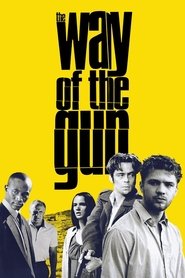
The Way of the Gun (2000)
Release The Way of the Gun DVD (Artisan Home Entertainment, 2001)
Writer-director Christopher McQuarrie and composer Joe Kraemer conduct an unusually candid postmortem of a first feature built to frustrate the audience's expectations of sympathetic criminals. They trace the abandoned prologue, rewritten character relationships, production design, gun handling, sound, score, editing, and carefully mapped final shootout, repeatedly showing how actors and craftspeople improved what was on the page. McQuarrie is especially direct about his own over-writing, inadequate coverage, and the rough cut that taught him how much sooner, faster, and more economically a scene can work. Against that self-critique, he identifies the film's strongest passages as acts of trust: letting Benicio del Toro play a decision without dialogue, rebuilding the childbirth scene from the actors' research, and using intention rather than likability to hold the crime story together.
- Duration
- 1h 59m
- Talk coverage
- 98%
- Words
- 21,983
- Speakers
- 2
Guided collection
What crime reveals in a first feature
Christopher McQuarrie and Joe Kraemer examine The Way of the Gun from inside its production, tracing the intentions, collaborations, mistakes, and practical geography through which McQuarrie learned to direct his own writing. Nick Pinkerton reconstructs Michael Cimino's Thunderbolt and Lightfoot from the outside, placing its ambitious visual authorship inside Clint Eastwood's disciplined Malpaso system and reading its crime partnership against a changing American landscape. Together, the tracks show a first feature declaring a filmmaker's preoccupations while the realities of production expose what that declaration costs.
Part 1 of 2
- 01 The Way of the Gun Now reading
- 02 Thunderbolt and Lightfoot 1974
Commentary density
Highlights
Topics
People mentioned
The film
- Director
- Christopher McQuarrie
- Cinematographer
- Dick Pope
- Writer
- Christopher McQuarrie
- Editor
- Stephen Semel
- Runtime
- 119 min
- Also on
- OneSheet ↗
- External
- IMDb ↗ TMDB ↗ Find on Amazon ↗
Transcript
21,983 words · 3 flagged as film dialogue
Hi, this is Joe Kraemer. I wrote the music. Hi, this is Christopher McQuarrie, and I hired Joe. And this is The Way of the Gun. This scene... I'll begin, if you don't mind. Please do. This scene was originally inspired long before there was actually an idea for the film. And I was out at the dog park with our good friend Mark Ebner, actually. And it was Mark and myself and... three dogs between us and there was a large group of people playing frisbee football or ultimate frisbee in the middle of the dog park and this had been going on for several weeks and there was a great deal of hostility developing between the frisbee people and the dog park people because we would be throwing balls in the middle of their game or our dogs would be running over and stealing their frisbee and they would be falling down in the end zone and slipping in a pile of dog crap and
There was a lot of anger going on. And one afternoon, it sort of started to reach a boil where people were shouting back and forth at one another, yelling about people's dogs and threatening each other's lives and each other's animals. And it was just Mark and myself standing alone against this large crowd of people. And Mark said, well, what do we do if this actually turns into a fight? Because Mark and I really are not all that... We would have been killed. And I said, look, just... run into the crowd as they're coming towards us and start punching the women as hard as you can. And he said, well, they'll kill us if we do that. And I said, well, they're going to kill us anyway, but they're going to have to go home with the women and we're just going to have to go to the hospital. And at least you'll steal their victory. You're going to lose, but you can take away their victory. Right. Let me ask you, with the first draft of the script, where the whole thing had that other, the meaning of the scene is different.
than what I think a lot of people think it means in the final film. Well, everybody asks what the hell this scene is doing in the movie and what it has to do with the rest of the film. Originally, this scene was the opening of a whole other sequence that went along with the... that introduced the beginning of the movie. And it was a trailer to another film starring these two characters. And it was sort of our way of debunking the need for backstory, which myself and Benicio and Ken Kokin and you, Joe, all find completely superfluous. And I had made a comment at one of the meetings when someone asked me, what's their backstory? I said, who cares? The backstory is nothing but a trailer. So we decided to make one. And it was a trailer in which the entire thing would have been shot in widescreen, 2. 35.
Lots of camera movement, lots of cranes and fast dollies and whip pans and filters and people dressed in black leather and a lot of... Yes, exactly. All soundtrack-y. 65 songs in three minutes and, you know, whatever was dangerous last year and has now been completely homogenized because it's been used in a Kentucky Fried Chicken ad. Right. And in that three minutes, Parker and Longbaugh were going to violate every single... rule of what made a sympathetic character. Of course, in the first scene, they punch women. Hey, there's my wife. She, by the way, gave us the idea for the Cesarean section. Which we'll get to later. The idea for my wife, not your wife. Although we'll get to her later as well. Now I've completely lost my train of thought. Cesarean section? No, before that. Oh. So this whole idea was that these two characters, Parker and Longbaugh, were a violation of the classically quote-unquote sympathetic character. That every time I was asked to make another crime film, which was something I was very resistant to do, it seemed that I could do whatever I wanted. The characters could behave in any unacceptable way as long as
Their reasons were somehow acceptable. It's all right for your main characters to kill someone as long as the person they're killing, quote unquote, deserves it. And I thought that was kind of sad. What I wanted to do was, if I'm going to make a film about criminals, they're going to be criminals. And since when are these people suddenly so sympathetic? Why do these people have... Hooker with a heart of gold. It's just not in me to make a likable murderer. Why does everybody have to be like a virtuous, you know, savior in a movie? Exactly. There's Mark Ebner. There's Mark Ebner. There he is, the dog park guy. This scene was actually written, it was a much longer scene, and it was actually written in the voice of the actor that I had in mind for Parker originally, Ryan Phillippe.
came into the picture much later. And in fact, I was very resistant to Ryan. And Ryan would not take no without a meeting. And I sat down and talked to Ryan, and I asked him why he wanted to be in this film. He was being offered a great many other projects, all of which were going to pay him more, and many of which would actually be seen by the general public in a movie theater. And Ryan said, you know, there are a lot of people trying to make me a movie star, and I'm an actor. I was real surprised by Ryan's performance when we went to that first screening. I mean, in a really good way. Yeah. I think he really set himself up as a good actor with this movie. I think if other people had actually seen this movie, they would have been surprised by his performance, too. Yeah. But... It's sort of like people used to say, I think, about Redford when he was younger, that he was too good-looking for his own good. You know? If you want to really be an actor, sometimes being too good-looking gets in the way. It's Rob Lowe in...
About Last Night, where Jim Belushi is telling him, best thing to happen to you is a good industrial accident. But no, actually in the case of Ryan, with the beard and the hair, he told me how he was gonna transform himself, and I said, listen, let's not even try to do that. It's only gonna look like we're trying to hide the fact that you're Ryan Phillippe. I said, you should just show up and do this role. We're gonna have people come expecting to see you be Ryan, and you're gonna kill a lot of people. And then he showed up for rehearsal six weeks later looking like that. He had put on 25 pounds of muscle. Like that? Like that, yeah, no, that, exactly. And there was a gang bang triple play. By the way, is the Andrew Davis name on the cover any sort of, was that just a coincidence? Is there an Andrew Davis name on the cover? Yeah, and the one cover of The Girl, one of the bullets on the front page is a blurb about Andrew Davis. Does he owe us money for that? I don't know. I don't even know if you know him, but I wondered if that was any sort of illusion.
So who's I mean did Ryan come to you with this with the his sort of distinctive speech style? See I've got to tell you I Think that Ryan is is having me on because I Ryan's never spoken any differently in front of me in any of the times I've ever met it right. I don't hear an accent. I just hear Ryan right well I mean like in 54 he definitely did like a New Jersey like truck stop accent. I don't think he's doing here right no He has a certain, I guess, delivery that is, I mean, it was compared to like Pacino, early Pacino in some of the reviews. I wondered if that was by design or do you think that's just Ryan? No, everything, I gotta tell you, I mean, I wish I could take a lot more credit for all the good stuff in the movie, but that's largely the work of other people. Star Destroyer. Yeah, thank you. That was exactly why we picked that house. And originally we had the shot designed in such a way that
the camera panned over so it looked like the house was flying up into frame and it was completely a mockery of Star Wars. How'd you come up with Kristin? Joe, you're doing a wonderful job of hosting the DVD, I must tell you. Joe Kraemer, everyone. About, I'm sorry? Kristin. Kristin Lehman. Francesca. Kristin was one of the last people cast and we were having a great deal of trouble finding the right Francesca, we didn't want her to be sort of the classic gum-chewing gun moll, which a lot of, the role just so dangerously sort of lends itself that way, and we wanted to give her a great deal more sophistication. In early drafts, I went back and reread the first draft a few days ago, and she really is much more like psychotic almost.
I mean, part of it is that she's sort of hinting. I'm going to assume that people who are listening to this have seen the movie already. And she's sort of hinting at her pregnancy much earlier and much more blatantly than ended up in the film. Yes. And she sort of comes off more, I think, more sort of in a Hollywood way twisted. And I wondered, did that change in the writing or when you started working with Francesca? It changed. Well, it was there in the writing sort of to convey to the reader that she was a horrible woman. Mother. Candidate for motherhood. Yeah, that when she says the last line in the film, I want the audience to feel like, oh, that's a happy, oh, that's horrible. And I knew that once a character or an actor came to give that character life, that those things would become unnecessary. She was also much older in the script and the notion of a much younger wife and this sort of strange distance between the two characters started to...
bring itself in. And in the very first draft, there were hints of a romance between Chidduck and Robin that I thought were interesting. I mean, I see why you dropped it eventually. Not really a romance. There were hints, I guess, I guess what there were was just affections, that she had Chidduck's affections. Right, that in the first scene, he's talking to her and speaking very affectionately to her, and we get the sense that he's about to make the move on her. Right. That you're feeling that it's kind of this disgusting that he's being a lech and you realize you've misunderstood him and the intention of that was to introduce a character to make you immediately dislike him and then realize you've misjudged him right and that's that's kind of a trick to help you sympathize with a character that's traditionally unsympathetic right working on the movie with you i mean we kept going back and forth about that about you know how to as a composer i had to like figure out how to treat the characters musically
And this applies to the bigger picture in that you never wanted it to be like, oh, we're rooting for these two guys. It keeps switching who you're rooting for. Absolutely. Right. What we try to do is manipulate the sort of classic back and forth and those little moments where you start to say, oh, he's the good guy. And then you realize, no, he can't be. He's doing something horrible. Right. And it was the hope of introducing... Taye and Nicky in the beginning they walk in and they seem a little villainous and then during the kidnapping nikki is suddenly very kind to her right while he seems to be very cruel he's only doing it in their presence the minute they can't see what he's doing he takes his finger off the trigger he's saying are you okay he's he's caring for her right uh and what i hope is is going on and what what all of us discussed the actors and everyone was
to treat every moment as honestly as possible. People are not inherently good or inherently bad. They're human beings, and given whatever the situation is, at this point in the movie, Jeffers and Obecks are not considering, you know, they're not considering doing anything horrible to Robin, so. Right, now let me ask you about that, because in the early draft, it seemed like that was a little more of a plot point. Yes. Was that, from the very beginning even, these two guys, and there were more of them, in the early draft. These two guys were already planning to maybe pull a fast one around Chidduck. Yeah, it was the sense that they were, what it was was to, so that their transition, the decision that they make to take the child is not so unbelievable. It's believable and you could see it coming. And again, so much in the script is so broad.
as a way of sort of indicating to people who are reading the script, here's where the story is going, here are the things I can't convey visually to you. With the looks back and forth and the understandings that these characters have. And of course I'm comparing a first draft fresh out of your computer to this final product. And there's gonna be changes. In other words, bad writing. No, no, no, no. Oh, no, there's plenty. And we'll be getting to that. Wait till we get to the isolated music track. Oh, Christ. But to get back to something you said earlier, you were asking me about Kristin Lehman. Yeah, sorry. Oh, this kidnapping. This was... There's so much stuff going on at the same time. Hold the thought about Kristin, because I want to ask you about this. This gets huge laughs, the whole backing off thing, and I wondered...
Well, this is very interesting. When we started planning this, my brother Doug is a Navy SEAL, and I brought him in to work with the actors and train them with guns and get them sort of used to the correct handling of guns to the point where it was second nature. And you'll see that Ryan is exceptional in his gun handling. The bit on the ear, it was earlier, where he touches Nicky in the ear. Right. That's a great touch, and that was Ryan's idea. uh but ryan also leaves his finger off the trigger uh he's only got his finger on the trigger when he absolutely needs it cool um and this was a great contribution of all the actors i i presented the scene as it was and my brother came in and started to and and the actors were all sort of moving and everybody was trying to get through the scene and get where they wanted to go and and all i said to them was when guns come out and people make sudden moves guns go off and
You need to be very careful. You need to be very aware. And something that I learned from being at a party where someone had a gun and the gun accidentally went off, I won't go into it. Everyone freezes. Everything stops. It's not like there's a panic and people yell gun and run out. In fact, when all those people are sitting in the background earlier in the scene, that came from a... I was at a grocery store that was being robbed and a guy came in and just... put his gun to the head of the cashier and was screaming to this guy to give him the money. And everyone in the store just was looking at each other and very slowly getting on the floor as if they were saying, oh, there's Nicky.
It was really great. They were all getting on the floor saying, you know, is this what we do? Are we supposed to? This is what they do on television. They were completely frozen. Well, it's sort of become reversed because I think in the beginning, people were, you know, in the 70s, TV shows were sort of writing what was happening in real life. And now people, these things happen in real life and they react to it like it's a TV show. Exactly. They've all seen too many movies. I wanted to say one thing, too. I love how with the face mask and the pantyhose on his head. Yeah. It's... One element of the movie that was much, I guess, played up more in the early drafts and in the rough cut was that they had nothing. I mean, like everything they pull this robbery together with, they came with, you know what I mean? And they've been staking out this building for a few weeks at least.
And the way that they sort of just threw this whole thing together, which I thought was a cool touch. Yeah, in the script, they had gone through lengthy preparations and bought all sorts of stuff to help them smuggle her across the border. So what's your feeling about what's going on right here? I mean, obviously we've seen the movie. We know it's her baby. Her motivation at this point is to... She's trying to get away. This is the first opportunity that Robin is away from. Right. Jeffers and Obecks have done such a good job of watching her. This is literally the first time she's been alone. And when we found this location, that elevator we built. Oh, cool. Door and everything? Elevator, door, everything. We built it there. I walked into this location. How did you make it go up the floors? I'm kidding. Stop it. No, we built everything. In fact, half of our budget went into remodeling this entire location. This is your loft from downtown, right? It looks a lot like it.
But the idea of the back doors being locked, there were no back doors in any of the storyboards. Right. There was just a long hallway. See, there's Ryan. No finger on the trigger. Right. Marvelously well done. The guy learned his guns well. And here's Chuck Michael doing a phenomenal job. Yeah. All of these gun noises were homemade. Myself and Ken. Ken Kokin and my wife, Heather, and Chuck Michael. Oh, yeah. Yeah, Heather. That's cool. Heather. Gun-toting mama. Oh, exactly. She does all of Juliette's gunshots in the movie. Oh, that's awesome. She's, yeah. Talk about obsessions with authenticity. Method shooter. Yes. We think they may be splitting up. They may be heading for... Oh, no. And now here's this guy right here. Bonk right in the head.
took a header right into the door, never complained. You know what else I love is this guy on the screen right trying to get up, shot in the spine. Well, look at the guy on the screen right, shot in the spine, and look at the couple in the car. We never really got them. Oh, I never saw that. That's great. There's a guy crying over his dead wife and three bullet holes in the windshield. Wow, that's terrible. That was all about creating a sense of whoever you've started to identify with. could very possibly be the person who killed that very attractive woman lying in the foreground. Right. Well, what I love about that scene, there used to be a bit in the script where she said, where as they're talking here with Robin, she says, you know, Megan. And they're like, what? The guys are like, what? And she's like, Megan is the daughter of one of the guys you killed. Right. And instead, it's just we don't hear, we don't see the gunfight. We hear it, like directorially, what you did. We hear the gunfight. We come out, we sort of see the aftermath of it, which I think was cool. Oh, that was that way on the pitch.
Yeah, but you didn't need her saying the bit about Megan because... Yeah. No, that's... You see it in the movie. Well, that's in the scene where he asks her, what do you call the baby? What do you call your baby? Okay. And she says, Megan. Right. And he says, what? And she's not talking about her child. She's talking about the child of one of the men who's been killed. Right. That was just to... To me, it was much more effective that you're left to wonder... The minute you said who... killed a certain person. I mean, it's obvious that Parker and Longbaugh killed those two guys. But the minute we started pointing fingers, the sympathy would start to sweat. Right. Now, when did you get the idea for this car chase? Because it wasn't in the first draft. Benicio del Toro. Yeah? That's a great idea. Yeah, there was a car chase and lots of machine gun fire and all sorts of other crap. And Benicio said, you know, I was watching cops and these guys, they jumped out of the car.
They were just in the middle of being chased. They just stopped and jumped out. And when the cops went after them, they jumped back in. And we just ran with it from there. We started to laugh at that idea. And this was actually a lot of fun to shoot. You'll see that Taye is doing this. I love Taye. He's so great. Taye is holding the shotgun lefty. He's actually right-handed. Oh, yeah. And my brother was explaining to him, if you're gonna come down with a wall on your right side, you're gonna want to hold the shotgun left-handed. That's a good catch. And Taye spent all day practicing lefty. And then later in the scene, I said, you know, at this moment, you really don't need to be lefty. In the alley with the kitchen? Yeah, in the later alley. Nicky Katt driving all of his own stunts throughout the movie. And the seatbelt shot, by the way, is at the request of Dick Pope, who loves the scene in Bullitt. Oh, right. When they all put on their belts. That's funny.
But you'll see Taye later. He's holding a left-handed shotgun. And I said, you don't need to do it anymore. He's like, no, I kind of like it. I like the shaking there, too. Yeah. It's like the impatience of the audience. Yeah. That was something that was as they were waiting for action. And Taye was doing that. And Stephen Semel just found it and put it in there. It was really nice. Yeah. Stephen did a great job cutting this picture. He found a lot of really great things, I think. Yeah. And put them in. These folks were funny. Yeah. It was a great bunch. Oh, didn't get the shot off. Yeah. And believe me, there's a lot of that in this movie. How many days did you shoot for the car chase? The car chase was shot in two days. Not bad. And all of these alleys, all of these streets were all within one block of one another. How many of those Chevys did you have to get? A Ford, actually. And unfortunately, we only... I did it once, and I wish I had done it again, now that I watch it.
because while the car is wrecked, it's not a crash that I believe would incapacitate those two guys for very long. I wanted to hit the car more broadside, but I also didn't want to kill the stuntman. Ryan with his finger off the trigger again, and now his finger on it. One thing that I read in a review which I'd never picked up on is the notion that we never see cops We hear them coming and as soon as they show up, we cut away. Was that by design? Because originally you did have a little cameo. Yeah, it was originally shot in the street. You could see the street behind them and the cops came skidding up behind them. So you see the cops coming through this entire shot. But we couldn't get the permits to shoot on the street. And we do have a cop car right around the corner. I had another angle shot.
and it just broke up the shot and i i was determined to play most of the movie in masters in two shots right which is again why act two lasts well we'll have time later on to talk about that roughly the length of battleship and uh oh here's benicio this gets a big laugh i just yeah well it's funny it's it's benicio first of all benicio we didn't have breakaway glass i said man just go up and smash the window oh wow and you can see a dent in the car door and we thought it'll be easy just go up and He hit that window about 500 times and dented the door. He's got a screwdriver in his sleeve. And he finally broke the window, and his finger started bleeding. Oh, no. And Benicio had to go to the hospital. He didn't have to go. I made him go. God forbid he got an infection and his arm fell off in the middle of our movie. I mean, I have to finish after. Yeah, exactly. I'm concerned about the negative, not my actors. Right. This scene...
was shot at three separate times of day. Juliette's, all of Juliette's coverage in this scene is shot at 10 o'clock at night on a process trailer in a parking lot, and I am standing to her right, just outside the door. Wow. And I'm watching the monitor and jostling up and down with my fat ass on the trailer to create the motion of the car. That's good. Dick Pope's great. Dick's phenomenal. And who was the lighting guy? John Farr. They both did a great job. Well, you can see when you watch that scene, the three radical. Yeah, but you pretty much timed your way out of it. I mean, in the rough cut, it was much more obvious. And Dick. Yeah, it looks good. Yeah, Dick did a great job there. Well done, Dick. And here's Joe's wife, everyone. Heidi Van Lier. We love Heidi. Yes, we do. Yes, we do. This always gets a laugh, the stealing.
Actually, Stephen Semel's kids came in and were watching us cut this scene. And when Stephen's son saw this, he said, oh, he's a pro. That guy's good. Let's talk about Benicio for a second in terms of what the project sort of started with a conversation you had with Benicio, right? Yeah. Well, the project started because no one would let me make another movie. Right. Everything that I wanted to do was just... By that you mean people were dying for you to make another movie, just not the movie you wanted to make. People were dying for me to make their movies, and I wasn't interested in making them. And he just said, look, if you make a crime film, no one will mess with you. They'll let you do whatever you want. It seems to me that if you want to say what you want to say, you have to make the kind of film they want you to make. Should we tell them about the baby? The little fetus in the cup to the right of the Chivas bottle? There were little models in there with removable babies, and I thought...
He should have a drink with the kid. That's your little Kubrickian. Also, on the sonogram machine, which you'll never see, it says Robin Sarno is the patient's name. Maybe when High Def comes out. I love that the OBGYN chills out in the stirrups after hours. That was my nice little touch, my little point of having a movie filled with prostitutes, you know, the third act filled with prostitutes, and you only see a naked man. Dirty dancing? Oh, this was just... Getting that whole thing to work was something else. Now, I didn't know this. Somebody pointed out to me that they're talking about abortion in that scene. Yes, exactly. Well done. Why, thank you. I love this. This scene, this shot, was originally... My whole vision for this movie was all these long, long shots. I thought to keep that in. I think that's so funny with the covering the eye. I'm so glad you left it in. Benicio is just unbelievable. Just let him run. You know?
And that's the thing with Benicio. You're never going to get what you expect, but you're always going to get something great. Yeah. And I love this look right here. It's one of my favorite moments right here, where he just means. He does such a great job with his eyes. And here is our man Dylan Kussman. Yay. So great. He was cast literally, literally at the last minute. Been through so many people for Dr. Painter. Here's Joe Sarno picking up the trail. Yeah. People miss that. People miss it. Oh, believe me. People miss a lot of stuff in this movie. People miss the movie. Now, here's, talk about. Timing? Well, talk about Benicio and writing. Those three lines were the last three lines of a three-page scene. Right. That I wrote based on a discussion with Benicio. Is he saying how can you kidnap someone with honor? How can you kidnap somebody without it? Without it, it is without it. The scene says, he's a doctor, he'll do what we say.
You have too much faith in people,
man. How can you kidnap somebody without it? Right, that's a good notion. And all of that came from Benicio and I arguing about when Ryan makes the phone call to Dr. Painter without telling Longbaugh and what that meant to those two characters. And I finally wrote a scene that sort of explained their whole relationship and the whole... purpose of of calling for the doctor and it was it went on forever it was this big argument but i wrote it based on benicio's need to have clarity for this character right and when when i finished it and handed it to him he says you know this whole scene is about these three lines you can cut out the rest of the scene yeah let's talk about that for a second or go ahead great benicio great touch with the wallet yeah it's really nice well he's really got the body language of parker down
Of Longbaugh, you mean? Of Longbaugh. Or Parker. Benicio's big thing when we were writing the script was about fear and about having a character who's not concerned with expressing fear. He sees the gun in the bag, by the way, in that earlier shot. Yes, of course. I can't believe I ate the whole thing. Exactly. And this, to me, this played into a much larger theme in the script. with them playing knuckles. Yeah, dynamic between them. That they constantly messed with each other. That they constantly are throwing, sort of seeing how big each other is. Well, and it's Benicio saying, oh, he'll do what we say? Really? Well, he brought a gun, idiot. Yeah, wake up. Yeah. And it's Longbaugh as the more jaded character trying to sort of show Parker, you know, you can't have a heart and be in this business. Yeah. That's what the... That's what the completely overstated hearts game is about later on. Let's talk about directing yourself, directing your own writing. Because there's a lot of things in this movie, because I've seen the rough cut and read the scripts, that I know what you cut out. And how do you feel about having gone through it?
You know, cutting your own writing. And finding what works in a scene. A lot of, I mean, like the scene you're talking about, you only kept the three lines. There's another scene with the sandwich where basically you're getting rid of the writer-ing part and keeping the actor-y part, you know what I mean? Well, to me, and I learned this from The Usual Suspects with Benicio, the character of Fenster was 15 lines in the script, and Benicio came and developed this much bigger character out of it all. What I found exciting and what I really wanted to do in terms of directing was to bring a script that was nothing more than a guideline and have all of the actors bring in their interpretations. Right, fill it in. And be able to throw out the script. The thing that I learned
After the rough cut. After the rough cut. Believe me, I learned never to direct again after the rough cut. Oh, don't say that. No, the thing that I learned from directing my own writing was that everything can happen much sooner, much faster, and with much less said about it. It's funny, when we were all hungry and going out for, you know, and eating bread and water at restaurants for four or five hours a night, we talked about get in late and leave early. Yeah. You know? Yeah. It seems like directorially you took that even... further than you did as a writer. Well, I mean, the original rough cut of this film was one hour and 45 minutes long. No, no, no, it was much longer than that. I'm sorry, two hours and 45 minutes long. One hour. We went out and shot more. Only Peckinpah shoots movies that take longer to watch than they do to shoot. Oh, yeah, and by the way, my apologies to Sam Peckinpah and his estate for making any comparison. I think it's completely unfair to Sam Peckinpah that this be called a Peckinpah film. Right.
She won't lose the baby. The stitching. By the way, the reason Parker hits him in the eye is in reading the script. There was so much dialogue, I thought, there hasn't been any action for about 10 pages. And I had him just pistol. Here's my brother Kevin. My brother Kevin, who was the... masseur and moral support on the film. On-set massage therapist. Yes, on-set massage therapist. I never wished I worked in production more than when you hired him. Oh, we could not have gotten through this experience without Kevin. Thank you, Kevin. Love you, brother. Yeah. And here's the whole scene about... This is a great moment to talk about the notion of the surrogate mother. And keep an eye out for Dylan right here. Oh, Dylan's... With his cracked smile here. It's so great. Not only the cracked smile, but watch the blood-sucking... eye wound. Does it spread? It spreads and goes back and spreads. It's like the eye wound is breathing. You'll see in the next cut, you'll see it's great. It jumps back and forth. Actually, no, it's remained remarkably consistent. Maybe we fixed it. Did Van Ling fix that? There, now it's all bloody.
But you see earlier in the scene, it cuts back and forth quite a few times. Benicio, by the way, king of the inserts. Did you see the way he dropped that in there and it just landed? Every insert that we ever shot, and most of which we didn't use. One take. But they would all, like, he'd pull a ton of crap out of his pocket and put it on the counter, and Dr. Painter's card would be folded and facing the camera so that you could perfectly read his business card. That's awesome. So anyway. the surrogate mother notion. And here's Geoffrey Lewis. Steals a show. Always. Just point a camera at Jeffrey. This was one of the scenes where Ken, well, in every scene, Ken Kokin would say, you've got to do more coverage. You've got to do more coverage. And I said, this is one instance where we will not need the coverage. Just let Jeffrey run. We both had worked with Jeffrey before. I was just going to bring that up. A pilot that we did.
for NBC and Warner Brothers with Kevin Pollak and Lucy Webb that never saw the air. I think it's aired in Europe. Yeah, I know because I'm not getting any residuals. And Jeff was great in that. He was great and played a very similar character. Originally the character of Abner was not in the first draft. There was the tracking device. That's right. Because Sarno was running back and forth so much. He had a little pinger. Yeah, they called it a pinger. And unfortunately, it was terrible. And it was Ken Kokin who kept saying, you've got to find a way to get rid of that. You've got to find a way to get rid of it. And finally, Jeffrey, I started to think of another character, who it would be that Sarno would call.
And I realized it's got to be Jeffrey. It's got to be the guy he was in the underworld. Yeah. Was there a conscious allusion to Leone with the phone? Oh, totally. It was completely. That's the great thing is, you know, for all the people I'm accused of ripping off in this film, no one has figured out who I'm really ripping off. Yeah, me too. So I find that flattering. You know, you're accusing me of stealing from people that frankly should sue me. for any sort of comparison. Or thank you for the compliment. Oh, please. This is an insult. But Jeffrey was so funny in this scene, putting the hand against his head. Did a great job. And it's a good thing that most people don't know straight off the bat that he's really Juliette's father in real life. Yes. No, nobody knows that. Every time I tell people that, they're surprised to hear it. Actually, Juliette was surprised to hear it. We had to do a blood test on the set.
And all these names are mixed up first and last names of guys that I used to work with at a detective agency run by Joe Sarno, the real Joe Sarno. Yeah, I was gonna ask you about Sarno. I guess it's come out that Sarno is also the name of some Joe Sarno, like a pornographer. That was completely coincidental, right? Well, believe me, Joe Sarno was certainly surprised to hear that, and he was reading press on the film. Right. And here I am. I thought you named him after me. Oh, sorry. It's one of my favorite shots slash scenes in the movie. Yeah, it's a great setup. Yeah. And this had a lot to do, again, with Benicio and I talking about Longbaugh and his fear of exposing himself, constantly putting himself where he could take cover. And being very aware that as someone who was living this life, that it was never something with which he wanted to be cavalier. He wanted to show the fact that this guy, you know, the...
The life was not easy. Yeah. And there was no comfort. And that's why Dick and I talked about creating the shaft of light. For Dr. Painter? That Dr. Painter could be exposed and that Benicio could always remain hidden. Stay out of the light. Yeah. So after we decided to do a kidnapping movie, I'm gonna finish it this time. Okay. After we decided to do a kidnapping movie, we needed a kidnapping. And our frustration in trying to come up with with a new kidnapping movie, every single kidnapping movie is about the ransom, just creating a more complicated way to come up with a ransom. And it was Heather, my wife, who suggested, based on a story she had heard about this wealthy couple, older man, younger woman, the woman just was perfectly healthy but just didn't want to deal with the inconvenience of having a child. And they hired bodyguards to watch a surrogate mother. And I thought, God, the minute I heard bodyguards, I thought, who would have thought to even kidnap somebody like that? And that's where the whole movie began. So thank you, Heather. Thanks, Heather. And this scene, this is the scene you were talking about where it was a monologue.
with Ryan talking about civilians versus cops and robbers and people who see in color and people who see in black and white. A lot of crap, in other words. And really all just a veiled comment on movies. Well, I was gonna say that for later. And Ryan asked to be eating a sandwich in the scene. And I would always let the camera roll at the end of every take. And the actors kinda got accustomed to the fact that they were gonna be left hanging for 30 seconds. And Juliette just asked for a bite of the sandwich. And the rest of that scene happened. And when we saw it assembled, I turned to Stephen Semel, the first time we watched it, and I said, just lose the scene and keep the sandwich. It's real. That's what their first conversation would be like. He would not be speaking to her in this, you know, he wouldn't be spouting off about his philosophy. And this scene was actually... There was Nathan. It was a conversation between...
Yeah, and Nathan on the radio. And Dive Bar referencing the bar that they had left in the beginning. Right. This shot was Ken Kokin. I love that you get us to Mexico totally with sound. And that was a conversation with Benicio where he talked about being in the car and listening to the radio. Wait, who directed this movie? Benicio. Must be cold in there. I know I'm going to get whacked now. Yeah. Now, Jimmy. We should go back. Jimmy in this script appears on screen much, much earlier. Yeah. In the film. And I re-edited this and unfortunately didn't tell Jimmy. So he was kind of surprised when he sat down to see the film for the first time. This scene also had that monologue at the beginning between.
Jeffers and Obecks, do you remember? Right, I remember. It was through the other side of the window. Yeah, you're looking in and Obecks is sort of, you see him at the beginning of the scene. That's the end of the scene between him and Jeffers, talking about revenges for the week. Let's talk directorially again. It seems like I learned working on the film with you that you were constantly trying to give the audience as little as possible so that they could figure it out. And a lot of what you cut out of your writing was stuff that I think really clarified what was going on. Yes. And I mean, can you talk about that for a moment? Well, I mean, as a writer, my big rule is find what you're trying to say and don't say it. And in avoiding what I was trying to say with the film, I was saying, I was complaining a lot about filmmaking. I was making a lot of veiled criticisms of film. Right. It's an allegory for...
Hollywood. This film is an allegory from my experience in independent film with Ken. And Parker and Longbaugh end up at the end of the first scene and the end of the film bloody and beaten and completely savaged for being who they are. Right. And the money drives away with somebody else. And that the scene in the birthing room towards the end of the film... is an analogy of trying to make a film. The idea of delivering a child, having your child delivered by somebody who is as equal a parent, but is not someone you trust. And in the original script, you'll remember, Painter was a much less trustworthy character. And he wasn't at all together. No, he was so freaked out and tried to leave the room. And when Parker and Longbaugh leave, they have to give Robin a gun. So she's holding Painter at gunpoint.
And remember, it was at night, so the power went out, so she's holding a flashlight, pointing a gun at the doctor, while he's cutting her open to take out their child. And he's telling Jeffress not to let her look at her own open stomach, or she'll convulse. Exactly, and that's filmmaking. That, to me, is the distributor saying, don't look at the way we're advertising this film, you'll vomit. Score, what score? Do you mean music or test? Well, I meant music, but test, too. Yeah, Joe. I loved your score. It got a 41. I loved your movie. It got a 39. How much as a director did you seize on happy accidents? Jimmy Caan showed up, I think, with some back pain. No. I heard he did. No, everybody says, what's wrong with Kahn? It's like he's got arthritis. Well, I think it works great for the character. Look at his neck. Jimmy has a friend, as only Jimmy Caan would. He has a friend with a bullet hole in his neck that's been through this
horrendous life. And you see how Jimmy has highlighted the scars on the bridge of his nose and his eyebrow. Jimmy said, the character is a survivor. I want to show what he survived. I want to show that he has not lived through this unscathed. He's not Superman. And I want to show this guy's vulnerability without giving away what is truly vulnerable about him. And so he brought in pictures of this bullet hole scar. And he worked with the makeup department I didn't see it until it was ready to go. And no, all of that was Jimmy's desire to create in Sarno a character who lived up to the line, a broken down old man. And he does, he does. And it was very brave of him. He was not afraid to play the character. There are very few actors, I think, that would be willing to walk into that role and play him.
as a character who not only refers to himself as an old man, by the way, some of my favorite music transition right there. It's one of my favorite cuts in the movie because of your music. Thank you. But that Jimmy wasn't afraid to show up and play up the lines about an old man and to let people abuse him and to not have to react to that. And my direction to him was always, when people insult you, you just smile and let it pass because you're going to win. Yeah, take the gauze off. You know that they're all stupid and young and they're going to be dead. This was originally a much longer scene. Sorry, Ryan and Juliette. They both did a phenomenal job, but again, the writing, it was just too much. It was saying what I wanted to say. As far as I can tell. The relationships between the characters, the father-son, father-daughter relationships, they weren't in the first draft at all. When did you...
decide to bring those in? Well, the intention in writing the first draft of this script, because of the twist of Usual Suspects, was to write a completely arid and twistless, straightforward movie. No card tricks. And unfortunately, it was very arid and twistless. But I didn't mean for the revelations of the relationships to be big twists. Well, I don't think they're handled that way. No, and that's why they're handled that way. They're handled as, they're realizations. They're revelations. They're not meant to be big surprises that turn the movie on its ear. What it's meant to do is to express to the viewer that you have to pay very close attention to what these people are saying or you're missing a great deal. The way the film is shot and the way the camera is placed, you're always in the position of a bystander. You're always put in the way that I want. It's very observational. Absolutely. It's not commenting directorially. Right. Well, like with the references to Baltimore, nobody would ever say, well, you remember back in Baltimore when you... They don't do that. They just say, at most you're going to do is reference Baltimore. And I can't write anything that happened in Baltimore that's going to satisfy everyone. Right. To me, this whole scene...
is the beginning. This is where we're really entering the second act. And the second act is the theater of imagination. And if you're not willing to participate in the little clues that I'm giving you, the second act is fairly uninvolving because I'm not giving you anything. It's a really strong rewatch in that way because once you get through the film and you understand where it's going and what the film on the most superficial level is headed towards. You go back and you watch it, and there's a real logic to the relationships with everybody. If this guy wanted to have a baby and he was worried about it getting kidnapped, who would he go to? He would go to Sarno, and Sarno would seize the opportunity. People look at it and they go, I mean, some of the criticisms have been like, oh, the relationships are too convenient, but they never would have happened if they hadn't been that convenient. They're not convenient, they're incestuous. It's the idea that all these people,
But the other complaint being, you know, I didn't sympathize with anybody. Well, why would you? These are awful people, and I'm not interested in making them sympathetic. Right. No one gets off the hook. Guess what? Everybody in this movie is a human being who's done something awful. Yeah. Where is the sympathy in that? This is not terms of endearment. I tried that once with one of my score versions. Those were studio notes. Somewhere, Jim Brooks is vomiting. Oh, no, no offense to him. No, no, no, I know. No offense at all. Here's another. Now, this is a scene, directorially, you lost a whole scene by putting some dialogue over Benicio's back. By putting the line over his back, I cut out an entire scene in which they explain the complications of their plan. Jeffers, in a later scene... fills Chidduck in on this conversation. It was completely redundant, and all you needed was for Benicio to say,
we let the girl go when we feel safe.
The point was, again... Everybody should run to the library and look up the name of the hotel. Yeah, the birth mother. Believe me, it was always supposed to be out of frame, and then I went to frame the one shot where they all converge on Robin, and I just turned to somebody and went, oh, no. I can't get out of it now. You know what I never knew was Sal Si Puedes. Get Out While You Can. Yeah, I read that in an interview with you. That was clever. I never caught that. That's Benicio. Kristin Lehman, look at that face. She's so great. And we never got to finish Kristin Lehman. Yeah, let's do it now. Kristin Lehman, in two of my back-to-back favorite shots in the movie, only because they turned out largely like I imagined them. Kristin, Lynn Kressel brought me a tape of Kristin Lehman in a film, the name of which I forget, and she was...
in a scene in which she's in a restaurant on a date, a double date, and the waiter is her ex-boyfriend. And they decide to move to another section. And the guy at the next table is another one of her ex-boyfriends. And it's the scene in which you get the sense that she's slept with absolutely everybody in town. And it's hysterically funny. She's so brilliant at comedy. And I just, and so I, we were just completely enamored with her, myself and Ken Kokin. And She came to Los Angeles. It was the day before we had to cast the role. And we went out for dinner, and dinner turned into coffee, and coffee turned into being out at three in the morning at Canter's with myself and Ken and Mark Ebner and a group of the most offensive people I've ever known in my life. These friends of mine. Are they going to be on the other commentary track? Oh, God, I hope not. And...
she she was rolling with the whole group she did such a great job of rolling with these people and i immediately looked and said that's francesca yeah this woman who can handle herself and and the waitress came over and the waitress knew both myself and my wife very well and she was looking at me with some suspicion that i was sitting with this beautiful blonde woman and uh she was sort of probing saying well how do you how did you two meet You know, how did you get together? She's keeping an eye out for your wife. And I turned to the waitress and I said, oh, well, this is Kristin, and she's playing one of the roles in the movie that I'm about to do. And that was the first time Kristin knew that she had the role. And she just looked at me. That's the first time Ken knew she had the role, too. That's actually the first time Ken knew he was producing.
Jimmy in this scene, it's great. All of these scenes... You know what I love is the glasses. We never see him wear them, but the way he's got the... Oh, you did in the scene I cut out. Exactly. Yeah, and Jimmy was like... Jimmy, he came with... By the way, that pen that he has in his hand, and there's another scene in which he takes that pen out. It's not a pen, it's a switchblade. Oh, yeah. There's like an ice pick that comes out of it. And I love this. That he got from Q. Right, and so he walks out, and he's holding up his jacket and all this other stuff, and meanwhile, this pen, he could... kill you with. But of course I have the feeling that Sarno could probably kill you with the glasses. That's a great shot of Benicio. Oh, it's phenomenal. Again, about your writing versus directing, they both come off, the two kidnappers come off very much like the John Wayne, John Ford, stoic, pretty silent anti-hero. Yeah.
In the script, they sort of spoke a lot more of their thoughts than you needed to show in the movie. Well, again, there was a series of scenes. You cut back to this diner. I love this lady. She doesn't care less about getting them coffee. And by the way, to any first-time director, whenever you're directing a scene with extras in the background, after the first rehearsal, or during the first rehearsal, don't even watch the actors. Watch the extras. Dylan and Scott Wilson. Scott actually pushed me to add coverage to this scene. Originally, I was only covering the scene from this angle in my rather foolish obsession with shooting things in Masters in two shots. And it was Scott who insisted that I cover the scene from another angle. Yeah, no one ever really caught the Woody Allen influence. The Manhattan of it all. Yeah, okay. I'll take credit for stealing from that. Oh, no, I didn't mean that. No, I know you didn't, Joe. Dad, have the baby. And I'm actually glad I did. There's a...
It was interesting having storyboarded so much of the movie, having prepared myself so completely and thinking that I knew how things were going to play out and so determined to de-stylize the film and keep myself out as a director. that I actually painted myself into some pretty ugly corners in the second act of the film. So there's a lot of essential information that you want to convey, but there's no way to cut to it any quicker. You painted me in a corner. Yeah, I certainly did. And I guess if you're going to, Neil Pollack, who's a director friend of mine. And the interview guy in the beginning. Right, the interview guy at the beginning of the film. Neil spoke to me the day before I
started shooting. And he said, listen, my only advice to you, and this was the only advice I took from any director on the movie, because I wanted, basically I wanted the mistakes to be my own. And I knew there would be many. And Neil said, look, my only advice to you is never stop shooting. Never, ever, ever stop shooting. And unfortunately, in many scenes I did. And this is one scene where Scott Wilson came to me and just said, you can't, you don't have it. And I'm I'm certain that you're going to be glad you did. And sure enough... I think he was right. Well, he was very right. Quite frankly, I think this is a better angle. This is really nice. And this was a scene that in the original flow of the movie was all one scene, and then the Taye and Francesca scene was all one scene. And we intercut between them to help keep things moving. And by doing that, you were able to then cut out chunks.
Yes. To get you just that much closer to the part that you needed. And we tried very hard to do that even further with other scenes to sort of bring things along and move them quicker. And I apologize to the actors because a lot of their good work, James Caan and Ryan Phillippe especially, who had a great deal more going on in this film, there was no way to keep it all in, largely because of the way I shot it. Yeah. I offer my humblest apologies to you guys. And Francesca eating the shrimp. Oh, Kristin Lehman is a vegetarian. Oh really? How much did you pay her? Kristin Lehman's a vegetarian and she read the script and never said anything. And we got to the set that day and I could see her having some kind of problem. I said, are you okay? And she said,
I don't, I'm a vegetarian. She ate 75 shrimp. Wow. Because this is one scene that I did cover. I even shot a third angle. Sure, this one. And the poor girl doing take after take after take. And I went up to Taye. I don't know if I should tell this story. I went up to Taye after we rehearsed the scene. And I'm going to clean up the language. And I said, we've got a problem. And he said, what is it? And I said, well, Kristin just came up to me and she said, you know, I have two problems with this scene. One is I'm a vegetarian. And the other is I'm a bigot. Now I'll eat the shrimp. Oh, man. Just stop. And Kristin was appalled. I said it in front of the entire crew. And Taye, this is why I love Taye. He has the best sense of humor. Oh, Taye and I, the humor between Taye and I was so completely racist throughout the movie.
It was so funny. After the movie came out, I found out that one of my best friends from high school was in a band with Taye in college. He's like, oh yeah, that's Taye Diggs. And I'm like, how do you know Taye? Scottay. Yo, I'm down with Taye. This scene, again, we took off the top of this scene and the end of the other scene where they sit down. That's a scene that I went back and looked at the rough cut and I You know, that's a scene that someday, you know. It's a beautiful scene. They did a great job. And the problem was that the middle of the film was so leaden. Here's a shot that I will, here's a shot that was actually suggested by Ken Kokin. When I set up the shot, it was originally a two shot and you panned over. And it was Ken who said, what are you doing? He said, move the whole thing back. And we had to cram the camera into the corner of the kitchen.
to get this whole thing in. And... How much did you control the lighting? I mean, it's a real movie, so you weren't dealing with true indie, like, guerrilla filmmaking, but were you real concerned about that from a lighting design, from your visual design for the film? I had no idea what I was doing. I can't say that I had any idea. Well, that's good. You know, it was simply a situation Dick and I spoke about. The films that I liked and the films that I felt inspired the story. What are some of those? Bad Day at Black Rock was the big one. That was the one we looked at a lot. The Magnificent Seven. John Sturges kept coming up throughout. And while I don't think this is really a Sturges kind of movie, I'm in love with his style and I'm in love with the look of those movies. It's very nostalgic. Those are the films that I grew up on.
Well, I mean, a shot like this looks to me like a 70s movie. And I know Sturges is earlier than that, but I mean, it came through. Which shot? This shot here with the browns and the muted greens. And that was Dick working with Maia Javan and saying, well, here's what he's looking at. Here are the kind of films he likes. That shot of the wallet, by the way, the close-up of the wallet, completely grabbed on the fly. This wallet notion, which... People ask me all the time, what's the deal with the wallet? What's going on? Oh, he's got a million dollars, right? Exactly. Sure, you don't want to hear it. He's got a million dollar bill in there, actually. Which is actually worth a little bit more. Yeah. Because on account of it's so rare. Yeah, exactly. But Benicio actually came to me with this suggestion. He says, you know, what Sarno is talking about and what's going on in this scene. Oh, my God.
and the understanding that these characters have reached with one another, and that it should culminate in an act of trust. And that's what was going on with that wallet. And this brings me to something I want to say, which is that there are people who don't, they're frustrated because they don't understand Baltimore. They don't quite get the connection between Sarno and Robin after the first viewing. And these are the same people that I think on every other movie are complaining about how much they spell everything out for the audience. And yet when you actually sort of, you know, make a movie that forces the audience to connect the dots, people suddenly get sort of offended, like, I don't want to work. Well, that's, yeah, and well, the real problem is that if I sort of explained those relationships, they're just not all that interesting. Well, and you end up sounding trite. I mean, it's much later in the film, at the very end, the score that we use there is...
pretty sweet music. And I really struggled with how to make that turn so that I was sweet without being drippy. And I think as a writer and director, you have to do the same thing with the tools you're given. If anyone ever came out and said, if anyone ever came out and stated out loud the relationship, who cares? I was like, you can't kill my daughter. Yeah, exactly. What did you say, Joe? Wait, I don't understand. But the whole purpose of doing that of creating those moments and those little reveals was about making the audience listen closer to the other things they were saying. When Painter is talking about no one incident makes anyone what they are, those are all the things that I wanted people to hear and they don't listen. I love this shot. Well, this scene. And hanging on this shot. Well, we had to. Yeah, I know. But it's still, it's good. To get them in the door. We had so much busy work at the door. The scene with Benicio outside listening at the door,
When I was going to shoot the scene that takes place later outside with Ryan and Benicio, before we shot that, I told Benicio, walk up to the door and listen in case I need this later. I said, I don't know what I would need it for. Well, what I really needed it for is I was thinking about cutting out this entire scene. You actually at one point cut out Sarno and Benicio never met. Yes, in one cut of the film we tried that to get us out of the movie quicker and it was disastrous. But this scene was so hard to shoot and even harder to cut and was written, the reveals came to you in such a completely different manner. I was allotted 6,500 feet a day of film. I shot 27,000 feet of film in one day in this room. Wow. And that, by the way, is...
bad directing. It's not anybody else's. It's bad writing and it's bad directing. The actors were struggling so hard with the scene and there were so many things going on subtextually and I had worked so hard to explain to them all the mechanics of what the scene really meant that nobody knew what the hell we were doing anymore. And this is a scene that's been sort of stuck in your craw for, what, nine years now? Oh, this is written in another script a long time ago. Yeah, as was the torture scene. But to their credit, these guys all did a phenomenal job and got us through the scene. And it was something else. Because after everything else he'd been doing, here was the first moment. And we shot the scene, this is one of the few scenes we shot out of sequence with the rest of the film. Was it early in the shoot? It was earlier. You know, here I was, I didn't have my toys. I wasn't directing gunfights and car chases. Suddenly I had to sit down and have characters interrelate. And I was completely in over my head. You had eight pages of dialogue. And all of which is completely ambiguous. Right. Allegorical. Allegorical and indirect. Subtextual.
We can throw pretentious in there now. Adjudicate. And God, how we ever got through it. And originally in the scene, she says, she says, the baby's mine. That starts the whole ball rolling. Right, right. That starts the whole ball rolling. She cries and she gets into those. And Juliette. The scene, just the character's motivations for what she was saying and why she was crying and how long she had to sustain this emotional outpouring that completely oversold and undercut her emotional situation later in the movie. She'd have to throw everything out here and there'd be nothing left for later in the film. And so Stephen Semel... And Ken Kokin. Yeah. The two of them while you were gone. Well, I went on my honeymoon, and they really attacked the scene and did a phenomenal job. They actually did a phenomenal job attacking this entire movie when I was gone. Who hasn't done a phenomenal job attacking this movie? I just thought what I was going to say. What were you going to say, Joe?
On this, our last project together. Oh, comparing this to the rough draft, I mean, at one point in the script, her motivation was to try to sucker these guys in to letting her go. Right. And that they actually leave instead of going up to the sniper. position when they leave. Correct. They leave, and then they have second thoughts and come back. And they realize, wait, she's just jerking our chain. Oh, so ridiculous. Well, it's a neat idea, and I realize the way I scored the scene, you never want to... I mean, I never... I don't think the audience ever suspects that she's not being honest here, because the music plays it so straight. Well, no, we never... We played it straight when we finally went to shoot it, because I didn't... I got rid of all that notion. But your whole thing, what you're talking about with the score and the emotion of the movie...
The film had been criticized. Someone said that we had discovered a new genre, which was soap noir. And that was completely intentional. The idea was to... This is a soap opera. I mean, there's a lot of melodrama going on within this very dry, sort of arid thing. You know, the idea of the relationships and the reveals and the things like that. It's melodrama. And it was when we started making the movie that we started to realize there were a lot of scenes that we were handling in a much more gritty, realistic manner. And as I said to Benicio, you know, these are all scenes we're going to love watching, but they're really hard to sit through for anybody else. And that melodrama has its place. And I think that scenes like this, I mean, if you tried to play this straighter and drier, I think. I mean, God almighty. We can just cut out everything I'm saying right now. No, no. Babbling through this. No. And then here's, again, Benicio with his wonderful delivery. That's creepy. So great. Always gets a big laugh. Yeah. But it's so true to his character. Yeah.
It always sounds like he's saying, get me McQuarrie when he walks around the corner. Where is that bastard? What happened to my performance? I was in the first act of the script. Put the cantina scene back in the movie. Hey, drunk. Yeah, this was great. I always timed it so that when he turned off the cell phone there, it cut out the music. Did you really? I left the note going until he goes, beep. Very well done, Joe. And Heather came up with some of the little jibes here, right? The cufflinks and stuff like that? Heather was the, yeah. Well, you know where the cufflinks came from. It was before we were dating. I showed up at a party with two other women. These two Swedish blonde women. Oh, yeah. Do you remember those two? I've heard of them. Okay.
There was no involvement there. No, I know, but I was trying to make you look cool on the DVD. Thanks. Great. And get me divorced at the same time. Oh, well, yeah. Well, the next time I ran into Heather, who, by the way, was completely unimpressed with all of that. Yeah, of course. The next time I ran into her, she said, where are your cufflinks? And I thought, I've got to marry this woman. You're like, I left cocaine and Kramer at home. And here's some great back and forth between Taye and Nicky. And again, throughout this scene, there was the sense of good guys, bad guys. We don't know who anybody is. I'm so sick of movies where, you know, the sort of what I call Hollywood one-uppance. That every movie is filled with these sort of falsely satisfying moments of, ha ha ha, I showed you. And the audience is supposed to laugh along with that.
It's so smarmy. And what I loved is that these guys were insulting each other, and everybody was letting it roll off their backs because the bottom line is, we're just talking. When I get you outside, when the bullets start flying, we'll see who's an old man. We'll see who falls. Yeah. And I love the idea that these characters, neither is intimidated by the other, neither is impressed, but there is a certain element of respect to the fact that each one of them could... You don't have to be particularly quick or particularly strong to pull a trigger. No. Like you know. I've pulled triggers. You certainly pulled some punches. Yeah, I was just going to say. Scott is great in this scene. I love Scott. A lot of fun to work with. Did a phenomenal job in this movie. Have you ever seen The Ninth Configuration? I haven't.
You have to see this movie. It's the film in which I really discovered Scott. William Peter Blatty, I think it's his first time directing. And I believe he wrote it as well. And Scott plays a mental patient in a military mental hospital. It's a mental hospital for officers. And he plays an astronaut who lost his mind on the launch pad just as he was about to go to the moon. And it's such a fantastic performance. It's really... The minute I saw it, I thought, I have to work with this guy. Here's a little cameo. Oh, the voice? Yeah. Yeah, that's me. Yeah. That's, you know... How do you feel about... I mean, one thing that I think is great about the acting in this movie, so let's talk about you and actors for a minute, is that the performances are generally really grounded in reality. So, I mean, like Dylan, for example, who I think is fantastic in the movie, never necessarily has, like, the...
the standout moment, you know what I mean? Because in real life, people don't always have a standout moment, you know what I mean? I'll tell you something about Dylan Kussman. I mean, Dylan you may recognize from Dead Poets Society, and you didn't see Dylan in a great deal else after that until this film. That's only because Dylan got tired of being sort of cast based on his physicality. in the roles where a red-headed, freckle-faced guy would end up. And Dylan just went to Berkeley and he joined a band and he went to school, got a degree in history, and did theater. And I would spend all of my free time driving up to Berkeley and watching Dylan do everything from Henry V all the way through to local playwrights. And his own plays. And the thing about Dylan that I love watching, and I especially love it in this scene, is that, and the same can be said for all the other actors in this movie, actually, but that no one plays the scene for their moment. They play the scene for the scene. And what they're given in return is the freedom to run in whatever direction they want. And we all had a great time doing that. And Dylan...
It's not the performance, it's the character. Painter is this character that in any other movie would be comic relief. He would be completely played for laughs, and you'll remember in the first draft he was. And frankly, before Dylan came to the role, had no dignity. And Dylan infuses Painter with a great deal of dignity and a great deal of patience. And for my money... Painter is the hero of the story. Well, I was just going to say, too, I mean, not to get too lofty, but I feel like when I watch the movie that maybe more of what you're trying to say comes out of Painter than anyone else. Absolutely. Or happens to Painter, you know what I mean? If you listen to Dr. Painter, you hear what the film is trying to say. Everything really does come from Dr. Painter or through Dr. Painter, his experience.
And Dylan does such a great job and was so well aware of that. We had talked about it. He knew what I was trying to say through Painter. And Dylan never once tried to step up and say, it's about me. Did he ever come after you to find out about Baltimore? He knew enough to run with it. Oh, he knew. He knew. I mean, we talked about possibilities of what could have happened in Baltimore, but Dylan had his own ideas of what happened there. And I knew I could never give him an explanation that he would like as much. hey, where'd the crickets go? Yeah, hey, where'd the sound go? No, I mean, but they totally disappear here when we get up. Yeah, but you know what? They're really there. I know, that's what I'm saying. Once we ducked out of the dialogue to make room for the music, the crickets just disappeared. And way to, I mean, the stuff that happens in the truck stop with trucks driving by and crickets flying by. The only time we had control over our sound...
was when we were inside that house. Was here in the room where we could turn it down. This exterior was actually shot on a stage. Right, the front porch is a stage, but that door is real. Maia did a good job of matching all that up. Maia did a great job. If you go back to the scene... with Sarno and Nicky Katt and Taye Diggs in that jail cell. We had to fill the jail with all of this extraneous background noise because there were pipes with running water. We were shooting, our soundstage was an old potato chip factory. And the water pipes that ran through it ran to a building across the street so we couldn't control when the water was running. There was a strip club across the street. Every time they turned on the faucet, we heard it. They have faucets in strip clubs? I don't want to know what for. And here you can see a highway behind Benicio. We picked this location because it had the high rock across the street. It had everything we needed, but there's an interstate running through it. And as a first-time director...
Foolishly, I thought, great, well, we were out on the highway. A car would drive by every couple of minutes. I thought, oh, we'll be able to grab, we'll live with the highway. Well, then you get there at three o'clock in the morning when you're shooting. Well, that's when every trucker is high on cocaine and driving past the... Careful, we have to pay royalties now. To who? Driving past the hotel, blowing their horns. There were 10 trucks every five seconds. Ryan was struggling through this entire monologue, not because of the bad dialogue, but because there were trucks running through this entire thing. We managed to, there was one quiet moment where he got through this entire scene without a truck driving through it. And kudos to
Chris David and Chuck Michael at the mix for saving a lot of scenes that we thought would never work with the production dialogue. And making scenes where we were forced to ADR in the end fly. Yeah, absolutely. I haven't seen it at home yet, but in the theater, some of these scenes, I wouldn't have known they were looped. They did a good job in the mix. Yeah, well the scene with Benicio and Sarno outside the diner, and then the scene with Abner and Sarno right after that, both are completely looped. But Ryan here, I'm almost sorry that I had to cut into what he did for reactions. I also shot from inside the van. Oh, really? And got this great shot of him looking through this murky, milky window talking about his past. Really? Do you have that on tape? I'd like to see that. Oh, sure. I'll send that to you. Okay. I'll call your agent. Okay. Call my peeps. And again, Ryan had a great deal more going on in this scene. It was overwritten. He did all of this straight through. Exactly. Hey, now let's talk about costumes for a second.
Yes. Before we get to the gunfight, talk about costumes a little bit. Because your wife did the costumes. She did. And she did a great job. She did a phenomenal job. How much design, I guess, did you conceive for the costumes, and how much of it was like, let the people do their jobs and just comment on it? The basic order of the day for every single department was, if I see what you're doing, you're not doing a good job. Right. And everything was about extracting... recognition. Thank you, Van Ling. Thank you, Van Ling. That's completely CGI. That's a shot of a window in which Van Ling removed Ryan and put in Juliette because... From her getting in the elevator, right? Because I didn't know how to shoot this scene and make it work. Actually, my reading of it is... There are people very confused by what's going on in this scene. My reading of it is that maybe you just went a little too far and you're like, why do I need to give the audience to...
I was playing it down. I was playing it so much. So inside. So inside. It references back to the gun in the bag, the doctor's bag, and how they're always screwing with one another. And because so much of that didn't make it into the final film, this doesn't really pay off. Without that shot. Well, it doesn't pay off without all the setup. It's basically a punchline without a joke. Right. Unless you consider the movie the joke. But as for costumes and cinematography and production design, it was always about minimizing, just being as real as humanly possible. I think I was the only one in the film allowed to break that rule. Yes, and in the beginning you were not. It was only when we realized that something had to break in order to save the film that we started to say, okay, maybe Joe can save the movie. That made everyone happy, I'm sure. That certainly made me feel a lot better about the movie. And especially because the gunshots and certain of the bigger of your cues helped to wake me up. And by the way, when that shotgun goes off, that's Heather shooting the shotgun. That's great. That's my wife on shotgun. But that's also the moment
The gun goes off and I always turn to Ken Kokin and go, oh, thank God, it's all downhill for me. Yeah, exactly. We're out of the second act, you're finished going to church, and now we can all just watch the rest of the action movie. Yeah, exactly. We made it through the talking. Benicio, so great in that moment. I love that. He's great with these little moments. He had an enormous amount of dialogue. And Benicio really started the ball rolling. he would just come to me and say, you know, this monologue, I really like it, but this other guy would say it. This scene here, this dialogue was written at dinner. After you shot it. After I shot it, correct. Van Ling CG'd their mouths. No, this was written at dinner. I sat down with Scott and Jimmy during dinner the night we shot the scene. I said, you guys really need a moment. There's really something missing between Chidduck and Sarno, and I want you to have this moment together. And I wrote dialogue on...
two little pieces of notebook paper, sent them off to each study their line. Wow. This is interesting. You actually talked to somebody, I think, about how much $15 million actually takes up. You'll be surprised to know that was Benicio. Benicio came up to me. It was originally one bag. Oh, and check out the guy in purple. I want to ask you about him when you're done. Oh, he's so great, that guy. All right, keep going, though, about the money. Both those guys were fantastic. By the way, the car, in order to get rid of the engine noise, we had to pull it up the driveway with a rope. Wow. And the crane crashed into the car and there was all kinds of disasters. So the money, Benicio. The money, Benicio came to me and he said, how much does $15 million weigh? And my immediate response was, who cares? And he said, look, I want to know if I'm going to be carrying this bag. I went to the prop guy, Ian, and I said, all right, figure this out. How much does it weigh in thousands?
And he came back to me. How much does it weigh in 10s, 20s, and 50s? And basically, it would fill that van. Wow. It weighed 2,300 pounds, and it filled like 35 printer paper boxes. And I said, all right, how about thousands? He says, well, they don't make thousands anymore, and they're all worth about $1,500. Wow. And I said, okay, that's great. I'll use that in another movie. How about hundreds? And he weighed it all out and it came out to 375 pounds. And it would fill three of those bags. He said, I think you should just reduce the ransom to five million. And I said, no, bring the three bags and let Benicio figure out how to carry them all. Yeah, that's cool. That's what I love at the end is they settle. I mean, every step of the way with the kidnapping is compromise. You know what I mean? Absolutely. And by the end, I mean, it's almost like they had to ask for 15 just to get the five they could carry. Exactly. And it's a nice allegory to filmmaking. I was just going to say, you know, that you...
You've always got to inflate your budget just to get what you need. Just to get what you need. I love this. This is one of the shots in the movie that I'm most happy with. I love Juliette in this moment. I went to see it last weekend. You shot it in Super 35, right? No. No? Because it looked like it was framed a sprocket too low in the theater. And this one scene, the top of her head was cut off. I know. That's just great projectionist. I love the lights. Ian Fox, our cameraman, found the lights in the window and Was that the actual car coming up, or was it just some... That was the actual car coming up. Yeah, he cheated the frame over so we could get the lights in. These are the only cops we see in the movie, too. No, they're the only two, and of course, they're... Federales. Federales, and the only two non-corrupt federales in the history of cinema. And it's great, these two guys... This is great, Nicky's driving. Yes, Nicky's driving, and I was...
urged to please cut away sooner, and I thought, no, you gotta see the actors get out of the car. And the broken mirror on the car, by the way. But these two guys, Andres and Armando, the one on the right, the older guy, is a stuntman, and the younger guy has never acted in his life. This was his first film. And rehearsing this scene was a nightmare. I knew I wanted, this is where I wanted to get the bad day at BlackRock, the compositions. And you'll please forgive Nasio Madre at the top of the frame. He was never meant to be there. And what I ended up doing, this was one instance, normally I would let the actors sort of find their blocking. I sent all the actors to their trailer after rehearsal. I brought out extras and I stood them in a circle and I slowly moved them around until,
Wherever you stood, you got a composition where no one was blocked. Oh, cool. How long did that take? About an hour. But then I brought the actors back, we rehearsed it, and when you see them all walk into position and nail the scene in that master, they nailed the entire scene in one take with no rehearsal. That was a shot in longer cuts. they used to come in one at a time, much more, and it was cool because I was able to score each one coming in and build up a nice little chord, and we kind of had to lose that when we cut the film down. Yeah, it's kind of a, well, whatever. Editing helps you from sucking. And Nicky Katt, by the way, did not speak any Spanish, and Benicio, this is one of the few nights Benicio was on the set.
when he wasn't working. Right, helping out with the Spanish. Secretly, I think it was to come watch Geoffrey Lewis. Oh, right. Everywhere, everything he's doing in the background is awesome to watch. But he never takes the scene away from anybody. He's just so great to watch. And Benicio was off to one side writing Nicky's dialogue. He's saying, say this, this is my sister. And Armando, when Jeffrey says to him, es verdad? You know, he's saying, put your hands on the car. Is that true? Armando is saying, the truth is in my hand. Right. And it was great watching this movie. You remember when we tested it outside of Los Angeles? Yeah. It got a huge laugh because everybody could speak Spanish. Yeah, the last two reels got a lot of laughs, the last three reels. Yeah. And this whole scene. What's this here where he runs? You can see Dylan yelling, but there's no sound coming out of it. Right there. Or the next shot. The next shot, yes. You can see him yelling, but there's no sound coming out of his mouth.
Come on, get to the car. And by the way, that shot is CG. The muzzle flashes didn't pick up on the camera. I never wanted to use any CG in the movie. And we had to fix scratches. And we also had to take out the labels of some bottles at the end of the movie. And once you open that bottle and let the genie out, it's all over. Taye Diggs is actually CG, right? He wasn't there. No, he was in Germany for most of the time. He was actually appearing in a porno film there. Actually, he was in Run Lola Run, where they CG'd him up. Well, they put red hair on him and white skin and breasts, and I thought he was great in that film. Yes. This always gets a laugh. I'm not sure why, but they love it. Because it's Jeffrey. He's so great. He's just great to watch. And there's another one of your reveals, you know, without dwelling on it. Yeah. Well, it was always...
Every act of violence had to have its consequence. There was actually, Ryan, before the shooting started, in one of the takes, improvised a line where he said, shoot the doctor, I hate that line. And it got a big laugh, you remember, at the test. We left it in. And as soon as people laughed at it, I cut it out. I just didn't want to have... This is great. Is that American audiences that just don't give... don't understand movies. This indifference of them. Is that part of your allegory? It again harkens back to those people at the beginning of the film who are sitting there when all the guns come out. And Ryan's like, can't you see there are guns here? My whole notion that we're so desensitized to all of it that people don't know when to get the hell out of there. And in real life, have you ever had a cell phone that works?
I can't say the name that I got rid of, but it was during this movie that was driving me crazy. The cell phone thing was a very small notion in the movie, and it got bigger through more scenes. And by the way, I just want to point out that while Geoffrey Lewis spends one act of the movie... trying to call Joe Sarno. No one ever points out, he's 10 feet from a telephone, everybody. There's a payphone. I guess he forgot to bring quarters. And it's not like they didn't know he was hiding there. I love it. Like he would have been given something away by stepping out. Yeah, and I love all of the people who are criticizing all these little details of the film and harping on all the relationships and everything. There's a payphone 10 feet away that would have ended the movie. Chowderhead. Yeah. Yeah. This shot, by the way? Yeah. Four days, four times.
that we attempted to get it. Oh, you have to go back and set it up every day when you wouldn't get it? Yeah, we were losing light, and we were trying... Originally, I wanted the camera to slow down and pick up Jeffrey and accelerate. Sorry. Here's a case, by the way, where, musically, I was trying to do what you were doing earlier on, where the castanets and the theme that we sort of associated with the two criminals is now for these two guys, now that they're sort of saving the girl. Right. Well, that was the... Dick Pope asked me as we were shooting the shootout in the parking lot, He said, I've really got a problem now. This is where I have a problem with Parker and Longbaugh. I've been with them up to now. They shoot this cop in the back. And then in this scene, they torture this poor guy. This is another scene from your other script. This was the scene from another script and was much longer. And they were pouring club soda up his nose and burning his sinuses. Well, he was hanging upside down in the original draft. Well, I had club soda when I shot this scene. I just got rid of it.
But Dick said, I've been with them up to now and now what they're doing is bothering me. And I said, that's exactly why we're doing it and that's exactly why we're leaving it in. The point was that the roles of Parker and Longbaugh have now reversed and they've ended up in a situation where you may be able to sympathize with them. There's your assistant. Yeah, that's Nathan's hands, Nathan Alexander. But suddenly you may be able to sympathize with them because It appears as though they're trying to rescue Juliette. They're not. They're still after the same thing. The money. While their actions may seem suddenly forgivable, their intentions aren't. Right. And I was more concerned with intention than I was with action. Intention is everything. Intention is everything. The only thing in your control is your intention. Again... It's not what you say anymore. It's all in how you say it.
I love that we just plunk ourselves down in this brothel. Were you getting pressure to establish where we were? Yes, and we tried it a couple times, and I took it out. In the script, I wanted to drop people in and disorient them and say, wait, where are we? Holy shit, who is this woman? Why am I looking at a man's ass? And then introduce you to the character of the question mark. How many times don't we say that, though? Question mark, yeah. It happens to me all the time. Yeah. Yeah, so that suddenly the question mark comes in. There's the part that you think sounds like stripes. Yeah, the little piano. Very nicely done there. I keep waiting to see Bill Murray come down the hallway. It looks like you can see Jose wiggling his arm in the background getting ready to come out. He wasn't there. I don't know what the hell that is. We had also shot cutaways to see what Juliette was looking at. I thought, no, we'll save it for later. Keep them disoriented. Keep them trying to figure out what they're doing and create the same sense of disorientation
that she must be feeling. The first screening I went to after the film was released, the audience was... It got a big laugh when Parker and Longbaugh go in and we see all the women in the brothel. Oh, people in the test audience, you know how you have them little cards that says, what's your favorite scene? I can't tell you the number of cards that said, when he smacks that whore on the ass. That's a scene to some people. You spend two years working on a movie and that's a scene. Here's Jose. His ADR is great. I wish there was a way to isolate his ADR. His ADR is so much fun. It's so funny. Jose, by the way, again, another beautifully understated, completely overlooked performance. Watch Jose. In a beautifully understated and completely overlooked movie. Thank you. And by the way, the most understated scene. Talk about subtle. But watch Jose in this scene and what he does with his eyes.
And how economic, how efficient he is. Look at the lighting there. It's like the coloring is so 70s. And her screams are so real. What did you say? It's like a seal being killed. She said, I don't think I got it on that one. I said, Juliette, it sounds like someone sawing a seal in half. You got it. We can go home now. The great thing about this whole scene, everything that happened here, I threw everything out that was scripted, largely because it was bad. And I went with... Juliette and Dylan the night before and took all of Dylan's research and all of Juliette's research and all of my research. You can't get two obstetricians to agree on anything that happens during childbirth. And I sat down with the actors and said, Juliette, you're in labor. Tell me what you're feeling. Dylan, you're a doctor. Tell me what you're going to do.
And we started to take a, and I just kept saying, this is what I need to happen in the scene. How do we get there? And based on their conversation, I went in at five o'clock the next morning and rewrote everything from scratch. And we shot exactly what I had discussed with Juliette and Dylan and I before. That to me, this scene and everything that comes from it is what, I had hoped directing would be. It was what I wanted to do in terms of making a film and everything that happens in this room, whether you like it or not, is what I most hold dear about my experience on this film. It was completely a collaboration of everybody in that room and was my favorite part of making this whole movie. And what's great is you're watching the scene which we had so much fun shooting it. And we were all taking huge Fritos and we were scooping goop out of the hole in Juliette's belly and eating it. And Juliette was so angry. And the thing was, I watched the scene cut together and it was only then that we all looked at each other and thought, my God, what have we done? This is so...
I'll tell you though, that first, that rough draft, it's a pretty abominable scene. Oh, it's so bad. No, I don't mean it's not, I don't mean an execution. I mean in conception. I mean it's an awful thing that we're doing to this girl. No, we pushed it as far as we could and actually pulled it back a little bit. The idea was, if you're going to have a movie about kidnapping a surrogate mother, the law of cinema says that the bomb has to go off or be diffused. And in this case, if you have a pregnant woman, the baby's got to come out. And I thought, what's the worst thing that could possibly go wrong? And this was originally a warehouse, by the way. Yeah, and that's a great 70s shot there. Oh, this was so crazy shooting. The hand slap. Here it comes. Everyone's favorite scene. She couldn't have been more angry about that, right? She was so mad. And it literally, as the girls were running out, I saw it. And the second take, I said to Benicio, just slap one of them. He goes like that.
I can't do that, are you gonna tell her? I said, no, come on, just do that. Yeah, and a minute she came back in and she was like, he hit me, and Benicio turns to me and he's like, he made me do it. That's like when we were recording and you're like, can we have one more take, please? And I'm like, to the orchestra, the director wants another one, not me. And you kept telling me, they all get a free punch, and I thought you meant you were gonna punch them for talking back. Here's the spinal. Yeah. Ouch. Chuck Michael took a chicken. It was sticking huge needles into chicken joints. Because my brother had described to me the sound he heard when his wife got her first spinal. And I thought, well, that's gotta be in there. This is a scene that I personally used to get on your case to cut out. I'm glad you left it in. After the first test screening, you won me over. I think you won everyone over. Everyone in the world wanted it out. This scene was not in the script. Geoffrey Lewis... Did he just disappear after they left the brothel?
He pulls up and finds him dead. And Jeffrey called me and he said, you know, I really think that this guy is who Parker and Longbaugh would be should they live that long. And I think we need to see him. Oh, that's interesting. I always looked at it that he was Sarno. That's where Sarno is headed. Interesting. I think it's where everyone in the movie is headed. And Jeffrey said, I think we should see him die. And you know, John Wayne... said a great thing about death scenes, which is you can take as long as you want, because they can't cut till you die. And I said, you know, Jeffrey, you're right. I think he should die. And so I sat down. And so I sat down to write this scene. And I started to think about all the scenes you'd seen where someone died, and they always die right on cue.
They say essentially what they need to say and they die. Or they have one dramatic last breath and say some wonderfully poetic thing and then they die. And I thought, what about a scene in which the guy just won't die? And he won't let the movie go on. Taking what Jeffrey had said about you can take as long as you want. And I wrote this scene. And by the way, this is the shortest version. Yeah, I know. There was a seven minute version of this scene where he would not die. And we shot take after take after take. How many do you know? Well, I shot. Obviously with the different setups. You can see it's only in two masters. And again, I apologize to Jeffrey. Because of the way the scene is ultimately edited, some of his best work had to be left out for the matching. There's so much great work that he did in this scene. And I only shot two masters of each guy, but I kept shooting the ending of the scene, the goodbye.
and it turned into these two guys just yelling at each other with Jeffrey saying, get out of the car! Did you shoot any two-camera stuff, like Tony Scott style, or was it all set up one camera, then go back, and then turn around and get? No, there was a lot of two-camera, but the two-camera, the cameras were always, we kept them very close together, and it was... Like tight and wide? Wide and tight, yeah. We didn't try and pick up too much... crazy stuff, except when we got to the gunfight at the end. Then we were sticking cameras. We had three cameras running. We put cameras wherever we could fit them. Right. I love this laugh, this just little touch. Yes, well, you remember in the longer take, he laughs, and then his head slumps back, and he dies. Right. In its first assembly, Jeffrey came in and watched, and he says, don't you dare cut before I die! And then, of course, I did. He came up to me at the premiere, and he was a little sad, I think, that everybody laughed at his death scene.
He's too good, you know? Well, let me tell you something. If they hadn't laughed, it wouldn't have made the movie. There was so much pressure to cut that out. And I just said, let's just test it, see what happens. This is a part... I'll speak more about the music on the isolated music track, but this is a part that I'm real proud of. I love this music. Well, with the castanets for the bag men, and you... Oh, that's later on. This is still the other cue. This is the cue, the beats with every move. Right. And... All of this camera work, all of this choreography that I worked out with my brother Doug and how well all of this came together with so little time. And again, these guys, the way they took to their guns and the job that they did, it's really a testament to my brother and how well he taught them. Was it really hot there or was that some screen magic? It was so hot and Ryan convinced me to let him take off his jacket and Benicio just loved his. He loved his jacket.
And boy, he paid for it. It was easily 90 degrees on that set. Man. Because there were the big lights outside to simulate the sun. Everything was so hot. And Ryan said, Ryan's like, it's too hot in here. Let me just do this without my jacket. I said, Ryan, you get glass in your arm later. And he said, you know, I talked to the makeup guy and I think, you know, and I didn't have any time to see a test. Right. I just said, all right, I'm going to take your word for it. Take off the jacket. But boy, that better work. Yeah. Because I hate all that prosthetic crap. Not only did it work, but it was the best $9 we spent on this whole movie. Cutting away the sling. My brother was calling this gun store in Seattle and just ordering. I'm sorry. How anybody believes that that belly looks real? Well, you do the classic trick, the shark trick. You cut away before it registers as fake. Oh, I know. But you could see Dylan pulling it up. It looks like he's lifting the hood. It looks like he's pulling out some dip or something. Yeah.
This always creeps people out. Well, Dick Pope... I wish the music was louder there, I'll tell you. Oh, Jesus. Dick Pope, the sneaky bastard, had smoke coming out of the bullet holes. He had a guy behind him with smoke coming out. Wow. And I said, what did he fire? Air-to-air missiles? What happened there? Here's the bit I'm talking about. This was all you with Lisa getting those castanets, and it's brilliant the way you did it. I don't know what you're talking about. Yeah, you did a good job. What I love is the accidental... Sun? No, well, the sun shifting, but watch the... I wanted a shot where the bag men all vanished, and I couldn't, I didn't have time to set it up and choreograph it, so I gave up on it, and then it just happened. And then you got it. And it was so... Did you catch that while you were shooting or during cutting? I mean, you were aware of that? During cutting. When I saw it in dailies, I realized that we had actually got it. This is great, too. Now the money's there, they realize they're really screwed. Yeah. Oh, yeah. Because there's that much money, there's got to be...
And again, the whole notion, Benicio's question about... Oh, and here's a great example of so much... There's a shot in this scene that I forgot to get. I never got an insert of Taye pointing the gun at Juliette. Well, but that was... If you watch very carefully, see, he puts the gun down. He pointed the baby. And Dylan grabs his arm, and that's how he manages to shoot him. Right. I never got the shot. We were working so quickly. It was only when I was in the cutting room. But you felt later like you didn't need it, right? No, I'll always feel like I need it. Maybe I would have taken it out, but there's no excuse for not having it. What I love and what people seem to, I guess, be offended by, I guess, though, is the sort of unflinching way that you look at...
these deaths in this movie without, I think, being judgmental. It's about, fine, you want to slow down in a car accident? Let me pull the sheet back. Yeah, exactly. This is what you get for rubbernecking. Yeah, fine, you want to see a movie where people get shot, you know? Yeah. A planet blows up and nobody looks at it, you know? Well... Here, people get shot. This is what getting shot is like. This is what happens. And by the way, people die slowly. This is what happens. And there's a lot... Please. Sorry. A lot of blood trickling and a lot of... Yeah. I didn't even watch Taye when he, I was sitting on the other side of that bureau and I watched the expressions of the crew as they watched him die. Do you watch the monitor when you're directing or do you sit by the director? I try to stay away from it as much as possible. Like sort of Lumet style, watch the acting? I try to stand as close to the camera and I got burned as a result a couple of times. That opening shot, the opening crane shot of the movie,
There's so much crap going on in that shot with the extras and who I wanted in the frame, who I thought was in the frame, and who wasn't in the frame. I hate the opening shot of that film. Not for anybody's work, but my own. Of this film, you hate the opening shot. Yes. Now, also, do you listen on headphones? Yes. To the mix while you're recording? Do you listen to music while you're shooting or play music for the actors? No. I played a little bit of music for... For the actors. Did you listen to music while you wrote the movie? Yes, I was listening to Arvo Pärt, which has nothing whatsoever to do with this kind of film. But it was very relaxing, very... What kind of music is that? I'm not familiar with it. Arvo Pärt is a modern-day classical composer. Oh, cool. Neoclassical. Neoclassical. And he does... It's just very hypnotic music. It really helped me write music. all of this in the short time that I wrote it. The music between the gunshot and this stuff here is some of my best writing. Thanks, Joe. It's a bass drum.
for about seven minutes. That's a fun recording session. By the way, here's a shot. This whole scene, this whole transition that Benicio goes through in this scene, this was one situation in which I realized that no writing, no dialogue was ever going to get us through the transition that this character has to go through. And I simply told Benicio, take all the time you want to make up your mind to leave. and I'm not gonna cut into it. And I just, I love him here. And I love that his jacket, his skin, the wallpaper, everything in that one shot, it looks as though he's just blending right into the wall. It's a beautiful little happy accident. Yeah. Well, I love that this movie takes time to do those things. It's all the things that we get mad at other movies for not doing. Sure. Well, make the movie you wanna see, even if no one else in the world wants to. And to me, the irony is that
Everybody talks about it, and when you do it, they slap you for it. What are you gonna do? Hey, I paid to see the movie. That's the audience I was after. Yeah, me too. Here we go with more. That was JB's photo in the first photo I saw come out of the movie. By the way, this bit, there was a whole hand-to-hand combat with this guy. Oh, was there really? Yeah. You shot it? No, we were choreographing it, and my brother, when directing all the actors, he kept saying, look, Every time I see you coming around the corner, I see the barrel of your gun or I see your foot, I know you're coming. You've got to just come around the corner. And then as we were choreographing the scene, I looked down and saw the stunt guy's foot. And I just said, shoot him in the foot. And it got us out. It would have taken forever. There were squibs and all this other. It was this long choreographed scene and shooting him in the foot worked so much better. It's funny. Of course, sending a prop guy down to the prop truck to rig an exploding shoe unexpectedly.
And here's Jimmy. We shot this very early. All the interiors of the brothel were shot at the beginning of the production and the exteriors were shot at the end. So Jimmy. So this was before the jail scene? Yes. Wow. Yes, this was before the jail scene. He's great here. Oh, and what's great is when he comes out of the room and you see him reacting, it's before we shot what happened inside the room. Wow. So he's reacting. He doesn't know what's in there. Well, that's years of experience, you know? This is, by the way, another one of my favorite shots in the movie. To me, when I look at this shot, I think, well, this is actually, this looks like a movie. He's great. Dylan is great in this scene, too. I mean, you really do believe that.
He finds it in himself to get through this. That painter. He just tells the truth in this scene, and Jimmy does too. And that was, hi, Dad. The audience can't figure it out there. Hi, Dad. Wait, come back. I didn't say she said that. I know. So here's Jimmy. He walks out of the room. He's like, so what have I just seen? I said, look, we just got to go, man. Just come out, and you're upset. You've seen your daughter. She's cut open. Just go. And he had no idea, he had not yet seen what it was he was really looking at. Did you discuss it that flat out with Jimmy? She's your daughter, I mean, you dealt with it that obviously. No, Jimmy came to me when he first read the script and he said, I got the feeling that they're related, but it never paid off. And I just said, well, you proceed as you think. That to me is the most 70s shot in the whole movie. That one is? Just Ryan's face there, it almost looks like 70s stock, which you can't get anymore, you know what I mean? It's Dick Pope. Yeah.
Dick just did a phenomenal job. Dick the Pope. Well, here, walking into the POV. And look at the sky there. Okay, that I stole from Peckinpah. That is the poster to The Wild Bunch employed in a shot. That was the only time, I think, in the entire movie I ever consciously did anything. In fact, you consciously didn't. You stayed away from slow-mo. Well, a lot of people say, when people talk about this movie and talk about the Peckinpah influence, it's not the style, it's the situation. It's a bunch of guys in a whorehouse in the desert. Yeah. which sort of lends itself to that. I guess New York filmmakers put up with the same Woody Allen comparison, you know? If you make a romantic comedy in New York, you're Woody Allen. Well, yeah, I guess. That'll be next for me. The way of the sub. After resisting making a crime film...
And then making a crime film. That was Semel, by the way, Steve Semel. Steve Semel's scream for the poor guy getting shot in the nuts. In the newlies. You know, after resisting for so long to make a crime film, then you make a crime film, and you try to do everything you can to make a crime film that is your own, and everybody tells you that you've stolen from every other crime movie. Yeah. You don't really want to make another crime film after that.
Jimmy Caan always reminds me of the stunt show at Universal here. Just popping out of the blinds of the shutters. Trying to make sense of all... This was, by the way, meticulously, meticulously storyboarded. We had a map of the location, and my brother and I took plastic cowboys and Indians. Wow. And I said, okay, for a moment, you're Parker and Longbaugh. Now, where are you going to go to get to the money? And then said, stop, and now be the bag men. And where are you going to go to get Parker and Longbaugh? And it was like playing chess. And we had Mark Bristol, the storyboard artist there, storyboarding as we did it. I would be writing it in script form, Mark would be storyboarding it, and Doug would be moving these figures around on this map to give us the visual geography. These lines, between the two of them, I grabbed them as I was shooting Ryan's coverage. And there's the guy, the bag man.
And Benicio, in his reference to Papillon, I'm still here. Yeah, nice work with you and Dick on this shot. That shot, by the way, I swore I would do this. I didn't design it. Bill Clark, my AD, I had a completely different shot designed. The long dolly you're talking about. Yeah, yeah, because it works on so many levels. You know, up close, really far away. I had a completely different shot designed, and the way the set had been built, we couldn't lay the dolly track for my shot. Oh, no. And he said, oh, do one of these. That is the Bill Clark shot, Bill. Thank you very much. Yay, Bill. And by the way, thank you, Ryan, for talking me out of wearing your jacket. Yeah. Because that just looks awesome.
I never would have believed it. And that's a CG shot too, but not at all with the arm. Not the arm. All those bottles have labels, and those labels had not been cleared. Computer effects have really caught up. By the way, they'd been cleared to be used on the set, just not to be smashed and jammed in somebody's arm. Oh, was that what it was? Yeah, you couldn't use them as weapons. So we just thought, oh, we got carried away. And now the whole ricocheting bit. Yeah. There are 65 versions of this. Yeah. I was going to say, I remember there was one session, edit session, unusual for a composer, but I sat in on a lot of the editing with you, quite a bit of it. And I remember there was one where we went through and counted and made sure these guys reloaded. And this was the only scene, I think, where we pushed it a little bit. Benicio, at one point, does fire about a 45-round magazine. And what's the typical amount of... Those are Colts. They hold seven rounds each. Actually, well, I could really get into...
anal gun freakery. I've heard that about you. Thank you. Colt 45s, the 45s hold seven rounds, but Colt makes a nine millimeter, which handles blanks better. Right. Is that the guy who was in Ben-Hur, by the way? One of those two stunt guys was in every one of John Ford's films. The other guy was in Ben-Hur. Okay. And here comes Ryan, bloodied and beaten with rocks in his shoe, so that he wouldn't have to concentrate on his leg. And this is the only gunfight we scored. and yeah as as the score and the gunfire are coming together yeah and by the way that dirt it had rained the night before and that dirt was as hard as cement and watch how many times i mean watch how hard ryan goes down plops down and how many times he had to do it yeah he just took so many face plants wow ryan really did a great job and he did so completely committed himself
It's a shame I made such a mess out of it. Well, but you know, it does go to show when you give actors, when you give an actor a chance, they can really deliver. And I think he was frustrated that he felt like Hollywood wasn't giving him. Well, everybody had sort of decided what it was that Ryan was meant to do, and Ryan had different ideas, and he did a great job. That's so great right there. And he knows he's there, you know? And look at that. Toshiro Mifune, Paul Muni, Clark Gable. We steal from everyone. Now, if you watch carefully, seeing Ryan on the ground, this was as Ryan was approaching his last day on the film. Certain parts of the scene were shot on his last day. That's Ryan's last day on the film. He was leaving the following day to go home and Reese was having their first child. So Ryan had to get out of there. It's not like we could stay and shoot anymore. Then when you cut back a few seconds later, it's my brother Doug. Lying on the ground. And Doug is also Ryan's knee squib.
In fact, during this shot, Ryan was gone. He was already back in Los Angeles. And the same day, Juliette was getting married. Yeah. You were engaged. I was engaged. Kristin Lehman was engaged. I got married right after we finished the film. That's my brother. That's wild. I didn't know that. That's Doug. Is he wearing a wig? No, they just cut his hair and dyed it and said, put your face in the dirt. Did they know in advance that Ryan wouldn't be there? I mean, it wasn't spontaneous. We were running out of time. We knew Ryan was going to go and we had to figure out what we were going to do. Ken Kokin looked over at Doug and he said, get him over to makeup. I had never caught the walkie-talkie. He's just given up on cell phones by this point. Completely. It's so great. And I also, there's...
The cigarette outside the waiting room, he hears the child. Looks like I quit the wrong day to quit sniffing glue. Quit smoking. And there's also, in the design of this scene. Now that's Doug, right? Yeah, we CG'd Ryan's head. And that's Taye again, CG'd. Sorry, I'm just kidding. But if you watch here. This is like Carl's Jr. Now if you look at what the brothel was, it's an old mission. And we tried to downplay a lot of the religious imagery and just leave it in the background. But now this, if you see what I did here. It's Wolverine. There's Wolverine. If you see what I did here, it's a wedding. Oh yeah. I was putting a birthing room and a wedding together and I put them up on the altar and bring in the rather unusual bride. Shotgun wedding. It's a wedding in reverse. Do you gut this woman? With this C-section, IV wed. And now there's a shot in there, which I didn't put in until the very last pass I made, a second look back to Juliette where she looks at the hands. Yeah.
that I realized had been missing the whole time. Every time I see this shot, I just wonder what your relationship with your father's like. It's a great relationship, I assure you. A lot of nosebleeds. Yeah. And I love this look that Dylan brings. Well, this was a scene where I fought with you about the music. I didn't want to go so up here. I thought it should be really creepy and cold, and you really convinced me not to do that. No, I remember that, and I thought, look, who are we kidding at this point? It's gone so completely over the top. Yeah. And they never die in this cut. I mean, you don't see them die. How do you know? Well, I mean, there's no proof that they're dead is all I'm saying. They could die or they could live. It's whatever you want. As with just about everything else in this movie. Yeah, no, I know. It's audience participation. I'm not trying to nail you down. I'm saying you left it open-ended. No, you're actually trying to ruin the experience for a lot of other people. Well, I figure if they've gotten this far, it's already been ruined. Yeah. And that was a coincidence, right? Toro? Yeah. Nobody meant to do that.
We don't want your forgiveness.
How do you feel about the movie? How do I feel about the movie? I'm extremely proud of everything that everybody did in the movie, with exception to myself. It's my first film, and I promise I'll do better next time. I'm very proud of it. I think you should be. I... I certainly think there's a lot of things I could have done better. There's certainly a lot of things I could have done faster. Answer your own riddle. Do you think you'll make another crime film? Certainly not next. Do I think I'll make another crime film? Your next film may be a crime. This film was certainly criminal. Do I think I'll make another crime film? Yeah, no, I definitely think I will. I'm kind of drawn to the world. I'm drawn to the characters. Do I think I'll make a crime film next? No. I think it's definitely... Man, listen to me babbling on like a boob. Yes, I'll make another crime film again. Very good. Why not? I mean, I love being told that I'm derivative and ten years too late. Yeah.
What I love is they say you're five years too late when you're really about 20 years too late I prefer to think that I'm 40 years too early. Yeah, but yeah Well, how do I did? The important question is what I want to direct a film again. Ask me that question. Would you like to direct a film again? Sure Sure, I would direct another movie Now that I have no idea what I'm doing, I think I would do a much better job. I do realize now that the only thing in your control is your intention. You never find the answer by looking for it. Nobody cares as much as you do. There's no price too great to pay for the truth. Everything can happen much sooner, much faster with much less said about it. I'm trying to remember some other of the Ten Commandments. Fortune cookies. Thanks. I'm kidding. No, but it's true. I don't know. Would you score a film again? I would score a film again. I mean, what you're saying is true. Actually, let me rephrase the question. Do you think you'll ever score a film? I think that now that I've done this film and I...
I think now that I've done this film, I'm finally prepared to score my first movie. Yes. Well, you know what? I remember the day very specifically when you and I were on the recording stage and we were there to record the score of the film. And we were having a great deal of difficulty. explaining what it was we wanted from the score and the sound that we were looking for and we were trying stuff that was a little new and it was kind of confusing to the people that were there. And I was sitting back because I had no idea what I was doing. and I was just letting you sort of run things. And I was up on the podium because I had no idea what I was doing. Well, no, but you were being very respectful to everybody and I was just sitting there and I was watching as all of this confusion, in the midst of all of this confusion, nothing was really getting recorded. And finally I thought, well, as the director of this picture, what am I supposed to do? And I stood up and started yelling at everybody in the room. And...
Shortly thereafter you went out and you started conducting. And I realized that unfortunately it didn't happen any sooner. That there we were at the very last phase of making this film. And I suddenly felt like today Joe Kraemer became a composer and I became a director. Cool.
Keep exploring
Other tracks with shared craft concerns
-
8 shared topics
The Night of the Hunter (1955)
Terry Sanders, Robert Gitt, F. X. Feeney
-
8 shared topics
Underworld (1985)
George Pavlou, Stephen Thrower
-
8 shared topics
The Usual Suspects (1995)
Bryan Singer, Christopher McQuarrie
-
8 shared topics
Red Dragon (2002)
Brett Ratner, Ted Tally
-
8 shared topics
RoboCop 2 (1990)
Paul M. Sammon
-
7 shared topics
Exotica (1994)
Atom Egoyan, Mychael Danna