director
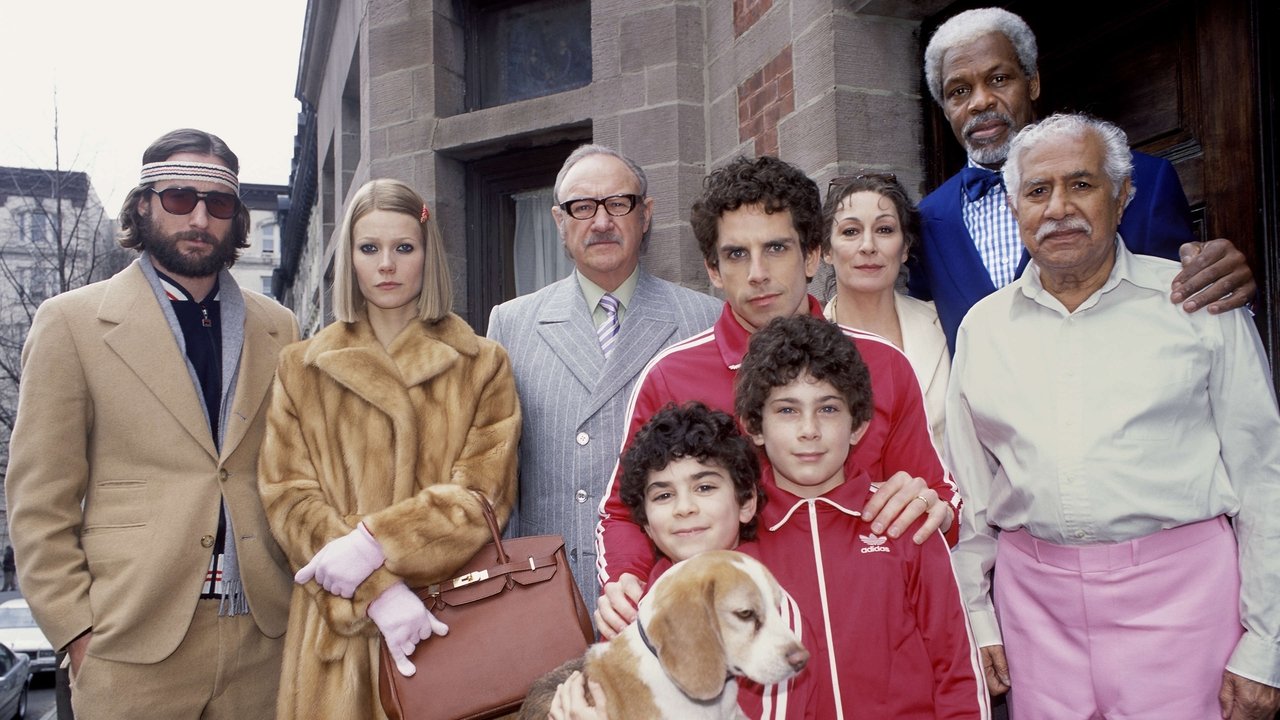
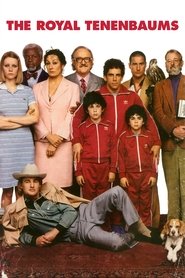
The Royal Tenenbaums (2001)
Anderson solo on his Manhattan family epic: the third Mark Mothersbaugh score in a row (and why it's the best), the Emitt Rhodes music discovered through Jason Schwartzman, casting Gene Hackman against Hackman's own resistance, and Luke Wilson being the last actor out the Tenenbaum house gate before Kumar Pallana closed it on the final shot. The film's melancholy sitting inside its visual maximalism.
- Duration
- 1h 43m
- Talk coverage
- 18%
- Words
- 14,930
- Speaker
- 1
Commentary density
Highlights
Featured in
Topics
People mentioned
The film
- Director
- Wes Anderson
- Cinematographer
- Robert D. Yeoman
- Writer
- Wes Anderson , Owen Wilson
- Editor
- Dylan Tichenor
- Runtime
- 110 min
- Also on
- OneSheet ↗ OverBlack ↗
- External
- IMDb ↗ TMDB ↗ Find on Amazon ↗
Transcript
14,930 words · 72 flagged as film dialogue
Hello, I'm Wes Anderson, and this is the Criterion Collection DVD of The Royal Tenenbaums. One of the initial ideas for this movie was that it would be based on a book, a book that doesn't actually exist. And, uh, we shot this title sequence that showed the book, which we had to add this thing of somebody checking it out because the books look more like wallpaper when you actually push them up against each other there, so... The big influence on that little opening thing is, I think, Michael Powell and Emeric Pressburger, especially The Red Shoes. Royal Tenenbaum bought the house on Archer Avenue in the winter of his 35th year. Now this whole opening, five or six minutes, which has this narrator and "Hey Jude" underneath it, and then tells sort of the family history, is kind of inspired by the beginning of The Magnificent Ambersons, where there's a narrator that takes us through the history of this town and then that sort of leads us to the history of this family. So that was sort of one of the first kind of inspirations and this was the first sequence that I sort of had in mind and that we wrote.
Owen had always suggested to me that I should try to come up with something that had to do with my parents' divorce and how my brothers responded to it. That was part of what we were trying to do with this. But, in fact, the first scene that has to do with that, which is right at the beginning, the father talking to the children, they say, "Are you getting a divorce?" "Not at the moment, no." Well, as soon as he began to speak-- As soon as Royal began to speak, his answers were nothing like the answers that my father had given under similar circumstances with my brothers and I. And his character started to take shape, and it also became a movie that had nothing to do with my parents' divorce at all. This section, we sort of introduce each of the children and all their sort of activities and their strengths. And the rest of the movie, we focus on their weaknesses. We get five minutes of strength. Now we have a little section for each of the children in the family. They're introduced, and we see their rooms. These rooms are where the rest of the movie will take place.
This is a young Ben Stiller, Chas, who is Aram Aslanian-Persico, and he's kind of a young scientist in real life. He's very sharp. ... which he sold to a pet shop in Little Tokyo. And Chas's room is all just sort of modeled on an accountant's office. And we see all his sort of industry. He negotiated the purchase of his father's summer house on Eagle's Island. This shooting incident is partly inspired by, um, Owen shooting Andrew Wilson, his older brother. An episode that I always felt fascinated by because Andrew can show you the BB that still exists underneath his hand, which we later feature in the film. Then we introduce Young Margot, Young Gwyneth Paltrow, Irina Gorovaia, and she's listening to the Between the Buttons that she'll be listening to in the tent 22 years later. We found her at the American Ballet Theatre or something like that. She's a dancer, who seems like she could be a movie star. There's one thing I like about Margot's room is these zebra wallpaper, which is stolen from a restaurant called Gino on Lexington, between 60th and 61st Street. Hi, Eli. - You said I could run away too. No, I didn't, and don't tell anyone you saw us. And this comes From the Mixed-Up Files of Mrs.
Basil E. Frankweiler. This thing of living in a museum. We actually built this little museum in a bank.
Now we see Richie's room, where all the murals cover the walls, which are done by my brother Eric. Amedeo was found at this prep school in Brooklyn, but they told me they'd seen this kid and that he was John Turturro's son, and they kind of described him. And, you know, he's a really funny, smart, and totally unexpected kind of kid. I mean, the stuff he says just catches you off guard, and he's kind of neurotic in a funny way. You know, often I kind of keep the camera rolling in between the takes or, you know, we tend to roll it a little too often. And so there's a certain amount of documentary footage, and he'll just turn to me during the scene and come up with a whole new take on it. And, you know, you often hear me saying: "Um, there are reasons why we shouldn't do that, Amedeo, but I'm not gonna explain them right now. I'll get to those right after we've cut." Anyway, he was somebody who was really fun to have in the movie. And then there's young Eli Cash, James Fitzgerald. The three Tenenbaum children performed Margot's first play on the night of her 11th birthday.
Clearly, the bear has shot the zebra, but the reasons why, I don't know. And why these three animals would be on a boat, I don't know. Why are you wearing pajamas? Do you live here? He has permission to sleep over. In the earlier takes, Anjelica blew out the candles. On about take five, Anjelica's hair caught on fire. And everybody went crazy, you know? Just suddenly burst into flames. And then Marie-Ange, who was responsible for the hair, leapt across the room, she'd been just waiting for it to happen, I think. But before she got there, Kumar just reached over very discreetly, grabbed her hair, drew his hand right along it, and put out the fire. So Kumar actually saved Anjelica from getting burned. Go, Mordecai.
This was actually the very first thing that I had for the movie, was this sequence with this music, which is a Ravel string quartet in F major, and that it would be a sequence of people getting ready. It sort of changed as it went along and became sort of simpler in a way, but, um, this was kind of one of the first things.
It's also kind of a thing from old movies. I mean, the one that made me think of putting the names like this on the screen was... Death Takes a Holiday, which has this opening sequence that does this. I think theirs is a big dolly shot, but it's the same kind of idea.
This is a naval training vessel that they let us kind of convert into an ocean liner for the movie. That was our first day of shooting.
This place is The Lindbergh Palace Hotel where Royal has lived, and that we shot at the Waldorf, which is very complicated when you try to shoot there. They have a lot of rules. What about Sing-Sang? I owe her a hundred. Royal had lived in the Lindbergh Palace Hotel for 22 years. Kind of before there was even really this character of Royal Tenenbaum, who's the patriarch of the family, there was-- That the patriarch of the family was gonna be played by Gene Hackman. So that was kind of one of the core ideas, I think, in a way. I just really wanted to do something with him, and that was sort of the mission.
Read it back to me so far, Pietro. Another thing that's a part of this movie is sort of the time period, which is a little bit vague. And over the course of the movie, we have this whole introduction, which is, uh, set in the past, and then, uh, 20 years go by, and then it sort of still seems to be the same time. And I don't really know exactly the explanation for that, except that all these characters are sort of stuck in this period of time, the time of their greatest success. "The crickets and the rust beetles scuttled among the nettles of the sage thicket. The character that Owen Wilson plays, Eli Cash, I had written this little thing that he reads, this passage from his book, but there was really nothing else for a long time. So his character's sort of based on what kind of person would have written that. Sort of an exaggerated Cormac McCarthy. Later, he's described as James Joyce of the West, but there's a little more James McInerney in him. Well, everyone knows Custer died at Little Bighorn. What this book presupposes is... maybe he didn't. And he has the shipped shore letter from Richie in his pocket.
I was trying to connect each of these to the next one by telephone or by message, by, you know, communication, but it sort of breaks down. I kind of gave up on that. Now here we introduce Gwyneth Paltrow in what will be her domain, this bathroom. I had wanted to work with her for quite a while, but I hadn't thought of her for this until it was already written, because I thought the character would be older. But then when I did think of her and Ben Stiller sort of together, it sort of all fit and made sense and it was just right.
How are you, my darling? The music that goes under this is based on this piece of music by a guy named George Enescu, who's like a Romanian who moved to France in the teens or '20s, something like that. And Mark Mothersbaugh and I worked together and kind of-- He wrote this piece that would take the Enescu thing, but then when we added each character, when we go to each character, all the kind of arrangement shifts and all the instrumentation shifts, so, like, she gets this harp, which we then, through the movie, kind of try to link up with her, and different characters sort of get different instruments, like "Peter and the Wolf" or something.
There are all these little quick cutaways to give us information, which is just sort of a way to try to quickly give all kinds of different background details, because there's so many characters and backstory. The story still hasn't started. I don't know how far into it we are. I don't think you're allowed to go this far without starting the story, but... we did. Raleigh's next book was on the subject of a condition he called... Bill Murray's character, the idea for him came from Oliver Sacks, who was also a writer, neurologist. He's the guy that Awakenings is about and who wrote Awakenings. And I love his books and his essays. And I also really love his show that he did for PBS, his series, Mind Traveler. And he has these great recordings of his books. He has a very unusual, great voice. And I'd read a great piece about him in The New York Times. They sort of described his lifestyle. And he's the kind of character that, in a way, the movie is about. He's the sort of person that, before you would have ever heard of him, you might have read a profile of him in The New Yorker, back when The New Yorker wrote profiles about people that you'd never heard of.
And I feel like that's part of the New York that the movie is kind of about.
Ari, fire alarm! Let's go!
Ben Stiller was somebody who Owen and I met right after we made Bottle Rocket. Ben was one of the earliest kind of supporters of Bottle Rocket, the first movie that we did. And he cast Owen in The Cable Guy, and they became friends. And I had been hoping to work with him for quite a long time. And somewhere along the line, I just thought this one would be just right for him. Actually, Ben Stiller and Gwyneth Paltrow, I both thought of at the same time. No elevator! There's a fire. Go, go! Go, go, go, go, go! Go, go, go, go, go! Chas's wife is played by Jennifer Wachtell, who we just glimpse in this image and then we kind of see again. You can barely see her in the tennis match. And I was hoping it would be an image that you would sort of remember the person. I thought she would be somebody whose face would stick in your mind. And the thing I always thought of was in Paris, Texas, you'd see Nastassja Kinski very early in the movie. You don't see her again until later. You just see her in a Super 8 movie. I was hoping the images would come out. I always liked these pictures of her. We left Buckley.
Doesn't matter.
Henry Sherman is actually the name of my landlord who bears some similarity to Danny Glover. I mean, to this character, but Danny Glover certainly brings something completely different. Danny Glover is actually one of the most enjoyable people to work with. Both of these people, Anjelica Huston and Danny Glover. And he's an extremely warm person, and he spends almost all his time pursuing these different humanitarian projects all over the world. He's constantly traveling and speaking. Basically, for anywhere where there's some kind of injustice or some sort of suffering, he just goes there. I love you. Did you already know that? No, I didn't. Since her separation from her husband, she had had many suitors...
but had not considered a single one until this moment. In the background is Kumar Pallana, who is a friend of ours from Dallas, who's been in all our movies, and this is his most ambitious performance to date, I think you could safely say.
Hello. Please tell Mr. Royal this is the Pagoda. That is Seymour Cassel, who was in Rushmore and also in a number of Cassavetes movies. He's kind of part of our gang. Good morning, Jerry. Hmm... - There's a call for you, Mr. Tenenbaum. That guy is named Ebon Moss-Bachrach, who looks like he would be in an episode of Welcome Back, Kotter, rather than in the lobby of the Lindbergh Palace Hotel, but he's a very good actor, underused in this role. No shit? Gene Hackman was very disturbed. This was the first day of filming. When he saw that Kumar had been positioned to block the Statue of Liberty, which is directly behind him when you see him standing in front of the water. Had some trouble trying to explain to him why we were down there in the first place if we were gonna block the Statue of Liberty. And I don't think he ever fully agreed with the choice.
The movie was always meant to be a New York movie, but somewhere along the way it became, like, as I feel, basically everything that I've done kind of became sort of a fable. I didn't want to call it New York, and I didn't want it to be a familiar New York. So we sort of avoid all the landmarks, but we also kind of avoid... We kind of find some kind of stranger parts of New York. This neighborhood where this house is, which finding this house was a big deal for us. I mean, we found it a year before we started shooting and I'd just been working on the script for two years by then. And, you know, it was already kind of set, but this house had everything in it. It was really surprising to find a house that just had everything waiting to sort of be converted into the movie. You know, it was-- All the rooms were there, and it-- Immediately, it was apparent which room belonged to which character and which scenes were gonna go where, and all that stuff. It was there.
Okay. Isn't this fun, huh? Isn't this great? Feels like we're camping. When are we going home? That electric tie rack is from Steven Dignan, our friend, who went to elementary school with Owen and who's worked on all our movies and been in all the movies in one way or another. And, uh, he had an electric tie rack in college. I think it really alienated him from a lot of his, uh, classmates. You know what? I think I'm gonna sleep in here with you. That way... ... we can all be together. This is the third movie that Owen Wilson and I have written together. And in a way, every movie that we've written, we've had a different sort of method of working with each other. People always ask, how do you guys write together? And, you know, we always have to come up with some kind of answer. But it's really hard to describe because it's so different at different moments. Sometimes it's just us sitting together somewhere and talking. You know, Bottle Rocket was the movie where we worked the closest because after that, Owen became an actor. And as time has gone by, he's become more and more successful as an actor, to the point that now he's really genuinely a movie star.
And, you know, in the case of this movie, I ended up on my own much more than I would like to be. But I feel like the center of our writing collaboration is this sort of sensibility and kind of voice that we've developed together, and it has a lot to do with, I think, whatever we share in our sense of humor and whatever we share in the books that we've read, and the books we've read growing up especially, and the movies that we've loved, and then all this vast amount of time that we've spent with each other. So I think even if I'm writing something alone, a scene... I'm drawing on something that Owen and I share, something we kind of invented together. That's sort of what I think all the movies that we've done really comes from, is the meeting of our two sort of perspectives. I don't know exactly, but I think he's been very depressed. So am I. So are you, what? Dudley, the patient that Bill Murray has, was originally written for my friend Wally, Wally Wolodarsky, who lives in Los Angeles and who, unfortunately, was offered a movie to direct during the time when he was to play this part.
Wally would have been really funny, and he read it and knew how to play the character, how to make it funny. Dudley, in a way, is less distant from the character. You're casting it more to type. Not that he has any of the afflictions that the character has, but he has something in his presence, and his manner is close to the way he played it. And I think, you know, when we found him in Vancouver, he was in a TV show that a friend of mine, Judd Apatow, had produced. And I'd seen him in the show, and we brought him in. He came with his aunt. He lives with his aunt. And I think, you know, up to this moment, he's still completely flabbergasted about it, that he doesn't really know how he ended up on the set of this movie or what could possibly have happened because he was in the TV show because he lived in Vancouver, where they were making the show. But I think that was a good thing for him to have because the more he understood, the less he would be prepared for the role.
Got a minute? What are you doing here? - Uh, I need a favor. I want to spend some time with you and the children. Are you crazy? - Wait a minute, damn it. This is the first big scene, in a way. And it was the scene that I was the most anxious about doing because it has a lot of, um, sort of strange reactions, and it's kind of a complicated, high-strung scene. And when we went out there to do it, I just felt like I was stepping back and just watching a play, almost, because they just took off, you know? They're walking down the street so fast, and... She really hits him in this scene. She hits him hard. But, you know, I just like what both of them did so much. It was one of the most exciting scenes for me to watch. Partly inspired by a recollection I have of an episode of The Rockford Files. Well, what'd they say? What is the prognosis? - Take it easy, Ethel. Now, hold-- Hold on, baby, hold on. Hold on, okay?
Ethel, hold on, hold on. Where is the doctor? Don't... Well, just... W-Wait a second now. Wait a second. Okay, uh, listen, I'm not dying... but I need some time. A month or so, okay? I want us... I want us to-to... What's wrong with you?! Damn! Ethel. - Are you crazy?! Ethel, baby... I am dying. On the other movies that I directed, most of the casts tended to be either children or people who just hadn't acted much before, a lot of people who weren't professional actors anyway. I mean, Bottle Rocket, essentially the whole cast, with the exception of Jimmy Caan and also Lumi Cavazos, those two actors weren't. But in this one, the entire cast is, you know, people who've done many movies. In a way, that was the choice because if you're gonna have Gene Hackman at the center and you want everybody to be on the same level, you've got to have the strongest actors you can get. And it makes it easier, in a way, to make the movie because, you know, every one of these people wants to be great in the movie. Every actor who knows what they're doing knows how to try to be great.
That's a hard thing to say, but somebody who isn't-- Doesn't necessarily even, they just wanna kind of get it right and do what you want, but they don't have necessarily, even if they want, and they wanna be as good as they can be, but they don't have, like, some kind of drive and focus. They aren't trained to sort of try to be great in a way. Um, so it just brings everything up a notch to me, to have, you know, actors like these.
He had made a request for his usual escort, the one from his days on the circuit, This is another of the... key scenes, I think. This is one of the three or four things that I had on a little scrap of paper for a couple of years before we even began to write the movie, was that this music would go with sort of this image, although I didn't know anything about who was walking off the bus, and I don't even think it was a bus.
But the thing I didn't know about was the expression she would have on her face, which is the thing that I think makes it work.
Often there's music that inspires ideas in the script. It also, the music, can sort of suggest the tenor of the movie in a way.
Stand up straight. Let me get a look at you.
Luke had to take three or four months off to grow the beard. So he was the-- Luke and I were the only ones who actually-- Luke and Seymour Cassel and I rehearsed together. We got a chance to work together because Luke was free. Because he couldn't get any other work with that beard.
Another thing is that, practically, everybody's got on a wig. Because so many of the actors, you know, they were finding, arranging time in their schedules to do our movie and, um, you know, it just wasn't possible for people. Owen was in the middle of doing a movie where he's a Marine. And Gwyneth had to do-- Had to have her hair long for something that was happening right after it. So basically everybody's got wigs.
And all the taxis in the movie are gypsy cabs, which is, you know, in New York, you have these gypsy cabs uptown, which they aren't actually officially called gypsy cabs, but that's what everybody calls them. We just decided to institutionalize it for the movie. These dalmatian mice are made with a-- You just-- Probably shouldn't say, it's probably-- They're made with a Sharpie, but I don't know if that's legal. That's supposed to be Royal's mother. And, uh, we had a couple of runs of trying to find one and make one. And eventually we had to just cast a nurse, dress the whole thing. We had to find the right painter. And it was a whole production just to make that portrait of the nurse, which you just see for a second there, but I really liked it. A lot of stuff that should be easy, like, you know, dressing somebody in a red Adidas warm-up, that should be a breeze. You should just go to the store. But then it turns out they don't make the right color. And the red is different than the one they used to make. The cut of them is different. It doesn't-- You know, you end up having to make everything if you want it to be right.
Like, for example, there's stained glass windows behind them here. We had to make those stained glass windows because the windows in the house, which they're based on, are six feet up above. They're at the top of the windows, as a result of which we never would see them in the entire movie. So we had to make another set and lower them down, so you'd actually be able to see them.
Most of them are wearing some kind of uniform that connects to where they-- To what they wore when they were at their best, when they were 10 or 11 years old. Richie is still-- Kind of wears this Björn Borg-inspired tennis gear, that from-- That Fila stuff. But he also wears this camel's hair suit, which he wore then too. And Margot wears these Lacoste dresses and penny loafers, and... Chas, however, wears his red warm-up. And I'm not really sure why, but when Ben Stiller asked me why, I... told him that it was because they wanted to, um-- It was for safety, you know, so they could always spot each other in a crowd and they weren't gonna get hit by cars and, you know, whatever it is. The truth is, I was thinking of them wearing those outfits before I had that reason, and, um... I don't know, it's the same reason why they have curly hair. I thought it would be funny. I'll say good night to you now, children. Dad.
One thing about this is, we shot this movie in widescreen, which I sort of feel like is, you know, I prefer that just in general, but everything in the movie is vertical, so we're always having to move the camera up and down, and... New York is vertical, sort of. You know, a house in New York is a narrow little thing. We were lucky to find a house that was on a corner because what's normally the side of the house that's buried, you know, next to another building... is the front of this house. How do you do? - Not too well. I'm dying. How's Richie? I don't know. I can't tell. Eli has this whole getup that's inspired by the West, but it's-- You know, I think that's got to be like a $3000 goatskin, fringe leather jacket. It's all sort of designer stuff. It's what a Western novelist wears to cocktail parties in New York. He's got his Stetson and his Gucci pants and purple velvet slippers. What are we doing, Eli? Oh, I just got to pick something up. Don't repeat that, by the way. About Richie. It was told to me in confidence, and, you know...
Good. Now just remove the loose soil... and note the decomposition levels. This archaeological excavation is one of our... It's one of the few things we actually built. And we made it in Brooklyn in a sort of construction site. And, uh... On the left side is this whole wall that had to be built of dirt and we sort of-- I knew we wanted to just do this walk through it, so it's sort of, you know, built along the edges of the-- Sort of the perimeter of this thing. My mother was an archaeologist, and there's a little bit of her experience in this character. The character's not-- I don't know, it's not very much like her in the end, but... she became an archaeologist after my parents were divorced, and that's similar to this character. And some of the style of her character is-- Comes from my mother. And then also from my experience of me and my brothers going to the-- You know, when we went to, um... To the excavations, you know, to the digs. It looked like this. But, you know, really, there's a skeleton in the ground. And I remember, you know, seeing them dust one of those up. Some Indian burial ground in Galveston, Texas.
Thing is, I could talk about set dressing for the entire commentary, but I think it would have a tendency to become excruciating.
This thing is on the roof of a building on the Upper East Side, and we've sort of made this sort of semi-- Like, half playground, half boxing gym, which is very strange.
There's a lot of roles for children in this movie, and there were even more in earlier drafts of the script. But when we made Rushmore, we had tons of them to cast, and I knew what a big mission it was to try to find them 'cause you want them all to be just perfect, and it means going through, you know, hundreds and hundreds of them. And the casting director in this movie was Doug Aibel, who's a very good casting director and who's very discriminating. Has a very good eye for them, and also has the absolutely key thing for casting roles like this, he is totally relentless. Just keeps searching. Thank you. There's a kid named Grant Rosenmeyer who plays Ari, one of the Ben Stiller sons, the one who does most of the talking. His sidekick is Uzi, who's this kid Jonah Meyerson. Grant is somebody who had actually acted before. He's done a lot of sort of theater stuff. I know he was in Les Misérables, and he would sing for the crew at the drop of a hat and do kind of an odd breakdance routine. He, like this kid Mason Gamble in Rushmore, he really did function as an actor.
He was very conscious of what he's doing and would really try to figure out what you were talking about and how to get a certain effect and would come up with ideas. Well, I bet Mom would have wanted us to meet him before he died. Ben Stiller has moved back in and he's in the process of converting his childhood room into his business office. Whatever his line of work is, I'm not really clear on it. I think it's got something to do with real estate and possibly shipping. She was a tough old broad, wasn't she? I wouldn't know. Originally, they wore black warm-ups both times at the cemetery. Ben felt we should just save it for the last one, which was right. I think it's much better. Come on.
So, what do you think of this big, old black buck moving in up there? Who? Henry Sherman. You know him? Yeah. Is he worth a damn? I believe so.
What happened to your finger? - Uzi, shh. It's okay, I'll tell you. I'm adopted. Did you know that? The wooden finger thing is something that I almost used for Margaret Yang, a character played by Sara Tanaka in Rushmore, but I didn't quite use it there. Her finger was supposed to have been blown off in a science experiment, which I used the line in that movie, but later it came back in this. That Amish sort of father is played by Andrew Wilson. Um... I don't know exactly what denomination they're really supposed to be there.
This tennis-match meltdown that Richie has... was another one of the very early scenes. And it's really-- The visuals of it are all kind of based on a 1978 match, or a 1980 match, between Guillermo Vilas and Jimmy Connors at Forest Hills. And we shot it at Forest Hills, which is where they used to make the U. S. Open. To me, it feels like a real tennis match. All the graphics and everything is sort of the old style on an old Sony Trinitron TV. And I really like Luke in this scene. That's 72 unforced errors for Richie Tenenbaum. He's playing the worst tennis of his life. What's he feeling right now, Tex Hayward? I don't know, Jim. There's obviously something wrong with him. He's taken off his shoes and one of his socks, and, actually, I think he's crying. I think you're right. The commentators are played by Andrew Wilson, in one-- Who has recurring roles in the film, and the other one is me. Some people think it's Jason Schwartzman for some reason. Sanjay Gandhi is played by Sanjay Mathew, who is my friend from fourth grade who used to always come to school in his Cub Scout uniform and was always a very good tennis player. Yeah. But I understood.
I know you're not very good with disappointment.
You still got that little BB in your hand, Chassie? This is one of Andrew's other performances. It's as the hand with the BB in it. I think this movie still continues something that was in the other movies, which is that the characters, there aren't really exactly any bad guys. Even though there's kind of this villain in Royal, he's also the one who brings everything around and, you know, everyone has their reasons. Each one has his reasons. ... to withdraw these funds without your written authorization? Objection, Your Honor. Damn it, I-- This shot that slides back and forth like this, to go from the front angle of the judge to the other angle means that basically... Well, you have to cross the-- You have to cross the line. We're violating the screen direction. At a certain point in the movie, I began to realize that we seemed to be unable to do a single cut without crossing the line. I don't know what was happening. Somehow, my brain was getting all twisted around, where every place where I wanted the camera to be was the wrong side, and we ended up usually just doing it anyway. Minimum security. I got jacked by the IRS. Should we split? - Yes, sir. No, call me Mr. Tenenbaum. Okay.
No, I'm kidding. Call me Pappy. I had a lot of rules in this movie, one of which was, we couldn't use a Steadicam for anything, and it really complicates this thing, like this scene in the cemetery, because the camera's sliding around with everybody all the time, and it means building this dolly track. But I just felt like it would... It wouldn't really feel like-- It just didn't feel right for the movie to me, to do anything but have it on dollies, and have it moving sideways on dollies. By the way, I heard about that letter you sent to Eli. There were hundreds and hundreds of locations in this movie, and we had to always do several a day. But, you know, we ended up finishing on schedule for whatever reason.
This was one of the first days of shooting, and I always liked the two of them out there together. They're brothers. They've never played brothers. They always seem to play friends in movies, but... they're friends too. Did you tell Margot about that letter I wrote to you? Why? Did she mention it? Yes, I did. This painting is by a friend of ours named Elliot Puckette, as is that one there. And the little painting on the far right, the Briefs, is by her husband, Hugo Guinness. And some of the look of the house, with the exception of these two rather... violent paintings, is sort of from the style of their house. These paintings are by a guy named Miguel Calderón, and that one behind Eli here, the guys on the motorcycles with their masks on and their arms raised up, is one that I bought a few years ago, and I just thought that these-- He's from Mexico City. I don't really know that much about him. I know he staged these and photographed them, and then he hired a guy to paint them. Um... But they did seem to really-- I really like-- They're funny and I like the paintings. They're crazy and funny and kind of disturbing.
You know, I think the guys in the paintings are on mescaline also, just like Eli. And she's your sister. Adopted.
Where are my encyclopedias? - They've been placed in storage. This is the lobby of the Waldorf Astoria, and we had about two hours to do our whole thing, but they had to put in so many lights and these giant balloons and things mounted all over the place, and it was a huge rush to get it done. But then it helps to have Gene Hackman, who just wants to throw himself right into the scene. He wants-- He likes to work quickly and with real force.
I think he's very lonely... One thing that Luke and I figured out while we were rehearsing was that there was one reference to a Bloody Mary that he had in the movie. We made it where he's drinking Blood Marys all through the movie, and Luke wanted to carry a little-- A little pepper shaker with him, which he kind of has. I don't know how much you notice it. And then also that he would wear these glasses all through the movie. I feel like there's something kind of sad about somebody with long hair and a beard who's hiding behind glasses. The headband, I was always worried would seem completely crazy, but somehow... Luke looks sort of natural in it, to me anyway. Call him Henry. - Why? I don't know him that well. You've known him for ten years. As your accountant, Mr. Sherman, yes. - Where are you going to sleep? I was just gonna camp out upstairs. I think the characters that I most relate to are Margot and Richie. Margot is sort of the middle child and she's the playwright and she's sort of-- I think she's going through something that's kind of almost adolescent feeling. And then I also like Richie, who's... There's something sort of soulful about him. ...
if Mom says it's okay.
Here's where we introduce that they have converted Richie's room into a hospital room, kind of impossibly. They got more equipment than-- Not sure exactly how they managed to sneak all that stuff in, but you can see the murals that my brother Eric did that sort of recount the history of the family. Oh! - Dad! Mom! Grab me a Nembutal, will you, son? Are you okay? What the fuck you care? Oh, my goodness. Pagoda? Call Dr. McClure. Take a breath and hold it. I was really happy to have, uh, Seymour in the movie, and Seymour was very valuable when we were preparing the movie. He was the one who played Royal in a reading, and he just kind of made himself available to us as a-- Sort of acting teacher, in a way. He's also a very good friend of mine, and Luke's, and Jason Schwartzman's.
Can we move him? - Absolutely not. For how long? We'll have to wait and see. It was only when the Royal character began to take over the story and when he got a mission, which was he learns about that his wife is maybe marrying this guy, and that motivates him in probably a couple of different levels to try to kind of infiltrate the family. On one level, he's being kicked out of his hotel. He needs a place to live, someplace he could be comfortable and reinstall himself. At the same time, he just wants to prevent her from getting married because they never got divorced, and he likes the status quo, and... Then, also, there's probably some need he has to reconnect with them, and that's, I think, what it's really about. But I don't know that he's in touch with that. He thinks he's just conning it when he says it, but probably on some level he also sort of means what he's saying when he's-- When he lays his whole wrap on the family about how he wants them back.
This song that plays here is by Emitt Rhodes, who I hadn't heard of, who Jason Schwartzman, the actor who plays Max in Rushmore, introduced me to his music. And, um, he sounds a little bit like Paul McCartney, almost. It definitely felt like it was the right feeling for the movie. I like what it did with this scene.
One thing that my brothers and I always love to do-- I think that kids always love to do. --is to build a fort inside. And I think this tent in the house is somehow connected to wanting to have your own little place inside a bigger place. The other thing that it comes from is, there's a movie by... Jean-Pierre Melville-- Directed by Melville. That was written by Cocteau called Les Enfants terribles. That's... There's a sort of inspiration for the story between Richie and Margot in it, and they kind of build a fort inside of a house in that too. And there's sort of a feeling in that movie that I relate to the Richie-Margot story.
What's that jackass doing?
I know you, asshole! "I know you, assholes," from Witness. Harrison Ford yells at Danny Glover, after he gets shot by him. This is, uh-- You know, it's almost The New York Times Magazine. Everything is sort of like something else, but... we don't use the actual name. It's sort of clearly inspired by Richard Avedon's... American West pictures, but the photograph is by James Hamilton, our still photographer, who did most of the pictures that are on the books and magazines.
That role was written for Bill Murray just because I wanted there to be a part for Bill because Bill was sort of the wrong age for most of the other characters. He was sort of in between the ages. But this one was just made for him. You're joking. In a way, I hate to have Bill play such a small role. I mean, it's not that small of a part, but as soon as you put him in there, you wanna see him more. Bill grew the beard, his wife didn't like it. But he grew it. And that is a full beard. That's like a polar-expedition beard or something that he's got.
I don't like the way you're treating Raleigh. We didn't have, really, any rehearsal time on the movie, but I think in a way that was one thing that helped to kind of compensate for that was that we were gonna shoot it all on location and that the house would really exist inside and outside and the roof and everywhere and all the information about their family history and their characters is all contained in this house. And these actors just walked in, looked around, and they could see it all right there. And I think-- I mean, I think that helped them. I don't think it could do anything else but help them. And the other thing is that we were all stuck in this house. You know, the trailers are six blocks away and there's a green room upstairs, you know, and everybody-- That's where everybody was in between setups, which was great. It was a very nice room to be in, and everybody kind of became friendly with each other, the ones who weren't already. And I think that was very good for the movie 'cause the movie, you know, all these close relationships among all these people and different kinds of bonds formed among all these different actors. What do you want to do?
I don't know. Perhaps, uh... - Find the guy and get him? Well, no, I thought we--
Who do you think it might be? I don't know at the moment.
In that scene with Chas, uh, Ari does a little thing where he points back to him when Hackman is trying to talk to him and invite him down to Little Tokyo to buy some firecrackers. What do you say we go down to Little Tokyo and get some fireworks? What do you need? That's a little kind of thing that this kid, Grant, sort of improvised, and that's the sort of stuff that, you know, is really-- When you find a kid actor who can kind of add things like that, you know, you know you've got the right guy. ... you can't raise boys to be scared of life. You got to brew some recklessness into them. I think that's terrible advice. No, you don't. We take boxing and self-defense classes. I'm not talking about dance lessons. I'm talking about putting a brick through the other guy's windshield. I'm talking about taking it out and chopping it up. Owen and I don't ever talk about themes when we're writing, and... it usually comes out of the characters, and it takes a long time for the themes to kind of come out. Other thing is, this is a movie where there's-- Where there's a lot of artifice.
The way the people dress, the way the rooms look, all that stuff. And there's music, and there's so many kind of layers that are put on top of everything. And it's all stuff that I'm really, you know, get excited about, and things that I always wanna-- You know, it's fun for me to work on those things. But, ultimately, the movie didn't mean anything to me until the characters started to become connected to things that I had kind of been through or people in real life and stuff that was happening. And the first time I showed it to my friend Jennifer, she read it and told me, started just saying things, you know, that she was recognizing in it. And I was just like, "Whoa, wait a second. I didn't even-- I wasn't even aware of it." But it was more than just, you know, a coincidence. I mean, it was totally obvious as soon as she said it, some of the things that were, you know, being drawn on. But we just didn't really discuss them, I guess.
He saved my life, you know. Thirty years ago, I was knifed in a bazaar in Calcutta. He carried me to the hospital on his back. Who stabbed you? He did. Yeah, there was a price on my head and he was a hired assassin. Stuck me right in the gut with a shiv.
This sort of scene, I like the way this is put together because, you know, we have sort of-- It's all in one shot and they can just play it all straight through. It's got energy, but I just kind of like the way this one came out. They just sort of fly right through it. And same with the next scene. They, um... They go from outside of the closet, inside, and play the whole scene. We don't have to cut. They can just-- When you have actors like this, it's really fun to be able to do that 'cause they can just take off. You stay away from my children. Do you understand? This is the first time we see this closet filled with board games. And a little Monopoly house hanging from the lamp. And that's just something I, you know, always remember growing up. It seemed like most people's houses had a closet like that filled with these old games. It kind of becomes Royal's office for a little bit. We have a later scene where he's camped out here too. There you are.
How are you feeling? I'm having a ball. Scrapping and yelling and mixing it up. Loving every minute with this damn crew. I didn't have this scene in the script until I was trying to convince Anjelica Houston to be in the movie. And I added this to sort of fill in their relationship. And I remember reading a review that referred to this scene as the worst cliché in the whole film. But to me, it's one of my favorite scenes. I really like the two of them together, and I feel like... I really feel like a history between them in it. And it also has some, I don't know, a couple things from real life that sort of meant something to me. And I really... I mean, he's... I love his performance in it and I love her reactions. I really feel like she really kind of communicates what it was that drew her to him in the first place at the same time that you can see what it is that made her run away. What's so funny? - Nothing. It's these little expressions of yours. I don't know what you're talking about, but I'll take it as a compliment.
You're true blue, Ethel. You really are.
How's your love life? So first there's that person with that dog on the far left there. See, she's got the dog. And he runs back to her there. And then... we go home and there he is. Right back with her again. I don't think the timing's right for that, Henry. Used to be a thing, they were going to a play called That Rascal. He had a playbill, it was like a... There was one they went to-- Actually, there were a couple. There was one, That Rascal, one that was Dressed to the Nines, but somehow we never really saw those. I think we had the playbills, but you never really saw the plays they were going to. I think they go to the theater a lot together, Etheline and Henry. She said that?
Great. Got the sucker on the ropes. The one thing is, Gene Hackman is... not necessarily considered a comic actor, but, you know, he's been really funny in a lot of movies. Um, one movie is Get Shorty. He's really so funny in Get Shorty. And he often made me laugh on the set. He's almost never smiling when you say, "Cut," right after you say, "Cut," anyway, but he can be really funny. And whatever the scene is, he plays it the same way, absolutely realistic, and just tries to make it as genuine as it can be. Did you just call me Coltrane? No. You didn't? No. Okay. But if I did... you wouldn't be able to do anything about it, would you? You don't think so? - No, I don't. A lot of people are caught off guard by this "Coltrane" comment, which is a very rare kind of racial epithet to throw at somebody. Don't know if I've heard it before. Hackman felt it should be "Satchmo." Danny Glover supported me that "Coltrane" seemed right to him. I don't really know what it means exactly, but I think he intends for it to get under Henry's skin.
So here we have a subtle introduction of the Tic Tacs, which, then, we have a later shot here. The name of the patient is Royal Tenenbaum. This was supposed to have "Tic Tac" written on the side, but the Tic Tac people wouldn't let us do that. For this shot, walking up the stairs, it was supposed to be modeled on that shot in Suspicion of Cary Grant coming up the stairs with the milk, but our stairs are really short. We still had to build a strange rig where the camera went on tracks along the ceiling, and you can't put a light in a little bottle of Tic Tacs. Mm-hmm. They've fallen on hard times now, haven't they? The actor on TV there is Larry Pine, a very good New York actor, who was in Vanya on 42nd Street, and, um... What else? He was in that movie Sunday. What else was Larry Pine in? He's been in Woody Allen movies. He was very good in the Mike Nichols, Chekhov in the Park last summer. I did a TV commercial with him and Andrew Wilson. The only TV commercial I ever did. What's cooking, Pops? You'll see. Now, your previous novel... Yes. Wildcat. Right. Not a success. I would say Eli was not a genius.
I think he's kind of obsessed with whether or not he is a genius because of that. ... in a kind of obsolete vernacular. I think, among other themes, one of the big ones in the movie has to do with failure and how people-- The effect it has on people. In the case of this family, all these children, I got this expression from Bob Wilson, which is, "They peaked early." And that's something that I think fascinated him. And me too. They spent, you know, so much of their lives in the aftermath of everything that they've accomplished, and they were clearly very driven, in a way. Um... These people are kind of all-- In their way, they're sort of like artists. Some of them are artists, and some of them are sort of having something I associate with artists, which is that they had these projects that they were completely focused on and that they were, um... You know, they had some kind of relentless sort of urge to develop and work on. But when we find them here, it's somehow gone. It's all gone away. And what they're left with is sort of just each other, and everybody's estranged from everybody else for one reason or another.
I mean, either because they have resentments, or there's been all kinds of terrible behavior, or because they're too close, in a way. That's part of why the character that Luke plays is gone away. So that was sort of one of the things we wanted to kind of examine in the story, I guess. Yes, can you send a taxi to 111 Archer Avenue right away, please? Thank you.
I guess we're back out on the street, huh, pal? Were you part of this, Pagoda? Of course he was. No. Well, yeah, he was, but, I mean, he wasn't that involved. Where'd you get all these medical supplies? One of the good things about the widescreen is that you can do these kind of shots where you get everybody in there at once, and you don't have to cut.
Look, I know I'm gonna be the bad guy on this one. But I just want to say, the last six days have been the best six days of probably my whole life. Immediately after making this statement, Royal realized that it was true.
Why'd you do this to us, Royal? What was the point? I thought I could win you back. And then I thought I could get rid of Henry... and at least keep the status quo. But we hadn't spoken in seven years. - I know. Plus, uh... I was broke. And I got kicked out of my hotel. You're a bastard. Goodbye, Royal.
These pictures are all drawings that my mother saved that are, uh... There's one-- Most of them are mine. There's one by Eric, the guy with the yellow hair, as we move along. It's one that Eric drew. I think it was a self-portrait.
At a certain point in the process, I had my brother Eric... He and I met, and I gave him-- I sort of downloaded all this stuff I had because I had a couple of years' worth of notes on all the visual stuff, the clothes, and the rooms, and all that stuff. And in the meantime, Eric had been sort of developing this technique of illustrations. He had done some stuff for me for the Criterion version of Rushmore. And then he'd published lots of work since then. So he made these kind of drawings that were supposed to communicate all this information to the Art Department and to everyone in the movie. I gave him so much detailed stuff, that ultimately it wasn't possible for him to finish the stuff until basically after we'd already built most of the rooms and finished the work, because he wanted to make them perfect. But we distributed them to everyone, and it was just something that kind of let everybody have something to look at, and gave them a feeling for the movie in a way that anyway only helps.
You son of a bitch! God... damn... That's the last time you put a knife in me, hear me? Well, here we're using the Bob Dylan Pat Garrett & Billy the Kid. That was originally supposed to be the end music of Bottle Rocket, which we couldn't get the studio to spring for, but we finally got it on this one.
I really enjoy working with actors who aren't professionals because it's something completely different. You know, Kumar, he's a performer, but he's not a professional actor. He's done lots of other things. He's a musician, and he's kind of an acrobat and a juggler, and all kinds of things like that. And he also teaches yoga. But for him, acting is something he just, you know, does with me.
This thing, you know, this one is a really long shot. I was kind of worried that it's maybe too many little back-and-forth moves. Some of them we couldn't get quite exactly right. Uh... But then it's kind of nice to just let the actors be able to play the whole scene straight through, which is where it gets a little showy. Okay. Okay, what? Okay, I'm not in love with you either. Yes, I know. You're in love with Richie, which is sick and gross.
Do you send my mother your clippings... and your grades from college? People, I think, may be confused by the dirt on Eli's face here and the grass and stuff strewn on him. I mean, the idea behind it is supposed to be that he's just... He's kind of crossed the line and God knows what he's up to. That he's just on some kind of crazy bender, and he's out of control. This is Don McKinnon, who went to school with Bob Wilson and is a friend of all of ours. And this is his acting debut. I think he's a very convincing detective. It was actually Hampton Fancher, the director and writer Hampton Fancher. I introduced him to McKinnon at a party that we had, and Hampton said he wanted to use him as a detective. And then the next thing Hampton knew, I'd stolen the idea from him and already had him in this, so... I apologized to Hampton for that.
This montage with the Ramones, I like the idea of kind of having an illustrated version of something that somebody's reading. What they're probably looking at is a typed-up document, but we see a whole visual to go with it, and the song and everything, to give us all that information, which I think could maybe give it a little more impact, probably. But mainly it's just funnier, probably. This is Mel, one of our grips, the guy who got the mohawk for the part. And he was very good in that role.
She smokes. Yes.
All right, well, everything seems to be in order. I really like the performance that Frank Wood gives as the hotel manager. He's a very good actor. Which way are you leaning? I'll inform you of my decision at the appropriate time. I get it. Uh, Dusty, put in a good word for us, will you? I already did. And now we have this Elliot Smith song, "Needle in the Hay," which is one of the very few... You know, it's probably the most recently recorded song in any of the movies that I've done.
The whole movie, the color timing is extremely warm and kind of yellow, and a little extra red. And here we go cold as it can be, and it's blue. The way we shot this was just one angle with jump cuts, and which is, you know-- I don't think there's anything else in this movie that's done that way. To me, it's sort of just interesting to see him doing this. I don't know. I have heard it described as incredibly boring, but I don't think that. To me, it's not. I feel like I kind of connect with Luke in this scene. Right here, especially.
Luke really wanted to do this. You know, at a certain point, I started to get cold feet about cutting off all his hair and the whole thing. It throws some wrenches into the scheduling, obviously, and just sort of takes away some of your flexibility, but Luke really wanted to do it. I'm going to kill myself tomorrow. A lot of people have asked me about that line. It confuses a lot of people. It's actually taken from a Louis Malle movie called Le feu follet, which was a big influence on this whole film. And in that movie, he says it, and then he tries to kill himself the next day, which makes sense. In this case, he says it and tries to kill himself right then, which, my original thought was that that's something that-- That's just a turn he makes in between saying the line, and, you know, trying to kill himself. But then I had this idea of doing this montage, this sort of flashback in his mind, kind of electrical thing. And it changed, and I don't know, it's just... I couldn't really explain why he needs to say: "I'm gonna kill myself tomorrow," but somehow it seems right to me. Who?
He'll probably sleep for several hours and then I'll come back to check on him. All right? This is Dipak Pallana here, who we've seen earlier in the film, who is Kumar's son, who's also been in all of our movies. And, uh, he plays the young doctor. Don't press him right now. At a certain point, I wanted to have Dudley have-- I wanted us to hear music that was being piped into his ear. I mean, I asked him what he thought he was listening to. I thought maybe it would be a baseball game or I don't know what. He said Mozart. Then I thought we should hear that, but there's so much other music most of the time that there wasn't really room to have it. All right, that's enough. Doctor said to let him sleep.
What? This was the scene that I just added in during the filming because of a mistake I'd made with the way I shot something. This little scene where we sort of introduce them in the elevator there, but it makes it better. I had forgotten to show that they were elevator operators in the scene that comes after this where they get out of the car. I didn't shoot it right. So I just thought to do that scene to introduce it, but I think it's better that way. We see we see them actually in the elevators, and, you know, seems better. And you nearly killed your poor brother. I think maybe my favorite scene with the two of them. I feel like that-- I really like Bill Murray in this one, and, you know, we did a number of takes, and then this one, and it just seemed like this was the one. And I feel like we sort of decided on the set that it was not gonna cut to anybody else during the conversation that they have. 'Cause we have all these other angles. One of the few times where there's actually other things to cut to. And we use them all at the beginning, and then we just stay in this.
Gwyneth Paltrow actually had quit smoking. This movie ended that.
Most movies, somebody gets shot or somebody dies, things happen that are very dramatic, more dramatic than real life. In the movies we'd made before, the only time anybody dies is if it happened a few years before the movie starts. And one thing I really wanted to do is to make a movie where it was going to be possible for someone to die. Because in the other movies we'd done, it just didn't seem like it could happen. It was a tonal violation of the movie. I sort of felt like, it was like we wanted to stay on the surface of some stuff. Not that those movies are superficial-- I don't think of them that way. --but that there's a lightness to them that it's hard to break out of. And this one, I think, is probably a lot darker. And, you know, there's somebody who tries to commit suicide, and there's death that really occurs in the movie. There's wounds that are kind of deep and sharp that I don't know if you find so much in the other movies, where they're wounded people, but there's not as much violence to the emotions in a way, maybe. This is a scene where...
There's certain scenes where Gene Hackman would show up and we'd do our rehearsal, and he'd have a kind of different approach. Uh, what it usually was was he'd wanna do a scene moving fast. And you'd see him do it, and I'd throw out the whole plan I'd had and have a new way to kind of shoot the scene. That's the best thing that can happen. Somebody comes in, and you say: "Throw out whatever we thought of before. This is better." And his thing was to just bring a real charge into something. Richie!
Well, I have to say, he didn't look half bad for a suicide. Attempted, anyway. Thanks.
This is a song by Nick Drake, who actually did kill himself. And I hadn't planned to use it in the movie. When we were shooting on the bus, with Luke sitting in the back of the bus there, I was playing music, and that was one of the songs that I played, so you could hear it in the dailies. Our first assistant director, Sam Hoffman, figured out-- We walked in circles around the house, trying to find how would Richie-- What would be his way that he used to sneak into the house, and where would he have stashed some key or rigged some lock or something, and couldn't find anything, and then, Sam showed us what he'd figured out. This funny little routine. Climbing up the gate, swinging over to the window. That's another picture by my brother Eric. That's the first thing he ever painted in oil. Unfinished portrait of the grown-up Margot. What are you doing in my tent? Just listening to some records. Aren't you supposed to be in the hospital? I checked myself out.
How many stitches did you get? I don't know. You want to see?
Kind of have sort of Tim Burton arms here. Sometimes I feel like-- I think some people might feel like we kind of push it a little too far with the blood and the gory stuff for this sort of movie, but to me, I don't know. I feel like if we don't have that, then we don't have enough. I mean, a movie I think of is how in M*A*S*H-- M*A*S*H is a comedy, it's a satire, it's not realistic. But when they're in the operating rooms, there's blood and total realism, and it's because of that balance, that's what really raises the stakes in the movie. I'm quoting Altman, I think. I think basically I'm paraphrasing him. But that's sort of what I feel about doing that sort of stuff.
I have to tell you something. What's that? I love you.
I love you too. Originally, I wrote that scene with that song, "She Smiled Sweetly," the Rolling Stones song, to play for the whole scene. The scene ended up a little longer than the song, so then we have to come up with another... God-knows-how-much money to have another song. The song that comes immediately after on the record isn't really right, but "Ruby Tuesday," which comes before it, seemed great when we put it in, so... I can't stop thinking about you. I went away for a year and it only got worse, and I don't know what to do. Originally, they were just brother and sister, uh, Richie and Margot, and I always thought there was-- Basically, I was just... I had this interest in it because of this French movie that I referred to earlier and because it seemed like, you know, what can be more forbidden than for a brother and sister to fall in love with each other? And I'd also seen situations somewhat like that when I was a kid. Like, one in particular, a kid when I was in, like, fourth grade or something, and he was in love with his sister and so was everybody else. I doubt it.
But eventually, the Margot character, I decided to have her be adopted because of other things that it would do for her character. And because of, you know, it was sort of inspired-- That detail was inspired by someone in real life. And it seemed like it just filled out the character in a better way. And then maybe it makes this relationship a little more plausible somehow.
The text of these chapters is taken from the script, which I thought was right because I didn't think that... I thought the movie and the book should be the same thing, in a way. It's based on a fake book, but the book should only exist kind of as the movie. That's why, like, the words, "chapter one," "chapter two," aren't written on the pages. They're superimposed on it, so it can kind of only exist as a movie. A weird abstract idea, really, to no end, but that's sort of what I was trying to accomplish.
So you're elevator operators now? Yeah, just started. We'll get a bump as soon as we join the union. This elevator, we had to look at elevators all over the city 'cause there aren't that many good elevators that you can operate. And this is at the New York Medical Society, New York Society of Medicine, New York Medical Society, on the Upper East Side, where they still have elevator operators. Sure. And this is the roof of that building, rather than the Waldorf, where it's all supposed to be. Margot Tenenbaum? - Yeah. That little roof, that pointed rooftop back there, whenever the birds would-- Whenever we were flying birds here, it seemed like they'd always wanna land over there and stay there. We'd have the whole crew sitting on the roof, waiting for the bird to take off again. There's a kind of cage thing on the roof behind there, rounded chain link. That's where Royal, Ari, and Uzi have a scene on the rooftop gymnasium. And then we built three letters of this giant sign here. One thing I'd always had in mind was that Luke's character, Richie, his effort would be to try to save the family. But, really, that's something he has at the beginning of the movie.
He sort of fails to be able to do that, and he has his own problems. And, you know, he needs help to kind of get through that stuff. And he also makes an effort to do it. He tries to bring the father back in near the end of the movie too, but it really became more about Royal saving the family in a way. I don't know what the impetus was to wanna have him do that. Why doesn't the movie wanna just end with the family disintegrating or whatever it is? I don't know. But that's just, to me, what it felt like it should be.
I don't blame you, by the way. Uh, she's a great-looking girl and smart as a whip. Mordecai.
There's a few times in the movie where we put Mordecai's voice in. It's almost like he's sort of following him around or something and Richie doesn't even know it. He's, like, kind of keeping watch over him. This bird, though, is actually Mordecai's sister because Mordecai had left us for a period of time around here. Somebody found the bird in New Jersey, and they kept it, and they actually really did try to get ransom money for the bird, and we ended up having to get the police and stuff, and it took a couple weeks to get that bird back. But it's very complicated to fly birds in the city. It really shouldn't be done. Let's hit it. I didn't mean right this second, but... that's okay. I don't think it was Ramses. I believe it was Tootinkamen. Tutankhamen. - Tutankhamen? "Tutankhamen," that guy actually just said that when we were trying to figure out what Owen was gonna say. He interrupted us and corrected our pronunciation. I don't know if he is Egyptian, but we were trying to do some sort of weird Egyptian connection here. I mean, that's in the script. They're described as Egyptian guys.
We want to take you to get some help. There's also... The Clash seems to play often when Eli appears. Okay.
Are we still friends? What do you mean? - Are we? Of course. How can you even ask me that? One thing I'm familiar with is somebody who has a family that they wanna sort of get themselves adopted into. There could be some family, you know, down the street or somewhere where you have a best friend. You feel like that family's the most exciting one to be part of. And, you know, I remember this one friend I had whose father had fallen 600 feet down a mountain in the Andes, and they had horses, and, you know, they had been around the world. The summer before I met them, they had traveled around the world in a freighter. And they just had so many different things going on over there. And I-- And that was something... I wanted to just stay over there. And I think Eli Cash has sort of that syndrome. He lives with his aunt across the street from these people, and they have everything going on in their house. They have this amazing place where they live, and all these things going on there and all these ideas, and, you know, I think that's sort of the center of that character.
And in a way, that's probably what motivates him for a lot of his stuff. I mean, he says it at one point. He always wanted to be a Tenenbaum. There he goes. - What?! There he goes. - Tucker! Skiddly, skiddly.
More Charlie Brown music. I always try to work in a little bit of Charlie Brown music. What would you like, Margot? Nothing. I told you, I have to go... I don't know how much this comes across, but it's supposed to be a soda/ice cream parlor. The idea is, it's all fathers and daughters.
In the script, I feel like it was more of a comedy scene, and in the movie it's sadder. And I'm not sure if that's... Well, that's just from the way they played it. But I like it more sadder. You probably don't even know my middle name.
That's a trick question. You don't have one. Helen. That was my mother's name. I know it was.
This is the third movie I've done with Mark Mothersbaugh as composer, and this is, far and away, the best. I had a great experience with him on Rushmore and also on Bottle Rocket. But, in this case, I felt like the work that he was doing was the most ambitious that he'd done, and, uh, it was the most exciting for me, and he has a real enthusiasm for it.
We tend to have sort of a collection of different inspirations for some of the cues, and then a kind of collection of instruments that kind of add up to a good sound for it. But then it's also very kind of improvisational. Even when it's being recorded, Mark will come up with new ideas for things. And we don't ever bring all the players in at once and perform the music. We sort of build it one piece at a time. We bring in the harp player, and just do all the harp in the whole movie, and focus on that and be able to spend a lot of time with that one player, and sometimes do a few different varieties of what they can play. And, I don't know, I think it's just kind of a peculiar way of working. Congratulations to both of you. I didn't think so much of him at first. But now I get it. He's everything that I'm not.
Take back Pagoda, will you? Hackman was very concerned that we weren't gonna be able to hear his lines with this bus coming in. But, uh, our sound guys sort of figured it out. I think all the actors were very impressed that they didn't have to do any looping in the movie. Pawel Wdowczak, that's our sound guy, he worked on Bottle Rocket at the end of our shoot, and then he did Rushmore, and this one also. He also plays the arctic explorer, one of Etheline's suitors. And he's, uh, along with Bob Yeoman, the director of photography, David and Sandy Wasco, the production designers, Karen Patch, the costume designer, they've all, you know-- Also Dan Padgett, who was one of the editors on this film, along with Dylan Tichenor, they've all worked on all the movies that we've done. Henry's your dad? Yes. So you've been married before. Yes. I'm a widower. Oh, yeah. I forgot.
You know, I'm a widower myself.
I know you are, Chas. Etheline's look for the wedding was taken from a picture at the Frick. Some Spaniard with flowers in her hair. Is it working? Not really. There's a lot of animals in this movie, and there was a lot of animal wrangling. The mice with the dots on them somehow connect to the dalmatian that Royal gives him at the end of the movie. And there's the beagle that they raise, which I just-- You know, Snoopy's a beagle, and somehow it just seemed like a good dog to have. And it was supposed to be this idea that the beagle, whose name is Buckley, was supposed to be very elderly and ill. But I don't know if I ever really communicated that. It was supposed to be that he's dying almost. Like, we were gonna have him coughing during the movie, and, you know, we tried to do that with just sound, but, you know... I think you have to do CGI or something to have dogs coughing. Um, that was supposed to take some of the sting out of his death. I think the fact he's immediately replaced by another dog helps too. Ari, Uzi, where are you? They're okay, Chas. It's okay. They're safe. They're safe. - Dad, they ran over Buckley.
Here, he's supposed to have smashed through a mailbox, and there's letters all over the place. Somewhere in here, we see a postman having the worst day of his life back there. Did I hit anyone? Is everybody okay?
We often have drum solos in these movies. It started in Bottle Rocket. There's a robbery that I sort of thought to have this drum solo play through. And, uh, it was an Art Blakey drum solo that we didn't get the rights for and had to reproduce. Mark Mothersbaugh supervised the new drum solo. And then in every movie since, we've had some kind of drum solo.
This is sort of the real backyard of the house. The house is... Like, when you look at the people-- When we have a shot of all the people standing there, the house is on the right, the real Tenenbaum house is on the right. The house behind them, which is the house that really lets on to this backyard, is next door to the Tenenbaum house, and that's where we film the kitchen and Etheline's study and the stairs that the priest gets knocked down. So you can knock a hole in the wall and connect the two houses together, so I consider it all one thing. And then they go over the fence and next door seems to be some kind of Zen garden. Which is a part of this-- I think of it as being behind this embassy, or the residence of the ambassador from something or another.
I need help.
So do I.
Go around to the other side. You kids stay there. We'll be right back. Yeah. It was Hackman who thought to have this conversation on the run like this. I really love the two of them in this scene. I don't think you're an asshole, Royal. I just think you're kind of a son of a bitch. Well, I really appreciate that. Uh, could you let us in your backyard, ma'am? We've got a couple boys back there. I think you may have broken an ankle. And there's Stephen Dignan, our friend from Texas, and Brian Tenenbaum, who you can see how similar his hair is to Richie's. He's-- There's a little bit of him in Richie Tenenbaum. And back there is Chas's secretary, Mary Wigmore, friend of Gwyneth Paltrow's, who kind of became a recurring character in the story. So this shot was a real... I think he's part mutt. Well, this was a very difficult shot... because it was a crane and giant tracks and a lot of people moving around and all this kind of stuff. There's Kumar drinking champagne with a straw. And we have almost all of our characters, except for Margot, who's up on the roof. Now Dusty seems to be becoming a real doctor somehow. Magically, his expertise is still being taken seriously.
Alex? Okay. But these aren't structure-bearing elements, Dad. Henry's kind of assessing the insurance ramifications of the situation.
You can see Buckley's leash is still dangling there on the right side. Poor Buckley. ... but there's nothing we can do for him at the moment. Come on. Ben Stiller asked me... He knew the way that we tend to shoot the stuff, without coverage. Sort of staging the shot so it all just plays through more in pieces. But he specifically asked if it was possible to have coverage of this scene here. And I told him that scene, we are gonna have coverage. We'll have close-ups. This whole thing is gonna be... And it made him more comfortable. Then on the day we were doing it, I suddenly saw that we could just play it all the way straight through, and I remember Ben kind of realizing it and kind of saying: "So it's just gonna be one shot, isn't it?" And I was like, "Ah, well, it could be," and he just kind of went: "Okay." But I really love both of them in this scene. You know, this is Take 18. They had to do this a number of times. And I really think that that, to me, is sort of just about the most important moment in the whole movie, and I feel like they did their best work in it.
See, now he has more white feathers on his neck.
I wonder what happened to him. I don't know. Sometimes if a person has a traumatic experience, their hair turns white. I really love the way it looks up on this roof. We spent a lot of time up here. When we were filming, I often just went up onto this roof, you know, when we had time, when we had breaks, just because it's such a great neighborhood, and it was very beautiful up there. And this house is a little taller than the other houses. And I really feel like this scene, in particular, really felt like there was something really happening between them and, um... The mood up there was... It kind of comes across-- It was another scene where I really felt like something was happening there. Some real sort of energy. It's kind of sad.
Royal dug a hole for Buckley behind the garden shed and buried him in a canvas duffel bag. Now we go on another tour of all the characters and sort of catch up to what happens to them. Alec Baldwin comes back in, and this song that plays with it is by Nico, who also sings the earlier song when Margot is coming off of the bus. They're both songs that are written by Jackson Browne and performed by Nico from the Velvet Underground. And they sort of bookend things somehow to me. Yes, can the boy tell time? Oh, my Lord, no. - No. No. That's my brother Eric who asks the question from the audience: "Can the boy tell time?" It was written as, "Can he tell time?" Eric decided it should be "the boy." Eli checked himself into a rehabilitation hospital in North Dakota. Oh, hey, this is my sponsor, Runs With Two Horses. Owen then improvised this line. Wind's blowing up a gale today. And then when I saw Behind Enemy Lines, I saw he'd improvised it for that one also. One of the risks. Those are tennis rackets strung up along the chain-link fence all the way across the back.
Kris Moran, one of the prop masters, who's, you know, kind of a great props person, her and Sandy Hamilton. Sandy Hamilton was the first props guy, and the two of them were a great team, the best props people I've ever had anything to do with. Chas rode with him in the ambulance and was the only witness to his father's death.
In his will, he stipulated that his funeral take place at dusk.
Somehow, I think, I feel like there's family stuff that both me and Owen can sort of identify with in different ways, and I think that maybe anybody can. You know, it's exaggerated in some ways, and then it's from different people's experience in most ways, but I felt like I wanted it to be about families and that it would be about how you can be kind of confused and maybe kind of sort of damaged by things you go through with your family. You're with them, close to them, with anybody else, and you go through your most vulnerable periods with them growing up, but also how they can be the people who can-- They can provide something that no one else can provide, and they can give you some kind of comfort that no one else can provide. And that was another kind of big thing that was something I'd hope would register with people, that these characters have something that, as sort of eccentric as they may be, there's also... I don't want them to be inaccessible. I want them to be familiar in a way too and their situation to be familiar.
This shot... You know, every movie I've done ends with some kind of slow-motion thing, and they tend to resemble each other, but I just can't resist having everybody there at the end, and, in this case, having them all walk out of the movie one by one. I remember I told Luke he was gonna be the last one out before Kumar closed the gate. Luke seemed very surprised. I think he never really thought that there was that much emphasis on his character somehow. But, to me, he's sort of the center of the story in a way. And then Kumar closes the gate to the family plot. And that's the end of the movie.
Keep exploring
Other tracks with shared craft concerns
-
8 shared topics
Red Sparrow (2018)
Francis Lawrence
-
8 shared topics
The Lord of the Rings The Return of the King (2003)
Peter Jackson, Fran Walsh, Philippa Boyens
-
8 shared topics
Forrest Gump (1994)
Robert Zemeckis, Steve Starkey, Rick Carter
-
7 shared topics
Dirty Dancing (1987)
Eleanor Bergstein
-
8 shared topics
Mission: Impossible - Fallout (2018)
Tom Cruise, Christopher McQuarrie
-
7 shared topics
The Life Aquatic with Steve Zissou (2004)
Wes Anderson, Noah Baumbach