Topics / Cinematography & lighting
Color & grading
17 commentaries in the archive discuss this, with 23 total mentions and 23 sampled passages on this page.
Filter commentaries
Filter this topic by the film's decade or the type of commentary.
By decade
Across the archive
ranked by mentions · click any passage for the moment in the transcript
-
director · 1h 42m 3 mentions
Len Wiseman, Patrick Tatopoulos, Brad Martin, Nicolas de Toth
-
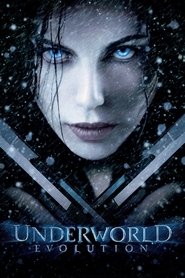
tweaked it and did the color grade, and brought it to look like night. Now this is, everybody's aware, but when you shoot a movie, obviously you do many takes, and so that applies to everything. Eating, your actors have to eat. They do 12, 13, 14 takes, and so a lot of times what they do is they just keep a bucket for the actors so that after the take they can spit out the food, so they don't just keep
24:41 · jump to transcript →
-
there in post so we could pick up some POV shots. This is my favorite shot of the dungeon right here. I thought Simon did an amazing job on just, you know, you need to see it, you need to light it. Same time you want to keep it very dark and creepy and it's not an easy thing to do. So I thought he did a really fantastic job at it. Another thing too is that Simon was really good in the digital intermediate.
1:26:05 · jump to transcript →
-
which is the whole color timing process. Yeah, and Ziggy did the coloring over at Company 3. And again, he absolutely knows what I'm after and really helped us out with the style as well. That's my favorite shot of the werewolf. I think that's on your website now, right? Yes.
1:26:36 · jump to transcript →
-
-
-
Francis Lawrence
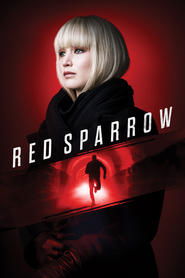
Red Sparrow was a novel by Jason Matthews, and it was sent to me by Fox as I was finishing working on the Hunger Games movies. I think we were actually in post-production on the final Mockingjay, and had actually started to promote the final Mockingjay film when the book landed on my desk. I took a look at it and immediately fell in love with it. I've always loved spy movies. And this spy story I thought was quite unique. It's by far I think the most genre-specific story that I've ever done. But I just found the character of Dominika, as you can see here, played by Jen Lawrence, to be quite a unique and unlikely hero, and a really unique way in to a spy Story. It becomes a much more personal spy story with her in the lead. I actually, even while reading the book, Started to think of Jen immediately for the part. You know, she and I had done three Hunger Games films together over the course of five years. I thought she was a fantastic actress, and we had a great time working together. So I thought it would be fun to find something new to do together. And specifically, because we had done this... We'd been working together with the same character over the course of five years it would be really fun to do something totally different, use different muscles. And I thought she could also look Russian, but thought it would be fun for her to look different and speak differently and move differently, and push herself into new territory. So when I had read the book, and I was gonna go pitch the studio, I actually called her first, and said, "Hey, hypothetically, would you be into doing a Story like this?" And she said yes, and, you know, I just pitched it very briefly. And then made my pitch to Fox about my approach in the story, which was to make Dominika the kind of heart and soul of the story, and to follow her story, and I had a couple of tweaks that I wanted to do to the last act of the book. And also spoke a lot about the tone, and the kind of hard-R quality that the movie... I thought the movie was gonna need. And everybody agreed. We got cracking, and I went to work with Justin Haythe, who is a writer that I've known for a long time, and we had developed something together before that had never been made. But we had a great time working together. And he also saw eye to eye with me in terms of the tone and the point of view of the story. And so we got working and it came together really quickly. So that by the time we had finished and released the final Mockingjay film in the Hunger Games series, we were pretty ready to go, and we were almost ready to start prepping this. We ended up bringing a bunch of people from the Hunger Games film with us. Jo Willems, the cinematographer that did my three films came with us, and our camera operator, who's worked with me since I Am Legend, and has also done numerous other films with Jen, 'cause he does the David O. Russell movies, came with us, and Trish Summerville, who did costumes. The new big addition for me, in terms of crew here, is Maria Djurkovic, the production designer. She had done Tinker Tailor and many other great films, and I just really enjoyed her work. And we really bonded over the references that we had found, and the kind of color palette that we both thought that the movie should follow. And she joined us, and we shot the film in Budapest. And primarily all practical locations. Some little set builds within locations, but primarily all practical locations.
0:22 · jump to transcript →
-
Francis Lawrence
Here's a little cameo. This is one of Jen's best friends, Laura, who also acted as her assistant on the movie. What a pleasure. May I join you? There's a fair amount of cameos in this movie, probably more than I've ever done in terms of people who work on the movie. And friends, and things like that. If you notice the policeman in the beginning of the film that's on the subway train with Joel, in the furry hat, is actually Chris Surgent, my first assistant director, who I've worked with since I Am Legend. I actually met him on I Am Legend. He was the first assistant director of the second unit, and did all the big New York City lockdown sequences for us, for the opening, and I was really impressed with him. And we've become good friends, and work together all the time now. Tell me the real reason you are here. This was actually a really, really beautiful location in downtown Budapest. It's the New York Cafe, which is attached to the hotel that we used for the exterior. And it's become a very popular tourist attraction, and a place to go eat because of its opulence. But I just thought it would be a fantastic spot for this character, for Ustinov's character to hang out. One of the things that I wanted to do, and also Maria, the production designer, was to show different facets of Russian architecture, right? The kind of classic, opulent stuff like places like this, or the ballet, the kind of socialist, Brutalist structures like her uncle's office. Some of the government housing-type environments like where she lives with her mother. But one of the things that really excited me that we got into was the idea of color. I think, honestly, people tend to expect in movies like this for it to be very gray, you know, just bleak. And what Maria and I found in our research was that there is plenty of color throughout the environments. And we had decided to really try and utilize that, and she pulled, I don't know, hundreds and hundreds and hundreds of photos that we used, that gave us a real sense of color palette and a sense of mood and a sense of light. And we ended up using that also for Jo, the cinematographer and I, in terms of how the movie kind of looks in terms of lighting styles as well. And that led us into a direction of, you know, post-World War I/ Russian art, and found that a lot of the, kind of, colors that are in that art were also found in a lot of these environments that we were finding in Central and Eastern Europe. And we ended up really trying to utilize those. And it was something really exciting for me, because to discover that this movie could be quite colorful was a lot of fun.
19:29 · jump to transcript →
-
Francis Lawrence
This was a nice little gag piece of furniture that Maria and her propmaker made. It's a little tough to light to see the black discs in the black drawer underneath. So, they gave Jo Willems quite a challenge. But worked out really well. You know, Jo and I have worked together for a really long time as well. I mean, we go back to the music video days, I think, you know, pre-2000, doing music videos and commercials. And then I went off to do movies, and he went off to do some movies, and so we went kinda separate ways for a while. And then started working together again on a couple of pilots. We did a couple of pilots together, and then I brought him in for the Hunger Games movies, and we really haven't stopped working together since. But we decided to do, really, a completely different approach to the movie, visually, this time. Again, we had done three Hunger Games movies over the course of five years, and there was sort of a similar feel to all of that. I mean, one of the things that I wanted to do was handheld, to sort of maintain some of the naturalism that was in the first one, but sort of more along the kind of style that I had done in something like I Am Legend where there's a hint of immediacy and naturalism, but it was actually still rather formal in terms of shot selection. The other thing that we did was use a lot of kind of medium-wide lenses up close on people, so we felt very intimate with people, but still maintained a little sense of geography in those movies. But a lot of those movies played in medium and close-up shots, or very wide, but a lot up close. And we wanted to be completely different with this movie. I mean, I wanted, quite honestly, for it to have a bit of a colder approach, a much more formal approach. I mean, the color palette was certainly gonna be different. The landscapes, and costumes, and characters were all gonna be completely different and much more grounded. But I wanted the cameras to be much more formal, too. So, locked down. So, either on dollies or Steadicam, or cranes, or Sticks. No handheld. But also to let things play a lot wider. I went in close much more rarely and let things play in wider shots for a lot longer. It was something that I'd wanted to do for a long time, but it was not an aesthetic that I had kicked off on the Hunger Games, and so I didn't want to kind of change that partway through. But it was an opportunity that I wanted to take advantage of here, and I'm really happy about it. You see it quite a lot in places like Sparrow School, and at the ballet, and things like that, that I really stay back and let things kind of play out in a much wider way. And also try not to cut quite as quickly as we may have. I wanted there to be, you know, an aspect of a slow burn to this movie. I wanted it to take its time a little bit, and not play just to the people who have attention deficit disorder.
1:34:37 · jump to transcript →
-
-
-
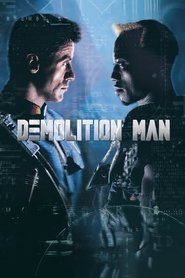
Everything was built. I don't think there were any locations on that film. They didn't love you as much as Tim at that point. Yeah. So when you have to use locations, it gets very complicated to maintain the tone and maintain the feeling of being in this future. Yeah. I remember the first time I met David Snyder, he goes, every inch of the movie is future. So nothing is left to chance. And a lot of that is the color palette and the lighting. Yeah.
56:37 · jump to transcript →
-
That was, again, Alex Thompson working with Alex to create a color palette for San Angeles present day and then to create a color palette for this. And this was also shot in a kind of complex in San Diego. That was an amazing dress for San Diego.
57:07 · jump to transcript →
-
-
-
I think Don Burgess did a wonderful job here. If you notice the color palette he's dealing with and how you really can almost feel the harshness of the drug and what that's leading this character to experience. Yeah, I think if I recall, he changed the color palette to a much cooler sort of blue-green color palette and really desaturated it.
1:29:59 · jump to transcript →
-
So it made you sort of feel all the lack of warmth and anything of that nature in the scenes that make you feel like everything's been drained out of her life, just like he did with his color palette.
1:30:27 · jump to transcript →
-
-
-
-
multi · 2h 24m 1 mention
Alex Thomson, Terry Rawlings, Alec Gillis, Tom Woodruff Jr. + 3
-
-
-
-
director · 4h 13m 1 mention
The Lord of the Rings The Return of the King (2003)
Peter Jackson, Fran Walsh, Philippa Boyens
-
-
director · 1h 36m 1 mention
Aliens vs. Predator - Requiem (2007)
Colin Strause, Greg Strause, John Davis
-
-
director · 1h 26m 1 mention
Underworld Rise of the Lycans (2009)
Patrick Tatopoulos, Len Wiseman, James McQuaide, Richard Wright + 1
-
-

Related topics
Other topics that frequently come up in the same commentaries.