director
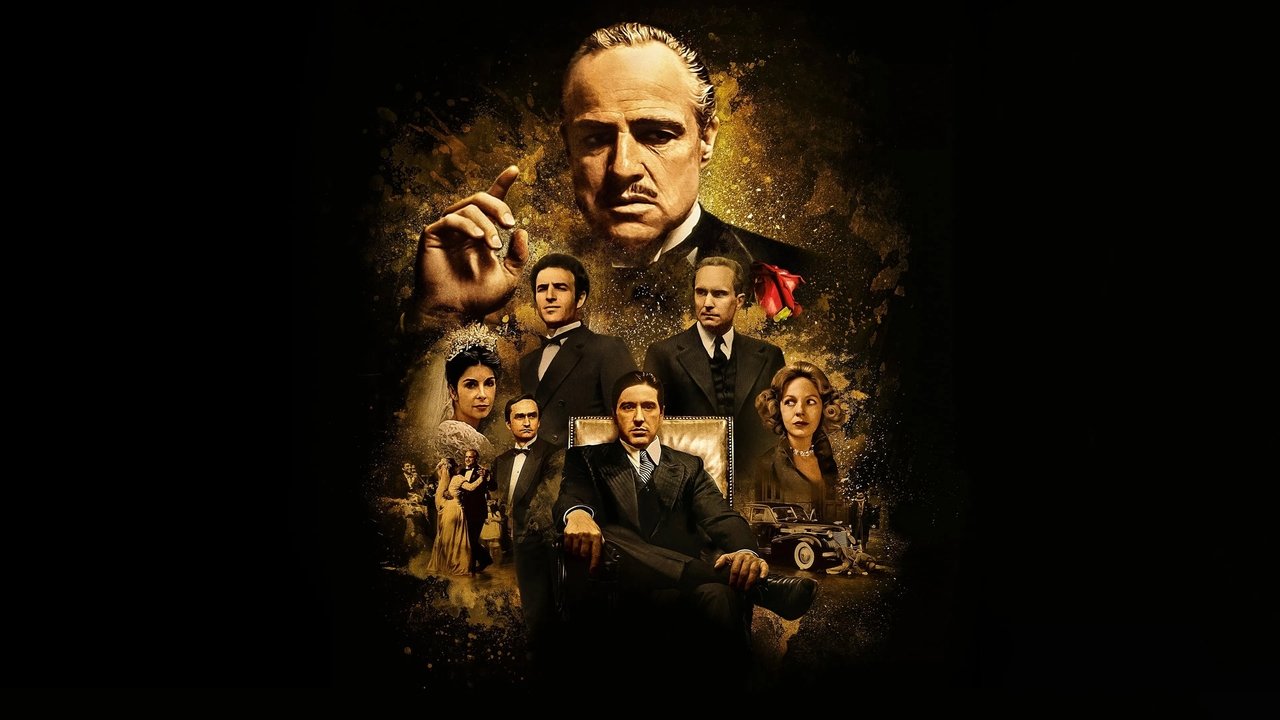
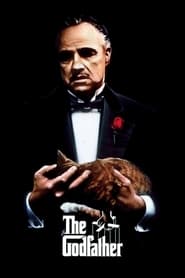
The Godfather (1972)
Release The Godfather DVD Collection (Paramount Home Entertainment, 2001)
Coppola discusses Paramount's original plans, his insistence on the period setting, and disputes over casting. He explains the contributions of Puzo, Pacino, Brando, Rota, Willis, Tavoularis, and others through rehearsals, locations, photography, and editing. He also recalls nearly being fired, defending collaborators, and drawing on his family's experiences.
- Duration
- 2h 52m
- Talk coverage
- 81%
- Words
- 21,933
- Speaker
- 1
Guided collection
The Godfather Coppola commentaries
Francis Ford Coppola discusses studio disagreements and production decisions on The Godfather, then the greater control and parallel storylines of Part II. Read his accounts of the two films in release order.
Part 1 of 2
- 01 The Godfather Now reading
- 02 Part II 1974
Commentary density
Highlights
Featured in
Topics
People mentioned
The film
- Director
- Francis Ford Coppola
- Cinematographer
- Gordon Willis
- Writer
- Mario Puzo , Francis Ford Coppola
- Editor
- William Reynolds , Peter Zinner
- Runtime
- 175 min
- Also on
- OneSheet ↗
- External
- IMDb ↗ TMDB ↗ Find on Amazon ↗
Transcript
21,933 words · 72 flagged as film dialogue
It's funny, I was always proud of the fact that on my films I always asked that the author's name be put ahead of the title. This started way back on the first Godfather movie. Mario Puzo, who wrote the novel, did not have that right, but I insisted on it. And then that went on with other projects, Bram Stoker's Dracula or John Grisham's The Rainmaker. I've always been proud of the fact that I always gave the author the premier position in the credits.
I believe in America. America has made my fortune. And I raised my daughter in the American fashion. I gave her freedom, but I taught her neighbor to dishonor her family.
The Godfather opening is an interesting situation. I had, of course, written the screenplay of Patton before this movie. And Patton had a very famous, striking opening. I was once out in a little cottage I had in Mill Valley writing the opening of The Godfather, working on the script just in the earliest phases. And I wrote maybe three or four pages. And a friend of mine came by, and I asked him to read them. And they started with the wedding and introducing all the characters. And he said to me, gee, Francis, you had such a terrific beginning. Patton, why can't you come up with something a little unusual for the godfather, something other than just cutting right to the wedding? And when he left, I thought about it and thought about it. And in the book, the part that was the most significant to me, I thought, was the notion that, of course, on the wedding day of the Don, the different people come
like the old Roman client system, and ask for favors. And, of course, having asked for a favor might one day be called upon. And especially I thought the thing that explained it all to me was the undertaker's story, Bonasera's story, because, you know, he had come to America, America of laws, and yet sometimes the law did not reach down and protect the citizens, and so it was necessary to go to America to a godfather, a neighbor, a friend, a powerful friend, and ask for the kind of protection that perhaps the country didn't afford the citizens. And so that little piece always was especially intriguing to me. And later that afternoon, I wrote that as the beginning of the film. beginning with words that I thought were very apt for the film that I was about to make, which was, I believe in America. And the idea being starting very close on this man's face. In those days when we made the film, this was high technology to be able to do a pullback so slow. I remember they brought this computerized zoom lens and they programmed it to pull back for, you know, whatever it was, three minutes.
very very very slowly almost imperceptibly and that's how we we were able to get the that opening shot and indeed that friend who suggested that I do something other than cutting right to the wedding actually performed a great service for the picture if you like this opening.
That I cannot do. I'll give you anything you ask. We've known each other many years, but this is the first time you ever came to me for counsel, for help. I can't remember the last time that you invited me to your house for a cup of coffee, even though my wife is godmother to your only child.
It's interesting, the cat in Marlon's hand was not planned for. I just saw the cat. kind of running around in the studio and I just took it and I put it right in his hands without a word and said, here, Marlon. And he, of course, you know, he loves children and animals and he immediately took to the cat and the cat took to him and it became part of the scene. Not at all planned and just a random idea.
But now you come to me and you say, don't call me on it, give me justice.
This actor, I think I remember his name was Salvatore. was a wonderful actor. Marlon was very impressed with him, how he was able to so naturally explain this terrible story of his daughter. But he was just a natural Salvatore. I think he had maybe done some little theater work or something, but had not really been exposed much in the professional world. On The Godfather, we did very many open calls in which we invited actors who were not established at all to come and then I would be there and it was sort of a tradition that I had to always have some open calls so that actors who had no agents and no credits could be seen and it's very interesting because in this film someone I met in one of those open calls was Abe Vigoda who played Tessio and he had never really done a part of any importance and was just discovered in an open call. And so that habit of kind of being open to people who have no representation brought us two wonderful performances. Bonasera was played by Salvatore Corsitto, and of course Abe Vigoda became a very, very famous, well-known actor after this film.
In contrast to the darkness of the private office was the exterior of the wedding and of course this exterior is where my script originally had begun with a big high shot of the people dancing and coming to the party so really this would have been The exterior would have been the opening without that prologue had this friend not reminded me that an unusual beginning is sometimes very good. I never quite remember a wedding, maybe exactly this deluxe. It's funny to call it deluxe, but in my mind, in my memory, the weddings were what our family used to call football weddings. They were called football weddings because they were in a hall and the only food were these little sandwiches that were wrapped up in a kind of paper marked as, you know, salami, gabagol, prosciutto. And there were piles and piles of these sandwiches and people would go up and get them and they would throw them to each other. Hey, send me two gabagols and a prosciutto. And of course I remembered that and used it in this scene.
Obviously, in my family, we didn't have FBI guys checking the license plates numbers, but in Mario's book, that was, of course, detail. In a scene like this, the way I would do it is I would prepare a great deal of little index cards, and I would label on each index card what the vignette was. In this case, it might be Nick Conti coming in and being greeted by the Don or... It might be Clemenza dancing, asking for some wine from Paulie. Obviously, I had the obligation of introducing all these characters to the audience for the first time, and so this was the opportunity to do that. I think that was Richard Castellano's brother dancing right behind him with a smile. So I had this big, big stack of index cards, and it had all these little... vignettes that I wanted to get. We were really under pressure to shoot this wedding scene. We had, I don't know, two days to do it all. The image of Tessio. This is Abe Vigoda who was discovered in an open call. I always remember little kids, the little girls dancing on the shoes of some uncle.
And this is my sister Talia with the purse, the bridal purse. And in my family as well, people would come with checks, cash money that they would give to the bride and she would put it in the purse. And that's where the couple would get a start. Oh yeah, here's the football wedding with them tossing the sandwiches.
Of course, in this sequence, I was dealing with relatives other than I knew the notion of some important mafiosi coming and being disturbed if photographers took pictures. But all in all, it was designed to introduce the audience to the cast of characters, let them be comfortable with who everyone was, and yet have it be in an ambiance that suggested the Italian-American world that I came from myself.
I am honored and grateful that you have invited me to your home. Hey. Get out of here. It's a private party. Come on. What is it? Hey, it's my sister's wedding. Goddamn FBI don't respect nothing. I'll look for you.
The Godfather's Den was a set on a stage in upper Manhattan near Harlem. We shot these scenes, I believe, first, and then later shot the scene afterwards and intercut it all. Two editors worked on The Godfather, William Reynolds and Peter Zinner, and Will Reynolds took the first half of the movie and Peter Zinner took the second half, and then we joined like a railroad. Obviously, we're shooting the scenes with nothing outside the windows, just white paper and some light. Thank you. But it was always my thought to show the Don Corleone in the darkness, in his chambers, meeting with clients. I call them clients in the oldest sense, people who, supplicants, people who have come for favors and in contrast to the bright sun of the party. Hello.
He's not on the list, but Luca Brasi wants to see you.
The shot of Luca Brasi practicing his speech to Don Corleone was shot really after the scene where he actually presented it to Don Corleone. Luca Brasi was played by Lenny Montana who was, I believe, a professional wrestler. And he wasn't really comfortable with saying lines or playing in the movie with Marlon Brando. So you can imagine how frazzled he was. The problem was that when he went up to do the scene with Marlon, he really froze up. He was supposed to say, oh, Don Corleone, I am here on the wedding day of your daughter to pay my respect, et cetera, et cetera. But he could never quite get it out. So I got the idea since he kept fumbling it. to shoot him in the garden, practicing it over and over again, sort of making a point out of the fact that he fumbles it out of nervousness, having practiced it so many, many times. And that's just an example of taking advantage of the accidents, and in this case, the problems that you have, an actor not being able to get through his scene, and then by showing him practicing those same lines, which was not in the script and was not supposed to be,
shot that by putting that first you make a point of how nervous he must have been.
You like your lasagna?
So having planted the scene of Lenny Montana, who is Luca Brasi, practicing over and over and over again his speech, now when we come to the scene where he's supposed to make it and he sort of screws up, it becomes a joke within the film. It's also interesting to note that in some of these shots, Marlon had a big sign on his forehead that said, F you. And poor Luca was trying not to break up, and Marlon had put this sign just to frazzle him. In that scene, you see this notion I had of the children can burst in at any time, you know, and even in a solemn moment of loyalty between Luca and the Don.
Thank you.
After the wedding, there was lots of music, the Tarantellas and other Italian music, and my father was very anxious to begin a career composing. He had been a concert flutist, and so I asked him to write all of the Tarantellas and organize this band because I am a person who believes that a band in a movie should really be able to play. Very often in movies, it's cheaper to hire actors who just stay there with their instruments and don't really play but i find as a technique that having a real band enables you to kind of control the crowd and get them in the mood and and the fact that the band actually plays this is another expense so it was another one of my requests that to the producers i was just kind of spending money for nothing the casting of the mom uh she of course is uh well-known singer of sicilian descent morgana king a well-known jazz singer but when i met her in some audition situation she just made me think of you know the kind of handsome authentically sicilian woman that would be his wife also some of the judges they've all sent gifts there was a lot of tension on the set uh during the sequence this
wedding had to be done according to the schedule. I think it was two and a half days. And the sequence was not shot early in the movie. It was shot midway through. And I was in great danger of being fired. And we had a studio kind of henchman there who was constantly pushing. And it was like a very uncomfortable situation to try to do all this stuff very often. Although Gordon Willis didn't like to, I would ask to have two cameras. You'll see that there's some two-camera work if you know how to spot that, usually the long lenses. And I was just desperately trying to get all this vitality and all these characters and introduce them, and yet had to do it under duress. And in fact, we weren't finishing, and they ordered me to either finish the wedding by the end of the third day or just not finish it and use what I had.
And so those shots with Michael and Kay and not the one looking towards Johnny, but those shots were shot at night. It doesn't look like it, but the shot across Al onto Kay is in fact shot at night with lights just blasting in that small area. Gordon Willis was furious at having to do it. And I had to get it, so I had no choice. And I always remark how when you look at it, you really don't know the difference. Obviously, Johnny Fontane was inspired by a kind of Frank Sinatra characters. And my impressions of the young Frank Sinatra was of, you know, girls screaming when he crooned. And so I had the teenagers jumping up and down and screaming while the scene was going on. But again, I remind you that the shot of Al and the shot of Kay were shot at night and just lit to match with the party. Gordon did a very although he was mad as hell at having to do it. And as his career got better and better, he wanted to get out of it.
Now, Johnny is my father's godson. And my father went to see this band leader. And he offered him $10,000 to let Johnny go. But the band leader said no. So the next day, my father went to see him, only this time with Luca Brasi. And within an hour, He signed a release for a certified check of $1,000. How'd he do that? My father made him an offer he couldn't refuse. What was that? Luca Brasi held a gun to his head, and my father assured him that either his brains or his signature would be on the contract. That's a true story. That's my family, kid. It's not me.
Obviously, the extras were professional extras, but there were many of my family in there, too. You'll see my mother bobbing around, dancing and singing and being one of the crowd, and some other relatives as well. But there were many, many characters to try to establish in this sequence, and as I said, we did it in two and a half days. It was a tough... A tough enterprise, and I always felt that I shot it very sloppily as I felt I shot much of the picture. In a rush, basically. We made The Godfather in 62 days. It cost about $6. 5 million.
This is my brother Mike. Are you having a good time? Yeah, this is your friend, huh?
Sonny?
Sonny? Sonny? Sonny, you in there? What? Your old man wants to see you. There, one minute.
This lady singing the aria is one of my cousins. And she indeed sang arias from operas. Of course, my father was behind all of the musical acts. I was trying to vary the show with these different attractions. In the scene where Johnny Fontane sort of cracks up and cries in front of Don Corleone, you'll notice that the camera is on his back. And this is because Al Martino was, you know, not a... Terribly experienced actor. He was a charming singer. But he was having trouble getting the emotion that he needed. And so we decided to kind of put him on the desk and put us back to the camera. And then he could do anything he want. And we could help prepare that with the sound. And then Marlon really shook him up and slapped his face and really worked him over something awful to get that rise out of him.
You look terrible. I should eat. I want you to rest well, and a month from now, this Hollywood big shot's going to give you what you want. Too late. They start shooting in a week.
You'll notice in this scene where he takes Johnny out the door that as they open the door, a lady who was an extra who was supposed to be walking by suddenly was shocked by the fact that now the scene was showing her, and she stands in the doorway and then backs up to get out of the way. I always see that when I see the film because I know she was... basically making a mistake, but I guess no one else notices it. It's an interesting story. I chose to work with Nino Rota to write the score, and the studio was not very comfortable with this choice. And when I finally brought back the music that Maestro Rota had done, put it in the picture, the studio hated it. Bob Evans hated the music and said it would never stay in. He had just done a movie called Love Story in which the music was very popular. So he considered himself quite an expert on that. And we were at a stalemate. I kept saying to him, well, I mean, you can't take the music out. You can fire me and get another director.
and then order that other director to take the music out, but you'll have to fire me to take it out. This was a total bluff. I don't know where I came up with that idea, but he seemed to accept it, and so for a week, we just waited. We would go up every day to Bob Evans' house, myself and Walter Murch, and sit by the tennis court and wait for something to break. Finally, to break it, I suggested, well, let's show the movie with the music, to an audience, and if they like the music, then we can keep it. And he said, well, who will decide? And I said, you can decide. So finally it was arranged. It was a little screening room, and I don't know, 30, 40 people were invited to come and see it. And we really showed it for the first time with the music. And when the screening was over, the people just all had smiles on their face and had enjoyed it so much. And I realized it wasn't only a preview of the music, but of the movie itself.
Then I said, well, what about the music? What about the music? And they said, oh, it's wonderful. So Bob agreed to let the music stay, but he insisted that two cues be changed his way, and one was the old source music of when the plane lands in Hollywood. And although we had put it in as a kind of period music, I always think of that incident and the fact that that one piece of music was left over from this standoff with Bob Evans.
The Hollywood scene with Jack Waltz was pretty much shot as second unit. As I said, this was very low-budget production. That fellow walking is not... I hate to say this and ruin the illusion, but that was not Bobby Duvall. It was just some fellow we had walking in a couple of L. A. sets, and it wasn't really Gordy Willis or Dean Tavoularis working on it. It was just some cheap second unit. Now, the scene inside the stage is, in fact... shot in new york in the stage where we worked an empty stage where we had our sets the don's office and stuff and we shot the party where bobby duvall actually meets jack waltz there and just shot that second unit leading up to it before this was sort of the first test of power uh in the book you you learned that uh Don Corleone's reputation is so big that even an important Hollywood studio chief on the West Coast might have heard of it, so that ultimately the intimidation, according to the story, was able to get Johnny Fontane the part.
They say this part of the story is based on Columbia Pictures and the head of Columbia Pictures and From Here to Eternity. I have no indication of the truth of that. I know that Mario took everything from little bits and pieces, little fragments, and concocted really a fiction. So we'll never really know what's true and what isn't true.
Check them out.
If you look very carefully here, you'll see that it's neither Bobby Duvall nor Jack Waltz, but two of my friends dressed up and walking around in this. We barely had a crew. We were a camera, and we went to some L. A. location, put a wig on one of my friends and a hat on the other. Now here in this scene, in the stable, this was shot in New York, so really the movie were shot in New York in those 62 days, and with very little money, we went and shot some second-unit pieces later on. I was so embarrassed because we didn't have the actors, we didn't have the photographer. It was really like kind of UCLA film school. It's ironic working on what has become an important movie, but it was pretty flimsy at the time. For the Italian people, that's a very religious, sacred... I had worked with Robert Duvall on a film called The Rain People. He helped us out. We had lost our actor in the role of the motorcycle cop, and Bobby Duvall helped us out and played that part, and I was so impressed with Bobby as an actor, how real he could be.
And of course, Jimmy Caan was in that movie as well. And as I said, when I read the book, it was sort of natural to have these people that already had very happy relationship with Jimmy Caan. Bobby Duvall, as I said, I hadn't worked with Al Pacino, but he had definitely become a friend. And I wanted them to play the parts. And of course, the studio had a million other ideas. And the casting period went on and on and on, and they kept asking me to test new people. I've never shot so many screen tests. We screen tested everybody. And I remember the head of Gulf and Western, which owned Paramount at this time, once said, and he had this incredible accent, he said, we have all these tests and they're all terrible. Now, all those actors cannot be terrible. We have one director. It's the director who's terrible.
So I was in very, very deep trouble, and I'm not even sure how I survived, to be honest. Maybe the turning point was when they saw, I always thought it was the Sollozzo killing, that when they saw that together, that they saw there was something to what I was doing. It's interesting because that scene was shot the first week, and they were still planning to fire me on the third week.
Obviously, all of the Waltz sequence was shot second unit, again, without Gordon Willis. My good friend, Wilmer Butler, shot this, Bill Butler. Interesting about the horseshead scene, that was, at that time, a very, very famous scene in the book. And the way it's described in the book, Waltz wakes up and he looks And the horse's head is there on the bedpost. And I just felt it would be more horrible not to just have the horse there, but that he feels something wet in his bed and he turns down the sheets and sees blood. And at first he thinks, my God, it could be me. Maybe I've been stabbed or something. And as he pulls the sheet, he sees the horse's head right under the covers. So... It's quite different than in the book, in the film. It's maybe more effective, I'm not sure. I think that moment of doubt that maybe it was his own wound bleeding maybe contributed to the horror. Now, the controversy of the horse's head was very real at the time that the movie came out because
Although in The Godfather, you know, untoned tens and twenties of human beings are killed, the audiences rose up in anger over the fact that the horse had been killed. And many people asked, was that a real horse's head, and how did you do it? And I got letters from animal lovers, and the truth was that the horse came from a dog food company, that the horses are slaughtered to feed the animal lover's little puppies. and little poodles, they're dog food. And all we did is we went to the dog food company and we looked at the horses that were about to be slaughtered. We didn't ask for any to be slaughtered, but we looked and we saw one. The art director picked that one and said, when that horse is slaughtered, send us the head. And indeed, one day a crate with dry ice came with this horse's head in it. And that's the horse's head that we used in the shot. I couldn't find out how much.
The Tattaglia family is behind him here in New York. Now, they have to be in it for something. How about his prison record? Two terms, one in Italy, one here.
The scene of the meeting at the olive oil factory was shot on a real location in Little Italy, really right what is now Chinatown. And if you look up on that street, you can still see the painting. It says Genco Olive Oil. and that was where we shot the scene of them being received, where Sonny makes the faux pas and interjects a question.
Now we have the unions, we have the gambling, and they're the best things to have, but narcotics is a thing of the future. If we don't get a piece of that action, we risk everything we have. I mean, not now, but ten years from now. So, what's your answer gonna be, Pa?
I made that Anisette bottle myself because I remember my father, when I was young, they would make their own Anisette, and the bottle would always be sort of a milky, cloudy liquid, and it would always have a piece of tape that said Anisette. And I was very proud of that touch of authenticity. And to this day, I still make Anisette, and I label it like that. The man who played Sollozzo was a wonderful, wonderful actor named Al Lettieri. He was such a good actor, and I just was so thrilled when I met him because he had the quality of a kind of Sicilian. The nickname was the Turk, and Al Lettieri had a chest like a barrel. The only man I ever knew that had a chest like that was John Wayne. And he was a very good actor. Of course, he spoke Sicilian, and so I was very pleased to have him play this part.
Why do you come to me? Why do I deserve this generosity?
Now, this scene is very interesting because when Paramount Pictures saw the rushes of Marlon Brando, they were very, very upset. They thought that he was mumbling and that his acting wasn't good. This was really the scene where it looked like I was going to get fired. You know, I don't even remember what it was that they didn't care for it, but I knew that it was a sort of a rallying call. It was in the middle of the week, and some of my friends said they're trying to get another director to replace you. Now, one thing about a movie company, and a little tip I'll give to all the directors out there, is they'll never fire you midweek. They'll never fire you on a Wednesday. They will always wait till the weekend to fire you because in their minds they feel that they'll be able to be a transition and the new director will come on a Monday and there'll be no loss of time. So I suggested on the Wednesday, why can't I go and I'll reshoot the scene with Marlon if you don't like it. I mean, it was his first big scene and even though he is such a great man, he's nervous about playing the role.
Maybe he didn't quite have the energy that he would have. Let me go shoot it again. And they said, no, no, that's all right, that's all right. And I knew that that was another sign that I was going to be fired because I knew they didn't like it. And if they were telling me not to go up, we were just shooting downstairs. We could have just shot up there and done it again in like a day that they must have planned, well, let the new director do it. So on that Wednesday, hearing the rumors that I was going to be fired, I myself fired four of who, in my opinion, were the traitors in my myths. It was sort of like The Godfather. I fired the assistant director. I fired a number of people as a preemptory strike on that Wednesday. And it threw Paramount and everybody in a total dither because, you know, they were going to fire me that weekend. And here I had gone and fired three, four people, and I went right upstairs and I reshot
the scene with Marlon Brando a second time. And the footage that you're seeing in the picture is the second shoot. I've often been very curious to go look at the footage from the first shoot and see if it was really all that bad. I think it probably was pretty good and he was playing older and maybe more playing the age because Marlon was not a very old man when he played this part and we were very concerned to have him be able to be Jimmy Caan's father and what have you. So I think what was confused for the age we were working for was confused by the executives as a lack of vitality. And they sent the rushes over to Charlie Bluhdorn, who was the big boss, and he agreed. And it didn't hurt that around this time I won the Oscar for Patton. And I think I just squeaked by and they didn't fire me that weekend. And the people who were agitating for me to be fired, I had fired. So I would say that I survived
This is about the third week of The Godfather that all this happened and this scene was shot. Now this scene in front of the Best Company in the snow was the first shot of The Godfather. It's the first scene of the first day. And Al and Diane coming out of the shopping was shot in the morning, and then that afternoon we went over to Polk's Toy Store and we shot Bobby... Duvall buying a sled at a toy store. And that was day one. I'll always remember because when I saw the rushes of what Gordy Willis's photography looked like from that scene on the first day, I was so moved that it had such a beautiful feel of the period in the 40s. And I was so pleased with the first day. I always feel it was very ironic that the first and second day went very well.
And the third and fourth day was the famous scene where Al killed Sollozzo in the Italian restaurant. And the fifth day was the exterior of the hospital where McCluskey, the corrupt police officer, punches Al. And that was the first five days of the first week. So we had shot all that material, including probably the best scene in the picture. And yet even after that week, I was in big trouble. Partly because Al had twisted his ankle jumping on a running board of a car in the scene in the hospital. And so he had to go off to the hospital and I didn't get to finish it because I lost the actor. And they made a big stink of how my first week was embarrassing and stuff. But the first week, if the records be checked, the first day was in Best Company, Polk's Toy Store. And I have to remember what the second day was. But the third and fourth day was the Sollozzo murder in the restaurant. scene that I'm pretty proud of, and that was all the first week. The Sollozzo Luca Brasi sequence was shot in a real interior in a hotel in New York. It was an art deco.
uh... decor as you see here we did very little to it uh... we we shot the godfather in a combination of sets inside the studio as well as some real locations different uh... businesses in little italy or or hotels hotel edison i remember I still have that cigarette lighter, actually, I must say. I bought that from the production. This idea to have Tattaglia stab his hand on the bar I think was Al Lettieri's. I was very interested in this garrotting. I wanted his face. to actually turn black in front of the camera. And the way we did that is we put some special makeup that when a fine mist of water is sprayed on it, it would look as though the face was turning black from suffocation. I don't know if it worked, but it was very elaborate. We put the special makeup and we sprayed water while they were strangling him.
So this scene now with Bobby Duvall coming out of the toy store was shot in the afternoon of the first day after we had shot Al and Kay coming out of shopping at Best and Company. An interesting note is that we had the discipline in shooting the film that the camera was going to be very classical. It was always about four and a half feet off the ground. It never was looking up at anyone or looking down unless the guy was on the street or you had to look down. And in the scene where he shot, I had a high angle from the window as Marlon is shot. And Gordon Willis was very upset. He said, why do you want to do this? And I said, well, I think you'll see the oranges when they...
spill out better that way. And he's, well, whose point of view is it? Gordon was a real purist. I said, well, I don't know. It's my point of view. It's Orson Welles' point of view. You know, you can have camera angles like that. I learned a lot from Gordon. Gordon's concept of structure was, you know, very disciplined. And I learned that from him. And I'll always be grateful. I mention the shot of the oranges because whenever I see it, I always think of Gordon. I'm a little embarrassed. I cut that sequence myself, too. And I deliberately... put the oranges spilling out because I liked it and no other reason than I liked it. Of course, the second brother was played by John Cazale, a wonderful, wonderful actor and a wonderful person. I had the opportunity to work with Johnny three times in total, the first Godfather, The Conversation, and the second Godfather. He was a wonderful person and someone I miss very much. He was very, very good in The Godfather and really rounded off the cast of The Three Brothers so well. Now, when Michael and Kay come out of the Radio City musical,
I had this idea that she would have noticed a headline in a newsstand that they passed. And, of course, there was no newsstand out there really. And then I wanted Al to run across the street and get into a phone booth. And, of course, there was no phone booth really there across the street. So we came and we brought the newsstand and we brought the phone booth and put it... A little note that's amusing is that all these inserts of the newspapers and Vito Corleone Feared Dead were all shot by George Lucas, who was working with me in those days and helping me finish up the picture. It was funny how, you know, for a moment I was stumped and I said, gee, I wish there was a phone booth
right outside the Radio City Musical, he could run across the street and make the call and it didn't even dawn on me that all we had to do was bring one, dump it there. And they said, oh, no problem, we'll have a phone booth for you there. And every time I see this scene, I think of how I wanted there to be a phone booth and I was so furious that there wasn't one and how easy it was really to solve that.
Of course, the suspense in this part of the movie is totally from the book. And although we tried to give it little details, the children being disturbed by the noise, Sonny being smart enough to write the time that the phone call came in, all of these were details we added. But essentially, in this part of the movie, the dynamism of the book is taking over what made that book a page Turner is now invested in the movie. Richard Castellano played Clemenza. He was a very bright guy and another wonderful cast member. He had been around a long time in theater and was very imaginative and a little bit of a handful, but made a tremendous contribution. to the Godfather, and it was always a source of great unhappiness to me that we could never make a deal with him to be in The Godfather Part II. The reason was not money. The reason had to do with he wanted a clause in his contract that enabled his associate to write his dialogue for him. And I tried to explain, I said, Richie, how can I have someone else write the dialogue?
for a movie that I'm making, and he held out for it, you know, right up until the last minute, and then on the day that we were shooting, Michael V. Gazzo appears with a black band on his shoulder, and they say, oh, sorry to hear about Clemenza passing away, and I basically wrote myself out of a big pickle. There were many times on The Godfather where things like that happened, and I was forced to to basically write myself out of a problem and invent a character or invent a situation to cover the fact that basically an actor wouldn't agree or in the case of Marlon, we thought he was going to be in the second film and the last minute he decided not to be.
Sonny was hot for my deal, wasn't he? And you knew it was the right thing to do. Sonny will come after you with everything he's got.
This scene was shot in an abandoned diner in New York. It was in Manhattan. It's actually the same interior from the exterior in the snow scene. I remember that the night we shot this, it was really starting to storm, and we were worried whether or not we could even get it because the power was going to get blown out and the wind was so high. And, of course, I love... to shoot in weather. I'm always, when they tell me there's going to be a huge storm or a typhoon, I always say, well, let's shoot, you know, because that's like special effects for free. And scenes always play very well if they're set in weather or rain. I've been doing that all my career. I remember on my film, You're a Big Boy Now, we had this big scene where Rip Torn and Peter Kastner, the star of that film, were supposed to be outside and
And it was pouring rain, and I just shot it in the rain and had them hold umbrellas while they were playing golf. So in my movies, you'll always see if there's weather, you'll always see that we're shooting in it, and usually it's in fact really happening. You can tell from this scene that there's a storm from the exterior. When they go outside, you'll see snow and it really blowing. And that's all real. It's not special effects.
You can go. I don't like violence, Tom. I'm a businessman. Blood is a big expense.
Actually, the storm doesn't look anywhere near as bad on film as it did there. It was howling wind and And they almost wanted to, in fact, I think the production wanted to stop and wanted me to stop shooting and said, oh, it was a storm, we're snowed out, we'll get insurance. And I said, well, let's just shoot it in the storm. But when I see the scene, it doesn't look all that bad, but it was pretty bad.
It's bad luck for me and bad luck for you if you don't make that deal.
In reading The Godfather, you know, the original book had a big part of the story was about a girl who had required an operation because her private parts were too big. And you can't believe if you read the book how many pages are devoted to this subplot. And when I first read the book, I couldn't believe it. I said, my God, I don't want to make this book. It was sort of like a sensational paperback or something, and then a doctor who cures her becomes her lover. But it was only when I read the book really and analyzed it that I understood that in all that other material was this wonderful, suspenseful story of a man and his three sons and his position as a head of what could have been a company, and it was what I pulled out of that that made the screenplay of The Godfather. And so much of the book is left, you know, in the book.
Just to avoid a long, destructive war. This is almost 1946. Nobody wants bloodshed anymore. If your father dies, you'll make the deal, sonny. You know, it's easy for you to say, Tom. He's not your father. I was as much a son to him as you are Mike. What is it? Hey, Paulie, I thought I told you to stay put. Well, the guy at the gates, they said they got a package. Yeah? Oh, hey, Tess, you go see what it is. You want me to hang around? Yeah, hang around. You all right? Yeah, I'm fine. Yeah? Some food in the icebox. You hungry or anything? No, it's all right. How about a drink? How about a little brandy? That's good to sweat it out. All right, Sean. Go ahead, baby. That might be a good idea. Yeah, right. I want you to take care of that son of a bitch right away.
Paulie sold out the old man, that strutz. I don't want to see him again. Make that first thing on your list, understand? Understood. Hey, Mickey, tomorrow, you get a couple of guys, you go over to Luca's apartment, hang around, wait for him to show up. Maybe we shouldn't get Mike mixed up in this too directly. Yeah. Listen, hang around the house on the phone and be a big help, huh? Try Luca again. Go ahead. Okay.
What the hell is this? That's Sicilian message. It means Luca Brasi sleeps with the fishes.
That's, by the way, Augie and Francie going down, me and my brother, down in that little car in this house. This is the kind of neighborhoods our relatives lived in. We always joked about those two kids being Augie and Francie. Don't forget the cannoli. Yeah, yeah, yeah.
I thought it was very intriguing that at the end of Second World War, of course they hadn't made cars during World War II. And they delivered a lot of cars with wooden bumpers, and the idea was you'd get the chromium bumper a little later. So in the car in Clemenza's garage, that was the case.
Hey, Paulie, I want you to go down 39th Street, Carlos Santos. You pick up 18 matches for the guys to sleep on. You bring me the building.
These were obviously stock footages moving through New York of that period. They told me they exterminate them.
Exterminate? That's a bad word to use. Exterminate. Get this guy. That's how we don't exterminate you.
The line, the famous line I had said to Ardell Sheridan, who played Richie Castellano's wife, I said, oh, when he leaves, I said, you know, say a line like, don't forget to bring some cannoli, because my father always used to bring home a box of cannoli. Sometimes it was a real treat. So she said the line. She said, oh... Bring home some cannoli. And then in the scene at the end, Ritchie improvised the famous line, you know, drop the gun, bring the cannoli, off of that earlier reference. But I do believe it was Ritchie's improvisation, that famous line. Leave the gun. Take the cannoli. Of course, the cars have that A coupon as the gas rationing from World War II. One of the reasons why I loved so much that it was a period setting in a period is that we could do all of the detail to really try to bring back that period. We did a lot of research, and the film was very authentic from that standpoint. The production designer, Dean Tavoularis, and his team worked very hard.
Now this scene is interesting in terms of how it was to collaborate with Mario Puzo. In the script, and in this case I wrote the script and then Mario kind of rewrote it with me giving me notes in the script, and I wanted to really get an entire recipe in here so people could learn how to make tomato sauce. So in my script, the line was, Clemenza says, First you put in the olive oil and some garlic, and then you brown some sausage. And when the script came back to me, Mario had crossed out the line, brown some sausage, and said, and then you fry some sausage. And he said, gangsters don't brown, gangsters fry.
You see, you start out with a little bit of oil, and you fry some garlic, and you throw in some... Tomatoes, tomato paste, you fry it, you make sure it doesn't stick.
At this point in my career, I thought that all of my films should have a good recipe, and at least if the film didn't turn out so well, there'd always be a useful recipe in the film. The way Richie does it is not 100% authentic, but it is true. In a meat sauce you make with sausage, you do put red wine. And after you've fried the sausage and it's all hot, then you add the red wine and it sizzles and it gives it that nice aroma.
Be careful, huh? Yes, sir. Send somebody with him anyway.
I had asked Al and Diane to actually have dinner in this hotel room so they would get to know each other, and I set it up in a very romantic way so that they would take the order, anything you want, and have room service and stuff. And to be honest, I think because of the setting, I like to think Cupid-like that I made the setting so nice that they actually fell in love and became a couple. couple for a very long time, and I do believe that this scene was the genesis of that. I know that she always liked him so much, and even early on when they were having me cast or shoot screen tests for so many people to cast for Michael, I would go to her and say, what do you think of all this? Who do you think should play him? And she looked at me and said, you know, it should be Al.
Now this is the scene shot on the Friday of the first week that really almost was my finish. Things had gone very well the first week, I thought, and on the Thursday before this night, we had shot the killing of Sollozzo, and this was to be Al arriving at the hospital. It was a real location. I'll explain why it was my nemesis when that scene comes up, but he wanders through the empty This was not shot the first week. This was an interior, so we shot this later. But this was a real location. An interesting thing about this scene is that in building the suspense, I wished that I had just some shots of, like, empty corridors so I could play the sound of footsteps coming and build a suspense, but I was so rushed and so... frightened of not getting the scene in time that I focused just on getting the real hardcore scenes, the meat, so to speak, of Al in the corridors. And I didn't shoot any shots of just the empty corridors. And so my friend George Lucas went through the footage and he said, well, you gotta have, to build suspense, you gotta have some empty corridors.
And so what we did is we looked through all the shots and after I had said cut, there would be maybe a few feet of just empty corridor and we took those. And you'll see later in the sequence when you cut to an empty corridor, those are just the little ends of shots that happened to be after the actor walked out of the frame, there was a little piece. So advice to directors, very often the most important stuff that you get you'll shoot and then you'll wish you had gotten the so-called easy unimportant things. So always get those unimportant things because they're as valuable as the important things. In this scene, Al, I thought, demonstrated really now this boy being a born leader and kind of he arrives in a situation, he remains cool. He immediately becomes decisive and takes over. And Al showed this very well. I think the studio started to realize that Al had this extraordinary range and ability to be a leader.
I'm sorry, but you will have to leave. You and I are gonna move my father to another room. Now, can you disconnect those two so we can move the bed out? That's out of the question. You know my father. And they're coming here to kill him. You understand? Now, help me, please.
Here's a shot that was just a leftover of this one as well. These were just little pieces left over from the ends of shots that we were able to use to heighten suspense. And George Lucas helped me find them and do this.
So the story of why I got in trouble on the fifth night outside the hospital was we were pretty much on schedule that week. Those first four days had gotten everything we needed. But in the night scene, not only did it take a long time to light it because it was night in this hospital exterior, but in the course of the evening, Al twisted his ankle. And they took him off to have it x-rayed and what have you. And somehow I got the blame for this. I mean, me, I got the blame that I hadn't completed the Friday's work. In fact, that hospital sequence that I was supposed to shoot that Friday, we ultimately went to LA and later after the movie, again, in that second unit, we shot that on the lot. And I'll try to, when I see the sequence, show you which were the original locations where we were not able to finish, and then which were the ones that were done on a Hollywood lot with a different photographer, by the way, trying to match. Now, this is in Hollywood, the shot of Enzo and Michael coming out. This is all in L. A. , the closer shots, waiting for the...
assailants and trying to look as though they were bodyguards look like they have guns I believe this is the original that long shot was the original New York location this is in LA the fake one this was in New York I believe I may be wrong even I don't know anymore
Obviously what we were trying to show here that Al, as a war veteran, was able to stand up to this kind of tension and not, you know, not have his nerves go. He even notices himself when he lights the cigarette how that his hand is not shaking whereas this young baker is.
In a film, you're always trying to figure out ways to show what the characters are feeling or what the characters are thinking. You're always looking for little external bits of business.
He's locked up. What the hell are you doing here? What happened to the men who were guarding my father, Captain?
That actor along who has the lines in the background there is Sonny Grasso, who is one of the real fellows from the French Connection that that story is written about.
Phil, take him in. The kid's clean, Captain. He's a war hero. God damn it, I said take him in. What's the Turk paying you to set up my father, Captain? Take a hold of him. Stand him up. Stand him up straight.
There you'll notice the wooden bumper on the car because they delivered those cars without their original bumpers. Journey for the Corleone family. This is back in L. A. So the mall in Staten Island was actually several houses in a residential area and Tavoularis had built these artificial stone walls and that gate to kind of imply that there was a, you know, a compound. It was really inspired, I think, in Mario's book by the notion of the Kennedy compound, a very powerful family with a real patriarch with all these fine sons.
Jesus Christ.
We had a very good makeup artist on the film, Dick Smith, and we really wired Al's jaw. I tried to make the notion of his suffering from a real punch from a strong man. Normally people get punched in movies and it's like the next day they're just talking. We really asked medical help as to what it would be like and we temporarily wired his jaw so he couldn't talk. try to be as realistic as we possibly could. Jimmy Caan really spent time and went around meeting sort of tough guys around New York. And, you know, the issue of we were making this film, it had to do with the mafia. Mario told me, he says, you know, you're going to be offered to meet real guys, and you know what, don't meet them, don't even say you're interested, don't let them have your phone number, and they'll never bother you. And that's what I did, and I was never certainly bothered, and I made the film, I never had a point of contact with any real figures in the underworld. Jimmy, on the other hand, really...
you know, kind of hung out with some real people and tried to learn from them and pick up their inflections and the way they expressed themselves and really, you know, brought that to his performance in a very authentic way.
He is invulnerable. Nobody has ever gunned down a New York police captain, never. It would be disastrous. All the five families would come after you, Sonny. The Corleone family would be outcasts.
Even the old man's political protection would run for cover. In a scene like this, I had the benefit of these wonderful actors who really enjoyed working with each other and, you know, in a full-out dialogue scene, you know, kind of that had a great turning point as Al suddenly, from being the dopey kid brother, starts to strategize and offer a solution to their predicament. And I remember I felt that this was a very important turning point for him. And so as he began to lay out his idea of how he himself would go and kill the so-and-so as well as the crooked police captain, as this moment happened, I remember that I wanted the camera to move in closer to him. Generally, this was not something that Gordon liked to do. As I said, Gordon was really a purist. you know, kind of deal with rock steady shots, no tricky business, no funny business. But, you know, once in a while I could make the case that this would emphasize what was going on. And it was a touch and go relationship with Gordon on the first picture. I don't think he had a lot of, he didn't know who I was. I was some kid and he had very,
firm ideas about structure and how things should be done. And on the second picture, the second Godfather picture, I think it was much more mutually harmonious and respectful. But, you know, on the first film, I was, like, not really... The crew didn't kind of understand what I was doing there, why I was chosen to be the director. And, you know, the crew, you know, these kind of New York... somewhat know-it-all guys made me feel like the jocks in college or something. So I felt very much like an outsider and, you know, tended to take more of the part of the actors and be more involved with the actors. I remember once I was sitting in the bathroom of the stage where we were shooting and I was, you know, hidden in the toilet and
Two guys walked in, and I could hear them saying, wow, what do you think of this director? Boy, he doesn't know anything. What an asshole he is and stuff. And I felt so embarrassed. I almost wanted to lift my shoes up so that they couldn't tell who it was that was in there, and they were talking about me. But I was very unhappy during The Godfather. I had been told by everyone that my ideas for it were so bad. You know, and I didn't have a hell of a lot of confidence in myself. I was only about 30 years old or so. And, you know, I was just hanging on by my wits and my... I don't know what, but, you know, I had no indication that this nightmare was going to turn into a successful film, much less a film that was to become a classic. So I always feel for young people working, you know, is that to remember that... Those times when you feel that your ideas aren't good or people are putting down your ideas or you're getting fired, that those are the same ideas that you're going to be celebrating for 30 years later. So, you know, you almost have to have courage.
You're going to be staring at your face, Mike. So walk out of the place real fast, but you don't run. Don't look nobody directly in the eye, but you don't look away either. Hey, they're going to be scared stiff of you, believe me, so don't worry about nothing. You know, you're going to turn out all right. You take a long vacation, nobody knows where, and we're going to catch the hell. How bad do you think it's going to be? Pretty goddamn bad. Probably all the other families will line up against us.
I think we shot this really in a basement. I don't think this was a set. I think we just kind of did up some basement so that it would be convenient so that we wouldn't lose time and happen to go to some other place.
Never let them get away with that.
It was just the essence. This scene is a particular memory of my family. My father liked Chinese food and I always remember what it looked like in the really white containers, not the ones today that have the little red pagoda on them. It's funny how you become obsessed in little details, especially when you're feeling a little insecure that the details and having the right Chinese containers and the right take-out coffee cup, which is not like the Styrofoam cup is of today, that almost those details are something you can latch onto and feel At least you're being authentic when you're insecure about what the bigger picture is that you're doing. I think the actors worked so well together because of a rehearsal period that we had before the movie started. I remember... I'm a big believer in all my films I always try to have a couple of weeks that get all the cast together and very often if the first time the actors work together they do so in improvisation especially sensual improvisation eating together or preparing food together or doing some activity that you touch and
and making something together. And for The Godfather, what I did in Patsy's restaurant uptown, they had a back room. And before really the cast knew each other, I arranged to have a family-style table put in that back room, and I had all this Italian food made. And I remember Marlon was sitting at the head of the table, and to his right was Al, and to his left was Jimmy, and then to Jimmy's left was Bobby Duvall. My sister Talia, as the girl in the family often would, as I remembered it, was bringing the platters of food. And I just told them to have an improvisation as a family and just talk while eating, pass me the sausage or what have you. And I very much believed that it was in that first improvisation that they established what it was like for them to be a family. Of course, the young actors held Marlon in such esteem that in their own way, they were trying to either show off for him, as Jimmy was, or to impress Marlon with their moodiness, as Al was. Bobby Duvall was constantly doing Marlon Brando imitations every time Marlon looked away. And Talia was thrilled to be part of that group and as the little sister.
And I always have felt that that improv and other things we did afterwards, but primarily that really gave them something fundamental that helped them throughout every scene that was to come and made it believable that they really were brothers or father and son or all the relationships that the story of this family was to be.
A message to that girlfriend when I think the time is right.
They were also really lots of fun. I mean, they were always joking. Marlon is a big jokester. He was always doing practical jokes. And in this movie, they were like kids. I mean, they were always mooning each other and outdoing each other with jokes. And even in some of the scenes, as I said, that Marlon had this big sign on his forehead when Lenny Montana was trying to do his scene. And there's a scene coming up that I'll tell you a practical joke that Marlon pulled. The scenes in the cars of this movie were all shot what we call poor man's process. In other words, they're really just in a car in an empty stage and a couple of lights on strings very often behind them to look like headlights of another car, but in fact there's nothing but a car being shaken and just an illusion of being in the car when in fact they're just sitting in a still car in an empty stage. Gordon was very good at that. It's quite a good illusion. Of course, once I say what it is, then it spoils it. Sterling Hayden was a very
unusual man. I can't say that I got to know him at all well. He was very mysterious to me, but he certainly played this character well.
to shoot this bridge stuff and try to get the car to jump the divider and go the opposite direction. So pretty much this is a combination of these poor man process shots and some second unit.
Nice work, Lou.
This was a wonderful location, this restaurant. I can't remember where it was, but it was in fact right near the elevator train. So the L train that becomes so important psychologically in the scene was actually there and is what suggested the idea. This is now probably the Thursday, Wednesday and Thursday of the first week. So this Sollozzo murder, I've heard it said, you know, years after the fact, people talk about how the godfather got made, and Paramount never denied that I was on the outs with them, they were going to fire me, but they said that it was sort of justified because my first week, you know, wasn't as strong as it should be. It always flies in the face for me of the fact that this scene, the Sollozzo murder, was shot on that Wednesday and Thursday of that first week. And it's, you know, probably one of the best scenes in the picture and certainly a scene in which Al really rivets you with his intensity and his concentration. And, you know, I always think, well, couldn't you see it, fellas? It was right there in front of you. I love the fact that...
Al Lettieri could really speak Sicilian. And I thought he was such a, you know, such a strong villain for Michael to play against. As you know, I mean, the villain very often is, a good villain can bring the hero out so well. And I think Al Lettieri's performance in this scene, you know, so complimented what Al was doing. I'm looking at the shot laughing to myself because I'm sure Gordy Willis was annoyed that I had that camera so high and I'm sure that I had the camera so high to see the floor because we had stripped the floor. Dean Tavoularis wanted to show that original floor and there was some linoleum over it so we spent the money to take the linoleum off of it and show that. floor, and I know I put the camera up high so you could see it, and I know that probably Gordon didn't like it.
I have a guarantee. No more attempts on my father's life. What guarantees can I give you, Michael? I'm the hunted one. I missed my chance. You think too much of me, kid. I'm not that clever. All I want is a truce.
I have to go to the bathroom. Is that all right? You're gonna go, you're gonna go. I frisked him. He's clean. Don't take too long. I frisked a thousand young punks.
This was the actual bathroom in that restaurant.
But we may have put that wooden unit with the chain because I know that Clemenza describes it as being, you know, an old-fashioned toilet with the chain thing. And I'm not sure. We shot it actually in the restaurant on those two days, the Wednesday and Thursday I speak of. But maybe the art department, I'm sure the art department put it there for me.
I look at this scene as the scene that really probably saved me in terms of remaining on the picture, and certainly it won a lot of admiration for Al, who was very much questioned by the executives. But I think in this scene, Al really showed his stuff, and the scene itself showed that you know, there was something to what we were doing after all. I know Walter Murch, the editor in Sound, although he was not an editor at this point, he was more in Sound. I think The Conversation was the first film Walter edited, but I know Walter contributed to some of the sound work that's going on here and how the elevated train worked. We tried to make the violence in The Godfather very detailed, very specific, how the bullet really hit We worked very hard to make the hits look realistic and not just sloppy. It was a wonderful effects man by the name of A. D. Flowers that worked with us on this and did many ingenious devices that enabled us to do this. In this sequence, when there's
The mafia families go to the mattress as they speak. This is a piano piece written by my father called This Loneliness, which I always loved. And I had him play it and made this little montage. As I said, George Lucas helped me shoot this material. And there is my father playing the piano. It was fun. I strapped a revolver on his shoulder and There he is. And that fellow listening to him was a cab driver I met. And I put him in the picture just as an extra in the scene. But in Godfather II, he had a big role. These are real pictures, of course, of actual gang assassinations. Those are my father's hands, his ruby ring, which I have to this day.
As I said, Marlon Brando was always playing practical jokes on everybody. And in this sequence, there's going to be a place where some guys are supposed to carry him up in a stretcher up the stairs. And these guys were very macho guys and very sure of themselves. And what no one knew was that Marlon had them take a bunch of lead weights. like 200 pounds of lead weights, and put them in the stretcher that he was lying in. So the thing, like, weighed 600 pounds with Marlon in it. And these guys who were supposed to schlep the thing up the stairs were absolutely, you know, so sure that they could do it. I said, well, you sure you can get it up with him in it? You know, oh, no problem, Mr. Coppola, you know, no problem. And so they... They struggled to get this thing up the stairs and it was really heavy. I should explain a little bit of how Marlon Brando came to be cast in this movie. We had exhausted the possibilities of who could play this very powerful and charismatic man as described in the book.
And I remember talking to the casting collaborator, Fred Roos, and we said, well, you know, who's the greatest actor in the world? And we concluded, well, maybe it's Laurence Olivier and Marlon Brando. So we said, well, what about Laurence Olivier and Marlon Brando? He said, well, Laurence Olivier is great, he's the right age, he almost looks like Vito Genovese, but of course he's English. And Marlon Brando, he's a great actor, but he's like... a man in his late 40s. I mean, he wasn't very old. So we did a little legwork, and Marlon had just been in a movie called Queimada, actually a very good movie, but it had not done any big box office, and it was considered not only a failure commercially, but almost as though that Marlon was box office poison. In other words, if he was in a movie, fewer people would go see it than if he wasn't in the movie, which is a very strange thing to consider.
He was also considered, you know, a bit troublesome and difficult on the production. Anyway, those were rumors. Laurence Olivier was reputed to be a little ill. I checked with the agent, and I heard that he was quite ill and that they didn't think he could possibly be considered. So I focused on the idea of Marl. And I said, well, gee, if Marlon Brando does this, it could be like a great performance. He'll make himself older. He'll turn himself into some kind of a... Italian person just through his talent and his great genius. So when I mentioned it to Mario Puzo, Mario said, well, you know, Marlon Brando was the first guy he thought of. But the idea of Marlon Brando as Vito Corleone sank like a lead balloon. I remember in one meeting I was told by the then president of Paramount, he said to me, as president of Paramount Pictures, I am telling you that Marlon Brando will not appear in this motion picture.
So I continued talking and arguing, and finally they agreed to let me discuss the idea of Marlon Brando being in the movie if I honored three stipulations. A, he would do a screen test. B, he would do the film for free. And C, he would put up a bond so that if any of his shenanigans or any trouble came from him being on the set, that it would guarantee the losses. So I said, okay. I said, okay, I accept, you know. What could I do? I accepted these three things from Marlon. So I then called up Marlon Brando and suggested maybe it'd be nice if I did like a little makeup test or something. I could come over your house and, you know, he said to me, all right. So I got some of my friends from San Francisco and I had heard that Marlon Brando does not like loud noises. That's why he wears earplugs often. He doesn't like all that loud shouting on the set and everything. So I said to the fellas who were going to go with me and, uh,
and shoot this supposed screen test, which was, in Marlon's mind, a little makeup test. I said, let's just go, and no one talk ever. We'll just kind of make gestures. And we got to his house very early, and we set up our little lights. And I had brought a bunch of provolone cheese and little Italian cigars and little, like, props, and just to kind of put around. So I set up, and we were very quiet. Sure enough, he wakes up, and he comes out of his bedroom, and he's this great-looking, I don't know, he must have been 47, and in a Japanese robe. He looked very impressive, and I looked at him with this ponytail and said, my God, how's he ever going to play a mafia chieftain? It was funny. I hardly talked. I kind of gestured and indicated that I had a camera. No one spoke. It was totally silent.
He walked out, and he put on a jacket, and he started mumbling, you know. Remember, he went through great effort to bend the tip of his collar, and he said, so, like, oh, does Italian guys always have the collar bent like that? And he picked up a cigar, and he started to gesture with it and use it as a prop, and he nibbled on a little bit of provolone cheese, and he just started to gesture, and he rolled up the ponytail, and he kind of pinned it up, and he... took some shoe polish, and he darkened it. And while he's doing this, we're photographing. The phone rang while he was doing this, and he picked up the phone, and without talking, just sort of going like that. You know, I always wondered what the person on the other line must have thought. Then he took some tissue paper, and he said, he should have the face of a bulldog. He said, and he stuffed the tissue paper in his jaw, and then he said, well, if he's shot in the throat, he ought to talk like that a little bit.
it really was a transformation of this nice looking young man with a blonde ponytail into this kind of mafia guy so i felt that was very interesting what i had and i took it to new york and i went to mr bluthorn's office and i said oh charlie charlie i want to show you something you know he was always nice to me he says yeah yeah so as he walks out i flicked the video And sure enough, there's Marlon Brando coming out in a robe with a blonde ponytail. And he looks and he says, never. Marlon Brando, never. Never. And as he's doing that, he's watching Brando turn himself into this guy. And Charlie just looks astounded. And he says, that's incredible. That's incredible. And once he was sold on the idea that Marlon could do it on his authority, they allowed us...
Of course, the other thing about putting up a bond and stuff got forgotten, as I hoped it would, but they didn't really pay him very much because, you know, his status, I guess they felt, didn't warrant it. And Marl was always justifiably annoyed about that, and I think that was the reason what negotiations were going on late in the day on Godfather II when Paramount never really secured that he do it. The sequence of... Michael walking with the two shepherds. When I read the book, The Godfather, I saw Al Pacino walking with those two shepherds, and I saw that face, specifically in this scene. And no matter what they told me, no matter how much they browbeat me to have other people, Bob Evans wanted me to consider Redford. He wanted me to consider Ryan O'Neal, both of whom are wonderful actors. But, you know, I always saw this face of Al Pacino in the Sicily section.
They would say to me, well, you know, there are blonde Sicilians, and it's very true there are blonde and redheaded Sicilians, without a doubt. But I always wanted the face of this young man, you know, who was going to go into legitimate life, who was going to go to college and maybe be a lawyer or something. I always wanted his face to be like his brand, that he was really not only Sicilian, but Sicilian of the old ways. In reading the book, it was his face that I saw, and that's why I was so persistent.
Mamma mia, io sono cascato a innamorare. Ma vado su per la montagna. Ecco, è rimasto colpito da un fomine. Michele, lascia vedere.
Of course, for Sicily, we actually went to Sicily. We didn't go for a long time, but that was another controversial move that, you know, Francis wants to really go to Sicily, can't he shoot it somewhere else?
These actors who played the shepherd were wonderful. One is Franco Citti, who was in many of the films of Pasolini, and the other is Angelo Infanti, who's been in a million films and was really kind of the Italian equivalent of Jimmy Caan, a real wonderful character and full of jokes and... just like Jimmy. You know, Al couldn't speak Italian really at all, so here we have a scene in which he's supposed to say all this stuff to the keeper of the inn. in Italian, a wonderful actor, the father named Saro Urzì. I didn't know what to do because, I mean, Al couldn't possibly learn all this in Italian, and it was going to be a big speech where he proposes that he's going to come and pay court to the girl. And so I just, at the last minute, hit upon the idea that Al would speak in English and have Angelo... a translate for him, and that way I wouldn't have to have all the subtitles. There was something kind of regal about Al speaking in English, a foreign language, almost like he was a young prince.
But really, although it has a dramatic purpose, you now know the real reason was Al couldn't speak Italian and I didn't want to have a lot of subtitles on the screen. It works good having the scene be translated. This is a very formal transaction going on here because if the word gets out that there's this young man who speaks English, there are obviously people who are searching for him. when the father realizes that there's about to be a kind of formal statement made i i thought it was funny he i had him straighten out his suspenders as though that's how you receive uh you know this this now official business that's about to transact yeah when when the father now makes the response to this he He does so by first adjusting his suspenders as though now he can make an official. Of course it's wonderful the formality by which a courtship is arranged and I took great pleasure in being able to do that in detail. These Sicilian locations actually were visited on each picture when we made The Godfather II
The Last Godfather, we actually went back to each of those places again, and if you see the pictures, you'll see a continuity of them over and over again. Interesting thing about the love theme from this movie, it's very famous now, but the composer was having a terrible time coming up with something. I had wanted a theme that was a little almost... African that had, you know, a little of those kind of, you know, that kind of Arabic sound to it. And he came up with many, many, many different tunes. And I said, well, it doesn't have that archaic, Sicilian, almost African type of sound that I want. And late in the game, I went to Rome to hear the recording session of the music. And Nino Rota met me at the airport. We were going to go to the recording session, and he says... He was a very gentle, wonderful man, and he says, Francis, I have a new one. What do you think of this? And he had the music right as we were walking in the airport, and he went... And I said, that's great, you know, because it had that modal sound that I was looking for. Although it did turn out that...
He had used that, or a theme very similar to it, in an upbeat tempo. In an earlier comedy that he had written the music for years before. Also, I heard some themes that sound very much like The Godfather to me in Satyricon, which I went to. So, you know, I mean, I don't think there's anything wrong with stealing from yourself.
This actress, I think her name is Jeannie, in my original take on how the film would be cast, that's how the Don's daughter would look, more a girl like that. I mean, she's still pretty. When my sister originally wanted to play that part, my reaction was that she was too beautiful to play the part, that this was obviously the unattractive daughter of a big shot. And the only reason she was able to marry a handsome young groom was because she was the daughter of Don Corleone. And I thought my sister, Talia, was so beautiful that anybody would want to marry her, irrespective of if she was a big shot's daughter or not. And when she asked to audition for it, I said, but Talia, you're too beautiful. Maybe there'll be some other role. But there was so much trouble with the casting, and I was so unpopular with my choices. And I did test Talia, and
gave her the chance to shoot the scene, and I heard that Robert Evans liked her. And at the point that I heard this, I was also getting the information that I was going to be fired. You know, I knew there was lots of controversy that they didn't want Al Pacino and that they wanted maybe Jimmy Caan, who was actually my good friend, to play the part of Michael, and it was just like a mess. So I just called my secretary to find out if I should even bother coming in. And what I was told by her was, quote, don't quit, let them fire you. And I knew what that meant. I knew that that meant that if I quit, I wouldn't get paid, but if they fired me, I would. And so since I thought I was going to get fired, I said, let's cast Talia, even if she is too beautiful for the part, let her at least get the part. And of course, I was very wrong. She did wonderfully in the role. She played it beautifully.
Her beauty only made her more touching and more moving when she is abused by Carlo, etc. So that only goes to show you that when you think someone in your family is too beautiful to play something, that's the blood of Ty talking and not really necessarily a good director.
The costumes in this film are done really well. They're not like pushy where they're out with flashy stuff, but every actor's wardrobe expresses their character in some way, in some subtle way or not subtle way, but really Anna Hill Johnstone caught the character with the clothes and brought the character out.
And all of this music for the wedding and these special Sicilian band was all done by my dad. My mother and my father traveled with us on The Godfather and he would always organize the musicians. Everything was recorded live. And he wrote these various marches and other special dances and mazurkas and things for the film. And if you look carefully in the movie, you can see my mother and my father in many, many different places. This was, by the way, this was Gordon Willis' favorite shot. I remember when we did this shot, he says, ah, finally, there's a beautiful shot. I thought there were a lot of beautiful shots, but he liked that one. In this scene, I said to Al, I said, Al, I want you to dance with the bride and then I want you to take her in the car. He says, but I can't dance and I can't drive and I can't speak Italian. So in this scene, he speaks Italian and he dances and then he got in the car and he just took the brake off and they rolled down the hill because he couldn't drive.
This is Al not being able to dance. Oh, in the scene, he used to drive her off. I see that's not in this. We were looking for a girl to play Apollonia, and we weren't finding one, and I had hoped that Stefania Sandrelli would play. her but for some reason she wasn't interested in doing it and we looked and finally very very near the end they told us that there was a young woman who might be suitable and I drove to some town where she was shooting and I met her and she was a very beautiful young Italian woman and I wasn't sure and when she said goodbye and walked away as she walked away she sort of skipped like a young girl and I saw her skip like that and I thought well then she's the one because there's something girlish about her and that's how really she got the part. This love scene was shot in the actual villa
So it was a natural interior, a real room in that old villa. The scene where Kay comes with a taxi to the compound and tries to learn about Michael, who, of course, has just vanished, it seems to me this scene was in and out of the picture a half-dozen times that, you know, we had it in, we took it out, we had it in. I don't remember the reasons. but clearly it showed what was happening on the home front.
Yes, well, I have. I mean, I've tried writing and calling. Now, I want to reach Michael. Nobody knows where he is. We know that he's all right, but that's all. Uh, what was that? Well, that's an accident, but nobody was hurt. Tom?
Hagen was always operating as a lawyer. You know, I remember all his rationale, all his... his reaction to her trying to give some letters to get to Michael. He was always kind of the brother who was the lawyer. Now this scene was shot after news I was given that they didn't feel there was enough action in the movie. And Bob Evans was going to send an action director to the set. So I was very distressed. I didn't want to have another director come while I was working and start directing action. I felt that I could direct action, and I was very nervous. So I called my sister and my son. I had a little boy who was like, I don't know, 9 years old or 10 years old or something. And we went to the set, and we worked out as much action as we possibly could think of. You know, we had her break all the dishes and smash the glass. And my little boy, little nine-year-old boy with his strap is whipping his aunt with the strap. And I said, okay, and throw the dishes and Gio, go and get her some more and smash into the dividing doors. And we just cooked up all this excessive stuff.
to try to get some action in here so they wouldn't bring in an action director. So here Gianni is really imitating what my little boy was doing. We laid this all out on a Saturday and then on the Monday we showed it to Gianni and we did it that way. So when you look at the scene, what you're looking at is a scene made by a director who knew that an action director was arriving unless he got some action in the picture.
This is hard to watch to see your kid sister all beaten up.
I hate you! Come on, you! I hate you! Come on, do it! Get out of here! I hate you! Now, go ahead. Now or I'll kill you. New Guinea brat.
I think where my personality had an influence on this picture is just that, you know, of course there was the conspiracy and the men in rooms making plans, as has gone on throughout history. And I think, you know, I love children, and I think in terms of where are the children when this is going on, or, you know, what's the food like when this is going on, or what's the music? And I think that my own... or orientations came to combine with what was the central grown-up adult male part of the story, but I was able to include the things that I love as well and that I think about, you know. The trap set for Sonny culminates in his massacre at the toll gates and you know it's no secret that this scene really was inspired by Arthur Penn and his wonderful movie Bonnie and Clyde at the end of that film when Bonnie and Clyde are are killed and I'm a big admirer of Arthur Penn and you know as my dad used to say steal from the best and
Poor Jimmy was wired with hundreds of bullet hits and kind of had to act as though he's being riddled by machine gun bullets and the car was being riddled by machine gun bullets. It was a great credit to Jimmy that he that he was able to do this so convincingly. It really is more difficult than you might think, because although these things are going off on you, they don't really hit you with the impact that a machine gun would. So he's got to sort of dance to do that. And yet they are dangerous, because if one is put in the wrong place, it can really hurt.
This scene is interesting in illustrating often how certain actors are more comfortable doing their work in the first or second take. Other actors we read about like to get 40 takes to do them. Bobby Duvall is an actor who usually does his best work just like the first few times. He's very full, as they say. He can be very convincingly moving because it's real for him. In this case, we did the scene a few times and I wanted to do another one and really he had done perfectly good ones. But it just seemed like that one extra one was so... opened up for him and it was very real and it was very, very touching what he did. Many people have asked me whether it's difficult to work with great actors like this and my feeling is So much is in the role itself. If you give a great actor the role that can really utilize what they have, that's half of it. And if you give them a little bit of preparation, give them the opportunity to get comfortable with what they're doing, let them be comfortable with their wardrobe and set the stage, so to speak, then really they're most capable of realizing the characters. With the director offering...
Little things like, oh, you know, be louder, be faster, be happier, be sadder. When you deal with actors of the caliber of Robert Duvall and Marlon Brando, you really don't tell them too much. You try to give them a little word that might help them see what the moment is or hide them, but you really don't tell them much. With Marlon Brando, you know, you say... you know, faster, slower, louder, softer, and that's about it.
This is Tom Hagen, calling for Vito Corleone at his request. Now, you owe your daughter service. He has no doubt that you will be paid. Now, he will be at your funeral parlor.
When I read the book, I was always very... touched by this Mario Puzo's choice, you know, that this undertaker we met at the beginning who comes with a favor at the wedding that you know that one day there is going to be something he's asked to do. And he's reluctant to get into this client, what I refer to as a client relationship. It's an old use of the word client, I must say. You know, I love the fact that in Mario's book you think, oh my God, he's going to get involved with this mafia chieftain and he's going to ask him to, you know, cover up some murder or do something like that. But when Marlon, when the Don does come to him, it's so great what Mario just has him to make his son look better so the mother can see him. Nothing dire or incriminating.
Look how they massacred my boy.
I really loved working with the Italian actors. Of course, in The Godfather, it was my first experience, and so many of the actors Angelo Infanti, Saro Urzì, Corrado Gaipa, who played Michael's benefactor, Franco Citti, Gastone Moschin in Godfather II. They work in a way very different from what I was used to with American actors. American actors, you sort of suffer with them on the way to the performance, whereas the Italian actors come with something already worked out, and if you don't, like what they've worked out than they'll work out something else. It's funny, for thousands of years, people are always saying young people don't respect anything anymore. I think that never changes. In ancient Rome, they were complaining about the youth and how they weren't behaving and how their music was terrible. I think it's important to note that the Godfather, as conceived originally by Paramount Pictures, was a very economical or inexpensive picture, I should say. It was prepared with the notion of costing about two and a half million dollars.
which is why they hired a young director. I was brought on because I was a young director and was supposedly capable of working in a fast way, you know, without big crews and lots of equipment. Also because I was Italian-American and I figured that that would kind of bring some texture to the thing. And because I could be pushed around, basically, and bossed around by the studio, which had very, very specific ideas on how they wanted to make the movie. When I came on the show, they had a script that they sort of prepared with Mario Puzo. I should say they sort of, you know, just told him what they wanted. But Mario was such a wonderful man that he was thrilled to be connected with a movie that he was anxious to do it any way they wanted it. So they took the story out of the 40s, which is what it said in his book,
and set it in the contemporary time of the time we were making the film, which was in the 70s. So the script I read was set in the 70s, had hippies in it. It didn't have any of this kind of post-war ambiance that I felt was so important to the story. And not only that, they were planning to make it in Kansas City. The other reason they hired me is because they had seen a little film I made called The Rain People with Jimmy Caan and Shirley Knight, and they felt the performances were good. So a combination of these things got me the job to do this movie. Now the book, at the time that I began, wasn't the enormous bestseller that it gradually became. So I was in a very interesting situation in that I I was directing a movie from a book that was becoming more and more popular. And as it became more popular, I became more and more inappropriate to be the director. Surely an important book like this could have had Elia Kazan or Arthur Penn or some wonderful established director. And this was happening actually right as I was preparing the movie. So that when I told the studio that I felt it should not be
contemporary, it should not have hippies in it, and it should not be shot in St. Louis, but rather it should be shot in New York where it was set, and it ought to be set in the post-war years so that the whole giant theme of America as it emerged from World War II could be part of it in not only in theme, but in terms of the wardrobe and the cars and just the feeling of of the 40s. The 40s represented for me a kind of growth of America and our system, our business system, and to a post-war position of importance that sort of paralleled the Corleone family. So I was very anxious to shoot it in period. Now this meant, of course, that the film was going to be more expensive in this little $2. 5 million budget that they had allocated.
would now have to have period cars and period sets and period wardrobe and all the extras could not just be drafted off the street as they were but would have to be dressed and that I was anxious to choose some wonderful collaborators to do this. I remember the costume designer was a wonderful woman named Anna Hill Johnstone who had done On the Waterfront which I admired so much and I picked as the photographer Gordon Willis. whom I had seen really had only done one film for a friend of mine and I thought was just so incredibly talented. And I met a number of different production designers and ultimately chose Dean Tavoularis, who had worked on films with Arthur Penn. So I was really assembling a kind of first-class team to make this little $2. 5 million movie. And to make things more frustrating, I was choosing actors that the studio really had never heard of. Well, the studio heads at that time, Robert Evans and other executives, absolutely thought I was nuts. And I know that they began to seriously reconsider whether, in fact, I was really suitable for this enormous task. And as I explained, the book was becoming more important as time was going on.
and my inappropriateness was becoming more noticed. I believe we shot this scene in the boardroom of the New York Central Railroad. I think that's what it was. You know, I often think about trilogies or quartets and how tricky it is really to do a series of dramas. Perhaps it's not so difficult to do a series of adventures or, you know, like a James Bond series, but in a real drama, I often think of how the last book of the Alexandria Quartet or The Sea of Fertility by Mishima, how the last book inevitably sort of runs out of juice. And part of it is that in the first couple, the things that really make it unique i mean i'm looking at the scene with all these mafia dons and they're you know casting them as though they were big businessmen working out a railroad merger or something but you know you have so many things that you do in the first movie and you can maybe do some of them again in a second film or book but by the time you get to the third of the fourth you really either you stand it on its head
and totally do something unexpected, which is almost like making another first book. But the conventions of that first movie are already used. I look at this scene with the Mafiadons, and it's so uniquely The Godfather, but you can copy it, you can repeat it yourself. I probably did. But this is the first time a scene like this is being done, and that's inevitably why I think that the first of a series of books is always, or the second, is always so fresh and so original. I think we were big heroes because we shot this scene in one day and it was scheduled for a little more. You know, we picked up some praise from the studio for doing that. I remember that Marlon was really wonderful that day. He was very prepared, and it's because of him that we were able to get through it so quickly, even impressing the studio, you know, finally getting them a little off my back. And a lot of it was because he really knew how to do this scene. Richard Conte plays Barzini. He's sort of the villain behind the villain as things
finally work out. He was a very nice man, very easy to work with, just totally charming, and I think very effective in the part because of the ease and charm that he had. But of course, Barzini was the real snake in the grass. And part of the Godfather's genius was that he recognized this. This scene in New England was an added scene. It wasn't in the script and it wasn't in the film. We shot it in Ross, in Marin, a year later, much later. And again, Gordy Willis didn't photograph it. Bill Butler did because of the low budget nature of the movie.
Good to see you, Kay.
I remember Evans used to make fun of Pacino as looking like a rabbi in this scene because of his hat. We were trying to make him look like a businessman.
Very sick. But you're not like him, Michael. I thought you weren't going to become a man like your father. That's what you told me. My father's no different than any other powerful man. Any man who's responsible for other people. Like a senator or a president. You know how naive you sound. Why? Senators and presidents don't have men killed. Oh. Who's being naive, Kay? Kay, my father's way of doing things is over. It's finished. Even he knows that. I mean, in five years, the Corleone family is going to be completely legitimate. Trust me. That's all I can tell you about my business. Okay? Michael, why did you come here? Why? What do you want?
I don't recall why we didn't have the scene in the original shooting or whether we decided later we needed it or what the reason was. Okay. but we did get Al and Diane way, you know, a year later or however many months had gone by to come back. For a long time, the scene where we stuck out as not being really part of the movie, but now, and really for some years now, it's all been absorbed and I accept it and don't think he looks like a rabbi.
That we have children, our children, okay? I need you. And I love you. Barzini's people chiseled my territory and we do nothing about it.
We took the set of the original set of the den, the office that Marlon had been established in with the cat in the beginning of the first part of the film, and then we remodeled it as though it had gone through a remodel renovation in the 50s. So it's the same office, but you can see now that it... Looks different. Still has that desk. I actually bought that desk, the Godfather desk and that chair. I bought it from the furniture company we had rented it from. And we have it at our winery in Napa. People love to come and look at it, the same chair. It was in all three films. Fortunately, because I had it.
In six months' time, there won't be nothing left to build on. You have faith in my judgment? Yes. You're going to have your loyalty? Yes, always going to follow.
Here we have a scene of the passing of authority with Michael now rising to the role of the Don and his own father acting as his consigliere, trying to break the ties with the various... couple regimes as they're called, and try to move their loyalty to his son. Lots of treachery left in this story, as you will see or you know. We now see a new kind of bodyguard starting to be This is Neri, who is sort of Michael's personal Luca Brasi.
Mike, why am I out? You're not a wartime consigliere, Tom. Things may get rough with the move we're trying. Tom. I advise Michael. I never thought you were a bad consigliere. I thought Santino was a bad Don, rest in peace. Michael has all my confidence, as you do. But there are reasons why he must have no part in what is going to happen. Maybe I could help. You're out, Tom.
We of course didn't go to Las Vegas for the sequences in Las Vegas. These are second unit shots of signs of the period and we actually shot the scene, the interior in the hotel in New York. This is one of those really cheap second unit shots we did. I was very embarrassed by this because in the background you see there's like hippie looking guys that are not correct for period. Now we're in New York where we shot the Las Vegas sequence.
Again, you know, it's hard to imagine, but The Godfather was, you know, a modest budget film, and as I said, it cost six and a half million dollars. It was budgeted for two and a half, so I was way over budget, and that was partly because I made it period. So there was no money for any of those little extra shots, and we just sort of did them ourselves almost without... our photographer, our art department, without the actors. Godfather II, in contrast, was, you know, produced after the first film obviously was so successful, so I had the power to really have total say about the production, and it was a very smooth production. And really, when you consider how gigantic the film was in terms of it shot in Tahoe, L. A. , Las Vegas, New York, the Dominican Republic for Cuba, Sicily, and other areas that, you know, that movie cost $11 million and was a much more beautifully produced film and it doesn't have those embarrassing little kind of cheap second unit shots. I remember I was not too happy about shooting the scene in New York, but now that I look at it, you know, I think obviously it was a reasonable solution.
Johnny, how are you? Hello, Mike. Nice to see you again. We're all proud of you. Thanks, Mike. Sit down, Johnny. I want to talk to you. Don's proud of you, too, Johnny. Well, I owe it all to him. He knows how grateful you are. That's why he...
I didn't have a lot of confidence in... The Godfather being successful, and I had a little family now with three children, and I didn't have much money, and I obviously was worried about what would happen to us. And Evans was making The Great Gatsby, and they didn't have a script that they liked, and he asked if I would rewrite it. So I figured that was a chance for three, four weeks to make some money. And so I did, and I was writing The Great Gatsby, and that was a hard project to adapt. And so during the news that The Godfather had been well-received and was making lots of money and stuff, I was pulling my hair out trying to figure out how to adapt this book, difficult adaptation. And I finally did it and turned it in, although the director didn't particularly use it. I don't feel that script ever got made. But by then, The Godfather was already a big success, and I sort of had missed out on that. But it sort of changed my life. I suddenly was a very important director and had made this huge hit, and our lives changed very, very abruptly, which is good and not good, obviously.
It was like, you know, it was like a fairy tale. You know, in an Italian family, or at least in my family, there are always those brothers who are considered... not as talented as the others that are made fun of. Maybe I was in that category some of the time. I don't know. I certainly had uncles that were put down. I think Italians that come from that little town mentality are very hard on their own and very cruel to those who don't quite cut the mustard at the same level that the Starr brothers or the Starr uncles do. And I empathized a little bit with Fredo because, you know, he bungled guarding his father. The gun just totally slipped out of his hand in a very inept way. And I always, you know, thought of him. How'd he feel about it? He loved his father no less than the other brothers. He must feel so responsible for what happened. I think maybe One of the good things that I was able to do was to have that perspective off the central action, which was, of course, the men doing men's business.
Think about a price. Do you know who I am? I'm Moe Greene.
This actor is Alex Rocco. I thought he brought an appropriate... new energy into the film at this point. This is, of course, the first in a long string of building elements of Fredo and Fredo's loyalty, where Fredo tries to go straight to Tom Hagen and, you know, argue for Moe Greene over Michael's head as though he hasn't really accepted Michael yet and thinks of his father still as being the head of the family business and of course this is from the original book but the seeds of this relationship and of these difficulties are about to grow and become more complicated way out of the range of the first book into the ultimate story dealing with Fredo as a traitor.
Marcia wants to ask you something. Well, let her ask. No, she's afraid to. Connie and Carla want you to be godfather to their little boy. Well, we'll see. Let me think about it. We'll see. Come on. So... Barzini will move against you first. He'll set up a meeting with someone that you absolutely trust. Guaranteeing your safety. And at that meeting, you'll be assassinated. I like to drink wine more than I used to. Anyway, I'm drinking more. It's good for you, Pop. I don't know. Your wife and children, are you happy with them?
Now, when... the movie was being edited, it was apparent that there was no scene really, just a mano a mano scene between these two great actors, Al Pacino and Marlon Brando. Of course, I remind everyone that no one thought of them as two great actors, Al Pacino and Marlon Brando, in the climate of when the movie was done. But after the movie was shot, As is so often the case, it was decided that, oh, what a missed opportunity that there was no scene just with the two of them. I was myself too busy trying to fight to get them into the picture to think of it, apparently. But because it was a good idea, I went to my friend Robert Towne and asked if he would write such a scene, and he did, and this is the scene. It's quite a good scene, I think. And I'm very grateful for him to participate in this way. I guess we shot it very late in the production. I can't quite remember, but it must have been very late in the production that we put these two chairs out there and let them play the scene. I thought both of them did very well.
I knew that Santino was going to have to go through all this. I'm afraid I was... I'm afraid I was... I never wanted this for you. I worked my own life. I don't apologize to take care of my family. And I refused to be a fool. Dancing on a string held by all those... Big shots. I don't apologize, that's my life, but I thought that... that when it was your time, that... that you would be the one to hold the strings. Senator Corleone. Governor Corleone. Something. Another Pezzanovanta. Well...
This wasn't enough time, Michael. It wasn't enough time. We'll get there, Pop. We'll get there. Now listen, whoever comes to you with this Barzini meeting, he's a traitor. Don't forget that.
The scene with the grandson in the tomato patch was very disputed by Paramount. They didn't feel the scene was necessary. They were very annoyed because we didn't have tomatoes and we had to import them from Chicago at some cost. And they felt that this guy that they had on the set always haunting me, I wouldn't say his name because he's passed away, but... he was like a real thorn in my side he was constantly suggesting i cut scenes out and this was one of the scenes he didn't think we needed so before lunch one day i started setting this up they said that seems out that seems out we don't have time for it and uh you know they felt and not wrong that all that had to be was cut to the
on Corleone's funeral, and you'd know he died. But this was a little part of the book that I thought was interesting. And I set up two cameras, and we weren't getting it. The little boy kind of wasn't cooperating. And Marlon had this idea, and he said, I do this with my kids. And he carved these little teeth out of an orange peel, and he put it in his mouth and made himself a monster. And you could see the little boy was really frightened. And... As I said, we had two cameras doing this. We did one take. And when the take was over, I had not barely said cut and when this guy said, lunch, you know, and everyone went off to lunch. And I often think how easy it would have been for this scene not to exist because they didn't want it. And we just got lucky, really, that we got it. Again, because of Marlon's ingenuity and because we had two cameras. I went back the next day and shot this part, the long shot. just to have an end for it. This is the sequence in the cemetery that the same man
cut out one of the days. I normally was going to have two days to do this, and it was cut down to one. I was very mad, in a very bad mood when I shot this. I figured by the time I get all these cars in and all these flowers out, already half the day was gone, and there was a whole scene left to shoot. So I was very disgruntled.
Again, I wanted to use two cameras to try to move a little faster. And, you know, Gordon was not a fan of using two cameras.
As in the book, these various celebrations and rituals are the setting for behind-the-scenes negotiations and conspiracy.
Of course, Michael has been warned by his father in that previous scene that the one that comes to bring the deal is going to be the traitor. So Michael has one up on his adversaries.
That's what fathers are for. You know how they're going to come at you? They're arranging a meeting in Brooklyn, Tessio's ground, where I'll be safe.
Now in the book, The Godfather, the final coup, the strike that Michael has been planning, In fact, we understand even was planning with his father before his father died, which was to basically kill all of the heads of the five families in one stroke, was really in the book goes on in detail on how this is done. Now, the interesting thing with film is that you're very often required to figure out how to condense and distill and shorten everything, figure out a way that you can do what takes 30 pages in a book and do it in just a couple of pages. So in planning the screenplay, I had this idea of unifying all of the strikes against these families by unifying it with the baptism ceremony. This is really an innovation of the film that's not in the book.
Now the baby, we needed a baby for this scene, a new baby to be baptized and I was blessed with the birth of my daughter Sophia right around this time. So this little baby being tortured by her bonnet is my little Sophia. So Sofia came into life as a baby in the Godfather and further complicated that she was baptized as a boy. And so the sequence that we're seeing of the baptism is something that was really created out of practicality of how can we now... Oh, she's such a cute little kid. Little face. How can we kind of tell what was all these various murders and make them in one climactic... seen and that was what the baptism did. I do. It turned out that the actual text of the baptism is so appropriate for what it was that was happening. We were very fortunate. But I must say that the sequence never worked, although it was cut very much as it is. It never really worked until Peter Zinner added the organ track that... building organ piece, and that's what did the trick in the end. I had this idea, you know, based, I guess, a little bit on Bugsy Siegel, that when Moe Greene was killed, he would be killed
with a gunshot through his glasses into the eye. And this was an impossible effect to do because obviously you don't want to do anything dangerous near an actor's eye. And the way it was done was extremely ingenious. The glasses had two tubes hidden along the side. One would have, like, blood. and the other had like a BB in compressed air, so on the cue for the effect, the ball bearing or the BB was shot outward, and the air blew any shards of the plastic lens away from the eye, and then the blood came out second. This was A. D. Flowers dreamt this up. I thought, very, very ingenious way to do that.
The thing about violence in a film like this is that you have to try to make every moment be in some way eccentric or have some unusual memorable aspect so it's not just a bludgeoning or just violence but kind of there's like some context that it's in that singles it out.
Go in peace and may the Lord be with you. Amen.
There's my mom with that nice little bonnet with the dark dress kissing the baby. That's really her granddaughter. These Godfather films are really, I always felt they were films about a family made by a family.
Wait for my call. It's important. I'll only be a couple of days. We're on our way to Brooklyn. I hope Mike can get us a good deal tonight. Sure he will.
Sal, Tom, the boss says he'll come in a separate car. He says for you two to go on ahead. Hell, he can't do that. It screws up all my arrangements. Well, that's what he said. I can't go either, Sal. Tell Mike it was only business.
I'm very proud of Abe Vigoda. This is a beautiful moment for him and with and to think that he just got this part from being in a call with 500 other people, an open call, it really shows how the director should always throw the casting open at least for a couple of days to give someone like that the chance to be found. Well, when the film was released, all shot and we returned to San Francisco my deal was to be able to edit the film in San Francisco and we started to work there and was very obvious that this movie was gonna not be a short movie we had so many scenes so many actors so many parts and I was told by the studio specifically Bob Evans told me when you bring us the film to show us
If it's over two hours and 15 minutes, we're going to pull it to LA and you're going to cut in LA. So I was very anxious to edit in my own facility in San Francisco. I was so anxious to be home. And when I finished the first cut of it, it was two hours and 45 minutes, and I was very worried. I said, my God, if we take it down at this length, those guys are just dying to get their hands on it. It's going to be... way over two hours and 15 minutes, they're going to just pull it down to L. A. So we looked at it, and I just cut everything out of it that I possibly could that wasn't, you know, just germane to the story. And I got it around, I don't know, two hours and 20 minutes. And I said, well, that's not so bad. They can't yank it down there just for five minutes. So we sent the movie to L. A. , and I got this outrageous...
call my god you've cut all the human stuff out you've cut all the color and you've just got the plot left here and it's two hours and 20 minutes but all the best stuff is out so we're yanking the film down to LA so what I didn't realize was that the film was going to get brought down to LA whether it was two hours and 15 minutes or two hours and 45 minutes so we go down to LA and Bob Evans says to me well you know put this back and put that back and basically we put everything back that we had cut out from our cut of 2 hours and 45 minutes. We only cut it out in the first place to buy time to try to see if we could keep working in San Francisco and not have to go to LA and figure out how to solve the issues. I didn't think the movie was going to be 2 hours and 15 minutes but I was told it had to be. And of course
To this day, Robert Evans says that he's the one responsible for putting all this wonderful stuff back into The Godfather. It's very, very true. It's very true that he saw that the movie at two hours and 15 minutes, which was the time he had given us, required that a lot of the really textured, beautiful human stuff would come out. But it was no problem putting it back in because that was what the film really was. but it was obvious that that was really just a way to make it clear that the film was going to go to L. A. I was going to L. A. , and I was going to cut the movie in L. A. , and not in the privacy of San Francisco. I ended up living in Jimmy Caan's maid's room because I needed to conserve the expense money they were giving me so I could support my family. It was interesting, Godfather being such a...
you know, a film associated with making a lot of money and stuff. But we really, when we were making it, we lived in this little tiny two-room apartment practically. And as I said, when I was cutting in L. A. , I was living in Jimmy Caan's maid's room. It was really amusing how, what a Cinderella story the whole thing is.
Hello, Carlo.
You know, it's interesting, the details that are done, how they even go beyond what you might think. I remember when Dean Tavoularis, the production designer, put the gravel and made the walkways all gravel. It looked right, it seemed right, but little did I realize how important the sound of that gravel would be after Michael... has just murdered somebody and is walking away and you hear the footsteps on the gravel. So every detail that gets put into a film, every thing that someone fights for really finds its way into the essence of the movie in more ways than you can imagine.
I remember when we were editing this movie, The French Connection came out, and I went to see it, and it was just great, you know, great, dynamic, exciting filmmaking and, you know, wonderful performance of Gene Hackman and really everybody, Roy Scheider. And I remember thinking, my God, compared to that, Godfather is just going to be this dark, boring... long movie with a bunch of guys sitting around in chairs talking. I remember the assistant editor who was rewinding the reel said, yeah, I guess you're right. But, you know, every film kind of creates its own identity and it's possible to rivet an audience even without the obvious tools. I was the most surprised of anyone that this picture seemed to work the way it did. But now that I look at it, I realize it was a great story and a great cast and all the elements, all the things the various collaborators did. And in its own way, it was unusual. It was an unusual way to do a gangster picture, so personal and so authentic in terms of Italian-American life.
Michael, is it true? Don't ask me about my business, Kay. Is it true? Don't ask me about my business.
But years ago, when the film came out and it was a big success, We were all at some do somewhere or another, and Mario Puzo was there, and a couple of kind of New York cronies were around, and one guy came over to me and pointed to Mario and says, Hey, don't you think that you made him? Remember, he made you. Mario Puzo was a really delightful man. He was so simple and... spoke just to the point, but it was always full of wisdom. He was a very, very, very nice man. We really miss him. I think that everything that's in The Godfather pretty much comes right out of the book. And in reading the book, those impressions that or images that it suggested, really right down to the last image was there in the book. You know, in a movie, every element, when you're lucky, comes together. In The Godfather, we had this wonderful cast We had this wonderful composer, this wonderful music. We had this great photographer. We had this wonderful production design, a wonderful costume person, and a great book to base it on. And I remember in the old days, people would say, well, gee, what did you do? And I said, well, I chose them.
Keep exploring
Other commentaries on related filmmaking topics
-
8 shared topics
The Lord of the Rings The Two Towers (2002)
Peter Jackson, Fran Walsh, Philippa Boyens
-
8 shared topics
The Lord of the Rings The Fellowship of the Ring (2001)
Peter Jackson, Fran Walsh, Philippa Boyens
-
7 shared topics
The Lord of the Rings The Return of the King (2003)
Peter Jackson, Fran Walsh, Philippa Boyens
-
8 shared topics
Les Misérables (2012)
Tom Hooper
-
8 shared topics
Congo (1995)
Kelly Goodner, Jim Hemphill
-
8 shared topics
Red Dragon (2002)
Brett Ratner, Ted Tally