director
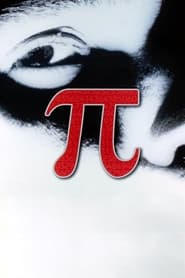
Pi (1998)
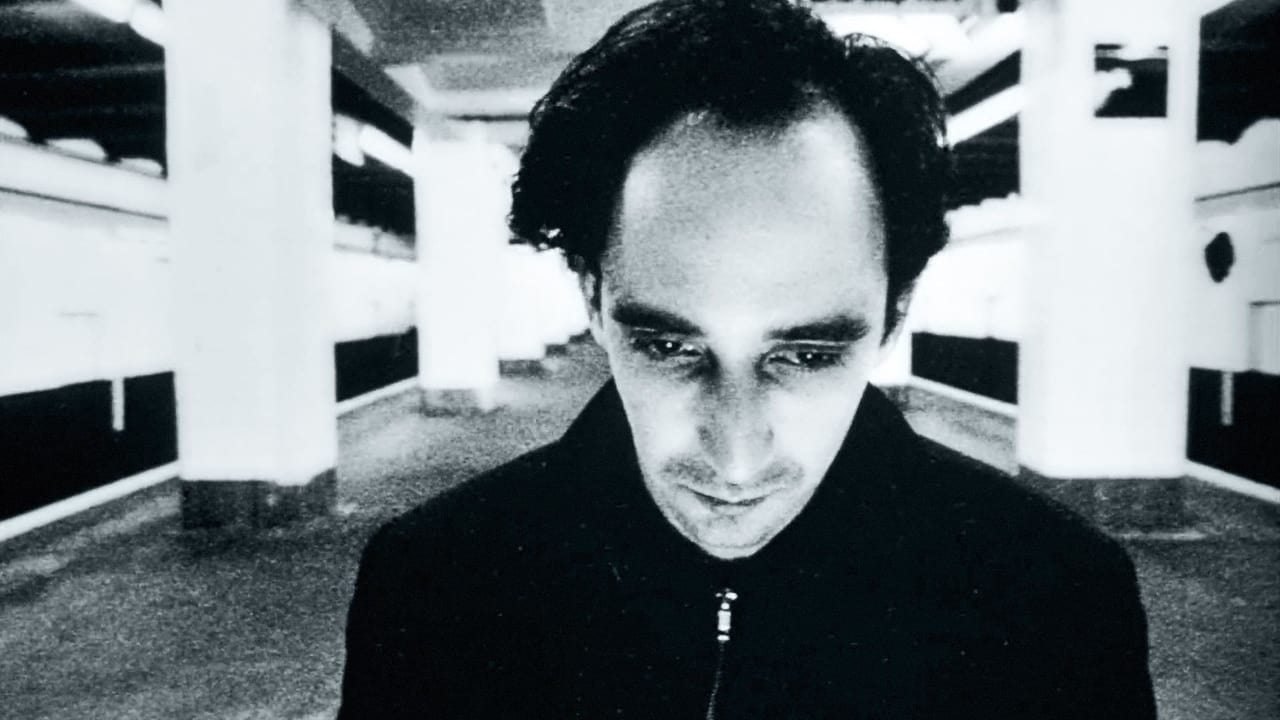
Aronofsky explains making Pi with inexpensive titles, lightweight 16mm cameras, improvised street filming, practical medical effects, and sound design. He discusses the recurring numbers, spirals, flashes, and headache images used to convey Max's experience. He also describes incorporating available New York locations and unplanned events into scenes.
- Duration
- 1h 20m
- Talk coverage
- 94%
- Words
- 12,021
- Speaker
- 1
Commentary density
Highlights
Featured in
Topics
People mentioned
The film
- Director
- Darren Aronofsky
- Cinematographer
- Matthew Libatique
- Writer
- Sean Gullette , Darren Aronofsky
- Editor
- Oren Sarch
- Runtime
- 84 min
- Also on
- OneSheet ↗
- External
- IMDb ↗ TMDB ↗ Find on Amazon ↗
Transcript
12,021 words
Hi, my name is Darren Aronofsky and I'm the writer and director of this film. These titles were created by one of my really good friends from undergraduate college, Jeremy Dawson. He did them for about $2,000 on his Macintosh with some simple software. um and just a lot of ingenuity i remember telling him though when we started i was like listen jeremy if they're good they'll be titles and if they're bad they'll be credits um the concept behind them was to do a a sort of uh headache sequence uh to introduce the headaches that max cone suffers from in a sort of graphic visual form um so this sort of mirrors max's headaches
One of my favorite things about the sequence is in the background are all those numbers that you see sort of all the way in the background are actually numbers of pi continuously pumping by endlessly. And the sequence ends with a flash of brilliant white, which is how all the headache sequences end. And we begin the film.
The shot was actually shot without our makeup artist. She had to leave early and it required some makeup because I had to put blood onto Max Cohen's nose and I was convinced that Ariella was gonna beat me up the next day, but she turned out to be real nice about it. And the voiceover you're hearing was written by me and Sean. It was a collaboration that we started about eight months after the film was finished shot. We didn't spend that much time in pre-production because I knew we would have to create words to fit the images. The nosebleeds come from personal experience. When I moved back to New York City into Hell's Kitchen, there was a lot of steam, heat, and it caused my nasal passages to bleed. And while I was writing Pi, I just decided to give Max nosebleeds. Now we introduce little Jenna. She was created to help create some sympathy for Max Cohen and also to set up his sort of math brilliance. Very quickly with this math problem, we set up his, you know, his incredible skills in math. And the second math problem was actually improvised to have him keep going on . 181818.
One take, I was like, Sean, just keep saying 1-8, 1-8, 1-8, and walk down the stairs the whole way. And when he did it, everyone applauded. It was really great. This shot, the Tai Chi shot, is perhaps my favorite shot in the film. And it was actually improvised. We showed up on set at 8, 9 AM. And there was a bunch of people doing Tai Chi. And I talked to my first AD, Laura Zuckman. I was like, let's shoot it. Let's get them. And they were up for it. So we did it. This sequence is Mac setting up his assumptions and it's basically intercut between shots on him and his POV. We shot him, we over cranked when we shot him to slow him down and we under cranked when we shot his point of view to sort of speed up and create a manic sort of atmosphere around him. If you notice how we shot the trees now,
Remember, and when we come back to the trees, you'll really see a difference with the way we decided to shoot it. And that was sort of one of the few dissolves in the film to connect between the organic and the seemingly inorganic of the stock market. I wanted the audience to quickly sort of try and understand what was going on. in Max's brain in that he was sort of seeing the stock market as an organic system where he could find patterns within it. Sean thought I was out of my mind when we started these ideas but slowly as the film progressed he started to believe them himself. We decided to use an old dot matrix printer and to sort of, you know, fuck with all the different technology like that, a rotary phone, to sort of create this timeless space. We were sort of inspired by Terry Gilliam's Brazil of taking old technology and reinventing it for the present. We didn't have anywhere near his production value, but we tried to learn from a master. That's Joanne Gordon, who is my mom's best friend, helped raise me, and was actually craft services on the film, playing the mean landlady.
humming a pre-1922 tune so that we didn't have to pay royalties on the song because it was pre-copyright. Enter Samya Shoab, who collaborated with me and Sean to help create the role of Devi. We sort of created this whole scene in my sister's apartment over about a month. Here, your samosas. Thanks. Max's hallway is actually Joanne Avadia, the landlady, her apartment building. We shot there all in one day for about a 20-hour day. It was really a nightmare. There was a huge monsoon in Brooklyn that day, and it sort of kept everyone on set, which was a good thing. I'm sorry, I'll put it out. Name's Lenny Meyer? Now we introduce the great Lenny Meyer, played by Ben Shankman, to perfection. Max? Max?
Tell you the truth, while we were shooting Ben's scenes, I had really no clue what was going on in front of the camera. I just couldn't see where his humor was coming from. I just couldn't see it. And I think he actually works one of the best, you know, as far as the supporting actors go. He really, really, you know, is the audience's favorite. And it just shows you that, you know, his subtlety was just really amazing and strong. Right now is a very exciting moment in our history. Maddie's cinematography throughout all the coffee shop scenes, I think, is fantastic. It's almost like looking at one of those old photographs. Behind Lenny is the actual owner of the coffee shop. So Max's headaches begin now. which are these repeating sequences that we try to sort of do repeating cinematic techniques and sound techniques throughout the film. And it always starts with a thumb twitch. That's how many migraine sufferers know headaches are coming on. Sometimes they have a physical expression that a headache is coming. For Max, we decided to go with the twitching thumb, which I think we got out of one of the textbooks. I'm not exactly sure.
It's emphasized by Brian Emrich, our sound designer, who creates different, you know, sound design for different elements of the attacks. All the medical stuff is completely real except for that, our vaccination gun. It was built by a sculptor friend of mine in Brooklyn named Sasha Noe, who put it together from some old parts from his drilling machines. It looks pretty cool though. And that's just a sound effect to bring it alive. And of course, Sean's performance to make it real. So he's still waiting for the pain to come. He knows it's going to come. It hasn't hit him yet, and his nausea is growing in the back of his throat, and it doesn't kick in until there. We call that the vibrator cam, which was just basically shooting with a long lens and shaking the camera viciously. And now the paint is here, and we sort of accompanied it with not only the sound design, but the score as well. All the different elements working together, all the different departments.
And every headache sequence sort of climaxes into a hallucination, a nightmare. And suddenly the pain is gone for Max Cohen. But he's entered a state where it's just pure fear. And this will build into, finally, when he reaches the white void. This is paranoia emerging upon him. hunting him and now he's in the white void and for a moment he has peace before he wakes up with a bloody nose. You can actually watch that scene in the behind the scenes footage. I think there's some footage of us actually filming that. So Max awakes and Marcy Dawson is still on the hunt. He finds the blood. He's sort of in a daze and all he wants to do is get off the phone. How'd you get my address?
Wait a minute. Columbia University, that is. Some people don't catch that. This is a really nice piece of music that Clint wrote that I tried to use a lot through the film. And we tried a lot to repeat lots of shots in the film. A, it's economical, but B, it sort of creates this sort of rhythm. Throughout the film so we have that shot looking down from the camp from above the closet I think it was actually the first shot we shot of the film And now we introduce all ropes and we actually shot all the Saul scenes at My college roommates parents home on the Upper West Side. They're both Upper West Side leftists professors and Their apartment's just filled with books, and it's totally got the right atmosphere for Saul Robeson, who was supposed to be a retired Columbia professor. Originally, Saul was a chess player. Saul's backstory is that he was a Russian mathematician who refused to work for the government and do military work, and was locked up in Siberia.
That's why he's got the prison tattoos. And eventually he was released through Glasnost and came to work at Columbia to continue his research in Pi. He was always searching for some type of pattern or meaning within Pi, but something happened and he stopped his work. And that's what we slowly uncover in the film. But originally we were going to play chess, but Eric Watson, the producer of the film, was like, hey, what about Go? I didn't really know how the game worked, but we decided to go and research it. And we hung out with the Brooklyn Go Club, and I brought the actors there. And there was something really beautiful about the circles of the pieces and the grid. It was very mathematical and geometrical. And I started to meet lots of mathematicians that were sort of fascinated by the game and decided to make it part of the film. The black and white didn't hurt either.
Saul died a little when he stopped research on Pi. It wasn't just a stroke. This scene was used to help set up a little bit of the math for the audience, anyone who didn't know what Pi was, to sort of give them a sense of where Max was coming from and what Saul was all about. And it stars, or I guess it features, One of my favorite character actors in the world, Uncle Stanley Herman. Uncle to me and uncle to most anyone else out there. He's a great actor from Brooklyn who I met when I was working on Los Angeles, who always seems to play the pervert in all my films. And in this film, he has not to be credited as the pervert because on his resume, it's just like the pervert, the pervert, the pervert. So this film... We called him the mustache-less man. In fact, I think in the script it was the mustache man, but then I cast Stanley Herman and made it into the mustache-less man. He's always singing in my films also, so. This scene is supposed to be funny, but I think most people just get creeped out.
This shot was actually grabbed by Chris B. , our first AC, Chris Bierlein, while walking through Chinatown. I grew up with watching those guys throw those birds around. My mom would never buy me one, so I figured the least I could do is put it in a movie. So now Max Cohen is starting to think shapes. And we get into the Lenny Meyer tour. Lenny becomes a significant character in the film. It's no longer repetition that's happening here. The hunt has begun. I love Matty's work here. I love the lighting. Look at Max's hair. It's really great. And Lenny's just great. One eye lit. It's beautiful. It's all numbers. You know that? Yeah, look. The ancient Jews used Hebrews in America. So all the Hebrew as math stuff comes from a personal experience.
When I was 18, I graduated high school, and I went off to Europe to travel around and see the world, young man. And I started off in Israel, and actually started in a kibbutz because I thought it would be free, and I'd be out in the field picking avocados, and it would be really beautiful. And in fact, they stuck me in a plastic factory, and it was just an incredible nightmare. And I was actually working two assembly lines, sort of... Charlie Chaplin of Modern Times and I ran away after two days and was wandering around Jerusalem with a backpack around the Western Wall and if you're an assimilated Jew walking around the Western Wall you quickly get picked up by sort of sects of Hasidim that want you to sort of learn some Torah and they offer you a free room and board and it's actually a great way to see Israel and they sort of tip me off on Jewish mysticism and stuff and
taught me that the whole Hebrew alphabet can be turned into numbers, and it was something that was in the back of my head when I started working on Pi. It wasn't at the forefront. In fact, the whole mystical element of Pi came from a sort of mad sect of Pythagorean monks that were chasing after Max, but guys in brown robes with bald spots didn't quite work for the film, so I can't really remember the moment when I realized that Hasidim would be great, but eventually it just all fit together and it made a lot of sense. And plus, they look great in black and white. Golden ratio, golden spiral. Wow. So all this mad stuff is real stuff. Fibonacci is a real dude, or was a real dude, and the golden spiral is all real. We didn't make it up for the film. It's just a lot of plagiarism from the Bible, from...
math textbooks from Pythagoras, and we just sort of all stuck it together. I think the fiction of the film is in the glue that holds it together, but all the sort of resources are real. And that's just a lot of footage was shot to get that image. And this one coming up, the smoke spinning, we rolled a lot of film to get a nice looking spiral. Especially, you know, you want to get slowed down so you're shooting the film twice or three times as fast with the camera. Mathematics is the language of nature. And so this scene, it's the same assumptions, but Max's commitment has changed. He's excited now. Instead of sort of his rote repetition, he's actually on to something. Um, and although we're not talking about spirals here, um, we didn't really want to mention it right now to be right in people's faces. We wanted, uh, people just sort of to put it together themselves of what was going on. Then we would start talking about the golden spiral, um, later in the second act. This is the last scene of the first act. Um...
And this, of course, the camera was just on sticks, and we just wanted Sean to go all over the place and create some sort of manic energy. He pauses before he presses return because every time he does press return, he makes a deeper commitment into, you know, his insanity or maybe his genius. So every time before he presses return, he thinks, he stops for a moment. This time, however, he happens to hear his next-door neighbors. And Debbie sort of represents... the world, the earth. And she's trying to pull him back and pull him in. But he turns away from it and presses return. And immediately he notices that those picks are wrong. And then suddenly Euclid starts to fall apart on him. Blackout. End of the first act. Euclid predicts AAR at six and a half. AAR hasn't been beneath 40 in 20 years. Explanations for anomaly, human error. Me and Abe Lincoln share the same birthday. So Max tries to reboot the computer and now we sort of introduce his sort of homemade brain
of Euclid. We've been hiding it from the audience and so we wanted to create a little suspense that there was something new going on. It's also our introduction of the drill. The drill sort of, I wanted to sort of place it throughout the film just so the audience would be prepared for the big climax in the third act. So what you're looking at is a very, very simple aluminum frame covered with a sheet of plastic. There's tons of holes in it. There is no vacuum there. It's all done with sound design by the brilliant Brian Emrich. That's my favorite sound effect when the air sort of rushes out. And here we introduce the ants, but I'm not going to talk about the ants for this sort of director commentary. Actually, why not?
remember the ants were one of the last sort of contributions to the script and I think I don't know where the idea came from I was just thinking and one day I walked into the office and I was like Eric Eric he's the producer I was like Eric we need ants we need ants and he was like what are you talking about I was like ants there has to be ants all over Max's apartment he was like well if you deal with it you can have the ants so I went and I bought the ants. He still doesn't know what they mean. So this little voiceover segment was written by Sean. Here we have the tree that I was telling you to look out for if you remember what it looked like in the first act. It was a little bit more contrasty. This we wanted to go for a lot more moody, and we also changed the frame rate. He's moving a lot slower, and the tree itself is moving a lot quicker and a lot more manically.
We tried to sort of use the camera to help mimic what was going on in Max's brain as much as possible. So for anyone that doesn't know what GO is, that's a bad thing that what just happened, the black-white caught a lot of pieces. It sort of sets up where Max is at. And then it spit out this long string of numbers. Never saw anything like it. And then it fries. The whole machine just crashed. You have a printout. Of what? Of the pics, the number. The sequence is suddenly a connection between Saul's and Max's work. Saul is suddenly intrigued by what Max is doing. How many? Probably around 200. Why? Max can't understand why Saul is suddenly so interested. I tried to sort of choreograph the actors' movements right there. And sort of when Max is retreating, Saul's sort of advancing and leaning in. And when suddenly Max is intrigued and advances, Saul sort of retreats. And that...
you know, was just executed really well by the actors. This Archimedes story comes from, I think my dad told it to me first when he was in the bathtub once. I think he sort of told me this whole story about Archimedes and it just sort of stuck with me. My dad's a trained geologist who was a teacher for years and I think that science background is where I got some of my some of my interest in the subject matter in Pi. This was Mark Margolis' improvisation, sticking his pinky into the fishbowl, which I loved. And of course, you know, he improvised, and so we banged him for a close-up. Mark Margolis was actually cast by our casting director, Denise Fitzgerald. She ran into him in a supermarket and told him she had a perfect role for him. And he was like, there are no perfect roles for me. But he came in, read, and once again we cast him on the spot. He was perfect for the role. I thought he actually was too young when I first met him, which is amazing because...
He just really put it on for us, you know. He was able to capture the stroke, the sickness. He's an amazing actor. Here we put in another pill montage, which I call sort of my hip-hop montage. It's a technique I've sort of been interested in exploring since I grew up in... Brooklyn in the mid-80s, I was really a product of hip-hop culture. Matty, too, the DP, was from Queens, and Eric was from Oakland. And, you know, there's always been hip-hop music, rap and hip-hop dance, breakdancing, hip-hop art, graffiti, but hip-hop techniques haven't really quite made it into film. And so the idea was to sort of, you know, just sample different types of shots and create some type of story element out of it. So we sort of wanted this repetition of the film montage through the film and then in the third act the last time we do the hip montage we break it and Just show him not taking the pills and we were hoping there would be a real real release Once again the mustacheless man uncle Stanley Herman who I'm actually gonna hang out with tonight He's uh, he's quite he's quite the crazy guy we we rode the trains for a whole night 12 hours
You know, of course, the graveyard shift because, you know, we didn't want the MTA basically to shoot on New York City subways legally. It cost about, I think, $18,000 a night. So we had to do it in the middle of the night illegally. We would shoot from like 10 p. m. until rush hour the next day. And this one night, Stanley was a great sport. We went out. I think we actually had our breakfast at Nathan's in Coney Island, and it was the first time he'd been out there in about 50 years. And it was really a lot of fun riding those trains late at night. I guess it probably wasn't fun at the time, but in retrospect, it's a blast. Introducing Marcy Dawson, played by Pam Hart. The sun was setting during this scene and we were really rushed. And if you look closely, we mixed film stocks here. That's all plus X and then, actually that's plus X too, but a shot earlier was in tri-X, which has more latitude and let us get more light. And we do have releases from all these people. That was Scott Franklin's dad. He was the associate producer.
This bodega we shot in is actually the bodega beneath the building where me and Eric shared an apartment while filming the film. Actually, while we were there, Matthew Libetique, the DP, who lives in L. A. , as well as Laura Zuckerman, the first AD, and occasionally some other people lived in that apartment. It was five or six filmmakers living there, working 24 hours a day to get the film done. But that bodega we shot, and we used to go in there every night to try and charm the guys who owned the bodega to have them let us shoot there for free, you know, whatever. We probably bought so much toilet paper out of there and orange juices and waters, anything, just so we could start a conversation with the guy. Eventually we ended up shooting during the day, during the day shift, and we had to pay anyway. So Max runs into Lenny Meyer a second time. Or excuse me, a third time. We borrowed that car from some friends in Brooklyn. My mom actually drove to set and the brakes gave out on the Brooklyn Bridge and nearly spilled her into the East River. But she cruised to set and
We actually had a moving shot with that car, and it got cut because there were no brakes. The Tefillin scene, the actors spent a lot of time learning how to do this and to make it realistic. We brought in a bunch of Judaica consultants. In fact, it was sort of spearheaded by Izzy Lifshitz, who not only was an extra in the film and a Judaic consultant, but also one of our consulting producers. He bartered, there's this whole world of barter where people trade stuff. And in fact, there's whole communities of it where he bartered about $10,000 worth of food for us. And because he was an actual Hasidic Jew, all the food was kosher, but it turned out to be pretty good food. Adonai echad. Adonai echad.
No. What's up, Max? That shot was sort of improvised by Matthew Libetique on the street corner. I didn't really know what I was supposed to be shooting, so I was like, yeah, just circle him. And Sean Hay looked paranoid. And both guys did it well, so I got away with it. This is the kitchen of my roommate from college, parents. We shot in the same apartment. Part of the reason I chose to shoot there is because of their beautiful kitchen. Dan, my college roommate, his mom wrote a Chinese cookbook that we used to cook out of all through college. And so she was an incredible cook, and so that was one kitchen that's really well lived in, and that's sort of what I wanted. Come on, it's just a coincidence. There's something else, though. What? You remember those weird stock picks I got? Yesterday's stock pick? Yes. It turns out they were correct. Sean was really great here in... just grabbing the toothpicks off the table and giving himself something to play with really always helps actors but you know just like the way Saul is doing his whole sort of tea routine he gave something for Sean to work with so this is sort of this abstract moment in the film
where we've left Max's subjectivity, but I love the beautiful grid of the go table, and I just really wanted to capitalize on it. We shot that by not turning the go board vertical to the camera. We actually hung the camera from above, looking straight down on the board. We did that so that we could do all the time-lapse go shots that happened later in the film. The possibilities become smaller and smaller. The board does take on order. Soon all the moves are predictable. And so, so? So maybe, even though we're not sophisticated enough to be aware of it, there is a pattern. An order underlying every go game. Maybe that pattern is like the pattern in the stock market. The Torah. This 216 number. This is insanity, Max. Or maybe it's genius. I have to get that number. Hold on. You have to slow down. You're losing it. You have to take a breath. Mark is one of those actors that you don't really have to direct. Sometimes you have to clarify a line in the script, but basically he's so experienced and he's so well trained that...
you know, every choice he makes is just, in general, a better choice than you could have ever directed him towards. That's sort of some of the best actors to work with, are actors who, you know, bring stuff to the table that you never saw within the material. They give you an interpretation or a spin on the material that just sort of, you know, blows you away. And Mark was constantly doing that. In fact, every take, it was great. It was funny, though, before each take, Mark and Sean would begin ready, and Sean would be quiet and meditating on it, and Mark would just sort of mumble underneath his breath all these sort of curse words that would sort of motivate him to sort of get into the scene. I'm sick of you following me. I'm not interested in your money. I'm looking for a way to understand our world. So this scene was a very, very difficult day to shoot. It was the one day I got a Steadicam to shoot, and it was actually one of the first times I've worked with a Steadicam.
And, uh, I really didn't know the operator, and so, um, I was very nervous about where he was gonna stick the, you know, how his framing was gonna be, so I was focused on what he was doing. And, uh, we just didn't get the scene. There's a much longer version of this scene. Marcy has a long speech, but, um, the camera work and my sort of focus on the camera work and not on the actors really sort of damaged the scene. But, uh, you know, thank God for Oren Sarge in the editing room. We were able to sort of, um, cut together what we have and, um, sort of make it into something. When we first showed the microchip, the Ming Mecha chip, I'm not really sure if it's supposed to be comedic or if it's supposed to be serious. I think some people laugh at its simplicity and some people just sort of accept it at face value. Personally, I find it ridiculous, but it's the best we could do on $60,000 US. And luckily, once we do show that, we get right into a sort of serious hardcore scene and, you know, hopefully...
people aren't, you know, stop laughing at me. I think a lot of times I just sort of take things a little bit really close to the edge of what's acceptable and believable, but then afterwards I just, you know, try and put something a little bit, you know, disturbing and audiences generally, you know, forgive. Once again the pain ends and we're in the hallucination part of the sequence. The whole score changes, as well as the sound design, as well as the camera work. This was all shot MOS. We couldn't afford to bring a sound rig down into the depths of New York City, and so we shot a lot of this with a Bolex, which is a very, very simple 16mm camera. Once again, we're using the SnorriCam here to sort of separate him from his environment and sort of capture his insanity and his loneliness. And if you look real close, we're somehow no longer in 4750th Street. It's actually Prospect Park, Brooklyn. And I actually chose this station
probably more for budgetary reasons and aesthetic reasons. I just didn't think I could pull off a brain sequence in a New York City subway in Manhattan. So we went out to Brooklyn and we set up the brain on some stairs at the end of a platform, hoping that, you know, no people would come. But of course, you know, trains kept come rumbling in and passengers would get off and we'd have to grab some newspaper real quick and cover up the brain and cover up the blood and you know have people you know tell people watch their step and but luckily there were no cops and middle of the night I don't know it was probably four o'clock in the morning I was off on one end of the platform and suddenly my first AD was like Darren uh how many more stops to Coney Island and I'm like
Laura, we're not going to Coney Island until tomorrow. That's tomorrow. She's like, how many more stops to Coney Island? I'm like, Laura, what are you doing? And I look at her and she's pointing and I turn around and New York City's finest is standing there staring at the brain. And I'm like, oh shit, we're in trouble. You know, I'm just thinking the camera package is gone. Everything's gone. And the cop just sort of looks for a second and then she nods her head and she walks off. And I was like, man, New York City's finest are the finest. Blown away. And anyway, we finish the shooting, and about three hours later, we head up to the surface, and Eric Watson is up in the van waiting for us. And I tell my producer the whole story. I'm like, Eric, you're not going to believe this. New York City's finest are great, blah, blah, blah. And then he points across the street, and I turn, and I look across the street, and it turns out that Woody Allen is shooting his movie over in Prospect Park. So I imagine that the cop thought that we were just second unit for Woody Allen. So thank you, Woody.
So the brain, this second headache sequence sort of climaxes right here and once again we go into the white void. Smashes into the white void. This time somehow he recovers and he's in Coney Island. The voices, if you look in the credits you may notice that the voice of the transit cop is different than the actual transit cop. Um, you know, sometimes you get an actor with a uniform, and all it is is an actor with a uniform. Nuff said. So here we are in Coney Island. I'm from South Brooklyn. I grew up about two miles away from Coney Island. And the first film I wanted to make actually took place all in Coney Island. And so when I started working on Pi, I was like, somehow I got to get the film down there. And it just sort of fit in perfectly. It was this really, really nice beat in the film that we could sort of chill out for a second with Max Cohen. And actually, look at this shot. This is perhaps the first time Sean looks really good in the film. I think this is, you know, he's suddenly a leading man right there.
And that's King Neptune, who's a character that I've dealt with in several different projects that I've written. King Neptune is actually the living King Neptune who's somehow lost his trident in this world of evil and is searching for it with a metal detector on the beach of Coney Island. And right there, he finds something else. It's not his trident, but it's almost as good. And it intrigues Max and brings him over. The original King Neptune that we cast was a... man by the name of Rabbi A. Levitsky, who is an actual King Neptune. In fact, he's won the King Neptune contest in the Coney Island Mermaid Parade about three, four years in a row. But he couldn't do it, and so last minute we had to cast someone else.
It's a space-time continuum track beneath it, and it's funny, the first time we laid that track in, it just landed everywhere perfectly, and it was just such a beautiful moment. We fought to keep that song in the film. The piano riff is actually Clint's contribution to the scene, and we sort of continue it over the next scene. Where is it? There it is. And... It's just this very beautiful sort of bluesy riff that he put together. More dead ants, we'll get to that in a little bit. So Max goes back and he's for the first time wondering what that weird substance growing on his chips were. And it's funny, there's another thing I learned from my dad, the scientist. When you pull out the, you know, when you find something that you can't identify, you know, first as a scientist, you look at it. then you smell it and then you taste it actually i think first he listens to it right here i love how that piano sort of dropped out just perfectly and it created this moment where he can uh he and the audience could listen to the sound of it remember ariela said sean
She was the makeup and special effects person. Don't taste this stuff. It's dangerous. And I looked at Sean and winked at him, and Sean winked back to me, and I knew he would. It really matters because you really see his saliva making contact with the substance. But that's Sean. Full method. Full method. Fully, deeply committed. It doesn't matter if he's going to get cancer on the tip of his tongue. He goes for it. That's probably the second shot of the film that we ever shot. This shot was improvised, little Jenna and his mom chasing. We just set up the camera. In fact, we didn't have a special lens for that or anything. All that was was a roll of gaffer's tape stuck onto the lens of the camera because we didn't have the right lens, and thus we had a peephole. Max, is everything all right? Do you have any iodine? Did you cut yourself? No, I just needed to stay in a slide. Ah, science.
The pursuit of knowledge. One second. This scene was all about not being touched for us. Max needed something from his neighbor, and it was the only neighbor he knew. It was the quickest way to get it. But his biggest fear, as always, is not to be touched. He's a man cut off from his emotions, from his feelings, from his humanity. And he has no way of reaching out and touching anyone around him, especially this beautiful woman next door.
So this, I guess, you know, the pace starts to pick up. We're starting to approach the inmost cave, as they say in literature. Max, for the first time, rips open some of his cardboard coverings that keeps his windows sealed shut so that, you know, his computers can function without daylight and without the extra heat. That was actually shot through an actual microscope. We shot it at NYU. A friend of mine, Ari Handel, is... a brain neurosurgeon student at NYU. And he got us access to the special microscopes where you could actually screw a bolex right onto a microscope. The microscope actually belongs to my dad. It's an old brass antique microscope. I was thinking about our conversation the other night. I want to help.
And this is a, the music is a reprise, I think they call it, of Clint's opening track, which is the Max Cohen theme song. It's just another take on it, another spin on it. I think it actually comes up four times in the film. And I wanted that sort of repetition of the Max Cohen theme. Best represented geometrically as the golden rectangle. Now we get into the golden ratio. For any of the mathematicians out there, look closely at the formula he just wrote. And if you could figure out what's wrong with it, I'll get you something real nice. But all this is true, the golden ratio stuff. It took a long time to shoot because Sean Gillette, the man who plays Max Cohen, is a, believe it or not, a literature person. Not in any way a math person.
I'll tell you, when we first started the project, he couldn't even write numbers. It was just a mad chicken scrawl. So part of his homework was to sit down and write numbers, digits, number after number, and try and get his numbers legible. So when it came to like charting out stuff with graph paper and a ruler, forget about it. I love that when that kicks in, when Clint's music kicks back in. Hip hop pill montage. inventor, sculptor, naturalist, Italy, 15th century. rediscovered the balance perfect me shot that shot right there was grabbed last minute maddie just wouldn't let the set go we were just about ready to destroy uglies like no we got to grab some more shots we got to grab some more shots let's get some silhouettes and so we grabbed some final last quick shots which made the film pythagoras loved this shape for he found it everywhere in nature the nautilus shell ram's horns whirlpools tornadoes originally i wanted here to have sort of a montage of all the different uh
um, spirals that he, um, sort of talks about, but we didn't have the budget to research and get any sort of spirals, and I tried going to the library and finding stuff. But even the internet didn't give me any help. So if you notice now, his POV has gone from like 18 frames per second to 12 frames per second. We just sped up, um, the speed of... Those shots that we shot on a Bolex walking through the streets of Chinatown. We decided to shoot in Chinatown because in many ways, you know, with Giuliani sort of cleaning up New York, it sort of lost its edge. It's sort of, you know, cyber feeling. We were trying to make the cyberpunk movie. And so we really, the last sort of cyber neighborhood in all of New York is Chinatown.
The other reason is Sean Gallette, the human being, lived down in that neighborhood, and we spent a lot of time down there, knew a lot of cool streets and a lot of corners, and we decided to take advantage of it. This is a little side street off of Mott Street that I spent a lot of time walking up and growing up on as a kid, and I always wanted to shoot there from early on. It's this weird sort of slanted street, which I didn't quite capture because I think any of the wide shots got cut. but there's a really, really good dessert place right on the corner where that guy makes little egg, these little egg things. I don't know what you call them, but they're really slamming. I like this scene a lot because it's all shot from behind, this two shot. We didn't go in for any coverage. Because I wanted to make it feel like this sort of covert drug deal between these two guys, even though they're dealing with computerized versions of the Torah. But I just sort of wanted to make it feel like a drug deal. This whole scene was actually looped afterwards. I just don't think we mic'd it properly. But it works pretty well.
So the missing Farouk scene was supposed to go right in between there, and you could check that out. That's also on the DVD. But now begins, I think, probably my favorite sort of, I don't know, eight, nine minutes of the film. It's all sort of underscored by one long piece of music created by Clint Mansell. It just works really well. It just sort of flows all the way through to the headache scene and climaxes in him capturing the number. And it's one long piece of music that actually builds and it holds together really well. Originally, the scene with Jenna was in a totally different place. A lot of these scenes have been shifted around. The editing room is just like an amazing place to be creative and, you know, just pull stuff from different places and try and link them together into new sequences.
That's my dad over there on the left. Not the bald guy in the foreground, but the guy bending down right there. An actor who was supposed to play that role didn't show up, and I was like, hey, dad, you got a black suit? Stuck some grease in my dad's hair. He looks a little bit like Danny Aiello, don't you think? He's looking for work. I love this sequence. Listen to the sounds.
It's sort of like this weird hip-hop. The door is locking, the door opening, the door closing, the latches. At this point, I think the audience buys the Ming Mecha chip and they're not laughing at me anymore. Happy birthday, Euclid. I love that line by Sean. It's so creepy. We use those old discs on purpose to sort of once again create this retro feel. That's the first page of Genesis right there on the screen and the actual real numerical translation of every word. It was done by our Judaica consultants. This is real software, really used. All the Kabbalah stuff is completely real in the movie. It's not made up. And it's just the tip of the iceberg.
Max knows he's out on a limb here, and so he really takes a beat. He's having a hard time. And meanwhile, next door, you can start to hear Devi and Farouk are at it again. That was some of the best stuff and funnest stuff to record. You know, bringing in two great actors into a, you know, $500 an hour recording studio and have them moan into the mics.
Now this shot that starts right there is handheld by Matty Libetique, one of the great operators and DPs on the planet. But this is literally handheld. He's on a apple box, on a half apple to get as tall. He's a little bit shorter than Sean. So he's standing on a half apple to give him a little bit height. He's actually spinning around in turns. We wrap the cables around him the opposite direction. And I'm actually behind the camera circling the opposite way than Sean is. It was an idea, you know, we actually moved out the central tower of Euclid right to Sean's left over there is where Matty was standing and stuck Matty right there. These Euclid graphics, like all the graphics in the film, were designed by Jeremy Dawson, who designed the titles and the credits. In fact, I've told him to his face that these are... This graphic is my least favorite. The zeros don't quite work for me. And right there in the right, look at that. You see the disc sort of spin by. I love that. That's why I chose that take. Listen closely. And the headache comes again. Pain kicks in.
with that, with the noise, with the score. And this headache sequence was perhaps one of the hardest days to shoot, I think. It was really, really hard, because there was a lot of sort of special effects involved. There was blood, and there was scissors, and there was loss of hair, and there was the smashing mirror. And then there was Sean's performance, which for me is like being really tight and close friends with Sean for years. We were best friends in college. It was hard to see him being in this much pain, even though it was performance. He's such an intense actor that he went really, really far out there. So I'll never forget this day. I remember sitting in the courtyard trying to throw up and trying to kill myself. And my producer, Eric Watson, coming up to me and saying, dude, get back on set. You've got to work. And I was like, I just want to drive off the Brooklyn Bridge. Because every morning we drove.
along the Brooklyn Bridge to get the set and he's like, you can't do that. And I was like, why? And he's like, because if you could have, I would have done it last week. So I just got back on set and started working again. You just got to get through it. If you look closely, you could see the shadow of the camera rig. But don't tell anyone.
I love this shot for Sean getting up and the first couple of takes, that mirror behind him was open and you could see Chris B and Matty holding onto the camera rigs. So finally we're like, hey, let's open up the mirror.
Are those Christmas lights on the wall behind them? I don't think so. Now we're inside Euclid, and Euclid's bugging out. My friend Mark Waters, who's a director, suggested adding the print shot to try and create the suspense. The idea here is that Max doesn't write down the entire number. It's that he writes down part of it. And then suddenly he realizes that it's in his head. I'm not sure how much of that comes across, but it's okay because all we have to accept is that Max has lost it. And that is the end of the second act.
that's the beginning of the third yes hello he's busy right now i'm sorry he was screaming who told you you could put all the locks on the door mr cohen this is uh jay naidu's biggest uh presence on screen He had a lot more scenes. You could see his missing scene, as I said, at the end of the film. You're out of here. I've had it with you. Just look at all this. That's it. Get out! Get out! God damn it, no! You're the one that hit him! Get out! The European version of the film actually has a massive attack track underneath this scene. Are you okay?
It was interesting, Sean did a really great performance thing here. On one take, he took a really mellow get out, like a pleading get out to Devi, and we almost used it, but we didn't want him to break down yet. We wanted him to still be like, you know, rocketing towards his insane breakdown. Look closely at the newspaper. That's an ad for Lance of Percy, 86% accuracy. Only God is perfect. That's the company that Marcy Dawson works for. I'm trying to think where I lifted that ad from, but it's placed throughout the film and sort of hidden in different places. This is Max trying to figure out what the number is, trying to break it down. It was Sean's improvisation. It went pretty well.
In many ways, this is sort of the emotional start of the third act. The music is by Autechre, and it's a track that Suze Zimmerman, our music supervisor, and Eric Watson placed in early, and it just stuck with it. The first time I heard it, it just was so weird and so alien that I was like, what the hell is that? After a while it just grew on me and just became really part of the Pi soundscape and we just had to have it. We decided to cut to Sean completely bald as opposed to him shaving off his hair for the sort of the jump. We thought the jump from hair to bald would just be more intense.
Sean is really deep in it here. I mean, the amazing work he's doing here. You can't pay for a look like that. You gotta work for it. The whole phone in the background is, for any of you film buffs out there, is a lift or an homage to Sergio Leone in Once Upon a Time in America. I love the way he just had the phone ringing for the whole time, and here it's supposed to be Marcy Dawson trying to get back into the game and hunt down Max Cohen, and it just worked real well for us. That cut to silence is... I really enjoy it, and it's supposed to really make the audience experience the subjective experience of Max Cohen going from all this noise the ringing phone and the welling score and the ticker sound to sudden silence and the emphasis of the ant and this is for us where the ant pays off um suddenly it's not like this nuisance anymore and suddenly max sort of accepts it as this um deep you know organic source another form of life another form of chaos and
Max forgets about that and returns back to the ticker and suddenly realizes that he's no longer searching. He's arrived. Where this all originates from is the ant story, which I'll share with you. I wasn't planning to, but I'll share it with you. It actually starts with back in sophomore year of college, me and Sean and a friend of ours, Luke Dawson, who you could see in the in the behind-the-scenes footage later on the DVD. The three of us bought a car from a friend of ours, a mechanic friend for a dollar and two cases of beer, an old 1972 Pontiac Ventura Dose, and he was convinced that we wouldn't make it outside of Hoboken, New Jersey. But three weeks later, we ended up in southern Mexico checking out all different types of Mayan ruins, trying to find the ruins that no one ever goes to.
We actually found one when we were the first tourists to be there in the last two years. And it was this really modest temple along a trading route that the Mayans used. It was four simple temples and a small, maybe a two-acre sort of trading area between the four temples. And we were just sort of sitting there watching the sunset, drinking beers. And suddenly I started to realize that in the center of this plaza with these ants, a whole city of ants, these gigantic 20 or 30, three foot high ant hills with rivers of ants flowing between the different hills and then streams of ants going out into the rainforest to grab supplies and bring it back home. And I had one of those moments where I suddenly saw that here at the center of one of humanity's greatest civilizations, which was extinct and gone,
It was inherited by this great city of ants and the sort of relationship and the levels of life and existence. Those ants didn't give a shit about the Mayans. All they cared about was, you know, if they were going to get their leaves and their fruits and their food. It was one of those moments where, you know, there was no difference between ants and people. Sean and Luke just laughed at me when I started talking about that. So this is the big... fight scene between uh saul and uh max i really love it because when when sean lets lucy uh he's got all this edge and energy it really worked saul meanwhile was swinging that cane into a thousand dollar go board and chipping it and eric was standing on the sidelines uh pulling out his hair actually at that point his hair was gone so
So this is the subway sequence that was actually shot about a month and a half after we finished major production. It wasn't shot by Matty, it was shot by Chris Bierlein, the first AC. The photographer is played by Clint Mansell, who's the composer of the film, and front man for Popolite itself. And if you look closely at Sean, he's actually running kind of lopsided, and that's because the whole time he needed to go to the bathroom and There was no toilets in the MTA, so he was a trooper and he held it in all night. And Clint got really kind of whiny late night. He was really out of shape and running up all those stairs over and over again. Really drew him out. So this is the old Times Square before Giuliani got his hands on it and
Flipped it around into the new Times Square. There was still a little edge left. If you go to Times Square now, you won't find any sort of porno shops left. This was Max's... The film started with this image, actually. The first image I had for Pi, when it wasn't even Pi, when it was called Chip in Your Head, and it was just a shot of Sean standing in front of the mirror with an X-Acto blade digging into his head. That was the only image I had. The other image I had was... that giant ticker tape, which was just put into Times Square, I think, in the mid-90s. And I was like, I really, really, really want to put that image into my film. This was all looped afterwards, you can sort of tell. So the Marcy Dawson chase scene, I sort of like the idea of going from Max doing the chasing to suddenly Max being chased. I like sort of flipping that back to back.
um this was shot at a construction site up on the 50s on the upper west side freezing cold night with no light no equipment and we were exhausted at this point and uh right in this shot coming up right here uh maddie took a really nasty spill while he was running with the camera and uh we were really really scared for a while and we were so intense that maddie thought i had lost my heart and soul so that when i went to maddie and i said to him is it broken He thought I was talking about the camera and not his leg, which kind of upset me that he thought that I was that type of filmmaker, but I was talking about his leg and not the camera. But Matty's leg was okay, and we kept shooting. This is the footbridge over in Tribeca. I just walked there. It's on the way to our office at Truth and Soul, and I just always wanted to shoot there because it was really cool looking. We actually went up there and stuck a lot of pie graffiti
But that wasn't us. That was someone else. We don't know who was responsible for that. Oh, by the way, if you listen carefully, one of the tough guys, the voice track was done by me. The voice sounds exactly the same. What happened is that an actor didn't show up. Once again, the same actor didn't show up. And I tried to have Eric Watson do it, the producer, but Eric is this Zen Buddhist guy from Northern California, and he's just going to be a tough guy. And See, listen closely. That's me. Yeah, that's me. That's my Howard Stern voice telling everyone to sit down. Now, this was actually the coldest night of last winter when we shot this sequence. It was actually only in November, but it turned out to be the coldest night of all winter. It was a really mild winter of 96. But we were freezing. And, I mean, Marcy, thank God it's not a color film because Marcy's lips right here are blue.
But she was a trooper and she held through. I love, I love Sean when he gets angry. As long as he's not screaming at me. Now this scene actually was originally, Max is not saved by the Hasidic Jews straight off, he's saved by Farouk. And if you look closely, that's actually a Jai Naidu with the baseball bat. It's not the Hasidim who are swinging the bat. But we just thought it was too complex to have two people save him at that point. So we ended up just going with the Jews saving him. In the background, you could see the sun was starting to come up. Clearly, it's dark outside there behind Sean's head, but there it's light. You could just see we were using different takes. This was the last scene we shot of the film. It was our final night and it was this really, really tiny, tiny, tiny station wagon. And I'm in the back seat in the sort of area doing recording sound and Matty's sort of in the front seat doing it. It was a real, real tight squeeze. And this brings us into our last sort of dream sequence. I love this sequence because
I really twisted Sean's arm to do it. It was a really, really hard job. The first time, that brain that we destroyed right there that you just saw was actually pretty fresh. It was an actual brain, and it was fine. But this second take right there, that brain was the second take after we destroyed the first brain, and that brain was about five, six days old, and it was one of the most disgusting smelling things ever. Sean refused to do it, and I basically just told him that if he didn't do it, he'd be a wimp and he'd regret it one day. And using my trick psychology, even though Sean knew exactly what the hell was going on, he did it, rose to the occasion, and squashed that brain and smelled like decaying flesh for the rest of the shoot. So this scene is sort of the first climax of the film. It's performed by Steven Perlman, who's one of America's great character actors. It's actually kind of hard to watch right now because we just found out about a week ago that Steven passed away. Really untimely.
He's a very young guy and very energetic at this point. The beard, I know, makes him look older, but he's actually pretty young. Stephen only worked with us for one day, but his professionalism and intensity really helped bring the film to life. It's strange, though, why it was really touching for all of us. The film is not released on video as I speak now and we got a phone call from his agent and she asked for a copy for Steven because they knew he was gonna pass away and he wanted to watch the film before he passed away and so we got in touch with Artisan and as quick as we could we got the tape and sent it off to his hospital room and he actually watched it last Tuesday the day before Yom Kippur with his entire family. It's the last performance he did. And then on Wednesday on the day of Yom Kippur, which is what he's talking about right now in the speech, is when he passed away. He was impure. He would die instantly, and it meant that we would do it. The high priest had one ritual to perform in the Holy of Holies. He had to intone a single
I really like what Sean was doing in the scene. It was a really inspired day. The first half of the day, Sean had hair for the Tefillin scene, and then we shaved it off, and this was the first time he was bald, and I really think that he just got into it, and the performance here is just stunning. I just remember me and Ben Shankman, the guy who plays Lenny Meyer, standing off to the side, just so excited about what Sean was doing with every take. It's the key to the messianic age. It can take us one step closer to the Garden of Eden as the Romans burned the temple... And Ben Shankman himself over there on the left of Stephen just was so on. He actually has some lines in this that were cut that were just absolutely amazing. He was like playing Bobby De Niro as a Hasid. Now watch Sean's eye right here.
I love that moment. Right when he sees God, a little light pops on in his right pupil, and it was purely by accident. Those are the moments you can never, ever prepare for. It just happened for us. The black-and-white reversal stock here is just great. Matty just had a field day with his film stock. It's great to Sean was losing his voice towards the end of the day and I thought it was fine because it was towards the end of the film and it was kind of cool that he was losing his voice and You know, you can really hear it breaking up it just helps with his intensity This was a hard scene to cut it was a hard thing to get out of to figure out how to bend and
how to get Sean to be on top at the end. I spent a lot of time at Plantain Films just by myself, hours upon hours, trying to figure out how to make it work. This was a great moment when Sean says, I've got it, I've got it. I remember I was really happy with what Sean was doing, but I just wanted him to take it to another level. So I told him just to take that line, I've got it, I've got it, and just do it eight, nine times until he like went to, you know, just explore that line, and we only kept two of them, but it was just a beautiful thing watching those sort of eight, nine sort of different takes of I've Got It and seeing where he arrives. It's not for you. I've got it. I've got it. And I understand it. And that's sort of his messianic call, Rabbi I Was Chosen. If you listen all the way in the background, we have a shofar blowing, which is...
The ancient Israelites believed that God's voice was the sound of the shofar, and every time they blow it, they're sort of recreating it. And so I got a shofar player from my temple to come in, and we recorded some of his music. There's the time lapse of the Go footage, which was shot in the Schreckers' apartment. There's Lauren Fox, who was gracious to give us a whole day of work and ended up with only two lines, but she was a very dedicated talent. I remember we were really low on time, and I decided not to cover Sean in that scene. I thought it would be much more interesting to look at a beautiful girl than look at Sean's face. So this scene... is uh we bring it down a bit and sean um max just sort of recollects where his mentor has gone and there's the death note the suicide letter as you will
Some people have asked me if Sean's davening here, which is how I guess I see them pray and I think we discussed that I'm not really sure if we had talked about that But it was more just sort of him trying to deal with all the crazy emotions that are going through his head at this point There that's where I was talking about where the hip-hop montage breaks and for the first time we see the cap come off and the pills go in the hand, but we don't see the finishing of the montage and And I was hoping that audiences, because they were sort of used to seeing the sort of continued hit montage, would have a larger sort of emotional reaction to the fact that it was broken. When you're shooting on a low-budget film, you get one chance to do this. The great destruction of Euclid. You've got to nail it. You've got to pray, especially when you're shooting such a tricky stock as Reversal, that the image is going to come out. And, you know, it's really, you know, faith and...
and just as many precautions as you could take, but you really hope that you get something in the end. You don't really know until you finish it. Now, coming here on the left, watch that tube fly out on the left. That was Ariella yanking it off with a string because I wanted to make sure that we saw all the action. And now we're in the white void. This was, for me... a very, very challenging scene to try and pull off, and for Sean as well. This was one of the last things we shot, and we actually had a big debate for a long time if Sean should do this naked. But we decided it would be too distracting, even though it was probably proper, narratively-wise, that he should be naked. We decided that he should wear his clothes. But it was a very, very tricky sequence to do because the whole time we're sort of
promising God, and of course we couldn't deliver God, but we sort of wanted it sort of presented in some sort of, to give audiences some sense of what Max was experiencing at this point in the film. The score is a lot of different layers there. There's the eternal ohm happening, as well as samples taken from everywhere to try and create some type of godly sort of vision. Max thinks he breaks through to be with Devi, but in reality, the cold, harsh reality, he's alone. Me and Sean debated a lot of these scenes because Sean felt the film ended three, four times, and there are three or four endings for the film, but I think they all play into the different levels of reality that Max has going on in his head. I remember when we shot that scene, it was...
three o'clock in the morning after we destroyed Euclid. And at one point in the shooting, I'm like, hey, whose sneaker is that in the shot? And I looked down and I realized it was my shoe that was in the shot the whole time on my foot. But I was so exhausted, I didn't even realize my foot was in like eight of the 12 takes. It just shows you, you know, you go too far, you just start losing it. It's funny, me and Oren, I remember we debated on how long we should have this burning of the paper shot, and since I'm a notorious pyromaniac, I decided to let it burn, let it burn, hold the shot for a long time. At this point, Max is sort of destroying every sort of remnant of the number, and, you know, some people are wondering if he's hallucinating, and some people are wondering if this was really happening. So people often ask me how we did the drill shot, and my answer is that Sean's a method actor. We did one take and rushed him to the hospital. Luckily, we had ambulances standing by. Literally, this was one take. I won't tell you how it's done.
And then the drill, we sort of wanted to dissolve into the sound of leaves blowing in the wind. Notice how we shot the leaves this time as compared to the other two shots. 24 frames per second. That line was improvised by Jenna. She did it. I loved it. We did it again. We kept it.
Actually, it was funny because while we were shooting this scene, the closing scene of the film, it was the first time it snowed. And you can't really see it, but there are a few drops of snow actually falling through the scene. And that's the first time Max Cohen smiles in the film. Sean nailed it. Really, really amazing.
I always wanted to end the film with little Jenna saying, what's the answer? And having Max not able to give the answer because for the first time he doesn't have the answer. And in many ways, I think that's what Pi is about. It's about the questions. It's about the chaos. It's about the search for order. That's where Max finds beauty. He finds it in the now. He finds it in the world around him. These are the filmmakers that made Pi happen. It's not only the cast, it's not only the crew, it's not only the investors, it's everyone. It really was a family affair to bring it to the screen. And finally, thank you all for watching and listening. I hope it wasn't too much of a bore. Enjoy. Peace.
Keep exploring
Other commentaries on related filmmaking topics
-
8 shared topics
Mission Impossible Dead Reckoning Part One (2023)
Christopher McQuarrie, Eddie Hamilton
-
8 shared topics
Mission: Impossible - Fallout (2018)
Tom Cruise, Christopher McQuarrie
-
8 shared topics
Les Misérables (2012)
Tom Hooper
-
6 shared topics
Exotica (1994)
Atom Egoyan, Mychael Danna
-
8 shared topics
The Lord of the Rings The Return of the King (2003)
Peter Jackson, Fran Walsh, Philippa Boyens
-
7 shared topics
The Mummy Returns (2001)
Stephen Sommers, Bob Ducsay