multi
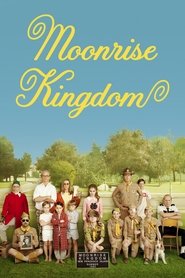
Moonrise Kingdom (2012)
1 more contributors
Anderson, Peter Becker, Roman Coppola, Jake Ryan, Bill Murray, Edward Norton, and Jason Schwartzman discuss the Khaki Scouts, the Rhode Island shoot, and Alexandre Desplat's Benjamin Britten-influenced score. They also describe Bill Murray and Frances McDormand's roles as the married parents and compare memories of the production in a group conversation.
- Duration
- 1h 33m
- Talk coverage
- 89%
- Words
- 13,685
- Speakers
- 7
Commentary density
Highlights
Featured in
Topics
People mentioned
The film
- Director
- Wes Anderson
- Cinematographer
- Robert D. Yeoman
- Writer
- Wes Anderson , Roman Coppola
- Editor
- Andrew Weisblum
- Runtime
- 94 min
- Also on
- OneSheet ↗ OverBlack ↗
- External
- IMDb ↗ TMDB ↗ Find on Amazon ↗
Transcript
13,685 words · 23 flagged as film dialogue
I'm Jake Ryan. Welcome to the Criterion Collection special edition of Moonrise Kingdom. I'm here with the director of the movie, Wes Anderson, and the director of the Criterion Collection itself, Peter Becker. Wes, Peter, thank you for joining me.
Thank you for having us. - [Becker] It's good to be here. Now we should just roll it? - [Becker] Sure. Okay, good. So that last one, I think, is the best one to use. That sounded good. Okay. So we're gonna talk about this movie now. We could begin with these logos. This is our producer, Steven Rales, his company's Indian Paintbrush, which I think is a type of wildflower.
I think that paint is like dark red.
A very appropriate logo for this film, I think.
That's a needlepoint, by the way. You'll see over the course of the movie, there's many little needlepoint pictures of some of our main locations.
Oh, hey, it's me.
This is you, Jake. - [Ryan] Is that me? That's you some years ago. - [Ryan] Yeah. Peter, can I ask a question? - [Becker] Yeah. When was the last time you did the commentary interview for one of the Criterion Collection's ones?
You're putting me right on the spot at the beginning. I... A long time.
Yes. You know, I think we could say the Criterion Collection, you guys invented the concept of these DVD commentaries as Laserdisc commentaries.
We're not talking about that. - [Anderson] Okay, we won't focus on that. No, it's not about us. - [Anderson] Okay.
I have a question for you, Wes. - [Anderson] Yes, please. What made you pick me to be Lionel?
It's a good opening question. Jake is referring to the fact that he stars in the movie in the role of Lionel, I think the eldest younger brother of the character of Susie. Jake, I don't really know the answer to that question. And we've worked together since this movie on a number of occasions. We did a commercial with robots, which you made up all the dialogue for.
Which was pretty epic, I've got to admit.
Quite epic. And then you did some work for us on the Fantastic Mr. Fox Criterion DVD. And of course we have another thing that's on this special edition, the Cousin Ben-- What is it called?
The Cousin Ben Scout Troop Screening, I think.
Yes, that sounds about right.
I think it would be good now for Jake to give us his third line.
What is his third line?
Let's bring it back to Moonrise Kingdom. So when you start a film, and I mean, the opening of a film, in the script and all that, what are you thinking about when you establish a scene?
Well, in the case of this one, sometimes the beginning isn't the thing you're coming up with first, in my experience. But with this movie, it was. With this, I had an idea that I wanted to do a movie about young people, an island like this, and this opening scene, which is the children in their house during a rainstorm where they're stuck inside, and listening to this record that I happened to know that was a record I liked, Benjamin Britten.
So Benjamin Britten was allowed to do a lot of work back there, just a second ago.
I was in this play when I was a kid, Noye's Fludde, which he wrote to be performed by amateur groups, church groups, and it's written to be performed in a church. And I was in it when I was-- My older brother and I were in it... when we were, you know, 10, 8, 10, something like that. And so that was the reason why I was thinking about Britten in the first place with this. And as we went along, we just found more and more Benjamin Britten that we wanted to include in the movie.
So you didn't think, "I want to make a camp movie?"
I didn't think I wanted to make a camp movie right off the bat.
And this environment that you were visualizing, some place and kids and rainstorms and whatever, did you have any experience of such a place or was this a pure fantasy for you?
Well, there is an island that I thought-- That was part of the inspiration for this setting. It's called Naushon. And so this is our-- We ended up combining things from many different places. We filmed the movie in Rhode Island. And this house, for instance, is a combination of many different houses, a place called Clingstone that's built on a rock in Narragansett Bay, and a house on Cumberland Island in Georgia that we visited. And there was another house that's in the, what do you call it, the Thousand Islands? Is that what they're called? - [Becker] It's a dressing. What's on the St. Lawrence River or the Lawrence River?
Yeah, maybe that is right.
We'll fact-check ourselves on this. It was a very nice small, small island with one house on it. Anyway, the set is a combination of all those things and Naushon.
I remember that.
Why don't we see if we can get Edward?
Yeah, let's try him. Your call has been forwarded... Again? ... message system. Nine, six--
Is that--? We probably shouldn't put Edward's home number on the commentary.
They'll edit it out. - [Anderson] Note to Christopher. Do you think we should keep trying Edward, or should we get on with it?
Let's roll some movie for a little while. Let's watch some movie. You said there's special effects all through this. Any examples of that in this film?
Yeah, in fact, right here, you'll see it says "next." The "next" is-- We added later. On this table, all this scattered stuff in front of him, we put in afterwards. It was Andy Weisblum's idea to make the table dirtier. On the other hand, this, all we did is remove the support cables. That's a real treehouse we built for this shot.
So the only thing that looks like a special effect isn't.
Exactly. The thing I love working with digital effects and things is compositing things. It's the ability we now have to take something and replace it, or reposition it, or change text, or modify things in the frame that are absolutely indistinguishable from if we had filmed it that way. All the time we rewrite text and it disappears. But that's a different kind of effects work, I guess. You know, it's often the signage. Probably, I would say, 80% of the shots in the movie have some kind of visual effect. And that all happened in postproduction.
Hmm. Interesting. - [Becker] Interesting. To what degree do you think you might have been driven partly by the desire to put an adult Edward Norton in a scout uniform?
Well, you know, Edward is an interesting one because first, Edward does seem like he could have been in a Norman Rockwell painting. He looks like he could be in that world. And second, Edward is-- Would be-- I don't think Edward did scouting, but Edward could, I expect, pass the tests required for an Eagle Scout, handily, right now. Should we try Edward?
Let's take a call.
Hello? - [Ryan] Hello, Edward? Hi, it's me, Jake, from Moonrise Kingdom. How are you? - I'm doing great, thanks. How are you? - Good.
Hi, Edward. - [Becker] Hi, Edward. Do you remember Jake? He plays Lionel, the oldest of the little brothers.
Ah, yes. I wasn't warmer because he's not a khaki scout.
Edward, we're here doing the commentary recording for the Moonrise Kingdom. Peter-- And we've got Peter Becker here. Peter, do you want to ask some questions that Edward, or Edward and I together, can chime in on?
Well, I think, you know, one of the things that Wes had said about you, Edward, is that you're a very capable outdoorsman. Had you ever been a scout or any of those things yourself? I was a Cub Scout. I never was a true Boy Scout.
Do you remember what rank you got on the Cub Scouts? I think they had Bobcat and Wolf. I don't remember. I seem to remember having at least three patches that were in like a - [Anderson] Diamond pattern. Yeah, diamond pattern. I don't know that I ever completed the bottom of the diamond, whatever, eagle, maybe it was eagle. But I do remember getting an honorable mention for my balsam wood sailboat that was painted as an orca.
So you guys work hard though, right? I mean, I've seen the behind-the-scenes footage stuff, and you look like you work with a pretty-- You know, you like a tight, small set, you know, and you seem like you get-- You get a lot of work done. - [Anderson] When we're shooting? Yeah. - No, you know, I think that Moonrise-- I think that Moonrise as an experience making a movie was really actually pretty unique in my experience, only in that-- Because it was both a necessity and a choice on Wes's part to try to make the film in a very efficient, very stripped down way, unadorned by a lot of the kind of carrying costs of, you know, Wes really said, like, "Look, we're gonna do this in a very-- In a way that feels-- It felt more like being in a repertory company. You know, it was like we were living in a house together. You got in costume at home, did your own hair and makeup. There weren't any trailers. They had some tents, you know, for people to--
Yeah. And by tents, by tents, we mean scout tents. Yeah. Scout tents or little open-sided things. The tents are interesting because we used one scale of tent for the interior and a different scale for the exterior, which is sort of the Sergio Leone system. At one point, there's hundreds of tents in their other scout camp, which are actually tiny tents. We use a bit of forced perspective.
That is really cool. - Yeah.
So, Edward, before you came on, Wes was saying that he had wanted to work with you for a long time and all that. Wes, when you wrote the role, did you have Edward in mind?
With this movie, I didn't have any actors in mind. I only thought about the characters. It was only once we had a script that I started thinking, "Okay, who are these guys?" But Edward was certainly the top of the list for our character that he played. What I'm curious about is when I read Moonrise Kingdom, I was really... I loved it, and I was delighted by Scoutmaster Ward because I... I loved being a camp counselor, and the pleasant surprise to me was that Wes somehow saw that quality in me. 'Cause we had met, I guess, but it's not like we had hung out and spent a lot of time talking, and it's not as though a lot of what I had done up to that point would have led a person to see the inner Scoutmaster Ward in me. So I was sort of curious why-- Is it American History X? When you become a good guy in American History X, that really is something that I can relate to because he's a leader. You know, it's the dark side. And the other one is, your character-- Is he called Holden? --in Everyone Says I Love You?
That's right, yeah.
This character, he does seem like he could be like the guy in the Salinger story where he takes out his troop. Does he have a scout troop in that? There's that story, The Laughing Man. - [Norton] The Laughing Man, yeah. He's the summer camp-- - [Anderson] He's the summer camp guy. And then, also, the thing I mentioned, I always thought Edward did look like somebody who might have posed for Norman Rockwell at some point along the way, and particularly the way Edward gets his hair. Edward had his hair in exact old-fashioned barbershop style in the movie that was, you know, in the right vein of Americana. Yeah, you wouldn't find Clooney in a Rockwell.
No. No, it's just not the right blend. But there's also certain things that when you read a script, I always find-- Sometimes I have the experience you're reading something, you like it, it's good, and then you read a single line by a character and you say-- I can't explain it. There was a couple of things in Moonrise, like, you were reading along, it was cute, it was whimsical, it was things-- And I remember being really struck by the scene where Bill and Frances are in the bed, and they say, "We're all they've got," and the father says, "It's not enough." And when you're reading a script, like, those are very small lines and it's very easy reading things fast to go past things like that. And I remember flipping back and going: "Wait a second, that's a really different color underneath this." And then once you realize that there's an emotion underneath the surface of something like that, it changes the way you look at the whole piece because you realize there's something cooking under here that's actually, you know, deeper than the kind of fun of the surfaces of it. And I like it when you hit something like that and it all comes together in one line.
And I had that experience on reading that one. They did a good one when they did that scene too.
That actually opens up the question that I was gonna ask. You know, Wes, you're obviously known for having a very controlled aesthetic approach that nothing is on-screen by accident. And you can feel it. When you're in a Wes Anderson film, you can feel it. You can stop your frame. And there's some filmmakers you can stop on a frame, you go, "I know who made that." And Edward, as an actor, what is it like to come into that space? Is there freedom in that? I would call it freedom in bondage. No, I think it's great. I actually really like it. Look, there's experiences you have that are very much about discovery. Sometimes people paint very real armatures of scenes, and as actors you try to discover something, and that's a very difficult kind of work in its own right and it's something different. I find whether it's Wes or someone like Fincher, or people who have very specific visions, I find it very comforting because you move into a different gear where you're fulfilling, like, an incarnation of a very specific character idea.
There's a lot less uncertainty and you're able to-- Just sort of use the instrument and trust that what you're doing is bringing the instrument of your ability to manifest a character into the service of something very specific. And that specificity is great. It's like having a lot of your work done for you. And I find that very relaxing, ironically.
Yeah. And... Well, these things we shot during the preproduction period. Well, that means because you haven't actually called it day one of photography. So, what happens often is too many people want to be there. The more we can keep that size of an operation, the more fun it is to me. Because I've done some movies where it was very, very large-scale production and I don't enjoy it as much. And it's just-- Things get bogged down to me.
Does the decision to shoot 16 mm in any way relate to that, or is that purely a decision that has to be made?
No, it relates to that, yeah. - [Becker] Can we talk about that? Well, the cameras we had, we used these Aaton cameras, which are Swiss, I think, and one very small camera in particular, the A-Minima, it's called. I mean, these are now all kind of, even now, these are sort of obsolete. But the A-Minimas, I think, were developed with the input of Jean-Luc Godard. And maybe they weren't finished in time for Godard to want to use them anymore. But I believe they come out of a collaborative process that was happening with the guy who owns Aatan. The way these cameras are operated, you don't put them on your shoulder, these little ones, they're underslung. You know, you hold them in your hand like a video camera. You hold them at chest level or even waist level, and you look down through the top of them like a Rolleiflex. Rolodex is another thing. And this was very good because many of the characters in our movie were short. They were 12-year-olds or younger, and it's hard to handhold scenes with someone who's down below you like that. But with this, it was at their eye level. We didn't do the whole movie with these cameras, but we used the Aaton system and it was great.
And also, the slow-stock film that we used-- Slow-- The slow-speed Kodak film that we were using, in 16 mm, looks very, very close, almost identical to the fast 35 mm stock. And since we now do the transfers digitally, there's not like a blow-up where you get extra grain. It can look very-- You can get the real feeling of 16 mm, and you don't feel like you're kind of compromising it as you make it into a bigger projection. So anyway-- And that was all part of what went into the-- One aside, when you look at one of the little handheld films I shot on Moonrise, we're about to all get on a boat and go out. There's a moment at which Fran McDormand realizes that the boat is taking on some water, and she starts saying, "We're taking on water, we're taking on water. Does that matter?" And then Nate, our first AD, starts telling people to get out of the boat and try to sort it out. If you watch Wes in that moment, he's not only unconcerned about the safety of the children on the boat or anything like that, he immediately uses it as an opportunity to throw more crew off.
As soon as he realizes, you can literally see the moment that a light bulb goes off in his brain and he realizes, "I now have a rationale for getting rid of more people." And he immediately starts saying, "Okay, so who can we lose?" Who do we not need? - Let's-- Yeah.
It's...
Oh, where are you, Edward? I'm in Los Angeles. - [Ryan] Oh, cool. How's the weather? It's actually very gray and chilly. - [Ryan] Oh. Same here.
I'm being told that we have schedule considerations.
Okay, so we'll go back. - [Becker] Jason's standing by. We'll call him soon. Because we also have Bill at 3. We better get these guys, then. I need to jump out to the bathroom. Edward, when are you coming back? - Saturday. Saturday, okay, great, great, great. Okay, so maybe I'll see you over the weekend. Thanks, Edward. - See you, guys. Thanks.
Thank you for calling American Zoetrope. Please hold on while I try that extension.
Hello?
Hello, Roman? - Yes. It's me, Jake. Hi. - Hi, Jake. How are you?
Remember, Jake plays Lionel. - Yes, yes, yes. Jake is hosting this commentary recording session. Fantastic. Any question for Roman, Jake?
Yeah,
let's go
to the mailbag.
Oh, yes, we have some questions from... Jake, you want to just read one of these?
This is from Ryan Angle from Mesa, Arizona. "How did you choose the name of the movie, Moonrise Kingdom? And were there other working titles you brainstormed before you picked this one?" Well, I remember where we were 'cause we were on a little grassy - [Anderson] Knoll. Knoll of this place. And I remember we knew that it suddenly clicked at the 3. 15-mile inlet, whatever they called it would be the title. And then I remember, "Moonrise, moon, moon." And we were just trying to think of names that evoked the feeling of this kind of private, magical place.
Yes, we had the idea that the real place where they're going was 3. 25-- Mile 3. 25, tidal inlet, and that they were gonna invent their own name of the place. And Moonrise, I remember, is-- I had seen this movie directed by Frank Borzage called Moonrise, which is a strange word. You don't often hear the word "moonrise." And that was just one little aspect of it we can share with Ryan.
It's from C. Merton, Huntington Beach, California. "What informs your creative process in the writing-slash-preproduction phase? And how long do you think you let an idea kernel gestate before diving in? To wit, do you like to freely flow outward and then go back and edit, or do you like to surround yourself with research as you go along?"
I'll be right back.
I guess, probably freely flow. I think, just from my perspective, there's not so much research comparatively to other filmmakers. I've seen their process where they're often really gathering a lot of visual imagery and stuff. But Wes always likes to watch movies, just as a matter of his course in his life. And those movies often will have some... relationship to what's being worked on, even if it doesn't seem like it at all.
But I would say Moonrise Kingdom is a little more... The research for me and Roman, I think, was, "What was it like when we were 12?" Yeah, no, it was recalling those sensations and, you know, those memories of being a kid. And so, yeah, it was just kind of reaching back into your experience well, and not so much what happened, but also what we kind of wished would happen. You know, if you had met a girl and you could run off and have this adventure, you know. But there was a girl who I had the biggest crush on in fourth grade, and she passed me a note once after school. And when I opened the note, it says, "I think you're cute. Call me." And itjust-- Thinking of it, I get goose pimples now. But that's kind of-- And I did call her and I kind of choked. I didn't have anything interesting to ask her or to say. But anyway, I kind of wish that we would have run off together in this way. So we get to do it in the movie. Jake, did you have a comment about that?
Well, the thing that you could do, but you're not man enough to do it.
Jake says the thing you could do, but you're not man enough to do. You're not man enough yet when you're 1 1. Have you been in that position, Jake? Where you felt the thing you could do, but weren't man enough to do it?
Well, recently I played a piano, a six-page piano piece with another person in front of, like, a whole school of adults.
Well, when you say that, I wonder if we should go to the piano. Sure. I'm okay with that. - [Anderson] Let's-- Let's do it. We happen to have a piano here in the recording studio. So Jake is just going to play a brief-- What are you gonna play Jake?
I think I'm going to play "Sonata No. 1 in C" by Wolfgang Amadeus Mozart.
"Sonata No. 1 in C" by Wolfgang Amadeus Mozart. Go.
And it goes on from there.
Excellent. - Bravo. I hope that's free-flowing enough for C. Merton of Huntington Beach. Okay.
We should talk about the casting of the two leads.
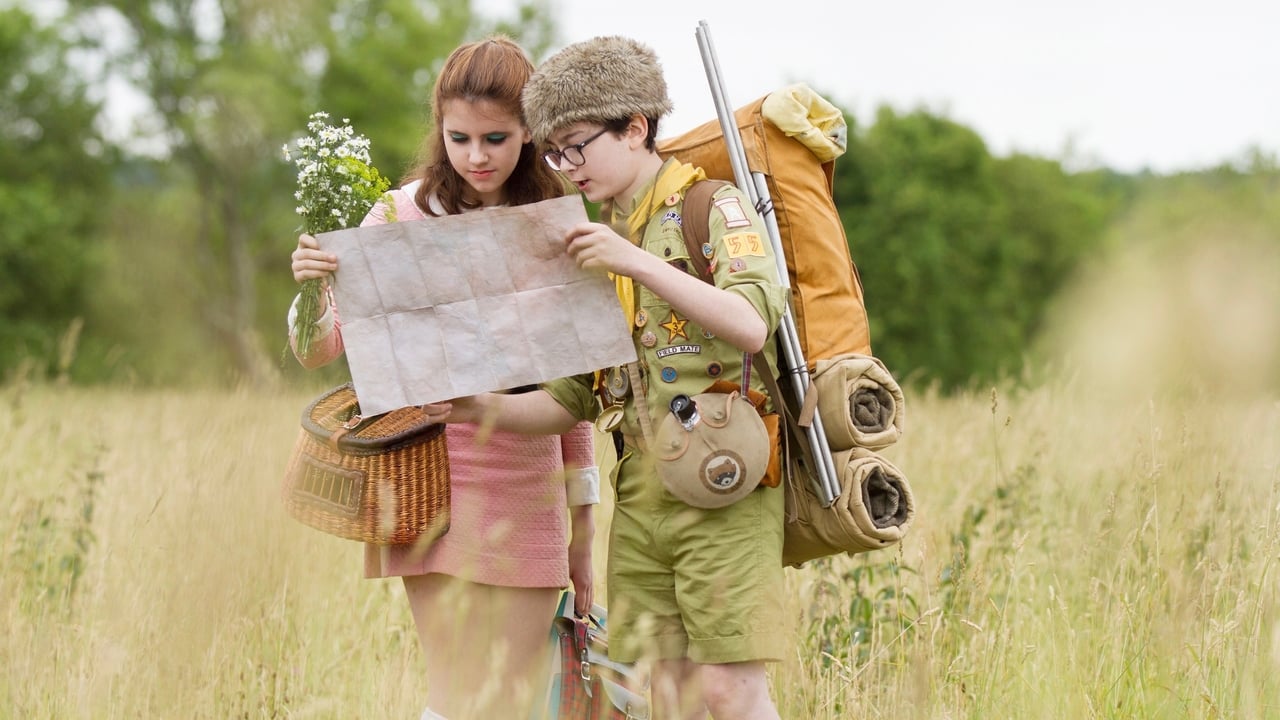
So it was very clear when Roman and I had finished this script that the crucial thing was going to be who plays Sam and who plays Suzy, our two main characters. And that's really-- There's no movie if they aren't great. Well, we got our casting director, Doug Aibel, on very, very early, and we spent, I want to say, six or eight months or something searching for them. And along the way, we picked up all our scouts. There were lots of people auditioning, and we'd say, "Well, this one's still not quite the right one for Sam, but this is a great one. This is a kid at this moment in his life who's gonna be very interesting." And so by the time we did find the two of them, which was quite late in the game, we had all the other kids too. Jared, I remember, in his audition, was just... It wasn't his audition, it was him that really was entertaining. And Kara, in her audition, she played this scene as if she was making it up completely herself and just seemed completely authentic. And they were great to work with. They were very invested in the movie.
And sometimes when you work with very young people, they learn the script and they know it better than anybody on the set. And they know everybody's lines. And they brought some special kind of emotion that only they know that has to do with they're really that age. They're really like these people. They understand them in a way we can only try to recall. If the movie works for them, it works because of these guys. Yeah, I remember seeing the tests, and Jared just stood out. I remember thinking, you know, he had such a different energy than I expected in our lead role 'cause we had sort of described him with his corncob pipe and kind of a little bit of a JD, and he had just this other quality, but I couldn't totally see it at first. But then, of course, it just couldn't have been better. It was just so right for it. But it wasn't really written in the way that he portrayed it. At least my mind's eye didn't see someone like Jared, but he's so one of a kind, it's hard to even imagine that till you meet him.
Yeah, also I remember when we were casting Rushmore, Jason was not really what we had in mind. We had in mind somebody that I had always said-- Owen and I had this description of a young Mick Jagger, which Jason is a completely different-- Jason's like a young Dustin Hoffman.
That's actually-- That's very good.
Well, I think-- - [Becker] So here's another-- Did you have lunch, Roman? - I haven't. Are you hungry? - I am.
So are we. - [Anderson] We didn't have lunch either. We ate cookies and tortilla chips.
What's your availability, Roman? Are you around for a while? I'm around. There's little things I have to do, but I'll make myself available. Okay. So just for the next hour and a half or so, we might reappear. Sounds good. I'll just stand by. Okay. - [Becker] Okay. Bye.
Yeah, let's not speak... - [Becker] This is Bill.
Hold on. Hello? - [Ryan] It's Jake, from Moonrise Kingdom.
No, Lionel. - [Ryan] Lionel, from Moonrise Kingdom. He's your son, anyway. How are you? It's good to hear you. I haven't seen you in forever. What have you been doing?
Nothing much. I'm commentating for Moonrise Kingdom right now. You're commentating? Gee, I never thought that would happen to you. I never thought of it either.
Jake is the host of this recording session. Oh. Well, thank you. I'm glad you're doing a little bit more social work. You know, you gotta get out there. - [Ryan] Yeah. So, Bill, where are we reaching you?
Yeah, where is your current location at? I'm in a recording studio in Charleston, South Carolina.
Oh, wow. - [Ryan] Cool. How's the weather there? Well, it's about 85, humid. It's warm. It's pretty. - Yeah, out here, it's kind of chilly. The sky is gray. Yeah. Where are you, Norway? - [chuckles] No, we're at New York City. Well, it's great down here. I was just doing some recording for a live-action animated movie called The Jungle Book. - Cool. Who do you play? - I play the bear, Baloo.
That's a good role. - [Anderson] Yeah. Yeah, we've seen him sing. Does he walk like you, talk like you? I think so. He just-- All he requires is the bare necessities. "The Bare Necessities."
♪ Look for the bare necessities ♪
We're gonna have to clear it if you sing it.
Yeah, don't sing it if you can't clear it.
So let's ask Bill. Peter, do you have a question for Bill about the Moonrise Kingdom movie?
Sure. Wes tells me that he's obviously a very controlling director in many ways. In effect, is very controlled, but we also know him to be very improvisational in other ways that might not be visible to those people who only see the finished product, but changing things as he goes along. You, as an actor, fitting into his world, how much do you think about what he wants and how much do you feel like you have to do what you're gonna do? Well, I only think about what he wants to do in the beginning, and if it doesn't work, I do something else. But it generally works, and there's always something that's sort of not accounted for. 'Cause writing a script is two-dimensional, and shooting a script is three-dimensional, and acting is three-dimensional. So there's sometimes little things that aren't taken into account, you know, just little things. And that's where I try not to get stuck on doing exactly what's in the script because sometimes you miss a moment to do something. I don't contribute so much, but sometimes you find something that wasn't there, that wasn't noted, and you feel worthwhile. That's-- Right?
Yeah, Bill and I have done, I think, seven movies together. The first one we did together is Rushmore, a long time ago. But I find, often, there are various techniques, or sometimes you just have things you go to for how to deal with playing a scene. For me, as a director, or for an actor, how do you get ready for it? What are you gonna do that's gonna make you in the moment? And I learned a lot of the things that I just automatically refer to from Bill over the years. So even as a kind of-- A director is often just sort of a spectator while the actors are doing a scene. But I always refer to, often refer to, which is feeling your feet on the ground, feeling your weight, feeling connected. Because when you're an actor, you know, you're pretending, you're imagining, and sometimes you need to say, "Okay, let me just be conscious of reality." I don't know. Can you take it from there? You know, when you're imagining too much, everything gets up in your brain, everything gets up in your head, and you don't want everything there. It has to be grounded.
In a lot of these movies, I've had to work with younger, smaller people, and you don't want to be giving directing lessons or acting lessons or anything, butjust things that can help are worthwhile. And I like to suggest-- I say, "How much do you weigh?" And the kid will say, "Well, I weigh 97," you know, or whatever. Or a girl will say, "Well, you're not supposed to ask a girl, but I weigh 1 16." I say, "Well, let's just feel 1 16 pounds in your feet. Just feel that weight in your feet. And I'll try to feel my weight in my feet, and just try to feel that weight in your feet." And then you can start all over again. You know, once you're set in the bottom, once you're grounded in the bottom, then everything sort of reconnects and you can... you know, head after what you need to do, whether you need to say something or walk a certain direction, take a certain number of steps, hand something over, and it puts you in a real rhythm. It puts your body in the correct space, and you sort of-- You know, you sort of come back to natural life rhythm, easier to speak and move.
In this movie, there are two of your costars-- You play an attorney. You're married to Frances McDormand. That was my first casting thought of this movie was, "Boy, I would like to have Bill and Fran together, to have them married in this story." And the other interesting relationship I liked was Bill and Bruce Willis, who plays Captain Sharp. Maybe, Bill, you could talk about these two collaborators. Well, the scenes with Frances were... that was like dancing. That was like dancing at night after a few glasses of champagne. It was really-- We were pleasing each other and moving together and doing things effortlessly and exchanging, matching each other's energy and progressions. I think the scene I did, the bed scene I did with Frances, where we're in separate single beds, was one of my favorite scenes I've ever done in the movies. I really enjoyed it. I could have done it all day long. So we just kept doing it. I don't think anyone wanted it to stop. It was really, really a delight. She's really, really talented. Now, with Bruce, that was my first time working with Bruce, although I have some history with Bruce, knowing him.
And the first timers in all of Wes's movies have a difficulty with the sort of precision, the insistence on a very specific script, you know. And it's a hard thing to wrap your head around. And Bruce is a kind of a natural, he doesn't necessarily, in most of his movies, he just sort of lets it go, he feels a certain way and he lets it go. Precision dialogue was never something that was too demanded because it wasn't his natural way, and he was able to do it in his own words most of the time. So it was a little different for Bruce doing that in Wes's because it's sort of-- It's very mathematical. It doesn't bounce the same way. So he needs it to be a certain way, and you have to really get on yourself to get the lines right. And there are tongue twisters. There's lots and lots of tongue twisters that are hard to say. I just remember being in a car and doing some car scenes, and just enjoying the heck out of it and saying, "Let's do some more of this." We did many, many scenes of it. Many, many takes. And it was always interesting. I think we were both enjoying it.
I really enjoyed being on the other side, you know, just hearing him go. And he has his own funny timing that's, you know, unique. And it was fun to play. "Okay, let's see." And we did just wonderful stuff. He's really wonderful. But I really had fun with it. I really enjoyed it. And when people are giving, you're just like, "Okay, I like that. Try this one." And we just kept throwing them at each other and really having a good time. I've worked with him again since. We really had a wonderful time working on Moonrise Kingdom. And I think I told him when I saw the film that when I saw the ending shot, the climax shot on the bell tower, I laughed. That was the biggest, hardest laugh I've had in movie history. That's the biggest one I've ever seen. It made me laugh so hard when I saw that. Bruce holding on to the kid. It really killed me.
We had a great time working with him. And I did have this idea. I would love to have someone who was-- This is a lonely, solitary policeman. And maybe one inspiration is Roy Scheider's character in Jaws on this island. But I had this thought, "I would love to have somebody who you really believe 100% is the police." And there's nobody who you believe more is the police than Bruce Willis. I particularly loved him in Pulp Fiction, and obviously so many other things. So we were lucky enough to lure him into this one.
But there's also something nice about it. To me, it also takes him back to where-- We first met Bruce Willis, really, in Moonlighting.
We met him in Moonlighting. - [Becker] He's a comic actor. In Moonlighting, I think-- I mean, I've always heard that Bruce really improvised that role very significantly.
That's one of the things that's so great about seeing him come back into this-- Out of his action hero roles.
Yeah. And we still get to use his action-hero side a bit later in it.
So Wes said you've done seven films together. You've been in all of his films but one at this point, right?
That was Bottle Rocket. I still have not seen that movie. We sent him a bunch of tapes of it over the years. I have many copies of the movie. - Yeah. When the Rushmore opportunity came around, there were-- The agents and all kinds of people sent me video cassettes of Bottle Rocket. I probably have the biggest single collection in the United States. I've never looked at any of them. I think maybe Wes sent some and other people. They were coming from all parts of the country to me. They said, well, "Do you want to see this Bottle Rocket?" I said, "Yeah, I have several of them here, but I'm not gonna bother." They said, "Do you want to meet the director?" I said, "No, I don't think that will be necessary." They got real icy like, "But why?" I said, "Well, I read the script. And it's very clear the guy knows exactly what he wants to do. I'm fine. He knows exactly what he wants to do. I don't have to meet him." Then what happened was I got a call. I was in a studio executive's office. Bill must have been-- Somehow, somebody who Bill talked to had said...
I don't know
exactly.
I don't know.
Maybe Bill remembers. Suddenly, I was in Donald De Line, who was one of the Disney people at the time, his office. Suddenly, his secretary comes in and says, "Bill Murray is on the phone for you." I said, "How does he know I'm out here in Burbank in this office?" Then Donald De Line picked up his stuff and cleared out of his office and left me there. And then Bill and I spoke, and Bill talked to me for about a half an hour. We had a long talk, and he told me what he-- Some things he thought reading the script. Mainly what he talked to me about was a Kurosawa movie called Red Beard that he had seen some link to our story. Something about the way the character evolves in the story or something. It was about Red Beard.
Are your ears pierced?
Well, it's one of my favorites, if not my favorite. It's just a spectacular film. And it's sort of what I would aspire to make if I could make a movie like that. I can't remember at this second what the heck I was thinking about in relation to Red Beard. And this-- Oh, we were talking about emotional things that were-- The thing about Red Beard that's so wonderful is the plot is very straightforward. But along the way, these sort of... These sort of little, you know, rabbit snares are set along, these little things are set along the side of the road. And there's a kind of a rhythm to the plot where your internal clock, you know, goes off and says, "Well, it's time for the climax of the movie now." But that's not what happens in this film. What happens instead are that all these sort of subplots, these little sort of traps, these little tricks that are set up along the way, they all go off at once. They all burst into flower at once, one after another, I should say. And there is this emotional, I mean, just a drubbing that you get.
You just get just punched in the solar plexus, just repeatedly for several minutes, for like a whole reel that you're not-- You didn't see it coming. You sort of didn't see it coming. And it pounds you because the plot has been so straightforward and clean that your intelligence is elevated and you're available for this emotion that comes all at once, and I think that... That that movie Rushmore had a similar kind of construct, in that it seems like, "Okay, now we're gonna do this stuff." A lot of action has happened, you know, there's been this struggle between the man and the young man and the girl, and you think it's all gonna go off, and then a whole bunch of other things happened.
Yeah. Yeah. That's good. I wanna watch Red Beard again.
Moving on. - [Ryan] Let's just look in the mailbag. This is Molly Rasberry from Raleigh, North Carolina. "What is your opinion on love?"
What is your opinion on love, Bill? Well, I'm in favor of it.
That reminds me of, like, a Fernando expression. What is the definition of love? Uh-huh.
Fernando? - [Anderson] Who is Fernando?
Billy Crystal made him up.
Oh, like, you look marvelous. - [Ryan] You look marvelous, darling. Absolutely marvelous. Yeah, I actually met him once, and he taught me how to do some-- He taught me how to do the Fernando accent. Holy Toledo. - [Ryan] Holy Toledo. That's crazy, go nuts. Well, do a little for us. I mean, you can'tjust leave us hanging here.
Okay. You look marvelous, darling. Absolutely marvelous. And as for me, it is better to look good than to feel good, and I am. I look absolutely marvelous. Well, I gotta say, you have-- You've added a nice Albanian hint to this performance. It's very nice what you've brought to it. Thank you, darling.
Holy cow.
Yep. Great, great, great. Okay. Thanks, Bill, for joining us in this little divertissement. Ah, oui, oui. Bien sûr. Now, you know, I hope to see you. I see you, and bring that Fernando Lamas. Will you please bring that along? Bring your Lamas.
That was not-- My beautiful llamas. My beautiful-- I will surely bring my marvelous mouse. It really sounds Albanian. It's spectacular. It's really good. Thank you. Thanks. Thanks, Bill. - [Anderson] Bye, Bill.
Thank you. - [Ryan] See you, Bill. All right. See you soon. - [Anderson] Thanks again. Bye.
Bye. - Bye. Bye, Peter. - [Becker] Bye, Bill.
So do we pause the recording?
Let's take one quick moment and say, "What are we doing now?"
And then we can-- - [Becker] Yes. Okay. Thank you for calling American Zoetrope. Please hold on while I try that extension.
Hello? - [Becker] Hey, Roman, this is Peter. Yes. - I was saying to Wes, my one real question is for you guys, and when I phrase it to two people at once, it sounds even worse. But I grew up with The Paris Review interviews, and one of the things I always loved was this very specific question where they would ask you to describe in pornographic detail your actual process of writing, you know, whether you write with pencils or pens or crayons or whatever. And then I think of actually Wes having written scripts with people so often, and I've always kind of wanted to ask that question, although it does sound funny to ask you to describe...
Writing.
Yes, how do you do it, especially together? How do you do it? Well, Wes holds the pencil and he's, as you know-- Not only is he the writer but he's also the director. So he also has the, you know, sort of a clarity of what it's gonna be when it's on set. And so, you know, often the way it goes, we'll discuss things, we'll ask questions, we'll sort ofjam things out. Maybe it'll be a little improv or-- Suppose we're the characters and go on a little trail, and often that's written in one of Wes's notebooks by him in his very particular notebook in a very particular pen. And then there'll be a phase where it's typed into the computer.
You know, with this film in particular, I had been working on the beginning of the movie for a very long time, and I asked Roman to look at it, and we then started working on the script together, and within the next three weeks, I would say, we had the whole movie written. Yeah, it really kind of flowed out. I mean, when we write different things over the years, we have an expression, whether something's in the forest or not in the forest, and it's sort of an analogy of writing is sort of like going someplace you've been, maybe in a dream, and you're driving there, and you sort of have a sense of what this place is. You've kind of been there in this dream state. And so if something's in the forest, that means it's sort of a landmark. Is it in the forest? - Is it in the forest? I think it is. I don't know where it is. I don't know what it is, but this is in the forest.
So that's fantastic.
Let's go back to Edward.
Once again, you're gonna greet him, right?
Yeah.
Hello? Edward, what's your recollection of this scene?
This scene where Scoutmaster Ward and Sam are in the boat. They've gone below deck. My recollection of this scene was that... It's sort of a moment where Scoutmaster Ward realizes that more has been going on under the surface of his troop than he was aware, and I think he... It's poignant to me because I think he realizes that-- It's the first time he realizes that he hasn't paid attention to the fact that this kid has things going on in his life that are hard. And that it needs a different kind of attention than just, you know, khaki scout, you know, code. And I think he becomes a little more human. But I think the way moments unfold, there's still a lot of figuring out... and it's nice. Good, that's a good little bit. I think Wes, you had some pretty involved set of... maybe not so much with the mise-en-scène, if you want to call it that, but I think the way moments unfold, there's still a lot of figuring out, and it's fun.
Well, I always feel like, you know, we have a sort of plan, and, you know, Edward is interested to see these little storyboard things we make in advance nowadays. Some actors, like Willem likes to watch these, Edward is interested in these. Some people, I think, they feel like, this is gonna-- I don't need to see that. And I don't make them for the cast, really, it's just if anybody wants to see them. More than anybody, it's for the production designer. So we know what we're gonna build. Adam Stockhausen, Bob Yeoman, those are the people who they're really for, and for me, so I don't mess up something. But the thing I feel is, even if you have a very precise plan of how the thing is gonna be, and even if you're not gonna change the dialogue or anything like that, I never know what the actors are gonna do. I never know what they're gonna take with this and how they're gonna bring it to life, and it's always a complete surprise to me. I actually like Wes's line readings in his animatics. So I find myself not infrequently just turning and saying, "Say that again."
You know, like--[chuckles] And probably 'cause Wes just has a great feeling for rhythm of the lines he's written, he obviously hears them. And I just like to hit it. And the easiest thing for me is just to have him say it and then replicate it, in many cases. And I am kind of a compulsive mimic, so I get satisfaction out of that. But I don't usually like line readings from directors, but I like them from Wes. A line reading from Alejandro Iñárritu is a disaster. Whereas from Wes, it's actually usually very effective. Jake, you want to go to any of your questions?
We can go to the mailbag. Let me see if we have any mailbag questions for--
Yeah, let's go to the mailbag.
So this one is from Jonathan Bicker of Vancouver, Washington. You're gonna have to read from one side of the page to the other, but I think you can handle it. We'll start here and go right through there. Okay.
This is from Jonathan Bicker from-- What? From Vancouver.
Washington. - [Ryan] From-- Oh. This is from Jonathan Bicker from Vancouver, Washington. "I'm a big fan and have many questions, but my biggest question stems from the idea that adults always act like kids and kids often act like adults in your movies. What prompted your interest in exploring the disparity between age and maturity in Moonrise Kingdom?"
Hmm. I don't know. I think... No, I don't know. Edward, do you know the answer to that? I would take it a little wider than Moonrise and say that I... Over time, I think I've started to realize that most of the filmmakers that I like in some way or another make the same movie over and over again. When I made a movie with Miloš Forman, and I realized that the story about Larry Flint, the pornographer, was really the same story as Mozart. - [Becker] Amadeus.
It was the same story as Miloš's life, and his experiences have led him to be interested in how individual, anarchic, creative spirit resists oppression by institutions. And I think it's interesting in Moonrise Kingdom, having watched all of Wes's movies over the years and been a big fan of them, I don't think it really crystallized for me until we were working on Moonrise that a lot of Wes's movies have... people whose family have let them down or not provided everything they need, reconstructing family in the way that they actually need it. Or you don't always get the family that you want, so you create the family that you need in some sense. And I think-- I think that's kind of true of, you know, Max Fischer and Bill's character. I think it's true. And on the boat, and Steve Zissou and his community, I think. And I felt like that's really what Moonrise had in it too. Like, Scoutmaster Ward doesn't have much of a life, so he creates his little community and his troop. And, you know, Bruce and the boy end up, like, creating the family that they need in each other. And I think that's something I started... seeing as a theme through a lot of Wes's films that I like.
And I think kids who are at a loss sometimes act out in ways that are sort of pretending to have an adult life. And when adults act out 'cause they're not happy, a lot of times they go back to sort of more, you know, immature behavior.
I remember this photograph. Do you remember this picture we had that was a-- I think I sent you this picture of this guy, which I had first thought was a scout master and then realized it was a Marine in Vietnam. And I always thought maybe this character that, who Edward plays in the story is, you know, six months later, you know, he lands in wherever it is, Hanoi or wherever you fly in. The Marines never got to Hanoi. That was north of the DMZ, Wesley. Oh, God. Can I ask the question again? - [Becker] You can say Saigon. No. - [Anderson] Why would I say Saigon?
So let's go back to the kids-and-adults thing just from a professional perspective. We have, you know, adult, professional, director and actor, and a set full of kids. Any--? How is that different? Any different ways you have to work because you're working with kids?
Oh, you're talking to me? - I'm talking to both of you. Oh, I was still thinking about Saigon and Hanoi and everything. The, um... Wait, so, what did you say? [laughs]
If you want to muse on Saigon and Hanoi, please, let's go there. Can I say that, again, if you watch my home movies... [chuckles] ... I also actually interview Wes at one point. I said that they say to never work with children, animals, or on the water. And Wes says, "And I'm doing all three."
We do all three at once in this one.
I did completely steal that from you. That's true. I thought our scouts were really-- Our kids in general, were really notjust well-behaved bunch, they were very responsive and very malleable. Are they professional actors? - They weren't, really. I mean, that's what I liked about-- Wes chose a lot of kids who were just kind of excited to be there, and no one really seemed to me to have any kind of--
A large number of them came from the same school in New York. A bunch of them were, like, "You guys know each other?" They were in the same class. But Jared and Kara were great. We have Jake Ryan here, who's with us today, who is wonderful. And then Jake ended up in Llewyn Davis, the next thing I saw. And then we also-- Lucas Hedges, who plays the character of Redford, his father's Peter Hedges, a writer, director, and Lucas has been in several other movies, including Lucas has a small part in Grand Budapest. And we've got people like Charlie Kilgore, who also has a small part in Grand Budapest and who's a great actor. This is all available on IMDb. - [Becker] Exactly. You can IMDb all this, yeah. - [Ryan] Yeah. The information is out there. I think Wes is particularly good at directing kids, though. I think you have a pretty easy way with-- I think, take your time with the casting of the kids. I mean, you had a good scout troop, I think, on this one.
Another important collaborator we haven't really talked about at all today. The question is about Bob Yeoman. And what is it about how he works that you guys have worked together on...? Every film, right, pretty much? - [Anderson] Every film. And Roman's worked with Bob many times without me. Bob's the director of photography of CQ, Roman's film CQ, and lots of other short-form projects that Roman's done too. Should we go back and forth on this one, Roman, as we--?
Well, yeah, I wouldn't even-- You know, what could I say? Bob is a very... He wants-- You start. - [Anderson] I have one thing. First of all, over all these years we've done different kinds of movies together, but more and more we've kind of geared ourselves towards being more free and being a little more New Wave with the way we make the movies. Well, this particularly takes advantage of... one of Bob's especially great strengths, which is he's a very, very good camera operator. One of the best. And very dynamic, and he can do things that other people just-- that I've seen other people incapable of doing. And he's-- - [Becker] Camera movements? Keeping the frame you want to see through movements?
Well, we're talking about doing something hard. Doing something like a 180-degree whip pan on a moving dolly, for instance, is a hard thing. - Bob's specialty. Operating is a complicated and performative kind of action. You take it for granted. That, you know, after a few years, you don't even realize how hard some of the things that I'm asking him to do might be. But sometimes when you operate a shot, you suddenly become aware that if I mess this up, I've messed up all these different people's work all at once. There's so many people doing things at once. But, you know, most of Bob's job is about lighting. It's the balance of making a circumstance where you can get everything to happen together. And he's in tune with all of that. One big thing about the photography you probably talked about already is the choice to shoot it in 16 mm, which had a lot of effect on the look in terms of the weight of the cameras, the portability, and so on.
Exactly. And even the grain of the 16 mm. Well, it was a distinctive choice that you made to shoot in that format. It allowed the cameras to be much lighter, more portable. It has a quality that kind of recalls the '60s and the time it was set, so that was kind of a big choice. Yeah, and you know, to me, the grain in this particular stock that we used is a grain you can feel, but it's not a grainy image. It just-- It has a very soft, gentle grain, and... I particularly like the atmosphere of this sort of format. Yeah.
Did the judge consider your application for leniency? Rogers v. Yentob? He granted it. - Great.
The funny thing that's happened in here is, he woke up. Peter had-- I think Peter had briefly-- - [Becker] I had a dozing moment. Peter had briefly nodded off.
I actually believe that I heard what you were saying, but I was going. It was going deep.
But, Roman, Peter was actually tilted over sideways with his eyes closed, even if he was awake, which I think is kind of a nice thing to include in this commentary recording.
No, you cannot. No, it cannot. - [Anderson] It's kind of funny though. We've been in here for almost five hours straight, right? No, it's a bunker. - Four hours and 20 minutes. It's very much a bunker mentality in here.
Let's bring it back to Moonrise Kingdom again.
I mean, when you say, what is our approach to lighting or what is our attitude to lighting, does that change film to film, or is that something consistent for you?
No, it could change, yeah. It could change. And, you know, it can change, like on this last movie we did, all our night work we did as day for night. And we did a kind of DI version of how we changed that stuff.
And do you have to light specially for that? Or do you get to change the light in the digital space?
You can change the light in the digital space, but there are things you're doing on the set that are different too, like practical lights that you're absolutely blasting because you know you're gonna bring the whole thing down so much.
So in this film, what was the attitude to lighting? What was the feel?
Well, you know, there's a part of the movie that's in the sort of '60s version of this hotel, which is all top-lit with fluorescent light, you know, the look of fluorescent lighting. And in the same hotel-- - [Becker] We're a different movie. Oh, yeah, yeah. - Let's bring it back to Moonrise Kingdom.
Yeah, let's bring it back to Moonrise Kingdom, guys.
Yes. Yes, it's Moonrise Kingdom.
We can leave out the part where you forget what movie it is. And we have to leave out the part where I fall asleep.
I like it. I like it. I feel like it might be entertaining.
It would-- I think this whole commentary has been, like, the best-- The only commentary I've ever been in, but it's probably the funniest thing I've ever heard in a while.
Are you missing lunch, Roman? Are you all right? - I-- I'll-- As soon as we're done, we'll probably be going to get lunch.
Are you gonna go to a Chinese place right there in the north? I usually do. I get a Chinese chicken salad at Brandy Ho's. 'Cause you know where. - [Becker] No, I do. He's got three Chinese restaurants right around the corner.
Really? Which one's your favorite Chinese restaurant? You know, I'm always at Brandy Ho's 'cause it's so close. But the House of Nanking is right across the street and very highly regarded. I like Yank Sing. There's just a bunch of good ones. - [Ryan] Mm. Cool.
Take that under advisement when you go to San Francisco.
Yes. Yes, I will. - [Becker] So--
Christopher, that was a good bit there. That was a good, I think, the Chinese rest-- That's something valuable people can get from a commentary.
It's important information. - [Anderson] Yeah. So here we go. The...
So what I propose is this: Okay, pretend like we're watching the thing. Okay, here comes Cousin Ben. Jake, should we do another call? What--?
Let me get Jason on the phone. Hold on.
Hi. - [Ryan] Hi, Jason. It's me, Lionel, from Moonrise Kingdom.
Do you remember? Jake plays Lionel, the eldest younger brother. Yes, I know. How are you? How are you, guys?
We're great, thanks for asking.
Cousin Ben, Jason, your character is about to arrive.
Do you remember that? Oh, great, great. That was really fun the day we shot that scene. I remember, if I'm not mistaken, that, you know, the scene is myself talking... to the younger scouts. And we're walking along a sort of a-- Sort of a ledge. - Sort of a ledge, exactly. And you can see all the people down below working on things. And I'm talking very fast. And part of the reason I'm talking very fast is not only because it's efficient and most likely the way that Cousin Ben would have talked, but also because, at a certain point, the ledge ends. Were you at risk of falling off the ledge, at the end or on the side? That's right. So I had to try to talk fast and also favor my right. I also recall you had to work with quite a bit of chewing gum. That's correct. A lot of chewing gum, which at the time always sounds like a great idea.
And, I remember, I think you had just arrived in Rhode Island with us, and suddenly you were-- - That's right. Well, I had come overnight from New York City and stepped out of the car, dressed, and I saw you all shooting the movie in the distance with the crew, and you asked me to come over, and essentially, I think we just said, "Let's start shooting." And there was very little talk about what was going on or what the scene should be. We just started doing it. And so I think that I was barely out of the car. I don't think I knew even everyone's first name in the scene. You hadn't met your costars. I hadn't gotten any really formal introductions. But the other thing I remember was just, you know, I can have a tendency sometimes to want to, like, talk to people about things in their lives, and I don't know if it was you or someone said, from within the scene, "Try to keep everyone on track." So between takes, I wanted to talk to everyone, and I would hear the kids talking about stuff, but I just tried to look off into the distance, stoically, and not engage. - [Anderson] That's interesting--
So you guys know each other really well, and I happen to know that you are quite a cinephile in your own right. Do you guys talk a lot about movies? Well, I'm not, you know, on the level that Wes is. You know, he consumes much, much more and many, you know, many more movies. But I would say that, you know, our relationship is based on-- Is one that is based on a love and enthusiasm for movies and music. I mean, not based on, of course, but I mean, it's a big part of it.
It's how we met in the first place. The second that we met, the first time we met, we were talking about music, and it's always had a-- An element of sharing has always been a real part of it. And I do credit Wes with, like, kind of becoming, you know, like my mentor at 1 7. That was a time-- I had seen movies, but it was-- They had a different-- They were for a different purpose. Now, Jason, are you at home? I'm in Los Angeles, but I'm not at my house. You're not at your house. Are you at Mozart in the Jungle?
No, I'm actually at my friend's house. This guy named Julian Wass, who's a composer, and he did the music for this movie The Overnight.
Oh, yes. - And I'm-- We're gonna put the movie out on a soundtrack, and I'm over here, just gonna do a song with him for the soundtrack.
What's his instrument? - Pardon? What instrument does your friend play? - It looks like he plays-- He has, like, a lot of synthesizers and drum machines and a piano and a guitar. Mm. I play the piano. - It's a cool setup. Cool. Mm-hmm. - You do? What was your favorite scene from Moonrise Kingdom? What's my favorite scene? That's a great question, and, you know, they're all so wonderful, but the one that I really, really, really remember-- Like, right when I saw it. --feeling very moved by was the scene with Bill and Frances McDormand laying in bed, staring up. To me, that's just, like, such incredible writing, directing, and acting. And it's just a combination of everything just going right. Obviously, like, they're such incredible actors. I mean, it's very moving and very beautiful and very quiet. Yeah, it's great. What is the phrase? There's a Japanese phrase for this, but what is it when the waters are still on top but below? I don't know what it is-- But, yeah, I forget the--
Are we meant to say it in Japanese? There's a Japanese phrase that... to describe the surface of the water being one way and below it being different. That's sort of what that scene is really to me. Mm. An iceberg scene. Mm-hm. Tip of it.
Yeah, let's go to the mailbag one more time. "So how did directing Fantastic Mr. Fox change your way of filmmaking in your later-slash-feature films?"
Sergio, Sergio. - [Ryan] Sergio. Yeah, this guy's-- Yeah, the person who wrote this is named Sergio London, Denton, Texas. Denton, Texas. - Denton, Texas. Denton, Texas. - There's a great band from Denton, Texas. Who is it? - They're called Lift to Experience.
Lift to Experience. I thought that we could both answer this 'cause Jason and I had an interesting experience together doing Fantastic Mr. Fox because we recorded-- You know, I had a great time doing an animated film, and it's a slower process, but there's always a lot happening at once. There are many things happening slowly, simultaneously, when you do an animated movie. But it's a fun way to work with actors. It's like doing a radio show, but it's even more free than that because of the way it's going to be edited. One of the things that I've sort of taken into the live-action moviemaking thing for me is that... The way you make an animated movie is by storyboarding it carefully and then animating your storyboards, like sketch version of the movie. And this has been very helpful for me because it's not that you have more control, it's that you can try it out first and see... You can work with it a bit before the moment happens that you've got to shoot it. We might do 25 takes of something or another, but going back later because you made a mistake is often not the solution. It's just...
What you really want is to go there and get it on the day, and so I feel like some of the stuff doing the animated movie helped me feel like I was increasing my chances for getting it right on the day. ♪♪ [dramatic] Do we want to ask Jason anything else? Yeah, you still need me? - [Becker] Yeah, we can... I'm scared. - [commentators chuckle] He's inside. Want me to get him for you? I think they need you outside here, Julian. Yeah. - [Becker] Who's looking for Julian? The plumber. - The plumber is there, okay. Is there a problem? - There was. It was a significant problem earlier in the day. Yeah, with the pipes. - Yeah.
I'm glad to hear it's resolved.
Well, Jason, thank you for joining us again. Thank you so much. Wes, thank you for letting me be a part of the movie to begin with. And thank you all for letting me be part of the DVD now.
Thanks, Jason. - [Anderson] Bye.
Bye. - Bye, guys.
Okay, why don't we do--? - [Becker] Movie. Yeah, why don't we jump to a later part? Why don't we watch the last 20 minutes of the movie so that we can just commentary our way out of it, or even 15. Shall we do that? - [Ryan] Yeah.
Hello. - [Ryan] Hello, Edward. This is a big sequence for Scoutmaster Ward. Do you want to talk about this for a bit? Yeah, well, this is, I guess, what you would call... what passes for a Wes Anderson action sequence. For starters, I grew up using putt-putt motorboats, so I was happy to get to put those skill sets to use. And the trick was coming into the dock to come in with enough acceleration that it made for a dramatic shot that didn't go on too long, but also get the boat into neutral and turn around and get up and out all in one go. And I think we did it in just a few.
I mean, it's quite nice, he does jump from a moving boat here, which is not normally a thing you really do in real life.
You really want to do.
You don't necessarily want to.
Do you think that having the degree of total control that you can have in an animated film has changed the way that you've made live-action films since?
I love miniatures. You know, I love them in movies. You don't say. Then I get worried about, have I crossed a line here? Is this too fake? And can we do everything we can to try to make our miniature seem like a--? I'm just hoping people are gonna fall for it. In the old days, you know, people saw a miniature, they didn't really-- Now, I like sort of old-fashioned movie techniques, but I usually lose my nerve when it's too late. Wes had said to me earlier, "Do you think you can actually carry Harvey?" And we tried it once or twice, and I realized I was gonna rupture a disc if I tried to run with Harvey, let alone jump across with him. So Wes designed a Harvey Keitel backpack dummy... that could stand in. And we had some issues with the hands on it, but on the whole, the Harvey Keitel backpack dummy was a great, great fix.
Edward was particularly entertained by my struggles to get this backpack made. He knew it was something that I'd said from very early on, "I have a solution for this and it's a good solution. It's a Harvey Keitel backpack." And, yeah. But I think that... I think that what is fascinating is to see that a grown human being, a grown man, could be like a child with a magic kit who is not realizing that the parents are not so much fooled by the trick as they are enjoying the fact that their child is doing an obvious effect. And I think Wes has not grasped that his audience... Knows it's not magic. ... is with him in their love of miniatures, and only Wes is concerning himself with whether the miniatures look real. If it's true, that works for me too. - Okay, good. - [wind gusting]
Tilda Swinton, I had been briefly in touch with Tilda after she wrote me a very nice e-mail after Darjeeling Limited. She was there when we had it at the New York Film Festival. I didn't actually get to meet her. And I've been a fan of Tilda since Orlando, which I saw at Sundance in '92. She was there. And we had our Bottle Rocket short there. Then I just had such a-- We have this character, Social Services, who's both an individual and an organization, some type of government organization. And Tilda is one of those ones who-- One of the things that you love, which is you say, "I have this part in mind for you. Can I send you the script?" And she writes back, "When do I need to be there? Tell me the dates. Yes. I'm happy to read the script too." There's Jed. There's Jed with the mail. Jed with the mail. I think it's Jed. And that's Cooper Murray right there with the plastic bag over his Indian headdress and, of course, a stick with nails sticking out of it.
Can we talk a little bit about music for a minute? You know, we move fairly seamlessly, especially in this film. And here I'm hearing in the background...
Whoa.
In the background, you're hearing Britten.
Exactly. - More from Noye's Fludde.
Where'd you guys find that giant stick?
We had to make that giant stick. And we put some nails in it. You don't just find a stick like that. I mean, you find the stick, but then you've gotta-- It's up to your team to get the right nails and make it look scary enough.
Mm.
So where I was going with the music set of questions had to do with Randy Poster, Alexandre Desplat. And, presumably in this case, Britten is almost like your third composer. He came with the package. - [Anderson] Yeah. We sort of started with Britten. And there are some Britten pieces that I just started listening to anything I could get a hold of because I didn't know the whole body of work. And many of these pieces, some of my favorite ones are ones I just found trying to say, "Well, how could this fit into the thing," during the script-writing phase. So where does Randy come into the picture? Early also?
Yeah. He's more or less involved from the very beginning. And we just, you know, whatever I'm thinking, I tell him. And then he often will do more research into whatever direction we're going, get a hold of anything we can. He'll sometimes-- When we were doing Darjeeling, for instance, he went to Calcutta and met our friend Sandip Ray... and was able to access all the archives of music that Ray had written, or music that had been written for his films. And a lot of it is just getting a hold of stuff that's hard to come by, or finding out about stuff we didn't even know existed.
Wow. Look at that.
That's maybe not the most successful shot. That's one I just look at and I'm not sure if you can tell what you're even looking at. - [Becker] Why--? When we look over and we see the--? - [Anderson] I don't know if you can tell.
Hold on. Let's pay attention to the dialogue a little bit. A life jacket?
Tell me, what are your thoughts on the dialogue here, Jake?
Hmm. I don't really--
What are your memory of these guys? Did you get to know them quite a bit?
Well, I think Jared-- This one time, I got, like, a virus on set.
Yeah.
He gave me, like-- I was, like, sitting in the tent, he got me, like, some Legos as a present. As, like, a get-well present.
Oh, that's nice. Was it a set that had a particular--?
It was like a deep-sea Lego set, I think.
That's nice.
Are they actually on the--? They're not on the building though. You've built another set that is...
Yeah. - The building.
'Cause the building exists. We've shot a lot of the exterior.
The building exists, but I do remember shooting this scene with Jared and Kara. These two kids had been through such an experience playing these roles, just being in a movie, and they were so kind of plugged into their characters, even though I don't even know how much they thought about their characters at a certain point. They just did their scenes. But I felt just watching them do this ending, there was so much emotion just in their presence. I mean, it's one of those ones where you could feel on the set something interesting is happening and they're giving us something that we have nothing to do with, really.
I think one of the things that happens, different filmmakers have different ways of working, but how do you know when you're done?
I feel like with most endings... There's what Bill thought is the funny shot. My experience is that by the time you've actually got all the different ingredients together and you've managed to get to where it's time to write an ending, the ending is just waiting for you right there, and all you have to do is, it's almost like connecting the dots. It usually presents itself to you.
Roman?
Yeah, there's an inevitable sort of feeling that, yeah, you're rushing towards that thing, and then you're there.
In this case, you set a lot of pieces in play, and you have, you know, a combination of nature and convergence of human beings and, you know, in one place leading to an actual big physical thing. But is that the ending, or is the ending the beat after that?
The ending I'm talking about is more like the denouement-type scene that comes after that in this one. - [Becker] Yeah. Should we try to do an ending now?
Well, yes, I mean, I think-- I wouldn't mind doing this last--
Okay. A letter from-- - Viewer-mail question. That Roman and I can do, okay. - [Ryan] Let's go back to the fan mail. Daniel Ramos Sanchez of Oviedo, Spain.
That's good. - [Anderson] That was good.
I like the question. "What kind of bird are you, Mr. Anderson?"
Hmm. I don't know. I don't have any answer to that.
Hmm. - [Becker] Hmm. That was a plain-on duck.
Can you at least apologize to Mr. Sanchez for not being able to give him an answer?
Roman, do you have anything for that one? I think it's a setup, because whatever you say could be used against you. Yeah. - If you say you're an eagle, it's like, oh, so Wes thinks he's an eagle.
Well, you're not bald. - [Becker] That's right. What kind of bird would be the kind of bird that... that would reflect badly on you? A vulture?
That actually would reflect that. That's very good.
I think-- Next question. - [Becker] Okay. The mailbag is pretty much empty at the moment. So I think we can be done with the emptiness. And as far as an ending, what is an ending? What is an ending?
Roman, over here, it's kind of become, like, people are really tired. And they... [laughs]
We're starting to zone out and watch the movie. We're exhausted. I think Jake should wrap us out.
Yeah. Yes. Okay, that's it. Okay, that's it! We're out of time. Thank you, Wes and Peter, and thank you to any listeners who are still with us. I'm Jake Ryan signing off. Goodbye. - [Anderson] Okay, Jake, let's do it again. I think, why don't you make it a little more low-key? Okay. - And include Roman, Jason, Bill, Edward. Okay. - [Anderson] Okay. Okay, that's it. We're out of time. Thank you, Wes, Peter, Roman, Jason, Bill, and Edward. And thank you to any listeners who are still with us. I'm Jake Ryan signing off. Goodbye, everybody. - [Anderson] Goodbye. Thank you.
Thank you. - [Anderson] Thanks, Jay. Thank you, Jay. - [Ryan] No problem, guys. ♪ Cuckoo ♪
Can I ask a favor? Should we just turn off the movie now?
Sure. - [Ryan] Yeah.
So we'll just go. James, are you there?
They're not listening to us anymore. ♪♪ [orchestral]
♪♪ [ends]
Now we will demonstrate the orchestration of Mr. Desplat's musical suite. A little electronic metronome sets the time.
First, a harp.
Next, pizzicato cellos.
Flute. And piccolo.
Electric guitar.
Ukulele.
Classical guitar.
Banjo.
Then wood blocks.
And two more harps.
B3 organ. Celeste.
Old vibraphone.
And piano.
Pizzicato violins.
And double bass.
Tubular bells.
Glockenspiel.
The ride cymbal.
Piatti.
Snare drums. Gran cassa.
Timpani.
Sixteen baritone bass singers.
Xylophone.
Bassoons. Clarinet.
French horns.
Tenor sax.
Trombone.
Tuba!
Trumpets.
Triangle.
Thank you very much for listening.
♪♪ [fades]
Keep exploring
Other commentaries on related filmmaking topics
-
8 shared topics
Red Dragon (2002)
Brett Ratner, Ted Tally
-
8 shared topics
The Lord of the Rings The Fellowship of the Ring (2001)
Peter Jackson, Fran Walsh, Philippa Boyens
-
8 shared topics
Demolition Man (1993)
Marco Brambilla, Daniel Waters
-
8 shared topics
The Lord of the Rings The Two Towers (2002)
Peter Jackson, Fran Walsh, Philippa Boyens
-
8 shared topics
The Lord of the Rings The Return of the King (2003)
Peter Jackson, Fran Walsh, Philippa Boyens
-
7 shared topics
Goodfellas (1990)
Martin Scorsese, Nicholas Pileggi, Ray Liotta