director
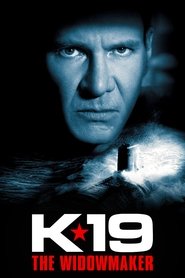
K-19 The Widowmaker (2002)
Bigelow and Cronenweth discuss research at a Russian naval base and its influence on the script, performances, and photography. They explain how full-scale submarine sets restricted camera positions, how they varied staging and light in small compartments, and how UV-lit tonic water was used in the flooded-reactor sequence.
- Duration
- 2h 8m
- Talk coverage
- 97%
- Words
- 16,937
- Speakers
- 2
Commentary density
Highlights
Topics
People mentioned
The film
- Director
- Kathryn Bigelow
- Cinematographer
- Jeff Cronenweth
- Writer
- Christopher Kyle
- Editor
- Walter Murch
- Runtime
- 138 min
- Also on
- OneSheet ↗
- External
- IMDb ↗ TMDB ↗ Find on Amazon ↗
Transcript
16,937 words
This is Catherine Bigelow. I'm the director of K-19. Jeff Kronoweth, the cinematographer on K-19. Jeff and I went to Russia about four months before we started shooting in the fall of 2000. and it was, even then, extremely cold. Yeah, actually, when I finally joined up with you guys, it was in January, the dead of winter, and one of the interesting things is that we actually had thoughts of shooting in Murmansk, where the Mothballed K-19 is rotting away. Was it winter 2000? It was 2001. Oh, so 2000. Right, okay. I was already in Moscow, and Jeff joined us there. Actually, he arrived in Moscow on his birthday. That's right. And we looked out at the onion domes of St. Basil's Cathedral. An interesting way to spend your birthday, right across from Red Square at the Kempinski Hotel. And that's where we initially started scouting in the city of Moscow. And the subway system of Moscow. Compartment 8, manned and ready. Compartment 9, manned and ready. Compartment 10, manned and ready.
Initially, when we started looking at locations in Moscow, I had a lot of reservation about what we'd find there and what the equipment would be like and what situations we'd find ourselves shooting in. And one of the first places we scouted, and it was actually the first shot of the film, the first shot that we shot of the film, was in the real Moscow, an operating subway. And I was pleasantly surprised that back in Stalin's time, all public places were considered palaces for the people and lined with marble and all tungsten lights, beautiful ornate tungsten lamps glowing through these corridors of these pristine subways and the actual subway cars themselves. tungsten lights, not a fluorescent light to be found. And although we'd love to take credit for art directing the Moscow subways, they came ready to shoot. They were just stunning. And also they had these beautiful mosaics in every single panel, hundreds of panels, hand done of various images of Soviet life. And each and every one as magnificent as the next. And so
You were in what really was like a beautiful museum, and yet it was the subway system, which also apparently was built as a bomb shelter. And so it was a place that was meant to be inhabited for long periods of time. And I suppose surrounding yourself with that much sort of beautiful architecture and design might make those long periods of time more palatable. It was a very inspiring way for us to start, too. It gave us quite an insight to the Russian people. So we traveled from our location scout in Moscow up to Murmansk. And Murmansk, sort of flying into Murmansk was sort of like landing on the moon. I mean, this was in the... in the dead of winter, and it was an ice field with a few pieces of, I suppose you would call it, you know, grass that had managed to survive the ice, but it was otherwise just an incredibly barren, unforgiving landscape and painfully cold. And we were the first Western civilians ever invited to visit the naval base.
out on the Kola Peninsula where the Mothballed K-19 was birthed. But before we went there, we were staying at a hotel called the Eye of Murmansk. And the crew, there were a few evenings there that we were entertained by our Russian comrades. We were entertained well. Yeah. Very interesting. We had to be politically correct with these naval officers in order to get permission to scout the base. Is it Pagliarni? It wasn't Pagliarni, was it? It was a place called Gadiavo. Gadiavo. I'm not sure my pronunciation is correct. Which is actually the home base for, or was the home base for the Kursk prior to it going down, so... Once we did get on the base, there was some really interesting moments shared with the Russian sailors. But anyways, we had to sit and drink with the officers. And they're quite good at it. And then when we... So this was a night before, literally at dawn, we had to leave in this very...
Well, it was a kind of bus truck that we were carried out to this base, and with these kind of windows of a kind of, I don't know, a kind of sunburned plastic, sort of warped, and so the landscape would kind of pass by your window with this sort of kind of yellow ochre veneer, and you could only see snippets of... of the barrenness, so perhaps that was all right. Anyway, we ended up at the guard shack to the base where the individuals we were supposed to meet had not shown up yet, and so we were met with these very young officers dressed in camouflage with their Kalashnikovs pointed at the bus. And it's a two-and-a-half-hour ride on a dirt road out to the, you know, through tundra out to this... remote checkpoint. We felt like the UN inspectors in Iraq and almost like at a German checkpoint. And we sat in a snowdrift as the snow flurries on, going outside while these young Russians all screamed at each other, arguing about whether they were going to let us in or not. And this was almost probably an hour, if not longer, that we sat there not knowing what was going to happen to us. It's rather surreal.
And finally, behind us, this Jeep pulled in at about, you know, 200 miles an hour in drifts of snow flying. And this man with this long overcoat came out, and there was more yelling. And again, we sort of looked at each other like, you know, I hope our personal effects are in order. And the Kalashnikovs finally dropped, and these boys moved aside, and the gates opened, and we were able to enter. And we entered on this, again, this very icy, slippery road that wound into the naval base through all these fjords filled with mothballing submarines. And it was quite a sight, imagining at the height of the Cold War this being probably in much more pristine condition and how much power was there. And then we finally came to the pier and saw for the first time the K-19. And it's hard to explain the beauty of the harbor that they picked. It's almost this covert harbor where these overlapping peninsulas cross to make it look like a solid wall, but it's completely out of a James Bond movie.
and here sat all these one after another after another of these mothballed submarines and all varying classes of submarines and sometimes two or three abreast on these short little docks and it was quite overwhelming. And the light, since we're up in the Arctic Circle, we're probably in, I would say, in the high 60s in terms of our latitude and the light was this This was at noon. It was this very cobalt, almost midnight blue with a sliver of what would be maybe perceived as daylight on the horizon. And otherwise, it was very, very mercurial and haunting. And of course, Jeff and I wanted to shoot there then because it would just have been just frighteningly beautiful. But... But getting access and logistics seemed to be a bit prohibitive. But we certainly tried. At that time of the year, the sun never quite crosses the horizon, so you get a little tip of it that lasts in the middle of the day, and the rest of the time you have five hours before lunch and five hours after lunch of twilight. And technically it would have been challenging because there was so very little light there.
that it would have been just a challenge to shoot daylight for daylight because it didn't exist. But in the end, the production, the risk were too great, you know, not having any control over the Russian military and any kind of political problem that would arise could affect us, and that would put the production at too much risk. And so in the end, we decided not to shoot there. The thing that was so important, and I think Catherine can agree with me on that, is it certainly set us in a mindset of what these men must have gone through and the conditions they lived in, and that kind of helped us visually, hopefully, apply some of that to the picture. And thematically, and certainly with all the work with the actors and the characters and having some sense of the stamina and rigor that these men had. dealt with on a daily basis and it was virtually unimaginable the kind of environment in which they lived in and worked in and fought in and so that really helped me shape the work in the script and then finally the work on the set and so when we were leaving the naval base again back in the
the truck with the yellow windows, we stopped right before the gates and wondered why we were stopping. And then we were asked to get out, and we got out. And we realized a beautiful memorial for the Kursk. And the officers came up to us with two things in their hands that they gave us, a glass of vodka and a piece of bread. And we were meant to take a sip of the vodka and then pour some of it on the memorial and take a piece of bread, eat the bread, and put a bit of it again on the memorial, lay it down in the snow. And in Russian, one of the officers basically gave a toast, and he said to the men still on patrol, meaning to the men at sea, buried there who would never come home. And it was unbelievably inspiring and emotionally like setting us up to appreciate how close a group of men these are that served on these submarines because there we were surrounded by these 15 officers or so and all of them had tears in their eyes and you know they constantly have gone up to visit this site and I guess every time it's such an emotional moment.
trauma for them and the bond is so great and it was such a great loss for them that they can't help becoming emotional. An interesting thing about Russian submarines as opposed to most other Navy vessels is that the human side of it or the human factor of it was never quite taken into consideration. And so Catherine's approach, and she can certainly explain this better than I can probably, was to stay as realistic as we can and show the hardships that these men went through to survive and function on these boats. And by not taking into consideration the human factor, I mean that they lacked some of the common... Creature comforts. Comforts that most of the other submarines were... other navies were allowed to have. And so for me, what that meant is that the scope of the submarine, the scale of the submarine was quite... small and they're just loaded with an unbelievable amount of equipment and the spaces are so tiny and the claustrophobia is quite grand and of course it was our obligation to try to present that and so one of our approaches was to build sets that were at scale.
not take advantage and not do what on some of the other pictures that have been made have done things slightly over scale to accommodate cameras. We kept true to the scope of those submarines and tried to promise ourselves that we would never put a camera in a position that we couldn't actually get it in into the submarine. And we stayed pretty true to that. There's a couple, you know, effect shots in the movie that obviously, you know, visual effects where we go from inside the sub out of the sub where we, you know, cross that line. But that was... an obvious intention to get, you know, to cross over to the outside of the submarine. So the sets were all built to scale. I think it's good for efficiency. No more passes. All leaves are canceled. We need everyone here to do their jobs. Yes, Captain. Comrade Captain, Lieutenant Vadim Rechenkov reporting for duty. I'm your new reactor officer. Kelly
was able to finally, right before we were about to build our sets and we were at the kind of end of our timeline, was able to secure a blueprint for the K-19 itself. Up until then, we were having to work off of, well, supposition and blueprints of more recent Russian submarines, but not anything as early as the K-19 or nuclear. And so that was a huge triumph for us. And then Callie would explain to me, because he obviously had to build it, but the submarine is really designed in such an ergonomic way, meaning if all the lights were out, everything was at an arm's distance. In other words, if you were having to fix something, you could virtually reach... all the sort of major arteries within the distance and circumference of a human body. And so that's why, partially why the spaces are so incredibly unforgiving. They're so tight, but it's really from a safety factor and also from a warmth factor. It's very cold on these submarines. And so the smaller they are, the more it conserves the human energy that exists. And so on a
On a boat the size of the K-19, you had 129 crew members. And in any particular compartment, you know, maybe 30 or 40, and that would be incredibly, incredibly tight. They had something called hot bunks, which meant they would have bunks for 40 or 45 people to sleep, which meant, you know, with a crew of 120, that you had 8 hours off and 16 hours on, and the beds were used by two other sailors. And you were able to keep your personal belongings in this tiny, I'd say, 8-inch by 8-inch locker. And so there was... You kind of erased all sense of self, I think, living in this environment and in this way, and you became a kind of collective organism. I mean, I don't... You know, like a centipede, I mean, with multiple arms and legs, and yet the captain was the head, and... And I think to a certain extent you were very expendable in the military industrial mindset, certainly during the Cold War and from my understanding that this was a mission that you were not necessarily destined to return from. And that was not as relevant as accomplishing the mission. That's odd. I kind of felt that way going into this movie as well.
Completely all-consuming. It was such a large undertaking, overtaking, undertaking, that in order to accomplish it and have open water footage and work in the weather conditions and on the ice flow in another continent, it was all-encompassing. Not to mention working... in an environment as small as a submarine for months and months, not just with the cast, but with the crew, with equipment. When I first met Jeff, I was working out of some offices, pre-production offices in Santa Monica, and I had just a kind of very rough foam core mock-up of a submarine and a hatch, and, you know, I asked Jeff if he would, you know, we could kind of figure out what the sizes should be and the size of it, just a hatch, just something as simple as that, but it became so all-consuming from a practical standpoint. Yeah, I mean, one of the things that I think that we accomplished so very well in this movie was to completely maintain the claustrophobic effect that truly exists in these submarines, yet we kept the camera very alive and moving.
in telling the story. And that in itself is, you know, when you find yourself in spaces this small, is very, very challenging. And so working out portholes, working out getting from one compartment to the next, working out how to get around bodies. We were fortunate enough to have a camera operator named Peter Rosenfeld. camera assistants, Mark Cyr and Dan McDonough, who oftentimes found themselves 30 or 40 feet in a row of people going down a corridor trying to focus on the actors. And I don't know how they did it. And sometimes we had to dress them in uniform because the space was simply too tight. They were going to be on camera. There was no way to avoid that. And so it was kind of wonderful to see your crew members dressed as Russian sailors. with their equipment, and yet trying to be in character at the same time. Yeah, absolutely. We came up with some interesting ways of accomplishing some of these camera moves through the corridors, but we ended up, a combination of many things. We actually had monorail systems that looked like regular pipes running through the top of the hall.
We used quite a bit of Steadicam. We had these slider rigs that we would slide into position and use remote head cameras and whatnot. But it's great to be able to tell a story and block sequences where you can actually have characters play into different shots in a compartment that's that small and not have locked off cameras. And the thing that I remember, on multiple occasions, arriving at the set at call time or before call and meeting Jeff there. And we would look at each other and say, how are we going to not repeat ourselves? And I mean, because in some cases, certainly in the command center, there's probably almost three quarters of the script takes place there. with two or three men talking to each other, and how to shoot that, how to block it, how to light it in such a way that absolutely no sequence is ever repeated, and we managed to do it, but it was spending time, just he and I, and oftentimes Peter Rosenfeld, the operator, trying to figure out what to do so we would not in any way be redundant.
Absolutely. All the equipment that exists in the submarine gives this beautiful cathedral-type ceiling with so many pieces that extend forward. And it forces the actors to negotiate these continually throughout the scenes, which makes it so believable. But our camera operator, on the other hand, often with his eye to the camera, we learned very early on that we would need to wear a helmet. And his helmet certainly got a workout because you would always run into gauges or handles and whatnot. And poor Liam Neeson, you know, being the tallest member of the cast, continually... ran into. The set. The set, you know. We had these jar lights or these emergency lights with these little cages around them. And no matter how many times you passed the same one, for some reason you always assumed that you were slightly lower than it and it would catch you. And Liam had one in particular that he ran into.
on a daily basis. And so when we had completed our photography in those compartments, I had the art department remove it for us and I had it installed in his trailer. And he walked in and noticed it and laughed and got a chuckle and then got lost in conversation and turned around and ran right into it again. So it worked. One of the things that we wanted to try to accomplish and learned very early on, that it's something that's hard to convey on film, is the diving and surfacing sequences. And in order to accomplish that, we built nine compartments, did we? Yeah. And each one of them was able to be set on a gimbal rig. And it's quite massive. because each of these compartments was 30 to 40 feet long. And so the rig had to suspend it at least two and a half to three stories up in the air. Exactly. And we'd use these enormous cranes to lift these compartments individually up and onto this gimbal and then get everybody up in there and start to dive or angle the compartment.
If the camera's going with it, sometimes you would appreciate the motion and sometimes you wouldn't. So we had to be, you know, we used a learning curve and developed, you know, through a series of different things like crane arms and Steadicam and locked-off cameras that you would appreciate the submarine diving and surfacing and actually feel the bodies, you know, the pull that they actually felt when they had that. I think in those cases we oftentimes would open up the side of the submarine and work off a crane arm. And even though the gimbal was moving the submarine or moving the compartment itself, the camera was working independent of that movement. And so that was the only way we were able to convey that kind of extremity. Otherwise, if the camera was attached to the compartment itself,
there was no visible reference that was in any kind of disconnect. It always felt very fluid, and so that was not the desired result. So we always had to... So then you would have half the side of the submarine would be, or the compartment would be opened up like three stories off the floor, and yet the gimbal was moving this almost like an E-ticket ride. I mean, we could drop it within a matter of seconds, and we could shutter it, and we could... So you had this... You know, you had it at sometimes a 15 or 20 degree angle with the entire side open. And certainly for Jeff and I and the operator, we were always right next to the opening because that was where the camera was coming in and kind of hanging onto the side like a theme park almost.
I was out in the galley capturing one. Initially, when I was invited to read the script and met with Catherine and Stephen Jaffe, one of the producers of the picture, it was a wonderful, wonderful script. And instantly, I became enthralled with it. And the opportunities to do a period movie and to do a period movie on the submarine and it to be a Russian submarine were just overwhelming. And I can still, to this day, after having done it, say I feel the same way. However, having been put into this, you know, reading the submarine, reading the script, getting lost in the script, and then practically applying that once you get on to these sets, you know, there are no windows or skylights or... or portholes on a submarine. And it became an incredible challenge to hide any kind of units. And you end up relying a lot on practicals and using very small units. We created these little teeny covered wagons that we were able to hide up into.
any kind of space that would afford it. And because the sets were so claustrophobic and through scale, the ceiling's so low and our actors so tall, that really left little room to place units. And so it was a combination of camera moves and actors, staging of actors that allowed us to just barely make it on a daily basis. And still to present it not in a glorified Hollywood manner, but kind of in a documentary style, a little tastier than a documentary style, and that was their approach originally. I think we stayed true to it. And I think the thing that was so unique about this project was the amount of information we needed to have before we were going to shoot, like the research we did in Russia, and then learning about nuclear physics and spending time with a gentleman from Massachusetts Institute of Technology who basically educated us on nuclear physics and working with that. There's a particular lighting effect from...
that you get from a nuclear reactor called the Cherenkov effect. And that is when a reactor is suffering a kind of meltdown, if you will, and the water molecules are moving faster than the speed of light, but it gets a kind of blue glow that is not an effect you want to physically witness in person because you probably will not live very long once you've experienced it. You say it once. What's this? I see we only shower on Saturdays. Action stations. Chemical fire in motor control compartment. This is a drill. Watch out! Fire in the main switchboard, C2L. All rupture in compartment eight. Yeah, it was an interesting challenge, opportunity, if you will, to do something. The space itself was very contained. They're not very large reactors, especially, you know, they're on a submarine. And the challenge was to get this hue, this blue hue, with the space. in the confines of the space. And so some of the things that had, some of the ideas that came up were, you know, a translucent floor, you could light it with blue light from underneath.
dyeing the water. A translucent floor would look, I'm afraid it would look too much like a music video, and these guys had to walk around on it, and there were shots that looked down into it, so there would have to be a floor that you would switch out, and then when you switch it out, of course, you would have lost your color of the water. And if you dye the water blue, it doesn't really have a phosphorus feeling to it, and also, each time you splash around with it, you know, you contaminate your actors, and you dye them as well, and so that's not the effect of this. So, fortunately, many of us on the crew have spent a fair amount of time researching bars, and we had... Researching. Yeah, we actually had the question of why a gin and tonic glows when you go by a UV light. We did a little research on it and discovered that it was the quinine in the tonic water that makes it glow. So, knowing that, we had a little experiment, and we used a bottle of tonic water with a UV light. We got this magical blue...
glow that was effervescent in a way and wouldn't contaminate the actor's skin and can be lit from a top light UV source that doesn't actually light the actors. So you could still dramatically light the actors and stay true to the set and the available light that's in the set and get this magical hue that's coming off the flooded reactor compartment. And so through that process and trying to be economical, we found out that we could get powdered quinine. And so we filled the tank with powdered quinine and used our UV lights. And on the day of the shoot, got about 10% of the original effect and panicked and realized that for some reason it was only the tonic water that gave off that hue. And so I had every PA run out to every Costco in Toronto and came back with 800 bottles of tonic water and shot the scene. And I think it's quite effective. It's magnificent. When... Also in researching the effects, not only the effects of nuclear radiation, but what would happen if a cooling tube or the coolant was suddenly shut off and just having to understand the mechanics of nuclear physics, the mechanics of the rods dropping and why that was not enough to prevent a nuclear reaction that could...
potentially result in a thermonuclear event. And therefore, at that time, given how tense the geopolitical situation was, potentially, arguably, resulting in World War III. So again, I called upon Ron Kubat to explain, certainly to me, to my production designers, how to build the reactor, how to then stage the scene and mechanically what the logic was. I find when I approach anything I have to have some kind of logic in hand. It has to feel somehow real and otherwise it's very difficult to block something and therefore shoot it and work with the actors and so there has to be kind of a groundwork and since My background is in filmmaking and not in nuclear physics. It was a very interesting and illuminating odyssey in order to prepare for this. And then going further and finding out what would happen to skin, what would happen to vital organs when exposed to radiation, and understanding what obviously the visual aspects effects of this would be and of course the physical effects and what the actor would need to be replicating and how devastating it would be and then consulting with doctors and making sure that we were working within a fairly realistic parameter and that was really almost a very difficult moment to shoot when I would watch
these actors come out of the reactor and they were obviously already in makeup and performing and yet I found myself imagining the real individuals and the real submariners who had volunteered to go into that reactor and try to do what they could to prevent a thermonuclear event and yet to their own demise, sacrificing themselves for the life of the others. And I found it a very emotional experience. I think the crew did, too. Our first day of shooting of really with both actors' principal photography began in Moscow in the cemetery, which is actually the end of the picture. And we got to appreciate Moscow and the dead of winter as much as anybody probably can. It was minus 20 that first morning, light snow flurries. Well, actually, it was sunny the first morning, and then it got into snow flurries. But it was actually magical because as uncomfortable as it was, the cemetery was pristine, unlike any cemetery you'll ever see. The tombstones have pictures of the deceased.
on them from 50 years ago, 100 years ago. I'm not sure what the processes they used to keep the photographs on there, but it's stunning. And every gravesite has its own fenced-in area, its own little... With a chair and a little box with tools to manicure the gravesite. All dusted with snow, you know, two feet of base snow, and then dusted over the tops, and then... The very first sequence we did is Harrison in his old age makeup coming through the gates of that cemetery and walking up the pathway. And you could hear each crunch, each step that he made coming up and the breath was so thick out of his mouth. It was truly a magical moment, you know, as uncomfortable as it was. And to see them and to see the old age makeup hold up in that kind of weather and then this color that your skin naturally turns when you're that cold, it just was a, what a great way to start. I was standing there and we were shooting the sequence and I remember, you know, Jeff and I were both feeling that, you know, things were going very well and I remember looking around
over my shoulder, and behind me a gravestone caught my eye. And it was a metallic structure in the form of a kind of ribbon, which is meant to be the honor of the red banner, which is quite a high honor. And on it was written in Russian, but it was translated for me, was three words, wife, mother, soldier. And it was this photograph of this beautiful young woman. And I think that there was a kind of a reality that was palatable and undeniable. And it really stayed with us for the rest of the film, starting in that cemetery and seeing these two men who were so completely in character. And it sort of stamped the project indelibly. We also were afforded the opportunity to shoot in Stalin's... Dasha. Dasha, right. These facilities still remain very stark. But the detail and the style of furniture and the woodwork and the floors and the ornate woodwork in the ceilings is remarkable. Yet there'll be a single desk in a very large space with five or six rotary phones. And you can tell the rank of the individual whose desk it is by the amount of rotary phones that he has because they're all still single line phones.
I remember how heavy that desk was. Oh, this iron wood or some type of wood that's just unbelievable. Because we had to move it, we knew how heavy it was. But apparently that was all intentional because he wanted the men who would sit on it to be as strong as the furniture upon which they sat. I mean, it was hundreds and hundreds and hundreds of pounds for a single chair with the density of the wood. It was... Incredible. Pretty incredible. So although we had a lot of... As we talked about earlier, we shot so much of it in the main C3, the main control compartment, that that in itself was a challenge to keep the scenes different and alive and not have the same coverage each time we arrived there. When we did get out of the submarine, we had a couple of really interesting... challenges and situations that we came across. At the very opening of the picture during the test drill, a frustrated Liam Neeson exits the top of the conning tower of the submarine. And this is more or less the introduction of the submarine, who is the main character, probably.
of the picture. So we wanted to really, Catherine had a great idea of really introducing it as a presentational, as a main character. And so we arrived at the shot where we would start with Liam at the conning tower and gradually expose the length of the submarine so you could appreciate the size and scope of it as it sits in its dry dock, which is where you work on vessels that are out of the water. And it becomes problematic when you realize how tall these vessels actually are. Liam standing on top of the conning tower is about 68 feet from ground level. And the submarine itself is 278 feet long, the entire submarine. I think 378. 378 feet, roughly. And about four stories high with the missile silos and the conning tower. And then on top of that. Yeah, so from about the conning tower, which is not quite in the center of the boat, but we ended up with having to move the camera about 220 feet and starting at about 70 feet to be at eye height with him when he comes out.
And we used a cable cam, which is, in other words, we made two pick points and had a very large industrial crane that supported one end of the rig and had a cable that ran the entire length of the submarine and started on a remote head up at the top and slid the camera down the cable all the way to the nose so that it could continually grow on you. and very dramatically expose it at the nose. And this was at night, and, you know, hundreds of dock workers working in the dry dock, and, of course, it was still unbelievably cold and snow flurries and all that, but wonderful, wonderful, successful shot. I know. I remember standing looking at the monitor just at the beginning when we were doing some test runs, and...
just knowing that this was going to be one of the great shots of the film and that it's so seldom that you really get a sense of the size and scale and scope of one of these submarines outside of the water. You are kind of accustomed to seeing it in the water or even underwater, but nothing can scale it when it's underwater. But when it's up on one of these dry docks and you see a human being or even a little jeep running... around at its base, and you see how it's like how ant-like their size is in relation to this giant metallic structure, the submarine. And it really does introduce how formidable a character it is. I mean, most people never have the opportunity to see a submarine out of the water, and it's unbelievable to appreciate the scope of them once you see how much of it you never actually really get to see. And this was a real submarine. It was actually a Juliet class, which is probably about a couple years more contemporary than the K class, the K-19. And yet it is a long-range nuclear ballistic missile submarine with cruise missile capabilities, but not
nuclear-powered, it was a diesel-powered boat, but we had to add a 100-foot completely ballasted steel tail to it and hope that it still would remain flotational once we put it out into the water. And so what you see on that dry dock is actually the shipyard where we fabricated the steel tail, and it's having just been applied to the end of the boat. And this is not just something that you stick on. You have to pass all kinds of Coast Guard approval in order to put something in the water that will actually carry people and be able to survive seven miles out in the North Atlantic, where we ended up actually shooting all the open water footage. So it was quite an engineering feat to make this, a marine feat, to make this thing presentable and still be able to take the seas. and look like a seamless addition to the boat as if it was always that way. And then, of course, we had to change the silhouette of the conning tower as well. That was slightly different. And to make it absolutely fit the specifications of the K-19. And this was very important.
to us i mean the reason i bring that shot up is it's one of the more impressive shots in the movie but we were very diligent about not having gratuitous shots and we we stayed we i believe we stayed true to that and not let you know egos get in the way and show off we tried to tell the story in a very organic way and when the opportunity came up to do something that that was grand it was only justified because of truly the submarine is the antagonist of the movie And we gave each of its other two characters, Harrison and Liam, both really interesting openings to their characters. So the boat itself deserved one. I will have to say that working with Harrison Ford and Liam Neeson was nothing short of inspirational. It certainly was a singular experience for me. and they were both very selfless and collaborative with a very young rest of the cast, some of whom had never been in a film before, and let alone on anything this rigorous, this demanding, or in an environment this claustrophobic for a period of months. And it was a, it was pretty extraordinary watching them work, watching them work together,
And these two absolute giants in terms of their ability and their intellect and their talent feeding each other, it just was pretty extraordinary to witness. From my standpoint, the ability to be so unselfish, and by that I mean, as Catherine mentioned, with the other young actors, but also... oftentimes we found ourselves, because it was so tiny and so many spatial issues, would manage to adapt in a sequence of blocking to accommodate a camera light and still dramatically present the scene. And on a daily basis, it took all of us all the time to construct these sequences. And also, this is probably a bad subject to talk about, but I appreciate their boldness in choosing to use an accent, because I personally have been to so many movies where characters speak English or whatever dialogue from their country, and it takes you out of the context of the movie. And with this diverse a cast that we had, it would have been very problematic. We had cast members from six or seven different
countries and it would have been a smorgasbord of different accents. And the fact that you have to kind of distance yourself from the traditional Harrison Ford character. And I think that in coming out with this accent, whether it's truly Russian or not, at least it brings them all within the realm of one country and kind of dispels that heroic Harrison that we're all so accustomed to. Another really interesting sequence that we had to deal with was the breaking through the ice surface. Obviously we can't actually break this up through a surface and do it in a safe manner. So what we did is we found a very solid ice floe at Lake Winnipeg in Gimli and constructed the conning tower on the ice surface and then designed ice floe around it and shot there. One of the interesting things about it is it was getting to the time of year when the ice was starting to melt. We had ice engineers out on the floor with us and the ice, believe it or not, bends and there's a bending tolerance to the ice.
They would monitor each day that we were there, and we were allowed to bend a couple inches a day, but any more than that, and they would have sent us off the lake. And we wouldn't have been able to complete the sequence. And we would have lost our conning tower because we would have gone through. So in the process of building it and then shooting it, the ice had dropped about a foot. where the conning tower itself was the most weight. And so then that presented problems for us because you don't want to compound the problem. So we couldn't bring lighting equipment in as close as we wanted it to, and we couldn't bring cranes. And we kind of had to counterbalance everything that you bring within a certain circumference of the conning tower itself. We more or less had to shoot with a single camera crane and use the extension of the arm to keep the base of the crane away from the conning tower set and then disperse the guys around the area so that we kind of kept the weight balanced for the ice flow. We actually had a snow flurry or blizzard practically come in. How many miles an hour was the wind? It was terrifying.
Comrade Captain, message from command. Comrade Commander, the crew is lined up to your order. We have received the message from Moscow. They congratulate us on the successful launch of our test missile. We have proved our readiness. I think, you know, in looking at the footage and how beautifully assembled, certainly in the hands of Walter Murch, it gave the film a kind of, I mean, the rigor and the environmental difficulties in which we experienced, I think gave the film and the actors and the story a kind of patina that would not have been that way had we been in in really comfortable circumstances? No, ironically, as uncomfortable as it was for us, and for some reason it seemed that way every time we left the submarine, it certainly comes back on screen, and we're very fortunate for that. I mean, even when we did get to the open water stuff, it was the last part of our schedule, and it was June.
in Halifax, and although it was not warm, it wasn't cold out, you know, in the 40s and 50s, and sometimes in the 60s, but the water... I only had one day when the lightning almost was about, hit the water about 30 feet from the boat. But the water temperature remained at about 36 or 38 degrees. And so you always had a breeze off the top of the water and you still found yourself in all your winter gear. And you had the reality of if you fall into that water, you have two minutes before you're incapacitated. And so that, you know, presented a large obstacle to deal with since we had several hundred sailors on top of this submarine with no railings on numerous occasions and people being transferred from one submarine to another on the open water with, you know, swell doing as it will. So we had to have divers stationed on every boat and every vessel and the rescue team always ready in a zodiac in the event that somebody did go in, it could be a quick rescue. And we had a jacuzzi on the, in the hall of the main
a K-19 boat in the event someone went in, they could actually jump them in there and get the body temperature back up to normal temperature. At any given time when we were out on the water, we had probably an armada of roughly 27, 28 boats, and that included the safety vessels and basically crew housing, craft service, hair makeup, various departments, transport, and... camera and the tow vessels for and tow vessels so it was it was quite we basically had you know filled up pretty much the mouth of the harbor at any given point in time when we were shooting during that six-week period in the in Halifax in June
Yeah, something that you don't really realize, and it makes it much more adventurous than it normally would be, is that because they're all period vessels, all of them had been mothballed. The destroyer that we had in the background, the K-19 and then the rescue sub, all had no functioning engines, and they all had to be towed and guided by several towboats. tugboats because they're incredibly heavy vessels. And so there was a tremendous amount of drift, so whenever you'd line up a shot, and yet, you know, the current would basically take these inoperable vessels into other positions, invariably in the middle of the shot or before you'd start shooting, and then you'd have to re-situate them. It's incredible. Massive amounts of weight with currents pulling and... Lance Julian, who was our marine coordinator, just did a phenomenal job of getting boats where they needed to be and keeping us all safe while doing it.
I think the biggest fear going into it was probably the transfer from one submarine to the next, because it necessitated a certain swell height, or it couldn't be accomplished. And they're diving from bow plane to bow plane, or jumping from bow plane to bow plane. And you're some 20, 30 feet off the water surface when you're doing that. And you've got swells in the two vessels, way different amounts. And so they're both bobbing at different rates. Fortunately for us, the day that we did schedule to shoot it, it was a relatively calm day, and we were able to accomplish it. So we are... Talking about the open water footage, and one of the interesting challenges once we got all these vessels out there was, of course, the coordination of it, which phenomenal first assistant director, Steve Datton, who had worked with Catherine. He worked with me on Strange Days, and he's capable of performing miracles on a daily basis. This man is genius at manipulating. small and large armies and equipment and coordinating in such a way that it's like it's a choreography of impossible precision. Yeah, and to go a step further with that, one of the responsibilities of an AD is to help stage background players.
One of the greatest compliments that I received after this picture was finished was from the editor, Walter Murch, and legendary Walter Murch, who just being in the same room with him is good enough, but let alone have him cut our movie for her, cut footage that I shot. But anyways, he was taken back by the depth of... of humanity and all of the interior submarine shots. And every time something's going on, there's just layers of these faces in the backgrounds that are all, you know, innocent, you know, for lack of a better word, victims of this submarine and this whole Navy in general. And in great part, you know, that was obviously, you know, due to the compositions, but it was also the staging of these background players. Oftentimes, you know, with Steve Danton, that foresight just adds so many layers visually to the movie, emotionally. Steve would work with the extras and bit players before they would get onto the set, and he would make sure that they had all seen our technical advisors. We had both a Russian submariner captain, we had a Canadian...
and they had spent time with them. They knew what their respective compartments, they knew the mechanics of the equipment in their respective compartments. Steve made sure that none of them ever utilized the equipment in such a way that they weren't fully cognizant of what they were doing. So in other words, if they would turn a dial or throw a lever, it was always with some kind of understanding of where they were in the water and what impact that particular action would have on the mechanics of the boat. So even in the farthest background, you'll find an actor who is working with a tremendous amount of knowledge of what he's doing. And that really has to do with Steve making sure, painstakingly making sure, that that extra or that bit player has spent a significant amount of time with one of the technical advisors. But that also, in great credit, that's owed to Catherine and for her insight to detail and her commitment to making this movie as realistic and true to what these guys did as possible. And that stems from everything to every blinking light in the background that Ed Maloney, our gaffer, was responsible for in every gauge.
are actually only reacting to something that they should be reacting to, and they're all motivated by actions of the crew members, and the crew members are only activating knobs and levers and buttons that are practical for whatever action they're taking at that moment. I mean, to the credit of, really to the credit of the crew exclusively, there was never a false or arbitrary beat. From a camera standpoint, it was always motivated by the scene or the logic of the scene or the character or the dialogue or the storyline at that moment in time. From any action of any of the characters, there was always a logic to it. It was something that Jeff and Steve and I would talk through at the beginning of every day and at the end of every day. And so there was absolutely nothing arbitrary, nothing gratuitous. It was... There was always a kind of rigor that would inform what we did, which I think helped a lot. And one last note on the open water footage. It became quite a challenge. Even when the submarine is in the open water, it still stands about 30 feet. The top of the Connie Tower stands about 30 feet.
above the water surface. And so it presents a problem. How do you photograph something that's 30 feet up like that? Of course, you could build scaffolding on the submarine itself, but then, you know, once you get out in the open water, the ability to take away that scaffolding or move around on it certainly limits the amount of shots you can or the coverage and necessitates bringing it back to the harbor to remove that stuff. So Mark Manchester and Greg Musson, our two key grips, came up with a wonderful solution to that dilemma, and we got this vintage... tugboat and vintage ... It was a period tugboat. It actually was in one of the scenes, but because it had so much mass to it, we were able to build a platform off the aft section of that tug and put a draft arm at the end of it and then mount a Lieber head that has some stabilizing capacity in it.
on the end of that. And that's what gave us these wonderful, wonderful caressing shots of the submarine and allowed the submarine to take on its own swell and allowed us to take on a swell, therefore really presenting an active sea and getting at the height of the conning tower and do swooping shots down to the side of the submarine and down to the deck and then off into the water. Aside from a helicopter, which we did utilize quite a bit, I don't know of any other way of shooting 360 degrees around a submarine like that and being able to manipulate the camera in that fashion. Jeff and I spent quite a little bit of time in the helicopter shooting all of our aerial material, and that was a great experience. I mean, there were some moments where we were, you know, obviously trying to keep the camera out of our rotowash and keep the shadow of the...
helicopter out of the shot and at the same time keep the material alive and interesting and stay tucked into the really interesting and vivid and vital of it but keep the camera as low to the submarine as we possibly could and there were a few moments where we had to lift it up so that we weren't going to cause any damage but I mean, an interesting thing when you approach a movie such as this, like a particular subject matter that has been done many times in the past, one of the challenges is not to duplicate the shots. And when you have a summary movie, there are certainly certain shots that are unavoidable. But we tried to stay—we tried to— Present it and in a way that it hasn't been done before and that's actually that's the toughest part and to keep the shots interesting and And to a certain degree I think that we we didn't repeat anything and we did you know At least our unique version of it and so some of those open water helicopter shots with the you know Backlit and the open water were quite stunning and we had a couple we had a helicopter to helicopter to submarine which was
Exciting and happy to have walked away from it. Yeah, that was a morning that we were quite lucky, you know, quite happy once we had finished. But... It was quite really, I mean, just not to dwell on that subject, but it was really like a wonderful bonding for Catherine and I because it was the last day or two of the movie and we spent hours and hours in this helicopter away from everybody else and it kind of was like the... The storm had passed and we were in the calm, you know, finally after six months. It's really true. That was one of the more, even though I suppose in some way perhaps some of the most challenging of shots just from a safety standpoint, but at the same time it was the most calming because we knew we had... shot the movie that we set out to shoot. And I think we both felt a kind of confidence and a kind of pride. And certainly by that time, we were thinking like one mind and kind of finishing each other's sentences. So by the time we were up in the helicopter and trying to perform yet more original kind of material,
There was a kind of calm that settled over us, and it was a great... Those were great, great, great days. Once we had all the footage, I would say that we were fortunate enough to work with the legendary Walter Murch, and this is an editor whose reputation certainly precedes him, and he... really fell in love with the script and otherwise, you know, I can't imagine ever being fortunate enough to have worked with somebody so extraordinary. He thought that what was so unique about this piece was the fact that it was hermetically sealed, that you never left the Russian terrain and domain and you were in that world. The Americans weren't going to come to save you. The Americans weren't going to be the good guys. In fact, the men that you were spending the time with, the men on this boat, these Russian submariners, were basically going to arguably save your life. They were going to avert a thermonuclear event that could have resulted in a true catastrophe. But working with Walter, he was very, very rigorous. He would always pull...
several stills from a particular sequence that were kind of his key images of every setup. He would have one or multiple images from every single setup. And then he would, from a particular scene, he would then compile all those still images onto a board. And your eye could kind of sweep over this board of maybe 40 or 50 images. And you could kind of, in your mind, animate those images and see the movie. And there was, invariably, he would say that the image that he would choose would always be an image or a frame that would end up in the film. He was so... He had this incredible... uncanny, almost preternatural way of working with the material, and it just began to unfold in his hands. And he is truly, truly a genius. You can't say enough about how smoothly and flawlessly this movie is put together and how the emotion carries from beginning to end.
And what an honor to work with somebody that's gifted as Walter. I was quite intimidated at the beginning, thinking that I would be getting notes on a daily basis of what was wrong with the coverage. And it was so wonderful to see somebody that has such passion and is still so young-minded that whatever we presented to him, he was excited about and encouraged us to continue on those trains of thought and work the scenes, made these scenes really unique and covered it in a unique way. He's very open-minded and game to proceed in any kind of unorthodox manner, and that was really stimulating and motivating. He would support no matter what direction we were going in. He would support it and always give us fantastic, stimulating feedback that would then set us
either further on our course or off in another direction, even more valuable than where we were. And just, it was a constant discovery working with him. And I mean, there was some times when we would cross the line in the middle of a scene and he would love it. I mean, it was, you know, it was something that we did intentionally, but wanting to kind of break up the shape and space for a moment, giving a kind of physical tension to, the tension of the story. And Walter would be so focused on the emotional nuance of each individual character. And for instance, the character of Pavel, who is the actor played by Christian Carmago that goes into the reactor in the first team with his crewmate, James Ginty. who plays the character Anatoly, and watching Walter watch those dailies for just the flicker of an eye, a bead of sweat on a cheek, or the set of a jaw, and he would mine these moments, these beautiful singular frames, like panning for gold, and it was something that was, he would never lose his patience or his enthusiasm or his passion. In fact, it was infectious, and it would inspire all of us.
You know, I think everybody has a favorite part of each movie. I think my favorite cut in the movie, and this is completely on Walter's shoulders, is the transition from the champagne bottle swinging into the hull of the submarine when it doesn't break into the missile torpedo being loaded onto the hull, and it's just such a wonderful transition. It's kind of a stamp of him, right? He kind of... He loves ending and opening on exits, and he did it numerous times with Harrison, and such a master. And the cast, I had two extraordinary casting directors, a woman named Mallie Finn and a woman named Mary Selway. Mally is pretty much responsible for the actors who came from the United States, Mary Selway from the actors that came from Europe and Iceland, and then Ross Clydesdale who's responsible for the wonderful actors that came from Canada. So these three casting directors who really brought to one place these amazing faces and actors from all over the world
each of whom had their own unique quality and ability and there was a freshness and there was an enthusiasm and there was a talent that was unstoppable and it just, you know, it just inspired us all and it was great to be in the presence of these young talents. I think the integrity of the whole picture depended on the performances or the non-performances of these young actors. I mean, if you didn't believe the situations that they were in and you didn't read it into their faces, because oftentimes they were not speaking, they were just stunned staring in the background, then you would have no passion for them when the submarine—when they lose control of the reactor. And they're so unique looking and so— They impelled you to care. And I think the single most important need from a film like this is it asks you to care, care about these men, care about what they went through, care about the decisions and the difficulty of the decisions that they had to make in a four-hour period of time when the reactor whose temperature was rising exponentially. And these faces in there,
just in the silence, in the spaces in between the words. They invite you to care and they tell the story. It's their innocence that is the universal innocence. They are the human being who is you know, finds him or herself in the apex of some kind of historical moment. And it's the innocence that is both challenged and sacrificed so that others may live. It's biblical. I mean, that combined with the haunting score, you almost don't need words to... to get the message of this movie and to feel the pain and suffering that these guys and the heroism that these guys are and went through. I was so fortunate to, we were so fortunate to be able to find a young composer named Klaus Bedelt who really had, was just, is just beginning and had worked with Hans Zimmer on Gladiator, but had very few movies that he had done single-handedly. And K-19 was probably the largest that he had embarked on on his own. And it was as if he was just channeling this music. It just began to come out of him. And he was so moved by the piece.
that by the footage that he, the music was just so evocative and transcendent. Absolutely. And we were also fortunate enough to have Merritt Allen who designed the costumes authentically and once again, you know, diligent to detail, but stunning work, and I don't even know if I photographed it in all of its beauty because the uniforms in nature are as dark, you know, they're very dark, dark blue, but just stunning. Merritt is somebody I worked with on The Weight of Water, a film I had completed right before I started this film, and her diligence, I mean, she would dye her own fabrics if she couldn't get you know, the exact blue that she wanted. And she would so painstakingly work with Jeff and the lighting to make sure that she was giving Jeff what he wanted and the textures and making sure that the details and the accuracy. And I think that all across the board, it was the physical accuracy and realism that everybody sort of in collaboration with one another, kept striving for and kept trying to, like trapping light in a glass, just making sure that it was as accurate as humanly possible and it was always a real challenge. But Merritt's work is so, her attention to detail is staggering. Yeah.
In an effort to try to capture photographically those uniforms and realizing they are such a dark color, we experimented with different processes for the end result early on in the pre-production part of the picture and part of the production. Catherine and I had arrived at a process that Deluxe Labs does called the ACE process, where it's a silver retention process. In other words, it just makes the... It's something where they don't extract as much out of the negative as they normally do. They skip the bleach process. But essentially what happens is you get a richer black in your film and you get a slightly more desaturated image. And so we went into production with that in mind. And the end result... We had to go another way because of some technical problems, but one of which arrived out of the original format we decided to shoot on. Going into the movie, we had always planned on doing it anamorphic, and although we weren't going to be the first submarine movie to be shot anamorphically, certainly I think Crimson Tide was shot anamorphically, which is a format.
We realized that with the size of our submarine and the minimum amount of focus, the amount of distance that someone can come close to the lens in an anamorphic format is much farther away than a normal spherical format that it would have been impossible for us to shoot in these small sets. Also, going into the picture, we were going to do a good part of it handheld. And the anamorphic glass is much heavier. And lastly, you find when you're shooting in these small compartments, you know, inherently you're forced to use a lot of practical lamps or lamps that are built into the set. And you take the risk shooting in an anamorphic lens of a flare, an unseen flare coming across an actor's face or in an inappropriate area. So we chose at the last minute not to go anamorphic and we shot Super 35, which is a
uh... a normal lens and uh... and uh... the film uh... the super part comes from uh... using part of the film negative that normally would be reserved for the soundtrack and so in the end you're forced to squeeze the film back down to allow for that soundtrack and that's where we ran into a little bit of a problem with the AC process but uh... we resolved it one way or another and uh... i think the movie looks pretty good i think the movie looks magnificent i was So fortunate to have been able to work with Jeff on this film. And every time I watch it, I am astounded how beautiful it looks. And the lighting is so subtle and magnificent and pure and accurate for this story and this period and this environment. And I just... He just... brought to this film so much majesty and so much intelligence and so much subtlety and and so much artistry that that i i was i i just every day i would look at dailies and i i i couldn't believe how fortunate we were to have found someone like him to shoot this film and it just um it was pure magic i think that
It's just one of those situations where with Catherine's guidance and the collective efforts of Callie, the production designer, and Merritt's uniforms and the great talent, that it was one of those situations where we all saw eye to eye and we all had a common thought and a direction from Walter and Klaus to all the way down the line. And we came up as a team and we made this movie. I think it definitely, you definitely feel it and see it. There was no, you know, single entities. It all was done collectively, which was part of the magic of it. In fact, you almost felt like you were part of the submariners because we were as one unit all, you know, painfully immersed into this. Cast and crew poured into these confined environments and having to, in order to survive, in order to come out with material that we would, be ultimately extremely proud of. We had to work as one body and it was seamless and inspiring and I just, it was one of the great experiences of my life for sure. I agree wholeheartedly and then knowing what words were gonna be said and knowing the script like the back of your hand, it was still every day to watch Harrison and Liam,
present that material was like, you know, being at a live theater. You're just a guest at the show watching and hopefully you're capturing it as well as it's being presented to you because they're just two unbelievably talented professional actors, you know. Course zero four zero. Port motor, slow ahead. Starbird 30 steering the course zero four zero. I started with a script by Chris Kyle, and he and I would travel over to Moscow in the years before we actually had financing and we knew we were going to make the movie. And we would meet with the survivors, and obviously we're Americans, and these are Cold War veterans. And they were quite concerned and if not even a bit suspicious at our intentions and why we wanted to tell their story. And how Russians had been treated in their eyes in Hollywood terms had previously not been necessarily very favorable. And so Chris and I would spend...
quite a lot of time trying to convey to them that this movie was going to honor them, to pay tribute to them, that their efforts were not in vain in terms of their story being available to the rest of the world, and that to us their lives had great, great meaning. And oftentimes we would end these meetings with tears all around, and these men having really bared their soul and told us wonderful, given us a lot of wonderful information, but in order to do so, they had to relive it. And by the end of these meetings, they would take us in their arms and hold us with tears coming down their faces and say, you must tell her story, you must tell her story. And I think Chris and I felt This was more than we had imagined. It wasn't really a process of trying to make a movie. It was something bigger and deeper and probably more profound and more personal. And that, in fact, their lives had great meaning and their courage and their bravery and their heroism, though
shrouded in secrecy for so many years was that it was time that the rest of the world know what these men endured and so that we may be here to tell their story. On a movie of this scope, at some point, it's unfortunate, but you have to let go of part of a the control and we had a very gifted second unit director DP named Gary Capo who came in and helped complete some of the sequences that we weren't able to finish or pick up some of the pieces that we had missed along the way and without all the subtle details and inserts and the movie wouldn't have the frenetic energy that it does when they lose control of the submarine. It's always something that's difficult to do because as a filmmaker you want to keep control of every frame of it. And the more we got into this movie and the more that we felt we were making something good, you really didn't want to let go of it. Catherine and I were both really not ones that want to have somebody else, you know, interpret our...
or film language, and so... But Gary really seamlessly, he would so painstakingly watch Jeff work, and then, gratefully, I was able to be there on the weekends. He would shoot on an off, basically an off-week schedule, so that there were two free days that I could spend with him, and then when I was shooting with the first unit, obviously I couldn't, but he was so respectful of Jeff's work and the lighting, and it was so important to him that... the work integrate perfectly. It's so hard to do. It's hard enough just going into a room and creating a scene for that day, let alone having to go in weeks later and duplicate something that somebody else has done. We're always so grateful for his contributions to this movie. And it afforded us the luxury of going on to do bigger things. And it also afforded us the open water work, which at one point was not gonna be in our hands. And unfortunately, we both felt really strongly that we wanted such huge important scenes in the movie that we wanted to be part of that. And so that allowed us that opportunity as well. And then...
We were fortunate enough to be able to work with Eric Brevik on the visual effects. Eric works with ILM. And with Eric, we came up with the idea of moving from inside the submarine to outside or from outside the submarine to inside. So in other words, piercing that kind of fourth wall, if you will, in order to better understand what it might be like to be floating in this giant, blue, infinite, vast ocean in this very small, fragile piece of metal and how incredibly vulnerable as a human being you are. And just to get that sense across, that's what inspired us to make those kinds of shots that... move you from outside to in or into out. And Eric was so painstaking about the detail of the lighting and the bubbles and the sort of halations, the way water ripples across a surface and then moving through different areas of, you know, as you begin to penetrate the hull. It's a double hull construction and moving, and he was very rigorous about
about paying attention to reality as well and moving through one hole and then the void in between and then the second hole and then finally into the corridor and then into the reactor and then down into the basically the heart of the reactor to the point where the the bubble would rather the primary cooling loop had burst and so there was a he was are just extraordinary. And then those were the few times that we took dramatic license to make a story point, but so effectively tying in the morgue of this dark blue ocean and the vulnerability of these guys, as Catherine stated, and tying it into the reactor so everybody participated in this accident. He did them so flawlessly, marrying stuff that we shot live action to the CG work, to the models and anything else that was involved. For me as a cinematographer,
I have a favorite sequence in the movie, and I'll talk a little bit about that. It certainly came at the appropriate time. It's at the trial sequence at the end of the courtroom, at the end of the picture, and it's one of those magic moments where the art direction in the room were so perfectly styled, and the colors of the walls were so delicately subtle. And I lit it, we had five windows in the room, and all the sources for that sequence and all the coverage was done through those windows. And so it was very organic. You can be proud from that standpoint that you didn't cheat. And no movie lights inside the set. And it just came out beautiful. emotionally beautiful, storytelling beautiful, and then you get the little sidekick of knowing that you did it through the windows as opposed to cheating as we normally would do. It's such a beautiful, beautiful scene. I also want to mention Gordon Smith, who is responsible for the radiation makeup effects, and I worked with Gordon several years ago on Near Dark, and we developed a kind of
an effect for basically a burn in the sun if you're a vampire in that movie. And so I've always wanted to work with him again, and he's become quite popular, and so our paths were not able to cross until now, and I was so fortunate because this is absolutely the kind of artistic specificity that he is so... so proficient in and giving the kind of the painting, you know, this painstaking painting on their faces, the burn and then the application of the prosthetics and the contact lenses with the broken blood vessels and the application of various pigments and textures and lubricants and and glycerin that would then contribute to what it would look like visually and physically if you were dying of radiation exposure. And Gordon is just, he's just a real artist. You know, he sits there with all these brushes, and each one of these actors is his canvas, and he's very protective when he comes out onto the set with one of his, basically his canvases.
and making sure that they're lit in a way to maximize his work and always looking through the lens and then looking through the monitor to make sure that we're seeing what he wants us to see so that the full impact and import is there. And certainly, judging by my reaction, by audience reactions, I think that it's a very palpable effect. It's one of those little dangerous moments in the movie where it's relatively unknown for 1960 what it would look like if someone did actually, you know, be traumatized by radiation like that. And story point-wise, you need to capture the audience. You don't want to scare them away, you know, like in a gory horror film, but you want them emotionally to be... to be drawn into these characters and feel the pain and suffering. And so I think that he so delicately handled that. In all the screens I've seen, it's always a real turning moment in the movie once you appreciate what these guys have gone through. And as Jeff said, it's such a fine balance. Especially Gorloff when he tries to stoically
walk through C3 and loses his balance. It's just such a magic moment. And yet still wants to address the captain with the kind of respect that he deserves. And he's dying. I mean, I can barely watch dailies without responding, let alone the film with the score and the effects. When, on one of my trips to Moscow, I met with the captain's wife, the captain who is played by Harrison Ford, Nikolai Zoteyev, and his wife would tell me that we spent many hours together, and this was after he was deceased, and she would... tell me that this was a man who was more at home at sea than certainly at home. And yet, I mean, they loved each other very, very much, but his life and his dedication, his commitment was to the military and to his work. And she said that always when he was on shore leave,
you had the sense that he was just waiting for when he would be able to go back out onto the ocean. And these details, I mean, they would bring these people to life. And then when I would speak with the survivors and I would say, what was the difference between the two men, the characters played by Harrison and by Liam? And they would say that Liam, who's modeled after a character named Yenon, was a man that... that you felt was a kind of brother, was a family member you wanted to spend time with, you wanted to go to dinner with, and you felt very close with. And Zateyev, the Harrison Ford character, was a man you feared. However, what they said, and this was so important in shaping the characters, if you were in a life and death situation, it was Zateyev that you wanted to be making the decisions about your survival. And both Chris and I felt that was very key in what it meant, two different styles of leadership, and finally what it means to be in a potentially catastrophic situation and how you're going to survive it, and if you're going to survive it. One of the interesting things that Catherine and one of our producers, Steve Jaffe,
did at the beginning of the picture was take all the actors through a boot camp of sort in Halifax at the Naval Yard in Halifax and we all got to participate to a certain degree in some of it too and it really gave all those actors a sense of what a submariner was like to be like and how submarines work and fire drills and It was quite intensive. Like, for instance, doing the fire sequence in the film, you know, these boys had been exposed to fire even hotter than what was on the set and even more threatening. And so everything had its source in reality. And that was basically the jumping off point. Even the mutiny was part of the underlying story. And that was not something that we fabricated.
and working with these actors like John Shrapnel and Joss Ackland. These are these beautifully seasoned stage actors who give the film and give their presence on screen. It has such gravitas, and I think it really permeates, again, the performances and the film with a sort of... a level of authenticity. One of the wonderful bonuses for us was an art director named R. Greenwald, who had the ability to adapt magically. Every night when we'd wrap, we'd come up with a new scenario for a scene the next day. And because the movie took place in so many different cities, we had sets being built across the country, across Canada. And so oftentimes, the production designers were in different places than where we were actually shooting principal photography. And so this Canadian art director, Greenwell, a lot of it fell on his shoulders to come up with these magical solutions to some of these complicated shots that we had to adapt the sets to. One of those shots was this phenomenal idea that Catherine had about continuing the
a sequence that would allow you to experience the scope of the submarine from inside. And so we came up with a sequence in which something would be loaded onto the submarine. We'd follow what was being loaded into the sub in the bow torpedo compartment and follow it through six. We took dramatic license here and followed it through six of the compartments and then hook up with the doctor who was going to meet his fate soon and follow him out this up. And that would be an interesting way of getting the audience involved in the different compartments and geographically show them a little bit of where all the pieces are. And so the only way that we could accomplish this was letting our camera operator, Peter Rosenfeld, use a rig that was very similar to what they used in Das Boot and a little handheld rig with a smaller camera and gyros and even though we practiced much and we went through this on our first meeting back in Los Angeles it became really difficult to get through the hatches and so almost overnight we had to design these hatches that had drop-away bases that we could actually
get an actor to climb through and then drop the base away, allow the camera operator to pass through and then rise up again so that the camera could then look the other direction and not notice the space. And there was some big challenges that we presented, and we just escaped through each day. This was a camera that actually, the camera that we used was one that, that Jimmy Muro and to a certain extent with I guess some of my input, we put together for Strange Days for all the point of view shots where we had to have a very dexterous look and it had to be very mobile and obviously very light and you could hold it in one hand. And then Peter adapted it for this shot. And so it... It had all the nuances that he needed. And he would, starting slowly, move through the set with a level of precision. And then this is over a period of weeks and weeks. We didn't do this particular scene until later in the schedule because we knew we needed a lot of preparation for it. And then he would increase his speed
slowly over a period of time and then add other elements like extras and other elements of choreography, a guy stealing some oranges out of the crate, and that would slow up the shot just infinitesimally enough that the focus puller could realign, make sure that everything was on track, and then speed up again. So these moments were designed to not only give... the movie a kind of velocity and give you a sense of the reality, life on board the boat, but also to be able to facilitate the technical prowess of the shot. And the importance of the shot for me was the putting the audience in a position where they could understand the geography of the boat, that you actually had this contiguous space and that you weren't just in... one compartment and then another compartment. And so when later on, and it was very important that that particular scene come early in the movie, so that later on in the film when you are cutting from one compartment to another, face to face, you have some, even if it's a subconscious understanding that this is a contiguous environment that...
is basically changing in terms of its functionality. In other words, you're going from a torpedo compartment to officer's country, to the command center, to the missile bay, to the motor control room, to the reactor compartment, to yet another torpedo bay, to the galley, so that you have a kind of awareness of its shape. And so when you are cutting from face to face, which you kind of are obligated to do when there's a lot of tension, create a kind of acceleration in the pace, then you have this kind of understanding of our grasp on the physical reality in which these men are inhabiting. And I think it helps a lot in your kind of innate understanding of what they're going through. I mean, we expected an audience to understand the compartments and where they were in a brief amount of time when it took us as the filmmakers and plotting and designing and choreographing these sets months to understand the logic of the submarine and where everything existed and why it was where it was and what that meant to the storyline and where people would have to be at different times and timelines that dictated how long it would get from one place to the next. It's
Amazing. I mean, for instance, at every bulkhead or hatch, there's all these redundant pieces of equipment. In other words, if you found yourself, theoretically, with a crippled submarine where four of the nine compartments were flooded, you could, theoretically, drive the entire boat, make all of its... basically make it completely fully operational from any given compartment. It didn't have to be only the command center. And that's obviously a safety feature. So when you see all this equipment and you see some redundancies, it's really, you know, this is all, everything is so pragmatic. And that was something that, you know, certainly required, you know, a bit of a learning curve on my part, on the designer's part. And And it was just an odyssey. It was extraordinary. And then Peter Sarsgaard, I think that that's a performance that is really so unique for an actor to actually have the courage to make himself as vulnerable as he did. And that was, again,
it goes back in a way to Chris Kyle in the script and wanting there to be a character that is, to a certain extent, the audience, the collective audience, the person that says, no, I don't want to go in there, no, this is too frightening, this is really not something that a kind of normal human being would voluntarily want to do, walk into the, you know, ground zero of, a reactor melting down and knowing that the radiation levels are so high that you will not survive this experience. Everything in your physiological, psychological being is there to stop you. And he's the character that, in a way, is the designated individual, that kind of the voice of reason, if you will. Another, uh, accomplishment was the, uh, was the challenge of presenting Harrison and Liam in their old age makeup. And when you do see the picture, and it doesn't come to the end obviously, you can certainly appreciate the detail and finesse that was done. I mean, there's not a person that was on the crew, nor in any theater that I've seen,
that doesn't believe it 100%, and that's always something hard to pull off, especially with somebody that we're all so familiar with, like Harrison Ford and Liam. Another thing I want to mention is the sound work. We had an extraordinary sound department headed by a woman named Pat Jackson, and she and Walter have worked together on numerous productions going back to The Conversation. And Pat is just, again, extraordinary with detail. And for instance, when the submarine is in its deep dive and potentially risking passing a threshold that may take it to a depth where it could implode, or otherwise known as crush depth, and the pressure of the ocean is greater than the double hull construction can withstand. And you have this sound of these various thicknesses and textures of metal that are torquing and bending and twisting and moaning and groaning. And it's like you're inside some kind of musical instrument, some kind of terrifying musical instrument. And this was... absolutely painstakingly created over months and months. And she actually found a submarine that was birthed in San Francisco called the Pompano. And this was a World War II submarine, but it still gave her the opportunity to create a palette of sounds with men running on the deck or closing hatches or using
equipment or just the rustle of cloth and fabric in a metallic space that was just the layers and layers and layers when we were in the mix of sonic specificity available to us to create the nuances and the reality that you were actually on board this submarine and you were cruising to crush depth. And Pat's work is just so finely nuanced and so detailed, and it was an embarrassment of riches, I suppose. One of the wonderful things that... we got to experience and what Moscow brought us is that there's so little time spent outside of the submarine. The few occasions that you do get outside of the sub itself, we were either in Moscow or we were on the open sea. Just a funny little note about what happens when you're out there is here we are scouting in Moscow and we go to the train station where Harrison's going to disembark from the train and it's this unbelievably beautiful
two 300 feet long glass-domed train station. And it was cold, but it was comfortable on the Scout, and the sun was beaming through the windows. And so three or four days later, when we come back to shoot the sequence, it had snowed about two feet. It was pitch black inside the train station. And it was unbelievably cold. almost unbearably cold, colder than it was outside. So much concrete is in the train station itself. And so it's one of those moments where you still have to capture the images and make your day and make the movie. And so we just collectively figured out shots that you got the scope of the train station and appreciated it. But it certainly wasn't the way it looked on our scout days. You know, what do you do when there's two feet of snow piled up 300 feet long on these windows?
One thing that inevitably happens on every movie, and it's always sad in the end, is that sequences that don't make it. And we got the opportunity to shoot some wonderful sequences in Moscow in some really interesting historical locations that unfortunately, you know, you can only have so much screen time necessitated being gone. But scenes with Josh Josh and John and Harrison in the round Stalin dosk, right? In the military. And there was a scene with Liam Neeson who had a son and we shot out in the outskirts of Moscow and a beautiful poignant moment but in the interest of running time and telling a taut I think that actually we were fortunate in that we actually virtually used I would say nine-tenths of what we shot. There was very little excess. And finally what you have when you go through that editing process and you're just kind of annealing something and you realize that in fact the story may not need certain embellishments, and that there's a severity to the story, I guess, and that is necessitated by the reality of the event. So we were pretty fortunate. that the cut, you know, I think it really does reflect the best of all of our efforts. We have one
Terribly exciting shot in the picture, and I say terribly exciting because it was exciting for the crew probably more than the audience will appreciate, but during the rescue at the end of the picture after the two, if the men have been transported or are in the process of being transported from one sub to the next, you still have the U. S. spy copter still circling around the submarines and we designed a shot where it would come around the bows of the two submarines and then down the length of the hull of the K-19 and then make a pass right over the shooting tugboat that we were all shooting on, and it's a rather large, I don't remember the style of helicopter it is, it's a rather large naval helicopter, and inertia in itself causes it to make very slow turns, and so we underestimated how close it would actually come to the tugboat, and the It's quite a heroic shot, but it was a near miss by just a couple feet of taking the camera crane out. And I think that the only reason that all the grips and everybody stayed in there is because at that point that we decided that it was too close, it was too late to do anything about it.
We all kept the camera in position and kept the frame. And the blades just floated off. And in the end, we got a beautiful shot. And the pilot assured us afterward that he felt absolutely no uneasiness whatsoever. He had a margin of error that he felt very, very comfortable with and had been doing these shots you know, quite proficiently. But it wasn't CG. It's real. Exactly. By the time that the Vostokov, the Harrison Ford character, was being interrogated by the tribunal, he had the real man, Nikolai Zateyev, had undergone several bone marrow transplants because of his exposure to radiation. And I often found myself trying to imagine just being interrogated by the tribunal alone, perhaps, for what obviously was a very heroic set of decisions, but to have been undergoing bone marrow transplants at the same time was... almost more than I could conceive of one man undergoing and then having to bear the burden of the silence for so many years as a result of the Cold War and this being a very, probably a fairly vulnerable a vulnerable military moment in the saga of the Cold War. The fact that this nuclear submarine, which was really the flagship of their fleet, having malfunctioned the way it did, was probably fairly significant.
Although initially we were fairly disappointed that we didn't get to shoot in Murmansk, the discovery of the Halifax Harbor and the way that the Cali ended up dressing the shipyard that we actually... And the Canadian crew. And the Canadian crew there that we actually shot in really was a blessing. we got the benefit of actually using the dry dock as a shooting location, as well as a practical place to build this extension to the submarine. And then when we did our launch of the vessel, we had a beautiful graving dock that the launching ceremony took place at, that the doctor and the orange crate being loaded and the doctor being run over by the truck all took place at. He couldn't have asked for a better location. And we actually were quite fortunate that some of the delays, we wanted to be there sooner because we were trying to get the most out of winter. But ironically, Halifax had an unseasonably long snowfall that year. And, you know, we really captured...
what it was like to be up in Kola Peninsula where a lot of this would have taken place. We were shooting in Halifax in April and it was really a kind of freak late snowstorm that took place and I was told that this hadn't happened in a decade and of course Jeff and I were so fortunate we were so happy that this had happened and And the Canadian Navy was so incredibly helpful. And I had shot in Canada again on the previous film, The Weight of Water. And so I was familiar with the Canadian crew and found that they were just wonderful people to work with. And I knew could execute all of our needs so perfectly and integrated so well with the key departments. And so the opportunity to try to rebuild Murmansk in Halifax and how talented everybody was, I mean, really in the hands of, you know, again, Callie Juliason, who made the illusion real.
And in the end, it turns out to be quite the international crew and the making of the movie took place over, you know, several continents and phenomenal collaboration and collection of entities to make it work. I mean, the submarine itself came from, was discovered in Florida and had to be towed all the way up to Halifax and the sets were built in Calgary and we shot in Lake Winnipeg and Moscow and... and Halifax and Toronto and... And I scouted in... Actually, I found myself up in the 78th parallel in Spitsbergen in an area called Svalbard, which was a Russian mining town, kind of Cold War era, which gave Callie some beautiful visuals that we then incorporated into the Halifax production design. So, you know, we really had to... We scouted in Iceland. We had to canvas the northern hemispheric globe in order to determine how best to shoot this. I don't know, I can't imagine how many flights you made, but I know before we started shooting, just on the scouts and the preps, that I had made 48 flights from one place to the next, and so I can't imagine the... There were hundreds. Hundreds upon hundreds.
And then the cast itself was from, what, eight, nine different countries? Exactly. You must have a lot of frequent flyer miles. And so next, I mean, we were blessed, obviously, you know, with the late winter. But for some reason, no matter where we were, we were always cold. Visually, which was fantastic, but physically it was draining, so the next one's going to be... I promised Jeff that the next time, next outing will be in warm climate. And also, you know, having a cast of all sailors, next time it's going to be a cast of, what, sorority girls? Yeah, all women. Blue Lagoon, Blue Lagoon 3. I think we're done. Thank you.
Keep exploring
Other commentaries on related filmmaking topics
-
8 shared topics
The Lord of the Rings The Two Towers (2002)
Peter Jackson, Fran Walsh, Philippa Boyens
-
8 shared topics
Mission Impossible Dead Reckoning Part One (2023)
Christopher McQuarrie, Eddie Hamilton
-
8 shared topics
The Lord of the Rings The Return of the King (2003)
Peter Jackson, Fran Walsh, Philippa Boyens
-
8 shared topics
The Mummy Returns (2001)
Stephen Sommers, Bob Ducsay
-
8 shared topics
Underworld Evolution (2006)
Len Wiseman, Patrick Tatopoulos, Brad Martin
-
8 shared topics
The Usual Suspects (1995)
Bryan Singer, Christopher McQuarrie