multi
Dr. No (1962)
Produced and hosted by John Cork, this archival track assembles cast and crew into a history of the first Bond film. Its throughline is invention under pressure: Peter Hunt's deliberately accelerated cutting, Ken Adam's striking sets built from a tiny budget, Norman Wanstall's atmosphere and machinery created in sound, and a Jamaica unit racing changeable weather while Terence Young shaped Connery's screen persona.
- Duration
- 1h 49m
- Talk coverage
- 98%
- Words
- 16,539
- Speakers
- 24
Commentary density
Highlights
Topics
People mentioned
The film
- Director
- Terence Young
- Cinematographer
- Ted Moore
- Writer
- Berkely Mather , Richard Maibaum , Johanna Harwood
- Editor
- Peter R. Hunt
- Runtime
- 110 min
- Also on
- OneSheet ↗
- External
- IMDb ↗ TMDB ↗ Find on Amazon ↗
Transcript
16,539 words
Welcome to the audio commentary for Dr. No. I'm John Cork of the Ian Fleming Foundation. The stories which you are about to hear reflect the personal recollections and opinions of those who provided the interviews. Some comments have been edited for time and clarity. They are not meant to provide the definitive history of the film. To begin, composer Monty Norman recalls seeing Maurice Bender's titles for the first time. At the time, I wasn't too happy with what Maurice was doing to my James Bond theme because he was pulling it around. He was starting in the middle and putting another bit here. And I thought at the time, he's going to ruin this number and it's never going to be heard of. It's never going to be a hit, this number. Of course, when it came out and he had that wonderful shot of Sean shooting down the gun barrel and all the dots coming down and all those things, I went up to him and I apologized because I thought whatever he did to the number only enhanced it and of course made the titles absolutely fabulous. Editor Peter Hunt recalls Maurice Bender. Marvelous man. Very inventive.
Wonderful man, Norris Bender. Great, great inventive brain and made a lot of films much better by his titles. I mean, The Grass is Greener was one of the great titles ever. And the Bond titles were also extraordinarily good. And in keeping with the style and everything, he was very imaginative. and enjoyed enormously photographing all these nude models and bathing personalities and things like that. He was a charming man, charming man. He really was. But he was small in stature and like Marx, you know, he used to chase after women all the time. But he never knew why. A little background on actor Timothy Moxon, who plays Strangways. At the time of Dr. No, Moxon was making his living as a charter pilot and crop duster in Jamaica. But before he moved to the Caribbean, he had been an actor in London, where he knew director Terrence Young, which led to Moxon being cast in the role of Strangways. Actor Anthony Dawson plays Professor Dent. Dawson appeared in many films for director Young, beginning with They Were Not Divided in 1950 and continuing with Action of the Tiger in 1957.
one of Sean Connery's first films. He continued working with Young in The Amorous Adventures of Moll Flanders, The Veloci Papers, Inchon, and The Jigsaw Man. Dawson also appeared as the Hands of Blofeld in From Rush With Love and Thunderball. Timothy Moxon remembers filming these scenes. It was done at the Courtly Manor Hotel. Fleming used all his friends' names, and Strangways, I think, was a buddy of his along the line somewhere, you know. I got a good suit out of it, and I think everybody got a good suit. Certainly Mr. Connery got some very beautiful suits out of it. I wrote to Terry Young quite a while after Dr. No was finished, and I said, I enjoyed myself, and I'd like to be in your next production. He wrote me a lovely letter back, and he said, Timothy, stick with flying. And he said, once you've been killed in the James Bond movie,
That is your lot. You can never be re-employed. I thought, well, that's... Timothy Moxon also recalls Dolores Keeter, who plays Mary, the unfortunate secretary of Strangways. She owned the house, of course, Dolores Keeter, and came to a very early demise like myself in the thing, you know, and I think we had a cup of tea or something afterwards, you know, but... The Bond films introduced a new and innovative style of film editing. Editor Peter Hunt explains his approach. It's all done for the drama of the scene. It made it more exciting. If I'd have done it as it was in single shots or in any other simple way of editing, it wouldn't have been as exciting. It was also able to exaggerate the sound noises. The window breaking is very exaggerated. All of that was exaggerated, but it made it exciting. It made it tension. Sound editor Norman Wanstall recalls Hunt's editing. When Peter started to see the rushes of Dr. No and had read the script, he began to get an immediate picture of the sort of film we were making. And I remember him saying, if this film's going to work, we've got to move it along very, very quickly so that people don't analyze things. Production buyer Ron Quelch.
We had no money. I mean, it was the first one. We had a very limited budget. And I got a bit desperate. I came up with a firm over at Farnham, I believe, who were rake on me. And I got in touch with a gentleman there. And he said, well, what do you want to do? I said, well, I've got, I think it was 12 stations, 12 operators. And each man has to have his own. radio transmitter, and all the ancillary equipment. He said, come over and see me. So I went over to see him. And they were actually producing all the equipment for the new Delhi airport. So I said, well, what do you think? He said, yes, he said, providing you guaranteed to pay for the retesting of the equipment. Apart from a couple of very nice lunches, I don't think he charged us anything for it. Production designer Ken Adam worked on seven James Bond films. He remembers creating the first of many James Bond casino sets. Everybody at that time used to go to Les Ambassadeurs for food and gambling. Terrence wanted me to loosely base it on Les Et. So I remember the windows I put in and the
the French windows at the back of the set with some drapes and obviously all the gambling tables. I tried to create space. I know to reproduce this rather French Louis XV or XVI type of decor would have been impossible. But so I did a lot with grapes and chandeliers and obviously all the gambling tables. In this 1974 interview, director Terence Young talks about the introduction of 007. This was a takeoff of the introduction of, in a picture called Juarez, of Paul Muni, where I thought William Deatley went overboard. He kept Muni talking with his back to camera for about five minutes before he finally turned around. Well, I held it about as long as I thought we could, you see. And now when it's run, a few of the conoscente, I mean, there are still, there are some people who begin to giggle, and this pleases me very much because it was meant as a faintly comic effect. If you remember, you first see his hand, then all the props, the gunmetal case, the little lighter, the woman shoveling the money across, and finally she says, and this is a very, very interesting point, she says, and to whom do I make out the check?
We cut for the first time to Bond, and his cigarette in his mouth and his famous lighter in his hand. And he says, Bond, flick with the lighter, James Bond. Now, originally, he said, Bond, James Bond, and then lit his cigarette, and it wasn't funny. And it was absolutely this, absolute timing of the thing, Bond, James Bond, and it suddenly was a laugh, you see. Eunice Gason was hired for the role of Sylvia Trench, who is meant to be a reoccurring character throughout the initial series of James Bond films, as she explains. Originally, Terrence wanted me to be in the first six, the idea being that I was the one who was, you know, it was never stipulated that we'd had a past relationship, but obviously we had, because we sort of got at it like wives the moment we met. And he was always bleeped away, and then in the sixth one, he wasn't bleeped away, and I would play the lead.
Lois Maxwell also worked with Terrence Young on 1949's Corridor of Mirrors. She recalls discussing the role of Miss Moneypenny with the director. I said, Terrence, look, if we can give a background to Miss Moneypenny, and I don't have my long hair in a bun, and I don't have to wear glasses, and I don't have a pencil over my ear, I think I'd be more interested in playing Miss Moneypenny. And he said, good girl. Sean and I and Terrence decided on the background of the relationship between James Bond and Miss Moneypenny. And that was that when he was a tea boy and she was in the secretarial pool, they had gone off together for a lovely bank holiday weekend to a rose-covered cottage. and had fully appreciated each other's qualities. But she realized that if she allowed herself to fall in love with him, he would probably break her heart. And he knew that if he allowed himself to fall in love with her, that he'd never get his double O. And so that was the background of their cozy-ups in the office.
Now Bernard Lee, he was a marvelous man. He was a very, very talented actor. He was really quite a musician. He played the piano and he sang and he knew all the old music hall songs and he was a great companion. Publicist Jerry Giroux also shares his memories of Bernard Lee. Bernard Lee was a marvelous character and I think you would never believe that when this man was on location, away from the set, was a consummate piano player, raconteur, and a person that just took over the room. He was fantastic. Obviously, this side of him never came out in his screen roles. Throwing the gyroscopic controls of a guided missile off balance with a... Ken Adam remembers the challenge of preparing the set for M's office on a limited budget. I tried to give M a traditional background of a good taste English paneled office with, since he had been ex-navy with ship models and naval pictures.
On Dr. No, because we had such a low budget, I used the old technique of using paper, you know, teak paper or whatever it was. And then we had to overgrain. It's a big job. And I used plastic material for the doors, which I wanted covered in leather and so on. And then when I did a goldfinger, I kept the same look, except I used real wood paneling and real leather for the doors. But we always kept that traditional-looking office, and money panels were just a simple outside office. I disagree, sir. I've used the Beretta for ten years. Ken Adam recalls discussing the initial budget for the sets with producers Broccoli and Saltzman. On Dr. No, the whole budget of the film was about just over 300,000 pounds, which was about a million dollars. My set budget was 14 and a half thousand pounds for the whole picture. One for 14. And I said to Cubby and Harry, I couldn't do it for them.
And they said, how much? And I said, well, I think it's going to cost 20,000 pounds. So they said, well, we've got a contingency of 6,000 pounds. So we don't want to tell film finance about it, but if you have to spend 20, you can spend 20. And I knew it would get me into trouble eventually. Also, remember, it was the first Bond film, so nobody was sure of the success and so on. So I think My sets on that picture came to just over 20,000 pounds, 21,000 pounds. To convert Ian Fleming's novel into a workable screenplay, Cubby Broccoli hired a writer he'd worked with often before, Richard Maybaum. Jerry Durow remembers this remarkable writer. Richard Maybaum was an absolute joy. The man was totally without ego. The man was such a talented writer and he brought so much to the character of James Bond and the dialogue and the framing of the film from a standpoint of segueing from one scene to another. He was an absolute genius at his craft.
At the same time she was shooting Dr. No, Eunice Gason was also rehearsing for the London stage production of The Sound of Music, which presented some difficulties. Eunice Gason. I had met Richard Rogers in New York, who'd just seen me the week before in a play in London. And he said, you don't have to sing, do you? And I said, yes, I was trained for opera. He said, would you come and sing for me at the Shubert Theatre in New York? So I did. And then I got The Sound of Music. And not thinking that this series was actually going to happen. Because Terence wasn't too sure about it. And of course, the moment I started rehearsal for that, Terence rang me and said, right, are you on? I said, but I'm in rehearsal with The Sound of Music. He said, oh, come on. I've written this character now. So I said, well, can I do it rushing from the theater?
Of course, it meant I couldn't go on location, because obviously I had to be there for eight shows a week. And that's how it came about, in a nutshell. Until the characters arrive in Dr. No's lair, much of what appears on screen was shot on location in Jamaica. Margaret LeWars recalls what Jamaica was like in the early 1960s. Jamaica in 1962 had just gained its independence. from Great Britain, so understandably, there was a lot of national pride. Obviously, the population was not as it is now, approximately 2. 6 million people. Tourism was relatively new as a new product, though I must say that in the 30s and the 40s and the 50s, the rich and the famous did come to Jamaica. People such as Noel Coward and certainly Ian Fleming had houses on the south and southeast coast and the north coast. Location manager Chris Blackwell also remembers. Well, it was very uncluttered at that time. It didn't have any high-rise buildings. Ocho Rios was a fishing village. It was a tiny town. Port Maria at that time was a much, much more important town, and so was Aracabesa, a much more important town than Ocho Rios is today. There were quite a lot of very wealthy people, mainly from England, who had...
on that part of Jamaica, in the Ocho Rios area and in the Port Marie area. Blackwell was recommended for his job by none other than Bond's creator, as he recalls. Ian recommended me to be the kind of local guy. So I met a guy called Ruddy Austin, who was, I think, the production manager. And I think he came first. Actually, he came with Ken Adam, I think. And they wanted to scout locations, so I took them all around scouting locations, and we all got on very well. I became very close friends with Ken Adam from that time. And I just took them around. They'd say what kind of things they were looking for and things like that. I took them around, and then they also gave me the job of... getting the transportation together, accommodation together, extras, all kinds of things like that. I loved it. I loved the whole process. I was just working in the music. I'd just started the music business in Jamaica a few years before. But I loved the whole process of that. I enjoyed it a lot. Margaret Lawors remembers local reaction to the filming of Dr. No. There was a great deal of excitement for Dr. No arriving.
The reaction to the Jamaican public was a sense of pride and also a little sense of the magic of movies and the disbelief. The magic that the Jamaican public saw was a road that they knew did not end there. Suddenly in the movie, it ended somewhere else and a house that shouldn't be there appeared there. So it was like splicing together all these things and it was a lot of fun and they were very proud. Ursula Andress enjoyed her time in Jamaica. Well, the people, the Jamaicans were all lovely and nice, and everybody was, you know, we were a small production, and it was fabulous. It was like a family, a family to get together and doing a whole movie. It was really more this kind of a way of working. It was very, very nice. We were every day together, and I remember... I remember Sean was then married with Yann Gilento and she used to come over and she used to tell us at the evening all the stories because her father was a bush doctor and she told us all this incredible story and was always listening and it was, we were all together, you know, we were eating together, lunch together, dinner together and next morning to work.
This scene once again provides a showcase for the talents of Peter Hunt. Director Terence Young recalls the editor. In Doctor No, as I said, we invented almost new forms of editing by cutting into panning shots into tracks, everything that the editing faculties always said you could never possibly do. And in fact, my own editor, Peter Hunt, who was, I think, a wonderful editor, he learned more in that picture than he learned in his life. And eventually, when we were cutting the other pictures, it was I who kept saying, look, we can't do that. And he'd say, look, who's talking? Editor Peter Hunt. The cut that really does work, it's an absolute illustration about editing and timing, is the one where I do a complete, where there's a complete reverse shot and the hand changes from left to right. But you're not supposed to watch it. I mean, if you really look at most of those cuts in the film, there's something wrong with practically all of them, I think, in order to time it.
I just jumped it about. I completely changed from the left hand to the right hand because they did that when they shot it. Poor little continuity girl. And she didn't want to interfere with the action anyway and say to him, oh, you used your left hand in the long shot. Now this time you've used your right hand. The actor is only infuriated by such remarks. So I had to make it work. And you can make it work. Timothy Moxon remembers actor Reggie Carter. Reggie Carter was a good stage actor. And he was amusing, really. He was the second bloke to get the chop in a Bond movie. And he looked awful in that awful brown uniform he had on, really. But anyway, finishes up outside Government House as a corpse. The interior of Government House was filmed at Pinewood Studios on another Ken Adams set. What I tried to do in the governor's office was to give a colonial feeling. So I had a row, I think, of four circular headed French windows with louvered shutters, you know, and ceiling fans and so on.
Much of the success of Dr. No depended on Sean Connery's ability to win over an audience. Associate producer Stanley Soppel talks about hiring Connery. We found Sean Connery, who nobody had ever heard of at that time. He'd been in a few shows, made a couple of small movies, but was no big star. But he looked absolutely right. And events proved that he was. He was the Bond, the definitive Bond. Sean Connery seemed an unlikely person to become one of the world's top actors. He grew up in the impoverished Fountainbridge section of Edinburgh, Scotland. He joined the Navy at age 17 and was discharged three years later. He took a series of menial jobs before traveling to London for the Mr. Universe tryouts. There, he auditioned for a part in the chorus of South Pacific. Soon, Connery became serious about acting, and in 1957, he was cast by Terrence Young
in the Cold War drama, Action of the Tiger, as Terrence Young's daughter, Juliet Neeson, recalls. He'd worked with Sean before, Action of the Tiger, and Sean played a tiny little part in that. And apparently he came to him and said, you know, I think he'd read the script of Terrence's next film, which I can't remember what it was going to be in. Sean said, you know, can I be in it now? Terrence said, there's nothing for you in it this time, but don't worry, I'll remember you. Stuntman George Leach has his own memories of Sean Connery as 007. And Sean Connery was one of the very strong types that were really ideal for the Bond, for James Bond. Well, Sean Connery would cooperate with you when you're doing a fight scene, and he would understand that there are certain things that he would not be allowed to do because insurance-wise, for one thing, and also he realized that if the actor was hurt, then the whole production is held up and it costs a hell of a lot of money. So he was intelligent in that he knew he had to cooperate with that sort of thing, and he had to...
be satisfied with not doing the things that he would love to do, being involved in action sequences, because he just wouldn't allow to do it. Director Terence Young had a great influence on Sean Connery's portrayal of James Bond, as Eunice Gason recalls. All the little touches about the champagne, I mean, that's the way Terence was. He had style, he had elan, and in those days, Sean was very raw in many ways. And Terence said to him, don't worry, I'll see you through this. And he took him to his tailor, he took him to his hairdresser. And, you know, really gave Sean the confidence to be James Bond. Because he didn't believe he was going to get it, you know. I remember the night he was told he got the part. He used to live with his then-wife, Diane Chalanta, very near to where I lived. And he knew my boyfriend very well. And he came round, and he was very into milk in those days. He came round for a celebratory drink of milk. And he... He said, you know, I think they're mad. I mean, I'm not bald. And we said, yes, you can do it. In Terence's hands, you can do it.
And Terrence was wonderful with him. David Picker, then vice president of United Artists, remembers the company's attitude to the production of Dr. No. We approved Sean. I think Ursula was discussed. But once we approved the script for this kind of a show, where you prove you're director, you know the producers know what they're doing. We did not micromanage. Were we in touch? Sure, you know. But is it okay that Bernard Lee Playam be my guest, you know, or Diane? I mean, you know, we left that to them. None of us had the attitude that we knew more than the people who we had hired to make the films. If we did, we would have had a studio. And the idea was that our lineup was made up of people whose abilities we trusted. And once we approved the major elements, they were all on their own.
So most of it was basically done by them in London. Sound designer Norman Wanstall recalls how he added production value to Dr. No through sound effects. A typical example would be where I could contribute would be just literally to introduce voices where purely for atmosphere, which was something I learned from Wyn Ryder. He was a great fan of doing this, and I learned how he brought scenes alive just by having distant voices. And there was a scene in Dr. No where he goes down to the beach in Jamaica and he sees Quarrel down by the water side. And just to try and make the beach sound more lively instead of just waves and birds and things, I recorded various voices of people just shouting anything. So obscure that you don't hear what they say, but you're aware that they've shouted something. And I remember...
going into the Dubbing Theatre when they were mixing that, and Peter and Terence said, that's really nice. That's brought that beach to life. Dr. No is a showcase for the superb cinematography of Ted Moore, who would win an Academy Award for A Man for All Seasons. He would go on to shoot six more James Bond films. Peter Hunt remembers Ted Moore. He came on to Dr. No because he'd worked with Terence and Broccoli and Rapinoe. and done a number of those Irving Adam, Cubby Broccoli films. A very good cameraman, yes, excellent. Also contributing to the screenplay of Dr. No were Wolf Mankiewicz, Berkeley Mather, and Joanna Harwood. Associate producer Stanley Sopel remembers Joanna Harwood's involvement with the production. Joanna Harwood, I only knew briefly. She was someone that Harry brought in. What Joanna was, as far as I remember,
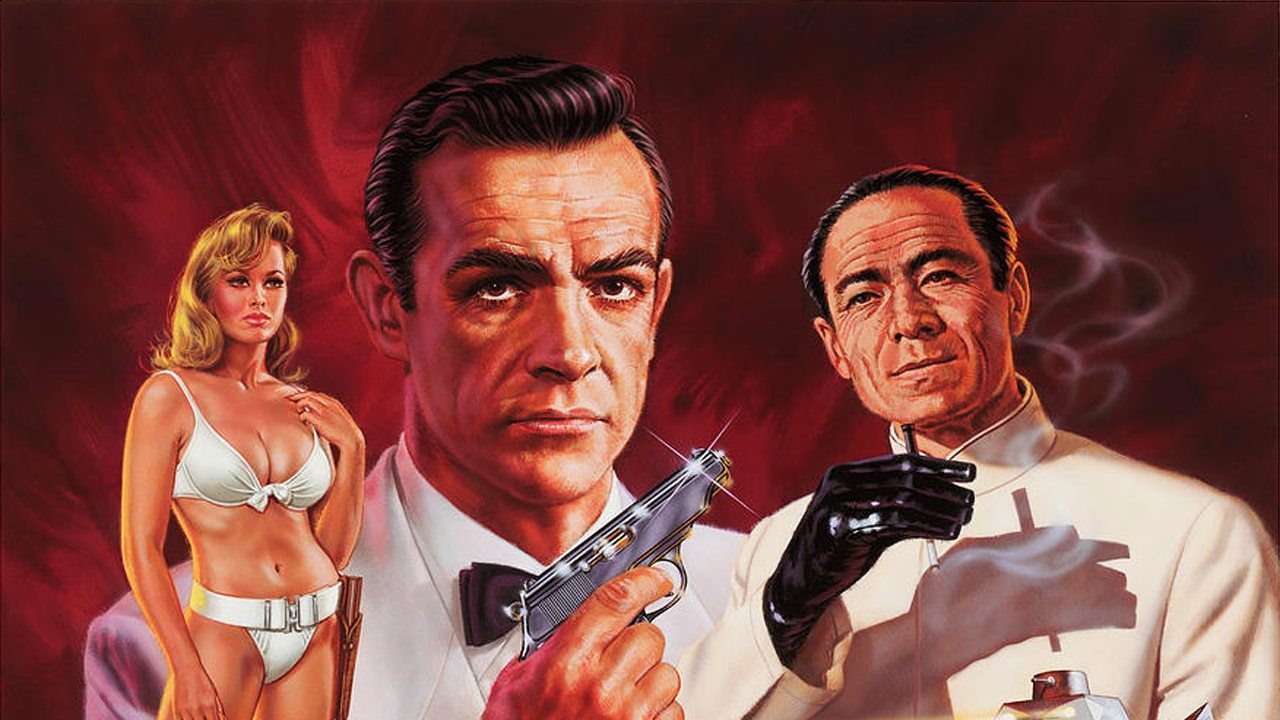
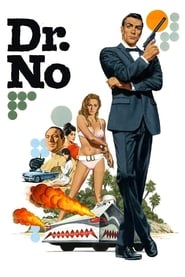
was a script editor rather than a writer. Most of the scripts, the early scripts, were written by the late Richard Maybaum, who was an American of some substance, great writer. And a lot of the dialogue really had to be Anglicized somewhat because, let's face it, we were making a picture about the British Secret Service. And I think that's what Harry brought Joanna in. I didn't know her extraordinarily well, but I know she was script editor and worked very well. Harry decided that she was entitled to screen credit for the work she'd done. The poster artwork for Dr. No featured for the first time the now famous 007 logo with the seven forming the handle of a handgun. Don Smolin, who supervised the advertising campaigns on many of the Bond films of the 1960s, recalls the campaign for Dr. No. The guy who started all that was Dave Chasman with, you know, with Mitch Hooks' painting, I think.
I mean, I as an artist, I as an illustrator, I as a designer, I as an advertising person, that campaign is as good today as it was then. I'm talking about Dr. No. It's still a great, great, great, great movie poster. Had a great designer, Joe Karoff, Dave Chasman, Mitchell Hooks. I mean, that's it. That's the bottom line. Five years after the filming of Dr. No, Jack Lord gained fame as the star of the immensely popular television series, Hawaii Five-O. Ursula Andress remembers Jack Lord. Ursula Andress Jack Lord, I remember with his wife, he came to Jamaica, so we were both there. I remember that. Always very well, properly dressed, very chic, very, very, very nice. And he was very, also, let's say we were really, we had... The crew, the actors, everybody was, we were like a big, big family. It was really very, it was very helpful and it was very nice.
that we got along together, that everybody... There was no one who gave himself an air of importance, more important than the other one. We were all equal, we were all together, we were all helping each other. It was camaraderie. It was very nice. Location manager Chris Blackwell has a cameo in this scene, as he explains... If you watch Doctor Now, And you don't blink. I'm in a scene, a nightclub scene, a scene where Byron Lee is playing, and Margaret Loise is sort of sneaking through the crowd because she's spying, you know. And there's a little scene where I'm dancing. Not to be missed. Margaret Loise remembers Byron Lee and the Dragoneers. Byron Lee and the Dragoneers, this was a very famous band in Jamaica. And... They had a lot of fun on that set, because they're a fun gang, a band of people. I almost said a fun gang, but we all were a gang together, a good gang, if I can say that. Peter Hunt explains the simple editing trick he used in this scene. In order to make the flash work better, I think I put in a frame of white, a blank frame, not just a white frame, which made it flash.
Those are the sort of things you do in editing. If you're a creative editor, you make it work. Margaret Lawors remembers this scene with John Kitzmiller. He was very apologetic because he rarely did hurt me. But I sort of get black and blue very easily, so there was this big mark on my arm. But, you know, he was very apologetic, but I guess that's just part of doing things like that. Being this photographer involves a lot of special effects and one was really I was supposed to be partly Chinese and so therefore what they did with my eyes was again extraordinary they put Durafix on my eyes and two elastic bands and tied it behind my head very uncomfortable Lester Pendergrass played the part of I think the owner of the restaurant of Morgan's Harbor. And again, very smooth, and I'd known him from before the film, so he's Jamaican, so he's great. I was supposed to slash Quarry's face with a flashbulb, and I said, oh, when am I going to do this? And they gave me, I think it was a cardboard bulb to...
seemingly break, then I put my hand to Quarry's face and slashed it... ... then they stopped the cameras and this little man with this little bag of blood... ... came and dabbed and I was saying, oh, there's so much... ... I said, well, it's not real, you know, and that sort of thing. La Wars remembers that her voice was eventually dubbed. That is not my voice in the film. The voice in the film is somebody else's voice. La Wars has fond memories of co-stars Sean Connery and Jack Lord. Sean also had a very... He was very disciplined. And what I remember, he had a strict exercise routine whenever I had seen him. He was always jogging and walking and sort of working out. The other star in the show that I was quite fond of was Jack Lord. Jack Lord was very, very concerned about other people. I do remember also that he liked his right profile
He really liked being at an angle from the right, and I thought he made his demands. And I think if you look at Dr. No, not all, but most of the shots are from the right side. Well, I quite understand when people like one side of their profile is better than another. But he, again, was very helpful during the scenes, or the scene that we had together, because I only had one scene with him. We took some photographs together, and he was quite a friendly person. Margaret Lawors recalls Dr. No director Terence Young. I see. Terence Young was, to me, was a very elegant man, and he probably did look a little like the prototype of James Bond. He was tall, debonair, and very sophisticated. And I thought he was a very good director. After working on Dr. No, Chris Blackwell went on to found Island Records, which recorded artists such as the legendary Bob Marley, and brought Jamaican music worldwide prominence. Monty Norman.
remembers Chris Blackwell. Chris Blackwell went way beyond being location manager. He had this little record label called Island Records, and he used to record some of the local talent, including somebody called Bob Marley. And it slowly grew and grew until it became one of the biggest international labels there is. and I've always had great admiration for him. Chris Blackwell. They offered me a position in Jamaica at the end of the shooting, and I couldn't really decide what to do, so I went to see a fortune teller. There was a very famous fortune teller in Jamaica, and I went to see her, and basically she said, stick with what you know. Chris Blackwell eventually purchased Ian Fleming's Jamaican home, Goldeneye. Now let us listen to Ken Adam explain his approach to the imaginative sets of Dr. No. Well, we never obviously thought it would be such a success, even though the Fleming books had been very successful. And the script was still the backbone of the story. I treated it like any other picture until we got to Jamaica really where we were shooting locations and Terence had enormous panache and saw himself as James Bond I think to some extent and so he treated
the story was a certain amount of tongue in the cheek. And that infected me. And when I went back to Pinewood to design the sets, I kept that theme in a way and really let myself go, which possibly I could not have done if the producers and Terrence had been around. But since I had to get about five or six sets ready for them to shoot on their return, I had no interference and came up with this tongue in the cheek, slightly bigger than life concept. When the producers and Terrence returned from location, I was a little worried what their reaction would be, but Terrence was the first one to see the sets. I think I had sets on three stages or something, three or four stages, and he loved them. And then Cubby and Harry both agreed with it, and that really started that whole larger-than-life, tongue-in-the-cheek approach to the design of those films. Ken Adam recalls designing this signature set. We had run out of money at this time. And so I came up with this idea of the stylized idea of having a circle in the ceiling with a big grill and with the tarantula in foreground. And Tony D'Alsamozzi, actor, played the part sitting on his chair.
And Terence loved it. And he said, can you give me a bit more ceiling and a bit more inclination so I can really go back? I mean, I spent, I think, £475 on that set. And so it worked. And it was theatrical. But it became a sort of... I don't know, you know, in the last few years when I had exhibitions all over the place and so on, people say that circle in the top seems to be my hallmark because it has been repeated in other films and so on. I wasn't aware of it until it was pointed out to me. Former United Artists president David Picker puts a high value on Ken Adams' contributions. Harry and Cubby were smart to get the rights. We were smart to finance them. But at some point in time, somebody has to create the movie. And I think Ken was probably the most significant tribute of any of the creative people, because he understood, and he did it within at least the beginning of the economic parameters that we agreed to. He created that world.
In an upcoming scene, James Bond finds a tarantula in his bed. Terence Young remembers the challenges of shooting the scene. Frankly, I shot that scene myself and I designed it myself because we even built a set in which the wall was painted on the floor and he was strapped lying on his side. That was the only way we could get a shot of making the tarantula go in the right direction. We had to put glass on him for obvious reasons, because this was a lethal animal. And it had its poison sack. And you could, in fact, have been killed by it. We had a doctor on the set. And we did the close-ups, as I say, with the tarantula crawling across Sean's chest. But there was a plate glass between them. And frankly, I don't blame him. And I think any of the critics who comment on this, I would love to see them playing the scene with a tarantula. The only interesting things I say that they didn't know
was that there are two shots in that in which Sean is lying on his side and the whole room has been constructed it has been turned over 90 degrees so that the floor was the wall we put wallpaper on the floor the bed was stuck was nailed that was so tight in fact it was built on tubular and we were shooting downwards like this onto the floor but film wise when you saw it on the screen it looked like we were shooting across the bed onto the wall But the glass was an absolute essential part of the deal. There was no other way we could have done it. Ken Adam recalls the tilted set. Sean would not use the actual tarantula climbing over himself. So we decided we had to turn the set on the side, bolt the bed to the sides so that we could put a sheet of glass or perspex over Sean's shoulder and have the tarantula go over the glass. We did that and then Terence wasn't satisfied with that and then we had Bob Simmons do it again with the tarantula actually climbing over his body. Composer Monty Norman's music adds to the mood of the scene.
What I was trying to do was to use my experience in the theatre for the film, so very often I was playing against the mood of the film, although with the tarantula music I went straight for it and made it as frightening as possible with electronic sounds and high strings and so on. three or four times his shoe onto the tarantula. And that worked absolutely perfectly with the music, and I was very pleased with that. Editor Peter Hunt. That was the way Terrence shot it. It's all done in one shot, that boom, boom, boom. And all we did was to emphasize it with the music. That was all. It's a pretty... nauseous scene, this thing crawling up over his head. And it comes to a very obvious conclusion. So rather than leave it just as a rather ordinary conclusion, we emphasize the conclusion in order to make it a comedy point. Sound editor Norman Wanstall remembers the impact of Hunt's editing. This was the importance of
working on Doctor No, because Doctor No was a prototype. No one ever had any idea what was going to transpire after Doctor No came out. We knew we had something very special, and a lot goes to the credit of Peter Hunt, who looked at the brushes and said, this is a very special move. We've got to make it move fast, and we've got to make the sound dramatic. Well, I remember... Peter saying to me, this is your first chance, this is your big break. What you've got to remember is that Terence is right behind you, because directors obviously are always a little bit wary of newcomers and people that haven't had a lot of experience. Everyone wants the best. And once he told me that Terence was right behind me, then I... My confidence rose. While Dr. No was in production in Jamaica, 007 author Ian Fleming writes on Her Majesty's Secret Service at his island home, Goldeneye. During shooting, he often visits the film's location. Chris Blackwell remembers James Bond's creator. Ian Fleming was a very charming man. He was always very nice to me. He was very suave, very cool.
very charming, very relaxed, very English. Chris Blackwell remembers Fleming's home, Goldeneye. Ian Fleming bought what is now Goldeneye from the Cousins family, who still, the son of the person he bought it from still lives next door to Goldeneye. And it used to be a donkey race course. I went to Goldeneye a couple of times. Tell you the truth, I never thought Goldeneye was that great at the time, you know, because at that time there were so many beautiful houses, most of which have now been razed and replaced by high-rise hotels. But at that time, especially in Ocho Rios, there were a tremendous amount of stunningly beautiful houses with beautiful, beautiful beaches. And Goldeneye was nice, but it was by no means the sort of prettiest part on the North Coast. In fact, Noah Coward referred to it as Goldeneye nose and throat. Timothy Moxon remembers Goldeneye. It wasn't the most comfortable house in the world, really. It is now, I think, since Chris Black was taking it over. But rather oddly furnished, you know, because he didn't care. He loved his underwater scuba thing, you know. And he used to...
go out every morning with his speargun. Matter of fact, I don't even bother with a speargun half the time. I used to just put a mask on and go, you know, relax and unwind in the gorgeous Caribbean. And the funny thing was in those days, much later on, when I had the little airline, I used to fly people down to Port Antonio. And flying past Golden Eye, I'd say that's where You know, he lived in this way, wrote all the wonderful Bond books. And they'd get their cameras out and say, oh, my God, isn't that absolutely fabulous? You know, they'd have to go right in a circle so they could take more pictures. Timothy Moxon recalls the parallels between James Bond and his creator. He embellished, you know, his career, I'm sure, into the thing, you know, MI5, you know, Naval Intelligence and what have you. But he had a regimen of writing. He'd write from the early morning and go for a swim in that gorgeous little...
little bay there, you know. We used to go down there and sit on the beach, you know. But it was kind of a rarefied atmosphere. He didn't really welcome people too much, you know. He was working. The man was churning these things out. Extremely disciplined, you know. But a charming chap, you know. Monty Norman remembers Ian Fleming. Ian Fleming was the consummate Englishman, I mean, right down to the long cigarette holder, perfect hair and so on, and his accent, of course. And it was quite obvious to me that he was the template of James Bond, and quite a bit of his life story was obviously the same. You know, he was a commander in the Royal Navy. He was some kind of spy. He was very much a ladies' man. And, of course, being such a good writer, he was able to put all that together and turn it into these amazing books. I was slightly disappointed with his house, not in the setting, because the setting is absolutely beautiful, but I felt, and other people have said it as well, that he didn't, I mean, as far as I know, he did quite a lot of building of the house, or at least seemed to do.
supervising the building and as nice as it was one got the feeling that here was a man who didn't really care that much about the things of a house perhaps the decor so I don't know quite what I expected but I was thrilled in meeting him I was thrilled in the setting but I suppose I was a little bit disappointed perhaps in the house itself Terrence Yeoing felt it crucial to inject humor into the first Bond film. When I flew out with Sean before anybody else came, I said, Sean, for Christ's sake, we've got to make this picture a little bit amusing. If for no other reason, it's the only way we're going to get away with murder, because a lot of the things in this picture, the sex and the violence and so on, if they're played straight, I think, A, they're objectionable, and what's more important, B, we're never going to get them past the sentencing. But the moment you take...
the mickey out of a thing, the moment you have your tongue in your cheek, it seems to disarm. The exterior of Miss Taro's house was filmed on location in Jamaica, at one of the bungalows of the Sanssouci Hotel in Ocho Rios. The Sanssouci is where the crew of the 1973 Bond film, Live and Let Die, would be housed while they filmed in Jamaica. But when James Bond goes inside, we are on another Ken Adam designed set at Pinewood Studios in England. Zena Marshall, who plays Miss Tarot, recalls director Terrence Young. He had this great elegance and sophistication. And I do think that he created the format for James Bond and Sean, both. I mean, he showed Sean how to walk in this casual, elegant style. For all of us, he created a style for this film. And I remember him saying...
you know, we've got to do something about this film because there's nothing too much to work on. So we better bring some humor in it. And there are these very sophisticated little sidelines, which he started. The whole thing was his idea. I remember when I was given the script, I thought, my goodness, what am I going to do with this? Because really, the lines are nothing. What do you do with those lines? So he created it all very visually. And when I asked him, I said, how do I play this part? She's a Chinese girl. Do I play her? What kind of a Chinese girl is she? He said, well, she's Chinese, but you don't really play her Chinese. You play her more international, mid-Atlantic. I said, what on earth is that? So he said, well, you said, well, it's sort of a woman that men dream about, but doesn't really exist. Zena Marshall remembers Sean Connery. I got on very well with Sean. Uh, very nice. He was then very attractive when he was... That was the first one. Um, Dr. No. And, uh, no, we had a lovely, quiet humor. Nice camaraderie. Very pleasant. Very nice. With your sort of face, it's wonderful. What's going on behind my back? Nothing. Look. Your hand.
I had to wear a bath towel for that scene. The problem was the scene in bed together because they had never shot two people in bed at the same time. That was unheard of. So the thing was, Sean was, we were in bed together and Sean was wearing underpants, all very correct. I was wearing little panties, no bra, but we pinned the sheets on either side. very carefully in case something would show. I mean, that would have been terrible, you see. And we spent three days shooting that. And I remember cameramen, suddenly a lot of cameramen on the side of our bed, sort of angling their cameras like this, I suppose waiting to see if anything extraordinary would happen. Zena Marshall's dressing gown came from an unlikely source. I didn't want to wear a frilly dressing gown. So we had long discussions. And Terrence said, well,
I've got a white silk dressing gown from Sulker. Would you like to wear that?" I said, yes, I think that might be a good idea. We had it shortened, of course. And anyway, I loved it so much that when the film was finished, I said to Terrence, can I keep it? And poor Terrence reluctantly said, yes. In fact, I've still got it. Terrence Young helped Marshall with an unusual scene, spitting on 007. That was very difficult. Because I found spitting very, very difficult. You see, he wanted me to really spit, but I mean, I don't know, how much can you spit? We had an awful lot of rehearsals. I don't think he's been spat on so many times ever. Ken Adam talks about the set of the interior of Miss Tarrow's house. I tried to... introduce a number of Chinese elements into that set. And I remember building that screen which at the same time created some tension or drama because you never knew who was coming from behind the screen, you know, like a room divider. And it was more of a traditional
way I thought somebody who's Chinese would live on the island. While James Bond waits for Professor Dent to arrive, he puts on a record with an instrumental version of Underneath the Mango Tree, a tune which will be used later to introduce Honey Rider. Monty Norman remembers composing the score on location in Jamaica. I met Chris Blackwell who was location manager on Dr. No. And my first request for Chris was, can you find me a room with a piano and preferably no windows, but certainly darkened room because I couldn't work in that wonderful lotus life sunshine. So he did find that for me. He was also instrumental in introducing me to the Byron Lee to Byron Lee and his orchestra, and to Ernest Wranglin, who's now a great jazz guitarist, and one or two other. I think Carlos Malcolm was the flute player. It's a long time ago. I can't remember many of the names. But with those wonderful Jamaican musicians, I was able to do quite a lot of the Jamaican music.
or I should say West Indian music that I'd written for Dr. Noah. This scene posed censorship problems for the filmmakers. Terrence Young, in a 1974 interview, remembers how he convinced the censors to allow this scene to stay in. There were certain objections. They said it was not very sporting. And again, I had to go and see the censor. And I said, look, my good man, do you think it justified that you should be allowed to have a scene in which a man comes in and kills you? If he'd killed him, fine. He shot him in the back and he would have killed him. Now this man has just avoided death. He's just seen himself killed in the bed by this wicked son of a bitch. I said, quite frankly, he's got every right to do what he wants. And I said, he fires those shots into this man because he intends to kill him and he intends to make sure. So once I was able to persuade the sense that we were dealing on the very highest moral issues,
then the thing was permissible. And in that, if you remember, he coined what became a sort of classic phrase in England. All the kids used to go around saying, you've had your six, bang, bang, bang. Well, you know, only James Bond can count that quickly. Actually, he fired five shots because it didn't take quite so long as six. While filming on location, the biggest problem for the filmmakers was often the rainy weather. They had terrible weather. They went to Jamaica at a time when the weather was very inconsistent and they had storms and they had showers and they had rains. And they were on a tight budget, so it wasn't easy for them. They couldn't sit and wait for the weather most of the time. So it was quite varied in many ways. And Terence had a job because he had to manage to get quite a lot done within the period of the time.
And in fact, they didn't. They left a great deal of the film, which they'd planned to shoot there, undone because of the weather situation that they came across. I mean, there were some times when they just couldn't shoot. Being a pilot, Timothy Moxon knows the Jamaican weather all too well. It rains all the time because of the Blue Mountains, the orographic lifting, you know, and it's torrential a lot of the time. So it's very verdant. Soon, we will get our first glimpse of Ursula Andress as Honey Rider. United Artists Publicity Director Jerry Giroux recalls the actress. Ursula Andress, I first met when she was signed by Paramount as an actress at the studio in the early 50s. She was absolutely one of the most beautiful women that I have ever seen. The unfortunate thing was she spoke very little English in those days. She was a Swiss-German girl.
I should say German-Swiss girl. And they were unable to do anything with her, but everybody agreed she was certainly one of the most beautiful young ladies that had ever been put under contract. I next met Ursula when she was signed to do Dr. No. Ursula Andres was born in Bern, Switzerland, but she ran away from home while still a teenager and took up residence in Rome. At the famed Hotel de la Vie, she quickly became friends with some of the biggest names in the film industry, including Marlon Brando, Brigitte Bardot, and Roger Vadim. Ursula's beauty forced her to become a reluctant actress. She appeared in small parts in a few Italian productions before she signed contracts with Paramount and eventually Columbia Pictures. Even under contract, she found herself too nervous to act in any of the films those studios offered her.
It was only at actor Kirk Douglas' urging that she accepted the role of Honey Rider in Dr. No. It was Ursula's first major film role, and she proved to be perfect for the part. In the novel, Honey Rider's emergence from the sea, nude save for a belt and sheathed knife, is compared to Botticelli's Venus. Ursula Andress was able to create an equally memorable image as she walked onto the beach. Even clothed in a white bikini, Andres's entrance made an impact on audiences, which she herself found quite perplexing. So everybody was talking when I come out of the sea. So I said, well, I just came out of the sea. So I was sitting there waiting for this incredible thing to happen. And I was waiting and I was waiting. I said, well, that must not be it. Something else must come, something else. And I was waiting, waiting till the end of the film because I couldn't understand that this opening I did was so appreciated, so...
I was just standing there and doing that thing just by the sea and I couldn't believe that it appealed so much. I really sincerely couldn't believe it. I was really lucky that they liked it so much because I don't, you know, here I stand there with a shell and that's it. That's the fantastic opening. I was only lucky. I was lucky. Ursula Andrus recalls how she and Dr. No's costume designer, Tessa Pendergast, created the now famous white bikini. When I got there, we had no wardrobe. So we had to get right away the bikini, right away the little dress for the Chinese dress. And it was so strange. There was a girl who had a boutique, and she was also making dresses. And she was a friend of mine from Rome. Tessa Pendergast was her name. And we made it together because we did the bikini together because I said, oh, you know, because I had a sort of athletic figure, I didn't like this way or that way, so we did the bikini together. Ursula Andrus remembers co-star Sean Connery. We fought a little bit trying to get who is getting the...
what do you call it, the record player trying to learn how to sing this song underneath the mango tree. And he used to take it away from me, then I had to go and steal it back, and he came back into my room, because in Jamaica you could go in, there were no windows, so you could go over the balcony. So he was stealing, come and steal my record player, so that he practiced better than I do. He sings much better than I do. I can't carry a tune. I can't. It was funny, but it was, let's say, the role for me was easy because it was, I used to swim, I used to do competition swimming, so swimming was no problem, the sea was no problem, running around up and down the hill through the mud, through this marsh, and being in the water, and this was very easy for me. The difficulty is...
when I have to speak, which I used to be so scared. But Sean helped me a lot and he was adorable to me. Very, very nice, very, very helpful. Mani Norman recalls how he received help in writing the song Underneath the Mango Tree. Another of the West Indian things I did was when Ursula Andress comes out of the water, which has become a classic scene in cinema. And she comes out singing this little number, and it's answered by Sean Connery. And that was, underneath the mango tree, me honey and me, come watch for the moon. Underneath the mango tree, me honey and me, make bula loops soon. Bula loops. Let me just divert this for a moment. Bula loops. I asked several of my Jamaican friends what making love was in some kind of patois, and they suggested bululups, and that was perfect for the song. Although I must admit now, I'm still not sure whether they were having me on or not, because I've never heard anybody use bululups. So if you know of any Jamaicans that really do know that one, I'd be very pleased to know that. As this scene was being filmed,
Four visitors wandered into camera range, nearly disrupting the shot. The intruders were Ian Fleming, his wife Anne, and their friends Peter Quinnell and Steven Spender. Timothy Moxon comments on the scene. Dr. No was a very simple movie, really. You can see the little bits of frailty. The things that they do now, the drop of a hat in those days, took a tremendous amount of effort, like the bullets flying and all that sort of stuff. Terrace Young was something else. He was a gentle man, but he had Connery to work with, who is nothing but brilliant. And Terrace Young said, you know, I think this boy's going to make it in spite of his Scots accent. I think that's probably the understatement of the century. Incredible. Before Dr. No, Sean Connery's biggest roles had been on British television and in the Disney film Darby O'Gill and the Little People,
United Artists publicity director Jerry Giroux recalls meeting Connery. When the picture started, I went out to Pinewood and met Sean Connery, though I had met him once before, when he made a picture over here with Lana Turner. And I'd met him, but I didn't really get to know him. But we realized that he was a very strong actor, and we also realized, we meaning those of us at United Artists, that the film could be of interest. And obviously Ursula Andress was another factor that we were aware of that we could take advantage of from a publicity point of view because of her beauty and the way she acted and the way she looked was very important from our point of view. Giroux recalls a very Bondian publicity stunt. The main publicity that we did in Europe was to take Sean Connery on his first promotional tour. And we went to Italy.
And I came up with the idea of James Bond always traveling with a match set, which meant a brunette, a blonde, and a redhead. And we went to Italy with that and did a tour of the major cities. And indeed, it was when we were in Milan that an Italian journalist first came up with the definition of James Bond as Mr. Kiss Kiss Bang Bang. And that was rather amusing. We also did a... what no longer exists, but in those days was a real publicity stunt. We went up to a gambling resort just outside of Turin in the Italian side of the Swiss Alps. And the idea was that this actor, this British actor, basically unknown, named Sean Connery, was going to break the bank. And we did it. hit the wires and broke in New York as a front page star. I think it was the New York Post or the New York Mirror. The casino was to say it was operated by whatever. Certainly from my point of view was very easy to accomplish in terms of them breaking the bank because obviously the wheel was rigged, the bets were rigged, and for the brief
period of time it took for this man sitting at the table, named Sean Connery, to break the bank, it was done because there was nobody else losing their money. It was just, we were sitting there and we really, literally broke the bank. I mean, I was at the table, I was betting, and there was one or two other people that were involved who were part and parcel of the operation at the casino. So it was... Not that difficult, but I must tell you, the money, as soon as it was handed over, it was handed back. Because it was quite a few billion lira, not million, but billion. Ursula Andress found this to be a particularly chilling scene. We had to do the scene, you know, in this icy cold river up in the mountains when there was...
trying to catch us, and I went down with the straw underneath. I think, I don't know how, it was icy cold, the water there, because it was way up in the mountain, this river, and it was freezing cold. I just come out shaking, blue. Actually, they chose me, right, because I was, I was sportive, because otherwise, if you would have been just a sort of a normal, delicate person, I think you wouldn't, I wouldn't have survived what they made me do.
Chris Blackwell remembers Laughing Waters, where Ursula Andress emerged from the sea. You know, you know all the properties there, and they wanted something which was just incredibly beautiful, and that's the place I took them. I remember it particularly because I had appointed my best friend as third assistant director on this film, and his job was to stop traffic coming when they were filming. But he was, and still is, extremely flaky character. And I remember just when there would be action and everything, you know, they'd start filming and a car would drive by, you know, and Terence would go nuts and Dickie, what's he doing? Tell him to stop the car as you go. And Dickie had fallen asleep. That happened on three different occasions. So he was eventually taken off and replaced by somebody else. Photographer Bunny Yeager remembers shooting in Ocho Rios. Well, Ocho Rios is one of the most beautiful places in the world. If you think of an enchanted island in the Caribbean, this is what I imagined, what I dreamed of, where the sky is bluer and the green of the foliage is greener. And it never is more than six degrees in temperature the year round. It doesn't vary.
It's between, I guess, 71 and 80-some degrees. It's always pleasant. There's always a nice little breeze blowing. And it's a sleepy little resort town. There are a lot of old hotels. Well, there were a lot of old hotels there that didn't have air conditioning that were just, you know, the kind of place you'd like to stay in with a little balcony and the tropical flowers hanging over the balcony and the little Birds coming and begging for food when you had your coffee out on the terrace. It was so pleasant. Actor-photographer John Derrick visited his wife Ursula Andress in Jamaica. The two met while Derrick was appearing in Cecil B. DeMille's The Ten Commandments. Being inexperienced, Ursula Andress' dialogue scenes caused some concern. You know, my mom would ask me to do one scene. Suddenly my blood pressure used to go up so high and I couldn't hear anymore because the beat of the heart was against my eardrum. I just heard boom, boom, boom. And the worst just came, I didn't know how I acted. I really don't know how I acted in that film because I was deadly scared, deadly scared. Feeling that Ursula Andress' accent was perhaps too continental for the ears of the British and American audiences,
Peter Hunt turned to Monica Vandersil to re-voice the actress, as he explains. You know, re-voicing somebody is very tedious, hard work. It's not easy, and you've got to be extremely patient and careful about how you get it. Otherwise, you just get it coming out as we've all seen, you know, cardboardy. It has no emotion in it, and you think, oh, God, what a terrible voice. You know, and there's no portrayal of a performance in it. Whereas Monica, for Dear Soul, she used to work very hard at it and do it. And we would redo things and do things and work very, very hard. It wasn't easy to re-voice any of these voices. But I used to take time and we used to do it the proper way. Before becoming involved with the James Bond films, Cubby Broccoli was partnered with Irving Allen and a company called Warwick named after New York's Warwick Hotel, where the two first cemented their partnership. Peter Hunt remembers Warwick. They were a big presence. They came to England to make films because at that time, cheaper, and there was a lot of talent around. And Irving had been in England before and had made films or cooperated on films in England. And he partnered...
made a partnership with Cubby. I don't know the details of that. And they both came over and started a production company, which they called Warwick Films. And their first film was Red Berry, I think, with Alan Ladd. Stanley Sopel, who had worked with Dr. No producer Cubby Brockley on many of the Warwick films, remembers receiving a fateful phone call from the producer. Stay right where you are. I've known Cubby Broccoli for a great number of years. I worked for Cubby from 1955 through 1960 when he was partners with a man called Irving Allen, a company in England called Warwick Film Productions, which made a very, very successful movies. Irving and Cubby split, and I left, and I just finished doing a picture in Ireland, and I was home. Quite a funny story, really. The phone rang at home one night, and
An American operator said, is that Mr. Sopel? I've not attempted to do the accent because I'm not very good at it. And I said, yes. And she said, would you take a collect call from Los Angeles? I thought, oh, I will. Sounds like a job, you know. And on the other line was one with Cubby Broccoli, Albert R. Broccoli. And he said, Stanley, what the hell are you doing? I said, nothing. He said, you start work for me on Monday. Do you know a man called Harry Saltzman? I said, no, never heard of him. He said, where are you going to? Go to, and he gave the address in London to go and see this man, Harry Saltzman, who I checked up on and found that he had been in the business a long time and had been involved with a company called Woodfall Films with Tony Richardson and John Osborne and made a number of very, very good movies, and Harry was a man of some talent. Jumping way, way, way ahead,
Some years later, when the Bond films were all set up and lots of money was flying all over the place, I reminded Cubby of this collect call and said, why did you call me collect? He said, because it's cheaper that way. Harry didn't have the experience that Cubby had as a producer in this country. And Cubby said to me, I want the crew to be all the people, as far as possible, that we use in the old Warwick pictures. Ken Adam was Warwick art director. The late Ted Moore was Warwick director. cameraman, I was an ex-Warwick man, makeup people, all that, all ex-Warwick people. There was an ex-Warwick crew. I think Warwick Films should have got a royalty on all the baths. They provided most of the talent. According to Fleming biographer Andrew Lycett, upon its completion, President John F. Kennedy asked for a screening of Dr. No in the White House cinema. Kennedy had been a fan of Fleming's novels since reading Casino Royale in 1955. In March 1960, when Kennedy was running for president,
JFK's friend Otzi Leiter introduced him to Ian Fleming. Fleming suggested amusing ways for the future president to deal with Cuba's Fidel Castro, some of which were similar to ideas actually under consideration by the CIA. Now Ken Adam remembers creating this set. I was conscious on Dr. No, which was the first one, that I wanted to do something which was more an image of our period, of the period of engineering and computers and electronics. And also playing with new materials or materials which up to then had not been used very much in films. And I also tried to give a tongue-in-the-cheek futuristic feeling to this film. So I think the best way to describe it is a form of heightened reality. Director Terrence Young and actor Sean Connery's understanding of the role of James Bond is demonstrated in this scene. Bond, a prisoner, orders Dr. No's guards to remove his handcuffs, which they do. Producer Harry Saltzman had taken out an option on Fleming's Bond novels, but was having difficulty financing the deal until he partnered with Cubby Broccoli. Composer Monty Norman remembers Harry Saltzman. Harry was a marvelous guy. I really liked him. He was a lovable, I won't call him a rogue, that's almost libelous, but he was a great guy.
almost a kind of Napoleonic figure, tiny, dumpy guy, good looking. And he was a theater man too. He did quite a lot of work with the Royal Court at its zenith at the time of Look Back in Anger and stuff like that. And he was involved in the films, the Woodfall films, which again was, I suppose, to do with the royal court, with Tony Richardson, things like Tom Jones and so on. So he was a great figure who really knew his business. Editor Peter Hunt recalls his first encounter with Harry Saltzman. Harry came to London and made Look Back in Anger and wanted me to edit Look Back in Anger and really And I was at that time about to go with Lewis Gilbert to Hong Kong to make a ferry to Hong Kong. And I wasn't going to go and do a kitchen sink film, which was not really my sort of subject, with Harry Saltzman, Look Back in Anger. Although Look Back in Anger was a fairly successful film, very well done. Very good film.
Funnily enough, I turned down Harry Saltzman for Look Back in Anger in order to go to Hong Kong because we were going to cut the whole film out there and have our own cutting rooms there and shoot the whole film out there, which was not generally done in those days. And we were there for six months making that film and editing it and cutting it and all that sort of thing. What happened really was that on the ferry to Hong Kong, I had an assistant who was a great reader of novels and paperbacks, things like that, and he asked me whether I'd ever read any of these James Bond books that were coming out. I said, no. And he said, oh, I'll lend you one, because you'll like it very much. He said, it's your sort of material. I said, all right, fine. And he lent me the first one that came out. And I read it, I must say, and I thought,
It was pretty good, but I never had any idea at that time that they would either be making them into films or that I would ever be working on them. Dana Brockley remembers the day that her husband, legendary producer Cubby Brockley, and his new partner, Harry Saltzman, sealed their deal for the Bond films with United Artists. It happened to come on our second anniversary. Cubby forgot our second anniversary. Terror, terror. So we went to dinner that evening, and he was making all kinds of toast, to the bonds, to the this, to the that. And I finally said, do you know what today is? And he said, yes, first day of summer. It was June 21st. I said, I'd like to make a toast. And I said, happy anniversary. And I looked at his face, and I thought he would die. And he said to the head waiter, look, my wife went to powder her nose. By the time she comes back, I want a cake here that says, Happy Anniversary, Diana. And it was done. United Artists Publicity Director Jerry Giroux remarks on key decisions the producers made early on. Part of the brilliance of Broccoli and Saltzman that they optioned all of the books.
from the beginning, with the exception of Casino Royale, which, of course, was the property of Charles Feldman. Ursula Andress found it easier shooting on sets. That was sort of easier because, you know, it was more controlled. You know, we were not... The pressure was not here off the outside. You know, the nature, you know, the river, the camera, you cannot set up correctly because it falls into the water or everything. In the studio, you can control everything much easier, so everybody was more quiet, and it was easier, it was less tension. Sound effects play a key role in the latter part of the film. Editor Peter Hunt. In order to level that all out, I know how we came to have that general hum, was that we thought, well, because it was way down, underground,
under the sea, it would have some form of air conditioning. And that's how that came and we built from there. So we got an air conditioning noise and then made it sound a little bit different, not quite like an air conditioning. Then we added a little bit more to sparkle that up a little bit. And that's how these things come about. Creating all the various sounds that help to bring a movie to life is the job of the sound editor. Norman Wanstall, who would go on to win an Academy Award for his work on Goldfinger, explains a sound editor's duties. Very few people understand what a soundtrack editor actually has to do, and it's not easy to concisely explain it. But in very simple terms, the sound editor's job is to take the soundtrack that's given to you when the film is shot and do what has to be done to it to create it.
the most technically and artistically perfect track for the cinema. Like all the departments, Wanstall was challenged by the film's limited budget. The budget was very low and this really was significant in my case because invariably on busy films like that, action films, you have two soundtrack editors. It's inevitable you need those because somebody has to look after all the dialogue and somebody has to look after the sound effects. mainly because so much soundtrack is thrown away or put to one side because of various reasons it's not usable. And Peter said, well, look, we don't have a budget for two soundtrack editors, so we'll hire someone for dialogue. You've had a lot of experience on sound effects with Wind Rider. This is your big chance. And so I moved across to handle the sound effects, and someone else took my job. It was pretty awe-inspiring, really, a big film for one's first chance.
And I always remember when the script of Dr. No came in, we just treated it as another movie. We read it and we said, yeah, great, you know, let's do it sort of thing. But we had absolutely no idea whether it would be popular or whether it would be a success. This amazing Ken Adams set posed special problems for editor Peter Hunt, as Hunt recalls. Ken Adam, of course, came along and said, do you like it? Do you think it'll work? And I said, I think it's great, it's tremendous. But tell me, what's that large piece of glass there for? Oh, he said, that's where the sea is going to be, and you'll see the fishes behind there. Oh, I said, that's interesting. How are you going to put the fishes behind there? Oh, he said, there'll be back projection. Now, as a cutter and in the cutting rooms, I know who gets the film. I have to get the film. And I said, when do you think you're going to shoot this? Oh, this is going to be shot the day after tomorrow. Really, I said, and have you got the film? No.
Nobody had got the film. Nobody had come to me and said, we need a back projection plate of fish swimming under the sea. I said, well, we better do something about this. I better get hold of some library material or something. Have you looked for any? Nobody had looked for any library material. So I rushed around for a short time. I couldn't find any. But eventually, the only thing I could find was there was a plate of these great big tropical fish. And by now, I'd spoken to Terence, and Terence was involved in the whole thing. And I said to him, the only thing I've got is this plate of these tropical fish. Well, I said, will it work? He said, well, we've got to make it work. We're supposed to be shooting this tomorrow. And that is, in fact, what we projected, was this material that I'd found, which was very limited, of these great big fish. Now, when they go over to it and look at it, and you see these great big fish swimming around,
Terence rightly thought, we've got to have something to explain this. And he invented the line, minnows pretending they're whales to cover the enormous size of these fish through this glass. Production buyer Ron Quelch remembers procuring the Goya painting. Because of the topicality of the idea, the famous Goya portrait had just been stolen from the Tate Gallery. And it was decided at around about 3 o'clock one afternoon for a shooting the following morning that they would like a copy of the famous Goya, Duke of Wellington. Well, it didn't exist, and obviously the real one was for that time, for that moment, gone. So I went up to the National Portrait Gallery, actually, Got all references, photographic references, colour samples. I phoned one of our suppliers to get a correct size frame and had a lot of these postcards enlarged. We didn't have the facility of the machines we have today in the studios. I had to go to an outside firm to have it enlarged to the correct size. Done in black and white. Delivered it all to the designer's home that night.
Overnight, he painted it in the correct colors. And the following morning, we had the Duke of Wellington in its frame, on the easel, in that particular set, Dr. No's Apartments. Sound editor Norman Wanstall remembers director Terence Young. I think a lot of people used to say that Terence Young really was James Bond. He was like directing himself, because he was the public school gentleman with the blazer, upright and good-looking, and obviously had a... fairly affluent past. And as James Bond, as Dr. No was obviously the very first one, and he was the first director, we felt the whole thing was falling into place, quite frankly. The image of James Bond, as in the book, seemed to fit Terrence. And he was fairly cavalier, too. He didn't seem to get uptight. He didn't seem a very intense gentleman. He shot the film, simple as that. I thought he was very right for the part, as they say. Stuntman Richard Graydon also recalls the director. I suppose it would be nice to make a tribute to the originator of the films, which was certainly Terence Young. He set a style which, in fact, has been developed and continued through. Without Terence Young's setting of that style, Sean Connery, who was in those days a very rough
When I say rough, I mean he hadn't got the polish that he had now. And it was Terrence Young who spotted his potential. And without Terrence Young spotting that potential and basically giving it to Sean, I don't think there would have been the success of all the Bond films which have followed. So I do think the two people who set it alight were Terrence Young, the original director, and Sean Connery, the original Bond. Spectre? The upcoming shot of Dr. No crushing a bronze Buddha posed special challenges for sound editor Norman Wanstall. Every time I see that sound, I question whether or not it could have been done any other way. But then any sound editor would have done it his way and would have used different ingredients. And probably 100 sound editors would have produced 100 different noises for it. This is where I think I probably called upon
my experience with Winston Rider. What he taught me mostly was that always think in terms of ingredients. Never look at a sound and think, how can I do it in one? Think of all the little tiny elements that maybe, when they're blended together, will give you the end result. And I remember that track very, very well. And I would think there would have been six or seven elements of bending tins, crackle, We would have experimented with a lot of sounds before we actually ended up with various ingredients. Then I would have gone in just with that individual shot to the mixing theatre and I would have said, I want to create the sound of this crushing element and they would have used my ingredients and between us we would have decided on the very best combination. Sometimes it takes a long time. There's many choices, but you always know when you've got it. You say, that's the one. Forget the rest. That's the one. But that was a tough one. Terence Young had high praise for his star, Sean Connery, as we hear in this 1974 interview. He's a marvelous person. He's completely honest. He's fundamentally honest, a little too honest.
like him inordinately as a man. I think as a man, he's even more impressive than he is as a public figure on the screen. He's a really, really splendid person. He's had a tough life. He came from a very poor family. And he remembers it. He's not mean. He's bought me some really very extravagant presents and all that. But when you go out for dinner one night, And he looks at the bill, he says, my God, he said, my whole family could have lived on this for a week. Terrence Young's daughter, Juliet Neeson, remembers her father's association with production designer Ken Adam. I mean, I was so fascinated by Ken's designs and what, and I mean, particularly on Dr. No, when there was, I understand, very little money. And I mean, the famous scene when he's going down the shaft tunnel, apparently that was only about eight foot long, that shaft. I don't know the technicalities of how they did it, but it was an absolute miracle. Terence was always very proud of that particular sequence, but Ken was absolutely brilliant. Editor Peter Hunt and sound editor Norman Wanstall enhanced these scenes with sound effects, as Hunt recalls. You invented whatever sound you could to improve that, to make it either more suspenseful
uh... whatever it was you were trying to do that's what sound is really for and sound must carry you so that uh... you don't have any slowness or any dullness in the picture or whatever it is and obviously those crawling down the shaft was a ventilator shaft wasn't it so you start off with some sort of ventilator noise and if it's too mundane and too ordinary you try and add to it. You start with the one sound, and then you begin to add other sounds and put in other noises along the way, which help the whole series of excitement. Norman Wanstall remembers finding some of the unusual sounds. Whenever I see that scene again, I'm always rather pleased with that. Sometimes you look back on your work and you feel that perhaps it wasn't as good as you thought it was, or you could have added or subtracted certain elements.
I always remember how I asked a fellow sound editor if he had any ideas, had he ever come across anything that would give me the rumble. I knew I could find the water and I knew I could find the various hissing sounds after the water had passed because you knew it was hot because Bond had got pads on his hand. And I asked around and a colleague of mine had in fact produced a rumble on El Cid, I think it was, probably for the sound of galloping hooves in the distance and I borrowed copy of that and I was very grateful because without the distant rumble and beginning of the of it it would never have had the drama you knew something was happening down there and you knew it was it's going to be scary Peter Hunt has high praise for Norman Wanstall he was very good and very inventive and would bring would go and find tracks or would shoot tracks for the film and from there we would
you know, enhance on them or use them in whatever way we wanted to, which we thought was best for the scene. The actual sound of the thing also came from the mixer, you must remember, too. So you would mix several tracks together at certain times to create one sound, which would deliver for you the drama of whatever you were trying to create. Norman Wanstall recalls attending an early screening of the finished film. We went to a preview. I always remember that, going to a preview as Harry Saltzman was there and it was in some local cinema. I'd never been to a preview before and they interview people as they came out and they filled in their cards and I always remember Peter saying to me, by the way, there's one or two here who've commented on the sound effects. I thought, oh, that's rather a good start. But the reaction was quite remarkable. In fact,
not only with the people just in that cinema, but people were talking about it almost instantly. And I always remember there were, in those days, lots of radio programs, comedy programs and sketches and so on. And one of the sketches on this radio program was they said, Dr. No, and they played the... And all they did was played half a minute of sound effects, gunshots and tire squeals, and then a voice said... Hey, isn't there any dialogue in this picture? I thought, oh, well, we're obviously making an impact somewhere. But people reacted to that film in the most amazing way. We were very proud. We didn't know what we had. We didn't know what we had. We knew we had something different. We knew we had a film where the hero actually shot someone in cold blood. We didn't think we'd get away with it. We knew we had a film where Sean was going to say Bond, James Bond, which was a classic shot of all time. We knew we had a film where...
Tarantula went up a man's arm. And we knew we had a film where Ursula Andress came out of the water. But we weren't sure if that was gonna make a brilliant movie. But it did. Here in the reactor room of Dr. No's complex, we see another astounding Ken Adams set, for which he received some expert advice. In Dr. No, the reactor room was very much an integral part of of the story and Harry Saltzman decided that I should visit Harvard, which was an atomic research center in England. And I got a lot of technical advice from some nuclear scientists who were working there because we tried to keep it as accurate as possible, the water reactor part of it. And then I designed my version and with the technical advisors giving me advice. Special effects man Bert Luxford also contributed to the scene. I was involved halfway through the film really because that's when I came out of the engineering department and I went on
Dr. No on a big set, on the nuclear reactor set, basically on engineering all the time then, because it was a vast set to build, a lot of metal stuff to be done on it. Dr. No became an instant sensation, but not everyone was delighted with the film's instant success, associate producer Stanley Sopel. The picture came out in this country first, in England, and we repaid the bank loan in about three months. much to the chagrin of the bank, who had lost 15 months interest on the picture because they had penciled in 18 months interest on this lens. Lois Maxwell remembers attending an early screening. It was only at the end of the film when I was invited to a rough cut of the film. All of the cameramen and their wives and so on, we were all invited. that we could realize that the film was actually terribly funny. It was witty and funny. I mean, one minute you'd be laughing, the next minute you'd be, oh, what's... And then we thought, this is not a run-of-the-mill film. It's going to be something different. I was always invited to the beginning of the film luncheon, and...
usually to the wind-up party, too, which was, oh, the wind-up party for Dr. Noh was something else, because by then, as I say, we'd seen the rough cut, and we all felt quite excited about it. And Ursula Andress was simply wonderful, and there was dancing and everything, and nobody could keep their eyes off Ursula. The success of Dr. Noh was a big boost for the career of Ursula Andress. Doctor No got me into, let's say, he gave me success. He gave me independence. I could choose, I could do. He gave me a lot, Doctor No. Associate producer Stanley Sopel. We did a budget. The budget was in excess of a million dollars. And United Artists said, a million dollars, no more. So we did a little doctrine of the script, a little doctrine of the budget, and then a million dollars, and we made the movie, which cost $1. 2 million. the original budget. There was a little kerfuffle about that, because we'd gone over budget, et cetera, et cetera. And then, of course, they saw the movie. And what they saw was a $5 million movie, which we'd made for 1. 2. Sound editor Norman Wanstall. By the way, the biggest change for me in Dr. No was
The final part where he realizes that he has a chance of blowing the complex up, the Dr. No's complex, he turns the wheel. And he turns the wheel, and he turns it and turns it, and so we obviously have to tell the audience that this is really bad news and that he is beginning to, something is going to erupt. When you see the film, it's very easy to assume that the sound on the handle was of course the sound that belonged on it, that the machine he used had a sound, but of course it wasn't. It was just a built appliance on the set. And I think that was one of the most difficult tracks I ever had to produce. And I turned to the maintenance man at Pinewood Studios and I said, look, you're the boffin. You're the guy with the wires and the machines and the electronics. Look at that and see what you can do. And within two days, he said, I think I might have done it. And he came up with a gadget you can't believe. It was wires and buttons and lamps and the most extraordinary thing. But he said, if you turn this little handle here,
a sound will emit and it will vary accordingly. And sure enough it did. So we watched the picture and that's how we did it. I've never been so grateful. That's teamwork, that's movie making. Editor Peter Hunt was in New York City when Dr. No premiered there and found out that it was the talk of the town, or at least the talk of the town's cab drivers. I enjoyed making Dr. No because it was a tremendous inventive vehicle for me. Because of the problems we had in shooting it, there was a great deal of inventiveness needed in making the film, which suited me and suited my personality. I only remember getting a great deal of pleasure the first visit I had to New York, riding in a taxi from the airport to United Artists or to my hotel, and all the taxi driver could talk about was this wonderful new British film that had come out called Dr. No.
He never knew that I had anything to do with it. But he was wildly enthusiastic about it, which was great for me. I thought it was terrific. Photographer Bunny Yeager remembers her reaction to first seeing Dr. No. Oh, I was so excited. Oh, I didn't want that movie to ever end. I wanted to go on and on. It's one of those things where you go into a darkened theater and you want to be entertained. You want to go to fantasy world. I liked going to that kind of a movie. And that's why I think it's so long-lasting, because it pleases the men and the women. The women are going for James Bond, who is always in deadly peril and fighting this horrible foe, and you know he's going to get hurt, you know he'll get killed, but he doesn't. He always survives very nicely and very well. He's in control at all times. And of course, the men like to go to see it because
They would love to be a James Bond in their real life. They have just an ordinary life, but in the James Bond film, you can watch it and you can put yourself in the position of him or her or whatever and just live those moments that the film is going on in the theater. And that's what I do. I just love those films. They're so big. Bud Ornstein, the chief of United Artists London office, had a hand in the film's final scenes, as publicity director Jerry Giroux recalls. One of the great things that Bud accomplished for the Bond series, as it turned out, was that he got another $100,000 on the budget for a big sequence at the end. When everything blows up, that was not part of the original budget.
That was thanks to Bud Arnstein getting the additional money for it to be done. Frank George, the special effects supervisor of Dr. No, approached John Steers to help with these scenes, as Steers remembers. I was asked by Frank George if I'd go in and help him with the miniatures on the balk site for Dr. No. And he said, well, Johnny, you're the best guy I know now to do miniatures with the stuff you've done. He said, would you like to do it? So I said, yeah, sure, Frank. That'd be great. So I did that. I did the miniatures, that miniature. Composer Monty Norman remembers creating the music for Dr. No's final scenes. I was using music going up in semitones and tones at the time of the Dr. No laboratory, island even, blowing up to bits. that was good because it all helped in the chaos of the moment. But the bit I like is the bit after that when Sean and Ursula are in the little boat and the Royal Navy comes on the scene. And I wrote a bit there, a kind of jingo march, a jingoist sort of march, which I wish could have
being played a bit louder. I mean, it was right for the film... ... but as a composer, I'd like to have heard it louder... ... because it was one of my favorite bits. Because of the success of Dr. No once it came out... ... they put out the LP very, very quickly... ... and they mainly put out stuff that was recorded in Jamaica. There's hardly any of the stuff I wrote in England in it... ... and it would be nice to redo that CD... and add some of those pieces. Ursula Andress enjoyed certain aspects of her role. He was so adorable to me. He was so nice to kiss Sean. He was adorable to me. It was a pleasure to kiss him, a great pleasure. I would like to thank all the actors and crew of Dr. No who were heard on this audio commentary. Ursula Andress, Eunice Gason, Margaret Laworse, Zena Marshall, Lois Maxwell, Timothy Moxon, Terrence Young, David Picker, Stanley Sopel, Ken Adam, Sid Cain, Peter Hunt,
Norman Wansnall, Chris Blackwell, Bunny Yeager, Monty Norman, John Steers, Burt Luxford, Ron Quelch, Richard Graydon, George Leach, Jerry Giroux, and Dana Brockley. I would also like to pay tribute to all those who assisted in gathering material for this commentary, especially Steve Morey, for the use of his 1974 interview with Terrence Young. This audio commentary was compiled by Bruce Sively, edited by Lisa Hancock, and produced by John Cork, David Naylor, and Bruce Sively. This is John Cork of the Ian Fleming Foundation. Thank you for listening to the audio commentary of Dr. No.
Keep exploring
Other tracks with shared craft concerns
-
8 shared topics
The Mummy Returns (2001)
Stephen Sommers, Bob Ducsay
-
8 shared topics
Mission Impossible Dead Reckoning Part One (2023)
Christopher McQuarrie, Eddie Hamilton
-
8 shared topics
Red Dragon (2002)
Brett Ratner, Ted Tally
-
8 shared topics
The Lord of the Rings The Two Towers (2002)
Peter Jackson, Fran Walsh, Philippa Boyens
-
8 shared topics
Mission: Impossible - Rogue Nation (2015)
Tom Cruise, Christopher McQuarrie
-
8 shared topics
Aliens vs. Predator - Requiem (2007)
Colin Strause, Greg Strause, John Davis