- Duration
- 1h 34m
- Talk coverage
- 98%
- Words
- 16,808
- Speakers
- 4
Commentary density
Topics
People mentioned
The film
- Director
- Scott Stewart
- Cinematographer
- David Boyd
- Writer
- Scott Stewart
- Editor
- Peter Gvozdas
- Runtime
- 97 min
- Also on
- OneSheet ↗
Transcript
16,808 words
Hi, I'm Scott Stewart. I'm the writer and director of Dark Skies. I'm Jason Blum. I'm the producer. I'm Brian Cavanaugh-Jones. I'm the executive producer. And I'm Peter Gavazdis, the picture editor. You know, I came to Jason and Brian with this idea of a story. I knew that they were making these films, these scary movies where they were letting directors, you know, kind of make some scary movies outside of the studio system but giving them a wide release. And I came to Jason with this idea of a family, a suburban thriller about a family who believes they're being preyed upon by an alien presence coming into their home that would eventually abduct one of their children. You know, and it was sort of off to the races right from there. Jason, you and Brian, what do you look for when you want to hear an idea, when you hear an idea that makes you go, we want to make that movie? We look for something that can be done for a price, so not too many locations, not too many speaking parts, but something with a high concept. And I remember when you first pitched this, You know, we both really responded to it. I think we were shooting it within, like, what, six months or nine months after that? It was pretty fast. Yeah, I mean, I ended up, you know, we had discussed the concept. I went off and, you know, initially we discussed it as a found footage movie, actually. And, you know, I had developed a treatment based on the found footage idea that, you know, but then at the time, you guys were just about to release Insidious and had a good feeling that the film was going to work and a feeling that... you know, the shelf life of a traditional narrative might be longer, and came back to me and said, how do you feel about doing it as a traditional narrative film? Yeah, we, from Paranormal Activity, we find that found footage movies create more problems than they solve, so they're harder. Even though they seem easier to do, to make them believable, they're slightly harder. So when anyone comes to us with an idea that could be done either way, we always encourage them to tell them... more traditionally. I think if you can only tell your story using found footage, then it's worth doing it that way. But if you can go either way, I always encourage directors to shoot their movie in a more traditional way. And this story fit that. Yeah, well, what it ended up doing is it ended up requiring me to write a real script. So I went off for a summer and indulged my fantasy of writing a suburban drama that was scary as well. And we did. It was very fast. We shot in August 2012 and were in theaters in February 2013, so six months.
from shooting to release. To screen. Which is just, after having made a few movies where I languished in post for a year plus on each film, it was a real shot in the arm creatively to be able to do it this way. You know, we start the film with our, you know, our... I had never done a film that had a main title sequence before as opposed to Main on Ends, which I'm always kind of more of a fan of doing Main on Ends. And so we, you know, but this was about setting the tone and the place. So we introduced our neighborhood, this sort of idyllic suburban neighborhood. And here we have our two delinquent teens watching porn. And there's kind of a fun story behind that. shooting pornography, having to shoot a fake porn. These are my good friends. They are engaged to be married. I had to try to find some friends who are actors that wouldn't mind pretending to be porn stars for me. And I ended up shooting this. I had a variety of fancy cameras. I ended up shooting this with a 12-year-old DV camera. actually in Jason's under-construction office that had this great grass wallpaper and this wonderful retro vibe to it. And so all it requires to shoot a porn, particularly when it's about, you know, the schoolgirl porn, is to get a chalkboard from a teaching supply store and pin it up to the wall. You got insta-porn. And two willing actors. And two willing actors. Or three. This is Josh Hamilton, who... who I had a theater company with in New York a long time ago, a company called Malaparte, with him and Ethan Hawke. And he's been an old friend. And I did another movie called Sinister with Ethan, and Ethan and Josh talked a lot about it. And so Josh expressed a desire to do a scary movie. And I introduced Josh to Scott. And Scott, you read with him in L.A. or New York? Yeah, we read in L.A. together, and it was just, it was terrific. You know, I was familiar with his work. In this scene, you know, we have, you know, introduce the two families here, you know, Carrie Russell as Lacey Barrett and Josh and the kids, Dakota and Caden. And then we introduced some of their friends. And the idea here, we had David Boyd was our cinematographer on the movie, and one of the reasons why I wanted to work with David is he'd shot the pilots for Friday Night Lights. And one of the things we had talked about early on in this process was...
trying to get a level of naturalism and realism in the performances. And David comes from a documentary background. And so we set up a whole series of cameras and just kind of went in a circle around the table and allowed the actors to improvise as much as they wanted to. And that created a sense of naturalism. And we shot the film in order. for the most part. And so it really gave us, you know, we shot for four weeks and it really gave, we just had this tremendous momentum as you kind of go through the process and everybody gets familiar with each other and these relationships develop. This scene, for example, was shot right after the scene we just saw. And so... Very quickly. Yes, it's sort of very, very quickly. You always go through, you know, five or more pages a day on a schedule like this. This was kind of an interesting thing. And Pete, I wonder what it was like for you when the footage was showing up. Our AD, Adam Druxman, had this very good idea, so we thought at the time, which was to allow these kids to actually talk with real walkie-talkies and put cameras in both rooms and shoot the scenes essentially live. There was a little bit of technical snafu with these, but it did allow, particularly Caden, the six-year-old, the chance to really play the scene for real. Did you do any magic tricks on this? Well, performance-wise, it's great because the kids are playing off each other. Sound-wise, it was a technical issue because there's all this popping and squawking when they're releasing the button on and off between each other's lines. So we'd have to cover that up and eventually replace all that futzing. The performances, though, it was really important. We learned very, very quickly working with Caden, who was six, who hadn't had experience in working in movies. up to that point. He was, you know, just a little rain man. He knew the script by heart. Literally on our first day of rehearsal, you know, Josh and Carrie, you know, years have been acting since they were his age. And they were laughing when, you know, I would say, let's work on this particular scene. And Caden would already say the first line and they would flip through their scripts going, what scene is that? I don't even know my lines yet for this. And there is our six-year-old who already knows all of his lines by heart. But it was really important not to make him in terms of the performance, in terms of directing the performance. For me, it was a real learning experience to how to get him to not feel
like he was, you know, how he rehearsed the lines with his parents and how to make it sound more natural. And so what we discovered really early on, and David Boyd helped a lot with this as well, was just we just, whenever we had a scene with Caden in it, we would aim all the cameras at him first. And we would do all of his, because his level of his focus, which you can see even at the beginning of of this scene here in the kitchen, he would just play and that's great because that's real. So he's playing for real here and what we would just do is we'd start to just fold the scene in around him and I wouldn't yell action or cut. Carrie and Josh and Dakota would just start to do the dialogue of the scene or work their way toward the dialogue of the scene and that way we were able to get a much more naturalistic performance out of him and fortunately because we were shooting digitally we had the ability to run the cameras for quite a long time. uh... you know and there's uh... some other sort of thematic ideas that we were playing around with the didn't want the movie feel very very designed as we are shooting a hundred-percent relocations and although we did do design work on the movie, we wanted to keep it very naturalistic. But it's sort of this idea of blue being order and red being chaos, and we'll end up talking a little bit more about that as the movie progresses. But here's a very blue scene. This is very orderly. Very, very orderly. And when we shot this scene, I didn't know what it was going to look like when Pete cut it together, and he made a choice that ended up staying with us all the way through. Yeah, I chose not to show... the guy conducting the interview just to make it really cold and unwelcoming. It's almost like a Snoopy parent, you know? One of the things that is always challenging in these movies is that when you come out of your hero location or your main location to little scenes like that, they're very hard to make them play real. I don't know why, but we always struggle with that. And the choice that...
that Pete made there. You get all the information you need really quickly in a way that's much more effective than if you had seen the whole scene. Good on Pete for that. Good on Pete for that. We did go all sorts of different ways. It's always awkward when you meet an actor. Ron Ostro is the actor there that we don't see on camera, and he's a wonderful actor, did a great job, and was a lot of fun to work with for a very brief amount of time that we shot the scene. And of course, when I saw him at our premiere, and he said, I'm so excited to see the movie, and I went, Oh, wait. Your lips and your fingers, great. You're in the movie, but a little differently. But there's a perfect example because it had nothing to do with his performance. It just had to do with that. And that's what's always so hard is that actors, I mean, it's impossible not to take personally, but that wasn't the problem. But it's hard. No one ever... It's hard to get that. It was also about anxiety, creating a real sense of anxiety. And I think the way that Pete, you know, when you go into those kinds of situations, sometimes you don't, it's like you can't even remember the face of the person you're talking to. All you see are the details, the watch, the finger tapping, you know, the weird expression on his face, the flipping of your resume and all that stuff. And so it was really all about that. And here's kind of a fun example. You know, having her... come up the stairs and then walk into Sam's room. Once again, we were talking about red and blue. If you notice when we get back to a Sam and Jesse scene, Sam's room is blue and Jesse's scene, his room is red. And this idea of showing her walk into that room, overhearing the kids on the walkie-talkies and then walk into that room, is obviously laying the groundwork for what will later be one of the big scares in the movie. And... Here we have the stacks in the kitchen. There's a lot of debate about this. Those are in my office right now. Are they? Yes. Excellent. Yes. The idea was to kind of create a kind of domestic suburban crop circle, you know, a crop circle in a kitchen using refracted light from the chandelier and kind of a brain teaser. And just like the idea of a mess that becomes super order, you know, a mess the night before that becomes super orderly.
There was a lot of debate as we were putting the movie together as to how far to take this, whether we should... There was even an idea of adding a bigger visual effects element here, like a kinetic element to the sculpture. And it was all just sort of... When you're working on these movies, there's always a question about the degree of believability, how far can you push your characters, push the extremes of the situation before... you know, if you do it too extreme, too early, the audience is gonna go, why aren't they leaving the house? Or, you know what I mean? I'm sure you've had that experience before. It's hard to balance it, right? Too extreme, too early, or then if not extreme enough, everyone's like, the beginning of the movie is so boring. And you gotta, I think you guys found the balance here, but it is hard to play with, because I always find that movies are more effective if you spend time with the characters before too much happens, The scares are bigger because you're invested emotionally in what's going on between them. But it's always tricky. And the distributors always want to cut to the scares early. And we always try and fight that. But it's always a puzzle. I think an audience will forgive a slow beginning as long as you nail them at the end. But the opposite is impossible for them to sort of buy into. So I think it's like... I think you have to get to know these characters and, you know, working with Jason and seeing the best of these movies always really gives you a sense of these families and who they are and what they're up to. And I think that you did, you made the right choice in taking your time. Yeah, I mean, it's sort of like the, it was all about, it felt like it was about, particularly because the movie is a bit of a tweener in the sense that it's sort of a suburban, you know, drama thriller. domestic drama and in the end a kind of science fiction scary movie because of what it ends up dealing with as opposed to supernatural. But there's a certain rhythm to their life and a sense of order and you kind of have to see how life is normal before you start to throw it out of whack so you can see how far the characters end up going as you push them to the extremes. And of course a lot of the stuff in this movie is actually just little seeds that are setting up things that will hopefully pay off later in the film.
And I think also we haven't talked about it yet, but Carrie is a big part of what makes that work, too. We were really lucky to get her in the movie. She was the first one in, right? Yep. This is a good place to talk about all things Carrie because she's just spectacular. And she really sells this, which is really hard to do, and a lot of actors aren't able to do it. And I think Carrie and Josh and Carrie... in particular, because we're talking about her, just does a terrific job at the mom in distress. Yeah, this was the first real genre movie, so to speak, that she's done, from what I understand. And she just took to it with such a fearlessness. You know, it's so rare that you get the first actor on your list for a particular role. And we were very fortunate, and we sent the script to Carrie, and she responded right away. And I think in particular, hearing her talk about it in interviews subsequently to shooting the movie, she said the thing that she responded to was the fact she is a mother, she has two kids, and the time it takes with the family... was valuable to her in terms of what she liked about the film. She felt like it was something she could play. And there's a relatability to her that I think is super important. Yeah, and you can't pull these movies off unless the actors are on board with the schedule and stuff like that. And she didn't go back to her trailer between setups, and she was really in it. And you don't succeed on these kind of schedules unless the actors are really up for that, both when they're on screen and off. And it was, this is like turning into a Carrie Lovefest, but it was a pleasure working with her because a lot of times that doesn't happen and it was great how on board she was with the production schedule as well. there's going to be a little non sequitur here we're going to get back to talking about the actors but it's important to say that this is our editor uh pete here who is doing the voice of uh he's doing his best david he shows up in a lot of our movies shows up in a lot of our movies which is great but but this is um you know in in keeping with what you were saying jason i mean what's one of the other things that's so great about about this model of making these movies is is that
you know, they're not cast-driven. You know, it's about casting who you think is really right for the role, and a lot of times because of various considerations and the cost of movies, you know, getting exactly the right actor for the role isn't necessarily always the first, you know, thing on everyone's mind. Sometimes it's about casting an actor that has a particular value that's going to help you get financing for the picture or have a certain name recognition in a particular kind of movie or kind of role. Well, I think the joy of that, too, I look as somebody who works with the financiers on this, the joy of it is that we allow the stars to be really the director and the producer, Jason. I think that those are the stars that we build the world around. And then, look, we've got really lucky in getting fantastic actors who are also meaningful, but I think that it's really wonderful to be able to give you guys that level of creative autonomy built around just the idea, the concept, and you guys. Well, it's interesting because it's sort of like it's... There's certainly been plenty of examples of scary movies with very famous people, but there's been probably no other genre has more examples of... of great success with complete unknowns. And there's something inherent in the genre that, like, if you don't recognize, you know, if you have Tom Cruise as the star of a small, scary movie, chances are he's going to make it through the movie and be okay. And he's going to win. And he's going to win. He's going to get the bad guy. He's going to get the bad guy. And there's something about that. Now, this is where we, you know... We've skipped past the part where we first started to hear what we called the tone, the sort of alien tone. There was a lot of development time spent with the sound effects team to try to come up with this idea of the tone. And in the early versions, you know, an early cut of the movie and certainly in the script, we actually had this, what we called the sort of alien gray point of view that was drifting through the house. And it would drift and make its way up the stairs. And what we found was, is that it really slowed the pace of the movie down and it was kind of giving too much away too soon.
by having it here earlier in the movie and so we ended up holding that point of view until you know quite a bit later until after a more significant moment which was when he sets up the video cameras the surveillance cameras for the first time and then we really show as you'll see later we show that gray point of view drifting through the house here's another example of a live conversation happening there is someone actually on the other end of that phone, and they're really having that conversation with him. And it really helped a lot. It created a real sense of immediacy and reality for the actors on set. Another interesting thing, the mother of invention phrase, which is when we're making movies at this budget level, you have to get really creative with how to make these things look good and seem like bigger movies and without a lot of resources. One of the big resources in the cinematography department are big lights. When you shoot a lot of a movie at night, if you're lighting up outside, you need big lights. Big lights are very expensive and we couldn't afford them. Boyd was very clever and what he did is he used the sun as a big light. also from a practical point of view no one really wants to you know night shooting is hell and a cinematographer friend of mine on my first movie described it as akin to waterboarding and said never make any major decisions in your life while shooting nights don't refinance the house don't buy a car don't have an affair don't do any of these things because you're under tremendous emotional and physical distress um But David used the sun and we just ended down the windows and colored them blue and And that was a way for us to shoot days most of the time in the movie. There was almost no night shooting True all night long night shooting should talk about Josh Stamberg who played a police officer in my first movie Legion as well And even though I originally wrote the role of Mike for him Karen's husband that rich Hutchman plays Josh decided He really wanted to play a cop again for some reason. I think it's the uniform turns him on. And Kerry had a wonderful nickname for him. Yes, she called him Hot Cop. Where is Hot Cop? Which, you know, Josh just hated. He hated the idea of Kerry Russell calling him Hot Cop. Just kidding.
Here was another example. Once again, the way we set this up was it was very, very, very quiet. And cameras were aimed at the kids first. And I purposely set it up to kind of feel like it was an interrogation. So this was why screen direction was really waiting the kids on the right and the parents on the left in profile. And it makes it feel like it's very opposing forces coming at each other stylistically. And then, of course, it changes as... Carrie comes close to him. And we just started with Caden and let them both kind of roll into this conversation. And they would just start and say, you know, we have to have a conversation. We have to have a family discussion. They would start asking him questions that would lead him into the dialogue of the scene. And in the end, it turned out to be a really wonderful performance, not just a wonderful performance by a six-year-old.
There we see Josh. He gets into it. In terms of casting, as we talked about Carrie and all the qualities she brings, she's beautiful and she's warm and she's empathetic and she feels reliable. She feels like a reliable narrator and I felt like that was an important quality for Lacey because she's the first adult character to believe in the movie as to what's happening. And with Josh Hamilton, the qualities that I was looking for in a Daniel was somebody who, in the third act of the movie, when he buys a gun to protect his family, that this is not something that would be comfortable for him. My father didn't look like an action star, and a lot of people's fathers don't. And so it was kind of about trying to keep true to that idea. it wasn't someone, it was somebody that you liked, and Josh has a real natural charm. He's very, very good at comedy, in addition to drama, but also that, you know, it's a role that's very difficult because he's, as another actor friend of mine who's, we talked about the role, at one point he says he's, Daniel is douche-adjacent. You know, he's like almost a douche, but not. Well, I think too that these two characters are in opposition a lot in the movie, right? They both are, you know, Carrie is an early believer and Josh is not. And it's really tricky to have, as an audience and thinking about the audience, to not have the audience be definitively with one or the other pretty early on in the movie. And I think that because they're both so grounded and both so good, at least for me, and I feel like when we talk to lots of audiences, there was really you you know you were never with one or the other you were always right in between and trying to figure out if carrie was right or when when josh would say things like you're being crazy you would have that feeling like maybe she is being crazy maybe she is yeah that we were we was always very worried about that that you would feel really tilted in one direction or another and and interestingly enough when i saw pete's first cut of the movie i was very pleasantly surprised at how kind of wish with Daniel I was. You know, that you weren't automatically with Lacey. Now, as we developed the cut further and refined it, you know, it started to get even more, it got more balanced. But I think it's a testament to Josh's work as an actor that, you know, he was able to, plus, you know, as what you were saying, Brian,
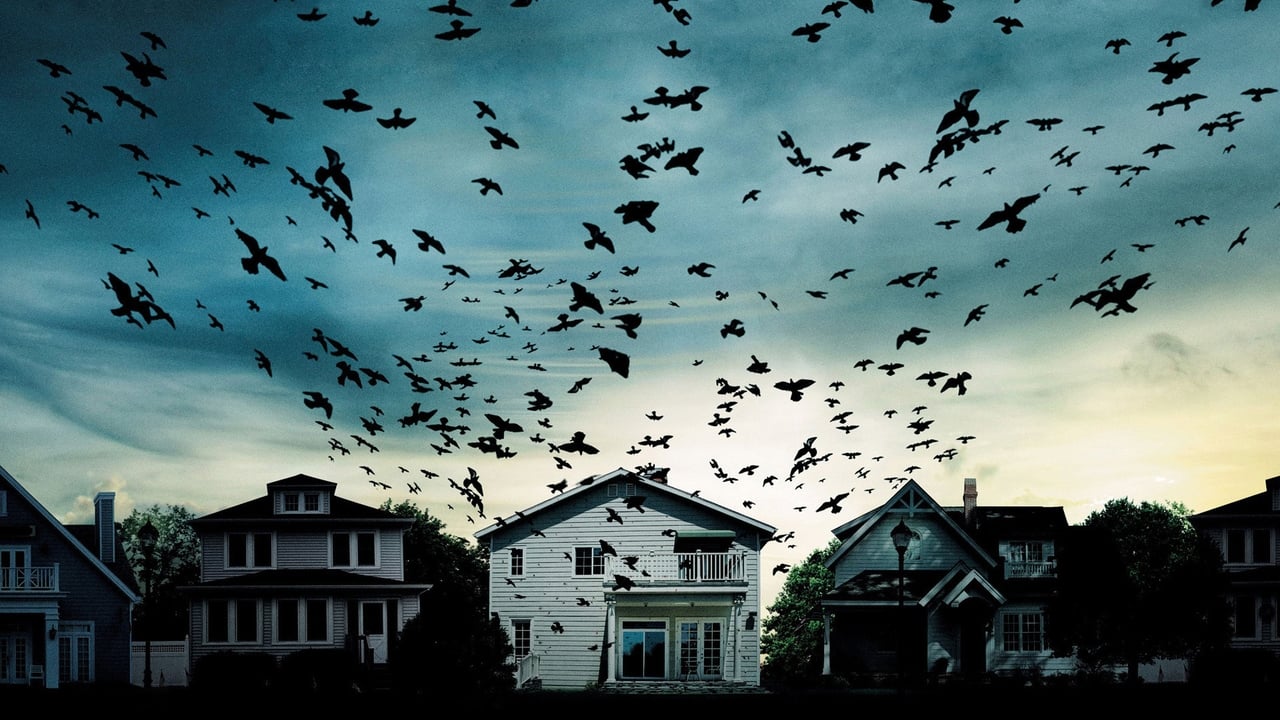
The state of their marriage at the beginning is also under stress. And so you're going to have to watch these two fight for a goodly amount of the movie. And in a weird way, you know, the movie is about they go through this harrowing supernatural experience, for lack of a better word. And what it ends up doing is bringing them together. Here we have the bird scene. There's lots of discussion early on about this. And, you know, I was always quite committed to the idea that you would see this totally from her point of view, that we would never cut to the gratuitous, big, giant, flocking visual effects shot outside of the house where you see this massive bird swarm. And there we go. That's the bird. I did this as a temp visual effect, this digital bird flying and hitting the glass. This is now a puppet. And we just, it always made audiences jump, even just in the cutting room. And we liked it so much that even Fuse, which did, our visual effects vendor, did great work in the movie. But for some reason, that was one that we just really liked it. So we ended up keeping the temp in the movie. And your temp is actually a 2D bird. It's not three-dimensional. No, it's not. It's a 2D bird. That's great. image search of a bird and you flap its wings in After Effects and make it hit a window and add all sorts of other good stuff, motion blur. There's another sort of one fun thing was always just kind of allowing everyone to kind of get into the scene as quickly as possible and just sort of seeing what actors wanted to do. And, you know, we had this trampoline in the backyard and we just sort of figured if there's a trampoline in the backyard, Ratner would have to jump on it. There's just no way he would jump on it. Of course, LJ being, you know, Ratner's, you know, twin, jumps right on there and then starts hacky-sacking the bird carcass. And we all started laughing so much that we just said, you have to do that. And he did, and of course it always gets a good laugh out of the audience. It's always, you know, if you have a bunch of technical information to get out, it's always a good idea to have characters walking while they're doing it. And particularly if you have...
you know, good actors who were able to really do it. And I think Judith Moreland, who plays Janice Rhodes here, did a really nice job. And having them have to traverse this sort of obstacle course to get out to the front yard where all the neighbors are watching. And, of course, we have my friend Elizabeth Coore. She was standing across the street. She's the red-headed. She's the nosy neighbor. She was also in the park as well. And I cast her because she's got a distinct look. was also a good friend of the Blumhouse head of production. And she has a three-year-old who is terrific looking and would be in her arms and point at the camera and do all sorts of fun stuff. So I was like, can you and baby Abraham come and hang out with us on set? You put everybody, particularly when you're making a small movie, you call in every favorite you can. So here once again is an example where we just spend a lot of time. You know, Pete would have this footage and he would hear me talking over it as I'm asking Caden questions and asking the actors to, you know, the other actors to ask him questions and just watching them do this. And we just ran and ran and ran. And you'd have to sort through that. Was that challenging? No, it was actually, it allowed me to have a lot of choices, which was nice. I wasn't pigeonholed into like two performances. There was a wide range of options, which is very refreshing. It's one of those things. I mean, we shot with the Alexa, and David has just got, he's all about momentum and energy, David Boyd. And that's one of his great strengths. And he always sets you up for speed. So he was, let's have two cameras at all times. Let's have a short zoom and a long zoom. And we had a third body that was always built for steady cam because we knew we would do a lot. And it takes 15 minutes to do a changeover. If we did that four times a day, that's an hour of shooting time we didn't have. So even though it costs a little bit more in a camera package, we would have all this other stuff. We'd just make up for it in speed. And it was very, very helpful. I'd never worked that way. I'd always been very regimented and always shot with primes. And this was a way of working differently. And I ended up shooting more footage on this film in 21 days, and I shot on my last film when I had 60 days on. And more is more. We don't do any of our movies on film for that reason. Brian actually made a movie where the director insisted on shooting on film.
because everyone's so used to hd now he used nine million feet of film so we have a rule now no more film on our movies and here we introduce the greys this is the first big uh well after the birds this is the i guess the second big jump scare of the movie um and of course that's the it's that she's once again hearing the conversation and the audience has already been lulled you know i mean suspense is all about, you know, building the suspense sequence is all about sort of building anticipation and sleight of hand and misdirection and pace. Boom, there. There we go. We did that all in one. David was like, let's do it in one and let's run out of the house with them. I wanted to end the shot at the doorway and he said, no, no, no, let's keep going. So we just kept running and it worked. I thought it would take us forever to do it. What else is his shot? David Schott, he's very well known for having done the pilots of Friday Night Lights, The Walking Dead, Deadwood, and also movies. I think right now he's shooting the pilot of the new Joss Whedon S.H.I.E.L.D. pilot. He's just a legend in television and a great shooter and a great presence to have on the set. You know, we talked a lot about the color of things in the movie and the color of light and mixing color temperatures, warm light versus blue light. Gregory Crutzen is a photographer whose work I'm a huge fan of. And we looked a lot at his work, at how he, you know, he shoots sort of disturbing suburban tableaus. You know, most famously probably known for his cover of the Yola Tango album where a man's looking up at the sky and there's a, what looks like an alien spotlight coming down on him. So we did that, and in terms of the gray, that was the first time we saw them physically, and there was always a risk of if you show them that early in the movie, are you blowing the gag? And it ended up working very well for us, because people were surprised that they ended up seeing something like that so early in the movie, and they just sort of lift out of their seats. For a long time, while Fuse was developing that, Tina was our gray. Yeah, my girlfriend, you know, I came home one night and I was, you know, I wanted to temp all these shots in the movie. It's sort of how I sort of communicate to my various members of my team what I'm looking for. And so I photographed her using my Canon 5D as a silhouette and then distorted her silhouette and stretched it and made it a little more skinny and alien-like.
She's quite petite, and I made it tall and skinny. And people jumped through the roof, even when they saw her as the silhouette, even so much so that when they were doing the trailers and everything and the TV commercials, they kept using that because the visual effects came in quite late. And everybody just thought, it's sort of testament to this idea in suspense that you could have probably put just about anything there as long as you had some kind of shape and a sting because of the fact that you've been lulled into this complacency at that moment in the movie. It comes in quite surprising. And it really works. This house we called the Croft House. It was nearby and And mostly, we did some very specific redecorating. But mostly, the house was this way. And believe it or not, I think an elderly woman had passed away. And these dolls and that couch with the plastic, all that was hers. The only thing I did is I imagined the kitchen as being yellow, tile and formica. And so we made it yellow. It was peach. Here was quite a bit of controversy. Very controversial scene. Very difficult scene here. You know, the payoff of him watching the porn at the beginning of the movie and the boob grab and his misunderstanding of what you do in the situation. And there was, you know, quite a bit of understandable consternation and concern on behalf of these young actors, Annie Thurman and Dakota. and their parents about how explicit the scene would be because all they had was the script as you know and then just their worst imagination in terms of how graphic it would be and I kept assuring them that it was really a moment of grace you know that it was going to be about this boy making a mistake and she has great empathy for him and ends up turning it into a very sweet moment between two young people and it's really fun watching audiences i had no idea and when our first screening 300 people um pete put this great song in here and he orchestrated that cut like that and and it stayed that way the whole time the timing uh the timing works because of that cut it never changed you know uh what was the song uh the band is the drums
Days Gone By or something like that. Yeah, Days Gone By. And it just had that, you know, that great feeling of, you know, anybody remembers riding home your first kiss and, you know, young teenager riding home your bike in the suburbs and you're like teetering between now I'm a teenager and I want to ride home really fast and still be a kid. Yeah. And I have this strange butterflies in my belly feeling. And this movie's kind of about those feelings in some respect. And once again, note, he's, Jesse always wears red. in the movie. It's got a red bike. You know, there was this idea in the movie that while the movie keeps pointing to Sam as being the child most likely to be abducted, the color of the movie is always tilting you towards showing you that the whole time it's Jesse. And so we played around with that a lot. Once again, blue and red. Try not to overly color code the movie, but it's sort of subtly in there. We have this joke from Josh that we didn't have in the cut for a bit. And what was really fun is we previewed it and people in the audience were whispering his line as if they knew the script. And we said, all right, we got to put the joke back in. We got to put the joke back in because they're saying it. And it worked because when we put it back in, the audience laughed even harder because he's giving voice. Maybe you guys could talk about... You know, in both, like, say, Insidious in particular is this idea of having these moments of levity where the characters, you know, you can have, even having some characters show up in the movie and be rather broad, it's important somehow. Yeah, the audience kind of needs a break in these movies because otherwise it's too exhausting if you just keep the intensity and drama up the whole time. And so it's important that you give the audience time to breathe. And if you do that with jokes, as long as they're organic to the story and what's going on in the film, they're effective. And the jokes play funnier than normal because people are so stirred up or wound up that, in fact, a joke or a scare is very similar. If you're really involved and tense while you're watching it, if you do something funny or something scary, you get a bigger reaction. And I think both are really important to do.
It helps create dynamic enough. I think the fun part about these movies too is that when you do play them in front of an audience, audiences love to be vocal in these movies. So you really know when something's working, whether it's a horror beat or a laugh, you know that people are loving it or ready to scream or any of that. So it's really fun to get that reaction when you really get to sit with an audience and see it. So here's an example of what we call the gray point of view, this drift through the house that had these nodal pans, you know, which were floaty but somehow precise. And I stabilized all of these shots because, you know, when you shoot with a Steadicam, you get a natural, you do get a bit of shake. And so we try to make them even more perfect by stabilizing them in post. And we did have earlier sequences that had versions of that kind of moving through the house. And we found that it was most effective to just eliminate that and have the first one of those be here. And it seemed to make the most sense in the story because he had set up all these cameras. And so now, because there are cameras there, Cinematically speaking, it makes sense to sort of visualize the point of view that drifts through the house. And I don't like to work on movies without at least some found footage. This was another thing Adam Juxman already did, which was he orchestrated six live infrared cameras to be in each of these various camera positions. And we spent half a day I think a Saturday or something where we went through and we did all of this stuff. We just shot all of the surveillance footage and kind of did it live and had everybody... Live, very long takes. Live, very long takes where they would pretend to be sleeping and then Carrie would wake up and go into the bathroom and come in and put on new clothes and walk out of the house. And it was very effective. And then Pete and... And Tommy, our assistant editor, you know, Tommy mocked up all the stuff on the monitors because a lot of these are constructed as comps to get the timing right. Yeah, we're picking individual pieces for each of the six monitors and what plays where at what time. It was really fun to construct. Yeah, it took a little bit of work, but they got it pretty darn quickly. And then here, once again, it's all about the repetition, right, as you're building up the suspense. And as you guys were talking about in terms of
the similarity between comedy and suspense that I do think they're flip sides of the same coin, because they're all really, really, really about timing and anticipation. And here we, you know, I knew the movie was gonna be about these sort of disturbing real moments that you just hope are just gonna tweak the audience and make them super uncomfortable. And so you need those releases too. And here is a moment where Carrie was so nervous. This is one of the last things we shot in the movie, because the Croft House, this is one of the things that was out of order, is the Croft House. And we shot this as our last two days, and she was so nervous about doing this, and yet she just is so fearless. She was committed, and that switch right there, which of course is right with the sound, that sense that something has just taken her over. And what we did is we put Lexan up here, and the reflection is then composited on. And she just went to town. Yeah, she really did go to town on that. And when we first saw her doing it, she started kicking the glass. We thought she had really hit her head, and everybody jumped out of their seats. Everyone leapt up. It was one of those things where you just knew it was going to work. This was a funny moment we learned just screening it for people. When we played this close, like this angle, and you just see the bruise, people didn't always associate it as a reflection. So we had to throw in that one wider shot. This one here, because we would get notes later, they'd say, why is her bruise? The bruise jumped. And we could never figure out, why was this happening? Yeah, it's the strangest thing, because there are little tiny details, say like how an iPhone works, that people will just zero in on. And then there are other things, huge, huge cheats that you make, you know, continuity all over the place, breaking the sagittal plane, doing all this kind of stuff, screen direction changes, everything, that you think, no way is anybody going to buy that, and yet it goes right through the projector and nobody notices. I think it's very interesting, the kind of visual information that people key in on. There's something later in the movie when Josh Hamilton has the fight on the lawn with Ratner's dad.
You know, we had a continuity error because of the, you know, the timing of when each was shot where he got punched on one side of the face but the bruise was on the other. And so, you know, Pete being the wily, you know, fellow that he is just flopped the punch shots because we were in so tight and suddenly it looks like he's getting punched on the other side of his face. And we got that note in two screenings and then never got it again. Never got it again. Once we solved that problem. You know, cinematically, it's interesting when you try to do these slow creeping shots versus handheld shots and what those feel like and how those mean. And this was, you know, it was always sort of choosing your time to which one was most appropriate to use and what it would mean. And once again, a live conversation, both actors were present that are talking to her on the phone. And then we get into this montage here, this sort of, you know, it's the obligatory, you know, web search. And it's always about how much information should she get? What specifically is the information? How do you follow through in terms of how much do you need? How quickly? How do you make it feel like it's a progression of time? Almost all of these are comps. I, with the art department, created these websites and generated these digitally. And this really went through a lot of different permutations. You know, keying this back into the crop circles on the ceiling reflection you know that was something that came in late just to tie those elements in the drawings that you know just because and it was a long conversation with Carrie because we were if you took her so far to make it so definitive that what she was rehearsing or researching was actually what was really happening and that she thought, our children are in great jeopardy now. You would expect her, you wouldn't buy that Daniel comes home with some surprising news and that she decides to let it go and have a night of amour with him. And so we felt like it's really important that it It just be one of those things. It's really easy on the internet. That's why he says we don't self-diagnose on the internet. It's like searching WebMD when you've got a spot on your back. The first thing you get to is cancer. Or some kind of rare African disease. Even though you've never been to Africa, you're sure you have it. So this is one of those things where you had to be able to accept that she may just go, I'm crazy.
And I should not click on every link that I find on the internet because it's going to lead me to a crazy place. And another thing that we do in our, you know, we try to get out of the house as much as possible. And I think, you know, our locations folks and our production design team led by Jeff Higginbotham just did a great job. You know, the location you just saw with Trevor St. John, who was the second interviewer, That was at a college up near Valencia where we shot. We shot our neighborhood in Westchester, which is a neighborhood near Los Angeles Airport, and then up north a ways, up the five, in a suburb called Valencia. And we pieced our suburbs together with that. And that college doubled as, I think, five locations. It's both the first interview, job interview. It's the second one. The hospital and it is the dog pound. And there may have been one other location in there, I think. I'm not sure. It could have been four or five. And it was, you know, you always have to be able to do it because we did all of those on one day. And so it was about trying, how do you make it feel like the movie is not locked into this one location in this house? but still do it on this very, very rapid schedule. So here, once again, you know, very first person point of view and this, you know, all handheld camera all the way through this. And, you know, part of the idea was, you know, the dogs, the progression of dogs barking in the neighborhood. You know, as we learned from JK that, you know, the dogs keep them up at night, you know, when they, the greys come around. And so here we are, we have our first jump scare of the sequence. We used to, in earlier versions, have a lot of music playing at the beginning, you know, suspense music, and we realized it was much more effective if we just toned the music down and let the sounds of the environment come in and the open door. And this is just one of those moments where you just can't see his face. And then, boom, reveal. And this is particularly difficult. We had a practical blood rig That was the bane of my existence. It was a total nightmare. He had like a green wire. Poor Josh must have gone, what the hell did you guys get me into? This crazy green wire wrapped around his face with some bearded guy standing at his side pumping blood all over him. And so we ended up doing away with that and doing it digitally. It works out much better. Sometimes you try to be too clever by half in your head.
Once again, you know, we did this all in a day and let him view it. And this is an important scene in the movie in terms of kind of expressing their two points of view. And it was really critical that you believe Josh Hamilton here because if you didn't believe him here, at least believe that he could believe this, that it was reasonable to not believe her despite what he's just experienced. you would turn against him in the movie. And fortunately, it's testament to both of their performances and the realism they brought to it and the relatability that you don't turn against him. You talk to people and they would say, well, you know, how long do you think we can hold it that he doesn't believe what's really happening to them and that you hide this from the audience? And you go, well, in reality, how long would it take for you to believe that aliens were coming into your house? Like, really, how long? Three days? A week? How about never? Yeah, exactly. Unless they woke you up at night and said, I'm an alien. I'm an alien. Seriously, you'd never get there. And yet in these movies, you get there pretty quick because you paid your $10 to show up to see an alien in a movie. Yeah. So it's a... It's one of those things. And then, you know, at the same time, it's still about... The other thing we talked a lot about in terms of the escalation of their disagreements, their fights, was that every fight in the movie is kind of about the last fight. And it's an escalation of... Because that's just what we do in relationships. We're always like... Particularly when relationships are in these really tenuous places where you're just not getting along for a prolonged period of time, you start to punish each other unconsciously or consciously. And, you know... She lies to him about not, you know, he lies to her about the job interview. She doesn't tell him that their son's been having these nightmares. And so they just, it just keeps escalating more and more and more. And as you can see, it's sort of, it does eventually come to a head, you know, just before they go and see J.K. Simmons, where she really, she really drops a bomb on him. These drawings were fun to do. We had the whole art department drawing and bringing their kids' drawings in. My girlfriend Tina is an illustrator and a designer of children's sort of plush animals and toys and things. And so she came up with the design.
for the way the grays were sort of portrayed here in these drawings. And so we based, you know, all the drawings off of her drawings initially and Jeff Higginbotham's, our production designers. And it was fun. We would all sit there and draw with our left hands, you know. And then, of course, Caden would come in and show me his drawing and it would be so good. It would be perfect. Because it's a six-year-old drawing. What other explanation do you have? Just because I can't explain. I think this scene too, one of the things you talked a lot about creatively is this idea of isolation. Isolation for the family as a whole, with the neighbors, isolation individually for each of them. This scene is, I think, one of the bigger moments of these two really feeling distant from each other and isolated. I love what you saw in the bird scene with all the neighbors staring at... And here, too, you see it with... It really comes to fruition in the next few scenes. You constantly are feeling... This family is getting more and more isolated, and it doesn't matter. I think you do it with them and their money problems, but you also do it with all of the alien stuff. I don't know if you want to talk about that a little bit, but it's one of the things I loved about the script. Yeah, I mean, the story is... in many ways about suburban anxiety and the, you know, just all the feelings that you, you know, growing up in the suburbs and being of an age now where you get married and have kids and all this sort of feeling like you're trying to live, you know, raise your kids in a way that they grow up to be decent human beings and you treat each other well and all this other kind of stuff. But there's just this, feeling out there that you know you order your life in the suburbs and picket fence and all that stuff and that it all should be the way it should be and and it should make sense but you know as we experience in our lives and the way the news is and the economy and all these different kinds of things that that there's this feeling of kind of being thrown around on these title forces that your life is kind of out of control and that you're not you didn't make your you didn't cause the banking crisis you didn't make your house have suddenly lose a lot of value you know
You're doing the best you can, but 13-year-old kids sometimes will smoke pot and watch porn. Is that a precursor to something worse? And as these families try to deal as best they can with what's going on, there's this feeling of what other people around them are thinking and kind of judging them and how very quickly the family gets isolated within their own community and almost in a way they become the aliens in the community. And as you'll see in the extended or deleted scenes that we're including on the disc, you will see that some of the scenes, we actually had quite a bit more watching neighbors in a lot of these scenes. And it took a while to try to find the right balance of that between really getting that sense of paranoia and that the walls were closing in on them. and just why are we looking at people we don't know that are watching them you know and that balance between you know they're having the real problems with their with their kids the jeopardy is is growing and growing and you know caring you want to make sure that they're not being superficial and like overly caring about what other people think about them so that certainly wasn't the idea when you know their kids lives or health is at stake or or their their health And so that was all sort of thematically what's, you know, when we talk about order and chaos, the suburbs are order and the grays bring chaos. But there are all sorts of other ways that chaos comes into your life in the suburbs. And this movie is sort of like, you know, my favorite scary movies are the ones where the boogeyman is just giving voice to real, relatable, universal fears. And, you know, a favorite film of mine is Nicholas Roeg's film Don't Look Now. which is in so many ways really a story about a disintegrating marriage after a child dies. And you get to experience all of that. And the film just fills you with the sense of dread, even though nothing's necessarily really happening. And the world just feels very, like it's all just closing in on them. And here, once again, we're just trying to slowly, inexorably tighten the screws on these parents where it's not just that, oh my gosh, there's something terrible happening to my family or to my children, but now people think we're doing it. And part of the initial idea, one of the initial ideas that was part of the initial pitch when I came into Jason was saying, you know, look at these families, these parents that have become sort of infamous because they've done terrible, they're accused of terrible crimes against their children, you know, JonBenet Ramsey's family or Casey Anthony, every few years we have some notorious
horrible crime that's committed against a child and a parent that's implicated and ultimately not convicted because they just don't have the evidence. And I started thinking, you know, as a writer, you always want to try to find the worst scenario you can put your heroes in. And I started thinking, well, what if Jean-Benet Ramsey's family said a ghost strangled her in the basement? And they were telling the truth, you know, to them. You know, you wouldn't even want to have a trial. The whole world would say, just string them up now in the public square. But that's a really interesting dilemma for a scary movie. And so, you know, part of, you know, and as we went from the found footage version to the narrative version, part of this was about, you know, being, instead of telling a story in reflection as the found footage movie would do naturally because the footage is found, you're seeing something that happened. We're kind of experiencing it with them as we sort of watch the neighborhood and their friends turn against them. And... All of these things. Here's another scene that you'll see an extended version of, I think, where we watch this fight unfold and there are neighbors that are watching. But as we put the movie together and as we started screening it, people were sort of like, they're so with this moment of the characters that we know. Ratner and Jesse. It's like the most horrible thing. You can imagine watching your dad get beaten up by your best friend's father on a lawn. Here is the flop shot that, you know, the shot prior was flopped to make this continuity work. This just would be like the most horrible feeling for a kid. And there he is, he's, you know, watching it. And of course, you know, out of the frying pan, right into the fire. It felt like in this shot, you know, Mindy Christ, who just does a wonderful performance here, totally silent, bringing Sam home to Lacey is all you need. Because she, being the best friend, sort of represents the neighbors and the family. And so we know her. We've already seen her. So we don't need necessarily as many shots of other day play extras that we don't know and don't get any dialogue from watching them and judging them. Here's an example with this scene. Once again, it was about let these actors do what they're going to do.
and trust them. And my job was to, we just put our cameras in the best place we thought they should be to cover this action and get in there with them. And then once again, the great thing about shooting digitally is I could just say, back to one. I'm not even going to give you direction. Just go again. Go again and push it more. And they just naturally get there. They're really good. And their instincts tell them what to do. And it gets quite explosive. And Josh Hamilton would say, I didn't get far enough. I would even say, that was great. And he would go, I need one more because there's something more I want to get at. And sure enough, the one we used in the movie was the one where he said, I want one more. And here we see the text coming in and continuing to tighten that noose. Shelley's texting, you know, even Ratner's telling everyone your dad went psycho. And it's just like would be the worst feeling in the world as a kid to experience that. There's some stuff we cut out here. Pete, maybe. Yeah, there was the scene where Daniel kind of to cool off storms out of the house and goes down a few blocks and comes across a neighborhood block party. And it's very clear from the neighbors that he's unwanted. No one trusts him. Kids are looking at him like he's a monster. Parents are standing in front of their children. He's just, like, this evil presence of the neighborhood that nobody wants. But it just became a pacing issue. And you know that at this point. Yeah, you know, I mean, when you write it, you just feel like, okay, that's, like, that's going to be the low for this guy, you know, but... Once you see it, he's had it. But once you, you know, you put it in the movie and all this other stuff is so effective that you feel like you've done it and... There is a funny Ethan-Josh story there, because Ethan has a moment in Sinister where he flies out of the chair and flies back across the room. And Josh said it was so funny watching his buddy do that. And he can't be scared by anything that he sees his good buddy doing. And I said, well, Ethan's going to see this, and he's going to laugh at you when you go flying back across the room. And he says, we did it. And he goes, is it totally ridiculous? Is Ethan going to laugh? I'm like, he's going to laugh. It's great.
That was a great shot, the eyes. Everyone loved that. And that's in the trailer. Well, there's, yeah, I mean, there was this idea in the movie of the, you know, gothic tales of terror, which is what Jesse's reading his brother, and he's telling him, you know, he's reading these old, you know, scary stories, and he's reading E.T.A. Hoffman's The Sandman story. And The Sandman story is about, you know, the dark version of the story where the Sandman comes and he steals children's eyes and he feeds them to his children on the moon and it becomes a metaphor. Happy. Happy thoughts. A metaphor for what's happening in the film and the eyes. And it pays off in various different ways, of course, in the movie. And there's also this idea about a doppelganger father, and there's doppelgangers in that story, and relationships between this father and his son, and of course that plays into the movie too, between Jesse's relationship with Daniel. I think that's also kind of an example of, I really have a, strongly believe the simpler the effect is, the more effective it can be depending on the context. And that's just such a, it's just a very simple idea if you describe it, but it's very, very, it's a very powerful image, more than a minute of straight CGI. I think I always loved that moment in the movie. And this is, it's also an example of, you're also trying to figure out how do I get a very sudden, disturbing, shocking image that I can also have in a PG-13 movie. Yeah, right. You know what I mean? It's like, yes, it's a little gruesome, but there's no blood, really. And, you know, it's just very disturbing. Right. You know, and, you know, ineffective in that regard. And, of course, it's also serving a character purpose to really shock him into what he then later does, which is, you know, he's thinking about the static, and, of course, that leads him to having this moment with... with Sam and this idea that the Sandman has stolen his eyes and causes him to go back downstairs and reinvestigate the glitch in the video and that's when he sees what looks like the grays. And it was always very important to me, I wanted it to make it look like they were kind of unphotographable. You know, that you're seeing them somehow in the middle of a, you know, the shutter of the cameras and the slow frame rates of, the low frame rates of surveillance cameras and and that they could just be smudges in the video or static. And our design team and Fuse ended up executing that really well. And you sort of believe that he believes what he's seeing there, but it's not so definitive that just anyone would believe it. And here we have the great J.K. Simmons. The great J.K. Simmons, who wasn't cast until...
It was very, very, we got down to the wire with this part. And I think that, not that the writing is not brilliant, of course, but anyone saying these lines, it just is so hard to pull off to feel like it's believable and real. And I feel like JK, we actually put him in another movie after this. Oh, you did? Yeah, we did. He just really pulls off this, this scene which so easily could go so wrong. Obviously, Scott, you did a great job directing it and writing it. But I do really feel like it could have been really like, oh, I don't believe this at all. And you actually somehow believe it, which I think has a lot to do with JK. Yeah, I mean, he's, you know, our discussion, I based the character on kind of an amalgam of all of these, you know, in my research. quote unquote, about... The psychic, the expert. Yeah, the expert. There's always the expert. There's always the experts in these movies. And the temptation, of course, you know, particularly when you have these characters that are going to give you a lot of essentially expositional dialogue about like the mythology of your movie. Right. The why and the what you're facing and all this kind of stuff. And a lot of these movies have it. And it's always the hardest part of it. It's hard stuff. It's hard stuff. And, you know, the temptation is to go to, you know, the British stage actor. Yeah. He's going to turn it all into poetry. Yeah. And I really didn't want to do that i just had this feeling like in keeping with this idea of the suburbs and some guy that now lives in the city used to live in the suburbs that it's got to be somebody who's going to really ground it and be relatable and kind of have been able to be from their world and he probably runs a website yeah and i think what you did brilliantly too is you you let josh uh be sort of a cipher for the audience. Right. Because you let Josh continue. He's the cynic in the back of the audience. Right, he's sitting there the whole time. I mean, I think the audience just ate it up and laughed with him and loved his line about cats. It was so fun to see it's how all of us would be, right? Like, oh, okay, there are three types of aliens. They're this, they're that. And allowing JK to be as rude as he is and then letting Josh play off that and kind of call bullshit for people
half the scene and then really get looped in was really yeah there's a moment where we start to push in at both of their faces as you'll see later here and that's when josh has that transition yeah and and uh it's it's it you know when i first had the conversation with jk about it he just really he really got it and um You know, he's such a versatile, he brings such a clear persona to movies, and yet he's incredibly versatile with that persona. Because it can be used really, obviously, tremendously well in comedies. But he's a very, very fine, dramatic actor. And that edge that he brings helps a lot, particularly here. You know, that deadpan stare when, you know, Josh has that sort of snippy comeback about You know, of course, anyone would be skeptical about the reptilians, you know, and he just stares at him, burning, eyes burning through him. But Jake, he said, you know, when we first talked, he said, you know, what I feel about this guy is that he's just been in the foxhole too long. Yeah, yeah, yeah. And he was dead on. He was exactly right. He came in with a decision to be really tired. Yeah. He's just fatigued by all of this. Yeah. And... You know, Jeff Higginbotham and our set deck team just did an amazing job in this apartment about making it feel like just this It's either an alien expert or a serial killer. A hoarder. You know, that lives here. Well, he did a great job twice, too. Yes, exactly. It's fascinating to watch. Yeah, we actually brought him back to make a slight adjustment and add a little bit of additional dialogue here. These are the scenes where you get bad laughs in the movie. This kind of scene is really easy to get. This is where you don't want laughs, and luckily we didn't. We didn't get those. But that's always, there are good laughs in these movies and then bad ones, which Pete can speak to a lot. But we avoided it here, which was great, but it's hard to do. Yeah, and what was interesting about this was we'd always talked about this idea that one time, 10, 15 years ago, he was like them. Maybe he was like Josh Hamilton's character and had a wife, like Keri Russell, and maybe lost a child. And his whole life went off the rails, but he became committed because he, you know, any parent that loses a child in an abduction situation, we'll talk about this more at the very, you know, as the climax of the film, the end of the film,
You know, you're still the last one to keep holding the candle. And so he sort of committed his life to this cause. And he's not selling it. I think that's, I mean, that has to do with obviously how you directed it. But the minute he tries to sell, this whole scene falls apart. And he's not, he's just not selling. He's just saying, this is my experience. You can either take it or leave it. But this is what happened to me. And that tone makes what he's saying, even though it's outlandish, it makes it land. Well, there's a kind of quiet melancholy to it all. And there's a, you know, for me, sort of, you know, one of the most important parts of the movie, you know, to sort of bring the mythology of the movie, what it's all about, is this moment here. This is where Daniel becomes a true believer. Right. You're pushing both of their faces, and he's explaining the way the world really is. Right. Your eyes are being opened. Right. That the world... that they've been here, there's no great invasion, it happened a long time ago, and they are now a force of nature. They are just as much a part of your life as death and taxes, as he sort of says, which is sort of, of course, tying it into the traditional suburban anxiety of the rest of the movie, is basically saying that they are the chaos that comes into your life and turns it upside down, and you can try really hard to fight against it and deny that it exists and make everything look good to your neighbors and your friends, or you can do the best you can and put up a good fight and at least you know the way the world really is. And you can maybe live a little more honestly and maybe with a little less anxiety. And you kind of get the sense that this is what this guy, this is what this guy did. That's what he's done, yeah. That's what he's done. Of course, he's ended up holding himself up like a little hermit. Yeah. But, you know, of course, by the end of the movie, Josh Hamilton's character goes from being somebody who's the last person in the world to believe to kind of becoming him as he starts to pin things up on the wall. You get the sense he's the father of an abducted child, and he's going to be the last one to hold a candle, keep it burning. Yeah.
And, you know, Josh, it's a testament to both him and Kerry just did so much subtle stuff. You know, I mean, Pete just had a blast with the reactions. You know, there was a whole lot of subtle adjusting and, like, where are the beats? Where are we on JK? Where are we on them? And how do you make sure that what he's saying is landing in a character way for them emotionally? And it's a testament to... to all of their performances. Of course, we've augmented his scar digitally. And Carrie just did Housewife in Distress, you know. She just did it so well. It's just, I would say early on, these were separate scenes between Daniel, and then we have her go in the room, and then we decided to intercut this stuff. So they're all getting the information together. Yeah, we did. They were linear. The whole sequence was linear, and it worked better to intercut. It was more efficient. It cut some time out, and it just let us... I think that reveal has a bigger impact, too, when Josh gets to hear it effectively the same time Carrie has seen it, right? That they're going to take one of your children. Works great. Yeah, I mean, it was, I think, notes that came from you guys on this, and it led us to challenge the cut and do that. You know, one of the things that's been so great about making a movie under this model is there's a big difference between you know, autonomy, you know, you get to do whatever you want, and collaboration, and a studio that, you know, rules by fiat, and these kinds of things, you know, and Jason, you had told me early on, you said, you know, it's very, I let people have Final Cut, but it's rare that, you know, a note that I argued passionately for wasn't accepted by the director because He knew he didn't need to take it. You can do it. It's your choice. It's your choice. And so you go home and you wrestle with it and you go, damn it, I think he's right. And you come back in and you make the change. It's a more fun way to work. Here was a, you know, when we talked about, Brian mentioned, we came back and we did do some additional photography here and one of the things we had come up with was to try to set a ticking clock
on the movie and a greater sense of urgency about what was happening. And that's, you know, a lot of debate. And Pete and I sat in the cutting room and talked. And we said, what could we do to try to, without pulling the threads out of the sweater, to really do that? And that's when we came up with this idea of that this isn't the beginning of something, it's the end of something. And that the abduction has essentially been underway for a long, long time. And it's just... making itself known now because this is the final countdown to it. And so that was a nice epiphany to get to, and we made that adjustment, and I think it really helped us in the latter part of the movie. Here's, once again, the same location as our two interview scenes and the hospital. This is actually lit for day, but this is actually exterior night. We're actually shooting this. And the other magic of movies is we're always only shooting in one direction, but we make it look like it was two. It's called the French reverse. And, you know, and here was an interesting thing. Once again, it was just, you know, let Caden be Caden, and he was so adorable, and people laugh here in this moment that's tense, but it's nice to get that little laugh because Caden goes running out and says, we got a dog? You know, like, he's six, you know, and Dad's trying to put a happy face on this very grim business of boarding up the house and looking like an insane person. And of course, you know, the movie's really about this relationship where, you know, Jesse's 13. He's starting to come of age. He gets to have his own ideas now. And he's not interested in being lied to. You can't put a happy face on it to him. He wants honesty. I think all these movies are about, or a lot of the time, if they work, are about kind of a normal family and introducing an evil force of some kind or another, whether it's an alien or a ghost or something, and watching how it shifts all the relationships and how you get to watch... a relationship much more intense when you threaten a family in a certain way. And I think one of the interesting things about the movie is how the relationship between mom and dad, between the two boys, between the boys and the parents, it all shifts really rapidly when they're trying to deal with this threat to them. This was an interesting scene. I think we have the longer version of it.
you know, Annie Thurman who played Shelly here, she initially was a character, you know, in the beginning of the scene she's actually saying, you know, I can't stay here, you know, my parents told me not to talk to you, and she sort of seems like a force of, yet again, the community not believing them. And we made the decision to remove that and allow her to be one person that just cares about him and isn't a voice of anxiety for him, but a voice of comfort. And somehow that felt right. Do you feel like when, as a writer, director, is it tricky to have written the script and then when you walk in the edit room realize that you have so many different options and, you know, like that was written one very specific way and suddenly it had to change sort of organically as you went? It's probably one of the hardest parts about the job is trying to be open to... what it really is, because it's been said a million times on these commentaries, and it's really true. There's the movie you write, there's the movie you shoot, there's the movie you edit, and there's the movie people see. And they are often different. And you have to be open to those differences every step of the way. You write it one way, but then all the different considerations of making the movie and casting the movie and doing all these different things will necessarily affect what you've written. You need to be open to those ideas. It's just, you know, one of the hardest things is it's just a collection of decisions and you're just hoping that you're batting, you know, you're getting 80% of them right. So do you think those decisions, do you think those four stages are closer together on this movie or the same or further apart than the other movies that you've done? I felt like, interestingly enough, this was the movie where I changed my style, very consciously tried to change how I approached making the movie, not just style, but just approach to the movie. And everything about the process was different, particularly the speed of it and the collaboration and the amount of control that I had. And interestingly, it's the movie that I... seeded the most control over in terms of you know the other movies were very hyper stylized and super designed and every shot storyboarded and you know meticulous prep and long preps and long post-production this had none of that and it was a lot more about trying to give the the scenes to the actors and allow there to be improvisation and to feel our way through it and
Despite all of that seating of control, I felt like I got closer to the mark. Oh, really? On this movie. That's wild. And closer to the feeling by seating control. Right. Because it feels to me very much like the big moments that I remember from the first time you pitched the movie are still in the movie. It just feels like it is the movie that you had conceived. But that wouldn't necessarily feel that way for you. So I'm interested to hear that. Yeah, I think so. It also changes as you start. You had this image in your head of this feeling and this image in your head as you're writing the characters. And you may or may not be thinking of specific actors. And if you're not thinking of specific actors, at a certain point, the actors become those characters. And you no longer can read your script or look at anything and not see them. Right. And it starts to take on a life of its own. It just becomes its own thing. And hopefully it's a thing you like. Right, right. Hopefully it's a thing you can live with. Right. And, you know, in the case of this movie, you know, it is. You never, I don't know if I'll ever be fully satisfied with anything that I ever do, but I'm more satisfied with this than certainly in the past. That's good. And I think I'm satisfied with the parts that I don't even give myself credit for it. It feels like... the parts that somehow we orchestrated to get the actors to be able to create a feeling and do a thing and emote in a particular way and the photography and I just, you know, like this moment here between, you know, Dakota and just, you know, Carrie's performance here. It's one of the only times in here where we talk about Joe Bechara's music, which is this great score. And this is really one of the only places in the movie where we have pretty music, like dramatic music in the score. And it's because it's the only place, you know, we really didn't want to have drama music anywhere in the movie. Right. And because we didn't want any of the moments to sort of shift into kind of a saccharine place. But here it's kind of earned because it's so grim what's happening to them and Carrie's sadness about what their children are going through is such a nice counterpoint. And what Josh
Josh's character is trying to do is sort of create a happier moment in their minds. And this is the moment where the family is really kind of really starting to come together in a way that they have not come together ever before in the movie. Here and boarded up in this house on 4th of July, you know, they are united. Taking matters into their own hands here. Yeah, and once again, that's the idea of this casting with Josh was to, you know, cast someone who... wasn't going to look super comfortable with a shotgun in his hands defending his family because most dads wouldn't. And of course with Josh Hamilton, we talked and we joked about his high school sport was yoga. Still his sport, by the way. And he carries a man purse. I love that, though. I love when actors are cast against type like that. I'm psyched that you did that. Yeah, it's... It's good fun. You know, it just always felt like it would be a lot more relatable. Yeah. And here, look at Carrie. It's like, she's so great. Just like, and she was like a machine. You know, her ability to turn it on. Boom. This is my favorite scare in the movie. I love them all still. That one, I think that like hearing the audiences scream for that. And then scream again when they see that one. I love it. And they did such a good job at Fuse animating him. But it was, you know, and there's the hand coming in, which was, Pete, I think it was your idea there. Yeah, I wanted to play like a homage to Silence of the Lambs. That famous night vision scene. Yeah, yeah. It was so funny too because it's like, you know, the initial idea was she crosses the, you know, we conceived it, she crosses the frame and wipes on the alien and that would be, you'd see it. And we did it take after take after take and focal length changes just to sort of see if we could just vary the timing. And the first version of it that we did, had a different approach where she walked in and the alien just stood up in the doorway behind her. Yeah, we had a couple different ways to reveal the alien. And this one, you know, we went back to the initial concept and it was much better. Yeah. And then here was just about balancing, you know, this was very tricky in terms of sound, how to, you know, what sounds to keep going and the pinging and, you know. of the screws coming out, popping out, and the dog barking, and the progression of this, the progression of the light through the house. You know, once again, this is a pretty small budgeted movie here, and so it's not about
you know, the trick in these movies is, you know, big expense, you know, 100 plus million dollar movies are gonna, you know, you're gonna have the spaceship, you're gonna have the whole city destroyed, you're gonna have a whole bunch of CG characters in bright daylight fighting with your heroes and, you know. And the thing that kind of always stuck with me about that stuff is that, you know, honestly in the end, Rarely are people satisfied by those when it comes to alien movies. When you see the alien, there's not a whole lot of aliens in the history of alien movies that people really are satisfied with in terms of the alien, the way the alien looks. So whatever is in your imagination is always scary. Yeah, it's sort of like showing heaven. Do you know? And so in keeping with this idea that the greys in the movie are something of a force of nature, that they are, despite this family's best efforts, And this is where this movie kind of deviates a little bit from the norm. You know, you cannot beat a force of nature. You cannot, you can try. You can only get to a place where you realize that they happen and you can just do your best to sort of ride them out. This was another interesting thing was, you know, once one, two, three, you know, this was, this involved a lot of me trying to convince the actors to imagine this because they're basically all looking around in various different directions and we have a bunch of grips and gaffers and folks on lights, you know, flicking lights and turning lights off and on and sending, look left, look right. You could hear me and Pete had to cut this together and say, look left, you know, and he's hearing me say, look left, look right. Okay, now see, you know. And we had to time the reveal of the aliens. This transition was something that came in quite late in the process and it was something I had mocked up once again with my favorite tool Adobe After Effects and then eventually handed off to Fuse to make look good but it was just something to try to help the audience initially you know it's just a cut you know he just gets to the bottom of the stairs and suddenly he's back in Croft and in the Croft house this place that just kind of has some meaning for him because he had his first sort of awkward sexual experience there And we felt like it would help the audience kind of understand in keeping this idea of we're going to get totally in the realm of the psychological here. It's what JK is explaining earlier in the movie, that they get inside your head. They prey upon your fears. They take anxiety and they amplify it. That was our big MPAA cut.
Yes. Yes, we had to make some trims there. We cut that way back. Yeah, we had to trim that there. Get the PG-13. To get the PG-13. He used to put the barrel into his mouth. They did not like that. They were not feeling that. Not for a PG-13. Yeah. They sort of just said, you know, if it were a comedy, it'd be fine. Yeah, yeah. You know, but dramatic, you know, parental murder-suicide is, you know. And here we go, you know, back to... you know, back to the porn, but now seen on a 70s television here. Jeff Higginbotham, this is the area of the house where we did make some changes. We added the shag rug and the wood paneled walls and the bed was the bed. We made this wallpaper. He printed this wallpaper. But it's, you know, once again, sort of playing around with the idea of the doppelganger, the doppelganger Sam. It's, you know, the idea that's in the Sandman story. And I think, you know, the movie gets very surreal here and abstract, and purposely so, and it's a risk. You hope you don't lose your audience. But the idea being that he's experiencing, this is where you realize this whole thing is the abduction, and he is having one of those blackout moments, and we're experiencing it. He was lured out of that bedroom, and he experienced all of this in the hallway, and his brother is still with the family. And there's an alien right there. You'll see on the deleted scenes that there was a different version of this initially. Once again, our test audiences liked our gray so much that we thought, well, let's give them a little bit more gray and show the abduction in that regard in the hallway. But there was the... We're making a very low budget movie version, which involved showing Sam and kind of paying off the idea of the Sandman Sam, the doppelganger Sam that has light for eyes. And you'll see that in the deleted scenes. And it's a very cool image, but it's pretty darn abstract. And so that's always the thing. This was an idea, you know, I'd originally written it that he would walk through the hallway and put this to the wall, and J.K. wanted to. He had made the choice to stand up on that box and pin it to the top. And as soon as I saw it, I just thought, oh, no, no, we should just, it was just such a nice cut to go from scissors to him, you know? And then this is an ending, a second ending that we shot, and you'll see the original ending.
We did the transition between, this was actually shot because of the actor's schedule. This was shot a few months later, which actually helped us because the actors looked a little older. They were both working like crazy on other projects. They're in New York. So we shot this. I knew I wanted to do an apartment scene in the city and had a lot of conversations with Pete and with Jason and Brian about this. And this idea that you saw The idea that we wanted to make the feeling that the family was still, they hadn't given up, although they lost. They lost their son. They're now under a cloud of, you know, there's a cloud of, you know, a legal cloud over their heads. You heard Josh was talking to their lawyer. He's got missing kids photos pinned up to the wall. He's sort of on his way to becoming Pollard. And here, you know, and they're keeping the candle lit. You know, now they're in a little apartment instead of a big house. probably things haven't gone well financially. But here they are, and she's having this moment of reflection. And this aspect, where she finds the drawings, was the original ending of the movie. But we wanted to continue things just a little bit more than what we did before. And there was a lot of discussion about it. And one day, Pete walked into the cutting room and said. And said? I said, I just spoke to my wife, Olivia, and she had this Great idea where we bring back the walkie-talkie element. Wow. I didn't know that was your wife's. Yes. Wow. She is responsible. Credit where credit is due. Yeah. And she said, you bring that back and you have Jesse contact Sam. And it adds hope. You know he's alive. You know he's out there. You don't know if it's a call for help. You don't know if it's I'm coming back. But you just know that he's there. Mm-hmm. Because we were kind of missing that at the end. We wanted a little more hope. Yeah, we had a very, very, I mean, it's a pretty grim, it's a pretty dark ending. And the ending, the original ending, as you'll see elsewhere on the disc, will show you that it's a very, very bleak ending. And it strongly implies that it's not, that Sam's next. And the audience, you know, there's always a percentage of the audience that really liked that because they like the idea that it doesn't have a happy ending.
ending, but there's also a part of the audience that says, we just want some, we care about these people, we want a sense of hope. We also want a sense that they didn't just give up. And there was a feeling, although the scene that we shot, the ending that we shot, was so lovely in terms of the way it was performed by Josh and Carrie. But this idea that they had not given up hope, that they were continuing, I think was really important for people. And it also leaves this with a sense of mystery. ending on mom's face like that. And that's it. And that's it. And then you get, you know, we should spend a moment here talking about Joe Bishara's score, which there's so much to talk about. You can't talk about all of the great work that everybody's done on the movie. But Joe came in. I had heard his work on Insidious, and I was so impressed by it. He really managed to eschew cliché, you know, horror movie clichés, and come up with some really creative stuff. And... In this, you know, I'd always had in my head that I wanted to not do a traditional score, but to do an atmospheric score, an experimental score, and allow, you know, that you would have, I like this idea of a score that you couldn't really tell the difference in some cases between music and sound design. and that it's just this sense that it's just out there, and a lot of it sounds like static. And Joe just did a remarkable job in an incredibly short amount of time doing that, and I was really pleased that there was a lot of notice to his score and what a good job he had done. And here's a moment where you get to hear some of the pieces sort of laid out. Well, there you go. Credits. Here it is. They're not as long as they are on bigger movies. They're much shorter than a normal movie. They're much shorter. But thank you guys, everybody, for listening. And we'll continue this on the deleted and extended scenes. And hope you've enjoyed this and gotten some value out of it and enjoyed the movie.