scholar
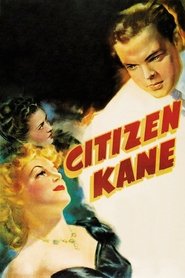
Citizen Kane (1941)
Release Citizen Kane (The Criterion Collection, 2021)
James Naremore and Jonathan Rosenbaum discuss Citizen Kane's production, politics, and disputed authorship. They examine Welles's collaborators, Hearst, Mankiewicz, Pauline Kael's claims, and Hearst's treatment of Dorothy Comingore. Their scene analysis covers deep focus, ceilings, long takes, montage, optical printing, sound, and Bernard Herrmann's score, including the limits of Rosebud as an explanation of Kane's life.
- Duration
- 1h 59m
- Talk coverage
- 92%
- Words
- 17,499
- Speakers
- 2
Commentary density
Highlights
Topics
People mentioned
The film
- Director
- Orson Welles
- Cinematographer
- Gregg Toland
- Writer
- Orson Welles , Herman J. Mankiewicz
- Editor
- Robert Wise
- Runtime
- 119 min
- Also on
- OneSheet ↗ OverBlack ↗
- External
- IMDb ↗ TMDB ↗ Find on Amazon ↗
Transcript
17,499 words · 59 flagged as film dialogue
Hi, my name is Jonathan Rosenbaum. I'm the author of Discovering Orson Welles and the editor of both This Is Orson Welles and two Orson Welles unrealized scripts, The Big Brass Ring and The Cradle Will Rock. And I'm James Naremore. I wrote a book called The Magic World of Orson Welles, and I edited a volume of essays called Orson Welles' Citizen Kane.
I once attended a lecture by Bernard Herrmann in London. I can remember running across town to this opportunity, and there were only about 25 people in the auditorium. And what Herrmann did was he showed us this sequence we're looking at right now. He made two points about it, one that The film was scored in a different way than Hollywood went about scoring movies. Usually the standard way of doing it is to get a full edited assembly and show it to the composer, and then the composer works on that. But Welles didn't do that. He gave Herrmann sequences. And this was Herrmann's first glimpse of the film. It was just this, this montage of stuff going up to the castle. And it was on the basis of that that he composed this power theme, the motif that runs through the movie. The other thing he did was he showed the audience this sequence we're looking at without sound and then he talked about how music changes your perception of time. If you watch this without sound it seems to go by incredibly slowly but the pace becomes more interesting with the music in the background.
One of the things that seems to me so interesting is that it really, it begins much more like, almost like an experimental film. Yeah. It doesn't look like a Hollywood film at all. It seems much more like, and it doesn't seem like an American film, really. Well, to me, I think it does, it is redolent of RKO's particular kind of gothicism, the lighting and the production values at RKO. But it's a fantasy, it's a dream. You don't know whether to call it surreal or what, but it is playing with conventions that Hollywood wasn't making a great use of at this time. Right, and of course, part of the Gothic tradition is combined with a kind of German expressionist. Yes, yeah, right, right. Welles was fascinated with Snow. Snow shows up a lot in his films, and... always with this kind of nostalgic memory, a sense of death mingled with youth. He does it in Ambersons. He does it in Chimes at Midnight. Snow has a kind of compelling fascination for him. Maybe it's the Wisconsin boyhood. Yeah, in fact, Truffaut once said that you can divide Welles's films into those with snow and those with gunshots. Actually, Mr. Arkadin's the only one that's got both, I think. Yes, that's right. That's right, yeah.
The film has got two introductions, and one of them is a fantasy, as I say, a sort of surreal dream where you can hardly even see Kane. And the other is a documentary mode. And this principle of two things contrasting is going to run through the whole movie. I'll talk more about that later. Yeah, one thing that's very important to realize is that the way we see Citizen Kane now is very different from the way it was seen... when it came out in 1941, and when I saw it, which would have been around 1960. I think what happened was, until Pauline Kael wrote her big piece in The New Yorker, it was seen as neither fish nor fowl. People didn't know what to do with it critically or how to define it. And then when she said it was a Hollywood newspaper comedy,
Somehow that paved the way for it being accepted into the mainstream. And now it's seen in the mainstream as a classic along with, you know, a film that you could put up there with Casablanca and The Wizard of Oz. And it wasn't considered that way at all before. And I think what's really important about this, and I want to try to trace this through the film, is that there are two different readings of Orson Welles and of this film. And a lot of it depends on whether you see it as a Hollywood film or as an independent film that uses Hollywood equipment. Yes, you know which side of that I'm on and I know which side of that you're on. This is well known, but maybe it should be mentioned that this documentary you were watching would have been known to audiences at the time as a dead-on parody of The March of Time.
News on the March
even echoes that. Henry Luce, the rival of Hearst, had his own media empire, and Welles had worked for the March of Time, and he's doing a pretty accurate parody of this. Yeah, it's even the prose style, you know, which had a ways of turning the sentences kind of backwards, you know, is even, that's imitated. Yes. And the guy who plays the reporter, William Alland, is the one who's sort of imitating the guy who did the narration, which was Van Voorhis.
One of the interesting things about the documentary, or what we're seeing in News on the March, is that it treats Kane simultaneously as this myth of power and money and acquisition and doing everything, but also as a kind of a fool. Every time we see him, he's spilling concrete on his overcoat at a ceremony. He's vouching for the peaceful intentions of Hitler. He looks like a doddering old man. Actually, that's a parody of Time, too, because Time had a habit of sort of being on both sides of every question, you know, which is kind of similar to what Hollywood did, you know? It's sort of like it has to be, you know, you have to please the liberals, you have to please the conservatives, you have to be something to everybody, you know, and convince them that you're speaking only to them, which is a kind of false idea, too. This is the origin of the Kane fortune.
How to boarding housekeeper, Mary Kane, by a defaulting boarder in 1860. But the other thing that's important to realize, too, is that this is sort of like pseudo-documentary. And pseudo-documentary was what Welles became famous for, because that was the War of the Worlds. That was also the way he did Julius Caesar, which was done as a kind of contemporary thing about fascism. The whole idea of the pseudo-documentary, which follows him all the way up through of basic part of his equipment. Yeah. And this, by the way, would have reminded people of John D. Rockefeller, so that there are certain kinds of newsreel stereotypes that they're playing with here. Also, notice that the first words that Kane or that Welles speaks in the documentary, in the fantasy section, it was Rosebud. Here, it's don't believe everything you hear on the radio. Yeah, right. And so the hidden message of this newsreel is don't believe everything you hear told in a newsreel. Yes, exactly. By the way, the sources that were available to Welles and Mankiewicz in writing the film, the two biographical sources about Hearst...
One was a book by Mrs. Fremont Older. That was the way she signed her name. It was the authorized biography, and it was called William Randolph Hearst, American. And you just saw in the newsreel here, I am only one thing, an American. And the original screenplay for this, the first draft of it, was called American. And the other book was Ferdinand Lundberg's Imperial Hearst, which was a left-wing attack, and that became a foolish lawsuit that Lundberg claimed that they had somehow plagiarized his book. One thing I think we should probably own up to at the very earliest possible moment is that although we both love Citizen Kane, neither of us considers it Orson Welles' greatest film. Because I think one of the reasons, and we need to explore this, why it is generally considered his best film. It seems to me all the most...
popular and the films that have the highest reputation of Hollywood films are ones that basically say that corruption is inevitable. I mean, if you look at The Godfather, for example, which is a lot of people's favorite, it's sort of like it has an awful lot to do with a kind of sense of hopelessness, a cynicism. And of course, this is a contribution of Herman Mankiewicz to a large extent, whereas it seems to me there's a kind of innocence in all of Welles's other films that's not mitigated by this sense of corruption. Yeah, I guess I would speak differently about that. I think this was the first time, and only time, really, that Welles had complete control over the Hollywood machinery, that he could do the film the way he wanted to do it. And this is fundamentally a left-wing film coming out of the Popular Front, where Welles had been much connected with leading up to this.
It was a fundamentally dangerous film because it was an attack not only on a famous capitalist, but on somebody who was very powerful in Hollywood. And it resulted in damaging Welles' career. Hearst went after him in all kinds of ways, and we can talk about that in a moment. Well, it's true that in some ways it's a left-wing film, but you know, every person I've ever known who was a conservative... You know, when we talk about films, conservatives love Citizen Kane. Yeah, I know Donald Trump has said it's his favorite movie, which, I don't know, sends me into a tailspin. I don't understand how anybody could say that. Well, it's because this film worships power. You know, that's the funny thing. It's the power of Orson Welles when he comes to Hollywood. There's a certain kind of way in which the film sympathizes with, you know, the grandiosity. It's not simply a parody.
Again, it's both sides of the question. It's putting it all down. There's a sense of waste. But there's an enjoyment about being super wealthy and being able to order people around and, you know, being bossy and all of that. It's got both aspects to it. And that's what makes it complicated. And, you know, it seems to me, insofar as it is a Hollywood film, it's kind of a film that allows you to kind of enter it from both sides politically. I suppose so. I mean, people can come to their own readings. All I would point to is the fact that Hearst wrote to one of his minions that anybody who loved this film was a treasonable communist and not a good American. He got the FBI, his friend Hoover, to go after Welles. He destroyed, utterly destroyed, Dorothy Comingore, and I'll talk about that a little bit later. So, I mean, those facts speak for themselves. I mean, people can come up with conservative readings of the film, but that's...
that was not the way the film was intended. No, no, of course not. But I do think that what's really funny is that if you give a reception history of this film, it took decades for it to be considered part of the mainstream. And that's what's funny because people forget now and don't even realize that it was not part of the mainstream for many, many years before it seems to me. See, that's what Pauline Kael accomplished, even though, and it's important to point this out, Whatever her gifts as a writer was not a scholar. And what she had to say about the authorship of the script and everything was not based on any real research. ... attempted to sway, as he once did,
the destinies of a nation that had ceased to listen to him, ceased to trust him. Then, last week, as it must to all men, death came to Charles Foster Kane.
Use! On the mark. One of the things I like about the beginning of the projection room sequence is that when the sound dies out from the newsreel, it sounds like somebody's giving a raspberry to the film we've just seen. This was actually the first thing that was shot for the film. And it was done because they, you know, the studio was reluctant to give Welles a go ahead, even though he had this freedom. So he claimed that this was, he just needed to do a test. But in fact, he was secretly beginning to shoot the film, and this was the first thing that he shot. I've actually been in this little room. Richard Wilson, the associate producer of the film, he had become Desilu Studios then, but he said, this is where we shot the scene. And it's a real projection room. Yeah, it is a real projection room.
There are all sorts of actors who appear in the film that are in this scene, but we don't see them very clearly. Joseph Cotten is here. Welles claimed that he was there. Herman Mankiewicz is there. And William Alland is the reporter sitting there on the desk. He's going to be the reporter for the film. This is the only time we really get a good view of him. Yeah, and in fact, it's very important of keeping him in shadow throughout the film because part of the idea is that he becomes the stand-in for us. And, you know, in a way, you can see a development of the idea of the first film Welles originally wanted to make in Hollywood, Heart of Darkness, which was going to be done through the idea of subjective camera and point-of-view shots and everything. And in a certain way, there's a kind of modified point-of-view aspect to the way that William Alland is used. Yeah, it's over the shoulder. Yeah. Whoever hated his guts.
I don't mean go through the city directory, of course. I'll get on it right away,
Mr. Olsen.
Good. Rosebud. Dead or alive.
It'll probably turn out to be a very simple thing. Let me just point out here, we're going to visit the El Rancho twice. The camera is voyeuristic. It takes a voyeuristic approach to the castle at the beginning and now to this scene. It's as voyeuristic as anything in Hitchcock. And there's a pattern of the investigating, the inquiring... camera going in various junctures of the film. Here, maybe I can say something about Dorothy Comingore. This is her great role in a movie. She had been kind of a minor actress coming up to this, the first big role she had. And when Hearst went after Welles for making this film, he was particularly furious about how this role reflected on Marion Davies. And as a result, he went really after Dorothy Comingore. He had a hopper, Luella Parsons, write scandalous reports about her. He had the FBI start investigating her. In fact, the opening of the FBI investigation says she's been handing communist propaganda to Negroes.
Get out of here. Get out!
And she was, in fact, a political activist, not a member of the Communist Party, but a strong political activist. And at one point, they circulated a story that she had been arrested for prostitution. Her career was destroyed by the blacklist and by the attacks instigated by Hearst. Well, one thing it's important to point out, though, is that Welles later conceded that the use of this character that she plays was very unfair. to Marion Davies because Marion Davies was, in fact, very loyal to Hearst. And even, you know, sort of like ponder jewelry and stuff like this in order to help him when he sort of went bankrupt. So the point is, is that he thought that that was one aspect of the treatment of Hearst that was unfair. And he even went to the point of writing an introduction to Marion Davies' autobiography when it was published, that he actually wrote the introduction as a way of apologizing. Yeah, no, he did feel that way, but that doesn't excuse what Hearst did to Dorothy Comingore. Of course not. And I'll talk a little bit later about how this character is used in the film. This is a good example of the kind of voyeuristic quality of the film, the sense of a chain of people.
spying on... Yeah, but what an incredible shot, too. I mean, you know, and it's sort of like... Everybody has to be, with Welles, everybody has to be in exactly the right position for this shot to work. Gus Schilling, who was a bit actor who played in a lot of Welles films, is the waiter here. Yeah. He has to be standing exactly on the right spot. Schilling was apparently a last-minute replacement because Welles wanted to make this a film where every actor you were seeing for the first time. And then they apparently supplied him with someone who appeared in every other RKO movie. And so he said, no, no, no, let's bring in Gus Schilling at this point. Here the power theme is being played in a kind of comic way. And everything in this scene is designed to show the grandiose ego of Walter Parks Thatcher. And it's like Joseph K. in the trial coming before the courts of law. There's this strongly expressionist lighting similar to the stuff we saw in the projection room as we get into this room. And it's all about money being transformed into some kind of spirituality and myth. It's like you're bringing forth the holy tables to be observed here.
Mr. Thompson, you will be required to leave this room at 4. 30 probably.
You will confine yourself, it is our understanding,
to the chapters in Mr. Thatcher's manuscript. That lighting, by the way, was similar to Welles' stage lighting, and it's meant to be a kind of allusion to the Nuremberg Lights. Exactly, yeah. This is like from his Julius Caesar, right? Yes, yeah. And so it's about fascism. But you know, that's the funny thing about this film, and again, why it has the status it partly has, is it's all... parody, and yet you're also supposed to enjoy it. You're also supposed to sort of like be impressed by the show of power. Of course, hey, yeah, you do. And so it's not going to spoil even Donald Trump's fun with this movie. I like the way the camera pans across and sees the snow sled running in the opposite direction, destroying the neat handwriting.
Yeah, and then this is an incredible shot because it's showing him in total freedom and then the camera pulls back and you see it's circumscribed when it comes back to him. And it's suddenly like his whole fate is being sealed in this scene inside this house. This is the first of the really important long takes in the movie. But of course the normal way Hollywood did things in those days was to do a wide shot like this and then cut close-ups on dialogue. And everybody, again, has to be in exactly the right spot. You see Charles Foster Kane outside the window, trapped almost by the window, and he's yelling,
the union forever, the union forever,
as inside the union is being dissolved. In the foreground, we've got the extraordinary Agnes Moorehead looking a little like Whistler's mother here, and Harry Shannon as the father in the distance, and George Coulouris here in the middle. I want you to stop all this nonsense. It's deep focus, but I think what people don't realize about this style, they talk about deep focus a lot. Toland was also using a wide-angle lens at Welles' instruction. And we don't notice it so much today, but at the time this was very unusual in Hollywood. It gives the movie a slightly haunted, hallucinatory effect. The slight fisheye. This shot is amazing. This is the close-up. This is the thing that's been missing, and it's... an astonishing moment. She is one of the great actors of all time, in my view. And she's only got a brief role in this film, but she makes a completely indelible impression. Notice how her head towers over the two men in the background. Also, now we're going to go outside, the camera panning. And it's amazing to do that within the same shot. Yeah, yeah, yeah, right. And I've always been struck by the fact that Charles Foster Kane looks like a little brat. This is not a sentimentalized picture of the kid.
He comes from the east.
Hello, Charlie. Charles? Yes, Mommy? You know, there are two ways of looking at the character of Kane in this movie. You know, a lot of people said it was really a portrait of Orson Welles as much as it was a portrait of Hearst. I think that it's not a through line. It's much more a question of individual details, suggesting, you know, like... the story of Orson Welles because of the fact that he was settled away from both of his parents, sent to a boarding school, that the character named Bernstein, who was his guardian, you know, which was the name of his guardian, there were things like this. And of course, temper tantrums of Welles, you know, like became part of it. But it wasn't, again, the whole notion of the through line is much more the sort of portrait of Hearst. It seems to me. Yeah, I would agree with that. But I think the allusions to wealth are occasionally in here. It's important, I guess, to say that unlike Hearst, Kane is not born in wealth. He comes from a different social class. I'm sorry, Mr. Thatcher. What that kid needs is a good fashion. That's what you think, is it, Jim? Yes.
That's why he's going to be brought up where you can't get at him.
And here I want to say something. There are two sleds in the film. Now we're going to see the second one. If you stopped the DVD or whatever you were watching at that point, you'd see just for a second this sled is called Crusader. And it's Kane becoming the Crusader against Thatcher. So there are two snow sleds. There are two introductions to the film. Kane has two wives. He has two... friends, Bernstein and Leland. And the film has two endings. And the film has two endings. And at one point, Kane is going to say to Thatcher, you don't realize you're talking to two different people. Well, you know, what's really interesting about this doubling is that the way the public perceives Orson Welles has a double aspect, too, because... On one side, you have the mainstream, who said, Welles never made a better film than Citizen Kane, that everything was downhill after this. And then there was Welles the Independent, who went on being very active and creative for the rest of his life, which is kind of ignored by the mainstream. So I think we have to realize which position we're taking when we're looking at him.
because it seems to me that you reach very different conclusions. And the scholars are all on the side of the independent, I have to say, too, because, you know, the whole idea that Welles didn't write any part of the Citizen Kane script has been definitively and authoritatively disproven. He actually had a very active and creative role in much of the script. There were seven drafts. of the script. And, of course, when Pauline Kael wrote about it, she was only aware of and was only interested in the first two drafts, I think, or the first two or three, which Mankiewicz did, but not in all the other drafts, which Welles was, you know, very much involved in. I don't know how to run a newspaper, Mr. Thatcher. I just try everything I can think of. You know perfectly well there's not the slightest proof of this. Here he is, the crusading young man against Wall Street, and we meet his two friends. Notice that the two friends are from a different social class. Bernstein is the kind of fellow who's going to become the loyal stooge, whereas Leland, the Joseph Cotten character,
is idealizing the young Welles here and is going to become very cynical about him later. And we can talk about that later. Yeah, but I think it's also important to point out that even though he's a crusader in this scene, he's a crusader who starts a war just for the fun of it. Exactly. So I think the point is there's always this double idea. In other words, some of it's for the liberals, some of it's for the conservatives. I don't think the film is playing that game. Here is the place where the contradictions are going to be reconciled. Right here, this speech. You see to it the decent, hard-working people in this community aren't robbed blind by a pack
of money-mad pirates just because
they haven't anybody to look after their interests.
I'll let you in on another little secret, Mr. Thatcher. I think I'm the man to do it, you see. I have money and property.
If I don't look after the interests of the underprivileged... Maybe somebody else will. Yeah, that's where the contradictions are reconciled. I have money and property. If I don't look after the interests of the little people, maybe somebody else will without money and property. So his populism is coming from hostility to Thatcher. But it is a phony populism, as we'll see throughout the movie. Well, one of the things, it seems to me, is worth mentioning at this point. There was a letter that Mankiewicz wrote to someone in which he said... that between him and Orson, he said, you know, when all is said and done, we have to admit that William Randolph Hearst was and is a great man. And Welles said he was and is a horse's ass, no more nor less, and nothing he's ever done has been right. And it seems to me that that distinction is very important. And that's the ambivalence of the film, that Mankiewicz deep down was part of the establishment and part of her circle also.
Here's a good example of that wide-angle lens I was speaking of. You see how you can almost see every pore of the face nearest. But it's not just the depth. It's the strangeness of the exaggeration of that lens. I think going back to the doubleness issue, part of the thing about our attitude toward Kane is that Welles, and this dates back to the time when he was doing the Mercury Theater in New York, He said he was against the idea of cardboard Simon Legree villains. And I think one of the strengths of his films is that the people he doesn't like have attributes that make them fascinating. And they even sometimes have our sympathy. And the bearers of the critique often are less likable. than the ostensible villain of the film. And this would be certainly the case with Jed Leland in this film. He's less likable than Bernstein. He's less, in some ways, less likable than Kane. Yeah, no, it's really interesting that I think Welles always saw that there being a kind of dialectic between what he wanted to do as a writer and director and what he wanted to do as an actor sometimes because he basically wanted to give the best arguments to his villains.
and to represent them as charismatically as possible. It seems to me that Welles himself is playing with his own charisma in a very complicated way throughout this film. And you know, one of the things that we have to keep in mind, and this is very important, is that Welles is, in a lot of ways, hated in this country, in the United States, but not anywhere else in the world. The late Robert Sklar actually wrote an article about the whole idea of calling him a genius. You know, that in America, calling somebody a genius, it's a dirty word. It's a kind of insult. It's not a kind of praise and admiration. And to this day, Welles is a threat. because of being an outsider and, you know, a real renegade in quite a different way from William Randolph Hearst, who was much more like a fake renegade, it seems to me. Isn't it Jennings? Yes, ma'am.
You have enjoyed a very rare privilege, young man. Did you find what you were looking for? No. You're not Rosebud, are you? What? Rosebud. And your name is Jennings, isn't it?
Goodbye, everybody. Thanks for the use of the hall. This, Welles said, was his favorite scene in the movie. Yes, and it was written by Mankiewicz. And it was written by Mankiewicz, but there is also, am I not correct about this, a memo from Mankiewicz to Welles saying, look, you're shooting this all the wrong way. It should be edited. Yeah, and he said that the actor looks too Jewish. Yeah, yeah. Which Sloane was not Jewish, of course. Yeah, yeah. The great... Everett Sloane, what a wonderful, amazing actor, and what a career he has. I love the way his face is reflected in this mirrored pool as he remembers the girl in the white dress on the Jersey Ferry, and the rain outside is adding to the thing. It's better that it's not cut, that it plays out in real time. And also, we're learning something about Bernstein here. He's completely unpretentious. In old age, he is still loyal to Kane.
I'm the chairman of the board, he says. I've got nothing but time. I'll tell you all about him. But you get the big idealized picture of Kaine over his shoulder. He is loyal. He is from a lower social class. He is Jewish. Everything that Leland is not. Again, it's our doubles. He is responsible for Kaine's wealth. We're going to see him later with some of Kaine's goons at the political rally. Well, he says, you know, maybe the Panama Canal... We wouldn't have had the Panama Canal if it weren't for this fellow. So politically, we don't necessarily like him, but we like him as a person. He seems like an interesting fellow. A sweet guy, yeah. Yeah, but Leland is going to be completely opposite of this. You made an awful lot of money.
Well, it's no trick to make a lot of money.
All you want...
is to make a lot of money.
One of the things that we have to think about, though, is that if you go, it's amazing to mention this, that Welles's radio shows have all the same actors, the same person doing the music, Bernard Herrmann, a lot of the same qualities. And in fact, all of these radio shows are available free online. You know, you can access them easily. And there's some marvelous ones. most of which, in fact, are better than the War of the Worlds. War of the Worlds is far from being the best of the radio shows. It's just the most famous. And it's the most important in one sense. Yeah, but in fact, there are other ones that are... And there are ones even that Mankiewicz worked on. I mean, I love the version of Huckleberry Finn, which is partly a lot of joking about Welles' own vanity because he plays Huckleberry Finn and he fights a kind of war with Jackie Cooper, who also plays Huckleberry Finn.
So I think I'm just, for people listening to this, you should check out a lot of the radio shows because they're really quite wonderful. Yeah. I like that Leland comes in with him, dressed as a kind of dandy, whereas Bernstein is sitting atop the possessions on the cart outside. Yeah, yeah. And again, we're going to see the young Kane as a rebel against stuffy Victorian incompetence. So we feel, oh, wow, we've got a dynamic newsman coming in. Yeah, well, the guy who he's overcoming is like a character out of Dickens. Yes, exactly, yeah. And what's going to happen, too, is you're going to see the history of America in this newsroom. It starts out with this kind of genteel approach to journalism, and it becomes more Hearst-like. One thing I think actually well soft-pedals in many ways the critique of Hearst. One of Hearst's newsmen, I can't remember who it is, said that the Hearst newspapers were like a screaming woman running down the street with her throat cut. They were sensationalistic. They invented the funny papers. They were populist in the same way that, say, Fox News is now. But this movie doesn't stress that as much as it could have. Yeah, that's true.
It's much more concerned with grandiosity, it seems to me. Lundberg's biography of Hearst goes into detail about the fact that Hearst owned mines in Latin America, which were operated virtually by slave labor, that he hired goons to beat up rival newsboys He did all kinds of things that are right on the edge of crime. Yeah, whereas at the same time, in this sequence, we're meant to see him as very charming. Yes, yes. Unlikable. One of the qualities of Welles' work is that it's speedier and more dense. than an ordinary movie. A lot of things are happening. And during this scene, there's a good deal of overlapping dialogue or speedy dialogue. At the time, this was becoming fashionable. Howard Hawks was famous for doing it in, like, His Girl Friday, the adaptation of the front page, and had a special way of doing overlapping dialogue where the actors would say inessential things at the beginning of a sentence. and then make the important point that you could hear in the middle of the sentence. Welles was different. He actually choreographed the dialogue. He would indicate in his scripts a word that in the middle of a speech that somebody else should speak over.
And that's what's happening here. The sense of the busyness of the scene is a lot faster and more dynamic than you feel an ordinary Hollywood movie is. I like the idea, too, that our crusader for the people is having champagne as he works. And the contrast between Leland and Bernstein is evident in this scene as well. Leland is... This doubling that we've been talking about is actually more like a mirroring effect. They're opposites. The pairs are always opposites. And Leland, at this point, is the idealistic supporter of Kane. He's the liberal estate from the... The aristocratic leftist. Right, right. Thank you, mister. Here it is, mister. This is an example of something you can talk about a little bit later. The technician that Welles was most fascinated with at RKO, who did things with an optical printer. Now, this is where Leland is utterly adoring Kane. Yeah, and it's interesting that when Welles...
was interviewed by Peter Bogdanovich, he thought that this look of, you know, close up at the end of the sequence was sort of like showing basically how sincere he was, whereas in fact, Welles thought that he knew he was lying and the declaration of principle, he was afraid he'd be caught out. So Welles didn't see this as a kind of sincere gesture. Whereas when I saw this as a kid, I was much more like Leland's position. I thought he was being sincere about the declaration. Right. You sort of feel like, oh, gee, maybe Kane was really a good guy when he was young. But no, all of this goes back to this class privilege and this desire to exert power. I will also provide... That's the second sentence you've started with I. People are going to know who's responsible. But there's another important thing I want to point out, because this is something that has an awful lot to do with what I've been sometimes calling, you know, the mainstream hatred of Welles, which sees, you know, as the sort of key incident in his life, blowing up at people when he was doing a peas commercial, you know, not the actual works of art that he produced and created. You know...
He was somebody who was more self-critical than any of his critics were. And it's very important to realize that. Welles was devastatingly self-critical in all kinds of ways. You know, not just in his interviews, but in his portraits of his own traits in a certain kind of way. You know, you could say that Welles was using the film to criticize himself in a lot of ways, it seems to me also. might turn out to be something pretty important. A document. Sure. People asked Welles, why were you shooting ceilings? And he said, oh, I just thought it looked better that way. And in fact, it does look good. But it's also the low camera angle, which emphasizes power. There's a kind of phallic quality to the low camera angle. And sometimes the ceilings will look like they're going to crush people. Yeah, right. So it's an ambivalence.
This is an example of the special effects guy at work. He operated something that was called the optical printer, which is a way of combining two images, sometimes together and sometimes apart, and this is going to allow us to turn this into motion. Yeah, it's amazing how well these things are executed, too. Yeah, yeah. Now, here we get an actual debate. between Leland and Bernstein. For the first time, you begin to see Leland looking a little discontented. And the interesting aspect of that is that the debate is going to happen against the background of Kane dancing with chorus girls. Whenever Leland gets a little disillusioned with Kane, there's usually a loose woman involved in some way or another. What do you think that means? I will talk about this later in the Susan Alexander section. Okay. Hey, Mr. Kane, as long as you're promising, there's a lot of pictures and statues. Notice also that the people around the table give strongly the impression that this might possibly be a bunch of fat cats with cigars. It's all male. Yeah, the young man who is for the people. is interested in power. And now, gentlemen, your complete attention! It's a newsroom redecorated, right? Yeah.
The ceilings are very apparent here, not only above the characters, but also dressed in a certain way. It was not usual in Hollywood to do this kind of thing because sets were designed almost like a proscenium stage. They didn't need ceilings. And the old MGM movies had very, very high wide shot. The ceiling was somewhere way up high that you can only imagine. Here, the ceilings are low. And even when the camera is not itself low, shooting upward, the ceiling's become evident. And that's part of what Welles thought of as the realism of the film, but it's also part of what he called the interesting look of the film. The extras are extremely well handled and well chosen here each of them is a little character one thing that this relates to which was originally part of the film was a scene in a brothel which got cut for censorship reasons but which uh and i think it was something that came after this sequence i believe it did yes it was a scene in a brothel and i think it was one of those scenes that um
At this time, Joseph Breen was in charge of the censorship agency, and I believe, Jonathan, in the book you edited, this is Orson Welles, Welles says, when I was talking to Joe Breen, I accidentally dropped a rosary out of my pocket. Yes, that's when they were talking about possibly burning all the negatives. Yeah, right, right, right, because Breen was a Catholic. But anyway, a lot of filmmakers at this time, and Welles certainly did this, I think the brothel scene was shot in order to give people Breen something to cut from the film. Right. But it is a significant thing because during that scene, Leland is offered the opportunity to be a customer at the brothel, and he refuses. Interesting. He's a prude, in other words. He's a prude, and we can talk about his sexuality later if we want to. But anyway, he's the New England schoolmarm that Welles accuses him of being. But he's also not very interested in women. When Kane betrays the idealism that Leland thought he stood for, it's Leland who behaves like a jilted lover. Now, Welles is an awkward dancer. He is not one of his strengths as an actor.
But notice the reverse angle. Now, Kane is framed in a window just like he was as a boy back at the boarding house. Yeah, right. And the conversation that's going on here is making the difference between Leland and Bernstein very clear. The Chronicle stands for Bernstein. Certainly not! Listen, Mr. Kane, he'll have them changed to his kind of... The debate between... Bernstein and Leland, you can see Leland's beginning to worry about all this, and this is happening against the background of the chorus girls. Mr. Leland! I got a cable for Mr. Kane! The other thing Welles had working against him in Hollywood, besides his politics, he was, what, 26 years old? Yeah. And he was this hotshot guy from the New York theater, and people in Hollywood were seeing this kid come in
and make this movie, and everybody was talking about him as a genius, so they hated him in Hollywood. Well, it's also worth pointing out that Welles did not endear himself to the community because he published an article soon after he arrived in Hollywood in which he said, what do we have producers for? We don't even need producers. Yeah, exactly. F. Scott Fitzgerald wrote this very funny story, a series of stories. The beard, yeah. Well, the story about Pat Hobby. the hack Hollywood screenwriter. And at one point, Hobby says something about Hollywood is like a long bus where people get on the front, you fall off the back. And one day Orson Welles gets on the bus and Pat Hobby falls off the back. Anyway.
Welcome home, Mr. Kane,
from 467 employees of the New York Enquirer. Here he comes! What we're doing now is, obviously, this is the Bernstein section of the film. But an important thing to remember about this film is that while Kane is being viewed and commented upon by different characters, this is not like Rashomon. You don't feel that anything Bernstein is telling us is false. It's not contradicting the other parts. Right, yeah. So what we're seeing is an example of a prismatic effect of complexity, not relativity. Mr. Kane. Mr. Kane, on behalf of all the employees of the Enquirer...
Mr. Bernstein, thank you very much, everybody. I...
One interesting thing is, if you go to the original story that Rashomon is based on, that's much more radical, because the film's message is that all the versions are... everybody lies. The point of the story is that all the versions are truthful. That's something much more radical and difficult to grasp. But I think that that's really what the point of the original story is. And we don't get that in Citizen Kane, really. Yeah, to the extent that the Bernstein section mirrors Bernstein, it's because it's memories of a happier time. And he's not going to be the narrator of the darker versions of Kane that we see as the film goes along. So, I mean, in fact, all the versions that we get of Kane are considered accurate and truthful. But they don't contradict each other. They just sort of add to the picture. Yeah. What you're getting is complexity. Yeah. I mean, there's a certain, let's say, difference of point of view, you know, between, say, between Bernstein and Leland, for example, which is important. Right. You know, like political differences and things like that. But it's still not... We're not basically...
In other words, we might have different points of view towards Kane, but the facts are not in dispute. Right. But also, one of the things that makes this film very mature and sophisticated and smart is that though Bernstein controls his narrative and what he's telling us is the truth, we're also forming opinions about Bernstein. And the same thing is going to be true about Leland. Leland is the embittered memoir. the man who feels betrayed by Kane, who in his old age is nothing but an unembittered, angry person living in a kind of purgatorial nursing home. And he's not going to have anything positive to say about Kane. But that doesn't mean that in the sequences we watch, we might be viewing Kane independently of Leland. Just old age. It's the only disease, Mr. Thompson, that you don't look forward to being cured of. I can remember absolutely everything. So Kane's second friend, Leland, is in every way a contrast to Bernstein.
It's worth talking about his social class. It's remarked here somewhere that he comes from one of those wealthy old families which went broke and the father shot his brains out, but he remains tied to that social class that he comes from. There's something patrician about him. But he's a liberal, and his criticisms of Kane are right. He is right when he says that Kane is an overpowering egotist. He's right when he says Kane just wanted to give people a tip. Somehow we don't like Leland the way we liked Bernstein. Well, a lot is made of his addiction to cigars. Yeah, but that's not why we dislike him. Well, he seemed kind of pathetic. Yeah, yeah, right.
He never gave himself away. He never gave anything away.
He just... John Houseman was a very important figure for Welles during the 30s and early 40s because he basically was the story editor on the radio shows, the partner in the theatrical productions, and in a way what he did on Citizen Kane was carry over the role of story editor in working with Herman Mankiewicz. Before coming to America, Haussmann was the son of a wealthy Alsatian Jewish grain merchant and a British Protestant mother. And he began his career as a speculator in the grain business. And then at the outset of the Depression and of course the emergence of Hitler, He goes to the United States. He has some pretty interesting theatrical productions in the United States. He meets Welles, becomes fascinated with Welles, and becomes, of course, Welles' partner in the Mercury Theater. Like all the girls I knew in dancing school, very nice girls, very nice. Emily was a little nicer. Well,
after the first couple of months, she and Charlie didn't see much of each other except at breakfast.
This scene was much talked about as some kind of technical innovation. Actually, it isn't one, although it's better used than most. It was one sequence that Welles wrote himself. Yeah, right. What we're going to have is time passing with little vignettes and what they called flash pans that take us to a later stage in the marriage. And he drew a lot of the inspiration for it from a one-act play by Thornton Wilder with a family seated around a dinner table, I believe. One of the big differences between the original script by Mankiewicz and Welles' editing of it was that he threw out a whole lot of details about the marriage and basically used this sequence as a substitute for it. It should be emphasized that the technique here is profoundly cinematic. It is not theatrical. What we're getting are these flash pans, the condensation of time, The montage effect, it always reminds me of a more comic scene in Lubitsch's Trouble in Paradise, where you jump over interviews with various characters and time passes and plot points are being made. And it's done in an amusing, essentially cinematic way. Mankiewicz's approach to this was not cinematic at all. Mankiewicz was much more...
interested in having dialogue and using more about the dialogue, whereas it seems to me the dialogue here is just functional. It's basically just helping to illustrate each separate stage of the marriage. And also the change in Kane. People will think what I tell them to think. Yeah. Welles lamented at one point when he was talking about an actor that he says, I'm the sort of actor who always gets cast as a king. It has to do with his bearing, his voice, his size. But he was fond of makeup as well, and was fond of the makeup in this film, and enjoyed getting older. Also, I mean, he was treated as a king while he was growing up. I mean, you know, it seems like that has a lot to do with... Well, that may be so, but I think as an actor type, if you're casting a play, he's a king type.
Wasn't he ever in love with her? He married for love.
Love. But I think that, you know, you could relate that to as a child, he was sort of like being asked to perform like a king, you know, I think in a certain way. He was saying in one of his interviews, you know, he didn't hear a discouraging word when he was growing up. But it is interesting that so much of the hatred of Welles in this country comes from that whole thing about calling him a genius. And he played along with it because when he appeared on I Love Lucy, he basically became a grotesque parody of himself. And he was, he liked doing, I don't know if he liked doing it, but he was willing to do it because he felt that that was the only way the mainstream could accept it. And it hurt him in the long run because finally it caught up with him and people thought that's who he really was.
Leland, in talking about Kane significantly, his part of the film is devoted to the relationship with Susan Alexander. And it begins with a sort of classic Hollywood meet-cute. I have a toothache, and there's a man splattered with mud, and it's amusing. Well, Welles himself said he didn't like this scene. Yeah, well, whether he liked it or not, that's what kind of scene it is. It's a meet-cute. No, but that's why he didn't like it, because it was too Hollywood-ish. Right. Well, anyway... I like the way she trails behind him and giggles. She's quite wonderful in this film. Too bad she didn't have a longer career. But I think it's interesting that Leland becomes preoccupied with Kane's relationship to Susan Alexander. And it's via Susan Alexander that the film starts to take a whole different path. It becomes now more... more like Hollywood melodrama, more about a relationship between a man and a woman. And it is a way, I think, for the film to displace the explicit discussion of Hearst's politics and put it over to this domestic relationship so that the abuse of Susan, who is at one point called a cross-section of the American public. Yes. The abuse of her is...
is a sort of stand-in for what he does publicly as a politician. It's a way for the film not to be specific. Notice the voyeurism again being frustrated by the door closing. And look at the table there, the dressing table. You're going to see the little glass. Actually, I think that you seem to be implying that there's a kind of rivalry. that Leland feels between himself and Susan. You know, I don't want to get too deep about this, but I think there is an implicit homosexuality there. I think that Leland is in love with Kane. This is sort of like the idea of Joseph McBride who talks about, you know, homoeroticism and all of those things. One can make too much of it, I think. That's why I'm hesitating, yeah. Yeah, right. There's a certain kind of... How should I put it? Male chauvinism in Welles' work. Yeah. And it's probably stronger in this movie than it is in any of the others, probably because it includes Herman Mankiewicz's male chauvinism also. You could say that Welles is preoccupied with male power, that's for sure. But I think the treatment of Susan Alexander is quite good.
the role, the way it's written, the way it's performed. Well, I used to be, when I first saw it, I was bothered by it because she seemed so dumb, you know? And it was like, I felt that the film was kind of condescending in some ways towards her, patronizing towards her. I'm not so sure now. Because, I mean, I think she has moments of real eloquence. Yeah, she starts out almost like an oor Marilyn Monroe, kind of dumb blonde. But I think the film makes us more concerned about her as it goes along. But she definitely is a different social class. What happens to him is that she becomes his Pygmalion kind of figure. He wants to mold her. You remind me of my mother. You can also sing better than you think you can. I'll turn you into something respectable. And it's that fantasy he has and that control he has and the desire to make her into something that she's not, that creates such great pathos for the character. Yeah, you could almost talk about homoeroticism and him sort of like projecting himself into her, you know, perhaps. Well,
Mother always thought, she always talked about grand opera for me,
imagine. But my voice isn't that kind, it's just... Well, you know what mothers are like. Yes, I know.
Have you got a piano? A piano?
Mm-hmm. Yes, there's one in the back. In writing about the film, Pauline Kael says it's so obviously Freudian, it hardly is Freudian at all. And Welles himself, in an interview, said that Rosebud was dollar book Freud. And in a sense, he's right about that. It's like some kind of pop Freudian idea thrown out for the audience. But there is actually a kind of sophisticated Freudian interpretation to the film is that Kane, as an adult, regresses to a kind of what Freud called a pre-genital period of development where the two instincts that are most important are sadistic and anal. The sadistic meaning power and control over people. And the slightly grotesque egoism of Kane. But the other aspect, the other Freudian, the anal aspect, is shown in collecting. And he becomes an avid collector, mainly of kitsch. But he's collecting things all the time.
It's worth adding that, you know, Pauline Kael called this film a shallow masterpiece. And I think if there was ever a film that wasn't shallow, it's Citizen Kane. I mean, it seems to me that it fits within her idea that almost movies are not an art. They're just the greatest form of entertainment. And, you know, a very traditional idea. For real art, you go to the opera or the theater and the tux, you know, or an evening dress, you know. I think that basically her... sense of what art is. I mean, she basically thinks that we have to experience this film as a newspaper comedy and not take it seriously, when it seems to me it's one of the only serious American movies, I mean, you know, that goes as far as this film does. and basically attacking capitalism, it seems to me. This is a film that, I mean, she doesn't talk about capitalism, but this movie is all about capitalism and what it does to people. Exactly. And it may not have been a thoroughgoing capitalist attack, but it was close enough to ruin Welles' Hollywood career.
Now I can afford to make some promises!
Notice the close-ups of Leland and Bernstein in this. The Leland close-up has him like sitting in a balcony, looking idealized, admiring Kane. We don't know what his thoughts are, but he's kind of looking upward. And when we see Bernstein, Bernstein is looking down, and the characters around Bernstein are very clearly the hired goons of Kane. Not yet, Junior. Well,
I'd make my promises now if I weren't too busy arranging to keep them.
I mean, we have to remember that Welles' populism was a kind of... He was a person who believed... you know, was a Shakespearean, but his view of Shakespeare was a 19th century view of Shakespeare, which was that it was mainstream. Shakespeare was mainstream. It was for the public, you know? And his whole approach to that was very much a populist. Even if he was an intellectual, he basically thought that art belonged to the people. It was not an aristocratic view of art at all. It was a populist view. And he was actually a friend of FDR and someone who actually thought of getting into politics himself, but he thought because he'd been divorced at the time, he didn't want to run against Joseph McCarthy. Yeah, Welles' politics changed over time, but he remained consistently left. His development in theater was at the same time as the Popular Front. It was a politicized theater. The Mercury Theater was always in that direction. Welles was writing for the New Masses. He was writing for communist newspapers. His whole career is about left-wing causes, the Sleepy Lagoon case, the Isaac Woodard case, all of this. One needs to know that this film...
as I said before, is a very dangerous political film because it is an attack on the media and an attack on a right-wing newspaper magnet. Well, I think it's worth also pointing out that Welles' FBI file, which you were the first one to dig up, actually, became a major source of information, I mean, for me. In other words, when I gave the acknowledgments for my work on Orson Welles, I almost... wanted to give a thank you to J. Edgar Hoover because all of his events when he was giving lectures at communist bookstores and stuff like this came from J. Edgar Hoover's file. Otherwise we wouldn't know about it. You also got to bear in mind that the big investigation begins with the release of Citizen Kane and almost simultaneously with the release of Citizen Kane Welles staged Native Son. Native Son, right. But of course earlier he had done, you know, sort of like The Cradle Will Rock. The Cradle Will Rock, yes. Which was, you know, basically written by a communist and was an explicitly communist work. Yes, and both The Cradle Will Rock and Native Son were Brechtian approaches to the theater. Sometimes this film has been described as Brechtian, but I think that's a loose definition of what
counts as Brecht. Well, one of the real paradoxes was Houseman was the one who was basically largely responsible for spreading the rumor that Welles didn't write any part of Citizen Kane, when in fact, one of the main things that's used by Carringer, proving that he did write a lot of it, was a cable that was sent by Houseman. he was working on Native Son, you know, like getting it ready and saying, I love all of Orson's new scenes and don't like, you know, these things by Mankiewicz, you know. So even Houseman himself contradicted this. It was just, I mean, Welles told me that Houseman was the worst kind of enemy you could possibly have because he sounded like he was sympathetic to me. And in fact, he wasn't. And, you know, that's a full story we'll never get all of. I'm not a gentleman. The final parting of ways between Welles and Houseman was because Houseman, you know, was sort of like, didn't want to work on Heart of Darkness and didn't even believe in the project. And Welles basically threw Sterno at the, you know, basically staged a whole scene that designed to frighten the hell out of him so he wouldn't...
bug him anymore. And in fact, he hopped on the first train back to New York. But they did get together for two other things, which included working on the script of Citizen Kane and, you know, putting on Native Son. So those were the two final things that they worked on together. ... every paper in this state except his will carry the story I'm going to give him. What story? A story about him and Miss Alexander, Mrs. Kane. There isn't any story about... Shut up! Yeah, I love the blocking of this scene, the way the characters are arranged. And I love the way the voices overlap, the way Big Jim Gettys' voice is stern and powerful, while Kane's voice is going to become loud. And Susan has this, but
what about me?
But
what about me
kind of voice? And then the wife... has this kind of imperious voice. And this is all beautifully arranged in terms of sound, but it's a great long take as well, with the four characters in the shot at the same time, not in a boring way, and that ceiling bearing down on them. It's worth pointing out, though, that Welles originally had trouble with this scene and actually closed on the... shooting so he could go and think about it because he didn't know exactly where, you know, how to block the scene originally. So he came up with all the right solutions. It's one of the best scenes in the film. Yeah, yeah. And I like the idea that Gettys makes a speech about putting pictures in your newspaper about me in prison where my mother could see it. And it's like one mama's boy taking a revenge on another mama's boy. Yeah. And the two women are, I love the way they,
the patriarchal politics of this whole scene are set up. Forward. There's a wonderful thing at the very end of this sequence, too, when he basically says, I'm going to send you to sing, sing, get easy, and suddenly the car horn kind of blends with his... Yeah, he becomes this weak little voice. And this is one, we were talking about Welles' tantrums before, but this is the first of Kane's tantrums. And then we will have a second tantrum in the film. It's important to say that Houseman was a very basic part of the Welles team in theater and radio prior to Citizen Kane. And in fact, the fact that Welles didn't have somebody maybe as good as he was to run the office was something that hurt his career afterwards. And the full story, it's hard to know, but it seems like Houseman was in love with Welles and Welles treated him poorly. That's what, you know, it seems to be evidence. And this has turned some people even, you know, at least periodically against Welles because of his treatment of Houseman. And this, it should be said that Houseman had an important Hollywood career after Kane. And he becomes...
successful in Hollywood in a way that Welles never does. And he also capitalizes on the early theater because he later at MGM makes Julius Caesar. Right. And at the time when Welles wanted to make a film with Julius Caesar. Yes, exactly. And he was one of Minnelli's best producers. And one of the films he does with Minnelli is The Bad and the Beautiful, which is a kind of pop Hollywood version of Citizen Kane.
But it's also worth pointing out when Welles, you know, showed a lot of disdain in interviews towards both Nicholas Ray and Minnelli, I've always thought that the reason why was because of a certain hostility towards them because of the fact that they worked with Houseman. Because he usually did not... publicly expressed scorn for, you know, privately, he expressed a lot of scorn for, like, Richard Brooks, for example. But publicly, no. And I think it has an awful lot to do with, you know, very ambivalent feelings, obviously. Houseman is a less politically committed figure. And so that his subsequent work loses the political quality that the films in the – that the stage plays in the 30s and Citizen Kane has. But he becomes respectable. He's a producer for Hitchcock. He's a producer for Ophuls. And he – He takes the studio's side against Ophuls in one or two cases during the production of Letter from an Unknown Woman. So he is an intelligent producer, a skilled producer, a good manager, but he plays by the Hollywood rules. Right, which is the reason why he didn't like Ophuls.
Heart of Darkness, too, because that was very political and very unorthodox. So that was the thing, is he knew how to work with power in a way that Welles did not. And you could say that Welles suffered because he didn't work, you know, because of the break with Houseman in certain ways. But on the other hand, Welles wanted to remain independent to a degree that wouldn't have been possible if he'd probably stayed with Houseman. I'm not interested.
I've set back the sacred cause of reform. Is that it?
All right. That's the way they want it. The people have made that choice.
It's obvious the people prefer Jim Gettys to me.
You talk about... This particular scene, Leland turning against Welles and giving him the speech, all of this... is against the background of Susan. And it's the most radical, low-angle, ceiling-pitched scene in the movie. They had to literally dig a hole in the floor for the camera to be placed shooting up at it. One thing I love, I must say, is that this single set has been used so many different ways in different scenes. And it becomes a different room with every successive scene. It's the old newspaper office, though. You can recognize the little decorations on the columns. But it seems to me that that was something that, you know, you could relate to Welles' theater work only in the way of reusing sets in very imaginative ways. Sure, sure, exactly. Yeah, this was not a big-budget film. He had gotten into trouble with Heart of Darkness because the budget estimates kept coming in so high. And he was careful about this one. He didn't waste any studio money. But one of the things that's, I think...
fueled a myth about him was that he was extravagant somehow, or his films wouldn't make money. He spent too prodigiously, but he didn't. The films look like a lot has been spent on them, but not a lot has been spent on them. Yeah, he actually was... He lived extravagantly, but he shot films frugally. Yeah, yeah, that's true. That's the distinction which I think people should bear in mind. Yeah, he says somewhere in an interview that he was not in the business of wasting people's money, and he didn't... He really didn't do that. Many other more successful directors wasted money. Howard Hawks went way over budget in several of his films. Hitchcock did. But Welles stayed within the financial parameters that were set for him. By the way, there's a point in which he...
Joseph Cotten mispronounces a word by mistake, and it wasn't in the script. It was something like that because they'd been shooting all night or something. Or maybe he'd been drinking. Oh, I see, the drunken act. Yeah, I see. Yeah, and so that was something they kept in, but it was not a scripted mistake. You're not going to like it in Chicago. The wind comes howling in off the lake, and gosh only knows if they ever heard of Lobster Newberg. Will Saturday afternoon be all right?
Anytime you say. Thank you.
Toast, Jedediah, to love on my terms. Those are the only terms anybody ever knows. His own. What Kane is going to do, of course, is try to remove the quotation marks around singer in his rival newspaper headline and make his mistress respectable. This is like a rhyme effect with the opening newsreel, too, because we kind of go back to this moment. Yeah. So this is one difference, obviously, with Marion Davies, because Hearst never married Marion Davies. Right. We're going to be a great opera star. Well, it's obvious that Susan is standing in for what would be the Marion Davies position. in Hearst's life, and Hearst did try to manage her theatrical career to give her more serious, dramatic roles to play when she was really basically a comedienne. And she was his mistress that, yes, that he lived with. It's like Joseph Kennedy and Gloria Swanson.
And this is one of the few scenes in the movie that it was shown twice from two different vantage points. Now, one thing that was very interesting, you were talking about the optical printer before. This is one good example of it. Because somewhere in the middle of this upward crane, is using an optical printer and then going back to the original crane shot. Right. It's changing into several upward crane shots and making them look like one. Yeah, you know when Welles... actually invited Hearst to a screening of Citizen Kane. And he basically felt afterwards when, you know, Hearst wouldn't speak to him, he was thinking that if I was, if he was Charles Foster Kane, he would. He would. That's right. Yeah, yeah. And in a way, that was sort of like a way Welles almost sort of like identifies, because Welles being a person who criticized himself quite a bit. I think the point is that Welles was a person who was constantly reevaluating himself and criticizing himself and basically not that happy with what he had done. But at the same time, not the kind of, you know, the kind of imperious—he may have been—
self-absorbed, but he wasn't the imperious egomaniac the way he's often depicted in the popular media. I mean, the people who worked with him tended to love him, you know, which is an important point to point out. He was very bad with middle management, but he wasn't bad with the kind of people he worked with and his crews and so on. John Berry, who actually worked on Native Son and was part of the Mercury team, he had wonderful stories about working for Welles. He was someone who basically was holding up props when they were shooting that film for one of the stage plays. used to complain when Welles would sit down and have a steak dinner, and Welles said, well, look, you can have the steak dinner instead of me. Why don't you sit down and have it? And they couldn't quite bring themselves to do it. But the point is that they loved doing this work for Welles, and that Welles was not being nasty to them the way it's depicted so often, even in Richard Linklater's film, which is more accurate than most.
There's that sense of, you know, like you get the sense of Welles being sort of like cruel to people around him. He was a person, I suppose, who could be thoughtless sometimes, but he usually made up for it afterwards.
I still can't pronounce that name,
Mr. Kane.
Her singing happily is no concern of this department. Of her acting, it is absolutely impossible to... Go on. Go on.
It's all there is. Overacting it is absolutely impossible to say anything except that in the opinion of this reviewer... It represents a new law. Have you got that, Mr. Bernstein? So this is a scene in which Kane undertakes to write the honest review of the opera that Leland started writing and everybody else is afraid to write. And there's a nice touch here. Very large, very loud, weak. It's almost like the whispered rosebud at the beginning where you exaggerate or you give strength to a small thing. And when Leland goes out to see... that Kane is writing his own review. This is what some people think of as one of the most elaborate, deep-focus shots in the film, but it isn't one, or it is only partly one. And we'll see that when he gets up and goes to see Charlie writing the review. Charlie? Charlie, up there.
I guess he's fixing it up. I knew I'd never get that through.
Mr. Kane is finishing your review just the way you started it.
He's writing a bad notice, like you wanted it to be. I guess that'll show you.
This is a shot that was done with that optical printer that we were speaking of, where you get what looks like a single shot, and it's actually two superimposed shots. But, you know, I think when you talk about theorists like André Bazin, who gave so much value to deep focus, it does seem to me that the aesthetic point that he makes is still valid. in this sense of being able to sort of see different things within the same shot. Right, but you need to also be aware of how much Welles is controlling what you see in the shot. Yes, of course. The frame at the distance, the thing in the middle distance, the movement here, the speech there. He's got the audience's eye under control. And the human eye is not the same as a camera eye. The human eye does not see everything at once. The camera can see everything at once, but the human eye has to focus. a foreground, a background, a mid-ground. Yeah, this was probably added to Gavartov, actually. Well, anyway, there's a fundamental difference between the camera eye and the human eye. And Bazin, who was one of the greatest writers ever in the history of cinema, he didn't realize that. The French word for camera lens is objectif.
as though objectivity is what the camera lens has. But it's not quite the same as the objectivity of the human eye. Yeah, right. It's different. Sloppy Joe's. What is the name of that place?
All right. Xanadu. I knew it all the time.
You caught on, didn't you? I guess maybe I'm not as hard to see through as I think.
Well, I never even answered his letter.
Welles said that movie acting could be as strong as stage acting. And in his films, the acting is a little overstated compared to most films. But what Welles said was the difference between stage and screen is that on stage, the actor's performance is aimed at many eyes across an auditorium, whereas in film, the performance is aimed at the single eye of the camera. Yeah, and in a certain kind of way, the idea of the audience becomes much more theoretical in filmmaking. But that doesn't make it less political. I mean, you know, the funny thing is, is that I'm convinced that part of what the mainstream position is about Welles, which we oppose by and large, is that it depoliticizes him. I mean, you know...
The battle over Citizen Kane would never have been nominated for an Oscar if it weren't for the fact that it depoliticizes Welles, basically, and saying Welles and Hearst were the same, or they were very similar, you know? Or Hearst was really a great art collector, and yeah. The battle over Citizen Kane, I've got to say, the people who made that film asked me to provide them with the FBI files on Welles, which I was happy to do. And I'm credited in that film, much to my regret, because when I saw the film, I... intensely disliked it. It has a mean picture of Welles and a too generous picture of Hearst. I'd rather you had just talked. Anything that comes into your mind
about yourself and Mr. Kane?
You wouldn't want to hear a lot of what comes into my mind about myself and Mr. Charlie Kane. You know? Maybe I should never have sung for Charlie that first time I met him.
But I did an awful lot of singing after that.
To start with, I sang for teachers. A hundred bucks an hour. Teachers got that. What did you get? I didn't get a thing. Just music lessons. That's all there was in it. Here's where increasingly Susan is driven ill by Kane. Well, it gets a little comedy out of it by Fortunio Bonanova, I guess is the way his name is pronounced, a fine character actor who provides laughs in some of the more painful scenes. And I believe this song translates, I will, I will conquer. I will, I will conquer. It's worth pointing out in terms of Welles' own biography that Welles himself was a musician and his mother was a musician who entertained other musicians. Yes, and he knew a lot about the Chicago Opera. In fact, I think his first theatrical appearance was as a baby in the Chicago Opera, a prop almost. My understanding is that he was quite talented as a musician, as a young man.
But I think, was it after his mother died he gave it up? Well, yeah, but the funny interesting thing is, is that when he considered montage and editing the most important, what made film an art form, that had an awful lot to do with the idea of translating his musical sense to his editing sense. It seems to me that he was, for him, editing was music on the editing table. And... And it seems to me there is something very musical about the way he edits. Well, it is about time. And pacing generally. I mean, in other words, because the sense of tempo also comes, is in the mise-en-scene, is in the acting. But it seems to me, I'm guessing this, that if Welles were asked which of the other art forms film is closest to, he would say music. ... authority on what people will think. The newspapers, for example.
I run several newspapers between here and San Francisco.
It's all right, Tommy.
Signor Matiste is going to listen to Reason,
aren't you? This particular scene is also one of the longest takes in the film. And it is a sequence shot. And one of the reasons that I like this kind of approach to filmmaking is that it gives the actors more control over the tempo and the pacing than the editing. And I just enjoy watching the actors handle scenes like that. Yeah. I think one of André Bazin's most important points about Citizen Kane and what really struck him about Citizen Kane was the way the film alternated between shots like this one, which have a long time of being shown you, and rapidly edited sequences. So in general, the film jumps back and forth between rapid cutting and a stationary camera that lasts, or a moving camera that lasts for a long time. And I think that's one of the most innovative things about this movie. And that sort of thing had to be planned in advance. It's not something that they would have been able to create on the editing table afterward. Now here's our second view, and this one from the backstage looking out.
Yeah, so you can't even see the, well, at first you can't even see the audience. And this was one of the things, I guess, that Bernard Herrmann had a lot of fun with because this is a completely mythical opera. So Herrmann is writing a kind of a pastiche of an opera score.
It's a kind of contrast between cheesecake and humiliation, because by the end of the scene, she's kneeling supplicant. And that's going to be her position in life with Kane. You may have noticed also the shots of Bernstein watching. Again, if you watch the men grouped around him, these guys are mugs. Yeah, and even Bernstein is nodding off, actually. And so yeah, the whole concept of this is almost like he's the only Sees himself as the only spectator. Yeah, we're going to be a great opera star. And it's his absolute determination, even though he knows she's terrible. Actually, it seems to me that there was someone else who had a mistress who remained an opera star. Yes, I think it's Samuel Insull, I believe it is. There are various tycoons. of the period that Welles occasionally alludes to, so that he doesn't seem to always be talking about Hearst. Yeah, but I think, in fact, Samuel Insull built the Chicago Civic Opera House. Ah, yeah, right.
to elaborate a little bit a point about pun I made earlier it's about how Susan stands in for the public and this is the film's main way of making a political point about Hearst which it probably could have made more explicit and realistically in another way and in a way it's following the the good old time Hollywood conventions of melodrama. It's also skirting the problem of being a film about money can't buy happiness. The poor little rich boy. I love the shrillness of her voice in this scene. Well, that's something that's very un-Hollywood in a way, because it's too... It's too shrill, yeah. It's too shrill, it's too unpleasant. It cuts into our ears just like it does to his. And, of course, he's being reminded of Leland of what he was. Or what he said he was. Said he was, yes. $25,000 check in it.
What kind of firing do you call that? You did send him a check for $25,000, didn't you?
Yes.
I sent him a check for $25,000.
What's that? Declaration of principles. What? What is it? When I saw this as a teenager, you know, I felt there was something very unsympathetic about her. I don't think so. In terms of the performance and everything, yeah. But now it's, you know, I... I've changed in that. I think she's more sympathetic now. I think she's a sympathetic character throughout. I think the reason that Hearst was so upset was that she's working class. She's alcoholic. She's a bad singer. By the way, Jean-Paul Sartre, actually, the only thing he seemed to like about this movie was that he saw this as like in the conditional tense, you know, that somehow he thought that was an innovation. Yeah, yeah. He was a total square when it came to cinema. That's right. And he condescended to this film because it was some kind of American who doesn't understand the working classes.
Now this is an amazing shot. And what makes it an amazing shot is that we can tell that there's been a kind of like suicide attempt before we, you know, are shown anything else, even before we know that Susan is there. This is a shot that Bazin praised a great deal as an example of Welles' realism, because it's all in one shot. Yeah, but it's amazing that Welles himself didn't like it because he claims that he was wearing some kind of like bracelet or something that, you know, that shines briefly. And somehow this ruins the scene when nobody notices it except for him. Get Dr. Corey.
Yeah, it's very interesting the way that he does segues between sequences, like the way he uses the doctor's bag. It's very much like a kind of segue on radio in a certain way. It's very interesting that there's certain ideas of tempo which come from radio. How is that like? Well, it seems to me that the way that the music kind of like connects one scene from another, it's almost like... I don't know if it's the same as like a kind of a match shot, but it's a pivot of a certain kind. And it's a kind of pivot that you don't find in most movies, but a great deal is made of it. In this, you've got sort of like a transition. Sometimes it comes from the theater. It would be through a lighting change and things like this.
And this is something else that's very un-Hollywood, the way her face looks. I mean, you would never find that in a conventional Hollywood movie. And why is this a newspaper comedy? I mean, you know, it's like we keep getting that somehow all the serious stuff we don't take seriously, but we do take seriously that it's a newspaper comedy. I think one of the interesting things about Kane's relation to Susan is that he goes through this whole phase of power determined to remove those quotes around singer. Make her respectable. And he literally almost kills her in the process. But now he realizes, he goes through some kind of a recognition scene, and despite all this, he actually, in his own way, doesn't want to lose her. You won't have to fight him anymore. If he's capable of love for anybody, in part, it's her. but she's also like a possession. And it's hard to reconcile those two tendencies in him.
What are you doing?
I may be wrong about this, but I believe Marion Davies also liked jigsaw puzzles. Yes, I think that's right. That was a particular reference. That's my impression also.
Charlie, what time is it?
11. 30. New York? This is a good instance of the way the film appears to be very elaborate and expensive and isn't really. Part of this is just a soundstage with a few key props, that wonderful fireplace. There's always a joke about it where Kane goes and stands in it. You know, our home is here, like that's home. But it's a clever placing of statuary and one or two real pieces of architecture that make the point about Xanadu. Oh,
a person could go crazy in this dump. Nobody to talk to, nobody to have any fun with.
And part of that impression, of course, comes from the sound, too, the echoing. Yes, the echo. And that was, of course, again, something that Welles really developed a lot in radio. You know, basically getting... a sense of space, conveying a sense of space through the way a sound is done, and getting the audience's collaboration. That's always very important. It's part of what a magician depends on, and it's also what, it seems to me, a creative director always depends on, is using the audience's imagination.
Our home is here, Susan.
And, of course, we're being set up in a certain kind of way with all these jigsaw puzzles to think of, you know, like the film itself is like being a jigsaw puzzle. And that's the whole Rosebud idea. But one thing that's worth pointing out now is that the film has, in the doubling thing, it's not just that Rosebud explains everything. There's another part of the film that says Rosebud explains nothing. Yes. and saying that you can't explain a man's life in one word. We have two conclusions to the film. Yeah, and people always seem to adopt, you know, the Rosebud idea as if, you know, and that's almost a sop for the, you know, like the groundlings. The thing that Welles really believed, which is much more consistent through his whole career, is you can't explain a man's life in one word. And in fact, that seems to me basic to even...
You know, we differ on the other side of the wind. I like it more than you do. But, you know, the point in that is, is that the leading character in that film is totally inexplicable. And there's no rosebud to kind of like account for him. He just, he doesn't add up. And that's the way that Welles felt about human identity. You know, that we can't make sense of what people, who people were. I think we can make sense of people, but I think in Welles' case, there are always contradictions and there are complications.
picnic tomorrow, Susan. It's really interesting to have learned from Welles, you know, when talking to Peter Bogdanovich, that Nat King Cole actually was responsible somehow for this musical, this song. Even though he's not the one singing it, it was sort of like his trio that... Yeah, but I don't think he wrote that song. No, I don't think he wrote it. I can't remember. He was inspired by something that Welles saw. One of the things I really regret is that I at one time had the names of all these black musicians that are in the film. They aren't credited. And I've looked everywhere for it and I can't find it. But I'm not sure anybody has it. Where did you get that from? Ron Gottesman dug it up and found it for me. Ron Gottesman was a Welles scholar. He died quite a long time ago. Yeah, and he did a wonderful academic book of collection, which has a lot of very useful things in it. One thing I want to mention, by the way, because I've forgotten to do this, which is very important, is that Welles himself wrote a response to Pauline Kael, but he used Peter Bogdanovich as a kind of pseudonym. In other words...
Peter maybe worked on it a little bit, but most of it was written by Welles, and it appeared in Esquire. It was called The Kane Mutiny. And the thing is, you can find it online. It hasn't been reprinted in any book as far as I know. It's very informative and very good. Yeah, and it's actually a very eloquent reply to Pauline Kael. But if you go to the Esquire website and write in The Kane Mutiny, spelled Kane, you know, like it's in the movie, K-A-N-E, you can find it, as I did. And it's well worth looking up because it seems to me it's a major document, I think. And it also proves what a wonderful writer Welles was because he does such an effective and convincing impersonation of Peter Bogdanovich in it.
Don't tell me you're sorry.
I'm not sorry. That whole picnic scene was so grotesque. horrific and funny at the same time. This can't be love is exactly what we're watching. And there's a woman's scream in the distance heard when Welles stands over Susan and he strikes her.
Tell Arnold I'm ready, Marie. Tell him he can get the bags.
Yes, madame. You've gone completely crazy. You should know that our guests, that everyone here will know about this. Packs your bag, you've sent for the car. I love the match of that doll on the bed and her. And she is sort of his doll, his possession. Now, I know that the scene when he sort of tears apart this room, which comes up, is basically seen as, you know, like, I think Houseman has said that This is sort of like was inspired by him throwing the sterno in the direction of House. I suspect it was already written, yeah. Welles himself, I gather, said after the shot of him destroying the room was over, he said, I really felt that. I think it's a scene in Hollywood that's not like Hollywood at all because of its intensity. It makes you feel uncomfortable. In the same way as Agnes Moorehead's... big moment at the end of Amber's scene. You're talking about her hysteria, her hysterical scene. Not the scene that's, you know, in the scene that's lost now, but yeah, no, the hysteria because it goes further than where you expect it. Just like that scene of Susan after her suicide attempt when it's sort of like that raw look of her face. It really makes you squirm.
Because it's somehow – yeah, right. It's too close to life actually. Yeah. I don't know whether to call it realism. Dashiell Hammett once said realism is something when it comes up in a conversation you should put your hat on and leave. But anyway, the – It's intensity. It is. It's intensity. It is – it makes you feel uncomfortable on purpose.
That is a great example of the optical printer there, that exit, that little slight zoom. And this, I think, is an important scene. She is the person who has most directly suffered from Kane. And yet he says, I feel a little sorry for him. She says,
don't you think I do?
And I think that's the, in a way, the attitude of the film. It wants you to feel a little sorry for this guy, even though you don't like him. Well, I think you feel... quite an enormous sense of loss at the end.
Don't you think I do?
Well,
what do you know? It's morning already.
One of the amazing things about this particular shot, when she says it's morning and then the camera retreats like this, even though she's talking about really negative stuff, there's something very euphoric about this moment. Yeah, she cared for him. It's not that we admire Kane, but we can feel sorry for him. Yeah, and I think there's a kind of a sense of release that we get from her having unburdened herself like this. Okay. You want to know about Rosebud?
I'll tell you about Rosebud.
This is one of the great small moments. in a great film, and Paul Stewart is an actor who, I guess he didn't appear again for Welles until The Other Side of the Wind, but in every movie he's in, the movie's better because he's in it. Yeah, he turns up in, I think, in Cassavetes' films, too. Yeah, yeah, yeah. I know how to handle him. A lot of service? Yeah, but I know how to handle him, like the time his wife left him. You know, Welles said the reason why he used that cockatoo was getting late in the evening, time to wake up the audience. Yeah. I think it does have that function. Yeah. I've seen people baffled by that cockatoo. Why is it in there? And it's there. It's an emotional shock. But it also expresses his rage. Exactly. That's what I mean, his. Yeah. You said it better than I, but that's what I meant. And it's, once again, a use of that optical printer.
And this is the second tantrum and the one that we've spoken about earlier as one of the most uncomfortably emotional scenes in this film or in Welles' work. Welles was an actor who I think his strength was not in movement, but it's great in this one. It's the awkward movement of an old man. the stumbling around the room. You're waiting for him to have a heart attack any minute. And he is reverted to the state of a child, acting out, angry, destroying the nursery. And it's almost like against himself because, yeah, half the time he's upsetting furniture, but other times he's sort of like almost doing the violence on himself. And... I think that's part of what makes one feel uncomfortable about it. His own, you know, it's his own vulnerability in this, in a certain sense. Because he's out of control. Yeah. He's attacking ostensibly Susan's room, because she's left him. But he's in a way like a helpless infant. And what he picks up is a symbol of his infancy.
I've always thought that the globe, the snowy globe, is a better symbol than the sled. It's a kind of enclosed world where nothing changes, where is some kind of imaginary cohesion in the world.
Yeah, but it's so interesting that there's a certain kind of way in which Rosebud is a gimmick for telling a story, but it's not a convincing gimmick for explaining a person's life. Yeah, yeah. See, I think that's the distinction. You know, the idea of telling a story and sealing it upright is sort of like that's perfect for movies that are designed for you to forget them the minute you walk out of the theater. Yeah. Citizen Kane, it seems to me, aspires to something more than that. It aspires to something that you're supposed to think about afterwards. And therefore, it's not satisfying as an explanation of a person's life. It's good maybe as the end of a drama, but it's not the end of a thought process. As a magician, Welles is really good with mirrors, as he did in The Lady from Shanghai and in that great shot here. Yeah, and that moving forward of the camera is very creepy. Yes, it is. I see.
And that's what you know about Rosebud? Yeah. I heard him say it that other time, too.
He just said, uh, Rosebud.
Then he dropped the glass ball and it broke on the floor.
I once went to San Simeon myself and with, uh... the filmmaker Mark Rappaport. And the interesting thing about it is that it was in much better taste than what we see of Xanadu and Citizen Kane. It's actually, it was an exquisite screening room and, you know, the swimming pool. It actually had taste. It wasn't that, you know, it wasn't quite as eclectic and crazy as, you know, the Orson Welles version of it. Pauline Kael says somewhere that Citizen Kane is Kitsch redeemed, but what she doesn't seem to understand is that the film is about Kitsch. It is... And it isn't Kitsch. It really is not Kitsch. Well, no, in this scene, I think the stuff is Kitsch in this... Yeah, but I mean... I mean, when she's saying it's kitsch redeemed, is her way of saying it's not art. And also, it's going in with the mainstream position of America about art, which is hatred of art. You know, it's like hatred of Welles and hatred of art sort of go hand in hand. And you could look at both Hearst and Kane as sort of people who sort of like love art, but you can also see it as sort of like...
Hatred of art if you hate art yourself. We're supposed to get everything, the junk as well as the art.
He sure liked to collect things,
didn't he? Anything and everything. A regular crow, huh?
Hey, look, a jigsaw puzzle. We got a lot of those.
Burmese temple and three Spanish ceilings down the hall. Yeah, all in crates. Part of a Scottish castle over there, but we haven't bothered to unwrap it yet. I wonder, you
put all this stuff together,
palaces, paintings, toys and everything. There's Richard Wilson with his hands in his pocket and Alan Ladd next to him. Oh, thank you. With the pipe. Yeah. I think that actually what we get at the end of this film is, to me, an enormous sense of loss. That's the way I experienced it when I saw it. And a sense of waste. And a sense of... It's really, as I say, that so many efforts that are still being made to depoliticize Welles because he's still a threat. That's what's sort of about his vitality, and it's a vitality of his whole career, not just of one film and, you know, then throw it away. I mean, you know, it's like he has a lot of, he made a lot of really important, interesting films. And Citizen Kane is, in a way, the most obvious accomplishment, but that doesn't make it the one that has the greatest depth or the greatest resonance, necessarily.
The mania for collecting is never more clear than in this shot. And as I said, there's a psychological basis for that, a kind of what Freud would call an anality. All these possessions that become a jigsaw puzzle. And of course, there are two endings. The camera, the voyeuristic camera moving forward again, as it did at the beginning. When you say the two endings are one is the rosebud sled, what's the other? No, the two endings are when the reporter says a single word can't sum up a man's life. We didn't find rosebud. But we can also say, we could also talk about it in terms of images. We could say it's the sled burning up is one, and the other is the smoke coming out of the chimney. Yeah, right. Which is, to me, the smoke coming out of the chimney is a more powerful shot, actually. Mm-hmm.
Because it's, you know, that whole sense is, you know, like all this life is turned into garbage, basically. And it seems to me that that's a comment, that that becomes a comment on capitalism, too. Yes, it is. Yeah. And Welles said that the Rosebud thing was a way of getting off, having what he has. He has it both ways. It is very much a film about you can't sum up a man's life with one word. But it also has this incredibly spectacular ending. This is a little bit like the end of Rebecca, which was made about a year before that, where you get things going up in flames like this. But I think in a much more interesting way. Like the way the blisters begin to show over the rosebud. Yeah, yeah. And this is like almost the most dizzying of all the low angle shots because we're finally leaving the world and just for what is going up into the heavens and it's nothing but smoke and waste. And now it seems to me this thing that says no trespassing is also very important because it's another way of saying no one word can explain a man's life. Yeah.
that really we cannot trespass into what his life was and what it meant. But then again, it goes back to the image of power that becomes... So if it weren't for this final image, you might almost think it might not have entered the mainstream. It's almost like giving the mainstream the last word. Unless you count these final credits. Well, this is not the way movie credits were done normally. No, it's true. Although it is interesting that... Kubrick ended Paths of Glory this kind of way. Yes, he did. Several filmmakers have since done this. There are many films that do it this way. But they're following Welles' example. That's right. This is more like curtain calls in a theater. Yeah. And it really pays nice respects to the actors. It gives them just one little moment which gets exactly to the character they're playing. You're going to need more than one lesson. You're going to get more than one lesson.
who's a busy man me I'm chairman of the board I got nothing but time what do you want to know
well Mr. Bernstein we thought maybe if we could find out what he meant by his last words as he was dying
sentimental fellow aren't you hmm
yes and no
I think it would be fun to run a newspaper
yeah I think it would be fun to make a movie And notice, you know, maybe it's false modesty of putting Orson Welles at the bottom of the cast list. Yeah. You know, like... Yeah, but remember, it has two sets of credits. One at the beginning, which it says, a Mercury production by Orson Welles. Yes. And at the end, where Welles' name barely appears. Yeah, I see that actually Mark Robson, who was a... Robert Wise's assistant doesn't get a credit. And Welles did include his name second. That's right, he did. And not only that, he offered credit to John Houseman, who turned it down. Yeah. And he shares a card with Gregg Toland, which I think Ford did once also.
Keep exploring
Other commentaries on related filmmaking topics
-
8 shared topics
Mission Impossible Dead Reckoning Part One (2023)
Christopher McQuarrie, Eddie Hamilton
-
8 shared topics
Underworld Evolution (2006)
Len Wiseman, Patrick Tatopoulos, Brad Martin
-
8 shared topics
The Lord of the Rings The Return of the King (2003)
Peter Jackson, Fran Walsh, Philippa Boyens
-
8 shared topics
Red Dragon (2002)
Brett Ratner, Ted Tally
-
8 shared topics
The Mummy (1999)
Stephen Sommers, Bob Ducsay
-
8 shared topics
The Taking of Pelham One Two Three (1974)
Nathaniel Thompson, Steve Mitchell