Topics / Editing & post
Visual effects & CGI
77 commentaries in the archive discuss this, with 310 total mentions and 28 sampled passages on this page.
Filter commentaries
Filter this topic by the film's decade or the type of commentary.
By decade
Across the archive
ranked by mentions · click any passage for the moment in the transcript
-
-
And the interior of this location was inspired by a fencing facility that we location scouted that was adjacent to the Olympic Stadium from the 1930s. But we weren't able to shoot in that location, but we did replicate it in CGI and on the stages at the Babelsberg Studios, which have quite a history. Mm-hmm.
9:40 · jump to transcript →
-
It's amazing what goes into all of these sequences from the visual effects vendors, from Digital Domain,
1:17:36 · jump to transcript →
-
-
-
In this part of the movie, we see London devastated and how now militaries are in control of the city. We introduce the character of Doyle, the sniper. In a way, I think that this beginning with the city, in terms of how we presented the city, we Start from the air with an aerial shot and then we landed on the rooftops with these snipers. And then, later on, we're going to see the city from the ground. This is a kind of trip from the air to the ground to see the effects of the infection, and how now the militaries are trying to rebuild and repopulate the area. This stuff with the militaries talking is inspired from the reality, because we made fantastic research with Alex, Alex Garland, about how soldiers speak in these situations and how the process... how the rebuilding process is absolutely based on real stuff. Yeah. It was really important to imply everything from reality, to move... forward in a situation that never happened, but has something in common with all the situations that happen in wars. In these shots of the airport, I think the work of Sean Mathiesen, the visual effects supervisor, is fantastic because we don't see anything in this airport. Everything is removed from the original shots because, in those shots, the airport was very busy with a lot of planes. And then in these shots, we see how now there is nothing in this airport. In this movie, it is particularly clear that the special effects is something crucial to get this feeling, to get this flavour of the emptiness of London. Yeah, the work of Sean Mathiesen is really notorious in this film. It's probably more difficult to remove than to add, and Sean made a fantastic work in these two ways, in these two senses. Most of the military presence is added visually by Sean and his crew.
12:25 · jump to transcript →
-
Again, Sean Mathiesen's work is really cool. The jets, obviously, are CG. We are not bombing anything, for sure. All the fire in this sequence, it's a CGI element shot in real with real fire, but, you know, they played around with these shots. The special effects in this sequence are very important, and I think the work of all these companies in the movie, they worked very well. And very hard, because that was made in record time. Yeah. 400 shots in more or less two months. The fire. The fire here is the only way for these people to clean the city, which is something terrible, and introduces the idea that the destruction of the powerful, the destruction of the human being is probably sometimes stronger and more destructive than the infection is instead. The connection between the blood and all the characters are... very important. It's a sequence we worked a lot in the editing, because it was difficult to deal with several layers in this story, which is the family, the militaries, the infected. So, we tested a lot of times, and I think we found at the end this perfect balance between the characters in the tunnel, the militaries in the bunker, and everybody out of these places are completely in danger. This music is exactly the opposite of what music in a spectacular movie deals with. I mean, this is an arrangement of the principal tune and this is arranged in a very sad way. This is exactly what we wanted.
1:05:12 · jump to transcript →
-
-
-
Joss Whedon
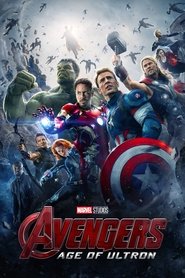
But the things about it that I love, I love very much. But I always think, "I could've done better there." He's uploading himself into the body. - Where? And this is Claudia, who is SO impressive, doing the hardest thing in the movie, emotional exposition, where we give her a ton of dialogue to say, then we add to it later, and she's still emotional and cool. No manifest. That could be him. There. It's a truck from the lab. Right above you, Cap. On the loop by the bridge. Coming to Seoul was a real opportunity for us. Not a lot of people had shot there. And we had to sit down with one of their ministers of culture, and explain what it was we were trying to do, and make sure that we were gonna show Seoul in a good light. And, in fact, why we liked the city was because we knew we were gonna have a chase throughout the whole city and... Not the whole city, it's one of the most enormous cities in the world. But through some lovely bits of it. And we wanted a place that was very modern and very exciting, and not gritty in the same sense. We wanted every place to register as itself. Johannesburg, Seoul. And then we wanted to fly under buildings, when clearly he could have flown over them, just because they were there and they were pretty. You know what's in that cradle? I've talked about ILM and the extraordinary work they did, which I can't say enough about. But, as is the case with movies like this, there's hundreds of houses doing various effects and various bits. This whole sequence, the Ultron portion of it, most of the major work in it was done by DNEG. And the houses are really good about helping each other out. Some of these shots were shared by, like, four different houses. Somebody's doing a background, somebody's doing a stunt face replacement, somebody's doing a digital creature. And with the Vision, somebody at one house did body, one did face, one did cape, one did background. It was just... But they're all very cooperative, they're very inventive, and everybody brings that extra quality. A lot of these low-angle shots you see of Cap going over camera, her going through alleys, were shot with a little remote-controlled car, which honestly is my favourite thing. I like the remote-control car way more than the motorcycle because it's just so cool. This moment here, um, Bryan Andrews, storyboard artist, who has done a lot of great stuff for us, came in after the fact and looked at this. And we had knocked all the cars over. It was Bryan's idea to add Captain America to what we referred to as the "car ballet." And it took something that was pretty, but pointlessly destructive, and turned it into a moment of peril for one of our guys, and made it not just more exciting, but worthy. And that kind of feedback, and having those new eyes iS SO crucial and so exciting, because it just keeps getting better. The thing about a sequence like this is it's always about the connection between the players. The more you can connect them, the more we would add dialogue between them. It wasn't just stunt, stunt, stunt. You felt their humanity. There was an emotional thread going through here for Scarlett when we shot it, that she had been rejected by Banner very brutally. If you see the entire sequence on DVD, it's a rough thing, and it made her have this kind of self-destructive, just brave kind of fatalism. And then some of this stuff was shot after that had been cut, but most of it beforehand, and so you end up with someone who's playing something that is no longer in the film. And it's just a very delicate process to make sure that you don't have some inexplicable emotional malaise from her. But luckily she's the kind of person who hides that sort of stuff, and as a character, she plays on the surface as very in control. And so we were able to cut it together without it seeming strange. But it also means that one of the emotional arcs of this sequence disappeared, and then you end up relying on spectacle, which is the last thing that you want, even though the spectacle is beautifully put together. And you have the kids going from villain to hero, which is a major plot turn. And you have Ultron disappearing with Widow, so you're servicing the story, but emotionally there's not as much going on as there would have been. And that's complicated because once you start a sequence this massive without that particular emotional hook, it's very easy for people to get pummelled. But by bringing the kids in, by cutting it down, and just by the beautiful job Jeff did cutting it, I think it sustains. But I'm always gonna look at what's not. Almost all of that was in Korea, or shot with plates from Korea. This is actually in England, in Longcross, a place we used for a few of the sets and exteriors near Shepperton, where we shot most of it, that they dressed up very specifically and brought the trains. I think we brought them from Korea, the two train cars that we had. Dressed them in. One of the things I love about having all these characters is the way their alliances can shift and change, and Captain America's never expressed anything but sympathy for these guys, even while he was fighting them. So for him to suddenly say one mean thing, and then, boom, they're allies. It's exciting, but it also feels emotionally logical, and then it brings us back to the idea that Tony is the villain. One of the true villainous moments he has is telling Hawkeye, "Why don't you disappear?" and I'm gonna make an evil eyebrow face, because I'm about to do something crazy. And the idea that he's gonna lean into the very thing that is wrong with him is interesting to me, because the idea that the worst thing about us is useful gives this thing texture. Look at the reflection of Jarvis in Bruce's glasses. That's something that... That level of detail is... Because, of course, Jarvis is not there, that was added later. And that level of care and detail is in every frame of this movie. Our VFX head, Chris Townsend, was running 97 different houses. And one of the things I love about Marvel is that good enough is never good enough. And the level of texture and detail and character that they put into VFX doubles, this sort of amorphous character. It's so complicated figuring out, "How do we make him feel like a program that's talking?" Give him personality, but not too much. Make him not cartoony. Make him feel integrated into a universe that is, at its base, very grounded. We're asking that question about every effect, every day. And the stuff they gave me is so human on every level. And ultimately these stories never work. This scene was created in post. There was some amusement at the literal translation of what had been post-viz. On the left the... I don't want to say phallic, uh, implement of... But if you look carefully at it, oh, yeah. And we sort of laughed about it but then I decided I wanted to keep it, since, as he becomes more aggressive, the idea that his iconography becomes more male. When he's just a program, it's very Georgia O'Keeffe in the lab, and then now he's becoming pure aggression. This is also one of my favourite performances from James and ILM. The love and poignancy of his dream deferred, and how insane it makes him. We had another version of the scene that was just too civilised, something I do a lot, where people are just holding a cup of tea instead of ripping their own faces and guts apart. And Scarlett, with no lines, giving me beautiful stuff, and the idea obviously of somebody doing the infamous and, in fact, somewhat clichéd Nietzsche quote, but then putting a genuine spin on it. A very literal one. It was very exciting and fun. And designing his final armour to be different, it was super tough to find something that worked. It covers his face and some of the greatness of his delivery a little bit, and I think we all regretted that a little bit. But it also brings him more towards the Ultron that we know from the comics, and gives us that distance that we need to get into the final act. Shut it down! - Nope, not gonna happen. You don't know what you're doing. And you do? She's not in your head? Once again, internal conflict is the thing that makes these things work. And that's fairly badass of Banner. You don't Know what's in there. - This isn't a game!
1:19:28 · jump to transcript →
-
Joss Whedon
Oh, no. One more time, back in. Yeah, no. It's over. This also came l/ate. I think it was Jeff Ford's idea that we knew Thor was gonna hit it from up top, but the idea that Iron Man's down below came late. Iron Man's action usually gets enhanced late in the film because, like the Hulk and Ultron, he's not there. He doesn't exist, that's a CGI character, and so you think you know what you want him to do, and then you find, "Wait, there's a way to up the stakes here." This is another thing that I feel like other studios wouldn't let you do, is have him just singing like that, to himself. And then getting genuinely brutal. I wanted this to be unlovely. And when I said to Jeremy, "Just look at it and know that your death is imminent, "and that you're okay with it." The look on his face was, um, priceless. And the cut to Wanda with the sound of what's going on here before anything happens, is revealed, rather, is also great. I almost didn't wanna cut to that overhead shot of him because he did that fall, just face-planted, so beautifully that I wanted people to see. But then I couldn't resist the hyperbole of being directly above him when he landed on the ground. Emotional hyperbole, let's face it, that's my jam.
1:59:16 · jump to transcript →
-
-
-
Efficiency was crucial. No talking. Do you think that's because of two directors or? Yeah, I think so. Twice the oversight? That definitely helped because there was a whole, just to speak for myself, there was a whole bunch of stuff and it really related to the actors that I just didn't really have to think about. So I'd be thinking about camera and I'd be thinking about SFX or VFX or...
37:01 · jump to transcript →
-
i wish simon was here to talk about like i don't know if he used the actual map and then they or did it simon was our vfx supervisor so he and he he did a great job building that and also doing the set extensions on the set we had a whole street but there were a couple of blue screens and he would create the extensions of those streets yeah but like that map that you're seeing is like is is actually the actual like like that water tower if you're in ramadi
1:17:04 · jump to transcript →
-
-
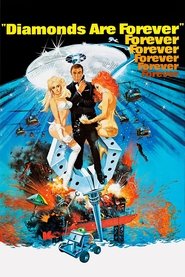
multi · 1h 59m 1 mention
David Naylor, Guy Hamilton, Tom Mankiewicz, John Barry + 14
-
-
-
-
-
-
-
-
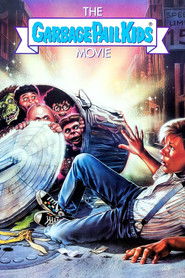
cast · 1h 36m 1 mention
The Garbage Pail Kids Movie (1987)
Mackenzie Astin, Katie Barberi, William Morris
-
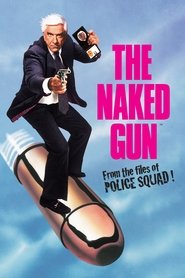
director · 1h 24m 1 mention
The Naked Gun: From the Files of Police Squad! (1988)
David Zucker, Robert K. Weiss, Peter Tilden
-
-
-
-
-
-
-
director · 2h 10m 1 mention
Richard Curtis, Hugh Grant, Bill Nighy, Thomas Sangster
-
-
director · 1h 45m 1 mention
Eternal Sunshine of the Spotless Mind (2004)
Michel Gondry, Charlie Kaufman
-




Related topics
Other topics that frequently come up in the same commentaries.