Noah Baumbach
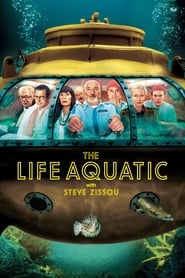
So now they're on their way out of Ping Island. Bill Murray's running to the safe, this yellow safe with Ned's inheritance in it. I always wonder if we're clear about things like the issues with Ned's money and all that kind of stuff, but I guess it's all in there. Yeah. I always like what Scott Rudin, the producer, does. Scott said about... I remember when he read the draft of the script, where we had come up with that idea of the hole in the back of the safe, and he said, "Well, he's looking for the money, but he finds Ned." And I always thought, wasn't that a touching idea, you know? I hadn't consciously thought of it. - He had a real way with words. Cody is left behind. I think you came up with the name Cody. Cody was... Well, there's some debate about who came up with the name Cody, but as we alluded to and as, I guess, basically suggested by the fact we're doing this commentary at the restaurant that we wrote it in, Cody's a regular here who we run into, and so... And at one point, I think it was literally like, I said to Noah, "What's your dog's name?" Doing Jeff's dialogue, and Noah thought for a moment and responded, "Cody." Cody. As he stared at Cody through the front window. It was the summer. I feel like I've said enough... What's that stand for over there? That's Esteban. It was working okay until late last night, but now the whole tracking system's gone completely on the fritz. Screw it. We'll sell it for scrap, along with the boat and the submarines. I'm going home. One thing about Willem is, Willem was always on the set. You know, he was there for the whole movie, and he doesn't like to hang around in his trailers. So he weaves himself into scenes, such as this one, where Owen says, "Ho," and Willem is standing in the background there. And you'll see, when they do the Team Zissou "ho" with the hands thing, Willem does it out of focus deep in the background. Did he do it in rehearsal then you included it? I don't remember. You know what? I think he was back there and I may have mentioned one thing to him. Well, it adds this whole other thing. And it's also, we know that Klaus feels left out, so at this point, though, it's almost a little bit of menace in the background, even though he's... This, again, also is something you do a lot, which I like, is this-- But he's also been touched by Ned, including him already. That's true. He hasn't saluted him yet. - He hasn't acknowledged it. I was gonna say, the thing I like that you do a lot, that I mentioned earlier, but this very deliberate cut to an insert of a written note, which it sort of has a... It has a kind of energy. It sort of brings energy to something that would be normally just static and feel like just, you know, information. Well, you know, one thing I always think of is, I remember reading Pauline Kael somewhere, Kael who really brought me into a certain kind of movie watching. You, your parents were well-versed in films and introduced you to all kinds of films, and your mother was a critic, and your father had done some film criticism as well, right? But I kind of got that stuff from reading Pauline Kael, some of the same kind of, you know, somebody's gotta tell you about it. Right. - And I got so many things from her. And I remember, you know, she certainly made me interested in Godard. We seemed to keep talking about him. And she talks about how Godard's movies are filled with... They're literary. They're filled with words. There's titles on the screen and there's letters and there's writing everywhere. And there's people quoting, people just reciting from books. And, you know, this movie here, now we're looking at another letter. It's filled with writing, something... And I like the-- I mean, it's sort of, again, something maybe, you know, he might do, but is... I mean, we see Ned reading a crumpled-up letter that's obviously been around for a long time, but then when we go to the insert, we go to the original letter in a very formal way, with the pencil above it and-- In fact, I think... One of the letters is situated in the environment where Zissou would have written it, and Ned's is situated in this place where Ned would have written it. Like his desk when he was 11 and a half. And it brings-- I mean, it's something that we've talked about, I mean, sort of how you use words and letter writing, and, you know, we were talking about, how in Adele H, when people write letters, they actually speak to the camera and they're often superimposed over other images. We should probably be talking about this scene. Well, actually, that shot of the feet falling was something I had thought of a long time ago, and Roman shot it for me. It was shot a couple of times by different people, and then when Roman got there, we talked about it, and Roman went out and shot it perfectly. And then we do this odd effect of, you know, the red and the thing-- I don't know what I was really thinking of, but something going into silence and, you know, trying to prepare the audience for the fact that we're gonna kill him, which is hard to do, actually. For me, I mean, I feel like I get so attached to these characters, and, you know, we're not really working from something that begins with a plot. It's more like, you know, trying to bring these people together, and I may be, you know what, probably overly sentimental about it, and probably indulgent about it, but it's hard for me to get to separate-- I feel like they're real people to me. So it's hard to kill them. But it was one of the ideas. We talked about people who read the script. Peter Bogdanovich, our friend, he was upset that we killed Ned. I think my brother Nico, who the intern is named after, also felt sort of... Was unsure about it, and I think, you know, it is a choice. That scene where he's in the water was crazy because the sea was rough, and we had this fire in the water, and we're all standing out there, and underwater are all these tubes with gas to make these fires and things, with hunks of cement and wire. But it was fun, and it brought this crazy energy to it.
1:33:50 · jump to transcript →