Topics / Performance
Rehearsal
77 commentaries in the archive discuss this, with 193 total mentions and 44 sampled passages on this page.
Filter commentaries
Filter this topic by the film's decade or the type of commentary.
By decade
Across the archive
ranked by mentions · click any passage for the moment in the transcript
-
-
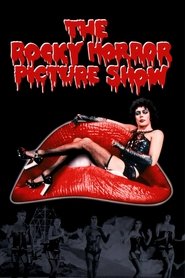
Oh, look. Nice car, that, that woodie. Yes, and what was the tape playing? Was it Nixon? Nixon's-- which I... I don't like that speech being played, actually because it locks the movie into a time frame. I thought it was terribly clever. And that late November evening wasn't in time with Nixon's speech. Speech. And, you know, there's lots of things. Now we see this motorcyclist here. Those people who played Transylvanians were on the back of those motorbikes. They would have to go to the studio this very night, dress up, put all their Transylvanian gear on, and then put motorbike leathers on as well. Yeah. - And then go out on these motorbikes. They didn't drive them themselves. No, no. They had motorcyclists. They paid pillion passengers. Yeah. And, as Ramon Gow said, you know, I said, "Why are they coming in to do this? It could be anybody wet in the dark. And he said, "Could be a gorilla with a pipe, luv." Gorilla with a pipe? But I'll never forget the first day I saw the Transylvanians, 'cause they were rehearsing in a room in the house. And we didn't have Transylvanians in the play, and suddenly this door was open, and I don't want politically noncorrect, but it was so freaky because they were freaks. Sorry. - As indeed we all are. No, speak for yourself. And in the amazement of tall, small, fat, thin, you Know... You lost a sense of norms, you do. Sense of center. Yes, and I saw all these people dancing doing the "Time Warp," and I almost collapsed. I couldn't believe it. I thought... Because I didn't know they were going to be in this. I didn't know there was a cast of Transylvanians. No. - No. Well, when I went into the room and David Toguri was rehearsing them, Well, when I went into the room and David Toguri was rehearsing them, Well, when I went into the room and David Toguri was rehearsing them, and Barry Bostwick and Susan Sarandon was standing amongst these people, with hugely different, physically, SO very... I'll never work again for using the word "freak." It seemed to me that Susan and Barry, who most people would say are relatively good-looking human beings, seemed just as freakish. There was no standard. The standards had disappeared. Yes, that's what freakish-- yes, right. And that was interesting.
12:03 · jump to transcript →
-
Oh. - Whoo! Now this little-- That was a great little-little dance there. I-I-I came up with that little dance step. Did you? - In seconds. And I don't know how I did it. And I've never been able to do it since. I could've killed you, because I could hardly do it. And Toguri kept telling me... I kept falling over. It was that wiggling on one foot, and I had high heels. We did it very easily and very quickly. I know. Did you make it up? In seconds. It's not from the "Time Warp"? - No. Or did we just follow you? Obviously. Well, Nell went... ... That looks good. That's good." And I don't Know where it came from, because you know I'm a terrible dancer. And we did it in seconds. And, uh, it was all over. But it looks rather good, that little leg movement. Yeah. Yes, I love this bit. "He's okay." Because when-when we did it in rehearsal, I gave Nellie a note for this. She'd hate the word "note." You know, and she goes, "He's okay." And changed it completely from however she'd done it before. And Tim Curry was so shocked, that he really did react to it like he was furious with her. Because she completely changed the tone of it. Mm-hmm. And I loved it because it was, like, it wasn't what he was expecting, so his fury was real.
38:13 · jump to transcript →
-
-
-
It was very difficult to rehearse. They would have to use another level of truth in them. It sounds pompous, but it isn't as pompous as it sounds. Nate could probably make a deal for you. I'll bet you you could probably go back. I always have great feelings of inadequacy when it comes to explaining any kind of art, anyway. I've always totally...
2:01:37 · jump to transcript →
-
I mean, a lot of people like to plot through the whole sequence of events and storyboard and have an overall picture of what will be the final movie. I have a very, very sketchy overall picture. I find it very difficult to rehearse scenes before coming to the set.
2:03:04 · jump to transcript →
-
-
director · 1h 28m 2 mentions
Don Coscarelli, A. Michael Baldwin, Angus Scrimm, Bill Thornbury
-
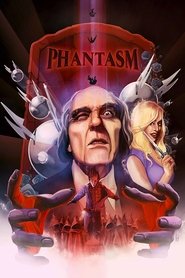
You choreographed this pavan between Mike and the tall man. How many times did we rehearse that? I don't know. I just remember talking about the sort of Western style of it. I mean, like a Western movie, you know. Like a gunfight. Gunfight kind of thing, right. It had to be very precise.
37:45 · jump to transcript →
-
word here in the film i never realized it would have so much impact when we were first rehearsing it this thing was an afterthought as i recall and i had got a haircut and no one to this day has ever accused me they don't seem to notice that the tall man for the first time doesn't have his long hair anymore well get on upstairs get your gear that's right i didn't even remember
1:25:18 · jump to transcript →
-
-
-
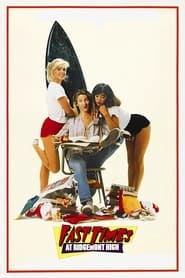
He would write me these little notes that was like, you know, aim, you know, costumes went very. Wow. And then when we were going to rehearse, and I had never rehearsed before, so I didn't know what you were supposed to do. And I thought, okay, let's just all go to high school and we'll have a pretend class. Oh, wow. I didn't call it rehearsing, I called it pretending.
28:03 · jump to transcript →
-
How great. And so he said, well, okay, but I don't want to be in the class. I want to like, you know, barge in on it. And he decided him and his friends would like disrupt it and they'd bring Chinese food. And that was the only rehearsal we did. That's right. So his thing was he felt the other characters looked at Spicoli a little bit as a nuisance. Yeah. And so he was a nuisance to them. To them.
28:28 · jump to transcript →
-
-
-
I said, yeah, you know, that's fine, Steve. Let's rehearse it a few more times. And each rehearsal that he did, he'd bring it down more and more and more until we got to this. But you know what? He came in and he said, your secretary gave me the wrong scene to read. And I thought, fuck. You know what? We've only got one day to shoot this. It's winter. It's a dual aspect, Windows.
14:56 · jump to transcript →
-
I had no rehearsals with anybody. I didn't know what I was going to get until I got there. There was no time for rehearsals. I would have loved to have seen that performance before we were on set shooting it. That was the first time I saw it. It was almost too late to do anything about it at that point. This is what you're going to get, George. This is what you got.
44:31 · jump to transcript →
-
-
cast · 1h 36m 2 mentions
The Garbage Pail Kids Movie (1987)
Mackenzie Astin, Katie Barberi, William Morris
-
All the, you know, their vision being completely... Vision and sound. Non-existent. And the screenplay and some of the production value. It really was the blind leading the blind. It really was. But yet, we could not see and we walked forward. Did you have... We could not see. Did you have a lot of rehearsal? Speaking of all these things with all the heads and not being able to see, did you run through a lot or was it kind of just going for it?
19:41 · jump to transcript →
-
Well, I mean, I believe we rehearsed and shot like pretty much anybody rehearses and shoots, you know, on a motion picture. I mean, they did cover us. You know, we had our masters and we had our tights and we had our medium shots and what have you. But there was not a lot. I remember the, I don't think there was a table read. Was there not? I don't remember. No, not that I can recall. Yeah. I don't remember a table read. So this was Alligator and he was played by a fantastic actor.
20:09 · jump to transcript →
-
-
director · 1h 24m 2 mentions
The Naked Gun: From the Files of Police Squad! (1988)
David Zucker, Robert K. Weiss, Peter Tilden
-
But Leslie's great. He never lets on that it's a comedy. He just... And was unaware we were shooting most of the time. Yeah. He thought this was a rehearsal. But he was terrific. Does he take a lot of takes to get it right? Okay. No, no. No, it's not him, but we do a lot of takes. Yeah, because? Mostly we can't remember which ones are the good ones.
39:24 · jump to transcript →
-
Remember they tried to build some baseball launcher thing? The ex-German rocket scientists we had in the effects department. That thing never worked. Probably just threw them up in the air. Is that the one we labeled the pigeon shooter? The pigeon shooter, yeah. That scared some people. They thought we were actually going to shoot pigeons with it. Those were the days, huh? Oh, you remember this? We rehearsed this. Well, do you remember we came in with all the dailies for this and the editor said, what's a rundown? Oh, yeah. It's like, uh-oh.
1:12:55 · jump to transcript →
-
-
-
the first introduction to Malcolm McDowell I have a very strong memory of, which is this was the first scene I shot with Malcolm. We'd been rehearsing together, and he was fantastic and very enthusiastic about doing the show and very happy to be off. He'd just done Star Trek, and he was happy to be doing something much more in tune with his past. But he walked on set in the scene and said...
7:42 · jump to transcript →
-
Those are my Michael Jackson tape fingers. I have Michael Jackson tape fingers and I'm League of Their Own too. Because that's how nerdy I am. And here's the Ripper dance, which Ice-T was like, there's no way I'm dancing. Ice-T was like, yeah, I'm not doing that. I'm just sitting in the chair and that's it. And I'm like, okay. Because Adam's like, he won't come to the choreography scenes, the choreography sessions, rehearsals. And it's like, okay, now I know why.
1:17:43 · jump to transcript →
-
-
multi · 1h 54m 2 mentions
Jean-Pierre Jeunet, Hervé Schneid, Alec Gillis, Tom Woodruff Jr. + 5
-
I do have to ask, you know, why they would transport a little cube of jelly as opposed to a container of liquid. That's a big question. - It was square. That's a real big question. But anyway, the effect is funnier. - Yeah. At the beginning it was more complicated, but because of the time-consuming... The effect was very simple. We just had the glass with water, and then the cube, and then to check a little bit the water to have some effect, and a quick morphing in post. It's efficient. I love this one. I remember the story about the lemons. Dan Hedaya found this idea during the rehearsals. It was a good idea, but he had to eat lemons all the day. At the end of the day he was sick, because he ate maybe five, six lemons... to match the shots. But Michael Wincott had to smoke all day. Yeah, but it's not foreign for him. -
22:12 · jump to transcript →
-
So acting like you can see something when you can't see something. That's great. Was it a practical? - Yeah. We built some wax aliens to blow up for that moment when they blow up. The explosion's practical and the bubbles are real. Everything was really here. Tom was in this underwater - in the suit as well - for a couple of shots. That's a beautiful shot. - How deep was it? 15 feet? In a closed set. You couldn't swim to the surface if you wanted to. The difficult thing about this was that the rehearsals you performed with a mask on and breathing from a breathing apparatus. They were all calm. You were marking what you were going to do in that particular shot. You were gonna swim from here to here. This was your action. When they were satisfied that everybody knew what it was they were supposed to do, there's a countdown from six where you're asked to take six deep pulls of the oxygen. When you get to two the mask comes off. Then you're blind. The mask comes off then so there's no bubbles in the shot. You hold your breath for as long as it takes for them to slate, then start the action. In postproduction we put some noises, some voices, and we recorded the voices in a swimming pool with pipes, like... ...to put the pressure, to feel the pressure. This thing - there was no escape from this. You swam up into that thing. The only way to get out was to swim back down and out. Waiting in the wings would be stunt doubles with hookah masks for us, once the shot was completed, to give you air. In rehearsal you could go longer. It was calm, you were swimming gently. Once you were acting and the energy was up you used more oxygen and there was less time to stay under. Virtually every shot in the sequence you're in jeopardy, so the stakes are high. You're operating on pure adrenaline, which is not the case in a calm rehearsal. And then you got Jean-Pierre on a microphone screaming: "I want to see bubbles because they are making it look like you are afraid." So the bubbles are created by you getting rid of your whole store of oxygen and you're only good for about half of what you were during rehearsal. Made it difficult. I don't know about you, Leland, but I for one ran out of air on five separate occasions. Yes. - And started for the surface. Unfortunately the surface was a ceiling because this is a kitchen set. So there was no escaping it unless you knew where the escape routes were, and since you're blinded and disoriented as to where you are at any given time... I was literally saved five separate times by stunt divers who saw me panic, saw me swim for the surface, saw I wasn't gonna make it, followed me and stuck this thing in my mouth. We each had one assigned to us. I just remember the one time that the guy who was assigned to me that day decided to take a bathroom break during one of the takes. I ran out of air and there was nobody there. Remember? It was your stunt double who gave me... I shared air with you guys. He was so used to saving my life that he was just on guard.
1:11:06 · jump to transcript →
-
-
-
The way those shots are accomplished is that they're rehearsed initially... ...with Arnold Vosloo in the scene with her... ...so that the eye line is figured out... ...and exactly what the performance is and the timing. And then the actor, Rachel, in this particular instance... ...has to go it alone and work without anything else in the scene. And, of course, the mummy is added in post-production.
1:13:56 · jump to transcript →
-
We rehearsed this scene over and over without the rat. And then we put the rat in for this take. And Rachel, you know, here she is, she sees the rat, feels the rat, she sees the rat, and she turns and the rat happens to jump over onto the female mummy. And right as I called cut, the female mummy flapped off the altar screaming. She wasn't expecting the rat to jump onto her. She was petrified of it. But I thought she was a real trooper to just sit there and not move until I called cut.
1:40:13 · jump to transcript →
-
-
-
E. Elias Merhige
The interesting thing here is that I asked, it had been raining for hours and hours when we were shooting, and I had asked my production designers and art director's assistant to go down and ask a farmer for some grass. And you see this area here that they're all walking on. Instead of grass, they put down all horse manure. And while I was rehearsing with the actors, I was trying to figure out what smelled so bad.
22:46 · jump to transcript →
-
E. Elias Merhige
In other words, all you have to do is, as they say, relax, and the vampire will do all the work. You had me leave rehearsals in Berlin just to do that. Hey, watch it! Now, this is one of my favorite moments where you have Cary, you know, taking his measurements for focus, and you have Willem very vainly and enjoying himself completely.
1:13:54 · jump to transcript →
-
-
-
Wes Anderson
Luke had to take three or four months off to grow the beard. So he was the-- Luke and I were the only ones who actually-- Luke and Seymour Cassel and I rehearsed together. We got a chance to work together because Luke was free. Because he couldn't get any other work with that beard.
26:17 · jump to transcript →
-
Wes Anderson
Most movies, somebody gets shot or somebody dies, things happen that are very dramatic, more dramatic than real life. In the movies we'd made before, the only time anybody dies is if it happened a few years before the movie starts. And one thing I really wanted to do is to make a movie where it was going to be possible for someone to die. Because in the other movies we'd done, it just didn't seem like it could happen. It was a tonal violation of the movie. I sort of felt like, it was like we wanted to stay on the surface of some stuff. Not that those movies are superficial-- I don't think of them that way. --but that there's a lightness to them that it's hard to break out of. And this one, I think, is probably a lot darker. And, you know, there's somebody who tries to commit suicide, and there's death that really occurs in the movie. There's wounds that are kind of deep and sharp that I don't know if you find so much in the other movies, where they're wounded people, but there's not as much violence to the emotions in a way, maybe. This is a scene where... There's certain scenes where Gene Hackman would show up and we'd do our rehearsal, and he'd have a kind of different approach. Uh, what it usually was was he'd wanna do a scene moving fast. And you'd see him do it, and I'd throw out the whole plan I'd had and have a new way to kind of shoot the scene. That's the best thing that can happen. Somebody comes in, and you say: "Throw out whatever we thought of before. This is better." And his thing was to just bring a real charge into something. Richie!
1:14:24 · jump to transcript →
-
-
-
And we had rehearsed the scene for a couple of years, so. You got it right. You got it right by now. We got it right by now. So we didn't have to do anything digital, which was, I think, really great. And we kind of tried to do that as much as possible in this film to try and stick with as much reality as we possibly can instead of just throwing a green screen up or taking the easy route out. And I like that.
4:31 · jump to transcript →
-
into one of the hardest places I think a producer can be in, which is where your actor gets hurt. I herniated a disc doing a back handspring on our tenth day of filming. Yes. It was an accident. It wasn't even while we were filming. I was just kind of rehearsing, and my foot slipped, and I landed on my neck. And I think, you know, once we realized what it was, and I realized...
21:12 · jump to transcript →
-
-
-
James Mangold
Meaning that when an actor first comes on board a film in the period where they're first starting to rehearse, the other thing that's happening so that the costumes are ready when the movie begins is that they're being fitted and trying things on. It obviously happens weeks and weeks before the first frames get shot on the film. So what that does and what that means is that those first fittings are incredibly transformative for the actor. They become a chance for them to walk
1:14:19 · jump to transcript →
-
James Mangold
Well, I did what you said. I read that Bible from cover to cover. Took me three days. She never came back. Now, two things I want to say about this piece of Russell's here. One was when I rehearsed it with him and he was sketching in this book, what I thought was so powerful was the way
1:40:11 · jump to transcript →
-
-
writer · 1h 31m 2 mentions
Wes Anderson, Roman Coppola, Jason Schwartzman
-
Roman Coppola
So this scene is a... Here the conflict is brewing among the brothers, the suspicions and the questioning. And I remember we decided that-- I thought there was something nice about working in the compartment and not having cuts. And sort of-- You know it's a real space, and we'd also get this building kind of tension that's happening here. So anyway, to shoot this, I remember we built a mock-up of this compartment on the... At our art department, which was actually at the-- Which was actually, like, on train tracks. It was some kind of train-- At the train station. Yeah, it was like a train station. We built a train station in it, in fact. And I remember we rehearsed that shot-- It's one of the few times I remember actually rehearsing an entire shot with a dolly and the camera and everything on a completely different location. You know, in a-- You rarely rehearse with a crew present before you start a movie. But that one, we wanted to make sure we'd be able to do it, because the space was so compact, just because it's a real train rolling along.
16:18 · jump to transcript →
-
Roman Coppola
I really liked this temple. We went many times to this temple in the center of Jodhpur. I think we brought the cows ourselves. Okay. Spray in face. - Spray in face. This was shot much later, as I recall, actually at the location where we had the final convent, if I remember correctly. Yeah. - Yeah, outside of Udaipur. I remember when we were scouting, there was a day when it looked like this. It was all women. And I don't remember what the occasion was, but we recreated what we saw there. We invited back all the people who had been there on this day that we had scouted at the location and this ceremony was happening. This is a scene I remember we rehearsed in the temple itself and really kind of found the scene, the three of us sort of improvising it and acting it out. And we had a little text we were reading from, but sort of, you know, realizing it just the three of us. Yeah. When we were writing the script and we went to India on our reconnaissance mission, it was like a writing session and it ended up being a location session. And we found this temple and went back and shot there many months later. But as Roman said, this is-- We were walking around, we found this, we went in, we took our little micro scripts out, we rehearsed the scene to see if it was working and saw what worked and what didn't. And then we actually became so attached to this place that we went back and shot the real scene there.
23:08 · jump to transcript →
-
-
-
means bath in Swedish. This is one of the most complicated track shots in the film. We had a lot of differences to avoid the reflections in the windows here. We had to rehearse it for like three hours before shooting it. And actually, this is, it's in the movie too, but actually Mr. Avila, the gym teacher here, he's actually the only good adult in the book.
1:42:11 · jump to transcript →
-
This was, of course, this sequence was very complicated to do, to work underwater. And I think we made this in like two days, this sequence. And it contains a lot of complicated shots and a lot of rehearsals to...
1:43:18 · jump to transcript →
-
-
-
Tom Hooper
Interestingly, our original idea from rehearsal was that as she died, she would see Javert coming down, and so she would have a kind of tragic death where she died, realizing that her daughter was perhaps not safe. And I remember Cameron Mackintosh in the edit saying something very interesting about how we should allow her to have a peaceful death, a beautiful death. And I realized there was an echo between the death of Valjean and the death of Fantine, that this idea that
43:06 · jump to transcript →
-
Tom Hooper
This was, I think, an idea that came out of rehearsal. We had a wonderful nine-week rehearsal, which is very unusual in a movie. In King's Speech, we had three weeks, and that was considered long. But this moment of, I suppose, the hesitation about whether they should give up, it's the little kid Gavroche who recommits them to the cause of the People's Song.
1:58:10 · jump to transcript →
-
-
-
Len Wiseman
the director's cut aspect of it and what's there, but also just the production of it as well. This was Kate's first day. She had just come off of Underworld, kind of just put her on a plane and flew over. She had about two days in between the two and threw these guys in together. We did this scene and then right after this scene started the fight scene within the same set, which was quite a tall order to come right in from another production, just no rehearsal, no practice. Luckily, she'd been doing a lot of training on Underworld as it is.
5:28 · jump to transcript →
-
Len Wiseman
Brian and Colin didn't have much time to rehearse their fights either, and Brian came into it, and we had a stuntman set up to do it, just in case, and he was just so into it. I was very impressed with him. He did the majority of that. So that right there, you'll see that when that... That's the first time we see the watch.
1:41:37 · jump to transcript →
-
-
multi · 1h 39m 2 mentions
The Grand Budapest Hotel (2014)
Wes Anderson, Roman Coppola, Jeff Goldblum, Kent Jones
-
Jeff Goldblum
Ah. - [Anderson] And I said, "Well, why?" You said, "Because I don't know this fact, and it was actually proven that this is correct..." And it was a logic thing. I was like, "Oh, yes, you're right. Yes, that would be the proper thing." So we added an "ostensibly." [laughs] - [Goldblum] Oh, thanks. Hey, thanks. And remember-- I don't think everybody did this, but remember how we rehearsed. Remember? I kind of cornered you that day at the hotel, months before, as you were preparing. I was coming through town for something else.
29:31 · jump to transcript →
-
Wes Anderson
Yeah. Oh, yes. I remember it very well. In fact, that hotel where we filmed it, it's the Hotel Börse in the middle of Görlitz, and it was the center of everything for us. When we first scouted the place, I saw this location where we made the hotel and thought, "Well, that could work. What can we build around here?" And the first thing we did after that was we walked through the town and went to all the hotels, and we found this place, Börse. I said, "You know, this could be a makeup area. And this is big enough for us to have our dinner each night here." And there's this many rooms, but they have some other rooms across the street. And a lot of things like that happened in that hotel. That's where we had our first rehearsal with Deputy Vilmos Kovacs.
30:17 · jump to transcript →
-
-
-
There we see they have a past. She's got a... They're in kind of an adventurous place in that photo. And you can think that maybe this couple has had an interesting and exciting past with some adventure. Anyway, there's the sweetest little girl in the world, played by Paisley Cadorath. Paisley Cadorath was an amazing little actress. We did auditions in Winnipeg because we knew we couldn't fly another person out from anywhere, and she was the only girl that could take directions. But more importantly, you can tell that she was really enjoying the process. And we, you know, make them do four or five takes of the same thing just to see how they'll fare. And she was just excited. Every time she'd run out of the room, we'd get the cameras all ready, and she'd run in and we'd rehearse, and she was perfect all the time. And I think when you watched the audition tapes... I remember getting a message from you saying, "We have to get this girl. I'm so happy that we matched perfectly on her." Fuck!
8:17 · jump to transcript →
-
We did not have Bobby Digital for too long. He was only there for what, three days? - I think four, including the rehearsal. Yeah, this is a lot of work to do, but, you know, he's done action before, many times. Directed it, starred in. Of course, you know, he knows... He's definitely seen more action movies than I have. Yeah. - Which is rare. It's hard to find. - Yeah.
1:18:06 · jump to transcript →
-
-
-
scholar · 1h 32m 1 mention
The Night of the Hunter (1955)
Terry Sanders, Robert Gitt, F. X. Feeney, Preston Neal Jones
-
multi · 1h 59m 1 mention
David Naylor, Guy Hamilton, Tom Mankiewicz, John Barry + 14
-

Related topics
Other topics that frequently come up in the same commentaries.