Topics / Production
Production design
138 commentaries in the archive discuss this, with 776 total mentions and 57 sampled passages on this page.
Filter commentaries
Filter this topic by the film's decade or the type of commentary.
By decade
Across the archive
ranked by mentions · click any passage for the moment in the transcript
-
-
I love that. It's funny how a line like that captures the whole character. You know, I remember, Carl, that you spent a lot of time rehearsing. You gave us an opportunity to take the set and rehearse. Well, there's no... Funny how that makes sense, doesn't it? Yeah, it does. I think in life. It was really a little bit like doing a play. Yeah, well, you can only get better by trying to discover what's in each scene.
15:07 · jump to transcript →
-
For people who didn't see the movie, what would you guess is making that guy sleepy? You're going to find out. You know, these kids, they weren't kids when they did the movie. They were all in their mid-20s and stuff, and they all worked so well together. They were there every day, this entire group, every day was on the set. The only one that didn't look like he belonged in high school was the man who went to the toilet.
21:08 · jump to transcript →
-
Good luck, gang. Ready? Begin. How many shirts did you wear? You know, I don't recall, Carl. I know that at the very last day of production, I was sitting there on the set next to you, and you had the wardrobe mistress roll up all the shirts on a rack, and she was closely followed behind by the UPM who was screaming at her, and...
1:23:17 · jump to transcript →
-
-
-
And that's stuff being shoved up his nose while it's being pulled back. He was such a good sport. We had an air tank in there for him, and he was game for all of it. There were safeties, but it's still a little bit probably like being waterboarded. It's a waterboarding visual effect. But it did elicit the shot that's in the movie, in the trailer, of Shawnee seeing him for the first time and being affected by that, right? And I also kept her off the set until that moment. So that's...
23:24 · jump to transcript →
-
When I was a kid, I was running coffee for Stunts Unlimited and learned that craft. So, water, late nights. The elements. Yeah. People can get hurt. So, from my point of view, it was Blob and the scale of some of these things. Like, the sets you're looking at now were pretty large-scale sets to light. Yeah. Come on. Let's hurry out of here.
1:10:23 · jump to transcript →
-
clearly not testing, or when we're on the set and it's just not going to happen, that's when you get to have the fun of some quick inspiration that works out well, too. Was there any gag in particular that just didn't work out? Some of the large-scale blobs I'm still uncomfortable with, when I say they didn't work out, they got the story told. But there's 25% of these big men, they're supposed to be full-scale blob.
1:16:04 · jump to transcript →
-
-
-
It's so cool, our different worlds. The sets are really amazing. Yeah. They really are. Polly definitely kept an eye on that stuff. Jim Brooks, too. He would look at dailies and sometimes have comments like, you know, the house is too clean. Why don't you have her put something on the floor and pick it up like real people do?
17:20 · jump to transcript →
-
And by this time, you and I had the unspoken thing. Where I did a take and I just looked at you and I went, yep. And you were just like, yeah, daddy. That's the one. Or I'd be like, ah! And you'd go, got it, watch, I'll do it. This was a big scene because this was sort of like, staging always was a nerve-wracking thing for me. And one day I came to the set with Laszlo. So funny. I know, that's totally Gerald. And this dude. Bitches, man. Bitches, man.
1:09:11 · jump to transcript →
-
But I came to the set, and I was like, Laszlo, what if we have them like magpies up against the fence, and then they're going to be rapping in the background, and he's, is that cliche? And he's like, no, no, that's good. And this was the scene that the next day Laszlo came to the set and said, I get the movie. Wow. I also remember this was the scene. These guys were great. We were, you know.
1:09:40 · jump to transcript →
-
-
-
was able to create. And you're right, they actually are the best part of the score. So actually, in some ways, maybe we should stop this and bring Steve in. Parrot. That's right. You know, here is a very good example coming up of something which is sort of ominous and mysterious, I mean, in terms of the set. I mean, you can sort of see this, you know, it's very unattended to. It's like, you know, he's obviously this pet store, which is something he's inherited from his parents, something that he...
22:58 · jump to transcript →
-
So this particular song is in Calendar, and then we imported it here. I just love this club. I remember coming to the set, and it was incredibly hot, and there was no air conditioning. Oh, it was terrible. It was hell. And the thing, sweaty to the extreme. Well, listen, I'll tell you the story about this club. I really liked it. Look, we had no money, so how did we get all these...
33:59 · jump to transcript →
-
very threatening. He's saying, if you don't do this, you're going to go to jail. And this now leads us into this other section of the film, one piece of music. It's the snake dance music. But what's happening here is so, in terms of the set, you have three different levels of observation. You have Francis outside.
1:08:41 · jump to transcript →
-
-
-
And seeing Stan Winston's credit and all the things that he did for us, which when we get to some shots of the Rippers, we can talk about. But how much I learned from that man. Arianne Phillips, one of the greatest costume designers. And Catherine Hardwicke, a production designer who has gone on and become quite the amazing director. She twilighted the world. Yes, exactly.
1:56 · jump to transcript →
-
Because I remember just sweating, and I remember watching the crew just sort of back up, like, okay, this is the testing point. I loved working with him. You know what? I love professionalism. I love people that are, you know, 20 minutes early and stay 20 minutes late. I mean, that's what I got from him. He was always prepared, always fresh. You know, just loved him. I just loved him, too. And every single woman and girl on the set had a crush on him. It was great to watch. Well, those sparkly blue eyes you got.
8:50 · jump to transcript →
-
I know, to die for. And, of course, I'm this massive fan of Clockwork Orange. So a lot of our inspiration came out of, a lot of the additional production design inspiration came out of Clockwork Orange. Right. You want to talk about being ahead of your time, you can look at Malcolm McDowell. Yeah. I mean, his early films and that in particular. And I watch it every year and I'm blown away.
9:20 · jump to transcript →
-
-
-
So the more fertile the actor, the more surprises you get. When I designed this sequence and this set, I thought it was very important to lower the ceilings. We used the set again, and I thought the claustrophobia of it and the idea that you almost had a duck and that wherever you are, the ceiling is directly over your head had an impact on it.
37:24 · jump to transcript →
-
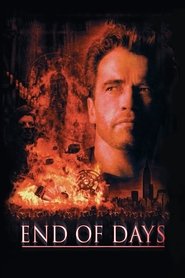
People weren't that quick to start eating apples on the set for a while after that. It's not difficult to take close-ups of Arnold Schwarzenegger or Robin Tunney. When you have wonderful faces and there's something going on in the face, it's really not that difficult. And you'd be amazed at the amount of time you're in an editing room and you're not crazy about the course of a scene. And when you have an actor like Gabriel or Arnold or Robin, cut to close-ups. There's something interesting going on.
57:00 · jump to transcript →
-
Right here, where Gabriel comes through the door, the set caught fire. The whole thing almost went. Luckily, we put it out in time, and we could then shoot just parts of it. Except it got hairy for a second. This film is filled with effects that you frankly couldn't have done 10 years ago. It takes digital effects
59:57 · jump to transcript →
-
-
director · 2h 10m 3 mentions
Richard Curtis, Hugh Grant, Bill Nighy, Thomas Sangster
-
Jim Clay, a very wonderful production designer. He is wonderful. - He did About a Boy of course. Yeah, fantastic film. Available on DVD? Yes, with a commentary. That's a very good joke. Brilliant. Where is that building? It was a set, it was a set. Really early on, I have to say now, that there's been a few misunderstandings. These people are stand-ins for what I hoped was going to be a very sexy mainstream film, that was the idea. Something like Don't Look Now. That's why it's set in Venice. A mainstream film with lots of sex. -/s that your mobile? - His phone has gone off. Who is it? - It's Hugh, my golf coach. I'd better talk. Hang on a sec. Hugh, hi. That is true. Oh, dear. Okay, and here we go. We've got Andrew and Chiwe in another church. I know. Now this is my favorite shot of the film. Wow. Great. I should say so. Artistic as well. Directorial flair. - And now it gets a bit disappointing here. That's what you call an entrance. Here we are, outside cardboard Downing Street. Cardboard Downing Street, but... -/f you pushed hard on that... -/t would just tip over. ...the whole of Downing Street would fall over backwards. But this was us trying to show off about our set, that we had the one shot and then headed on in. So we did this how many times? Like 30 times. The whole thing. - Yeah. Ad nauseam. I must work on my wave. Yeah, that's true, it wasn't just a facade. You remind me now. It actually went straight into the... The whole of Downing Street was built together. Now this is one of our favorite things in the whole film, you and your tie. Do you want to talk about that? I don't remember there being anything amusing about my tie. Remind me. You went to sleep between this shot and the close-ups. And when you woke up... I put on the wrong tie. - You put on the wrong tie. So this tile changes now? - Yeah. This tie changes. Oh, get out. - When we go to a close-up, you'll notice. That"s my mother-in-law. - ls it? That's Emma Freud's mum Jill. - Oh, God, yeah. And the funny thing was her line consisted on saying, "Hello, sir." But Emma rewrote it so she now says, "Hello, sir. I'm Pat, the housekeeper." She doubled the size of her part. - She got a name. I'm just so excited for my tie change. Any minute now. Any minute now, the magic tie change is going to happen. There it is. - Yes! No spots. Well, no, there are spots, but they're just much, much, much smaller. And the guy who was in charge of Hugh's dress, called Martin, was forced, in a sort of medieval manner, to wear the tie around his neck for the next few days. Now this is Martine McCutcheon. And when I wrote the part, I actually called the character Martine 'cause I so wanted Martine to play it. But when we sent it to her we called it Natalie, so she wouldn't get cocky. But then she turned up for the read-through and did it so brilliantly. - She was pretty cocky anyway. That's Jill, trying to get some extra lines. The girl on the right here is my favorite. She was very cross for some reason. Just look at her. - What, the dark girl? Totally furious. She voted for the other side. Oh, no.
6:24 · jump to transcript →
-
I have. - Let Mommy go first. I'll get it. I'll get it. Is this the scene where Emma suggested it should be more Christmassy? You then spent the rest of the day... The only directorial note you gave was, "Do it again but do it more Christmassy." It's so true. She said there wasn't enough of a family atmosphere, and then every time I said, "Can we have more family atmosphere," everyone on the set just said, "He didn't even realize that. "That's pathetic. He's only doing it 'cause Emma told him." This is... This is a version of Both Sides Now that Joni Mitchell recorded I think 30 years after she originally wrote it. It's a CD. Joni Mitchell. I can't remember what came first, but I think when I heard the song I thought it was so powerful that it was the thing that made me write this plot, really. My brilliant wife. - Yes. Actually, do you mind if I just absent myself for a second? All that ice cream. God, she's good. Darling, could you just make sure the kids are ready to go? I'll be back in a minute. - All right, all right, let's take it easy. So Classy.
1:27:27 · jump to transcript →
-
She's a wonderful actress, this girl. Her name's Carla. Wait. Wait. And this set was what we spent half our budget on. This isn't Heathrow airport, it's Shepperton. lt was very good, actually. - The set? I know. Except I notice when I go to Heathrow, it's a bit clean. Very hot, as well. -[t doesn't really look as nice as that. Very hot. I love this guy's performance. No. Did you direct him? No. No, he just spontaneously... - He was great. Here we go. This was the return of the angel. And we actually did a scene after this where Rowan disappeared as he walked across, but it all went. Thank you. Hold those. Okay. - Yes! No, I must have left them where I was having... Thomas, this is where all your gymnastics disappeared. Yeah. - All that gymnastics you did. Originally, he was... - I was amazing. I did a back-flip over all these people. Did you? - Wasn't really you, was it? No, I know, but... Has it gone, then? It's gone because we never could establish it properly at the front of the movie, and therefore felt very odd. -/ do a little thing. Look at that! That's pretty impressive. This was Heathrow. - That was Heathrow, yeah, late at night. At 2:00 in the morning. - Pretty exciting. It's a stirring theme, this, don't you think? This could be in a war film. That looks good. - It's great. And I liked it first time around in Shakespeare In Love as well. Shut up! That's a great shot, Tom. What about that? We had to work through the night at Heathrow, didn't we? This was all real Heathrow here. Just running. Did you sleep all the next day? Yeah. Quite easily, actually. And then this is Shepperton. This next shot, rather annoyingly, was directed by Duncan Kenworthy, 'cause I was somewhere else. Very weak. -[t's a parody of The Graduate. Do you remember, when he shouts through that glass thing? Homage. - Homage, that's right, sorry. That's good. That's very good. - Cool. Yeah, very good. Brilliant. There's me. - Bill, watch out. Oh, no. I'd forgotten about this. - Watch out. Here it comes. I may have to turn away. No, look. It's important. That"s your bottom. - It's not actually me, it's Christina Aguilera. Oh, my God. You missed it. - Thank God. No, no, no. You're a very, very attractive man. - Tom, don't look, Tom. You'll have dreams about it that'll keep you awake. Joanna. sam?
1:59:14 · jump to transcript →
-
-
director · 1h 45m 3 mentions
Eternal Sunshine of the Spotless Mind (2004)
Michel Gondry, Charlie Kaufman
-
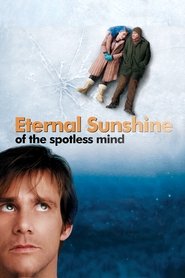
Mark is very, it's funny, my son who was 12 visited the set and he was obviously very impressed by Elijah and Jim because he knew them from movies and he didn't know Mark. But Mark totally captivated him. I remember they were sitting at the table for lunch and Paul was eating with his finger and Mark took to him very seriously saying, would you do that in front of a lady? And Paul was like tetanized and stopped eating with his finger
1:04:19 · jump to transcript →
-
And when he saw it on the set, he was really delighted. I should have put some sound of honk for truck. So that was your game you were playing, Charlie. Yeah, it's a game that I've played.
1:13:49 · jump to transcript →
-
In France, we had this TV show in the 70s by Bernard Pivot, you know, Mark Linton, I always refer to him. On the set was a book painted in white. So I don't know if I got the idea from that. Yeah, this scene to me is like the saddest scene of the film, when they're trying to have a second chance.
1:23:02 · jump to transcript →
-
-
writer · 1h 35m 3 mentions
Simon Barrett, Adam Wingard, Greg Hale, Eduardo Sánchez + 5
-
that he was a video game designer and so we wanted him to just play in a video game here and fortunately my brother is a video game designer at EA Games so we just use his real game and by the way like all this is actually like it doesn't look like it but this this film has been decorated it looks just like a messy house all this stuff is put here and I told the production designer Tom I was like I brought him over to my apartment and I said like
11:31 · jump to transcript →
-
we came to it. Yeah, I mean, it was literally like two days after Simon had delivered the script, and Tom, the production designer, and myself had read it, and we were actually going to just be planning on talking about it while we were at this party, and as soon as we walked into the place, Tom was like,
12:18 · jump to transcript →
-
The guy who does that band, it's a side project of his. His name's Steve Moore, and he's a great composer. He's actually going to be doing our next film we're doing. Yeah, The Guest, which we start shooting in a month. Yeah, I don't know if people pick up on it, but she is supposed to have recently tried to kill herself, which is what's going on with that bandage and the blood on there. You can't really see it that well. I keep going past it really fast, but Tom, the production designer, is really proud of the photograph to the left.
20:52 · jump to transcript →
-
-
-
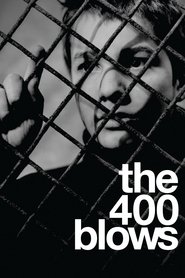
So it wasn't very complicated for him to ask her to come to the set one evening, just for an hour in fact, and do a little number. That happened a lot, people volunteering to lend a hand on each other's projects. That was really an integral part of the spirit of the New Wave, helping your buddies out. That was what it was about. Friendship meant a lot in those days, and camaraderie. It was like the gang of 13 in Balzac, and maybe the idea even came from there.
41:00 · jump to transcript →
-
a group that moves up together, each one with his own special expertise. And we were constantly improvising, particularly since we weren't shooting on the set where the scenery has been designed to match your plans. We changed everything around as needed, but that contributed a distinctive flavor of life to the film. The actual locations determined the mise-en-scene.
41:28 · jump to transcript →
-
-
-
Francis Ford Coppola
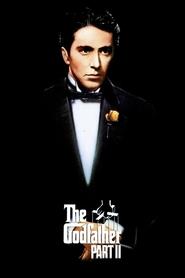
Because I think Michael now had really... Al had really found the character and, you know, had been partly inspired from, of course, the latter scenes of the first Godfather and somehow also in a way about seeing how Marlon dealt with situations. I remember on the first Godfather when it was Marlon's last day and he was off the set and...
30:38 · jump to transcript →
-
Francis Ford Coppola
I'll sort of take on some of the attributes in terms of, you know, now I'm the main guy and playing it and kind of coming to the set in a way that heralded the importance. But I knew what he was doing was sort of borrowing what he could as Marlon's successor.
31:04 · jump to transcript →
-
-
-
This was Jim Belushi's first movie as well, wasn't it? Yeah. And John, who had shot the Blues Brothers in Chicago, was around the set quite a bit, and...
7:31 · jump to transcript →
-
I just came on the set and was frank, you know? Which is a reason I should always do that kind of work, but I don't. This was truly a labor of love, I think. I don't think, I know. We worked real hard, but... Yeah, by the time we started shooting, you were frank.
27:42 · jump to transcript →
-
-
-
John McTiernan
This is Shane Black, he is a writer. I cast him because I wanted a writer on the set. And I just, I loved his work. And he's got a great wise-ass manner.
8:20 · jump to transcript →
-
John McTiernan
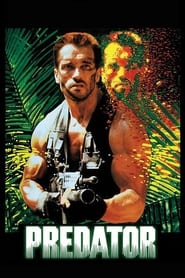
The production designer hadn't done any research about, had no idea that the trees lost their leaves, that the west coast of Central America's deciduous. And I didn't know at the time to check stuff like that. And then I since learned a whole lot about how much research we got to do on the location and weather and that sort of thing. But he didn't know anything about it, so. Two weeks in or something, the leaves started dropping off the trees and he stood there like wondering, "What the hell happened."
12:52 · jump to transcript →
-
-
multi · 2h 12m 2 mentions
Andrew Sarris, James Ellroy, Brian Helgeland, Michael Nathanson + 10
-
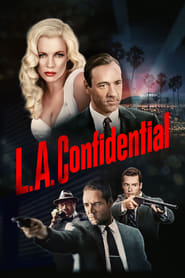
There were five or six locations that I thought were going to be very problematic to find because the action that the story described was very specific. So I ended up making little post-its. I wrote six little post-its on my dashboard in my car. The name of the set, the action required, and any little descriptive elements from either the story or the novel or the script.
1:05:36 · jump to transcript →
-
Dante had studied the era and was very excited with whatever newest technologies in film that could be done today to make it look that way and have it all that more real for the era. His work speaks for himself. I mean, he shot a brilliant movie. Knowing Dante, his appreciation for life and his ability to work with people made the atmosphere on the set all that much more pleasant.
1:18:53 · jump to transcript →
-
-
-
Taylor Hackford
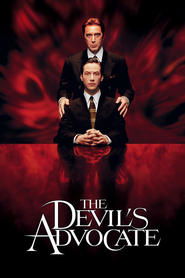
At this point, seeing a guy walk up to him in the bar, Keanu is completely convinced... ...that one of his friends has put this guy up to it. And this actor, who is Ruben Santiago Hudson... ...is a fabulous actor. He won the Tony for an August Wilson play, Seven Guitars. I saw him on stage and just felt, "I want to work with this guy." So when the role of Leamon Heath came up, you know, I had Tony Gilroy... ...kind of tailor the role to fit Ruben, and then convinced Ruben to do the film... ...because he has a very unique quality. He's not your totally assimilated black character. He may have gone to Harvard, he may have gone to Yale... ...but he's maintained a lot of his own roots and integrity, and at the same time... ...he's smart like a whip and he knows he's got Kevin hooked. The next scene that you're about to see hot cut to Kevin's roots: A Southern church, and this congregation is real. Judith Ivey, who is being introduced here as Kevin's mother. You know Kevin was raised in this church, he's coming... ...and taking a look back at his past, was totally fundamentalist... ...and deeply, deeply rooted in Jesus and God. Judith Ivey is part of this group. I had to spend a lot of effort convincing Pastor Lovell and his church... ...in Gainesville, Florida to participate in this film, because I feel that... ...you know, the things that they believe in, the things they're after... ...have everything to do with establishing good and evil in the world... ...and fighting the devil, and that's what this film is about. But they were fabulous, and they really got the spirit of God in them. And I thought it was important to see that Judith Ivey is a believer. She is one with her God, she loves Him. And, you know, she's a formidable presence for good in this film. At the same time, she's a tough mother, and you can see that... ...she has raised him in a certain way and she doesn't particularly approve... ...of what he's done with his life. He's a lawyer, and you establish his wife... ...over at the car, Mary Ann, who obviously is a party girl, a liver, and not... Neither one of them are in church this morning, and Mother is not that happy. This sequence is important to understand that Kevin Lomax understands scripture. He may have made a choice at this point to stay outside the church. If you notice, he's half in, half out of the light. Tony Gilroy wrote this in the script. Kevin Lomax stands outside the congregation. He's half in, half out of the light. He is part of it and at the same time... ...he can't bring himself to walk in. There's a dichotomy in him, which you'll discover later. But in this instance, when his mother calls up and says: "Quote the Bible to me and mention scripture," he can quote it back to her. He knows what he's talking about. He was in that church and a devout member at one point. Now you get a sense of Mary Ann. She is a good person. She's trying to help this character. She doesn't want to get the company to repossess her car. But she's tough, and she's a businesswoman. You also have a sense, right here, of the fun that these two people have. Keanu, you know, biting off her earring and handing it back to her... ...that was totally spontaneous. He came in, did that. It was quite wonderful. Now you have a sense of the married couple. They've got Mother-in-law... ...and Mary Ann's no dummy... ...she knows exactly that she's persona non grata in that household. It isn't that she doesn't like her mother-in-law, but she understands... ...what she needs to do, like have a child. And right now you establish another theme of the film: "Let's give her a grandchild and everything will be all right." Mary Ann is ready. She's working. She's professional. But she's ready to start to have a family. But you hot cut to Kevin Lomax who's taken the deal. He's in New York. At the beginning it's just a vacation. He's going to consult on the selection of a jury. You see Foley Square, the seat of judicial power in New York... ...all the Federal buildings, the State buildings, the local... Everything is right there in one space. It's a very, very sobering look at the power of the legal community in New York City. And at the same time, for a guy from Gainesville, Florida, it's very impressive. Kevin's here. He's excited. He is working as a consultant... ...to one of Manhattan's best and most famous criminal trial attorneys. His name is Meisel, played by George Wyner. And in this moment I wanted people to see that Kevin Lomax truly has a talent. When you talk to criminal attorneys, you realize that they say... ...that between So to 95 percent of winning a case is selecting a jury. This is a scene that I think talks about the inside of lawyering... ...and the reality of how you win. You win by psyching-out everyone that's gonna be on that jury. Those are the people that are gonna make the decision of whether you win or lose. This is where Kevin Lomax shines. He has an intuitive spirit. At the end of the scene, you realize he's got something else. He's got a sixth sense. Now, it's important, when we see this courtroom, to understand... ...that I wanted authenticity in this film. You're in New York. You have some of the best looking courtrooms in, I think, the United States. At the beginning, Warner Bros. wanted me to go to Canada and shoot in Toronto... ...which is an entirely different judicial system and the courtrooms... ...don't look the same at all. I fought to shoot this film in New York... ...not only for the fantastic exteriors, but also for these interiors. This is a film about big-time lawyering, and you want to feel, when you see the sets... ...and these aren't sets, they're locations. You want to feel that this guy is in the big time. He's gone from Gainesville, Florida to the top of the food chain. We shot in probably seven or eight of the best courtrooms... ...you could find anywhere in the world. Look at these paintings up on the wall here in New York. You feel that this is the justice system. Now Kevin is exhilarated. He comes out of his first day... ...in the New York courtroom and he knows he's done well. He didn't know how he would measure up, and how he measures up is... ...he's smarter than they are. I mean, he has to feel great. He's walking down the street. He's saying I'm a guy from the hicks, and someone's watching him. This is the introduction of John Milton, who's played by Al Pacino. It was important to me to establish a very nice introduction to him. One thing that Al did, and you'll start to see into this... ...he chews on licorice all the way through this film. You don't explain it. You know he's doing something. And instead of just walking away, getting in a limousine, he goes downstairs... ...into the subway. Why would he do that? He's well dressed. That's it. But immediately I go into a time lapse sequence... ...and I wanted to see day and night change. I wanted it to also say that this trial's been going on for a long time. When Kevin walks in, Mary Ann says, "You're home early for a change." Time has passed here. You've seen it pass. But more importantly, you see Al Pacino going down into the subway... ...and you see that the next images are not real. There is a certain kind of power that this person... ...we don't even know who he is yet, exudes. I thought that the time lapse would be both unique in terms of time passage... ...and, at the same time, extraordinary in terms of the potential power... ...that this man has. Now you've got Wife and Husband in... Mary Ann's got room service all over the room. Clearly, they've been there for a long time. She's watching TV. She's having a good time. She's been shopping. She's been to a lot of things, but her husband's been gone every day. And now you see the way they play. Kevin looks like he's defeated. It looks like he's lost the case. She feels badly for him. You can really see how she would, you know, how warm and wonderful... ...and sweet she is. But he's kidding her. You can really see the slyness, I think, in Keanu Reeves here. And, at the same time, he killed 'em. He actually chose the jury... ...and won the case, almost an impossible case. It was like a savings-and-loan fraud. This is white-collar crime. The guy sitting there in the trial, with his white hair... ...looks extremely legit. But the fact is that, you know, he's like Charles Keating. You know, he stole not millions, but tens of millions of dollars. And in this instance, the next shot is, they are in John Milton's domain. This is Milton, Chadwick and Waters, and I wanted a location that immediately... ...established the power of this law firm. This is a real building. It's the Continental Plaza in Wall Street, in the financial district, Downtown... ...and you see what New York power is all about. That view is a three-bridge view. You're gonna see all the way up the island of Manhattan. But the important thing here was, this location was used before in other films. I didn't want to use that same look. There's a unique design look here. Bruno Rubeo, who is my production designer and my collaborator... ...on the last three films I've done... ...we spent probably six to eight months before this film began... ...talking about what we wanted from this film and the look. Right now you're looking at Christabella, the first time we see her... ...and if you notice as she walks forward, I slowed down. It goes in real time. There's no cut there. We ramped so she starts in real time... ...she slows down... ...and comes back out in real time. And Kevin Lomax, he doesn't know why he's fascinated by her. We'll find out later. But look at the design in this. It's ultra modern. We used both an Italian architect and a Japanese architect. This is the Italian. He used prefab concrete in the walls. Milton's office. You know, the rest of the building is very impressive... ...but this office is something else again. It's cold, it's austere, and it's incredibly impressive. Look at that fireplace in the background. It's set up off the floor. Bruno had a design in mind. The furniture in this place is... You have a big, massive place. But look at the furniture. That little settee in front of the fire: it's delicate, it's small. This whole room exudes taste and a certain stylistic quotient. John Milton, you know, it's a huge room, devoid of furniture, very minimal... ...this is a man who has real taste and real choices that he's made. At the same time, this whole law firm is very, very modern. For the design quotient of this film, I want you to be able to see this sequence... ...and then later on, when you see where Milton lives, see the dichotomy... ...the difference. This is cutting-edge modern architecture to the nth degree. What Bruno wanted to do, and I wanted to do in this instance... ...is establish Milton's environment. Here it's cold, corporate, but, at the same time, undeniably impressive... ...austere, ultra-designed. Milton is very smooth. You know, Al Pacino always gets this rap: "Oh, gee, he's over the top." He's not. Al Pacino can play everything. And everything he did in this film was calculated. I mean, it was one of the great experiences in my life to work with an actor of... ...his deep, deep ability, his deep, deep talent... ...and his uncompromising attitude towards all his work. At the same time, Keanu, who had this... I'm saying this because here's these... ...two actors meeting for the first time. Keanu, who had done a lot of young-man roles, a lot of teenage slackers... ...in this film is anything but that. Kevin Lomax is precise. He is not a Harvard educated, a Yale educated guy. He came from a small school in Florida, went to a small law school. But all criminal attorneys that are really great usually did that. They come from the street. He's street smart. He thinks on his feet. And he's up against a guy, for the first time, that seems to have a little bit more... ...on the ball than even he does. He's never met anybody before that is his equal. And Milton keeps blowing his mind, like he does right now. You see this office. All of a sudden, he goes and taps on the door... ...opens up, and I wanted this sequence to truly be a moment... ...that would blow everybody's mind, not only Kevin Lomax's. He walks out on a roof terrace and, effectively, I'm using... Again, this is from a Japanese design. Bruno and I saw an architect... ...that had a pond on the roof in Japan, and I said that is a perfect idea... ...for what we want to do here. Here is a man who has such a sense of design and such a sense of grandeur... ...that he has created for himself a balcony, if you will, a terrace, a park on top. But does it have greenery on it? No. It has water. He calls it calming, placid. And at the same time, he's going to take Keanu out there... ...and he's going to talk about his past. He's going to find out a little bit more about him. He asks about his father. Keanu says, "I never had one." He asks about his mother. And in this instance he's, you know, if you look at Al's reactions here... ...this is a long, talky sequence. This is what you do sometimes. By the way, this is real. This is not blue screen. We didn't put the artists in a studio. I fought to get this scene. I fought everyone, including Warner Bros. Nobody wanted me to go up and get this shot. It's on the roof of the Continental Tower. They had re-roofed the place. The building didn't want us up there. I just knew that this sequence was going to define this initial relationship... ...between Kevin Lomax and John Milton. And the two actors are basically 50 stories in the air right now. They're standing on an eight-foot platform. No, it's not right on the edge. It's about eight feet from the edge. But the fact is that they're standing there. We had to get this whole thing in one day, and they have to do... ...a very personal scene while they're perched on the top of this building. You can see Al, at that moment, trying to let us know a little bit how precarious it is. But do you notice any kind of nervousness from Pacino? Not at all. He's easy. And the whole essence here is that Keanu's sitting out there. One, his mind is blown... ...at the beginning, and then somehow he finds himself getting into it. And at the same time, he looks right here and says: "My God, John Milton's standing like a foot from the edge of a 50-story precipice. "What kind of guy is this?" He also wears elevator shoes, which I think is interesting. But the fact is, right here is what the film also is about. It's about pressure. It's about professionalism. And what John Milton has done is taken Keanu Reeves... ...or Kevin Lomax, in this case, up to the precipice. He's showing him: "All this can be yours." And what is it? It's Wall Street. It's the seat of capitalistic power in the world. And he's basically saying, you know, I know you're a hotshot... ...but can you take the pressure? Can you sleep at night? That little speech that Tony Gilroy wrote, I think, fits all professionals in this instance. When you have to deliver on a deadline, you know what he's talking about. Basically, Kevin is there. He's ready. He said, "What about money?" Milton laughs. "Money? That's the easy part." Kevin doesn't have any problem. He can sleep at night. He's a lawyer. He knows how to do it. We cut from that to Carnegie Hill, which is Fifth Avenue in the Nineties in New York. It's probably the most exclusive address in New York. Central Park is on one side. You have these beautiful, beautiful buildings with fantastic apartments inside. And the Heaths. You're meeting Jackie Heath for the first time. I reveal her with that wipe from the elevator, you see her in close-up. Leamon Heath and Jackie Heath, they are absolutely New Yorkers. They've maintained their integrity as black people, but at the same time... ...they are not about to resist the temptations of the city. They want it. They know how to deal with it. They're very sophisticated. Look at the clothes that Jackie's wearing. Leamon makes the money and she knows how to spend it... ...and she doesn't have any qualms about it. This apartment, I wanted to basically establish the sense of awe. You know, John Milton owns this building. He has it for his employees. Although it's usually for partners, and for Kevin Lomax to get an apartment first up... ...shows that he's a little special, and you can feel, right here... ...that they're a little jealous. "Took us six years to get in here." Every New Yorker will understand that when they really want to get into... ...a big building. This is a film about New York. Tony Gilroy, who lives in New York and understands it incredibly well... ...is able to put these nuances in here that are maybe not aimed at everyone. But certainly, you know, you make a film in New York... ...it was important to me that you do something real. Now, you know, Kevin has basically been offered the job. He's got to now sell his wife on it. And this is a big test. If she, you know... He says, "I'll take you home if you want." Of course, if she did, God knows what he'd think. She knows him. She knows what he wants. And at the same time, how could you turn this down? It's very important right now, at this moment... ...to understand that Mary Ann wants this as badly as Kevin does. I mean, who would resist? Come on. They're too big for a small pond. They both want this and, my God, she's looking at this and saying: "Hey, I want to have a family." She says right now, you know, she mentioned kids again. She's mentioned it in the back of the apartment... ...and she mentions it again right now, and she's saying, "I'm in. Let's go for it." And that moment is one of the last moments of true happiness... ...you're going to ever see them have. Now you're at the law firm, and I want to be able to show... ...what big time lawyering is about. These are all partners. It's an international law firm. John Milton has called a meeting. From all over the world, these partners have come. There's Eddie Barzoon, played by Jeffrey Jones, who is Milton's chief lieutenant. He's the managing partner of the firm. There are affiliate offices in major capitals all over the world... ...and you get a sense of what law is all about. It's about copyrights. It's about real estate. It's about EEC and EUC and those kinds of relationships.
11:08 · jump to transcript →
-
Taylor Hackford
We rehearsed this scene for about a week. It was the one, I must say... ...for Warner Bros., a great thing they did for me. And although we had our differences, I was able to get my vision on the screen. I have no excuses. So, I do thank them. There was a great thing here in that Warner Bros. allowed us... ...to come back from New York. We built this set in Los Angeles. I had a week to prepare the set, to light it and to rehearse with the actors. Al, Keanu and Connie and myself, worked there alone... ...and really kind of built this scene. Tony Gilroy was there also, pardon me. It is not an easy scene to do when you realize it's basically a monologue. How do you keep it moving? How do you keep it visual? And it's basically a confrontation. And again, as I said... ...I want the devil to be confronting us. We all take credit for the things that we do in life that are good. When it's a good decision, "I made that decision. I'll take credit for that." But when they're wrong, we look for people to blame. That's exactly what Keanu is doing here, and Al won't have any of it. Milton is basically saying to him, "Hey. You made every decision yourself. "In fact, I told you not to. I said take care of your wife." I mean, I love the argument. And this is what we were trying to do. I give a lot of credit to my collaborative partner, Tony Gilroy, on this project... ...because this piece was a script that existed with a lot of special effects... ...and not many ideas, and it wasn't worth making. And every Hollywood star turned it down. Al Pacino turned it down five times. What we did with this script, from a page one rewrite... ...is try to give it some ideas, try to make it about free will. Not make it a special effects piece, a ghoul piece, a monster piece... ...but make it about something. Not just about lawyers... ...because lawyers are convenient and they happen to be a major target... ...and I think are the most pragmatic of all professions. However, all professionals find themselves in a position to blame... ...or be able to use their corporate entity, their boss, their organization... ...their professional oath as a screen against having to confront... ...moral realities, personal choices. If you can say "My personal, professional oath," pardon me, not my... "My professional oath says that I'm absolved from responsibility... "...because I have to represent my client to the best of my ability." Or, "My corporation says I need to do this, pollute this lake, and I'm doing it." It absolves you of your personal, moral responsibility. What this whole scene is about is confronting your own hypocrisy... ...and saying your ambition, your own vanity, in a world that's fiber-optically... ...interconnected to satisfy our every eager impulse, "You," meaning, "You humans"... ...as Milton says, "are exactly... "I've succeeded beyond my wildest dreams just by letting you do what you want. "You're so selfish. You're so self-involved." So that's what this scene is about. Kevin realizes that it's true... ...he was responsible for Mary Ann's demise... ...and when he does, he falls apart. Now watch Milton. He starts picking him up. He starts trying to say: "Hey, you know, think of it in a positive way. You have to think of yourself. "She wasn't up to you. Here's a woman who is. She's fantastic. "She happens to be your sister, but so what? She's beautiful. "She's smart. She's intelligent. You know, there's something more for you." And I think at this point, when confronted with the fact that he knows it's the devil... ...and now what Milton is gonna do, is talk about... You know, remember, Keanu is half and half. He's half Judy Ivey. He's half Al Pacino. He's half Alice Lomax. He's half John Milton. He's half God and half the devil, and this is relating to a lot of us. We all have our good side, our bad side. In this particular instance, this next sequence is, I think, really interesting... ...because Al Pacino is basically talking about his father. He's talking about his former boss. He's his own boss now. But if you think of Lucifer, the fallen angel... ...the brightest, the most honored and the most... ...you know, he was God's favorite... ...being thrown out of heaven because of ego, because he didn't want to take orders. That's what Pacino's doing here. Look. He's angry. He's losing control.
2:00:18 · jump to transcript →
-
-
director · 1h 31m 2 mentions
David Steinberg, Dave Foley, David Higgins, Jay Kogen
-
I don't know how many thousands of dollars to digitally remove the bald spot from your head. It was amazing. What? It was there? No. I think most of the budget went into the bald spot removal. And whenever I came to the set, Dave Higgins would say, out of his way, out of his way. Like I'm sensitive to being touched. Do not look at him. Yeah, don't look at him. No eye contact. The audience won't know and maybe probably doesn't care about, but during the filming of this movie,
15:53 · jump to transcript →
-
Quite often. Oh, yes. Jay always liked to do this. I like to exit a place where there's a big picture window and then be seen running through the big picture window in the background. There. Yes. That's how you would leave the set every day. Yes. Well, when I first met Jay, I think he did that, where it was that gag. And he would continue. Again, we have another really good, fine actor here, Enrique... Enrico Colantoni. Yes.
43:19 · jump to transcript →
-
-
-
Darren Aronofsky
rediscovered the balance perfect me shot that shot right there was grabbed last minute maddie just wouldn't let the set go we were just about ready to destroy uglies like no we got to grab some more shots we got to grab some more shots let's get some silhouettes and so we grabbed some final last quick shots which made the film pythagoras loved this shape for he found it everywhere in nature the nautilus shell ram's horns whirlpools tornadoes originally i wanted here to have sort of a montage of all the different uh
45:02 · jump to transcript →
-
Darren Aronofsky
along the Brooklyn Bridge to get the set and he's like, you can't do that. And I was like, why? And he's like, because if you could have, I would have done it last week. So I just got back on set and started working again. You just got to get through it. If you look closely, you could see the shadow of the camera rig. But don't tell anyone.
53:15 · jump to transcript →
-
-
-
Ridley Scott
It's a set, it's not a location. I chose it underneath the freeway, which was a kind of nice place to be. It was a big empty ground, which was normally a parking lot. And my production designer, Norris Spencer, and his team moved in. And of course, we needed to create somewhere which wasn't used every day, because otherwise it would be impossible. Because we were in here to shoot this sequence. I think we were in here for about four or five days. And we need to be in total control.
9:02 · jump to transcript →
-
Ridley Scott
So this was created by the art department and my production designer, Norris Spencer. I was using my special effects, floor effects, every kind of effect. A person that I'd used on Gladiator called Neil Corbould and his team, his formidable team. And he's...
9:31 · jump to transcript →
-
-
-
Tom Tykwer
photographed all the films that I've directed, and Uli Hanisch, the art director and production designer, and I mean all those heads of productions who are responsible for the language of a film, and to be as prepared as possible in advance, and then be ready for a movie that's so much obviously driven by the acting and by emotional impact.
29:17 · jump to transcript →
-
Tom Tykwer
this idea of a fable or a dream or even something like a dark fairy tale. Just to add this idea of those helping hands and minds, even the construction of this room was like a long way to go. Uli Hanisch, the production designer and I, we sat together and we tried to create something that was as
42:21 · jump to transcript →
-
-
director · 1h 37m 2 mentions
John Cameron Mitchell, Justin Vivian Bond, Sook-Yin Lee, Paul Dawson + 1
-
How to make a movie when you have financial constraints. Borrow your friend's place. This set was built for the film. It's like in some ways our greatest accomplishment of Jodi Asness, our production designer, and the people who worked with her to make an actual sensory deprivation tank.
45:23 · jump to transcript →
-
Shift. That could only be done by somebody who has a white noise machine. People have asked. I do have one. Oh, there's a Va Va Sisters. There they are. They were fun on the set. People have asked if there is such a thing as the Realm of the Senses egg. We should possibly copyright that. Well, you know, in the Realm of the Senses refers to the famous Japanese film of the 70s. It was highly explicit and had common hard-ons and sexual obsession going on that was banned by the U.S. Customs.
53:05 · jump to transcript →
-
-
director · 1h 36m 2 mentions
Aliens vs. Predator - Requiem (2007)
Colin Strause, Greg Strause, John Davis
-
But calling it in over the radio can be tough. But in this situation, we had no choice. And then our production designer, Andrew, he kicked ass on this movie for having so little money to start with. Like, I think he literally had, like, what, a thousand bucks to do the inside of this tank. It was pathetic. But he made the tank look fucking cool. And, you know, it's like... And then, like, those lights on the top, this lighting company had these new fiber optic light things. So we put those actually in there and...
1:16:46 · jump to transcript →
-
Obviously, all of our cast, John, Reiko, Steven, Ricky, Ariel, and Johnny Lewis. Everyone else, there's not enough time to go through all the names, and our great crew up in Vancouver. Yeah, I want to really thank Lars. I mean, like I said, Lars and Paul Deason, and then Andrew, our production designer, who really... And I forget, Daniel Pearl. Yes, and the man, Mr. Pearl. Fantastic.
1:36:04 · jump to transcript →
-
-
-
Tell us about the frame, the playground thing that she's standing on. Yes, that is designed by Eva Norén, who is the set designer. And she has made a wonderful job to recreate the early 80s. And she designed this playground thing to match the format. It's made in CinemaScope, this film.
12:49 · jump to transcript →
-
The fantastic things with Eva Norén, the set designer, she suddenly comes when we were to take this scene, when he's looking out of the window, and she has found this little plastic toy, and she says, put this in, have him to play with this, and it's beautiful. It's very, very typical for a child in his...
42:27 · jump to transcript →
-
-
-
And Bill Hader, just in his full-on studio. Was this the most surreal part, though, of directing the movies, when you got Tom Cruise there on the set and you're directing him? I imagine that that would be the most... It's definitely, because Tom is such an iconic figure in our culture, it's definitely a little bit... Well, if you're directing Tom Cruise, you're like, well, holy, we are in Hollywood right now. There's no way around...
1:06:25 · jump to transcript →
-
Yes, but, you know, because of his look and everything, it was just so different, and everybody was just, I think, into the moment. And then you got McConaughey there. You got a lot of bigwigs on the set. You know, Tom was just really having so much fun with the character. I like this line.
1:06:47 · jump to transcript →
-
-
director · 1h 34m 2 mentions
Scott Stewart, Jason Blum, Brian Kavanaugh-Jones, Peter Gvozdas
-
David Schott, he's very well known for having done the pilots of Friday Night Lights, The Walking Dead, Deadwood, and also movies. I think right now he's shooting the pilot of the new Joss Whedon S.H.I.E.L.D. pilot. He's just a legend in television and a great shooter and a great presence to have on the set.
31:32 · jump to transcript →
-
And I should not click on every link that I find on the internet because it's going to lead me to a crazy place. And another thing that we do in our, you know, we try to get out of the house as much as possible. And I think, you know, our locations folks and our production design team led by Jeff Higginbotham just did a great job. You know, the location you just saw with Trevor St. John, who was the second interviewer,
45:57 · jump to transcript →
-




Related topics
Other topics that frequently come up in the same commentaries.