Topics / Production
Location & scouting
131 commentaries in the archive discuss this, with 816 total mentions and 72 sampled passages on this page.
Filter commentaries
Filter this topic by the film's decade or the type of commentary.
By decade
Across the archive
ranked by mentions · click any passage for the moment in the transcript
-
director · 1h 34m 7 mentions
Scott Stewart, Jason Blum, Brian Kavanaugh-Jones, Peter Gvozdas
-
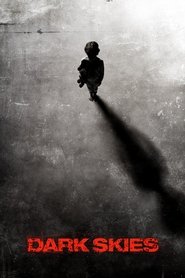
You know, and it was sort of off to the races right from there. Jason, you and Brian, what do you look for when you want to hear an idea, when you hear an idea that makes you go, we want to make that movie? We look for something that can be done for a price, so not too many locations, not too many speaking parts, but something with a high concept. And I remember when you first pitched this,
0:54 · jump to transcript →
-
the guy conducting the interview just to make it really cold and unwelcoming. It's almost like a Snoopy parent, you know? One of the things that is always challenging in these movies is that when you come out of your hero location or your main location to little scenes like that, they're very hard to make them play real. I don't know why, but we always struggle with that. And the choice that...
9:36 · jump to transcript →
-
And I should not click on every link that I find on the internet because it's going to lead me to a crazy place. And another thing that we do in our, you know, we try to get out of the house as much as possible. And I think, you know, our locations folks and our production design team led by Jeff Higginbotham just did a great job. You know, the location you just saw with Trevor St. John, who was the second interviewer,
45:57 · jump to transcript →
-
-
writer · 1h 35m 7 mentions
Simon Barrett, Adam Wingard, Greg Hale, Eduardo Sánchez + 5
-
Yeah, I've heard this one before. The first time I saw this was in the editing room, and I actually didn't know that your dick was on camera. I was here on this location, but I was upstairs flirting with the girls upstairs. I think Mindy was just really happy when she showed up on set and there was an actual crew there, as opposed to me and my iPhone. I mean, it didn't really help that during all the auditions you just had that American flag Speedo on. And just kept rubbing butter on my chest. But that set the tone.
1:18 · jump to transcript →
-
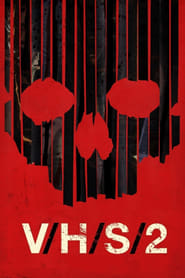
The guy who does that band, it's a side project of his. His name's Steve Moore, and he's a great composer. He's actually going to be doing our next film we're doing. Yeah, The Guest, which we start shooting in a month. Yeah, I don't know if people pick up on it, but she is supposed to have recently tried to kill herself, which is what's going on with that bandage and the blood on there. You can't really see it that well. I keep going past it really fast, but Tom, the production designer, is really proud of the photograph to the left.
20:52 · jump to transcript →
-
clearly with a lot of clarity and stuff in terms of the geography of the landscape of it. While still giving a sort of labyrinth feel about it. Yeah, and I guess a large part of that sort of maze-like aspect to it is the fact that it's actually made up of about three or four different locations that we just had to find ways to cut together and find ways to kind of get this seamless transition from one corridor to the next. It helped us a great deal that we were able to use multiple cameras
47:52 · jump to transcript →
-
-
-
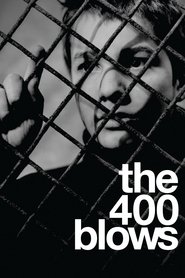
the Eiffel Tower clearly anchors Paris as the location. François Truffaut, his friends will tell us, was an avid collector of miniature Eiffel Towers and kept them all over his apartment. This sequence was actually shot for a scene in the film where Antoine and René take a Parisian taxi cab and go in search of the Eiffel Tower, a trip that takes them a ridiculously long time. Truffaut decided to cut that scene from the film, but to use some of the footage from it for the title sequence.
0:56 · jump to transcript →
-
Many of the director's choices in this film were dictated by budgetary constraints, for the film was produced independently. Thus, the choice of black and white film stock, which came to be associated with new wave films, was essentially a matter of economy. Similarly, the handheld camera, which permitted shooting in narrow locations and made the quick pans back and forth in this classroom scene feel natural, was less costly to operate than the bulky camera setups of studio filming.
4:44 · jump to transcript →
-
We're familiar with such overlapping of image and sound now, more than 30 years after the release of this film. But in 1959, such a move was innovative and helped to define an important aspect of the new wave. One aspect of that movement was, as we've noted, the refusal to shoot films in a studio or on a soundstage, but to take the camera out into the streets and the locations themselves. Another new wave innovation was to trust the viewer to be able to look at one thing, yet hear another, and not be confused.
6:00 · jump to transcript →
-
-
-
I hired the crews. I directed everything. And it was amazing. It was truly amazing. I mean, I was producing because, I mean, we'd have a day where we had to get an enormous amount of material shot, and we'd get on the location and find out that nobody, that I hadn't bothered to get a police permit. And so they shut us down at 8 o'clock in the morning.
4:00 · jump to transcript →
-
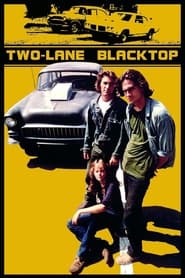
This shot itself was shot about 1,000 miles away from the actual location because the original shot was damaged and we had to do it again. And this is the moment where James... Oh, okay. Now, his reaction was at the original location, so that's cutting back to Flagstaff.
10:24 · jump to transcript →
-
You shot as you went along, I guess, huh? You were actually traveling. Many days we would actually drive three hours, stop and shoot for three hours, and then drive to the next location. There were very few days when we were able to just shoot the whole day long. Overall, I think we had a 49-day schedule of which about seven days was travel.
11:41 · jump to transcript →
-
-
-
Francis Ford Coppola
These are the actual windows of the Kaiser estate, what was called the Kaiser estate in Lake Tahoe, and it was shot on location in those beautiful buildings. G.D. Spradlin was a tremendously
15:58 · jump to transcript →
-
Francis Ford Coppola
I always like to use a lot of improvisation when we rehearse and big, long improvisations. And what we did in this sequence in Lake Tahoe in Godfather Part II is we had the cast there a couple of weeks right on that location. And I went around and said, okay, this is...
17:37 · jump to transcript →
-
Francis Ford Coppola
Now this is the actual original location of the first Godfather film, the same...
1:04:52 · jump to transcript →
-
-
-
Tim Lucas
A lot of people were saddened when Reiner Schwarz died on August 30, 2014, at the age of 66. If you want to know more about the man, he left an interview with himself on YouTube. Kind of a Videodrome thing to do. Just search his name. The Civic TV boardroom scenes were shot on location, in an office at 70 Crawford Street. This elegant rooftop satellite reveal, shot on the rooftop at 7 Wellington Street West,
5:42 · jump to transcript →
-
Tim Lucas
The limo then pulls up outside the storefront of Spectacular Optical, which was shot on location at 728 Queen Street East in Toronto. When Les Carlson made this film, he was a familiar, beloved character actor who had been active in Canadian features and television for some time. In fact, both he and Jack Creley had provided voices for the 1960s animated series Marvel Super Heroes. And while this film was still in production, he played the Christmas tree salesman in Bob Clark's perennial A Christmas Story.
46:50 · jump to transcript →
-
Tim Lucas
and was eliminated on Friday, December 4th, just a few days before it was due to be shot on December 9th. Michael believed the effect would have been a career maker, one of the most impressive effect shots in the movie, and he looked back on the day it was cut as Black Friday. He estimated that the effect would have cost the production a whopping additional $3,000, but it wasn't just a factor of cost. We're now back at the 70 Crawford Street location. This was...
58:14 · jump to transcript →
-
-
-
John McTiernan
The movie started with a big discussion at the beginning, about the location. And McAlpine and I pleaded to shoot it where there was some real jungle. This stuff is all real jungle and it was done in Palenque. And all this stuff, McAlpine and I pleaded to shoot it there. _ There was somebody involved in the production who had turned out later for corrupt reasons.
11:44 · jump to transcript →
-
John McTiernan
To tell him to go to hell. I had never let somebody choose a location for me since.
12:34 · jump to transcript →
-
John McTiernan
The production designer hadn't done any research about, had no idea that the trees lost their leaves, that the west coast of Central America's deciduous. And I didn't know at the time to check stuff like that. And then I since learned a whole lot about how much research we got to do on the location and weather and that sort of thing. But he didn't know anything about it, so. Two weeks in or something, the leaves started dropping off the trees and he stood there like wondering, "What the hell happened."
12:52 · jump to transcript →
-
-
-
Alexander Payne
in Omaha, actually just outside of Omaha in a suburb. It's technically a different county from Omaha's, Sarpy County. I very much wanted a sense of a typical sprawling public high, public high school. And I had visited a lot and scouted a lot and saw a lot of foundation blocks and a lot of windowless buildings.
4:56 · jump to transcript →
-
Alexander Payne
Okay. Then that's what I thought. I was just checking. Yeah. Good luck there, Tracy. Okay. This is the corner of 50th and Underwood in Omaha, and I grew up very close to there. That's in the Dundee area. And many scenes from Citizen Ruth were shot at that, in this area, at that corner. In fact, catty corner to this location here is the
17:57 · jump to transcript →
-
Alexander Payne
I like this shot a lot and I like that we hang on it for quite a while because it gives you a chance to look around that gymnasium and see those graphics. Sometimes when you hang on a shot long enough, it just gives you time to breathe and look around and feel the location a little bit more. I want our school to reach its true potential. That's why I'm running for president.
39:14 · jump to transcript →
-
-
-
Jonathan Lynn
So you just gas me, pull the tooth out, and we'll still be friends, okay? Good. This dentist's office was a location, actually. There are very few built sets in the film. Partly for financial reasons, the film was made for a fairly low budget. And here we are in one of the most famous squares in the old town of Montreal, and this is Amanda Peet.
5:29 · jump to transcript →
-
Jonathan Lynn
Oz's house and Jimmy's house are two real houses that we found on location in the suburbs of Montreal. If we'd tried to build two houses on the back lot, we couldn't have come up with anything more suitable. Oz's house is little and pretty and the sort of thing that his wife would choose to live in. Jimmy's house is bigger and stronger and tougher and slightly more forbidding. It's at the top of a slight hill.
10:21 · jump to transcript →
-
Jonathan Lynn
Oz's house is at the bottom of the hill. You can see Jimmy's house from Oz's house, which is essential. And incredibly, the owners of both houses just agreed to move out for location and prep for the art department and for 11 days of shooting. We were very fortunate. We had driven around for weeks looking at dozens of unsuitable houses and we were beginning to despair of finding the right thing when
10:50 · jump to transcript →
-
-
-
Nick Pinkerton
strapping handsome lad of 6'4 that he was. He was scouted out and given a $100 a week contract under Arthur Lubin, creator of the TV series Mr. Ed, who put the raw, untrained kid right into some drama classes. There were, through the mid-1950s, a few undistinguished roles for Clint, a sequel to Creature from the Black Lagoon and Francis in the Navy, directed by Lubin.
30:06 · jump to transcript →
-
Nick Pinkerton
Cimino and Robert Daley hit the road on a very extensive location scout. Per the production notes, they covered an incredible amount of ground in the so-called Big Sky country of Montana, eventually centering in on an area around Great Falls, Montana, near the Missouri River Basin in Cascade County.
48:40 · jump to transcript →
-
Nick Pinkerton
though working in widescreen, which was very much not Ford's preferred format. Cimino would find locations in Hobson, in Ulm, population 738, in Choteau, named for a French fur trapper and explorer, located in nearby Teton County, and in Fort Benton, the county seat of Chouteau County.
49:29 · jump to transcript →
-
-
director · 1h 28m 5 mentions
Don Coscarelli, A. Michael Baldwin, Angus Scrimm, Bill Thornbury
-
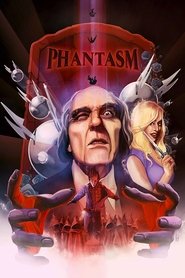
Man, Bill, you are a handsome young fellow in that, I must say. We shot this up in Oakland. It was a real major distant location. It took place at this... It's called the Dunsmuir Mansion outside of Oakland. And they gave us the run of the property for a couple... Actually, two days we went up there and shot all of these sequences in order. Now we cut back to Los Angeles. Actually, Chatsworth, where we...
2:42 · jump to transcript →
-
And whenever we're shooting in the mausoleum, you see a lot of camera movement because it was easy. This set was built by our construction team, which was actually a couple of film students who had worked in summers in construction. And they really knew nothing about building for movies. So consequently, they went out to Chatsworth, and we just kept sending them money and more money.
3:40 · jump to transcript →
-
a year period where we just go out on a weekend usually and shoot for three intense days or nights and then continue on and you know we just went up there to this location and actually i think there was a some guy who just let us tap into his house and get the power and no permits or anything
23:46 · jump to transcript →
-
-
-
Yes, this was the actual location for this. Well, actually, we had built this part. We built this on top of their location. We added it in. And this was my own Casio watch... ...where I found it would come up with that little weird countdown. And it was always Dan O'Bannon's idea... ...that somebody trying to test his sanity would... ...see if he could tell time with his eyes closed.
1:22 · jump to transcript →
-
This particular location is real near to Dodger Stadium and Chavez Ravine. It had a nice look over the city of Los Angeles. Little tiny, tiny house. But still, you know, even little tiny houses can have great views.
22:53 · jump to transcript →
-
-- I think you did a wonderful job last night, too, by the way, with the-- Oh, yes. Yes, I-- New series, Blind Justice. Well, here's where I got in terrible trouble... ...with this particular shot right here... ...standing in front of Saint Joseph's Hospital in Burbank. They didn't want to let us shoot at that particular location... ...but I thought that's where we were going to go. And when I got there, I lined up the camera there... ...and then I hear on the walkie-talkie from Jerry Zeismer... ...the assistant director, that the head of the hospital... ...won't let us shoot there. And I said back to him on the walkie-talkie-- I said, "Jerry, you tell that head of the hospital where he can go. I'll shoot this thing and be out of here before he even knows... ...we're doing anything." And Jerry comes back with a kind of gulp in his voice: "I'm standing right next to the head of the hospital here. He just heard everything you said." So I said, "Well, we better roll fast." So we did it a couple of times with the actor and got out of there. If I ever get sick, I guess I'd better not go to Saint Joseph's Hospital. "That's the guy."
24:21 · jump to transcript →
-
-
-
Barry Levinson
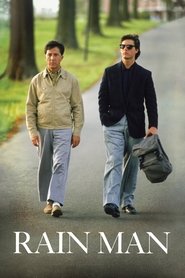
Know it by rote. This was an interesting location, and it allowed us to look in in all the rooms. And so as we begin to just continue to dolly with it, we can sneak the dialogue from the upcoming scene kind of distant and then let it start to impact more on the scene, almost like it was dreamlike for a moment.
10:05 · jump to transcript →
-
Barry Levinson
By this point in the movie, as I say, we were shooting in continuity. They were really beginning to get into a rhythm with one another. Very, very kind of good, natural rhythm. We are not going to Cincinnati, and that's final. Raymond, that is final. Did you hear me? Come on!
56:20 · jump to transcript →
-
Barry Levinson
certain kind of locations like this sort of held. At this point in the movie, I thought the two of them were really, really clicking in terms of the way they can work together because the dialogue back and forth between them, it's really kind of rapid fire. They're both aware of one another.
1:04:06 · jump to transcript →
-
-
-
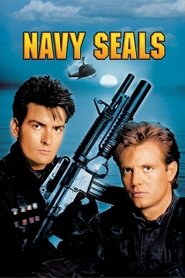
before they were known. Well, so Michael Biehn, I wanted to get into a little bit, too. And he is speaking of being spotted early. He was sort of scouted by the drama, the dean of the drama department at the University of Arizona, who just saw him in a speech tournament and gave him like a scholarship.
32:44 · jump to transcript →
-
to learn like where he came from, how he got into the industry. Cause it was a little surprising actually. I just figured, well, your dad's big movie star. Yeah. You'll be a movie star too, you know? And, um, actually, so Martin Sheen, Charlie Sheen decided he decidedly did not want to be a movie star when he was a kid because, um, Martin Sheen would take the family on all the location shoots that he was on. Like there's such a close family, super close family. And, um,
46:45 · jump to transcript →
-
That kind of makes me think of the producer, the other producer, Bernard Williams, who he's kind of like a Teague who did a bunch of different jobs before he fell into being a producer. He started in the film industry at age 15 in England as a production assistant, then advanced to assistant director, to location manager, to production manager by age 27.
1:27:06 · jump to transcript →
-
-
-
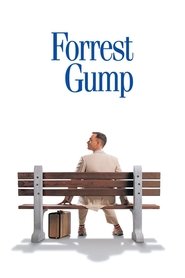
it would sound more read than performed. It would sound narrated. So he performed every line of narration. And then after that, we just, you know, completely powered through Forrest. He just had it down for the rest of the movie. And then, of course, those were all the heavy scenes we had to do came after we were done. When we were on the stages here, we were done with On Location. I think the other thing that happened on this movie as a process was...
3:45 · jump to transcript →
-
whenever we would try to force something, it would never actually work out. And we always had to allow the gump part of it to come through. And that even happened in the picking of locations, because this location, for instance, takes up two-thirds of the movie, and it just...
4:14 · jump to transcript →
-
One of the things that you begin to notice here, actually, I think it's subconscious, but Bob's choice to not ever show the enemy. Something I've been thinking about. Yeah, I remember when we scouted the location where the big battle was going to take place. I thought, what a brilliant idea to never actually see the enemy there. Got it all figured out, too. So many pounds of shrimp to pay off the boat.
47:19 · jump to transcript →
-
-
-
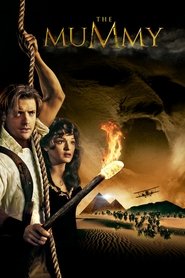
We only shot one take, that's it. Rachel's now crawling in as the stuntwoman is crawling under the camera and I told her to stand up and perfect. Take one, one take only, that's it. 12,000 bucks. Steve called me from the location saying, okay, so what does it look like? Do we need to shoot it again? And I thought, well, I'm not sure what else you'd do to that shot. I think it's about as good as it could be. Yeah, it was a real pain because we arrived on the set
13:29 · jump to transcript →
-
A lot of people ask me if I hated shooting in the desert because of the heat and the bugs and the scorpions and the snakes and sandstorms. But actually, I loved it as a director. It's the perfect place to shoot a movie because cell phones don't work. No one's worried about getting back to their, you know, boyfriends or girlfriends or getting home for dinner, taking the kids to the ballgame. Everybody's focused on making the movie and working as hard as they can, as fast as they can to get the hell out of the desert. So as a director, it's...
57:47 · jump to transcript →
-
Speaking of tone, this shot of Burns coming up here is a very difficult shot because the movie was always intended to be a PG-13 film. It was very important that there be little to no blood in the picture and unfortunately it made it difficult to show things like his eyes being pulled out. So that shot was digitally enhanced in post-production to make you see it a little bit better than what was done in location.
1:03:56 · jump to transcript →
-
-
-
E. Elias Merhige
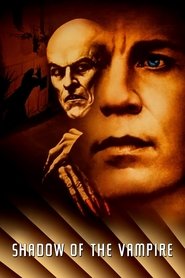
a lot of ideas that are reflected in the actual story that you're going to see in Shadow the Vampire with this idea of science meeting the sort of ancient world, you know, when Murnau goes out into the mountains with his cast and crew to create this vampire film and chooses to use these actual locations, these actual places where the Templars once lived and fought and laughed and
4:21 · jump to transcript →
-
E. Elias Merhige
because we were out of that location that night and we shot this at 1.45 a.m. in the morning. We'd been shooting since eight in the morning and it was, I knew it was demoralizing for my crew to punish them this much and push them as hard as I was doing over those couple days and that's when I really focused on really being conscientious and caring a lot more about really getting people
41:29 · jump to transcript →
-
E. Elias Merhige
ship built right in the backyard of this 11th century castle. Ectoplasm once. Ectoplasm? What is ectoplasm? It's the mystical substance of ghosts. I saw a spiritualist pull it out of his mouth. But if it didn't work thematically, of course, I mean, I would have never done it. I mean, we would have gone to the ocean, but it just would have meant a four-day location move. It would have been a nightmare.
49:09 · jump to transcript →
-
-
-
Ridley Scott
It's a set, it's not a location. I chose it underneath the freeway, which was a kind of nice place to be. It was a big empty ground, which was normally a parking lot. And my production designer, Norris Spencer, and his team moved in. And of course, we needed to create somewhere which wasn't used every day, because otherwise it would be impossible. Because we were in here to shoot this sequence. I think we were in here for about four or five days. And we need to be in total control.
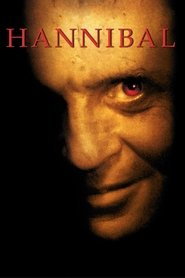
9:02 · jump to transcript →
-
Ridley Scott
And because of that event, Medicis took revenge and killed the other Pazzi by hanging him from the balcony of the, of the Palazzo Vecchio, which is, you know, what's written in the book and is history. But I didn't realize that when I chose this location, the man said, you know what you've chosen? I said, no, he said, well, this is the Pazzi family chapel.
1:03:45 · jump to transcript →
-
Ridley Scott
The problems of shooting in Florence were no more than enthusiasm. The Italians are great, you know, cinema kind of aficionados, enthusiasts, real enthusiasts, and therefore my only problem with them was just so many of them. They had to be held back sometimes and monitored, but generally it was great.
1:07:24 · jump to transcript →
-
-
writer · 1h 31m 5 mentions
Wes Anderson, Roman Coppola, Jason Schwartzman
-
Roman Coppola
So this scene is a... Here the conflict is brewing among the brothers, the suspicions and the questioning. And I remember we decided that-- I thought there was something nice about working in the compartment and not having cuts. And sort of-- You know it's a real space, and we'd also get this building kind of tension that's happening here. So anyway, to shoot this, I remember we built a mock-up of this compartment on the... At our art department, which was actually at the-- Which was actually, like, on train tracks. It was some kind of train-- At the train station. Yeah, it was like a train station. We built a train station in it, in fact. And I remember we rehearsed that shot-- It's one of the few times I remember actually rehearsing an entire shot with a dolly and the camera and everything on a completely different location. You know, in a-- You rarely rehearse with a crew present before you start a movie. But that one, we wanted to make sure we'd be able to do it, because the space was so compact, just because it's a real train rolling along.
16:18 · jump to transcript →
-
Roman Coppola
I really liked this temple. We went many times to this temple in the center of Jodhpur. I think we brought the cows ourselves. Okay. Spray in face. - Spray in face. This was shot much later, as I recall, actually at the location where we had the final convent, if I remember correctly. Yeah. - Yeah, outside of Udaipur. I remember when we were scouting, there was a day when it looked like this. It was all women. And I don't remember what the occasion was, but we recreated what we saw there. We invited back all the people who had been there on this day that we had scouted at the location and this ceremony was happening. This is a scene I remember we rehearsed in the temple itself and really kind of found the scene, the three of us sort of improvising it and acting it out. And we had a little text we were reading from, but sort of, you know, realizing it just the three of us. Yeah. When we were writing the script and we went to India on our reconnaissance mission, it was like a writing session and it ended up being a location session. And we found this temple and went back and shot there many months later. But as Roman said, this is-- We were walking around, we found this, we went in, we took our little micro scripts out, we rehearsed the scene to see if it was working and saw what worked and what didn't. And then we actually became so attached to this place that we went back and shot the real scene there.
23:08 · jump to transcript →
-
Roman Coppola
This, of course-- You know, in our travels in India, we had so many occasions to be in little airports. And this makes me think of all those times and particularly that one airport that was kind of like a military base was bombed out and there are people with weapons and... - Mm-hm. Shimla. - Yes. Yes, where we actually... Well, remember, we flew in that-- We went in that small airplane. I just remember we'd had a few flights that were-- Where we felt not that comfortable on them, and we decide-- We had had one bumpy flight that was very-- That was a bit unnerving. And I remember we had decided, Roman, Jason, me and also Alice, our friend Alice, who was traveling with us, and Waris, that if we ended up on a flight we weren't comfortable with it, if any one of us was not comfortable with it, we'd just go another way. We'd have another way to travel. We were getting ready to fly to near Dharamshala. Remember? - Mm-hm. And we'd heard the plane only held like 15 people and it was gonna be a smaller plane, and we just weren't quite sure. So we went on the plane, and it looked like it was maybe built in the '50s, I'd say, and had-- You know, it was the kind of plane where you can see all the rivets on it. And we went on it. It was tattered, and I remember one of the-- I leaned against one of the seats, and it collapsed. And Alice and Jason and I looked at each other, and we were like... ..."No, I don't think so." "No, I don't think..." "I definitely don't think so." And then we turned to Roman, who said, "Well, look, you know, we can take a train or we can drive. It would take longer, but it's fine, and I'm happy to do it, but just so you all-- Just so you know what I think, this-- It's a fairly old aircraft. It looks like it's been well maintained to me, quite well maintained. The interior hasn't been renovated in quite a long time, but I think that it's very safe, and I feel very safe on this plane. I've flown on planes that I felt much less safe than this. So, to me, it seems very safe." At which point we said, "Let's go"... - Yeah. ...and it was actually a nice flight. - It was a great flight. Yeah. - The kind of flight where you never really get that high off the ground anyway. We flew into some strange valley. But then we took the helicopter. Yeah. Yeah, tell about the helicopter. Well, we finished writing the script. Or had we finished writing the script? We finished it at an altitude of 5000 meters. What would that be, like a 17,000-foot elevation or something? I don't know what it is. We finished it at this hotel in the Himalayas. Shimla. - In Shimla. In Shimla. - And I remember the morning waking up there and looking out of our hotel room, and we were very, very-- Not only was the hotel at a high elevation, but our room was very high up for some reason and looked over this incredible valley, and when we woke up, don't you remember, there were just hundreds of butterflies flying around our hotel room outside? And then we took-- Anyway, we did the math. Above the trees, remember? - Well above the trees. There were-- Yeah. - Yellow butterflies. Thousands. - Thousands. And we did the math, and it would take like almost an entire day in kind of dangerous terrain to get off of the hill we were on. Or we could just take this helicopter. And, I mean, it wasn't a crazy-fancy helicopter or anything, but we sourced it out, got this helicopter, and I remember we took off right off of this military... like, army-base-style airport, a broken-- I mean, not broken, but not a-- It didn't seem like a functioning airport, if I'm right. You know what I mean. We were the only people there. There were no other flights going in or out of it, and it had been-- It looked like it'd been bombed. I don't know how that's possible. I think it was being renovated. It was like a military airport... - Yeah. ...being renovated, but the impression was pretty-- Like, the buildings had been knocked-- Like they were-- They had begun the demolition and abandoned the works... - Yeah, right. ...is what it felt like. - And I remember we took off in this helicopter, and I was really scared. And, you know, I've gone in and out of having different fears of flying. And I was at-- I was in a phase where I was very afraid of flying. And I had never really been in a helicopter like that. And I was scared, but I had remembered that there was, like-- I had read something somewhere that the mind will follow the body sometimes. And so if you're feeling down or whatever, just smile, and, you know, if you just force smiling, at a certain point, maybe your brain-- You'll just start to feel happy. So I tried to just smile the entire helicopter ride and, you know, hope that my mind and my nervous system would follow my smiling. And it did. Yeah. I remember what was great about the way we took off in that is-- Sometimes when you go in a helicopter, you lift up and then you go down a sort of runway pattern, anyway. This one, we took off and it went down the runway, but the runway ended on a cliff and with a drop that was just thousands and thousands of feet. So it was-- You went very slow. We went very slowly down the runway, and suddenly the ground was gone. - Yeah. And it was a kind of incredible way to leave this place after we finished our script. Here we are outside of Udaipur, which is sort of-- We're meant to be shooting that for the foothills of the Himalayas, where we had originally planned to shoot. We had found a location near a place called Mussoorie. In fact, it was a... It was the former house of Sir George Everest, who had surveyed Mount Everest and had originally determined that it was the highest mountain in the world. I'm also recalling-- I don't know how much we wanna put it on the commentary, but some of the wrong turns or the episodes that we wrote, like the train-wreck sequence... Yes. Gosh. And there were other kind of sidetracks that we knew weren't right or didn't feel right, but, you know, kind of occupied us for a couple weeks or stretches of time. And it's interesting, that sensation of kind of having something and working through something and then knowing that something was wrong and... Yeah. - You know, how much that would-- What was the uncle's name? - The which? The gay uncle? We had a gay uncle. Earl? - Huh? Earl? - Was it Earl? Roman, do you remember? I vaguely remember, but now I can't place it. I just remember, you know, the scene where the train wrecked. And also the fight in the bathroom. We had the sort of, you know-- Scraping below the bottom of the barrel. Exactly. And-- I remember because we had-- - What did we have? In the airport scene, we had had them-- A scene that I think we would have made a good scene of, in fact, but we had them getting into a fight with a-- The cricket team. - Oh, yeah, yeah. In a way-- They ran into a group of Australian cricket players who were drunk and a bit out of control. And in some way, they were a bit not wildly dissimilar from how the brothers are when we first meet them. And they're coming from a totally different point of view now, with what they've experienced, and they clashed. And I think our inspiration was that scene in The Last Detail when they get in the fight in the train station. But I remember we showed it to Scott Rudin, and he said we're "scraping below the bottom of the barrel with this one." He hated the scene. And then I remember our response was we used that in our dialogue. We had Francis say, "We're scraping below the bottom of the barrel here. We've got to turn this around." It seemed very appropriate to our character. And might I add here, I'm just thinking of something, which is that we shot this movie not like totally chronologically, like scene after scene after scene, but didn't we shoot it for the most part like train first, then off the train, then Anjelica Huston. You know what I mean? Didn't we shoot it, like, sequentially... - Yeah. ...chronologically? - Uh-huh. I remember by the time Anjelica had come to join us on this movie, we had really been on this journey, and we were all very-- You know, we'd started off the movie, I didn't really know Owen and Adrien that well. And it felt like by the time Anjelica got to the project, we were much closer, you know? We had been through something. I agree. - Yeah. Also, I remember in the-- Initially, when we first started talking about what this story might be, that, you know, Wes showed us the opening with the businessman character missing the train, and then there was also the notion that these three brothers had a mother who was in a convent in India. I think that was always part of the very, very beginning. And so, in a way, there was a sort of inevitability that we're gonna get to the mother one way or another. That was sort of comforting, to know where we were headed, or it was just a fact. But it's over, isn't it? Not for us.
1:06:46 · jump to transcript →
-
-
director · 1h 30m 4 mentions
A Nightmare on Elm Street (1984)
Wes Craven, Heather Langenkamp, John Saxon, Jacques Haitkin
-
I got to go. I think there's been an accident out there. This was a practical location also, I believe, in Venice, if I'm not mistaken. That's right. We were in Venice. The end of this scene is the scene that we used for the audition. I remember really clearly when I read for Wes at the audition, they picked this one scene with Tina. And it seemed like I did it a million times by the time we finally got to it.
6:44 · jump to transcript →
-
There were several different locations for this long scene. Where were we here? I don't remember this place. Are you still watching? I'm trying to remember. Yeah, so? By this time, the audience is totally lost. They don't know what is going on here. It's the kind of fun scene where you do backwards, where it makes no sense until the end, and then suddenly you can go back and make sense about it all. I remember catching that shot right before dawn one day. And I think we had to use...
37:55 · jump to transcript →
-
I remember in the last days, we were shooting in about five different places in the set at once. We had cameras everywhere shooting inserts and jail scenes. That became the way all those films were done. The last week and a half. I've done a lot of effects films. In the last two weeks, you start pulling out the units. You kind of realize what you need, too. Here's a shot that I find very interesting. I like to think that there was a tip of a hat to it in Terminator 2 where the killer comes through the jail cell.
39:21 · jump to transcript →
-
-
-
And this is in San Pedro, and this location was chosen so that at night we'd see the lights from the oil refinery.
3:11 · jump to transcript →
-
Marilyn Vance did a great job on Mary Stuart's look with those red fringe gloves, which John wrote. But, I mean, it all came together when she executed that look. She put me in miniskirts and cowboy boots, which is now back in. Look at the clothes. Now this shot, by the way, if you watch, for that time, starting now is a pretty elaborate dolly shot. At least, it was for this location. We're not on a Steadicam. We just have track going for about a half a mile. Did they even have Steadicam back then? Yeah.
7:27 · jump to transcript →
-
Is that the refinery back there? Yeah, that's the refinery. And this set is the value of someone like Jan Kiesser, the DP, because we didn't know where to shoot it, and he just created and kind of manufactured this setting. I remember he spotted the car there and we dressed the back with the hubcaps and kind of created it instantaneously that day because we were stuck. We had lost... We didn't lose the location, but we changed the schedule, and we had to shoot this scene, and... Anyway, not that important. But again, I'm remembering stuff as I'm seeing it, and... The light's beautiful.
22:58 · jump to transcript →
-
-
-
Michael Mann
Our name for this location was Massacre Valley, and we call it that for obvious reasons. And it was on the Marion Good Farm on Woodlawn, North Carolina. And it was a hollow that was fairly flat. It was also flooded and filled with snakes. And so we had to drain the fields, plant some of this grass, and have a constant vigil.
1:14:06 · jump to transcript →
-
Michael Mann
It's a fantastic sight during the location scouting for this picture. It was like the whole entire crew had gone to Marine Corps boot camp or something. We were on this rock ledge for I think about three weeks.
1:40:33 · jump to transcript →
-
Michael Mann
where all conflicts are resolved, is the sense of distant wilderness. And that's what I particularly loved about this location when we found it.
1:41:35 · jump to transcript →
-
-
-
on some of the later leprechauns. But yeah, I have a thing about shoes, obviously. And there you go. That was a nice location and it was actually fun to shoot. There's our colors again. This location where when we get to the night shoots was really amazing how when it was lit up, it was pretty spectacular.
20:01 · jump to transcript →
-
One of these days, talking about the van, I remember we were shuttled from where we parked down to location, and while we were driving, we got the sad news that Klaus Kinski had died. It was during the making of this film. Oh, really? Yep. Wow. But what if that thing is still out there? No way. I shot it. I put six rounds into that thing. Now, I think there's a scene coming up where Tori...
55:19 · jump to transcript →
-
I think this is a creepy shot of the leprechaun laying down here. Something strange about it, their point of view. Right there. Yes, yes. I always liked it. Just the way the head was cocked and the eyes opened. Yeah. It's almost like he's crucified or something. Yes. And see, a little scope there. I mean, that was a big location that we were able to...
1:21:59 · jump to transcript →
-
-
-
Now, you were shooting in Atlanta, which was not a big film production city. And I think at that point might have even been in the early stages of getting the 96 Olympics together. The Olympics in Atlanta weren't for another, I think, five years after this. Yeah. So it didn't affect us really at all. Although this town has now become a boom. I mean, it's Marvel's go-to for shooting. The Walking Dead is there. Yeah, that's right. That's right.
30:35 · jump to transcript →
-
You would never know it by looking at the movie. No, I know. Now, this set is an existing location. There was a hotel in Atlanta near downtown that had been abandoned. I don't know if they were going to tear it down. I'm pretty sure this had nothing to do with the Olympics, but it was definitely abandoned. And we just sort of took it over. So everything you're seeing there is actually an abandoned hotel.
42:46 · jump to transcript →
-
a factory of some kind, Rocket Motors here. It's supposed to be a dilapidated car factory because we're in Detroit. But just really cool, really cool place. Lots of shadows and shapes and huge. Now, while shooting in Atlanta, you're obviously in a lot of business districts and a lot of neighborhoods and so forth. Were the locals okay with it? Were most of the homeowners and business owners cool with you being there? Oh, yeah, absolutely.
55:20 · jump to transcript →
-


Related topics
Other topics that frequently come up in the same commentaries.