Topics / Production
Location & scouting
131 commentaries in the archive discuss this, with 816 total mentions and 72 sampled passages on this page.
Filter commentaries
Filter this topic by the film's decade or the type of commentary.
By decade
Across the archive
ranked by mentions · click any passage for the moment in the transcript
-
multi · 1h 43m 10 mentions
The Taking of Pelham One Two Three (1974)
Nathaniel Thompson, Steve Mitchell
-
Nothing gets the blood pumping quite like that David Shire music. Welcome to The Taking of Pelham 1, 2, 3 from 1974. My name is Nathaniel Thompson from Mondo Digital. Joining me today is my frequent fellow commentator and much more importantly, extreme New York City locations junkie, Steve Mitchell. Hi, Steve. Nathaniel. Yeah, this is one of those movies where my being from New York and having grown up in New York
0:13 · jump to transcript →
-
But as far as I can tell, I think this plays it pretty realistically location-wise. Would that be correct? Yeah, it's completely correct. Basically, the movie starts on Lexington Avenue at 59th Street when Martin Balsam is going into the station. And the famous department store Bloomingdale's is right across the way. And then as the train progresses downtown, they're dealing with the stations. And the stations themselves, again, are in Brooklyn. But the geography of the picture...
15:36 · jump to transcript →
-
making it impossible to shoot until it had settled. And you don't have to be in the tunnels to know that there is this sort of crazy, greasy sort of dirt dust that lies across the floor. While I love watching this movie and I love every moment, I love every location, I have to believe that it wasn't terribly easy working in those tunnels. And Walter Matthau, who only had one scene in the tunnel said,
36:32 · jump to transcript →
-
-
-
For some reason, shooting in Washington, D.C., for some reason, we had a horseshoe in terms of the actors we picked up. You'll see these three kid actors and who they're supposed to look like. And as I recall, it wasn't even that difficult. And I think each time it was sort of nailed. I will.
1:19 · jump to transcript →
-
Ritchie and I are just in the process of post-production on a movie that was set in Washington as well, and we only got to shoot three weeks there because of the exigencies of this time. And, here, we lived there forever, and we never left Washington. And it meant a lot. Here, we took over the... There was an office building. We took over one floor of the office building and built our newsroom in that floor. We were all practical locations. There was nothing at a studio.
20:53 · jump to transcript →
-
I never looked for a set longer than this practical location for Albert's house, because later on we were going to have a very long scene in his apartment, and I watched at the levels and we couldn't find it. And the thing that you need is people who don't look at you like you're crazy when you keep pressing.
47:29 · jump to transcript →
-
-
-
Tim Lucas
which Ennio Morricone will incorporate into his score, replicated by human voices, this being the story of human jackals. Mulock's face looks dead, merciless, as he stares us down. For dramatic purposes, this location is supposedly a Texas-Mexico border town called Paso Negro. In fact, it was a small village called La Sartenilla in the municipality of Tabernas in Almería, Spain.
3:00 · jump to transcript →
-
Tim Lucas
He's a mercenary, he's a killer, and there's real menace in his opening words and actions. This location was in Madrid. It's called La Pedriza de Manzanares el Real. Wallach's first close-up tells us a lot. Tuco may be endlessly wily, but he's a character who's never in charge of his own fate. He's like a ball, even a pair of balls, constantly being kicked around by circumstances and the restlessness of our country's history.
18:13 · jump to transcript →
-
Tim Lucas
Tuco is evolved enough to relish Blondie's clever scheme for taking financial advantage of the price on his head, but having half of anything leaves him feeling cheated. Tuco must have it all, all or nothing, and his loyalty to his own greed takes precedence over everything else, even his personal relationships, and this will ultimately be the cause of his undoing. This location is the Tabernas Desert near Almeria.
23:09 · jump to transcript →
-
-
-
My name is Laurens Straub. I'm sitting here with Werner Herzog, writer, director and producer of the movie "Nosferatu" that you are currently watching. And we now want to talk about that movie. Werner Herzog and I have known each other for about 20 years and have worked together on many different projects. What do we see here? These are actual mummies in the Mexican city of Guanajuato. You have to realize that Guanajuato is located in a gorge. Because of that the cemetery was very narrow and there was no space. So they dug up the bodies every eight years or so, and because of different climatic conditions and the soil, they mummified without human preparation. They leaned them against the walls on both sides in a long underground hall and a hallway. I saw them there many, many years ago in the early 1960s. The story behind this is that I was in the U.S. on a scholarship but I resigned from it a few days in and gave up my legal status in the US because I had to earn some money. Out of desperation I went to Mexico because otherwise they would have returned me to Germany. I went to Central Mexico and Guanajuato and lived there for a while. I did all kinds of crazy things. For example, at rodeos, the so-called charreadas, I rode on wild bulls. Like a complete idiot because I don't even know how to ride a horse, but with the money I could live one week at a time. And there I saw these mummies. Are they similar to the ones at the volcano Vesuvius and formed from lava? No, those are real dried human beings. They barely weigh anything. They were in display cases so we had to take them out and carry them somewhere else. They weigh very little... 10, 12 pounds maybe. Is this something like a culture of death? No, it's completely normal. Isabelle Adjani. She is great at acting scared. That was a real and very large bat we brought in for this. The bat you saw earlier I could not shoot myself. The footage came out of a science documentary because bat's flapping motions are extremely fast, and this was shot with 500 or 800 frames per second. The bats had to be trained with food for that because it took very strong lighting, and normally they would not move under those conditions and not leave their hideout. Here we see Delft. In the Netherlands. That's my city. And I know when Jörg Schmidt-Reitwein teaches students cinematography he first introduces them to Flemish and Dutch painters. Why was Delft chosen as an alternative to Wismar where Murnau shot? Yes, but Wismar was not Murnau's location. I believe that was Lübeck. There is one single shot later in the movie where you see a few buildings that Murnau actually used and that are still standing. I used those as well. We chose Delft because the continuity of the architecture was uninterrupted and we only had to make very few changes in order to shoot there. We took down some antennas and moved a few cars. Other than that it was very easy to shoot there. The concept of "Nosferatu" was definitely to do a variation on Murnau's movie, not a remake in the classical sense. A Biedermeier image like this, for example, is unthinkable in a Murnau film. Moreover, this is in color and the movie's character is completely different. We had to show a very secure bourgeois world. We deliberately planned this, especially the furniture. That was done very thoughtfully by Henning von Gierke who is a painter by trade. With the furniture and the lighting, you can tell that a painter was involved. It reminds me of "Kaspar Hauser" which was done by Henning as well. What era are we in here? That is the Biedermeier era as you can see clearly by the costumes. We researched how to best do the building arrangement and the urban landscapes. Schmidt-Reitwein and I wracked our brains over that. I didn't simply want to recreate paintings. That was never planned. With one exception because we knew we had to work a lot in darkness with nothing but candlelight. Therefore, we studied the painter de La Tour and thought about how to do it if we only had one or a few candles. How do we light that? And Schmidt-Reitwein is exceptionally good at working with light and darkness. This is Roland Topor. - Yes. The famous illustrator, poet, and crazy man. Unfortunately he is already dead, I believe. Yes. - How did you find Roland? I coincidentally saw him in debate on French television. And he laughs in such a mad way. He laughs after every sentence he says. But in such a desperate and strange way that it impressed me deeply. Afterwards I contacted him I told him I was going to shoot a vampire movie and asked if he would play Renfield. Roland Topor immediately agreed. Unfortunately his voice is dubbed in some versions. And it is impossible to fully recreate his laughter. It was his strangest characteristic. What I love about this... I recently saw an exhibition with English surrealistic works from the 19th century. It reminds me of an old office, the cloth, and this blue. It was very carefully lit, and the costumes had to match. Bruno Ganz. And also the faces we chose. Those are not faces that fit into the 20th century. You have to carefully select actors who match. So Bruno Ganz is a great fit for this. The beautiful paper. - Yes. That was so much work, and it was prepared very, very thoughtfully. A beautiful country. Here I see a recurring theme of yours... maps. I already know that from "Aguirre" and other movies. In "Fitzcarraldo" geography is a crucial dramaturgic element. I'm a map fanatic. Oddly, I'm pretty good at determining locations ahead of time, too, because I understand maps. I know which formations you should find in a certain area. I was rarely wrong. It is always about uncharted territory, the Dorado, or doom. Yes, at home I don't have pictures on the wall. A few photographs every now and then, but generally, I can't stand my walls being covered in pictures. If there is anything on my walls of my home it's maps.
0:04 · jump to transcript →
-
This was your first film in English, the first with big stars and a big budget, correct? Well, not really. "Aguirre" is also a big movie with a big star and great effort. But I have to say, we shot "Aguirre" for about 700,000 deutschmark... $360,000. What matters is what you manage to get on screen with the resources you have. To come back to paintings, I like this vase. Yes. Okay. This reminds me of a painting by Seurat. I think the still life-like and emotional atmosphere is phenomenal. But be careful, I always want to show inner landscapes. This was done very quickly, by the way. On that day we happened to have some time and drove to the beach. It was freezing cold, windy. There was foam. We set up the camera in three minutes and sent the two actors, Bruno Ganz and Isabelle Adjani, into the image. We only told them that the music would most likely be slow and solemn. We already had received ideas for the music from Florian Fricke from Popol Vuh. These two, three shots here we did in 15 minutes. We never thought about paintings. It was born out of the situation... - Spontaneously. ...that we found there. Bruno Ganz has tears on his cheek because it was freezing cold. Lotte Eisner came to visit for a few days. We had to wrap her in 20 blankets because it was so cold. I was so proud that she could be there. She was very important for me and maybe for the new German film in general because she bridged the gap to the expressionistic movies back then that she knew very well. She also knew all the representatives of that time. She was friends with Fritz Lang, Murnau, Pabst. She knew them all. For us she was like a bridge to the generation of our grandfathers. We were a generation of orphans who did not have the generation of our fathers. Here I see your wife. Yes, Martje. Martje Herzog on the left. Essentially everyone who was there is in the movie at some point. Later you see the executive producer, the costume designer, the sound technician, and the gaffer. It was also a matter of how quickly can you get something done with very little money. This is the farewell. Bruno Ganz was actually pretty good at riding horses, which was great for me. Now he travels to Transylvania. The choice of the production company... Was this a Century Fox production? No, I produced it myself. Many people believe that 20th Century Fox produced it. But 20th Century Fox only bought an advance guarantee to the U.S. rights for very cheap. They only bought the rights for the U.S. A distribution guarantee. I believe this was... - German Romanticism. Well, you have to be careful. There is a hint of that, but I always try not to be connected with Romanticism because I myself have no real connection with that cultural epoch. Usually I refer to eras before that. The Late Middle Ages speak to me much more. They inspire me. This was shot in Eastern Slovakia. I was not allowed to shoot in Romania where I had scouted locations for months in the Carpathian Mountains. But you also have to see the context. That was when Ceausescu had just been awarded the honorary title of the new Vlad Dracula by the parliament. So he was named the new Count Dracula. That was an honorary title because the historic Count Dracul had been an important figure in the defense against the Turks. This is in the High Tatras, just 1,000 feet to the left was the Polish border. Bohemia? No, Slovakia. - Slovakia? Eastern Slovakia. This is a real group of gypsies that I had brought in from the very East of Slovakia. Among them are a few Czech actors. The gypsies actually speak their own language. Unfortunately I don't remember what it was called. ...my food.
8:53 · jump to transcript →
-
It confuses me that you see yourself in connection with the Middle Ages. I see a lot of Biedermeier here. Laurens, this is not the Middle Ages. That would be mistaken. I am fascinated by the Middle Ages where everything that had been valid for centuries... Knightly life, thinking, and behavior... suddenly fell apart and new ways came about. I'm similarly fascinated with the Migration Period where 1,000 years of antiquity were lost. Afterwards, that knowledge was only preserved in monasteries. It was no longer common knowledge. - Ah, I understand. So here we have a Goethe-like person on his way to the monastery. Here you can associate pretty much anything. It has something very gloomy, and it was shot in fast motion. Here we jump... This was built in the Partnachklamm in Garmisch-Partenkirchen. You enter right behind the ski jumps. I absolutely wanted to shoot there because it is such an impressive location. This is also a theme that already appeared in "Aguirre" or with the waterfalls in "Fitzcarraldo". The interesting ritualistic element reminds me of church choirs. Beautifully done by Florian Fricke. This was a so-called choir organ. It wasn't electronic at all. It sounds as if it was half-natural and half-electronic, but it does sound idiosyncratic and weird. It was not easy to shoot here because it is so very narrow. You can see here that there is barely enough space to let someone pass by. And again Jörg did a great job, I think. Yes. Here we jump to the High Tatras. This is a white water on one of the highest mountains of the High Tatras. These landscapes work seamlessly together. My home, Bavaria, and this landscape have something that makes them look interchangeable. Yes.
20:00 · jump to transcript →
-
-
-
And that was the reason, by the way, that we shot so much of the exterior stuff in Ohio, because first it started with where do we find an air base that could play Rammstein in Germany. And with the support of the Air Force, you know, we got a lot of support from the Air Force, we found Rickenbacker in Ohio. And then we said, okay, then let's try if we can do other locations, you know, for logistical purposes also there. And what we did.
23:17 · jump to transcript →
-
No, sun is going, we have to speed up, all that kind of thing. And it's, you know, it's... After all that exterior shooting in Ohio, it was just great to be on stage. Is this like the Situation Room in Washington? No. If you see the real Situation Room in the White House, it's so boring. It's just a room with a big table and not much more than that. And it's really, it's not good enough. So sometimes we just, you know...
30:50 · jump to transcript →
-
use a building where these rooms are there and you just decorate them. Who finds those buildings for you? That is a location manager called location manager. These people are very important people because they have to go out and look at hundreds of buildings everywhere in town and find you for example at the beginning for the big banquet where Harrison Ford has the speech to find that location and then they come back and they show you photographs and all detailed photographs and then
48:11 · jump to transcript →
-
-
-
So that sequence, those two minutes of the movie, which could have been a very boring, dull sequence. I had a long conversation with Kristi Zea. It was wonderful. She called me up and said, "This book of Dolarhyde's. "What does it look like? What's in it? "How is the handwriting? What kind of photograph?" We had a long conversation which for a screenwriter... You don't often get a call from the production designer to talk about a prop. It was a wonderful opportunity to be part of the design of the movie in that little section. You've got a beautiful setup here, Will. This was actually in the Florida Keys. You know why I'm here? Was it Marathon? Yeah, I can guess. The location is meant to be Marathon, Florida. Dino wanted us to shoot in North Carolina because he had studios there and a house on the beach or Malibu because it's close to his house in Beverly Hills. But the truth is, I wanted to stay true. When I said I chose the tone, I'd really chosen the tone of the book, going back to the book. Everybody here was honoring the book. We really gave a lot of respect to Thomas' book. Tom Harris is a wonderful writer. When you're doing an adaptation like this, it's a great resource to everybody to be able to pick up the book, as you can go into more details than the screenplay. It's a help to both the production design and the actors, who can go back and find out details of motivation. It's helpful to everybody to have that bible to refer to. So when it said Marathon, Florida, I tried to stay true to that and actually go to the location in Marathon, Florida. It just felt like it was the tone and even the location, like Grandma's house in the same description of the rural area where it was, and the type of house it was. It was an old-age home once, which is really back-story, but Kristi incorporated that into the design. I was so happy that she and Ted really stayed true to the tone of the book visually as well when it described the locations. This was so much fun being down here, by the way. It was the end of the shoot, and we were just down there on the beach. This was probably the hardest scene I shot with these two guys. In what way? Because it's exposition? Anything with exposition... -/s tough. It's tough to make it sound like real conversation. But honestly, there's not a line in this movie that I'm not proud of. I mean I can't say there's a line... It was a tight script. We did cut a few lines and a few parts from scenes but Brett and I actually worked quite a bit on the script before the production started, and we had it pretty tight. And the shooting stayed quite faithful to the script. I have to say that every scene was hard for me because I'm used to scenes with not much dialogue. I, unfortunately, am a very talky screenwriter. So it was a clash of cultures. Coming from being a playwright, I guess. There is a lot of dialogue in this movie, I tell you. And it was not a single-spaced script. It's a long script, and I kept saying, "Make them talk faster. "Don't cut the thing, just make them talk faster." Ted's advice to me was, "Brett, when you're happy, "ask the actors for a take where they talk double speed." And I did that. Probably that's all the takes that Mark ended up using in the editor's room. He kept calling me, saying, "This movie will be four hours long "If you do not get them to speak faster." The thing you run into as a screenwriter, even with the best actors, is that you try to pace a scene to fit within an act structure and fit within the entire screenplay. But then actors wanna take very long, dramatic pauses. Actors want to look down and up, across the room, at each other, and finally say the line. - A lot of pausing. And that's what you're up against when trying to time out the length of the scene or act. I wanna say something about these actors. Once I got Edward Norton, I used Edward to get another actor. Once I got Ralph Fiennes, I used him, I got Emily Watson. - You parlayed them into each other. I said, "Philip Seymour Hoffman, I'm getting Mary-Louise Parker." I knew each one, who they were a fan of. I used them against each other to get them in the movie. I literally thought I'd be able to walk onto the set, and it would be the easiest movie I'd ever made because I had these brilliant actors. I could just say, "Action." I read one article or something about this movie that said this was the most distinguished cast that's been assembled in any movie in the last 20 years. But the truth is, it was probably the hardest movie I'd ever made because the smarter the actor, the more experience they have. It's a myth that these great actors don't need direction. They want direction more than any other actor. They want direction, but they have ideas of their own because in the end, it's up to them. They are the ones whose face is filling that whole screen. And they have to absolutely believe what they are doing, or they can't convince an audience of it. What I'm trying to say is, there was a lot of dialogue going on. A lot of intellectual discussions. And each of these actors are not only smart actors, but they're highly intelligent, all smarter than myself and... A lot of them have also directed or even written as well. They all had an opinion. And my job, I felt like it was my job to save the script. This was a script that worked to me. We had a table reading of it. It was fantastic. And Ted was
11:13 · jump to transcript →
-
We lost a great line at the end of this. Do you remember it? After this he said, "Are you not afraid of anything?" Oh, yes. And Lecter says, "I fear being bored. "And you're not as frightening as I thought you'd be." Something like that. It's probably true of Lecter. He actually only fears boredom. Because he wants to amuse himself at all times. You sure you're okay? Yeah, I'm okay. This is actually at a real hospital for the criminally insane. This location here. I think it's outside of Baltimore. This is a practical location. This was not a Set. This is a house. - This is actually a house? All the houses were... The hotel rooms were sets. Except for Grandma's house. We built the exterior and the interior.
36:36 · jump to transcript →
-
And here we had sort of a challenge as we were working over the script and getting ready to make the movie, because we're going here to a second house of murder victims. You don't want it to be repetitive, and you've got to find a way to make it quite different and move more quickly. Mark Helfrich, the editor, had some wonderful ideas for increasing the pace of this, which was a little bit longer. In the script, initially, I believe Graham goes into the house and has a few moments in it. Anything repetitive will never be in the film with Mark's editing. So we eliminated a couple of brief moments of him going into the house because it was too much like the other house he went into. And you try to move ahead to what's really new, dramatically, in the story. I love this shot. Jimmy Muro, my Steadicam and first camera operator, did this as one. A lot of good shots in this movie are in one, which I love, you feel like you're with him. And this was built. It's like the most incredible tree house in the world. It took about a week to build it. -/t looks pretty real. The tree is real, but we built the tree house. A platform, so that we didn't have to have Edward climbing up there. And it was awesome. It was so much fun that it was scary. Now he's looking from the killer's point of view at the murder victims' house and figuring out that the killer must have sat in the same place. But you cut the shot where he imagines the killer's point of view here. Yes. - Why was that? I cut it because I didn't want people to think he was psychic. I was worried that the audience... No. It was scripted that he would see in a sort of flashback what the killer saw, which was the woman walking past the window. I was really worried about it. I mean, it worked. I was worried that some people might be confused about his visions. I only wanted the visions when he was drinking in his hotel room alone. Where people sometimes have visions, you know? This was a great location. There was a real house here that was from 1770, that was the home of two congressmen. This is outside Baltimore, I guess. - Yeah. And here's the house that we built that we transitioned here... To a house built. ... that was inspired by the house from 1770 that they wouldn't let us use because... This entire house was built just for the movie outside of Los Angeles. - On the Disney Ranch. And here we have Kristi Zea in full-blown design glory. This is the voice of Ellen Burstyn, believe it or not, uncredited. That's interesting. You didn't know that? -/ did know that. I had Kristi do the still photographs because she's so great. In every single shot here, you see hundreds of separate decisions made by Kristi Zea and her team. Take off your nightshirt, and wipe yourself... I love this upstairs kind of lair of Dolarhyde. This was a big debate about the voice and... Now! - Please! Yeah. Should we... What are these voices? ls it Grandma's voice that has been transitioned into the Dragon's... Is it the imaginary voice of the Red Dragon? Originally, it was scripted that we heard the Red Dragon's voice in Dolarhyde's head. I got great actors reading the Dragon's voice, but I just could never make it work. I just felt it became hokey. It was a potential for people laughing where you didn't want them to. This is a CGI shot where we erased his teeth. So that you just see gums. - Yes, you just see gums.
39:12 · jump to transcript →
-
-
-
William Friedkin
to set up and manipulate on location than the original cranes were. A studio crane is too bulky and too unwieldy to take to a place like a bridge. It was only possible to do a shot like that because of this portable, lightweight crane that was originated in France and that they had a very few copies of
9:27 · jump to transcript →
-
William Friedkin
Well, I'm not going for that. I'm not going to do anything that goes against the law. In the course of the film, he is seduced by chance into the very thing that he fears most, and that's a compromise of his values as a law enforcement officer. The location of the lawyer who trades in counterfeit money
34:38 · jump to transcript →
-
William Friedkin
whose name is Waxman in the film, Max Waxman, and a church right across the street from Waxman's office. I chose those locations because I wanted an office that had a church across the street. And so that location is out in Pasadena. And we made the rain for that scene. We manufactured the rain because I just felt the location was pretty dull otherwise. But I wanted...
35:08 · jump to transcript →
-
-
-
Gary Goddard
The Masters of the Universe project was a labor of love to some degree. I was able to assemble a pretty stellar team of people to work with me. I was a first-time director doing essentially a $17 million movie at a time when an average film was probably closer to 6 to 8 million. Okay, now here comes the movie. This is the opening scene, which we were going to film in Iceland. We had scouted Iceland, some fantastic locations. As budgets will, we wound up shooting at Vasquez Rocks.
2:35 · jump to transcript →
-
Gary Goddard
to the location so that you really believe he's in the area. Because a lot of people, when he actually showed up to save her, was like, well, how did he get there? You can see where we almost burned down the place here. It's starting to catch fire up at the upper frame, but they caught it in time and we were able to get it out. But that was a bit of a frightening moment. Here we are. This is what we shot. He will hear her yell here in a second.
33:04 · jump to transcript →
-
Gary Goddard
This was all shot the first week. This was done the first week out on that location. I've been really worried about Julie. Kevin, is someone there? Are you okay? Yeah. Yeah, that's what I thought, too. Look, Kevin, this is really important. I know you can't talk. Just say yes or no. Do you still have that thing we found? Mm-hmm. Oh, thank God. All right, listen, don't do anything.
46:00 · jump to transcript →
-
-
-
brings you RoboCop later on. So this is Dallas, basically, what you see here. It's Dallas High School. Yeah, it was an old high school that we changed into a precinct. The scene inside the precinct that you just saw, the basement there in the locker rooms, that is that building. But the precinct itself, we built in another house, in another building, because we needed a bit more space. Again, there is nearly no studio involved in this at all, at mostly all locations.
6:40 · jump to transcript →
-
So we had no money at all to use studio, to go to a stage and build something there. We did it all on location, in fact, always using original buildings. Even like this where we added a lot of stuff. Okay, here we have our executive room. This is Dan O'Herlihy, the actor who once bombed New York City in Fail Safe. And he's a wonderful actor. I don't know how we lucked into him.
8:00 · jump to transcript →
-
by Rocco Gioffre, who was our matte painter on location. And I think we shot that in a very old-fashioned way, in that we couldn't even see it because it had to be developed much later. Right, there are original negative shots. The held negative technique. So, basically, you shoot the shot and then you expose the painting
14:20 · jump to transcript →
-
-
-
Stephen Prince
And so if you build your environment rather than going on some location and shooting, you can often get results that are stylistically very close to hyper-reality. One of these other characters is played by the actor Masayuki Yui, who played Tango, the loyal retainer in Ron. But it's really impossible to pick him out because you just can't tell based on the costuming.
42:19 · jump to transcript →
-
Stephen Prince
These fanfares announce the passage of the storm and offer a promise of hope to the weary characters. These cutaways to snowy vistas obviously are real locations that are intercut with the soundstage sets, and they open things up a bit. After three of the cutaways, another sound appears, a flapping noise that captures the eye character's attention.
42:51 · jump to transcript →
-
Stephen Prince
The trumpet was recorded in pre-production in early December 1988, but Kurosawa felt it would sound better if it were recorded on location inside the tunnel when they were filming in February of 1989. This gives the sound a reverberant quality that is ghostly and suited to the action. The tunnel is a real location in Kanagawa Prefecture, southwest of Tokyo.
1:02:11 · jump to transcript →
-
-
-
And he said that the two new things about this movie to him were shooting part of a scene in one country and part of the same scene like three months later in another country, which usually you have a location here, a location there, but it's by scene. You're not usually chopping up the same scene, except in huge movies like this. And also he said there were days with no dialogue where they were just filmed walking, kind of Lord of the Rings style scenes.
11:20 · jump to transcript →
-
I guess, well, maybe I'll finish up with Dylan Walsh for a second. He actually, until he was 10 years old, he grew up in places like Africa, India, Pakistan, because his parents were in the U.S. Foreign Service. So this is not his first time. Well, I guess he didn't even go to Africa in this movie, but we'll get to locations later. Yeah.
15:01 · jump to transcript →
-
He had also been location manager on Witches of Eastwick, Peggy Sue Got Married, Pee Wee's Big Adventure, Vacation, Stripes, and then was a production exec at Disney overseeing Good Morning Vietnam and Dead Poets Society, and then was VP of production at Hollywood Pictures from 89 to 94. And he oversaw arachnophobia, which is kind of how he got involved in this. And then he, in 2015, became the head of ILM until he passed away this February, so just not that many months ago.
42:05 · jump to transcript →
-
-
-
We shot all this in White Sands, New Mexico, where it was at least 104 the whole time. Yes, I do remember that. It was an incredibly beautiful location, but you couldn't have one iota of your skin exposed or you would burn. I remember going to set every day and seeing the government airplanes that would disappear and reappear and disappear and reappear. That was pretty interesting that they even let us out there.
4:23 · jump to transcript →
-
Look at your eyes. One green, one blue. I know. That was fun. That was gutsy. That was fun. Well, we almost shot this in a missile, in a real missile silo. But then we couldn't get permission to use it. But that was really an awesome location. They were the most incredible locations around there. Yeah, this is me freaking out. Yeah.
34:13 · jump to transcript →
-
I love the girl who played Sam because she was real. They all come in and audition like they're going to be in a Disney film. And they're all like, Broadway, babies, shows up. And you're like, no, I just want somebody who can actually care and act. I always thought this was hot. I always liked this location.
34:42 · jump to transcript →
-
-
multi · 2h 12m 8 mentions
Andrew Sarris, James Ellroy, Brian Helgeland, Michael Nathanson + 10
-
So we talked about the photographs that he'd been collecting and what inspiration he saw in those particular photographs. And then essentially after that, I climbed in the car with the location manager and scout, and I don't think I climbed out of the car for another six or eight weeks. And also because I drove around myself on weekends, I decided
1:05:07 · jump to transcript →
-
There were five or six locations that I thought were going to be very problematic to find because the action that the story described was very specific. So I ended up making little post-its. I wrote six little post-its on my dashboard in my car. The name of the set, the action required, and any little descriptive elements from either the story or the novel or the script.
1:05:36 · jump to transcript →
-
yelled that they had been burnt out by television and they never wanted to see another filmmaker as long as they lived. And having exhausted all of those options, then we went to looking for something that would feel that way but wasn't one of those places. So we essentially had one location scout who, for the better part of three months, did nothing but look for those houses, those apartments.
1:07:01 · jump to transcript →
-
-
-
This was miserable, in this location. It was. It was the hardest. lt wasn't the coldest. There was something about that spongy mould. It was actually nice to go from... Because it actually went in order. We went from the subway, which was unbearably hot... ...to this cellar, which was... - Full of fungus. Yeah, which was pretty cold. It just stunk, and it was miserable for everybody. I thought the locations were hard. Weren't they? Yeah, they were. I guess locations in general are usually pretty hard.
10:41 · jump to transcript →
-
That's a set, right? - Yeah, it is. That's a location. - It's actually our house. It's the guest bedroom. It was cool. I thought that was really great there. That was a cool set... - That was the basketball place, right? The basketball court, yeah. - I had so much fun on that set. It had good karma, that set. - Didn't it? Wasn't it great? It was really fun. I was just pissed we couldn't actually play basketball, though. You did. - You played basketball everywhere... They had that stupid Huffy. That's not a basketball court. I wanted a basketball court. I went outside of town. Outside of town. Outside, like an hour and a half. Yeah, the bellhop in my hotel... I Kept walking out with a basketball. lt wasn't the basketball. Know why the bellhop liked you? lt was the short shorts. Those were not short. Those were basketball length. They were like... - They were not! He comes out in these, like, Richard Simmons shorts. Those were real basketball shorts. They look the cover of a Wheaties box. Maybe I wash them too much. Those are my favourite pair. They were good, stretched-out. Those were MJ basketball shorts, Michael Jordan's. He doesn't wear short shorts. - Well, you do. Well, okay. I'll have to get a new par. He took me outside of town to go play in this league. He kept driving me out into the country. Did he say there'd be puppies... I got scared. It was an hour and a half away. It was pretty amazing, though, that I got to play. I had a similar experience looking for a bikini wax. An hour out of town, there's a woman with this rusted bucket... ...and no teeth, wax in it. Who's that? - Who is that? That's Kevin. - Oh, greased. And he was just terrified. - Of what? Of having his shirt off. - Really? Yeah, he was-- He was.... You'd get cranky when people had their shirts off. One day, I had my top off. That was the day you were mean to me. Me? - Yeah. Wasn't that in the bathroom? - I was excited. What are you talking about? - You were cranky and punishing. That was for something else. That had nothing to do with your shirt off. Had to do with you taking a break when I was... ...three shots behind. - Please. lt was because you'd had me around for 17 hours. And my child was feeling like an orphan. Did we go over a lot? Like, did we... I can't remember. Did we have 15-hour days and stuff or not? We had-- It felt like it. I mean, we had a few of them. But it's not as bad when it's a night shoot. I don't know why. It doesn't feel... You're not waiting to get home to do anything. You know that when you're off... . It's dead. It's not like you're trying to go to the store. Speedy in the hood. - Yeah. I like it. You did like that hood. You wanted to keep it on. He's like me. If he could possibly be in a movie underneath a bag.... Yeah, I'd rather it. Desperate to get my hair in my face so no one can see me. The fact that you're showing both eyes is a miracle. A miracle, I know. I was glad I didn't have to wear this dress that was on the hanger. He's attractive, for a human. How can you tell I'm attractive? - It's that strong jaw. It is, I guess. It's the hood. You can tell.
14:46 · jump to transcript →
-
Because you're so cute. And Canadian. - You're Canadian and blond. I love that scene. - Really? Yeah. I think you did a great job. Oh, thanks. Thanks, man. Yeah, I was very happy with that. With both of you. That really is some makeup. My God. I felt so great on this movie. I had the shortest makeup call of everybody. All the boys had to come in before me. lt was so unusual. Well, I didn't, not until that last week. You were always having your nipples painted blue. No. - Had to get highlights. I don't have highlights. - Blond streaks. No, no, I don't do that. Remember I asked you? Early on, I thought that you did. Everybody does. - He does! I do not. - Please. Oh, my God. I swear to God, I do not. - I'm sick of this. And those are natural buttocks too, right? No, those-- That's fake. No, my ass Is fake, but my hair is real. - But his hair, I mean, come on. ls he--? What? No, that's a belt. - But he's basically in a skirt, isn't he? Yes. - I love that. You are so weird. You so don't look like a guy who'll design, like, a man-skirt. Yeah, it looks like he's got... I would wear a man-skirt. What's wrong with that? Without the makeup... - I do think people... ...when they meet me, they think I'll be some Goth with eyeliner. I did. I thought, especially with your name being Len Wiseman... ...I imagined you having a shoulder-length mullet... ...and a lab coat. Like, a white lab coat. Thank God I changed and got a haircut before I met you. Did you ever have mullet, Len? Do you like it right now? - Yeah. That's not a mullet, though. I had a mullet in high school. I didn't know I did, but I guess I did. Because it was behind you. - Yeah. I see pictures now and realise it's a mullet. You also thought I was Jewish. - I did not. Didn't you? - No, everyone else does. Why? - I thought you'd be about 52, though. Len Wiseman? - Len Wiseman. It's like a butcher's name. Maybe. What's going on here? What's happening? This is-- Thank you. This is another added scene. This was cut, again, for pacing. It just shows, again, that... ... she's involved in this plot, just helping it along its way... ...to get Kraven a bit more pissed off with Selene. That's a new shot as well. I always liked that shot... ...but couldn't fit it in. - You were in the position... ...of having to shave and shave stuff out of it, right? Yeah. I mean, we got down to where every second was counting. How long is the movie? Putting a stopwatch to us to take out things. I think it was-- Man, I don't Know. That's a new shot right there too. That's actually Nicole. Yeah, I don't recognise that. I don't remember being there. Where was I? Was I sick? - You went home and... You were never planned to be shot... ...because it was just gonna be a car pulling up... ...and then, since she was in the suit, we had her do the walk. It was cold in this set. - This set was cool. I love this. I really had a good time with it. You were sick. - You were very sick. We stopped one day and didn't film it and came back, right? No, we didn't. We were going to. We stopped, because you came down with pneumonia... ...and we ended up having to build this set on stage. Yeah. That's right. - All right. That was so fun, when we did it on the stage. Yeah, it was. So this-- Where was it? No, this was actually on location. Yeah. That was that freezing, freezing... This is when you were, like, coughing and hacking after each take. What are these for? Lycans are allergic to silver. All the women on the set walked past that tray. They'd be like, "Damn, I must get a pap smear." Why is my nose so red? You know, it's becoming a theme. - I think it really is. I look like a semi-coke addict or something. It was cold in there. It was cold, but I didn't know it. I didn't know. I'll get your back next time. - Please. Didn't I? Pull some hair out of your nose? That's why my nose is so red... ...because I kept getting her to pull hairs out of my nose. It's because you're so blond... ...and the way you had your head, it was twinkling. I really-- You know, I'm not good at cutting all that stuff. Somebody got ahold of it. Your eyes were watering up. Yeah. This is the same, right? Yeah. After-- There's a scene coming up after... ...oelene talks about her family and everything. The scene that we originally cut of... - Oh, yeah. ...ocott, when he's telling about how he got into... My back-story. Your back-story. Everything that builds and... I like that that was in Budapest. ...and kind of creates your character, we decided to cut. Did you put that back in? - We put it back in, yes. So we have the pleasure of it now? - We do. We should have some silence... - I don't think we need to. I think we can just talk over it and talk about how my nose... ...isn't red or something. - And it was-- It was a couple reasons. One, it was pacing, because this scene... ...it took a long time, and... - Scott, you were boring. People were kind of falling asleep, including Scott himself at the premiere. I wasn't even at the premiere. - Oh, even more committed. Well, I was at the premiere, but I left. A serious reason why we did cut it is... ...because it came right after Selene's back-story, and so it seemed like: "Here's my weepy story," and he's like, "Yeah? I've got one to top that." Actually, you were very good. Yeah, that's how it felt too. I mean, that's what it was. It was like, you Know, "Yeah'"-- - It was like a sort of AA meeting. "My name is Selene, and these are my problems." That's fine. There's his tunic. Look at that. What is that? You guys have a problem with that? - It's a man-skirt. He gave me the strength to avenge my family. Since then, I've never looked back.
55:50 · jump to transcript →
-
-
-
Again, in this part of the movie, we linked the family concept with the introduction of the kid arriving to London. And how now they are prepared to... to start a new life in their city which is now... with the presence of the militaries, trying to help these people to live again in this part of the city, which is the Isle of Dogs. This is the main location that we used in the movie as District One, the place that now the Londoners, the newcomers, are trying to live. Probably American audiences are not going to notice, but the T-shirt that Mackintosh Muggleton is wearing is a Real Madrid T-shirt. We are not supporters of Real Madrid, but this is one of our things we add from Spain. Yeah, this is a kind of homage of our country.
14:58 · jump to transcript →
-
Shooting in London is really, really complicated. You had to have in mind all the terrorist warnings we had in London this summer, this previous summer, not only in the airport, but also in the city. Uh... I have to congratulate Bernie Bellew's crew, which is really amazing, that allows us to do it.
20:53 · jump to transcript →
-
And this one was the original idea to show the iconic London through the eyes of the kids in this travel. I think it was important to find the right locations to show this abandoned London, but always from the point of view of the kids, which is a more character-driven style, which is something that we love. And, on the other hand, we can see this fantastic city which is London in an unnatural way. I mean without life, without anybody, which is, I think, one of the big images of this movie. Yeah, Tower of London is always dreamy, no? It reminds us of Peter Pan... Charles Dickens. This cemetery here is absolutely amazing.
32:12 · jump to transcript →
-
-
-
You know, it's pretty striking, always very effective. Yes, yes. Yes, we have. I can't believe this shot actually worked, by the way. Yeah. We shot this over at 10th Avenue in a location that got cut from the movie as well, this car dealership.
2:02 · jump to transcript →
-
oh, look, there are the bombs on the trash cans. There are bombs, right, which we barely use now, and our location at Washington Square. And for a long time, actually, in the conception of this, there were moments where he was living in a fire station that we were researching on 8th Avenue, and then we decided to bring it back to his home just so you at times could forget that you were in a science fiction film and you'd have this feeling of home and family and domestic safety there.
8:07 · jump to transcript →
-
at times when he's in his house and you could forget that you're in a science fiction film. That liquid he was pouring on the stoop is vinegar, which we decided the dark seekers couldn't smell through. It's utilized in order to mask his aroma and therefore mask his location.
8:37 · jump to transcript →
-
-
-
This was a tough one. This was a tough one because we had a lot to... You know, every scene, there were a lot of actors in every scene, so we had a lot of coverage we had to get. But we rehearsed it. We went out and rehearsed it. We rehearsed it in the jungle. Yeah, we went out to the location and rehearsed it. Two-hour drive to the jungle. Yeah. And you know what? It worked. We were mentally prepared. Yeah, this was... God bless the 4x4. It's four patties of meat.
24:25 · jump to transcript →
-
This was a great little location that we found, a little promontory near where we were shooting the compound. And that helicopter, you can't really tell from the way it's shot, but that helicopter actually had to be landed right on the top of that little area, which was not very big.
29:02 · jump to transcript →
-
This is like the show within the show inside another show. There you go. It's crazy. Clever, right? Real clever. Fuck, man. So, yeah, that was... So you thought of the head coming off and licking the blood from the head? Like... We did a writer's room. But just like a week before we started shooting? It was like the last thing? Not a week before. Like a week before we went off to location. So, you know, we just do a punch-up. You go through the script. So you had been writing this thing for 20 years, right?
31:57 · jump to transcript →
-
-
-
You can't photograph drizzle unless it's backlit and it's mostly gloomy. You can't tell that it's raining, but it was pretty much always raining while we were shooting this. And, you know, this location is very dramatic and very windy and a pretty brutal place. King Fjölnir has found himself a queen.
20:32 · jump to transcript →
-
worked so hard with me and Jarin Blaschke, the DP, on being able to articulate our vision. And with the horse falls and all this stuff, I mean, it was a nightmare. And we spent, I don't know how many times we visited this location with a viewfinder, restaking all these buildings so that they would all be built in such a way that we could achieve this shot and move the dolly through it and have enough room for the horses and see down the different alleyways to get enough depth.
26:53 · jump to transcript →
-
What? This is also, of course, Ireland. And I think this doubles quite well for the south coast of Iceland. And we always knew that this main location was never going to be in Iceland. And so it was one of the first things was working with location manager Naomi Liston on finding something that would look like Iceland for Fjölnir's farm for the majority of the film. And I do think we succeeded. I think that this hill would be taller in Iceland, but I think you pretty much buy it.
42:40 · jump to transcript →
-
-
-
Did you have anything to do with the casting of the film at all? Because the cast is very interesting for this kind of film. Yeah, I did with some of it, and some of it happened when I was out scouting for locations and things and doing pre-production. But, yeah, a number of people I had interviewed or cast, and Bobby Leonard may be the most interesting of those because he had...
1:35 · jump to transcript →
-
looking for locations for dark sunday and the sheriff of the county was showing us around and we went down into downtown gaffney and picked out an alley and then after we'd agreed on being able to use that and shoot it and it was in downtown gaffney as we were walking away i said you know we're going to be
16:45 · jump to transcript →
-
If I was not shooting, I was probably doing something on the next day's shoot, either working on the script in some way or designing something or looking for locations or whatever. It's pretty relentless. I remember one day was we were going from one situation to another. Even though it was an off day, I finally had to say, stop, I need a sandwich. I need something.
28:07 · jump to transcript →
-
-
-
Taylor Hackford
At this point, seeing a guy walk up to him in the bar, Keanu is completely convinced... ...that one of his friends has put this guy up to it. And this actor, who is Ruben Santiago Hudson... ...is a fabulous actor. He won the Tony for an August Wilson play, Seven Guitars. I saw him on stage and just felt, "I want to work with this guy." So when the role of Leamon Heath came up, you know, I had Tony Gilroy... ...kind of tailor the role to fit Ruben, and then convinced Ruben to do the film... ...because he has a very unique quality. He's not your totally assimilated black character. He may have gone to Harvard, he may have gone to Yale... ...but he's maintained a lot of his own roots and integrity, and at the same time... ...he's smart like a whip and he knows he's got Kevin hooked. The next scene that you're about to see hot cut to Kevin's roots: A Southern church, and this congregation is real. Judith Ivey, who is being introduced here as Kevin's mother. You know Kevin was raised in this church, he's coming... ...and taking a look back at his past, was totally fundamentalist... ...and deeply, deeply rooted in Jesus and God. Judith Ivey is part of this group. I had to spend a lot of effort convincing Pastor Lovell and his church... ...in Gainesville, Florida to participate in this film, because I feel that... ...you know, the things that they believe in, the things they're after... ...have everything to do with establishing good and evil in the world... ...and fighting the devil, and that's what this film is about. But they were fabulous, and they really got the spirit of God in them. And I thought it was important to see that Judith Ivey is a believer. She is one with her God, she loves Him. And, you know, she's a formidable presence for good in this film. At the same time, she's a tough mother, and you can see that... ...she has raised him in a certain way and she doesn't particularly approve... ...of what he's done with his life. He's a lawyer, and you establish his wife... ...over at the car, Mary Ann, who obviously is a party girl, a liver, and not... Neither one of them are in church this morning, and Mother is not that happy. This sequence is important to understand that Kevin Lomax understands scripture. He may have made a choice at this point to stay outside the church. If you notice, he's half in, half out of the light. Tony Gilroy wrote this in the script. Kevin Lomax stands outside the congregation. He's half in, half out of the light. He is part of it and at the same time... ...he can't bring himself to walk in. There's a dichotomy in him, which you'll discover later. But in this instance, when his mother calls up and says: "Quote the Bible to me and mention scripture," he can quote it back to her. He knows what he's talking about. He was in that church and a devout member at one point. Now you get a sense of Mary Ann. She is a good person. She's trying to help this character. She doesn't want to get the company to repossess her car. But she's tough, and she's a businesswoman. You also have a sense, right here, of the fun that these two people have. Keanu, you know, biting off her earring and handing it back to her... ...that was totally spontaneous. He came in, did that. It was quite wonderful. Now you have a sense of the married couple. They've got Mother-in-law... ...and Mary Ann's no dummy... ...she knows exactly that she's persona non grata in that household. It isn't that she doesn't like her mother-in-law, but she understands... ...what she needs to do, like have a child. And right now you establish another theme of the film: "Let's give her a grandchild and everything will be all right." Mary Ann is ready. She's working. She's professional. But she's ready to start to have a family. But you hot cut to Kevin Lomax who's taken the deal. He's in New York. At the beginning it's just a vacation. He's going to consult on the selection of a jury. You see Foley Square, the seat of judicial power in New York... ...all the Federal buildings, the State buildings, the local... Everything is right there in one space. It's a very, very sobering look at the power of the legal community in New York City. And at the same time, for a guy from Gainesville, Florida, it's very impressive. Kevin's here. He's excited. He is working as a consultant... ...to one of Manhattan's best and most famous criminal trial attorneys. His name is Meisel, played by George Wyner. And in this moment I wanted people to see that Kevin Lomax truly has a talent. When you talk to criminal attorneys, you realize that they say... ...that between So to 95 percent of winning a case is selecting a jury. This is a scene that I think talks about the inside of lawyering... ...and the reality of how you win. You win by psyching-out everyone that's gonna be on that jury. Those are the people that are gonna make the decision of whether you win or lose. This is where Kevin Lomax shines. He has an intuitive spirit. At the end of the scene, you realize he's got something else. He's got a sixth sense. Now, it's important, when we see this courtroom, to understand... ...that I wanted authenticity in this film. You're in New York. You have some of the best looking courtrooms in, I think, the United States. At the beginning, Warner Bros. wanted me to go to Canada and shoot in Toronto... ...which is an entirely different judicial system and the courtrooms... ...don't look the same at all. I fought to shoot this film in New York... ...not only for the fantastic exteriors, but also for these interiors. This is a film about big-time lawyering, and you want to feel, when you see the sets... ...and these aren't sets, they're locations. You want to feel that this guy is in the big time. He's gone from Gainesville, Florida to the top of the food chain. We shot in probably seven or eight of the best courtrooms... ...you could find anywhere in the world. Look at these paintings up on the wall here in New York. You feel that this is the justice system. Now Kevin is exhilarated. He comes out of his first day... ...in the New York courtroom and he knows he's done well. He didn't know how he would measure up, and how he measures up is... ...he's smarter than they are. I mean, he has to feel great. He's walking down the street. He's saying I'm a guy from the hicks, and someone's watching him. This is the introduction of John Milton, who's played by Al Pacino. It was important to me to establish a very nice introduction to him. One thing that Al did, and you'll start to see into this... ...he chews on licorice all the way through this film. You don't explain it. You know he's doing something. And instead of just walking away, getting in a limousine, he goes downstairs... ...into the subway. Why would he do that? He's well dressed. That's it. But immediately I go into a time lapse sequence... ...and I wanted to see day and night change. I wanted it to also say that this trial's been going on for a long time. When Kevin walks in, Mary Ann says, "You're home early for a change." Time has passed here. You've seen it pass. But more importantly, you see Al Pacino going down into the subway... ...and you see that the next images are not real. There is a certain kind of power that this person... ...we don't even know who he is yet, exudes. I thought that the time lapse would be both unique in terms of time passage... ...and, at the same time, extraordinary in terms of the potential power... ...that this man has. Now you've got Wife and Husband in... Mary Ann's got room service all over the room. Clearly, they've been there for a long time. She's watching TV. She's having a good time. She's been shopping. She's been to a lot of things, but her husband's been gone every day. And now you see the way they play. Kevin looks like he's defeated. It looks like he's lost the case. She feels badly for him. You can really see how she would, you know, how warm and wonderful... ...and sweet she is. But he's kidding her. You can really see the slyness, I think, in Keanu Reeves here. And, at the same time, he killed 'em. He actually chose the jury... ...and won the case, almost an impossible case. It was like a savings-and-loan fraud. This is white-collar crime. The guy sitting there in the trial, with his white hair... ...looks extremely legit. But the fact is that, you know, he's like Charles Keating. You know, he stole not millions, but tens of millions of dollars. And in this instance, the next shot is, they are in John Milton's domain. This is Milton, Chadwick and Waters, and I wanted a location that immediately... ...established the power of this law firm. This is a real building. It's the Continental Plaza in Wall Street, in the financial district, Downtown... ...and you see what New York power is all about. That view is a three-bridge view. You're gonna see all the way up the island of Manhattan. But the important thing here was, this location was used before in other films. I didn't want to use that same look. There's a unique design look here. Bruno Rubeo, who is my production designer and my collaborator... ...on the last three films I've done... ...we spent probably six to eight months before this film began... ...talking about what we wanted from this film and the look. Right now you're looking at Christabella, the first time we see her... ...and if you notice as she walks forward, I slowed down. It goes in real time. There's no cut there. We ramped so she starts in real time... ...she slows down... ...and comes back out in real time. And Kevin Lomax, he doesn't know why he's fascinated by her. We'll find out later. But look at the design in this. It's ultra modern. We used both an Italian architect and a Japanese architect. This is the Italian. He used prefab concrete in the walls. Milton's office. You know, the rest of the building is very impressive... ...but this office is something else again. It's cold, it's austere, and it's incredibly impressive. Look at that fireplace in the background. It's set up off the floor. Bruno had a design in mind. The furniture in this place is... You have a big, massive place. But look at the furniture. That little settee in front of the fire: it's delicate, it's small. This whole room exudes taste and a certain stylistic quotient. John Milton, you know, it's a huge room, devoid of furniture, very minimal... ...this is a man who has real taste and real choices that he's made. At the same time, this whole law firm is very, very modern. For the design quotient of this film, I want you to be able to see this sequence... ...and then later on, when you see where Milton lives, see the dichotomy... ...the difference. This is cutting-edge modern architecture to the nth degree. What Bruno wanted to do, and I wanted to do in this instance... ...is establish Milton's environment. Here it's cold, corporate, but, at the same time, undeniably impressive... ...austere, ultra-designed. Milton is very smooth. You know, Al Pacino always gets this rap: "Oh, gee, he's over the top." He's not. Al Pacino can play everything. And everything he did in this film was calculated. I mean, it was one of the great experiences in my life to work with an actor of... ...his deep, deep ability, his deep, deep talent... ...and his uncompromising attitude towards all his work. At the same time, Keanu, who had this... I'm saying this because here's these... ...two actors meeting for the first time. Keanu, who had done a lot of young-man roles, a lot of teenage slackers... ...in this film is anything but that. Kevin Lomax is precise. He is not a Harvard educated, a Yale educated guy. He came from a small school in Florida, went to a small law school. But all criminal attorneys that are really great usually did that. They come from the street. He's street smart. He thinks on his feet. And he's up against a guy, for the first time, that seems to have a little bit more... ...on the ball than even he does. He's never met anybody before that is his equal. And Milton keeps blowing his mind, like he does right now. You see this office. All of a sudden, he goes and taps on the door... ...opens up, and I wanted this sequence to truly be a moment... ...that would blow everybody's mind, not only Kevin Lomax's. He walks out on a roof terrace and, effectively, I'm using... Again, this is from a Japanese design. Bruno and I saw an architect... ...that had a pond on the roof in Japan, and I said that is a perfect idea... ...for what we want to do here. Here is a man who has such a sense of design and such a sense of grandeur... ...that he has created for himself a balcony, if you will, a terrace, a park on top. But does it have greenery on it? No. It has water. He calls it calming, placid. And at the same time, he's going to take Keanu out there... ...and he's going to talk about his past. He's going to find out a little bit more about him. He asks about his father. Keanu says, "I never had one." He asks about his mother. And in this instance he's, you know, if you look at Al's reactions here... ...this is a long, talky sequence. This is what you do sometimes. By the way, this is real. This is not blue screen. We didn't put the artists in a studio. I fought to get this scene. I fought everyone, including Warner Bros. Nobody wanted me to go up and get this shot. It's on the roof of the Continental Tower. They had re-roofed the place. The building didn't want us up there. I just knew that this sequence was going to define this initial relationship... ...between Kevin Lomax and John Milton. And the two actors are basically 50 stories in the air right now. They're standing on an eight-foot platform. No, it's not right on the edge. It's about eight feet from the edge. But the fact is that they're standing there. We had to get this whole thing in one day, and they have to do... ...a very personal scene while they're perched on the top of this building. You can see Al, at that moment, trying to let us know a little bit how precarious it is. But do you notice any kind of nervousness from Pacino? Not at all. He's easy. And the whole essence here is that Keanu's sitting out there. One, his mind is blown... ...at the beginning, and then somehow he finds himself getting into it. And at the same time, he looks right here and says: "My God, John Milton's standing like a foot from the edge of a 50-story precipice. "What kind of guy is this?" He also wears elevator shoes, which I think is interesting. But the fact is, right here is what the film also is about. It's about pressure. It's about professionalism. And what John Milton has done is taken Keanu Reeves... ...or Kevin Lomax, in this case, up to the precipice. He's showing him: "All this can be yours." And what is it? It's Wall Street. It's the seat of capitalistic power in the world. And he's basically saying, you know, I know you're a hotshot... ...but can you take the pressure? Can you sleep at night? That little speech that Tony Gilroy wrote, I think, fits all professionals in this instance. When you have to deliver on a deadline, you know what he's talking about. Basically, Kevin is there. He's ready. He said, "What about money?" Milton laughs. "Money? That's the easy part." Kevin doesn't have any problem. He can sleep at night. He's a lawyer. He knows how to do it. We cut from that to Carnegie Hill, which is Fifth Avenue in the Nineties in New York. It's probably the most exclusive address in New York. Central Park is on one side. You have these beautiful, beautiful buildings with fantastic apartments inside. And the Heaths. You're meeting Jackie Heath for the first time. I reveal her with that wipe from the elevator, you see her in close-up. Leamon Heath and Jackie Heath, they are absolutely New Yorkers. They've maintained their integrity as black people, but at the same time... ...they are not about to resist the temptations of the city. They want it. They know how to deal with it. They're very sophisticated. Look at the clothes that Jackie's wearing. Leamon makes the money and she knows how to spend it... ...and she doesn't have any qualms about it. This apartment, I wanted to basically establish the sense of awe. You know, John Milton owns this building. He has it for his employees. Although it's usually for partners, and for Kevin Lomax to get an apartment first up... ...shows that he's a little special, and you can feel, right here... ...that they're a little jealous. "Took us six years to get in here." Every New Yorker will understand that when they really want to get into... ...a big building. This is a film about New York. Tony Gilroy, who lives in New York and understands it incredibly well... ...is able to put these nuances in here that are maybe not aimed at everyone. But certainly, you know, you make a film in New York... ...it was important to me that you do something real. Now, you know, Kevin has basically been offered the job. He's got to now sell his wife on it. And this is a big test. If she, you know... He says, "I'll take you home if you want." Of course, if she did, God knows what he'd think. She knows him. She knows what he wants. And at the same time, how could you turn this down? It's very important right now, at this moment... ...to understand that Mary Ann wants this as badly as Kevin does. I mean, who would resist? Come on. They're too big for a small pond. They both want this and, my God, she's looking at this and saying: "Hey, I want to have a family." She says right now, you know, she mentioned kids again. She's mentioned it in the back of the apartment... ...and she mentions it again right now, and she's saying, "I'm in. Let's go for it." And that moment is one of the last moments of true happiness... ...you're going to ever see them have. Now you're at the law firm, and I want to be able to show... ...what big time lawyering is about. These are all partners. It's an international law firm. John Milton has called a meeting. From all over the world, these partners have come. There's Eddie Barzoon, played by Jeffrey Jones, who is Milton's chief lieutenant. He's the managing partner of the firm. There are affiliate offices in major capitals all over the world... ...and you get a sense of what law is all about. It's about copyrights. It's about real estate. It's about EEC and EUC and those kinds of relationships.
11:08 · jump to transcript →
-
Taylor Hackford
You're looking at their first case. It's a videotape of a raid... ...a health code raid on a religious sect in Harlem. Delroy Lindo, I think people will recognize there. And at this point, this is the first case. Kevin Lomax realizes that, you know... ...he came all the way from Florida, what, to get a health code case? It's an insult, and Pam Garrety is saying, hey, you know, everything's a test. Now we cut, simultaneously you see Mary Ann's life. She's starting to decorate the apartment. She's in with some heavy sharks here. She's a little bit over her head. This isn't Gainesville. It's New York City. You know, I think she, at this point, is intimidated, but Kevin shows up. He was pissed that his first case was such a trivial thing, like a health-code case... ...and he came out to help her. And it actually shows. This still is a nice scene. As I said before, it was the last good scene. But it's a moment where he has actually, as busy as he is... ...shown her that he is still in the marriage, he's still there. Cut from that to Harlem, and that is Harlem that you're looking at. We shot it there on location. And in this instance he's entering the world of Phillipe Moyez... ...which is a very strange, mysterious and undeniably powerful world. It may be in Harlem, but Phillipe Moyez seems to have... ...some kind of strange power here, and the people around him also. Kevin Lomax, is taken into something very bizarre. He's coming here to see a client... ...and immediately, what he's faced with is the most bizarre of situations. But, at the same time, he's in New York now. I cut to those boots again, saying, well, he's changed his suit. He'd better change those boots soon. They're becoming a point of ridicule. And if you see, slowly over the course of the film, Kevin's outfits... ...and his entire attire change. Downstairs he is in a ceremonial area. These are basically real African icons...
30:23 · jump to transcript →
-
Taylor Hackford
...things that we did from research, looking at religions of Dahomey. But as Phillipe Moyez says here, played by Delroy Lindo, this is not voodoo. This is not Candomblé. This is not Santeria. This is his own amalgam of a very old religion. Now, in no way, shape or form was this a desire to put down African religions. More importantly, it's to say that individuals, whoever they might be... ...find ways to establish power, and we certainly know this... ...from preachers of all ilks, whether they be Jim Jones or whoever. The fact is that Phillipe Moyez seems to be in a very weird situation here. He's got body parts in the refrigerator. He is using a lot of superstition here. It looks like a very meager and downtrodden place. You'll find out later that he's quite a rich man. What we wanted is a little bit of a creepy situation here that Keanu is faced with. He's a lawyer. He's representing a client, and that client seems to be... ...completely oblivious to him. But, at the same time, the client was interesting. "I thought I would recognize you, but I do not." It's bizarre. Now meanwhile, Keanu's in this situation and he's now having to confront... ...using his brain, how he's gonna win almost an unwinnable case. They caught him. They caught him dead to rights, sacrificing animals. He's going to have to delve into the health codes. Is he gonna give up or not? You look at this sequence, and what I've done. Mary Ann is redecorating... ...and she's getting one frustration after another, after another. I used digital wipes here to kind of interconnect the two. While she's working and getting more frustrated... ...he's getting deeper and deeper into his research... ...until he finally finds a key that is going to help him in this trial. And Jackie, who is very, very helpful, Miss Helpful, Miss Best Friend... ...and just trying to help. She's very sophisticated. She's trying to help Mary Ann get into what it's like to live in New York... ...and really be a top-rated housewife. But Mary Ann's getting frustrated. Kevin, on the other hand, is getting deeper and deeper into his work. You see him eating hamburgers. She's eating Popeye's Chicken. They're no longer eating together. They're eating separately. They're separate. She's getting more and more frustrated and confused. She needs his help and he's not there. And in this scene that's coming up, you get a sense now of what her life is going to be. This is a scene in which Jackie kind of lays the law down. "You have to understand, it's a bargain. You've got a job. He's got a job." And this is not what Mary Ann bargained for. And I think Charlize and Tamara Tunie, who plays Jackie... ...Tamara is absolutely fabulous in this role, I think. You know, they're girlfriends. They're talking turkey. They're talking plain. Jackie is truly trying to help her. But there's another level going on here. There's a little bit of... ...an animal of prey and the preyed upon going on here. This decor, by the way, you get a sense of Mary Ann's empty apartment... ...and then you can see what Jackie did with hers. This is right across the hallway. It's done to the nth degree. She's paid a lot of money to a lot of decorators. "Look around, honey. "This is why I do what I do. This is what I get paid." And it's kind of establishing here a kind of life of sophistication in New York City... ...which is not exactly what Mary Ann had in mind in a marriage. Now I cut... ...directly to the bacon, as it were. Keanu has developed a defense for Phillipe Moyez, and it's based on religion. It's based on the fact that you couldn't have religious freedom. And I must tell you that this case is absolutely based on fact. There was a Santeria case in Florida in which the neighbors attacked a church... ...sued a church. They were sacrificing animals. And it was won on the basis of the fact that this is ritual and religion has ritual. I mean, religion has circumcision, as Keanu says here. You have kosher butchering... ...which is, of course, how he wins the case. He's got a Jewish judge. And he is defiant here. He is arrogant. He is using a system and pointing out... ...hypocrisies within that system. At the same time with this happening... ...his opposing attorney starts to cough. It might just be a frog in his throat, whatever. But remember, Phillipe Moyez was going to put nails in the tongue of that cow... ...down in his basement, and he basically says, "I have done all I can do for you. "I'm not gonna help you with the case. I'm doing what I can do." And in this moment, where you see a really brilliant piece of lawyering... ...you know, Keanu feels this is below him, but he does do a huge amount of work... ...on health codes and wins the case. He wants to show John Milton: "You may be insulting me with this case, but damn it, I will deliver," and he does. At the same time, his opponent can't talk. Phillipe Moyez, I intercut with Delroy's face, back and forth, and you kind of see... ...there's a moment here in which you start to realize maybe, in fact... ...Phillipe Moyez has more power than we gave him credit for. Maybe there is something else happening here. And these elements of subliminal intrigue, supernatural element, this is... ...in fact it has to have, because it's about the devil, some elements of supernatural. I tried to keep them questionable, are they real, or are they not? Throughout. But they're here. And meanwhile, after they win the case... ...John Milton has been there to watch. He snuck in to kind of watch his new protégé. Look at those frescos in the background. That's a real New York courtroom. You know, just fantastic. Again, another courtroom, a great location. Now I come out and I'm on Canal Street. When you know New York, it's so fantastic. The street life is so incredible. And to me, Chinatown in New York... ...is one of the great places. Canal Street, which is in lower Manhattan, is alive. It's vibrant. It's also a major thoroughfare. You see these huge trucks rumbling along. You see Chinese fish markets and vegetable markets... ...and all those things happening, and that crush of real New York. Now Al Pacino is the kind of actor... I first saw him in Panic in Needle Park. It was his first film. You see him in Serpico. You see him in Dog Day Afternoon. He is uniquely a New York street animal. And what I wanted with John Milton is a man who is incredibly powerful. He's head of an international law firm. He's smart as anyone you've ever met. And at the same time, he was not born with a silver spoon in his mouth. You know he's from the street. And in this scene, he takes... ...his son to the place that he loves. He wants, he feels the vibrancy here. He wants to say, "I saw you work. You're terrific. You're also arrogant. "You've got those good looks. You're tall. You're not short like I am. "You know what I've got are those eyes. What I've got is that ability." Look at those Pacino eyes. "What I've got is that ability to fool people. "I'm charming. I have to sneak up on them." What I wanted from my devil is not the obvious. I didn't want a godlike devil. Pacino said, "Why don't you go to Robert Redford or Sean Connery?" I said, "Well, you know, the devil looked like that before. "What I want is somebody who is bored. He needs a challenge. "He has to overcome obstacles," and in this instance, Pacino liked that. He could have got up and walked out of the room, but he loved it. "Because you never see me comin'." That's the key to this... ...and Tony Gilroy understood it, and we made this uniquely for Al Pacino. Now here's a sequence that I thought was another thing that's important. Pacino is a character you meet. He seems all powerful. He seems like a corporate lawyer. Now he looks, seems like a street guy. He speaks fluent Chinese. Pacino speaks five or six languages in this film... ...and every single one of them is accurate. He is speaking Chinese here. I think what you get out of the character is: here's a man who is all powerful... ...at the same time he says right here, "Stay in the subways. "I only take planes, or the subway. I don't take limousines. That's not me. "That's the only way I travel. Stay in the trenches. Stay close to the people." That's who Pacino is. But you also feel throughout: this is a man who has incredible intelligence. He can learn anything. Cut back to the apartment. There is an evolution happening. Mary Ann is starting to decorate. She's trying to get control of things. She's now become Jackie's friend. She's talking to all the wives in the building. She is building a nursery. That means she's telling him, in no uncertain terms... ...that this is what it's going to be. "I'm staying home.
32:35 · jump to transcript →
-
-
-
I was there on the scout. Just a piece of cloth. It was a genius guy, the martial art guy. That was a piece of cloth? Yeah, we had an argument whether she just jumped in from the lower window or upper. Because in the north, in China, only the upper level windows opens. Ah, okay. So the art department wanted to stick to it, and the martial art department, they wanted to just make it easy. It was a long debate.
15:22 · jump to transcript →
-
Yeah. Oh, did we get lost there? For three hours, the dust sitting down. Yeah, they kept showing locations like, here's one that's about four hours from Beijing. And I said, how about this location, which is like a seven-hour flight, then a 12-hour drive, and then you have to take the donkeys with the equipment up to get there. How about that one? And guess where we shot?
28:40 · jump to transcript →
-
And Tajikistan. Tajikistan. Yeah, this location is near the Kazakhstan border. Right. North of Tibet. Way west. I never knew the Middle East was so big. Yeah.
53:52 · jump to transcript →
-
-
-
Simon West
a kind of new age mysticism. Once I started moving the planets in the story, this gave me a great ticking clock to count down to to the finale of the film. And I realized that the theme of the film should be time. This would fit nicely with the genre I was dealing with, as a Tomb Raider is constantly dealing with the past. I then realized that, of course, the location or position of anything on our planet is measured in longitude and latitude, the units of which are read in minutes and seconds.
11:39 · jump to transcript →
-
Simon West
As I said earlier, I thought the theme for this film should be time, so all through the story, everyone is always dealing with clocks and time and, as I said, location is measured in time and position is measured in time. The theme of the story being time also means that this brought in the emotional side of the story for me, that Lara was searching for her...
15:33 · jump to transcript →
-
Simon West
The exterior for the shop was taken in central London, but the interior was in a very special stately home about two hours outside London, which is an incredible interior that I found when I was scouting for locations, and the entire inside of the building is hand-carved marble, and we had to be very careful moving around our equipment in here so we didn't do any damage.
23:21 · jump to transcript →
-
-
-
Hey, there's our writing credit. Look at that. I'm first. And here we've got a little extra bit of nudity, courtesy of Kyle Cooper and Prologue. That was not in the theatrical release. I guess we should talk about the directing credit. Sure. Why don't we talk about the directing credit? It says that Jeff Schaffer is the director, and I guess there's a little history behind this. The three of us wrote the movie and we wanted to have a three-person directing credit. So we went to the Directors Guild of America and we asked if we could have a three-man directing credit, and they have a lot of reasons why they said no. So ultimately we had to pick one of us who would receive that directing credit. And actually, on this DVD, there's a special feature called "How to Pick a Director" that shows exactly how we decided to choose who... A historical video document, if you will. No one should be listening right now because everyone is looking at the wonderful and talented Kristin Kreuk who did us an enormous favor and flew out for a part in the movie, and she was excellent and just the sweetest woman. She flew out to Prague where this was filmed, and actually, as we go through the movie, only two days of the entire filming schedule... we shot 54 days... only two days were shot outside of Prague and its surrounding areas. This was shot at the international school, which is, I guess, a bunch of foreign diplomats' kids going to school outside of Prague. And that's our friend Jeffrey Tambor, who we worked with on The Grinch who, lucky enough, was in town shooting Hellboy and we were able to steal him for a day to be Scotty's dad. Yeah, we were actually... we were location-scouting at a hotel and he was staying there. - That's right. He was staying at the hotel and just came out of the elevator. Sort of, "What are you doing here?" "What are you doing here?" "Will you be in our movie?" "Yes." And so that's how we... A lot of the familiar faces that you see were either in Prague or on their way from somewhere that they could sort of be taken out of the sky and put in Prague. It was not easy. Kristin did us a giant favor, Kristin Kreuk, by flying... I think she was shooting Smallville in Vancouver and we flew her from Vancouver to Prague. It was hard to get people to fly because SARS was sort of at its peak. It was an amazing time. The Iraqi war had started and then SARS was going on. So it was very tough to convince people, "Hey, come to Europe where they're protesting and fly on a 14-hour flight with people coughing." On a plane that just turned around in Hong Kong.
2:46 · jump to transcript →
-
Not that cursing. - Still makes me laugh. This kid... I swear, if Nial lived in Los Angeles... - Comedy gold. ...he would be on every sitcom in the world. He's a Star. - Every week, you'd just see him on different sitcoms, playing this exact part. I think he worked, like, six days for us, and I think we probably paid him about $130. It was $166. His character Bert, because we paid him $166, we began to discuss all expenses in terms of Berts as a method of payment. A very expensive dinner might be a Bert. Yeah, or like, "Oh, God, that's going to cost us two Berts." And it was-- One of the great things about shooting in Prague was cheap labor, cheap construction. Later in the movie, we get to the Vatican. Good labor and good construction. Fantastic. - The artisans are unbelievable. Great infrastructure, just great people that make movies. I mean, we put a crew together out of, you know, just really very few people from out of Prague and they were just fantastic. Especially because we'd never done this before. Our background was originally sitcoms. We all worked together on Seinfeld. Also Conan, Saturday Night Live, and so... I'll never forget it. I'm sorry. Bruce, the drummer of the band, has to sit next to Kristin and Matt and they all have to have their shirts off and Bruce says, "I don't know if I want to, because I have a rash." No, he said, "I'm just getting over the shingles." Shingles. That's what he said. He said it in front of Kristin. Kristin was like, "Oh, God, what have I gotten myself into?" I'm like, "He's joking, he's joking. He's a very funny musician." Without shingles, I promise. Actually, I remember we shot Mieke talking in English and in German, and we decided to use the German with the subtitles. We didn't think German would sound sexy or attractive, but she's Jessie. Somehow, when it comes out of Jessica Boehrs's mouth, she sounds sexy. Yeah, she's so warm and charming that even German sounds great. This is Jeff's favorite thing in the entire movie, that stupid jackalope T-shirt, which is not funny, but he swears is a joke. I don't think it's a joke. I just think it brings pleasure to those who see it. To you. - It's really a terrible T-shirt, especially compared to the many good T-shirts. This is actually-- I would almost... This is my favorite scene in the movie. This is the scene where the movie, to me, works the best, where these two guys were just sort of dialed in and their relationship... It helped very much that we shot this scene way toward the back of the shooting schedule. Yeah, if you look at the first bedroom scene where we already were, which is one of my least favorite scenes in the movie... Day three, we did not know where to put the camera. We did not get... We didn't take a wall out that we should have. It would've saved us time. We should've taken a wall out to get a master shot, a shot that allowed everything to happen and the camera to get it. We did not get that shot and got everything in little pieces and just then edited together the little pieces, and it just created... It took the entire day, which it just shouldn't have taken, and in this scene, which is basically a month and a half later, probably, we shot it... - Yeah. ...we knew which wall... We took the front wall out from when Jacob first walks into the room. Got our master shot, a really nice master. I think they were there performance-wise, in terms of their friendship. And, if I may, the jackalope T-shirt... - And the jackalope T-shirt... Also, it's sort of what we learned doing this movie that... The longest we ever shot in one location on this movie was three days, and this was probably the third day we were shooting on this set and we learned how to shoot this set. We definitely learned how to shoot the set. What wall to move and how to shoot it. The larger issue, I think, would be that I think any other... any person who had ever directed would've known, get a master. And so, an excellent lesson learned. - Yeah. I also think the actors were more comfortable with each other, we were a little bit more comfortable, and also we knew the set and we knew how to shoot it a little bit more. And that was one of the hardest things about this movie is, every day, we were shooting one, sometimes two, sometimes three locations, and you didn't have any time to learn each set and learn how to shoot it and what the easiest way to shoot it was, and as soon as you learned, you were done shooting there. - We had a location fall out, a Vatican location sort of fall out, which is how that other bedroom scene got moved up. And the initial schedule was sort of built to accommodate a little bit easier scenes with guest casts, things that maybe weren't as important and then that bedroom scene kind of got moved up and I do think it suffers.
14:17 · jump to transcript →
-
The shot just before this, the one outside, we actually shot at the Prague airport, which is another advantage to shooting in Prague. I don't think there's any way you could get a camera crew right on the departure gate of an American airport anymore because of security. Of course, one of the downsides of shooting at the real airport in Prague is that we had our day curtailed by a bomb threat. Bomb threat, which I still maintain... - Potato, potato. I maintain may have been because of us, and there was no bomb. There was no bomb. - I'm sure some... A grip left a bag of clamps somewhere and... But that was another scene, too, where, when we look at it, there was sort of a way of shooting it, two different ways of... We started shooting them sort of looking out where we were shooting into those boring offices, and obviously the prettier shot... I know I'm talking backwards... In hindsight, we should've shot the other direction. We should've shot in the other direction, because when they do turn around, you see that background. And again, these are lessons that were sort of both imparted to us as we were going along by our wonderful DP, who we should mention, David Eggby. - David Eggby, who saved us from ourselves every day. And there's a certain amount he can tell us, which he certainly did, and there's a certain number of times where we have to be wrong before you learn and certainly that was an example again, something we did where... The other thing in the deleted... - He warned us and we didn't. In between the courier counter and this scene, there's some fun stuff in the deleted scenes, which is they realize that they're gonna have to take all these courier packages, so they don't know what to do with all their clothes. They have to wear all of them onto the plane and through the airport. There was about 15 minutes of stuff which... Decide for yourself whether it works or not. It didn't work in the movie, but it's fun to look at. And by the way, Jacob's T-shirt says, "I'm rocking on your dime." Travis owned that T-shirt and we thought it was funny, so we put it on Jacob in the movie. These transitions-- That's my dog. These transitions were... That's my queen of England. - That's your beaded London flag. Yeah, it goes on the back of my cab seat. These transitions were also done by Kyle Cooper at Prologue. There's a few more of them coming up. You'll see. And this is our first big visual effects shot. Yeah, this was an amazing debate. That's not the real Jacob Pitts. That's a robot. This was shot in Prague by... There's a big river in Prague and that's all real. That's real. And we put a little British flag there, and basically the background was replaced. Not in these shots. In that shot. - In that shot, the background is replaced because on that side, I think, was... Is that where our hotel was? I don't remember. No, we were further down. - Further down, okay. And I guess we should mention Kevin Blank, who was our visual effects guru supervisor, who we found from the TV show Alias, where each week they do a lot of really amazing things like this. Right. If you look in the background, you see the buses on the bridge. The bridge is real and the buses are real, but the stuff behind that is not real. But the flag, for example, I don't think that's real. They added that. If you look at the clouds move... - There's cars moving on the side. The clouds are moving. They put those clouds in. And what Kevin allowed us to do, besides being a really good guy, as everyone on this movie was, he let us do a lot of big effects like that on sort of a TV budget which allowed... This was a "smaller budgeted movie," and it let us do some special effects without bringing in these, like, big effects companies where it would cost a lot of money. By the way, this is about the time that we should mention the Feisty Goat. This is the Feisty Goat pub. And we saw the sign out in front, which we misspelled. I think this is the right time to say that Alec, David and I went to Harvard and we didn't know how to spell "feisty." We spelled it wrong in the stage directions. Spelled it "fiesty." - The guys who made the sign just took our spelling. We showed up on the day and the crew was laughing and we couldn't figure out what they were laughing at. We shot an entire day without anyone noticing and on day two, people realized. - No, they knew. Did they know? Okay. - Oh, yeah. They were laughing their asses off at us. And then finally, it was like, "Did you guys know?" And they're like, "Yeah." - And this is the incomparable Vinnie Jones who, when we wrote the part of Mad Maynard, the chief hooligan, we hoped that maybe we could get Vinnie Jones. We wrote it with Vinnie Jones or a Vinnie Jones-type in mind, never thinking that we would get the real Vinnie Jones. The dream being Vinnie Jones or someone that would rip Vinnie off. And the pleasure of getting him was just so great. It was amazing. He scared the living daylights out of these two. They're not... This is, again, method acting. We told Vinnie that they were really... that the kids were really scared of him, and he did nothing to make them feel at home for this scene.
18:35 · jump to transcript →
-
-
-
Andrew Niccol
And this montage of locations just shows the varied scenery you can find in South Africa, the desert, this jungle here.
16:50 · jump to transcript →
-
Andrew Niccol
when you go from the most barren locations to the most urban. It was difficult to get permission actually to film near major landmarks after 9-11. And there was a lot of negotiation to get this location under the Brooklyn Bridge.
18:04 · jump to transcript →
-
Andrew Niccol
It's easy to write in a script, you know, exterior, freighter, Atlantic Ocean, but it's another thing to do it. The only thing worse than shooting on the sea is actually shooting in the air. And in this film, I was foolish enough to do both. Originally, I wanted to have a much larger container ship, but renting these ships is incredibly expensive.
18:31 · jump to transcript →
-
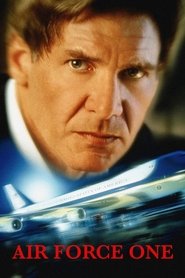
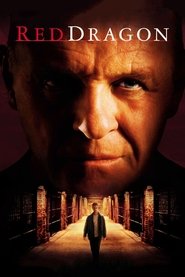
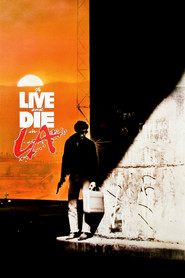
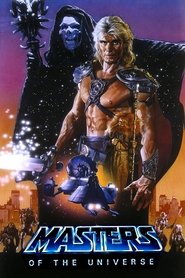
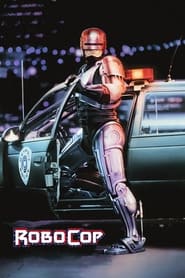
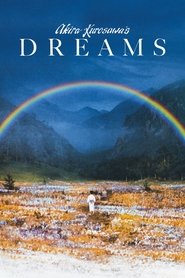

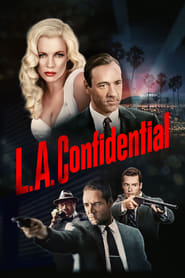

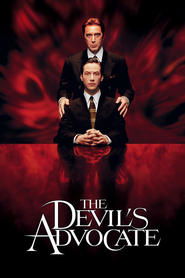

Related topics
Other topics that frequently come up in the same commentaries.