Topics / Performance
Child actors
25 commentaries in the archive discuss this, with 38 total mentions and 36 sampled passages on this page.
Filter commentaries
Filter this topic by the film's decade or the type of commentary.
By decade
Across the archive
ranked by mentions · click any passage for the moment in the transcript
-
-
William Friedkin
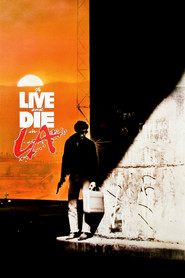
I want you to fly up to Toronto to the Shakespeare Festival. He said, there's a guy here who is doing A Streetcar Named Desire. He's a young actor from Chicago. He's never been in a film. His name is William Petersen. And he's got his own acting company in Chicago. And he loves theater. And he's doing Streetcar up here. And he's not doing anything that would remind you of Brando.
21:07 · jump to transcript →
-
William Friedkin
who said, we violated our agreement and this and that. And he was all upset. And I remember telling him, look, this is just a young actor who got carried away. He wanted to do it. It was his dream. It's always been his dream to run along the rails of the people movers at the airport. Now he's done it. It's a harmless incident, and he's OK. So why don't we just forget it and move on? And the guy...
27:04 · jump to transcript →
-
William Friedkin
Bob Wiener, the casting director, brought me virtually every... Well, everyone in the film. And he had run into Dean Stockwell somewhere, or he had seen him in something, and I only knew Dean Stockwell as a child actor. But then I saw Dean Stockwell in Paris, Texas. And then I subsequently saw him in Blue Velvet and realized that there was much more
1:04:52 · jump to transcript →
-
-
-
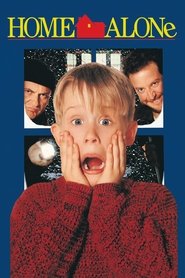
Hey, that's you. - That's me. So this was, uh-- I guess we... We could start about... Talking about the beginning of how this whole movie came about, really. I was in dire straits at the time, in terms of my career. I had just come off of a complete disaster, a big bomb. I didn't know if I was gonna direct again. I thought I'd have to go back to writing. So I was in Chicago staying at my in-laws' house... ...and my first daughter was just born... ...and John Hughes sent me, out of the kindness of his heart, two scripts. One was called Reach the Rock and the other was called Home Alone. One of them, it was rumored... I think it was this one. was written over a weekend... ...which some critics would probably jump on the bandwagon... ...and say, "Well, we always knew that." - Exactly. Ha, ha. So I read Home Alone and immediately responded to it. I thought it was just a great, great piece of material. And it talked about some of the things that I was interested in making a film about. Now, we had a meeting, I remember, in New York. I just-- It was-- You and my father were talking most of the time... ...and I was just imitating everything you were doing. Everything I was doing. - Yeah. You'd drink your water, I drank my water. Like that. I think I did that... I think I way overdid it. I think I just kept doing it the whole, like, hour. Well, you know, the interesting thing is we... Again, it was the kind of situation where we looked at hundreds of kids, again. And I was like-- Even though I didn't know if I'd ever direct a film again... ...I was like, "Well, you know, Macaulay was in Uncle Buck... ...and I don't wanna just cast him based on John Hughes producing the movie... ...because then it looks like I'm gonna give in to John Hughes and be a wimp." And I met all these... I met hundreds of kids. And when I met Macaulay, there was just no one else who came close... ...to what we needed for this film. I mean, really, in terms of an actor... ...a Child actor, at the time, you were the most unique, original kid I'd ever seen. So that was pretty... - Oh, thank you. I mean, I totally agree with you, but thank you anyway. But it really is-- It's sort of, uh... Because it was the fact that you, um... The camera loved you, obviously. You see the shots from the film. The camera loves you, but at the same time, uh... ... you were relatable to every kid in America... ...because you weren't an idealized version of a kid. Kids are used to-- Accustomed to seeing this ridiculously... Shirley Temple, and the curls and the whole thing, you know. And there was just something enormously real about you. That, and I could remember my lines and I had a lot of energy. That is true. You did have a lot of energy. Almost a sad amount of energy. It was, I mean.... Still do too. Uh, now, do you remem--? Like, this particular scene. We're starting from the beginning of the film. And I'm curious, because there were so many scenes in the film... We were talking before we started. where we would shoot your coverage first and then send you home... ...or I'd still be in jail. - Child labor laws. Yes, I'm still well-versed in the child labor laws. So there are obviously certain elements of the film-- Like this. Do you remember this being shot? - No. Because you weren't here. - I remember we did the whole... There was a whole sequence with, you know... ...people coming up the stairs, down. - Right. He's there, and the pizza guy's there. I remember that, and just like, you know, trying to coordinate that whole thing. But, no, in general, there's a lot of stuff... There's a lot of holes in it... In my memory. And this guy went on to do something on Nickelodeon. My kids know him. Yeah, Pete & Pete. - Yeah, Pete & Pete. Is it still on the air? - No, no. It lasted a couple years. It was actually a really kind of neat show. Yeah, my kids loved that show. But what was interesting about the whole look of this film... I guess we could talk about it a little bit. You'll even notice... Some people will think, "Well, this wasn't intentional." But we intended the film to feel like Christmas sort of. I wanted the house to feel very warm. You look at... - Greens, reds. Macaulay's wearing greens, a green and red shirt. There's a green and red jumper sweater on this guy back here. The wallpaper is all... - That's very clever. All conveying a warmth of Christmas and something that, uh... It just was interesting to us. So it wouldn't be over-the-top, but it'd feel warm. I wanted the house to feel like a warm place. Joe Pesci. What do you remember about Joe Pesci? What is, like, your first--? My first-- Gosh, I don't even... I have-- I still show this. I have a scar on my finger. - Uh-huh. We'll get to that part near the end... - Ha-ha-ha. ...when, you Know, he says, you know: - Okay. "I'm gonna bite each one of your fingers off, one at a time." During rehearsal, he actually bit my finger a little harder than I think he thought. I still have a little scar on my finger. It's my little Joe Pesci tooth mark. I'm telling you something, I believe... And I know Joe would probably get a little upset with me about this... ...but there was a little professional jealousy from a lot of the actors on set... ...because you were the star. There's this little kid who was the star, who we were all paying attention to... ...who was carrying the film. And there was a lot of passive-aggressive stuff going on. And I don't think Joe meant to bite through your finger... But, heck, you know, you never know. He was not particularly happy during the course of making this film. And I don't-- I think he would probably say the same thing. He had just come off of Goodfellas and Raging Bull, and he was... I don't know, did he win the Academy Award? He won for Goodfellas. His acceptance speech was, "Thanks," and that was it. Okay. Well, there you go, so, um.... And when he... I remember I was such a fan of his. Asking him to do the Goodfellas... The clown speech, you know. "Make me laugh," you know? "What do--? Am I funny to you like a clown?" And he would do that every day, and it was great. But at the same time, I could feel it from the actors. Because there's always a sense of rivalry between actors. There was this feeling of, you were the star of this movie, and that was un... That was not really common at the time. - Yeah, yeah. It created an interesting tension on the set, I have to say. Yeah, see, I never really felt that, but I was 9. Everyone around here knows he did it. It'll just be a matter of time... ...before he does it again. What's he doing? He walks up and down the streets every night... ... Salting the sidewalks. Maybe he's just trying to be nice. No way. See that garbage can full of salt? That's where he keeps his victims. The salt turns the bodies... ... Into mummies. Wow. - Mummies!
0:21 · jump to transcript →
-
No. But it's interesting. In a film like this, which is a highly... ... you know, at times over-the-top comedy, you play the scene very straight. And I have to hand it to you, you really did... You came in and you knew all your lines this day, which is hard. I now have a-- You were what, 9? We say you're 8 in the movie, but I think you were 9... I was actually 9 when we shot it. And I have a 9-year-old, and I wouldn't be able to convince her... ... to be able to memorize a three-and-a-half-page speech. Well, that's what they're looking for in child actors, though. The first thing that they look for is, can they remember their lines? Right. And, you know, it just... You have a certain relaxed quality. - It was easy. You don't-- It doesn't feel like... Well, you're not just saying words. Yeah, exactly. - You know.
1:09:09 · jump to transcript →
-
There is such a... I have to say... Again, to commend you as an actor... ...at such a young age. The look on your face when you see your mother... . IS exactly what a kid... And John had written this. It's exactly what a kid would do. Anger at first. You know, you're angry because she left, she abandoned you, right? And you just did it beautifully. I think this really sums up why you had such a great career. Thank you. - You will continue to have a great career. Yeah, that old career. - The old career. Well, that's... You cannot be considered a child actor. - Yes. No, that is true. Look at you. You just... - Well, thank you. And it was the emotion that I think... Aside from all the laughter in the film... ...[I think the emotion really brought people back, you know? People... - It got George Costanza crying. Yeah, it got George Costanza crying.
1:35:18 · jump to transcript →
-
-
-
That's Jeff Weideman, who's a great young actor. I like him a lot. Looks like a young Brad Pitt. Here come the McConaughey. Here's McConaughey. So, Matty McConaughey comes in, and basically, the guy... I love that he takes his character so seriously, because he came at me with all these questions, like, real questions about Rick Peck and where he was coming from, his relationship, and fought for his character throughout the whole process of making the movie.
15:43 · jump to transcript →
-
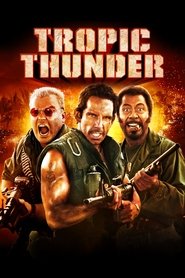
Young actor who plays the character Tru. And he really just, I was amazed when he came in and auditioned. He was on fire for this sequence too, man. Here we go. That must be an old French mine. It's a remnant from colonial Indochina. This jungle must be full of them. Hey! Don't you get it? He's messing with our heads. That's what all that playing God stuff was about. He's trying to get us to act good, save the movie. He ain't playing God.
27:06 · jump to transcript →
-
Yeah, this was back in L.A., shooting on the stages. You really worked with that young man. Yes, he was amazing. He was a natural, but he needed you. Well, Brandon Soo Hoo, he's a really great young actor. It's his first movie. He came in, he just nailed it in the audition. Just a hell of a turnaround, man. The audience goes crazy for this bit. And he did not hold back on the switch.
57:57 · jump to transcript →
-
-
-
Nick Pinkerton
He studied acting in New York at the Herbert Berghof Studio. And by the time Thunderbolt and Lightfoot came around, he was already marked as one of the best young actors in Hollywood. In 1971, he'd appeared in Peter Bogdanovich's The Last Picture Show.
25:21 · jump to transcript →
-
Nick Pinkerton
And now back on the road, here we have our hot young actor very much on the rise Bridges. We have a hot not so young actor who after a long time on the periphery is now firmly big time here picking up the playful and even slightly flirtatious banter that runs through the film.
36:12 · jump to transcript →
-
-
-
Roger Moore
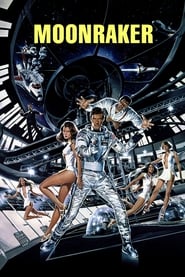
Lewis Gilbert has a tremendous ability... ...to add comedy to a scene, and drama. He saw.... You know, he would never admit it himself. He sees through to the truth of everything... ...and has a slight sense of the ridiculous about it. Lewis is an extraordinary man, and I'm proud to Say is a... I'm delighted to say is a friend of mine. I hold him in great esteem and great affection. He was.... We once sat talking and I asked him how he started. He said that he was a child actor.
27:28 · jump to transcript →
-
Roger Moore
And Kenneth More wanted to make The Admirable Crichton. But the rights belonged to Korda. And so Korda was approached. Korda said, yes, he would produce the film with Kenny... ...and that Lewis would direct it. Well, one day he said to Lewis, rather as I had: "How did you start?" And Lewis said, "Well, I was a child actor." He said, "You were that boy?" And Lewis said, "Yes, and I'd like to say thank you." Two days later, Lewis had an appointment... ...a script conference, with Sir Alexander Korda. And he called the secretary just to confirm the time. He said, "I'd like to speak to Sir Alex." And she said, "I'm afraid you can't." He said, "But I'm supposed to be meeting him this morning." She said, "I'm afraid you won't be. He died last night." You know, "I was always glad that I could say thank you."
29:23 · jump to transcript →
-
-
-
John Mackenzie
Paul Barber plays this part. Even then, you know, a rising young actor, young black actor getting very well known. And he's done a hell of a lot. He's had a very good career. He went on to do a great television vehicle, Boys in the Black Stuff. He's done The Full Monty. Remember him, The Full Monty? And of course, when he fools in horses, you see him quite a lot. He's a sort of running character in that.
40:36 · jump to transcript →
-
John Mackenzie
And I thought he looked sort of the right age. He was to be young, and yet you could believe that he would be part of that. He had a certain maturity in his attitude. So we got him in and got him to read it. And I think we made the right choice. He turned out to be an interesting young actor. How do you stay so cool? And with just enough arrogance in him to sort of fill the role, as it were. Help Vicky out, all right?
56:04 · jump to transcript →
-
-
-
Oliver Stone
All these young actors were really a pleasure to pick. Johnny Depp, Forest Whitaker, they all moved on to do something with their lives. This was like almost their first or second film roles. It was just great to be with a bunch like this. It was sort of my fantasy of a John Sturgis picture, like Magnificent Seven or something, but with youngsters. And I kind of sensed that these guys would be around for some years, and it would be a pleasure to sort of have known them in their youth.
6:18 · jump to transcript →
-
Oliver Stone
Another fine young actor. Hey, white boy, what you waiting for? That hole ain't gonna dig itself. Come on, boy, get your dick skin on that thing. Dig. We can get all day. Dig, dig. Somebody once wrote, hell is the impossibility of reason. That's what this place feels like, hell. I hate it already. These were my feelings pretty much at the time. I was really caught out of sorts. I mean, I...
10:01 · jump to transcript →
-
-
cast · 1h 36m 2 mentions
The Garbage Pail Kids Movie (1987)
Mackenzie Astin, Katie Barberi, William Morris
-
This was all fun to do for the most part. You know, it was a movie. We were both working on a movie. We were both working on a major motion picture produced by, you know, a big company. That, by the way, everyone auditioned for. Everyone? All of the young actors and all of the young actresses from the 80s that became, some of them became A-listers and some of them didn't. They saw them all. And we wanted the choices. No kidding.
6:34 · jump to transcript →
-
They were so supportive of us, I think, because the whole cast, I think, just really felt very supportive of the young actors. You know, that was Mac and myself. Just like to point out, I think that's the first act of overt violence, the Garbage Pail Kids. Okay, now it's important to say this, and I'm going to say it. In the original script, all of this stuff that they do,
29:39 · jump to transcript →
-
-
-
And these two absolute giants in terms of their ability and their intellect and their talent feeding each other, it just was pretty extraordinary to witness. From my standpoint, the ability to be so unselfish, and by that I mean, as Catherine mentioned, with the other young actors, but also...
48:16 · jump to transcript →
-
I think the integrity of the whole picture depended on the performances or the non-performances of these young actors. I mean, if you didn't believe the situations that they were in and you didn't read it into their faces, because oftentimes they were not speaking, they were just stunned staring in the background, then you would have no passion for them when the submarine—when they lose control of the reactor. And they're so unique looking and so— They impelled you to care.
1:15:31 · jump to transcript →
-
-
scholar · 1h 32m 1 mention
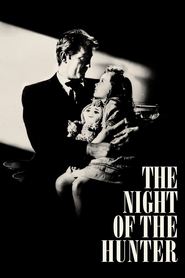
The Night of the Hunter (1955)
Terry Sanders, Robert Gitt, F. X. Feeney, Preston Neal Jones
-
-
-
director · 1h 28m 1 mention
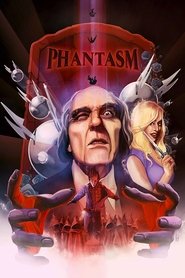
Don Coscarelli, A. Michael Baldwin, Angus Scrimm, Bill Thornbury
-
-
-
-
multi · 2h 12m 1 mention
Andrew Sarris, James Ellroy, Brian Helgeland, Michael Nathanson + 10
-
-
-
director · 3h 43m 1 mention
The Lord of the Rings The Two Towers (2002)
Peter Jackson, Fran Walsh, Philippa Boyens
-
director · 1h 45m 1 mention
Eternal Sunshine of the Spotless Mind (2004)
Michel Gondry, Charlie Kaufman
-
-
-


Related topics
Other topics that frequently come up in the same commentaries.