director
Underworld (1985)
Release Kino Cult 4K UHD and Blu-ray (Kino Lorber, 2023)
Pavlou and Thrower describe the tax deadlines, 30-day shoot, unfinished script, and producer decisions that affected the adaptation of Barker's work. They discuss comic-art influences, colored lighting, casting, sets, and changes to effects, music, editing, and release. Pavlou also assesses the film's restored image and explains which parts of the production he could not control.
- Duration
- 1h 31m
- Talk coverage
- 98%
- Words
- 13,181
- Speakers
- 2
Commentary density
Highlights
Topics
People mentioned
The film
- Director
- George Pavlou
- Cinematographer
- Sydney Macartney
- Writer
- Clive Barker , James Caplin
- Editor
- Chris Ridsdale
- Runtime
- 103 min
- Also on
- OneSheet ↗
- External
- IMDb ↗ TMDB ↗ Find on Amazon ↗
Transcript
13,181 words
Hello, my name is Stephen Thrower. I'm a film writer and journalist. And I'm here with George Pavlou, the director of Underworld. Hello, George. Hello, Steve. Nice to do this again with you. So we're going to be talking about your first feature film, Underworld. So I guess maybe we should start off by just... working out how you came to work with the group of people that this film involves, particularly with Clive Barker, the writer of the film. Yes, so I met Clive in around 1981, 82. A friend of his that had been to university introduced me to him. And we both had a keen interest in films. He was a writer. His books hadn't been published at that time. But, you know, we got on really well and enjoyed the same movies of that period, of course. And then he gave me his manuscript of the Books of Blood to read. And I thought, bloody hell, I've never read anything like this before in my life. I mean, compared to all the short films that existed before that, they all sounded pretty Victorian. And this was new and fresh. And, yeah, I loved it. So we...
decided, let's work together. And he wrote Underworld, 10 pages. I understand that when you read the Books of Blood, you saw them in galleys before they were even published. Correct. But Underworld isn't actually a story from the Books of Blood, is it? This is an original screenplay. So how did that decision to go with a new original screenplay come about? Well, I guess the reason for that was, you know, he wanted to write something new, but also maybe those stories had already been know committed for publishing to a publisher and um i guess it would have been more difficult to uh extract one of those stories with the rights issues and all that oh i see yes so having an original uh screenplay was was a clearer path to production than having to get the rights to one of the stories at the time i think so yeah i think so So can I just say something about this long tracking shot? The reason we did this was because there was lots of scenes in the screenplay showing life in the brothel, which we couldn't film because of scheduling and budgeting. So the reason we did this shot in this way was to get a sense of the brothel, the customers, the girls,
um and um do it all in one take for and and do it as a credit sequence and we're setting up the idea here that this is a very high-end brothel as well obviously yeah and that's kind of conveyed as much by the style that you're using as it is by the appearance of the clientele isn't it yeah correct yeah correct and it it is a brothel not um an orgy, a high-class orgy. Some people have misunderstood Ingrid Pitt, amazing actress. But so Clive wrote 10 pages for me, and in 82, I think it was, I signed an agreement with his agent, Vernon Conway, and he gave me an option on it. And... Yeah, I spent a long time trying to raise finance for it. Even showed it to Mustafa Akkad. Oh, yeah? Once. And then Green Man decided to take it on and see if they could raise money. So how did Green Man get involved? What was the initial contact with them? Right. So Dominique Othenin-Girard.
whose name I think you know, he did... One of the Halloween films. Halloween 4, is it? I think so. Or 5? Yeah, and didn't he do an Omen film? I can't remember. I don't think so, no. Right, OK, anyway. So Dominique, he was at film school with me and he had just finished doing a movie with Green Man and so he made the introduction. That would have been After Darkness, the film with John Hurt. That's right, After Darkness, yeah. And Green Man came on board as a result of your contacts, not through Clive. So you showed them Clive's script at the time. I showed them his 10-page treatment. Right. And, you know, Kevin loved it. And Don Hawkins was in two minds. But it was Kevin, Kevin Attew, that really wanted to do it. So where are you filming here? Because we're on an actual location. Where was this filmed? Yeah, most of it was an actual location apart from the underworld scenes. We decided it would be best to do it all along the Thames, you know, the river, given that the underworlders live underground and along the sewer system.
So we thought it would make more sense if there was a connection there and the connection was the river. This particular location is Nelson House. It's a very, very old house named after Nelson actually. It used to be a shipbuilder's house in Southwark. And I think the owner back in the 1800s actually jumped out the window and killed himself. Right. So this is our lead character. This is Nicole. And Nicola Cowper was the actress who played Nicole. And how did you first come across her? That was Al Burgess. I think he... done a movie with her. I can't remember the name of the movie. She was in a film called Dreamchild, wasn't she? That's right, Dreamchild. Thank you for reminding me. It was 40 years ago. My memory's gone. Yes, so Nicola, he recommended Nicola and we liked her so we cast her as Nicola. Did you view the film to sort of get a sense of what she was like or was it a casting?
Yes, it was a cast meeting. I can't remember if I saw the film or not. I mean, in terms of casting the actors in this film, some of that must have come through connections with the producers or perhaps through you. But did you, as a director, see people in other things and think, I want to work with them and let's see if we can reach their agent or let's see if they're interested? Well, the casting director was Gail Stevens. She was actually married to... ... Danny Boyle at the time. And Danny wasn't famous, actually, when we were doing this... ... but why he became so famous after that. But Gail was doing the casting and... You know, I think she did a tremendous job. And Don Hawkins, I think, you know, he had some connections as well, being an ex-actor himself. In fact, we even auditioned Adam Ant for a role. Oh, really? Was that not... Did that not go well? It went fine. I just didn't think he was, you know...
uh appropriate for the role not quite right for the roles yeah no and he he turned me down for something that uh i proposed him a few years back so i didn't sit well with me either although that wasn't the reason but i didn't cast him so trevor thomas here uh was in uh in seminoid the norman j warren film and uh apparently was also in a the second ever episode of Doctor Who when he was a child as well. Playing a caveman's child, I believe. He was also in Black Joy. Yes, that's right. Anthony Simmons' movie. And Anthony, in fact, was going to give me my first break in movies, but I was still in college. And I decided it was a bit too early for me to try and... and direct something which requires a lot of responsibility. And I wanted to get more experience, so I did a couple of short films after I left film school, and that's when I showed Clive. So can you tell me a little bit about your film The Antagonist, which actually went out as a support film, didn't it, as a short through the rank organisation? Yeah, it went out with Educating Rita. So The Antagonist was a film
An idea that Paul Mari, who actually plays Doodoo in Underworld, and I came up with. And he said, my dad's got a few grand stashed away. Let's make a short film. And we made this horror film called The Antagonist, which was about a serial killer who stalks his victims, photographs them. and sends them to his victims before he kills them. You know, just toying with them and alarming them in a very sadistic manner. And the leads in that were Paul, Trevor Peacock, and Ed Bishop, who you must remember from UFO. Right. Yes, of course. So our lead actor here, your male lead in the film, Larry Lamb, playing... Yeah, so Larry here, he's not the kind of character that was written originally by Clive. In Clive's, he was a man who had lost himself, no reason for living, alcoholic, whatever, I don't know. But kind of, for me, a weak character.
So in our version, I mean, the reason he's painting there, it's a man who's, it's just symbolizes a man who's at peace with himself, somebody who's found himself and somebody who wants to get away from his past. And that's what the painting symbolizes. And the painting was actually Bain's idea, sorry, Larry's, Larry Lamb's idea. He said, I want to be doing something that involves... you know, a man who is a Peter himself. And so I said, yeah, fine, that sounds like a good idea. Let's do that. Well, it's sort of, it's a shorthand in a way as well for some degree of sensitivity, isn't it? Because he's evidently a man with gangland connections. But you clearly wanted to signify that he wasn't just a retired gangster, that there's something a bit more to him. Something a bit more to him and someone who has actually moved on. Yeah.
Was the Arcadian slot machine there a deliberate Odyssey reference? Wasn't the River Styx meant to be in Arcadia or pass through Arcadia? No idea. There's the art department. So the reason for the look is, I mean, a lot of people have said, listen, this looks like an MTV fucking, you know, you know... It was like a rock musical or whatever. So that's a fucking nonsense, really, if you don't mind my French. The actual look of it was influenced by a French graphic artist, illustrator called Nicollet and Caza. And it was something that Clive and I had discussed and looked at their works, Nicollet and Caza. And that's why we gave it the look that it has. I mean, I didn't watch MTV. I didn't direct music videos at that time. I didn't direct commercials. But we just wanted to get something that gave it a bit of a look that it was a little bit surreal, a little bit unrealistic. And I'd watched Suspiria as well. And I'd seen Dario Argento's Suspiria.
I can see a few echoes of the lighting design in something like Inferno as well. Yes. The second of the Three Mothers films by Argento. Sure, sure, exactly. And, you know, we wanted a kind of future retro look. So it's film noir. It's a detective story. You know, a man, well, he's not a detective, but he's certainly investigating a disappearance. And it's got that Dashiell Hammett feel about it. So the reason for the look, the costumes, you know, it's got that 40s, 50s flavour. And that's what we were going for. So all this nonsense about MTV, frankly, is quite irritating. And I hope people take that on board. The look we wanted was a graphic novel style look to it, and hence the lighting, the gels, the colours. So we have Steven Berkoff here, who was riding high very much so at the time with, I think his play West had just come out, hadn't it, just before you started shooting this? Yeah, I think he just came off Beverly Hills Cop. He had indeed, yes. And he complained that he felt his acting was constrained and he was, you know...
confined in his straitjacket. They wanted him to play everything down. And I said, well, Stephen, you know, just please, you know, play how you feel in this. And, you know, I grew up in Holloway, so I kind of mixed with all the local hoodlums in there, the young hoodlums. And when I watched his performance, you know, he was way over the top. I said, yeah, you know, that's fine, Steve. Let's rehearse it a few more times. And each rehearsal that he did, he'd bring it down more and more and more until we got to this. But you know what? He came in and he said, your secretary gave me the wrong scene to read. And I thought, fuck. You know what? We've only got one day to shoot this. It's winter. It's a dual aspect, Windows. So the lighting's going to disappear around four o'clock. Yes, I think there's one shot where you can see that it's darkened slightly that was probably caught just at the end of the envelope that you had available. And I thought, how the hell is he going to, you know, read eight pages of dialogue or whatever it was and remember it? But bless him, look at him. Yeah.
I don't know, probably enough, but it's incredible how he memorized all those lines. And this seems just winding me up because I'd never met him before. It was the first time. It's trying to put you on the back foot just to sort of create a bit of tension. The first time I saw him was when he came out of his limo. Yeah, just there. You can see the cut between the close-up and the long shot there. You can see that the dark and lightness just slightly changed. Yeah, yeah. So we had one day to do this. So you were shooting in January and February of 85, is that right? Yeah, yeah. And I had this really, really bad flu. I could barely stand when we were shooting this. And I was just in the background saying, oh, my God, I wish this day would end. Dual aspect. So with an actor like Stephen Berkoff, who presumably could command a reasonable salary at that point, how many days were you able to book him for across the whole film?
I'm not sure. It's probably about two weeks. Probably ten days, maybe less. I noticed that during the period that you were shooting this film, he was actually the subject of a TV special on South of Watford. Do you remember that program, South of Watford? It was kind of an arts program, a London-based arts program. And there was a big sort of presentation, an interview with him, and I wondered if you remembered him having to go and do that whilst you were shooting. I don't know. No.
Now, I read somewhere in some of the pre-release publicity that you did some shooting in Ireland and I was puzzling over what that could have been. Is that true or was that a plan that never actually happened? No, that never happened. That was probably to do with the fact that the investors were Irish and that they maybe had to, for legal reasons, tax reasons, be credited that some of it was shot in Ireland. Right. I mean, if anything was shot in Ireland, it was done without my knowledge. So this location here would have been North London or East London? Yeah, this is Nelson House on the Thames. Oh, it's the same place that we saw the reverse of, so you are using the same building. We are, yeah. It's a listed building. It's still there, unbelievably. Oh, it survives. My God, so little actually does from that area. It's the last shipbuilder's house.
on the Thames. Wow. Yeah, the last one. So you were shooting some of the materials, I guess some of the more elaborate sets were created in a warehouse in Docklands at the time, yeah? Yes. Near Limehouse Studios, but not actually part of Limehouse Studios. No, it was part of Limehouse Studios. Oh, was it? Yeah. So this is Irina, Irina Brook, daughter of Peter Brook, a very famous theatre director. Yes. Goodness. She's now a theatre director herself, I believe, an award-winning one. In fact, Ingrid Pitt's daughter also auditioned for this role. But the producers favoured Irina. That would have been a strange irony, having Ingrid Pitt playing the brothel madam and her daughter playing one of the prostitutes working there. Yeah, thinking about it, that would be weird, wouldn't it? So what was it like working with Ingrid, of course? She's a great character and obviously has built up a lot of love in the horror community over the years, thanks to her performances in things like The Vampire Lovers. Yeah, written by Tudor Gates, an old friend of mine. Sadly, no longer with us. No, Ingrid was great. She'd always give me a hug every morning when I walked on set.
She says, oh, you look so thoughtful all the time and, you know, come here, my little darling. She just wrapped me in her bosom every morning. It was a strange thing, but bless her, she was very warm and kind. Well, she has great presence, doesn't she? I mean, you know, you get more per line from her, sort of like just a lot of presence and charisma. She's an icon, you know, an icon of horror cinema, and I was very grateful to have her. I wanted to ask you about the figurines that we see several times throughout the film, these small stone figurines that are slightly broken or sort of decayed. Do you remember? They actually occur in Clive's script, I seem to remember, and they're mentioned as a feature. I wondered if there was any discussion of what... what you were aiming for by focusing on them at times. I think they're Savary's creations, that little presents that he would give Nicole. But I don't remember why. Because we see some in Savary's office as well. Correct, yeah. I can't remember. It's interesting that their faces are sort of partially worn away, corroded, because it's sort of almost...
foreshadows the idea of the way that people's faces are distorted and broken by the drug in the film as well. Yeah, and like I said, the connection is with Severi's creations. I guess this is my creations. There was some link to them, which I really can't remember. That one was actually owned by the owner of the... Roy Bain house. And I saw them and I said, oh, these look interesting. He said, oh, you can have those. And they're made out of quartz, I think, or some sort of material from South America. So he said, yeah, you can have these. Use them. So the film involves the use of drugs and it involves sex. and it involves violence, but we're in the middle of the eighties at a time when horror films were being sort of prevailed upon to tone things down a bit. And I wondered if you had got any feedback from the producers about levels of violence or levels of explicit sex and where you wanted to pitch the film and where they wanted to pitch the film and was there any conflict there?
The producers wanted a 15 certificate. I don't think it had anything to do with whatever was going on at the time. I think they wanted a 15 certificate in order to widen the distribution net. And, you know, that announcement was made to Clive and I at our first meeting with Al Burgess, and it was Al Burgess who actually seemed to be... delivering that message to us that you know we have to do a 15 certificate and we were horrified we were making a horror film and he wasn't having it so we had to tone it down as much as we can. But of course, if you're making a film about drugs, you're going to get an 18 certificate anyway, which we did in the end, and it was all futile. So they might as well have let you go for it in terms of wherever you wanted to go with the sex and violence, because just the fact that it had a drug theme was going to be enough to push you into the 18 certificate. Exactly, yeah. But it's more of a dark fantasy than a horror film.
I know Clive labels, you know, his aim was to make a horror film, but he'd written a dark fantasy. Well, a lot of his work is very amorphous in the sense of its relationship to genre, isn't it? Because he spreads across a lot of different genres. And you can go from horror to noir to... to sci-fi and cross the line quite a lot really, so it's difficult to pin down. So when you were working on this, the initial plans for the film, what would you say was the first inkling that you had that you were not going to get Clive's version of the story? onto the screen. What did you feel about what needed to be done to Clive's version to reach the screen? Because I understand that there was another take by a different writer. So how did that come about? So I had a 10-page outline which Clive had written, a 10-page synopsis, stroke treatment, which I gave to the producers to read.
They created a pitch book, you can call it a pitch book, with the illustrations from Nicollet, which I gave them. And that's what really solved the film, the images from Nicollet and the 10-page treatment that he wrote. When he was commissioned to write the screenplay, what he delivered was... she would say some material in there which they found shocking um well i think it's interesting to to look at that because obviously clive was quite an experienced at the time and this would this was his first movie screenplay yes yeah and and and there's a few issues going on here a um the film had to be shot in january we had a 10-page treatment um in october he was signed up in october and commissioned to write the screenplay very little time obviously we had started casting we hadn't had a script we were location hunting we didn't have a script everything was going on in pre-production without a screenplay and we were waiting for clive to deliver a script and then he delivered his script and the main issues
that the producers had was the fact that he had written Bain as a pimp who exploited underage girls for Motherskille's brothel. And as soon as you have a hero, a character, who's exploiting underage girls and acting as a pimp, and living off their earnings, getting 10% a year, you're going to lose sympathy for that character. And no matter how redeemable you want to make him by him trying to save the girl, Nicole, and finding out we're kidnappers or becoming the hero at the end, he will never be a hero because of his past. And that past, it's morally and unethical. Well, it's a mountain to climb, isn't it, to take you from an ex-pimp of an underage prostitute to the redeemed hero at the end of the movie. That's a very steep incline. Yeah, and you're never going to recover from that. So that was the first issue. And the other issues were...
Things like she's kidnapped at the beginning and he had written the way he'd wrote it was no one saw the kidnapping. And so if no one saw the kidnapping, why would Motherskille employ him in the first place? He doesn't know who took her. And the whole plot line, the key plot is that Motherskille wants to get rid and erase all the evidence of these mutated characters. that were being fed on the drug created by Savary, his partner. And now that Motherskille is an industrialist and a respectable businessman, in quotes... He doesn't want any of his shady past coming back to bite him in the ass. Correct. But if you don't know who kidnapped Nicole, why would you send Bain on a mission? to find the underworlders. So there's lots of things within Clive's script that we had to change in order for the plot to make sense, but also to have a main character who is redeemable and can find salvation. Yeah. So we have the very wonderful Denholm Elliott here playing Dr. Savary.
another actor who has got such presence and such charisma. He's not, you know, he's not a great showy sort of, you know, superstar, but for my money, he's one of the greatest character actors this country ever produced. How did you find working with him? I love working with Denholm Elliott very much so. It's a fact. He's a complete chain smoker. He'd be... in his trailer. I think he gets stage fright every time and that's why James spoke. I mean, his hands were literally shaking when I was in the trailer with him talking about the character. He said, I want you played like a snake. I think his delivery, his lines, his motivation, he's, you know, he's a snake. Go for it. So this is... Denholm Elliott's interpretation of a snake. But, you know, in those days, it was difficult to get actors like Art Malik, Miranda Richardson, Denholm Elliott, Steven Berkoff, to perform in a horror movie. Well, you have an extraordinary cast in this film, really. For, you know, A, for a horror film, B, you're a first-time director...
or a feature film at least. And you have, there you have Miranda Richardson who's just hot off Dance With A Stranger. Obviously I don't think it'd come out at that point, but she'd actually already performed in it. I kept saying to the crowd, what is she doing in my movie? Why is she here? I think... She's hot. She's a hot actress who's just done this award-winning movie. What the hell is she doing? It was bizarre. I mean, it's a relatively small role for her as well, isn't it? I mean, she doesn't drive the narrative at all. She's sort of a friend of the good mutants. Yeah. Or, you know, one of the good mutants, yeah. She said, I just thought it'd be fun to do. Yeah, well... I don't think she found it fun in the end coming at 6 o'clock or 5 o'clock in the morning to have her makeup applied. This is Paul Bown, is that right? Correct. And that's Doo-Doo, Paul Mari, who is an old college friend of mine and we made the antagonist together. And, yeah, Phil Davis. Phil Davis, he'd just done Mutiny on the Bounty with Mel Gibson.
I know Phil Davis so well from his work for Mike Leigh. He's in one of my favourite Mike Leigh films, Grown Ups, which was made for television. But he is so, so funny in Grown Ups. Quadrophenia. Yeah. Yeah, I saw him a few years back because I'm trying to remake the movie on the bounty. And I was having a chat to him about it. And he said, oh, yeah, we used to go out in the boats. And we couldn't. We'd have to stay out there all day. We couldn't come back to shore. And it was just a horrible experience, they said, being stuck on this. And they're small boats. They weren't very large boats. Ships, I should say. But yeah, it was quite an ordeal, apparently. So tell me, as a director, making your first feature film, under a lot of pressure, time pressure, money pressure, how did you find... the experience of working with very experienced actors in this way? Were there any people that you found were challenging to deal with? Or was everyone really chilled? Or what was your experience of handling such a fairly stellar cast at that stage in your career? It was really daunting, actually. Really daunting.
I was very nervous, obviously, every day working with actors of this caliber. I'd only done one short film and a student film before that. And to have the honor of working with all these incredible actors, yeah, it was really daunting. But they were all very kind, very polite, very helpful. Even Berkoff, who... Yes, well, Stephen Berkoff's quite a volatile character. No, he was really cool and very, very helpful. I enjoyed working with Stephen. Did you get the impression that Berkoff was fond of horror fantasy? Did that help? Was he sort of on board with the actual type of film that you were making? Yeah, I mean, he raved about it in the press afterwards in all his interviews. But I think everyone thought we were doing something fresh and different to Hammer or all the other kind of British horror that existed beforehand. And I think we were. And this is Don Hawkins, one of the producers. And the eye patch is actually real. He only has one eye. Married to Patricia Quinn, Magenta, in Rocky Horror Show. Yeah. Yeah.
That was Don. Are any of the other production team in the film in small roles? No. Well, the stunt coordinator was at the beginning playing one of the underworlders. He's the one that does the kidnapping. So this is Bianca warning Bain that there's something going on between the other gangsters and to be wary. So there were several differences that were introduced from Clive's draft to the James Caplin draft. Can you tell us a little bit about what kind of changes you had to make in relation perhaps to, say, the drug theme or in relation to the dream theme as well? As we're on the scene, this is one example. So if Bain is in love with Nicole and... He's taking on this investigative role in order to find her, maybe reconnect with her. What Clive wrote was he actually went after he has a drink with Fluke, with one of the gangsters, which has been cut from the film. He goes back to the whorehouse after having copious amounts of alcohol. looking for Bianca to sleep with her. And we thought, well, that doesn't make sense. And is that a character? So we changed it. And the other, you know, he rejects her advances. She obviously, you know, wants Bain. Rekindled the past. But...
The other change was that he goes to Savary, which is a scene coming up now. He goes to Savary to question Savary about what he knows about the lactothiozine drug. And actually Red Dog is there and Red Dog wants more drugs for the group. And Savary says to him, when he leaves, kill him. So he turns up at the brothel to kill Bain. Now, in James Caplin's draft, what's missing from the film is that Savary asks him, how's your sex life, as a joke, which we didn't film. So he hasn't... had an intimacy. He hasn't seen a beautiful woman in a long time. And the drugs which he's taken, and he's taking a lot of them, leads him to follow Bianca from the whorehouse. And he's here now. He's desperate, poor man. So did you feel that the drug theme mutated during the process from script to screen? And how would you describe the change in approach? Because I noticed that there were several scenes, for instance, where Nicole shoots drugs because she's addicted to the substance in the Clive Barker draft. But by the time we arrive at the screen version, Nicole doesn't take the drug. No, no, she has taken the drug.
But we don't see her taking it. We don't see her taking it, but she is given, at the very front of the film, she's given this file. We saw that she had it, yeah. We don't see her injecting it, but she has injected it. I can't remember the reasons why, but it may have been to do with don't show your heroin in that kind of situation. Yes, that's what I was curious about, was whether or not, just as with Bain, you were making changes that were designed to make him less unsympathetic. I wasn't sure if there was a decision there. I think so, and it's the producers mainly. They kept, you know, harking on about, you've got to protect your heroes, you've got to protect the characters, you know, and show them in a good light, blah, blah, blah. But... Later in the film we do see her being prepared to be injected with the drug but we don't see the actual injection and she's been given three shots. When Nygaard is experimenting on her. And the whole reason she's been kidnapped is because they want to find out why she hasn't been affected physically.
why she hasn't mutated from the lactothiozine. There's quite a lot of changes, really, but it all came from the fact of mainly from Bain wanting to protect his character as the hero. and also any loose plot points that they... Yes. And structurally, the way the scenes flowed, the producers felt that Clive's screenplay didn't necessarily flow and progress the action as they would like it to. Yeah. And that's why James Caplin was brought on. And the sad thing is, had they not started production... without a script, all this could have been avoided. And we could have worked with Clive until it was, you know, production ready and then film. But because of the way they've raised this money, it was tax money again, and it had to be spent in January. So October and, you know, we're shooting mid-January. That's no time to develop a screenplay and go through various drafts. Ironically, because there are some echoes of David Cronenberg in this film, the situation you're describing is very similar to the situation that Cronenberg was in when he shot Scanners where there was no script ready, but they were under pressure to start.
come what may, and he was frantically rewriting on the set whilst they were shooting it. And that was for tax reasons as well, that the film had to be shot within a certain window of opportunity, otherwise the money wasn't going to be there. Yeah, and even James Caplin, you know, he didn't have time to develop the screenplay as it should be either. And, you know, it's a very complex storyline, you know. It's film noir. It's investigative, you know, plot. it has to be worked on, you know. It was kind of crazy. I don't know why they rushed it like that. What can you tell me about James Caplin? I don't think he wrote very much more. I mean, I did find out a few more things about him, but how did he arrive? James. Sorry, James Caplin. I think they were looking for another writer, and it may have been... Is it Roger Christian, the director? Yes. I think it may be Roger Christian, who the producers knew, especially Don, may have recommended him. But again, you've got a first-time writer, you have Clive, a first-time writer. You know, they needed to develop their skills, writing skills. And...
and give them time, give them air, give them space to be able to develop the script so that it is production ready. I'd spend my mornings, most of the shoot days, looking at Clive's script, looking at James' script and trying to put as much of Clive's lines and character motivations as I could. And it was my first movie as well, and that was a horrendous experience to have to go through that kind of ordeal. I can only describe it as an ordeal. Did you have conversations with Clive whilst you were shooting this? Just one thing here. So this is the guy from Hellraiser, Frank. Sean Chapman, yes. Yeah, he's Frank from Hellraiser. Yes. Interestingly. I saw in Clive's version of this scene that the stage show that they were watching was more, frankly, S&M with a sort of a female domination angle. Whereas in this version, it's a little more, shall we say, sort of 15 friendly. Was that, again, an influence from the producers?
Well, it's supposed to be not very good, and that's why Motherskille rejects them. So, you know, we played it down and didn't make it as... It's a bit top of the pops. Well, that was Radford that choreographed that, bless him, an old friend of mine. Quite a very, very good choreographer. But again, you know... I had no rehearsals with anybody. I didn't know what I was going to get until I got there. There was no time for rehearsals. I would have loved to have seen that performance before we were on set shooting it. That was the first time I saw it. It was almost too late to do anything about it at that point. This is what you're going to get, George. This is what you got. Now here in this scene, Bain is brandishing the drug to Motherskille. I think in the original drafts, and I think even into the Caplin draft, there was more emphasis placed on the hypodermic, and that was going to pay off later on, wasn't it? That's correct, yeah. So in Clive's screenplay, which we'll come to later at the end,
He's the one that breaks out in hypodermic needles from Nicole's powers, let's say. How would you describe the situation in a film like this where you have two, in a sense you have two villains, don't you? Because you have Savary and Motherskille and they're kind of sort of in cahoots with each other to a degree. Did you feel that that was a strength or a problem in how you deployed the climax of the film? Because you've got two... You've got two bad guys, two major bad guys to sort of deal with. And in some ways, they kind of overlap. Well, they both play separate roles. Well, they're connected because they're both used to... Savary manufactured... Sorry, invented the drug and... Motherskille put it on the market. Yeah, and Motherskille was putting it on the market as a... alternative to heroin, a cheap alternative to heroin, and then flood the market with it until they discovered it mutated people. Whereas Savary, you know, he likes the power that he has over the mutants and that they have to come to him and they need him. And I think that they both serve different purposes. So
Motherskille is connected more to Bain and Savary is more connected to the mutants in terms of... What's the word? Adversaries. Right. Now, this sequence reminded me quite a lot of Scanners. I just mentioned Scanners earlier. There's a sequence in Scanners where... Michael, where Darryl Revak has been, Michael Ironside's character has been interviewed on a tape in a psychiatric institution. And also in Scanners, you have the situation with the drug, which has an effect, which has a mutational effect, a psychological mutational effect, creating telekinetic individuals as opposed to physically mutated individuals. And there are numerous other, I thought, in Clive's draft of the script, numerous other echoes of Cronenberg films like The Brood and Videodrome. I wondered how aware you were of that and whether that was something that you were enjoying playing with or was it something that was just a fait accompli? Not something I was aware of. Whether that was an influence on Clive when he was writing it, I'm not sure. It's not something that he shared with me. Because, of course, later on when Clive made his film Nightbreed...
which revisits a few of the ideas of Underworld, actually, in some ways. He actually employed David Cronenberg himself as an actor in Nightbreed. So it was evident that Clive had a long-standing passion for Cronenberg and his work. Yeah, I'm sure he did. I'm sure he did, yeah. So earlier we see this character, Lazarus, the first time he took the drag, feeling empowered, feeling strength. And I just want you to remember that for a scene that we'll come to later when Bain is tied up and being given the drug by Fluke. We'll come back to that. So in this sequence, we're dealing with a character who is about to display the mutational effects of the drug and helping us to put together some of the pieces of what we've learned so far. There was a change in the script, which in the original, in Clive's draft, used a phrase called plastic dreaming, a very interesting phrase, plastic dreaming, which I think seems to have disappeared from the screen version. Do you remember anything about that? I think it was Clive's term for...
the fact that the dreams were manifesting themselves in a physical manner. Yes, that was so very... .. coined the phrase, plastic dreaming. I can't remember why that was, but I think James changed it to white man. Yes, and I was curious about white man as well, because I couldn't quite fathom... I mean, I... The first thing that leaps to mind is the white man's burden, and I can't see a connection between colonial issues and this. It's a white liquid, so I guess, you know, you want some white man. OK, right. That helps. I think that's probably how it came about. Nothing to do with Kipling. Have some white man. No.
So this is different again. Savary is going to inject Bain with the drug and introduce him to the joys of lactothiozine. In Clive's version, this didn't happen. And what was the reason for making that change? Was it because you wanted to give the villainous character more of a threat to the hero at this point? I think so. I think so. It was quite boring the other way around. I mean, you've got a very beautiful visual scheme here with the blues and the intense bright light, which doesn't actually... which, you know, has its own distinct presence in the shot rather than affecting everything else. Were things like that difficult to set up in lighting terms? Well, the light... Because of... we used Sid and Sid I'd known at film school and I wanted to work with a cameraman that I was comfortable with and you know we knew each other and I didn't want to work with one of the old boys you know famous kind of cameraman that was offered to us like Phil Méheux I really wanted to work with Sid and Sid got it you know I showed him the Nicollet illustrations you know which is
kind of very heavy metal. Do you remember the comic book heavy metal? So it was more Métal Hurlant, the French version, than the American heavy metal. We veered more towards the Métal Hurlant. And he got it. But, you know, the lighting took time. And that impacted on our 30-day schedule. really yeah we only have 30 days to shoot this whole film and uh there's a lot going on frankly uh quite a few locations it must be quite difficult to shoot directly into such a bright light and yet preserve detail around the edge of the frame that's quite a quite an ambitious shot really and comes off perfectly so But yeah, 30 days to shoot this was not enough. We lost a lot of scenes. I have to own up and say that I wasn't happy about some of the scenes that we were losing. So like the Red Dog scene, you know, we didn't show Red Dog. We showed Red Dog's arm being impregnated with lactothiozine in one of the earlier scenes.
but we didn't show Red Dog himself. We just ran out of time. And we were running out of time constantly. So I think we're extraordinarily lucky with the crew that I had to get the set-ups that we managed to get. Yeah, well, the interesting thing about this film, I think, is that it's narratively ambitious, conceptually ambitious, visually ambitious. So, you know, and all on a... on a small budget and a fast shooting schedule. So you've really sort of set the bar high for what you're trying to achieve in such a short space of time. Well, it was budgeted by Graham Ford, who had just come off Brazil, as the line producer on Brazil. And Graham did a budget, and it was way, way over a million. And the producer said, well, we can't go ahead.
it wasn't going to happen right so uh i went over to don hawkins uh apartment and i said don you know let's look at the budget and see what we can do um but but don didn't really know anything about budgeting i had some experience because i did some production managing on some other stuff so i sat down and i went through the budget and i started making cuts um all over the place basically until i got it down to somewhere between five and six hundred thousand and I took it back to Graham and he looked at it and he gave me a wink and he knew that what I was trying to do was just fucking madness. But he rolled up his sleeves and gave it a go and that's the only reason why this film happened was because I sat down and went through the magic. So I saw some pre-production press in the trade papers saying
which placed the budget as between 1 and 1. 5 million. Was that just a sort of a number given to the press for... I guess. .. just so that no-one knew that you were making it for less? The next time you made a movie, they wouldn't think you could make them too cheaply. I guess, yes. But that's... As far as I know, that's what we did. And they did run out of money in the end. So what kinds of things... I know that we'll talk about the climax when we get to it because I know that was affected by financial and time constraints. But what other kinds of things did you have to drop as a result of the sudden slashing of the budget or your more realistic budget? Well, just a lot of scenes, really. And the way it's shot, I would have liked far more set-ups. Yeah. Yeah. Well, it's interesting that you mention comic strip and comic art as one of the main influences on the film, because I know Clive had illustrative skills as well, yeah? And it's interesting, it's almost like a generational shift, because people like yourself and people like Clive were familiar with...
those comic strip advances that have been made in Europe and in America in a way that, as you say, the old guard were not, and they didn't have that frame of reference. And one of the things that would have also have come over from that influence, I guess, would have been faster cutting. And was that something, so I guess if you can't, if you just don't have time for more setups. you've got less material to cut back and... You've got less material to cut to. Was that the constraint? Yeah, yeah. I mean, with Rawhead, I had three cameras running at the same time because I learned from this experience, like, you know, even on a low budget, just get more cameras out and shoot. But, you know, with Rawhead, the lighting was more realistic, so it was easier. The problem here was that, you know, you couldn't do...
two or three cameras because the lighting, the camera had to focus on where the lighting, you know, is focused. Yes. So if you just move the camera to a different position, you'd have to completely redesign the lighting setup as well. Yeah, exactly. And take twice as long to do. Exactly, yeah. But I don't know why people say it's MTV style. I mean, it just irritates the hell out of me, you know. Well, I think maybe what was happening in the early 80s was that a lot of people who were working in pop video were drawing on aspects of visual style from the more outre end of cinema. So they might be aware of Dario Argento, or they might be aware of the more adventurous style of visuals that you might find in Europe. And they were, if you like, plundering that goodie bag for imagery to throw away, to give Ultravox a quick sort of spit and polish. So in a sense, what was happening in pop video was that a lot of ideas that were born in cinema and one might say belong in cinema had been sort of...
passed around among all the video directors of the day as well. And that kind of, I guess, that muddies the waters when people are trying to work out where you're coming from. It certainly muddied my waters. Yeah. Because I thought I was doing something fresh and original. I mean, I didn't know about MTV and, you know, those funky directors that were plagiarising comic books. I plagiarised it myself, but I think it's a good effect. But yeah, no, to me, it has a graphic novel feel to it. And I think it succeeded in that respect. Did Clive ever offer to do storyboards for this? I know because he was an illustrator. Did he suggest? Did he make drawings or do any drawings at all for you? No, the problem is once Clive finished his second draft, which the producers rejected again,
I had no contact with him because they hadn't made him aware that there was a rewrite going on, which really pissed me off. And I kept begging them every day, you know, you've got to tell Clive what's going on. You know, I want Clive to be here on set with me. And, you know, we worked together on this. And it wasn't until much later, I think halfway through filming, that they had informed Clive that, in fact, there was another writer. And Clive came on set once he knew about that. I'm sure he was as pissed off as I was. And I said to him, look, I'm trying to put back some of your material in here. Can you help me? And, you know, he sat down and started doing some rewrites. But that was only for... a couple, two or three days, unfortunately. Do you recall which scenes he tried to address during that period? I think it was in the underworld. I can't remember exactly which ones they were, but it was in the underworld. I mean, in this film, we do get a theme which emerges a lot in Clive's work, which is a commitment to the idea that the monster or the monstrous or the apparently monstrous is not your enemy.
that the enemies are the apparently normal-looking human beings who might look perfectly normal, but are actually the repository of all the evils and sickness of the world, whereas quite often the mutants or the monsters or the so-called monsters are the heroes or the figures of great fascination and often heroism in the films as well. So we're down here in the sets that were built by Len Huntingford and designed by Len Huntingford. Can you tell me a little about him? Yeah, Len, he was an art director on other movies. I think he did Chariots of Fire, was one of them. This was his first job as a production designer. It's extraordinary what he managed to achieve on the budget we had. I don't... I quite honestly don't know how he achieved it. He did the same on Rawhead, you know, a very underfunded art department, and creating miracles as far as I could see. Even Jeff, Jeff Sharp, the costume designer, I mean, most of these clothes were specially made in a 40s, 50s noir style, you know, based on the old...
detective stories of that period, the noir detective stories. So the art department, incredible how they managed to achieve what they achieved for the money that we had. Did you work closely with them in terms of devising things like, you know, for instance, Nicole wearing this kind of sort of semi-bridal veil sort of appearance? Or was that something that the costume department said, how about if we try this? And you were just there to say... Yes, go for it. Well, Geoff, I knew since film school. He'd worked for me on other films, even on Nutcracker and other productions. So I knew what he was able to deliver. And, yes, he would show me designs prior to. And, you know, she's a fantasy figure. She's dressed as a fantasy figure, princess-like. And, yeah, amazing result, really. I was well chuffed, well pleased. So when we look at Nicole, we're kind of looking, she's in permanent sort of fantasy mode, in a sense, isn't she? Because she's so, I think, within the story, the idea is that she can realise other people's fantasies but remains sort of a still centre and basically brings other people's fantasies into being.
yeah and and she has this timeless look timeless quality to her she's somebody that doesn't age because of the lactothiozine she's actually older than she looks um yeah you know i think uh lens achievements i think he did himself grand here he really did Again, Fluke, what he's wearing here, is very reminiscent of the 40s films. Now, we have Art Malick here, who was playing Fluke, and we had Brian Croucher playing his sidekick. I think in the journey from the first draft to the screen, aspects of their characters got swapped around. There's a missing scene, I believe, isn't there, where Bain... had a drink with, actually turns out to be Brian Crouch's character in the film, but it was actually a scene for Fluke originally. Yeah, I think it made more sense for Darling to follow Bain around and report in, as opposed to Fluke, who is, you know, as a... Superior to... Yeah, in the pecking order, you know. Fluke was above him. So I was interested in the name of Brian Crouch's character Darling as well, which can't help but have echoes for people of Captain Darling in Blackadder. And in the script of Blackadder, of course, they got many a laugh out of a character called Darling. So I wondered if...
You'd worked with Miranda Richardson in this film, of course, who was in the second Blackadder series. That's right. And she was a guest in all the others, I think, as well. So in Clive's version, the Underworlders didn't have Uzi's and machine guns. And also this action actually took place in the brothel. with Clive's version. I think the producers wanted a bit more action involved and gave him guns. Clive's versions, they had knives. They're probably a bit more feral in Clive's version than in James's version and the producer's version. Let's call it the producer's version for fuck's sake because that's basically what it is. So did you have early morning with the producers where they would say, look, we want you to do it this way, we want you to do it that way. How did they exert their influence? How did they go about exerting their influence? They exerted their influence on the script and the casting more than when it came to me shooting it. Right. So by the time you were shooting, they'd already kind of stuck their oar in, as it were? Yeah, they knew nothing about filming, you know. They thought they knew a lot about writing screenplays. LAUGHTER
that's often the way, isn't it? Everyone thinks they can write. Once you've got a script, everyone thinks they know how best to tweak it to make it a classic. Correct, yeah. So the action is different from Clive's version, which is in the whorehouse. And this is Pepperdine's old house. Yes. So this was, presumably, this was a derelict house down in Docklands somewhere. Correct, yeah, near the studios. Which is almost certainly long gone now. I think so, yeah. But, yeah, it was kind of a creepy location to film in. Now, we're not looking at any of his creations at the moment, but it would be a shame not to talk about Peter Litten and his special effects work on the film. So can you tell us how Peter Litten came to be involved and what your relationship with him was? So I knew Peter for a while, and it was a case of who could make this happen on the budget that we have. We couldn't go to Rick Baker, we couldn't go to any of these other famous...
special effects creations. So I said to Peter, look, do you feel you're up to this? And he said, yeah. And he looked at Clive's designs and he said, well, I don't think we can achieve those on the budget. And also they might look comical as well, like a tree growing out of a guy's head. Yeah, and this is like a two-faced individual with two faces in one head, both of which can talk. Yeah. And also the time application to apply every morning would have been horrendous. So in some of the descriptions that Clive had, they had like growths coming out of them. So we went with that idea instead. And so the dreams manifesting through the flesh, this is the result that Peter created. And to be fair to him, again, he was... up against the clock. He didn't have much time. But somehow, you know, he pulled it off and this is the end result. I understand he was involved with the people who made Max Headroom.
Yes, he designed the Max Headroom mask. In fact, Christopher Tucker was also involved behind the scenes on the creations of the creatures. I think he did all the moulding and the prosthetics work. So Peter and his team designed it, created it, did all the sculpting, and then the actual manufacturing... of the prosthetics was done by Christopher Tucker, who did The Elephant Man. Yes, absolutely, yeah. I think Peter Litten had worked on a film called Don't Open Till Christmas beforehand as well, kind of a Christmas-themed slasher movie, which is magnificently tasteless for a British film. Was that Dick Randall? Yes, that's right, yeah. Yeah, Dick Randall, yeah. I met Dick. Dick Randall a few times. Yeah. Oh, God. Any Dick Randall anecdotes you can share with us? Quite a character. He had a hot wife. He used to parade round in his office. Yeah. Yeah, other than that, I didn't really have any experiences of him. All right. It's just that he was in the same building as Frixos Constantine, who I knew, and Frixos was in partnership with Pressburger and Eric Pressburger and... Michael Powell. And Michael Powell. I met Michael Powell a few times. Oh, really? Wow. Through Frixos. Yeah. Lovely man.
Of course, he virtually had retired from the industry long before, hadn't he, really? Yeah, he was doing some ballet movie with Frick. I can't remember what it was. Not The Red Shoes, something else. About a famous Russian ballerina. I can't remember. It was 40 years ago. Damn it. So Bain escaped. And a lot of people said, well, he was injected with the drug. How come he's not mutated? Well... if you remember what i said at the very beginning when we saw lazarus lazarus said uh you know he feels amazing strong recharged yes so the the first time you take the drug that's how you feel and and so Bain is energized um you have to take it repeatedly before you mutate yes um and um So that's why he's not mutated. For the viewers out there that keep saying, yeah, but why isn't he mutated? Well, that's the reason why he hasn't mutated. Yeah, because it's not crack cocaine. Yeah, exactly. You don't get the best and the worst in one gulp. Exactly. In one shot.
So again, you know, he's being heroic. He's trying to save the day. He's trying to help the mutants. Clive's version, there was none of this. He was just like practically inactive, events overtaking him. And do you think that was just basically a side effect of Clive's underworld being literally the first time he'd written a screenplay and that he was still kind of learning? ropes in terms of how you would structure a movie narrative i think it was all to do with with him wanting to create a character who's lost and unconnected with the world um and his love for nicole um gives him that connection again yeah well something i noticed in in clive's draft uh reading through it was that um he's afraid a lot of the time as well
And I thought I can understand why when it came time to make a movie with a heroic lead character that you couldn't necessarily kind of pull that off all the time because he's scared to go down into the tunnels. He's frightened by the mutants. He hesitates to act quite a lot. So he really does present difficulties as a lead character. If you're gonna, in a way you would have to kind of make a character piece to make that work as opposed to a genre piece. I think so, yeah. And to be fair to Clive, you know, his version was more atmospheric. And I liked it for that. James, you know, lacks that kind of atmosphere that hangs in the air, which Clive's version had. I think what we have here is probably the best of both worlds. But...
Had we had more time to develop Clive's screenplay and get it to a level that was, as I said before, production ready, I would have preferred to have filmed Clive's version. Yeah, yeah. Without any hesitation, without a doubt. And I think, I mean, Clive struck me as a person with a great streak of pragmatism as well, that he would, you know, he's obviously an artist of considerable power, but also if he had been presented with... questions about how on earth you can make a character who's a pimp with such a questionable background work as a heroic character, he would have found a way and said, yes, I guess you're right, let's see if we can pull him up by his bootstraps a bit and sort that problem out. I think he would probably have gotten in there with a bit more time, solved those problems with and for you. I believe so, yeah. But that's...
That's when the problem started. Let's put it that way. It came from script. But had we had more time, different story. So you were quoted in one interview I read as saying that you wish in a way that you'd made Rawhead Rex first because it was a more straightforward production or could have been a more straightforward production. Do you think the chips would have fallen differently if you had done Rawhead and then Underworld? Well, let me put it this way. Listen, this was my first movie. You know, I didn't have the greatest of confidence. Probably would have been the same with Rawhead. Not the greatest of confidence, but it would have... You know, Rawhead had its issues as well, as we discussed in the other direct commentary about Rawhead. I mean, major issues as well. The issues here were different. It was more about the script. Well, as we've been saying, I think just the ambitiousness and the scope of it and the complexity of its relationship to different genres means that it's a big ask to pull off all of the challenges of this movie in one six weeks. Was it six weeks period? 30 days. Yeah. Oh, my God. 30 days. It was five day weeks.
And you have to remember, this is a union crew, right? It wasn't a non-union film. So you weren't shooting guerrilla style and doing it round the clock? No, this was a union crew. They had to have their tea breaks, their dinner breaks, their evening tea breaks. I mean... Now, Peter Litten, who we were talking about as the effects designer on the film, had a... rather bruising experience when he tried to make a Doctor Who film a couple of years later. He and some friends, some associates have bought the rights they thought to making Doctor Who as a feature film but were stiffed apparently quite severely by the PBC who changed horses midstream and when Steven Spielberg's Amblin showed an interest in the idea they dropped Peter's Dalton Ray's company. And I think Peter ended up taking the BBC to court because of a breaking contract. I don't know how that eventually panned out. But apparently that was a very distressing and long and complicated story that ended rather unhappily. He works for years for that. Many years. So this scene here, the morning just before I'm shooting this, the producers made an announcement that our location manager, Adam Sedgwick, had been
fatally murdered during a drug heist. He had moved into an apartment with two friends of his and they invited a couple of drug dealers over that they thought were drug dealers. And, you know, Adam had been clean for a while. This was his first film that he had been working on after going clean and not knowing this was about to happen. These guys burst in and... Instead of a drug deal, it was actually a robbery. And they shot at him. And I'm about to shoot these scenes with all these shootings. And they make this announcement that our location manager had been murdered. It shows a certain lack of tact. And also, just from a producer's point of view, a lack of... good sense, because the last thing you want to do is make everyone so upset and distracted that they can't get on with the job. I'd have waited until, you know, evening tea break to pass that news on, I think. I was shocked. My head was spinning, and I'm doing all these murders. And, you know, I was very fond of Adam. He was a lovely bloke. Lovely bloke. I was rather shocked to find out that one of the co-producers on the film, Kevin Attew, was seemingly...
murdered in 2011 in Thailand when he was running a bar in Thailand. And I don't think anyone's really got to the bottom of what really happened, but apparently he died then, which we spoke about earlier, I believe you already knew about this. But, yeah, a very tragic incident happened in Thailand with him. Very tragic. Who would have thought that Kevin would have ended up that way as well? But sad, very sad. But also when I was doing the sound mix for that, these scenes, my mother had died. I just woke up one morning to discover she was living in the same house as me. And I had to go to the sound mix and do all these sounds. Oh my God, that's horrendous. Yeah. Oh, that's dreadful. So your experience of completing The shoot must have been completely a blur, really, in terms of where you were emotionally. Yeah. Well, there was things that I had no control over, like the music, for example. I'd met Freur once and didn't hear the music until it was delivered, because I took time off to grieve over my mother, and so I didn't hear the music until I was doing the mix. Right.
What had you envisaged in terms of a musical track? Were you thinking orchestral or where were you in terms of what you had hoped to achieve with it? I would have... At the time, I was looking for something more atmospheric. It was Kevin Attew who wanted more of this kind of, you know... .. this style, let's say. Yeah, kind of electro-pop, sort of rock-pop. Yeah. And especially that song, you know, at the beginning with Nicole... and they're singing about nicole uh had i heard that before i would have said no no don't do that you know she's put a record on don't make it sound like it's about her yeah yeah that's just crazy but it's too late by then to do anything about it do you think that kind of uh musical um element is one of the things that cemented in some critics' minds the idea that the film was influenced by pop video, that that kind of music seemed to have that sort of MTV vibe to it in a way that you'd not anticipated. Yeah, undoubtedly. I mean, nowadays, it's very modern, this kind of music, isn't it? It's in practically every film. Well, the guys that were in Frere ended up forming, as you probably know, a group called Underworld.
who went on to have a huge, huge hit with Born Slippy in the 1990s. And I presume that they had some fondness for their recollection of having done the soundtrack to Underworld, given that they renamed their band Underworld. They had a fallout with the management. The management owned the name Freur, so they had to change it to Underworld, and that's why they chose the name from the film. Yeah. I think it's one of those instances where if... If it was too late to make changes with the soundtrack, then obviously you just had to roll with it. But it would be fascinating to see what a different kind of score would do to the overall mood of the film. Sure. I mean, it's grown on me, you know. I'll admit that it has grown on me. There are places where I wish it was different. There are places where I really like it. But, yeah, again, it's just one of the things I had no control over.
In fact, even the editing I had no control over. I wasn't allowed near the editing rooms. And I didn't know what I got until I got it. Right, that's very surprising. Why was that? Why were you not invited to the edit? Why were you not part of the edit? Well, the editor said, you know, you don't need to be here, George. On Rawhead, I insisted on being in the editing room. But yeah, so there was lots of things I had no control over. I presume the editor himself would not have been the person making the decision that you should be there. No, he was. I think it was him. Oh, was it? It wasn't the producers, I don't think. He said, I just want to get on with it, George, and deliver to you when it's finished. Right. I mean, did you have notes at the end? Well, you know, I was very inexperienced then. I didn't know what my rights were, what I could do, couldn't do. Very naive way of behaving on my part anyway. So tell me about this character, this scene here where we're about to see Savary mutate. So in Clive's version, it was supposed to be Motherskille, but...
It made more sense for it to be Savary because, you know, Nicole's the object of his affection. He's the one supplying her drugs. He's the one that made her like this. It made no sense to have Motherskille, you know, be at the end of her power and break out in... He was supposed to break out in hypodermic needles. Yes. They break through his flesh and, you know, he tears away at his flesh... Because the pain of what's happening inside his body is so great that, you know, he's tearing away at the flesh. And these hypodermic needles just erupt through his body and he becomes a mess of just muscle, exposed muscle. So it's like this red mess. of blood and muscle and tissue. And these hypodermic needles erupt through his body. Now, it was an animatronic that was built by Peter Litten's crew. It was all ready to go. And the producer turned around and says, sorry, we can't spend three days filming this. We haven't got the money. You'll have to do something that you can shoot in the morning. And so this was the end result.
That seems almost like self-sabotage on the part of the producers because you're dealing with the climax of the movie where surely you need a big, you know, a big finish, a big finale to kind of really sort of leave the audience reeling. And they cut you off at the knees at that point. Well, Peter said they told him that it was to do with that they didn't want it to be too gory. What they told me was they didn't have enough money. So I don't know which version is true. But, you know, we must have been running out of money by this stage. You know, the money must have been tight. But it's funny, isn't it, that the effect had already been designed and the animatronics were ready to go. So that's a large part of the money that had been spent is now going to go to waste if you don't actually shoot it. It was annoying. I mean, it's sitting there. I could see it in the corner waiting to go, but it needed three days. They said, you can only shoot for a morning. I don't get the logic. And they did the same thing with me on Rawhead, you know.
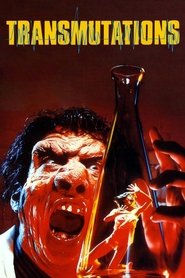
end when he he he he crashes through the um um through the grave into the abyss uh they would they wouldn't let me so we didn't have any money for that i had to beg the crew if you recall yeah uh the last session we had um i had to beg the crew to come in and do it for free yeah yeah and it was rushed it was hurried the lighting wasn't the way you know i envisioned it but anyway So, yeah. So we've reached the point now where we've got our hero and heroine have finally enjoyed a screen kiss. Unfortunately, it wasn't such a lovely moment for you when the film was completed because it didn't actually end up getting into distribution in this country. Can we quickly talk a little bit about what happened after you'd completed the film? Well, to be honest with you, I don't know. You know, I went my separate way. The producers went their separate ways. I think there was some issues amongst them. I'm not sure. Maybe there was a fallout. And the film didn't get the attention it deserved. It did actually come out in the United States, though, as Transmutations.
I think it was picked up for distribution by Charles Band and did play in theatres. Not a lot of theatres, but it played in the South and it played in Los Angeles. It played in places like Delaware and Pennsylvania. So it did get a modest cinema outing as Transmutations. But at that point, it was old news for you. You'd almost had to walk away from it. Yeah, my life moved on. And then eventually, I guess it was about 1988, by the time it did come out on video in this country, and the British audiences were able to see it. Before that, the only screening was at the London Film Festival in November of 1985. Yeah, I mean, I was well chuffed that it was chosen for the London Film Festival. You know, it was an honour. to be chosen for that particular festival, especially that year with so many great films playing. So in Clive's version, version of the script, he does actually go back to the underworld. Yes, that's right. He throws his lot in, basically, with the underworld, doesn't he? He does. He walks into it and away from...
the corrupt Overground. He does. He felt his life had more meaning underground, underworld, with Nicole, his love for Nicole, and with the Underworlders, than, um... than a life without her above ground.
So next for you was Rawhead Rex, and that was pretty quickly afterwards, was Rawhead Rex in, I think you started shooting that, didn't you, within about six months of finishing this? Yeah, about eight months after this. About March and April of 1986, I think. That's right. So yeah, just a few months after the London Film Festival screening of Underworld. And that was a surprise. They just suddenly announced, hey, we're shooting this. I was in Paris at the time. You've got to get over it. We're going location hunting in Ireland. I said, we are. Of the two, I mean, looking back, which was the happier occasion? I know they both had serious problems and difficulties, but which one do you feel the most happy about in retrospect? You know, I have a fondness for both of them. Now, I haven't seen Underworld in its present form with this kind of grading for a very, very long time. It looks amazing, I must say, in this grading. It's a huge step forward from the versions that were available before. Well, I'm hoping that, you know, the people that will buy this DVD, Blu-ray, whatever, or watch it on screen will connect to it a little better than the VHS version, which was like this murky print. Yeah.
and um well it must be torture given that you had such a strong visual sense to see that visual sense corrupted in such a dreadful way by a video transfer and now at last i guess we can see much more clearly what it was you were trying to achieve and what you did achieve i hope so i hope so and um like i said when you watch it graphic novel just remember that not mtv
Keep exploring
Other commentaries on related filmmaking topics
-
8 shared topics
The Way of the Gun (2000)
Christopher McQuarrie, Joe Kraemer
-
8 shared topics
Diamonds Are Forever (1971)
David Naylor, Guy Hamilton, Tom Mankiewicz
-
7 shared topics
The Godfather Part II (1974)
Francis Ford Coppola
-
8 shared topics
Leprechaun (1993)
Mark Jones, Gabe Bartalos
-
8 shared topics
Red Dragon (2002)
Brett Ratner, Ted Tally
-
8 shared topics
The Godfather (1972)
Francis Ford Coppola