director
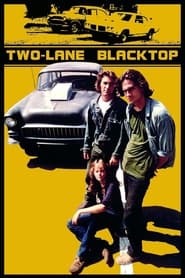
Two-Lane Blacktop (1971)
Release Two-Lane Blacktop Director-Approved Blu-ray Special Edition (Criterion Collection)
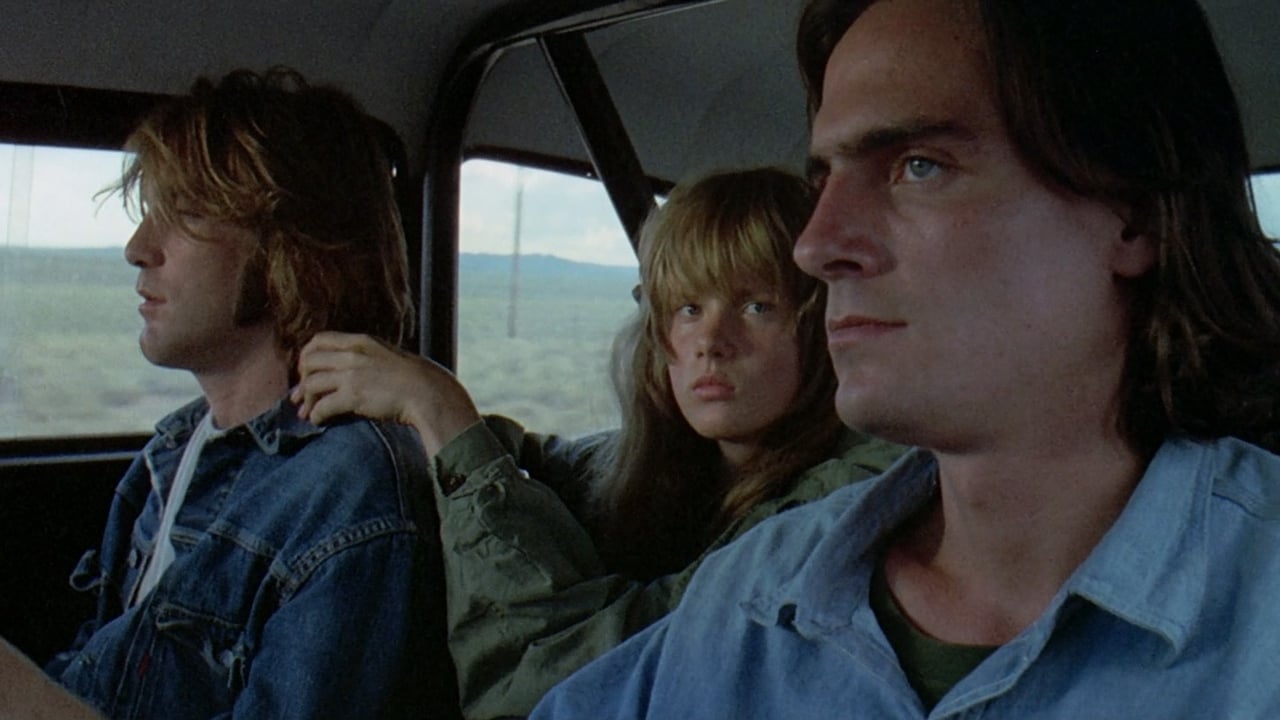
Hellman and Anders discuss independent production after Easy Rider and a 49-day traveling shoot. Hellman explains filming races from spectators' positions, using real locations and nonprofessional performers, and keeping the landscape visible in the wide frame. They also discuss dialogue, silence, the Girl's effect on the other characters, and reducing a three-and-a-half-hour first cut.
- Duration
- 1h 42m
- Talk coverage
- 96%
- Words
- 13,483
- Speakers
- 2
Commentary density
Highlights
Topics
People mentioned
The film
- Director
- Monte Hellman
- Cinematographer
- Jack Deerson , Gregory Sandor
- Writer
- Will Corry , Rudy Wurlitzer , Floyd Mutrux
- Editor
- Monte Hellman
- Runtime
- 102 min
- Also on
- OneSheet ↗
- External
- IMDb ↗ TMDB ↗ Find on Amazon ↗
Transcript
13,483 words
I'm Monte Hellman, and you are? I'm Allison Anders, and I'm feeling so honored that I got to do this with you, Monte. And I love, by the way, the way that the sound comes over the logo of the cars. Now, how did you research the street racing scene? I can't remember who contacted them, but, you know, we had someone whose job it was to do that kind of thing, and they agreed to... and, you know, it's real people doing what they know how to do. You know, one of the things that drove a lot of people crazy was the fact that we didn't cover the races the way movies were used to doing it, just, you know, staying in the car, you know, cutting, you know, to a moving shot with the car and so forth. We just... did everything from the perspective of people watching on the ground and it was kind of unique and undramatic so it was a less than satisfying to people who wanted you know all the the thrills that they were so used to associating with racing movies so
Let's go back and talk about how you came into film and how you came into American International and that whole family there with Corman. Because that's interesting that Easy Rider was there and then you had come out of the same kind of freedom in that world as well. Well, I met Roger through my wife at the time, who was an actress. And she was in a couple of his movies. So I would see him socially. And... He was an investor in a theater company I had where one of the plays that I did was Waiting for Godot, the first L. A. production of Waiting for Godot, the fifth production in the world, actually. And the theater lasted a year, and then the building was sold, and they were converting it into a movie theater. And Roger said, well, take that as a sign. This is, you know...
the world as it was and the world as it could be, you know, you should start making movies. And as he said, which is, I think, one of the funniest things anybody ever said to me, get healthy, meaning, you know, make some money. And then he offered me $1,000 to co-write, edit, and direct a movie, which is about what I was getting paid at my theater, you know. So that was the beginning, but it was a great school. It was, I think, the best movie school ever. Yeah, that's what it seems like to me. I keep wishing we had such a thing now. I mean, of course, our film schools are very good now, but this was an amazing world there with Corman at the time. Well, I had one job that was to expand for movies, for television. Believe it or not,
The movies that Roger was making at the time could be 60 minutes long because they were the second half of a double bill. So they were like the co-feature. And for TV, they needed to be 70 minutes or 75 minutes. And so he hired me to expand three pictures that he had directed and also one that I had directed. And that was the most freedom I've ever had on anything. And I wrote the scripts. I hired the crews. I directed everything. And it was amazing. It was truly amazing. I mean, I was producing because, I mean, we'd have a day where we had to get an enormous amount of material shot, and we'd get on the location and find out that nobody, that I hadn't bothered to get a police permit. And so they shut us down at 8 o'clock in the morning.
And we went down to the police station and the city hall or whatever to do the paperwork. And we weren't able to start shooting until one in the afternoon. So here we'd lost a half a day on a day that was already an impossible day. And somehow you do it. I mean, we were shooting until the last ray of sun. You know, very difficult shots where we would throw a dummy off a cliff and then have to go back down and retrieve it. Time-consuming stuff where you're trying to get a shot at... you know, sunset. And it was, you know, kind of like your heart's in your throat all the time, but it was exciting. It was just tremendous experience. Wow. Yeah, that is, boy, people don't realize that you lose half a day, you're really screwed. You don't make that back up, and especially on a schedule like that where you had to get so much. What were the films that you did? You were talking about the four...
films? One of them was Beast from Haunted Cave that I had made. And one was the picture that was shot back to back with that that Roger had directed called Ski Troop Attack. And then two films that he had done in Puerto Rico, Creature from the Haunted Sea, which was a remake of Beast from Haunted Cave, and The Last Woman on Earth, which was Robert Towne's first screenplay. And also he starred in it. Oh, my God. And you could do anything you wanted. Roger didn't care what it was as long as you filled up the time. That's so fabulous. Somehow having those boundaries and having that kind of budget really does sort of free you up and make you more inventive to solve problems. Yeah, it was great. You can't beat that kind of opportunity. Yeah, absolutely not.
So now we're coming upon one of my favorite day players in the movie. Tell me where you found this guy. Well, he actually wasn't one of the real people who worked in the same role that he's playing in the movie. But he was from the area, and I don't know exactly how we discovered him or auditioned him, but he actually gets mentioned as one of the stars of the movie because he comes so early in the credits. So when you see the... the cast list in Leonard Walton or something. He's listed as one of the stars. David Drake. Oh, God. Now, all these parts were redone, like the trunk and the hood are aluminum to make the car lighter. There's fiberglass windows instead of glass windows on the side panels. Everything was authentic, the way it would have been done if you were building a car to race. Wow. Wow. The car that we usually see in the exterior is an authentic racing car. All the cars were built by the same three people. One was a real racing car, absolutely capable of going out and racing. One was built with roll bars to do stunts, and the third one...
was with a smaller engine so that we could do dialogue without the engine sound overpowering us. Wow. Probably blow our doors right off, wouldn't it? And there is something so timeless about how they look, too. The fact that they're all kind of... Nobody's wearing paisley shirts or, you know, clothes that would date them in the least. They're all dressed in jeans and work shirts and... I think James is, you know, directors sometimes, I don't know if it's the case with you, but they sometimes pick a character that becomes their kind of alter ego. And he was wearing about what I used to wear every day. But what's interesting about these young guys, I think they were both 22 or 23, is that they were men. They were men at the age of 22. Nowadays, in so many movies, you see boys at the age of 45. I mean, the world has changed. The world of movies has changed anyway. Maybe the real world has changed too. Well, I think about all that these guys have probably been through at this point. Certainly Dennis had been through in his life and his career. I think it's just a different type of character that...
In the 30s, James Stewart was a man in his mid-20s. A lot of the actors were men at a very young age. And I think maybe society's changed. Maybe people just aren't that mature. Also, maybe we just cast more boyish types because that's what the audience wants. Well, I do think, too, that you were given more freedom... oddly enough, in previous years to kind of grow up and more expectations to grow up than kids are now. What can I say? I love this introduction of this character so much. And that the jukebox is in the frame really does it for me. It's a Wurlitzer, too.
This shot itself was shot about 1,000 miles away from the actual location because the original shot was damaged and we had to do it again. And this is the moment where James... Oh, okay. Now, his reaction was at the original location, so that's cutting back to Flagstaff. That's not the insert shot, so that was interesting. I love the way he reacts to her. It's that little smile, very quick. And then they just go. They still don't say anything. That's why I just love it so much. You guys aren't the Zodiac killers or anything like that, are you? She does sort of immediately suggest that... It could be dangerous to hitchhike. Exactly. Well, there was an awful lot of danger going on in the counterculture, too, at this time period. When I think about that Dennis had met Charles Manson probably a year previous to this and had introduced him to Terry Melcher, and that was a certainly dark period. So...
You shot as you went along, I guess, huh? You were actually traveling. Many days we would actually drive three hours, stop and shoot for three hours, and then drive to the next location. There were very few days when we were able to just shoot the whole day long. Overall, I think we had a 49-day schedule of which about seven days was travel. But it was not a solid day. It was like parts of days here and there that added up to seven days. You can see, you know, where her interests are. Though I think they're equally attractive. Oh, yeah. I mean, that would be the dream car to be picked up in, definitely hitchhiking, I must say. Dennis and James were so annoyed at her singing. First of all, she couldn't sing. And secondly, they weren't allowed to sing in the movies. The combination of those two things drove them crazy. You know what you guys do? I mean, didn't the car just come up and challenge you? It's too heavy to do in a Porsche just for kicks. It would take him a quarter mile, but he'd probably lose us in a long time.
Now, where are we here, Monte? We're in the plaza in Santa Fe, New Mexico. And this was one of the few scenes in the picture that's totally improvised. The camera is hidden in a department store window. And Laurie has a wireless mic on her. and her mic picks up everybody's sound. And all these people are people that we had, a lot of them are people we had asked to be in the plaza. Not these, I don't think, but some. But nobody knew that we were shooting when we were shooting. So they just thought she was panhandling. They thought she was panhandling, and then we got clearances afterwards. I need somebody to catch the bus. It's fantastic. It's just so wonderful, these reactions from people in this. You can't write dialogue like this. Yeah, it's just fantastic. And her energy, that boy, that was just... Just happened. Love it. Yeah.
I'm thinking about you taking the script to the studio with so little dialogue. How did that whole process happen? Well, there was another script by Will Corry, which they bought. Not Universal, by the way. We were at another studio before. And then I was permitted to, quote, hire somebody to do... a slight rewrite, and we wound up writing a new script. Rudy Wurlitzer wrote a completely new script. And so, you know, the gears were in motion, and the thing kept moving on and moving on, and got to the point where we did screen tests and cast actors. provisionally, nobody was locked because there was no official go-ahead. And then the picture was canceled. And we were out there in turnaround trying to find another studio. And at that point, it was what it was. And it was a powerful screenplay.
In spite of the fact that it wasn't a normal, I mean, there was so much that was unusual, and people were relying on the fact that this was a new world, you know, the world after Easy Rider, where, you know, maybe they know more than we know mentality. That's what the, you know, some of the studio mentalities were, thank goodness. I know, isn't that, I think about that often. I think, boy, I'm glad that that movie did so well, Easy Rider, because then we got to have Two-Lane Blacktop. Yeah, this was a real, you know, popular teen hangout. I don't know if it was a place where they actually met to race, but it could have been. Say, you must have something real special here. That's Rudi Wurlitzer, the author of the script. That's great. And his girlfriend was my wife Jacqueline at the time. But the thing is, I'm just not in the habit of seeing the Chevy work against a two-bit piece of junk.
Let's make it 50. Make it three yards, motherfucker, and we'll have an automobile race. That's one of my favorite lines in the movie. Well, that nearly got us an X rating. We had to fight, you know, the ratings board to get an R because that one line was enough to qualify as an X at the time. Wow. And now it's like, you know, every other line in a movie is... You know, if not motherfucker, at least fuck is, you know, becomes like... I know what you mean. It's like the French saying allure. Right. Now, how did you keep everyone safe in these situations, Monte, when you have all these cars and... How was the production? How did you manage this? Well, I mean, the actual racing was usually done by stunt drivers. Mm-hmm. And if you can't make out the actors, then you can be pretty sure it's stunt drivers. But so much of the picture was shot with the actors actually driving, James or Warren, camera inside the car or just looking in either the driver window or the passenger window. And many times, if the angle allowed it, I was...
scrunched up on the floor between the two people in the front so that I could judge the take. And if I wasn't there, then I was riding on the running board with the camera and nearly got killed one time by an overhanging pole or something that could have just lopped my head off. Oh, my God. Well, let's talk about the casting. This is so, so amazing. I remember when I talked to Chris Hillman of the Byrds, he said, yeah, I think I went and auditioned for that. I'm sure he did. Yeah, I think that all the musicians at the time were really, really into trying to get into Two-Lane Blacktop. So tell me how this came about that you decided to go with non-actors. Well, I didn't. I never made the decision to go with non-actors. Every role was cast independently. I saw everybody. I'm sure that I saw De Niro, Pacino. I remember specifically James Caan, Michael Sarazin. I saw 50 actors. But I don't know how... You know, you have an idea. You can't even put the idea into words. Yes. But it's like, I know what I like when I see it kind of thing. Right. Show it to me. So you just keep asking for more and more until you finally...
And you recognize what it is that you were looking for, even though you couldn't put a word on it. Right. And something about this movie feels very West Coast to me, for the period. In a way, surprisingly, Easy Rider doesn't, even though I know those guys were here and that that's where it started. But something about this movie, though, really felt like it was sort of the West Coast... vibe in a way for looking back at music of the time or looking back at the scene at the time but yet these two guys were not not from any similar worlds at the time i mean james taylor was at this point he had not done sweet baby james right he had just done the he had done the apple that's right that's right And I guess one of the songs was Fire and Rain on that album. And while we were on the road, it hit the charts. So he didn't become famous until after we were in the middle of making the movie. So he wasn't cast because he was a name or anything like that. That's amazing. And Dennis Wilson was very, I mean, at the time, if you lived in Los Angeles, you knew that he was part of a scene.
But he wasn't... I mean, the Beach Boys were not, like, part of the sort of same world that James Taylor would have been a part of. So it's very interesting to me every time I see these two guys together, because I go, whoa, people don't realize how different this would have been at the time to see these two guys in a movie together. Well, I guess James is from the South originally, right? Right, uh-huh, North Carolina. So he has... one of those accents in the movie that is kind of, at least to my ear, not so specific. So it could be the South, it could be the West. He definitely has a country sound to his voice. And that fit in, I think, with the character and it fit in with Dennis as well. And Dennis, you were telling me, also really knew about cars. Is that correct? So he really knew, just as he was the only beach boy that surfed. That I didn't know. He was the only one that surfed, yeah. Now, you know what's incredible about this scene for me? When he's coming back from hanging out and Dennis and Laurie are in the room...
James' performance is just so quiet and just sinking there outside the door. And it's not too much. It's just exactly enough. It's just perfect. It lets me feel with him what he's going through. But interestingly, I always remember this as having seen the love scene. and we don't see anything. Interesting also, this is something that trained actors learn to do, but he's reacting to something that he doesn't hear, that all those sounds were added later. Oh, that's amazing. And the beloved Warren Oates. How did Warren, did he dig driving this car? I guess he did. I don't remember ever talking to him about it. I drove the car for a while after we got back and got a lot of tickets because of the color. Now this is Bill Keller, one of the people who was in my two Jack Nicholson westerns that we shot in Utah. So he's from Kanab, Utah, and I brought him back to play a role in Tulane. He had played a role in Ride in the Whirlwind.
I want to talk about, because this will lead us back into Warren too, about the Westerns and how those came to be. And I think on the shooting was the first time you had worked with Warren. Is that correct? That's correct. Well, Jack Nicholson and I were, we had been working on a project for Roger called Epitaph, which was a kind of an autobiographical piece, mostly about Jack's life, but it was all of our lives. And we had a meeting with Roger, and he told us he'd changed his mind, and he didn't want to make Epitaph anymore. But he didn't want to disappoint us completely, so he said, if you want to make a Western, I'll finance that. And he said, well, as long as you're making one, you may as well make two, because you can really save a lot of money that way. It's almost like two for the price of one. You don't have to transport people twice.
you know, blah, blah, blah, you know. So he agreed to finance two westerns, no scripts, you know, just sight unseen, no contract, you know, his handshake was all you needed. And on January 2nd, we started to work on the script of Ride in the Whirlwind, and simultaneously, Carol Eastman was writing the shooting. And a month later, we had two scripts, and we started... thinking about casting, and one day I was in Martindale's bookstore in Beverly Hills, and in a flash, the idea of the three people came to me, just all together, Millie Perkins, Warren Oates, and Will Hutchins. Wow. I mean, Jack was already a given, so that wasn't a... Warren I had seen in a production of One Flew Over the Cuckoo's Nest at... the players ring and I just thought that performance just kind of popped into my head and it's funny because Jack I think when he did Cuckoo's Nest as a movie was a little bit intimidated by his memory of Warren because Warren was so brilliant and Jack has his own brilliance but Warren he has a quality that
is a little bit like Cary Grant in a funny way. I mean, that's gonna sound strange because they're so diametrically opposed. But he has the ability to show his dark side and also his lovable side, which Cary Grant has simultaneously. And he's also, in addition to being my quintessential leading actor, I think he was Peckinpah's, even though Peckinpah rarely used him as a lead because he had this really poetic, soft side that was covered by a kind of macho. And this was Sam as well. And so it was very interesting. He was an actor who drew you into him because he didn't reveal everything. all at once. It wasn't right there on the surface. There was so much that was hidden. And so you can go and watch him over and over again and keep getting more and more out of these characters that he was playing because there were just so many levels. Now, how were the guys working with Warren? You know, I find that when I work with non-actors that the
more trained actors can help them along, kind of give each other a balance that's very nice, because the untrained actor gives a sort of natural feel to the trained actor, and then there's a kind of structure that the trained actor can give. Well, I think that generally what happens is the non-professional, untrained actor, whatever you want to call them, real people, have an effect on the actor. And Warren's character is so absurd and so completely different from their characters. He was so fascinating as a character that James and Dennis would forget themselves and just become absorbed in... watching him and just reacting to him, which was good because it was a real reaction. And that's why I like to shoot in real locations as opposed to a soundstage. I mean, if you're shooting in a real place like this, the place itself feeds the actors. Again, whether they're professional or non-professional, they can't help but be stimulated and fed by that.
That's what gives you things that you can't write it in the script. You can't direct it, really. It has to come out of the instinct of the people. You set up a kind of safety for them to do that and a kind of trust in them. One of the things that I think is the most important thing that a director can do is to win the trust of the actors to the point where they feel free that they're not going to be hurt. Yes. And it's a constant kind of struggle, but you have to really, that's about the only thing I do as a director, is just say, listen, I'm here to protect you. If it's not right, it won't be on the screen, or we'll do it again, you know. So you just have to slowly gain their confidence and make them believe it's true, which it is true. I love little things like that. Just he puts the Coke in, he takes it back, it's still full.
takes it back out. I think that that's the other thing, is that because the dialogue is, it's not going to tell you anything about the story, that it makes moments like that, it heightens them in a way that you don't usually see in a movie. Right. As you know, I just love so much how it's shot. I just love the widescreen. I love how actors got a chance in your movie to work against the frame, work with space, and not have to be so confined as we see in so many movies today. How did you work with that? composition and work with the actors within the space? Well, it was an interesting choice. I think part of it was economic because it was two perfs instead of four, so we were getting twice as much on every roll of film. So, you know, it was cheaper to shoot. But I think, you know, that long, thin...
format that somebody said was only appropriate for snakes or trains, you know. It was very interesting because you wouldn't think of it in a movie where everybody's cooped up in a car and it's really like so tight, but it gives you the sense of the outside, of the space outside the car, which you wouldn't get in a normal 185 format. Exactly. And I think that there's a huge emotional weight that comes with that of how the actors are placed within the frame and how much space there is around them. And also there's something about these landscapes that feels like I'm there. It reminds me of like Anthony Mann Westerns as opposed to John Ford's Westerns where the landscape kind of dominates everything and it's sort of otherworldly. But this is so like accessible to me. Now, Laurie, tell me again how you met her. I had gone to New York to begin work with Rudy on starting the process of his writing the screenplay. And while there, I met with a number of possibilities, we thought, for the girl, usually by getting recommendations from
heads of model agencies, casting directors, whatever. But somebody in L. A. had mentioned her to me, and she was starting to do a little bit of modeling. And we met with her, and I was very impressed with her because she was really a very unusual girl and had an interesting background. And I... I talked to Rudy about her, and he and I met with her together and recorded about two or three hours of conversation with her, which became a kind of basis or suggestion for the character that Rudy would develop in the script. So it was really kind of an interesting thing. I never thought that there was any chance. I was convinced I was just going to use professional actors in all the roles, so I never thought that she would wind up in the picture. Well, she's got such an interesting, again, this kind of timeless look because she seems completely contemporary for, you know, the kind of hipster girl, you know, in any scene today. And she's stunningly beautiful, but it's hard to believe she was a model at the time when there was, like,
I keep thinking, although she was a little bit earlier, Jean Shrimpton and people like that. And she's so natural, Laurie, that it's just wonderful. Yeah, I don't think she had a hugely successful career as a model. I think she had a few jobs, but she was just a girl who was, you know, hanging out and trying to make a better life for herself. After this, she did a few more movies. She was in Annie Hall. Uh-huh. And she was in Cockfighter. I think that's it. And how was it working with her again on Cockfighter? Well, it was, you know, she was much more confident. I think... I don't know if she had more fun. I think she had a lot of fun on this movie as well. She had a double job on Cockfighter because she had a relatively small role on Cockfighter, and she also was the stills photographer. Oh, fabulous. And did you have someone doing stills throughout the shoot with you, or did you just pick up people at the time? You know, looking at the stills, it seems like we had somebody through most of the shoot because...
The stills cover a pretty big range. I think we had stills in Memphis and we had stills in Santa Fe and even in L. A. And it seems to me that there was at least most of the time we had a stills person. But we also had photographers that would come in just for a few days and do special shoots. I think Globe Photos sent somebody at one point. So it was a combination. Most camera crews involve having a stills person as well as the director of photography and the operator and camera assistants. It's part of the union requirement that you have a stills photographer. For pinks. Pink slips? You mean for cars? Want to race for the whole shot? That's right. All the rolling stock. Where to? You name it. And with this version of Bobby McKee, how did... I mean, most of us at this point knew Janis' version. I'd heard the song when I was... maybe on one of the road trips, you know, scouting.
It happens a lot. I don't listen to the radio a lot unless I happen to be in a car. And I heard the song and I said, wow, what a great song. And I had no idea that it was a big hit or anything. But when I had called Kris Kristofferson to get the rights, he was so thrilled to have his song, as he said, in a James Taylor movie. And I couldn't understand why he was so excited about James Taylor, but he recently explained to me in an interview we did that he had known James at some concert and had really been impressed with his talent. But anyway, he was so thrilled, I didn't have the heart to tell him that I wanted to use the Janis Joplin version of the song. And so we agreed to use his version, and I'm so glad because it's just so much better for, I mean, her version is great, but it's so much better for this scene. It really is. There's something really, you know, his version is so much more raw, and it feels like the road a bit more than...
Janis's version feels like hearing her perform it. Yeah, it's so authentic and it's an experience of his. I mean, it's an emotional thing. And how was Universal, like at this point, were they monitoring what you were doing? Did they have somebody from the studio coming out or were you just on your own? They had no idea where we were or what we were doing. They didn't see dailies. We saw the dailies. We had a little portable projector, and I'm not sure if we were able to run sound, so we just ran picture dailies just to make sure there were no serious problems or we would have to reshoot something. We'd usually get two or three days at a time and watch them together. Right. And I don't think I let the actors look at dailies. I didn't think that was a good idea. I'll relieve you in six hours. I feel good. I can take it all the way. That line has become, you know, one of those lines that you kind of like take over and use in real life as a kind of motto. I probably, at least once a week,
I'll say, it all feels good, I can take it all the way. I love that. I remember costuming James and Dennis and Warren, James and Dennis and Laurie also. The three of them went down to the Army Navy store in downtown L. A. and goodwill or whatever, you know, just found some... It's always better to find used clothing rather than have to buy new clothes and age it. Definitely. A lot of times the costumer will run things through the laundry ten times and try to age them, but it never quite works as well as just wearing the clothes. So if you buy used clothes, they look used and they look real. But I can't remember who costumed, say, Harry Dean here. We did not have a costume designer. We had someone who really, you know, was just handling the clothes, but he must have done that. He must have found things that we would look at. Yeah, it's such a great look for just this lone guy, like, with his lone, you know, on-the-edge sort of...
Now, what is this for GTO? What is the deal? He just needs contact with people, but he still wants to be unattached and on the road? Allison, don't ask me those kind of questions. I'm not going to analyze the movie. I'm not into that. We just screened it, as you probably don't know, in Carlo Vivari. They were doing a series of the new Hollywood. It's so funny to call 1970 the new Hollywood. And somebody in the audience asked me, well, what's the movie about? And I said, about an hour and three quarters. Because you can't. You can't answer that question about any movie. It doesn't make any sense to say those kind of things. Hey! Hey, sweetheart! Come on! Now, for a guy that's supposedly in love, that's no way to treat somebody you love. So that's it, though. That's... You know, being able to show different sides that are maybe not the nicest sides. A lot of actors are afraid to do that. That's another of the advantages of working with first-time actors who are not expecting to be actors. It's just a game then. For them, it's playing a game and they're having a lot of fun. And it's not quite as serious as it is for actors.
Okay, get your ass out of here. Well, it's raining. You can't let me out here. Out? I told you to keep your claws off me. Oh, come on. How was I supposed to know? We can still be friends, can't we? My son does a perfect imitation of that. We can still be friends. Well, it's amazing seeing Harry, too, on the road just in this bit. And I know that Wim Wenders had so... He loves this movie so much. And to think that he would be working with Harry on a road movie himself here years and years later in Paris, Texas, is always interesting to me, to see Harry in this movie and then see him in the car with Dean Stockwell traveling. Back the same roads, but in the opposite direction. You know, when Vim was scouting for Paris, Texas, he actually went to China and Liberty and sent me some envelopes from China, Texas. Oh, God, I love it. I just love it. And had the actors done much road tripping? Like, had James or...? You know, I don't remember.
I would guess that Dennis certainly had. And James had started to do his tours of singing, so he must have been on the road at least part of the time. Exactly. Again, real cops. Oh, that's great. I don't know if today a lot of communities would let cops play. roles like this in a movie? Well, it's interesting. I worked with real cops down in Florida. And it was so great. Because they're just so, they just do the procedure. And acting would really get in the way of that. But it's just, it is fantastic always when you've got the real deal.
But I guess, you know, the acting bug can bite anybody, including cops. And in this scene, they actually, one of them decided to ad-lib a line, which he thought was funny. I guess it is funny, but I thought it was like a little bit too much. At the end of it, when James tears out, he says, maybe we got the wrong guy. He must be on something. I believe we can handle it. Their reactions were really good, too, with watching James pull off there. You know, the thing about the American road at that time that I don't think that people are quite as aware of today There was a couple of things that I see going on which impact Two-Lane Blacktop for me that much more, which was that, well, first of all, we had a draft, and I think about what was this thing that kids were doing at the time of getting on the road, college kids usually, although I did it younger than that, of getting out there on the road hitchhiking, and there were so many people doing it.
And there was a sense of like looking for that landscape and looking for what America was at the time. I don't know if it was a sense of like if I'm going to be drafted, then I want to know what the hell this is I'm defending. And it was before the interstates really ate up the system, the roads. So was there anything consciously at play like that in the movie or was it just an instinct? Well, it's hard to answer, but I think – It reminded me, you know, Marianne Moore was talking about flying and why she didn't fly. And she says, you can get on a plane in New York, and five hours later, you're in San Francisco. And you don't know any more when you get there than when you left. And that's the difference. I mean, I feel so lucky to have grown up in a time when you didn't...
when the obligation wasn't just to fly everywhere. I've been in almost every state in the country. And I used to drive, I love to drive, and I used to drive just all over everywhere. I've gone back and forth across the country, I can't remember how many times. And you do learn things. I mean, one time I was taking a trip, actually, I think I was on a train at that point, and I passed a road sign in Texas, that was pointing in two directions, two different cities, China 9, Liberty 37. And that became a title of one of my movies. And I couldn't get that out of my mind. And I said, I've got to be able to use that sometime. That is fabulous. Here's to your destruction. Same to you. You know, as many times as I've shown this movie to my students, and you've come up and talked, we've talked about this movie so many times over the years.
One thing that I always forget is the context of the road and what that was for young people in 69, 70 at the time. Most people were not having the easy rider experience, but a lot of people were having the two-lane blacktop experience of the girl, you know, of hitchhiking across the country. I know that I did that when I was 16. And I forget that for my students, like, I think, wait a minute, do they think... oh, my God, what's she doing hitchhiking, you know, the dangers that they would expect to encounter. Yeah, well, it's interesting. I mean, that's true that, you know, that mentality, I kind of got over that. I had a bad hitchhiker experience, not as a hitchhiker, but picking up hitchhikers once. So I stopped. Well, I picked up a couple of guys that were going to take my car, basically, you know, and I managed to get into a gas station and...
told them that my insurance didn't allow me to take them any further, you know. Oh, that's great. But it was a weird thing anyways. But that was before the film. But I think what's interesting is that the picture was basically shelved. I mean, they released it, but in a very, you know, kind of non-release way in America because that idea was... subversive, at least to the mentality of the people who were in power. And then I was invited to show the film at the Moscow Film Festival, and they refused to show it because they considered it subversive. So here's a movie that's subversive to both the capitalist and the communist system. And as I told the audience in Carlo Vivari, I hope it doesn't subvert you. And somebody yelled out, I hope it does! That is so awesome. Well, it is completely a subversive movie. I mean, you know, that's the thing, too, is that for a lot of young women, the girl is this phenomenally empowered, self-possessed girl that you didn't see on the screen then. You saw these sort of, you know, there were sort of hippie girls on the road.
maybe a little bit prior and certainly after. Generally, they would have an affair with some businessman or something. I'm thinking of some movie with William Holden. But that was the deal. She was there to be that object, whereas the girl completely comes in, sets herself down in their car, and really ends up driving... she's actually the driver of the film in a weird way. That's true, that's true, yeah. Which is really an amazing thing. She motivates everybody else, that's true. Because she changes, she enters the picture and everything changes. And did Dennis, how did you work with these, with both of, with Dennis and with James and with Laurie? not having had previous acting experience? How did you direct them? Did you keep everything very loose and natural? Did you? You know, it's funny. As you know, as you are, I'm teaching part-time at CalArts, and I basically teach, what do you say to the actors? If the actor says, how do I act? As Robert Stack said to Sam Fuller,
sam fuller's answer was don't and so you know i basically normally with trained actors you know what i say is don't act with non-actors you don't have to say that yes it's just it becomes it's an easier process than it is normally that's very true and i think it just uh and i'm I can see it when I see your movie. I'm just like, this was a set where they felt very safe and very kind of, I'm doing what he wants me to do. I'm getting the, I'm getting this guy. Yeah, I think that James approached it, you know, more intellectually than Dennis did. But at the same time, thank goodness, he allowed his instincts to take over during the process, like that moment. with the reaction to... There were so many moments when he just did things that you couldn't imagine. No matter what it said on the script, like when he's in the rain, when she's out there dancing in front of the car, and he leans out and he says, hey, sweetheart. I mean, where does that come from? You can't direct that. You can't direct that. Yeah.
I think with directing or with acting, it's really being in touch with feelings. Right. I just got a new draft of a screenplay, and the writer told me that he had made some changes to the ending. And immediately, you know, my hackles rose or whatever they do, and my intellectual response was, well, I'm not going to like that. But we'll see. And I was going to wait. And I got to the end of the picture. And the first few lines where I saw the changes that he had done, there was something that happened that triggered something in me. I don't know what it is. I just completely lost it. I started sobbing. I mean, I'm an easy, you know, Lawrence Olivier reads the phone book and I tear up. But I can't remember ever having this kind of real breakdown emotionally over written material or a movie or anything. I mean, I just lost it. And that's what I look for. So when I ask people to read something, I don't want a critique. I don't want them to give me their intellectual notes. I want to know what they felt when they read it. Yeah. Yeah.
It's always interesting to see who gets to see dailies. How do you feel about that? Well, certainly the main technical people need to see the dailies. And some actors insist on it. If they're in a position where they can demand it, they can see them. But I think generally... I mean, James didn't want to. James doesn't like... even to listen to himself sing. And I think that for him, that he's right. He really does, in spite of his intellectualizing, have a way to really shut that off and let his instincts take over. And I think that's what makes him a great artist. But I think that just in general, It's not productive for actors to see themselves. Again, it interferes with their being in touch with their unconscious and makes it too much of a conscious process. Yes, I feel very much the same way. It is a kind of unconscious level. You're on this kind of zone that you want to just keep going. Yeah, I mean, I think it applies to everybody. I was watching the DVD of...
Double Life of Veronique. And Kieslowski talks about how important it is for not just the actors, but everybody, the director and the cameraman and the composer, for everybody to get in touch with their unconscious. And that's a hard thing to do. And so anything that interferes with that, I think, is detrimental. Yeah. I also think that it's when the trouble begins, when everyone's too conscious. Now, you see the car up on the lift? I think right now there's a license plate on there. Well, that license plate disappears in a little while. I love having little... We didn't plan this, but... But I love having little imperfections in a movie. Hitchcock once said, just as it's impossible to love... He says the problem with Hollywood movies is that they're perfect. He says just as it's impossible to love a perfect woman, it's impossible to love a perfect movie. So I'm happy to say I've never made a perfect movie. You know, Higgins, whatever her name is...
No. Do you know where I can get a plate? I just realized that's the first time we hear anybody's name. And he's not even sure that's really it. Well, it isn't. It's just the name that's written on her army jacket. It's so excellent. So that must have been a line that was at least altered to that extent because we didn't know what name was going to be on the jacket we found, you know. Now, where are we here, Monte? This is Boswell, Oklahoma. Wow. Now, I would love to go back to Boswell and see if it still looks like that. Yeah, I was just thinking that. My guess is no. Yeah, my guess is no too. There might be a few pieces of this left along some railroad tracks. It is so amazing too to see what is... In the landscapes, what is almost, it's not entirely lost, but it's definitely a different deal when you get on the road now and you take the interstate and you take, the truck stops are so generic that you don't get to know anybody like they get to know guys in the cafes that they'd stop in where they could actually, you know, set up the next race.
I often find that if you take the train, you see sort of the backsides of towns and you'll often see the pieces that are still left of this world. Look at James's face. I mean, he is living that character. Yes. And he's feeling a lot for, you know, the girl. Mm-hmm.
Again, nothing's in the dialogue. Right. I don't know if she ever feels the same thing about him. I think she's interested in him, but I think she's... She doesn't have that kind of... I think she's more detached in her life. Like you say, it's a very... It's really a free thing that she has. Mm-hmm. All right, let's try it again. Now, she actually could not drive at this time. Well, I just love that he's gone to all this to go find her, and then we cut to... Not some big passionate reunion, but, okay, let's drive again. And he's teaching her to drive the car. I love it. She's so cute. Well, that's about the most loving thing that he could do, though. That's true. Okay, put it in first. I love this scene. I just think that this is one of the great scenes where they communicate and you get a feeling of, you know, the kind of longing on both sides for something that they hope will happen. This is first. This is second. Third. Fourth. I don't think she'll ever use it. In reverse. He broke her up there.
This is neutral. I love actors who can act with their backs. Yes. I saw Lunt and Fontaine do Durrenmatt's play The Visit. And the entire last ten minutes, or maybe it wasn't, maybe five minutes, He acted with his back to the audience, and there was more expression in his back than in the faces of most of the actors that you see. Isn't that amazing? Well, I love how that moment happens too with them, and that we can really see it from being back there. We can see them stopped, we can see the pause. that they know that something's happening between them. I don't know why, but when he steps out of the car, it always gets a laugh.
You can never know what's really happening inside the audience. It's interesting. I know in England, often there'll be dead silence, and then someone will say to you afterwards, I quite like that. And you'll be like, oh, God, I thought I was bombing. I love entrances and exits. I think... A film that had a profound effect on me was Rivette's Paris Belongs to Us. And what was a revelation to me was how much power he got into all the connective tissue that is usually cut out of movies. You know, people getting out of cars, walking to the front of a building, going in through the door, in from the other side, going up the stairs, going into a room. I mean, now we're so impatient that we cut from the car to the bedroom without seeing all that connective tissue. And I find that's the most interesting part. Yeah. That's where you start to see... I mean, there's so much for actors to do with that. To set you up. I just loved him...
you know, opening the door, just, you know, putting the key and just... That, to me, is... He's got his routine. Maybe I'm crazy. Maybe nobody else agrees, but I love that stuff. Oh, I do, too. I do, too, and that's the thing. I think that in this movie, it supports those moments in ways that a Hollywood movie could never support it. It couldn't support that kind of detail.
What's happening? The town woke up. Now here, we added this little scene because we had shot the scene in the parts store, and he was wearing the shirt. And here, he didn't have the shirt on. Monte, that sounds like something I'd do. So we had to find some way for him to get the shirt. I love it. This is one of the guys that, this is Job, right? Yeah, it's his store. That's right. $6. 95 plus tax. How did you set out with the day? Like, how did your day go? with the cast and the crew. How much of a crew was there, first off? Let me ask you that. It was the most minimalist crew that we could get away with with a full IA deal. They allowed us not to have a hairdresser, not to have a makeup artist. These were, like, major, major concessions. But we had, instead of having one of the small production units...
like Fuad Said was a guy who had a little compact kind of van that was so well organized where a lot of equipment was like really, really packed into a small space. And a lot of little movies were made with his unit at that time. But we had, you know, the big studio trucks with, you know, all the grip equipment and all the lighting equipment and all of that. moving along with us on the entire trip. I had a little motor home that we had a driver for it and my family and I traveled in that. Warren had his own motor home that was his that he traveled in. And everybody else came in buses. So in the evenings you would travel and then the evening she would all stay together somewhere. It was really a terrific family feeling about it, particularly because James and Dennis were musicians, and James had a lot of friends who would visit him along the way. Joni Mitchell stayed with him for a few days, and they would sing at night, and everybody would just gather around. It was really...
a very family-loving kind of feeling. There was a great atmosphere within the company and on the set as well. Oh, that's fantastic. I totally forgot that Joni Mitchell was with James. She was his girlfriend at the time, right? Amazing. I can't get no satisfaction I can't get no Another time when everybody was wincing. Now this was my first foray into shooting simultaneously with two cameras, which is something that I've... I've tried to do as much as possible ever since. Here it was necessary because we had overlapping dialogue. Oh, yeah. So that's Alan Vint. Yes, yeah. That's the best poor state I've ever seen. Sir, I work for these boys. I'm their manager. So the original script was... was taken from a short story. Is that correct? No, it was taken from a screenplay. Oh, it was taken from a screenplay. There was a screenplay by Will Corry, and we got Rudy Wurlitzer to rewrite it, but in essence, he never even read the screenplay. He wrote a new screenplay just based on the concept of a cross-country race. How did you get inside how this would go down in a town?
You know, like this scene, for example. Well, I mean, basically, it came out of, you know, Rudy's experience. And he specifically read a lot of car magazines as research. But I think the novel that he wrote called Nog was what inspired me to hire him. And that's really a road movie as well. Well, sure didn't talk to you. Sure didn't see you. That's how me and my mother, we actually say goodbye to each other that way. But we totally have the line wrong. What we say is, I sure did see you, and I sure was here. But that's not what the line is. Well, I think the line, sure did see you, is in the script. I wouldn't swear to it, but I'm pretty sure it is. And sure did talk to you, which is Warren's retort. Right, right. He ad-libbed. I see. Oh, that's great. One of them Dodge Chargers letting go by. Not today.
I don't know if these guys, you know, you get a sense that they're almost like an old couple in a way, that they're kind of shorthand with their talk. They don't have to talk as much because they kind of know everything that's going on there with each other. Well, I always likened the dialogue to an effects or a music score. Because the plot is not propelled by the dialogue. You don't learn anything from the dialogue. You learn everything from watching rather than listening. It's unique for me. It's unique in my movies. Even though my movies have relatively small amounts of dialogue compared to other movies, the dialogue in most movies... propels something. Here it doesn't do anything other than act as a kind of score. Right. Well, you still have, I mean, this movie lives on in a whole other subculture besides film people and film fans because you've got the car, the people who are fans of the car who are in love with the movie, but also I think that
the street racing culture, which has never gone away. That's right. It still is. Now, this is George Mitchell, who's the husband of Katherine Squire, who plays the woman going to the cemetery. Oh, interesting. And so they're one of those great theater couples from New York. They had both done The Cave Dwellers with me when I had my theater company. and they were both playing husband and wife, both in Riding the Whirlwind. Now, people think that he changed sweaters in each scene. It's not true. We do that in color correction. I also like that there's funny... Who is the guy, the afroed guy that gets in the car? Well, he was actually one of the people who was a finalist for the role of the mechanic. And he did a lot of the screen test material. He tested with Laurie and with James. And I think his name was A. J. , A. J. Solari. And he was like up until the end, if we hadn't found Dennis, he would have been the mechanic. Oh, wow. Well, he reminds me, do you remember On the Road?
These billboards at the time, there was a guy that looked very similar to him. Oh, I didn't know that. That said, keep America beautiful, get a haircut. And, you know, you'd be driving across the country, and you'd see these every now and then, particularly in the South. Mm-hmm. Getting sick and tired of creeps getting in off the road and putting me on. That gets a laugh, too. You said something. You might as well go ahead and tell me what you said. It's just it gets cantankerous for no reason. Stop it. Take your foot off the gas and pull over. I just want to get off this machine. I pulled something in my neck. But if that's all we got, we're in good shape. I gotta check the points and the valves when we get there. Also, the jets and the carbs. Something is going on between them. That's not working exactly the way anybody expected. I don't know what it is, but... I just love this scene. So this is the woman that's married to George. Yes, and that's Melissa, my daughter, in the back seat. Oh, my God. She's precious. Now, we didn't use Catherine's voice here. Ten mile home. She has a very distinct New England accent, and...
I don't remember whether I tried to get her to change it or not, but I decided after the fact to loop her with an actress who had a southern accent. And that necessitated looping Warren as well. As you know, to get a balance, you have to... Of course, yeah. If you do one, you've got to do the other. I want to get down there and fix it up before she gets there. That this family would be in this car to go to this funeral is so odd and really quietly sad without anybody shedding a tear. It's just like we've just got to get to where we're going. Another thing that's interesting about GTO's character and about Warren is empathy. I mean, he's telling all these stories, but the stories are really based on his feelings tuning in to the other person's needs. That's why we love the character so much, because he has this tremendous power of empathy. And he doesn't even, even with Harry Dean when he's in the car, he doesn't judge him, he just doesn't go for that kind of thing. No, it's not judgmental. It's not a judging, it's just like, not me, not me.
But I remember somebody was talking about Charles Manson, who's from my hometown, and they were like, oh, he tells such stories. And I said, but that's Kentucky. We all do that. We just talk and talk. It's a storytelling kind of a place to come from, you know, where people love to sort of give you a little oral history. And when I see Warren in the film, it reminds me very much of a very, very much a solid Kentucky character of just like, I'm telling you this tale and that one and this one and, you know, It's all kind of true, but it might not really be my story. Well, it's funny because I've never thought of this before, but I just realized as you were talking that in a funny way, GTO is kind of my autobiography as well. Because I think one of the reasons that I became a filmmaker is because I was a teller of tall tales. In high school, my nickname was Bullslinger. And...
It's just because I like to tell stories. And sometimes they'd be based on something that was true, but I would embellish them. The truth wasn't good enough. I wanted to make it a better story. And it's like the subtitle of the Saroyan novel, Jim Dandy. Jim Dandy, Fat Man in a Famine. I'll say it again. Jim Dandy, Fat Man and the Family. It's hard to say. And the subtitle, or the secondary title is, He Knew the Truth but Was Looking for Something Better. And that's what movies are. I love that. Yeah, because, I mean, even in my personal life, it'll be like, but what's the story? If it's a good story, then I'll go there. You know, it's like I'll take any risk as long as the story's going to be pretty good, you know. And I can, you know, make it even better, of course. But I still do it today. But if I'm telling an anecdote, something that happened to somebody, I'll embellish it. I'll make it a little bit better than it was. Yeah, it's, you have to. It's a gift to the person that's listening. Exactly. Oh, God. Come down the hall, will you? You know the way?
Now, this car show was just, this is something that you guys booked to come into? Yeah, it was an actual event, and we were allowed to shoot during the event. And obviously we took up some time because our car participated at certain points. Right. But it was all going on while we were shooting.
Now this was a tremendous sound job, just keeping that commentator from the booth there, keeping that talk going through the whole thing, and Gary Kurtz did all of that, and he's a whiz at that kind of thing. So these are all people who were there that we got clearances from that we shot.
One of the things that I related to when I was making the movie was, and I think it's usually important for me to find some way to identify, and I identified their activity, racing these street cars, street racers, with my job of making movies. And I think that... It probably exists in a lot of different professions, a lot of different lines of work, where somebody's work is in conflict with their private life, where their partner or whatever feels left out and is competing for their attention. And I'm sure it's a kind of a universal thing. And anyway, that's what I identified with. And I was trying to show the different people in this complicated relationship and how they were reacting to each other. And this was a fascinating scene to shoot. And I'm usually very moved by it when I do watch it. I think one of the strongest influences on this movie for me was Truffaut's Shoot the Piano Player. And I liken the piano player to the driver. And just the, you know, similar to what I was just saying, the problem of...
The inability to communicate, which cripples the person. He functions in other ways in his life, but in ways that are really important to him and that really express his longings, his dreams, his passions. He can't express himself, and that was the problem with the character in Shoot the Piano Player as well. And that there's the woman and there's a moment that he could have it. Right. And that it passes him by. And that's me and Bobby McGee as well. It's the same situation.
We'll be in D. C. tomorrow night for dinner. Yeah, I was just thinking before you had said that, I was looking at her face and just thinking, oh, this is just this moment of complete disappointment that it hasn't gone, in Laurie, that it hasn't gone the way you knew it could have gone. Right. And didn't. And that you're probably not going to get it.
I think the line in the song, you know, and let her slip away, you know, that's it. The girl, funny enough, even though she's the one that gives us more of herself up front with her dialogue, I don't know her as well. She's still got something she's, to be discovered a bit. Well, I mean, maybe it's in the part of the script that didn't get on the screen that we shot, but was left on the cutting room floor. But again, I think, you know, Laurie was a kind of prototype for the character, never thinking that I would actually cast her in the movie. And she was... One of the few people I've known, I mean, I'm very... I'm not a talkative person. And if I'm involved with someone who doesn't talk, then, you know, there's long... Right. Long silences, long silences. Laurie was a running autobiography. She wanted people to know her so badly that she would just, you know...
There was no self-censoring, as many people do. She just, you know, freely discussed everything about her life. And that made her very interesting. And I think there's a little bit of that in the character. Yeah, definitely. Because I feel like she's just like, okay, what's going on here? You know, she's kind of the one who's making the guys like, have to be conscious about what they're doing for a change, which I think almost leaves them a little flustered, to say the least. But also, I think that maybe it's because she's the real wanderer, in a way, in the piece. She's the real adventurer. In a way, they're kind of stuck in their ways. in a sense. You know, they have their routine. Even though they're living for today and they're just going with whatever happens, she's actually the one who's really kind of up for the risk and up for adventure, in a sense, I think. And she can leave whenever she wants. Yeah. They've got... They're part of the system. They have a car that they have to take care of and that takes care of them. So they're...
They're like, you said they were like a married couple, but it's, you know, they have responsibilities. She has no responsibilities. She is the character from Me and Bobby McGee. Yeah, she really is. That's it. That's why I think that I, with them, I kind of know where everything is and how they are, but she's a complete mystery. And of course, then she changes everyone around her and they're not quite the same. and their routines. I can't remember here whether we actually changed the tires to the street tires. I think we did when there actually wasn't time to do it. Oh my gosh, yeah. A little bit of a cheat. And what about GTO's car? Do we know what became of that car? Um, there is a GTO club, and I've actually met some of the people. I don't know if the original car is still in existence or not. I can't remember. I totally get that that's his car. I believe it. I mean, I believe everything.
in terms of the guys, how they're relating to the cars. Because I remember talking to you and you were saying, I want to know where these people sleep. And that's always been such a big thing for me in terms of characters. It's been like, it's been golden where I just, constantly use that like who are these people where do they sleep what are they what are their preferences what are their weird habits even if i'm not going to see it on the screen and i feel like that's so much there in um in both of the guys you know in the driver and the mechanic and also so much in gto now this shot is stolen from a scene in actually in arizona i think where we had a whole sequence that was left out of the movie, but we used that scene as part of the downtown Los Angeles scene at the very beginning. Oh, interesting. And I needed a shot there, and we stole one from, you know, one of the outtakes from that sequence. Now, did you have to do much post-sound work with the cars and...
I mean, it all sounds pretty natural, like not much sound design. Well, we had to, you know, when we were in the car, we had to add the real car engine because the dialogue scenes were using the lesser engine. So that had to be, you know, beefed up occasionally. I mean, sometimes you don't notice it, you know. But, you know, very little of the dialogue was redone. Most of it was usable. We had, you know, The sound man is right at Warren's feet there, you know. Right. With the mic, directional mic. So, you know, he's crouched underneath the overhang of the dashboard. And I'm there somewhere. I'm in that car. Coming up is my homage to Hitchcock, which is the kind of, you know, foreboding... I think I steal more from... There it is, the shot. Yes. You set up the tragedy. Uh-huh. Yes, there it is. I steal from Hitchcock probably more than from anybody else, particularly in terms of the planes, foreground, medium ground, background, having simultaneous action going on on the three levels and that kind of thing.
I don't know about you, but sometimes you just find that the lighting or exposure or something makes it very difficult for the flesh tones. But nobody wore makeup in the picture. I think that pancake makeup stands as a barrier between the actor and the audience. And so I got everybody to get a little bit of a tan, and we didn't have any makeup. And sometimes, in spite of that fact, it looks like somebody's wearing makeup, and that always annoys me. And I don't know why that happens. Sometimes it's just a combination of things. Yeah, the balance of the light inside and out. You know, I pretty much shot all of Rudy's screenplay. I think maybe, you know, two or three scenes were cut out before we began shooting. But... The screenplay was very long, and we wound up with a first cut of three and a half hours. Wow. And when you think about it, that's a lot of wasted time that you either could have shot the picture much faster or we could have spent more time shooting what we did finally wind up with. And usually you try to cut a script down to a point where you have maybe 20%.
too much material, but not twice as much material as you need. And we had a very unique situation, even at the time, in that contractually we had final cut. Amazing. But it was based on delivering a picture two hours or less. And so we cut it down from three and a half hours to two and a half hours and screened it in San Diego and on the basis of that screening I came back and cut it down to two hours and then without being obliged to I cut another 15 minutes out just because I thought it played better but there were a lot of interesting scenes the scene I regret most losing the most was a scene after they, when they're chased by the cops at the beginning of the movie, they pull into a driveway to kind of avoid the cops finding them. And they get out of the car after the police cars have all gone by, they get out of the car and they go and they look into a window at a family having dinner.
And no dialogue, nothing, just watching. And it really gave you a feeling of their world and their being on the outside. And this was the real world that they had a little bit of a glimpse into. And it was a very kind of sad scene. I really loved it. We tried and tried to keep it in. It's just that, you know, the picture couldn't stand that extra weight there at that point. If it had come later in the movie, if there were a place for it, it would have worked. You know, there are a lot of other really nice scenes. There was a wonderful scene where they put the car on a ferry in Arkansas. There was also a skinny-dipping scene with the three young people. There was a scene on the Sunset Strip at the very beginning that was cut out. I can't remember all the scenes.
you're going to have to read the screenplay. But it's very important for me to get to the, what I have been trained to call the major question, you know, the point at which you hook the audience and you make them want to follow it to the end to find if the actor or the character, rather, is going to achieve his goal. And so the major question isn't, really asked until they set up the race. And, you know, it's delayed for a very long time, and we couldn't delay it any longer. And that was why we had to cut that scene out. And, I mean, this girl, she even leaves behind what's in the bag. On to the future. Yep. That's why Universal was offended by the movie. Well, that is a very subversive thing to put out there, and particularly for a female character at that time, or even now it would be. It's a thing to say. It's a complete denial of all the values. Exactly. Now this is a jump cut.
to speed it up a little bit. I do that a lot. I just cut in the middle of a shot. Wow, that's great. I didn't even catch it. See ya. Make it 100. What do you guys race around here? Not Dole Airport.
I think about GTO and, you know, driving around, and just there's moments where he's just alone and just absolutely heartbreaking. And I don't know what it is. We don't really know what's the truth and what's not. But yet that's the truth, is that there's this heartbreak there that's just phenomenal. Well, that was Warren. I guess it was just one of those cases where the actor and the role meshed. so completely that it's hard to tell who's the actor and who's the character. And in life, he was the same. I mean, I think as a friend, I was drawn to him because you wanted to learn more. You wanted to know more about him. And it was just so slow in being revealed. And over the course of our, what was it, nearly 20-year friendship, I think toward the end, I finally felt I'm getting closer. I'm starting to know who this person is. And even then, after he died, his wife gave me some of his poems and so forth, and I felt... I found out something new. I learned some more that I didn't know. It's an amazing kind of quality, and I think it's what made him so interesting as an actor. Those satisfactions are permanent.
That's a great line, too. Yeah. That's one to live your life by as well. I use it all the time. Yeah. And, again, my kids, every other day, you know, those satisfactions. We just took a trip and, you know, we're having dinner. These satisfactions are permanent. I love that. That's excellent. So these are our local extras. How did you... How did you do the extras casting? Did you just kind of put the word out? I think we had a local person casting extras everywhere we went, casting extras as well as small parts. Oh, that's great. And I believe we did a lot of that casting not during the shoot, but on the trip we took scouting locations several months before. So we actually went across the country completely, the whole route, one time just picking out locations and prepping and picking people that we were going to work with locally and casting a lot of the roles. And then when we did the movie, in addition, we had a location person who was setting it up three days in advance so that when we got there, it was all ready.
Now, I think from this point on, this is all slow motion here. See? James got to really race. Wow. Well, I am not going to ask you about the burning of the screen at all. Okay. That's good. That's good. And I have my own reasons why GTO is out there.
It was a very, very... I think it's... There's one still that I just discovered. I've been going through a lot of the 35mm still negatives, and there's one picture of me and James and Dennis, and we're all just laughing. And I laugh a lot, but I don't have many pictures of myself laughing, and usually the pictures are very glum, and particularly... I mean, I've had sets where I was, like, miserable the whole time. Iguana was the worst experience of my life. But this was... I mean, I just saw how happy I was making this movie. And it was infectious. You know, everybody was happy. God, I love that. I feel I was privileged to be able to... make this movie in the way that it was made. The movie couldn't be made today, and you couldn't cast it that way today. It was kind of a golden opportunity that I'm very grateful for. Well, Monte, I sure did talk to you. Sure did see you. So anyway, here we have been. Here we have been. Thank you very much. Thank you.
Keep exploring
Other commentaries on related filmmaking topics
-
7 shared topics
Goodfellas (1990)
Martin Scorsese, Nicholas Pileggi, Ray Liotta
-
7 shared topics
The Life Aquatic with Steve Zissou (2004)
Wes Anderson, Noah Baumbach
-
8 shared topics
Demolition Man (1993)
Marco Brambilla, Daniel Waters
-
8 shared topics
The Lord of the Rings The Two Towers (2002)
Peter Jackson, Fran Walsh, Philippa Boyens
-
8 shared topics
RoboCop (1987)
Paul Verhoeven, Jon Davison, Edward Neumeier
-
8 shared topics
Election (1999)
Alexander Payne