director
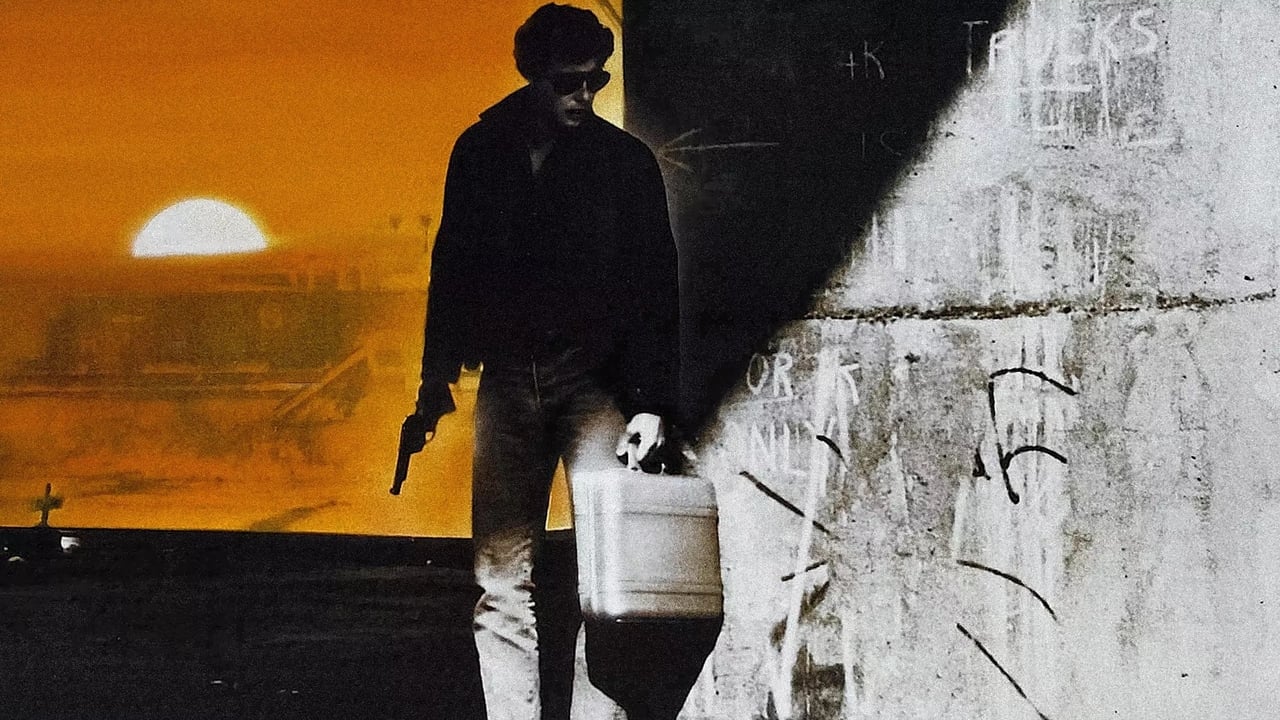
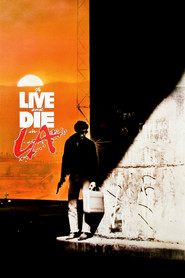
To Live and Die in L.A. (1985)
Release To Live and Die in L.A. Special Edition DVD (MGM Home Entertainment, 2003)
William Friedkin ranges from the film's counterfeit-world metaphor to a detailed production method built on unfamiliar actors, location access, a small fast crew, and decisions made in response to what the camera found. He explains Robby Müller's single-setup natural-light approach, Robert D. Yeoman's chase photography, Wang Chung's free-form score, mechanical stunt design, and the editorial construction of image and sound. The result is a candid account of a thriller in which cops and criminals are two sides of the same coin, and in which shooting supplies raw material that Friedkin reshapes in the cutting room like jazz.
- Duration
- 1h 54m
- Talk coverage
- 84%
- Words
- 14,813
- Speaker
- 1
Guided collection
Cities as narrative pressure
Nathaniel Thompson and Steve Mitchell map the lived infrastructure and period texture that ground Pelham's New York, while William Friedkin explains how Los Angeles locations, a fast crew, mechanical stunt work, sound, and editing turn the city into pressure.
Part 2 of 2
- 01 The Taking of Pelham One Two Three 1974
- 02 To Live and Die in L.A. Now reading
Commentary density
Highlights
Featured in
Topics
People mentioned
The film
- Director
- William Friedkin
- Cinematographer
- Robby Müller
- Writer
- Gerald Petievich , William Friedkin
- Editor
- M. Scott Smith
- Runtime
- 116 min
- Also on
- OneSheet ↗
- External
- IMDb ↗ TMDB ↗ Find on Amazon ↗
Transcript
14,813 words · 36 flagged as film dialogue
Hello, this is Bill Friedkin, the director of To Live and Die in L. A. , and I'm gonna do this commentary now about the film without referencing the film itself. I'm just gonna give you my impressions, thoughts, and feelings about what went into the making of it, why we made it, what I saw in the material, a little background on the cast, and about some of the things that we were trying to do. To Live and Die in L. A. started out as the impressions of a former Secret Service agent on the job that he had done with the Secret Service for about 19 years. And he put his impressions in the form of a novel called To Live and Die in L. A. , which I read. A lot of the time I'll get recommended by someone, a friend or even a stranger, who tells me, you ought to read this book. It looks to be right up your alley.
And often it isn't. But in this case it was. What attracted me to this story was the surrealist nature of the life of a Secret Service agent, of a guy who would be protecting the President of the United States one day and in an informal relationship would often be playing cards with the President in his suite with other Secret Service agents. They used to play poker for money with President Reagan. And then the next day, he would be chasing some counterfeiter in a very poor neighborhood of Los Angeles for stolen credit cards or bad checks. So that struck me as being a very surrealist situation, and it's what attracted me to the story.
My initial impulse, as I've said, was to show the surrealism behind the life of a Secret Service agent. One day, being part of an elite squad that's protecting the President of the United States against all enemies foreign and domestic, which is their charter. And the next day, chasing a guy for a $50 bad check in Watts. And I realized once I got all the footage together that I had shot, that I didn't have the first part. I never bothered to shoot the detail that was protecting the President of the United States. I sort of took that for granted in my own mind and then realized in the cutting room that we didn't have it, so we went out and shot it as a kind of aftermath, but a prologue to the film. I also remember saying to Jack Hues and Nick Feldman, who are the group Wang Chung,
When I asked them to write the score for the film, I said, one thing I don't want you to do is write a theme song. Don't write a song that has any lyrics, let alone the lyric to Live and Die in L. A. To my amazement, they, one day in the editing room, handed me a song that they had written and recorded with that title, and it was meant to be the signature song of the picture. I liked it very much, I have to admit. I thought it was terrific and had a wonderful mood, both musically and lyrically, that set the tone for the film. And so I decided to use that song, again as an aftermath, over the sequence that we shot after all the other shooting had been completed.
the Iranian terrorist on the roof at the beginning of the film, that's something that I don't recall being in the book at all. It was something that came out of my discussions with Jerry Petievich, who was a Secret Service agent and did write the book. I remember asking Jerry what were sort of the typical heroic deeds that may have been done. And he mentioned the idea of a terrorist trying to get at the president during a speech that the president would be making in a big city hotel. In 1985, there were terrorists all over the place making threats against the president, sometimes attempting to carry them out. In many cases, they made attempts and it was never even mentioned in the newspapers. It was just hushed up because Obviously, the Secret Service doesn't want to give people any ideas. But this was based on a threat to the president, one of many that occur every time the president goes out and makes a speech somewhere. And the Secret Service is alert to these guys, and they're very good at spotting things that seem to be out of kilter in what would otherwise look like a normal operation, say, of a hotel.
which you and I might take no notice of. The main title sequence tries to give a flavor of the world that the audience is about to experience. It shows several of the characters without any explanation of who they are or what they're doing. And it also shows the act of counterfeiting and the act of passing the money. The money is counterfeited often in a very secret place, but then passed in very public places to dealers by the mules. And the dealers know where they have a market for counterfeit money. They know who's buying counterfeit money. Often drug dealers will buy counterfeit money at half price and then pass that money on to the people that they're buying drugs from. But all kinds of people who deal in cash to this day are still buying counterfeit money at half price. I forget the exact figure that the Treasury used, but I believe it was billions of dollars of counterfeit money out there that they were always trying to track down. The number of people who made money as good as Rick Masters in our film could be counted
on the fingers of one hand. He was really good. He really was a better counterfeiter than he was a painter. And he probably knew that. But he needed the conceit as well as the day job, so-called, of calling himself a painter so that he had a profession. But secretly, I think he would like to have been a painter but knew, because of his high intelligence, and taste that he was not really a painter, he was a counterfeiter. Rainer Fetting is an artist who sold a lot of paintings on both sides of the Atlantic Ocean. He sold a lot in Europe and in New York, and I really value his work. He was one of the young modern German expressionists. And I thought that his painting was very evocative of the kind of work that Rick Masters should be doing. So I called upon Rainer Fetting to let Willem Dafoe come to his studio, watch him paint, see some of his paintings, get a sense of how he painted. And then we actually used some of Rainer Fetting's paintings in the film. The canvas that's burned at the beginning was...
done by Rainer Fetting, and if it had not been destroyed, it would have sold for quite a bit of money. But he did it very quickly for us, and he knew what its purpose was. But when you see some of Master's other canvases, they're all done by Rainer Fetting. The shot that precedes the dive off the Vincent Thomas Bridge that's made by Richard Chance on a dare. The beginning of that shot is, of course, William Petersen standing on top of that bridge waiting to dive, sort of getting a sense of how he's gonna do it. And that shot was achieved with a fairly new piece of equipment at that time that's now in wide usage. It's a Louma Crane, it's called. It's much more portable and lightweight and easier to set up and manipulate on location than the original cranes were. A studio crane is too bulky and too unwieldy to take to a place like a bridge. It was only possible to do a shot like that because of this portable, lightweight crane that was originated in France and that they had a very few copies of
in this country and I remember seeing a demonstration of that crane at the place where the equipment rental house where we were able to rent it and I thought my god I've got to find a lot of usage for this and so there's a few shots of it in To Live and Die in LA a few shots using that Louma crane or variations of it once we use that piece of equipment it suggested other kinds of equipment that we were able to fashion on our own using parts of the technology of the Louma Crane.
And I don't think anybody has been put in harm's way more than I have by this hot shot over here. Seriously speaking, if I'm going in to beg somebody...
I contacted Gerald Petievich after I read the novel, learned that he had been a Secret Service agent for 19 years, learned that... According to him, a number of the incidents in the book were based on his experiences which he had fictionalized. And I acquired the rights to the book myself. And I wrote the screenplay. I wrote a draft of the screenplay myself. And then I found myself calling Jerry from time to time. or meeting with him, and he would show me some of the hangouts for the Secret Service agents downtown L. A. and introduce me to a couple of people and took me to their offices to get a look. And I found myself leaning on him quite a bit wherever I felt a little bit in doubt about doing something. And it reached a point where I felt, you know, I would often say, Jerry, why don't you write this scene?
This is a new scene. It's not in the book. I have an idea for something else. Why don't you write it and send it back to me and I'll change it or maybe it'll be fine. So I initiated a collaboration with him. And when it was finished, I decided to put his name on the screenplay because I thought it was a genuine collaboration. Although it didn't set out to be that way. My feeling at the time was I was going to buy the rights to this book and then do the screenplay alone and that would have been that. Now I felt that it would be good to show the audience how counterfeit money is actually made. And so Jerry Petievich who had busted a number of counterfeiters as a Secret Service agent, he got us a guy. I don't even know if Jerry got this guy out of prison or if the guy had done his time and he was back out. And the guy was back out of prison for counterfeiting, and guess what job he was doing? He was running a print shop. And guess what that involved? And it was an out-of-the-way print shop.
somewhere in an area where you'd need a police escort to get to most of the time today. And we met this counterfeiter and he took us through the process. And he had the paper, you know, which we paid for. It's a certain kind of, it's called rag. The paper's a certain number of rag, it's called. And certain kinds of inks and the money that he was making, these $20 bills, were every bit as good as what the government makes in those days. They've changed the currency now, you know, and put some little gimmicks on it so that it's tougher to counterfeit. I don't know if it is or not, but it's supposed to be. As you make a $20 bill, let's say, you do one side, And that's finished, and it dries, and then, you know, in a sheet of bills. And then you do the other side, the so-called gray side and the so-called green side. And a lot of bills that we made, we only needed one side for. Somebody on the set had taken some of this money, it was lying all over the floor on the set, one side or even two sides, and took it home.
and had a teenage son who saw these, young teenage son, I might add, who saw these bills on his father's desk, and he and a friend took the bills and went off to a grocery store and tried to buy some Hostess Twinkies or something, and they offered the guy behind the counter a one-sided 20. And within five minutes, the store manager had the Treasury Department there. And they grabbed these kids, where'd you get this money? I got it from my dad. Where'd he get it? Visit him, boom, up props the name of our property master, Barry Bedig, who was in charge of the counterfeit money. And so for weeks, if not months, the Treasury... used to show up at Barry Bedig's house in the valley somewhere. They first arrived at about 3 or 4 in the morning. Knock, knock, knock. Mr. Bedeck, yeah, United States Department of the Treasury, Secret Service, we'd like to talk to you. Come in, sit down. And they start grilling him, and they haul him downtown to question him about where he got this money. And he's making a movie. Making a movie. Don't give us that.
Making what? What are you talking about? Nobody makes this money. You know, not for a movie or anything else. And so gradually, my name comes up. Who told you to do this? Well, the directors, Bill Friedkin. Bling! Hello. United States Department of the Treasury. Mr. Friedkin, we'd like to talk to you. Blah, blah, blah. And I had already talked to Petievich about what I do when that happens. And I did as he instructed me. I said, yeah, you mind coming down and talk to us? I said, do you have a warrant? Do you have a warrant for me to come down and talk to you? No, we don't. But if we have to go get one, it's not going to be. I said, well, go get one. Just get a warrant and then present me a warrant and I'll show up there. All right, if that's the way you want to play it. The next call comes from the Office of the United States Attorney for the District of Los Angeles County.
Mr. Friedkin, U. S. Attorney, blah, blah, blah, blah. You have a warrant? No. We just like your cooperation. Cooperation what? I made a film called To Live and Die in L. A. We got an expert to make this money. It's not for the purposes of passing it around. It's for the purposes of use in a motion picture, and I want it to be as accurate as possible. And that's it. Well, how much money did you make? Not a lot. I don't know. Do you have any of it on your person? No, not really. No. Maybe some souvenirs, but, you know, not really. Well, I'd like to ask you a following. Do you have a warrant? No. Get a warrant. And they had no grounds. you know, to accuse me of a crime or to question me about a crime. They just tried to browbeat me a little bit. There was no crimes committed. We made this money for a movie and then basically destroyed it all. We weren't counterfeiters. But the guy who made the money had been convicted of counterfeiting and did serve time. So the money in that film and the process is totally authentic.
The casting director was a guy named Bob Weiner, who's since passed away. He was a brilliant young guy who was not really a casting director. He was a writer for The Village Voice, which is a counterculture newspaper in New York, still going. And he would see every play and every unusual or foreign film. So he had a wide range of knowledge about actors around the world. And he cast the French connection. He brought me Roy Scheider and Tony LoBianco and others. Several years later, I guess it was about 12 or 13 years later, when I decided to live and die in L. A. , I contacted Bob Wiener. He was living in Paris then and writing journalism. And I said, listen, why don't you come back here I want to do another piece that has similarities to French Connection, and I'd like you to cast it. And he said, all right, send me the script, and let me see if I have a feeling for it. Sent him the script, and he said, OK, I'll come back. Let's do it. And he then sort of set about to find a cast. And I said, Bob, I don't want to cast anybody that's known or anyone that's a big star. I had adopted that approach.
with The Exorcist, French Connection, Boys in the Band, and other films that I had made up to that time. I wanted just very good actors who could disappear into their roles and not have people say, oh, there's so-and-so, you know. He went out and after a few months of getting tips on this person or that person, he called me and he said, I want you to fly up to Toronto to the Shakespeare Festival. He said, there's a guy here who is doing A Streetcar Named Desire. He's a young actor from Chicago. He's never been in a film. His name is William Petersen. And he's got his own acting company in Chicago. And he loves theater. And he's doing Streetcar up here. And he's not doing anything that would remind you of Brando. which is hard to do. I mean, that role in Streetcar of Stanley Kowalski is so identified with Brando as much, if not more, than any role in the American theater is identified with one actor. Just as Death of a Salesman was identified with Lee J. Cobb for decades. And he said, this guy is really good. And he said, the other thing is, he's unusual looking, but women find him attractive.
I've seen a couple of performances of this thing and there's women lined up, young women lined up to see A Streetcar Named Desire. So I flew up there and I saw Petersen's performance and it was great. It was really different and he had a great stage presence and he had very cat-like movements and he commanded the stage. And I met with him after the performance, spent a couple of days up there with him and talked about this picture and I was trying to get a feel as to whether or not I would be willing to hang a starring role on this gentleman. Very intelligent guy. He was also an athlete. He had played college football somewhere up in the Pacific Northwest, whether it was Colorado or Wyoming, I'm not sure. But he was like a cowboy and a football player and a fantastic actor. He had all of the ingredients for this role, most especially intelligence. He was extremely intelligent. And so I decided, yeah, I'm going to go with this guy. I'm not even going to screen test him. I'm just going to go with him. And then he suggested John Pankow, who he had worked with in Chicago and elsewhere in theater. And I met John, and I liked his quality as well.
I'd never seen him in anything. Wiener went out and found the two women, Deborah Feuer and Darlanne Fluegel. He found them somewhere. I had never seen them before in anything. He brought them to me. And he suggested this guy, Willem Dafoe, who was and is part of an experimental acting company in New York called the Worcester Group. where they do really plays that are totally out of the box. You know, not the classics, just experimental work. And Willem had made one or two films that were not widely seen at all. He had worked with Catherine Bigelow, who's a director that I admire very much. And I think he had made one other film, you know, not in a lead role, But I met him, just sat in a room with him, and I said, this guy's great. He has extraordinary quality, exactly what I want, a theatrical background. He's been in front of a camera. Nobody really knows who he is. And so I went with him, which is what I tend to do when casting. I'll just go instinctively.
Federal agent, excuse me. Ma'am, I'd like to see the bills that man just handed you, please. You wouldn't have a pencil with an eraser that I could use for you? Sure. During this foot chase between William Petersen and John Turturro at the Los Angeles International Airport, we had many restrictions that were put on us by the airport personnel. Of course we could only work around moments when the traveler traffic was light. There were many other areas they didn't want us to go through and other areas that they indicated we could use. They didn't want to get a lot of real people who were traveling from one city to another caught in this film. So they asked us to use extras, our own extras. But I wound up shooting a lot of people who just happened to be there. And one of the other restrictions that they put on us was under no circumstances could Petersen get up on those rails and run along the rails, largely for his own safety. They felt that their insurance wouldn't cover it if he got hurt. But Bill assured me that he could run those rails with immunity. And Bill had been an ex-college football player, very athletic.
And very live and very capable in all of the physical stunts that he did. And he did almost everything in the film himself, including a lot of the driving. But he assured me he could get up on the rails and make the run. And at one point, we worked it out where he would actually do that for a short stretch. And after we made the shot, of course, I had a severe talking to from the airport managers. who said, we violated our agreement and this and that. And he was all upset. And I remember telling him, look, this is just a young actor who got carried away. He wanted to do it. It was his dream. It's always been his dream to run along the rails of the people movers at the airport. Now he's done it. It's a harmless incident, and he's OK. So why don't we just forget it and move on? And the guy... finally gave it up, and it's in the film. But it's not something I've seen in too many other films that have been shot at LAX.
I just came in to take a leak. Morning. Let's go. Get the bag, John.
The first time I had ever seen John Turturro was when he... came in to read for To Live and Die in LA. And I thought that he had created a really original character. And he looked kind of strange and sounded strange. The part was not written that way. The part was written rather straightforwardly. But I think he comes off as a very strange kind of a character in the way that Peter Lorre and Sidney Greenstreet used to in the films of the 1940s and late 30s. And this was, again, created by Turturro. I loved his accent, which was not his own sound. The way he sounded, his attitude, a lot of the dialogue which he improvised from what had been written and took it a step further and took it a step wilder. I loved the way he had this... quality of really looking into the eyes of whoever he was talking to and becoming emotional with every word that was being said to him. Masters is like a poker player. He never reveals his emotions. He'll just talk to you. He won't get excited. He won't be elated. He won't be depressed. He just very calmly lays things out. Cody's emotions
are a kind of mirror of his temperament. And I think that Turturro did a really wonderful job in creating this character in that way.
Don't forget about me. I won't. You have my word on that.
I've done everything humanly possible. Oh, yes, I do remember saying to Willem Dafoe from time to time, I would just say, Zen. And that, to me, was a code word for the two of us about how I wanted him to approach his performance, with a kind of calm. Never push it. Never get forceful. Never show masters as too excitable. Always as a guy who has his emotions under control. And the suggestion that underneath that calm facade with some raging fire. And he ultimately goes up in flames. He ultimately goes up in his own inner raging fire. But the key to me to his performance was zen. And I would very often give nothing but that as a direction to Willem Dafoe.
Is there anything you can give me on Rick Masters? There's a guy in Pasadena. He's a lawyer or something. Used to represent hippies. What's his name? Waxman? Max Waxman. Waxman? What's his story? I think he's moving paper for Masters. Good. Is there anything I can do for you? My kids coming in this weekend.
The choreography of the dance scene was done by a woman named Lesli Linka Glatter. And I first met Lesli Linka Glatter in Japan. Lesli Linka Glatter was the only woman ever to dance with the Japanese theater, which is all male, the Kabuki theater. It's all males dancing. all the women parts are played by men, but Lesli Linka Glatter had danced with the kabuki troupe. And she was quite an extraordinary dancer and had studied choreography in Japan. And I had this idea to copy the Matisse chasubles as their costumes. So the costumes in that scene are copies of these chasubles that the great... French painter Matisse made for a little church in a small town in France called Vence. Matisse designed this chapel and he designed everything in the chapel and he designed the robes or chasubles that the priests wore. And so I copied the design of the chasubles for these dancers and their colors and their patterns which is pure Matisse. And I think at the time
Matisse was so old, he wasn't even painting things anymore. He was just making cutouts out of colored paper. And that's how he would put the designs together. So I showed Lesli Linka Glatter these designs, and she choreographed a dance number that utilized the robes. And she taught Deborah Feuer, who was the actress and who had done some dancing, she had taught Deborah Feuer uh... the choreography for this piece with other dancers that she hired and the dance number was very kabuki based
surveillance law
what motivates Vukovich is loyalty and the need to prove himself Vukovich comes from a long family of law enforcement people His uncle was a cop. His father was a cop. They probably retired as cops. They influenced Vukovich to become a cop, that it was an honorable profession. And in the course of the film, Vukovich finds himself caught up in an illegal attempt by chance to trap Masters out of his own desire to kill Masters. retaliation for Masters murder of Chance's former partner Jim Hart. So Vukovich is torn between his loyalty to the Secret Service and to law enforcement and his loyalty to Chance. When they first get together as partners Chance tells Vukovich he's going to get Rick Masters and he doesn't care how he does it and Vukovich doesn't say to him Well, I'm not going for that. I'm not going to do anything that goes against the law. In the course of the film, he is seduced by chance into the very thing that he fears most, and that's a compromise of his values as a law enforcement officer. The location of the lawyer who trades in counterfeit money
whose name is Waxman in the film, Max Waxman, and a church right across the street from Waxman's office. I chose those locations because I wanted an office that had a church across the street. And so that location is out in Pasadena. And we made the rain for that scene. We manufactured the rain because I just felt the location was pretty dull otherwise. But I wanted... the two Secret Service agents to be hiding in a church watching the comings and goings of people into and out of Waxman's office. And so the scene is there to show the kind of dullness of surveillance that often leads to the agents losing it and even falling asleep while on surveillance because for so much of the time so little happens. But the priest who comes in and brings them some milk and cookies is actually Rainer Fetting, the painter who did Master's artworks.
Listen, why don't you make a jump with me sometime? Yeah? Yeah, you'd love it. It's fabulous. Once you get over the first fear, it's a piece of cake. It's the greatest feeling you'll ever have. Till you float out, man, your balls go right up into your throat. I'm going to take a pass, partner. You know, I could help you. if you ever get in trouble. You know what I mean? No.
Not here. I don't like to spell things out for an audience. I don't like to have the audience know where the next scene's going to be or where the next shot's going to be. That's something called show and tell. A typical example of that would be one character says to another, I'm going to meet you around the corner in a half an hour. And the next cut is to around the corner in half an hour. A lot of films are structured this way. The audiences are told where they're going and when they're going there, and then you go there. I like to have events just unfold without the audience's expectation of what's coming or what it's leading to. That's what I prefer in all of the arts that I care about, whether it's music. I love, for example, the compositions of Stravinsky, where they're completely unpredictable as to where the rhythms are taking off, the melodic structure, the films that I most
value. Films like Citizen Kane and All About Eve and The Treasure of Sierra Madre and Paths of Glory and any number of others are films that are unpredictable in their structure. You have no idea where this story is going. You have no idea, for example, in Citizen Kane that the meaning of Rosebud will ever be determined for the audience but not to the characters in the films. Or that in Treasure of Sierra Madre, the Bogart character is going to get killed. Or that in All About Eve, Eve Harrington is going to be played the same way that she's been playing all the other characters in the film. It's a wonderful irony. And I think that kind of ironic, unpredictable quality is seldom achieved in film, and not anymore almost at all. There are several examples today that I could cite. The work of Spike Jonze and Charlie Kaufman is completely unpredictable. And so in music and in art and in films, I most value the ironic and the unpredictable.
Come on! Shit! In this particular section of the film, you see that the two Secret Service agents have entered Waxman's office after he's died. There has been... an entrance previous to that by the police department. And it's obvious that while they were in the house, although I never show it on film, that Chance snatched up what he felt were significant documents out of Master's house, for which he had no warrant, so that they would never stand up in a court case. But it was Waxman's notebook. and it showed the dates and the amounts of money that Waxman had purchased from Masters. Vukovich points out that that book is evidence, that they should have left it in the house or turned it over to the investigating officer. Chance sees it as an opportunity to pin some of these crimes on Masters. It gives him names, addresses, amounts, which though he could not use as evidence because it wasn't subpoenaed, it is a kind of roadmap to the people that Masters associated with and the kind of amounts of money he was counterfeiting and dealing with. Vukovich wants to turn it in. Chance wants to keep the notebook. This becomes an essential fissure or break between them.
that never quite gets repaired until the final sequences. But Vukovich begins to see at that point that his partner is a psycho, that he's not just by reputation the best agent in the Secret Service, he's a guy that will break the law in order to arrest somebody. My subject, I guess, has always been the thin line between the policeman and the criminal. The fact that the very best cops or law enforcement officers are those guys who not only think like criminals but occasionally have to act like criminals to bring them to justice. Now often that backfires. There was a time when the public didn't mind law enforcement agents having to bend, if not break, the law to catch a bad guy. Today, if that comes into court, the bad guy walks. And the public is less sympathetic to the idea of cops breaking the law. But it's always been a major theme of mine that there is a very thin line between the policeman and the criminal.
Well, one of the things that I did with Darlanne Fluegel was let her hang out around the apartment that I chose for her character, Ruth. And I let her do a lot of the decor for it, or she worked actually with the art director, Cricket Rowland, in how the apartment would look and what its emotional colors would be. And a part of letting the characters do that You also want them to get some feelings about how they would behave, how they would move around in that kind of space that's supposed to be theirs. So for the love scene, I let Petersen and Darlanne Fluegel work that out themselves. I just told them where I was going to put the camera. I gave them the direction that I think is the greatest direction I've ever heard. It was Diaghilev's... direction to Nijinsky. Now, Diaghilev was the ballet master of the very famous 20th century ballet company, the Ballet Russe de Monte Carlo. And his principal dancer was Vassilov Nijinsky. And the greatest advice I've ever heard was Diaghilev's advice to Nijinsky before Nijinsky went out to do a performance. And Diaghilev said to him, in French, which means surprise me.
And that's what I said to Darlanne Fluegel and Bill. I said, all right, I'm going to put the camera over here, and when you guys are ready, you tell me, and then surprise me.
How much do I get for the information I gave you on Waxman? No arrest, no money. It's my fault he's dead. It took me six months...
It's clear that Chance is using Ruth not only for sex, but for information. And she's using him both for money, for giving him information, and keeping her out of prison. So again, it's part of the metaphor of the counterfeit world.
You gonna stay a while? I gotta go. I got something for you. I'm here. A dealer from San Francisco's coming into LA next week with 50 grand to buy stolen diamonds. The stuff that was lifted from the Bel Air Hotel. He's a Chinaman and he's connected to people in Hong Kong. I told you, I'm only interested in Play-Doh. I was reading about the stars. Talked about how the stars are the eyes of God. I think it's true, don't you? No, I don't.
I can't tell you that I actually understand the true nature of any character I've ever depicted in a film. I just believe that there are tremendous complexities to people and that's what I tried to show. It's Hamlet's dialogue to Horatio in Shakespeare's play Hamlet. There are more things in heaven and earth than are dreamt of in your philosophy, Horatio. And that's really how I feel about all these characters that interest me that I have managed to show aspects of their lives. I don't know everything there is to know about them. I don't know all their backstories. I don't really care. I have your parole report.
You mean that? You'd do that? I did send Petersen and Pankow around, not only with the LAPD, but Jerry Petievich arranged for them to go out with Secret Service agents as well and go to some of the bars and places where the agents hung out and told war stories. And I went out with them myself from time to time and we would compare notes and discuss mostly the attitudes of these guys. Not so much incidents. It was tough to put incidents into the story because the story did not allow for a lot of digression. What I wanted Petersen and Pankow to adopt was the behavior of the Secret Service agents. And amazingly, they had a kind of devil-may-care quality about them, this group of guys. So I wanted John Pankow and William Petersen to get a sense of their personal lives and their private lives and their attitudes in the street.
scene with the artist in the wheelchair, that's an artist, a downtown painter called Mark Gash. That was his studio. I knew Mark Gash, and I have collected a number of his paintings. I find them very original, and while they look to be like children's paintings and quite humorous and graphic, they have a very, very dark heart. And Mark Gash is handicapped. As you can see, he's in a wheelchair. He is not exactly playing someone else. He's playing himself. But I wanted to make him a part of the film, so I gave him some lines that pertain to the story. And we shot at his studio. The only significance of that Chinese character that's over the door of Master's downtown printing operation is that I saw it there, on that location. And it was just the beginning of the kind of Asian invasion of Los Angeles. There's now several million Asians living in greater Los Angeles. And that area had just begun to become an Asian enclave. I forget what that character means. There are probably people watching this video or DVD that will know the meaning of that character.
I've long since forgotten it, but it was up there when I chose the location. I just loved Steve James as a human being and as an action actor. And I actually, you know, we wrote this part for Steve James simply because I was a fan. He plays a guy who was one of Master's contacts for passing counterfeit money. He was also a guy that masters could call on from time to time to do some unpleasant work such as killing somebody even while they were in prison. He was a guy that I both knew and liked. I did a couple of television shows at NBC called The Cat Squad and I cast Steve James in those and loved working with him. He was just a pleasure to see Every day on the set, he was always ready, always there with good, fresh ideas. He called himself the Funky Man. And I introduced my young son to Steve as the Funky Man. And my son, who was at the time about six years old, he only knew Steve as the Funky Man. Whenever he'd see him, he'd say, hi, Funky Man, how are you? And Steve had a great, great sense of humor and
was a really terrific actor, well beyond the kind of roles that he was mostly known for.
You still driving that piece of shit?
We actually shot the prison scene at San Luis Obispo State Prison. And that's where, by the way, some of the Manson family are being held. And we shot with actual inmates in the yard, no actors, just our principals, John Turturro and a couple of other guys that were cast in that scene. One thing I remember about being there is that William Petersen and I and somebody else. We played some three-on-three basketball with the inmates, and we beat the inmates, who were pretty good basketball players. But they were looking for an opportunity to break their daily routine, and so they enjoyed participating in the film and playing themselves, and the warden thought it was a good idea as well. I wish that that prison sequence had been developed more. I wish that I had done more with it, but I only needed a small just really to show that Cody was in prison, that a hit had been put on him by Masters, and that that was giving Cody the motivation to suggest that he would give Chance some information about Masters. It turns out that he was in no way prepared to do that, but was just looking for a way to escape by using Chance.
There is a perceived code of honor among thieves. I don't think it's very real. They pride themselves on their inability to snitch, and yet if the price is right, they will snitch somebody off. Nobody's going to do time for somebody else. There's always a way that law enforcement can get to a guy that they've got the goods on and get him to tumble out. The whole idea of honor among thieves, whether it be mafia or the kind of guys that were counterfeiting money in Los Angeles in those days or drug dealers, it's just a myth. The myth of the godfather, you know, that you, there is honor among these people. They are men of honor, men of respect. My experience has been that there's no honor, no respect, but that To each other, they're trying to display these qualities. You know, I respect you. That's your turf. I'm not going to interfere with your turf. And if something goes down bad for me, I'm not going to pull you into it. That's something that they have to perceive about themselves. They know if they have any intelligence, and often they do, great intelligence, they know that what they are doing is without honor
without respect. It's against the law. And yet, most of what you hear them talking about and demanding from others is respect. That fight scene between Steve James and Willem Dafoe and a guy named Jack Hoare, who was an actual cop, a member of the Ramparts division. And he was the toughest cop I've ever met. And he was not really an actor, he's a cop. He's the guy who kills Petersen in the movie. The choreography was done by a guy named Pat Johnson, who I've worked with a number of times. Pat is a black belt, you know, ninth degree. the number two middleweight karate champion in the United States. Chuck Norris was number one. I like Pat very much. He's a very tough guy and a lethal guy, but he's soft. He's soft-spoken. He's a wonderful family man. He's a very gentle man. And he had choreographed Bruce Lee's Enter the Dragon. among other things. He did the Karate Kid, all the Karate Kid movies.
I can't afford to have it circulating right now.
A fight scene has to be choreographed or you're going to hurt somebody. You might even hurt somebody if it's choreographed. It's always a risk, which is why you try to get a good professional guy to make sure that the blows look real but aren't. And one of the things that, you know, the concepts that I had that I asked Pat Johnson to work through, and I worked very closely, you know, with him, is that they used objects in the room. That, you know, they didn't just come in and start doing flying kicks. I didn't want a sense of karate in the movie, except occasionally. But that what they would do in a situation like that is what people do in any kind of an impromptu brawl, and that is use the objects that are near at hand. So we worked very hard to use things that would be natural to that setting, which was a guy's living and dining room. You broke the contract with me, Jeff. No, I don't know whether you're into it. I don't think that...
masters kills the steve james character at all he puts a gun in his mouth and then you hear the loud sound of a fireplace roar i think he just forced him to give him the money back to get the money back i know some people have told me that they think that masters killed him he would kill him he wasn't bluffing but at the end of the fight he just puts the barrel of the gun down his throat i don't assume that he killed him at all but he may have i just don't know I felt that a part of Master's character was that he was a voyeur. He loved to watch himself having sex and tape it while he was having sex. A part of the character of Master's is that he looks at things. He looks at people. He looks very carefully at the work that he does. And he's always looking and evaluating. His most important feature is his eyes.
What do you want? I got a writ I need you to sign. What kind of a writ? I need the release of a prisoner from San Luis prison to help me in a counterfeit case. Must be a big case. The target's a major counterfeiter involved in the murder of a federal agent. I never signed such writs. Why are you still here? I spent all morning working on this.
The scene in the federal judge's office or the district judge's office, is actually in a federal judge's office. We were allowed to shoot in the offices of a wonderful federal judge named Marianna Felser downtown. And the judge in the film is using her office. His name is Val De Vargas. I have not seen a lot of film on Val De Vargas. I had not seen him for years on film. since he played a much younger gang member in the great Orson Welles film Touch of Evil. When Bob Wiener brought him in to see me, I remembered him from Touch of Evil, and I naturally was excited to have him play the judge in the scene. I think he did a great job. I think it's a wonderful performance with a lot of things going on underneath that you're not quite sure of. Again, it comes back to... my belief that really good actors are magicians. They turn paper into flesh, and that's what he did.
Come back here! Let me look at it again.
If this prisoner escapes from custody, I'll make you testify in open court about how we made a fool out of you. Now get the hell out of here. If you cross me or bullshit me, I will dedicate my life to put you back in here.
Bob Wiener, our casting director, rented a house somewhere. I think it was even in Beverly Hills or Brentwood or some very decent section of Los Angeles. And all the actors stayed at this house. It was like a boarding house. They stayed there while we were making the film, and it became known as Camp Wiener. And there were actually T-shirts out about Camp Wiener on the crew, and... There was one famous T-shirt that said, I've been insulted by Bob Wiener. And it was a very convivial atmosphere that I put these guys through. Actually, the Willem Dafoe character and the John Turturro characters, they stayed apart from Petersen and Pankow because their characters were in conflict in the script. So they didn't become as convivial as... Petersen, Pankow, and some of the others who were playing treasury agents.
The town is in room 306. The elevators are over there. Thank you. You have to come up to the room with me. Come here.
What happened to your daughter? I don't know. She was in a park in those little monkey bars. You do see in the scene where Turturro leads Chance astray, ostensibly to a hospital, which was the Queen of Angels Hospital in Los Angeles, to visit his daughter, who's supposedly sick in the hospital. It's all a ruse. And you see Chance let his guard down there. And it's a kind of precursor of what's going to happen to Chance ultimately in the film when he lets his guard down. And it gives you some understanding of why Chance is such a hard case and rarely lets his guard down, because whenever he does, he pays a dear price for it.
I don't have a lot of time. I'm in the middle of a trial. What kind of trial? It's a dope case. Client got busted smuggling 50 pounds of cocaine. I should be able to get him off, though.
Bob Wiener, the casting director, brought me virtually every... Well, everyone in the film. And he had run into Dean Stockwell somewhere, or he had seen him in something, and I only knew Dean Stockwell as a child actor. But then I saw Dean Stockwell in Paris, Texas. And then I subsequently saw him in Blue Velvet and realized that there was much more to Dean Stockwell, then the child star that I remembered from The Boy with Green Hair. And Dean Stockwell was a cute, lovable child actor and very good. Then he came in to meet me for the role of this sleazy downtown LA lawyer, and he was pitch perfect. He understood the irony of that character. He understood the double dealing. He knew how to use the law, to bend the law. And this was something that Dean understood innately. And he had the quality that I most often look for in an actor, which is intelligence. That's the first thing I'm looking for with an actor. Is this person intelligent enough to understand the character they're playing and to do more with the character than is written for them?
Mr. Masters? How you doing? Ben Jessup. My associate, Dr. George Victor. Pleasure. How do you do? Cut yourself shaving, Mr. Jessup? No. As a matter of fact, I got hit by a tennis ball. You're in from Palm Springs, huh? Yeah. What's the weather like there? It's really nice. I've been up here the last few days. I've got a friend in Palm Springs. Lenny Green. He owns the Oasis. You know him? I got a friend in Hollywood, Donald Duck. You know him? I understand you gentlemen do some island banking. That's right. Where? Cayman Islands. Good business? Not bad. What sort of banking? We're a Dutch Antilles company. We loan money to various enterprises here in the States. Loans aren't secured by real estate or anything else down there. Hey, Rick. Get a phone call, man.
The idea of continuing a scene from one location to another has been done often in the past, not so much recently that I can cite, but it's done in Citizen Kane where you take an idea or some dialogue and you run it across several scenes. And I had that in mind when I moved the first meeting between Chance Vukovich and Masters from the roof of a gym to the weight room of the gym, to the locker room of the gym, to the steam room of the gym. And it's all one conversation. You see the physicality of the three characters. They become naked to one another. And what's going on there is that while they're sitting in a steam room or are shown in the locker room totally naked, which is part of what Chance and Vukovich have to do in a meeting with masters to show that they're not wearing a wire, that they're not wired for sound and recording the conversation because he somewhat believes that these guys might be agents. He's always suspicious. So you see them get naked in front of one another. And then they go into the steam room where they have a conversation, which is a place that's almost impossible
to hide a microphone. And Masters speaks quite clearly and honestly about his intentions and his needs. And Vukovich and Chance are just making up a story. So there is underneath that scene the sense that, well, these three people have gotten physically naked in order to show that they are completely open, and yet they're not. They're just putting each other on.
I've been coming to this gym three or four times a week for five years. I'm an easy man to find. My reputation speaks for itself. The fact is that if you can't come up with the front money, you're not for real. No way I can get you $30,000 to make a buy. You'd hear him laughing all the way from Washington. Shit, Masters beats the government out of that much in a day. We got a chance to make him on a hand-to-hand buy.
Robert Downey Sr. plays Bateman, who Chance refers to as a pencil neck. And Jerry Petievich referred to his own boss at the Secret Service as a pencil neck. And Robert Downey Sr. was a good friend of mine for many years in New York. We used to play basketball together. And I would see early cuts of his films, which were really cutting-edge comedies back in the 60s. Putney Swope and Greaser's Palace, two among several. And I always thought Bob Downey had a really weird sensibility. and was a really interesting guy, a nice guy, and a very funny guy. He had not done a lot of acting for other people, but I cast him in that role simply because I liked him and I thought he would bring a different color to the film.
Let me try something on you. Yeah, what? Ruth tells me there's a guy coming in Thursday to buy stolen diamonds. He's going to be carrying $50,000 cash.
I think I've only made one or two independent films in my career... ... and the other 13 or so have been major studio films. But I wanted to make an independent film, let's put it that way. And I wanted to do it with guys who knew how to work quickly. And one of the things that happens on a full union picture... which is usually loaded up with a lot of personnel that are not absolutely necessary, is you move slower. And when I did the French Connection, I was very fortunate in that we had a Union crew, but it was a small crew in New York. They didn't load a lot of people on us that we didn't need. We only had the personnel that we needed. And it was almost an independent-sized crew. It was very small, very hands-on by everyone. No one had a lot of assistance. The sound person was a one or two man band. The camera operator and the focus puller and the director of photography, that was it on the camera. And just a few key grips, just a few guys to do lights.
And it was a small crew, and the picture was shot in 40 days, the French connection. And a part of that is because you had a small unit moving very quickly around to God knows how many locations, possibly, you know, anywhere from 50 to 80 locations in New York in the winter. And I thought, well, this is the way to make to live and die in L. A. , you know, in L. A. And so that's what we did. and I sought out people from the independent world. Well, I had seen Robby Müller's work in a number of European films, especially those of Wim Wenders and Paris, Texas being the best example, which had a European sensibility but was shot in the United States. And it had the kind of a look that I thought would be very good for To Live and Die in L. A. And so I contacted Robby Müller and sent him the script and invited him to shoot the film.
He actually did not shoot any of the chase scene. Robby Müller didn't feel too comfortable filming a chase. That was the director of photography and operator on the chase was a guy named Robert D. Yeoman. But I loved Robby Müller's sensibility and I liked the idea of not doing a lot of cutting in this film as I had in previous and subsequent films. And Robby Müller is a kind of a master of the single setup scene. So he would like to find the best light, shoot the scene in that light, and that's it, then move on. And from time to time, that's what we did. I told him when we started this that I was not going to be able to do the whole film that way. I would have to do some intercutting. And he wasn't very happy about that. Robby Müller is the kind of a guy that likes to envision a scene and the light that it's going to play in. And if it's natural light, you can't keep moving around to cover it. But often you need coverage in an American film to keep a scene moving. So there are several sequences that we shot that just didn't work because I didn't get coverage on them.
But I was very interested in Müller's approach, and I think it's a unique approach to the look of To Live and Die in L. A. that was at that time uncommon for a thriller.
All right. I'll give you five Gs. Not enough. And my promise not to throw you back in the joint.
I had heard some of the recordings of Wang Chung on the radio while I was in London before I made To Live and Die in L. A. And I really liked their sound. It had, for the time, a very unique pop sound with very intelligent and ironic lyrics. Especially they had a hit song which was called Wait. And you had to listen to the lyrics very carefully before you really got it. but the beat and the melody were insinuating and sinuous and very sensual and evocative, I thought. And so I met with the two fellows, Jack Hues and Nick Feldman, who comprised this group, and I told them I would be interested in having them write a score for To Live and Die in L. A. , but I hadn't made the movie yet, and I didn't even finish the script at that time.
When I finished the script, I sent it to Hues and Feldman and told them the kind of movie I was making. I let them read the script, and I described the style which I attempted to make the film. And I said, now, based on what I've told you and what you're reading here, go ahead and just write some stuff. Write it free form. Don't write anything that has necessarily beginnings, middles, or endings. I'll take care of that. you guys just write me some long stretches of track and sometimes even single sections of track and we'll mix them together later and I'll find a way because I feel that your music has an affinity with the movie I'm trying to make. It's strange because here are two guys from England that had never really been to Los Angeles except perhaps to tour in one or the other of the clubs at that time. I know they played the Whiskey A Go-Go live, but they had no idea really of the street life of Los Angeles, let alone the lives of a Secret Service agent or what they went through in an average day in Los Angeles. Yet there was something about their music that inspired me in terms of the mood and attitude of the film
I had done this once before with the group Tangerine Dream for a film I had made called Sorcerer. I heard that group playing in an abandoned church out in the Black Forest in Germany at 3 o'clock one morning, and it struck me as being the perfect soundtrack for the film that I hadn't made yet. And so I approached them to do the same thing that Wang Chung did. I think in both cases the scores turned out to be very good, although The musicians had not seen the film, any part of it, by the time they composed and performed the score.
That's very funny. Look, he doesn't have the money. Let's get the fuck out of here. Where is it? You got that? Freeze! Get down on your fucking knees! Put your hands behind your fucking head! Damn it. You're wearing it, ain't you? Get your clothes on. Come on, two hands! Take your shirt off! Oh, that's great. Sit. Get your pants down. What do you mean get your fucking pants down? Let's get the fuck out of here. Get your pants down. Woo! Woo!
I love to see a good chase scene. I've only been able to come up with about three in all the films I've made. They're very tough to dream up. There's a lot of them that are being done now. There wasn't at the time. But they're being done to a greater extent now using digital opticals, which is sort of cheating. Looks good, though. But we did all these chase scenes mechanically. And I never said, let's top the French connection or something like that. I said, let's try to come up with something different. We have to come up with something different. You can't do the same thing. And let's try to make it intrinsic to a certain locale. We'll find the locale first that looks cinematic, and then we'll work out a chase that fits that locale.
The cooperation that we got from the city was terrific. There was almost no problem at that time getting permits to do this stuff. You had to do it on weekends when there wasn't heavy traffic, you know, to get the control. So we couldn't like shoot for three or four straight days or something. You'd have to shoot on a weekend, a Saturday and a Sunday. Often it was early in the morning, first light, until about four in the afternoon, then we'd be shut down. And then come back the next weekend and go do something else in between. If there was anything else, it could be shot. You don't need a lot of people to shoot a chase. You need cameras. You don't even need a lot of sound. I go out and record all the sound afterwards. Because when you're shooting a chase, it's one shot at a time. One shot at a time. Maybe with multiple cameras from different angles, but one shot at a time. And so sound can't do very much in that situation. We go out and record the sound later, often after the picture has been cut, after the film has been edited to just picture.
Then I'll go out and figure out what sounds I want and go out with one recordist, often not even to the same location, and make up a soundtrack from scratch the way we make up the picture from scratch. Live sound isn't very good on a chase scene. Usually the length of shots is not very long at all. You can't sustain a chase scene in a long setup. The chase requires a lot of cutting to be made to work. Actions and reactions and points of view and shots of the people who are looking at something and then what they're looking at. It's all done, it's like knitting. Anyone who's ever knitted will know the process. It's painstaking and it's knit one and purl two.
I remember seeing a lot of things as we were filming that just became ideas to me. And you always have to be open to the unexpected. You always must be open to accidents that occur or things that you see that you never planned on. And I'll try and weave such things into the sequence, either at that time or at another time. So, yeah, I saw that, you know, the L. A. basin where we shot that riverbed, dry riverbed, and I said, geez, this looks really good. There's some things we can do down there. And I even changed the concept of the chase while we were shooting it. I decided midway that these two guys, Petersen and Pankow, weren't just being chased by two agents in one car. there were agents all over the place tracking them and chasing them. The phrase I used to Buddy Joe, which sent him to the library, was I said, I want this to be Kafkaesque. Referring to the works of Franz Kafka, which is about all of his works are in some way about paranoia, and often paranoia that's real.
These guys thought they were being chased from everywhere, and they were. The idea of doing various sounds that were meant to be subjective in this sequence came to me in editorial, absolutely. Not at the time that I was filming. I just filmed it as straightforward as possible. And then when I was cutting it, I always, as I say, try to think cutting a sequence out of the box, not the way it's anticipated.
I came up with this idea of a car that's being chased going the wrong way up a freeway. Which I thought, wow, I've never seen that. And these ideas are just dictated to me by the movie God. And then I'll talk to the great stunt coordinator, Buddy Joe Hooker, and we try to figure out a way how to do it. But, you know, I thought, what have I not seen? a car on a freeway traveling against traffic. If we can pull this off, this is going to be very hairy. And Hooker came up with any number of ways to do that with a team of fantastic stunt drivers to make it believable. And it is pretty believable, I think, even to this day. And the only guidepost was that it be different than any other chase we'd ever seen. You can't say better, because that's in the eye of the beholder, but different.
There's a minor tie-up on the North Long Beach right near Henry Ford. A couple of cars have tangled in traffic there. Shouldn't take too long to get this to the shoulder. It's a very simple affair. No injuries involved. Shouldn't cost you more than a couple of minutes, though, if you're heading northbound on the 710. I'm Stacey Vinn for Metro Traffic Control.
I think about my shots in my head. And I often, you know, I'll think about how I want a scene covered or if I want coverage at all or where. And I may even... write down some notes for myself so I don't forget the coverage the next day after I've worked it out the night before or even weeks before. And then I'll come to the set and tell the whole crew what I want to shoot. I'll say we're going to cover the scene this way, this is what's going to happen. I'd like to pick up the following setups and I will encourage the crew and the cast to make suggestions and I'll very often alter my plan if I get what I think are better suggestions, you know, especially from the director of photography or the camera operator or somebody. And so it's very much a collaborative effort, but I come in with a total plan. I don't show them drawings of, you know, I say, we're going to come in here and do a shot, you know, this big on Petersen, and that's all. May not even shoot the other side.
or all I want to do is do a one-camera setup over this person's shoulder, and then as that person moves, the camera will move around and follow him and then come back and pick up the person who used to be over their shoulder. I believe in only moving the camera when an actor moves or when something's moving, whether it's an actor or a car or some movable object. I don't like to move the camera just for the sake of moving it. The one exception to that is if I'm trying to draw the audience into a more intense moment while an actor is either speaking or listening, but they're sitting still, I might slowly and imperceptibly draw the camera closer to this person. But that's it. That's the only style I ever use and the only rules I have. move the camera when the actors move, but stage the scene so that there's as much movement as possible in the scene. I like to cover a whole movie without repetitious angles. The average film which owes a debt to television is usually covered in a very basic, in-the-box way.
Two people are sitting and talking and there'll be a shot over this person's shoulder followed by a close-up of the person who was in the over the shoulder. Then the camera turns around and shoots the other person the same way. There might be a long shot followed by close-ups or over shoulders. Today you can look at a lot of films or most television shows and you can sit there and snap your fingers to the rhythm of the cut. You know from experience when the cut is going to come and often where it's going to be. You often know what the next shot is because the editor and the director have established a cutting pattern that becomes boring and predictable. And I perceived a long time ago that a director whose work I really admired, the Italian neorealist, I guess you'd call him, Michelangelo Antonioni, his films used to
never use the same shot twice. He would never do that over-shoulder close-up jive. He would cover a scene one way and it was simple. There'd be no repetition of angles within the scene and then he'd cut to the next scene. It was sort of like the way you read a good book. Your eye scans the page from left to right, you know, and you scan until gradually the words disappear and become thoughts and images and real dialogue. If a book was indicating a pattern of dialogue that kept repeating itself, you know, in a boring way, you'd put the book down. And Antonioni is the only other filmmaker, and Kubrick to a great extent, never repeated angles. They would find the right angle for a shot and then a scene and then move on. Now, it's impossible not to repeat a shot occasionally, often not by design, often because something didn't work. You get in the cutting room and you find, well, I've got to repeat a shot. But in the films of like Antonioni and in films that I've made, there might be 60 or 70 shots without a repeat.
You're beautiful. When do I get delivered? How about...
I regard the set and all of the filming that goes on in production as simply raw material for the editing room. I often have no idea except for maybe one shot to another, how one shot might connect with another shot. But I have no idea and I don't do storyboards of how a scene is supposed to look in its ultimate edited version. I love the process of editing and I like to go into the cutting room and sort of find the film in the cutting room because my experience has been that the film takes on a life of its own in the editing room. It decides what it wants to be, and it shows you what it wants to be. Very often I found that I have shot too many scenes that I didn't need, that to me were all like character scaffolding that didn't need to be in the final film. But I shot these scenes, and I'm sure they helped the actors to play them. But in terms of the ultimate telling of the story, the film
pulls me in the cutting room in various directions. So I use the editing room as much in a creative way as I try to do with the shooting. And we determine the pace and the tempo and the length of the shots and the ultimate story in the editing room as we're doing it. It's like playing jazz. You have a theme and variations in your head, and then everything comes out of improvisation. Improvisation is a word I probably used a couple of times on this recording now, and it's something I very much believe in when you're dealing with an American contemporary film, where you want the acting style to be loose, you know, not sound like the words were typed first. You want it to sound as though the actors are just making up the words as they go along. You want the photography to almost be caught by surprise by what the characters are doing. And so I let that attitude follow me into the cutting room, where I'm improvising not only the structure of scenes, but the order of scenes. I'll very often change the order of one scene or another while the film is telling me what it wants to be in the cutting room.
I never want to see an assembly on a film. I have seen assemblies on films years ago when I started and I hate them. They don't add anything at all. I need to get in with the film into its next phase which is the editing and start from scratch. I don't want to look at a film the way it was supposed to have been put together or according to a script order because A film is not a play. It's something that must create a life of its own. And where that life is literally created is from the raw material that you have in the cutting room. And when you see an assembly, even by the very best editor or a tremendous editor like Bud Smith, it's his version of the film based on his reading of the script. And I've read the script, too, But my attitude toward the film has changed by the time I get in the cutting room. Actors really are miracle workers. Actors are people who take paper and convert it into flesh. Once you cast an actor as a director, that's the most important decision you've made in the making of the film.
It's certainly as important as the script that you've chosen to film, but the script is made flesh by the actors. And the actors, whether they like it or not, whether they want to or not, whether they intend to or not, must bring a great percentage of themselves to every role that they do. It's impossible not to. You can try to become another character as all actors do. It's not them up there, it's the character as written. Yet it physically is them and often it is spiritually them as well. And what I always try to do is invoke the spiritual aspect of an actor as I perceive it as well as the physical aspect.
The character Masters is certainly inspired by the character in Jerry Petievich's novel. I think I went a lot farther in making him kinkier than Petievich intended. Petievich had written him as kind of a, just a cold criminal. But I was looking for the feminine inside that. To me, once I had cast Willem Dafoe... it was clear that this actor had tremendous complexity and a kind of ambisexual quality. So I adapted the character to what I perceived about Willem.
The ending, for better or for worse, is a culmination of what we see about these two characters, Masters and Chance, who are two sides of the same coin. They are both tempting death throughout the film. They are both seeking death. Master's obsession is to burn. He burns his painting at the beginning of the film, which is a self-portrait, and he burns himself at the end of the film. These are guys driving toward suicide. They would not have this credo on their wall, but the credo of both characters is live by the sword, die by the sword. You live by fire, you die by fire. Both of these characters, the agent and the counterfeiter, are tempting death, if not suicide, from the outset. I believe that in that kind of lifestyle, whether it's the policeman or the criminal, wherein, to my mind, there's a very thin line of separation that is often blurred, there's a death wish. I mean, you're out there every day dealing with the possibility that you may get killed or you may have to kill somebody. And it's dangerous in that world.
And I've tried to show in some of the police procedural films I've made what that danger can amount to. And the personalities of the guys who do this work, either on one side of the law or the other, is that of suicidal people, I think. I can't imagine a lot of people who are watching this tape or this DVD choosing to go into a profession where they could die at any moment. But that's what these characters are in. That's what they're doing. And ultimately, it's a death wish that comes true.
That's right, you're under arrest, moron. Go on, cuff the ape. It's unmoved. How you doing, pal? Huh? This is from Jimmy Hart from the desert. Remember this? Suck on that for a while. Freeze it up, pal. Jesus Christ.
I found one of the best ways Well, to get a blood effect. And I've used it often. It came to me out of desperation when I did the French Connection. And the guy in the first scene, the undercover French cop, is shot in the face. We had elaborate makeup made for that guy. And the standard way to do it was you'd make a mask of his face. put a part of his face, and then there'd be these little monofilament wires, and on cue, when the guy's supposed to be shot, the makeup artist would pull away the piece of makeup, and blood would be behind it and spurt. And we had a great makeup artist on French Connection who tried to accomplish that, and it never worked. It always looked phony. And finally, just out of inspiration, a gift from the movie god, I saw a huge one of those plungers that had make-up blood in it. And I picked it up and I put a white card next to the camera and I said, let me see how this is going to work. Because, you know, in a real fast cut, the eye is not going to detect the direction from which this ensues, this blood spurt. And so I tried...
a test of it against a white card, just myself standing alongside the camera with a big plunger very close to the subject, the actor's face, and when he did not expect it to come, you know, I would silently cue action without saying a word, and the actor would be all prepped, and he was a little nervous because this was something different, and without his realization, I just squeezed the plunger into his face, and it looked like when you edit it with a guy shooting a gun, and then you cut it to this guy's face, it looks like that's the source of the blood. The simplest solution's always the best. You know, I didn't want to use an optical to do that, and I didn't want to go through the time-consuming and costly process of a prosthetic device, which may or may not work. It's easier in a trial and error basis to do it the way I just described, even if you miss, even if it doesn't work right away, all they have to do is clean up the actor and then do it again until it does work. I don't know what's acceptable. The film got an R rating and there were no cuts.
requested. Same is true of The Exorcist when it came out in 1973. That got an R rating with no cuts. Today, of course, the envelope has been pushed a lot farther than anything we did. But I think if a film is depicting violence and a violent world, that it's up to the individual filmmaker to decide where to draw back. And it's up to the audience to decide whether they want to go to that place or not. But I don't believe in a great deal of self-censorship. I don't believe in any form of censorship. Anybody watching this tape or DVD, if they don't like it, they can just click it off. You know, put on another DVD. I'm sure you have a huge collection out there, whoever you are. And there's always Rebecca of Sunnybrook Farm or there's always Lethal Weapon 3, or there's Police Academy 6. So I think it's up to whoever's watching to decide whether they want to go to this place or not. And it's up to the filmmaker to decide how far you wish to go in depicting something. I think I've always put the brakes on when it comes to sex and violence. And I think we all have to have a built-in
sensor but I just like to forget that that sensor is there while I'm working.
They're very personal. Yes. I can't seem to find any of his paintings. He told me he did two large portraits of you. They might be worth a lot of money. He used to burn a lot of things. Maybe he burned them. I can't understand how you stayed with him so long. Why did you work for him?
You find out at the end of the film really that Bianca, played by Deborah Feuer, had been playing Masters. You think throughout the film that Masters is playing her. But in the end you find out that she's part of a betrayal of Masters and she winds up with his car, his paintings, his house and everything else and goes off with her girlfriend into the sunset. So you learn that As with all of the relationships in the film, this is another counterfeit relationship. As I've stated a number of times to the point of overstatement, the entire film is about counterfeit relationships, not just counterfeit money. And it's a metaphor for a lot of what I've seen in the years that I've been at work in Los Angeles.
There's a lot of email that appear on movie sites to this day about To Live and Die in LA. I think it raised a lot more questions than it answered. Do I wish it had been as successful as Star Wars? Certainly. But did I expect that? No. What did I expect? I expected to make a film about something that interested me, characters that interested me. The two people, as I say, primarily who are two sides of the same coin, the policeman and the criminal, and the thin line that exists between them, that's something that I'm just drawn to. And I try to do it in the form of a thriller or whatever these things are called in the genre, but I have other motives for doing them. I would like them to reach as large an audience as possible, but that's not in my hands. I don't know anyone who sets out to make a film and says, I know this is gonna be a huge hit, or I know this is not gonna be. You just make the film unless it's purely a commercial hack job. You make it because you have some inner need to express your feelings about these characters.
What I did for the making of this DVD was work with a very talented young man named Michael Arick who, along with me, arranged to have each shot in the movie retimed for video. So the print that you are looking at is the very best print that exists of this film. There is no theatrical print that ever looked this good. where all the dirt is removed, all of the scratches are removed, shots that were mistimed in the printing process because the printing process only can go so far. The digital process has managed to cure. The digital timing of the film is the very best way to print out a film. I believe that it captures all of the colors, in their truest nature, we're able with this process to make it more vivid or less vivid. But in the case of To Live and Die in L. A. , extremely vivid and full of color. We're able to make the blacks blacker and the whites whiter so that the film has more contrast. The densities are all perfectly timed. And that's the process of digital color timing.
The timer's a man named Brian McMahon, who does a absolutely brilliant job. He is like a restorer. I view the work of making a digital video similar to that of someone who works in a great museum restoring paintings that are centuries old. And I've seen that process. I've seen how they take a canvas that's falling apart and touch it up. Where there's holes in it, they sew it in the back. They sew the canvas back together imperceptibly. And then they paint on top of the canvas to try and recapture what the original artist maybe three or four hundred years ago had intended. But the colors have been lost or faded because that's the process. The work of timing a film digitally is exactly the same as that of a great restoration artist or someone who restores great paintings. We did the same thing with the soundtrack. Had it mixed again, brought in new elements to emphasize certain sounds and de-emphasize other sounds. It's, of course, re-recorded at a louder level than the original was. And there's a lot more give and take with the dynamics of sound than I had on any print of the 35mm films.
So I'm a big fan of this process. And in the case of three or four of the films that I've done with Michael Arick and Brian McMahon, they look better than any theatrical feature that I've ever seen in a theater. And presumably, this is the way they will exist. To the end of time, the memory of man runneth not to the contrary. Because every time you run the film, you're not destroying it as you do with a film on a projector. Every time the film is projected in 35 millimeter, it's dying a little death. But when you put this little DVD on your DVD player, it's treating it as gentle as one treats a baby. And there's no reason for the colors or the sound to ever fade or become distorted or pick up dirt or scratches.
Keep exploring
Other tracks with shared craft concerns
-
7 shared topics
Red Dragon (2002)
Brett Ratner, Ted Tally
-
8 shared topics
The Godfather (1972)
Francis Ford Coppola
-
8 shared topics
Home Alone (1990)
Chris Columbus, Macaulay Culkin
-
8 shared topics
Forrest Gump (1994)
Robert Zemeckis, Steve Starkey, Rick Carter
-
8 shared topics
The Lord of the Rings The Two Towers (2002)
Peter Jackson, Fran Walsh, Philippa Boyens
-
7 shared topics
Red Sparrow (2018)
Francis Lawrence