writer
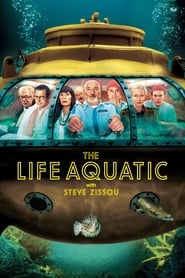
The Life Aquatic with Steve Zissou (2004)
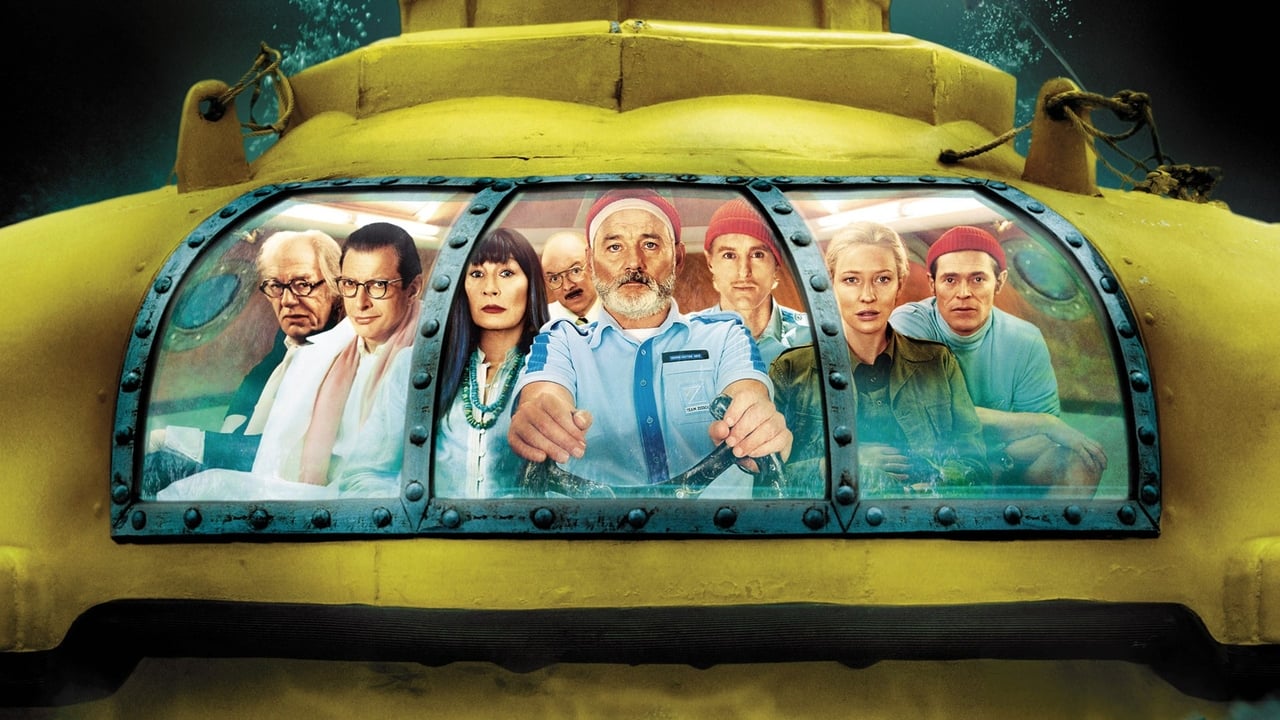
Anderson and co-writer Noah Baumbach unpack the Cousteau pastiche: the doll-house-scale cross-section of the Belafonte built as a practical set, Owen Wilson's military-school advice to shine shoes with cotton balls, Bill Murray's commitment to Jacques as a broken legend, and Scott Rudin's script note that the real find in the pirate safe isn't money, but Ned. Two co-writers' voice blending across 110 minutes.
- Duration
- 1h 57m
- Talk coverage
- 95%
- Words
- 19,319
- Speakers
- 2
Commentary density
Highlights
Featured in
Topics
People mentioned
The film
- Director
- Wes Anderson
- Cinematographer
- Robert D. Yeoman
- Writer
- Noah Baumbach , Wes Anderson
- Editor
- David Moritz
- Runtime
- 119 min
- Also on
- OneSheet ↗
- External
- IMDb ↗ TMDB ↗ Find on Amazon ↗
Transcript
19,319 words
I'm Wes Anderson and this is...
And I'm Noah Baumbach. We're the co-writers, and I'm the director of The Life Aquatic. This is the Criterion Collection edition of the movie, which I think is the only one. Right. And we are at Bar Pitti in New York, sitting at a table where we wrote the film. Right, we actually came here every day from-- Usually for lunchtime around 1:00, sometimes 1:30, sometimes 2, depending what-- It was later. When we got up or when we went to bed the night before, and we would write together all day and into the evening. And have two meals. - Yeah. The films within the film, maybe we could say something about... Right. - Steve Zissou, his documentaries are sort of inspired by... Jacques Cousteau's films, and are more than a little... And we shot these on Ektachrome stock, a reversal stock, to get this highly saturated, dated feeling. To feel like a 16 millimeter. A number of the parts were written for the people who play them. Bill Murray's role and Owen Wilson's... Anjelica Huston's, Bud Cort... - Right. The Bond Company stooge was always Bud. - Yes, the Bond Company stooge. And then also on Team Zissou we have a favorite actor of ours, Noah Taylor, who plays Wolodarsky.
Robyn Cohen, came out of Jeff Goldblum's acting class. Right. - She plays Anne-Marie Sakowitz, the topless script girl. It's not all science.
These are the Team Zissou interns, who are all typecast. One of them is an actual intern of yours, or was. Yes, Matthew. Matthew Gubler. Cousteau was always an interesting figure to us because as kids, we idolized him and watched his shows. But he was one of those characters that seemed just like a... You know, a star incarnate in some way. You know, it was like Jacques Cousteau, Evel Knievel, and, you know, Bill Murray or something. And I think the... Zissou, what was fun for us writing this was, sort of, Zissou in some ways is like a kid's idea of what an adult is. It's sort of like-- Or what a celebrity is. And then at the same time, we're dealing with a character, Zissou, who is in some ways, you know, has to get in touch with his own humanity, his own past, in some way strip away this identity that he's created for himself. Right, yeah, right. We always liked the idea of starting-- The idea of one of these movies, which I guess you generally associate with a kind of like ABC special, you know, that's where we saw them on television. And you generally associate them with TV or sort of educational films.
But we always liked the idea of this playing a world where this kind of movie would play at a major film festival. Yes, yes. It could be-- It's a world where there's such things as hit documentaries. Right. - Although there actually are now. Fahrenheit 9/1 1. - Documentaries-- Remember we called them-- We like the idea that they might be called swimming films, but I don't know that they ever made it into... We never quite got swimming films in there, a genre. The festival director is played by Antonio Monda, a friend of ours in New York, who's a teacher at NYU, a film professor, and who also hosts a kind of a salon where he has people over, all sorts of interesting people over to his house, and a good friend of ours. And we wrote this part for him. Yeah, we always... Somehow it just seemed like Antonio would be this guy, I think, who, you know... He's done it a million times. At the MoMA and the Guggenheim. And he's Roman. Right, so you knew he could speak Italian. And at the premiere of the movie in New York, he introduced the film before the film. In very much the same way. - Yeah.
This is the opera house in Naples, the Teatro di San Carlo. It's a great setting for something, and we always liked the idea of the film festival being set in a place that's like an opera house, and in this case it is an opera house. Isabella Blow plays Antonia Cook, the new head of the film commission. I had, I guess, first come in contact with Isabella when I was at Brasserie Lipp in Paris with my girlfriend, and she walked by and looked at us and said, "Très sexy." Beaucoup de sexe. - Beaucoup de sexe. And I came back and told you I'd seen this very interesting woman, and you said, "Would this woman be out of place in a matador's outfit?" Yes, because I had seen her previously in a hotel lobby in Paris where she was dressed as a matador. It was amazing my story was so specific that you knew exactly who it was. And it was her. We're here at a film festival, which can be the most awkward thing.
You're in the midst of all these people watching, and in the case of this character, it's exposing all these different problems that he has in his life that are kind of just laid out in front of him over the course of one miserable evening. We'd talked about 8 1/2 as in some ways an inspiration for this, the Guido character that Marcello Mastroianni plays, because he sort of-- That movie opens with a dream, it's different, but at the spa, he's sort of faced with all these people from his life who keep kind of appearing. Here it's less surreal, but it's, you know, Steve is sort of dealing with, in some ways, every aspect of his life. Yeah. It is surreal to go through the experience of presenting a movie in this kind of context. - Right. The one thing I think that-- We often talk about all the-- We're both big movie buffs.
We often talk about the movies that have influenced us and the different inspirations, but for this movie, for me, in the end, a lot of it has to do with my own feeling about making films, and just the luck of being able to do it and being in a situation to have been able to make some movies, and how, for me, that's just the central event of my life was, you know, getting to do this. Right. - I feel like that's part of what the movie is about, is somebody who is-- That is, the thing that kind of clicked with him, getting together a group of people to go make these things. Mm-hm. You know, there's something kind of magical about movies to me. And Steve is dealing with, in some ways, the toll that... I mean, he's sort of at a point, you know, unlike you, I guess, where he is not sure what he wants to be doing next. You know, these... You know, at a real sort of crisis in his career and his life, and also dealing with the fact of the toll his career has taken on his life. ... my little nephew, Werner, he wanted to meet you. How you doing, Werner? He brought you a present.
A crayon pony fish. Steve Zissou is obviously and clearly partly inspired by Jacques Cousteau, but just as much of an inspiration for him is Bill Murray, who I had gotten to know for a long time and who Noah also knows. And... I remember when we were writing, we were sort of in the middle of this scene. You had actually seen a movie with Bill, I think, at the Sunshine Theater. And you had a... You could tell that story. The guy came up to Bill... Yes, this is interesting. Bill and I had an episode where we went in to see a movie at a theater on Houston Street. And while we were-- You know, we went in, some kid said hello, and then when we came out, there was a gang of kids who were waiting there with things to sign. Rushmore DVDs and Bill Murray paraphernalia. And Bill was signing all the things and we talked to the kids. And then-- Should I tell this? And then at the end of it... It was funny because one of them then came up after we finished and came up and asked Bill for $10. And Bill said... "Get lost. Get out of here." And the guy turned and walked away.
And it was funny because there's something about the way Bill handles that situation that is in Zissou, and I remember when we were filming it, I said, "Well, the way you really said it in real life was like this." And then Bill went into some crazy hysterics over the idea that it was something that had happened. He had no memory. - He had no recollection. But I'm not sure if this story should go on there or not. An abridged version of it maybe, or maybe not. Yeah. Don't put this in until Wes has maybe called Bill and asked if it's okay if he puts it in. Well, Bill badmouthed me in Esquire saying he'd kill me if the movie wasn't one of the best films of all time. Oh, really? - Yeah. He didn't run that by me.
This is his ship, the Belafonte. We bought this ship in South Africa and sailed it up to the Mediterranean and renovated it and made it into this research vessel. It never ran that well, but we really did fall in love with this ship. The crew of the film was always very sort of loyal to it. Now, we have Michael Gambon, who plays Oseary Drakoulias, the producer, a sort of Carlo Ponti, Dino De Laurentiis-style mogul, although he does produce these documentaries. He has the longest fingers that I think I've ever seen in real life. He understands. Amin needs to make a projection of the world grosses to see if he can get a tax break and run it through his output deal. I think that Zissou sees himself and wants to be the kind of person who gives kids secret messages in the cereal boxes. Right. That's an inspiration for him. And the movie is about this, theoretically, a real person, but he's inspired by a sort of fantasy version of himself. And there's things sort of peppered throughout the movie, but this whole red caps and the uniforms and the whole thing. And Owen, in some ways, is our stand-in, I mean, of the child who looks up to this person.
And I think another layer of that that we were always dealing with was how our cinematic idols in some ways were like surrogate fathers for us. Movies we loved that sort of took the role of things we looked up to, things we sort of wanted to live vicariously through. And I think Owen and Ned's character sort of stands in for that. This is a kind of an unusual role for Owen Wilson, I think. Right. He has a sort of recognizable comic persona that he's developed. And this is, I think, very different from that. I think when we were writing it, we often talked about that even though Ned was, as written, very naïve and kind of an innocent, I think there's always a kind of somewhat devilish nature to Owen. You can see the light is on behind his eyes all the time. There's some Zissou in him. Yeah, that's interesting. And I think also it made us feel more comfortable writing such a naïve character because I think if it was played too much that way, it would kind of wash out. Yes, and I think Owen's concern was, he was like, "What am I gonna do?"
Because he felt like the character is so innocent and so sincere that he's not used to playing someone who's that sincere. He usually plays somebody who's a little bit wily on some level, or something like that anyway. And I think for him, when he really became comfortable with it was because we were sitting on the roof of this hotel in Rome, and he told me this funny story about Will Patton on the set of Armageddon, and he did Will Patton's voice, this southern accent. And I asked him, "Do you think you could do this whole movie in that voice?" And what he ended up doing-- He liked it. We read through the whole script reading all his lines with that, and it was funny and it gave him a sort of genteel feeling and something a little bit not quite real. And the accent's certainly not real. The accent hasn't existed certainly since the Civil War. Right. - Even if then.
But I think he came to connect with it with this Air Kentucky pilot. The "Life on Mars" we didn't comment on. I see you tried some other songs there. You tried a New Order song which played in the trailer, actually. Yeah, yeah. But it really-- "Life on Mars" feels like it was almost written for that. Right. Well, you know, maybe we should refer to, you know... We wanted to use a lot of David Bowie songs in the movie. We wanted Seu Jorge to play-- At a certain point we made this character. It was a character who was gonna be playing music on the deck of the ship. And then we decided to make him Brazilian. And we decided to do David Bowie. So it sort of just emerged that it was gonna be Bowie songs in Portuguese. Which Seu Jorge adapted himself. And he made these beautiful versions of this. But David Bowie is woven through the whole movie. I wonder why. Yeah. We did talk about Steve Miller at one point. I remember we-- Somehow, Jane maybe was going to listen to Steve Miller. That's funny. - Which is a funny idea. Yeah. David Bowie seems somehow more appropriate. Save Steve Miller for another one.
I've been a member of the Zissou Society since I was 11. Well, I'll be damned. Look at that. Wanna kill this? Frankly, I better not. I don't usually try grass.
Let me tell you about my boat. This is something when you first brought the idea of the character and the story to me, this was something you always wanted to include. I remember you said, you know, idea of this character, originally named Steve Cousteau. We later made him Steve Zissou. Oceanographer. He has this show. And then you said, "I want to do this--" Visual. - This visual. So this set, this is sort of inspired by, you know, World Book Encyclopedia, and Time-Life books, and, you know... elementary school books with fold-outs. And so that's kind of where it comes from, but making it in three dimensions. And for me, it was just something that I was inspired by. And it was years and years ago that I was planning to do this. And it was very kind of thrilling to be able to build this set because it was such an unusual one. And so many people-- For us, the movie is about all these characters who we made up, but they relate to people we know and they're characters we really love. We don't really have a lot of bad guys or anything. We just have these people we connect with.
And the idea of having them all in there at once in this environment, that sort of encapsulates something about the movie. I think it goes back to what you were saying about your-- That this is also about what you love about making movies, and how you feel, you know, sort of lucky and privileged to be able to do it. And here, you know, in a way, this is like your dream of, "If I could make a movie, I want to do this." I mean, you've had this for so long. - Yes. And we shot it... It was like shooting a play. Explorers Club? - Right. You were on the set. - Yeah. This is-- Yeah, I spilled an entire espresso on my shirt. During the filming of this scene? Yeah. I was so jet-lagged. I was listening with a headset and it somehow disconnected from the headphones, the little mic part, and it knocked the espresso out of my hand and all over my shirt. Yes. You know, I always like paintings. - You do have a lot of paintings in your movies. - Yeah. And those tell about the character of his mentor, Lord Mandrake, and then we have Zissou, and then we have...
And this story was actually based on something a friend of ours had been talking loudly in L. A... Chris Eigeman. Chris Eigeman had been talking loudly at an Indian restaurant in L. A. He thought that there was somebody who looked like a famous action hero, and he was talking very loudly about what happened to this guy, and it turned out to actually be the guy, and Chris was humiliated. And we lifted it wholesale and dropped it right into the film. And at one point you were going to have Chris play the guy until then you decided to make him Italian. It seemed nice to be able to put it all in subtitles. The Explorers Club is also-- This place is inspired by a club in New York who actually let us use their flag, which you can see in the background. And it's the Explorers Club on 70th Street, a block away from where I used to live.
This actually was filmed in Rome. You know, the whole film was shot in Italy. The Explorers Club was at a palazzo in Rome, and Zissou has taken to wearing an earring at the beginning of the film. Here's where he decides he's humiliated out of-- He loses his confidence. Did you place a second earring there that Owen knew where it was? I don't quite remember. - Probably. I think it was more Owen just went over and acted like he was picking something up because he could never quite find it. This is revealing some of the secrets of the trade. The deliberately low-tech effects. Yes, yes. Something I was thinking about this ship, which we didn't say in the cross-section area, but I do think is definitely another thing about the film, is the sort of deliberately artificial and sort of the things that are invented, certainly the fish and the cross section of the boat, sort of living in the same world with stuff that's very real. You know what? Okay, so this is one of the big concerns for me. How-- We want to make, you know... Most of our time is spent in how do we bring our characters to life.
That's what we're inspired by, that's what we spend all our time with as writers. And then as a director, I'm working with actors, and those are my actors, and then the cinematographer, the production designer... And how can we have them come to life and have a feel for them in an environment that is so strange and unreal? Well, and I think what's sort of interesting about that too is that Zissou is somebody who, you know, makes his living sort of, you know, in some ways... - Making fake documentaries. Making fake documentaries or documentaries that are highly indulged or embellished upon. And, you know, so, you know... Yeah, so the artifice of it, for me, it doesn't actually-- This is like intellectualizing something, but for me, part of the inspiration of the movie is to create this world that's going to be set, and they're gonna wear these crazy outfits, which comes out of his character, and he's going to fly for Air Kentucky, and, you know, we're going to make these animals.
But the hope is that through the fact that we've made so much, and invented so much, and through the artificial feeling, that it would make it interesting enough or have enough excitement in just the fact we're trying to create so many things. That's basically what I feel like. We're just trying to try as hard as we can to put as much life into it as we can and as many ideas into it as we can. And there's even something that you were saying, which was that the fact that the animals being this sort of handmade, stop-motion, old-fashioned style, and how it's not very real, is related to the whole concept of a movie being about people who make things and create their own world. That's what the movie's kind of about, some sort of self-invention, and making their own art and all those things. Which in this instance, there's a bunch of plastic domes with light bulbs blinking inside them on a beach in the south of Italy.
Steve, what produces this effect of illumination? Is there a chemical inside the organism? No, Ned. Actually, it's the reflection of the moonlight. Maybe we should talk about some of these other people. Willem Dafoe. Willem Dafoe, yeah, who... you know, I mean, Klaus initially, we... I guess we thought of him as a younger character, more closer to Ned's age. What I find it really amusing about Willem's performance, and also even the fact of Willem playing it, is that Willem's competition with Ned is that much more amusing because he's really Steve's age. The idea that he sort of wants to be a son to Steve. To think of Bill Murray as a father figure.
This jellyfish, electric jellyfish scene, I kept Cate separated from all the other people so she hadn't been introduced to any of the actors. And we shot all of it with Cate in the trailer. And we didn't bring her out until we filmed her shots. So for Cate, it was very strange because it was about 5:00 in the morning by the time we got to her angle, and the wind's blowing, and these electric jellyfish are blinking on the beach and there's Bill Murray, Willem Dafoe, Owen Wilson, our friend Waris, Niels, Noah, all in their pajamas on this beach with a crew of people she's never met, and she's brought out, and it was very strange. And I've not really been that big on doing those kind of stunts, but I felt like it might be something, that something might come out of it. And there was, there was a crazy energy on it. And she played this whole scene with them confronting her, and then as soon as we finished it, everybody was introduced to each other and it was... And the sun came up.
I always feel very uncomfortable talking about people's costumes and wallpaper and things because I feel like the thing I get accused of is putting too much into those things and somehow it distracts and takes away from the rest of the movie. But I think, for me, I mean, obviously I'm an interested party now because I collaborate with you, but before I did that, I always felt that that's an extra-- That is an extra texture. It's about people's, you know, ideas of who they are, and you kind of represent it in very striking ways by, you know, making uniforms a big part of how people do that. And in the case of Cate Blanchett's character, her whole sort of look comes from Jane Goodall in her chimpanzee documentaries, and I think that relates to this thing that doesn't really exist anymore, which is these wildlife documentarian-scientist stars, which are rare now, but there was a time when there were a number of them, Marlin Perkins, and Goodall, and also people like Carl Sagan. That's right. And shows like Nova that were sort of, you know, more commonplace on... It was PBS but still on regular TV. - Right.
That was something I think we talked about when we were, well, how are we going to deal with the science and the fish in the movie? I mean, part of it is we don't really know anything about that stuff so we were making it up, you know, because we were working in an Italian restaurant with no research materials. But I think the other part of it is that the Discovery Channel and things like that have made, you know... Seen it all a million times. - It's so amazing, that stuff. Yeah, you can't compete with it. So I think it became, you know, a good reason to fake it. Yes. - And make it deliberately fake. We're better at faking it than we'd have been at reporting the truth. Definitely. I'm intellectualizing it now, but it was more just playing to our strengths. Yeah, hopefully. You know, this-- Zissou's compound, which we call Pesecespada Island, probably inspired by a special the day we were naming his compound. Pescespada, I think, was on the menu. Means swordfish, right? - It's a swordfish. But this was filmed at a place called Torre Astura on a military base between Naples and Rome.
And what exists here is a medieval castle that is built on the ruins of a Roman fish farm, essentially. They raised, you know, it was a place they raised fish to eat. And then there's a villa, the house that's painted partly aquamarine, which was built around the turn of the century, I think. And then we built, for instance, the bunkhouse where Owen and Cate are playing this scene.
One thing here, by the way, in the background of Owen's shot, you see this painting here, a nice little landscape, and there it is there in Cate's also. - That's interesting. Part of the magic. Theoretically, it's two of them, but it really isn't.
I hesitate to discuss Proust at all in a commentary, but I think we had-- I was making my way through Swann's Way, and you were over at my apartment and you were looking at it, and you brought up this quote about "the imagined blue." Yeah, my favorite. - Yeah. Which I had been marking things that I liked, but I hadn't actually marked that one, so then I went back and retroactively marked it. Well, you may have just faded for a bit because sometimes you can't-- It's hard to keep your concentration at 100% all the way through the seven or-- Six or seven, or however many volumes. Even if you're only reading one volume. Right, even if you only got through the first one over the course of two years and began the second one, but only got three weeks into it on page seven. But it's a masterpiece.
Bill Murray, one thing about Bill, there's kind of two parts of working with Bill. I feel like the two of us have a very similar understanding of how to approach the scenes in terms of what we each have to do. He's easy for me to communicate with. He's quick to grasp what I'm thinking of. He's quick to come up with his own interpretation that gets at what I'm hoping for, what I might not be able to describe to him in words that made any sense, he can somehow make sense of. There's another part of Bill, which is this sort of wildness that he brings to the set because he's somebody who can walk into a room and immediately command it, and he can always think of something great to say, and he loves being around people and getting them behind him and getting them following him. I've never met anybody else like him that I can absolutely certify. He really has an effect on people, and he has an effect on a group of actors, and he has an effect on a crew of people who will just never forget him. This scene, I really like how they play this. Yeah, this we did with the...
Cate brings a lot out of Bill, and I think she has a real effect on him. Bill has a wildness about him. - He's really on the edge here. When he points the gun at her, that was improvised in his off-camera. In one take, I saw something black pop into the bottom of the frame, and the camera bumped, and afterwards I suddenly did a... "Did you just point your gun at the pregnant reporter?" It was a nice touch. Yeah, it was such a nice touch that I think I thought we wrote it.
The killer whale was filmed in France, and then we used a rear projection, which is kind of also an old-fashioned movie technique. Yeah. Which is-- Yeah.
Stop crying. What's the deal here? I was only trying to defend myself. Well, you did a great job. I'm sure you'll make a terrific father. One thing I guess we did a lot when writing this is we kind of imagined dialogue in a more real-world way. We were trying to figure out other ways to say things. Yes. Thanks, Doug. And Klaus's logic in terms of the expressions he uses are a little off in this. Yeah, he ends the scene with a strange turn of phrase. But I like Willem in this scene. Now, Willem's interpretation of Klaus was really completely his own, and it's different from anything that I would have quite thought of. And the way we wrote Klaus, it's fleshed out in just a different way. It's a surprise. I think it's deeper with Willem. And stranger and interesting. And he brings him to life. But there's a lot of details of-- Just the way he's dressed, was this sort of series of things. It wasn't, like, a plan. It was just like, well, what if he wears this? What if he wears the tennis shorts? I've seen somebody with a pom-pom. And it ends up kind of adding up to something distinctive. Something that Willem really ran with. - Yeah.
This to me, this scene where Owen is shining his shoes, was sort of one of the key scenes of the movie of their relationship. He asks him very directly about... why he never sought him out. And there's something in the dynamic between Bill and Owen in real life that's reflected in this. When we were shooting this scene, Owen, who went to military school, he said they had some stuff for him to shine his shoes with, and Owen said, "We always just used a cotton ball." So we said, "Well, get him a cotton ball." And then he sat there, and while we shot this scene for a couple of hours, he shined those shoes the entire time. In between the takes, he was shining the shoes the whole time. He was very carefully shining the shoes, and he was, I feel like, connecting with something from his past. And I love both of them in this scene. This is one scene where I feel like they've really brought more than what was written or anything. And then, of course, we have this correspondence doc which has now arrived. Which, again, I guess it sort of plays into Zissou's need to sort of name things, and classify things, identify things.
It's also a correspondence doc, a sort of, you know-- I get fear of intellectualizing too much, but it is sort of almost like a uniform. It's a way to identify yourself in a formal way. Yeah, and in this case, he's renaming him in a way he prefers. Right, it's a way for Zissou to kind of, yeah, exactly, create his idea of Ned. Now, you know, sometimes I feel like maybe we needed to give more time to Jane. There's a backstory for Jane about an editor that she's had an affair with, who's the father of the baby. It's really just barely hinted at. But hopefully it's enough to say, well, here's this mystery of what's going on in her mind.
Script girl uses these for continuity. Here. Oh, no, no, no. - No exceptions. Everyone gets one. Anne-Marie, do the interns get Glocks? Glocks. Glocks were inspired by Anjelica's husband who had... Anjelica's husband's a sculptor. I relate him to-- Ciao, Simone. I relate him to Zissou somewhat. Yeah, when we first started writing, you were telling me about the Glocks and, you know, didn't they fry a turkey? Yes, in a vat of boiling oil. And there's something-- He's drawn to making something in a very dangerous circumstance, and he has some of the sort of size of Zissou's personality, and he's a great guy. He appears in the film very briefly. He's the Venezuelan general near the beginning of the film who's standing on the deck of the ship. I don't know, but I just inherited $275,000. Would that amount make any difference? What sort of expression is the lad wearing on his face? Can you fly a chopper? Now, we had-- We crashed one of these helicopters. Later, you see-- I'll point it out. There's a place where we see a little tag on this. These helicopters had a thing on them that said, "This is a home-built helicopter, not approved for any official kind of navigability," something like that.
Basically, it just said that don't count on this helicopter. And in fact, one of them crashed, and we had to get another one just like it.
Now, this is Noah, Noah Baumbach. That's me in the back there. Playing the role of Phillip, Zissou's aide-de-camp. I mean, Drakoulias's. I was cast during a writing session. You said, "Who could play Phillip? Well, you could play Phillip." That was casting. - That was it. We chalked that one off the list. Drakoulias's glasses, by the way, are modeled on Sergio Leone's. The stoplight on Owen's hat, I believe I saw on a kid outside of Bar Pitti. Oh, yeah. - He had a hat with a stoplight on it. So these things, the significance of them is left open.
And here's Bud. Bud in his first scene that we shot. And I-- Yeah, Bud is... Bud Cort, who we have admired in Harold and Maude and... Brewster McCloud. Brewster McCloud, the Altman movie, and all the way through to recent films like Pollock, and he had a great small part in Heat. And we had become friends with Bud. I got to know him in California. Noah, you met him in New York, right? - Yeah. And we just wrote this role for him because we wanted... This is where the little tag talks about that you're not supposed to fly these helicopters. And that's Waris Ahluwalia, who was standing on the deck, on the helipads we fly over. I remember the stunt guy saying, "We got a marvelous angle. You see the Indian perfectly as you approach." Waris was standing right next to him. You thought, "They still have a ways to go in Italy." Waris was next to him laughing as he described him as "the Indian." This is "Gut Feeling" by Devo that plays through this scene. You had talked about using this song, I think, pretty early on. I mean, when you were writing it. I think we played it a little while we were writing up the scene, this montage. You like montages.
You use a lot of montages in all your movies. Yeah, I like a certain kind of montage where, basically, we can play some music and for a movie like this, anyway, I feel like we want to make as many... We want to get as many jokes into a montage like this. So I feel like each beat of the montage needs something. It's gonna tell the story, and hopefully we can make it into something like a joke. There's one in Rushmore where he has all these different clubs that he does, and we try to kind of make it a gag with each club. And that's sort of the way I always approach these. It's just a musical interlude and jump ahead in the story.
All of this stuff was really mapped out in the script. It wasn't like, oh, we'll go with what we find on the day. I'll point out one thing here. If you see on Niels's stomach, it says "Marina del Pescespada," a tattoo. The guy on the far right, which you can barely see. But he has "Marina," the mother of his children, tattooed on him. So we just added the "del Pescespada" as opposed to covering it up. It doesn't always work that way. "Winona Forever" would have been harder to... ... turn into a Zissou scene.
This was actually, I remember, I think Wallace Shawn, when he had read a draft of the script, he said to you... What did it used to be like? - What did it used to be like? So we went back the next day and we wrote a scene about what it used to be like. This is it. - Yeah. In the ice. Steve looks more like Seymour with the blonder hair. I remember getting such a laugh when we made Klaus in a mohawk. Yes, apparently Klaus-- I feel it's more of a Travis Bickle type mohawk than a Sid Vicious. Yeah, definitely. - Yes. But yeah, Bill sort of looks like Seymour a bit. The one thing you could miss in this scene is on either side of the TV, you see it most in the first angle, are Zissou action figures. Right, well, we put sort of... You put-- The pinball machine also is a Zissou pinball machine. The sort of merchandising of Zissou. - From when things were better. There's a sort of Francesco Clemente-inspired image. I think it looks a lot like Alba Clemente, his wife, although it could even be Eleanor Zissou. - Right.
Zissou has a basket of red caps, and apparently the birds are allowed to fly around freely, or they've gotten out of a cage they were being kept, but no one seems to mind. Which is oddly one of the things I remember from... You know, when you first presented the story to me, one of them was birds flying freely, I think. In the house, yes. - Yeah. A thing you've done in other movies, where you cut away quickly to, like, an image of the person discussed. Oh, yes. Yeah, yeah, that's true. A certain amount of this film was shot on studio sets. The cross section of the ship, all the interiors on the ship. But everything else we tried to build on location. We also found a place that had a-- This particular place that's their island, which is actually a peninsula, we had a beach where we could put our electric jellyfish, and it sort of had everything we needed. We could blow up dynamite in the water and do everything we wanted. We should maybe take a moment about the sugar crabs, they just-- I guess except for the crayon ponyfish, this is our first real image of Henry Selick's work, and the sort of deliberately artificial, you know, sort of undersea life.
Should I say something about Henry? Yeah. Henry, there's another script we're working on now, Fantastic Mr. Fox. I had spoken to Henry about animating this other proj-- This Roald Dahl project that we're doing, and we came to realize that Henry might be perfect for this, to make these sort of homemade, old-fashioned style animated creatures. And Henry is, I think, perhaps the best person doing this in the world now. - Right. And he does it very painstakingly and his questions are always-- Our conversations are very similar to the ones I would have with an actor. His goal is to bring to life these... You know, what we've written, and to make these things seem alive, these objects, in the same way that an actor wants to bring the character off the page to life. And... And he observes, you know, behavior in order to do it. I remember when we came up with the idea that he would do the fish. I mean, it was one of those ideas that I thought was great on paper, but I was always worried a little bit, you know, I thought it was the way we had to do it, but-- You know, will it be weird that this stuff is so fake?
But, I mean, I think it works really well the way you made the movie, is that it just feels completely integrated. Yeah. This will be Team Zissou's next stop.
See, Renzo, this is what I'm talking about... The character of Renzo, the editor, is played by Pawel Wdowczak, who is our sound man. And so he's the sound man on camera during the documentary stuff whenever we see him, and he's also the sound man of the film, which sometimes is very difficult because he's gotta do the sound, but he's also gotta look right. But he's a great-- He's from Poland, and he's worked on all of my films. And he has a wonderful spirit about him. And we wrote Renzo for Pawel to play. Yeah, we always had that idea. I don't know if you wanna talk a little bit about sort of like using... You know, what is it that it does for you as a director to, like, have-- You know, to have people who sort of mean something to you in your life or in your work actually then on-screen in some way. Yes. Well-- Yeah, because sometimes I feel like on a commentary like this, I'm saying, "This guy is Tony Shafrazi." - Right. "This is Isabella Blow." - And it can sound kind of superficial, "These are people I know I put in the movie."
But I think that, you know, there's something-- For me, I-- For me, you know, I've worked with virtually the same crew on all my films, many of the same actors, and the parts that we've written are generally, you know, a lot of personal experience that goes into these characters, you know, that's-- Because these movies aren't adapted from something else, they're just made-up, and they come from, you know, our lives, and then other inspirations. But for me, they're also movies about people who are struggling with their relationships and their affection for each other, and they're always all kind of a group of people who are sort of locked together in one way. I feel like they're movies that are also made by a group of friends. As much as they're about a group of friends and their struggles, it's made by a group of friends. And that's why I often like to have people who are familiar, and when they show up on the set, it's like a reunion, you know? And it always means something to me to see those people in the film and to feel them interacting, and often there's a lot of non-actors in the midst with people who have a lot of experience acting.
That's sort of what it's about for me. - Yeah, and I think-- I mean, from my experience directing too and doing that, it can-- You know, I think in any way, as a director, that you can kind of emotionally connect yourself to the material, you know, in both very deliberate, literal ways, and also in ways of, you know, just sort of having people you care for in front of the camera or, you know-- Or wearing clothes with colors that mean something to you or whatever. I think any of that can help if you're making films that are kind of personal in any way. - Yeah. One thing we didn't mention 'cause we were talking through the balloon scene, but that is sort of Steve facing very-- When she says that he-- She had a picture of him in the pose that he's in in the balloon, and him dealing directly with the image of himself and the sort of self-made, you know, version-- Self-invented. - Self-invention. Well, that line that he says, "I never saw myself that way," something like that, "I don't see myself that way, I never did." In fact, he meant to, you know. He tried to see himself that way. He made himself that way. He just never bought it.
- Right. And-- Yeah, I mean, I think it's... You know, something-- You know, that we were sort of both putting ourselves in the shoes of Jane, who, you know, like us, would have had a picture of one of these guys tacked up over a bed or over a desk, and, you know, but also been thinking, "But these guys exist. These are real people who've got their real lives." And I think we've both had the experience of what it's like to get to know one of your heroes. - Right. And it's always nothing like what you would have imagined. But the one thing I will say is, sometimes, you know-- Something happens, you're disappointed. But generally what happens is, your hero was interesting in one way or another. And you learn about them and, you know... I feel like I wouldn't be disappointed with what Steve Zissou is. I would just feel sympathetic for somebody like that because, you know, he's a character, and he's filled with conflict and contradiction and capable of all kinds of terrible behavior. But there's something unique about him and, you know, I don't know. Right. Well-- And, you know, once you're dealing with this person as an actual person, you know... - Everybody has his reasons.
They're gonna be bringing all this other stuff you're not gonna get from watching the specials. Yeah, more or less standard boilerplate, I guess. Here they go to Alistair Hennessey's sea lab, a high-tech facility. All Hennessey's stuff is chrome and black and white as opposed to Zissou's colors. Everything Zissou has is faded and dated and old and doesn't work properly. And Hennessey's stuff is computerized, flat screen, everything. But we built this on the tank in the back lot of Cinecittà. And... And... It was quite an experience working at Cinecittà. The place is sort of steeped in Fellini. Even today, people talk about Fellini every day on this... At this studio. And the stage where we filmed, the boat chopped in half, was Fellini's stage, Stage 5. And somehow, we always felt this movie owed some great debt to Fellini. Yeah. Well, and again, we talked about Fellini and Antonioni, which, you know, in a kind of-- In one way is also the difference between kind of highly artificial, you know, shooting on sets, Cinecittà, and then the Antonioni way, which at least I associate more with, like, shooting on the open water and, you know, the real-world landscape is sort of a character. And Zissou sort of deals and operates in both worlds.
Here, again, we use the cross section as when they go up the... Which is a kind of a fun way to play out the scene. Have it be one continuous take. This whole thing is one continuous take, and then there could be-- They have a lot of places to run around, and I feel like the actors always bring something into it when they have this kind of room to play the scene. What I like about this too-- It's sort of like in movies now, cameras go through walls anyway, but they're not sort of acknowledging... You kind of accept it and it doesn't take you out of the reality. And I feel like, you know-- I think it's the same effect, but at the same time, it's really acknowledging that they're on a set. Right.
I hope it's clear to people that we're meant to be at the bottom of the ocean. You know, then he goes up this tube up to the surface. I've never been 100% sure if people know what's going on. We saw them go in that top thing sticking out the water. So we assume they must be underwater. And you use very quick dissolves here. You rarely use dissolves. I think it might be the only dissolve I've ever used.
You catching anything? Mm-mm.
Hook this up and make me a latte.
Okay, now we'd like to talk a little bit about how Noah and I came to write this movie together. I'd written my previous films working with Owen Wilson, but he was working more as an actor and less and less available. And then how was it that we came to work together on this project? Well, I guess I had shown you a draft of a script I'd written called The Squid and the Whale. I'd shown you a very early draft of it when you were just about to do Tenenbaums. And you gave me Tenenbaums, and I gave you Squid and the Whale. And you were... It was based on a lot of stuff from my real life that you had heard me sort of tell as stories, and you were very encouraging and, you know, offered to become sort of more officially involved as a producer, and sort of help me shape the script and get it made. And I think, you know, working here in Bar Pitti, we sort of discovered we really liked working together. Yeah, the other thing was we had a movie that we sort of started spontaneously inventing together, which we haven't even written. We've just kept it as notes for the moment.
But it happened so naturally that I then asked you to work with me on the script for this, and then we began to meet and work on it each day. Yeah, and then, you know, I think what was nice about it is it was... You know, it really came very much out of our social interaction, which is probably why we work in a restaurant. It's a way to kind of pretend we're still just socializing, but call it work. - Right. And it makes it-- It makes it-- Then it makes it fun to-- You know, then we're gonna entertain each other as we're doing this. Right. - And we also feel inspired. It's a really hard thing to come up with a writing partner. I've only had one other writing partner, and that was like, you know, very kind of formative experience for me, for Owen and I to work together. - You grew up together. We grew up together, we learned to be writers together. That's also part of why, even though Owen's not working on the script with us in this, it's very important to me that he's in the movie because... Yeah, we always knew he was gonna be part of it, so he was always a presence. - Yeah, yeah.
And Bill's reading one of your actual notebooks. Yes, the notebooks in this-- Jane's notebooks are modeled on the notebooks that these movies are written in. So The Life Aquatic is-- Originally, while we would sit here talking, I would write everything down in longhand in these notebooks like this, then take it home and type it up, then bring in the pages next day, then we'd write more in the notebook, more on the pages. That's what the notebook-- I mean, I guess it's worth noting that the way we write these things or not, we don't both do separate scenes and then bring them in together and try and sort of edit them or anything. We actually come up with everything together in the room. I mean, stuff is done later in rewriting or when you're directing and stuff, but... You know, it is a... We make the story sitting here together. Yeah, in Jane's notebooks. - Yeah, in Jane's notebooks. Why don't we talk about some of the people who work on these films? Maybe we start with Robert Yeoman, the cinematographer. He shot all my films, Bottle Rocket, Rushmore, and Royal Tenenbaums, as well as your most recent film. The Squid and the Whale, yeah.
Yeah, from my perspective, I tried to hire Bob for the first movie I did, Kicking & Screaming, and... Only to hear later that he was shooting a movie called Bottle Rocket by some neophyte Texan writer, director, actors. Yeah, I think we both probably responded strongly to Drugstore Cowboy, which was a film Bob had shot. - Right. And, you know, Bob, he lights his movies, he's drawn to very natural lighting, and I feel like he's sort of a Nestor Almendros kind of... His style of director of photography. He's also a very good operator, camera operator. He's great at hand-holding and he knows how to get the image. And he's tireless too. This is probably a good-- Now we're underwater, in the underwater forest, a good time to talk about Mark Friedberg. And you did this in a tank in Cinecittà? Yes, this is in a tank, where we built this undersea forest, and it was very difficult to do. It's hard to keep the water clean, hard to get the temperature right. You've got to build the whole thing, and the set starts to disintegrate. It's very complicated, but a bizarrely exciting thing to film. You know, it's just a crazy experience. And, you know, it's very-- It's-- You know, it looks fake and...
It's fake to X degree, and not fake to some other degree, although it's pretty fake. And the thing we liked the most here was we took a scene that could be staged in a broom closet somewhere or in somebody's living room, but we just put the scene at the bottom of the ocean, where they have to push buttons to say each sentence. It's just really a scene about, "Can I call you 'Dad'?" And, "No, you can't." Yeah, I think maybe we'd initially written this scene on deck-- - On land. Yeah. - And then... Then we decided to go underwater with it. It's also a scene where we sort of, you know, where Zissou manipulates-- We get to see Zissou sort of first-hand manipulate the reality of his film. Yes, we see how it works. We're restaging.
Yes, I like Owen in this scene, Like it a lot. Yeah. - That is the saddest man. Waris. Yeah. Waris Ahluwalia, he's a friend of ours from New York. Somebody I'd gotten to know the last couple of years. And he's a very positive person. And he brought so much enthusiasm to doing this. He was excited to do it, and he... In this role of Vikram. And it was very strange for him because I said out of the blue to him, "Can you set aside the second half of the year for me?" And he did. And he also documented the film. And he took lots of photographs and kept records of things. And it's-- Kept kind of beautiful records of the movie.
Anyway, Mark Friedberg, this is the first time I've worked with him. I've worked previously with David and Sandy Wasco, who are great production designers and have done all my other films. But in the case of this, I was spending a lot of time in New York, and I met Mark here and wanted to work with Mark because he was here, and he turned out to be the perfect person to work on this film because he has a kind of ferocity in getting things done, and this was the kind of movie where the person in his job, you know, had to be able to get impossible things done every day, and he has a knack for that. He also has a beautiful eye, and I always admired his work, and I think it didn't take him long to sort of figure out how he felt about the whole thing and to get inspired by it all. Klaus, check who's on watch. I'll be in the sauna. Pelé and... Who the shit is Kingsley Zissou?
Is that him? Maybe we should talk briefly about Milena Canonero, the costume designer, who... I feel like I have-- Tend to have a lot of details and concepts about the costumes because I feel like there are elements of the character in it, and then elements of making a world that the characters live in that's not quite reality. That goes into the design of the movie and the music and the costumes, and... But Milena, what I liked about Milena was Milena brought a kind of-- Brought some reality and some variation to it that I don't think I would have instinctively had. She brought her own set of details to it, and there are many of them, and she also accomplished a lot in getting the things done, because it's a big movie that took a lot of-- It's a big movie, although it's an intimate and strange movie. There's a lot to, you know, making silver wetsuits and all these uniforms, and working with an unbelievably large amount of polyester. She managed to get all this done. She'd also worked with Kubrick. She started with Kubrick in A Clockwork Orange, Barry Lyndon. She'd done Chariots of Fire and all kinds of interesting films.
We had-- This was actually something we did a little research on was sort of the more modern-day pirate situation, sort of inspired at least the sort of design of these pirates and the vibe that we get from these pirates. Yeah, I know we talked about the pirates being kind of-- Trying to make them feel like documentary style and that the movie would suddenly snap into kind of a William Friedkin-type of very real, very energetic. In the end, however, the pirates arrive while a guy's playing a David Bowie song on the deck of the ship, and Bill's sitting here in a blue-tiled-- There's so many things to undermine it, and it ends up being some-- And also, by the way, my idea of what the pirates would look like is not reflected in the film. This is what we kind of-- This was trying to do, but somehow it ends up being much-- They end up being funny and... We cast people who we had in Rome. They're not real pirates. They're-- And they brought-- You know, there's more about these-- You know, they brought themselves to it and the feeling on the set. And it ends up, I think, being different from what I envisioned and being more like the rest of the movie.
I don't know. I think it affects different people in different ways. You're talking about... the editing style of the movie. I was thinking about it there with the quick cuts as the pirates come rushing in. Sort of... Another thing I've sort of thought about, which I didn't mention, is like when he opens the correspondence stock, and then suddenly we just cut right to the-- You know, rather than take the time to show him opening the-- Yeah. - You know, and-- You know, but at the same time, you like to do a lot of long takes and a lot of, you know, let the actors really kind of behave in scenes, and I think it's a-- We've talked about sort of a French New Wave style of editing... Yeah. - ... that we respond to, sort of, you know, just getting the boring parts out of the way, but taking time with the stuff you think needs to take time. And I feel for some people-- A movie like this, for a lot of people, I think it plays as deliberately paced. And then for other people, it seems like breakneck. But I think for a larger number of people, it's slow. But, you know, it's just sort of-- Now, here's something we do here.
We go to a very... Very cool timing, in blue, for this section of the film. During this pirate attack thing here. And then it comes back to the warm, because most of the movie's time, very warm, very yellow, a lot of red. And... And in the end, I think the way the movie looks, it's also very saturated colors. The way most of the movie looks is sort of inspired by the way the Ektachrome stuff looks, which was not the original idea. It's just sort of what felt right as we went along. Although this sequence, to me, looks more like... Like Bud Cort looks like the way the photographs look, the way they're printed on the front page of The New York Times. - Right. The way that has some documentary kind of feeling. Yeah, there is that Friedkin feeling of sort of '70s color, or at least '70s color as we now experience it on television. Yeah. These things are filtered through things like that... I like how Bud does the Portuguese. Yes, Bud studied very carefully how to get his dialogue in Tagalog, I think, it's Filipino. He'd originally learned it in Indonesian, but then he had to switch.
And he had it very precisely figured out, although we also had his Filipino translator on the set with us, who Bud ruled over and... ... is his sidekick.
One thing that was always appealing to us was the idea of having Bill Murray, who'd never-- I don't know if he'd fired a gun in a movie before. In Ghostbusters it was kind of a gun. And he'd fired some guns in Razor's Edge, he's at war. I know he shoots out some headlights in Razor's Edge. Right. - But here he was for an action hero. The first one time as action hero, but he plays the giant action scene-- I say "giant," but-- For us, giant. The action scene in a striped Speedo, a bathrobe, and flip-flops. Well, we'd also talked about sort of the choice of the music, you know, the-- You know, the-- Like you were saying about the color timing and the, you know, the sort of score you use... here, sort of breaks into sort of the Iggy Pop song, which I think sort of brings us back into the sort of playful Zissou world, you know, that sort of-- - The Iggy Pop. The Iggy Pop does. You'd talked about at one point maybe doing it all silent. At one point, we had a version that didn't have any gunshots or anything like that, and all the sound was gone.
It was totally silent, we had some music playing, and the effect was much more grave. When we put this music on-- I liked the other way too, but this seemed maybe to be more right for the way the whole movie needed to work. I don't know if I-- I feel like I could've shot more coverage on this. We were struggling. It's got an energy though. I'm not a professional action-sequence director, but I can do better. I guess Bill Murray also fired a gun at the end of Stripes. I think they go to Argentina to rescue some people. One thing with Bill, put a gun in his hand and he can't wait to empty the magazine. This is interesting. We had to throw this gun into the-- Well, you can't throw a gun into the ocean. So actually, he switches hands with the prop guy who's out below the frame and gives him a rubber gun to throw. But we did, when he knocks that guy out and throws him overboard in the earlier part of that scene, we lost a gun.
Bill actually accidentally hit the guy, and the guy went in the water, was knocked out by Bill hitting him, and his gun fell, and Bill's gun fell into-- The gun Bill was grabbing out of his hand fell in the water. And then they said we couldn't shoot anymore, and they called the police, who came out and flew over helicopters while our Marines searched for it. I was like, "Can't we keep shooting while we look?" "No." And we were worried our stunt guy was going to get arrested. But then the Marine guys found it in the bottom of the ocean there, which is only like 20 feet deep or something there. But they found the gun, brought it back up, and we were allowed to continue when the helicopters went away. That's why you went a few days over. Things like that. - Variety of things, yeah. How you holding up there, intern? Doing okay?
Ned, how many fingers am I holding up? I always like these shots. Here we are with Bill Murray holding up three fingers for Ned to determine whether or not he's all right. But I kind of-- I hope it's not too stagey, but I like it when you have like nine characters in the shot. It does require it being kind of stagey, but I like it anyway. I don't know what to say. We've talked about it before. I mean, you know, you like very composed shots a lot of the time, but you also like dialogue and actors that are kind of... Have a documentary or a spontaneous-- Yeah, more spontaneous, uncomposed. Is that a right word? That works. - But, you know, more chaotic feel to them. Yeah. - You know, and again, I think it's that... Is that tablecloth on the table when they're eating the lobster? The one that's on the... on the man? I think it is. - I don't know if it is or not. I know the lobster and the Jeroboam of champagne and their dinner they're having seems to be like Zissou has decided to give them a really good dinner after they've been attacked by pirates. - We'd gone through a lot.
In earlier drafts, we did have more of that sort of Zissou trying to make it up to them. Yes. My friend Kumar was at one point going to be a cook on the Zissou-- Team Zissou. But that was short-lived because there really wasn't room for a cook. This is a NATO research vessel called the Alliance, which becomes the Operation Hennessey research vessel. And we have a silk sofa for Jeff Goldblum to sit on. This is the strangest thing because we built this platform on the ship, and it's just like a platform ten feet in the air with a sofa and a camera in front of it, and it's just out in the open. It feels like it's in some little cabana thing he's got. But this, Bill Murray's side, is actually shot back at Cinecittà about three months later. I didn't know that. - Yeah, yeah. No, this is a completely-- This location doesn't exist on that boat. But this does. I have to run this by my bond-company stooge. He's been kidnapped. - That's true. I have to rescue him first. Sign it now, or I'm leaving you out here. The dog was a very sweet dog, this three-legged dog. How many three-legged dogs did you see?
I had three or four that were brought over to the place where I lived in Rome. And they ran around in my yard, and I ran with them, and you could see-- And, you know, one thing is, every three-legged dog runs differently. It makes a big difference whether it's a front leg or a hind leg. This dog is named Leica, like the camera Leica, and he runs-- You'll see later in the film, he runs remarkably for an animal with his kind of... What's the word? - Situation. Situation. Yes. Disablement. - Right. Do you all not like me anymore? I mean, what am I supposed to do? I don't know. Look, if you're not against me, don't cross this line. If yes, do. I love you all.
Willem is very touching here. Yeah, Willem brings something to it. Now, I mentioned Noah Taylor. Noah has obviously played a lot of much bigger, fuller roles. And he's a really wonderful actor. In our movie, he has a line here, a line there. But his presence on the set was quite strong and he was very-- He was really valuable to the movie in ways that you wouldn't know. He was sort of the one who-- There are a lot of non-actors in Team Zissou and he was the one-- A lot of people who had never been on movie sets and certainly a lot of people who had never been sent away to location for periods of time, and he was their guide for that, and he was kind of their acting coach too. And he was-- He was a great person to have on the set. Well, pretty much everyone... Cast and crew really committed to, you know, be sort of immersed in this for months. There wasn't-- I guess some actors came in and out a little bit, but certainly most of Team Zissou had to be there for the whole shoot. Yeah. See, in the background here is a cane with a dolphin, albino dolphin handle.
Zissou has albino dolphins, but it's-- What you can't see is engraved in it is "T. E. Mandrake," Zissou's mentor. Right, we saw in-- The picture was behind Hennessey, when they were on the boat, in the background. Right. And actually the person who sort of plays that part in the photographs is Jacques Henri Lartigue, a French photographer who I've always admired. But the person we wanted to use was Nic Roeg, the director Nic Roeg, who we weren't able to get over to Italy. It was all kind of last minute, and he-- But you were always gonna pose him in the same position that Lartigue is in that picture, right? Holding the... Well, yeah, we were gonna pose him-- No, I mean, we were gonna pose him in the water... standing in the water with a fishing net and a kid running behind him, something like that. What the painting is, when you see the painting. Now, this shot in the hallway, by the way, is the only shot in the movie where we actually use the camera to suggest that the boat is moving.
It kind of rocks back and forth, which is funny because we watched a lot of different movies that are about-- Set on boats and set underwater, those things, and they all use a different technique. There are lots of different-- They gimbal the whole set, or they make the camera move. The Black Stallion was one of the ones we liked, and those scenes on that one, they don't do anything to suggest. They just trust that you know we're on a boat, and it works the same way as any of the others, except for one shot where they look down a hallway when they rock the camera. I don't know why they had one shot to do that. I think because the boat is sinking, and they wanted to just get that feeling. But we did the same thing. We never did anything to suggest we were on a boat in terms of movement. But for one shot, we made it rock back and forth. I remember when we were looking at some of those undersea movies or movies-- People on boats, The Abyss commentary taught us the term "dry for wet." Yes, yes. The Abyss taught us dry for wet. The other person I learned dry for wet from was Roman Coppola.
Who, Roman, early on I asked his advice about some of the things, and Roman was very excited about the movie. Roman knows a lot about things like stop-motion and dry for wet, which is shooting underwater without water, using smoke and lighting to suggest that you're underwater. Which you can only do with miniatures, you can't use actors. You can't use people, although it's been done. In wet-- In crazy suits. - Really? The way you'd shoot, like, the moon.
Pause for one second. - Yeah.
Please ignore these remarks. Whoa. Okay. Yeah, glass-- A shattered glass. Someone just broke something. That might be good. The glass that just smashed-- We should include it. You should have that. Drop it in. Here, in fact, let's do a thing like we're just reacting to the glass and say, "Oh." Here, I'll do a sound and then we'll do reacting. Whoa. It skidded all the way over here. Someone just broke a glass. - A glass just broke on the floor. That's a good thing. You got that bit to work with. Oh, okay. So should we keep going? - Okay, here we go. We're continuing now.
Now, here we're on an island called Ponza, where we filmed at the beginning. We got stranded on the island for three days, and we shot a lot of things there because we couldn't leave. But it was a great way to begin the movie. Like Bill Murray's side of this scene-- There's the backflip frogs. This shot of Bill Murray against that harbor, that we shot because we were driving around up there, filming him driving, and I thought, well, let's stop and let's film this here. So Anjelica wasn't in Italy yet, but we shot that side right there, and Bill was very-- Memorized it in two seconds, and I really like him in the scene, but that's-- Sometimes, I mean, for me, that's the most fun kind of filmmaking, is just, you know, let's stop and do this scene right now. Okay. Could I go ahead and butter you up anyway? It took me two and a half hours to get out here.
Who's that dude? - That's my research assistant, Javier.
Steve.
When you were in pre-production, you would send-- I was still in-- I was in L. A. at the time, but you were sending me photos and things that you were showing the crew. It was great to sort of-- That was one of them.
Was there a picture of Antonioni also? Yes, Antonioni and some Avedon photographs that were taken in Italy. I'm just gonna comment further on Roman. Roman Coppola, who then-- Roman kept saying he would help us with the second unit of the movie, which I'd never had second unit before and I never knew what to ask him to do. And finally, Roman just showed up and started shooting things, and ended up shooting all kinds of shots. Shots of the boats at sea, from the helicopter, and things that were difficult to get, and things that we couldn't do, and Roman made a great contribution to the movie with a variety of shots, and did it with a lot of enthusiasm. That's true. What happened to me? Did I lose my talent? Am I ever gonna be good again? This sequence is set in Ravello, above the Amalfi Coast. It's supposed to be Alistair Hennessey's villa. Villa Hennessey. - In West Port-au-Patois. West Port-au-Patois, maybe kind of like Haiti or something. In the background, down below here, when Zissou and Eleanor are on the balcony at Hennessey's place. There's a guy who she calls Javier, her research assistant. His name is Muzius, and he lives there. He was the guy who showed us the place.
So we cast him in the scene because he sort of comes with the house. I was thinking, like, "What perfect casting." But he actually came with the house. - He was local. That was also based on a photo. There's two cigarettes kissing. Yeah, it was.
It's good to see you, Eleanor.
I'm about to blow my stack. I turn my back, and the bullshit begins. Ned, you're a scumbag. And, Jane, you're a goddamn liar. What the fuck are you doing in here? What the F are you doing in here? I warned you about being in other people's cabins. Somewhere along the way, we thought of Cate Blanchett, who was one of my favorite young actresses, and she wanted to do it, and then everyone was surprised, including herself, was surprised to learn that she was actually pregnant. She just became pregnant right before she came to Italy, or just found out that she was pregnant then. And so for part of the movie, she has a false stomach, a pregnant stomach, and then for the second half of the shoot, this was no longer necessary. There was no way to predict that was gonna happen. And it wasn't deliberately arranged. Follow me.
Something I'm thinking about right now, is that, you know, here we are at sort of what, in some ways, is like... Between Ned and Zissou is one of the more sort of emotional pinnacles for them. I mean, they're really kind of getting at it here for the first time. Ned's sort of politeness is-- - Confronting him. Is being stripped away. And Zissou is getting more on edge than he usually is. And then at the same time, we're showing a deliberately artificial-- Yeah, well, you know, one thing is, the plan was always to have the cross section sequence where we introduce it, and then to come back to this set one time later. And I feel like it's saying... It's pulling us back to when they first met, and the whole... Whatever the history is between the two of them, and connecting with something, and announcing that this scene is special and stands apart for what is gonna happen between the two of them. It's sort of a scene where it all plays out.
I think for the reasons you're saying is why it feels, in some ways, more emotional, even though, you know, if you took it literally, you would say, "Oh, we're being distanced from it by showing--" But I think because it's part of, like you're saying, the logic and language of the movie established at this point, it actually makes it more emotional. Maybe it's a stretch, but for me, something about this kind of environment, is sort of about a troupe of actors and people, a gang of people working together to make this story. - Right. And something about, you know, the fact that we made that thing and we shot it on that and all that is kind of more up front, in a way, but there's some feeling about it that I relate to or hope comes through with it, if that makes any sense at all. It's a Bergman thing too. I feel like Bergman does that because he does so much with actors and people playing parts, and then will do stuff where it's sort of in a play, or...
I had another thought, which I lost. Then somebody else might just say, "Well, they built the set. Of course they had to use it twice." For that set, you basically had to move the camera outside Cinecittà to film it? We had to move the camera outside of the stage because we couldn't get far enough back earlier, to see the whole ship. We had to open up the wall and get it very-- I found this 28 mm anamorphic lens. I'd never seen one that wide, the angle of the lens. But then once we had that lens, we used it for the entire Ping Island raid, which comes later. It's a very wide-angle lens. You can't get very close to the people, even. I mean, you can't get a close-up with it, but... Anjelica has such amazing style, the way she even just lifts her hand there. She knows how to move. - She really does. I feel Anjelica's absolutely perfect in the way she-- I mean, anything that's not there for her character is not there because we didn't put it there. Everything we did, she realized. And she also always has good ideas on how to get her character better.
And in the case of this, I think we were inspired by her to bring her back, to have her come back in in this way and sort of motivate everybody, and get everybody and rescue them, sort of. This is an odd thing, this shot where they're all lined up. In the earlier part-- Now they have to move. We've zoomed in, they have to move to line up in this row. They had to move while we were on Anjelica. Yeah, exactly. That's a very weird shot. This is too. Here, maybe you can see Anjelica's green contact lenses. You can't really. They're painted by hand. I like the set of the hold, or whatever it is, the engine room. And one thing Mark Friedberg, and especially Stefano Ortolani, our art director, and the whole gang of art department people at Cinecittà, they have a great knack for bringing age, and the details of age, and the Belafonte is such a beat-up kind of rust bucket. They really brought it to it in a very real way where it never felt fake, and it just feels like-- Right, which is a big deal.
And again, it's nice, because, like, everyone's outfits look so clean and colorful and saturated, and then they're sort of operating in this, you know, beaten-down jalopy. Right, beat-up jalopy. Yeah, beat-up jalopy.
Reminding you that they're tracking a shark. Something you can probably lose sight of. We didn't exactly keep it front and center. No. But it's also, you know, some metaphor for whatever it is, it's also not what the movie's about for us in a way. I mean, it represents things that the movie becomes about because of what's happening between the people, among the people. Which is what any good metaphor does. I will say one thing. People always say, "Well, is he the father? Doesn't he shoot blanks?" One thing I would just say, we never felt like we knew. I mean, even after this scene where she says Zissou shoots blanks, that's now. And, you know, she didn't... Ned predates Eleanor. And who knows whether he's his father or not? And I think it just-- There's doubt that he's his father. We certainly don't feel like we know the answer to that within the story. And it's kind of, either way it's good, and there's a connection between them no matter what, and a need for each other. It's something we've talked about also, about sort of surrogates, and that in some ways it's about-- It sounds funny to say, "Well, it's about father figures and not fathers," but I think, in a way, that's true.
We all have our relationships with our actual father, but then we also, you know, at least you and I do, tend to recreate these things with other, you know, people in our lives. I mean, yes, it's about fathers and sons, but it is also about, you know, how they both sort of... Both deliberately and unconsciously seek each other out and recreate something that they need at this point in their lives. Or create something they never had. Right. - Yeah. Yeah, fathers and father figures. That's definitely... It seems to always come up. That'll be... You'll find yourself titling a movie that in about 25 years. And somebody will say, "Wes Anderson..." "Losing all subtlety." "In 2004, Anderson never would have called a movie this." That's how people begin to slip. And here's that very wide lens. The music here, we had this electronic piece of music that he plays in his helmet earlier and that plays from time to time. Mark Mothersbaugh I had worked that up a couple of years before the movie, and Mark is, I think, the perfect person to be making electronic music like that, having been one of the founders of Devo.
But then when this scene comes up, we decided to do a symphonic version of that electronic, you know, beatbox Casio thing.
Which in some ways, again, because we've seen Wolodarsky working on the piece, you can kind of imagine it's what Zissou would do also. You know, would want it to be more symphonic when the action kicked in. Right, yes. And in fact, this whole sequence... Basically, what happens is they do a raid on this island, go all the way in there, and end up with nothing. On their way out, it turns out their guy they wanna rescue is there after all. But first, it's just a lot of running. Yeah, it's almost like indicating an action scene. Yes, exactly. Yeah, there's a lot of meta-something in all this. I referred to the movie to somebody at a party, I think after a few drinks, as Godardian, and was laughed at, and I probably shouldn't be saying that again, but I actually think it's true. That's part of what set us back at the box office. Godard never did 25 million domestic. An interesting thing right here. This is filmed in Ostia, the coast of Italy near Rome, like the Santa Monica of Rome. But the day we were filming this-- - Putting it in my speak. The day we filmed this, it snowed for the first time in 17 years. It snowed in Rome.
So you can sense the rain, but there's actually a little bit of snow. And then Bill Murray had to fly from this set. From this set, he went to a helicopter, to an airport, to the Golden Globes, where he went to win one for Sofia Coppola's movie, Lost in Translation. Did he come back before--? He had to for the Oscars. He was gone for just a couple days, and then he was back to work. Back to the back-breaking-- - What did you shoot while he was away? You had to find... - Not much. Some Ned-Jane stuff. - This shot right here. We shot this while he was away, later that afternoon. And this we shot the following Monday, or maybe it was Tuesday. This whole idea of Zissou getting down on himself and speaking to himself in the third person. "I'm disappointed in myself." "Damn it, Steve." Damn it, Steve. This sucks. I'm disappointed in myself. We have so many animals in this shot. There's a sloth, two monkeys, a snake. All kinds of stuff crawling around in that lobby.
Things are pretty different now. All right, now here's an example of my lack of expertise as an action filmmaker coming into full swing. Perhaps one of the most awkward and least convincing stunt sequences ever. Not necessarily inappropriate in the context of the film, but because we haven't ever raised the bar up to the John Woo level. And yeah, I could then make some twisted argument that, well, but it's deliberately fake because it's as if Zissou-- I'll say this, I didn't-- I didn't redo it because I thought it was kind of funny. I don't know, did it feel like he fell down the stairs? Yeah.
These diving outfits, we ordered some that were aquamarine, but they didn't turn up, and we ended up with something kind of silvery, and they all vary slightly because they're hand spray-painted at the last possible minute. But we do have-- Everybody's got their own rank on their tag. Master frogman, junior grade diver, et cetera. So I don't know how much you can see that in the movie, but if you look closely, you can always figure out how good they're supposed to be.
One of the main things we were kind of wanting to write about was about a guy whose family is really his collaborators. So I feel like for Zissou and for all these guys, they were people who were looking for something to plug into in their lives, and they found this. They found somebody who wanted to lead them and who was excited to do that. And I think Zissou, he just needs that in his life. And I think anybody who makes movies is kind of familiar with that because you end up becoming very intimate and close with a group of people for this short period of time that you're working with them, and then you go away. But it sort of heightens the awareness of how connected you get with them. Yeah. Is this actual rain or fake rain? That's fake rain that's made by Renato and Daniel, the effects guys at Cinecittà. Two great guys who did all our explosions and guns and fire and rain and snow, and everything else.
And Renato is Italian, and his brother-in-law, Tonino, took us on a lot of scouts, when we went out in boats and scouted on ships and things, and he would make what I called spaghetti al Tonino, which is spaghetti with a can of tuna fish and tomato sauce. We'd make it on the boat and we'd eat that. And Daniel is American. He's an Italian-American from Brooklyn, and they work together. Daniel translates for Renato, and Renato's kind of a great sort of... prince at Cinecittà. They're going together in the revolving door. The "I'm a Pepper" T-shirt, whose idea was that? That was, when we made our Bottle Rocket short, a 16 mm thing we'd made years and years ago, there was a man who was a security guard that we had gotten to know, that really Owen somehow managed to entangle us with. And then we put him in the movie, and Temple had taken us out to shoot pistols. None of us were real hunters. But Temple, the security guard we met, took us out to shoot these guns. And Temple had this shirt, "I'm a Pepper" shirt, that he would wear.
And when we made our short, we put him in the movie in his "I'm a Pepper" shirt, and they talked to him, and he takes them shooting. In fact, when we filmed the scene, Bob Musgrave shot-- One of the actors, his gun went off pointed at his foot, and the bullet grazed his shoe. He almost shot off his foot. Because, of course, in most movies, we use blanks. When we were making our short, we used live rounds because we didn't have any blanks. - It's just easier to get real. We would've had to buy blanks, and we really had no budget. But Temple had a lot of bullets in his trunk. But so then we then worked that into the script for the feature film. When they do this big robbery, Bob's character kind of almost shoots himself in the foot in the middle of the robbery, which actually... It seems to cause another one of the characters to have a heart attack and the whole thing begins to go wrong. But back to The Life Aquatic. And so the "I'm a Pepper" shirt, you hadn't used since Temple. We didn't get to use it in the real movie of Bottle Rocket because we couldn't get it cleared. We managed to get it cleared.
- Now you had the muscle. Yes, now we can get an "I'm a Pepper" shirt at will.
So now they're on their way out of Ping Island. Bill Murray's running to the safe, this yellow safe with Ned's inheritance in it. I always wonder if we're clear about things like the issues with Ned's money and all that kind of stuff, but I guess it's all in there. Yeah. I always like what Scott Rudin, the producer, does. Scott said about... I remember when he read the draft of the script, where we had come up with that idea of the hole in the back of the safe, and he said, "Well, he's looking for the money, but he finds Ned." And I always thought, wasn't that a touching idea, you know? I hadn't consciously thought of it. - He had a real way with words. Cody is left behind. I think you came up with the name Cody. Cody was... Well, there's some debate about who came up with the name Cody, but as we alluded to and as, I guess, basically suggested by the fact we're doing this commentary at the restaurant that we wrote it in, Cody's a regular here who we run into, and so... And at one point, I think it was literally like, I said to Noah, "What's your dog's name?"
Doing Jeff's dialogue, and Noah thought for a moment and responded, "Cody." Cody. As he stared at Cody through the front window. It was the summer. I feel like I've said enough... What's that stand for over there? That's Esteban. It was working okay until late last night, but now the whole tracking system's gone completely on the fritz. Screw it. We'll sell it for scrap, along with the boat and the submarines. I'm going home. One thing about Willem is, Willem was always on the set. You know, he was there for the whole movie, and he doesn't like to hang around in his trailers. So he weaves himself into scenes, such as this one, where Owen says, "Ho," and Willem is standing in the background there. And you'll see, when they do the Team Zissou "ho" with the hands thing, Willem does it out of focus deep in the background. Did he do it in rehearsal then you included it? I don't remember. You know what? I think he was back there and I may have mentioned one thing to him. Well, it adds this whole other thing. And it's also, we know that Klaus feels left out, so at this point, though, it's almost a little bit of menace in the background, even though he's...
This, again, also is something you do a lot, which I like, is this-- But he's also been touched by Ned, including him already. That's true. He hasn't saluted him yet. - He hasn't acknowledged it. I was gonna say, the thing I like that you do a lot, that I mentioned earlier, but this very deliberate cut to an insert of a written note, which it sort of has a... It has a kind of energy. It sort of brings energy to something that would be normally just static and feel like just, you know, information. Well, you know, one thing I always think of is, I remember reading Pauline Kael somewhere, Kael who really brought me into a certain kind of movie watching. You, your parents were well-versed in films and introduced you to all kinds of films, and your mother was a critic, and your father had done some film criticism as well, right? But I kind of got that stuff from reading Pauline Kael, some of the same kind of, you know, somebody's gotta tell you about it. Right. - And I got so many things from her. And I remember, you know, she certainly made me interested in Godard. We seemed to keep talking about him.
And she talks about how Godard's movies are filled with... They're literary. They're filled with words. There's titles on the screen and there's letters and there's writing everywhere. And there's people quoting, people just reciting from books. And, you know, this movie here, now we're looking at another letter. It's filled with writing, something... And I like the-- I mean, it's sort of, again, something maybe, you know, he might do, but is... I mean, we see Ned reading a crumpled-up letter that's obviously been around for a long time, but then when we go to the insert, we go to the original letter in a very formal way, with the pencil above it and-- In fact, I think... One of the letters is situated in the environment where Zissou would have written it, and Ned's is situated in this place where Ned would have written it. Like his desk when he was 11 and a half. And it brings-- I mean, it's something that we've talked about, I mean, sort of how you use words and letter writing, and, you know, we were talking about, how in Adele H, when people write letters, they actually speak to the camera and they're often superimposed over other images. We should probably be talking about this scene.
Well, actually, that shot of the feet falling was something I had thought of a long time ago, and Roman shot it for me. It was shot a couple of times by different people, and then when Roman got there, we talked about it, and Roman went out and shot it perfectly. And then we do this odd effect of, you know, the red and the thing-- I don't know what I was really thinking of, but something going into silence and, you know, trying to prepare the audience for the fact that we're gonna kill him, which is hard to do, actually. For me, I mean, I feel like I get so attached to these characters, and, you know, we're not really working from something that begins with a plot. It's more like, you know, trying to bring these people together, and I may be, you know what, probably overly sentimental about it, and probably indulgent about it, but it's hard for me to get to separate-- I feel like they're real people to me. So it's hard to kill them. But it was one of the ideas. We talked about people who read the script. Peter Bogdanovich, our friend, he was upset that we killed Ned.
I think my brother Nico, who the intern is named after, also felt sort of... Was unsure about it, and I think, you know, it is a choice. That scene where he's in the water was crazy because the sea was rough, and we had this fire in the water, and we're all standing out there, and underwater are all these tubes with gas to make these fires and things, with hunks of cement and wire. But it was fun, and it brought this crazy energy to it.
The Air Kentucky pilots you see on the right-- Now we're in Ned's funeral. We have my brother Eric, who puts the hat on the coffin. Owen and Luke's father, Bob Wilson, and Bob Wilson's college roommate, Donny McKinnon, who was also in The Royal Tenenbaums and who was a good friend of mine. Private eye. - Yeah, he's a private eye. And so those are our Air Kentucky pilots. To me, the fact that Bob Wilson is there, is a pilot who's there, but it's Owen who's meant to be in the coffin. I don't know, it just means something to me. It's something we were talking about before, which I think it is there for you, you know? And I think that that's important. I think, you know, for a certain kind of director. I mean, you almost have, like, the real-life Owen people on one side and the movie Owen people on the other side. Yeah, you're right. That's funny. Eric loves Owen also. There's Anjelica in this crazy-- Also like this, there's something so fake-looking about this, but it's also-- It is at a very sad moment. I like how risky it is, in a way, to go to something that sort of-- That surreal. - Yeah. I never know whether we're getting away with it.
But I did love Anjelica's expression in that porthole. Again, I think that's a thing. If you have something that looks very artificial, but you have an actor bringing something very real to it... I always worry whether I'm pushing it too far, but I want to do it that way. It's exactly what I wanted to do, but I just don't know in the end if it... I just only can do what I-- Follow my instinct, I guess.
One thing I feel like has become almost a formula for me, is to, at the end of the movie, get everybody together, whatever some sad thing has gone on, and have them kind of reconnect with each other. And we do this sort of roundelay or something. Is that what you call that? We referred to something as the roundelay. While we were writing this, we kept using "roundelay" as the way we were dealing with the Zissou-Ned-Jane triangle. A sequence of scenes where people are... There are intrigues and things playing back and forth. We've never made great husbands, have we? Of course, I have a good excuse. I'm part gay. Supposedly everyone is. This is a line I only point out because I've probably gotten the most compliments and remarks about "I'm part gay." "Supposedly everybody is." Which, very true. I think he would've wanted it that way. Would you have gone along with me on that? He was 30, Steve. But I'd have considered it. What I like about this too is... I mean, we wrote it this way, but I like how you shot it also in sort of roaming takes, is that it has really the feeling of, I think, how these kind of things often, at least in my experience, have been of...
You often have a very official ceremony, and then people are kind of aimless at the reception, you know? There's a kind of connecting individually and people doing other things. Good to see you. - How's your passport status? Much better, thank you. I'm back down to X-4. We never quite knew what X-9 meant. It's just a type of passport status. But it's not a good one. We just know Oseary's not up to... Probably not financing these movies... Legitimately. - Legitimately, yeah. You know, funny thing. This dialogue is kind of inspired by-- I had a conversation with Mario Batali, a chef here in New York who had just had a profile written about him in the New Yorker, and he was saying, very much what Zissou's saying here, how it seemed crazy, and he seemed like a nut in it, and egotistical, but that he also realized he had done and said everything in it and that it was him. And I really-- It's so funny and nice that he had sort of come to accept it. And I like that Zissou and Jane can kind of connect over it. She wrote a good piece. And then Vladimir Wolodarsky comes in and sets us up for the final...
Another thing along those lines I think we discussed was that Greil Marcus talking about Rod Stewart, something I'm completely paraphrasing, and maybe I'm even wrong about it being Greil Marcus, but saying no one betrayed his talent more, or something like that. We referenced that in another place. We often talked about it, and I guess it is in the movie. In the notebook. We often, I think, it became even just a way to talk about Zissou. Yeah. He betrayed his talent. The rhinestone bluefin. I like also-- Yeah, the rhinestone bluefin, which it's hard not to sing to the tune of a-- Glen Campbell. - Glen Campbell song, but the... In some ways, I mean, like you were saying, there's almost like a curtain call now almost for the fish. Like, we've gotten everybody together, sort of, you know, and then we bring back the turtles, and we get to see a couple new ones. I like that, sort of out the window, like, everybody's... kind of, you know, there for the final. Has some experience of some little dream. Angel fish. - Angel fish. Waris has a great face for movies. And I really like his last image when he's filming. Right. - Out the window. Bill Murray, he went through...
It was kind of tortuous for him, the experience of making this movie. He was separated from his family for a long time. It was physically draining for him. And every day, he had to play this man who was so angry and jealous and lost... and who feels bad about himself, and I think he threw himself into that completely, and it left him drained, in a lot of ways. And I remember that the day we shot this scene where he goes down in the submarine, and particularly the shot where everyone puts their hands on him, everyone touches him, and he...
At the bottom of the ocean, he cries about Ned's death and everything else. Esteban, and finding this shark, and that it actually does exist, and whatever this thing is he actually did accomplish, and all the things he didn't. And the day we shot it, Bill, you couldn't even speak to him that day. I mean, he's locked in a submarine with 12 actors, and he doesn't say a word to them the whole time, and he's reading a book. And he just... I felt like he put everything of himself into it. And then afterwards, it was like a weight was lifted off for the rest of the movie. It was like he'd finished the movie at that point. I don't know if that really sounds like anything, but it's something about what happened to him during this scene... Someone in an interview asked me about, you know, what the shark means, and I didn't have a good answer because I think, as we've talked about, we don't really know. But I do think it's significant that it takes a kind of something that is... You know, in some ways, looks very deliberately artificial. I mean, I think it's beautiful, but it's very artificial-looking. And something that maybe comes out of Zissou's mind.
It's almost like something he would have invented. It takes something like that for him to become emotional and to cry, you know, in a way that he hasn't been able to the entire movie with all the kind of complications of real life that happened to him. And I think that's... It is beautiful, Steve. ... probably significant. Yeah, it's pretty good, isn't it?
I wonder if it remembers me.
It's nice to have all those people in that thing together. It was funny when we were filming it, having these people who've gotten to know each other, and all these strange dynamics that have emerged with everybody. Some of them have known each other for years, and some of these people had only recently met. And you put them into a submarine together... That's, you know, something really beautiful about actors. Yeah. They bring something special to it, just having a group of them together.
Like this? Just like that. You do it too. I hope this is clear that Ned and Zissou are doing the pose that Jane has referred to when they're on the balloon. And then here's the flag that Ned has made. We talked about. I think, again, seeing Seven Samurai again at Film Forum, and the significance of the flag for the samurai was something that we talked about for the Zissou flag. And, again, Film Forum is a block away from the restaurant, so... It's a great place, Film Forum.
This place where we shot this last scene is the back entrance of the president's palace in Rome, which I found riding my bicycle one day. I was looking for some stairs, and this is very near San Crispino, a great gelateria. And I came across it, and then we spent the next three months convincing them to let us film there, but eventually, they did. It was a good spot. Also, I'll mention, Werner is played by a boy named Leonardo Giovannelli, who's Italian, but who has a great way about him. Yeah, that's another one of those castings that, you know, when we wrote Werner, and then when I saw who you cast as Werner, it felt very much like, "Of course, this is Werner." "That's a good Werner." Yeah.
This is an adventure.
Last line. - Yeah. That was a process. We kind of came to that line somehow. I think it was almost like working with Rudin and him saying, "Something's got to say everything right here." And I guess, in some ways, it's a kind of meta line because it's saying the obvious. It's calling it what it is. But, you know, it's one of those lines, it's hard to talk about. Right. It's probably not a good idea. But Bill delivers it great.
And I remember when you were in Rome, when you started shooting, you played me "Queen Bitch" over the phone. You said, "What do you think about this for the ending?" And it really has a great energy. You know what? I think it's Bowie during a period of time when he was hanging out with Lou Reed or something. It almost sounds like it could be a Velvet Underground song. Is this on Hunky Dory? I feel like I might have read somewhere that it's about Lou Reed. Is that possible? "Queen Bitch." - Could be. "I'm up on the 11th floor and I'm watching the cruisers below."
Well, I hope we don't sound phony and pretentious on this thing. I hope not. We talk a lot about ourselves. - Yeah. And about work. And some intellectualizing that we never would have... - Done in any other circumstances? Nor stuff did we think about when we were writing it because we tried to write it just more as honestly as we could without really overthinking anything. We're trying to make it something funny and entertaining. But you can't say that for two hours, so you keep trying to say-- And then you talk about wallpaper and costumes. Then you start saying things like, "Well, he's an invention of a child's imagination, trying to connect to..." But I don't know if that's true. We just thought he was a funny character. You know, I'll say one thing here. This thing they're walking on, we were out, and this is in Naples, where they're walking along this and the credits are going. We're driving along and we see this breakwater thing with rats on it. I asked if we could get off there, and the guy didn't want us to. He said the cops were gonna come, and then I said... Anyway, he let us get off. And this is the most strange, bizarre thing.
It doesn't connect to any land. It's just a cement thing in the middle of the water. I said we have to shoot something here. This is what I came up with, which is a, you know... It's almost, you know... You would say it's inspired by, if not stolen, from the end of Buckaroo Banzai, which is why I said Jeff Goldblum was in it too because he's in that as well. We probably talked about Buckaroo Banzai, you know, and using this kind of idea before we knew Jeff was gonna play Hennessey. That's true. - So in some ways, Jeff playing it makes it seem less of a steal and more of an homage, but it's pretty much just a steal. I wonder if we'll ever get to see this ship again. Where is the ship now? - It's in Malta, in drydock, and Ian, the marine coordinator, theoretically owns it now. But it was such a beautiful ship. It was such an amazing thing to be able to go on. This must be totally boring for people to hear me say this. And then there's Ned smoking the pipe, up at the top. Yeah. There he is at the top. In whatever dream this is. This is something that Bogdanovich had talked about.
He used it in The Last Picture Show, which I feel like you do in a lot of your movies. But it is that idea of a curtain call, of like, you know... Someone might argue that, you know, when you finish a movie, you wanna sort of throw people into the credits and their own lives. And for different movies, then there's this idea of, you know, letting people ease their way out of the movie by giving a kind of, you know, whatever a film version of a curtain call. Yeah, and also, you know, with Ned, because he dies and everything, it's kind of nice to bring him back at the very end. Yeah. And nice to see that Werner joins the team. And the intern becomes official. And he didn't get an incomplete. Who cares what he got because he's dropping out. And going full-time. And this is Seu Jorge playing in the opera house in Naples. We didn't have a real plan for exactly how all these Seu Jorge performances were gonna work in there. I was shooting them wondering, "Am I really gonna make this work?" But somehow, his energy and this thing of it... For some people, it's probably, "Oh, no, we're gonna cut back to the guy playing these songs again?
They don't have enough story to tell?" But I think for a lot of people, he works. He weaves something together in the movie, and for me, anyway, he brings something special to it. That makes me wanna go back to him over and over. It's funny, what you were also saying about Roman's second unit stuff, it's funny how when you're filming a movie, sometimes, you know, you shoot some stuff on a whim, and then it ends up becoming a huge part of, you know... A whole other texture to the movie. Yes, it was only because of Roman's second-unit work that made it possible for us to do this thing day one. You know, setting at sea, and day 14, you know, the Belafonte, et cetera. Roman collected a lot of these shots, and the movie needed that sort of simulation of structure that it kind of provides. Instead of it seeming like a basic stream of consciousness, which is closer to what it was. Makes it seem like it's not stream of consciousness. Although we do think structurally, but it's a different structure. Yeah, it's our structure. - Yeah. What we see as structure instead of what Eric Rohmer might refer to as structure.
And this is where people look and say, "Oh, that was David Bowie." "Oh, and this one is too." Well, thank you very much for joining us for the Criterion commentary track. Yeah, I hope it added just-- If you can actually hear us talking over the other patrons at the restaurant, I hope it added some sort of bizarre texture, and maybe added something to your understanding of the film since it's where we wrote it. Thank you for listening, and we hope you enjoyed the film. We enjoyed writing it. No, is that no good? That's good. And that could be the end of our thing, our commentary thing. Okay, so that was the end of the thing, and we're gonna turn off our microphones now. Go back to our miserable lives.
Keep exploring
Other tracks with shared craft concerns
-
8 shared topics
The Lord of the Rings The Two Towers (2002)
Peter Jackson, Fran Walsh, Philippa Boyens
-
8 shared topics
The Lord of the Rings The Return of the King (2003)
Peter Jackson, Fran Walsh, Philippa Boyens
-
8 shared topics
Les Misérables (2012)
Tom Hooper
-
8 shared topics
Aliens (1986)
James Cameron, Gale Anne Hurd, Stan Winston
-
8 shared topics
Navy Seals (1990)
Jim Hemphill, Kelly Goodner
-
8 shared topics
The Blob (1988)
Joe Lynch, Chuck Russell, Mark Irwin