scholar
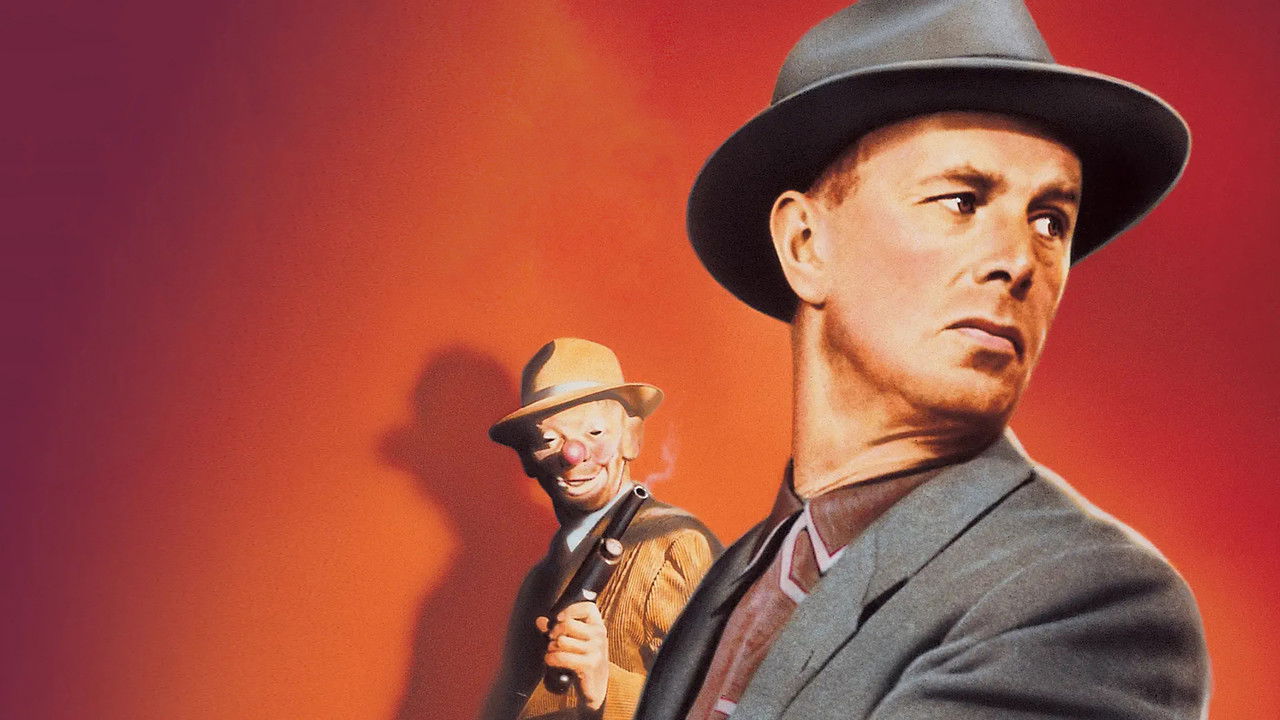
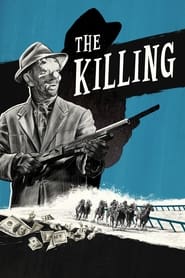
The Killing (1956)
Release Kino Lorber Studio Classics 4K UHD (2022)
Rode uses Kubrick's breakthrough heist film as a guided tour through a character-actor hall of fame, giving Marie Windsor, Elisha Cook Jr., Sterling Hayden, Timothy Carey, Kola Kwariani, and the rest both career context and close attention to what each performance contributes. He connects Lionel White's nonlinear novel, Jim Thompson's dialogue, Ruth Sobotka's storyboards, Lucien Ballard's photography, Gerald Fried's score, Los Angeles locations, and United Artists' limited financing to the precision of the finished film. The most revealing production story concerns the disastrous preview and abandoned linear recut: Kubrick and James B. Harris recognized that the flashbacks were not a liability but the structure that made the picture unique.
- Duration
- 1h 23m
- Talk coverage
- 93%
- Words
- 12,719
- Speaker
- 1
Commentary density
Highlights
Topics
People mentioned
The film
- Director
- Stanley Kubrick
- Cinematographer
- Lucien Ballard
- Writer
- Stanley Kubrick , Jim Thompson
- Editor
- Betty Steinberg
- Runtime
- 85 min
- Also on
- OneSheet ↗
- External
- IMDb ↗ TMDB ↗ Find on Amazon ↗
Transcript
12,719 words · 4 flagged as film dialogue
As we view footage shot at the Bay Meadows Racetrack in San Mateo, California, accompanied by the booming brass of Gerald Fried's score, I'm author Alan K. Rode discussing Stanley Kubrick's legendary caper film, The Killing. Kubrick was just 27 years old, and The Killing was really his second bonafide feature film. It's been said Kubrick's movies are about mastery that fails. The Killing certainly fits that category of a masterful caper that goes, well, to use a cliche, to hell in a handbasket. Another main attribute of The Killing is a cast of legendary character actors that I'll be discussing as the movie proceeds. The great Lucien Ballard was the director of photography, but it was Kubrick who chose every lens, arranged every setup, and every shot. More about that later. The art director was Ruth Sobotka, who was married to Kubrick during the production of The Killing, and more about that later as well.
The killing is head and shoulders over Kubrick's previous film, Killer's Kiss, primarily because of Jim Thompson's delightfully acerbic dialogue. Thompson believed he would be sharing co-screenwriting credit with Kubrick, but got an additional dialogue credit that was changed to dialogue by. From the first, Stanley Kubrick fulfilled all of the requirements of a directorial auteur, including assumption of credit. and Stanley's partner and collaborator over three films and a fine director in his own right, Jim Harris remains with us at age 93, and I'll be referring to some of his published observations and comments. One of the killing's distinctive attributes is this voiceover narration by the legendary Art Gilmore, who should have been credited but wasn't. I've read that this voiceover was imposed on Kubrick and Harris by United Artists, and some believe it detracts or dates the film. And I'm not one of those who feel that way. I grew up listening to Gilmore's voice on literally thousands of movie previews and television shows like Highway Patrol. For me, the voice of Art Gilmore is always a welcome presence. The cast of The Killing is a virtual character actor hall of fame, and this wasn't by happenstance.
There were no film schools back when Kubrick began. He was a movie savant. He watched literally every movie made in Hollywood and also internationally. He went through the Metropolitan Museum of Art's entire film collection twice. Kubrick knew every actor and knew exactly whom he wanted to cast in every role in The Killing. As James Harris said in an interview, quote, Harris added Kubrick saying, and turned the best intended film into a shamble. He would say, unless you're fortunate enough to have the financial wherewithal to replace a bad actor, you're stuck with them for the rest of the schedule. In an interview, Kubrick remarked about hiring the best actors, saying, there's little joy in trying to get a magnificent performance from a student orchestra, unquote. But there are no bad actors in any way, shape, or form in The Killing. The cast is absolutely brilliant. One of the many character alterations made in The Killing Script from White's novel was Jay C. Flippen's Marvin Unger. Lionel White's Unger was kind of a dyspeptic nebbish who hoarded his money and is alternately suspicious and resentful. Instead, Kubrick and Thompson turn Unger into a gentle, sad, lonely old man whose affection for Johnny Clay, as played by Sterling Hayden, has an interesting gay subtext to it.
And note the multiple pens in Flippen's front pocket that projects this kind of nerd characterization that I think Kubrick was seeking for the character. And speaking of nebbishes, there's our first look at Elisha Cook Jr. through the bars of his ticket window. Assessing his 62 years on stage, screen, and television, Cookie, as his friends called him, said in a late-term interview, the killing was his favorite movie. And as we'll see, Cook has good reason to feel that way.
This is one of the best scenes in the pictures, featuring a pair of one of my favorite actors, Ted de Corsia and Jay Adler. And there's Joe Turkel, who is still with us and will be 94 this year. Kubrick used Turkel more extensively in Paths of Glory and The Shining. Good evening, Randy. I think What's the use of kicking, Leo? What's the use of kicking was one of Jim Thompson's favorite lines that he used in his novels. Instead of being a fat slob, as in White's book, Jay Adler's polite, gentlemanly Shylock with a hint of menace is just perfect. Adler was the black sheep of the famous Adler acting family. Jacob Adler was the patriarch, star of the Yiddish theater, who had six children, most notably daughter Stella, the famed acting teacher of Marlon Brando and many others, and her brother Luther, a great actor on stage, screen, and television. In addition to Jay, there were Frances, Julia, and Florence. Jay Adler gave his father so much trouble as a boy, his father packed him off to a military academy to instill some discipline.
My good friend, the late actor Richard Erdman, who worked with Jay in Cry Danger and Saddle the Wind, told me Adler confided to him that he ran away from the school after setting it on fire. Jay's screen career is filled with these great little character vignettes, of which the killing is certainly one. Maybe even less than that. You know I wouldn't pull a thing like this. I knew I couldn't afford to. I'm glad you said that, Randy. I was going to point out as much myself. Like a line from another movie, always the dollars, always the dollars. Ted looks so sincere when he says that. And as Sterling Hayden grabs a bottle of suds, check out this tracking shot following him through the apartment. The design of this shot, using the lens and other aspects of the photography, created tension between Kubrick and his DOP, Lucien Ballard. Second build, Coleen Gray, is getting dressed. Since the production code couldn't show them in bed together, this shot of her finishing dressing with an assist from Hayden establishes the intimacy of their relationship.
Lucien Ballard was a legendary Hollywood cameraman who began with Joseph von Sternberg, who was probably the only director before Kubrick who could light a set by himself. Kubrick himself literally knew everything about lighting and photography, beginning with working as a photographer for Look magazine for four years before he embarked on a career as a filmmaker. British cinematographer Jeffrey Unsworth, who shot 2001, term Kubrick, quote, a genius, saying Kubrick, quote, knew more about the mechanics of optics and the chemistry of photography than anyone who ever lived, unquote. And as Coleen establishes the duration of her relationship with Hayden, In 1956, Stanley Kubrick was a 27-year-old New Yorker who resembled a Greenwich Village bohemian. Lucien Ballard, who dressed in suit and tie on set, had been photographing movies since 1930 and had been married to movie star Merle Oberon. He designed a special spotlight to hide Oberon's facial scars from an auto accident that was dubbed an Obie. As Jim Harris related, Kubrick ordered...
him to shoot the scene with a certain lens and a certain track and Ballard changed it without telling him. When Kubrick called him on it, Ballard downplayed it saying, hey, don't worry about it. No one will know the difference. Now, Stanley Kubrick was not a screamer or temperamental, but he quietly told Ballard that he would either accept his direction or have to leave the set permanently. Ballard acquiesced and as Kubrick became granularly involved in the staging and lighting of every shot in the movie, Ballard quit showing up to view the dailies. This was the beginning of Kubrick's reputation as not just being responsible, but being creatively involved in every single detail of his films. And Jay C. Flippen's returns. Years ago, I was friendly with the director Joe Pevney, who was one of Flippen's best friends. Jace, as Joe called him, was a terrific actor whose career began on Broadway in 1925, and he didn't mind tipping a few.
Director Anthony Mann loved Flippen's craggy features and versatility and used them in five of his films during the 1950s. It's nice to see you again, Mr. Unger. Take care of Johnny. Oh, there's nothing I wouldn't do for Johnny. I'll see you. And that's Joe Sawyer, the pride of Guelph, Ontario, Canada, ministering to his wife, played by Dorothy Adams. Every character part in The Killing was just so perfectly cast. Sawyer's character was another Kubrick modification from Clean Break. Lionel White characterized the bartender as a childhood friend of Johnny Clay who was stuck in a poor neighborhood with a trampy daughter. Instead, we get Joe Sawyer as an otherwise honest Irish-American bartender who lacks the money to take care of his sick wife. And we see right here, we feel his impotent frustration of being unable to provide for his wife. That angst by Sawyer is one of the more touching moments in the film.
Joe Sawyer was born Joseph Sauers in 1906 and came to California as a teenager graduating from Hollywood High School. He became an actor, writer, director in over 100 Pasadena Playhouse productions before catching on as a bit player at Warner Brothers in The Public Enemy in 1931. And here's Cookie and Marie, film noir's most delightfully dysfunctional married couple. Marie Windsor was born Emily Mae Berthelsen in Marysvale, Utah in 1919. The small-town beauty contest winner devoured movie magazines and embarked to Hollywood to study acting with famed actress teacher Maria Ouspenskaya. It was a tough road to hoe, with Maria ending up as a cigarette girl at the Mocambo nightclub and making a film debut as a carrot in something called All-American Co-Ed in 1941. She labored in bits, trod the boards on Broadway, including being a vamp in a Jackie Gleason revue.
A metro contract turned out to be a gaslight hire as a supernumerary to keep Joan Crawford in line before she was dropped. But Marie had true grit and kept working. However, she had two things working against her in Hollywood's stereotypical niche for female actresses. She was a woman who had dark hair and was tall. Marie was 5'9". She eventually became the bad girl tempting John Garfield in Force of Evil. She dipped her knees and Garfield stood on an apple box. She then became a presence in Republic westerns like Hellfire, but as she told Eddie Muller, Republic mogul Herbert Yates was, quote, too busy chasing communists to promote his films, unquote. Marie played a lot of bad girls, but her turn as Sherry in The Killing was something special. She invited Kubrick and the cast over to her house for dinner and noted, as many people did, that Stanley's limited wardrobe was worn everywhere he went. Clothes and his own appearance didn't matter. but wardrobe for his actors did.
We have steak and asparagus and potatoes. I don't smell nothing. Well, that figures because you're too far away from it.
Too far away from it? Certainly. You don't think I had it all cooked, do you? It's all down in the shopping center. So sweet. She's sending her husband down to Ralph's to pick up the dinner that she's not going to cook for him. Why did you ever marry me anyway? Oh, George, when a man has to ask his wife that, well, he just hadn't better. Marie finally scored in the narrow margin at RKO. volleying vitriol-dripping Billingsgate back and forth with gravel-voiced Charles McGraw. Despite Howard Hughes delaying the film's release for two years, this was the picture that Kubrick realized immediately who would play Sherry in The Killing. Elisha Cook trod an earlier but similar road in his career. Born in San Francisco in 1903, the son of an actress and theater manager, Cook left the Bay Area as a toddler, thereby missing the 06 earthquake that demolished his family's former house. Drawn to the theater, he began as a porter and assistant stage manager before becoming what he termed a perennial juvenile on stage. Asked in a late-night interview of who influenced him as an actor,
Cook remembered Barbara Stanwyck in a scene from the play Noose in 1926, where the governor was going to electrocute her husband. Cook said Stanwyck was so good, quote, I went down to the bathroom and vomited. She was just so great in this scene. I'll never forget it. If anyone influenced me, she did. Marie plays Cook like the proverbial violin. Of course, Cook was nothing like his Casper Milquetoast screen image. Anyone who lived up in the mountains near Bishop in California who drank and went elk hunting with the likes of Lawrence Tierney was certainly no lightweight. These other guys, is that why you're going out tonight to meet with them? They got nothing to do with that. I just got to go uptown for a little while. I see. Well, you go right ahead, George. If you want to act that way, I certainly won't try to stop you. Sherry, now, Sherry, honey, don't be sore at me. Well, after all, one woman's been married for five years and her own husband doesn't trust her. Why, you think more of them than you do of me.
What right have you got to say a thing like that? You know I'm crazy about you. I'd do anything in the world for you.
Honey, you're the one I'm doing it for if I didn't love you so much. Look, I don't want you to do anything for me. I don't even want to talk to you anymore. You go up and see your fellow, whatever you want to do. Sherry. How the Sherry character manipulates her husband sexually is right out of Lionel White's book. Although the movie had to get along without graphic sex, it had crisper verbal sadism courtesy of Jim Thompson's pen, White describes Sherry as dark, olive-skinned, and pretty much a nymphomaniac. You say you do, but when it comes to a showdown or proving it, you say one thing and then you do the opposite. Well, I could tell you a little bit about it, I guess. Well, most of it. You have to promise to keep quiet. Why, of course, darling. Just a second. In the book, the guy that Sherry's involved with is also manipulating her and won't have much to do with her until she leaves her husband George, at least initially. Vincenzo Eduardo Zoino, i. e. Vince Edwards, was cast by James Harris, who knew him from New York. Edwards came out of the tough neighborhood of Brownsville, Brooklyn, and had that dark ambience so suited for playing gangsters as he does here.
After discarding the notion to enter the 1948 Olympics as a swimmer, Edwards attended the American Academy of Dramatic Arts and toiled in bits and be movies for over a decade. In 1961, Edwards hit a home run with an improbable bit of casting as a surgeon in the title role of Ben Casey, a hit TV show that ran for five years during the 1960s. For a time, seemingly everyone in America watched Ben Casey, and Vince Edwards became a household name across the country, similar to what Sea Hunt did for Lloyd Bridges. I'm sorry, baby, but don't bug me. I can live my life a certain way. I can't stand it when the walls start closing in. Do you know how crazy I am about you? I'm crazy about you too, sweetheart. I've given you sufficient proof of that. I know it's just that lately every time I call you... Obviously, there isn't much of a comparison between Vince and Elisha Cook Jr. as far as who's better in the sack with Marie. ... at night, don't be greedy. I'm not greedy, Val. I'm in love with you. And if that's being greedy, then I'm the biggest glutton that ever walked here.
Don't make it sound so ominous. It's not like you're going to eat me alive. I'll make you do that. The fade-out implies the sex occurring between Vince and Marie. All we need is a voiceover saying, and the next morning, or having them eat bacon and eggs in the morning at the breakfast table. Vince became a star, but he had a major problem. He was a degenerate gambler hooked big time on the ponies. According to the Ben Casey's writer, director, and producer, John Meredith Lucas, the weekly filming of Ben Casey episodes had to be scheduled around, quote, the running of the horses at various Southland tracks. Edwards was constantly in debt, borrowed money from the crew and cast to bet on the horses. In one instance, Ben Casey featured Jerry Lewis as an episodic guest star. Jerry was huge then. And in the middle of the shoot, Vince disappeared to go to the track. Lewis, who had been warned about Edwards' gambling, couldn't believe it. He turned to Lucas saying, John, you really put up with this shit all the time? You're crazy. Later on, Edwards reportedly traded in his pony jones for a worse habit involving cocaine. Really a tragic waste of a genuine talent. I guess you know why, too.
You've been saying that for a long, long time, Sherry. But everything's changed now. I was going to tell him tonight. George may be very rich. And Vince immediately starts planning the double-cross of George and Sherry by cutting himself in on the racetrack heist. Clean break has a different spin with the Edwards character teaming up with the loan shark to work over Sherry to find out more about the heist. It's much more brutal. What about the others? Do you have any idea who they are? Only this, I went through his clothes while he was showering. I'm quite sure George went there tonight. Kiddo, I think we got something. Nice shot here with a low-key light coming ostensibly from the lamp with both of their faces lit in a dark background. George's cut's going to be peanuts compared to this whole thing. We've got to find out more about the overall plan. You think he'll tell you any more? Not a chance. I could see he was scared stiff because he talked as much as he did.
I don't get it, Johnny. And Hayden breaks down the plan about the hiring of the shooter of the horse and the diversion of the stage fight at the track bar. Part of what makes the killing so intriguing to me is the gang not being a bunch of criminals, but a group of ostensibly legit working class guys. And if the asphalt jungle portrayed criminals as a group of working-class stiffs, the killing shows what occurs when working-class stiffs are desperate enough to become criminals. The only real crook in this group is Sterling Hayden's Johnny Clay, who did a four-year slide, but is described by Lionel White in his novel as, quote, a good guy who made a mistake and paid for it, unquote. Well, if they don't know anything about the basic plan, about the job, then why are they doing it?
Simple. These boys are straight hoods. They get paid in advance. Five grand for the one with the rifle and $2,500 for the other. Where's this money coming from? That's where Marvin comes in. And good old Marvin is there with his pocket pen protector and the front money. One line from White's story that would have fitted in nicely but wasn't used is his explanation to Marvin Unger on why he is using non-criminals for the heist. Aside from the key inside men, George Beatty, the ticket clerk, and Mike O'Reilly, the bartender, Hayden tells Unger... Quote, one thing I learned from prison is this. There isn't a professional criminal that isn't a rat. They all are. They turn in their best friend for a pack of butts if they needed a cigarette. This is a rough drawing of the track as I remember it. Randy, you'll have to get me an A1 street map of the whole district. George, Mike, I want you to go over this thing with me inch by inch. Bring it completely up to date. Add or subtract the slightest change, even if it's something as small as the placing of a hot dog stand.
Now, give or take a few thousand, I figure the loot on this deal at two million. I wonder how many of you remember a time in America when cash was king and everything was paid for in greenbacks. Clearly the killing was produced in the B. C. era, before credit cards. Back to Stanley Kubrick, I mentioned he wasn't a screamer in the mold of old school studio system filmmakers like Henry Hathaway or Michael Curtiz. But as the episode with Lucien Ballard demonstrated, he could be a tough guy when he had to be. Film directors are not glad handers or Rotarians who roll out the welcome wagon. Just as he said that shooting a movie is not the place to open an acting school, Kubrick didn't tolerate screw-ups or loafers even when he started out. He was a self-made intellectual who conceptualized everything and didn't become emotional in order to vent pressure.
Problem-solving stimulated him. Particularly in his later post-Spartacus films, when he had total control, Kubrick spared no one in his quest for perfection, least of all himself. Novelist Terry Southern, who worked on the Dr. Strangelove script with Kubrick, said the director, quote, "... scarcely let as much as a trouser pleat go unsupervised. No detail was too mundane, all the way down to stationery and paperclips."
And now Hayden hears Marie attempting to eavesdrop on the proceeding. Kubrick's excessive quest for perfectionism verged on certifiable at times, but he could also be warm, congenial, and always accessible. Kubrick was extremely collaborative with his crew and colleagues, but one had to be beyond dedicated to work with him over time. Leon Vitale, who played Lord Bullington in Barry Lyndon, loved Kubrick and was his assistant for 30 years. So Hayden slugs Marie and Cook gets slapped around by Ted de Corsia. Not a good evening for Mr. and Mrs. Peatty. Lionel White had Petey being blackjacked by Randy Kennan. Even though Joe Breen retired in 1954, the production code, though weakened by the defection of Otto Preminger's The Moon is Blue and The Man with the Golden Arm, both released without a production code seal of approval by United Artists, was still enforced and usually objected to the use of blackjacks, a classic example of the inconsistency of production code enforcement. Actor Jim Westerfield was shown copiously whacking Marlon Brando with a sap in 1954's On the Waterfront. You won't hurt her, John. Randy, Mike.
Take him home to his apartment and stick with him until I phone you. Hayden's not buying any of this. What are you going to do now, John? Probably not swell to be escorted home by Ted de Corsia holding you in a half, Nelson. Slap that pretty face in a hamburger meat, that's all. Marvin, why don't you take yourself a walk for an hour or so? Yeah, yeah. Yeah, I'll be. I'll be back in a couple hours. Uh... This Bunker Hill location is Mission Apartments at 504 West 2nd Street in Los Angeles, even though the address provided was 504 West Olive, as written on the match cover by Jay C. Flippen at the beginning of the film. Bunker Hill was the location for so many movies in the late 40s and 50s as the neighborhood deteriorated into rooming houses and once grand Victorian homes. It became an area synonymous with film noir.
And the camera pans by Vince Edwards and Joe Turkel, who were staking out the apartment, getting ready to cut themselves in. I met Turkel about 15 years ago at one of those autograph shows. He was getting on, missing a few teeth, but he was very lively and funny. He told me with what I thought was genuine affection about how much he appreciated Stanley Kubrick. This pithily written sequence between Hayden and Windsor is another terrific scene in a movie filled with them. In the book, Johnny Clay questions Sherry and she seduces him into some hurried sex. Lionel White felt that Johnny's fidelity to Fay had been apparently weakened after all the years behind bars. A piece of fudge, I love it. Jim Thompson had an unusual career in that his best work, his greatest books, for the most part, took place in his late 40s, which was middle age for Thompson, who was a heavy drinker and smoker, who also used amphetamines. He didn't age gracefully. But his published output between 1952 and 54 was extraordinary. He wrote 12 books, almost all for Lion Books, many of which comprise his literary legacy, The Killer Inside Me, Savage Night, The Criminal, A Hell of a Woman, After Dark, My Sweet, and The Kill Off.
Of course, Hayden doesn't buy Marie's transparent lying. Sterling Hayden was a fascinating man, a handsome fisherman, a man of the sea, who happened to be good-looking enough as a young man to stumble into a Hollywood career that alternately shamed and enriched him. I have a 40-year-old paperback edition of The Killer Inside Me that includes a back-cover blurb from Stanley Kubrick that reads, quote, probably the most chilling and believable first-person story of a criminally warped mind I have ever encountered, unquote. As we're back in the noir-stained abode of Marie and Elisha. The Killer Inside Me captivated Kubrick as it did so many other readers. A chilling book that has been adapted into two movies, neither of which captured the dark essence of Thompson's evil protagonist, Lou Ford. The killer inside me caused Kubrick to reach out and hire Thompson to write the dialogue for the killing. Marie goes full steam ahead to manipulate Cook and keep him from dropping out of the scheme. And then she plants the seed that Hayden might have gotten overly friendly with her.
Jim Thompson's angst over being denied a shared writing credit with Kubrick for the killing became a grudge he nursed with great care for the rest of his life. For his part, the director never promised any such thing, so it was not an instance of him reneging. An apology or even an acknowledgement of Thompson's gripe was not forthcoming from Stanley Kubrick. Thompson's wife claimed her husband filed a grievance over the matter with the Writers Guild and won the arbitration. He was offered an assignment of $750 per week to write Paths of Glory with Kubrick if they would change the credit for the killing. It's a nice story, except Thompson apparently didn't become a member of the guild until two years later. The offer was apparently an olive branch from Kubrick and Harris. The credit change was from additional dialogue to dialogue by, and Thompson did share screen credit with Kubrick and Calder Willingham for Paths of Glory.
The writer was down on his uppers and needed Kubrick a lot more than Kubrick needed him. George, what are you going to do? I want to know right now. All you've ever done is talk about loving me. That's all I've had for the last five years is talk. Now that you have a chance to do something and all those things you promised buy me things, well, what are you going to do, George? You know there ain't a thing in the world I wouldn't do for you. And Marie puts on the proverbial performance to keep Cookie in line.
But of course, for her character, sex remains the bottom line. I won't have long to wait. Well, I will be within the next few days, won't I? Well, when will it be, Joey? You've got your own way, Sherry. You wanted me to go ahead with the deal, so I'm going. Now, leave me alone, will you? I'm sorry, darling. Of course, we won't even talk about it if you don't want to. You really love me, Sherry? Of course. You'll always love me? Always and always.
This sequence is pure Stanley Kubrick. After his father taught him how to play, Stanley Kubrick became a tournament-level chess player. His three obsessions of photography, watching movies, and chess jockeyed for his undivided attention as a young man. When he returned to New York after making Fear and Desire in 1951, Kubrick hustled to make money by playing chess for quarters in Washington Square Park. He told Jeremy Bernstein he was the fifth or sixth best player in the park. Kubrick attributed his astounding attribute to concentrate on problem solving and attention to detail to his chess acumen. Johnny. Hey, my old friend. How are you? Good to see you, Maurice. Been a long time, huh? How long have you been out? Oh, not very long. It was very difficult, no? Yeah. Very difficult. You have my sympathy, Sam. You have not yet learned that in this life... I almost need to turn on the subtitles to fully understand Kola Kwariani's speech, but it's worth hearing as it's kind of a lift of Robert Warshow's famous essay on gangster films. Press the backwards arrow and listen to it carefully.
Kola was a chess partner of Kubrick's and a former Greco-Roman wrestler from the country of Georgia. He turned pro in the United States after World War II with the handle Nick the Wrestler. Like the man said, life is like a glass of tea. Oh, Johnny, my friend, you never were very bright, but I love you anyway. How many people have we all known that line could have applied to? This chess club set is a reconstruction of the Chess and Checker Club where Kubrick and Kola hung out and played in the 1950s. The place was dubbed as the Flea House. Perhaps the only pro wrestler who was a serious chess player, Kola was featured on the March 1956 cover of Chess Review with Stanley Kubrick and Sterling Hayden. In White's story, the Maurice character was a drunken, tough Texan whom Johnny Clay hires to create the diversion fight at the track bar. There's another character in White's book that Clay hires for a different diversion that Kubrick dropped from the script as superfluous to the plot, which it was. That sounds not unreasonable.
Still, I will probably go to jail, and jails I found unpleasant for this very pet. Company is poor. Pets are too small. It'll only be a disorderly conduct charge, maybe 60 days, nothing worse. And if a man has a little money to spread around in the right places, he can be quite comfortable. Interesting how Sterling Hayden compares a 90-day stretch in the county lockup as a relaxing sojourn at an extended-stay motel or a travel lodge with swimming pool privileges. It's absolutely dependable. Who knows he's being well-paid to take a risk and won't squawk if the going gets rough. I was thinking if perhaps we can't work out some other arrangement. $2,500 I'd like very much. But suppose I were willing to forego part of it and take a share in your enterprise. And of course, Kola wants to be a partner. It's not mine to share up. And Hayden shuts him down. No sense there will be certain details to work out. I'll buy a cup of coffee.
And the one and only Timothy Carey, who is hired by Hayden to kill the racehorse. I think the word eccentric is inadequate to describe Carey. Perhaps nuts is more appropriate. I know you take care of it for me, Nicky. Say, how long you had this place? Almost a year. Carey carrying that dog reminds me of Marlon Brando and the cat during the opening of The Godfather. In White's book, the weapon being demonstrated and used to commit the robbery was a machine gun. However, due to a December 20th, 1938 addition to the production code regarding special regulations on crime in motion pictures, paragraph four reads, quote, there must be no display at any time of machine guns, submachine guns, or other weapons generally classified as illegal weapons in the hands of gangsters or other criminals, and there is to be no offstage sounds of the repercussions of these guns, close quote. This was another rule that would be largely abandoned by the end of the decade in films like The
and Al Capone. Cary speaks through clenched teeth as if his mouth is filled with canker sores or something. I remember a long ago screening at the Egyptian theater of the 1954 film Crime Story directed by Andre de Toth, who was the special guest. The picture featured Cary in a supporting role as guess what, a gangster. During shots of other actors, Carey can be seen in the background mugging and making faces. When de Toth was asked about working with Carey, he shook his head and said, what you see is what you get. Early in his career, Carey was reportedly fired off of Ace in the Hole by Billy Wilder for the same type of behavior. Because that's the way he runs. So he goes down, a couple of other horses pile up on top of him. There'd be plenty of confusion, I can guarantee you that. And there's one more thing. Suppose by accident you do get picked up. What have you done? You shot a horse. It isn't first-degree murder. In fact, it isn't even murder. In fact, I don't know what it is. But the chances are the best they could get you on would be inciting a riot or shooting horses out of season. Killing horses out of season.
Despite his off-the-wall antics, the hulking six-foot-four Carey was a singular actor. He improvised crying and wailing about not wanting to die as he was being marched to be shot by a firing squad in Kubrick's Paths of Glory and squirted beer in Marlon Brando's face in The Wild One. In addition to Kubrick, directors including Francis Coppola and Quentin Tarantino sought Carey out. $5,000 is a lot of dough, and that's what I'm paying it for, so nobody has to know my business. All right, John, I got no troubles with you. I'm with you. This location was in Culver City as identified by Ted Evans' motorcycle shop across the street at West Washington Boulevard at Walgrove Avenue, kind of where Culver City, Marina del Rey, and Venice all meet up. The motorcycle shop was run by son Doug Evans until it closed up in the 1960s, and James Dean bought a 1955 TR5 Triumph at this shop. Would it be a film noir without Tito Vuolo, another unique character player cast by Kubrick?
Born in Gragnano, Italy, outside Naples in 1893, Vuolo played ethnic Italian characters in The Web, Kiss of Death, T-Men, I Wouldn't Be in Your Shoes, Sorry, Wrong Number, Cry of the City, Flamingo Road, The Man Who Cheated Himself, well, you get the idea. I always remember Tito for a non-noir role as the steam shovel operator Mr. Zucca. and Mr. Blandings builds his dream house, explaining to Cary Grant that he broke the bucket on his steam shovel because that's not a rock, it's a ledge. Life was cheap and easier then, $10 a week for a cabin room. The killing began with Alexander Singer, a friend of Kubrick from Taft High School in the Bronx. who introduced him to Jim Harris, with whom he, Singer, served with in the Army Signal Corps in Astoria, Queens during the Korean War. Singer, a future director, thought Harris was one of the smartest people about finance and movies, and well, Stanley was Stanley. One thing about Kubrick, he was often the smartest guy in the room, but he never treated people that way. All three of these guys were young men obsessed with filmmaking who were both smart, ambitious, and on the make.
As Hayden stashes the gun, Harris got out of the Army. He co-founded Flamingo Films Distribution Company with David L. Wolper. He bumped into Kubrick on the street in New York one day a year later, renewed their acquaintance that deepened into a very close friendship. Gosh, honey, did I wake you up? I'm sorry. I just couldn't sleep somehow. Marie is going to make nice here, but it's only a mean to her end. You can tell it takes an effort. Jim Harris was floored by Kubrick, who had already made two features, Fear and Desire and Killer's Kiss, literally by himself. Harris was certain Stanley Kubrick was going to be a great director. The pair became best friends. After Kubrick sold Killer's Kiss to United Artists for slightly more than it cost to make, he and Harris formed their own production company.
It's just I can't stand living like this, this crummy apartment and a hamburger for dinner. You haven't been so bad, baby. Yes, I have. But things are going to be different, you'll see. We get all that money and have so many nice things, I'll stop thinking about myself so much. I wouldn't pile a lot of money on Marie not thinking about herself. Is it the robbery? Is that what you're worrying about? Yeah, I guess it is a little. I have no reason to. I know it's going to be all right. Naturally, you'd be a little upset at a time like this. Today, isn't it? Huh? What makes you think that? Again, Kubrick's composition, the two-shot with both of them at the table, the light coming through the kitchen window that gives you the indication that it's early morning. Even with a limited budget, it's just masterful. I'm in it, Sherry, and I'm getting fed up.
You heard what Johnny told you to stop butting in. Kubrick and Harris initially didn't know what they were going to work on first. Harris said he went to Scribner's bookstore on Fifth Avenue, which was unfortunately closed by January 1989, and he found Lionel White's book, Clean Break. He bought it, read it, thought it would make a great movie. He gave it to Kubrick, who read it the same day, and he was just as enthusiastic. Harris swooped in and bought the rights for Clean Break after Frank Sinatra, who had expressed interest, delayed writing a check. With Killer's Kiss, Kubrick already had a foot in the door of United Artists, but it's more like a toe. Initially, UA would only put up $200,000 and only if Kubrick and Harris could get a legitimate star as the leading actor. I'm going to tell you something about your dear friend Johnny, but since you feel about him... And Marie now stokes her husband's ire by lying about Hayden.
When Kubrick wanted to cast Marie Windsor, Bill Shiffrin, Sterling Hayden's agent, championed another one of his clients for Sherry, Zsa Zsa Gabor. Kubrick, who had already passed on Ida Lupino in favor of Windsor, was barely polite to the agent. United Artists already knew about Clean Break because of Sinatra's interest. The future chairman of the board wanted to do clean break as a follow-on to Suddenly that also starred Hayden as a small-town sheriff foiling Frank, who was there to assassinate the president who was passing through on a train. It doesn't matter, does it, darling? The only thing that really matters is how I feel about you now, isn't it? It is today, isn't it?
Earlier that morning at 5 a. m. , red lightning was fed only a half portion of feed in preparation for the seventh race that afternoon, the $100,000 Lansdowne Stakes. And this is some of the footage that was shot up in San Mateo. This sequence reveals Marvin Unger's romantic fantasy about Johnny Clay, whom he says he regards as a son. According to one report, the interiors for the killing were filmed at the studios located at 7324 Santa Monica Boulevard in Los Angeles. This lot formerly belonged to PRC and then Eagle Lion. As of 1954, it was owned by Ziv Television. However, according to Variety, Kubrick set up shop at Kling, the former Chaplin Studios at 1416 North La Brea that the great comedian built in 1916, and Kubrick shot the picture there. The old chaplain lot is now occupied by Jim Henson Productions. Johnny, I don't know how to say this, and I don't even know if I have the right, but I've always thought maybe you're like my own kid. Yeah, you can say anything you want. Hayden's response to this indicates he's not fooled by any adoptive father cloaking device from Jay C. Flippen.
Flippen suffered a tragic accident when a car door accidentally closed on his leg, causing a wound resulting in an infection that forced an amputation. I believe he also had diabetes that exacerbated it. At any rate, Joe Pevney told me about being with Flippen in the hospital in 1965 when he lost his leg. It was a very, very sad recollection. Flippen was a trooper and much liked and respected. He kept right on working in films and television until his death in 1971. That's a nice way of handling it. Keep away from the track. Go to a movie or something. See you later. It was exactly 7 a. m. when he got to the airport. I'd like to say that's stock footage, but knowing Kubrick, he might have had somebody shoot that. Sterling Hayden buying his American Airlines ticket is from yet another familiar face, Billy Benedict. Of his over 300 credits during a half century in front of the camera, Benedict is best remembered for his iterative roles in East Side Kids and Bowery Boys movies and the Republic serials like Adventures of Captain Marvel, another total pro.
Back to the making of The Killing, Kubrick and Harris tried to get a number of different actors. I believe U. A. had an outstanding obligation with Victor Mature, but he was either tied up and the two filmmakers either didn't want him and didn't want to wait. They also offered Johnny Clay to Jack Palance, who turned it down. But then Sterling Hayden got interested in the script, at least his agent Bill Shiffrin did, telling Hayden, quote, there's some weirdo out from New York who is supposed to be a bloody genius, unquote. Hayden signed on for a role similar to his turn six years earlier as Dix Handley in the Asphalt Jungle for John Huston that really put him on the map in Hollywood.
With Hayden in tow, United Artists guaranteed $200,000 to finance the killing, but not a penny more. And of course, their money would come back off the top, just like Marvin Unger's front money in the movie. This scene was shot at the old Hollywood Greyhound bus station at 1409 Vine Street, which is now occupied by a parking structure and a McDonald's. Jim Harris knew that they couldn't make a movie of any quality for $200,000, so he scraped up another $130,000 from his own savings and borrowed the rest from his father. So the budget for the killing was $330,000 with a 28-day shooting schedule. What's interesting is Variety ran an August 3, 1955 squib claiming that United Artists agreed to finance the entire picture for $600,000, a story that is false. Back in those days, if studio publicity departments and the trade papers didn't have enough news items, they just frequently made things up. The exterior of Joe Sawyer's apartment with his taped name on the mailbox is another Bunker Hill site, the New Grand Hotel at 257 South Grand Avenue in downtown L. A. As Sawyer promises to do better, I'd like to mention Dorothy Adams, best known as Kathy O'Donnell's mother in The Best Years of Our Lives and Gene Tierney's maid in Laura,
Adams was a consummate player who began with the Moroni Olsen Players in Utah back in the 1920s. She was married to another actor of note, Byron Foulger, and the mother of actress Rachel Ames, who was on the General Hospital TV soap opera for over 40 years. Adams was an acting teacher at UCLA during the 1960s. Dana Andrews' daughter Susan told me that her family grew up with Doro, as they called her, who was like a surrogate mom and best friend. to Dana Andrews' wife. The Andrews family adored Adams, a grand lady and a fine actress. Of course. But, uh, Ruthie, I'm going to be a little late. Probably about ten. Some of the fellas and me are having a little get-together. I understand. Don't you drink too much beer, Mike. Remember how it always leaves you... When Joe Sawyer's career hit a low point in the late 1950s and early 60s, he got into construction and flipping houses in the San Fernando Valley and apparently did quite well. Goodbye. Don't forget to eat your breakfast.
reached the bus station at 1129. And Joe Sawyer fulfills his part in the scheme by picking up the stashed gun in the flower box. At the time of the killing, Sawyer had a regular role in the Rin Tin Tin television series as the soft-hearted Sergeant Biff O'Hara, another role in Sawyer's long resume of Irish characters. Apparently, the script of the killing had him objecting or interacting cruelly with a dog, which he claimed would reflect badly on his image in the Rinty series. And apparently, that dialogue, that scene was dropped. This is an obvious plate shot here showing the track background fronted by a static set of the guard shack. The killing was also touted as the first time a woman was credited as an art director on a Hollywood studio film. Ruth Sobotka Kubrick wasn't a member of the Society of Motion Picture Art Directors, but she was a member of the Scenic Artists Union in New York City, which had a reciprocal agreement with Art Directors Organization in Hollywood, and so she was allowed to work on the picture. Kubrick even covered the bits of Sawyer's track co-workers with familiar character plug-uglies Frank Richards and Richard Reeves.
Marie Windsor told author, film historian Eddie Muller that Kubrick was unlike any director she had ever worked for at that time. She was 36, more than a decade older than Stanley. Windsor was amazed that Kubrick's office was decorated with Ruth Sobotka's sketches of every shot in the film. Stanley's wife essentially storyboarded the killing.
Kubrick didn't attribute his directorial skills and style to many others, but he was profoundly impressed by the director Max Ophuls. In an interview after he filmed Paths of Glory, Kubrick said Ophuls was his favorite director and he had watched Ophuls' Le Plaisir countless times. Ophuls was renowned for his supple camera movement and we see that influence in Kubrick, particularly in his early films like the dolly shot following Hayden through Unger's apartment. I already had mentioned that, and then the exquisitely staged World War I battle scenes in Paths of Glory. But Kubrick quickly learned not to move his camera unless the narrative dictated him to do so. James Harris discussed this in a film comment interview with Jim Pinkerton. And the PA announcer heard during the racetrack sequences was the actual announcer at the Hollywood Park track named Hal Moore.
who was hired by Jim Harris, and yet another touch of realism for the film. Harris told Film Comment that when Kubrick began work on Spartacus, Kirk Douglas brought in Kubrick after he fired Anthony Mann, or Mann simply quit because he and Douglas couldn't get along. He told Harris that he was working on Spartacus with a Technirama camera that gave off a strobe effect when you started moving it around. Be sure to hold all tickets until the result of the race is declared official. So according to Harris, Stanley was forced into a way to abandon all these ideas of a moving camera. In a fashion, Kubrick kind of copied John Ford, who never moved a camera without a major reason. And Flippen shows up staggering drunk. Kubrick told Harris, if you have a scene that's really interesting like two people coming at each other with hammers in their hands, all you really have to do is put the camera in a place where everybody can see it clearly and the content of the scene is sufficient. You don't have to embellish it with camera moves.
And as Ted de Corsia lies about his radio being on the fritz, Harris concluded by saying, if a scene was really flat, you can try to pump it up with either music or with some camera movement to convey a greater sense of action. Ted de Corsia was so natural a heavy as there ever was in movies. Another Brooklynite who was the son of a vaudeville actor, he toured in road companies before his distinctive voice found a home on radio. Orson Welles used him, and he sent for de Corsia, when he was making The Lady from Shanghai, de Corsia's film debut. He followed that memorably as the murderer Willie Garza in The Naked City, and pretty soon his radio days were pretty much over. This is actress Mary Carroll running in front of what was 1307 to 1309 West 39th Street, Los Angeles, near Normandy and Exposition Boulevard, close to the Coliseum, to ask for assistance. I don't think Ted's motto is to protect and serve. This overhead shot tracks de Corsia's police car from Grand Street as the car turns north from 3rd, heading towards 2nd Avenue. The main aspect that attracted Kubrick and Harris to adapting Clean Break was the structure of the book with its unique,
non-sequential, non-linear, episodic vignettes to tell the story of the heist. So the killing was filmed copying Lionel White's narrative structure. So everyone was pleased until the film was previewed in Huntington Park. Of course, by that time, United Artists had changed the title from Clean Break to Day of Violence to Bed of Fear and to finally The Killing. According to Harris, the previews were a disaster, they had walkouts, and Sterling Hayden's agent told them they ruined the picture. All of their friends and colleagues told Kubrick and Harris they needed to re-edit the picture into a straight linear narrative. So they took the film back to New York, rented an editing studio, and started to re-cut the picture. According to Harris, he and Kubrick got halfway through doing this and looked at each other one day and realized they were making a terrible mistake. Kubrick said the flashbacks made the killing more than just a good crime film. It was what made the picture unique. The two partners put the film back as originally intended, and apparently United Artists liked it enough to release it, but not everybody did. Kubrick didn't take a salary.
And the picture didn't make money, but what it did is it boosted Kubrick and Harris' reputation and put them in the position to hire Kirk Douglas for Paths of Glory. Kubrick originally had all the racetrack footage shot by a West Coast film crew. When he and Harris screened the film, they were dissatisfied because the scenes of leading the horses out, and particularly the shots of the actual race, were not correct. seventh race. They sent their friend Alexander Singer back up to San Mateo to the track. Singer got into the track and captured the needed footage, including the race, which the Bay Meadows racetrack did not permit him to film. But he got what Kubrick and Harris needed before he was kicked out of the track.
The horses are approaching the starting gate. And as we see more of Singer's film from Bay Meadows, Gerald Fried's score adds so much to the killing. Fried was another old Kubrick friend from the Bronx. He went to movies with Kubrick, remembering, our discussions after seeing them were primarily listening to Stanley kind of smirking at the tasteless sentimentality of most pictures. Fried was originally an oboist who attended Juilliard, and he composed the music for all of Kubrick's early films. Day of the Fight, Fear and Desire, Killer's Kiss, The Killing, and Paths of Glory. Fried also composed some wonderful scores for early horror films like I Bury the Living using a harpsichord. He later composed the music on the original Star Trek TV series and shared an Emmy with Quincy Jones for the score of the groundbreaking miniseries Roots. And Fried is still living at age 94.
And Kola starts the diversion fight, even though he's tossing around stuntmen like the legendary Harvey Perry, who was helping Sawyer behind the bar, and Gil Perkins, whose career spanned the original King Kong to Raging Bull. You get a sense of his wrestling ability and brute strength. In a tragic instance of life imitating art, in February 1980, Kola entered his beloved chess and checker club in New York. He bumped into five youths and words were exchanged. Kola didn't put up with much. and the fight was on. Sadly, Kola, who was 77 years old, was no longer a match for five much younger men. He was severely beaten, and Nicholas Nestor Kwariani, known to all as Kola, later died in a local hospital. And yes, over in the corner by the door, that is Rodney Dangerfield as an extra. He was then known as Jack Roy. He was standing behind the first guy at the door there. Born in New Jersey, Sterling Hayden was a New England sailor who was spectacularly good-looking as a young man. He had his master's license, skippered a trading schooner in the Caribbean, and sailed around the world as a first mate.
Hayden got a screen test when a Paramount scout spotted his picture on a magazine cover about an annual fisherman's race in Gloucester, Massachusetts. He went to Hollywood as a lark in 1940, only to earn enough money to buy his own schooner. Timothy Carey is driving a very cool 1950 MGTD with a Jaguar hood ornament. Despite his talent, Carey ended up getting fired by James Harris from Paths of Glory during the production in Germany. Harris got a call from the Munich police one morning at 6 a. m. that Carey had been found along the highway, bound hand and foot. The police thought Kubrick Harris had staged this for an obvious publicity stunt, but it was Carey who came up with the bizarre idea. Carey had to sign a statement so the police would release him and he could get back to work on the picture, but he kept changing his story.
Harris finally got fed up and fired him. When you watch portions of Paths of Glory, Carey had to be doubled. He was filmed facing a wall in the barn waiting for his execution because he had already been sent home. And James Edwards is the parking lot attendant. Edwards was the first young African-American actor to break through playing non-stereotypical roles in Hollywood movies. Carey usually uses the soft soap initially in attempts to bribe Edwards. Edwards made his screen debut as an up-and-coming boxer in the setup and followed that up with his most memorable role as Private Peter Moss, who was discriminated against during a World War II combat patrol in 1949's Home of the Brave, adopted from Arthur Lawrence's play. Edwards insisted on not accepting demeaning roles and really set the stage for Sidney Poitier's groundbreaking debut in 1950's No Way Out. Unfortunately, an African-American actor in the 1950's Hollywood had to conduct themselves much like Jackie Robinson had to when he broke the Major League Baseball's so-called color line in 1947. Edwards had a career, but it wasn't what it should have been and could have been
due to endemic racism, particularly after he was sued by a white woman alleging she had an affair with him and claiming Edwards beat her up after a party. There was another allegation from a model and a dancer. Whether these charges were true or not, they labeled Edwards as trouble and severely damaged his career. And this is the actual racetrack footage that Kubrick sought and Singer delivered.
Attention, ladies and gentlemen. The horses are now on the track for the seventh race. The $100,000 added lands down stakes at one mile. The horses are approaching the starting gate for the seventh race. What's nice is they actually shot the footage of the track and the race despite this plate shot being here with the back view of Kerry. And Edwards now returns only being friendly, and Kerry chases him away by using the N-word. According to one source, Edwards was summoned by the House of Un-American Activities Committee to denounce Paul Robeson, and he refused. Edwards frequently portrayed soldiers. He was born in 1918, and he was a first lieutenant in the segregated U. S. Army during World War II. According to one source, Edwards' face was disfigured in a car accident, and after plastic surgery, he took up public speaking as part of his therapy, which led him into acting. One of Edwards' last pictures was Patton with George C. Scott and Karl Malden.
Edwards played Patton's aide and reportedly got into a fracas with Scott when both of them were out drinking one night during the picture. Edwards was reportedly taking up for Karl Malden, who's acting Scott, while in his cups, disparaged. Despite all what he endured, Edwards did have a career of 30 films and numerous television appearances. But to put it mildly, it wasn't easy for him. And Timothy Carey isn't going to get to collect the other half of his payment. Carey's unique career was capped by his screen test for The Godfather III shortly before his death in 1994. After turning down offers from Francis Coppola to appear in Godfather I and II, Carey produced a nine-minute screen test of him playing the 80-year-old character eventually portrayed in the film by Eli Wallach. It was subsequently titled God Farter III. The screen test was filmed by Carey's son Romeo and produced by Carey. Nice touch with Kubrick here with the horseshoe. Nikki was dead at 4:23.
At 2. 15 that afternoon, Johnny Clay was still in the city. He knew exactly how long it would take him to... And Hayden walks out of Jeffrey's luggage at 6427 Hollywood Boulevard that was by the old Pacific Theater. I alluded to Sterling Hayden's entry into movies. He landed a seven-year contract with Paramount starting at $250 a week. That was a fortune in 1940. But Hayden really suffered as an actor, and it was much more than stage fright. It was a total sense of insecurity in not knowing what he was doing. Here he was, a totally professional man in his own environment, the sea, and now he was working with professional actors and had no idea what he was doing. Sterling Hayden felt like a phony, an imposter, and he hated it. The actual robbery now finally unfolds as the orchestrated plan falls into place.
Sterling Hayden said in a 1984 interview after signing his Paramount contract, quote, I was completely lost, ignorant, nervous. But the next thing I knew, Paramount made me a seven-year contract beginning at $250 a week, which was astronomical. I got my lovely old mother and bought a car and we drove to California. I was so lost that I didn't even think to analyze it. I said, this is nuts, but damn, it's pleasant. I had only one plan in mind to get $5,000. I knew where there was a schooner, and then I'd buy it and haul ass. The horses are approaching the starting gate for the seventh race.
Now, this really great intercutting and flashback, I think, really builds the suspense of the killing. There's a way to win friends and influence people. But nothing is simple, particularly in Hollywood. Hayden starred in two movies, both co-starring Madeline Carroll, who he eventually married. With World War II, he enlisted in the Army, broke his ankle and was discharged. Then he enlisted in the Marines under an alias, John Hamilton. Cookie sneaks and opens the door for him. They're off. I'm running. A natural leader, Hayden was channeled into Officer Candidate School and then into the Office of Strategic Services as an undercover agent, the OSS. As John Hamilton, Hayden won the Silver Star, ferrying supplies to Yugoslav partisans under Tito, parachuting behind enemy lines and making hazardous sea voyages in enemy-infested waters, according to his Silver Star citation.
He returned to Hollywood and Paramount after the war and made several films, including the bizarre manhandled. I mean, Dorothy Lamour in a film noir. In an interview with writer Philippe Garnier, Hayden said he still didn't know what he was doing as an actor. He related a story on how a director asked him to move downstage, and he didn't know what direction to go or what he should do. Everything changed for Hayden when John Huston cast him in the Asphalt Jungle.
I just love the attention to detail that Kubrick brings to this. Every move, going into lockers, hiding guns, flowers, masks, gloves, opening doors, it's all there. And it's displayed in such a way where it's integral to the story and it captures you. It's not just marking time.
Hayden was a natural as hooligan Dix Handley in the Asphalt Jungle, and working with John Huston put him at ease. Both men were adventurers, and they were simpatico. Although the Asphalt Jungle didn't make a lot of money, Hayden received excellent notices, and his post-war Hollywood career gained altitude. He became a fixture in what I would call nervous A, B-plus productions throughout the 1950s. In addition to films noir like Crime Wave, Suddenly, Naked Alibi, and The Come On, Hayden became a fixture in westerns, memorably playing opposite Joan Crawford in Johnny Guitar. And by the way, Hayden said Crawford was very difficult during that film, and he didn't know how to ride a horse or how to play a guitar as called for in the script, so Hayden really hated Johnny Guitar. He also played opposite Bette Davis in The Star and Barbara Stanwyck in 1957's Crime of Passion. But Hayden made a life-changing mistake during and after the war. Enamored of the bravery of Josip Broz Tito's partisans, he joined the Communist Party. The old cashier in this scene is listed as Arthur Tovey, but I don't think that's correct. Tovey was born in 1904, which would have made him 52, and this older gent just isn't him.
Tovey's career actually spans the original from The Mummy in 1932 to the 1996 version of The Nutty Professor with Eddie Murphy. Incidentally, Frank Sinatra's connection with Clean Break continued as he reportedly considered a remake in 1962, starring some of his Rat Pack cohorts who appeared with him in Ocean's Eleven in 1960. Get back over there. Now, I'm going to open this door.
I want you to go through it and go into the locker room and close the door after you. I'm going to start firing through that door 15 seconds after you close the door.
Let's go. It's a shotgun with a pistol grip. It kind of looks like a machine gun, but it is not. All right, close it.
Sterling Hayden ended up regretting his brief flirtation with communists for the rest of his life. When the anti-Red hysteria rose to fever pitch with the publication of Red Channels in 1950, fearful of his future career, Hayden went to attorney Martin Gang, who specialized in clearing artists, or as Victor Navasky put it in his book Naming Names, representing informers, with communist ties during this dark period of American history. Gang smoothed Hayden's testimony with the committee so the actor came out looking like a hero. This is actor Sol Gorss that Hayden slugs and escapes. Hayden was also influenced by a man named Phil Cohen who was a psychoanalyst for many Hollywood left-wingers and party members. Cohen dropped out of the party in 1942 and became a key figure in persuading many people, including Hayden, to testify and name names. It was also believed by people that Cohen was informing on his patients to the FBI. By any measure, Sterling Hayden took full responsibility for what he did in front of HUAC and it haunted him the rest of his life. He was honest in saying that he named names so he could keep working.
As he wrote in his book Wanderer, arguably the best memoir ever written by an actor, quote, I don't think you have the foggiest notion of the contempt I have had for myself since the day I did that thing, unquote. As far as Kubrick and the killing were concerned, Hayden really didn't have much to say other than he figured Kubrick saw something in his work that fit Johnny Clay. A bag containing the money. A painstaking search of the track grounds is being conducted on the theory that the money may still be hidden there. And now we take you back to our regularly scheduled program. No one saw the duffel bag come out of the window. Ah, that part of it worked okay. And de Corsia grabs the bag and stashes it in the car, neatly done. Kubrick really impressed Hayden with how he treated him when the director cast him as General Jack D. Ripper in Dr. Strangelove.
Again, Hayden was kind of intimidated by working alongside talent like Peter Sellers, who played three different characters in the movie. In the Philippe Garnier interview, Hayden related going up on his lines for over 40 takes, just going completely dry. He finally walked over to Kubrick and apologized. But Kubrick comforted him in saying something like, hey, you're bringing what you have, which is what I want, or words to that effect. So, of course, Hayden nailed the next take. Hayden told Garnier that he never forgot how respectfully and kindly Kubrick treated him in that situation. Don't worry, he'll get here. He had to pick up the dough at the motel where I dropped it. There was a funny little guy named Joe Piano there. He runs the place, I guess. I sure hope Johnny knows how to pick his friends. I need another drink. Sterling Hayden reportedly got turned on to smoking marijuana and hash in 1969 by James Coburn. It helped relax him in front of the camera, even though he was busted for possession of hash at Toronto International Airport in 1981. As payment for an interview with a French television outlet in the 1980s, Hayden, who was on a boat headed to Cannes, insisted on being paid in hashish, which he was.
And as Cook frets and the ending draws near, I think Hayden's later work, particularly as Captain McCluskey in The Godfather, demonstrated a certain coming to terms with his ability as an actor as well as himself. Sterling Hayden died of prostate cancer in 1986 at the age of 70. This climactic scene with Edwards and Turkel bursting in and everyone dying with the gun that Timothy Carey set up is somewhat technically limited, but it makes it happen.
and they're all gone except for Cook. By the way, Elisha Cook said in an interview with Jordan R. Young that, quote, Stan's script was so original it startled people. I said, this is going to be a sensation. Nobody believed me, not even Sterling Hayden, who starred in it. And you know where Stan went from there, unquote. According to Cook, Kubrick sent for him to appear in Lolita, where Kubrick was making the film in England, but British equity that had quotas for American actors and crew wouldn't allow him to work in the United Kingdom. And as Hayden picks up the loot from Tito's, Hayden hurt his back during the production of the killing that reportedly delayed his reappearance to finish the picture. A December 2nd Variety piece stated, Dr. Morton Hall, attending Hayden, who was in traction at home, stated he would not be able to notify Harris Kubrick until Monday, whether the actor could report to work the following week. Johnny arrived at the meeting place at 7. 29, still 15 minutes late. And after he sees Cook stagger out, Hayden splits with the cash, which was part of the plan. The money was to be saved by whoever had possession of it at that time without any consideration of the fate of the others.
Money to be divided in safety at a later date. After what he had seen and not knowing the cause or the circumstance... Regarding his back injury, Hayden was able to return to the set after a 10-day hiatus that he rested his back for the final scenes that were shot at Burbank Airport. Ten minutes later, he bought the largest suitcase he could find. Hayden buys a suitcase in a pawn shop located at 831 West 3rd Street in downtown L. A. , And this will be a classic instance of being penny-wise and pound-foolish, as a cheap suitcase of an adequate size will be the downfall climax to the picture. I've neglected to talk much about Coleen Gray, whose second build but only has a couple of scenes in the film. I knew Coleen and hosted a screening of The Killing with her at the Egyptian Theater years ago.
Coleen thought Kubrick was brilliant, but totally focused, not social at all. Same for Sterling Hayden. You know, acting is work, and socializing on sets often doesn't happen. Coleen did say that the picture was all Marie Windsor, and while she would have liked to have had more scenes and do more, there was no one better than Marie Windsor to play Sherry. And I think Coleen was right on point about that.
And here we come to the abrupt end of a very bad marriage. And Marie looks stunning in that black negligee. She's just a delicious package of sociopathic desire. Her wardrobe makes me recall Eddie Muller's line about Marie's superstructure, quote, statuesque with a balcony that could support a double run of pinochle. Indeed. We had to be stupid. You couldn't even play it smart with a gun pointed at you. Well, you better get smart fast and get out of here while you can still walk. Your friend, Val, is that his name? One of Marie's last public appearances was in 1999 at the first screening of The Narrow Margin at what was then called the Annual Festival of Film Noir at the Egyptian Theater. Marie appeared with the film's director, Richard Fleischer, and the producer, Stanley Rubin, all of them gone now, sadly. Stanley was a great friend of mine. Marie, at that time, the rigors of age, she was on a walker, but people just went wild over her, and she appreciated it. Not a real husband. Liar to the end, aren't you, Sherry? It's a bad joke without a...
According to his December 2, 1945 variety squib, Marie Windsor received 14 stitches in her lower lip as a result of an auto accident the previous Wednesday. The article stated, actress will finish her few scenes with her back to the camera. She's at a distance, but we don't see her back to the camera.
And Coleen waits at the airport as Sterling Hayden will arrive. Speaking as a traveler, the Burbank airport where this was filmed remains a great alternative to the chaos of LAX. Coleen also commented on Kubrick's wife, Ruth Sobotka, work as an art director, telling writer Tom Weaver, in the scene where Sterling Hayden was in the sleazy motel, the window shade was half up, half down, and she would make it askew. Two instances of perfect casting, Robert B. Williams and the hulking Charles Cane as the two plainclothes coppers staking out the airport. Back to Coleen on Ruth Sobotka, said that she would leave and then the set decorator would come and straighten the shade and make it horizontal. Then Sobotka would reappear and make it askew. Coleen laughed. This went on and on. I've seen The Killing many times, but until I watched it for this commentary, I didn't recognize the old woman and the dog as actress Cecil Elliott. who nearly 20 years later played an even older woman named Emma Dill at the Mar Vista Rest Home in Chinatown, knitting the quilt and telling Jack Nicholson, it's the Albacore Club.
I want to carry that bag with me on the plane, please. I'm sorry, sir, it's much too large. I'll have to go check through his baggage.
Oh, now, let's be a little reasonable, huh? You can't tell me that the two of us traveling together... Some things never change. Everyone keeps trying to take larger bags in us carry-on. But Hayden had a different reason. I see. Even though it's getting very close to flight time, I think we can locate the rest of your luggage. You could transfer some of the contents from this one to a smaller one. No, sorry, that won't work at all. Now look, let me talk to your supervisor, huh? All right, I'll be very happy to call him. Mr. Grimes? Mr. Grimes? Would you come down this way, please? Mr. Grimes is played by actor James Griffith. He was frequently used by Jack Webb in his Dragnet productions. and had well over 200 other movie and TV credits. The original ending of the killing specified Hayden to run across the tarmac with the suitcase of money and be eviscerated by an airplane propeller. This ending would have been a direct lift from the 1950 film Armored Car Robbery that ends with William Talman being disemboweled by an oncoming plane at Van Nuys Airport amid a litter of purloined greenbacks.
But American Airlines objected as they claimed rather absurdly that the public would think airline regulations were lax and such an accident could happen. Instead, James Harris took credit for coming up with the finale that was less violent and a bit more creative. Personal items, things like that. All right. All right. Check it through. Passengers may now board American Airlines flight 40, the New Englander DC-7 service to Boston. Supposedly, this was at the old Lockheed terminal at Burbank. And at Burbank, you still walk out on the tarmac to board and deplane.
And remember when airplanes used to have propellers. Passenger airplanes. And there it goes. And as Sterling Hayden's sick expression tells all, I'd like to wrap up this commentary by thanking my friend and colleague Tom Weaver for passing along his unpublished interview with Coleen Gray and also tidbits from Variety. Coleen was a jewel, and I hope I get another crack at a commentary of a film where she has more of a role to discuss her further.
This ending is magnificent, and I love the way Kubrick at the very end uses slow motion, something that was very seldom done during that era. Phil Karlson wanted to do it for a fight scene in 99 River Street, but the producer Eddie Small vetoed it. Notice how Coleen has to have her arm around Hayden as if to steady him rather than the other way around.
And you can never get a cab and now an Uber or Lyft when you really need it. I love Hayden's resignation.
And that is a wrap to The Killing. This has been Alan K. Rode. Thanks for listening. I'll see you at the movies.
Keep exploring
Other tracks with shared craft concerns
-
8 shared topics
Goodfellas (1990)
Martin Scorsese, Nicholas Pileggi, Ray Liotta
-
7 shared topics
Congo (1995)
Kelly Goodner, Jim Hemphill
-
7 shared topics
Lord of War (2005)
Andrew Niccol
-
8 shared topics
Forrest Gump (1994)
Robert Zemeckis, Steve Starkey, Rick Carter
-
7 shared topics
To Live and Die in L.A. (1985)
William Friedkin
-
8 shared topics
The Taking of Pelham One Two Three (1974)
Nathaniel Thompson, Steve Mitchell