multi
The Grand Budapest Hotel (2014)
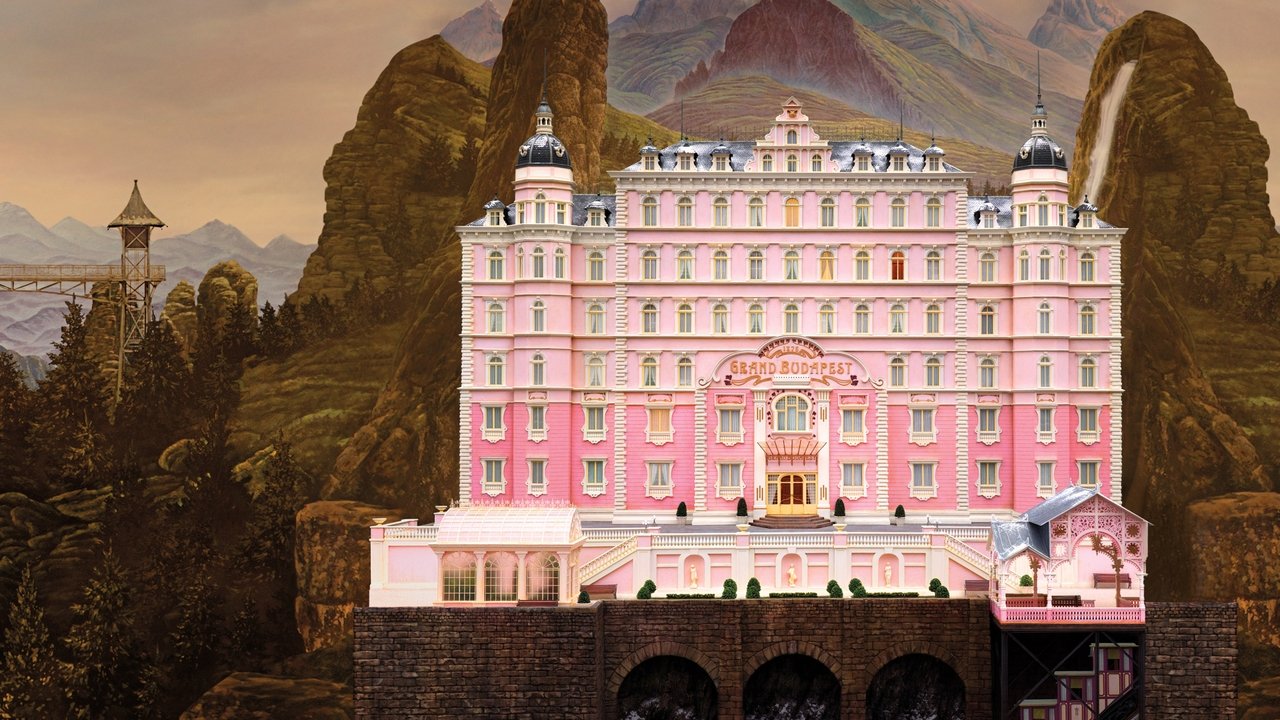
Anderson, Roman Coppola, Jeff Goldblum, and Kent Jones discuss the aspect ratios used for the three timelines, Görlitz locations, atmospheric effects using bee smoke, and miniature production. They also recall casting Mathieu Amalric for a single scene and the practical choices used to create the fictional setting.
- Duration
- 1h 39m
- Talk coverage
- 89%
- Words
- 15,719
- Speakers
- 4
Commentary density
Highlights
Topics
People mentioned
The film
- Director
- Wes Anderson
- Cinematographer
- Robert D. Yeoman
- Writer
- Wes Anderson , Hugo Guinness
- Editor
- Barney Pilling
- Runtime
- 100 min
- Also on
- OneSheet ↗ OverBlack ↗
- External
- IMDb ↗ TMDB ↗ Find on Amazon ↗
Transcript
15,719 words · 36 flagged as film dialogue
I always like the thing where-- Some people don't say "Action," you know?
Uh-huh. - [Anderson] I tend to say "Action." But in a lot of movies-- I don't think Robert Altman said "Action." I think they just started. Sam Fuller fired a gun. - [Anderson] He fired a gun. So now would be when we would fire the gun. Exactly. That was it.
This is the Criterion Collection edition of the Grand Budapest Hotel... home video, or what do you call it? The Blu-ray, certainly. At least a Blu-ray, but there'll probably be a DVD. I don't know if people still do DVDs, but Blu-ray is much better, obviously. I hope that you're watching this on Blu-ray. And we have-- With us, we have Mr. Roman Coppola. Roman. - [Coppola] I'm here, in L. A. , joining you. Alongside Mr. Jeff Goldblum.
Hello, hello, I'm here with Roman.
Jeff Goldblum and Roman Coppola. Kent Jones beside me in New York. - [Jones] How are you? And I'm Wes Anderson, and we're gonna do the commentary here. So... now we just start saying things about the movie.
Well, you instructed us to interrupt everybody. Create a cacophony of voices. - [Anderson] That's a good way. Yes. I mean, one thing I could say here is, this is a little shrine here, which is-- There's a little statue in Jardin du Luxembourg in Paris of Stefan Zweig. A beautiful little bust of him that's tucked away in a corner. And this, I guess, comes from that. And the film is inspired by the writings of Stefan Zweig.
Exactly. The film is inspired by the writings of Stefan Zweig. I mean, maybe it's inspired by the movies of Ernst Lubitsch more than the writings of Stefan Zweig, but somehow, to me, it starts with Stefan Zweig.
Yeah.
And, Wes, how did you get first exposed to Stefan Zweig? What was your introduction to him?
I think years before, I'd read a story called 24 Hours in the Life of a Woman, which I liked, but I-- But it was in a bookstore in Paris. It was a bookstore in Saint-Germain. I think it's Village Voice Bookstore. And I picked up this book, Beware of Pity, his one real full novel, and I started reading it in the bookstore. And I think I stood there for 45 minutes before I went over and paid for it and took it away. And I love-- You know, it's a great novel.
Yeah, which was made into a film.
Yeah, I mean, a number of them have been adapted. Letter...
Letter From an Unknown Woman. - [Anderson] Letter From an Unknown Woman. The Burning Secret was adapted a couple of times. Andrew... Birkin directed that. - [Anderson] Birkin, yes. Yes. Jane Birkin's brother, right? - [Jones] Mm-hmm.
I haven't been watching the film while we've been talking.
Well, actually, I wanted to ask you about the boy, though.
The boy-- - [Jones] Who interrupts Tom Wilkinson. Yes. The boy... You know, this movie was shot in a place called Görlitz in Saxony.
Yeah. - [Anderson] Near... In fact, the town is split in two. There's the Görlitz part, and then there's the Polish part. And there's a river that goes down the middle of the town. And anyway, most of the extras and people are from Görlitz, and as is that boy. But you know, we would sometimes... Jeff, I don't know, do you remember going over to...? Or, Roman, did we go over to Poland for dinner ever?
Yeah-- - [Coppola] We did. We crossed the river and went with Pawel, who could help us order the food there. Yeah, and I remember one time we did it-- Were you there, Roman? Not the time I was there. No-- I went in a little group with Ed Norton, I remember, and Jason. - [Anderson] Yes. Right. Did you always go to the same place? 'Cause that was a great little indigenous, exotic kind of place, wasn't it?
Yes, it was, and, you know-- Yes, our sound man Pawel often went with us, who's Polish, although Pawel's now retired, but he was doing that movie. We would walk across the bridge. - [Jones] Crossing the Polish frontier. Crossing the Polish frontier. And then a little place right along the-- Facing the river, and where the menu is different. Suddenly you're eating rabbit and goose and things that they weren't serving back in Germany. On one side of the river you're eating sausages, and the other side you're eating rabbit. And you're paying in zlotys or something like that. What's the Polish currency? A zloty? - [Jones] Yeah. And it's a much better deal. - [Jones] Yeah.
It's not a Klubeck, but it's something similar.
A Klubeck. [laughs] - [Anderson] It's inspired by a Klubeck. That's an agent. - [Anderson] Yes, it's true. Well, here-- If we wanna be in sync with the movie for a moment, we've just met Murray Abraham and Jason Schwartzman, Jude Law. And we're back two time frames.
And we're back two time frames. Yes.
I was gonna say, in preparation for whatever this was gonna be-- I wasn't sure what we were gonna do today. --I saw the movie a few days ago, and this is just the tip of the iceberg of my interest and excitement about it 'cause I'd never seen it at home before. And it was lovely being able to stop, which I did many, many times, and pause to look around the whole frame, which is fun to do at every frame, and I read it too. I like subtitles, so I was reading along with it, so I could see the lovely literature that it was too. Anyway, you know, at another time, we'll go through it maybe even more fine-tooth-combedly, and I'll exhaust all my curiosity and excitement about it.
Well, I haven't seen this movie in quite a long time, but I'm not really getting a good glimpse of it because I keep looking around the room here and talking to everybody else. Now, this dog... I remember walking in the street and seeing this St. Bernard while we were scouting in Görlitz. We've got a St. Bernard in the script. - [Jones] "I want you for my movie"? Yes, "Let's make note," and we got the information. The owner was there, and we said, "We'll get some lederhosen for this guy." And then you don't have-- I don't know if it's good to say this, but if you have the owner, you don't have to have an animal wrangler. The animal wrangler is the person. So that's just a little tidbit. But I hope that's legal. I believe it is. In Germany, anyway.
Jude Law. - [Jones] Yep. I can provide one little bit of information here. We searched for a spa with a swimming pool, this kind of thermal spa. And there was one-- There were old ones in different regions, and we looked at one in Budapest, and we looked at one-- We looked at several in the Czech Republic. But it was almost like: "Oh, do we really wanna have to set aside the travel to this place, to do this, to do the scene? How are we gonna do it?" And then one day, while we were working on the preproduction of the movie, I just happened to see these two high, brick smokestacks about 300 meters from our main location. And I was-- "What is that?" And we went over on golf carts-- We had many golf carts that we used to travel around Görlitz. --and we found an abandoned thermal spa... with swimming pools and even a-- We actually ordered a blue bathtub from-- We borrowed one from Budapest, where we had seen these tubs, but we found an identical one upstairs in Görlitz. So one of them is one we'd gotten and one is from there. It just-- We had it-- - [Jones] An abandoned thermal spa.
How much work did you have to do to bring it back to some kind of--? We painted it as you see it. And, you know, we had to make the pool, swimming pool-- We had to fill it and make it watertight, things like that. But the bones of it were all there, which goes a long way, for what that's worth. Is this the sort of thing people say in these commentary tracks?
Yeah, we're getting the okay... [chuckling]... from the producer, so...
Yeah. - [Jones] So far, so good.
provide us ample time... if I commence promptly. By all means.
This place was built by the Nazis. This was the stadthalle of this town of Görlitz. And this place was-- There were photographs of it with swastikas and everything all over it. That's a bit of the aura that is there. - [Jones] Ugh. The big mural is inspired by the-- We did these scenes that were inspired by Caspar David Friedrich, the painter, and we made a big giant one. So now we jump back in time again.
And you're shifting aspect ratios.
Yes, we changed the aspect ratio from the-- We used the anamorphic lenses with-- Some old Cooke anamorphic lenses, and then we switched to a-- Now we're in a... I guess we say Academy ratio.
I remember when you were preparing the movie, you wrote to me and you asked me about movies-- European movies set in hotels, I think. - [Anderson] Yes, yes. That's right. Whether there was anything you had, you know-- I think we were talking about Hotel Imperial.
Yes, that's right. - [Jones] Yeah. You sent me something, and I believe you asked Marty for his list of-- Which wasn't just hotel ones, it was Mitteleuropa cinema.
Yeah, Zoo in Budapest... American interpretations of Europe.
Yes, I think maybe even one of them was The Mortal Storm. On Marty's list might have been The Mortal Storm.
Which is a film that means a lot-- That came to mean a lot to you.
It came to mean a lot to me because this is a movie with James Stewart...
And Margaret Sullavan. - [Anderson]... Margaret Sullavan and Frank Morgan. And Margaret Sullavan's character-- My daughter is named after Margaret Sullavan's character. Yes, but it's a great Frank Borzage movie. Yeah, great film. - [Anderson] Yes. Now, we have here three important actors in the cast. Ralph Fiennes, who is someone who I've known for a number of years, and I've always loved Ralph in movies, and I'd seen him on the stage too, and this part was written for Ralph. And, you know, I don't know who else in the world would play this part. Yeah, it's difficult to imagine someone else playing this part.
Ralph owns this part. We have Tilda Swinton, who we've had in a few other movies already and is-- Well, actually, Tilda Swinton had only been in Moonrise Kingdom at this point, yes. Subsequently, we've had her in at least two more movies.
She's in the new one. - [Anderson] Yes. And Tony Revolori, who-- We searched all over the world to find someone to play this character. We thought-- I thought probably we're gonna find him in North Africa, we're gonna find him in the Middle East, we'll look in-- We particularly focused on Lebanon because my wife is from Lebanon. But he's actually American. His family is Guatemalan. But he's-- Where we found Tony Revolori is... Anaheim. Yep. - [Anderson laughs] And how old is he?
Tony was... Do you remember, Jeff? Was Tony 17 or something?
Something like that. - [Anderson] I think 17 maybe. Yeah. - [Goldblum] Yeah. Yeah.
I've never heard of you, never laid eyes on you. Who hired you? Mr. Mosher, sir. - Mr. Mosher! Yes, Monsieur Gustave?
Now, that's Larry Pine. - [Jones] Larry Pine. Larry Pine, who we've had in other movies and who's worked with Andre Gregory and Wally Shawn.
He's in Vanya on 42nd Street as the doctor.
As the-- He's often a doctor in Chekhov.
Yes. - [Anderson] Yes. I feel like I saw him in Central Park. Maybe in Mike Nichols'-- Mike Nichols did... Seagull. Oh, the all-star version of The Seagull with Christopher Walken and...
Oh, yeah, yeah. Was Larry Pine in it or was Walken playing the doctor?
I don't know. I don't know. - [Anderson] Ah. Oh, well. And he's in Jimmy P. - [Anderson] He's in Jimmy P. , Arnaud Desplechin's film. - [Jones] Yeah.
reading and spelling. I started my primary school. I almost-- Education: zero. - Now it's exploded. Good morning, Cicero. Call the goddamn plumber.
And we're in Babelsberg. This is all-- The hotel was all-- But the main lobby of the hotel was a build?
No, actually, the hotel is-- We made in a department store in Görlitz. The thing that actually drew us to this town of Görlitz was this empty department store where we-- Which had this big atrium. And we-- The only thing it didn't have was the walls that are inside that have the rooms. So we built the rooms around it, and then we built a-- And then, in fact, because we go to another period of time, we built inside-- We built the old hotel, and then inside of it we built the lobby of the kind of Communist-period hotel.
The decaying period that we just saw.
Yes.
You like to camp out in particular places and build your film out of the real places.
Yes, I do-- Yeah, I do. Jeff and Roman, we all worked together in Italy years ago.
On The Life Aquatic. - [Anderson] On The Life Aquatic. And we had-- And it was a very exciting-- I mean, you guys can comment on this, but we all had a lot of fun there. But the way it worked when we did that film was we shot at Cinecittà and we shot at sea, and then everyone went to their apartments and hotels, all sorts of different places all around Rome, and went to dinners and did things... And I found that that was not a... That was fun for a week, but then when it came to: "Are we getting our work done?" or "Are we able to be--?" I would prefer to be doing a movie where we live in it. Like, Jeff, for instance, you don't particularly leave the set. Jeff, I know you like to stay in the moment, in the scene, while it's happening, and--
Yeah. Yeah, and especially on your set. You know, it's fun to be, you know, around you and the shooting and see everything that's going on. But, you know, I remember that it was different. We were all-- We were spread out, and we had big trailers. There were a bunch of big trailers when we were shooting, in contrast to Grand Budapest, where we were at that hotel, and it seems in my memory that everything was within walking distance, that we were shooting from the hotel, and we would hang out at the hotel a bit, but then when we, you know, were ready, we'd mostly hang out, you know, in this department store.
In the lobby of the hotel. - [Goldblum] We'd just hang out. In the lobby of the hotel. It was all very cozy. And we were ready to-- Were Johnny-on-the-spot, you know? Exactly, and both Jeff-- - [Coppola] And-- Sorry, Roman. Go ahead.
Well, I was gonna say how after Life Aquatic, we did Darjeeling Limited and traveled by train, and we stayed in that one particular hotel. And I think that was the beginning of this-- You know, the appeal of having the team all being-- Living together, traveling together, eating together, which has continued on since then.
"... by ends of nimble bristles and with their blush of first..."
I was gonna say, both Jeff and Roman, you-- We-- It had an effect on how we made this movie, Grand Budapest Hotel, because, Jeff, you know, you and Willem both-- I saw that you would stay on the set and you were always watching what's going on. By the time we got to where we're gonna figure out what we're doing next, you already always know everything. You've seen anything that would be happening while other people might be off in a trailer. And on Life Aquatic, there were like 1 1 of them. And starting then, I thought: "I want everybody to stay on the set all the time now as much as we possibly can." And if there's a place to go, it needs to be within range that I can shout to it. If there's some chairs and a thing behind a screen or a greenroom or something, it can't be too far that we can't just shout to it. When we did Darjeeling Limited, as Roman was talking about, Roman in particular had some thoughts such as: "Let's not have... Let's have everyone do their makeup themselves, like a play. Everyone can be responsible for their makeup." In fact, we had then-- We wrote a script where there are different makeups.
Owen Wilson's face has been damaged by a motorcycle accident. He's covered with bandages. We needed some makeup. In fact, we have a great makeup artist, Frances Hannon, who was with us. But nevertheless, it was part of our-- Of a new system where we say, "We're gonna keep everything very contained." And especially this thing where we started all living together when we do the movie, and we have-- Someone's gonna cook for us, and when we finish the shooting day, we're all gonna go to the same place. And at the end of the movie, everybody can go off where they would like to go again. But during the movie, let's just stay in this little bubble until we finish the thing. And I have to say, not only has that been wildly more efficient for us in so many different ways, but I find it to be a more fun way to make a movie.
So you're creating a situation around the movie in which the-- You know, an atmosphere and a community.
Yeah, it's-- I mean, but not by design, really. Really, my thing is just "Let's try to keep this simple," and also, well...
Keep the pretentiousness out of it with all the trailers...
The trailers is a disaster because as soon as one person goes into a trailer, what you have is, "We need everybody now," and then the one person says, "Did so-and-so leave their trailer yet?" "No." "Oh, well, let me know when he leaves." And that person is saying, "Did so-and-so leave his?" And the next thing you know-- I mean, it-- You know--
There's a standoff.
Well, it depends on what the vibe is, you know? But, you know, it's much better if you have people who just are right there.
Yeah.
And delightful to hang out with and see what you're doing and... And with the other actors, you know, come on, in a movie like this? Delightful.
We have-- We had so many great people to be around here. But, you know, also, by the way, with this scene here, I mean, a couple of funny things. We could talk about-- You know, the shot where they come driving up on the train there, where we're looking through the window, is shot on a little section of window and chairs that are on a dolly out in this snowy place. Then, in the wider shot, we have front projection that we've shot in this auditorium that we're using as a soundstage. Front projection based on-- Which-- Inspired by 2001. Using this old technique of front projection, which is not my idea.
But you get a much better image, a much clearer image, right?
Yeah. Kubrick certainly did. I don't know if we accomplished the same things.
What is the basis for Ralph Fiennes' character, the inspiration?
In part-- I think we can say this. --our friend Robin, who is a very old friend now for many years, he talks like this. And there's certain aspects of this character that are him. And if Robin wished to be a hotel concierge, he would be the best one ever. Because he does know every hotel concierge. He-- If you are with him in any hotel, he will immediately begin to talk with the people there and quickly is on a first-name basis with them. Calls them "darling" and sort of seduces anyone. There are many different aspects of this character that come from Robin, and turns of phrase. Now we have-- Here's the entrance of Mr. Edward Norton, who will join us here.
As a soul of civility. - [Anderson] Yes.
What's the problem? - This is outrageous. The young man works for me at the Grand Budapest Hotel in Nebelsbad. Monsieur Gustave? My name is Henckels.
Yeah, the politics of this movie were-- I had to kind of puzzle through. I hope it all makes sense. Because I think what's happen-- I think right now we're at a period where it's sort of like we're not to the SS yet, somehow.
Between the wars.
Yeah, we're between the wars, but there's a climate that is changing. But the uniforms are gray. In a later scene, the uniforms are gonna go black, and we're going to be more like-- We're gonna have entered into a more committed fascism.
Mm-hmm.
It's temporary, but...
Right now you can still have free and unmolested travel if you have the right documentation.
You mentioned Lubitsch before, and which Lubitsch films in particular were on your mind? Trouble in Paradise and Design for Living?
Yeah, Trouble in Paradise, one of my favorites, and also Shop Around the Corner. I think those movies are probably-- I always kind of have in mind somehow, if it has any relevance. But I guess To Be or Not to Be also would be a key one with this. And then I think...
Cluny Brown?
Well, I also think Lubitsch, just as a voice, not even-- You know, kind of the body of work, but Lubitsch... as a Middle-European voice of cinema. And, you know-- Like, I don't really know the silent Lubitsch films. A few of them. What's the...? The Ma--What is the one?
The Marriage Circle? - [Anderson] No... The Doll. I mean, he made so many.
Yes, yes. - [Jones] Anna Boleyn. You know what else we think of, is the musicals. Merry Widow. Yes, yes, yes. - [Jones] The Love Parade and... Those, I think, probably have some application to this.
Monte Carlo.
Yes, Monte Carlo, the Maurice Chevalier, Jeanette MacDonald. Is that who it is?
And Merry Widow. - [Anderson] Merry Widow, yeah. ♪♪ [dramatic]
Here's Léa Seydoux.
There's Léa Seydoux, and this place, Schloss-- Well, we call it Schloss Lutz. This we shot-- I believe it was called Schloss Waldheim. This was not in Görlitz. This was another location where we filmed this.
Nearby? - [Anderson] It's in Saxony. But it's on the other side of Dresden. So I think four hours or something like that. But we didn't go away from Görlitz much. We went-- There's a place that they call Saxony Schweiz, which is kind of incredible cliffs and bridges over some-- I'm sure it's from the 19th century, when people would go and stay for a season, you know. They'd go for the summer or something like that, and breathe the air and go for walks for some months, and live in a hotel. And this place, it was built, these bridges, for walking up high on these-- I don't know what-- They're cliffs, but they're almost like... They're these tall rocks, 300-, 400-, 500-foot high kind of almost like pillars. But we see them at the end of the film in the-- At the beginning, there's a sort of simulation of them in miniature. And at the end, we shoot this wedding at that location.
but, eventually, I came to recognize: when the destiny of a great fortune is at stake, men's greed spreads like a poison in the bloodstream. ♪♪ [dramatic] Uncles, nephews, cousins, in-laws of increasingly tenuous connection.
Jeff is gonna reappear here. - [Jones] For the reading of the will. For the reading. - [Jones] There's Mathieu Amalric. Mathieu Amalric, and here-- We're gonna pan over.
Ah!
There you go. - [Anderson] There he is. Double take.
Yeah, yeah. [laughs] - [Jones] The first appearance is brief.
The first appearance is brief. It introduces the character. Vilmos Kovacs, named, I think, after two cinematographers.
Vilmos Zsigmond and László Kovács.
Yeah.
This is Madame D's last will and testament. It consists of a general tontine drawn up before the event of her husband's death 46 years ago...
Yes, now, this is a special thing because Jeff is someone who is-- Not every actor in the cinema is able to be handed paragraphs and to sculpt them and shape them. When you're going on the stage, if you're used to going on the stage, which, Jeff is used to going on the stage too, but when you call on someone to take a thing like this, bring the whole thing to life, I have noticed the preparation that Jeff... Sometimes takes the form of-- I hear Jeff doing the scene over and over and over. It's becoming like music because Jeff is a musician as well. I say this in front of Jeff, but am I wrong, Jeff? There could be a musical correlation in the process of just how you kind of get the lines into your system and prep-- So that then when you're doing them, you're not thinking about the lines. Do I have any of that right? - [Goldblum] Yeah, you sure do. Yes. Of course, it's a case-by-case basis sometimes, not in this case, but, you know, I like to improvise, and this and that. But this is different. This is different.
You're, of course, very-- The document and your writing is meticulous and brilliant, and I'm nothing if not conscientious, and in the time leading up to this, 'cause I had a while, I would do it a lot. I worked on it a lot. Yes, there's a musical kind of-- For me, some kind of, you know, shape that it can take, and it can be informed by sort of my sense of musicality. But I did-- I remember-- I think this is maybe interesting and noteworthy. I had-- After all that work, I came, and on this day, we were reshooting. I remember we did a bunch of takes, but when we started, I did it through, and you said: "You're changing--" I think it was a "the" to an "an" or an "an" to a "the." And I said, "Yes, I know. I've done that not without thought, and here's my reasoning," and I gave you the whole idea. [chuckles] And you said, "Well, that's fine, but I'd rather you do it the way it is."
- [Goldblum] I said, "Good, let's do that." And then we did that. But as I've said before, you know, within this sort of, you know, very particular way that you wanted me to do it, it felt very delicious and free and kind of internally improvisational and like that. But, yeah, music too. - [Anderson] Well, because to me, I see that Jeff is speaking primarily in a kind-- In like some legalese mumbo-jumbo. - [Jones] Yes.
You know, questionably-accurate legal language. And he does it with so much suspense and drama. And he's pulling this whole room of people into it. And that's what I love about it. That's what-- There's no scene if he doesn't make it drama.
Yeah. - [Anderson] And... But I do remember another line change you had, Jeff. You said-- In a later scene, you said: "I think there should be an 'ostensibly' added to this."
Ah. - [Anderson] And I said, "Well, why?" You said, "Because I don't know this fact, and it was actually proven that this is correct..." And it was a logic thing. I was like, "Oh, yes, you're right. Yes, that would be the proper thing." So we added an "ostensibly." [laughs] - [Goldblum] Oh, thanks. Hey, thanks. And remember-- I don't think everybody did this, but remember how we rehearsed. Remember? I kind of cornered you that day at the hotel, months before, as you were preparing. I was coming through town for something else.
For a fitting. - [Goldblum] And I thought-- Yeah, fitting. I thought, "Let's go through this." So I did my whole performance, such as it was at that time, and you, you know, sure enough, had things to say, so I felt like I could have been in the right ballpark, you know what I mean? Yeah. Oh, yes. I remember it very well. In fact, that hotel where we filmed it, it's the Hotel Börse in the middle of Görlitz, and it was the center of everything for us. When we first scouted the place, I saw this location where we made the hotel and thought, "Well, that could work. What can we build around here?" And the first thing we did after that was we walked through the town and went to all the hotels, and we found this place, Börse. I said, "You know, this could be a makeup area. And this is big enough for us to have our dinner each night here." And there's this many rooms, but they have some other rooms across the street. And a lot of things like that happened in that hotel. That's where we had our first rehearsal with Deputy Vilmos Kovacs.
That's right, and that's where that stack of the all movies you guys have been talking about were, many of which I hadn't seen, and all of which I caught up with during the shooting.
All the Lubitsch films and Shop Around the Corner...
Billy Wilder and... And then, also, I feel like there were Hitchcock. And there, you know-- I mean, there is one sequence-- In fact, when Jeff-- We'll talk about that when we get to it.
The museum.
Jeff has a sequence that is so blatantly--
Well, I asked you once, I said, at a public thing: "Is this an homage to Torn Curtain?" You said, "'Homage' isn't quite the right word. I'd call it out-and-out plagiarism."
Yes. [laughs] That sounds...
And the Bergman movie The Silence. How about The Silence?
The Silence was definitely one. Silence is interesting because The Silence does something we try to do here too, which is we're making a fictional Middle-European country. We're inventing--
But they have a fictional language.
They have a fictional language too, yes. They create a sort of local gibberish that sounds very good.
It sounds amazing. - [Anderson] Yeah. Now, this painting, Boy with Apple, was painted by an English painter named Michael Taylor. And I had seen some of his portraits at the National Portrait Gallery in London, and I thought-- And, you know, he has a sort of style that is not really... We are kind of going for something... I would say Flemish. I don't know what it is exactly, but, you know, I'm thinking of Holbein. And his way is not like that. He has something more modern. He sort of has a bit of-- It's something like early Lucian Freud. And it has a feeling sometimes of being sort of through a wider-angle lens, which we've seen in some older paintings too. Self-Portrait in a Convex Mirror by Parmigianino.
Exactly. - [Jones] It kind of has that... That's exactly what I'm thinking of, which is in Vienna, I think.
Yes, I think you're right.
But he has such an interesting voice as a painter that this painting, it has a-- There's an aspect to it where you know it's not exactly a period painting, but he brought so much detail that is like Holbein, and the way he did the furs and the velvet. And he actually-- We cast a boy-- His name is Ed Munro. --who sat for him. And the whole painting was done-- Milena Canonero made a costume for him, and the boy sat for him. And anyway, he's a wonderful painter.
I'll draw it up right now.
Where's the painting now?
The painting is behind the chair that you usually sit in in my office in England.
There's only one of them? - [Anderson] There's only one. But there were some reproductions because we actually had to make some where you could tear it open and it would reveal this bit of an apple in the right place. So there's a fake that is used to be repositioned within the thing because it would-- And also to be smaller. In some scenes, Saoirse Ronan is carrying this painting around, and we thought, "Let's give her a littler one." Apropos of nothing, I just rewatched Bob, Carol, Ted and Alice and showed Emilie, my wife. Boy, that's something. Yeah.
Bob and Carol and Ted and Alice I saw recently again too. I think it's very good. I love Mazursky. - [Jones] So's Blume in Love. So is Blume in Love. That's the new one.
That's great. - [Anderson] So many good ones. Unmarried Woman. Oh, that's a great one. Yeah. And the one that he wrote, I Love You, Alice B. Toklas!
I did Next Stop, Greenwich Village.
Oh, my gosh, Jeff. That's a great one.
That's a beautiful film. - [Goldblum] 1975. Yeah. Ellen Greene.
That's where I met Shelley Winters. And we became kind of palsy after that in the mid '70s. Yeah. - [Anderson] Oh, yeah. Shelley Winters-- - [Jones] Christopher Walken.
Christopher Walken... - [Jones] Lenny Baker, right? Yeah. - [Goldblum] Lenny Baker, Ellen Greene. Yeah. That is one of the best Mazurskys, isn't it? And that's his story, right? That's his-- Yeah. - [Goldblum] Yes. Ostensibly. - [Anderson] Ostensibly.
Let's keep the "ostensibly" in.
Yeah, keep it in. Keep it. Also, Shelley Winters-- - [Coppola] Fine-tooth-combedly. Fine-tooth-combedly. - [Jones] "Ostensibility." Yeah. Shelley Winters in The Tenant also. It's that same period. She's great in The Tenant. She's the gardienne of the building.
Yeah. I remember her on The Tonight Show one night talking to Johnny Carson and saying, "Remember that time when you and I were at that party and we went into that room?"
Truly? - [Jones] Yeah. And she said, "You were in between Joannes or Joannas." 'Cause all his wives were named Joanna. He said, "I think we're gonna have to cut to a commercial now." And she just would not stop talking. [laughs] And he was a bit embarrassed?
He was extremely embarrassed.
But he was sort of okay with it?
He wasn't okay with it at all. - [Anderson] It's like, "This is private." But so it's really true, at least? - [Jones] Yeah.
Interesting.
She was wonderful, Shelley Winters. She's the first person who took me to Musso and Frank's. We went to Musso and Frank's, and it was just me and her and Farley Granger.
Oh, my God. - [Anderson] Oh, wow. So, what's that? That's a lively dinner at Musso and Frank's, in a booth at Musso and Frank's?
It was in one of those booths, and... Was it dinner or lunch? Maybe it was dinner. Yeah, it was lively. I was a kid. I was just kind of awestruck, although it wasn't the days of IMDb, and I don't think I knew who Farley Granger was or had seen any of his movies, and dah, dah, dah. But I'd seen Patch of Blue with my family when it came out in the '60s, so Shelley Winters-- I shouldn't tell this story either, but at one point, she sort of lifted-- Leaned to one side and loudly broke wind... - [commentators laughing] ... and didn't say a thing about it, nor did Farley. And I thought, "Gee, is this the way adult behavior goes? It's just all right around these parts?" And at a certain age, you know... I've realized otherwise since, of course. It was an anomaly. - [Jones] It's the Actors Studio training.
That's a custom at Musso and Frank.
It's a custom, yeah. They're insulted if you don't. They think you didn't enjoy the dinner.
That's right.
Anyway.
alerting no one to his presence, and did then proceed by way of back stairs and servants' passage...
Yeah. - [Goldblum] Yeah. And am I only being lighted by candlelight?
Yes, that's right.
It looks like I'm in Barry Lyndon all of a sudden.
That's right. This scene was shot in the Ratskeller, which is the former saloon in the basement of the city hall adjacent to our hotel. And we went in there and we did some tests to figure out how we'd do it, so we would not have to put any lighting equipment in there. We'd do it only with the candles, like Barry Lyndon. And we had some of these double-wick candles and so on. But then on the day that we did it, I got there, and the electrical department had rigged up the whole place and tapped into the wire, they had the whole thing. I couldn't believe it. I was like, "All we need is candles! We're only using candles!" I was upset because I thought it was-- We had done such an interesting thing, made it so that we were just the most streamlined little unit, but then--
That reminds me of being in India when we had that firelight scene. It was another similar situation, where you wanted to do it all by campfire.
Yes, exactly.
And they brought the generators and cables. So that's a reoccurring thing for us.
It's a reoccurring thing where you try to get it and they say, "Yes, but just in case you wanted it, we've got 14 trucks over here." - [Anderson] The idea wasn't to have it. The idea was to make that decision in advance. ♪♪ [ominous]
Here's Willem. He has a very good costume, I have to say.
I'm looking for Serge X, a young man in the service of my employer, the family Desgoffe und Taxis of Schloss Lutz.
I'm curious about-- In a lot of scenes, that snow, is that on-set an effect, or is that later snow?
Well, you know, I think that in Germany, we found that some of the devices for the making of snow are from an earlier generation. Some things that I feel possibly might have been methods that might have been discontinued in America for health reasons, for threat-to-health reasons. Because they had something they call-- I don't know if-- I mean, tell me, Jeff or Roman, if these are still used in America. Snow candles?
Snow candles? - [Goldblum] I don't know.
I've never seen one in the U. S. , but we used them in Europe.
Things have changed.
Yeah, because what you do is you light this snow candle, and then they swing them in the air, and they fill the air with, basically, ash. So, many of these scenes, we would say, "Okay, just light a few snow candles." They'd swing them around, then bring them in. And in between takes, even while we're still rolling, somebody runs through swinging snow candles. And they're kind of great. But I'm sure that we shouldn't be breathing them.
- [Goldblum] Yeah, it could be unhealthy. Remember when they used to use bee smoke? What was bee smoke that they don't use anymore?
What is bee smoke? - [Coppola] I remember those little tins. A bee smoker is like a little device that you used to smoke out bees when you'd get the honey. Is that--? - [Jones] To smoke up the room.
Little pellets that they would put in that pump.
It smells particularly-- We were shooting Right Stuff, and Caleb Deschanel smoked it up with that bee smoke all the time.
Philip Kaufman. That's a wonderful film. - [Goldblum] Philip Kaufman. So Philip Kaufman-- You did two Philip Kaufmans.
Invasion of the Body Snatchers...
And The Right Stuff, yeah. He's a very interesting filmmaker. Bay Area. Did you grow up knowing him, Roman? - [Coppola] Yeah, he's up there. I did and do. I saw him recently at the celebration of Zoetrope's 50th anniversary, and he's a wonderful man.
Sure is. - [Coppola] And I know his family. I remember as a kid, when he was shooting Invasion of the Body Snatchers, my mom-- In our garden, there was this huge zucchini, and she said, "Oh, I have to save this and give it to Phil Kaufman," 'cause it looked like a pod creature. So that's an early memory. - [Anderson laughs] That's funny.
Wasn't Phil Kaufman gonna make a fictional film about Nicholas Ray?
Oh, that sounds interesting. Is he working, Roman?
He's an active person. I don't know what he's doing, but I bet he's cooking something up.
I wonder if he's gonna do his Nicholas Ray movie.
I don't know. Quills was the last one, right?
Quills with Geoffrey Rush. Yes.
Who is this man?
This man, we were scouting locations, and we were at a brewery. And at the breweries, at the end of the day, in Germany, at least in this part of Germany, people can go directly to the brewery, and they serve beer at the entrance to the brewery. They have a little thing, they have the beer coming in right then. And that guy, the big guy there, was drinking beer at the brewery.
Rise and shine. Chop-chop.
So these three convicts we see here, they're each interesting. Florian is a great actor who's done, I think, quite a number of kind of adventure movies, climbing, and a range of different kinds of movies. Zack had a very well-known television show in Germany, and he's more of a comic presence on television but I think also acts in all kinds of different ways. And Karl Markovics, he is a Viennese actor but also filmmaker. And Harvey Keitel, in order to bond with them, asked that they all live with him for a brief period of time in this prison.
- [Anderson] This prison was a Communist-- Or maybe earlier than the Communist period, but it had been really done up. When it was East Berlin, this place was quite transformed, and there are all kinds of different surveillance things in that prison. Mechanical ways of observing prisoners in their cells.
on every door, vent and window. You got 72 guards on the floor and 16 more in the towers.
I think there was-- Was there even a museum in that prison that had some examples of the bugs and other devices and stuff?
That's right. There was like a kind of makeshift museum in one part of the building. And-- But what they didn't have in the building was heat, remember. And so they stayed for two nights there, and they sort of camped inside that prison, and they slept in that prison, and in fact, it was great. These actors were completely-- Harvey was the one who said, "We need to do this." They all immediately agreed, and they loved-- I think they really loved being there with Harvey, and Harvey wanted to bond with these guys, even though their relationship in the movie is not particularly developed. He did that, and I've always-- Harvey sometimes asks for something that is quite beyond the film, and I'm always sure to make sure everyone knows: "He doesn't even have to finish the sentence, just say yes," because everything he's gonna do is coming from the point of view of a completely committed actor who wants to play with it, and it always brings something into it, and it always adds something to the film.
At this point in the story, the old man fell silent and pushed away his saddle of lamb. His eyes went blank as two stones. I could see he was in distress. Are you ill, Mr. Moustafa? - I finally asked. Oh, dear me, no. - He said. It's only that I don't know how to proceed. He was crying.
Are those real tears coursing down his cheeks, or are those cosmetic tears?
Those were mostly real tears. I do know we were trying to do a thing where he would cry and then wipe away the tears, and then we'd cut back and he'd instantly be crying again.
We haven't really talked about Saoirse. She's such a lovely performer and presence in the movie.
Saoirse. We love Saoirse.
She was striking. How old was she when we did this? Not that much older than Tony, right? Like 18 or 19 or something?
I think Saoirse was maybe 18 or so. Maybe a year older than Tony, 19 maybe. Something like that.
Amazing. She always seemed to be there. She was there with her mom, remember? Whenever we'd seem to be down there eating and duh-da, duh-da, duh-da. But she was so-- I thought she was so striking. And maybe it's from this idea that she was so strikingly confident. She was so self-possessed, it seemed to me. I always felt around her like I was, you know, 1 1 or 15. She was much more self-possessed than I was.
She's grounded, I think.
Saoirse is interesting... because she's one of these people who's supremely talented but also started doing it professionally very, very young. It's a different form of virtuosity from the one who's great but wasn't doing it for a living from childhood. They have something unique. And she's also-- Her ear is something special because, you know, she can just do any kind of accent.
She also has the face of a silent-film heroine. I mean, she really holds the screen. - [Anderson] She certainly does. You know, I think she's very comfortable working. And I think maybe it's true, this thing where you're that age and you go into a new situation, the way you have to go in a situation, meet everybody, and start the thing, but from childhood, she knows what it's like to be new, and "I know how I'm gonna connect with this group and form these bonds." But, you know, also, I mean, of course, we've had Saoirse on other films too. Saoirse's in the new one. - [Jones] She's in French Dispatch.
Oh, I have to call out this shot, by the way. This is probably my favorite shot that I was involved with.
Roman did this shot. He was involved in it. He did this shot. Yes. - [Coppola] The two Romans. That's the other Roman. The propman. - [Anderson] This is Roman-- That's Roman who is on-set props and set decorating, and who worked also with Till. Roman and Till then became part of our ongoing company. I mean, some people work with us on one movie, then they come on to the next one. So Roman and Till are two Germans who have stayed on with us.
magistrate's ultimate decision vis-à-vis your own inheritance, but, especially given the circumstances of the death...
Jeff, do you remember? This was the mayor's office.
Right, and this was-- Isn't--? This is the first day of shooting I had. This is the very first thing we did together on this, right?
That sounds right. - [Goldblum] I think so.
impropriety at any future date. Agreed? - Not agreed.
All these books are from the archives below the mayor's office, the city archives, these ancient records. - [Coppola] Right. You're in the mayor's office. - [Goldblum] He was there, the mayor. Didn't we meet the mayor that day? - [Anderson] We did. While we were shooting in his office.
Yeah, I remember.
Was that mustache something you grew especially for the production?
Well, Wes did it-- You can talk more about it, Wes, but he had all of us grow everything galore until we were there, and then we did some manicuring. Wes was very involved with several stages of clipping a hair there and a hair there, and getting it to this topiary that you see now.
Not agreed.
Yeah, I mean, I think we have certainly the maximum supply of mustaches in this film. Even Tony has one that he just draws on with a grease pencil. These three sisters were quite good too.
That's Jeremy Dawson down there, our producer.
Artful fellow in his own right. - [Anderson] Yes. Now, here was interesting. This-- Later we found that there was a tunnel underneath the prison, so in a later shot, they dig through, and then we go into a real tunnel that's underneath the cell. Also across from our hotel, there are these labyrinthine attics that wind around in the tops of these very old buildings from the 16th century, 17th century. And we've created where she lives out of some area up there. So you had to climb up ladders and work our way through the place. And then we had this curtained room. What's it called? What's the German for "deer"?
You steal art?
So I asked Saoirse to play this character called Agatha. And Saoirse said, "Well, what accent do I speak in?" And I said, "Well, Ralph is speaking like an English person. And Jeff is speaking like Jeff Goldblum. And Tony is speaking in the accent of Anaheim."
Orange County. - [Anderson] Orange County. "And we have German actors who are speaking with German accents. And so... I guess Irish."
And Saoirse said, "I've never played Irish." Saoirse is Irish, but she had never actually--
Oh, that was before Brooklyn? - [Anderson] It was. And Saoirse had never played a part in her own accent. So her first time is when she's playing a bakery girl from Zubrowka.
- [Goldblum] How'd you get that? That's somebody else. That's not Tony, I'll bet.
That was done in two rounds. That was done in two rounds, I think. We had a foreground thing and a background thing. But, Jeff, remember, this is in that big stadthalle that I said was-- Sort of Nazi-period auditorium where we have the dining room there. This is the entrance of that place, this lobby. This was just shot right out there, if anybody cares where it was shot. And this is where we begin this sequence that is sort of--
The homage to Torn Curtain. - [Anderson] The homage to Torn Curtain. Where we're following Paul Newman. - [Jones] Yeah.
I wanna go back to Phil Kaufman in a moment, but before we do, because I want to talk about this movie The White Dawn.
The White Dawn with Warren Oates.
With Warren Oates and Lou Gossett Jr. and Timothy Bottoms. Michael Chapman shot it. I think-- Jeff, did Michael Chapman not shoot Invasion of the Body Snatchers?
He did, right? - [Goldblum] He did. He'd done Raging Bull. - [Anderson] He's wonderful.
He was very interesting. - [Anderson] A great cinematographer.
And he was an operator on The Godfather.
He was. He was one of Gordon Willis's-- He was sort of a, would you say, protégé of Gordon Willis, maybe?
I guess so. - [Jones] He shot Taxi Driver as well.
He shot Taxi Driver. He shot Last Detail. And he operated on Jaws. - [Coppola] Yeah. Because in Visions of Light, he says, "And I must say, it was a very well-operated film." "One of the best-operated films ever made."
And he was the chief cameraman on Last Waltz.
Ah, yes. - [Jones] With all those great DPs. Yeah.
Michael Chapman, he gave me a copy of Das Kapital on the set of Invasion of the Body Snatchers. I took it home to Pittsburgh. My dad, who was still alive then, went, "What's this? Why do you have this?!"
That's funny. Wasn't he--? - [Jones] A committed Marxist. And he went to Columbia, I think, didn't he? He was like a student activist, maybe, or anyway...
And directed Clan of the Cave Bear.
Right. And All the Right Moves.
Right. That's right. With Tom Cruise. ♪♪ [suspenseful] - [shrieks]
Look, he just chopped my fingers off. I was thinking about this scene the other day. I always tell my kids, my 4-year-old and 2-year-old: "Watch your fingers when you're closing doors, and don't play with doors, don't be slamming doors," you know. I thought of show-- I haven't shown them anything, but I thought of showing them this, saying, "This is what can happen, look." But I think it would scare them too much now.
So The White Dawn, do we wanna say anything about The White Dawn? Did you see that one, Jeff? - [Goldblum] I never saw that one.
1974. - [Anderson] 1974. The White Dawn is the one where it's like a Herman Melville-type story. It isn't, but it feels like it. And these whalers are shipwrecked on an ice floe-- I mean, on ice. I don't know where they are. It's Warren Oates, Timothy Bottoms and Lou Gossett.
And they end up rescued by these Inuits or Aleuts-- Or Inuits. An Inuit tribe, a family, and they're taken in and they're helped by these people and kept alive, and it's filled with documentary things. I mean, the people there are all from there. It's their place, and they know all the techniques for things they really do in the movie, such as catch and slaughter a walrus.
A walrus, yeah.
And living in real igloos that they built for the movie. I remember Michael Chapman talking about what a-- An igloo is a wonderful place to shoot at first, because it's like a-- It's a silk. The whole igloo is a wonderful silk. It glows. But then as your fire continues, eventually you're in just a kind of brown... You're in like an oven. And it loses some of the luminous quality that it has at the beginning. So then you have to ask your cast to build you a new igloo.
This is an actual-- This is a miniature ladder close-- That's just two inches away from the camera.
How'd you get out there? - Shut the fuck up. These guys are trying to escape. What's wrong with you, you goddamn snitch? Guard! Guard! - [body thuds]
You see Harvey Keitel in Fingers? A movie called Fingers?
Yes. Toback.
Yeah. - [Goldblum] Yeah. Jim Brown, Jim Brown. - [Jones] Yep.
Yeah. - [Jones] And Tisa Farrow. That's-- She's in-- - [Jones] Mia Farrow's sister. She's "Dear Prudence," isn't she?
Yeah. - [Anderson] Yeah.
That was a tricky shot. I remember setting this up.
Do you remember what happened here, Roman? I demonstrated to someone how to jump over, and I clipped that man's mouth...
- [Jones shudders] ... and he swallowed his false tooth.
Oh, no. Oh, God. - [Anderson] And we had to-- He said-- He didn't speak English. He showed the false tooth. I said, "I barely touched him. I know I clipped him. I'm sorry, but there's no way I knocked out his tooth." They said, "No, this was a fake tooth that he'd just had replaced, and he swallowed it." So we had to get him a new tooth. Oh, no. - [Goldblum] Really?
I mean, but I was trying to say: "Just graze your feet right over him." But...
You might wanna edit that out. - [Anderson] No, it's all right. We bought him a new tooth. - [Coppola] It's bought and paid for.
We bought him a new tooth. ♪♪ [suspenseful]
Were you there this day, Roman? Do you remember this?
Yes. I feel like it might have been one of the first days I was there, coming to get acquainted and meet people.
'Cause I remember being down where they're looking with all this blood. I feel like I was down there for quite a while. [chuckles] I don't remember exactly the physical setup of the space. ♪♪ [suspenseful]
I suppose you'd call that a draw.
This was just on the edge of the town of Görlitz, and this man-- We found this location, which is like a farm, but it's a farm right outside the place, so we could golf-cart to it from the middle of Görlitz. And we picked this spot, and the hole that they're coming up out of the ground, we had to dig a big enough hole to get the whole group down there. And this man from preproduction-- When we started shooting, this was the last thing we shot. This man who lived there was digging that hole through rock in that place for two and a half months, he was digging. When we got there, he made the hole big enough.
It was the last thing you shot? - [Anderson] Yeah, it was.
Did Harvey just slap Tony for real? And how many times did he do it?
Twenty-five, maybe? He slapped him every take.
But he slapped him? - [Anderson] He slapped him every take. Wow. That's funny. - [Anderson] It was so funny, yeah.
It's been three films with Harvey?
Yes, Harvey was in Moonrise Kingdom, he was in Grand Budapest, and then Harvey-- - [Jones] And French Dispatch. Or no, he's in Isle of Dogs. Isle of Dogs. In fact, I think Harvey and I recorded his part right here in the room where we're sitting now. He played a dog called Gondo who is a--
It's so beautiful the way he breaks into the howls.
Yes, he did howls. He did something actually kind of amazing during that scene. I saw him do... I mean, it's not totally relevant to what we're talking about, but he did do this thing in this one scene he was playing in that movie where he left the scene that was written and just talked to himself for a moment but in the character, but he was leading up to something. And he whispered-- I heard a whispered conversation with him that I think was even a sense memory. Like, I think he was pulling into something from his own past. And it was really-- And then I tried to think: "Can I animate his sense memory into this?" But it didn't matter either way, because where it took him was so striking and great, even though it's, you know, he's playing a puppet. Jeff was one of these puppets too.
and the rest of my family were executed by firing squad. Our village was burned to the ground and those who managed to survive were forced to flee. I left because of the war.
I find this scene touching when I see it, when-- The way his recrimination-- The way Ralph says: "I'm so sorry. I shouldn't have spoken to you like that." Yeah, he takes it back, yeah. Very touching.
What a bloody idiot I am. Pathetic fool. Goddamn selfish bastard.
What a great actor Ralph is. I saw him on-stage... What was that thing he did with Cherry Jones? I did something at the-- Not to toot my own horn again, but at the Booth Theatre, and while we were in between, like, matinees, he was checking the theater out and just standing there and kind of checking the sound out or feeling the vibrations or something. We hadn't done this before we did this. I said, "Hi," and duh-da, duh-da, duh-da.
I've seen Ralph in several things. I've seen Jeff in several things. I saw Jeff in Speed-the-Plow in London with Kevin Spacey. And also, in New York, we saw Jeff do Prisoner of Second Avenue...
Yeah. ... Neil Simon, which was wonderful too. Or, no, it was in London, wasn't it?
Yeah, yeah. That was on West End, yeah.
It's set in New York, but it's-- I just felt transported to New York by it. But in fact, it was in the West End. - [Jones] Jeff, were you in Hurlyburly?
No, no, I was never in that.
There was Hurlyburly with William Hurt and Chris Walken and Harvey.
Harvey Keitel, Cynthia Nixon when she was very young, Sigourney Weaver.
Sigourney Weaver, yes. - [Jones] Mike Nichols directed that. Mike Nichols directed it, that's right. And I think-- But you know, maybe-- You know what makes-- You know what I bet might make you think of Hurlyburly is The Big Chill. Is that possible that that could connect a bit? I mean, they feel like someone could exit one of those and go into the other. Or is that wrong?
You know, in the sleepless mind of someone with a 3-month-old, all things are connected.
Mary Kay Place, with whom you just worked.
Mary Kay Place, yes. Diane. - [Jones] Yeah.
Larry Kasdan called me recently and said: "Hey, I have an idea, or there's an idea going around. Maybe we should do a catch-up sequel-- Is that what it would be called? --to The Big Chill. Get everybody together." And then I think it's kind of faded away.
Has he written something? - [Jones] Was it a real idea? Did he really wanna...?
It seemed like the seeds of a real idea, but I think it faded away.
Larry Kasdan was at that screening of Diane as well at UTA.
That's right. And Meg, his wife.
Does Diane come from a real person?
Kind of, yeah. Yeah, yes. Most of the people in the film do.
I mean, everybod-- I mean, Diane is a great performance. Everybody else, they feel like they are the people they're playing, or something like that. I mean, it feels like so-- There's such authenticity to the setting, the atmosphere, all the way through the film.
Thank you. Thanks.
And then also, you know what I love? Things like-- Well, I love that scene-- I love when she goes out into the snowy woods and has this moment.
That was a stroke of luck. The snow.
Amazing. Amazing. But it made me think of Fred Wiseman how, throughout the film, you do these shots of driving. They're quite French. They're European kind of driving shots. And the way they are repeated, the way the scene-- It's a bit of: "Here's what life is like there." Everybody separates and gets in cars and drives off on these roads, and it's in this brisk New England world. But then in the form of the movie, they're more like these little-- There's some musical term for what they are, you know? And Fred uses those in his film-- Fred does that in his films. - [Jones] He punctuates. He separates sequences with these moments where nothing happens. There's just transitional moment, and you need them.
Yeah.
You know, this one I remember, Hugo Guinness and I-- So we were working on this script for quite some time.
"They--" This is often how Hugo and I work together. I say, "And they go to a pay phone-- And there's a telephone there, and he-- Who does he call?" And Hugo said, "Well, of course, the Society of the Crossed Keys." And as soon as Hugo said it, then I sort of said: "I know the next 15 shots of the movie from that." But Hugo's the one who said: "Well, obviously he calls the Society of the Crossed Keys." There's Fisher Stevens. - [Jones] Yeah.
We had Wally Wolodarsky. We had Waris Ahluwalia. I remember this kid did not want to do mouth-to-mouth. He said he'd been told he wouldn't have to put his mouth on the man. I said, "No, you're going to have to." - [Goldblum] I remember that. Remember? He refused that. - [Goldblum] I was visiting the set. I remember that. Did I say, "Jeff, will you explain to him how actors have to do--? Sometimes you just do a thing you would never do in real life, but you have to do it."
Here's Balaban.
Did I...? I don't think I... - [Anderson] You might not have weighed in. Yeah, I wanted to stay out of it.
The Ritz Imperial. Hotel Imperial, that's another European film.
Hotel Imperial, yes. - [Jones] Mauritz Stiller.
Madame D: dead. Boy with Apple: stolen, by us. Dmitri and Jopling: ruthless, cold-blooded savages. Gustave H: at large. What else?
Look at that location.
Yeah, all these not far away. We do have some interesting footage, because each of these haystacks was designed so that a sort of stagehand could stay inside it so that if we needed to move them to camera-- So while we were shooting this, we were talking on walkie-talkies to people inside the haystacks, and the haystacks just moved by themselves back and forth to line up the shot.
That's great.
Was there a behind-the-scenes? Like in, you know, Life Aquatic, we had the Maysles-- You know, Mr. -- Dr. Maysles there. There was a bunch of behind-the-scenes. I would like to see those haystacks moving around. Wasn't there shooting all the time?
I think we had Martin Scali, who was my assistant and directs-- Now directs films himself and has done lots of on-set photography and video things and stuff like that for us. And I think Martin shot lots of material on this. Also, the perfume, comes from our friend Robin. Robin wears a strong... - [Jones] Oh, he has a scent. He has a wonderful scent that he sprays on. Two big puffs into the air and then he walks through it.
This one, we had to have a couple of different cars and we had to build a train to do this shot. It was quite a little thing. But I remember when I said-- I remember saying to Ralph: "You know, when I've asked you to do something like this, that's this thing, is this...? Do you like to do this? Or is this something where you say, 'I'd like to be able to play my character and not have to have to do these little things'?" But he said, "I love it." - [Jones laughs] Which is nice to hear. That is a secret door in this real library.
Oh. - [Anderson] Yeah. That Adrien just came out of. - [Jones] Yeah. And Adrien's dressing gown is like Lermontov in The Red Shoes?
He's Lermontov. And that's why he's wearing red shoes.
Ah, okay. - [Anderson chuckles]
And then this is a fake Schiele that will swing up-- Well, that's Michael Taylor's wonderful picture there. And then this is a Schiele we made. Rich Pellegrino, I remember, is the name of the guy who we'd seen do some pictures-- In San Francisco, these people who have done this art exhibition, "Bad Dads", they call it. They're--
Bad Dads? - [Anderson] Bad Dads. It's an art exhibition they sometimes do that has people do drawings from my movies. And this artist we found from the exhibition of people doing pictures from my other movies. We said, "Well, let's hire him." We've now used artists from this-- It's fan art, is what it is. But they've got great painters and illustrators and stuff. And so we've often pillaged that group for different work.
Oh. You know, you sent me, of course, that picture from Life Aquatic from the Explorers Club of my character, which I still have prominently framed and, you know, on display in my house.
Yes. And that one is also-- Well, as you know, it has quite a lot of depth behind it, like shipbuilding yard behind it. And that comes from-- Is inspired by another picture in the National Portrait Gallery. Not by Michael Taylor, but the same kind of school of English portraiture maybe.
She admires you as well, Monsieur Gustave. Does she? - Very much. That's a good sign, you know? It means she "gets it." That's important.
What was the origin of the birthmark of Mexico on her face?
She's somebody who's gone through life with something that sort of separates her, and he's somebody who's drawn to it in a way. I mean, drawn to the person that's formed by something like that. Because I feel like something like that, sometimes it becomes a big part of your identity. You know, it's how you're introduced every time you walk in a room. They're gonna see a birthmark the shape of Mexico. But in our case, there's a whimsical aspect to it because it literally is a map of Mexico.
Yes, it is. - [Anderson] And--
Look how she does this. Isn't this good? Comic-- Kind of comic. Look at that. It's filled up and justified and naturalistic, but, you know, the effect, the style, is so, you know, funny like that.
Yeah, she's quite sure. A radio telegram was delivered and signed for by the girl at 4 a. m. This is an actor, Neal Huff, who was in Moonrise Kingdom, and he's a good New York actor. I mean, I've seen him on-stage here too. He's very good. "Pack your things. Stop. Be ready to leave at moment's notice. Stop. Hideout is vicinity of Gabelmeister's Peak. Stop. Destroy this message. All my love. Full stop." Where's the basket?
Edward's fun to have dinner with, isn't he? He knows so much about so many things.
Yep. Oh, and-- Yes. That was the assistant location manager. - [Jones chuckles] ♪♪ [dramatic sting]
♪♪ [suspenseful]
You know, here we have Lucas-- Along with Willem, we have Lucas Hedges, who has now been in lots of movies.
He's a big star now. - [Anderson] Now Lucas is a star. He played a part in Moonrise Kingdom. And he came here and did his little sort of cameo. Lady Bird and...
Yeah. Manchester By the Sea. - [Jones] Manchester By the Sea. And then he's in the new... Honey Boy. - [Anderson] He's very good in Honey Boy. I mean, I loved Honey Boy.
Lucas. I never realized until this moment that that was Lucas. I enjoyed him in Manchester By the Sea. I didn't know that he was in this movie at this point. How about that?
Yeah, he's just-- He's only in there for a second.
Amazing.
How many movies did you make with Altman, Jeff?
I think, like, four. - [Jones] Beyond Therapy? Four, finally. Beyond Therapy, I had a part in The Player... Then there was... What was there? Nashville and California Split.
Right. - [Goldblum] Yeah, that's it. Then with Alan Rudolph, I did-- I had a little thing in Remember My Name, a movie that Alan Rudolph did.
Yeah.
His protégé. Yeah, The Dentist. Well, I remember The Secret Life-- - [Jones] The Secret Lives of Dentists. Lives of Dentists, yeah.
I liked one, The Moderns. - [Jones] Yeah. Kevin J. O'Connor, who was also in... not Peggy Sue Got Married? Yes, Peggy Sue Got Married. He plays a sort of Aidan Quinn-type part in-- I wanted to say Reckless, but it's Peggy Sue Got Married. And he's in There Will Be Blood.
Yes, he certainly is, and he's in The Master, but he's also in that Robert Frank film... that he made with Rudy Wurlitzer about the guitar-- Candy Mountain.
Candy Mountain, right, yes, Candy Mountain. Yes, of course. ♪♪ [ominous]
You know, Wes, I'm curious, 'cause I was part of these shots, but there's so many miniatures that were done after the fact. Do you wanna describe how that worked a little bit and where you did those and how it was done?
Yes, well, you know, our sort of partner on the film was Studio Babelsberg in Potsdam outside of Berlin. But I never went to shoot anything there. Roman, you never went there. We didn't shoot anything there. - [Coppola] I never went. Everything there's miniatures. - [Coppola] These shots-- I remember these pieces we shot, and then jumping over, and then it was fun to see it all come together with the miniatures. Yes, we shot all these full-scale shots, and then the whole-- Everything else-- I mean, we built miniature landscapes-- Like what you're looking at there, it's all misty like that, but there actually is a miniature that was built, and these are based on reference of real locations, a bit modified, but they're miniatures. But this, on the other hand, is across the street from the hotel.
It was right outside the hotel.
Yes, and we just built a wall and closed in the pathways there. Are you Monsieur Gustave of the Grand Budapest Hotel in Nebelsbad? Uh-huh. - Put these on and sing. ♪♪ [organ] - [all chanting in Latin]
All those extras had their heads shaved in that distinctive monk thing where the top of your head is shaved and then it's this border of hair. And I remember being on the set, someone asked you: "Do you want the hoods up or down?" "Well, let's have them up."
No, after the shaving?
Yeah, and I can't imag-- All those guys who'd shaved their heads to get this part.
Did I--? But I'm sure I didn't know their heads had been shaved. I bet that's a thing where someone said: "Just so you know, all the heads have been shaved. They're all ready to have their hoods down." And I probably would have said: "Well, we needed to shave the heads whether we took the hoods off or not." I mean, Visconti... - [Jones] I was just gonna say, Visconti. I remember when we shot this, Mathieu-- Mathieu Amalric, an actor who we love-- And so we shot Ralph and Tony's side first. And then we shot Mathieu. And Mathieu was very good. And after we finished-- But I thought Ralph had been very good. And so then we finished and then Ralph said, "Well... I really-- If I'd known he was going to--" Ralph essentially said, "If I'd known he was gonna do it that well, then now I feel I need to do my part over again." And I was like, "No, no, no, Ralph, you did a good one already. Trust me. Don't just-- Don't get distracted. I know Mathieu did a good one, but yours was already good."
Mathieu is great. - [Goldblum] I love Mathieu too. Did you ever see him in that Guy Maddin movie, The Forbidden Room? - [Jones] Sure.
Isn't he in that? - [Anderson] I never saw that one.
He started as a director. It was Arnaud Desplechin who convinced him to become an actor.
And wasn't he an assistant director on an Arnaud before?
La sentinelle. - [Anderson] La sentinelle, yes. And he's in the film briefly. - [Anderson] Yeah. Or maybe La vie des morts, I can't remember, but...
And then he's in Ma vie sexuelle.
Commentje me suis disputé.
Yes. - [Jones] My Sex Life.
Now the James Bond movie. - [Anderson] Now the James Bond movie, yes.
On Her Majesty's Secret Service. - [Anderson] That's right, yeah.
Wow. Wow, the...
Not the St. Francis. This is obviously-- This is done with miniatures. I remember somebody-- I showed the-- Somebody saying, "Yes, that ski chase... What was that?" That was somebody's reaction... I don't know, it's just a ski chase. Yes, there's these animated skiers, but they're so little, you can barely-- And then this is all done with miniatures, which I think you can see.
Yes.
Which I hope is a good thing, in a way, but I certainly don't know how I would have done it in real life.
It's got real beauty to it.
Well, this, we built quite a big miniature bobsled run.
Yes. - [Coppola] Yeah.
"Luge"? Is that called "luge"? - [Anderson] Lugeing. Yes, it's lugeing. Is that what luge is? - [Anderson] That would've been a luge. More of a luge than a bobsled. I don't know.
Prada made Willem's shoes and coat for us.
Wow. - [Coppola] They're great.
They're very good with leathers. And they made all the little pockets for his flask and his knives and things.
Really? I was gonna say, I like those particularly. You ever meet the Madame Prada, you know?
Yes, we know her, Miuccia Prada. She's great. Roman and I have done a number of things with-- We've done some things where we've worked with Prada and collaborated. And Germain and I also did a museum exhibition in Milan. And she's quite great. She's done a thing where she's essentially bought Jean-Luc Godard's apartment and is reconstructing it in a room.
What apartment?
She's bought the contents of an office, of his workspace, from him and has made a museum installation of it in Milan.
Hey, not to drop names, but I was in a conversation with her, and somebody asked her what her favorite movie about fashion was. You know what she said? - [Anderson] Let's think for one second. Her favorite fashion movie. - [Anderson] Favorite film about fashion.
Can I have a hint? Is it prewar or postwar?
Postwar. Postwar.
Postwar. American?
No. - [Anderson] Was it a Fellini? No. - [Anderson] Was it French? Belle de jour. - [Coppola] It's Godard.
It's Godard? - [Goldblum] Nope. Nope. Italian film? - [Goldblum] It's not Italian, no. It's French. - [Goldblum] It's not French. It's German. - [Goldblum] It's German.
Oh, Fassbinder. The Bitter Tears of Petra von Kant.
Exactly right. Bitter Tears of Petra von Kant. Which I think is German for "the deer." Isn't that the German--? - [commentators laugh] Doesn't that mean "deer"? I think so. I may be wrong. Cut this out if it's wrong.
Only in a very fine-tooth-combed sense.
That's a very good movie. That's a very strange Fassbinder movie.
Yes, it is.
All filmed in the one apartment, right? The two rooms of that basement of space. Is that right?
Yeah, it's been a long time since I've seen the Criterion edition.
Yeah.
They'll need more space than that.
What about--? I mean, I always am fighting for this movie Capricorn One. I love Capricorn One. No one wants to appreciate this film. Peter Hyams-- It's certainly the best of Peter Hyams' work.
Elliott Gould. - [Anderson] I mean, look at the cast. We have James Brolin, O. J. Simpson... - [Jones chuckles] ... Sam Waterston, Hal Holbrook, Elliott Gould, Karen Black, Brenda Vaccaro, Telly Savalas. Together in one movie. Yeah. - [Anderson] In one movie. That's pretty good. And--
Capricorn One, is it a space movie? There are astronauts?
There are. - [Coppola] It's a conspiracy movie. It's a conspiracy-- It's a '70s paranoia movie.
Right.
It's about them having to fake the Mars landing and then where that goes, and where it goes is very interesting and involves Telly Savalas and Elliott Gould. [chuckles]
I was thinking about the documentary about Stanley Kubrick and about the room from The Shining... - [Jones] Room 237. ... where the-- Yeah, where there's the whole idea that he was the one who staged the moon landing.
Oh, yeah, I know. - [Goldblum] Yeah.
There's-- Owen is playing Monsieur Chuck. His character. - [Coppola] Yeah.
Owen, before this scene, was going over-- He was sweet. He was going over his lines with me. He said, "I could do it this way or this way. What do you think?" I think, as I remember, he was doing something like that.
Owen is great. ♪♪ [dramatic]
Six. - [Dmitri] Hold it.
Six. - [door closes]
Now, the design for the kind of double Z that...
Yeah, somewhere in between a swastika and an SS. We called them-- I don't know if this is in the movie. We called them "the zigzags." - [Jones] Yes. I don't know if it stayed in. - [Jones] I don't think so. But, yeah, if you look at my notebooks then, I was trying thousands of different versions of how to do the ZZ. And Mendl's. This boy, Gabriel Rush, he was in Moonrise Kingdom also. He played a character in that one too. We brought him over to Germany for a day's work.
I love Moonrise Kingdom. Jeez, I find that so sweet and romantic.
Thank you. Very kind of you. Well, here's where we had to do a cheated-- We had to do a fake painting to get the apple in the right place, you see. That, I will say, was some good advanced thinking. I said, "Let's just see how we're gonna rip this open." And then we said, "We're gonna need a different painting to get this..." That's something I would not have done on my first film. It took about 15 years for me to have a thought like that in advance.
If there'd been a painting in Bottle Rocket...
That bit might be trying to imitate De Palma. That walk down the corridor there. Yeah. We were talking earlier about Brian De Palma.
Yeah.
Noah Baumbach and Jake Paltrow. They did the--
The documentary? - [Jones] Yeah. It's great. Yeah, yeah. I like it, yeah. It's great. ♪♪ [ominous]
Where's Boy with Apple? None of your goddamn business! I'm gonna blast your candy-ass once and for all right now.
I love all the colors, of course, in this hotel, which are duplicated in the robes that you sent us all after the production, which I still wear daily. That pink and lavender robe with a Grand Budapest Hotel monogram on the left breast. I wear it every day. It's my favorite robe.
Cease fire! Cease fire! - Whoa, whoa! Stop it! Who's shooting who?
Here we do a big spin-around. We go all the way over here.
He's responsible for the killing of Deputy Kovacs, Serge X, and his club-footed sister, plus his own mother!
I have to mention Bob Yeoman, who's got the precision to nail these spin-arounds and stops and swish pans and stuff.
I mean, he has an amazing way of setting up his body for a shot like this. He has to kind of get positioned for somewhere two-thirds of the way through the shot. Then he's getting to neutral, then going back around the other way, but he's-- I don't know anybody who can do those quite like Bob. Bob is a great operator. - [Jones] Great operator, yeah. Along with being a great cinematographer, he's a great operator.
Most good DPs are, huh?
Some don't do it. Some, it's not their thing.
Yeah. ♪♪ [dramatic]
Something's on the back of the-- - [both scream] - [music stops]
Agatha! Agatha! Are you all right? - I think so.
People who go to Vienna are excited to discover that bakery that inspired Mendl's.
Oh, Demel's. Yeah. - [Anderson] Yeah. You know who--?
I've gotten many photos like, "Oh, I'm at Demel's," you know, and they think of the film.
Well, you know, Roman-- The person who loved Demel's was Billy Wilder. That's what I always heard, that Billy Wilder's favorite, because Billy Wilder was Viennese.
Yeah.
And that was his thing, you know, the instant he would go back to Vienna, that was his first stop.
Oh, I love the little box, the boîte de chocolat, the painted boxes, no, the Demel's boxes.
The Demel's boxes, yes, yes. - [Jones] Yeah.
That's great. - [Mr. Moustafa]... Grand Budapest Hotel. He anointed me his successor, and as the war continued, I served my adopted country from the narrow desk still found against the wall in the next room. He was the same as his disciples: insecure, vain, superficial, blond, needy. In the end, he was even rich. - Everyone's going to join me. He did not succeed, however, in growing old.
Yes, this-- Oh, this is Saxony Schweiz here, which is actually quite scary to walk around because you're just on these little catwalks up at the tops of these rocks. And it was snowy and slippery. But it's really quite a beautiful place. ♪♪ [romantic]
On the 21st day of the occupation...
You know, the music is by-- We have Alexandre Desplat who made the music for this. We had worked together before this on Moonrise Kingdom and Fantastic Mr. Fox. And it's a-- We had these couple of particular ingredients we hadn't used before. We used the balalaika. We actually had to assemble the balalaika--
A balalaika orchestra.
Well, we had an orchestra from Moscow. And then we had two other troupes, one French and one German, I think, smaller groups to get enough of them, because they don't usually play in such a large group. And we had a great big assembly of them. And then we also had cimbalom, and we had one Hungarian cimbalom player, and we had another English cimbalom player who did different things. In fact, at one point, there's a cimbalom sort of solo in that ski chase. There's one point where it's-- And we had him play it-- We recorded it five times, and each time it had its own kind of thing because it was just an improvised part. And then we ended up just using all five of them at once. And it was a good-- That was the best performance, was playing everything he did all at once. Documents, please. - With pleasure.
You know, one thing that was great was we sometimes scouted by train. We got an engine, and we went into areas where-- Because we were looking for places where we'd shoot shots from the train. But we also just scouted on these trains because the trains go places the roads don't go. Often when you're on a train, you're going someplace that's a bit older, that might be a bit forgotten. And I remember we went scouting in this train engine, and we had to bring a chain saw because it had snowed heavily and there were branches, and sometimes we had to stop the train. Our location manager, Klaus, had to get out and chain-saw the tracks. And then we went by one place, and we saw somehow-- I don't know how we knew, we stopped on the train and we got out and went into this man's little farm shop that was in his house. We bought honey and... Oh, gosh, some other handicrafts and things. But...
You filthy, goddamn, pockmarked, fascist assholes! He was one of them. What more is there to say?
What happened in the end? In the end, they shot him.
Murray and Jude, I loved how-- I loved Murray and Jude. They're both such great, interesting actors, and they just brought a lot of feeling to this.
After dinner, we went to collect the keys to our rooms, but Monsieur Jean had abandoned his post. I expect he's forgotten all about us. In recent years, of course, such properties and holdings as the Grand Budapest had, with very few exceptions, become... common property.
When we were scouting different locations, we started to see all these-- We were visiting all these old hotels, and we kept seeing when they had got-- When had this one been ruined. - [Coppola] Yeah. And you would see one was-- "I could see something happened in the '80s." But for many of them, what we saw was... late '50s. We saw Communist. And it wasn't in the script. Only when we went to these locations... - [Jones] Oh, really? ... we added the Communist element to the movie. It all came from traveling...
Oh, that's amazing. - ... around there. And then I said, "I should revise the script and do it." But... It was so built into the place. It was actually-- I mean, I think Juman, my wife, Juman, she says it's all her idea, which I think it might have been, but she's very certain it was all her idea. I think we'll have to do some editing there to make sure that it is all her idea.
We don't have to edit it. She'll make sure we know.
- [Coppola chuckles]
To be frank, I think his world had vanished...
They're tearing down the InterContinental in Vienna.
Which one...? - [Jones] That's one of the early '60s... You know... Great hotel. - [Anderson] We stayed at the Imperial.
Yeah. - [Anderson] In Vienna. Which I love. Mr. Mo-- There's a-- Larry Pine's character is named for Michael Mosher, who is the front of house, or kind of like the head concierge, but really called "front of house," of the Imperial. And he advised us about a lot of things and showed me how the place worked. At one point, he just took me back through every single bit of the hotel and showed me how it's all done. And it was really fascinating, the methods and the care that they take.
This is actually the last shot we filmed.
Oh, it is. - [Anderson] Yeah. The other one was the last thing we did before Ralph and Tony left. ♪♪ [operatic vocals]
Petrópolis. He ended up in South America.
Yeah.
I had seen, in photographs, Stefan Zweig's house in Salzburg, but it's not a museum or anything like that. And we had asked, "How can we see it?" And it was arranged for us by the movie-- Roman, wasn't it sort of like the film commission person of...?
Right. - [Anderson] And she arranged it. And these two brothers live there. They're both single, right? They seemed like two bachelors, and the home had all these beautiful details and candles and art books and seemed like-- Backgammon sets.
And had belonged to their father. And I would say-- I think they're probably-- How old do you think, Roman?
Early 70s. - [Anderson] Early 70s, I think. And the place is preserved in a way that's surprising. They like the old stuff. They like the same things that we would like about it. And it's an amazing-- I mean, it's a really magical house cut into the side of a cliff. It's built into rock that rises up above Salzburg. So one side of the house has no windows. And if you hit the wall, you can feel: "Oh, I see, this wall is... 150 meters thick." It's just a giant-- It's just a mountain.
Polly Platt, Kumar Pallana, and Richard Zanuck, all three died at the time.
How old was Kumar?
Kumar was born, I think, in 1919.
Wow.
So he was nearing 100. - [Jones] Getting close to 100. Yes. Polly was quite young, and so was Dick Zanuck. But Polly and Dick are both producers. Polly Platt was Peter Bogdanovich's wife. She designed... - [Jones] The Last Picture Show. Last Picture Show, Paper Moon, Bad News Bears. And she was also quite a-- Kind of something like a producer on some of these films. Like was an adviser and story adviser and really valuable. And she worked for Jim Brooks for years and years. And Polly's the one who Kit Carson showed our short film Bottle Rocket to. And Polly's the one who brought it to Jim Brooks. And that's how we got the chance to make this movie here that we just saw.
Yes.
And Dick Zanuck, Dick Zanuck... he was wonderful, he was great. And Dick was friends with Robin, who inspires Ralph's character in this one, and he was a great producer.
Yeah. ♪♪ [balalaika]
Steffen, he was a waiter-- He was--
Kunichi Nomura, what role did he play?
Kun plays one of the guests of the hotel at the beginning, who don't speak to each other.
And Lisa Kreuzer is one of the women, one of the older women. She was in The American Friend.
Is that right? - [Jones] She plays Bruno Ganz's wife. Wow. - [Jones] Yeah. And I think she's in Alice in the Cities as well. Oh, wow. - [Jones] Yeah. I think I didn't know that. I think I didn't know who I had.
What was shot in London? I see this London Unit...
In London, we shot that shot of Saoirse where there's lights spinning around her head. Do you remember that?
Oh, that's-- The one like from-- What's that--? The French movie? That was unfinished? - [Anderson] Oh, you mean L'Enfer, the Clouzot-- Yes, it's like a thing from that. Yeah. Yeah. - [Anderson] Yeah. And then we shot a couple of little other-- Like a few tiny things. A tiny reshoot. - [Jones] L'Enfer. What a crazy project. The documentary about the making of it is just wild.
There aren't so many-- - [Coppola] It's fascinating. Most movies are finished, one way or another.
Yeah.
It's always interesting when you find out how a movie ended up... getting abandoned. That was being shot. That was well into being shot.
And then Chabrol took the script and made his own film.
Oh, which is with Emmanuelle Béart. Yes, yes.
And François Cluzet, I think. - [Anderson] Cluzet, yes.
See, here you can see Hotel Börse. This is our whole gang from... Who all work there. Yeah. So now here's-- He's gonna dance for us now.
Kent, you know about the animatics, the whole... Will that ever see the light of day? That was done with the whole movie in this way, and Wes did all the voices. Do you know about that, Kent?
Well, Jeff, I think they're gonna put a little bit of it on this Blu-ray. Thank you, Kent, and thank you, Jeff. Thank you, Roman. That was...
It was fun. Thanks for including us.
This was delightful. Thank you so much.
I think we managed to milk this one out to many, many hours. Do we want to have any closing remarks? I guess we'll just end with the homage to those three people. Kumar, our old friend, Polly Platt, and Dick Zanuck.
Ending with an homage to Kumar is really nice too.
Yeah, it's good.
He's there in your very first film.
And now here in my last. - [Jones] Yep.
Keep exploring
Other commentaries on related filmmaking topics
-
8 shared topics
Les Misérables (2012)
Tom Hooper
-
8 shared topics
The Lord of the Rings The Return of the King (2003)
Peter Jackson, Fran Walsh, Philippa Boyens
-
7 shared topics
The Lord of the Rings The Fellowship of the Ring (2001)
Peter Jackson, Fran Walsh, Philippa Boyens
-
8 shared topics
True Romance (1993)
Tony Scott
-
6 shared topics
The Lord of the Rings The Two Towers (2002)
Peter Jackson, Fran Walsh, Philippa Boyens
-
7 shared topics
Mission: Impossible - Rogue Nation (2015)
Tom Cruise, Christopher McQuarrie