director
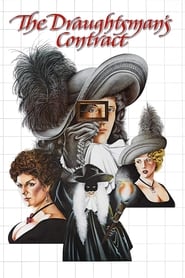
The Draughtsman's Contract (1982)
Release The Draughtsman's Contract Blu-ray (Kino Lorber)
Greenaway traces The Draughtsman's Contract from BFI-supported experimental work into a 1694 country-house murder puzzle about property, sex, patronage, and inheritance, with an arrogant artist gradually exposed as the women's instrument and victim. He explains the film's constructed world through costume color reversals, frames within frames, wide compositions modeled on seventeenth-century painting, Restoration-inflected dialogue, and Michael Nyman's ironic collision of Purcell and minimalism. Location weather, borrowed antiques worth many times the production budget, and the choice to leave the detective machinery for viewers to assemble reveal how formal control and material improvisation worked together.
- Duration
- 1h 44m
- Talk coverage
- 96%
- Words
- 14,722
- Speaker
- 1
Commentary density
Highlights
Topics
People mentioned
The film
- Director
- Peter Greenaway
- Cinematographer
- Curtis Clark
- Writer
- Peter Greenaway
- Editor
- John Wilson
- Runtime
- 108 min
- Also on
- OneSheet ↗
- External
- IMDb ↗ TMDB ↗ Find on Amazon ↗
Transcript
14,722 words
My early filmmaking career was very much helped by a department of the British Film Institute in London called the British Film Institute Experimental Film Board. And I'd made probably about ten films. either in association with them or under their auspices, and had gained a small minor reputation in small art house circuits and campuses and small film festivals around Europe. It was suggested by the then chief executive of the Experimental Film Fund that I should attempt something a little more ambitious. And since my background had been very much about documentary filmmaking, where essentially the address is made from the film directly to an audience, that I should consider probably film narrative conventions, and instead of getting people talking to the microphone, get people to talk to one another. So I went away, and after about six or eight weeks, I came up with a script called The Draftsman's Contract. And I suppose it ended up in the manufacture of this particular film, which in all essences really began my public film career. I ceased to be a private filmmaker engaged in particular fetishes and obsessions and aesthetics, which were only perhaps really
relevant to small, specialized audiences, and entered into, I suppose, the market which we now recognize as the European cinema circuit, which, I suppose, from the early 1950s up until probably the Germans, the middle of the 1970s, dominated a particular aspect of filmmaking. The background to the draftsman's contract, I suppose, is very much related to my experiences as an art student in London in the early 1960s. I was as much interested in painting theory as I was in painting practice. And amongst many, many subjects of discussion in consideration of Western cultural painting was one particular idea, was does a painter paint or draw what he sees or what he knows. That sounds rather like a sort of academic preoccupation, but I think it's been very much part of a general attitude towards Western painting. And I suppose it relates in some ways to the swing that always happens between notions of realism and naturalism, of really trying to portray what really exists in the world
and the other extreme, which is to do with what Picasso would say, painting what you imagine rather than what you see. I would have found, as I suspect many other people would be, this is a rather insular, elitist academic persuasion, but I found it of sufficient interest to wish to somehow want to debate it in the wider circle, and since I had no intention of continuing to be a documentary filmmaker, film editor, since I have lots and lots of, I suppose, ethical problems about the notion of the document or the documentary, that I wanted to put these ideas into a feature film. And I came up and developed the script about a draftsman, and we're talking about the late 17th century, so this would have been possible, who was employed by country house owners in England to draw or paint their estates, their property, their houses and gardens.
On one level, this would relate to their particular egotism, their wish to show off to their neighbours, or even maybe simply to delight themselves, with the possibility of their prosperity, their status, their sense of success would be very much bound up in their possessions. And that, for the landed gentry in England in the late 17th century, would be very much associated with their estates, their landed property. England has always predominantly, even right up to the encouragements of Mrs. Thatcher, always believed the notion of owning property was a sure sign of solidarity, of responsibility, of having a position in a civilized world. So this is a story about a group of aristocrats in the year 1694. That year is particularly significant. Worrying, arguing, discussing questions about property, money, hereditary, continuity. So it fit into that whole English country house association which has now become a certain sort of industry. The amounts, as I understand it, of the British public visiting English country houses has become endemic. I created a draftsman. who was both extremely arrogant and rather naive. And between the arrogance and the naivety, the whole plot is shaped and creates its perspective. He is employed by the wife of a country house owner to draw the country estate.
1694 is significant, I suppose, in English history for lots of reasons. It's the year when the Bank of England is founded. It's several years after the Battle of the Boyne, so the Dutch Protestant aristocracy is now firmly in place in England. It's a final and ultimate goodbye to all the Roman Catholic persuaded Stuart family. James II has just been thrown off the English throne. He makes a desperate last-minute attempt to get England to turn to Roman Catholicism. It fails dismally, and the Dutch William III of England has married the English Queen Mary and now sits on the English throne. That's not so uncommon. The concern for inheritance and old values is changing. And the Frenchified court is beginning to give way to a Dutch and ultimately German-orientated court. So big basic movements are afoot in terms of English society and English politics. A concerted effort naturally intrigues me, but I feel... 1694 also sees the introduction of a comparatively small law, but very significant for women and very significant certainly for this film.
when the Married Woman's Property Act passes through the English Parliament. This finally means that women can inherit property legally and have some control, though admittedly a limited control, over inheritance, their own children, and certainly property, and around these ideas of female and male inheritance. I thought this film revolves. I've chosen to make little microcosm of English aristocracy by taking a provincial society of neighbors and landowners. It's actually situated in my mind somewhere between Shaftesbury and Salisbury in Wiltshire in England, a rich and previously quite Roman Catholic centered area. The aristocracy there would be, I suppose, situated halfway between Bath, interesting society-orientated provincial capital, and London. There would be good communications throughout the south of England, but in some ways this community would also be very insular and isolated. So in this particular enclosed society, we create a drama. which essentially is about inheritance and plays with the equations of patronage versus sex, wealth, and I suppose notions of moral ethics in terms of the end of the 17th century. We tried very hard to create the sense of artificiality about the insularity of this community.
by certainly taking our knowledge of, for example, the costumes of the period, but extending them and exaggerating them. So a lot of the characters have, the male characters, really excessive wigs, which completely cover and disguise their features. The circumstances of the actual wig manufacture, for example, is not entirely fictional. there was a period when these full bottom wigs indeed did almost travel right forward over the chest and also in some cases ended up in sort of curlicue horns on the top of the head. The whole tradition of wigs, of course, is curious because it often relates to, apocryphally, the origins in France, in Paris and Versailles. It was suggested that The king on the French throne, Louis XIV, was in danger of losing his hair, and the origins of these early wigs was an attempt to disguise this fact. And, of course, what the king did, the whole court did, so gradually it became an important characteristic that all members of aristocratic courts should wear wigs. The actual changes in wigs fashion almost decade by decade can be very, very carefully
worked out in terms of all sorts of other attitudes towards fashion, because this wig-making activity ended, I suppose, and continued right up until the French Revolution in France, and maybe in some countries, like in Germany and Russia, even continued afterwards. In terms of the women, there was a great display of lace, Huguenot North French lace-making custom, created very elaborate costuming in lace sleeves, lace headdresses and so on. So the more lace a woman could display, the richer, not only herself, but her husband and her husband's estate could indicate. So there was an employment of the use of Spanish mantilla headdresses, which was an opportunity to show off a lot of lace. Again, can be historically authenticated, but we very much elaborated it. And there's also some color-coding concerns going on here. The first half of the film, the aristocracy, all trying to create a solidarity, are all dressed in white. But the draftsman, who's an outsider, of foreign origin, and probably Roman Catholic, but everybody else is Protestant,
always somehow gets it wrong, so when all the members of the aristocracy are dressed in white, he always comes in black. And then halfway through the film, after the essential pivotal plot change, the reverse of costume and colour coding changes completely, so the draftsman turns up in white when everybody else is in black. Like a classic outsider, he always gets it wrong. But there's a deliberate use of the actual costumes to indicate showmanship, to indicate egotism. The costumes are very, very multi-layered. Everybody's wearing a huge amount of petticoats and overcoats and undercoats and waistcoats so that they all strut about the house and gardens of this estate like peacocks. Originally, the script was to take place in a completely different milieu and in different circumstances to where it's ended up in southern England in 1694. It actually began because of my enthusiasms for a small village called Wardour, which wasn't very far away from a big...
estate called Fonthill, organized by a man called William Beckford, who created an enormous folly to reproduce the cathedral in Salisbury with one of the largest towers in England. The whole estate eventually fell into ruin and had a very, very short life. But it was an interesting situation because it was people by people who were fascinated by the French Revolution, although that was very bad politics to be associated with enthusiasms for the French Revolution in France's greatest enemy, which had been Great Britain. And William Beckford created this large estate called Fonthill Abbey, which on the opening night he invited Lord Nelson and his mistress Emma Hamilton to come and be the master and mistress of ceremonies. And the original intention was to create a scenario which was very much related to this place, whereby a foreign Frenchified draftsman would be commissioned by Emma Hamilton to make drawings for William Beckford to show off his house. Because there's very little remaining of Fonthill Abbey and because the milieu maybe wasn't of the greatest interest to me,
I eventually reorganized the script to push it back, certainly to 1694. The circumstances of the history of that time, of course, are riddled into the background. But I suppose like all certainly historical novels, although it might be laid over known and authenticated historical periods, In order to focus our attention and to encourage our emotional involvement with the characters, basically you would have a set piece of fictional characters in the foreground whose basic concerns would be like everybody's basic concerns in any age. Are the children recovering from whooping cough? Who is sleeping with my wife? How do I find money to pay the gardeners? How can I pay the grocery bill? all those concerns which are part of everybody's nine-to-five activity. The circumstances then on the front of the film, the setting up of the whole film, is related to the wife of the landowner who wants her draftsman to make 12 drawings of the country house. The draftsman drives a very hard bargain.
Indeed, and not only does he insist on being paid and organizing the garden and the house according to exactly how he wants to, because he wants to draw what he sees and not what he knows, but he also makes a social and sexual committal to the woman. And for reasons we still have to find out, after a lot of persuasion, the wife of the owner of the house finally agrees. So the contract, the contract of the draftsman's contract, is for the draftsman indeed to draw the country house 12 times, but also to have 12 sexual liaisons with the lady of the house. There are plots and subplots associated with the child in the garden who is the potential heir. There is a lot of talk about fecundity and impotency, both in terms of what's happening in the husbandry of the house and garden, but also very much associated to the... ability to produce heirs inside the country house itself. The sexual liaisons with the draftsman are deeply unsatisfactory and undesirable for the lady of the house, but for reasons we will find out later, she continues to pursue her contract.
The front of the house that faces west... We were very lucky to find a Jacobean country house, which already would have been at least 60 or 70 years old in 1694, at a place called Groombridge in Kent. The layout of the house, the original fabric, probably made in the 1650s, maybe even earlier, certainly still exists right at the time of filming in the early 1980s. We had to do one or two things with the garden in order to sharpen it up to that Frenchified Dutch gardening way of clipped hedges, small borders, use of water, and lots of big, wide, cultured spaces. So the traditions of French gardens, which came through Holland, were very much to do with a cultured, manicured garden. So the characters strut and walk and parade in their finery in the gardens of this expensive country house in southern England. And hurry up! Some of the other considerations of the film are much related to the artificiality of restoration drama.
When the civil wars were over in England in the middle of the 17th century and the king was restored in the personage of the Frenchified Charles II, there was a revival of English cultural life and part of that was the introduction again of French-influenced plays on the English stage which tended to a long way back to be influenced by classical Roman drama, but of course very much organized around contemporary subject matters. But there was a way in which the actors on stage presented themselves very formally and very frontally. You must remember that the theatrical apparatus of that time would not have allowed for very many great theatrical effects. Notions of artificial light would be very limited. They would probably have used oil lamps or candles on stage, which meant the characters would have to have stood right in the footlights to be seen very clearly. And grand spectacular events were still not really part of the theatrical situation. So that sort of language in some ways is being utilised here in obviously a totally and completely different medium nearly 250 years later in terms of cinema.
Will you be wearing the same clothes tomorrow? It was very important for me that there should be a correspondence between the actual drawing of the country house and the circumstances of what the camera sees. So what the artist, what the draftsman artist sees and what the camera artist sees needed to have a great correspondence. And every time you see a hand in this film, it's my hand actually drawing the landscape and the people concerned. It has been a criticism, this film, which I fully accept, but was very fully aware in knowledge of doing that the slight anachronism of using a graphite pencil. They presumably would have used graphite, but it would have been gripped in some pencil holder, making a much more clumsy and unusable drawing vehicle. But I did accrue to myself that this particular anachronism would not greatly disturb anybody viewing the film. There are, as you can see, deliberate set pieces. Here, in the evening, the sunlit fabric of the Jacobean building is seen splendidly laid off in association with all these mannequins pirouetting and performing in the accepted conventional mannerist way in which we now regard the ethics and etiquette of this particular period.
The draftsman uses what could only be described as an optical device. Canaletto certainly used one. Recent publications by David Hockney have suggested that artists at all periods after the Renaissance, and indeed during the Renaissance, certainly resorted to all sorts of optical equipment in order to improve the artificiality of their medium, basically to do with a very simple proposition of putting the three-dimensional world into a two-dimensional representation. And the optical device we've used here, I think, was certainly used by people way back in times of Dürer, for example. There are various etchings and drawings and prints by Dürer, which shows something very similar. But what this also implies, this optical device, is constructed as a frame. And obviously in terms of making films, the frame has to be considered. So if you consider the wire frame in the viewfinder of a camera and make a comparison with this particular optical device, you can see the similarities of vision. And obviously it becomes a grid, a device in order to encourage the proposition which this particular draftsman is interested in, is draw what you see and not what you know.
The notion of the frame, then, as a filming device and also as a drawing device, is also related very importantly to the notion of a frame-up. And I suppose the whole plot here, that we imagine the draftsman rules the roost and governs the action, is in fact continually, slowly, action by action, scene by scene, being framed. so the notion of the subject matter of the film to frame somebody that is to put them up as a victim of a conspiracy of some description is also relative to the way in which the item which the film itself is very self-consciously framed so the notion of the form and the content should ideally be brought very, very closely together. The actual scene we see here now, which is an even meal taken out of doors, has somehow become a device initially, not consciously, but more recently, I suppose, almost in a deliberate attempt to acknowledge and pastiche my own activity. So that in every film subsequent to this, there will always be a grand tableau vivant sort of situation of a meal. The meal is a getting together, not only of course to eat and to drink, but for social intercourse, for ability to exchange views.
in a setting which is both relaxed and also very, very decorative. Scenes like this, of course, are very much assisted by artificial electric light, but it was also the concern for myself and the cameraman at that time to be able to re-enliven, reinvent in some ways, if you like, the technology of candle power. We tend to forget very easily, historically, about notions of artificial light, which we take so much for granted. So much of our lives now are deliberately organized under conditions of artificial light. But when you consider that the maximum ability to create artificial light in those times was very limited, but one should also not forget that the very edges of the limitations were pursued. So there was huge state-of-the-art technology, if you like, in organizing the maximum amount of light to be obtained from candles. The actual origin of the plot is autobiographical. I was very keen of drawing myself. I was trained as a painter initially and often spent a lot of my time whenever it was possible, on holiday, vacations, weekends, drawing.
straight from life, and one of my particular interests was architecture. I had spent a lot of holidays in the place I've already mentioned called Wardour, where there was a lot of 16th, 17th and 18th century country house building, and it's always extremely pleasant to sit in the hot English sun and leisurely draw. I had a very young family at that particular time, and often together, the four of us would... spend a lot of time, as much time as we could, away from London on holidays and vacation in the countryside. And I discovered a house on the borders of England and Wales, not far away from Hay-on-Wye, where I made a deliberate attempt to create a program for myself to draw a fairly modest early Victorian house. But the weather was perhaps unusually continuously fine in England. And for about three weeks of amazing weather, I drew this particular country house, but was made very much aware if I was going to draw what I see and not what I knew, that as the sun moved around this house, then the shadows changed dramatically. So I set myself up a series of permanent vantage points by moving chairs out of the house and situating them in the garden.
so that very early in the morning, from breakfast till mid-morning, I would draw maybe the north side of the house, and then when the shadows moved so much that it changed the complexion, I would move on to the next seat, so that from, say, mid-morning until lunchtime, I would draw another view of the house, etc. , on into the afternoon. In particular circumstances of this autobiographical event, there were about, I think, five different places in the garden. But also, since I was on holiday and also enjoying myself, there were constant interruptions, which I made no attempt to avoid. Playing with my children, doing a piece of gardening, going to the shops, having meals, simply falling asleep in the sun was part of the enjoyment. And in a sense, these autobiographical backgrounds creates the whole phenomenon of this film. It's a story about a draftsman who draws a country house and is constantly interrupted.
I have to hurriedly say that the circumstances of his contract and the uses of his drawing put for both sexual reward and financial reward, of course, were far away from my particular real proposition. This was a fictionalization of an autobiographical event. We have taken you at your word. There was another instruction, but... So the first third of the film then, it sets up all these ideas elaborates, I hope, in extremely beautiful pictures, an evocation, a fictional evocation, of course, of a long-vanished age, of a proposition, of creating a circumstance where a house is written and recorded and made possible on a representational medium, which, of course, in this case is drawing. But what the draftsman is only slowly beginning to realize is that he is drawing things that he does not know anything about. A series of clues which are apparently leading to the possibility of a murder. Which also suggests that maybe the genre of this film is not a thousand miles away from all that very...
cinematic genre of filmmaking, which could be represented, I suppose, by the name Agatha Christie. So this is an Agatha Christie story about a country house murder. Not just Agatha Christie herself, but she represents, I suppose, a small part of a huge genre of English literature, which would certainly go back to, I don't know, Wilkie Collins' The Woman in White, which was written very early in the 19th century. So it would very much relate to all the tropes and all the characteristics of a particular way of organizing information related to that particular genre, which would be very, very familiar not only to English-speaking audiences, but also to non-English-speaking audiences as well. So you could say that this elaborate film in 1694 is no more than a historical Agatha Christie story.
Here you see a particular site around the country house where suddenly the draftsman realizes that he's been drawing a shirt which is hanging on a branch of a tree. And it's almost as though he drew it before realizing what it was and is disgusted to find that it should not be there and begins to realize that something is afoot of what he was not really aware. And just at this pivotal moment of the film, An explanation is on offer when the young woman associated with the house, Mrs. Talman, actually begins to make an explanation of telling the draftsman really what he has been doing all along. And then, to his chagrin and disappointment, he realizes, in fact, that he has become literally the victim of a frame-up. I'm grieving because Mr. Herbert is away.
Yes, Mother. However well you organize a film script on paper, you inevitably are going to have to take care of the circumstances. for example, here, the weather. We were up early at 6 o'clock in the morning filming in this extraordinary idyllic place, but the mists were low. It was suggested we should all wait until the mists cleared, but I insisted we should use these characteristics of the English landscape with a view to some extraordinary, beautiful filmmaking, which, of course, was entirely out of our control, but just a question of the meteorological conditions recreating in our prepared environment in very, very special pictures. From this particular point of view, the draftsman has discovered the back of the garden, in fact, is a ladder. He still has got not enough self-knowledge underneath his arrogance to presume that the shirt on the tree and the ladder at the back of the garden have actually been positioned there for a particular reason.
And it'll only slowly dawn on him in his conversations with the woman in the house in the garden that, in fact, he has become the victim of a conspiracy. I cannot meet you again. Mrs. Herbert, sit here. Move your head into the shade. Almost inevitably, and I suppose it's true of many filmmakers, the initial filming does produce so much material, it's not possible. within the orthodox confines of a normal 120 minute average length film to ultimately use everything that you shoot. And indeed, the first cut of this film was something like three and a half hours long. And I had to, for all sorts of very good distribution reasons, try and cut it down to about two hours, about 120 minutes. But in the initial concern for the script writing and my fascination with the period and all the aesthetic ideas that I wanted to put into it, There are a whole range of subject areas which you could look at this film and be entertained and informed about. For example, it is initially, in terms of the long-form version of the draftsman's contract, a sort of exegesis about the different ways in which Roman Catholics and Protestants treat their servants, how essentially the Roman Catholics embraced the servants and brought them into the household,
where it was the Protestant ethic to push the servants away and to make them live at the top of the house and to have as little personal and intimate contact as was possible with the rest of the house. There is a considerable use of the political background. Again, it's 1694. The Protestant English have been victorious in Northern Ireland, much to the disgust of the Catholics, and around this date begins that long and long, painful, painful history history of antagonism between Roman Catholic Ireland and Protestant England, which certainly started many years before with the early English medieval kings and continued with Oliver Cromwell and still, of course, is part of the political scene even now today.
If one theme then, or one sub-theme, was to do with the notion of how English aristocrats dealt with their servants, and another theme was to make examinations and comments about the known historical, authenticated historical background, all sorts of other social activities, like, for example, here's a scene which shows how households bleach their linen simply by laying them in the lawns and over the fields and hedges and trees, in the garden, so that every time the sun came out, the laundry would be busy, dragging the linen in the open air to take benefit of the sun creating the whiteness of their sheets. Who will be your husband's direct heir after you? A future grandson, Mr. Neville, though not after me. Mr. Herbert does not believe. It suddenly becomes apparent that in all the relationships between the draftsmen and the women of the household, the owner of the house is absent. Various comments are being made about this, and gradually it'll be established that probably the master of the house is away in Southampton, probably on a sexual adventure which of course is to the detriment of notions of fidelity in terms of the house. But it's upon the bad use of the women folk inside the household
that some of the plots will develop. Another phenomenon of this period is the habits of the English aristocracy to educate their sons abroad on what generically could be called the Grand Tour. English educational processes really travel along a red line, which... starts in London and continues through Paris and probably on through Geneva and ends up in Rome, or if you're particularly rich and adventurous, maybe all the way to Athens. So the English country gentleman probably knew a lot about French and Italian culture, but very, very little indeed either about Spain or certainly looking in the other direction about Germany. One of the reasons why the villain of the piece, if you can describe that, is this rather pompous German who seems to sit very much outside English society, but also some of the purposes of the Grand Tour was to educate by travel. And since travel, certainly even for the English aristocracy of the late 17th century, would also mean tourism. In a sense, these aristocrats were highly powered five-star tourists and they would obviously come back with mementos. And if you went to Rome and if you went to Greece,
Those mementos would be articles of Roman or Greek history, so they'd bring back garden statuary, they'd bring back newly excavated Greek statuary or Roman statuary, or in some cases they would even get it remade, so a lot of fakery was going on at that time. There was a huge army of painters and antiquarians in Rome who deliberately manufactured artefacts for the highly gullible English aristocracy to take back home. In some cases, this was to do very largely with a desire to show off to one's neighbours and one's friends, and also had a lot to do with the typical English notion of the fear and hatred of foreigners, a general English xenophobia about anything towards foreign, which still exists today in terms of England's lack of desire or interest in joining the European community, so these characteristics still continue. And in this particular case, we played with the conceit that the aristocrats of this house either did not want to or could not afford to bring back statuary from the ancient world, so they invented their own. And in these circumstances, getting minor servants of the house to pose as naked Greek statuary, with all that pertains amongst their shrubbery and their gardens and their lawns,
What actually happens in this film is this man who recreates the notion of foreign statuary begins to extemporize on his own, freelance his own possibilities of interpretation, and becomes almost associated again in a very English sense with that sense of genius, loci, a sense of place, the spirit of the place personified in a figure which often appears in English literature like, for example, the fool with King Lear, or the figures in Midsummer Night's Dream, the little green man, which would refer back to even pre-Shakespearean uses of such a metaphor. And there are in England many, many public houses called the Green Man, which again does represent this ancient spirit of place. The other implication here is that In terms of the tradition of the fool or the jester who can behave in ways which are deeply Léger Majesties, so he can make comments where other people dare not, this garden figure personifying notions of Greek statuary can take risks where nobody else can. And of course, the only person who can really see him is a childlike innocent like himself. So the young child is always aware of this character.
in the gardens where either the adults pretend not to see or maybe are so concerned and so arrogant with their own affairs in fact they actually do not see which again is another comment on the general theme of the film which is about notions of seeing and knowing. The animosity between the draftsman and the potential heir, this Mr. Talman, this imported German, who has married the daughter of the heir of the house, increases as the film progresses. The German Mr. Tallman may be, again, tied up inside his own egotism, is somewhat naive and is easy bait for the playing and the manipulating of the draftsman. Your impertinence is too expensive. Would you help me be impertinent for nothing, sir? For nothing, Mr. Neville, I would have you run off my property. Good day! Your property, Mr. Tallman. Mr. Tallman, you've forgotten your riding boots. They are not mine, Mr. Neville. I felt sure that they were yours. As the first set of drawings are completed, the inclusion of these clues are accidental items in cases of the ladders. We've already mentioned the shirt, and now the boots appear in the frame.
And they need some explanation. And now we are literally about halfway through the film and this explanation is beginning to happen. Though again, the draftsman not fully aware of the circumstances that surround him is not absolutely cognizant exactly how he is involved in this plot. The music for this film is by Michael Nyman. And Michael Nyman and myself, for a long time, tried seriously to consider the possibility of a true unity between the uses of music, not just as additional ways in which to create mood, but also to find a way to structure. And a long time before the film was ever committed to camera, we had had discussions about ways and means in which creation of picture and creation of music should work together as a very happy balance. And the original proposition was simply rather like the draftsman himself was commissioned to make 12 drawings, so Michael Nyman was commissioned to make 12 pieces of music. The actual correspondence that would exist between each site of the garden and each piece of music was always left a little fluid so that we could manipulate.
But basically that criterion followed through for the total manufacture of the film. Michael's music, certainly at that time, coming from a minimalist tradition related to Phil Glass and Steve Reich and all those musicians who came out of New York at the end of the 60s and the early 70s, was ideally suited, I feel and think and still believe, for what was going on in this film. The music itself often... very rare, I suppose, in musical Western traditions, has notions of a great sense of irony. And irony is always playing with two things at one and the same time. It's playing with original notions of composition and mood and feeling, but also at the same time making a comment on it, which is something which is quite difficult to perform in music, though obviously in literature. by far more easy and acceptable as a way of understanding phenomenology of the world and the circumstances and events. So Michael's music, though apparently using Purcell and its orchestration and origins, but also being very wise to the musical adventures of minimalism and what had been happening in America, was playing deliberately with
different ways of looking at the music, and often these are used in quite severe and elaborate counterpoint ways, so that something dramatic and serious can be happening on the screen, and the music apparently is doing exactly the opposite, and then we can vice versa that around, so that something quite frivolous can be happening on the screen, but the music has become very serious. And it will shortly be time to bloom. Is it true, Mr. Noyes, that you would wish to see Mr. Herbert dead? I've no great love for Mr. Herbert. Goodness, Mr. Neville, a provocative question. As is characteristic, I suppose, of genre detective writing, certainly in the English tradition, the plots are surrounded by all sorts of red herrings, if indeed it's ever possible to have a red herring, something which is completely irrelevant to the plot. I sincerely believe that nothing ever is a red herring and everything can ultimately be related. But the deliberate writing of the detective novel is to send the reader off on sense, which either end in cul-de-sacs or dribble away into insignificance. And the circumstances of that particular way of organising material is a characteristic too.
of this film, but there is no loose end. Every single thread, every single hair that started is bolted from a bush, in some senses, adds to the fabric of the total. If only to add circumstantial details to create circumstances beyond circumstances, which ultimately, when the whole film is united, will fit together very beautifully in a very, very full way to complete an entire jigsaw puzzle. Here is the freelance artist performing again as a servant, pretending to be a fountain. That shirt, Mr. Neville, is prominent enough in your drawing. Now comes the central speech of the film, when the young woman of the house confronts the draftsman and actually explains to him, this rather arrogant but naive outsider, exactly what has been going on and she propositions to him that he in fact has not been drawing what he should be drawing but has been demonstrating the evidence of a very elaborate plot which explains the disappearance of the owner of the house who is now very sincerely believed to be dead and possibly murdered and therefore by drawing clues that lead to that murder
that in a strange way the drossman is implicated in the man's death. A ladder usually put to use for the collecting of apples. And in the drawing of the laundry, there is a jacket of my father's slit across the chest. Do you not think that before long you might find the body that inhabited all those clothes? I am thinking very hard, madam, about the drawing you've left out. And you, madam... were in that drawing. Are you sure, Mr. Neville? Well, the sound of you was in the drawing. You were playing the spinet. I thought, Mr. Neville, that we had discussed the pictorial equivalence of noise without conclusion. Perhaps it was not me playing the spinet. Have you thought of that? No, madam, was it? You see, Mr. Neville, you are already beginning to play the game rather skillfully. Four garments and a ladder do not lead us to a corpse. Mr. Neville, I said nothing about a corpse.
Madam, you are a genius. It is as if you had planned it. Your father is in Southampton. He would not miss his clothes or notice the ladder. In association with the notions of framing, the way that the pictures are organized now, the protagonists inside the film are seen within the frame within the frame. A self-conscious attempt to lead the viewer, to make connections between the artificiality of the film frame the artificiality of the picture frame, and indeed the circumstances of the frame-up that's now being explained to the draftsman. I look forward, Mrs. Talman, to the eventual purpose and outcome of this ingenuity. The actress, I think, rather brilliantly playing this fragile, dangerous young woman is Anne Louise Lambert, who had made a considerable success in a very popular Australian art movie called The Picnic at Hanging Rock. where she turned up as the major schoolgirl, who again was involved in another ambiguous, mysterious disappearance of schoolgirls on a picnic in association with the suburbs of one of Australia's capital cities. The actor playing the draftsman, Anthony Higgins, was deliberately chosen because of the...
body language that the man had, and I think it's always a characteristic of casting. I always held a somewhat, maybe to some people, reactionary point of view that actors can really only play one person, and that's himself or herself. So the casting is extremely important for me. So though it's not entirely Fellini casting, that is to say, characters chosen not because of the way they speak or the way they emote, but simply because of the way they look, that would certainly be important for me. There's also a way that the casting sessions for me, which are often very troublesome and anxious times, because I am so fearful of not finding the right characterization for the character I want. But I do believe that through extreme, I hope, hard work, but also a certain amount of luck, we found here two characters were absolutely fitted for the roles that I had written. As I have heard tell, a talented draftsman,
Then I could imagine that you could suppose that the objects I have drawn your attention to form no plan, stratagem or indictment. Indictment, madam. One of the instinct problems about writing dialogue or creating circumstances for historical film is to make sure that the situations and atmosphere and the language is correct. It's often a very tricky problem because You don't simply want to create archaic dialogue, which on the one hand becomes incomprehensible and somehow insensitive to modern ways of communication. But on the other hand, you don't want to create anachronisms in the language so that simply by using the wrong word at the wrong time, words which probably could never have existed in the end of the 17th century, that you completely destroy and throw the atmosphere. and make people fearful and anxious that you really have an understanding of what's going on. I certainly looked at restoration drama and plays, most especially Congreve, who indeed had talked about the vicissitudes, the relationships between men and women in married life. So there was an attempt, I suppose overall, first of all to make the language elaborate and convoluted, but again, not so convoluted or elaborate that it became either
pompous or boring to listen to, but also to use forms of very formal address in situations of informality. So here we are talking about sexual matters, but the characters are always referring to one another very formally, certainly by being excessively over-polite, like only the English can, to be so polite, in fact, that it is an extreme and distinguished form of rudeness. but also to make a presentation of the language very, very clearly, certainly to acknowledge the notions of written text as well as of spoken text. So the film has now reached its middle point, and the draftsman has found himself not being the organiser and purveyor of activities, but to be its victim, because the second woman of the house has now turned the tables completely on him and has insisted... on a contract exactly like her mother's, so that another 12 drawings are now ordered to be manufactured for the house, but this time it's the woman who demands sexual satisfaction from the man. The man himself, of course, could consider himself lucky. He now has 24 sexual liaisons with these two interesting women of the house in order for him to complete his job as a draftsman.
But these women have designs, of course, because there needs very much to be an end product. Remember that the potential male heir of the house is either this little child with no knowledge that he will survive, and also a missing husband who's also believed to be now a corpse. So how are these women going to continue the house without an heir? And we can begin to understand that this draftsman has been entirely trapped to become a stud. to provide either the old woman or the younger woman with an heir who will be completely in their control so that they can continue to live and prosper in the same estate. The draftsman now finds himself to be either in the lucky or the unlucky position. of being a sexual victim. From two o'clock in the afternoon until four, the back of the house and the sheep pasture... Here we can see again a deliberate revisiting of the notion of the house being framed in all its meanings. But also we were extremely lucky. Here comes a dark cloud which is gradually moving towards us, an opportunity for visual virtuosity which was not to be avoided.
So the camera lovingly and lingeringly just simply waits and watches for the sun to come closer and closer. The reason I suggested you come here... It is probably a truism that the country that has been most drawn, most painted and most photographed is England. It's not such a large country, certainly not as large as Italy or France, so the ability to cover it almost frame by frame, scene by scene, is not so excessive. The English countryside also very rapidly changes its characteristics, very flat. rather like Holland in East Anglia, but very rapidly develops into the mountainous areas of the Midlands and North Wales. There are so much geological different formations of this country right on the northeast corner of Europe, provides continual and repeated new vistas for landscape artists. And I suppose...
Even in England, there's no such place now that we can truly and honestly call wilderness. And again, because it's probably the English who created the notions of romanticism. They were the first people to climb the Alps, the first people to actually bother to consider in climbing a mountain. The only people who ever climbed mountains before the English were probably simply the shepherds, because nobody saw any point in simply climbing a mountain for its own sake. But the English, with their Lakeland poets and people like Tennyson and Coleridge and De Quincey and... Keats took a great and fascinating, exciting, romantic notion of the landscape, primarily, of course, the English landscape. And then we began to discover Europe, rather like Lord Byron, who eventually traveled extensively in Italy and ultimately ended up dead in Greece. The notion of English romanticism spread all across northwestern Europe and became a feature which influenced French and certainly German poets and writers, people like Goethe. And so I suppose the whole notion of discovery of landscape basically was an English invention. It is still said that the largest percentage of most Englishmen's earnings are spent on their gardens. Did you hear that a horse had been found at Strides? Now we've passed the midpoint of the film.
and the circumstances of the characterizations and the plots have all been laid bare. Like in always now, we gradually move to the denouement, so it's now a step-by-step examination of how the women take control. The man thought he was entirely in control for the first half of the film, and now the whole situation has tipped on his back, and now the women are entirely in control. That's particularly exemplified by the activities in this sexual liaison which takes place in a bath. The man no longer calls the tune, it's the woman who calls the tune. What significant assumption are we to make, madam, of a wounded horse belonging to your father, found on the road to Southampton? The first assumption is that the horse has no business being there without my father. And why is it wounded? And what does that imply for my father? And the second assumption will no doubt implicate me, since the saddleless horse has now found its way into this morning's drawing. Mrs. Talbot, why don't you now leave the window and come to the basin? Don't worry, your position of superiority will not be diminished. I will still have to look after you. Since I have taken valuable time to
fill this basin with a little water. Why not share it with me? Though we entered into some sort of time walk with this beautiful house in Kent in England, It was often, even under these circumstances, sometimes problematical to shut out the 20th century. And some critics of the film have often said that they can see a distant combine harvester or arterial roadway in the background. I have to completely and absolutely deny that there's ever a possibility. But I suppose that those sorts of criticisms would always be apparent. certainly if somebody wanted to break or fracture the ice of the ability to recreate a period. But the house was indeed owned by a man who governed a very large English insurance company. He was an elderly man and he was very keen on cricket matches. And he would sit very quietly with his radio right in the top of the house and listen to cricket all day while we performed with actors downstairs. And it's also been said by some people that if you listen very, very, very carefully indeed in some scenes, you can hear a distant cricket commentary. But I'm afraid, again, that's not true at all. Away from the house, Mr. Neville, I...
I feel I grow smaller in significance. Madam, what signifies does not grow smaller for me. Your significance, Mr. Neville, is attributable to both innocence and arrogance in equal parts. Ah, you can handle both with impunity, Mrs. Toland. But you will find that they are not symmetrical. You will find that one weighs heavier than the other. Which do you think is the heavier, Mrs. Tarman? Although I have to confess it's a retrospective comment, I suppose the whole film, which is very much a landscape film, figures in a landscape film, which would relate to the traditions of Claude Lorrain and Poussin, two Frenchmen who spent most of their lives and their painting careers in Italy, and had an enormous influence not only on French landscape, but certainly on English landscape, There is a way that the three predominant colours, I suppose, of this film are black, white and green. The black and white essentially of the costumes and certainly the green of the English countryside, which maybe again retrospectively would make a reference to those titles of paintings that James McNeill Whistler would refer to his own products, things like Symphony in Black and Blue or Nocturne in Grey and Yellow.
So there's sort of like an overall color-coding characteristic, which is certainly true of all the exterior shots of the film. The actual use of color in the cinema is often quite undersung. You would think it would be one of the prime attributes, but I can think of very, very few films which in their entirety had a great concern for notions of the sheer use of color. I can think of a number of films which would relate directly, in a sense, to be a homage to painting. I can think of films based upon the paintings of Renoir, for example, or even Luce Lautrec, which would deliberately pastiche and borrow the coloring. But apart from one or two films, maybe like Godard's Pierre Le Fou, who uses primary colors in a very, very self-conscious way.
There are very few films that would actually consistently, frame after frame as an entirety, use actual the language of color as one of the organizing principles. You can see very much here, not only the use of symmetry again in terms of classicism and the ways that I like to compose a perfect picture. There's no American cut here. Every figure is seen in full length, the full classic figures in a landscape. So the human anatomy is not abused by being cut in any way by the camera. but also you can see very much the notions of the color coding. Here, whereas once upon a time, the family were all dressed in one color and the draftsman in another, here we see it fully exemplified. So the draftsman is literally the black sheep. And if you make a reference to all those headdresses, which some people have regarded as being rather sheep-like, the analogy is particularly pertinent.
Your drawings are full of the most unexpected observation, Mr. Neville. The company has now come together to drag, as it were, for two-thirds of the way through the film, all the ends, to make an explanation to the draftsman himself exactly what is happening. But even the other members, shall we say, of the family are still not fully cognizant of the drama about. almost within two or three seconds now to evolve, which will be the ultimate final announcement that indeed the head of the house has been killed and his body has been found. So what was initially playful and frivolous has suddenly become deadly serious.
What do you want, Mr. Clark? Can you come with me, sir? It's important. And as we might have imagined that the husband who has died or been killed or murdered or assassinated on the road some distance from the house, his body is actually dragged out of the very moat that surrounds the back end of the house.
that this horse has a rider. But is that rider a real man? Or is it a statue? Has there been a witness to the murder? Now, in the tradition of all Agatha Christie stories, there has to be an explanation, a denouement, and all the characters who might or might not be witnesses now continually converse and confer, so that we, the audience, have to make our own judgments about who is responsible for what. I'm shortly to be accused of the murder of your husband. and I'm determined to confront that eventuality well protected. And who will accuse you? As a filmmaker and as a film editor, in the years before this film was manufactured, I had developed for myself, I suppose, a personal style which often consisted of massive over-editing. So often the shots were extremely short and the whole scenic appearance of the manufacturer of the film would be very quick and frenetic. But I was learning to
rely a lot more upon the camera as being a single-eye observer. And we now come towards the latter part of the film, where I deliberately held the shots for a very, very long time. The length of a 35 magazine is probably just over 10 minutes on average, though you can, of course, get larger magazines, but that's the average. And I was now virtually using up a whole 10 minutes of 35 magazine film time. Again... not so extraordinary in terms of other film experimental activities. But for me, this was the beginning of a whole new attempt of, as it were, relying far more on the camera rather than on the editing, and, of course, on the abilities of the actors and actresses to hold a scene together. without massive cutting. I suppose a typical American cut of a scene like this would be to take both actors POV and constantly swap from one actor to another, often with putting the secondary character of each dialogue scene probably in the foreground and probably out of focus. But I was trying to determine...
as I once described it, to have no prepositions in my films, no shots which would be merely there in order to make sense of the verbs and the adjectives. What I wanted to give the audience was the verbs and the adjectives without the prepositions and without the adverbs. So an ability to utilise actors and actresses who'd had a lot of theatrical experience on the stage, and that was certainly true of all the actors I used in this film, and therefore did not feel isolated or uncomfortable about holding a drama on their own, with their own sense of responsibility for long spaces of filmic time. You have 12 drawings, and Mr. Neville has a reputation. What for 12 drawings executed privately? Consider, madam. The drawings can be construed as an embarrassment to you, and the original purpose and significance of the drawings as a gift to your husband is absolved. When the film first came out, it came out, I suppose, like a lot of characteristics of the manufacturer of the cinema that I'm associated with, often with extreme polarizations of appreciation or disappreciation. There were people who...
really hated this film for its deliberate artificiality, for its self-conscious organisation of artificial speech and artificial manners. But on the other hand, and especially amongst the French, there was enormous enthusiasm for a film which was prepared in minute detail with a great sense of seriousness, not only to reproduce... a sense of conventionalized look of history and all its details, but also to spend time about making mountains and pyramids of argument and counter-argument. I suppose a particular Descartian intellectual view of appreciation of cultural artifacts, which we identify with the French, would have made this film particularly applicable, and indeed it was. a great success to esteem in France and remains so to this day being the subject of many conferences and lengthy commentaries and exegesis and minute examination of all the circumstances of the film. I can supply you with a little more than gossip. I'm in a position to invite you to help me elaborate and decorate such an item, an entertaining item.
We need not work too hard, for the rump of the matter has been well laid. And what real benefit do you think I might gain from this exercise? Amusement, and a certain delight in a symmetrical stratagem, and the satisfaction that our betters might be seriously discomforted, and who knows, perhaps, two parterres and a grove of orange trees, if Mrs. Herbert is generous. And why Mrs. Herbert? Because I think you will find she is mistress of strategy. There's a painting on the wall here which actually shows the betrayal of Samson by Delilah, who is experimentally using scissors on her own hair before cutting the hair of Samson. And this, obviously, the story of Samson and Delilah is always a symbol of impotency, of emasculating a man by cutting off his hair. And, of course, that acts as an analogy and a metaphor for the circumstances of what this film is all about, emasculating the males of the inheritance potential of the house in order to put, rather like these women all becoming Delilahs, to put the power of continuity and masculine inheritance into their hands. Straightway for capital audacity, for bravura in the face of grief.
Mr. Herbert is no special excuse for such generosity, but... As an aftermath of the post-mortem, the women are now deciding what to do about the draftsman and what to do about his drawings. And I suppose it's very much part of the art market cliché. There's a discussion now that the best way to get rid of the drawings and therefore to destroy all circumstantial evidence of the potential involvement of everybody in the murder of Mr Herbert, the owner of the house, the best way to get rid of those drawings is to sell them. And the person they want to buy and therefore doubly dupe is Mr Talman himself. who not only has been a witness to his wife's infidelity with the draftsman and implicated in the murder of Mr. Herbert, but is now being forced to pay for it as well. George, looking like Jacobite, with a palette for a shield and a quiver full of brushes and a pen held crosswise in his teeth. With ink-stained fingers. What is in his fingers? Unmentionable. Another pen. It's like a pen. Is it a pen?
A little pen. The pen is mightier than the sword. We will forward 400 guineas to this scabrous monument to a pen. And our receipt will be Mr. Neville's drawing in the bathhouse. The one with the little dog wagging its tail. Mrs. Herbert does well to sell them. How much will they bring? They are worth what those who buy them wish to pay. Now that the deed of murder and indeed the drawing of the house has been completed, there's a winding down now and a continual proposition about who is responsible. All sorts of areas of ambiguity are still kept deliberately opened. But there's a gradual dawning now about Mr. Talman himself not only being in some ways emasculated and removed from the inheritance of the house, but also being deeply humiliated in other ways. The cameraman and I regarded this as a virtuoso shot. The only lights, of course, come from the lights which are held by those particular lanterns. And as the gentlemen walk up and down behind a series of bushes, so they partially disappear and reappear.
And toward intents and purposes, you can't see the gentlemen's faces, so basically you're watching a long shot, which is just simply two moving lanterns. Stand in an enviable position and consider the neatness of it, sir. The estate would have an endurable memorial, which is part of the landscape, instead of 12 perishable items, which are mere representations of it. I fail to see why Mr. Seymour's presumption should gain him a part of my son's inheritance. Maybe there again, Mr. Seymour will be doing you a favor, sir. What do you mean? By taking away the possibility of your son ever seeing them. When you have one, as I'm sure you will. Why should he not see them? Because, sir, he might perceive the allegorical evidence in them, which you might, sir, be stubborn enough to deny. Mr. Neville had no use for allegory, and I am unlikely to miss what my son would appreciate. An allegorical meaning, sir, that might involve his mother. What? My wife? How is that? It is fancifully imputed, sir, that Mr. Neville saw you as a deceived husband. How was I deceived? My liking of Dutch genre painting is also perceived in this film.
Not only the circumstances, of course, just after the golden age of Dutch painting in Holland at the end of the 17th century, but we have one of those situations whereby, as in a Vermeer painting, you can see back and back and back through the filters that would lead us into the deep recesses of the house. And also, characteristically, there is hanging a very typically 17th century Dutch brass chandelier, the most famous of which, I suppose, is painted in the paintings of Vermeer in his famous painting called The Art of Painting. Your speech, Louis, is becoming meteorological. You must explain your conceit. It is no conceit, madam, but Mr Neville's drawings. I was sure you believed Mr Neville incapable of complicated meaning. What has he done now? It is mostly what he has undone. It seems to be your person. I have no control over Mr. Neville's drawings. He draws what he pleases. He is not paid to draw for his own pleasure, nor, madam, for yours. What makes you think he has done that? Probably the way it looks. How does it look? The way the world sees it. The world? The particular use of a filmic vocabulary which never cuts the figure.
and always puts the full figure into a frame, a quite elaborate interior frame here, which is very carefully lit with lots of references to European 17th-century painting, there is, I suppose, the disadvantage that the opportunity for psychological involvement by looking at characters' faces, by watching how the details of their glance or the use of the eye very necessarily the wide shot doesn't allow you to do that. What inevitably is happening, though, that the film now being seen on a television screen, inevitably this delight in the wide shot is not, of course, seen as its most advantageous. I used to believe that cinema could be seen as having a full vocabulary of 26 letters, so that's to say all the consonants and all the vowels, Whereas television basically, because of its usage and also because of its language, basically only had an alphabet of the vowels, so A, E, I, O, U, and sometimes Y. So there was a crudity about the television picture. It could not handle extremes of dark and extremes of white, so very, very dark scenes were difficult to perceive and read successfully, and too much whiteness would create situations of bleaching.
Also as regards the sound, the parameters of sound on television, remember we're talking here the early 1980s, were never as sophisticated as you could get with Dolby sound, for example, in a cinema. And also questions of colour coding, the richness of the celluloid imagery would always be in excess of what was possible with a cathode tube. The Times, of course, have moved on, and the whole post-television vocabulary has created, of course, with the digital revolution of manufactured pictures now with the most cutting-edge of technology has improved all that. all those traditions. But I still have a nostalgia and belief for the use of the relationship between an audience and a screen in those big old-fashioned cinemas where the screen was bigger and noisier than you were. So in a sense you were always, as Goddard says, looking up towards the silver screen, so you look up towards cinema and you look down towards television, which of course has metaphorical implications.
beyond the mere description of what actually physically your body and your eyes do. Just to break away from my thought line there at the moment, the most important point of this scene, where the character's remaining longsword has suddenly deliberately been broken, so the woman walks forward. So, in fact, now the figure is cut just below the thighs in order to deliver the final stinging sound. blow towards her husband's masculinity. I plan to destroy them. Oh, it would be a pity to destroy them. You are concerned that posterity will know of your duplicity. Louis, they contain evidence of another kind, a kind more valuable than that seized upon by those titillated by a scandal that smears your honor. Evidence that Mr. Neville may be cognizant to the death of my father.
To resume the conversation about the characteristic vocabulary differences between cinema and television, this old idea, in a sense, of them having the same potential of language, the alphabet, but essentially film having all the consonants and all the vowels and television only having the vowels, I think probably is a very wrong way of looking at it because television has its own vocabulary, of course, even though those consonants and vowels might be different, so it's a different set. of building blocks in order to make the final image. And now I think we can very safely say with post-production sophistication in television techniques that the potentiality of television vocabulary, the moving image, is far more sophisticated than we can organize in terms of what could be described at least of conventional cinema making. The ability to change in a thousand different ways the characteristics of a picture in terms of contemporary post-television technology is absolutely amazing now. I think the notion of actually making films like this now is almost like an irrelevance. I think we should really use the characteristics of the sophistication of the tools that we have in order to make a product which is...
are really applicable and sophisticated enough to suit contemporary sophisticated imaginations. There's a particular interest here I've always had in landscape and landscape gardening, and we introduce an enigmatic figure here dressed all in black with a rather Puritan hat, now currently on the right-hand side of the screen, who is a man who actually has the name Van Huyten, a Dutchman. And in a minute when he makes a contribution to the conversation, he speaks in Dutch and his conversation is deliberately not translated. He has come at our request to soften the geometry that my father found to his taste and to introduce a new ease and complexion to the garden. Mr. Van Huyten has worked in the Hague. And he has presented Mr. Talman with some novel introductions, which we will commence next spring. He is a draughtsman, too. Mr. Neville has helped you in making a useful example, my lady. His drawings may be of great importance to you, and the following rainy night will be a treat for you. But it is only to give an idea of an archaistic view, of a problem, of a good garden.
which of course implies that Mrs. Talman would perfectly understand what that Dutchman was saying, and therefore has a linguistic ability which would be far in excess of what the draftsman would understand. But I think also 1694 sees the end of the formal post-Jacobian English garden, so away with all the characteristics we'd recognize. from a French Versailles or Vaux-le-Vicomte, which had been adapted by the Dutch in a much smaller way. So there was a particular characteristic for Dutch gardening, which would be the French gardening on a small scale, small privet box hedges, use of bulbs, very organized gravel paths, and a sense of an interior room outside so that the garden would be like your drawing room, but in the open air. And what was about to happen was a whole new phenomenon again influenced by a frenchified italian painting i've mentioned the names claude lorraine and poussin whose influence was now pervading uh france and traveling across the continent to england and very shortly a few years after this period
You would get English landscape gardeners, most famous of all would be Capability Brown and Repton, who created essentially what is known as the English garden style. So it was away with the small borders, away with notions of privet hedges. I think it was related also to financial matters. The servants of the house were getting less and less. There were fewer and fewer people to work in the gardens. If you have box hedges every day, you have to clip them and look after them very, very carefully. So the people like Capability Brown, influenced by French-Italian painting, stripped all this away and created essentially English parkland. And you can see it in the background of this picture. Large swathes of open grassland planted with either single trees or groups of trees. And these trees, of course, would be indigenous. So you would use... essentially beech and oak and elm, characteristic English trees. Related to trees and landscape and also weather, just at this moment when the draftsman is talking about a change of weather, a cloud covered the sun and a dark shadow covers the characters.
My cameraman suggested it was such an interruption of the continuity of light in the picture, we should throw this scene away and start again. But I insisted, because it was an extraordinary, serendipitous moment. where actually the circumstances of what we were filming was exactly parallel with the content of the dialogue. In terms of plot, what has happened now then, the first, as it were, scenario of the film is completed, the husband is dead, the husband's out of the way, the drawings have all been committed. In a sense, all the whole, the members of the family of the house are now, just like this woman in front of us now, dressed in black. And, of course, the stupid, arrogant, egotistical draftsman makes a return, as it were, almost to the scene of the crime. He can't leave the women alone. He has to come back and revisit. But like all outsiders, of course, he's come back dressed in the wrong colour. Whereas everybody were white before and he was in black, now they're in black and he's in white. He's come back and there's a certain sense of triumphalism since the women now basically have got what they wanted and we shall see what that is in a minute.
they invite the draftsman back for another visit, but essentially to play with him. Madam, in making my arrangements here, I concluded with the possibility of 13 sites, one of which had to be rejected to comply with the 12 drawings as commissioned. The site that was rejected was, as you will recall, south of the house and included the monument to the horse. It is the site where your husband's body was found. It was that irony, Mr. Neville, that was uppermost in inquiring minds at the discovery of Mr. Herbert's body. The 13th site, madam, was rejected for no clear reason. It contained no view of the house. Then that was true of several other of the drawings. Possibly it was the least characteristic of the garden's viewpoints and was most powerful at the least advantageous times of day. And that is why, madam, with your permission, I would like, if I may, to attempt to accomplish that drawing this afternoon. That is, if you have no objection. Mr. Neville, your approach is full of hesitant pleasantries. Madam, that is because I am still unable to fully judge your present feelings as to past events. There's some extraneous sort of
contextual background to this scene insofar as the tea-making ceremony. Tea has only recently been introduced into England relative to the old colonial empire which was centered on India, where tea was obviously grown, manufactured and transported. So the notion of mid-afternoon tea was regarded as a great... and precious ceremony. Tea, even though it was available to the aristocracy of England, was still very expensive. It was often kept in special containers at the back of the larder or the closet, and it was only the female champion of the house who ever was allowed to have a key to open the tea chest. And even when the tea was brought, great sort of rituals, you couldn't exactly compare them to Japanese tea ceremonies, but they were very formal arrangements where this precious commodity tea was offered out to favored guests. And you can see on the table ceramics which are in fact Delftware, manufactured in Holland, again, precious commodity. So we could see here all the foreign influences on the English aristocracy. The import of Indian tea, but served in Delftware, produced in Holland. It has to be said, the budget for this film, way back in the early 80s,
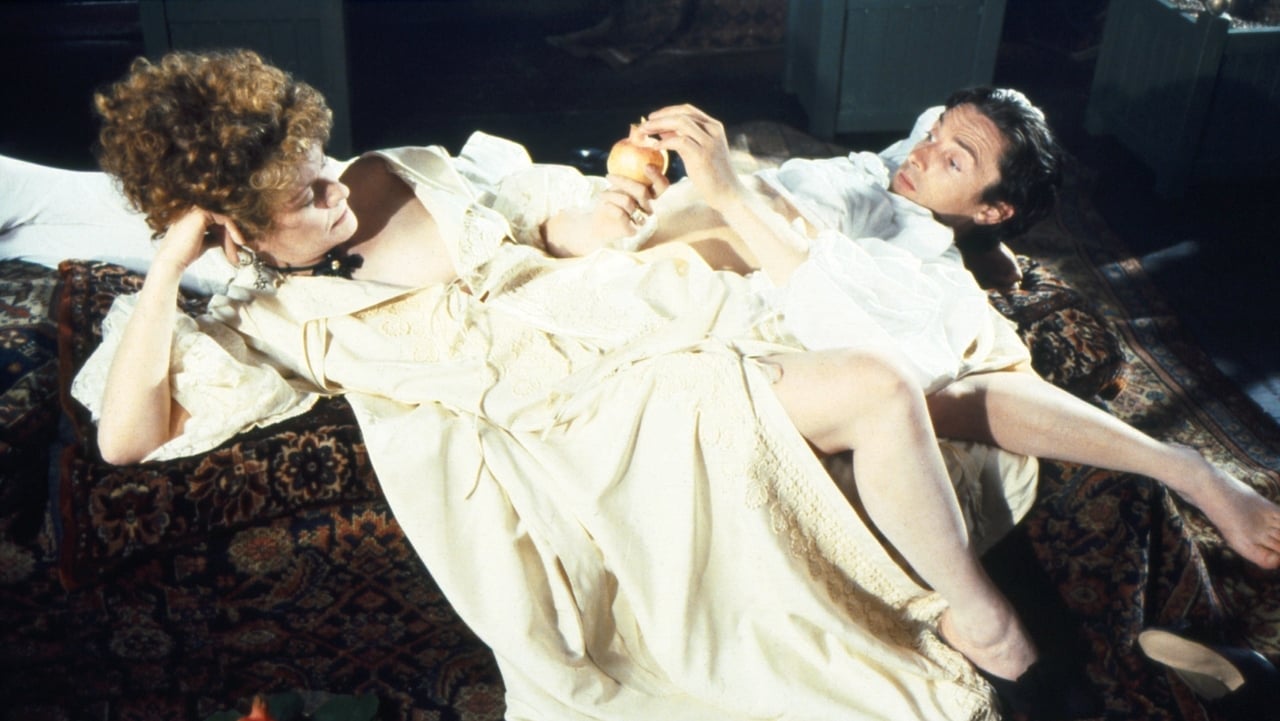
For a film of this complexity and this density and these production values, extremely small, and these objects on the table were the real items belonging to the house we used, and it was estimated that Christie's had insured those four items of ceramic on that table as ten times the total budget of our film. So we were very much indebted to the owners of the house to be allowed to use these real antique artifacts. So we now really are approaching the last scenes of the film when everything is gradually uncovered, the conspiracy is revealed, the draftsman has got what he wanted, he came back for one more sexual cohabitation with the lady of the house, he is deeply satisfied and so is she, but now that sexual liaison was on her terms and not on his, and now she makes a presentation of a fruit, a pomegranate, grown in one of the hothouses of the house. At this particular time, foreign adventurers were returning from far distant places in the old world and the new world and filling the English hothouses with exotic fruits, which were being created by the new gardening architects. Suitable places, finally, to grow foreign plants. By eating the fruit of the pomegranate, Mr. Neville. And now...
The lady of the house, with some elaboration, is explaining the pomegranate, which really was the fruit of the Garden of Eden. So perhaps it wasn't an apple, but a pomegranate. Consider where Adam and Eve originated in Palestine, where certainly apples might be a rarity, but pomegranates certainly exist. But the pomegranate also is the fruit which Persephone was persuaded to eat by Hades in the underworld in order... to keep her in the underworld. So the pomegranate is a forbidden fruit. If you eat of the pomegranate, then your spirit will remain in hell. Persephone's mother, the goddess of fields, of gardens, and of orchards, was distraught. There's another little joke there. The interior, you notice the carpet. Carpets came from the Middle East and certainly imported through Holland initially. They were regarded as very expensive items, and the Dutch thought them far too expensive to put on the floor, so therefore they put them on their beds and hung them on the walls and certainly put them on their tables. And since England, remember that William III of Orange is on the English throne at this time, these Dutch customs would be imitated by the English aristocracy. ... stopped them and patiently tended them. What do they grow?
Why, the pomegranate. And we are turned full circle again. Certainly a cautionary tale for gardeners, madam. And for mothers with daughters, Mr. Neville. But who knows, madam, pomegranates grown in England might not have such unhappy allegorical significance. And the door of the orangery opens, and in comes the daughter And finally, and implacably, the draftsman realizes he's been entirely their dupe. Both women are now pregnant with his child, made pregnant by him because nobody else could make them pregnant. And so, therefore, the continuity in the inheritance of the property will remain safely in their hands. So this long, elaborate tale apparently very much initially supposedly in the hands of the male draftsman. In fact, all along has been one huge conspiracy to make them both pregnant so that they can hang on to the property. And thanks to your botanical scholarship, you must find it cruelly apt that I was persuaded to bring such fruit. Oh, Mr. Neville, I suspect that you were innocent of the insight, as you have been innocent of much else. Innocent, madam?
By impute, I was convinced you thought me guilty, certainly of opportunism, probably of murder. What I do think you guilty of, I do not at all reproach you for. In our need of an heir, you may very likely have served us well. Madam? We had a contract, did we not?
You do not think I would have signed so much for pleasure alone? There's discussion now of the contract, which, of course, is relative to the title of the film, The Draftsman's Contract. In English, although this was sometimes a problem about translating the title of the film in other languages, a draftsman could both be the man who designs your... your kitchen. It could be the man who instructs the builder to, I don't know, designer of aircraft, for example, could be called a draftsman. But also in English, it could also represent what Leonardo da Vinci does. So it has a whole wide range of meanings which aren't necessarily pejorative either on status and certainly not on merit. And contract obviously implies something mechanical. something signed, something associated very much with law and jurisprudence. So again, it's very plain and flat. So the implication that this draftsman could also be a guy who designed gardens or indeed who could paint the Virgin Mary. Foreign language is finally very difficult to be able to translate that.
Retranslating literally some of the titles used for this film in other countries, I think in Italy, translate their version of the title back into English. It would be something like The Mystery of the House of Compton Anstey, using evocative words for Italian audiences to refer to English grand manners and English sense of grand style. Other translations in other countries, like in Germany, I think it was called things like... the lady's predicament. And in Spain, again, it was even more evocative of what they thought would be the highlights to attract a particular Spanish audience, again, to notions of English style and eccentricity. I always tried very hard to make sure the title was really symptomatic of the film. I suppose finally I hit upon the most perfect title for me for a film I made several years after this one called The Cook, The Thief, His Wife and Her Lover, which is essentially a list which I thought no foreign language could misinterpret. But if you take the gender laws in French linguistics, it turned out that there was homosexuality involved in the relationship between the cook, the thief, his wife and her lover, which was never very intended in the original. Surely the light is now too poor to see adequately.
That is true. I am finished. Good. Perhaps I could see it. We now come to the very, very last scenes of the film, and it's now apparent, rather like the murder on the Orient Express, that the entire family was responsible for the death of Mr. Herbert, and have just used the architect as a dupe, as indeed the framed-up man, to provide them with the circumstances of an outsider creating or being made responsible for the deadly deed to get rid of the unpleasant and antagonistic owner of the house so that the women could partake of the new legislation of 1694, the Married Woman's Property Act, to fulfill their obligations to create an heir and not to create an heir, as it were, within the community, to employ the architect from without of the community in order to make them pregnant, to produce a continuity for the house and the gardens and the estate to stay within their ownership. So there's only one more thing
to do and that's to finally not only get rid of the drawings but also to get rid of the architect themselves so now we have we're about to have a copycat murder so this draftsman is now killed and disposed of and his drawings burnt in order to tidy up the whole story and destroy the final evidence some sort of flattery mr tellman have your companions also come to flatter we have come merely as curious observers mr neville to wonder why, after so much has happened, you returned to continue to fix Mr. Herbert's property on paper and chose to draw this particular site. I might be inclined to answer those questions. Mr. Seymour, I did not feel that the truthful answers I would give would in no way be of interest to you. It is our belief, Mr. Neville, that in returning here you are seeking a codicil to your original contract, a codicil of a more permanent nature than the last one.
A lasting contract with a widow. You speak, of course, Mr. Tallman, like a disinherited man. Uninterested in painting or draftsmanship. Uninterested even in the prospect of the estate you covet from this position. An ideal site for a memorial, perhaps. Do you think Mr. Herbert would have appreciated the prospect of his estate? As a landowner yourself, Mr. Seymour, I leave you to judge. For a man of property, it is a view that might be enviable. Though I think you are wrong to ascribe those enviable thoughts to me. Perhaps I would suggest they should be ascribed to my friend, Mr. Noyes, who is, I think, standing beside me. The custodian of contracts. A man who was given custody of private agreements in black and white. And how do you feel, Mr. Neville, that Mr. Herbert felt about these black and white contracts?
As his agent, his bailiff, his notary, his one-time friend, the close, though not close enough, confidant of his wife, I would have thought you would be the best person to answer that. It is curious, gentlemen, that you persist in asking me questions which you are the most suitably situated to answer. It has, of course, occurred to me that you, Mr. Noyes, might have advanced, Mr. Herbert, the information that was so discretionably set down in black and white. And whether he could have appreciated what it stood for is another matter. He was blind to so much. certainly blind to considerable unhappiness. Your understanding of Mrs. Herbert's unhappiness could in no possible way be considered profound or relevant. I had access to some considerable observation of her state of mind. And you will not forget, sir, that I was helped in that respect by her daughter, your wife, sir, and was persuaded and was persistently persuaded by both ladies to undertake the commission in the first place. I may have persuaded you, sir, with a view that you might reconcile differences, sir, and not plunder them. I am in no way responsible for Mrs.
after Herbert's death, the affair is a mystery to me. Though I have strong suspicions, Mr. Talman, Mr. Seymour, Mr. Noyes, and if they were here, indeed, of Mrs. Herbert herself and Mrs. Talman, ladies who both, after all, entered willingly into their contracts. Is that why, Mr. Neville, you have just abused Mrs. Herbert further? Ah. What a pity.
We now have a contract with you, Mr. Neville, and under conditions of our choosing. The contract concerning our present pleasure, Mr. Neville, has three conditions. It will be best served, sir, when you have removed your finery. Take off your hat, sir. My hat, gentlemen, has no contractual obligations with anyone.
Conceivably, for an artist, the most damaging circumstance, apart from his actual death, is to remove his eyes. Obviously, you remove the potentiality of his own job description. An artist who is blind could not possibly work And with the death of the draughtsman, it is necessary also to destroy the evidence. So this 12 days of painful draughtsmanship all go up in smoke. Maybe there's something for an artist which is more iconoclastic or more damaging, not simply to kill the draftsman, but to actually destroy works of art. Since I was the draftsman of those drawings, and I had absolutely no intention of destroying them, you may depend that what's been burnt here on celluloid are extremely good photocopies.
So, in a sense, the film is over now. But like all detective novels, when the plot has finished, it's normal and conventional for all the characters to foregather and to explain what happened. And deliberately, I have not done that. A lot of my audiences, certainly people who had no sympathy with the film, were very much confused about all the puzzles not being completed. But I assure you, if you pay full attention to all the circumstances of the film, there should be no ambiguities left at all in your mind. There's this one little coda here. The statue at the back end, the subject of the final drawing, of course, we find is just an empty horse. And the person riding that horse was, in fact, the spirit of the gardens, the genius loci, the green man, the man who impersonated all the classical statuary.
And he gets off his horse now, having, again, not only been witness of the first murder, but certainly witness of the second. And this exotic fruit, now grown for the first time in England, is an attraction to him. But it is a bitter and a foreign fruit. And he takes a bite of it, and he finds the taste unacceptable. And if you like, he's now not only spitting out the fruit, but also spitting out the film.
Keep exploring
Other tracks with shared craft concerns
-
8 shared topics
The Blob (1988)
Joe Lynch, Chuck Russell, Mark Irwin
-
7 shared topics
The Lord of the Rings The Return of the King (2003)
Peter Jackson, Fran Walsh, Philippa Boyens
-
8 shared topics
The Mummy (1999)
Stephen Sommers, Bob Ducsay
-
7 shared topics
Mission Impossible Dead Reckoning Part One (2023)
Christopher McQuarrie, Eddie Hamilton
-
8 shared topics
Les Misérables (2012)
Tom Hooper
-
8 shared topics
Red Dragon (2002)
Brett Ratner, Ted Tally