director
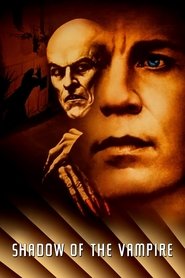
Shadow of the Vampire (2000)
Release Universal Studios Home Video DVD (2001)
Merhige discusses the film's ideas about cinema, exploitation, science, and myth. He explains recreating Nosferatu shots, combining old and new footage, filming in Luxembourg, and developing Dafoe's performance through prosthetics and restricted movement. Technical details include wax-cylinder sound, lighting based on Caravaggio, practical irises, and treating the negative with a blowtorch.
- Duration
- 1h 31m
- Talk coverage
- 92%
- Words
- 10,822
- Speaker
- 1
Commentary density
Highlights
Topics
People mentioned
The film
- Director
- E. Elias Merhige
- Cinematographer
- Lou Bogue
- Writer
- Steven Katz
- Editor
- Chris Wyatt
- Runtime
- 95 min
- Also on
- OneSheet ↗
- External
- IMDb ↗ TMDB ↗ Find on Amazon ↗
Transcript
10,822 words · 4 flagged as film dialogue
My name's E. Elias Merhige, and I'm going to be taking you through the director's commentary today. I'm the director of Shadow of the Vampire.
We begin on the next frame with Saturn Films. Interestingly enough, the name that Nicolas Cage chose for his company, Saturn Films, is a name that Albin Grau, the original producer on the 1922 Nosferatu, chose for his journal, a journal that went through six years of editions. The journal was about esotericism and theosophy and anthroposophy. He was a great spiritualist of that time, Albin Grau was, and had made a documentary on the first visit of Aleister Crowley in 1925 to Berlin. So he was a fascinating, multilayered person, if anyone cares to investigate his life. Now here we move through the doors the doors of this meta movie theater, the doors of a place that does not exist in time or space. It is the palace of the imagination, ornamented with an elaborate mythic story of both progress and the extinction of old ideas and the birth of new ideas. The idea here was in working with John Goodinson, an artist, a friend of mine in London, we wanted to create something here that was very special. The idea of showing on the ornamentation and on the friezes on the wall this idea of progress and the onslaught of progress and how the new tramples the old and relegates it to extinction. We felt
that we wanted to incorporate all of the elements, all of the styles of art from the turn of the century into the 20s with the idea of Cubism, Art Nouveau, Art Deco, Bauhaus. All of these influences are here in these drawings that look very much like a medieval manuscript from the 13th or 14th century.
And some of the ideas here, there's a lot of interpretations, of course, and I'm not going to limit the interpretations, but a lot of the ideas here really deal with my feelings about the cinema, the cinema as this great force that has changed the world forever and certainly changed the 20th century and made it and separated it from all other centuries. This idea of the force and impact of the motion picture camera and the cinema that was born out of the Industrial Revolution that gave birth to a whole new way of seeing and reorganizing the world that gave birth to a whole new set of gods in the 20th century. The filmmaker as God, one who creates worlds and remakes the world through the cinema. And like the steam engine and how it changed the American West forever, the motion picture camera has changed the way we see the world forever. And these horses and these knights and these swords and these warriors are metaphors for this onslaught, this changing from the old into the new. It also hearkens back to
a lot of ideas that are reflected in the actual story that you're going to see in Shadow the Vampire with this idea of science meeting the sort of ancient world, you know, when Murnau goes out into the mountains with his cast and crew to create this vampire film and chooses to use these actual locations, these actual places where the Templars once lived and fought and laughed and where kings once reigned and now they're all just crumbling walls. And I think now is a good time to talk about John Malkovich and Willem Dafoe and how important and how integral they both were in this film. John with his fierce intelligence and his ability to really penetrate to the heart of this Promethean fire of genius, of pure creativity, wanting nothing more than to spread itself like a disease out into the world and to transform and change the world through art. You will see this Promethean figure embodied in John Malkovich, and we worked very hard together to create, you know, who this Murnau is, who our Murnau is, because our Murnau obviously is, though based on some actual facts, you know, from history, is
is a new Murnau, because we're using Murnau and we're using Nosferatu as a metaphor to explore ideas about the cinema, the vampirism of cinema, and how absolute creativity and art manifest itself sometimes as something quite awesome and terrible.
Now we've moved out of that meta movie theater, that place, Palace of the Imagination, and into these title cards, and hopefully you're now in 1921, and you're right there with it. Now these next images are very significant. First we see the human eye of John Malkovich, Asmer now, staring at us, and then we see the mechanical eye of the camera staring out at us, and it is this idea of the human and the mechanical science and invention that is leading and giving birth to this completely new world, this world of the cinema. And the first image that we see of Greta with the cat is the first image of the world that we see. And this image of the world that we see is the image of a cinematic, artificial world.
And here we see John in his lab coat and goggles. The goggles protected the eyes from the arc lamps and mercury lamps of that period that gave off a toxic dust that would damage the retina. And the lab coats protected the clothing from this sort of acidic dust that would ruin clothing as well. There's a shot coming up that was very important. You see the pantheon of gods. It's the Mount Olympus. of these new gods, here it is right here, of the filmmaker as God creating his world. And here you have this sort of master of ceremonies with his, you know, flea circus in full action. And by the way, the cat was remarkably cooperative in this film. I don't know how the cat just remained perfectly still during those previous shots. And here is Udo Kier's Albin Grau. Again, investigating his life story is something that's worth doing if you, you know, are motivated to do so. Nicely done.
And here, in this conversation between Greta and John Malkovich, is this battle between the old and the new, between theatre and the cinema. The cinema was still considered a kind of sideshow event, a sort of carnival act. People thought of it as a kind of black magic or sorcery because they couldn't understand or explain how these images in this dark room sort of existed and moved on their own. You have Greta, who works and is very prominent in the theater. And she is more fixed on... I'm sorry, I'm listening to Greta's lines right now, and I just think there's some great significance to it all because you have John Malkovich talking about, you know, John Malkovich's Murnau talking about You know, why would you act in a play when you can act in a film? And Greta is talking about the idea that a theatrical audience, you know, gives her something, whereas film seems to just empty her and suck her dry. It is the role that will make you great as an actress. Consider it a sacrifice for your art. Well, quickly, ladies and gentlemen, we have a train to catch.
They're talking about laudanum and there's a lot of use of drugs and different forms of drugs in this film and it was very significant because after World War I there were great strides made in the technology and advancement of anesthesia and anesthetics. And a lot of people were maimed and wounded severely on the battlefields of Europe. And after World War I, a lot of those advancements in opiates and drugs made their way onto the streets of Berlin. And the real Murnau was a fighter pilot in World War I. And he had crashed his plane twice and damaged one of his kidneys severely so that he from time to time took painkillers to to help cope with that pain. I love this scene because it shows just the kind of, you know, progressive decadence, as I like to call it, of Berlin at that time period. We crossed the border into Czechoslovakia a few hours into our journey. Apparently, Herr Doktor has already filmed some of the exteriors there. He has? You didn't know? No. Strange. And I loved working with all my actors. I mean, Ronan Vibert here, Aden Gillett, you know, Udo Kier, just absolutely wonderful, wonderful actors. And Catherine McCormack earlier, I think she looks just absolutely wonderful as the decadent
silent movie star. And this was funny, figuring out Eddie Izzard's entrance into this scene. I wanted to make it so that you have these sort of like expressionist angles where you're looking severely down at the three of them and you're looking severely up at him and this sort of exaggerated angularity creates a kind of visual anxiety that I think is important to this sort of like spooky mystifying stuff that Eddie is revealing at this moment and at the same time he's the one that throws the light down on them in the beginning and surprises them and I just think it works to create anxiety and intrigue on many different levels. When I see Charon on the side of the train it reminds me of, I have to speak about my production designer Assheton Gorton, what a magnificent man to work with, what an extraordinary person. We had many discussions on esoterics and metaphysics and
A lot of that was employed into little details within this film. There's a great deal of symbolism and a great deal of layering of symbolism and ideas in this film. And here you see the battle struggle that's obviously taking place between Udo and John's characters. The idea that the producer himself doesn't even know what sort of film is being made and where it is. that they're actually going and there's that frustration, that sort of friction between producer and director. Whereas in real life I had absolutely no friction between my producers and myself and I feel that Nicolas Cage and Jeff Levine were absolutely wonderful to work with and I look forward to it taking place again. I look forward to working with them again.
The idea of Charon taking them from the land of the living, Berlin, of the city, into the land of ghosts and shadows, into the mountains, into the unknown. And this sequence coming up right now with the music that Dan Jones composed, it just carries a great deal of poetry and anxiety beauty that just is very special to me. And this shot we got on the back of a train. I operated the camera myself and there were three of us on the back of the train and we basically held the camera down while I shot ten minutes of that beautiful just passing through the trees from the steam engine, and the steam engine emblematic of that progress that I was speaking about earlier during the title sequence. We are scientists engaged in the creation of memory. But our memory will neither blur nor fade.
So here they've left Berlin, they've left automobiles, steam engines, and now they're moving into a more kind of ancient and timeless world. Here you have Murnau, of course, in his automobile, but he, of course, has his crew riding on the backs of these wagons that are driven by horses, and that juxtaposition between the new world and the old world, you know, are very important. Han Budala is a Slavic word meaning the inn of the fool, and that corresponds to the tarot card of the fool that Albin Grau, being the esotericist that he was in real life, was very fond of the tarot and carried a tarot deck with him. Even on the set he had it with him. How long have you been here? Not long. Don't tell me we have a busy schedule tomorrow. Good stuff. No exterior shots of the inn. Some shots in here. Arrival of Hutter's carriage. Welcome. Welcome. Friedrich, I'd like to plan for these night scenes. When are they to be filmed? They will be filmed soon. In here you see some of the gorgeous lighting. Lou Bogue did a spectacular job. The references that I was working off of certainly were from...
Rembrandt's paintings, you know, and Caravaggio's paintings, where you have, you know, just a sort of very few light sources, just creating this sort of ambience, this glow, this atmosphere. You have to create a world. As a filmmaker, you're creating a world, you're creating an ambience, you're creating an atmosphere and a mood, which is just as important as the story that you're telling. In here, Wolf, the first cinematographer, he says, more light. As if this illness, this kind of hallucination that he's having, this fever that he's in, has sort of taken the light away from him. And as a cinematographer, he needs more light.
I love this shot. It was the very first shot that we shot on the very first day of filming. It was a 35-day shoot. We had 36 days to shoot, but I wanted the crew to have a wrap party, so I made sure that we finished a day early so that we could enjoy our last night together, because I really enjoyed working with everybody that I worked with. But this shot just is such a beautiful shot. Just the way it, there's the subtlety in the way the camera moves and the way it just creates a tone and atmosphere and a mystery. I think Eddie Izzard in this scene is absolutely brilliant. Take a look at the original Nosferatu and compare it with the scene. It's just a stunning comparison. And then you have these guys outside of the inn. They've turned this old inn into this movie studio. I was put there last night by the superstitious peasants, the ones who warned you not to enter Orlok's castle, the ones who warned you not even to dare to speak his name. And again, the lab coats and the goggles in juxtaposition to the primitive, you know, surroundings just represents again that Promethean fire of the new coming in to sort of like...
use, chew up and manipulate the old and maybe even lead it to its extinction. Wolf! Wolf! What is the matter with everyone? She will not let us go on filming unless we replace the crosses. Am I really being bothered with this? Herr Doctor, I warned you. You should be more concerned about these things. The crosses are not for decoration. We will put them back. They just overwhelm our composition. But not for men of science. The crosses are just merely decoration. We must go. Henrik, what's the scene number? Uh, 23. Quickly. Yes. Albin, that's fine. He'll take care of it. Go in, Henrik. That last shot that you saw was originally an original piece from Nosferatu from Murnau's version in 1922. I chose to use original footage because together with the footage that I'm recreating, because I really wanted to bring together and show the fact that time is nonlinear. in the cinematic world, that in film, there is no linear timeline that you can take a shot from 80 years ago and put it together with a shot that I shot in the year 2000 and create a seamless psychological space that is absolutely in the present. That's excellent, Gustav. Go forward. Go forward.
The interesting thing here is that I asked, it had been raining for hours and hours when we were shooting, and I had asked my production designers and art director's assistant to go down and ask a farmer for some grass. And you see this area here that they're all walking on. Instead of grass, they put down all horse manure. And while I was rehearsing with the actors, I was trying to figure out what smelled so bad. And when I realized that we were all standing on this steaming horseshit, I was just, at first I was very upset, but then I just had to laugh because this farmer completely misunderstood and the assistant completely misunderstood. There were like six or seven different languages being spoken on the set. And I think it just added to the scene somehow. I just think it, It made us want to get out of there even quicker. It gave it a certain edge. And then, one night, something crawls out. Potter, meet Count Orlok.
This is one of my favorite shots in the film because you find yourself craning your neck to see if there really is someone there standing in the doorway. And this introduction that Willem gives to his character is absolutely stunning. Look at how effortlessly he moves. He's like a ballet dancer. And yet those labored, awkward movements you know, really give you a sense of creepiness that is unlike anything else. You must follow him into the tunnel. That look. Going in. Make your way down. And end.
Wolf? My God. Wolf? Yeah, got it. Remarkable. The overture to our symphony of horror. This film turned us all into vampires, and there was always the anxiety at 3, 3. 30 in the morning of having just a little time left before the sun started to come up over the mountains. castle that we're shooting at right now is an 11th century castle and it just is amazing to think about what these walls and what these stones have seen and you know all the lives many generations of human life that lived here and fought here and loved here it's just it's extraordinary to think about and here we are making a film which is a spinning a new mythology about a film that was made 80 years ago or almost 80 years ago i would like to congratulate her shrek on his extraordinary appearance for the remainder of the shoot he will be count orlok to himself and to all of us just leave the man alone he will be completely authentic he is not interested in our questions or our prayers or our conversations he's chasing an altogether different ghost frederick come quick it's wolf
The cinematographer who wanted more light is now in the deep cavern inside the tunnel. I also remember at the end of that night's shoot standing next to this huge pile of horse manure that was just steaming in the light of the new sun. And I was just shaking my head, just thinking how bizarre and completely surreal. Oh, this is too much. Answer me, Herr Doktor. Is this some stunt to evoke fear in us? Henrik, stop being so theatrical. You'll wake the whole house. Go on up, Wolf, and have a brandy. You'll feel better in the morning. What's happened? He's ill, obviously. Take him upstairs and then go outside and help Herr Grau with the camera equipment. Bring the cameras straight to my room, I know. Prepare for tomorrow. That's an actual shot from the very end of Nosferatu from 1922. This castle was a castle that was a favorite of Victor Hugo's. And he had spent many summers here in the 1850s. It's Chateau Vienden in Luxembourg. It's a gorgeous castle. And I love Victor Hugo's work very much. And this castle, A, It suited my needs in terms of an ideal place to shoot and build sets. But it also... I'm just pausing here because I love this entrance of...
I love this when John comes up and he's laughing and he's jovial and puts his arm around Willem and moves him into the light. As you no doubt have heard, Max's methods are somewhat unconventional, but I am sure you will come to respect his artistry in this matter. Now. Yes, places, everybody. May I have the chair, please? Count Orlok, you will sit here at the head of the table. Please. Very good. In this scene, the Count is reading the papers you bought him, and you are about to make a considerable amount of money. No, no makeup! Forgive me, Herr Doktor. Albin, clear the set. Count, you're reading your documents. That's it. It isn't right. When he says it isn't right, he's referring to the hieroglyphs and the sigils that are on the document. And if you look closely at the back of it. I'd like some makeup. Well, you don't get any. So it's as if, you know, what is he talking about? These arcane symbols and everything are something that actually he can read because he's the real thing. And in the original Nosferatu, Albin Grau wrote up
the actual contract and it actually has alchemical and magical symbolism that is very real behind its making so that's worth looking at as well. In this we created a replica in detail. Eddie Izzard incidentally in the beginning hated his wig and he just felt the makeup was really bad. And he wanted to, you know, he would protest in the beginning about all of this, but then he just sort of moved into it. And I think worked with it quite brilliantly. And I think this scene with Willem and Eddie is just so wonderful. I can watch it a thousand times. That's an original shot from Nosferatu, and that's exactly what I'm talking about. Here you have this shot that Murnau did 80 years ago, and then this shot that Assheton Gorton created the locket in the year 2000. And you have this seamlessness, the past and the present coming together into one single moment. And that is, to me, one of the most extraordinary aspects of the cinema that you can have. The past and the present just put together to create a single living reality, a cinematic reality. What is it that inspires the most longing in you, that is most desirable and yet most unattainable? Delight or dissonance.
What he says there is, what Willem is saying is, the light of the sun is what is most desirable to him and most unattainable. Who is this woman? This is Ellen, my wife. She has a beautiful bosom. Oh, Jesus. Gustav, just snatch it back from him. Yes, go on. And, Vampire, you sign the papers. Take your quill, sign the papers. Yes. Go on. I understand. We are going to be neighbors. Very nice addition, Count. Yes. And how does that make you feel? Yes, snatch back your papers. You're happy to be his neighbor? I mean, just the subtleties and innuendos on Eddie Izzard's face are just absolutely fantastic. Excellent. Excellent. Give the lip readers a thrill. Wolf, do you have it? Yes, I got it. Wolf, have you got it? Yes, I said I got it. Excellent. Thank you. Now you have to remember also that Willem spent a good three, three and a half hours in getting into makeup every day and all of that makeup is very cumbersome and very, you know, it's not easy to walk around with both a corset on and platform shoes and, you know, the full costume and regalia and then have your head and face completely submerged in all this prosthetics.
He animates it so effortlessly and so wonderfully that you really don't feel that A, it's Willem Dafoe, and B, that it's makeup. You just feel that there is this seamless reality created. This was the second shot that I did and the first day of shooting. And I wanted to create this idea of The Cabinet of Dr. Caligari using the shadow of this figure, bringing this bottle of blood into the lair. This sunburst behind Schreck is actually taken from an alchemical manuscript from the 17th century. And the book that he's reading from is a poem called Tithonus that was Alfred Lord Tennyson's poem from the 19th century, which is about a person who was granted immortality but was not granted eternal youth. So he's immortal, but he grows old and decays. And that's his sort of lot, to wander the earth as this immortal being who is actually decaying. I feed the way old men pee. sometimes all at once sometimes drop by drop i told you i feed erratically off you know i had the opportunity to work with uh john malkovich for 10 days in paris months before shooting
And it was there that we were really able to establish the Murnau that we were going to create on screen. And that gave me the balance and the polarity in working with Willem's character of how far I could really go with him. But I really wanted to push the both of them as far as possible. Because when you have such great actors, you really can raise the bar and extend the limits as to what you want to express and how deeply you want to express it. Look at Eddie Izzard's eyes and look at the concentration of Willem and how he's really getting into this acting role. How his character, I mean, is getting into this role of being in this movie. knowing that you're spending the night with him in the castle alone. You watch him. Orlok, drop your paper. When I made my first film, Begotten, that was a feature silent film. And I did the cinematography on that film, and I talked to my actors while I was filming them. And that experience as a silent film director is something that I talked a lot to John about and also
This is the way silent directors directed their actors. And it's really fascinating because you really become a dynamic, important, essential part at the moment of creation. Whereas when you're making a sound film, you actually have to shut up as soon as you yell the word action. So that was a very interesting contrast.
Now this shot is a shot where I had eight shots on my storyboard and I reduced them downed to two. And this was... This is a series of shots all put together into one elaborate camera movement with 11 different focus pulls. We were completely going over time. It was like the 13th hour of shooting and, you know, everybody was... on the production team was nervous and I needed to get this shot. If I didn't have Willem and John and Eddie and everybody so brilliant and so quick, I mean they're like super computers in the way they know their marks and where to stand and where the limits of the frame are. But I'm going to stop talking about that because I really want to talk about this scene for a moment.
The scene was very important. It was the last shot. We did this shot right after we did the shot you just saw. It's this idea that Max's castle has been turned into this movie studio and he has all this technology that he's never seen before and here he is discovering the motion picture projector for the first time and with the motion picture projector he's able to see the clouds, he's able to see the sky, he's able to see the sun, he's able to see that which would kill him and that which is something that he hasn't been able to see for centuries. Like a child, he's sort of casting his own shadow over that which he longs for, these images of the sun and images of the clouds. It's a very beautiful scene and it was a very important scene and I basically begged my crew to stay on for an extra 45 minutes to film this scene because otherwise it would not be in the film.
because we were out of that location that night and we shot this at 1. 45 a. m. in the morning. We'd been shooting since eight in the morning and it was, I knew it was demoralizing for my crew to punish them this much and push them as hard as I was doing over those couple days and that's when I really focused on really being conscientious and caring a lot more about really getting people in bed on time and not exhausting everyone because otherwise things get sloppy. This is one of my favorite shots in the film. It's one shot through the back window of a Model T from 1919 and we're looking through the back window and we see Wolf at the right in the foreground out of focus. Now we move around the car and here we see the conversation continue but there are no cuts here and this is the kind of filmmaking that
that I really love because it represents a great deal of conscientious care in creating both a mood atmosphere and psychological space and also adds something that deepens and broadens the storytelling. I'll get a new photographer and fly him back here within the week. Henrik, when you wrote this scenario, you had demons of your own to work out, did you not? Now I have mine. The archetypal battle between writer and director. You're the producer. Keep this company together. Now the next scene that you can see after Ronan shivering with fever in this car is a scene between John and Willem and that was the third scenario that I did in the first couple of days of shooting. And I knew shooting this scene that the film was going to be very, very exciting and that the complete focus and passion of John Malkovich and the total, you know, glee and focus and passion of Willem Dafoe. I mean, to see these two titans, these two magnificent actors just go at it.
It was just absolutely magnificent. And I had several cameras going at once. I think I had three cameras on Willem. No, actually I had four on Willem. I had two in close up and two in long shot. Because I wanted to capture every nuance of their performances because, you know, not every take is the same. I don't think we need the writer any longer. And here I wanted John to really pause and say, well, okay, you can have the writer, but just don't touch anybody else. There's a few shots, a few takes that I did where you have John actually considering serving up the writer to Max Schreck, and I just thought that was, let's just put it this way, I got a big kick out of it.
And here you have the birth of the first difficult movie star. loves driving the director crazy. It's sort of like, you know, the good news is that Marlon Brando wants to do your movie, but the bad news is you can only shoot him, you know, for two hours in the afternoon in his backyard while he wears nothing but his pajamas. And you have to just work your scenario around that. And you can see Willem just completely enjoying this. Yes, I will... What I would have liked to have gotten is a shot of John smiling gleefully off to the right here. If you look closely, he's really smiling at Schreck suffering.
Heligoland is an island. So? So. It can only be reached by sea. Or air.
And if I agree to fly you in, you will leave my people alone. Or else what? Don't think I can't harm you. Tell me how you would harm me when even I don't know how I could harm myself. Now this next moment here with Willem's introspection is just absolutely wonderful.
It's still brilliant the way he just takes his time and stumbles as if his legs weigh a million pounds each. His heart is so heavy and he's desperate to find his humanity. He's desperate to find his way out of this monstrosity that he's become. And beat me down and marred and wasted me. And though they could not end me, You left me maimed to dwell in presence of immortal youth. Immortal age beside the immortal youth. And all I was in ashes.
This is something that I modified from the original script because there isn't an ocean that's anywhere near Luxembourg and there isn't a large enough body of water to put a boat so basically I changed the script and modified it to make him this difficult actor that just doesn't like the water and doesn't want and vampires don't like the water so I had it so Murnau ordered to have the ship built right in the backyard of this 11th century castle. Ectoplasm once. Ectoplasm? What is ectoplasm? It's the mystical substance of ghosts. I saw a spiritualist pull it out of his mouth. But if it didn't work thematically, of course, I mean, I would have never done it. I mean, we would have gone to the ocean, but it just would have meant a four-day location move. It would have been a nightmare. What was for you the most wondrous thing you ever saw? I once saw Greta Schröder naked. No. That beats ectoplasm. Jesus, Max. And this is a scene when I first read Stephen Katz's script that I just thought was absolutely something so special and so wonderful that I really wanted to
do it justice on the screen, because it's such a great scene between these three guys. The great Friedrich Wilhelm Murnau went to Berlin to find a new photographer. Wolf is probably dead. So you can take your funny ears off. Please, the man is an artist. Ask him some vampire questions. When did you become a vampire? I can't recall. Where were you born? Where were you born? I can't remember. Well, it's not funny anymore. Come on. Count Dracula wouldn't say he couldn't remember. I read that book. Murnau gave it to me. Well, now this is a golden opportunity. Now you know that Dracula was the book that the Bram Stoker estate would not give Murnau or Albin Grau the rights to make that into a movie because they felt that the most dignified medium of the day was the theater. So doing Dracula as a London stage play was the pinnacle of doing it justice and dignity. So Murnau and Albin Grau chose to move a few things around, change the story a little bit, change the title. But they, in real life,
They got sued, and their production company, Prana Films, Prana meaning is Sanskrit for the breath of life, went bankrupt because the Stoker estate won that court case. And in 1924, they burned all the negatives and prints to Nosferatu in Germany. But what nobody knew, except probably Grau and maybe a couple of other people, was that there were two negatives in the Netherlands and there was I think one or two prints that were in France at the time that no one knew about so they didn't get destroyed. Otherwise we wouldn't have Nosferatu today if it wasn't for the fact that no one knew that these negatives were in the Netherlands or these prints were in France. It makes you wonder about what else has been lost and destroyed in the way of great films. although I seem to remember I was never able to. Then how did you become a vampire? It was woman. No, we're getting somewhere. This is probably one of the great, great moments of any movie that I've seen. Schreck. The German theater needs you. I mean, Schreck just sucks the blood and life out of that bat like it's a crawfish.
I had a painting of her in wood. Then I had a relief of her in marble. And then I had a picture of her in my mind. But no, I no longer even have that.
That was, I think... This scene is very important because it really establishes the multidimensional and multilayered complexity of Max Schreck's character as brought to life so magnificently through Willem Dafoe. You really sort of feel sorry for the guy and feel like, you know, my God, what a freak, you know, how can we help him?
The interesting thing here is that this is a real stunt. This is where off the side of the mountain we had a stuntman just fall about 60 or 70 feet onto this landing pad that was inflated from below. So now it's out with the old and in with the new. The old cinematographer has been replaced with the new enthusiastic one who brings new techniques, new ideas, new energy into the film.
He arrives on an airplane, one of the latest inventions. It had been used for the first time in warfare in World War I. I love Cary's cavalier enthusiasm and the way he sort of robustly moves into the scene. Here they're creating the ultimate cinema verite where they're using the local peasants and villagers to manipulate them and create sort of confusion and panic to create the scene. And here Cary's description of the mechanics of the camera and how it can be manipulated to create certain special effects. It was very interesting, but what he ignores, what his character ignores is the fact that this whole issue of responsibility in how the camera should be used and in how we manipulate our environment as both filmmakers and directors and how we are responsible. The producer establishing himself as the authority here. What's very interesting here is that in this crypt, if you look at the original Nosferatu and compare it to this, I mean Eddie Izzard's movements, his timings and everything, I mean this really was born out of... You know, looking at the film many, many times, I mean, one of the key pieces of homework I gave my actors is to really study Nosferatu, and I sent them all videotapes of the film.
And here Murnau is manipulating his cast and crew very much the way Cary did in the previous scene with the peasants for an effect to create this ultimate film that takes you to a higher level, to a higher level of experience, to a higher level of perception. You will get a nice hot meal in Wismar right after we're done with the ship. This scene, I love the music that Dan Jones composed. I love the whole sort of melancholy of it. This is an original shot from the original Nosferatu. This, of course, is as well. And, you know, it's from here when he raises the axe that we cut to Willem as the sort of sideshow freak, as the sort of relic from the carnival that is brought out to perform And you could see the kind of impatience and the kind of strangeness. Now we're looking at how this little trick was done, the raising of Max Schreck to look as if he was levitated by supernatural forces. But no, it's all just ropes and pulleys and hinges. And recreating this from the original Nosferatu, was it
great pleasure of mine. We had so much fun with it and actually I owe Willem Dafoe a great thanks for this because we worked, this was all shot second unit after we had shot a full day. So we were shooting this at two in the morning. We shot this from about, you know, 11 at night till about two in the morning after we had shot for a complete full day. Willem really wanted to do it, he was very passionate, and it was very exciting to do that, to recreate those scenes from Nosferatu. This entrance of Catherine McCormack's, you know, it just evokes this sense of days gone by, of days and memories that have been lost in the past. And I just love the looks and glances that she gives everyone. And, you know, the costumes that Caroline de Vivaise's are quite obviously gorgeous, and the colors just really stand out magnificently. When Cary Elwes says, hello, Greta, and she says, where did we meet?
he says Morocco, the way he articulates that word Morocco just evokes a sense of far off lands and a sense of adventure of times gone by. And it's just very beautiful listening to this parlor music that Dan Jones composed in the background and this clapping of this audience that we never see. I mean, it just really adds a sense of space to, you know, not only space of what we're hearing, but it's space of what we're looking at. And a lot of the sound design in this film is just absolutely meticulous. And there are many times when I asked my sound designer, when we go to the black and white scenes, for example, I wanted everything taken off surround sound, Dolby stereo, and moved to the front speaker, where we then transferred all of the sound to wax cylinders. And those wax cylinders then
sort of, you know, Willem's voice and Eddie Izzard's voice and anybody's voice that's in the black and white frame is then re-recorded off this wax cylinder to evoke this, you know, different time and this different place, you know, so it's sort of, so we time travel backwards in time, not just with moving from color to black and white, but we time travel through the sound as well. And I'll point out where this happens in scenes as they come up. And here we have this struggle between the director and his star. Willem realizes here, you know, his character realizes that he has the upper hand and that Murnau isn't going to achieve anything without him. And he's sort of enjoying this newfound vanity in being the star. He kind of likes this new... new technology, this new form of expression in cinema. Here we use the hat. This is something that I talked to my costume designer about. He's wearing very much the clothing that we would see a young Orson Welles wearing. And I feel that there's this uncanny connection between Orson Welles' work and F. W. Murnau's work. I think that if F. W. Murnau had not made
you know, the magnificent, brilliant masterpieces that he did that Welles would not have been inspired to make, you know, the The Magnificent Ambersons and certainly, you know, you could see the techniques, the liberation of the camera, the camera movement and, you know, this sort of baroque sense of framing in Murnau's work. You see that reflected very much in Orson Welles' early work and that's exciting.
In here you have the crew waking up trying to discover what is really going on and what is the truth behind this enigmatic star that they're working with. And again this is an 11th century castle that we were shooting in. This was an actual crypt and we were on the top of a mountain at all hours of the early morning shooting these scenes. And it really gave the whole film a very special ambience to shoot on location. As a director, I think shooting on location is essential because it really breathes a kind of atmosphere and life into a scene that you cannot recreate by building sets. And it also gives your actors an extra added kind of edge in terms of moving much more fully into the subtleties and essences of what that scene actually is and what it is to feel like.
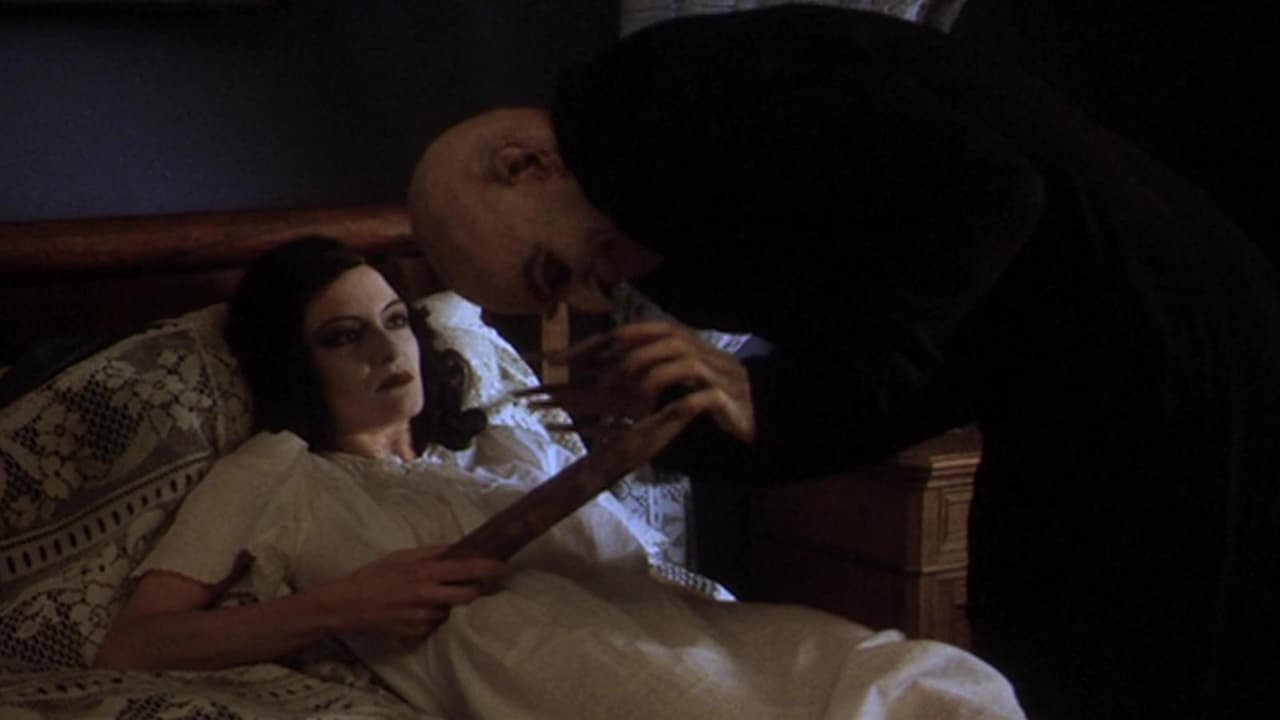
What's wrong? It's all right. Everyone back to bed. With all that talk about sets, though, this actually is a set that was made by Assheton Gorton and my production designer. And I think he did such an absolutely stunning job making this Wismar Hotel look like just a place that has been sort of forgotten by time. and a real place and this was the kind of detail that I constantly urged, you know, all of my crew and everyone that I worked with to execute in their work and Assheton just brilliantly executes this very fine detail and very fine sense of color and dimension and aesthetic into this set. That of course is a The shadow on the wall of Schreck's hand is a sort of nod to the original Nosferatu when he comes in the final scene to take his bride, the young Ellen, from Nosferatu. But here, in Shadow of the Vampire, he's an inept, feeble, senile man who can't even unlock doors, can't even penetrate beyond a simple wooden door. sort of feebleness and adds such a dimension to and another layer to who his character is and who is this creature. Here he has an idea to finally have the writer and here it's
This is a very funny scene where you have them arriving at Heligoland and here you have Murnau carrying, he had strapped the coffin to the back of his plane and now he's carrying the coffin to the set. All of this is a bit taxing and overwhelming on Murnau, his loss of power, his loss of having the upper hand and of course he turns to the needle and turns to drugs to find some sort of solace and some kind of break from from the pressures and madness of trying to make this masterpiece of his. If you notice, Schreck is wearing the locket, this obsession of his over Greta, the lead actress. He wears that locket around his neck.
This bunker, Assheton and I were talking about this World War II bunker, this subterranean place where the final ritual, the final scene of the film is gonna work itself out. And here we have Cary and Udo concerned and they break into Murnau's room. Murnau obviously out of it. And on the wall you have all of these ancient symbols of the grail, of the different sort of incarnations of the cross that eventually became the symbol of Christianity. And you have the swastika on the wall, which is this foreboding symbol of what is eventually to come. That here you have this idealistic artist who wants to create the ultimate work of art. And just a few years later, you're going to have Hitler, who is this artist who wants to create this ultimate work of art, but instead he uses the German people as his medium and wakes up these old ghosts and old mythologies, pagan Teutonic mythologies, and winds up turning German culture on its head and subsequently nearly destroying German culture, which is still trying to get back on its feet.
And if you notice the book to the right there is Goethe, Johann Wolfgang Goethe's poetry and writings, which Murnau is reading in a sort of drug haze. You know, the real Murnau was very much a lover of Goethe's poetry and certainly Goethe's Faust is something that inspired, you know, Bram Stoker's Dracula in many ways and also inspired Murnau and Albin Grau in the making and also the art direction of the original Nosferatu. In here you have this beautiful blend where music and sound design really you can't notice the difference between the two and this is something that Dan Jones and Nigel Heath you know my sound designer worked very much very closely together to create this this seamlessness so that you don't know the difference between where a sound design begins and where that ends and becomes music. So it all creates one singular atmosphere.
There's no way off this island. What about the airplane I saw? No, no, I already checked it.
This next scene that we're moving into is something that I struggled quite a bit with because towards the end of the film, the level of pathos and the level of psychological terror is something that I wanted to evoke and to bring out of the script even more. So this was something that John Malkovich and myself, we spent a lot of time, we would have dinners together and we would write our notes onto table napkins and certainly as the scenes advanced towards the end, a lot of stuff was written between myself and John Malkovich to really evoke and create this pathos where we're leading the audience into a place where, you know, really into a very interior, very dark place within Murnau's mind, where Murnau has made this decision that art is more important than life itself, that the flesh and the blood rots and that memories decay, but it is art that...
that is the only vestige, the only legacy that the future comes to know the past is through art. And this idea is something that I wanted to communicate very much here in these scenes that are coming up. And that expression of Willem's is just absolutely magnificent, this sort of manic beauty to his eyes, the way he looks at Greta, this sort of, lust and longing and violence that's in his expression. The combination of all of these layers of his character are just so complex and so wonderful and yet he makes it look as if it is completely effortless. And Catherine McCormack playing the diva here is quite irked and unsettled by the presence of this creepy looking guy that obviously as an actor to her perceptions. And she'll need her wooden stake. Also, Greta, you will be here lying on the bed. These little subtleties where you see Willem scuttling over and just, you know, scraping his nails across Catherine McCormack's skin. through her gown is just wonderful details. You make the ultimate sacrifice for love, yes? Yes.
You will seduce the Count, and with your wooden stake, just before you die, you will dispatch him.
Yes. Clear? Very clear. In other words, all you have to do is, as they say, relax, and the vampire will do all the work. You had me leave rehearsals in Berlin just to do that. Hey, watch it! Now, this is one of my favorite moments where you have Cary, you know, taking his measurements for focus, and you have Willem very vainly and enjoying himself completely. leaning in for his focus mark. And it's just another wonderful, wonderful detail. And the other thing is that there are many moments in the film, I'll point them out to you certainly at the end, where we use Murnau's real camera that he used from Babelsberg Studio from 1920 and 21. You know, we got that from a museum. in Munich, and I just thought it was a great talisman to have on the set, to have Murnau's actual camera, and to have Malkovich operating Murnau's actual camera. Now this whole thing is an old theater trick with, you know, we removed the mirror and had, you know, a double sitting in the foreground and had the real Catherine McCormack, the real Greta sitting
in the background screaming, you know, when you see her screaming at the fact that there's no reflection in the mirror. In here, one of the things that I had in mind is that, you know, when you look at, you know, Rosemary's Baby where she's being drugged, and she has absolutely no allies, the sort of terror, the isolation and the loneliness of that character is something that inspired me very much in directing this scene to capture that feeling, that feeling of isolation, that feeling that she's completely alone and completely vulnerable and being served up as this sacrificial lamb to all of these monsters because they're all accomplices at this point. And Willem acting like this addict that can no longer hold himself back. I mean, look at these gestures, look at these movements. Many of his movements were created by the fact that he had these great limitations and great limitations within the costume itself with the corset and the way the costume was very tight to his body and the way the makeup was very heavy on his head.
You know, it's really very exciting the way the costume created this frame for Willem that limited Willem and at the same time liberated him to really find and define the character through these subtle gestures and movements. And here, if you listen to the sound, you'll hear that all of the sound here of Willem clucking his lips and tongue and Greta moaning, these are all sounds that were transferred to a wax cylinder So everything now is in mono when we see it in black and white. Find your stick. Yes, where is it? Find your stick. Now count. As she raises the stake, what do you see? Yes. Yes. A wooden stake. Exactly. You look at her. Yes, you turn. You rise. You look around. The sun is coming. You grab your heart in anguish. Yes, and you start to die. Now coming up, I whispered into John's ear and asked him to just take it over the top and just absolutely lose himself. And I just love the look that Udo gives to John because Udo was not expecting it. And it really creates this kind of, you know, atmosphere of, you know, anything can happen. It's almost like...
You know, there's gasoline on the floor, and the vapors are in the air, and if anybody moves, the whole bunker could just ignite. I mean, it's that feeling that I want to be there, that kind of immense tension. I mean, this is another, I mean, Willem is almost like a Kabuki or like a Butoh actor, where he's like an animal, like a cat, as he, you know, pushes Udo away.
Now, you should look at the original Nosferatu and see this recreation. I had first seen Nosferatu when I was 11 years old and I'd seen the film at least 25 times and I love that film very much as I love all of Murnau's films like Faust, The Last Laugh, Sunrise and these films, you know, have such a life and such an essence and such a poetry that you very rarely see in films today. And recreating that scene where you see the vampire sucking the blood from the character Ellen was such a beautiful moment for me to recreate that.
Now it's here that they've hatched this plan to film the final scene and to sacrifice not only Greta but also the vampire. But everything is falling through, nothing is working and it's at this moment that you really see these They look like these scientists studying this wild sort of alien insect as he sort of spits at them and shouts at them, these sort of threats. But here you see Cary's beginning to film and that menacing sound of the film camera filming. And one of the things that I asked Nigel, my sound designer to do is to take the sound of a Gatling gun from World War I which is like a primitive machine gun and to use that sound in creating the sound for the motion picture camera that we were using and see now you see Cary going off leaving the camera but someone must man the camera the camera must never be left alone and it's here that Murnau then begins filming this kind of awful
violence that's taking place right before his eyes but he still stays behind the camera and he still maintains his focus. The camera takes on a demonic quality here where it's almost like a machine gun. It begins to come alive. You can see the light in the lens here and it's that light in the lens where it takes on its own power. The camera is now reducing Murnau and Schreck to these puppets. It's become the puppeteer. It's become the god of both of them. And now it is going to work out its awful ritual. The awful ritual that Schreck and Murnau are going to work out are a result of the camera manipulating the both of them. And in many sections in this film you see the camera irising in and irising out. I had that iris built in Munich and this iris that you see on the periphery of the frame and the corners of the frame are actually from this iris that I had built and put on the actual camera that we were shooting with. This of course is a recreation from the original Nosferatu where this shadow sort of takes the last breath, the last beat of her heart into its grasp.
And when Murnau says, if it's not in frame, it doesn't exist. I mean, that came out of many discussions. I would throw a lot of esoteric metaphysical stuff at John and I would talk about Wittgenstein's philosophy of grammar, that if it's not in the grammar, if it can't be spoken, then it's just gibberish and it has to be reduced to silence. And a few days later, you know, John's, you know, came up to me and he said Elias you know I was playing with a few ideas and he showed me the few things that he had written like if it's not in frame it doesn't exist and I just felt that it was no longer intellectual that it was visceral and that these ideas you know about that time period were coming through into the into this film and this is absolutely one of my favorite shots in the film notice how we move from the black and white into color I mean it's very it's a very beautiful very subtle and complicated shot
It was something that I had storyboarded from early on with this idea of moving from this world of black and white into the world of color. You know, you have Willem very poetically staring into this lamp, this light. At first he was concerned because he thought it was the sun, but now as he flings the lamp away he sees... the actual sun coming at him, which is his ultimate liberation, but at the same time his torment, his fear, you know, is still there. He wants to die, he wants to liberate himself, but he's still afraid, he still is reticent. But Murnau is now, you know, in this sort of orgasmic frenzy where the camera has sort of demonically taken on its own sort of automation, where this mechanical god is now manipulating Murnau The eye of its lens is glowing. Now you see Schreck leaning backwards, and as you see him leaning backwards, what we did is we took a blowtorch to the actual negative, and coming up you'll see the blowtorch actually just destroy and evaporate the negative, which is, you know, this vampire, this symbol of the cinema itself, that the cinema itself is a vampire, that it reduces
you know, its subject. When the camera points itself at its subject, it reduces its subject to a mere shadow. It takes its flesh and blood away and reduces it to a shadow that will live and haunt us forever. I mean, you know, we have films where we have movie stars that are dead and we can still see them alive on the screen. There's something very creepy and very beautiful about that. And here, you know, Murnau is talking about our own cave painting on our own cave wall. And the new cave is the actual camera itself, where it's able to capture these images, these platonic ideals, and turn it into these worlds, these worlds of films that can be exported into other countries and destroy other countries and reorganize their culture completely. This moment here in the film is just very cryptic because we've obviously seen this train wreck and we are now inside this mind of this insane Murnau, this insane Murnau where life is no longer important, that it's actually the cinema itself that is the only important.
way that the future is going to come to remember that people will will forget this bloodbath but a hundred years from now they will only see this masterpiece that he's made but we don't even know if Murnau is still sane as he stares off into the distance he just has completely just moved into a different space of experience I think we have it and now it is at this moment that the film ends and we don't know what has become of this fictional Murnau in this movie. I mean we know that the real life Murnau went on to make many many films but you wonder what this experience has done to the film crew and certainly to Murnau. It just brings me back to this whole idea of art making and creativity and how we look into the heart of that true
source of creativity within an artist is something that no one and no single person understands. It's like looking into the heart of a volcano. It's beyond good and evil. It takes you to a completely different place. And when you reflect on it, you realize that as an artist, there are many profound places that we can sort of dive off into and lose ourselves into. And it brings me back to this sense of responsibility that as filmmakers, certainly as a film director. I liken the art of the film director to the position of the bards and poets had centuries ago, where you're telling the tribe stories and poems and revealing dramas that illuminate some aspect of what it means to be alive, what it means to feel, and what it means to contemplate the unknowable.
as a film director your responsibility is that you are no longer just telling stories to people around a fire but you're telling stories to potentially millions of people if you add up all of those hours of human life that you have the attention of you're talking about millions of hours of life and a film outlives you as a director and it will outlive your children so the responsibility of that is awesome and you know I make films to inspire people, to illuminate an aspect and a perspective of what it means to be alive in a way that audiences wouldn't expect, to bring a perspective of consciousness and awareness to things that would otherwise be on the periphery of society, things that would be a sort of ghost outside the eyeshot of society, and to bring those into focus and turn that into drama is the role of the artist.
The film medium is the greatest thought form that the world has ever seen in terms of communicating on the most profound levels. But very rarely do you see cinema that communicates on the most profound of levels. And I just think it's just such an amazing opportunity when you have the resources and you have the vision to make a film. There's nothing like it. It's absolutely... you feel like you are able to take what would normally never be spoken, what normally would never be seen, and turn that into something that can then be shared and that feeling is just absolutely extraordinary and liberating. This film, Shadow of the Vampire, is a film that I love very much. I'm very proud of this film. I'm very proud of everyone that worked on it. I'm very proud of Nicolas Cage for standing by me and giving me the freedom to make this film. I'm very proud of everyone on my crew that I worked with. The passion, the dedication that I was able to have from everyone was absolutely something that was essential in this film becoming and being what it is. And certainly the dedication and the focus of my stars and actors is something that
As a director, you don't work alone. You work with hundreds of people. The set to Shadow of the Vampire was one of the most incredible sets that anyone could ever imagine visiting because it really was like a family. There were no egos. There was no hierarchies. It was just everybody working together to do something special with a great deal of passion. And I will be forever indebted and thankful to the people that I worked with on this film because it shows on the screen the passion, the detail, that sense of layered storytelling is what makes a great movie something that you want to see not just once but several times. And I thank you for listening to this.
Keep exploring
Other commentaries on related filmmaking topics
-
8 shared topics
The Lord of the Rings The Return of the King (2003)
Peter Jackson, Fran Walsh, Philippa Boyens
-
8 shared topics
The Lord of the Rings The Two Towers (2002)
Peter Jackson, Fran Walsh, Philippa Boyens
-
8 shared topics
The Godfather (1972)
Francis Ford Coppola
-
8 shared topics
The Lord of the Rings The Fellowship of the Ring (2001)
Peter Jackson, Fran Walsh, Philippa Boyens
-
8 shared topics
All Quiet on the Western Front (2022)
Edward Berger
-
8 shared topics
Congo (1995)
Kelly Goodner, Jim Hemphill