director
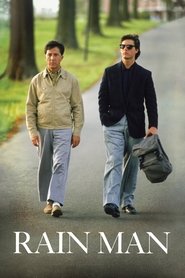
Rain Man (1988)
Release Rain Man Special Edition DVD (MGM Home Entertainment, 2004)
Barry Levinson explains decisions intended to avoid excessive sentiment, including Hans Zimmer's percussion-based score, restrained photography, and the ending. He discusses Valeria Golino's role in explaining Raymond to Charlie, the contrast between Cruise and Hoffman's performances, and shooting in sequence. Location work and partly improvised behavior helped develop the brothers' relationship.
- Duration
- 2h 10m
- Talk coverage
- 54%
- Words
- 16,991
- Speaker
- 1
Guided collection
Avoiding excessive sentiment
Barry Levinson discusses music, performance, and the ending of Rain Man. Robert Zemeckis and his collaborators describe maintaining Forrest Gump's tone. Compare their decisions about point of view, pacing, and how directly to express the characters' feelings.
Part 1 of 2
- 01 Rain Man Now reading
- 02 Forrest Gump 1994
Commentary density
Highlights
Topics
People mentioned
The film
- Director
- Barry Levinson
- Cinematographer
- John Seale
- Writer
- Ronald Bass , Barry Morrow
- Editor
- Stu Linder
- Runtime
- 134 min
- Also on
- OneSheet ↗
- External
- IMDb ↗ TMDB ↗ Find on Amazon ↗
Transcript
16,991 words · 342 flagged as film dialogue
Bye.
One of the things that I always thought was an interesting idea is to show a smoggy L. A. in a shiny sports car, almost like it's flying over the city, in a sense to kind of bring up the concept of material possessions and how we're so involved in that, how important those things are, in this case, you know, Ferraris. And introducing Tom Cruise, who is, you know, very taken with possessions and money. The song, which is sort of ironic in a way, for whatever reason, I always liked the song, but I never understood what they were saying in the lyrics. It made very little sense to me, which I thought was appropriate in the movie because the movie shows aspects of communication and the inability to communicate, and I just found the song sort of humorous to me, and I never knew what they were singing about. It made no sense whatsoever.
The aspect of the drum, which plays throughout the movie, has a certain kind of rhythm to it. And then ultimately, Hans Zimmer's score, which is very percussion-oriented, has no strings at all. One of the things we talked about very early on is I didn't want any kind of strings at all in it, because I thought it would make the movie too melodramatic. I think it's inherent in the piece, and I didn't want to emphasize that aspect, so it's very rhythmic throughout.
Originally, in the script, Tom Cruise, I think, had a little boiler room where people made a lot of phone calls and tried to sell things. And I had done a movie called Tin Men, which kind of touched on very the same thing about, you know, canvassing for calls. So I thought we needed to move it into something slightly different. And I thought about, you know, cars and the kind of the gray market of selling them and then try to put Cruise into a situation where he is now... purchase four cars, and he's on the line for a lot of money to pay that off. Initially, right off the bat, to create a certain tension to the piece, because ultimately the will will come up very shortly, and it plays a very important part of the movie. So again, it's sort of like here, it's like laying a little bit of story, putting some pressure on the character, showing what he's like. And at the same time, trying to give a certain amount of speed to the piece here, Kind of an energy. They're talking over one another, introducing his girlfriend right off the top here. Just kind of move it along as quickly as possible.
Charlie, it's Wyatt. Wyatt? Yeah. About the swing loan.
He doesn't get the money by 5. 30. He's going to come and seize all the cars. I'm going to have to call you back.
I really think you should talk to Mr. Babbitt on this. Tell him that you don't understand. I signed a check on Tuesday. You personally watched me sign it, and then you gave it to the mail girl. Come on, come on. I need this. Come on. I wouldn't do that, sir, until you talk to Mr. Babbitt personally. A number for him? No, he's on the road just now. He wants you to call him immediately. Charlie,
just like a senior, you're trying to move the dialogue as quickly as possible, have everyone talk as fast as they can. I guess in some ways it may be akin to the 30s movies when everyone was talking as quickly as possible. Tell him that that was me on the other line, that the car's just passing missions,
that the EPA paperwork will be in here momentarily.
You paying attention? Yeah, I am. You paying attention? Yeah, I'm listening, I'm listening. All right, now tell them also that I'm knocking off five grand on both their deal
because I appreciate their patience.
Now, do you understand that, Lenny? I understand it. I've got it. Are you sure that you've got that? I've got it.
Mr. Bateman, that was Mr. Babbitt on the other line.
Yes, as it happens, the cars are passing the emissions. I'm saying the cars have passed the emissions.
We're just waiting for the EPA paperwork. We'll have that momentarily. And because of your incredible patience, we're going to knock off $5,000 on each car. Well, yes, you've been most patient. We really appreciate your patience.
Well,
thank you. Thank you. Ready for Palm Springs? Charlie, you still want to go with all these problems?
Hey,
we're seconds away from closing this deal, clearing 75 grand. Not bad for a couple of phone calls, huh? No, not bad at all. You know where to find us, right, Lenny? Right. I got it under control.
The crossing the desert here to go to Palm Springs, actually we passed these windmills, which will come up in a second. I was actually having a conversation with my wife in the car. I had read the script, not to direct, but actually to offer some suggestions. And I was telling my wife about the story. We were going through the desert, and we came up on the windmills, and I said, actually, this would be a good place for this scene to take place where he's going with his girlfriend. It's ironic sometimes how you get involved in a movie, because I had only thought I was reading it to give some suggestions, and the next thing I know, the movie was in my lap to direct. And it seemed like a good idea.
It had a number of problems that had to be resolved, and the whole autistic issue was very important because Dustin had done a lot of research and really understood what that was all about and the problems of that, and I think we needed to integrate it into the script as much as possible. This scene now, we had to shoot just as the sun was going to hit a certain point on the horizon. Every time I watch it now, I think about the kind of racing across the desert trying to get the cameras in position while you still got the light. It just seemed to be appropriate, certainly in the shot coming up, as the car has to make the turn and the windmill's in the background. He's going to have to go to Cincinnati. It's always the logistical problems of having to shoot and chasing the sun.
That's not necessary. Anything else? No, that's it. Listen, Charlie, if there's anything I can do,
just call... Sorry about the weekend, man.
Look, I told you before, we had a falling out a long time ago. My mother died when I was two. It was just him and me. We just didn't get along.
One of the things that always I thought that Tom did a very good job is he has to work between being emotional and being cold in a way, that in a sense he has just found out that his father has died, and yet he doesn't seem to indicate any kind of real feelings towards him.
The piece of music here is Scatterlings of Africa, which is a piece of music I heard, and somehow I thought that it was appropriate to the movie. And what it did was inspire the score that Hans Zimmer ultimately did, which is kind of an African sound, again, because it is rhythmic and it's percussion-oriented. And as it turns out, that is something that autistics respond to because of the rhythms of it all. So, as I say, I thought that it seemed appropriate to us and it kept us away from that. you know, the strings, which I thought might be too melodramatic. By keeping her in the car, I want to just isolate her a little bit so she never quite understands the details of what Charlie is involved in or what the nature of the problem may be.
Sure, I can wait in the car if you like.
One of the advantages of directing, in this case, is that you can pick the car. I was always fascinated by the 49 Buick. Tom gives a lot of information about that, which is all true. It's a fairly rare car, and since it was going to play a very important part of the movie and be on screen a lot, I thought we needed something rather distinctive. Fireball 8. It's the first full year of the Dynaflow transmission. Know it by rote. This was an interesting location, and it allowed us to look in in all the rooms. And so as we begin to just continue to dolly with it, we can sneak the dialogue from the upcoming scene kind of distant and then let it start to impact more on the scene, almost like it was dreamlike for a moment. You're exaggerating.
You were his child, his son, his blood. Anyway, in these pictures here, he doesn't look like a man who doesn't love his child. What are you doing looking at this? Put that away. No.
Put that away. You want to hear a story? I'll tell you one story.
I'm just saying. You know the convertible in the garage? His baby.
That and the goddamn roses. The car was off limits to me. That's a classic.
It commands respect. It's not for children.
10th grade, I'm 16 years old. And for once,
I bring home a report card and it's almost all A's. I go to my old man, can I take the car out? Take the guys out in the Buick, sort of a victory drive.
He says no.
I take it anyway, I steal the keys, I sneak it out. You took the car with no permission? Yes. Why? Why then? Because I deserved it. Nothing I did was good enough for this guy. Don't you understand that? We're on Columbia Parkway, four kids. We get pulled over. An accident? Pulled over.
One of the choices that you have to make in terms of casting with Valeria, I was looking for someone that didn't speak English as the first language. The reason being, in scenes like this, I thought that by having someone who was a foreigner, that she could interrupt more often and kind of break certain rhythms and at the same time doesn't quite understand what he's trying to get at. So he can explain certain things to us as an audience, and yet you don't feel as if the information is being forced upon us. Because she's sort of at a disadvantage. She doesn't understand certain kinds of words. He has to kind of reiterate it. So in a sense, it gives us the information we need, but it's because she doesn't quite understand what's taking place. So in my mind, right or wrong, I found it to be a little less melodramatic because... someone as an outsider is trying to get a handle on what's taking place. And I remember, too, the day you left home,
so full of bitterness and grandiose ideas, so full of yourself. And being raised without a mother, the hardness of your heart is understandable as well. Your refusal to even pretend that you loved or respected me, all these I forgive. But your failure to write, to telephone, to reenter my life in any way has left me without a son. I wish you all I ever wanted for you. I wish you the best. I hereby bequeath to my son, Charles Sanford Babbitt, that certain Buick convertible, the very car that unfortunately brought our relationship to an end, also outright title to my prize-winning hybrid Rosebushes. May they remind him of the value of excellence and the possibility of perfection. As for my home and all other property, real and personal, these shall be placed in trust in accordance with the terms of that certain instrument executed concurrently herewith. What does that mean, the last part? What does that mean? It means that the estate, in excess of $3 million after expenses and taxes, will go into a trust fund for a beneficiary to be named in this document.
Who is that?
I'm afraid I can't tell you that.
Who controls the money? You control the money?
No, it's called a trustee. What is that? How does that work?
How does that work?
Forgive me, but there's nothing more I can say. Now, I'm sorry, son. I can see that you're disappointed. Disappointed? Why should I be disappointed?
I got rose bushes, didn't I? I got a used car, didn't I? What's his name? What'd you call him? The, uh... Beneficiary. Right, right, beneficiary. He got $3 million, but he didn't get the rose bushes. I got the rose bushes. I definitely got the rose bushes. Charles. I definitely got the rose bushes. I mean, those are rose bushes. There is no need to go... To what?
To be upset? To be upset?
There is a hell, sir. My father's in it, and he is looking up right now,
and he is laughing his ass off. Sanford Babbitt, you want to be that guy's son for five minutes? Did you hear that letter? Were you listening? Yes, sir, I was. Were you?
No. Could you repeat it? Because I can't believe my fucking ears.
I was looking for you. How did it go? I got what I expected.
It's an interesting thing when you talk about screenplays. Initially, one of the big problems was what was Charlie going to say to the person at the bank to try to get information to find out about this secret beneficiary? We went through a lot of possibilities. Ultimately, what we did was simply this, is to stand back from the scene in a way and let him flatter the woman and then just simply back up and just sit and just know that he's able to con his way into getting the information that's necessary. So in a sense, it's sort of a shorthand way. You don't have to go through all that. You know that he can do it. He's a hustler. He's a salesman. and he can ultimately get what he needs, and then we can just simply move on. So what originally was to have been a much more involved sequence became half a dozen words. Dr. Bruner is still in conference.
Would you like to wait in his outer office? No, we'll stay here. Thank you.
Maybe we're not supposed to be looking around here, no?
Good to have you here. Good luck to all three of you. A very important match starts with this. In what 1980 comedy film did Goldie Hawn get away from it all? Excuse me, please. We had a number of people brought in from a nearby institution. I can't remember exactly where. And we brought in quite a few people that came in for a day or two. I basically just sort of let them do the things that they would be interested in, and we would sort of put the camera and our actors in it without being rather obtrusive to it. So they were able to kind of go about what would interest them, and we would just be able to point that camera and get those moments that we thought were valuable.
Whatever this is, I don't understand the point of secrecy.
This patient is an old girlfriend of my father?
Mr. Babbitt, I knew your father since you were two years old. The year my mother died. Look, I'm trustee of the fund, but this hospital receives nothing from that. That hardly seems fair. Maybe that's something that we could discuss. I took on this burden out of loyalty to your father. That's where my loyalty ends. And you think I should feel a little of that loyalty? I think you feel cheated out of your birthright by a man who had difficulty showing love. And I think if I were in your shoes, I'd probably feel the same.
Now,
I was hoping that we could talk, that you would explain my father's side of it,
help me understand the right and what he's done,
because failing that, I have responsibilities of my own, and they have to be met, even if that means a fight.
I'm sorry, this is not your car. It's my boyfriend's. Yeah, my dad lets me drive slow on the driveway.
I'm an excellent driver. Are you sure that you drive this car?
Of course, only 28 miles on the odometer since I drove it a week ago last Saturday.
Should be more than 28 miles. Look, my boyfriend is coming. Of course, today's Monday.
I always drive the car on Saturday. I never drive on Monday. What is it? So is this guy. He jumped into the car. He nearly can jump out.
I'm an excellent driver.
Yeah,
that's good. Come on, come on.
Why'd you let him get in this car? This is not a toy. He says he drives this car. Dad has me drive slow on the driveway every Saturday. Of
course, the seats were originally brown leather. Now they're pitiful red. You know, these seats were brown leather. You know this car? I know this car.
How do you know this car? Definitely know this car. It's a 1949 Buick Roadmaster,
straight eight, fireball eight, only 8,095 production models.
Dad lets me drive slow on the driveway, but not on Monday, definitely not on Monday. Who's your dad? Sanford Babbitt. Sanford Babbitt?
10961 Beachcrest Street, Cincinnati, Ohio.
That's my address. What is it with this guy? Hey, who's your mother?
Eleanor Babbitt. This scene was one of the few scenes we reshot. We went back to Cincinnati at the conclusion of principal photography and spent a day picking up a couple of scenes. This was one of the scenes that we can improve upon from the original version. Dustin always said that we reshot the first three weeks of the movie. I kept telling him, actually, we only reshot about, all told, probably about two days. But he was struggling initially in the beginning of the film to kind of find his character, and when he really locked into it, I thought it was worthwhile to go back, and that was one of the scenes where he redid.
The People's Court.
Hello, I'm Doug Llewellyn,
and welcome to The People's Court.
What, is he crazy? No.
Is he retarded? Not exactly.
He's not crazy, he's not retarded, but he's here. Well,
he's an autistic savant. I don't know what that means. Some people like him used to be called idiot savants. They have certain deficiencies, certain abilities.
The actor working with Tom Cruise is Gerald Molen, who was one of the production... I think he was a production manager on the film. I was struggling to find someone to play that role, and one day I said, Jerry, maybe you should do this, and he ended up in the film. Probably even
understand his own emotions in a traditional way.
I wanted to have someone who wasn't suddenly that character that we've quite seen. So he seems like a kind of a regular kind of a guy who's trying to run an institution, trying to do the best he can. And I thought there was something very natural about him. So you make those choices, and you go with it. We used two cameras, one hidden in each hallway, because I wasn't sure if he would be able to lock into his blocking, et cetera. So this made it a little easier for him. I'd have to check the record.
You've been here that long? That's when I actually started.
So that's 65, 75, 85, I guess. He was almost three years old, and you knew he had a brother.
You knew I was his brother. Yes, but what's the point?
What's the point? What's the fucking point?
Why didn't anybody tell me I had a brother? What would you have done about it?
I don't know. Does he know how much money he's been in?
No, he doesn't understand the concept of money. He doesn't understand the concept of money. He's just inherited $3 million. He doesn't understand the concept of money. That's fucking poetic. Don't you think? Good old dad.
The who's on first routine actually happened by accident. Dustin originally has written in the script there was... Another thing he would do when he would be nervous, and Dustin thought that he couldn't figure out how to do it very well, so I was looking for some kind of alternative to fill the moment when he had all that anxiety. I thought at first maybe he remembered something that an announcer had done, you know, the Bobby Thompson home run in 1951, something he would latch on to. So I began to look at a lot of transcripts about things that pertain to baseball. hit on the idea of who's on first, the Abbott and Costello routine. And I thought it would be interesting if he would do both sides. He would do Abbott and Costello and didn't understand the humor of it. So therefore, whenever he had anxiety, he would always do who's on first, the first baseman, the first baseman, just like a mantra almost. And that would sort of relieve the anxiety he had. And I spoke to a couple of psychologists about it to see if it would make sense.
sense and they said no it would in that context because a mantra in a sense to try to satisfy and suppress that anxiety would be you know correct in that way so we we started with that who's on first tier and then as the movie progressed we found other moments when to utilize it and the the idea that he has no sense of humor can't understand the joke so to speak is also kind of relevant to the piece as it plays itself out
Yeah, my main man. Here. Here. Here's your card. I'm sorry. I didn't know where you wanted me to put it. Are you taking any prescription medication? He likes you. That's just his way of showing it. Uh-oh. When I touched him before, he pulled away.
Nah,
don't take it personal. He never touched me. I'm closer to him than anybody in the world. Known him for nine years. It's not in him. If I left town tomorrow and didn't say goodbye... Uh-oh.
He'd never noticed. He wouldn't notice if you left.
I'm not sure, but I don't think people are his first priority.
Hey, Ray.
Hey, Ray, you want to go take a walk?
Hmm? Ray? Ray? Can, uh...
Can he hear us when he's like that?
Hey, man, you want to show your brother your ducks? Of course, it's 27 minutes of Jeopardy.
Don't worry, Ray, we'll bring you right back.
Practically 26 minutes of Jeopardy.
We'll bring him right back.
26 months of jeopardy. I won't do it. I won't do it.
First of all, because of your tone of voice, this commanding... You're upset. Just calm down.
Raymond, I'm gonna talk to Susanna.
Susanna, just hold on, okay? I'll be right back. No, just stay. Just stay there.
No, Raymond!
Just stay there.
Just stand still, okay? That's good. Okay, I'll do it if you tell me why. Why do I do... What?
Why do I have to take the car and go down there and wait for you again at the gate? I've been waiting for you for days. No. Why? It's for Raymond. The car disturbs him. That's why. That's why.
Okay, Raymond.
What are you looking at, Ray? Ray, the ducks are over here. What are you looking at? I don't know. Listen, our father died.
You know that he died last week? Did they tell you that?
I don't know. You don't know if they told you or you don't know what dead is? That means he's gone. He's not with us anymore. He's at the cemetery.
It was an interesting problem that we had because in the movie, Dustin, as an autistic, never really addresses anyone. So there is no kind of eye-to-eye contact. So in many cases, we ended up shooting these profile shots a lot, as opposed to when you would normally get more of an over-the-shoulders way of going back and forth on occasion. But in this case, since there was so very little eye-to-eye contact, I think I found myself more and more having to shoot these scenes in a profile. Wednesday.
I'm not doing anything on Wednesday.
Yeah, Wednesday.
Let's go to L. A. Yeah.
Run, Ray. Of course, there's a long way to California, and
I'm definitely not supposed to be off the grounds for more than two hours. Definitely have to be back in two hours.
Well, wait till you get there. The people, the crowds cheering. I
have to be back in two hours.
This sequence, we got lucky in that when we went back to Cincinnati to shoot the scene when they were walking around the Buick, the light was so... good that I picked up a number of extra shots of the leaving of Walbrook. The shot here. And the shot as well. The light at that particular time of day was extraordinary, so we took advantage of that.
The sound in the movie we tried to pay a lot of attention to because of an autistic in terms of his awareness of certain things or things that he locks in on. So shapes, forms, light, dark, shadows, the sound of the car on the bridge, those elements at times we tried to play up during the piece is almost like sort of seeing things again for the first time.
and the imitating of sound that he hears. It's also played out through the movie.
Here's the presidential suite. Dinner's at 6. 30 p. m. To the left is Raymond's room. Look at this big, beautiful room. All right. This is not my room. This is definitely not my room.
It's just for tonight, right? I have to go back to Walbrook for dinner. Whoa, whoa, whoa,
little guy, little guy. Whoa, whoa, whoa,
whoa. This is going to be terrific. We're brothers. Dr. Vernon wants to spend time together. We're going to have some fun. Tom had a very difficult job that he's always having to push the scenes because Dustin, who's purely going to be a reactor, needed Tom to lead. And it was a very, very difficult piece of acting to pull it off because he's constantly pushing the movie at all times, all the scenes, all of the responses that Dustin gives. It has to be motivated by what Tom will ultimately do. And Tom, I think, had an extremely difficult job. And it's very easy to overlook that kind of performance as well. 3 o'clock. He doesn't want to answer the phone? Orange soda. Has to be in a can with a straw. Broderick told you that you should do this?
Huh? It doesn't make sense to me. I know what's good for him.
Go see what he's doing, will you? Ray? B-E-R-N, home. What is it, Ray, huh? What's happening at Holmes? Uh-oh. Fine. Everything's fine.
Charlie, let's take him home. Come on. No, he's okay. Just get him some dinner. He'll be all right. What'd you say? You wanted hamburger? Hamburger, Ray, huh? Because we have pepperoni pizza Monday night for dinner.
Pizza? You got pizza in the institution? Of
course, Monday night's Italian night.
Yeah, get me through this Charlie Babbitt call.
I'm sorry, he's not here. Where is he? I got a bit of a legal problem here. He's out of town until tomorrow afternoon. All right, I'll call him tomorrow.
This was a set that was built, and we built it in Cincinnati, I believe. The reason being is because it's such small quarters, and later on we'll do a shot where we actually will have a continual... camera move where we're actually pulling the walls for the sequence. So ultimately it was more economical and it gave us a much greater degree of freedom to be able to move the camera around. Here we're always trying to set up the rituals of Raymond in terms of how he will function, all the things that he needs, things that may not seem important are extremely important and will play out all through the film. The demands that he will ultimately make on Charlie Babbitt, will ultimately affect and change that character. How long is it going to take? Bring some beer out for two and orange soda.
Tapioca pudding? You got tapioca pudding?
We'll just bring the closest thing. All right, great. Take this. Food is coming shortly. I'll be right back. Yeah. Of
course, I'm going to be here for a long time, a very long time.
I'm gone for good. I'm gone for good from my home.
Here's a sequence which I guess sort of mixes a certain degree of comedy with one of the problems of autism. He imitates sounds that he hears or he's fascinated by those sounds. And at the same time that he focuses on television, which is obviously something that he's always fascinated by. So he's suddenly caught between imitating sound, being involved in a television, and... having behavior which we may think is peculiar. I think one of the things with Raymond and in the movie is that in talking to a lot of the parents of autistics, they would talk about situations which were humorous. We understood the pain of it, but we couldn't run away from the humor. And I think one of the reasons the movie may have been successful is that we will allow the humor to ultimately work. I don't think you want to exploit it. But at times there are those moments which are humorous, and I think that is something that needed to be shown. Now this sequence here is one camera, one move. And as it plays out, we'll see how we begin to move the walls.
Charlie, you're his brother. His brother. They tell you today for the first time that you have a brother. And I don't see in your face
one little reaction.
I'm not saying joy. I'm saying something. Take it easy. You don't know what I'm going through here. No, I don't know what you're going through. What are you going through? Because I don't know. Because you don't tell me anything.
You just give me lies, lies, lies. Lies, lies, lies. What lies? What lies? This thing that Dr. Bruner asked you to bring him here. This is bullshit. I know it's not true. So why don't you tell me why he's here? Because I'm pissed at him.
At who? At my father.
Again, this is a situation where I thought by her the fact that she was Italian allowed us to do some exposition, which I thought may have been a little too melodramatic and try to take the edge off of it. So the fact that she doesn't quite understand everything that's taking place is a little more acceptable. And this is one camera now beginning to just sort of follow the sequence. Just take it easy here.
What? You've had enough? What does that mean, you've had enough? I've just had enough. I'm leaving. You're leaving? Yes. You're leaving me now? I need you.
I need you now. You need nobody.
What does that mean?
What? Just take it easy. The camera's moving up behind the bureau. That's when we had to pull the wall out of there.
You're using me. You use everybody. I'm using Raymond. Raymond!
Raymond!
Raymond, am I using you? Am I using you, Raymond? Yeah. Shut up! He is answering a question from a half hour ago. What good is $3 million to him? That money is only just gonna sit there for the rest of his life, and I need that money. You know I need that money. Yeah, you need them, so it's hardly like stealing, no? And when it's over, what happens to Raymond?
He'll go back to Walbrook or a better place. No, with the money, I will put him in a better place.
What difference does it make? He is gonna be just the same.
Only you have his money. His money,
his money. That man was my father, too.
What about my fucking half? Where is my fucking half?
I'm entitled to that money,
goddamn it. I did not take him.
I did not take him. I took my half.
You're crazy.
Yeah, it runs in the family. You're wet. Soaking wet and you're gonna leave in the middle of the night.
Would you just wait?
My father has stuck it to me all my life.
What do you want from me? What do you want from me?
Good morning. Coffee?
Again, shadows of light always drawing his attention.
Sally Dibbs, Dibbs Sally.
4610192.
How did you know my phone number? How'd you know that?
Said read the telephone book last night. Dibbs Sally. 4610192. He, uh, remembers things, little things sometimes.
Very clever, boys. I'll be right back. How'd you do that? How'd you do that? I don't know. You memorized the whole book?
No.
You start from the beginning? Yeah. How far did you get? G.
G? G. God's sake. William Marshall. God's sake.
You memorized to G? Yeah. G. A, B, C, D, E, F, G.
G. Half a G.
That's good, Ray. Yeah. I like that. Yeah.
We hungry?
Yeah. Tuesday we have pancakes. Pancakes?
Yeah. Well, that sounds good. We'll get some pancakes. Maple syrup. Yeah, you bet your butt. Bet your butt.
Uh-oh.
You got pancakes.
Uh-oh. What is this, Ray?
Of course, I don't have my toothpicks.
No, you don't need toothpicks.
I was okay in the hotel last night with the pizza, but in a restaurant, you need a fork. Of course, I don't have my toothpicks.
You don't need toothpicks, Ray.
The
pancakes keep sliding off. You're gonna eat with a fork. I don't have my maple syrup, either. I'm gonna be without my maple syrup and my toothpicks. You don't see any pancakes, do you, Ray?
Of course, their promised maple syrup is not here. Ray, when we order the pancakes, they're going to bring the maple syrup.
Maple syrup is supposed to be on the table before the pancakes. We haven't ordered yet, Ray.
Of
course, when they bring the maple syrup after the pancakes, it'll definitely be too late.
How is that going to be too late, huh, Ray? We haven't ordered the pancakes yet. How is that going to be too late? We're going to be here the entire morning
with no maple syrup and no toothpicks.
I'm definitely not going to have my pancakes without... Al! Don't make a scene. Al! Stop. You can see how few singles are used in this situation because they really work in two shots. One reason because Dustin obviously never looks at Tom and it also breaks the bond between them or the lack of understanding between them. So most of it will always play in a two shot.
Serious, serious injury list, Charlie Babbitt? Serious injury list?
Are you fucking kidding me?
Number 18 in 1988. Squeezed and pulled and hurt my neck in 1988. Squeezed and pulled and hurt your neck in 1988?
All these various lists that Raymond refers to comes from a lot of the research that Dustin originally did. What matters is who I'm with. You have to bring him back, Mr. Babbitt. I thought John Seale did a terrific job in the lighting of this. It's sort of a very handsome kind of look to the film. We talked about it. We didn't want it to be overly pretty or in some ways to make it look much a little harder than that. So it was kind of finding a middle ground where you might say it's sort of what I refer to just as a kind of a handsome photography. In this scene, there's a little bit of smoke diffusion only because people are smoking, but primarily we didn't use much diffusion at all. We try to keep it as simple as possible.
And we can have a custody battle over him. Miss, he needs toothpicks.
Could you help him? Thank you very much. Now,
you want to battle me in the courts? Think about that. Dr. Bruner, think about that. Or we can cut a deal right now.
The toothpicks.
He needs some toothpicks. Can we just get him some toothpicks over here? And I'll see you in court.
Another check. Sorry about the toothpicks. 82, 82, 82. 82 what?
How much is this? Toothpicks.
That's a lot more than 82 toothpicks, right? Of course. Two of them.
246 total. Keep the change. Ray, how many toothpicks are in there? 250. Pretty close. Come on. Let's go, Ray.
246.
There's four left in the box.
97X. The future of rock and roll. 97X. Bang! This really came out of the local radio station using its logo, and I thought it was sort of interesting. And I said to Dustin to try to imitate that sound, and we just kept doing it, thinking we might use one, you know, you're doing it once or twice. kind of found how he can be quite caught up into it. He can say things over and over again. And again, that plays out through the movie. Did they say that? You're going to have to be a lot more forceful with them.
Lenny, are you? Lenny, listen. Lenny, Lenny, shut up a moment here.
I am in serious trouble here. I can't get to these cars. This sequence really came about out of a conversation I had with Ron Bass, the screenwriter. I said that I didn't understand why they would hit the road. Why wouldn't they just fly back? So we talked about it, and I said, well, why not have that Raymond would refuse to fly because of plane crashes, and he has memorized all of the various airlines and the crashes that have taken place. Somehow, in the back of my mind, I'd remember that Qantas had never crashed, and it became, in a sense, almost a joke in the piece, but valid to what ultimately was taking place. But because he would refuse to fly, it would force us to take the road, and therefore... We've got our road moving in a sense that has a little justification to it. You don't know?
Final call for flight 1559, service to Salt Lake City and Los Angeles. Uh-oh. Uh-oh.
Of course, there's an airplane out there. Yeah, that's right. So here's the reality for him is that he doesn't really associate when you're talking about airports or anything. It doesn't mean anything. Not until he sees an airplane outside the window does he begin to make sense that he is going to go on an airplane. The tunnel in itself would be much too abstract for him to understand the consequences. But once he sees a plane, then he doesn't want to fly.
This plane is very safe, believe me. I've got to get to Atlanta in time for this shit. I don't know. You don't know? Is it this airline? Is it this airline? Okay, fine. There's an American plane. American flight 625 crashed April 27, 1976. We don't have to take American. There's a lot of flights. Yeah, pick another airline.
Continental.
Continental crashed November 15, 1987.
Flight 17, 13, 28 casualties. This is very serious, Ray. Yeah, very serious.
You see, I have to get to Los Angeles,
right? So you're gonna get on that plane. Do you understand me?
Yeah. You're gonna have to get on a plane. Yeah, get on a plane.
Yeah.
Now, there's a Delta,
right? Yeah. I mean, it leaves at midnight, Ray, you know, but Delta, how's Delta? Delta crashed August 2nd, 1985, Lockheed L-1011, Dallas-Fort Worth. Terrible wind. All airlines. 135.
All airlines have crashed at one time or another. That doesn't mean that they are not safe.
Qantas. Qantas?
Qantas never crashed. Qantas? Never crashed.
Well, that's... I mean, that's going to do me a lot of good, Ray.
You see, Qantas doesn't fly to L. A. out of Cincinnati.
You have got to get to Melbourne.
Melbourne, Australia, in order to get the plane that flies to Los Angeles.
Do you hear me? You and I are going to get on this fucking plane. No, no.
We're not going to take the plane.
He's okay. We're not going to take the plane. Just relax. He was
upset. We were going to take the plane. We're not going to take the plane now. We're not going to take the plane. We're not going to fly, okay?
No flying.
We're not going to fly.
No flying.
So here's a scene that really was invented to justify the road trip. Ultimately becomes rather effective to the movie. You understand a lot about the problem of autism and ultimately that you can only go so far in terms of trying to get him to do something because you can see the reaction that he will have. So you have to be very careful how you would deal with Raymond. Don't fly. Of course, I got Jeopardy at 5 o'clock. I'll watch Jeopardy. Let's start with that, right? Got Jeopardy at 5 o'clock.
Again, here's another sequence which came out of considering how we were going to shoot parts of the movie. One, they would simply stay on a turnpike, or on the interstate, I should say, to go across country. But since that visually would look rather boring, we needed a way to force them off of the highway. So in this case, I said, why don't we have an accident on the highway which frightens him and will force them to abandon the highways and take the back roads? And that, in a sense, is what finally happened. gets us into the back roads, which becomes a little more picturesque, and almost feels like we're going back in time once we leave the interstate. So the 49 Buick begins to fit in more with the countryside. It's almost like a journey backwards, if that makes any sense. This scene was literally just putting people in place and putting the camera and following it. We had regular state troopers out there.
And the fact the state trooper at some times, this is a regular state trooper forcing Tom, I said, just tell him what you would normally do. He talks to him as he would to anyone else. And Tom had a deal with this state trooper. So it was a sense of what you do here is you put everyone in motion and begin to kind of grab it, not unlike a documentary, but obviously it's far more planned and laid out. but it was fairly loose. We let the camera people know basically where we were going to be, and we let the actors work very freely within that. I thought John Seale did a terrific job because it's all basically lit from the various vehicles and the flares. We didn't do any big lighting overhead. It is supported by all of the headlights. You want to get off the highway, Zach? Would that make you happy? Yeah. Yeah, well, you've got to
get in the car in order to get off the highway.
46,000 front-of-mail drivers were definitely involved in fatal accidents. I got an idea. I got a great idea. Stay in front of the car until we get off the exit.
You'll get in and we'll take the not-so-dangerous road. Whatever that might be. Is that an idea? Yeah. Come on. Give me five, Ray. That's a great idea.
Give me five. Yeah, yeah. This guy's a fucking freak.
I'm asking you who's on first. That's a man's name?
That's whose name? Yes. Well, go ahead and tell me.
Who? The guy on first. Who? The first baseman. Who was on first?
Again, the who's on first motif keeps coming back again. We utilized it. We shot this movie in sequence. So what happened was, as we began to follow it, we began to see things and began to explore it. And we were able to kind of take advantage of certain things that were happening on the spot. and let that evolve and become part of the film. It's almost 19 minutes to 11. You have to be in bed at 11. Lights out. We're not flying. We're not in the interstate. I'm on some shit secondary road. I got to make up some time. I got to get to Los Angeles.
I should have been there this afternoon. My business needs me. I got to make up some time. Definitely watch TV, but you have to be in bed at 11. Lights out. Forget it.
Uh-oh. 19 minutes to 11.
This is a good one. We don't go out when it rains.
This is a real good one, Ray. I hope you appreciated this because my business is going down the fucking toilet.
I should be in L. A.
Instead, I'm in the honeymoon... This sequence was put together from just... I thought it would be interesting to explore an idea. And what we did was literally build this motel and put the two of them in and put some, you know, rainbirds outside and say, what would happen if they had to spend a day together? to let Charlie Babbitt see what all the routines are all about and how demanding Raymond will ultimately become. So what we did was create the situation and then just let them begin to kind of work with one another. So it's a combination of a lot of improv stuff and, you know, kind of just sort of spitballing some ideas around. But the point being is that Raymond is now in control and ultimately Charlie has to basically deal with Raymond and Raymond's wishes because he can't ultimately win. You have the ultimate con man, in a sense, who is unable to con his brother. The autistic basically can't be conned in a way. You don't have that communication that you might have and the ability to kind of
lead people and guide them in some fashion with a good kind of sales talk. In this case, none of that ultimately works. The quick cutting pattern of this kind of just sort of pushes it ahead a little bit because it's kind of a long scene where very little is taking place, so a lot of times we'll do a little bit of a jump cut or very kind of hard cut into a scene to give it a certain energy. Ray.
Ray, you take a shower, right? Yeah.
Right? Same thing as the rain. You get a little wet.
What do you say, Ray? What do you say? Huh?
Of course, your shower's in the bathroom. It's the end of that conversation. Again, just jump time, jump time to kind of keep the segment going. Stu, Stu, Stu. Legally, Bruner never established a conservatorship of Raymond? Oh,
he didn't figure anyone would show up to contest his authority.
Well, hey,
if that's the case, I definitely will get custody.
And the $3 million, right? And you set up a date. Yeah, you set up a date for the custody hearing.
Stu, I want a firm date, and I want it early. I found that it was an original record because the original song had two verses. Lenny, she hasn't come in? She hasn't called?
Mm-hmm. Well, if you see or hear from her,
tell her to call me at this number.
The Air Alpha Force from Nike. Would you look at that? 1957 Studebaker Golden Hawk. This is basically an improv scene. based on some discussions that I had with the actors. One of which, it came up, they said, well, what about Raymond? Does he ever change his clothes, his underwear, or whatever? And you want to at least present the idea that Charlie is somewhat concerned about him. So we talked about the fact that he gave him some underwear as an idea that began to stimulate this... this situation here. Never touch the steering wheel when I'm driving.
Do you hear me? Yeah.
Do you hear me? Of
course, I don't have my underwear. What? I'm definitely not wearing my underwear. What are you talking about?
I gave you a fresh pair of... So we basically went up and down the road talking about underwear. He gave him underwear, where he got his underwear, that he had to go back to Cincinnati. And we sort of played it. I said to Dustin at one point, I said, this is a good conversation for Raymond. I mean, he could talk about this going all the way across country. the underwear discussion. He would be very happy just to continue to talk about it.
All right, all right. When we pass this door, we'll pick you up a pair of boxer shorts. I get my boxer shorts at Kmart in Cincinnati. We're not going back to Cincinnati, Ray, so don't even start with that. 400 Oak Street. We're not going back to Cincinnati. You don't have to go to Cincinnati to pick up boxer shorts. That's Oak and Burnett in Cincinnati. What did I say, Ray? It's Kmart. You hear me. I know you hear me.
You'll fool me with this shit for a second.
Yours are too tight.
Ray, did you fucking hear what I said? Shut up!
By this point in the movie, as I say, we were shooting in continuity. They were really beginning to get into a rhythm with one another. Very, very kind of good, natural rhythm. We are not going to Cincinnati, and that's final. Raymond, that is final. Did you hear me? Come on!
What difference does it make? What difference does it make?
Where do you buy underwear? Here are the frustration of Charlie. I thought it was better to play this in a long shot than really be on top of Tom, so we let all that kind of yelling take place and being very set back from it. There was nothing else to learn by visually being on his face. So just the space of two small figures in this giant landscape would ultimately tell us and would be more revealing in terms of his frustration than actually having to be on the face. We were coming into this town and a train was coming so we ran over to shoot the train going by, and I like the fact that those lights flashing is just something that Raymond would fixate on for a minute. Any time that we could show just what a little bit of autism is about in some fashion, I thought it was good. This shot right here of him just seeing him leave by just seeing him reflected in the glass, That was a good way rather than having to just show him walking away down the street.
One of the interesting things in doing this movie, because we were on the road and we shot in continuity, we were able to kind of play around with certain ideas and explore them. And this is another example of sort of saying, what would happen if we did this? What can we show about the character and the relationship between Raymond and Charlie? I was one of the guys from the town, the guy in the pickup truck, and We just said, look, if you go over and talk to him and tell him this, and we just sort of, he went for it, and you play it out that way. This man here actually kept talking about the West all the time. So I just said, why don't you just sort of, why don't you do that? And we just rolled the cameras. We didn't slay it or anything. And he just keeps going on, and Raymond just keeps taking photographs.
I'm sure all of you have read something about it in the history of the United States. I may not have the days exactly right or the years, but I'm more or less familiar with the history of the United States.
And I'd love to tell a story.
He's autistic? No, he's autistic. I'm not familiar with that.
That guy just kept going on and talking all the time. Telling us all about the West. You're not sure in a sense in this scene who's autistic. here's a case in this particular shot here by starting and sort of framing it in some fashion. Because this is really a talking kind of movie, trying to hold on to the visuals where you can find it and frame a certain scene gets to be difficult. You can only sit so long in some of these closer shots. So whenever you can add air to the film, I thought it would be beneficial.
Out of curiosity, does he have any special abilities? I mean, he's got a pretty good memory. He counts toothpicks.
Huh? Toothpicks. They spilled a box of toothpicks on the floor, and they took one look at him and knew exactly how many. I mean, he counted them. Seconds. Huh. Ray. Raymond. Yeah?
Are you good with numbers?
Yeah.
I read about this. I want to try something here. K-1, 400 Oak Street. What'd I tell you? After this, Ray. After this. Ray, can we try something? Yeah.
Do you know how much 312 times 123 is? 38376.
He's right.
What?
He's right. He's right?
Yeah.
Ray, how much is 4,343
times 1,234? 5359262.
He's a genius. He's right. He's a genius. Ray, do you know how much the square root of 2,130 is?
465. 1-519-2304. 2304. That's amazing. I mean,
that is amazing. He should work for NASA or something like that. If you had a dollar and you spent 50 cents, how much money would you have left?
About 70.
70 cents? 70 cents. So much for the NASA idea.
The Kmart should go to Google.
Go to Kmart. Look at this, Ray. 400 Oak Street. Ray, do you know how much a candy bar costs? About $100. $ 100, huh? Yeah. You know how much one of those new compact cars costs? About $100.
In his particular case, he's pretty well off. He's very high functional.
Most autistics, they can't speak or they can't communicate.
Ray? Yeah?
Do you know what autistic is? Yeah. You know that word? Yeah. Are you autistic? I don't think so. No, definitely not.
As I said earlier, the idea of being able to get off the highway to the back roads, which allowed to give a certain amount of visuals to the film as opposed to being in the interstate. certain kind of locations like this sort of held. At this point in the movie, I thought the two of them were really, really clicking in terms of the way they can work together because the dialogue back and forth between them, it's really kind of rapid fire. They're both aware of one another. They really had their rhythms down and could just about do anything at this point in the movie. Ray number 18. I got it. 1988. 1988. This is my book. That's my pen.
Uh-oh. 12 Minutes to Wapner. It's definitely very small in here. Small and safe. You don't want to miss the party. You know that? There's a party in your honor, Ray.
When we get to L. A. , a little custody hearing. My lawyer's setting it up right now. You know why there's a party for you? Because you're the $3 million man.
What you are witnessing is real.
Ken Aldorf. Charlie Babbitt. Uh-oh, fart.
Yeah, Charlie Babbitt. I'll hold.
Fart. Did you fart, Ray? Fart. Did you fucking fart? Fart. Oh, man. Look at this.
How can you stand that? I don't mind it.
How can you stand it? Yeah, Ken? Ken, hey, how are you? This is Charlie Babbitt. I just heard about this $10,000 charge for a car. Huh? I mean, how can this be? How can this possibly happen right now? You know, you're telling me to run you $40,000. Ken, I got a problem here. I'm going to have to call you back for my next stop, okay? Yeah, my next stop. Yes, we're going, Ray. Just take it easy. Just take it easy. Where am I going to find a television room? Give me a call. This shot we grabbed, the sun was breaking through the clouds and causing some kind of strange rays on the horizon, so I sent the car down there rather quickly just to grab the shot, try to figure out later on how we'd work it out. Raymond, you want to get in there and see the show? Then listen up. There's another farmhouse in sight. This is it, man. You act weird, we don't get in. Listen to me. Yeah.
I want you to look normal. As normal as possible, all right?
Look, just put your, Raymond, put your hands down. Don't rock and moan. Four minutes to rock and moan. Just shut up, Raymond. Just shut up and stand there. Yeah. Uh. Raymond, don't rock and moan. Yeah. Put your hands down. Good afternoon, ma'am. I'm Donald Clemens from the AC Nielsen Company.
You're familiar with our work?
Nielsen, no. You mean the TV radio? Yes, ma'am, that's exactly it. Now, you've been selected as a preliminary candidate
to become our next Nielsen family in the Tri-County area.
Well,
my husband's not home. If selected, you'll share the responsibility for shaping television programming viewed by our entire nation, in return for which you'll receive a check in the amount of $286 each month.
Who's he? That would be my partner, Mr. Bainbridge, who does the sample... That's it. Oh, boy. That's it.
You blew it. You don't get to see your program. It's finished. One minute to Wapner.
All the kids in this scene lived in this house, and they're from the family. So what we literally did was put the actress in there and just took the rest of the family and just let them be part of the scene. They pretty much reacted as they would react and put dust in the scene and let him do what he's going to do. So another case of... letting what happened evolve.
We like to watch cartoons. You think he'd settle for that?
And she sees an identical twin. True, he didn't have a shirt on. The other one did.
But they sure look alike to me.
If it got on his chest, he would have been doing birds. His actress is just dealing with one of the little kids. The little kid is upset. She's trying to work with him. This creates its own kind of energy to the sequence. Very nice. You can work with me on this one, and believe me, I am going to take care of it. I don't think this is anything that was negligent. So my question is for you. We'll be back for the next reaction. Right after these messages.
This sequence was really set up by the song. I had heard the song, and I always loved it and thought that it might be an interesting way to kind of end the day. And there's something about it that feels like it's sort of slowing down. And after a long day's work, and I just like the connotation of the medical aspects of this bone is connected to that bone and that bone to this bone. And somehow, in a way, it created these sort of visuals. And then we went out and grabbed those shots to the sequence.
A number of times music suggests ideas or visuals or how to shoot something in terms of the rhythms of it, and this is one of those cases.
It's going to be a long time. Definitely going to be a long journey. It's
just a couple of more days, Ray.
Yeah. You know the fellow's name? Yeah.
Then who's playing first? You mean the fellow playing first base for St. Louis?
You want to start with this again, Ray? It's just another motel. You've got to do this every time? The first base? That's a man's name. That's whose name? What are you asking? I'm not asking. I'm telling you.
Who's on first?
Again, the
who's on first
in terms of expressing his anxiety. As I've said, because of shooting in continuity, we just kept evolving these ideas. And this was sort of, again, you might call it a semi-improvisational piece.
You got a first baseman on first yet? It's a routine between Abbott and Costello. When you do it, you're not funny. You're the comedy team of Abbott and Abbott.
Yeah.
You understand what I'm saying? Sometimes his wife comes down and collects it. Whose wife?
Yeah. Ray. He. Ray, Ray, Ray. You were never going to solve it. Yeah. You know why you're never going to solve it? Because it's not a riddle, man. Yeah. And
if you understood that, if you understood that it's funny,
you know,
you might get better. All I'm trying to find out is what's the guy's name on first base? What's the guy's name on first base?
What's the guy's name on second base? Have you got a first base on first? Yeah. And who's playing first? Yeah. You know the fellow's name? Yeah. The environment of this... 49 Buick in this motel. It looks like we're drifting back into the past. And the sequence that's coming up is the one when he begins to realize who Raymond really is in terms of Rain Man, which was that childhood memory he had. And in my mind, anyway, the idea that the environment they were in, the car, the wallpaper inside, all seems to suggest an earlier time. And this is the scene where they really come together. It's almost like backing up. and making a connection. Raymond, remember that doctor who asked you those questions today,
the number questions? Yeah. How did you do that? I see it. Huh? I see it.
What's that?
Will you stop that for a second? I see it.
Raymond, just put that down. This whole sequence is one shot and one take. The actors were, I think, really on the top of their game. I just literally didn't think we could improve upon it. So this, the camera is set here. They're just basically got it down, and I didn't think it was something you could improve upon. It's very simple in a way. We're not doing a lot of trickery or anything. It's just, you know, good work, and you might as well just let it play out. I said Raymond? Yeah, funny Raymond.
Was I trying to say Raymond and it came out Rain Man? Yeah. Funny Rain Man. You? You're the Rain Man? Who took this picture?
T. A. D. And you live with this? Yeah, 10961 Beachcrest Street, Cincinnati, Ohio. When did you leave? January 21st, 1965.
You remember that? It was Thursday, very snowy out. 7. 2 inches of snow that day. That's just after Mom died, New Year's.
Yeah, Mom died January 5th, 1965. You remember that day that you left? Short and sudden illness. You remember that day that you left?
Was I there? Where was I? You were in the window. You waved to me. Bye-bye, Rain Man. Bye-bye, Rain Man. So you were the one that sang to me?
Yeah.
What did you sing? What was that song? What did you sing?
She was just 17
And you know what I mean. And the way she looked was way beyond compare.
So how could I dance with another? Ooh, I saw her standing there. Can I like you when you sing to me? Yeah. Do we sing any other songs? You like the Beatles? Yeah. In a sense, the simplicity of the other sequence, which is that one setup, combined with the multiple cuts to create an energy in this sequence, sort of, in a sense, heightens this a little bit, because we've been lulled into just such a simple sequence. that the explosion of his fears, in a sense, and recalling moments, I think probably may be a little bit more effective. I'm not burned. I'm not burned, baby. I'm not burned, man. I'm not burned, baby.
I'm not burned. Yeah.
I'm not burned. It's OK. Yeah. Yeah. It's OK.
That's how I put you away. Thought you'd hurt me.
11 o'clock when it lights out.
Yeah. Again, I think John Seale's lighting of this was very good. Very simple. Handsome kind of look. Has some nice depth to it. Yeah, you go right where you like it. 18 and a bit.
I thought in this situation it was necessary to be able to see out the windows so that you really could place them in terms of this journey across the country, that these two people trying to come together in some fashion, somewhere out on the road, somewhere in America. Sometimes you don't necessarily want to see out the window, but in this thing I thought that to know what's out there would be important to set them in a time and place.
Does that mean we're engaged? Listen, I, uh... I just want to hear it's not over. I mean, uh...
I'm scared it's over. Don't ask me tonight, Charlie. I don't know what to say. That's it. There's something I'm not real good at. There's a lot of things you're not good at. I'll call you when I get back, okay? Mm-hmm. I'll see you.
This sequence was really designed, in a sense, to see through the eyes of an autistic, the things that would draw his attention. So we look at the road as he may see it. And then again, as I said earlier about scatterlings of Africa, which was used at the beginning of Palm Springs, now in Hans Zimmer's score, has taken on that same kind of drums that was played in that African kind of rhythmic sound, now applying to our story and our thematic, I guess you might say, musical signature.
Now you're watching the dryer. I don't know. Because believe me, Ray, at the shrink hearing, we're going to have to prove he'd prefer to watch this little TV
as opposed to the clothes dryer. You understand that? Yeah. You listening to me? Yeah. Turn this off, will you, when you're not watching it?
Yeah. You should run down the batteries. And where are you going to be at 3 o'clock when Whopper's on?
Yeah, the red one always falls the same.
Why don't you listen to me?
You just don't want to listen to me, do you?
You want to go back to Walbrook? Is that it? Huh? I'm going to make a phone call.
Lenny, it's me. Listen. Charlie, where the hell have you been?
I've been sitting by this phone for three hours, man. I had some things to do. I had to buy some clothes and stuff.
It's always one of the great things of shooting outdoors. You can find some vistas that are so handsome, beautiful type of vistas that you come upon. That's $
80,000,
Charlie. $
80,000. I don't have it.
This scene we made up while we were out on the road thinking, you know, he liked convertibles, he likes the top down, about getting sunburned, and thought this would be a good way to show that Charlie begins to pay more attention to his brother and is actually beginning to deal with him, to beginning to see the human aspects of Charlie beginning to emerge.
It's interesting, you make choices all the time when you film what to see and what not to see. So here we are really going through the neon canyon of Vegas, which is rather incredible in terms of all of its lights. Something that may in fact interest Raymond, but he's too involved in the baseball game to even see what's around him. And the throw in the third base finally is a little bit higher.
where I think Tom is really doing excellent work. Just a glance, a look, and you know the attitude. Very simple. Again, it's a shot that's sort of the two of them, and there's all of this space out there. They're sort of isolated in a fashion. He's going to have to deal with Raymond. He's got to come to terms with himself. So sometimes the space of it is you try to suggest certain things. And as I say, many of those things may just be in my mind and have no relevance at all, but that's how you sort of try to decide which shots you think work for you.
18 wheels and a dozen roses. What's the number? D5. Cheating Heart, Hank Williams.
Here's Cheating Heart, of course, that's Hank Williams, Jr. , D1. Blue Moon in Kentucky, Bill Monroe. And the Bluegrass Boys, K-5.
How many toothpicks came out of that box, Raymond?
246. Yeah, 246. Are you paying attention? Yeah.
You watching that? Yeah. You seeing that, Ray? You catching that? Yeah, falling on the ground. Okay, now what... What do I have left?
Two jacks, one eight, one king, one six. Two aces, one ten, one nine, one five. One five.
You are beautiful, man.
We had a lot of luck when it came to some of these cloud formations.
I'm an excellent driver.
You can't drive now, Ray. Now, you listen to me, this is very important. So when there's lots of tens left, tens in picture cards, and it's good for us. Now, come on, say it. Tens are good. Tens are good. Okay. You're going to bet one?
One if it's bad, two if it's good. That's right. Two if it's good, Ray. Now, listen, casinos have house rules. The first one is they don't like to lose.
Never, never show that you are counting cars.
That is the cardinal sin, Ray. Are you listening to me? That's very, very important. Yeah, counting is bad. Yes, counting is bad. I like to drive slow on the driveway. You get this right, Ray.
You can drive wherever you want as slow as you want. An excellent driver. We needed three of the Buicks to do the film because of... shooting interiors, exteriors, and we needed one on standby in case one of them broke down. So we were constantly jockeying from one to the other.
Again, always sort of showing things that Raymond would react to. Lines, shadows, forms. The tassel.
By the time we did this, who knew that suits without ties would catch on? We just thought it was an unusual look for the time. Here it looks like other autistics. Everyone focused. staring, pressing buttons, that kind of concentration.
He doesn't want to hit.
Hit me. Definitely want to hit. Hitting 18.
He doesn't want to hit.
Hit me, hit me, hit me. Don't, don't.
You took my queen, Ray. I've got a 10. I needed that queen. I can't take your queen. Sir, please don't touch the cards. I need my own queen, Ray. There's lots of them. There's lots of them?
Lots and lots of them. Hold on here.
Hold on here for a second.
I'm going to double down. Queen. It's always enjoyable to be able to build a montage, especially one like this because you're using so many of the story points at the same time you're showing Vegas, the influence that it has on Raymond, how he functions, what he sees. You try to keep a certain amount of energy to the film. It takes a lot of shots to make it work, but it's a real fun part of filmmaking.
can't get enough shots. Hey,
what's your secret, guys? I'm cheap. This is Sam. Table 47. How about $85,000? $85,000. What are you doing over here? You're doing well. I'm happy for you, sir.
What do you see? Well, he's not catching the hole card, and he's not pass-posting us.
I don't see him using a computer.
He's not, but something's not right. You know there's nowhere in the world... The gentleman standing is Ralph Tabakin, who I've used in about... I've used in every movie I've ever made, actually, starting with Diner. Here we try to utilize sound to show how Raymond reacts to things. He's now obviously keying in on some sound, which is the roulette wheel. So we began to isolate it out. So the sound enters the scene before we actually see what he will ultimately turn to. And we tried to use that throughout the movie is how sound, how he interprets sound, how he focuses in on something to such a degree that at the exclusion of everything else. This sequence is basically to explain in a sense that his ability in terms of gambling is purely mathematical. He understands because he can memorize cards And so, therefore, he understands the mathematics of it all. In this case here, it's to show the audience that he doesn't just know how to gamble, because here there is no mathematics to roulette. It is simply spinning a wheel. And just thought it would be interesting to allow this dynamic to work and yet again to see the relationship between the two brothers and how Charlie has to deal with Raymond. Uh-oh.
It's not your game, Ray. Yeah. I just lost $3,000. Yeah. That's $3,000 I lost.
Come on, Ray. Come on. No, no. Easy, easy. Don't start banging yourself, all right?
Maybe we'll play a little bit later. Yeah.
He begins to know he can only do so much. He can only push him so far because if you go beyond that, he knows that he can ultimately, you know, become physically upset as well as emotionally upset. $86,500. $80,000. Refund and the car payments. And I owe, uh, what did I say I owed to get the Rolex back? $
3,500, six months to pay. $ 3,500.
We don't have to pay for a room. That's comped. I'm free and clear. I'm going to go take a celebration piss.
Don't go anywhere. Until I get back, the sign says don't walk.
Don't walk. Don't walk.
Are
you looking for a date? Are you? I don't know. What's your name? Raymond. My name is Iris. Raymond. You like me? I don't know. You don't know? Well, I think if you gave me a chance, you would. Why don't we try to get to know each other?
Hmm?
Yeah, get to know each other. He doesn't have any money, honey. Well, that's all right, sugar, because we are just talking. Yeah, we're just talking. Let's go upstairs, Ray. What are you doing, man? Getting to know each other.
Uh-huh.
Just talking. What room? I'll bring him up. That's all right. Is that what you want to do? You want to stay here and get to know each other, Ray? Yeah, get to know each other,
just talking. This'll be interesting. Yeah. I'll be over here just in case. Yeah.
He doesn't seem to like me. Who is he? He's my brother. I'm living in his room.
He seems young to be a brother.
He was born August 12, 1962. It was a Sunday. What exactly do you guys do here? We're counting cards. You're counting cards. We're counting cards. Uh-huh. We're counting cards. What else do you do? We're counting cards. I know that you're counting cards. What else do you do? Are you taking any prescription medication? Whoa. Look, I'm out of here.
Of
course, what time is the date? Later. What time is the date?
It's 10 o'clock. Because I have to be in bed at 11, nights out at 11. 10 o'clock daylight saving time.
You like her, Ray? You think she's pretty? Yeah. She's very sparkly. Definitely very sparkly. Very sparkly. He did a great job on that suit. You don't realize how good you look. Do you like it? It's not Kmart. How could you not like that suit? You look fantastic, Ray. How could you not like that suit?
It's not a Kmart suit. That's your little secret, Ray. Yeah.
Kmart sucks. Okay? Yeah. There you go, Ray. Yeah.
It's a high roller suite. This sequence coming up, that is the dance sequence. One of the two brothers where he tries to teach him how, you know, to dance.
You're not even looking, man.
Yeah, bed.
That's a bed. That's your bed.
Originally, it was supposed to take place in a motel. And when we looked at them, I wasn't sure how to stage it. I thought it seemed confined, and I wasn't sure we couldn't be more flamboyant with the sequence to try to create much more of a visual dynamic to the sequence. So we began to look around, and at Caesars Palace, they have these high roller penthouse suites. And where Raymond is sitting now, there's originally a jacuzzi up there, which looks out on the city. So what we did with the production designer Ida Random, we covered that over and made it a black, like a dance floor almost, and thought that would be a good place to stage it, sort of a rather strange Ginger and Fred sequence.
Want to say something?
I have to be at the bar at 10 o'clock. I will. I mean, because I've got to thank you, man.
You did it. You did it. I was just there.
Save my ass. I just long for the ride, man. To be at the bar at 10 o'clock, I
have to go to the date with Iris.
Yeah, Iris. Iris, that's her name. Yeah, big date. Gonna go dancing. Yeah, dancing.
Have to go to the date with Iris
at the bar dancing.
Do you know how to dance? I don't know. You don't know how to dance?
Well, you ought to learn sometime. Yeah, have to learn to dance for the date. Huh? Have to learn to dance for the date. What'd I say? I was just kidding, Ray. You're not going to have to dance on this date. Because of the light conditions, we had very little time to shoot this sequence because this is literally at the last light in the sky.
Okay, but don't, no, you're not going to have to dance on this. Definitely have to learn how to dance now for the dates. Sorry I even brought this up. All right, Ray,
you're right, my mistake.
You got the only famous dancing hooker in Vegas. All right, stand over there.
You hear the music? Yeah.
Just watch my feet. Raymond, watch my feet.
Okay, just do what I'm doing. Okay? Let me see. You feel the rhythm of the music?
We're just moving our feet like that? Okay? Now, you're the guy, so you're gonna have to lead, all right? And I'm the date, so you want to,
uh...
You want to,
uh...
Put your left hand up like this. Raymond, don't stop moving. Raymond, paying attention? Yeah. Don't stop moving. Put your left hand up like this.
Yeah. Left hand. That's good.
Don't stop moving. Just keep moving. That's good. Just like that.
Now,
you want to
take this other hand,
you want to
put it around behind my back. Right? Yeah.
You want to
learn how to dance? Yeah. Okay? Because you got to touch someone when you dance. I'm not going to hurt you. Yeah.
All right? Just put it right there.
Take my hand, I put it up here.
Watch my feet, Ray. Watch my feet. The rhythm, the rhythm. All right? Now, when you dance, you can't watch my feet the whole time,
so you're going to have to look up. Yeah. And
when I tell you to, I want you to just look up, real slow, just keep moving. Okay, you ready? Yeah. All right, start looking up. Yeah. A little more. Keep moving. Just a little more. Yeah. A little more, Ray. All the way up. There you go, Ray. Yeah. You're dancing. This is it.
Yeah, I'm dancing. Want to close your hand here? Just... Like that?
You're gonna turn me like this, okay?
Just turn me. That's good.
This is dancing. This is dancing. I don't know about you, but I'm starting to feel a little sick.
So in a sense, by not shooting it in a motel and making the scene more flamboyant, I think the film could support it at this point in time. About the relationship between one another, it begins, I think, to sort of heighten all of the elements that the movie's been playing out. You want to give me a hug? Yeah. Yeah? Yeah.
I just wanted to give you a hug, Ray.
I
just felt like giving you a hug. What are you doing here?
I'm unemployed.
What do you mean? You don't know about the business?
Come on,
come on in. It's okay.
I'm, uh, glad to see you. Ray,
Ray, look who's here.
He's fine. I know he's fine. He's in Las Vegas in a suit, in a big room.
Makes me sad.
Six minutes to my date. Six minutes to Iris. He has a date?
Raymond, it'd be nice
if you didn't carry that television everywhere we go.
What do you got to bring a watchman for on your date? Man's dancing.
But what does your date look like, Raymond?
Huh? It's very sparkly. It looks like a holiday. I don't think I've heard that one. Mr. Babbitt.
Mr. Kelso would like to see you. I don't know Mr. Kelso. Oh, he's director of security. Would you come with me, please?
Sure. Listen, Susanna, why don't you stay with the rain man? Right this way. Certainly.
10-01, she's not here. She'll come. She will.
Congratulations,
Mr. Babbitt. Counting into a six-deck shoe is quite a feat. I'm afraid I don't understand what you're talking about. We make videotapes, Mr. Babbitt. And we analyze the tapes, and we even share some of the information with the other casinos.
Now,
these tapes suggest that you should take your winnings and leave the state. Mr. Kelso, someone has a good day at the tables, and you accuse them of illegal activities? Is this how you treat all your guests? All you have to do is close your mouth and go home.
And those are the best odds you're going to see for a while. I'd take them.
When I think back on this movie, a lot of things come to mind in terms of we were able to experiment a lot in that we were running so ahead of schedule that we were able to try new scenes, experiment in terms of how we might shoot something. We were able to kind of really play around a lot. And I think ultimately it helped it. Shooting in continuity was a great help. It made the characters evolve more. We found a lot of idiosyncrasies that we can take advantage of. And I think all of it impacted on the movie.
Elevator's on hold. It's okay. Give me this. Yeah. Show me. Show me how. Yeah. Charlie Babbitt talking. Charlie Babbitt? Yeah. Dancing in the elevator. You're very good. Iris missed the beautiful dance. Yeah. And the kiss. Yeah, the kiss. Have you ever kissed a girl?
I don't know. No, no.
Open your mouth. Open. Like this. Like you're tasting something very good and very soft. Yeah. Like this. Close your eyes. It's okay, right? Yeah.
How was that? Wet. Then we did it right. The elevator's definitely stuck. No, it's not stuck.
Try to stare into Roger's.
Like us? Yeah, like us.
What'd I tell you, Ray? I promised you you could drive. This is it. This sequence originally was supposed to be on the highway, but I thought that I wasn't sure that it had enough of kind of a warm feeling that he wanted to get if it was going to be the first time he drove. So I thought the front of Caesars Palace and the fact he talks about driving in the driveway, on one hand, that he would allow him to drive in a driveway rather than a highway, which would be safer. And secondly, I think the flamboyance of it all was fun to take advantage of. using the Fred and Ginger kind of music, that whole kind of quality, I think was more satisfying, ultimately. It's hard to get too flamboyant in Vegas.
I like the graphic of that framing of that. It's very simple and straightforward in contrast to where we were just before this.
I'm nervous. I know. Listen, I'm glad, happy. I'm happy that you came to Vegas. I know.
So, Ray, thank you for the gate and elevator.
It was really nice. Yeah.
Yeah. Yeah.
Thank you for the what? What? Nothing. Something between us.
Between us? Between us. Us, Ray? Well,
here we go, Ray.
Is your bedroom up here? Of course, there's no bed there. Definitely no bed there.
Oh, no. This is a magic bed, Ray. You just watch and see. We got the table over here. We got the television, Ray.
Go to the video store. I got a little surprise for you, Ray. Pick up a video for you. I'll start with that, Ray.
This is,
uh...
It's not just another place, Ray. This is...
It's my place. That's man's name. That's who's name. Yes.
Who? The first baseman. Who's on first?
You got first baseman, first... When you pay off the first baseman, who gets the money? Why not?
The man's entitled to it. Who is
that? Again, the sound of Who's on First from Raymond to the real Abbott and Costello. As I say, again, because we shot in continuity, I thought it might be worthwhile to show the audience the real Abbott and Costello, the real routine of Who's on First, because I'm sure there's a generation or not that's familiar with it, and two, that he actually sort of experienced it himself to see if he can make any sense out of it.
Yeah, what is it? Oh, I thought I got the machine.
No.
I just got into town, and as you know, the psychological interview is tomorrow, Charlie.
Yeah,
yes, sir, I know that.
Well,
I thought we should get together and talk.
I really think it might be in your... All right. You notice there's a lack of an apartment that really has much in it. As if Charlie really never quite got it together in terms of really having a home.
who's in charge of Raymond's
psychiatric evaluation. Yeah, I know. I gave him boxes of files on Raymond. Boxes. Well, good luck. Look, this isn't a close call, son. It's a formality. Your brother's a very disabled individual. You trying to tell me that Marston's gonna rule against me? Is that why you called me up here? No, I'm telling you, it's always been a lost cause, Charlie. What is this about? Why'd you call me?
Well,
let me tell you something. Your father put me in charge of all the money, all right?
Yeah?
And it doesn't matter whether or not you win custody of Raymond.
Mm-hmm.
I won't have to pay you a dime. It's at my discretion, not the court's. What, so you can't lose? I can lose. I can lose
Raymond. And
I happen to care about your brother's life and the treatment he receives. I made a commitment to your father some 20 years ago, and I'm not willing to gamble with that. What is this? It's a very big check.
$250,000.
And no strings attached.
Just walk away, Charlie.
You know, this isn't about you and me. It's not about winning or losing.
You know,
I asked you a week ago why didn't anyone ever tell me I had a brother. You didn't have an answer. I don't know. It's funny. I just realized I'm not pissed off anymore. My father cut me out of his will. You were his friend. You probably knew he tried to contact me a few times over the years. I never called him back. I was a prick.
Hey, if it was my son didn't return my calls,
I'd have written him out. Fuck him.
It's not about the money anymore. It's about, you know, I just don't understand
why didn't he tell me I had a brother? Why didn't you tell me I had a brother? Why didn't anyone ever tell me that I had a brother?
Because it'd been nice to know him for more than just the past six days.
This sequence came about when we were discussing why couldn't Charlie keep Raymond and care for him. And we wanted to show some of the hazards that could come about, some of the problems that Raymond might get into, and how in some cases he is incapable of really caring for himself. So we talked about this a little bit, and I thought, why don't we try to show him doing just a very simple thing and how it can go very wrong. And this was a scene we just sort of, you know, put on its feet and tried.
All right, Ray, they got raspberry, strawberry, blueberry, pink caddy, whole wheat, peachy keen, beer nut, rocky road, buckwheat. How about buckwheat, belly buster, blueberry?
What kind of pancakes you want, Ray? Pancakes. Yeah, what kind? Pancakes. Of course. Of course, maple syrup is supposed to be on the table before the pan.
Ray? Yeah. Ta-da. Ha, ha, ha. This segment came about after thinking about you know, the journey that they took in the past week, and that now Charlie's sort of got the schedule down, that on a certain day it's pancakes, et cetera. So therefore he takes them to the pancake house, or a pancake house, I should say, and he knows the ritual.
This actor, who happens to be me, came about only because the actor I had for the role was still on a movie and suddenly became not available. They were running over schedule, and I literally couldn't find someone to do it. So Dustin said, why don't you do the role? I said, I can't. He said, well, you ought to try it. You ought to do this. So I said, what I'll do is I'll shoot a day's worth of film, take a look, and see if I can make it work. And this is the result.
Exactly what happened this past week, Raymond.
We got to know each other. It was actually fun to do because we did a lot of, again, some improvisation. Because I knew the characters, because I knew the relationships between the two of them, I was able to provoke Tom on some occasions and get certain responses from it. So it was fun to do because it was very loose and we tried a lot of things to ultimately put the scene together. That's the elevator with Susanna. Kiss Susanna. Kiss Susanna? Yeah, in the elevator.
Did you enjoy kissing a woman? I don't know. How did it feel?
It felt wet. Wet? Yeah.
Quite a trip, huh? Yeah.
Uh-huh. Did
you enjoy being on the road? I'm an excellent driver. You drove? Yeah. Brother let you drive on the highway, the interstate? Yeah, slow on the driveway. He didn't drive on the highway.
Uh-huh.
Did he have any emotional outbursts this past week? What do you mean?
Well, the things they tend to do and inflict, you know, bodily harm on themselves.
Okay, yeah, a couple of times. A couple of times? Okay, he had what you call an outburst at the airport because he didn't want to fly. So we didn't fly.
Uh-huh, and
when was the last outburst that he had? This morning. This morning?
I mean,
this is bullshit, because I could tell you anything, I could tell you nothing, and you'd never know the difference. This morning the smoke alarm went off. He got a little nervous, but he's fine.
Well, no,
don't feel as though I'm placing any blame. We went out for pancakes.
Look, I don't think you have to be defensive about it.
I'm not challenging you. I'm just being honest with you.
I think you're missing the point. No, I think you're missing the point.
I'm being truthful about this. The point I was trying to make is I'm not placing any blame,
and I am not saying it's your fault.
I had a father I hardly knew, a mother I didn't know at all. I find out a few days ago that I have a brother
and I want to be with him and I'm supposed to give him up?
No one is saying anything
and there's no need to be that emotional about that.
I didn't hurt him. He's not hurting me. We're not hurting you. Now, why are you interfering? This is my family. I'm not interfering. This is my family. Do you understand that? I understand that. Yes, you do have a brother, but the point is he's not capable of having a relationship with you.
It's your opinion. Did you spend 24 hours a day, seven days a week with him?
Have you ever done that? Look, you cannot take on the responsibility of your brother without professional guidance.
That's your opinion, Dr. Berger. Yes, it's my opinion. A couple of things I'd like to go over in this file.
Dr. Bruner states a week ago you stole Raymond out of the institution
and you're willing to trade him for one and a half million dollars. Is that correct?
My father died. I was upset.
That was wrong.
So last week you were upset and then this week you suddenly found some devotion to your brother
and you want to take care of him for the rest of your life. Yes.
So in the beginning it was like a kidnapping. Kidnapping. That's very strong. I didn't kidnap my brother. But in the course of the week you came to have an understanding with him.
Yes. Look, that...
I understand that this sounds irrational to you. Yes, when it started out, it had
that...
Don't feel compelled to be defensive about that. Can I talk? Yes, you can.
I'd like to talk. Yes, you can. Thank you.
There's no accusations.
Go ahead.
There's no accusations.
So you have to understand... Again, a lot of these things are... The fact that I, as the director, had this kind of information, so... I could continue to bring some of these points up to Tom. Sometimes it would throw him slightly, which I think enhanced the scene and create a little more dramatic edge to it.
Maple syrup on the
table.
And Charlie Babbitt made a joke.
You see,
I made a connection.
I think it's very admirable that you made a connection,
but I think the purpose of this meeting is to determine what is best for Raymond. whether or not he's capable of functioning in the community, and what, in fact, he wants, if that's possible to determine. I'm all for that. Raymond's unable to make those kind of decisions.
You're wrong. Charlie, you know he can't decide for himself. He's capable of a lot more than you, Bill. Why don't we ask Raymond? Maybe we can find a few answers.
Raymond, can I ask you a few questions?
Ray, the doctor's talking to you.
Raymond, can I ask you a few questions?
Yeah.
Do you want to stay with your brother, Charlie? Raymond, would you like to stay with your brother Charlie in Los Angeles?
Ray, the doctor's asking you a question,
so you listen, okay, Ray? Yeah. Raymond, do you want to stay with your brother Charlie? Raymond, do you want to stay with your brother Charlie?
Yeah. You do? Yeah.
You want to stay with your brother? Yeah.
I'm going to stay with my brother Charlie, Pabot. That's what you want? Yeah.
You want to stay with your brother? Yeah.
The ear that Dustin does was a big clue to the character for him because very early on he said,
I don't know
how to stay in these scenes because if I'm not paying attention to him, I kind of drift off and
I don't know
what Tom's talking about and I get lost in the scene and
I don't know
what to do. So we tried to find a way for him to stay connected and that's where the yeah came from because what he could do is he could be staring at something on the floor that's got his attention and Tom could talk and the yeah is always keeping Tom at arm's length. And so he could stay connected to the scene and at the same time be off in his own world in that, yeah, which happened very early on, became a very important key for him. Because one of the aspects you didn't want to get into, which is not something autistic is, they're not depressed. They are busy. They're involved. They are constantly involved, whether it's how many – how many toothpicks on the floor, how many of this, how many of that, the investigation, the staring of things, trying to make sense out of things in their own right. This kept him, on one hand, busy with that, and yet connected to the scene as an actor, because otherwise he, as I say, he was lost. So yeah, that little handle became very, very important in his development of his character.
I don't know if I'm gonna have a chance to talk to you again. Because you see, these,
uh...
Dr. Bruner really likes you a lot, and he's probably gonna want to take you back with him. You know? Yeah. But I just want you to know that what I said about being on the road with you, I meant,
you know, connecting.
I like having you for my brother. I'm an excellent driver.
In many cases throughout the movie, I think the simplicity of the camera was very important to the piece. I think in some cases you can be far too busy and distract, and I think this movie needed a great deal of simplicity. So it was much more about the framing of a specific shot so that it didn't intrude on the content of the material.
C-H-A-R-L-I-E. C-H-A-R-L-I-E.
Over the years in the development of Rain Man, there had been a number of endings, one of which I think they continue to stay together. I can't remember all of the variations I had seen in previous drafts. The logical one seemed, which is the one we did, which is that he had to return the institution. And I think, although it is bittersweet, it seems the most honest to the piece. I know that after some early screenings, the studio said, look, if you have any other thoughts about shooting another ending, sure, that'd be fine. Why don't you go ahead and do that? And what they were really saying is we're really looking for a much happier, more uplifting ending, which seemed inappropriate to the piece. I think there was a conclusion, in a sense, an emotional conclusion to the work rather than a happy ending, and I think that would be enough. In fact, I think if we did have that happy ending, that it ultimately, although we'd want it, I don't know that it would serve the film very well. So what we have here is that kind of, you wish they would stay together, but the reality is it's not going to work out at this point in time.
Mystifying. 20,160 minutes. 1,209,600 seconds. Ray? Ray!
Right. Yeah.
I'll see you soon. Yeah. One for bad, two for good. Bet two for good. Yeah.
We had preview cards and one card that stood out in my mind said, what did you think of the ending? And the person wrote, I was hoping the little guy would snap out of it.
There was always the question whether Raymond should look to Charlie at the last minute, but I felt in a sense that with Wapner's coming on, that's his priority. And unfortunately, you know, or unfortunately for Charlie, you know, that's the way it goes at that time. I think it's sort of, we long for something more, and I think perhaps that may be its greatest strength.
Keep exploring
Other commentaries on related filmmaking topics
-
8 shared topics
The Mummy Returns (2001)
Stephen Sommers, Bob Ducsay
-
8 shared topics
Mission: Impossible - Fallout (2018)
Tom Cruise, Christopher McQuarrie
-
8 shared topics
The Lord of the Rings The Return of the King (2003)
Peter Jackson, Fran Walsh, Philippa Boyens
-
7 shared topics
Underworld Evolution (2006)
Len Wiseman, Patrick Tatopoulos, Brad Martin
-
8 shared topics
Mission: Impossible - Rogue Nation (2015)
Tom Cruise, Christopher McQuarrie
-
8 shared topics
Aliens vs. Predator - Requiem (2007)
Colin Strause, Greg Strause, John Davis