director
Eternal Sunshine of the Spotless Mind (2004)
Release Eternal Sunshine of the Spotless Mind DVD (Universal Studios Home Video, 2004)
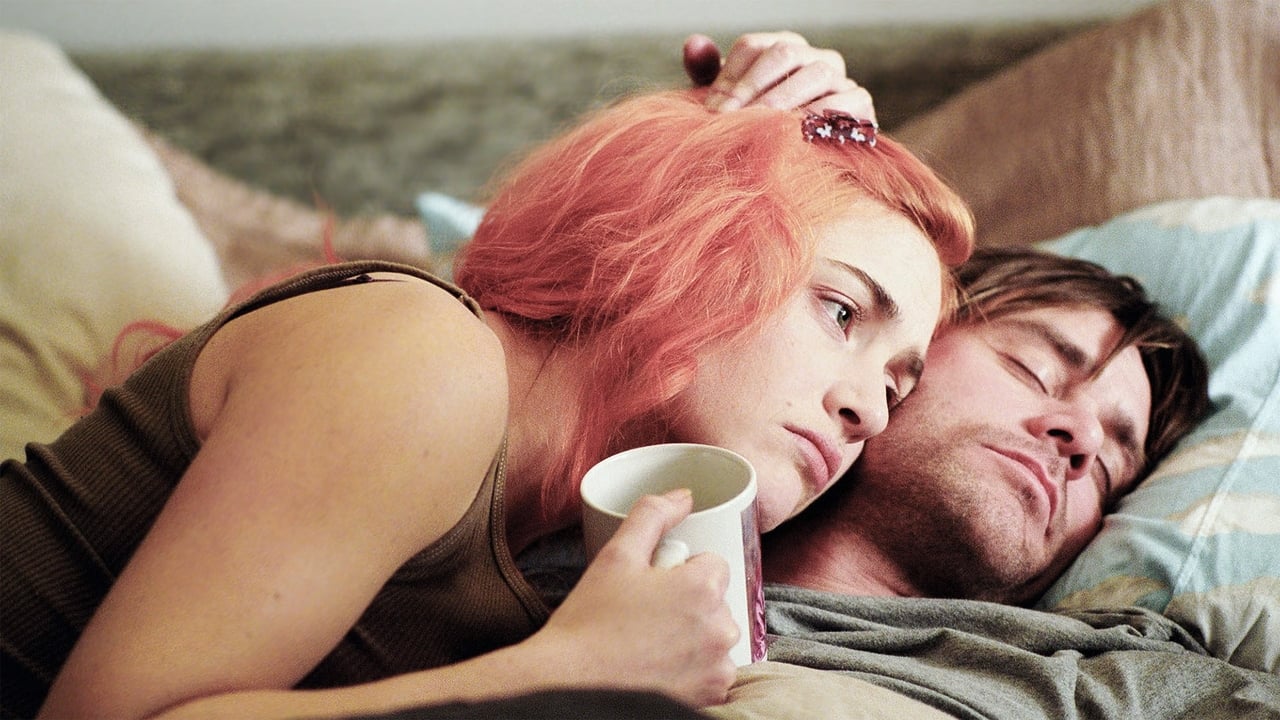
Michel Gondry and Charlie Kaufman discuss the nonlinear screenplay, the opening, Jon Brion's score, and the contrasting performances of Kate Winslet and Jim Carrey. They explain forced perspective, lighting changes, concealed cuts, disappearing sets, and long takes. Their discussion also describes how the couple's two-year relationship is represented within one night and how Joel imagines Clementine resisting the memory erasure.
- Duration
- 1h 45m
- Talk coverage
- 84%
- Words
- 12,661
- Speakers
- 2
Commentary density
Highlights
Topics
The film
- Director
- Michel Gondry
- Cinematographer
- Ellen Kuras
- Writer
- Pierre Bismuth , Charlie Kaufman
- Editor
- Valdís Óskarsdóttir
- Runtime
- 108 min
- Also on
- OneSheet ↗ OverBlack ↗
- External
- IMDb ↗ TMDB ↗ Find on Amazon ↗
Transcript
12,661 words · 47 flagged as film dialogue
so we should introduce ourselves, Charlie. Okay. You want to go first? Okay. The person with the French accent, it's me. I'm Michel Gondry, the director of the movie. And I'm Charlie Kaufman, the writer of the movie.
Jim is waking up, but we need to get started. You're going to narrate it. Jim is waking up. Jim is sliding across the bed. We should do the version for blind people. There is a dent on the car. Well, seriously, we have been working on this project for a long time before it came to life. Since 1998. It was 1998? I think so, yeah. I think that's when we first pitched it. Wow. Well, the pitch was a very good moment. I remember you had dental rage. I had an infected tooth or something during the whole thing. It was miserable. We were going around town for like four or five days. I was in this terrible pain and throbbing in my mouth and going and pitching in all these different places. I know, and I was just doing the driving, and at the end of the pitch, I would add a couple of visual references.
And that's all the job I did. The pitch was pretty short, though. It was like five minutes. It went surprisingly well. Yeah, it was great. Maybe we can talk about the image. We wanted to have snow. You had written a lot of snow in the script. I wrote snow many, many times. But we found out really quick that we could never afford it. So you wrote again without the snow. I just... I just erased the snow. I mean, it was a big ordeal because I really wanted it. We all really wanted it. But we didn't know if there was going to be snow or it was going to be a cold winter. We had no way of knowing, so we had to do without it. And then we had this amazingly cold winter with a lot of snow. So it was fortunate. Yeah, it was great. But the thing we found out is that it was a contradiction. Basically, to do a movie with snow, it means that it's all special effects. And then if you want to do it like a a real lifestyle or very realistic, which was our decision, it was a total contradiction
But the funny part is that it was so much snow we had to, like in this scene now, the beach was cleared from the snow. It was completely snowy all around. Oh really? Wow. How long did that take? I don't know. During the night they put some protection and then they have to wipe it. So this shot, all this is shot really in Montauk. to me was very important because, I don't know, those scenes were very delicate and it's not like much happening. And to shoot in the real place, the place that you had mentioned, meant a lot to me because there's a way I had nothing to grab on. Right. And for a while there, we didn't know if we were going to even shoot in this country. They were talking about sending it to Canada, which was... which we fought against. Yeah, it was scary for me. Already shooting in New York was scary because I didn't know it. So I came six months before and I did millions of pictures on Location Scout. And we went two, three times in Montauk. It's great. I mean, I ended up really falling in love with the city, which sounds like a cliche, but New York is really very different from a lot of places.
Here, Kate is great. I remember you responded on the dailies when she was having this attitude, bending to try to get his attention. Yeah, I thought it was really wonderful. Hi. Sorry? I just said hi. Hi, hello. This was much longer, this scene as written. It ended up being like a 20-minute scene or something, wasn't it? Something like that. Yeah, that's funny how it was written. It was anti-climatic from the beginning, which is good. It started by something very organic and very real. And I think it's nice for people when they will start to look at the DVD and they can start in the middle and look at the beginning after, knowing what happened after. It's really a scene that plays on two different levels, when you know the story and when you don't know it.
Yeah, I think we always wanted it to be a movie that you would watch more than once and have differing reactions to with the more information that you had. Actually, it was our argument when people say, well, the story is too complicated. I remember you saying, well, they have to see it two or three times. And in fact, it happened. It did. With the people who liked the movie, they seemed to see it multiple times. That makes up for the people who didn't see it at all.
Yeah, it was all a long conversation about her hair color. We couldn't keep it all, but it was really funny. What was the long conversation? Well, she was talking about all the hair color. Oh, right, right, yeah. Yeah, yeah, she had a long list. I was interviewed yesterday about the interaction between the music and the film, and I remember I mentioned that it was coming from your idea. Initially, we wanted to use the music to kind of fill up the gap, the silence in the conversation. And then you came up with the idea that the music should actually do the opposite. It should show when they are talking. There is something in motion when she talks to him. She's the one who is... Yeah, there's all these aborted efforts to sort of start this conversation. And each time she fails and comes back, the music kind of comes back.
And we used the idea of the train for the theme. And when they stopped talking, we stopped the music. And I think that was genius to do it this way. It was more unexpected, but it totally made the scene work. And we should mention that we have Jon Brion to thank for it. Yeah. It's amazing to work with somebody who is so skilled that he's not scared. to play the music on the piano and have somebody talking to him at the same time and telling him, maybe it's a little too sad here. Most of the musicians are very guarded and they could be a little sensitive. Also, he was capable, at the drop of a hat, of changing the inflection of anything he was playing to get it closer to what we were thinking, which is kind of an amazing skill. He has a quality of being classical and popular at the same time. which was really, it was a dream for us to be able to have that. Yeah, I love Kate here and Jimmy. Yeah, he's so great here.
Yeah, because she's stepping over his little space. Personal space, yeah. Yeah, each person has a different... I mean, a similar space, depending on how much she knows the other person. And at this stage of the relationship, the space is bigger than what she allows. Yeah. And she was too close to him, and him as Jim Carrey is pushing back, away from her. Or you think it's actually Jim, not Joel? Yeah, I think so. And when she kicks him right now. Punch him. Punch him. Yeah. That's Jim, not Joel. I know. Well, it's one of my favorite things in the movie when she punches him there. It's so perfect. And that was Kate. That wasn't written. She just did it. Yeah. Which is why he didn't expect it. Yeah. And I have to say, we kind of plotted a little bit with Kate to take Jim by surprise constantly. Uh-huh.
I like very much the little dance she does here. Yeah, yeah, it's great. That's what's great with Kate, is she can be really cartoonish and still very human. Yeah. Well, I mean, the character of Clementine is theatrical, so she has a right within that character to do those little... I mean, Clementine knows she's being cute there when she does that little, you know, it's frosty thing. Yeah, yeah, yeah.
It's so great to watch actors make the characters come alive and to see all these new things that you didn't anticipate when you're writing it. I wrote a script I'm going to direct and I cannot believe how painful it is when you give the paper to somebody and they just cross his line and stuff. I started to realize how What do you mean, cross which line? Well, the way that you work on your own. I mean, the difference between a director is the director, the pain on the director is when you work, there is always somebody commenting on what you are doing. You have to deal with that constantly. A writer, it's turned out to me, it feels like you do your work on your own, but then everybody criticizes it. Yeah. And I realized how, I mean, I could not survive. through what you've been through. It's hard, but I mean, that's why it's good for me to work with people like you and Spike, where I feel that I do have a say in what's going to happen and choices that are going to be made. It's really painful to not have that, especially if you're intimately attached to the thing that you've written.
An intimacy that took six years or five years to grow? Well, yeah, and stuff that you care about and stuff that's really about my life in a lot of ways, you know. And I'm happy and fine to watch things sort of evolve and change, but to have a voice in that evolution is really important to me. Yeah, and I think what's important is people's motivation needs to be, even if people disagree of the direction to take, if their motivation is right or not, like, speculative or, you know, thinking of the audience or of the commercial success or not personal, that's where it's bad. Yeah, well, you can have a real conversation with a person who thinks like that because their goal is the same even if their ideas are different. And, yeah, if it's kind of, you know, about pandering or making choices to appeal to the audience, then it's a very frustrating conversation to have for me.
I would like you to call me.
Would you do that? I would like it. Yes.
Wish me a happy Valentine's Day when you call
me. We had the scene when she was going down the stairs and we have to cut it out. Yeah, I like that scene. And see the snow was starting again here. Yeah. I like when there is stuff with the weather because it gives you an adrenaline rush. You see the snow starting and either you have to shoot before it covers the floor because you lose the continuity, or either you want to shoot with the snow coming into frame because it's perfect. And it makes everybody work faster and with more energy. And that's what's great. It shoots for real outside. Well, I guess when they walk in the street, you have no choice. They have to be really outside.
The interior at night was done on stage. And I made sure that the ceiling was sealed. Because if you don't do that, the DP and the gaffer, they open the ceiling and they put big lights because they want to make sure there is enough depth of field to have a sharp focus and it looks theatrical. What was the reason to have the actual apartment and then have a mock-up of it? rather than just shoot everything in the actual apartment? Because at night, it would have been a nightmare for everyone. Like, the neighbor would have been crazy with all the generator. There is so much stuff going beside what we shoot. Right. I mean, I really like this moment. And it has been a big discussion, same way we wanted to reconstruct the lake on stage or outside. Well, because we didn't know if there was going to be an icy lake. Again, we got lucky.
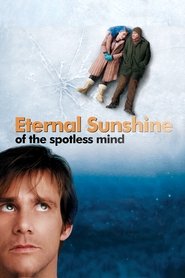
So yeah, so we put some light on the lake. What happened is it ended up to look a little artificial. And my idea was to, instead to bring the star in the sky, which makes it look like Titanic and contrived. I remember this little ray of light from the freeway into the side of the lake or the river. And we added that in post-production. And it fit with the sound because it's night, but there is always... the rounding of the freeway in a distance. So we add those lights in post-production. So it's funny, this crack. I decided to put them next to the crack just to make it look realistic. And it becomes like a symbol for people how this crack shows a relationship going wrong. And that was the image we picked for the poster. And it feels they are weightless here because Jim's feet, it seems that the leg is vertical and his feet are not touching. I don't know, something is weird. I know, I always look at his feet in this shot, more than her feet. I don't know why that is. Because they don't feel touching. They don't feel like it's touching.
They look kind of like cartoon feet, like the way a kid would draw feet, you know, they're sort of facing in the wrong direction. I love the light in this scene. It was like super freezing outside. Yeah, I think I was freezing outside. I remember the scene when Elijah comes. It was like one of the first scenes we shot. You can see there's snow falling behind him. See, there's snowflakes. I'm so tired. Okay. Yeah, sure. It's one of the hardest things to pull off, somebody waking up when they are not really sleeping. I remember Kate saying that she was really good at it, though. That was the one thing she said she could do as an actress, was yawn and look like she just woke up.
See the steam coming from his mouth.
Can I help you
with something?
What are you doing here?
This is the most absurd dialogue I've ever heard in a movie. Thanks. We cut a line out and it's even more fun. He just says thank you and he goes. Right. Well, they asked if he could buy him a cigarette, right? Yeah, yeah. Which was funny, but I guess... I have the credit. 20 minutes in or something? Yeah, it's funny. Nobody even mentioned it. We thought everybody would comment on it, like it was very contrived, but we never had anybody saying anything about it. I've seen it mentioned. I haven't seen it criticized. I think it was a good solution to get to this point in the movie. Yeah, we wanted to show that it's another part of the story. We don't know if it's in the future or in the past, but it's important that we know it's... Right, and the mood shifts so dramatically that it's kind of neat to have it be the title sequence. Don't you think it's data to show tape? I mean, in fact, by the time we started to write the film...
And the time we shoot it, tape became obsolete. Yeah, but Lacuna is very low-tech. We've always sort of said that. Although that isn't a Lacuna tape, we should point out, because there is some confusion sometimes. Yeah, that's a song they used to play together. Right, their song. It's funny because I had this song in my mind since... The 80s, it was a song from the Corgis from 1983. And nobody could ever tell me what it was. And I was always coming to them saying, I remember this melody, I need you like the sunshine. And people saw it was a French song. And I was with John recording the music at his studio. And I asked him the same way, I need you now. And he said, oh, wait a second. And he put a file on his recorder, his Pro Tools, and he actually just had done a cover of it two months ago with friends. It was a perfect coincidence. So generally I expect to come and sing along. It was made completely low-key and between friends.
You see people notice the dot he has on his head? I don't think so. I'm sad to say. But, you know, I bet they would notice it the second time out. Well, especially when they hear us saying about you. Yeah. I love this actor. He's like being the contrivedly funny, not funny. Yeah.
So what do you think it is, this pill? It's like a barbituric or a sleeping pill, or it's more something that goes with the procedure? I think it's something, I think it's specific to the procedure. I think it knocks you out but keeps your brain activity, you know, going. Probably it's not something that really exists. Well, it's coming from Duranarid, though. Coming from what? Do you want to read? Yes, well, that was your edition, so... Yeah, it's the same way, you know, we want to make it low-key. Yeah. It was important to me that it's not like a green fluorescent little liquid. Well, I never described it that way. No, I know, but that's... You know, sometimes you have to make sure. You have to go all the way. So here are... Mark Ruffalo and Elijah Wood and then we could say why Mark Ruffalo came in the meeting with me and he suggested he would have his character should have a pompadour and I think that's why he got the job. I think it was a very good take on his character.
So here Jon Brion is playing all the theme that we will hear later with the piano and he's playing them like mixed up. It's like a remix but done directly on the piano. And we shift the light in camera to see. That was a big challenge for me to show the memory vanishing without using complicated special effect. There is just a ghost in front of the lens and we hit the ghost with the light. You're saying gauze, right? Yeah, gauze. This is a texture I use a lot in shooting, and I can never express it. I should have a translator just to say the word gauze. Is it scrim? Yeah, scrim is good, but it's thinner, I think. Excuse me?
Can I help you find something, sir?
so see here I don't remember we didn't want to show Elijah's face but it cannot be too conspicuous is it a tricky I guess the idea was that Joel didn't remember what he looked like and since this is in his head it would be sort of you know vague however that would be achieved and that's why throughout the movie, he never really sees. And when he's turning Elijah around later, he still can't see his face. Yeah.
Why would she do that to me?
Oh, this dog was atrocious. He wanted to bite everyone. God, Rod, give it a rest.
God, she's punishing me. I know. For being honest. It's horrible.
I think David and Jane are really good in this movie. Yeah, they... They make the world feel real. Yeah. Joe, why don't you just see this as a sign? Make a clean break. Say, what are you going to do with somebody who got dumped by his girlfriend? That's a horrible situation to be in. I mean, not as bad as being dumped, for sure.
What's your fucking suggestion,
Carrie? What's your brilliant reason solution? Oh, you're going to make this about our shit now?
This isn't about us. I agree. It's not about us. It's about Joel, who's an adult, okay? Not Mama Carrie's kid.
People get confused here because her name is Carrie, and then Jim Carrey was cast, and so they're wondering why he's talking about Jim Carrey there. We've had that problem more than once in focus groups. There is some, like... like immense problem that seems to vanish by themselves when you finish the film. And this is the card. This is the idea that Pierre had that started the whole story. Yeah, we should mention Pierre Bismuth. He's a contemporary artist and he came up to me with this concept of sending this card to people. And how would you react?
Same thing, Kirsten is really great. She ground the film as well. We wanted the place to look real. Yeah. They don't look like they're doing very well, this company. Well, it's quite busy after all. Yeah, but, you know, the digs are not that great. The digs? Yeah, their office is depressing. But at least there is a pretty girl answering the phone.
I asked him to hide for real and scare her. She didn't know where I would be. We did different takes on each time he would hide. Mark would hide in a different place.
You should not have seen this. I apologize.
I like the way she hovers here. This is a hoax, right? This is Clinton. I assure you. No. She should not have said that.
They must feel great for you to hear an actor like Tom Wilkinson saying your lines. Yeah. Well, you know, I think everybody, really, in the movie. Yeah, I don't want to diminish anybody, but the thing is, with Tom, he does three takes. And that's it, he doesn't need anymore. He never looks at the dailies or anything. He's just there doing his job. I'd like to mention Hélène, the DP, the director of photography. She always wanted to put smoke in the scene, which sometimes I would argue, but I have to say there is a sensation of being real. That's exactly what we wanted. But even though those are memories, most of the time we wanted them to feel real. And then have this quality to make the moment. You are in the moment. So why does the smoke make it look real? I agree with you. I think that there's a quality to this film that's special. But what is it doing, do you think? Well, when you shoot, you have to add some artificial light because the film most of the time is not sensitive enough.
Like here you can feel the smoke and it gives this feeling of when you wake up in the afternoon or in the morning and the sun hits the dust through the window. It's really something hard to reproduce. And the smoke gives you that. It gives a density to the air and it makes it feel more real. But you have to be careful because then you can end up to do Blade Runner, which is a great movie. Or Alien, you know, when the smoke is so overly present that it becomes artificial. I don't think you'd know that there's smoke in the room. We had so much argument about it. She would always stop the take and say, OK, let's have more smoke. And I'm like, come on, stop it with the smoke now. Oh, that's a drawing of Paul Proch. Paul used to be my writing partner when I started out. We worked together for many years, and he's a really good artist. I mentioned him to Michel.
Yeah, I went to visit him. He lived in Flatbush in, is that Brooklyn? Yeah, it's Brooklyn. And he's stuck in this beautiful house with all those memories. And you see I have a Christmas from last year. The Christmas tree was out. It was like completely arresting. I was new to New York and going into this house and meeting him was very incredible. And you used a lot of his things that Paul owned and had in his house, his decoration. Yeah. You used in the movie for Joel. Yeah, it was a great background element. Yeah. Okay.
I like the contrast with the old record player and the digital technology. We had a great shot when Tom was outside of the window. It's like one of the techniques I would think of to show the memory being erased that's the tricky part of the film here is like because we have so much information and in the same time this information is part of memory who are getting uh messed with like disappearing
there's an emotional core to each of our memories and when you eradicate that core it starts its degradation process
Every time you wake up in the morning, all the memories were targeted withered and disappeared.
As in a dream upon waking. Is there any risk of brain damage?
Well, uh,
technically speaking, the procedure is brain damage,
but it sits on a par with a night of heavy drinking. Nothing you'll miss. Comfortable?
What we're doing here, Mr. Barish,
See, we ought to say something now, Charlie. This is a hard scene. We cut and recut. Oh, yeah. Because it's when it catches up and we end up to be in the present time. But so far, we are only in his head. And as well, we want to understand the procedure. And he's understanding that he's in his head now. During the scene. Yeah. For the first time. And the fact that we see him twice, it's in a way, it's a way we first saw the story. When he witnessed his memory, he should be there to watch them. But we could not have that all the time because then it would be completely emotionless. Right. Those are Clementine's potatoes. On a fiddling with a wire outside of his head. Hey Patrick, give me a favorite wire. Can you check the voltage regulator? There's one wire that's not even plugged in. So they messed up with this memory, so it's back in the memory it was before, and half of it has been erased.
And here it's how you play with the paradox, because you see himself, and both Jim are talking to Tom Wilkinson, and Tom reacts very naturally about it, doesn't make a big fuss. I suppose so.
This is about right.
I love that he's saying
this is what it would look like
when it's really Jim saying that to himself. He's a version of laughing, Tom, here. Tom was? Yeah. Do you remember what he was laughing about? Well, the situation was stupid. You have to say the same line, and we did many, many times. I was saying, one, two, three, and then go at the same time. It was completely contrived. See, one more time, the snow at the unexpected moment. In this scene, Jim is not wearing his pants. You don't even see it, but everything was going crazy and he wanted to have his contribution. So he put his pants down, but we cannot see it. What did that mean, his pants? That they had been erased? I guess so. We should ask him. But Charlie, we can't explain everything. Sometimes things are just coming out of the blue.
I don't know how many people get that, that he repeats the name. They'll get it the second time out. Fourth time. This is the Yeah, the first time we shot this scene in one take. But the second part is still in one take when she keeps disappearing. We have a lot of tricks to make her going through little doors and reappear. It's three o'clock.
I kind of, sort of wrecked your car. I was a little tipsy. Don't call me pathetic.
Well, it is pathetic. It's fucking irresponsible. Could have killed somebody. I don't know.
Maybe you did kill somebody. Should we turn on the news and see?
Should I check the grill to see if there's children or small animals? God, you're like an old lady or something.
What are you like?
Cherry or mean sometimes? A wino? It's supposed to be mean, this scene. I know. And yet she's like the most beautiful of all the filmers. And she's so mean. That's a tough show.
And in your little wormy brain, you're trying to figure out,
did you fuck someone tonight?
Now see, Clem, I assume you fucked someone tonight. Isn't that how you get people to like you?
Sorry, okay?
Clem, I didn't mean it, all right?
Oh, here, like, there is a little door on the right and she goes off this door and she goes back to the next place. And then the next time you see her, that's a body double. Oh, that's not her, that's another girl.
I've seen a lot of movies with ghosts, and the one that is the most effective is when people get at the wrong place and they just disappear with no reason, but you don't see it in front of the camera. I remember this movie, The Ghost and Mrs. Muir. You know this movie? Yeah. And it's just sometimes the guy is here and he's not here anymore, and it's the most chilling feeling. And so I thought for her disappearing, it was really the most effective would be... to not see her for no explanation, with no explanation. The thing is, the situation is a little weird. My girlfriend's situation. No, but for Kate, she was really eager to get the role because she was categorized into the period movies. And I don't know, when I started to meet with her, and I know that Charlie, you liked her too. And I was reading the script again, I became addicted to the idea of doing it with her. Maybe we can talk, like, she only has one leg here. It's hard to say. And we needed something a little big to explain that something is going really wrong.
He says that you see it's all going away. It's all falling apart. And it was not clear in the daily that all was falling apart. So I thought maybe if a calf followed. We had some conversation about it. Yes. We sent Jim the script, you know, right away. And he was very interested right away. I think, as I remember correctly, very early on, you know, we thought Jim was going to do it. And to me, Jim was perfect, especially for all those moments when his personality shifts between the Joel adult and the Joel child. Yeah. There's not many actors I could think of being in an oversized kitchen sink and not being stupid. I remember you said the same thing about Reese in Human Nature, that it was kind of like you needed somebody who could be in a diaper and not look... Yeah, look dignified. Yeah, and I think that Jim and Rhys share a certain characteristic in their ability to pull that off. Yeah, exactly, yeah. But they don't belong to this category of actor who have to carry the handsomeness or the seriousness, like the James Dean. Marlon Brando type. I like his face. He's breathing too hard.
I had to put a camera behind the TV. It's a fine line here, because Stan, who is played by Mark Ruffalo, is supposed to be the one who is responsible for having him laugh now. We were wondering if it was good or if it was too crazy, but I thought it was a great moment. I really thought it was good. Sometimes it's good to... sacrifice sometimes the logic of the story if the moment feels right because i feel that it's good to feel you are watching glimpse of life and not necessarily turn of stories we had a lot of conversation about this moment as well yeah and uh well that's uh maybe that's my contribution like this kind of stuff i was doing uh with my girlfriend at the time, I was pretending I'm dead in the most grotesque way. Even one time I was pretending I was dead, but I was still standing up, and I was making a reference of the blue velvet, yes. And when she actually left me during the editing, and the last night she was here, I wanted to pretend I had committed a suicide. So I went into the bath with all my clothes and I put red ink everywhere.
And I wrote some joke on the floor. Obviously, I didn't want her to believe I was killing myself. It was too stupid to make sense. But the hard part was to sink in the bath with all my clothes because I keep floating on it. It was like impossible. And how did she react when she saw you? She laughed so hard. It's a very weird breakup. I was devastated, but I was still cracking a joke. And she kept laughing. We're fine. I like Jim here. It's like, it's how he finds the right limit. He's being really over the top, but it's totally believable. So if you see the guy behind, they have no face. It's a memory that is getting erased. And we desynchronize the sound with the image as well.
It was very scary to shoot because I would literally change the speed of the camera, which means we could never have the shot with the sound in sync. But I like to do this kind of unsafe thing when I shoot. I like Elijah's reaction there.
I like how she's a little more like of a rock chic now. Melissa told the costume designer has a great way to describe the character without making a statement. She's wearing this kind of velvety jacket with a lace in the back and it's a nice contrast with her at the office. It was interesting to shoot this moment because most of the time Jim was really in the bed and his character was really restrained and he saw those two guys, those two young actors coming in and improvising and In between the texts, he would jump on the bed and sing this crazy song called Pecan Pie, which is like a mock-up of Elvis. And he felt, sometimes I think he felt challenged by those guys. But it was funny the dynamic between Mark, Elijah and Kirsten, because Kirsten, she was not so happy to have to improvise. And they were getting so much of the script that sometimes she would get pissed off. about it but that was really perfect for her character because the way they like making fun of her it's exactly the same way she would react in the story and in real life. I like here how she gets pissed off with the delay she carry on being cuddly and kissing him.
And she realized that he said something that is very undermining for her. And it's unsynchronized between how she behaves and what she feels. And this is one of my favorite parts of the film. I love that her image disappears from the cup. And here, it's trying to get cuddly and finally she turns away from him. It feels really... horribly rude to me. Oh, that's my drawing on the right. I wanted to make a connection with the next scene. That was the first day of shooting. I had done so much footage. I think I had done 20,000 feet. which is with amount of the time you have in the day. So basically the camera was always rolling. And Steve and Anthony, the two producers, they took me on the side in my trailer at the end of the day. It was like a mafia stuff. They wanted to kick my ass and threatened me that I would be sacked if I would spend more film. Really? Yeah, I knew in my contract I had two weeks before I could be sacked, so I was fine.
But they said if you spend more than 5,000 feet tomorrow, you're sacked. It was really funny. Was that them talking or was that from the studio? Well, it's more from the Bond company. You know, they see the Bond company is a company who makes sure you don't go over budget. And they charge a lot, in fact. But there are people who like movies. Not all of them, but the ones we work with, they like movies. You know, we can talk with them. So... But it's the expense. If you spend the money for one week after one day of shooting, they talk to you and make sure you stop doing that. This is horrible, this image.
So can you explain to me, Charlie, how she could possibly hear what you said on the phone? How? How Kirsten could have heard what he was saying on the phone as he was speaking very quietly and she's in the kitchen. Does she hear what he says on the phone or does she hear him saying to Stan that he wants to go? Yeah, I guess you're right.
So here you see the smoke again. Yeah. That's Kate improvising. Remember this line about, do you ever inhale hairspray? Yeah. I stopped because it caused cellulite. Yeah. We didn't keep that, but that was her line she improvised. That was in her apartment, the first time that they're in her apartment. That was a much longer scene too. I thought that was a good scene. In its original form. I mean, I think it's still a good scene. You mean it's run now? No, no, no, I don't mean that. I mean, you know, we had to cut it because it was way too long. But I think it worked, if it were just a short movie. Yeah, exactly. No, it's what I thought when we projected the scene. It was really totally captivating. It's just when you put the whole movie together, you have to find somewhere to cut that. Yeah.
Yeah, it's coming. It's like a good, over-the-top performance. But over-the-top in a good way from Kate.
I don't know. I don't know.
I'm lost. I'm scared. I feel like I've disappeared. And it's one of the very few times that she's for real, in fact. What do you mean? Well, all the time it's through Joy's memory. Oh, right, right, right. Tangerine.
Nothing makes any sense. Nothing makes any sense. It's okay. It's okay.
Hey,
let's go out dancing.
Do
you want to go out to Montauk with me?
Montauk? Yeah.
No, come up to Boston with me.
Sure, yeah, we can go next weekend. No, no, no, now, now. Yeah, I have to go now.
I have to see the frozen Charles now.
Hi, it's Joel. Leave a message. Get back here.
Pick up. Pick up.
He carries all the mementos from the ones that they were supposed to throw out. He put in his backpack, and that's how he tries to steal Clementine, by imitating Joel. There's a Star of David for some reason. Yeah, I have no idea why. You have to ask it. Is that her handwriting? Yeah, yeah.
That was one of those days when they, despite my recommendation, they open the ceiling and put a strong light. And there is some of the shots where when we look at them with Hélène, the DP, she goes, I should not have done that. And it's fine, nobody notices. You can tell it's a little more theatrical.
This guitar you hear, it's from a keyboard called the Talent Maker. And it's like on a keyboard from the 70s when you have an optical disc. And actually you press a button and the guitar plays in itself. Or maybe we should talk about this scene. Yeah, this scene was originally Clementine talking about a passage from The Velveteen Rabbit. And actually quoting a passage from there. And for some reason it didn't work the way we wanted it to. Michel asked me if I would rewrite her monologue using, what, 25%? Is that what you said? Yeah. 25% of actual stuff that she says in the Velveteen Rabbit monologue so that we can cut away from her when she's not saying what we have on film. And he thought I would be excited by the challenge, and I was, and I did it. It was like 15 minutes, I think. Yeah, I know. And it became, people really love this scene. It's really moving, and I like that it's moving, and it's completely artificial, completely constructed. On the other hand, those dissolves that you see are made in the camera, so you have no idea what would overlap and what. But I think sometimes to have a strong perimeter is liberating. Definitely.
I like this shot. There's a little sparkle in the gloves. This was originally at night. This is one of the times in Joel's memory when they'd gone to the Charles River. But we needed to differentiate it because we thought it was confusing, that people would think it was the other time. So we timed it from there and we added some bird sound. And it looks... Artificial, but kind of in a good way. Yeah, this shot when you see the trees behind it. Yeah. It's a peak. Look at the steam, it's amazing!
So initially, this sequence was much more effective, the way it was written and the way we thought we would do it. And when we decided to go for New York and no Canada, we have to limit the budget and special effects. And I think it turned out to be more touching. It's less technical. Look, our files are confidential. The next scene when they arrive in the lab and you see twice Jim, Jim in two positions was all done in one shot in front of the camera.
It was even longer in reality, wasn't it? Yeah, we cut some of it. He changed his costume more times. Yeah, from here, this is one cut, but from here, it's all done in one shot. So... Here, Jim would go behind the camera, change his clothes and sit there. And it's amazing, it's there already. And then he would come back behind the camera, put his clothes on and be here. waiting for the camera to come back. So there is the same dream. And the lady with no face is actually Ellen, the cameraman. We destroyed her face in post-production. And see, again it's changing and it's coming there. This was an exciting moment for everybody, this particular scene, for the crew and for the actors. that you were able to pull this off, I think. Made everybody bond. Yeah, it was very exciting. When you do some, even if it's technical, like when you do a long shot, when everybody participate and see what's happening, and like, if it's a big challenge, like nobody believed it would be possible. And then at the end, when we pull it off, everybody was really, I mean, they felt confident. They felt something was happening in this film, and they were happy to work hard after.
See, he's happy. To work hard. I'm just happy I'm freezing my ass on the ice. I had, we tried a line when she would say, I want to go to Montauk. And we picked another time she was saying Montauk and tried to match it and it was completely wrong.
When I met with Kate, we decided that she would be the colorful one. I mean, that was the way it was written, obviously. Her character was very, very precise on the paper. And she said I would be Jim Carrey instead of Jim Carrey, so you can't have two Jim Carrey in a movie. And basically, to summarize the situation, I would say I put her, Kate, inside out, and I put Jim outside in. So all this energy always had... in his movie when he goes crazy and he's like, or he does this absolutely amazing slapstick physical acting. I put that all inside and I ask Kate to really come very strong on him and corner him and change the order of the lines and like, provocate him. And I think I turned all his life that he generally projects, I would say, inside. And his characters feel very, very alive, even if he does less than she does.
And what? I'm listening.
I don't know. You erased me.
That's why I'm here. That's why I'm doing this in the first place. I'm sorry. You, you. You know me. I'm impulsive.
That's what I love about you.
That's a little Jim contribution.
I have another idea for this problem. This is a memory of me. the way you wanted to have sex on the couch
after you looked down on my crotch. Joel,
the eraser guys are coming
here,
so what if you take me somewhere else? Somewhere where I don't belong. And we hide there till morning.
OK, that's the time when they start to figure out how they can find a way to get away from the eraser guys. That's very sweet, but try, OK?
It's interesting that Clementine is really Joel talking to himself in all these scenes, but sort of somehow by doing it through her voice, he's got more license to be adventurous because it's coming as Clementine's idea. But I think sometimes when you talk to people in your head, I think you kind of find a way to talk really with them. I had this experience when my father was dying. He was sick. and he lost communication with outside and I remember talking to him in my head at this time when you wake up in the morning and we are still in the mood of the dream and I can really have a conversation with him and I saw that maybe all the information I had from him were connected at this moment by my subconscious and I put them all together and I reconstruct his character in a way that I was not necessarily aware of. So I think there is a possibility to talk to somebody, even if it's in your imagination, and you're not completely aware of all the aspects of the character. It's kind of tricky, and people will think it's like when you experience afterlife stuff, which I think is rubbish.
This was a great scene to shoot. Kate was like crazy this day. Why was she crazy? I think, well, we shot in different places. When it's a child on a gym, she was talking with a child and I don't know, she reacted in a different way than she was when she was with Jim. And the fact that she has this disguise man with this wig that was like really more like a wig on this kind of sexy look. Help her to come out and do this crazy stuff she's doing. It's really funny, we did all this oversized props. It's always a good time to shoot like that. It's always better than to do blue screen.
So that's the place where we could let Jim go all the way to his improvisation and be really right for the character. We had shot a love scene, a making love scene with those two characters. I'm kind of glad we didn't put it in. With Mark and Kirsten? Yeah. Why are you glad? I don't know. I feel weird about sex on the screen. I think it should be just in porno movies, but not in real movies. We had a sex scene between Joel and Clementine, which I really liked. Yeah, it was great. Actually, this one was really great.
I don't know what to do. What should we do? Crap, crap, I don't know, I just stood there. I'm sorry, what should we do? I don't know. It's funny, I only realized recently the humor of the scene, how they are both completely stoned. I mean, I knew it, but just recently I realized how funny it is. And she's totally great, she's really overexcited. Snickers. Mark is very, it's funny, my son who was 12 visited the set and he was obviously very impressed by Elijah and Jim because he knew them from movies and he didn't know Mark. But Mark totally captivated him. I remember they were sitting at the table for lunch and Paul was eating with his finger and Mark took to him very seriously saying, would you do that in front of a lady? And Paul was like tetanized and stopped eating with his finger And in general, Paul, my son, is very arrogant. He would talk back. And he really likes him now.
Get your stuff, Mary. I think you should go.
I don't know. Mary.
I am so stoned.
Mary, you have to go. I'm not stoned, Mary. I don't want them to see me stoned. Mary, you have no idea how much trouble we're going to get into. The power comes in.
One of the issues in the movie was to have Joel in his memory and the emotion of the memory and out of it at the same time so he could comment on it. And this scene is an example of Joel being a four-year-old but also being, you know, the adult Joel and going back and forth and feeling this emotion of wanting to be held by his mother and also dealing with the issues at hand of getting out of the situation he's in. That wasn't Clementine. But what's good about it, it's like, well, in the very basic psychoanalytic world, well, that's the same emotion of having a problem with your girlfriend and being not taken care of. It's just a wake of feelings of being abandoned by your mother. Right. Well, I guess that's why you wrote it, I'm sure.
This scene is always funny to shoot when there's body motion and they're trying to fix it and it's all going wrong. I guess the idea of those scenes, I mean, there's a few things going on. I wanted to... I like the idea of having a story that takes place in two years, which is the Joel and Clementine story, the story of their relationship, but also takes place in one night. And you see that through the... the Stan and Mary and Patrick and Howard story. The other thing is it's kind of like a customer service type of job where you could actually, because the customer is unconscious, treat the customer how you really feel about them, which is to sort of, you know, that they're not important. You know, you're doing your job, but you're basically living your own life. And the fact that Joel is unconscious on the bed gave me an opportunity to write these characters interacting with him that way.
It's like if you go to Kinko to get your brain fixed. Exactly, yeah. Yeah, of course. Just kind of the feeling we wanted throughout about Lacuna is that it's just sort of, it's kind of low rent operation. And then he's like hiring those students because he doesn't have much money to pay them. Yeah. And they're like messing with what's the most important thing in your life. Right.
I ran the utility programs and I had nothing there. So I checked all the memories against the printed logs.
Kate fainted at the end of the scene because the water was too warm. They were in there for a long time. And we had a big fight. With Jimmy, he was suddenly very overprotective over Kate. And he didn't want to go back to the bath to finish the scene. This scene when you see him drowning. I really like this moment. We waited for a long time to get the tear rolling from his eye, but I think it was good to have it. How long did you wait? I don't know, it's not crazy, but it was a hard one to get. It was very important for Jim that it was a real tear. And that's the moment I fought for.
This idea that you can drown into your dream and suffocate in real life is really scary. Because that shows that most people would think anything can happen in your dream and you'll be fine, or your memory in this case. But if you find a limit where there is actually some real danger, it makes you feel really the dangerous situation.
I remember I had an argument with Jim this night because he was doing this joke about the people coming out of her butt. And I asked him to do a version without the joke. And he was like, no, all the humor I'm trying to pull off, you're stopping me from being funny. And I was like, well, if you ask me to direct you and then I direct you and then you don't want to be directed, I don't know what I can do. And the funny thing is that we end up to use this line. Yeah. I like the line. But you never know. I mean, you want to get some option when you shoot. Sure. Sometimes it feels like the actor is doing the same line again and again because he doesn't trust you that, you know, you will make the right decision after. We didn't have too much of that. Yeah, those face actually, some of my knee or some weird part of the body.
I had to come up with ideas to show that the memories were decaying. And here, because it's like an action sequence, it was good to feel that the floor was disappearing below their feet in a way. There was some physical danger. So we painted the books out one after each other, the same way with the fence.
What do you have to say, Charlie, about that? It's Joel masturbating. OK. When Pierre Bismuth, who came up with the concept, saw the film for the first time, he had never read the script or anything. So he rediscovered it. And he said that this masturbation scene was the strongest for him.
This is a scene we had to fight to keep in the movie. Yeah. And actually, Jim was actually devastated to have to smash this bird. Yeah. But I don't know if you had, you know, if the bird had been replaced with a tarantula that was dead, I'm not sure that Jim would have felt any better about smashing it, you know? If it was a small spider, it would have been fine. Or we should ask him. Here's the actor where I really had the scene behind a microphone talking about miming their action. And I thought it was interesting to not do that in post-production, but to put them really out there. It's funny because Jim had exactly the same bike when he was a kid. And when he saw it on the set, he was really delighted. I should have put some sound of honk for truck. So that was your game you were playing, Charlie. Yeah, it's a game that I've played. And then the idea is that you have to see how long you can pretend to be dead while the other person acts really concerned. Yeah, sad. So we went to Montauk to shoot all the scene on the beach and it was never supposed to be snowing.
And the next morning we wake up and it's completely covered by snow. So the producer wanted us to cancel the shooting and come back to New York. And I just had seen the documentary on Terry Gilliam's Lost in La Mancha and how the movie was ruined by the weather. And I was saying to myself, I'm not going to let the weather ruin the film. I would... Conversely, I would... use it to make it better. And I insisted. I fought so hard. And we ended up to shoot half of the scene on the beach in the snow, which I think makes them way better. Yeah. It's beautiful. And you don't generally get to see snow on beaches. I don't know if I've ever seen it in a movie before. Yeah, it was very special. And the good thing with hard weather is everybody's, like, freezing. But, I don't know, you transpose your... transfer your anguish of shooting to the anguish of just surviving the day, which is in a way easier to deal with. He's trying to get attention. It doesn't work.
No, she's not stopping him from leaving. That's the thing with girlfriend. I mean, I'm sure it's the same for girl and guy. You can't act like that to attract attention. It never, ever works. You have to be an adult, but it's harder. In my reading, I've come across some I thought you might like, too. Oh, wow.
I'd love to hear some. There's one that goes, Blessed are the forgetful,
for they get the better even if they're blunders. She's effortless the way she acts, Kirsten. Like the scene that comes later, when she finds out the truth about the whole situation. She did it really, we did like four or five takes and they were all equally as good. She's a different type of actress. She doesn't have to work hard to put the emotion out. She just comes very natural. all the time. So this was the day when they bring the elephant into New York and from the Lincoln Tunnel to Madison Square Garden, I think. And they have to walk them in. And Karen, my girlfriend at the time, saw that in the time out and said, oh, we're going to see the elephant tonight. And I realized, wow, that's great. Let's do a scene there. Jim here is really looking for Kate because I asked her to disappear before he could say his line and he was really frustrated. And that's really Jim looking for Kate. It's a great moment.
I really admire the work you do,
Howard.
I don't mean to be so familiar.
I really like this side of Jim being lost. I mean, when I'm talking about Jim, there is a very strong moment happening here. But I remember watching Jim in In Living Color. At the end of the show, they all gather together and dance. And Jim was like this big guy. He was one of the only two white actors in the cast. And he didn't know how to interact because everybody was dancing hip-hop. And he didn't know the move. And he feels so lonely. And I think that's one of the reasons I thought he would be great for Joel.
That's painful. That's a moment in life you never want to experience. Watching the girl you like kissing somebody else. This actress is great. Yeah, it's amazing that we get somebody so talented for such a small part. And she comes and she has like half an hour to... say it all about her character and she pulled it off. I remember I asked her to hit him hard. And it's how he's great, how he collapses. Did he know it was coming? Yeah, I think so. I mean, obviously he felt, he was acting the way he felt on the floor. But that's what's great about Mark. He's like very masculine, but he can have a lot of weakness at the same time.
There's one night, it's amazing, when she says, I'm just a poor... He says yes. Why does he say that? I'm a stupid girl with a stupid little crush, and he says yes to that. Look how great he is. He's completely lost.
So for a director, those scenes are very hard to pull off because it could turn out to be theatrical because there is like three characters confronting each other. And using the device of the car moving and the geography helped me a lot to make it more like real life. And this scene is like the hardest stuff to pull off from actors.
It's a shameful situation. And he just hides into the job he has to do. And he's being watched by Mark. And I don't know, when you get to a great actor like that, Tom, he makes things effortless.
Let me give you a lift home.
Hi. Hi. I figured you'd show your face around me again. This moment coming up is the saddest moment for me. When She's very harsh, like nearly a bitch here, and suddenly she turns into somebody very sweet. That reminds me of elements of my personal life. Like here when she changed... She's still fratricious here. And then she becomes sweet again. Oh, that gives me... Charlie, you're sadistic.
In France, we had this TV show in the 70s by Bernard Pivot, you know, Mark Linton, I always refer to him. On the set was a book painted in white. So I don't know if I got the idea from that. Yeah, this scene to me is like the saddest scene of the film, when they're trying to have a second chance.
Well, the voice of Tom Wilkinson is really recorded on the tape and it's hardly audible. But I think it was nice that you could just feel he was behind, like in the background. And by now we find out that he's not like this wise man, this wise scientist we thought he was.
No, no, no. So you want me to carry that? This is a really funny moment. Slapstick is good sometimes, when it's put in the right moment. And Jen, Jane Adams. Because also, because, you know, it's not only slapstick, but it's describing Rob and Carrie's relationship, you know? Yeah. It feels like it's in service of that. No, it's true, but I have to defund slapstick and say that slapstick... touch very deep parts of people. It could be very visceral. And if you read books that Charlie Chaplin wrote about slapstick and pantomime, they are very deep concepts. This day we showed that I was mad because in movies everything is separated. The guy who gives the props to the actor is not the same guy who gives the props to the extra. And the plates were a different color. So I was like, why? How would you believe they are part of the same party? And it's just stupid. It's a detail. But sometimes you get upset with very stupid things.
I think one of the best ideas you had when you wrote the script Charlie is to use the different of tense to still to respond to this problem how he's part of the memory and how he's removed from the memory commenting on them and when I read that I thought okay now we have a great script it's gonna work but we struggled a lot to see how to figure out how it would work and we you know we thought of having two Jims and I had this idea to have Jim sometimes talk to the camera
but this idea was the best. Like for instance here it's to show, we can mention Valdi's editor and I think we should have mentioned her many times because she contributed so much to bring the film to life. Here she was the one to make the decision to not have dialogue and just replay the dialogue by the music. And it's just a little decision, it seems, but it makes a huge difference. Not to be dismissive on your dialogue, Charlie. It's funny, sometimes I watch the film and I still have the This is one of the first ideas I had for the movie, for these characters. And I don't know why I had it. It's like the idea for breaking into a house, but... the relation, like she likes danger and she makes him do stuff he would never do in usual time. I like how she modulates her voice.
It's not even funny. Why it sounds funny with her? Those things were really hard for Jim to do because he has so little to do on it. It's basically giving her the, how do you say, just answering her. This shot cost us a lot of money. But I think he's really good in this scene, you know? I think he did find things to do. It was hard, it was hard, because there is some line that said the wrong way could feel theatrical. I hope you don't take that the wrong way, but it's because it's talking about so much emotion and it's talking in the past. I think to help people, I try to bring them into complicated element. Like here, it was really in the ocean. And I asked Kate to be next to the camera and give him the lines. We had to constrict the house to be in the ocean. So I'm waiting for the tide to rise.
You were scared? Yeah. I thought you knew that about me. I ran back to the bonfire trying to outrun my humiliation,
I think.
Was it something I said? Yeah.
If you said so, go. You have such disdain, you know?
I thought it was hard to find the fine line between being emotional and not too sentimental.
I really like the dialogue between David Cross and Jane Adams. Yeah. Which they were improvising. And the way the images are mixed together, it's really the craft of Valdez here.
It's funny, watching it, I really remember now reading the script and my first emotion. It's like when you talk to somebody over the phone and then you meet the person and it's a different person than what you imagined.
So, you know who he's calling, Charlie? Um... Yeah, I think I know, but... It's not important, maybe. No. We tried different things. He was calling Mary or his wife, and then... I mean, when you have a face like Tom... He doesn't have to... I'm sure he's not really feeling sad or anything. He's just there and his face matches any emotion you want him to feel.
So he's like, he never seen these pyjamas before. Not sure it's clear the way I shot it. I don't think it's clear. I never knew. I guess it's why I put this shot after when he sees the dent and he discovers it. He believes that it's from his neighbor.
See, here it's how we care for continuity. But she left without her bag. And who would care except us? But then I said, give him something nice to do, basically. That's nice, she's looking. She's trying to really... It was there and she can't remember it. It must be a really scary feeling. She's looking towards the car where it's supposed to have happened.
You have all the proof of the film here.
After watching the movie, do you still remember the character that you had in mind, or like it was on the paper, like two different entities? No, it's hard to do that. I don't really, I mean, I find myself very early on, starting to watch dailies, to think of, you know, the actors as the characters. Obviously, when I hadn't pictured these specific people playing them, I had different ideas in my head, but it's hard for me to even remember. I mean, I kind of know what... Clementine looked like because I had a specific person that I was physically basing her on. Here she's looking at the bruise she got from falling on the ice. That was part of the initial ending we had. They were mentioning, talking about her ass. But I don't know. I mean, it's a nice touch, but I don't know if it's clear now. I think people get it. I've heard people get it, especially at second viewing. People say that, oh, I just saw this for the first time, and I just saw that for the first time. And they get excited about that, I think. There's little clues. So when we talk about this part of the film...
I think what we decided together was to see how really for real we would react to this tape, to this information in the real life. And I've been asking the question to anybody who has seen the film or in general, how would they react? And nobody gets the answer. And the answer is like, you would not believe it. That's the first reaction. And it's funny that nobody thinks in terms of real life. They always think in terms of drama and film and storytelling. And I think it creates a very strong dynamic because she recognizes her voice. So she knows that's her talking. And she doesn't remember it. So she believes it, but he can't believe it. Basically, he believes that she's playing a trick on him. And then she feels hurt because he believes she's just like a joke, making joke on him. And then later on, it makes the dynamics the other way around. Because he feels guilty that he didn't believe her and she was actually saying the truth. And do you agree with that, Charlie? Yeah, sounds good. Thanks.
Get the fuck away from me!
Can we talk about it? No, get the fuck away!
Smoke again. Yeah, see, now you notice. And here we have the page of the phone book. to make sure it makes sense that she knows where he lives. He's very creepy here.
Not everybody, but a lot of people who have a very specific, something specific in a relationship can find this element of specificity in this relationship, which is kind of a paradox because if you want to reach everyone, you necessarily, you go wide, you go broad. But then, because we went a little specific into all those touches of life and details, a lot of people, like I know somebody who lost his memory for real and he said this movie was done for him. And a lot of people who had something really unique in their relationship felt we wrote the movie for themselves. Yeah, I've heard a lot of that. People saying, God, it's like you're inside my head or you're watching my relationship. And it's kind of interesting when that happens.
When we did the rehearsal and we started to practice, you know, having them record their voice, play a little cassette player, and then be the other character, I mean, themselves, but knowing or not knowing. I knew something was strong and was going to work because hearing the voice of them talking, before they're raising and hearing them reacting to this and like they just met uh for them they met i know that's exactly what you say all the time when we talk about this moment they just met there is a contrast of them just they have met two days ago and it's very new and they hear all those very familiar stuff they say about each other it's like a time travel machine Yeah, it's how well can you absorb that information if you really haven't lived it. It's the issue, I think. Yeah, and that's the difference between the audience who really take it as something really emotional, and them, if you were here, it's something so new. Yeah. But I guess you can always argue that there is something echoing in them. Well, also, they've come to the realization that they've spent two years of their life that they don't have any recollection of, and that's kind of probably pretty... Wait.
What? I don't know. Just wait.
What do you want, Joel? Just wait. I don't know. I want you to wait for just a while. This was this sort of balancing act here to try to figure out what Joel could say without saying too much, you know, without making a speech, asserting himself somewhat but not knowing really where to go with it, which I think is kind of what moves her. And the next part is this idea of you don't know if you're going to flashback or in the future or Yeah, you mean the scene on the snow. Yeah. So we're not saying what happens after this point in the movie. We're leaving it up for people to decide for themselves. And it's interesting because initially we wanted the loop to play all over the credit, and we have this kind of disagreement about the quality of the title on it, and we end up to just use three times.
In fact, I think it gave a more optimistic feel at the end of the film that it could have been. Which is fine by me, it's great. But if you imagine the loop playing for five minutes, I think people would have felt more negatively about it. I think we certainly worked on that last scene in the movie as much as we worked on anything. Reconfiguring it, restructuring it. and ultimately removing a lot. Yeah. But that's the thing you don't know when it's on paper, I guess. There is other elements that make some of the dialogue maybe not so necessary, but it's good we have all the options when you edit. But I have to say, like, a contribution on James Chambers, on this part was really crucial. It was not the easiest part to deal with because we always feel we are being manipulative, but at the end of the day, we had a good...
Good studio working with us. It was a very long process from the pitch to the movie ending up in theaters and everywhere along the way it could have taken a wrong turn and I think it did, you know, take some wrong turns and we had to correct it. But you're kind of working towards this end and you don't know what the end is and finally we ended up with something that pleased us and that's a good thing. It didn't have to turn out that way. You mean it could have been a piece of shit? Well, no, I don't think it could have been a piece of shit, but I think it could have failed in any number of ways that it didn't. And I think it's fine that it would have, but, you know, it wouldn't have been as pleasing if it did. But, I mean, I think that's sort of when you're going out into territory that you're not certain of, that's always a possibility. And you have to accept that as a possibility or you can't really do anything interesting. Yeah. But, you know, I think that it's, you know, looking back on it, it's like, oh, good, you know, it worked. All right. Thank you. All right, thanks. Okay, so...
Talk to you soon, Charlie. Okay, bye, Michel. Bye.
Keep exploring
Other commentaries on related filmmaking topics
-
8 shared topics
The Mummy Returns (2001)
Stephen Sommers, Bob Ducsay
-
8 shared topics
Mission: Impossible - Fallout (2018)
Tom Cruise, Christopher McQuarrie
-
8 shared topics
The Lord of the Rings The Return of the King (2003)
Peter Jackson, Fran Walsh, Philippa Boyens
-
7 shared topics
The Lord of the Rings The Fellowship of the Ring (2001)
Peter Jackson, Fran Walsh, Philippa Boyens
-
7 shared topics
Tropic Thunder (2008)
Ben Stiller, Jack Black, Robert Downey Jr.
-
7 shared topics
Les Misérables (2012)
Tom Hooper