director
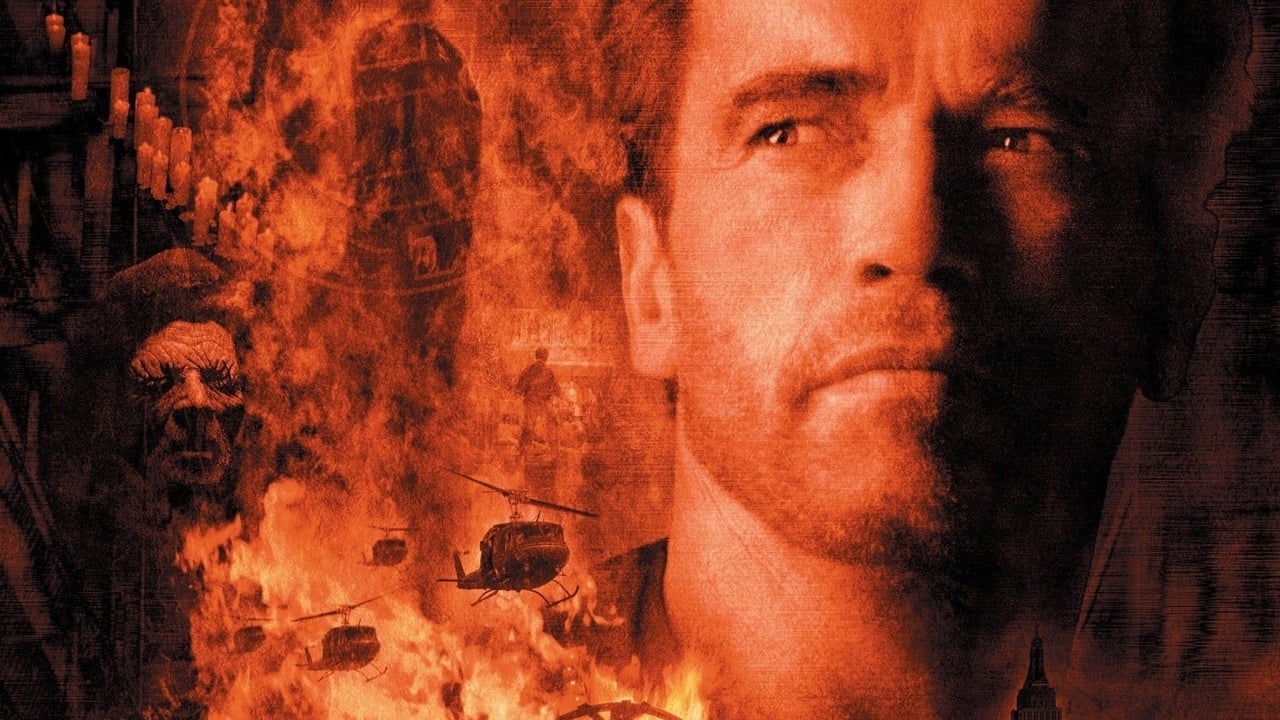
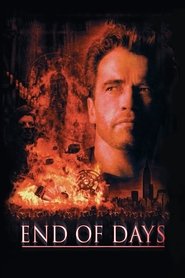
End of Days (1999)
Release End of Days Collector's Edition DVD (Universal)
Hyams discusses directing and photographing End of Days, including amber and ochre lighting, deep shadows, long lenses, and Los Angeles locations used as New York. He describes prosthetic babies, miniatures, digital composites, stunts, and schedule pressure. He also explains casting Gabriel Byrne, showing Schwarzenegger's vulnerability, and retaining the story's spiritual concerns and fatal ending.
- Duration
- 1h 55m
- Talk coverage
- 78%
- Words
- 12,129
- Speaker
- 1
Commentary density
Highlights
Topics
People mentioned
The film
- Director
- Peter Hyams
- Cinematographer
- Peter Hyams
- Writer
- Andrew W. Marlowe
- Editor
- Jeff Gullo , Steven Kemper
- Runtime
- 122 min
- Also on
- OneSheet ↗
- External
- IMDb ↗ TMDB ↗ Find on Amazon ↗
Transcript
12,129 words
¶¶
Hi, I'm Peter Hyams. I directed the film and photographed it. I think perhaps the most important part of the opening titles is the music. John Debney is a composer I worked with before, and what we both strove for was to make a signature very early on in the film. I wanted the signature to be religious, I wanted it to be foreboding, and I wanted it to create a kind of sense of both size and tension. I happen to think the main title music is quite wonderful. I think it did a great job.
What we're putting shot here is a very complicated visual effect. We had a track in from a still photograph, the comet and the moon, and then add that to a very complicated crane shot so there would be no movement. I thought it was very important photographically in this film give it a sense of almost a chiaroscuro Renaissance painting look. The Vatican, the interior of the Vatican here is actually an old movie theater in downtown L. A. It was abandoned, called the Los Angeles Theater. This is actually an area right outside the ladies' room in the old movie theater. We put some sconces up and some paintings and old furniture and try to make it look like the Vatican.
All the light used in this film is light that is warmed so that there is an amber and an ochre tone in every sequence in the movie. I thought to have a blue or a cold look to this film would give the opposite emotional effect of what I wanted. We must protect her, not hurt her. We are faithful men, servants of God. We must believe in Him and depend on Him. Only He can save the girl. Thomas, I command you to find the girl and protect her from the evil.
The bulk of this film was not shot in New York, so every shot that we did in New York had to count, both in making you feel that it was shot in New York and be giving it a sense of emotion. I happen to be from right in the Heights, so I used a great deal of aerial shots looking straight down. Okay, now one little push. I ought to finish this off. One little push. You have a beautiful baby girl. The birth of this baby, was a fairly complex thing to do. Among other things, you're under great restrictions when it comes to children. This, in fact, was infant twins, so we could work more than 20 minutes at a time. You are allowed to put some light cream cheese and jelly on them. That's the only kind of substance you could use. We also had a mechanical baby that is in some shots that Stan Winston's people made, which was really quite wonderful. Obviously, all the close-ups on the face of the real baby. I've been accused many times of making things too dark. I personally don't think
that a film that's mysterious can be too dark. I happen to be in love with shadow. I love silhouette. I love large areas of a screen that are in darkness and then a small area that's in a pool of light.
Udo Kier, who plays this rather odd priest, absolutely mortally terrified of snakes. He was quite brave. Obviously, you have to hide using the live snake and the dead snake, because you can't harm a snake. We also were under great restrictions as to what substances we could use. In fact, this shot coming up, there of his pinky and the baby sucking on the blood in the pinky and then the residue of blood in the baby's mouth is a visual effect. We weren't allowed to use anything red. Here she is. All fresh and clean. You thought of a name for her yet? Christine. Her name is Christine. Happy birthday, Christine. Again, this was one of the precious times that we had New York. And the object was to give it a sense of mood, give it a sense of mystery. give it a sense of both size and darkness, and truly place the film in New York. Where will you be? This is in L. A. What do you got there, Charlie? I don't know. Chris is finding out the gauge. I obviously like
camera that moves except I don't like a camera that moves just for the sake of moving it so I try to make the movement motivated I don't like doing 360s around people when they're talking I can't stand that stuff I think it's possible to get a great deal of moving into a film I just think it should have something to do with what's going on
I believe in, especially when there's action, very quick cutting. There are moments when things happen where we're really using three and four and five cuts. This visual effect showing the shadow of this beast was one of the first things that I truly agonized over, which was how do you show it without showing it too much? It was originally written where you don't see anything. You just kind of see people react to it. And I thought it would be much more interesting to actually see something. And the question really was, what do you see? And then I began to think of this three-dimensional apparitional effect. And when we began to test it, people responded to it. So we used this right here. It was a constant battle of dialing up or down, how much of it you really see. This is a restaurant we built, obviously. If you haven't seen the film, you'll understand why in a couple of minutes. Gabriel Byrne, to me, was as important a choice as any made in the entire film. when you are playing somebody who is personifying essentially Satan. I thought besides being incredibly intelligent, one of the things you had to be was incredibly attractive and sexy to women. This is a part about seduction.
I think there are very few men as seductive as Gabriel. What the hell are you... It was absolutely amazing to me how many women wanted to play this part. And when I asked them why, they all gave the same answer. Gabriel Byrne.
As I said, we built that place. That street is actually on the Universal backlot. One of the biggest challenges is trying to make a backlot street look like a real street. This is not the Universal backlot. This was very important to me. I believe in entrances for actors. I thought Gabriel had a really good entrance in this movie. Here is the entrance for Arnold Schwarzenegger. You haven't seen him on screen for more than two years. And I wanted from the beginning for you to know that this was not the typical Arnold Schwarzenegger movie, that you were going to see him play a guy who is much more vulnerable and in much worse shape than anything he'd ever done. And I thought this was the way to introduce him.
simply a cheap trick. Let's go. We're going to be late. Honey, I'm home. Kevin Pollak was chosen, A, because he's a wonderful actor, and B, because he brought a sense of humor and a kind of offbeat reality to this part. that he peppered the film with his wit and his improvisational genius. And it was somebody that you had to fall in love with because he takes a turn in this film that should be a surprise and should actually be something you don't want to see happen. And you needed somebody that sympathetic and that funny and that seductive. Well, I guess he fucked with some people that didn't like being fucked with. Personally, I like scumbags. They pay better. Arnold Schwarzenegger is a dream to work with. And one of the things about Arnold is he will try anything. If you want him to look screwed up, you want him to look suicidal, you want him to put a bunch of crap into a blender, he'll put more in.
try to drink it. It was his idea actually to reach down and pick up the piece of pizza off the floor. Arnold is somebody who doesn't want to go halfway toward things. This is another example of a sequence photographically that was difficult to do because it was not shot in New York. So the lead up to it, the wide shots of them on the FDR drive in New York, those were New York. This were not. We are now, that's New York.
And this is all Los Angeles. Air One, make a final sweep. This is Los Angeles and actually the buildings in the background were added in because it was a wide open street.
Again, more photographically than directorially. Another difficult part of the sequence was that it was shot over a few weeks, and you basically had to make it look like it all took place in the same 15 minutes. So some of this was shot literally at night, and you had to make it look like it was still early morning sun. All this is in downtown LA. Fire escape's negative.
This is the first sequence we shot, too, and I will say that it was difficult to not stare at the monitor and go, my God, that's Arnold Schwarzenegger you're running around with. He is as big a movie star in person as he is on a screen. He's also a wonderful athlete, and he's also quite fearless. Arnold's somebody who always wants to take things and make them better. The film director really can't ask for anything more than that. Oh, shit. Oh, shit. Tell me you remember. Come on! Get up, you pussy. Where's the shooter? Out of the roof. So are we.
This is all downtown LA. Now, I am a helicopter pilot. This is some of the most difficult and risky helicopter flying you will ever see in a film. Bringing this helicopter down into this intersection, the helicopter has a 58-foot rotor span, and there was less than a foot and a half on either side of these rotors to bring this thing down. I must say, Chuck Tamburo, who's the pilot, did some of the most incredible flying I've ever seen. That is, let me tell you, people, That's as difficult as it gets. I am terrified of heights, so I always wind up doing sequences, designing sequences that have to do with people hanging from high places. I guess, obviously, because it's my idea of something frightening.
I think you could have done this sequence five or six years ago, because these things had to be digitally composited to put some of the backgrounds in and make them move in perfect sync with the picture. Because some of these streets are pretty wide open. This is all real. And there frankly isn't enough money in the world to get me to do it. New York is added in that shot. And then there's a wide shot where we had a New York coming up. There.
Some people have gonads that I don't have. I don't know how anybody could do that.
He really did that. The first cut inside this phony subway station, we actually built it in San Pedro. I made it red. And I can't tell you any reason why I made it red other than, It just looked kind of interesting and offbeat and a very strong contrast from the colors and the brightness that was outside. If you look carefully, there's a backing because we only had a couple of hundred feet. And those are little lights. against the black backing to make the track look like it went on forever. It, in fact, didn't. The Dark Angel is loosed from his prison! Get down on the ground and put your hands behind your head! You don't know what you've done! Get down or I'll put you down! A thousand years has ended! You don't know what you've done!
There are film buffs. There are people who follow this stuff much more closely than I do. There has even been stuff written on internet and reporters have asked me questions of a name that is in all the films I use. The name is Spoda. And the question was, why do I always have the name Spoda in movies? And the answer is, Spoda is my wife's maiden name. So I always put it in. It is nothing more than a On a Valentine. My father-in-law was one of the sweetest and gentlest men in the world, so I always used to use his name and give it to a killer. I always used to give it to one of the more vicious people in the world. Just for fun. Hey. How are you, Marge? Can't complain, you? It's a nice day to jump out of a helicopter.
Wow. She's doing my job. C. C. H. Pounder is a wonderful actress. I had seen her in Baghdad Cafe. She has great eyes. Oh, yeah, we got all liquored up this morning. We start every day, then. I thought it was, again, essential with a film like this to try to cast it with the best actors in the world. What? He has no tongue. There are a lot of times when I put actors in half-light, and when you have eyes like C. C. , it's really quite wonderful. It's very expressive. I saved a life today. What the hell did you do? Let it go. No, no, I know what I heard. Hey, those people who don't belong here, get them out of here. Make sure this place is secure. Again, there are a bunch of Italians named Spoda in Long Island and New Jersey who like this part.
This was an alley in downtown L. A. that was so filthy it had to be fumigated. We made it absolutely spotless and then had to dirty it up for the picture with movie dirty stuff. And this is now a set. This was built. I'm somebody who believes very strongly that if Actors are using flashlights in a movie. They're using flashlights for the same reason we use flashlights, which is they can't see, except with the flashlights illuminating. So this scene was basically lit with flashlights and some sneakily hidden bounce cards. Well. 10 or 15 years ago, when film was not as fast and not as good, I don't think you could do this scene this way. It's just too damn busy. I'm somebody who believes when people are in shadow, they should be dark and difficult to see. And when people are standing near a bright light, they should be overly bright. I don't believe in balancing. I've never really been a fan of the middle.
politics or painting or photography thousand years have ended 27. it ends in a football score i was an art student my whole life can't say i ever got very good except i did it a lot and studied it a lot and those painters whose works i loved were the people who used shadow and light and light sources if somebody's interested in cinematography i really think Before you start stealing from Gordon Willis, you should start stealing from Rembrandt and Hopper, and then steal from Gordon Willis and Storaro. Keep from talking. Right. Oh, I could eat. That is the old cat in the refrigerator trick that actually works, that scare people. and is a bit shameless. There's something in here. This brings us to Robin Tunney, who I was thrilled with because she's so smart. She's so interesting. Obviously, she's quite beautiful, except this is a role that easily could have been just to kind of
silly girl in distress, and she gave it something. She gave it, you know, actors bring what they are. 90% of directing actors, no matter what anybody will tell you, 90% of directing actors is casting. This guy is no ordinary hitman. No, this one's extraordinary. Let's get the hell out of here. This place is making me itch. Don't move! Don't move! If you look at the film closely, it's obviously a series of things that startle people a lot. I actually lower the sound level slightly before something extremely loud happens. What I try to do is basically make an emery board across your chest and just sensitize you and make you raw and make you edgy so that every time something happens, it startles you and then gets you more and more nervous. I'm not the best at it, and God knows I'm not the first to do it, except I think the idea of making people edgy by startling them constantly and then making them slightly nervous or suspicious of any door that rings or any door that opens or any phone that rings after a while makes people scared. So cuts like the one coming up become very important.
Just the violence of that sound cut to me becomes important. I get into a lot of arguments with editors and producers and studios about cutting. They tend to be arguments that they've never had before. I like things to be tighter and shorter. I'm not a fan of my work. If left to my own devices, this film probably would have been 40 seconds long. I do believe in cutting out of a scene just before you should and cutting into a scene just after you should.
This actor, Victor, is actually a terrific actor. He, uh... Look, I already gave you some money. Can you just move on, please? He is obviously a little bit odd-looking, except he's really a wonderfully skilled and trained actor. He's gonna fuck you. He's gonna fuck you, Christine. Can you see him? Can you see him? Who are you? How do you know my name? Ah!
That to me is a very important effect in this film, and I'm pleased with it. I think it worked. I've never seen a film, frankly, that's bad or sloppy in only one area. So to me, the smallest parts have to be cast with the same amount of devotion as big parts. What an extra is wearing. is sometimes as important as what the leading actor's wearing. I think you have to be a bit of a fiend, and I think you have to work with fiends so that everything is better than it ordinarily would be. I'm pleased with certain things, obviously, displeased with so many others, as many people who make film are. One of the things I'm pleased with is obviously the level of acting in the film and this really fabulous cast. The courage and the willingness of Arnold to expose parts of himself that he'd never exposed before. In the scene coming up, you know, he knew he had to cry. And rather than resist it, he just went all the way. I've never seen him try to do something halfway.
I do not possess the skill or the talent to inspire a performance out of an actor, so I tend to gravitate toward actors who will bring a great deal. I think I can make them feel fairly confident. I won't make them look like complete assholes. So I'm best with an actor who brings a lot, and I'm best, frankly, at telling them to do a little bit less.
I think Schwarzenegger is a champ. I think he's got courage, and I think he's got drive, and I think he's got intelligence. And when I see this, I do say, good for you, Arnold.
When a thousand years are ended, Satan shall be loosed out of his prison. Twenty... seven. Now, again, this is the universal backlot. I tried very, very hard not to make it look like the backlot. We built this... Christine? ... house. I like when... rooms lead into other things. I'm fixated on the depth of a frame. The width of the frame is not as important to me as the depth of the frame, and I like having a fairly dark foreground and having an archway or a doorway that leads into a lighter area. It's not the most unique thing in the world. It's been done by people far greater than I, except I like when the eye is drawn to the depth of the frame.
I'm in love with the full widescreen 240 aspect ratio of a film. I think it's elegant. I think it's unique to film. It doesn't look like a painting. It doesn't look like a television. It doesn't look like a theater. It looks like film. So I love it. You're fine. Trust me. Another vision? Why didn't you tell me? Miriam Margolis, who plays the wicked stepmother, is a fabulous actress. Wonderfully funny. She's English. She's a brilliant dialectician. What's wrong with me? Why do I see things? Classically trained, obviously, Shakespearean. You don't know how special you are. You're better than everybody else. Just remember that. Actually, one of the great foul mouths of any woman I've ever met. People kept on laughing all the time. She's really quite funny. Patience. All good things will come to you. You'll see. Now, again, I'm a Jewish guy. I grew up in New York City as an art student. And most, if not all, art students spend time in churches drawing, sketching. I spent a great deal of my time and my childhood in churches drawing, museums and churches. So churches to me always had this kind of scary because I didn't belong.
Beautiful mystery to them. I love churches. I love the architecture of churches. I love the way light plays on churches. I'm always astounded as to how badly churches light themselves. So we had to completely change the way this church was lit. Lovely church. Just harshly and flatly lit. And again, I think that architecturally a church is so dramatic that it was... It's very important to light it that way. And here is Rod Steiger, who, like many of us, I grew up watching from the time I was a kid. This is the guy who won the Oscar for Heat of the Night and turned in performances like The Pawnbroker and was Marlon Brando's big brother on the waterfront. So I've got Rod Steiger and Arnold Schwarzenegger in the same frame.
Again, I really do believe that directing actors is mostly casting them. I think you can sometimes be of help. I think it's quite often very important to stay out of their way. You cast an actor because you've seen their work, you've cast an actor because you think they're good, and you cast an actor because they bear a resemblance to your preconception of a part. And what you're basically asking them to do is be them, be the stuff that they do, be Marlon Brando's brother, be Sidney Poitier's foil. The saddest days you ever have directing a film are the days you go back to your hotel room or your house having shot what you expected to shoot. What you really want to do is be surprised. So the more fertile the actor, the more surprises you get. When I designed this sequence and this set, I thought it was very important to lower the ceilings. We used the set again, and I thought the claustrophobia of it and the idea that you almost had a duck and that wherever you are, the ceiling is directly over your head had an impact on it.
What is she saying to you? Please, for your own good, get out and forget what you've seen. Is Thomas part of all this? There are forces here at work you couldn't possibly comprehend. Now, please leave. This obviously is New York. This was Rockefeller Center. This was shot last year. We shot New Year's Eve in Times Square and... the week before, all through the city. It was as cold as anything I remember. I grew up in New York. I lived in Chicago. I lived in Boston. I don't remember anything as cold as this. That's a real devil's sign. I describe it as Marlowe Thomas's hair and that girl.
That, by the way, is very good camera operating. Extremely difficult shot to do for an operator. I think the trick, like most things, is making the difficult look easy. I think the more you're aware of something, the crappier it is, and the less you're aware of it, the better it is. It's just I hate the fact that they put finals after the holiday. It ruins the whole meaning of vacation. I wouldn't worry. You always do fine. Besides, about great isn't the end of the world.
Where is she? DeGroote is safe. And what of the world? Just that kind of little gesture that he does. That's the stuff that Gabe does. It's just so wonderful all the time. Now, coming up is a very complicated visual effect shot. I thought it was absolutely necessary it all be done in one. It took months and months to do. And hopefully it's considered worth it. Again, we had no shortage of actresses who wanted to do this role. And I kept on saying, you understand you're naked. You understand this is, you know, the real stuff. And they all said, it's with Gabriel Byrne. I said, yep. They said, we want to do it. If I had been in high school with Gabriel, I would have been a very, very good friend of his. Hopefully I could have gotten his cast offs. I think the reason, frankly, why Gabriel is so sexy is because he's so damn interesting. He is simply one of the brightest, most inquisitive, most interesting men I've ever met in my life.
I think it's truly spectacular. I'd always wanted to do that, to be honest with you. I always wanted to do the thing where somebody wakes up, rises into a close-up in a camera, sweaty, screaming. I've seen it a million times. I always wanted to do it. I got a chance to do it. I felt closer.
Throughout the country, the National Guard has been put on alert as a precaution in case local police department... Rudolph Giuliani urged all citizens and police to stay calm during this holiday season. ... nations yet for how blood on the hands of the Christ child... These shots of New York are peppered through on purpose. ... fear and panic. Random acts of violence are being... I'm pleased that most people think the film was shot in New York. ... disrupt New Year celebrations throughout the world. Here in New York...
The interior here is an abandoned hospital in L. A. Sorry, pal, you can't come in here. That's my favorite kind of exposure right here. Well, you can just see it. Remember who it is that you serve. That's the beauty of film.
Again, another actor playing a scene like this, and it becomes a kind of snidely whiplash, mustache twirling scene. And Gabriel just does it with a sense of deflection, a sense of irony, a sense of humor about it. As somebody who's really kind of enjoying it for a thousand years. Obviously, I tried very hard to shoot these Scenes in a heightened way. They say you can see the future, Thomas. Then you must know exactly what I'm going to do to you. I still don't know what we hope to get from this guy. He's got no fucking tongue for a second. He can ride.
It was a very complicated rig, obviously, to suspend this poor man. It was all done from on top of the ceiling. There is still no explanation for the devastating explosions that rocked Midtown two nights ago. In the wake of Tuesday night's explosion, investigators from the New York City Fire Department... Coming up is a scene where a kid gets hit by a bus, and it's really an example of if you shoot something with a long enough lens where you can compress it and you use sound properly, you get the effect. without the bus really coming that near to this person. Hey, kid. That's really sound. That sound and the body being jerked at the right time. The bus was feet away from him. This is downtown L. A. , and that extremely handsome guy in a light blue jacket is my son.
some wonderful old abandoned theaters in Los Angeles. Just spectacular examples of architecture done in the 20s and 30s. This was a set we actually built in the hospital... ... so we could wild some walls. We had a bigger room. It just keeps getting better. I've never seen anything like this. I think this is written in... And, frankly, that's just very good prosthetic makeup. Look at the skin tone and look at the skin patterns in that chest. That's really good. ... of his prison. Uh, this next part is not clear. I think it's in English. It says, Christ... Christ in New York.
This line coming up gets the biggest response of any line in the film. Well, it's official. I'm never sleeping again, ever. And that was made up by Kevin. And I think it basically expressed to the audience that we knew the tricks we were playing with them. And to be scared, except to have fun being scared. I got to talk to her, find out what she knows. We don't have a name, all right? That would help. The movie was an attempt to combine two different kinds of films that I really hadn't seen combined before. And quite often films which are truly frightening, like The Exorcist, are not films of a big scale. And films which are large scale and big roller coaster rides are quite often not scary. I tried desperately hard, and hopefully I succeeded... ... in making a film that did scare people... ... except also was a big kind of honking roller coaster ride... ... that shook everybody up and then brought them back safely. Made them want maybe to go again. Christine, Mabel called. She'd like you to get dressed and join me for lunch. Now, Robin takes her top off here, and it literally was not gratuitous.
and I'm certainly capable of being gratuitous, except it wasn't gratuitous. I wanted you to know that she was undressed under her robe to make her appear much more vulnerable. And I think it actually is implanted in people that there's this young girl and she has no clothing on when these men are going after her.
Steve Kemper is an editor I've worked with in the past four films. He is a truly gifted editor. A lot of this is editing. I thought what would be interesting when I designed the sequence was to have three different vantage points, three different series of events going on simultaneously, and to cut back and forth between the three of them. And that's ultimately what happens here. You've got Robin, you've got Arnold, and you've got Kevin, and it's a matter of cutting back and forth between them.
Watch your front door. Please! Help! There is no sanctuary but heaven. You must go there now. What are you doing? I commend you to almighty God and entrust me to you. At what point is this considered interfering with a police investigation? Hey, we are private citizens having a conversation with another citizen. I mean, I don't think they found a way to outlaw that. At least not yet.
Yeah, I know, everybody misses when they shoot. They shoot in movies a lot, except if you don't miss, then you wind up with no movie, because everybody's dead fast. Now you have the three different sequences going on.
Forever. Amen.
to be thrown downstairs for a living is not something I think is a good idea. I'm also not crazy about jumping through windows. If you want to look at this sequence carefully, what really good music does for a sequence and how it really can add to both the tension and the excitement of a sequence. You all right? Yeah. Check the body down the stairs. What body? Call the police and get an ambulance. Take it easy. We are the good guys, all right? What happened? Carson, those men, those men, they tried to kill me. Why? Again, that's just Kevin being Kevin.
I think Arnold's really interesting and subtle in the scene. I think he does a really, really, really good job. They relax me. You want one? No, thanks. I drink. My little girl had one just like it. Really? Mm-hmm. Yeah? You snooped through her stuff without asking to? When I was looking for something. What are you looking for? A connection. I spent a lot of time on the color of these walls because I was going to put, obviously, skin tones against them. And I wanted them to be warm and complement the skin tones. Well, not really. It's mostly just kind of like a hobby with her. You're always trying to make things look like they're lit. only by practicals. In fact, quite often they're not. Again, I'm not a believer in balancing things. So when people are standing near a light, I think they should be light. When people are standing not near a light, I think they should be dark. Or darker. Thanks.
I didn't realize you knew where the library was, let alone had a card. Well, there's a lot about me you don't know. I do like Silhouette. I think especially once you know a character, you shouldn't be afraid to keep people in shadow. I couldn't convince her to come here.
We actually had to trim that sequence for the MPAA. It was a little more graphic and a little more grisly. Not a date tonight? Not just the inflatable kind, a real live girl? Did you break up with the inflatable one? Yeah. She was just too needy. Everything was about her. It's just that this is starting to feel a lot like work. Normally I wouldn't mind. Yeah, when Kevin comes up, when he says it's OK, when Arnold leaves the vent, that's the kind of stuff I love that he makes up. It just seems odd, doesn't it? Hey, I'll wait here. That. Change your mind about the pill? I found something. I think there's no excuse for not trying to make things look wonderful. I mean, I clearly fail more than I succeed. Except I don't fail for lack of trying.
I'm somebody who sits in the first few rows of a movie theater... ... and gets goosebumps when I just see the studio logo. I love film more than any inanimate thing in the entire world. And I can't think of anything more exalting than the conspiracy... ... of trying to make something look wonderful and be wonderful. That's pretty cynical. That's an example of what I was talking about... ... about rooms that lead into other rooms... ... and backgrounds that are lighter than foregrounds. I think it just draws the eye into the depth of a frame. ... herald of the Vatican Knights, the Knights of the Holy See. They await the return of the Dark Angel to Earth. So the men that attacked me are devil worshippers? No. This says they're the good guys. This next visual effect took a lot of time, except I think it was worth it. What does that have to do with me?
People weren't that quick to start eating apples on the set for a while after that. It's not difficult to take close-ups of Arnold Schwarzenegger or Robin Tunney. When you have wonderful faces and there's something going on in the face, it's really not that difficult. And you'd be amazed at the amount of time you're in an editing room and you're not crazy about the course of a scene. And when you have an actor like Gabriel or Arnold or Robin, cut to close-ups. There's something interesting going on.
I was pleased with the look of this. I don't think it looked like a back lot street. I've been having visions ever since I can remember, but I've never shared one before. Must be an explanation. I hope so, because I'm waiting all my life to hear it. All this liquid here, this is all visual effect. So we could get it to go at exactly the right pace and have the viscosity that we wanted it to have.
But yeah, I think that's just really good film editing. I think Steve did a wonderful job. Let's get out of here. Come on. You're not going anywhere. What are you doing? There's no time to discuss. This is another example of Here's a scene where he's being thrown around by a woman. And rather than resisting it, you know, he would say, well, let her throw me more, let her throw me farther.
Right here, where Gabriel comes through the door, the set caught fire. The whole thing almost went. Luckily, we put it out in time, and we could then shoot just parts of it. Except it got hairy for a second. This film is filled with effects that you frankly couldn't have done 10 years ago. It takes digital effects Put somebody in the fire and stand there and have it look convincing. Couldn't even do that. Again, I don't think this was exactly a stroke of genius, except I thought it would be interesting to light this scene only using the flashing colored lights from the police car as we got closer to them. Jesus, Marge. What the fuck? It's okay, Jer. We just want the girl. Okay, tell me what the hell is going on here. I don't know. I don't believe you. All right, I'm coming out. Throw out the gun. Please don't leave me here. Please. Hate that shot of the gun going out. Looks too small.
Hands on your head. Now! I just thought this could add to the drama of it by lighting him just with that light. What do you want with her, Marge? Huh? Why is she so important? Especially because what happens when he takes the guns out and shoots, that really is a kind of typical Arnold Schwarzenegger heroic moment. And I really wanted to make it look unlike that.
Come on, quickly.
Again, having her sit up and silhouette to me just seemed to say everything you had to say and didn't need to be closer or see anything more than that. We're here. So many night scenes to me are terribly over lit. I wanted to make a dramatic dialogue scene and I wanted it to look interesting and stylish and wanted them to be in the dark. And, uh, you know, I hope people like the way it looked, because it, frankly, is the way I wanted it to look. I always know that something looks okay when people start complaining from studios that it's too dark. I've never made something without getting those complaints, and it kind of is my barometer that it's all right. I've seen them before. In my dreams. Again, when you get faces like this, it's not that difficult to make them look good. Arnold and I had a big discussion in the beginning of exactly what his look should be, and I wanted him to be unshaven. I thought it was very important for him to have that beard stubble throughout the film. Because I wanted him to look more accessible and more vulnerable, and I thought he has such
smooth skin when he's clean shaven that this beard growth would make him look more touchable and make him look less like what you've seen before and and more um accessible more human you don't need that you have no enemies here i'm not so sure about that he's also if you look at arnold during this film he's you know he's not huge i mean he's obviously an unbelievably strong man with, you know, muscles the size of Pontiacs, except his shape is much smaller than it used to be. And as a result, he looks just like a really handsome guy now, a big, handsome, strong guy. He doesn't look like that enormous muscle-bound guy when he first started. And I just think he's much better looking now than he used to be. Maybe now you're ready to believe. This critique, by the way, is given by a rather bony Jewish guy from the west side of New York who couldn't lift a pencil. This scene is the one that you basically dread as a director, because it is the expository scene in the movie. It is the movie where the entire premise is being laid out.
It's a great deal of talk. It's the scene where you either buy it or you don't. And among other things, I thought it will only work if you make the scene visually interesting and to move them from place to place so they're not just standing around constantly talking. And somebody believes that close-ups... are at least as exotic as wide shots. Because this is a scene that's going to be done in close-up, I thought it was crucial that they had to be done in a heightened way. This is also followed by an incredibly long dialogue scene, which I think is the single most important scene in the movie. And between this scene and the following scene, it's probably 18 pages of dialogue. And my goal was to keep you interested. My goal was to try to stay one step ahead of you. And my goal was to draw you in physically.
so you would concentrate. ... consummates your flesh with this human body... ... then he unlocks the gate of hell... ... and everything as we know it ceases to exist. So the Prince of Darkness wants to conquer the Earth... ... but he has to wait another hour before midnight of New Year's Eve. This is Eastern Time? That's one of the best lines in the whole scene. That was an ad-lib from Arnold. It came when we were actually talking about the scene. And he made that remark. He said, you keep on talking about this thing and it's, here's the Prince of Darkness. What is that, Eastern Time? I said, that's wonderful. Say that in the film. I think it was a mistake to come here. It doesn't matter whether you believe or not, he's real and he won't rest till he finds his girl. Why'd he pick me? Because the stars were right when you were born. It's not just in some of the work you've seen him do, like in Kindergarten Cop or Twins. The fact is that
Arnold's funny. He's a genuinely funny man, so he can say funny things in a straight way. He doesn't have to act it. And nothing works when somebody acts funny. Yes, faith is an interesting concept if you read the Bible. So he's actually quite deft at this. Faith! Between your faith and my Glock 9mm, I take my Glock. Come, let's go. I'm afraid it takes a person of pure heart to defeat pure evil. You did your job. You brought her here to people of faith. We'll protect her. We'll hide her. I thought one of the things in terms of close-ups that made the scene bearable was that you had three faces that are so different. You had, you know, Robin's young, beautiful face. You have Arnold's really quite wonderful-looking face. And you have Rod, this older, really interesting guy with a shaved head and the fabulous lines around him. I can fight this guy with something real. You know what to do. You feel it. I think the contrast is one of the things that helps. I'm sorry. Let him go. Sua Santita. Sua Santita.
Now, this simply is the most important scene in the movie. It's the only scene really where Arnold... And here comes Gabriel. It's the only scene where they really are face to face. And here's the question, you know, what do you do? You have Arnold Schwarzenegger. who has this persona of being invincible, and he's meeting the devil. You cannot go against Arnold Schwarzenegger with somebody with bigger muscles or a bigger voice, so you, to me, have to go about it the opposite way. This is all judo. This is all about deflection. This is all about him saying things and Gabriel not paying attention to him and turning his back on him and walking away from him and constantly leading him from place to place.
You can't get physical early. The scene ends with Gabriel getting physical, and then you see how strong he is. To me, the scene is more about being sadistic. This is a genuinely sadistic moment in this movie.
A gift from your daughter? Hm? Amy? Don't stay in there too long, you'll turn into a prune. Emily. Come on, darling, it's time to get out. For this flashback, the walls were painted lighter. Obviously the place, you know, was straightened up and made to look more livable. I just didn't want it to be, I didn't want it to look like it was another apartment. I wanted it to look like the same apartment except before things went to hell. No pun intended. He keeps his promises. I can give it all back to you. Everything that he took away. Everything. You can hold your wife again. You can watch your daughter walk through the door in her prom dress. All you have to do is tell me where the girl is. Come on. She's a nobody to you. You don't even know her. You're in the middle of something you don't really understand. Coming up is a shot that I worked desperately hard on. It's a shot where Arnold is actually moving at normal speed and then slow speed and then normal speed in the same shot where everybody else is moving normal speed. This is your chance.
They're in the drill. Does that matter? It's something I probably spent as much or more time on that shot as anything in the movie. And frankly, it didn't work because I don't think anybody notices it. No! So as my aunt would say, go figure. Right here.
I mean, I think people got an idea, except clearly it never worked as well as I wanted it to work. Now, as somebody who is a father, this was a difficult sequence for me.
I'm always reminded of the old joke about a brain surgery resident who's having difficulty and this superior takes him outside in the hallway and says, for God's sakes, it's only brain surgery. You're not making a movie. Oh, look at you, torn apart by guilt. You didn't do anything wrong. You're an honest cop. You didn't take money. You had to testify against them even after they threatened your family. Most people would never testify against those guys. They're not like you. You had to do the right thing. And where was God? Hmm? He could have stopped it, but he didn't. He fucked you. Then he made you feel guilty. Me, I don't do guilty. I didn't do what happened here. He did. Now, you just think about that, and you tell me who's really your friend. I can make it like it never happened, all for the price of a stranger's address. No! You will never see the girl! Now you see. Now you're upsetting me. You don't want to see me upset.
Believe me. Oh, you want to fuck with me? You think you're no bad, huh? You're a fucking choir boy compared to me! A choir boy! You're in touch with your anger. I really like that. Every time Arnold gets mad, Gabe just doesn't take it seriously. You and I are so much alike. Nothing alike! Nothing! Look at yourself. Look at this. Look at what you are now. You walked away from the land just like me. If there's any sales pitch at all in this film, It's in the speech coming up with Gabriel. It's basically the only time he sells this position. And I never will be. Why? You're on his side. He's the one who took away your family. Let me tell you something about him. He is the biggest underachiever of all time. He's just a good publicist, that's all. Something good happens, it's his will. Something bad happens, he moves in mysterious ways. You take that overblown press kit they call the Bible, you look for the answer in there. What do they tell you? Shit happens.
He treated you like garbage. You walked away. I'm not the bad guy. What about the end of days? Think of it as a new beginning, a change of management, and you'll be right there with me on the ground floor. It will be so cool. I think my favorite shot in the movie is this one right here. I'll be what you really want, and I'll give it to you. I love close-ups, and I love close-ups that say something, and I think the shot of Gabe soft behind Arnold I like that. I want you to go to hell. And now, Gabe, it gets physical. This is the time. Hell comes to you!
much time on this you see those insignificant that's a building in downtown l. a called the million dollar building seem to fit the interior actually happens a lot sometimes you build an interior and then you look for something that fits the interior rather than finding an exterior and building something that fits the exterior
Again, as a photographer, I think you take pride in matching different conditions and things shot in different places at different times and trying to make it all look like it was shot at the same time. All you gotta do is take my hand, and I'll give you back everything that he took away. As a director, you just want things to be effective in an audience. Okay. Okay. Okay. Okay. Fuck you!
This was a shot I didn't have originally in the movie, and Arnold said we should have this shot seeing me look. And I thought it was a terrific idea. So we went back and did it. Now, if you don't like the Kevin Pollak character, this sequence doesn't work. If you do like him, it does work. And the sequence that's coming up, which shows the change, works even better. Hey, hey, hey. I can't trust you. All right, look. I don't know how much you had to drink, OK? But let's not point the gun at me. I just need to know. You need to know what? That you're you. Of course I'm me. What the hell are you talking about? You took his body. All right. You're ill, OK? You need some help, all right? Ah, fuck! Jesus! Fuck. You're bleeding. Of course I'm bleeding. You fucking shocked me. I just needed to find out. Well, you found out, okay? Stop being such a pussy. Pussy? Come on. Just a scratch. Oh, Christ. Fuck. Is it hurt? Yes. What do you think? Jesus, what the hell's the matter with you? What's going on here? I can't explain. I shouldn't have left her alone like that. I should be with her. Tell me what to do.
Got to get back there. Got to get as far away from him as I can. Okay, we leave town. You get her, I'll get a striker car. Just tell me where to meet you. St. John's Church. In one hour. Now, I had a pissing with rain here basically because of the sequence that follows. I know it's the same night and wasn't raining, except it can start to rain, and I thought, The sequence that follows this, which takes place in an alley, would be much more effective if it was in the rain. Actually, the sequence of Arnold and Gabe in the apartment was originally written for day, and I thought it would be much more effective to do it at night. I think it's simply somebody hanging out of a window in the dark just is a bit more frightening, and frankly, maybe even a little less noticeable to people outside.
No. Father! Father, they're the ones who tried to kill me! No! Your eminence, what are you doing? We cannot allow this union to take place. You can't! You must! Let go! It's only one life. How many lives are you prepared to end if we do nothing? No! That's not who we are. There are a number of people who get killed in this film... ... who are killed by the Gabriel Byrne character. And frankly, each of these deaths... had to be deaths that would say something about who Gabriel is. So the first one, he puts his hand literally through somebody's head. Now there are two coming up, which are obviously twisted and sick, except they're also so mean. And I thought they said something about who Gabriel was, which is, you know, we'd sit there and say, okay, what do we do? Because I'm not afraid to kill you. Let her go. This signature shaking, which... basically heralds the arrival of Gabriel...
starts in the beginning in the street in the in real one and happens now and then happens again later in the film i thought was very important because when it happens again you kind of you realize you don't even have to see who it is you know who it is we're too late i've come for my wife let's go this is the house of the lord our god and you are not welcome here i can stand the pain of being a judge Now, when he kills the priest here with his crucifix, to be honest with you, I just thought it would be interesting. You know, you've always seen in vampire movies and things, somebody holds up a crucifix and somehow or other it has an effect on a guy. And I thought, wouldn't it be nice if it not only had no effect, boom, that's how much it scares me. May the wrath of God destroy you.
Now there's this death of the Cardinal. Now, obviously, there's a fake head made. I don't want you to know when it's used and when it's not used, except it's done by Stan Winston, and it's just really awesome. Nice to see you. Now we come to, I think, the kind of semi-climax of the movie in terms of where Arnold is and where Arnold isn't. And again, this is a scene where Arnold Schwarzenegger gets beaten to a bloody pulp. He loses this fight. This is also a scene, obviously, where the turning of the Kevin Pollak character comes in. And I wanted everybody to be surprised.
I thought it was much more effective in pouring rain, just adding to the discomfort, adding to the exotic nature of it. Tends to make actors look like they're going through hell. Really good film editing in this scene.
A good film editor can make a director look a lot better than he or she really is. I got complaints when I was shooting the film, specifically in this scene, that things were too dark. I must say, when people saw it together, they didn't feel that way. So quite often, when you're taking chances photographically, people will complain when they see dailies. Quite often they don't complain when they see them cut together because they really don't know exactly what you had in mind. I thought this was a sequence about shapes. This was a sequence about not having to see every single thing in total detail and just understanding what's going on because it's quite brutal. Arnold was out there every night, all night in the pouring rain. Rather than Arnold not wanting to get beaten up, Arnold would say, let's hit me more. Let's do more damage. You should have taken my offer.
At least you would have been happy once in your life. I don't shoot things for video screens. I shoot things for movie screens where the image is really quite large. So although something can look small on a screen when you're seeing it on a television set, it's not in a movie theater. And all of the stuff involving this crucifix, this was all Arnold. Because you actually, if you look carefully, you can see the face and you can see who it is. He was fearless and he was tireless. And I want you to see what's going to happen. The other thing is, again, nobody knows it. Gabriel Byrne doesn't get wet. It was done through some fairly elaborate stuff. I thought it would be interesting if he just never got wet. And you didn't really see it, just kind of felt it.
This is Arnold, and this is Arnold being hoisted up 50 feet in the air with all these rain machines going on. This was done with a large crane called a techno crane, which was on top of another crane called a Titan crane, which allowed us literally to go from the ground to over 50 feet in the air.
The religious leaders have asked their followers to prepare for the new millennium not with celebrating and partying, but rather with acts of kindness, compassion, and... This is it, New York. The very last day of the first 2,000 years. This is still L. A. , here. Downtown L. A. has some really wonderful alleys and some gorgeous old buildings. And this still is the lobby of that movie theater, which is not in use now. It's called the Los Angeles Theater, and it lets you know what people thought of glamour back in the 20s and 30s when this was built.
Uh, we spent the night, New Year's 1999, in Times Square with... multiple cameras. So there are shots in this film, but you'll see, have half a million people in them. By the way, that stitching is done by the makeup guy, Jeff Dawn. How long? He's really quite wonderful. You almost slept the whole day. You're lucky to be alive. If you look closely, there's a clock in this thing that you can see. And it says it's, I think, 20 after 8 on the clock, and the dialogue says it's almost 7. Nobody ever seemed to notice. If you go back and look at it again, you'll see there's a pretty clear shot of the clock. It just shows you how stupid I was.
This is the real thing. This was New Year's Eve. As cold as anything I ever remember. And this was shot in what was the old Herald Examiner building, the Los Angeles Herald Examiner building, which is a now defunct newspaper. Gorgeous, gorgeous old building. This scene obviously scared me. Because, you know, this does harken back to a whole bunch of famous Schwarzenegger moments. And I was really afraid of it. The film is trying to avoid as many of those moments as possible. I guess you can't avoid them all. And Arnold, to his credit, was acutely aware of what we were doing all the time.
Somebody asked me what would I do if Arnold ran for governor, and I said I'd be in a terrible quandary, because I don't think I'd ever have the heart not to vote for Arnold, except I've never voted for a Republican. I love night shots on streets. I like the way you can sculpt the light. I think the trick is not to over-light them.
two silhouettes there. It sounds like I'm admiring my work. Basically, every time I look at it, I find it the most painful thing in the world because all I see is what I did wrong. That's why, actually, I've never seen a film of mine once I'm done with it. It's just too painful.
So it's actually kind of difficult for me to look at it now, because I do see all the things I've screwed up and how I'd like to do them again. There's another use of light now to scare people. There. Again, there's no reason for that lamp to be swinging like that, other than I thought the shadows playing across their faces would make it more interesting. Sometimes you don't justify things. Sometimes you just basically do them. I made this fake subway thing blue, one, because it's the same track, little stretch of track that we have for the rest of the film, and two, I thought it would contrast the orange light of the torch even more. This little corridor here with the torches, which I refer to sometimes as the entrance to Trader Vic's, this was built. It wasn't very big. The trick was to frankly make it look bigger than it was.
And when we opened this thing up into this big temple, this was the actual city press room. This was the press room of the Herald-Examiner that was empty. It had a catwalk, which I thought was interesting. And then we put all the kind of junk on the floor. I thought it would be It's an interesting sight to take something like this and light it with candlelight and flame. This is actually a perfect example of... I can't really tell you what things are. We just put some interesting shapes and try to use fire and candlelight in a way that would be interesting. Again, Arnold was one of the people who said that we should have another thing going on during the scene. And then we thought of CCH Pounder seeing him. She originally had, there was a scene in which she had died. Arnold had killed her earlier in the movie.
And through Arnold's prodding, we redid this and brought her in. And I think he wound up helping make it a much better scene because instead of what really is a kind of gothic, cliche-ridden idea of him and her and will he or won't he, there is this other thing of Arnold being seen and being pursued. And I think it actually made the scene a hundred times better. You can't resist, can you? Because you don't want to. I didn't come here to honor you. I came here to love you. Relax. Give yourself to me. You've got four good faces here to work with, which helps.
I think this moment, if it works, it works because you liked Kevin. and you didn't want to see him put in this position. You'd be amazed what you agreed to when you're on fire. Don't do it, Bobby. You're better than this. You're better than him. You know, considering how you've lived your life when this is all over... I love long lenses. I guess you could see that because this film was shot with long lenses. It's gonna happen. Why shouldn't you have the best seats? Look what it does, though, when you take a close-up and you push in on somebody and you... Everything in the background is soft and the eyes are pin sharp. There. There. Bobby. I thought we had a deal. There. Bobby. And there. I love being able to control exactly where your eyes are focusing.
Well, I guess the deal's off.
in this film. Obviously, fire is what we think of when we think of hell. So, I mean, there really is... a conscious use of flame and fire throughout the film. I love the idea of trying to surprise people. So the, the... when they jumped through the hole in the wall hopefully surprised you. Hopefully you didn't expect a train to be coming. Now that's the kind of thing that digital compositing can do. I'm not sure it would have looked nearly as good 10 or 15 years ago when you didn't digitally composite stuff. Now this is that same little section of track that we laid down in San Pedro. We had to make it look, you know, I would change the kinds of lights I'd put on the wall. And then what we did was we built a miniature subway. We had one subway car, we had two subway cars actually, that I would shake. and I would be moving lights around so that when you're in the actual car, you had the feeling that the cars were moving. Then we built a miniature subway, a miniature track. So that whenever this train is moving and you're seeing it from the exterior, it's all, that's miniature. Wonderfully done miniatures too, I might add. That's miniature.
I actually had that silly thing of I wanted them to put a jacket on Robin because it seemed kind of ungallant for him to be wearing a leather coat and this poor lady in a silly dress. So we had to do it, and I just had to find a spot for it.
This is about, you want to scare people, don't show everything. So to me, not to know where the hand was going to come from and not to telegraph where the hand was going to come from. And then I was trying to make you look down. That shot there I thought was a very clever touch by the editor, to make you look down before the hand comes to the roof.
I think pretty impressive miniature work when it comes to the subway stuff. Separate the cars. This lever down there that separates the cars, it's got nothing to do whatsoever with reality. I just thought it would be kind of important to make it look difficult to separate the cars. So I took a red lever and stuck it in a very, very Inconvenient place, frankly, just to try to milk it. This was a fairly dangerous stunt to have a guy dragging his legs like this. It was a wonderful stunt double for Arnold. And he did some, I think, remarkable work all during the film. Janniker!
This is all miniature.
that Arnold said, how come this whole subway falls apart and that one pole holding me stands up? And I went, I don't know, except if it doesn't, you die.
Again, this is Stan Winston's work. It's typically good. More better than good. Jericho! How can you expect to defeat me when you are but a man? This is basically a 20-minute nonstop climax.
That's a lot of people in that shot, about 500,000.
that's near USC with an incredibly elaborate altar. Get them to a safe place! That's Arnold's family priest. I thought it was really, really, really important after all that had gone on to get some silence.
Just like shadow, to me, silence is sometimes the best and most effective sound you could ever have. Hide. No. Just hide! And this is, frankly, that moment. You know, this is the conversion. This is saying guns don't work. This is... believing in God. This is that moment where you're either going to get laughed out of the movie theater or they're going to go with it. And when we showed the movie and they went with it, there was some very, very happy people, I among them. Because this is, in fact, Arnold Schwarzenegger putting down the gun.
I was trying with this shot basically to make it look like the classic old Western guy alone in the town. Gary Cooper and the bad guys are coming, and he's all alone.
Because we have seen the shaking and we've heard this rumble before, we know what it means. And that was the idea of having things happen all around him and above him and below him. And basically make you realize how puny and how small any guy is in a situation like this.
We built a miniature of the church, so things like the dome going. We're done with a combination of miniature work and then full-size pieces that we were dropping. Now the pews go. It's a very complex miniature piece added into life-size photography. First, we had something above him. Then we did something around them with the chairs, with the pews. Now we do the windows. And then complete and total silence. And the idea was, now have this come from someplace you would never think which would be below him through the floor.
This is Stan Winston's design. Some pieces are life-size, and a great deal of this is digitally done. It's all Stan's design, though. The trick was you have to show this beast, except you can't show him too much.
Some people realize that once this thing had occurred that he was possessed. I was surprised by the audience reaction when he grabs her. I mean, I was pleased by it, except I was also surprised by it, because I thought it was pretty obvious he was possessed. What happened? It's over. We won. We won.
Let's go. What's wrong? Nothing is wrong. Everything is the way it should be. Jericho! No, please! What are you doing? It was a great looking church. We had to pull out all these pews and make this big hole. put all this debris here, and then they were doing weddings on Saturdays and Sundays and stuff, and we had to dress it all back and then take it out again every time he'd want to come in. Just let them die. Please, you have to fight him. Jericho, I know you. You're stronger than he is. That's why you came back for me. Don't let him win.
They had given us the design for the new 2000 ball in time for us to build it. Now, I will say that when I first read the script, my initial reaction was that Arnold must die. In the original script, he didn't die. Arnold, being Arnold, said, OK, if you really think so, let's, you know, I'll try it. And Armyan Bernstein Bernstein, producer, who I just think is the greatest in the world, said, OK, if you really think so, just let's do it both ways. So we did it both ways. We did it the way it was in the script and we did it this way. I felt passionately that it shouldn't be that way. Armyan Bernstein agreed and then Arnold agreed as soon as we saw it together. Somebody said, why don't you put the other ending in this DVD? Don't put it in, because they'll like it. Just like when people are doing certain performances and you print take five, because you don't like takes one, two, three, and four. Killing Arnold, I thought, was a big risk. But I thought it was the only way it could ever work. And I was so pleased and so grateful that Arnold and Armyan Bernstein agreed.
There was never a fight about it. Never. We did add this moment of seeing the wife and the daughter. That was Armyan Bernstein's idea, and I think it really worked well. It was scary. You know, was it too much or not too much? And I was pleased that audiences reacted so positively to it. It was Armyan Bernstein's idea, and I think a really good one.
The quality of the music here clearly did not hurt this scene. John Debney, I think, just hit it out of the park. I think he did it perfectly. I had a very ambitious idea for the end, which was to do a continual shot that pulled back and went out through the broken Stained glass window went outside. And really couldn't get it to work right, so I had to do it in pieces. This shot originally was going to go through the stained glass window. So we had to do it in a dissolve. Believe me, it's not the first, and I pray it's not the last idea I have that doesn't work.
So I spent a year and a half.
Keep exploring
Other commentaries on related filmmaking topics
-
8 shared topics
Mission Impossible Dead Reckoning Part One (2023)
Christopher McQuarrie, Eddie Hamilton
-
8 shared topics
K-19 The Widowmaker (2002)
Kathryn Bigelow, Jeff Cronenweth
-
8 shared topics
Underworld Evolution (2006)
Len Wiseman, Patrick Tatopoulos, Brad Martin
-
8 shared topics
Dirty Dancing (1987)
Eleanor Bergstein
-
7 shared topics
The Lord of the Rings The Return of the King (2003)
Peter Jackson, Fran Walsh, Philippa Boyens
-
8 shared topics
The Mummy Returns (2001)
Stephen Sommers, Bob Ducsay