director
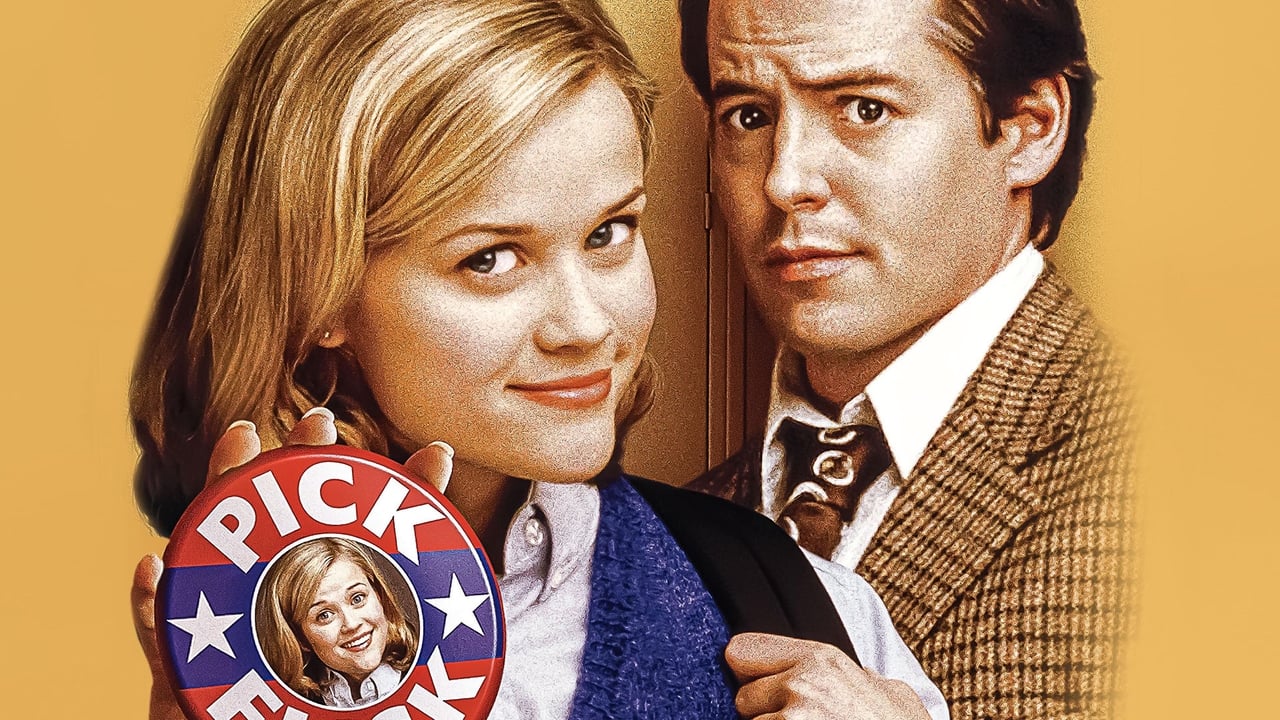
Election (1999)
Payne discusses adapting Tom Perrotta's novel and filming in Omaha with a real high school, local students, and teachers. He explains the institutional appearance of the photography, the circles and straight lines associated with the two central characters, and his preference for combining professional actors with people who do the jobs depicted on screen.
- Duration
- 1h 42m
- Talk coverage
- 83%
- Words
- 12,011
- Speaker
- 1
Commentary density
Highlights
Featured in
Topics
People mentioned
The film
- Director
- Alexander Payne
- Cinematographer
- James Glennon
- Writer
- Alexander Payne , Jim Taylor
- Editor
- Kevin Tent
- Runtime
- 103 min
- Also on
- OneSheet ↗
- External
- IMDb ↗ TMDB ↗ Find on Amazon ↗
Transcript
12,011 words
So, hi, this is Alexander Payne. I co-wrote and directed this film, and I'm here to talk to you a little bit about it. I had finished making Citizen Ruth and was sent the novel of this book, Election, by two of the producers, Albert Berger and Ron Yerxa. And I actually didn't read it for a while because it was set in a high school. I wasn't too interested in high school stories. But finally they kept nudging me and nudging me and I read it and I liked it and I thought it would be a very good jumping off place for what Jim Taylor and I as writers and I as a director could do. I liked that it was very real and that I could also set it in my hometown of Omaha where I had also shot Citizen Ruth. Now here the fact that he's running around a track comes from well an idea I had that I don't think I did all that successfully throughout the film but
In setting up the two main protagonist antagonists, Jim McAllister and Tracy Flick, I had this idea of associating Jim always with circles and Tracy always with straight lines. So I had this, I thought that the fact that he's running around a track, and I had another shot of that, a high shot, but photographically it didn't work all that well. But just the idea of this guy running in circles, and even that shot, a few shots ago of him going through that maze that is typically outside of tracks to keep people from bringing their bikes in. See there, Tracy was introduced with straight lines of the chair legs, and careful viewers may wish to go back and count how many chair legs there are.
But anyway, just this idea that Jim... Oh, I was talking about the maze. We added on to that and had that overhead shot that's on the fence to make it, again, the idea that he's a small man and is trapped like a rat in a maze.
Another visual theme that's in the script and that I wanted to bring out a lot in directing is trash and throwing things away, since that's, in fact, later in the film, the climax of the film or the big turning point. So we establish it early on. And if you watch the film, there's kind of an obsessive use of garbage cans and the theme of people throwing things away. This guy, the janitor, actually was the janitor at our offices in Omaha. All we did was have him change his glasses, actually.
in any time, are you, Tracy? Well, you know what they say about the early bird. Yeah, I do. Good luck there, Tracy. Thanks, Mr. M. I'll see you in class. Yep. None of this would have happened if Mr. McAllister hadn't meddled the way he did. He should have just accepted... Here is a very clear foreshadowing of... there what's going to happen. She just said none of this would have happened if Mr. McAllister hadn't meddled the way he did. And in just that moment he throws something away. Anyway, just a little fun foreshadowing what's going to happen later. The film is shot at an actual functioning high school in Omaha, actually just outside of Omaha in a suburb. It's technically a different county from Omaha's, Sarpy County. I very much wanted a sense of a typical sprawling public high, public high school. And I had visited a lot and scouted a lot and saw a lot of foundation blocks and a lot of windowless buildings.
They're actually windowless in the Midwest, largely to save on heating and cooling costs in the winter and summer, respectively. But it also gives a sense to high school, gives a visual sense of high school being a factory or a prison, which then asks the question, who are the real prisoners? And maybe it's the teachers, not the students. Preparing them for the tough moral and ethical decisions that they'd face as adults. Usually a film would close down a high school or look for an abandoned high school or something or shoot during the summer. We didn't do that, both because of the high school we wanted and when we were shooting. So all these scenes were shot with classes going on in the adjacent rooms. From time to time, even on the sound, on the dialogue track in the picture, you hear stray noises, and those are actual... teaching sounds and actual school sounds because we were shooting while the school was functioning. It also gave a great sense of reality, I think, to the actors, to the professional actors. It helped inform their performances. Also, every single extra student you see in the film is an actual high school student in Omaha, Nebraska, or was when we shot.
And those two kids who just spoke were high school students from Omaha. I very much wanted a sense of a real honest-to-God high school and not a fake one like you see in movies a lot where the students look like actors in their 20s dressed up to be students and they have too much makeup. And you visit high schools and you see their kids. This thing, this yearbook sequence, was an extraordinarily time-consuming and expensive proposition. It's all virtual, pretty much. This is all done digitally. You know, they scan in these photographs and the text and everything, but it took a lot of time to get that right. Our student-run TV station. That allitering must stop. Tracy Flick reporting. But it was in the SGA, the Student Government Association, where I made my biggest mark. I never missed a single meeting, and I volunteered for every committee as long as I could lead it. I agree with Ashley. I think we should rent the barrels ahead of time because what happened... Never having seen a film camera before, these students, I think, did a really terrific job of being extras in the film. In the moment of shooting, they were quite unselfconscious and really cooperative and I think helped...
lend a great sense of reality to the film. Her pussy gets so wet, you can't believe it. Don't tell me that. Don't tell me that. I don't want to know that. A few months before the election, she'd gotten herself in a little trouble with my best friend, Dave Novotny. Dave came to Carver the year after I did, and we hit it off right away. Dave was one of those guys who taught because they never wanted to leave high school in the first place. But basically, he was a good guy. I'd always liked Matthew Broderick a lot. I was so happy to be able to cast him in a movie, and I'm sure by the time you hear this on your DVD at home, I will have seen the film, but today when I'm recording this commentary, I still have never seen Ferris Bueller's Day Off. I was actually given the tape recently, so I have to see it soon. His casting has, for a lot of people, played with his image, almost his iconography as Ferris Bueller. But not for me, because as I said, I haven't seen the film. I just had always admired his acting, and I was happy to have actually something, an actor kind of approaching
an alter ego for me. He's an actor about of the same age and height and hair color as I am, and having friends who are high school teachers, and I enjoy teaching and have taught and will teach again. I don't know, somehow having Matthew Brodard play that part made it a tiny bit personal for me. I liked it very much. And Reese... who's so sweet in this scene, it's funny, people have seen the film and say, oh, you just, she's the actress you love to hate, and Tracy Flick, oh, she just is so irritating and wonderful as an actress, but irritating as a character. You see a scene like this, and she's just so sweet and innocent. She's much more sexual in the novel, actually. I thought that would not be an interesting choice for the film. I thought it would be more interesting to emphasize her youth and her
being a little kid still, and especially in this sexual situation, as being largely victimized. Since I grew up without a dad, you might assume psychologically I was looking for a father figure. And this really is the yearbook office in that school in Omaha. And he made me feel so safe and protected. Papillion La Vista High School. When was the first time somebody ever saw the real me? The me that nobody else knows. Okay, here, get down. Get down. This was in the script that Dave would drive a Mustang. Jim Taylor and I thought that he would think it's really cool to have an old Mustang. Three times a lady
For millennia, consummations have been celebrated by the sharing of a goblet. And here it's done with diet mug root beer.
back on my relationship with Mr. Novotny. What I miss most is our talks. We cut the scene here, but scripted and shot was a whole sequence in the bedroom where you see them taking off in tight close-ups their articles of clothing and Tracy lying on the bed, not actually enjoying herself very much, waiting for Dave to get into bed with her. especially when he takes off his T-shirt and reveals a huge whitehead pimple on his shoulder. And we had a close-up of it, and she looks at it and kind of reacts to it. Actually, I kind of missed that sequence, but for economy, I don't know, we just decided to cut it. I'm just saying this as your friend. What you're doing is really, really wrong, and you've got to stop. The line you've crossed is, it's immoral and it's illegal. Playing Dave, by the way, is Mark Harlick, who I think is a really terrific actor. I'm not talking about ethics, I'm talking about morals. He distinguishes himself, particularly in the next scene. I guess I don't have to tell you how this all turned out.
This card was produced by Jeff O'Brien, the prop master, who was also the prop master on Citizen Ruth. Tracy's mom very much has a great sense of humor and one that goes well with these two films, with Citizen Ruth and Election. I want to say, too, that... I used many, many, many of the same people between Citizen Ruth and Election. The production designer, Jane Stewart, and the DP, Jim Glennon, and the editor, Kevin Tent, and the composer, Rolf Kent, and even the same assistant cameraman, and the same prop master, and a lot of the same grips and electricians, and Omaha crew people, a lot of the same actors. In a way, Citizen Ruth was something of a dry run for Election. By the time we shot Election, we had that proverbial great shorthand. And knew one another's sensibilities, and particularly senses of humor. This is Delaney Driscoll, this actress who is also in Citizen Ruth, as the woman who pretends to be Ruth's sister. And ethics are the basis of... Okay, we'll pick up here next time.
This guy... He wasn't... I didn't audition him or anything. Just on that day, I said, just go up to Mr. McAllister, up to Matthew Broderick, and tell him that... I gave him the scenario that you needed to take the test over again. And his improvisations were terrific. That's all improv, and he did it take after take after take terrifically. Students go on to good colleges and move to big cities and do great things and make loads of money. I think there's talent everywhere. You just have to look for it and find it, but it's really everywhere. Abe Lincoln is there, and we have a bit of an Abe Lincoln theme. in the film as well. These of course really are photographs of young Reese. And here's dear Colleen Camp, a little bit underused in this film. You may remember her as I do from Apocalypse Now singing Susie Q. I spent a lot of time with the assistant directors watching the flow of students.
during passing periods, and we really tried to recreate that, watching those streams and eddies and pools of students as they flow through those halls. And I think it was done with great verosimilitude here. You know, in the morning. Right. Yeah, yeah, those look good to me. Aren't you supposed to keep them? It's always nice to capture weather on film. I like it when I see it. And a nice thing about getting out of L. A. to shoot a film is you get things like wind and cold and overcast skies. And anyone from the Midwest or other places, too, but since I'm from the Midwest, I think of the Midwest, knows that day, exactly that day, and it just gives another texture. Of course, the... Skies change rapidly, and you'll see here the sun is out in this shot. And we try to time our way out of it at the lab, but it's just how it goes. When I win the presidency, that means you and I are going to be spending a lot of time together. Trapped by his seatbelt. Time to be harmonious and productive. Wouldn't you? Sure.
Okay. Then that's what I thought. I was just checking. Yeah. Good luck there, Tracy. Okay. This is the corner of 50th and Underwood in Omaha, and I grew up very close to there. That's in the Dundee area. And many scenes from Citizen Ruth were shot at that, in this area, at that corner. In fact, catty corner to this location here is the hardware store where Ruth buys patio sealant. And this house, Jim McAllister's house, is also about two blocks from there, again very close to where I grew up. This house and houses like it have for me a lot of resonance. And it's important to me in films to have people living in houses where really people like that would live. And to me it's very accurate that he would live at least in Omaha, in a house like this and in that neighborhood. I dislike it in films that, so many American films you see these days, that people have much larger and more opulent houses from those that they would really have. Usually just because it's easier to shoot in them. Here again is a little bit of circular
choreography, not a complete circle, but again, trying always to associate Jim with circles and a guy who's going around in circles. Circles on his pajamas too. This is the actual basement of that house where we were shooting and this is all their crap, actually. All we did was remove some of it so we could get a camera and our props in there and our furniture, but their basement really has this wonderful basement feel to it. I shot this film, this porn film, and this guy, BJ Tobin, was my extras casting guy on both Citizen Ruth and Election was good enough to do this part. You know, Coca-Cola is by far the world's number one soft drink.
This is all stock footage. This isn't. This is Chris Klein, and he's a wonderful actor from Omaha whom I did not originally audition. I simply met him by chance in a hallway of Millard West High School in Omaha when I was scouting and taking a tour of the high school with the principal. Chris was coming out of a weight room And the principal called him over and said, oh, you should meet this guy, Alexander Payne. He's some kind of movie guy or something. And Chris, you know, tell him about yourself. And Chris was kind of shy, but it turned out that he had been a spectacular Tony in the recent Millard West High School production of West Side Story and had wanted to be an actor all of his life. And
came back to L. A. and auditioned a lot of guys, I don't know, 40 or 50 guys, something like that, that just I saw, much less the casting director. I went back to Omaha and called him up, called up the front office at the high school and asked about this guy and called him up at home and said, would you mind coming to the Omaha Film Commission office to read for a movie? And he almost didn't believe me, but he came and I just showed him some sides and He read and nailed it, and I knew that he was Paul. And he really took to it like a duck to water. This was his first professional acting job and obviously his first film. He really was not nervous ever and always delivered the goods much better than I had even imagined it. Student, counsel,
President. Oh, me? Oh, no. I don't know anything about that stuff, Mr. M. I mean, besides, that's Tracy Flick's thing. She's always working so hard at it. Yeah, I know. She's a real go-getter, all right. And she's super nice. Yeah, yeah. But one person assured of victory kind of undermines the whole idea of democracy, don't you think? Well, Mr. M. I mean, that would be more like a dictatorship, like we studied. But, mister, there's... Paul, what's your favorite fruit? Pears. Pears. Good. Okay. Let's say... Oh, no, wait. Apples. Apples. Fine. Let's say all you ever knew were apples. Apples, apples, and more apples. You might think apples were pretty good, even if you got a rotten one once in a while. But then one day... Again, circles. Now you can make a decision. Do you want an apple or do you want an orange? That's democracy. I also like bananas. Exactly. Good. So what do you say? Maybe it's time to give a little something back. That's dear David Wenzel, who had a larger part in the film that was cut, playing Tracy's little helper, you know, a kid who's actually sort of really in love with her.
This scream, this Native American scream associated with Tracy, is from a 1966 spaghetti western called Navajo Joe, and it's music by Ennio Morricone, and I'm a huge Morricone fan. I don't know why, but somehow one day in the editing room, I just started, I was watching Tracy and just screamed that scream out, because I think I'd been listening to that CD recently. We put it in as what we thought would be just as a temporary thing, but nothing ever came close, and audiences liked it so much that we just bought it. It's funny what things come from the novel. The fact that she stars her eye with a star instead of a dot comes from the novel. I had to work a little harder, that's all. You see, I believe in the voters. They understand that elections aren't just popularity contests.
They know this country was built by people just like me who work very hard and don't have everything handed to them on a silver spoon. Not like some rich kids who everybody likes because... I tried to get a little bit more of the class distinction between Paul and Tracy in the film, but only a few vestiges remain. There was some other stuff in some scenes which were cut, but this is one that at least early on in the film injects a bit of class resentment, which I think is important. So, Paul, we wanted to associate with the new and the forward-looking. So we picked this area way, literally, literally on the edge of town of Omaha where new housing projects are going up, quite opulent ones. And this is two blocks from cornfields right here. This is a brand-new housing project.
Now this shot and this shot, not that this means anything to anyone other than me, but put together it forms a T. This long shot of them and then it's a T for, well, for Tammy.
And again, casting, this gal, Jessica Campbell, came from St. Louis. She had had one professional acting, this is Tammy on the left, one professional acting job before. But basically, she's been just a high school student in St. Louis, and I cast her off of a tape. I didn't even meet her. I just, I loved her braces. He calls me and he tells me, he thinks I can... Dumb shit! What'd I do? It's not like I'm a lesbian or anything. I'm attracted to the person. It's just that all the people I've ever been attracted to happen to be girls. Lisa, wait! Again, the Metzler house, which we wanted to point out their new money. What? Where are you going? I'm not like you, okay? What do you mean? I'm not a dyke, and we're not in love. We're just experimenting. How can something that seems so true turn out to be such a lie?
Lisa and I were destined to be together. Of all the people on the planet who had ever lived, somehow we'd found each other. It was like a miracle. All this stuff here is shot on 16mm handheld, those two previous shots of them on the swing and, of course, these two things. I don't know why, but in thinking about Tammy and her sense of love and her girlfriends, I always just thought that that would exist in a world of film school films from the 60s with this real free sense about them. And so we shot them on non-sync 16 millimeter and blew them up. But it just seemed like the closer we got, the more she pulled away. Are you crazy? What? These are private. These are for us. So? But other people can see them too. I don't care. Well, I do. What did I do to make her change? Among the four principal characters in the film, I have to say I felt very protective of Tammy and her sense of first love and innocence, which I think somehow we can all relate to, no matter how corrupt we now are.
I don't know why, but Lisa decided she wanted to hurt me, and she knew exactly what to do. I sure was surprised the day Lisa Flanagan asked me for a ride. Again, this is Jane Stewart's idea to load up Lisa's room with all these stuffed animals. I mean, life is so weird. First, Lisa has a big fight with my sister, and the next thing you know, she's my girlfriend. Since Lisa knew all about public relations and stuff, she offered to help me with my campaign. We made a great team. It seemed so natural, the two of us together. It was like a miracle. Garbage. We made a decision that any time you see the street exterior, it's garbage day. I've neglected to point out so far in this commentary many other uses of garbage trucks and garbage cans, but it's enough to say that it's all there kind of obsessively. If that's the way they wanted it, then that's the way it was going to be. But I wasn't going down without a fight.
What are you doing? You're the advisor. You should stop her. She's not qualified. She's just a sophomore. Did you know that? Calm down, Tracy. Just calm down. We can't both run, can we? I love wipes. They're not used enough somehow as transitions. Somehow they've come, in recent film language, to be considered more cartoony or comic. And maybe they are used here in that way, in this particular sequence, but in general, I miss them from serious films. Kurosawa used them a lot. He loved wipes. He's doing this to get back at me. For what? I mean at you. This film, Election, has a lot of opticals, you know, the freeze frames that people talk a lot about and hear wipes and coming up pretty soon we have superimpositions, but all this is stuff that's existed in film for a long time. I really like using old-fashioned opticals as opposed to new-fashioned Digitals. We had to use digital a little bit in this film, but most of it is old optical stuff, which I really enjoy. So in contrast to his own house, Jimmy Callister's house and his wife, Diane, we wanted Linda's house to suggest always fecundity and springtime and that which he longs for. You gonna do it? You gonna do it?
But for over a year, we hadn't had any luck. Here, even the sheets to me suggest sterility and just absence of sexuality. And the rest of Jim McAllister's house, I mean, it's painted in kind of lugubrious tones. It's meant to suggest, I don't know how successfully, but meant to suggest the barrenness of their lives.
Here, it's always springtime and bright colors. I'm not above a cheap visual joke like that. Here? Yeah, that's good. And this neighborhood, too, this is Fair Acres in Omaha, very close to Memorial Park. Again, I grew up in this area. It has a lot of residents for me, and I feel as though I know the people who live in those houses to some degree. What do you think? You look great. I can't afford this stuff right now. Oh, come on. You've had a hard year. You're cooped up all the time with the kid. Let go. Live a little. One thing I like about this scene is the dirt on his car. So what do you think? I dislike in films that cars are always clean, particularly when you see period films. You see those old cars, and they're always clean, probably because they rent those cars from car buffs. who insists that the cars be clean. But in fact, I look around and I just always see dirty cars. So I like that even through the window, you see that dirt. How'd it go? Fine. You know, just went to Westroads. Did you guys have fun? There's a bit of an Apple theme, too, in the film as temptation. And here he's about to
Well, you know, bite the apple. But apple as symbolizing teachers and apple as symbolizing temptation. And again, that an apple is round. I'm stretching it a little bit, but just go with me. Oh, yeah. Fill me up. Oh, God. Just like that. Oh, yeah. Fill me up. God. Oh, God. Oh, God. Just like that. Just like that. Do it, Jim. Fuck me. Do it, Jim. Just like that. Do it, Jim. Fill me up. This scene, I would just wish to point out Rolf Kent's music, which is kind of bolero-like. A bolero which introduces new instruments each time it goes around. We did that there. So like I was saying, things were going pretty well in my life. That is until things started going all haywire with that damn election. Okay, anecdote time. We needed to fill up this gymnasium with students, all the bleachers. And it turned out that the Saturday we shot this scene, the SAT test was going on. And I don't know what else. I guess by then, kids had learned that it's actually not fun to be in a movie. So we only got enough kids to fill up half of the gymnasium. And I couldn't get those...
a lot of the shots I had wanted, which would encompass both sides. So half of the day we had the kids on one side of the gymnasium in those bleachers and got all the shots looking that way, and then lunch or something like that. And when they came back, we put them all on the other side. And like those who were in the back of the bleachers, we had them sit in the front and switched them around. So I think it works well, but it's just another example of... the filmmakers' problems. ... also have an opportunity to make our high school days better. During this campaign, I've spoken with many of you about your many concerns. I spoke with Eliza Ramirez, a freshman, who said she feels alienated from her own homeroom. I spoke with sophomore Reggie Banks, who said his mother works in the cafeteria and can't afford to buy him enough spiral notebooks for his classes. Eat me! Eat me raw!
Hey, if you can't be adults and give these candidates the courtesy they deserve, then you don't deserve to be called adults, but children, because that's what children are, and you'll be treated like children. So let's all listen up, huh? I've gotten a lot of comments about Phil Reeves, who plays the principal, as kind of perfectly suggesting a high school principal. And I have to agree. He came in on an audition. I didn't know of him before that. And I just remember after the audition, I just followed him out into the hallway of the building and kept looking at him. So perfect was he for this part. Thank you. The next candidate for student body president is Paul Metzler. Paul?
I like this shot a lot and I like that we hang on it for quite a while because it gives you a chance to look around that gymnasium and see those graphics. Sometimes when you hang on a shot long enough, it just gives you time to breathe and look around and feel the location a little bit more. I want our school to reach its true potential. That's why I'm running for president. I know what it is to fight hard and win like when we almost went to state last fall and I threw the fourth quarter pass against Westside for the touchdown that won the game by three points. I won't let you down like I didn't then. I promise we can all score a winning touchdown together. Vote Paul Metzler for president. Thank you.
Okay, Paul. The final candidate for student council president is another one of the Metzler clan, sophomore Tammy Metzler. Tammy.
this stupid election. We all know it doesn't matter who gets elected president of Carver. Do you really think it's going to change anything around here? Make one single person smarter or happier or nicer? The only person it does matter to is the one who gets elected. In contrast to how the other two speeches are shot... with cuts. The fact that this speech is done with no cuts, just looking right at Tammy the whole time, I think, at least for me, suggests her honesty and her straightforwardness. The only promise I will make is that if elected, I will immediately dismantle the student government. If you need a reaction shot, you're kind of getting it in the corner of the frame with Tracy reacting.
You know, he's trying to suggest, trying to always imply garbage, a sense of garbage around Jim McAllister. Close the door. I'll tell you, that little bitch made a fool out of us. I want her out of this election. I'm getting everybody all riled up like that. She is washed up. You understand me? She's finished. Walt, we can't throw her out of the election just because we don't like her speech. That's not what student government is about. Yeah, yeah, whatever. This room, which we dressed to be the principal's office, is actually the detention room at Papillion La Vista High School. We should just suspend her. That's it. Three days. She's suspended for three days. In this shot, you get a number of elements. You get Tammy's joy, you get garbage truck in the back, and here you see the edge of town. You saw houses, and here are cornfields. This is about 190th and... Pacific in Omaha. Here's Memorial Park. There's also a sequence shot here in Citizen Ruth. But Memorial Park has, for Omahaans, I think, a very deep significance. And that, at the bottom of the hill where those girls are playing soccer, is the track playground area of Brownell Talbot High School, where I went from kindergarten to fourth grade.
We just put Immaculate Heart on their sign. It was so cold that day and those girls were freezing.
What do you want? Oh, well, I went to all your teachers and got your assignments for you. I just thought, you know, last time you got suspended, you fell so far behind, and I just didn't want to see that happen again. I wasn't able to get it in the film, but outside that window, if it were daytime, you would see a golf course. This is a housing complex called Shadow Ridge, which is built around a golf course. So I built into the film a little bit of a golf theme. Not very strongly, but if you recall when Paul comes home in the kitchen and sees the apples and oranges and bananas, grabs a banana, next to it is a golfing trophy. And then later, when Tammy is being yelled at by her dad, you'll see that he has on a golfing tie. So just to suggest that...
Her dad's a golfer. Not that it's that important, but something. What happened at the speeches was an unconscienceable travesty. That little bitch Tammy Metzler wanted to make a fool out of me. Well, it wasn't going to work. If all those students who cheered for Tammy Metzler only knew how hard I worked for Carver. Like all the late nights I spent at the yearbook office just to give them their stinking memories. I actually was editor-in-chief of my high school yearbook when I was a senior, so... This sense of being in the yearbook office late at night was something that I could relate to. People are so ungrateful.
One thing I like about this section of the film is that there's no dialogue.
I want to point out that Reese actually fell and did that little stunt very well in one take. She didn't want to rely on a stunt person, and I didn't want to have to do that either. I like seeing the real thing, and we patted her a little bit, but she did it.
we did most of this whole sequence in single takes, largely because it was Wednesday night before Thanksgiving, and we all wanted to get the hell out of there. So there was a scene that was cut from the film that took place, takes place after this, that the suggests even more this Lady Macbeth sense of her hands, and it cuts to Tracy in the bathroom washing her hands and washing, and she can't get the blood out. Then she kind of puts her hand over her mouth like Anthony Perkins in Psycho, and then gets a garbage sack. But we cut that out. And I've come to fall in love with the rear screen projection, and here you see rear screen projection, which is really fun. Thank you.
There's an obsessive sense of people throwing things away in this film, and I can't really explain it. I don't know why it's there. It's just there. The day before the election is when things started to get really complicated. There's your culprit. Linda had asked me to stop by on my way to school to help her out with a little plumbing problem. Did you know Dave's a bed wetter? No. No, I didn't know that. All his life. He's tried everything. Is that still running clear? Yeah. Better let it run for a while. OK. Oh, wait. Here. This one's clean.
I guess you better get to work, huh? You're gonna be late. Yeah.
It was something that just happened. Neither of us expected it. Neither of us planned it. But once we started, we knew there was no turning back. It was a miracle. The music here is kind of Italian sounding, and Rolf and I thought that whenever Jim is having romantic fantasies about Linda, he's kind of in a foreign film. Linda's associated, as I said before, with springtime and fecundity, and now with being in a foreign film, an Italian film. And of course, we take that to an extreme the next shot. What had blossomed between Linda and me was too real. Ford Festiva, the car of an impotent man. For the first time in years, I felt free and alive. That's rear screen projection, obviously. And one of the funnest things I did make in this film was look through those rear screen projection plates
You know, these stock footage houses have a ton of, they're called plates for rear-screen projection. You just get tapes and fast-forward through them, and they're so fun to look at. Like, I can't wait to do a film that's just all rear-screen projection. It's so fun. Like a maintenance thing. Jim, where the hell have you been? Nowhere. No, I just don't have any classes until second period. Well, I tried you at home. We've got a situation here. If Paul loses this election tomorrow, there has to be another one with posters. Somebody tore down their posters. Those posters cost us a lot of money, and there's no time to make any more. All right, we'll get to the bottom of it. We still have some extra ones, don't we? Maybe we could just use those. It was Tammy. By the way, that's Frankie and Gracia playing Lisa, and it's not a flashy performance, but I think quietly it's very good. You almost... She's almost so good, you don't... notice her in a way. She doesn't call attention to herself, but I completely believe her in that part. Tracy. Tracy, come on in.
Close the door behind you. Have a seat. I guess you know why you're here. If it's about the posters, I think it's awful. I think it's a travesty. A travesty, huh? Well, that's interesting. Because I think you did it. What? Are you accusing me? You're not serious. Mr. McAllister, we've worked together on the SGA for three solid years. Besides, my own best banner was torn down. Did I do that too? Were you or were you not working in the Looking Glass office over the... I've had some comments about the costumes in the film and that the teachers wear these short-sleeved shirts and... kind of bad ties that don't really match their shirts, and plus you'll notice he's got circles on his tie here. This is completely based on observation and hanging out in high schools, and you see a lot of Dockers and Dexter shoes and short-sleeved dress shirts, and not very good haircuts. I remember, it's not that you don't see good haircuts, but I just know that in looking, I remember I was flipping through the TV one day shortly before shooting election, and
I came upon some movie set in a high school. I noticed that the teachers all had really good haircuts. And I just thought, I don't want to see that in an election. So Matthew was good enough to keep his hair long, and we'd cut it to make it look as though he hadn't had a haircut in a while. And if he did, it was like an $8 haircut. You have a lot of admirable qualities. But one day, maybe you'll learn that being smart and doing whatever you need to do to get ahead, and yes, stepping on other people to get there, Well, there's a whole lot more to life than that. And in the end, you're only cheating yourself. Why are you lecturing me? This isn't the time or the place to get into it. But there is, for just one example, a certain former colleague of mine who made a very big mistake, a life mistake. Now, I think the lesson here is that, old or young, we all make mistakes.
And we have to learn that our actions, all of them, can carry serious consequences. Here I love the glimpse of a tub of, I can't believe it's not butter in the background. I agree. And I also think that certain young and naive people... need to thank their lucky stars and be very, very grateful that the entire school didn't find out about certain indiscretions that could have ruined their reputations and their chances to win certain elections. And I think certain older people, like you and your colleague, shouldn't be leching after their students, especially when some of them can't even get their own wives pregnant. and they certainly shouldn't be making slanderous... I do like seeing the ceiling in shots, and that ceiling, to me, really suggests that location, that, how do you call those, drop ceilings with those fluorescent lights. I'm happy to see those. You wanted to see me, Mr. McAllister? Just wait outside, Tammy. And this really is the teacher's lounge. At that school, we just kind of moved the furniture around. Okay. Because I know who did it. So, I'll just be outside. Don't go anywhere, Tracy. Tammy, come on in here. This ought to be good. So, what do you have to tell me, Tammy? Well, this is hard for me, but...
I think it's important to be honest, don't you? Yeah, what is it, Tammy? I did it. I'm the one who tore down Paul's posters. I did it. When did you do it? I don't know. Yesterday. Sunday. How'd you get into the school? Door was open. Which door? I don't know. All I know is I did it. Well, I don't believe you. I have proof. Tracy? Yes? Looks like today's your lucky day. You're off the hook. Tammy here has confessed. I told you. We like the irony, we meaning Jim Taylor and I, my co-writer, we like the irony that this is set at George Washington Carver High School, but it's a completely white school. I mean, there are barely any people of color at all. And typically George Washington Carver is the name of a high school in a black part of town, but not here. And in fact, early in the film when there's a pep rally and Jim McAllister is playing like a cowboy villain, in the background you see a guy dressed up as a peanut.
like the school mascot. So that's the one visual reference we have to George Washington Carver. I have exactly 48 minutes to make all the arrangements. You finish early, just sit quietly and check your work. I'll be right back. Jim Glennon, the cinematographer, is very proud of this shot because it involved a, I think a seven stop manual change, seven f-stop change in that previous shot to get him coming out of the school and into the street. Joe Sanchez, the assistant cameraman, manually changed the stop about seven stops. I have great affection for this sequence, him preparing the motel room and going to Walgreens to get this stuff. And a particularly the next shot. I've had many comments on this shot that it rings true for many people when they're preparing for a date. And I haven't said enough yet about the contribution of Jim Glennon, the cameraman, in capturing the reality of uh... the school using fluorescent lights and really capturing that and getting a sense of of omaha and not creating kind of typical motion picture pretty pictures and it's kind of a fight i mean kodak film stock you have to
It's so good and so rich that you actually have to fight it to make it look realer. But I worked with Jim on both Citizen Ruth and Election, and it's been a marvelous collaboration. He's also really funny, and his humor shows up a lot in his photography. Linda!
I'll give it away. What the heck? This is a digital shot to stick a couple bees in, just to establish bees. Also, you hear birds on the soundtrack, so there's a sense of birds and bees, and it's springtime back here in Linda's garden, again suggesting sexuality and fecundity.
This bee sting is not in the novel. When Jim Taylor and I were writing the script, we kind of thought, well, he's back there and calling out for Lyndon. Somehow we just thought something new has to happen. There's got to be some new element. We thought, almost as a joke. Well, it was a joke. How about if he gets stunned by a bee? That kind of the most ridiculous thing that happens out of the blue. And sure enough, it stuck. And it gave us something to work with and embroider with as the end. following Jim's demise. Jim's coming apart. Jim McAllister. And Jim, Taylor and I really like this shot. We think somehow this shot of having these two things up against his head kind of somehow is the essence of the film. It's all set. So, uh, hope you get here soon. Okay. Bye-bye.
I don't get it. I just don't get it. What you have against your mother and me, against your brother, Paul, is completely beyond me. Your mother's extremely upset. She's at the end of her rope. Your behavior keeps getting crazier and crazier and wilder and wilder. Who knows what the hell else you're doing out there that we don't even know about? This fellow's character name is Dick Metzler, and I think that name is kind of appropriate. I'll point out his golf tie too, which I already did. He's fed up with you. Fed up. And I don't blame him. What? Tammy, your father and I have been talking and we've come to a decision that we... You're going to Immaculate Heart. That's where you belong. Maybe the nuns will be able to straighten you out. Is that funny? You think it's funny?
So this is a motel in Bellevue, which is a suburb of Omaha. And it's a motel that actually I had scouted for Citizen Ruth to be the motel where the Baby Savers stay, but it didn't work out. And I returned to this motel for election. I love the name. It's actually called the American Family Inn. That the letterboard reads, Welcome Seed Dealers, was something that I thought would contribute to his sense of, to Jim McAllister's Well, I don't have to explain it. You get it. Just to point out, we kept the decoration on the refrigerator to a minimum because I really dislike it that in movies and TV shows you see... these kind of overloaded refrigerators with too many pictures and kids' things and magnets. And I guess people do that, but it's become kind of a convention in movies.
So far in my films, I don't like building sets very much. I like shooting on real locations. But for this sequence, the prayer sequence, we obviously had to build sets. Sets which match the locations that we were also using. Dear Lord Jesus, I do not often speak with you and ask for things. But now I really must insist that you help me win the election tomorrow. Because I deserve it and Paul Metzler doesn't, as you well know. I realized that it was your divine hand that disqualified Tammy Metzler, and now I'm asking that you go that one last mile and make sure to put me in office where I belong so that I may carry out your will on earth as it is in heaven. Amen. Dear God, I know I don't believe in you, but since I'll be starting Catholic school soon, I thought I should at least practice. Let's see, what do I want? I want Lisa to realize what a bitch she is and feel very bad... Those icons were produced by one of the...
set painters. I happened to notice that she made them or they were pointed out to me somehow and I said, oh darn, let's use those in the film. Sora. That's her name. Dear God, thank you for all your blessings. You've given me so many things like good health, nice parents, a nice truck, and what I'm told is a large penis and I'm very grateful. but I sure am worried about Tammy. In my heart, I still can't believe she tore down my posters, but sometimes she does get so weird and angry. These are shots which would typically be done, I think, with cranes, but since I wanted to have all four walls in case we saw them, we had these guys come down from Canada who have a system using cables, some hydraulic system using cables, and so the camera actually goes straight up using this hydraulic system. Here's a garbage truck again bringing us to Jim. I know because I spent 10 hours waiting outside her house. I love Matthew's performance in this film. I think he really distinguishes himself in this whole section of the film when his character is really coming apart.
And it's very nice to see Matthew Broderick, who's often associated with very charming roles, kind of boyish and charming roles, to play this much more complex, middle-aged, almost middle-aged character. He actually peed in that shot, by the way. There was a scene which we... edited out of the film that shows these two women at 5. 30 in the morning in their kitchen making cupcakes, writing pick flick on every single cupcake. It's a good scene and it again suggests how much Tracy's mother is the one who's really propelling her, Tracy, and that Tracy's almost unwilling in her drive for power, that it comes a lot from the mother. But we took it out. just for economy. In that scene, Tracy confesses to her mother that she fears she may not win the election. And her mother looks at her in a kind of scary way and says, Tracy Flick's a winner.
trusted you completely, and you ruined my life. Do you know that? Do you realize that? Huh? Do you? You ruined Diane's life. You ruined my life. Is that what you wanted? I'm sorry. I'm sorry. I'm just going nuts here, and I really think we should talk. It's Jim. I love you. Here's Marilyn Tip, who has a very large role in Citizen Ruth, and I'd like to have her in every film I do. I think she's terrific. She'd never acted before in anything. Good morning, students. It behooves me to inform you of an important change in today's election. Effective this morning, sophomore Tammy Metzler has been determined ineligible, I repeat, ineligible for SGA president. All of the candidates are eligible. You may vote for... Any of those, but not Tammy Metzler. Now, registering Tracy here is Jeannie Braman, who taught and still teaches at Creighton Prep, where I went to high school in Omaha. And next to her is a woman who teaches theater at Omaha Central High School. So, again, I just always tried to use...
real teachers in scenes calling for teachers and students calling for scenes with students. In general, I like casting like that, smaller parts. For policemen, cast real policemen, and for doctors, cast real doctors, and I just like doing that. And I very much like mixing professional with non-professional actors. I think it makes... And this isn't just me. You see it a lot in other filmmakers, too. It's not original. But I agree that often non-professional actors can make professional, famous actors look more real. And the presence of those professional actors makes the non-professionals look as though they're acting better than perhaps they really are. And it's just a fun thing to do. You see it a lot in Milos Forman films. And I find a lot of inspiration in Milos Forman films. Now here, the tall kid is Nick D'Augusto, who was at the time of shooting a senior at the high school where I attended, Omaha Creighton Prep.
had given first crack to all speaking parts, student speaking parts to the students at Papillion La Vista, where we shot. And only when I didn't find the students there did I reach out to other high schools. And I'm very happy to have met Nick. I think he's a terrific actor. And to me, he symbolizes here a young Jim McAllister, still filled with ideals. about democracy and high-mindedness and shocked by corruption. And for me, at least, he's kind of a younger version of Jim McAllister. He's maybe who Jim McAllister was when he was in high school. Me? I swell up. There's not much time left until late, period. I have other things going on, too, you know. Yeah, okay. We know. All right, I'll be right back.
At the end of this shot, Jim McAllister is hung up on by Linda. And you don't hear a dial tone on the other end of the line when Linda hangs up. And that's a convention in movies that I completely don't understand. When two people are talking on the phone and the other person hangs up and suddenly... You hear, along with the person you're watching, a dial tone. That's never happened to me once in real life, and I don't know why it's a movie convention. Similarly, I dislike it in car shots when they remove the rear-view mirror to get a clearer shot of the actors inside the car. And I also dislike, if you'll forgive me this little tirade, night exteriors always have wet-down streets, you know, because it reflects the lights better. It's like, I remember even seeing it once in...
I won't mention the film, but a recent film where there's a... They're in Las Vegas, where it never rains, and the streets are wet down. It's like, what's up with that? Well, I thought those were the rules, Mr. McAllister. If they've changed any way, I can... Larry, we're not electing the fucking pope here. Just tell me who won. I think all three of the actors, the two students and Matthew, are very, very good in this scene. It's a very simple scene, but I think it's a very good one. Very simple. Mr. M? Huh. Okay. Well, guess I better do my count.
Here I'll point out that her hall pass is in the shape of the state of Nebraska. I think a lot of people can relate to those very stupidly large hall passes, unwieldy. I guess we see them now in life when we're at a gas station or a restaurant where you need the key to use the bathroom and they've got it attached to something that's kind of way too large.
This scene of Tracy pogoing in the hall had been accompanied by voiceover, and quite good voiceover, voiceover taken largely from the novel. And it was in the film right up to the final mix, but Tracy's jumping is so adorable, and Rolf's music was so good that I decided to drop it at the last minute. It's just unnecessary.
I was about to announce my tally when... Here's a subtle thing, which is how to get two angles on the same freeze frame. And I knew I wanted to cut from this angle to this one, with exactly the same expression, and the only way... we could do it was with two cameras. So all of those takes of her jumping were done with two cameras because I knew I wanted to freeze and have a wide and a close. I'm sure you could have figured that out if you'd thought about it. All of this set dressing is real. The only thing we put on this desk was those uh... where those ballots but that calendar underneath of holiday tournament and things scribbled and that's actually belongs to the teacher whose uh... desk that is i think we have a problem two fifty three two fifty four and two fifty five yep i get the same as you jim looks like paul's our next president no way
I feel a little self-conscious complimenting myself, but I think this is a very good scene. It's really simple, but the camera is slightly cockeyed to suggest, well, you know, psychologically what's going on inside of Jim. But really, it came just as an accident because the only way to frame this shot, this wide shot where Larry Fouch, you know, Nick D'Augusto's character is so tall, and to get the principal in, I had to skew the camera to get them all in, and that just suggested a way to shoot the whole sequence. He's not skewed, but all the shots that involve Matthew in this scene are slightly skewed. But not this kid. He has moral certainty, and he's right in the center of the frame and perfectly squared up. But if Matthew's in the shot, then it's skewed. I didn't think about that in advance. It just came out that day when shooting it. Now, earlier in the film, I had said that we couldn't get all the kids for a shot like this in the previous gymnasium scene.
God bless them, those administrators at Papillion La Vista High in Omaha called an assembly the week after the weekend where we had shot that previous gymnasium scene, called an all-school assembly for 45 minutes just so I could get that shot. You need to have one establishing shot that shows all the kids in the gymnasium. They were just great to do that. They're a great bunch of people. This shot right here. As soon as the winners are announced, we can all go home, okay? Some contests are so well thought that it seems unfair for someone to win. Act surprised. Walk slowly to the podium. Be modest. Reese is so very good in this movie. They're all highly qualified and embody the integrity that we expect from the school leadership. That said, the whole point of an election is to choose a winner, and that you have done. We'll begin with President. I'd just like to add that this was an extraordinarily close race. A nice thing to watch in Reese is how she listens. I mean, when she acts, she's really good, but as she's reacting throughout the film, there's always, you see her thinking, and it's always interesting to see a character thinking.
Watch Matthew here. He can't even look at this monster he's created. Jeez, you guys, thanks. Thanks. I promise to do my best and do a really good job and be a good president. I just want to thank...
Just to kind of finish up with the apple theme, which I don't think is entirely successful in the film, but for those who may wish to realize it, he's eating apple pie here, like the apples have been crushed and cooked. It sounds stupid, but anyway, it means something to me. Wow, Mr. Rim, this is so wild. We were just here, you know, celebrating my victory, and you're here. This is incredible. This is great. Well, these are my parents. Hi, Dick Metzler. Jim McAllister. Joe Metzler. How do you do? Paul just thinks the world of you. I mean, you should hear him. He goes on and on and on. Yes, apparently you've really come behind him, really helped him out with that student council thing and all. This is Grandmother's Restaurant in Omaha. It's part of a chain which is in part owned by Senator Bob Kerry. Why don't you come over and join us? Yeah, yeah. Come on. I don't know. I'm just finishing up here, and I've got to get home. Okay. Well, why don't you guys go sit down and...
You know, I'll catch up with you in a minute. I'm going to talk to Mr. Rim about some important stuff. All right. All right, that sounds great. Hey, sure nice to meet you. And I have a special fondness for Matthew's performance in this scene. I think he's so very good in this scene. So, Mr. Rim, I was starting to think about, you know, some ideas for what we could do. I was thinking it'd be cool to have a carnival, you know, with rides and stuff, and it could be for, like, muscular dystrophy. And he's having the same trouble concentrating on Paul as Michael Corleone has concentrating on Salazzo when he comes back from the bathroom. To use a highfalutin example. Paul, we'll have plenty of time to talk about this later. A whole year, in fact. But right now, I just... I need to finish my pie. Go on home. Yeah, okay. Sorry. Um, mister, I'm just... The other thing about having him stung by a bee and having him half-blinded is just that very ancient classical symbol of a character being blind or half-blind and what that implies. She'll be fine.
Take one of my pills. You'll feel better. When I saw the movie in theaters, that line always got a big laugh. Take one of my pills. You'll feel better. I find it horrifying. I never thought that was funny, but I don't know. Audiences do. Lie down. Good girl. Here you see an ex-stewardess comforting her own daughter. Almost as though she's comforting a passenger who's having a bit of fright while flying. A completely maladroit mother. And Tracy mocked by all these ribbons and accomplishments.
I, uh, I made a mistake, and I... That should actually be a little bit longer. There's one little tiny emotional beat missing. We should have given that, given Diane a little bit more time before she closes the door. This is Jim Devney, who, another part of my, you know, Omaha stock company. He had quite a large part in Citizen Ruth.
This is that same motel, and I just adore that carpeting. There down below, you see Al Griggs, one of our production assistants, who didn't know that he was going to be in the shot. A wake-up call. I have special affection for this scene, I guess because I still wash my car this way. Now, the thing about circles and straight lines here, just before the climax of the film, Jim McAllister makes the largest circle. Jim? Jim? Yeah. Walt wants to see you. Okay, thanks.
I hope you can help us clear something up. It's almost as though the theme of the whole film is the revenge of the janitor. I haven't said enough yet about Kevin Tent, who edited the film. We took a very long time to edit the film, and he paid me $75 to be able to cut that sequence that way with those quick cuts. I opposed it. And finally, he offered me $50 to cut it that way, and I said, no, that's not enough, and made it $75, and I let him cut it that way, and then I liked it. That's Carmen Nevoa, who was the Spanish teacher at my high school when I was there. She came out of retirement to do this part. This is kind of a nice little time transition using a dissolve. Kind of time consuming to get it right, to get this B side to match the A side for over many takes, but we finally did it. I think it's quite nice.
I offered my resignation, and he accepted. Very quietly, it was all over for Jim McAllister at Carver High. Oh, the details that making a film requires. I actually wrote all of these articles. Overnight, all the good things I'd ever done in my life evaporated. If you wish to freeze frame them and read them, you'll see what I wrote. I don't like it when it's just gibberish and movie newspaper articles. To top it all off, Diane had started divorce proceedings. Pursued by garbage till the end. In the end, she took almost everything, including the house. I got the car.
We had other scenes in this area of Tracy being interviewed on local TV about the scandal and Jim McAllister holed up in a motel room and eating a bunch of takeout stuff and drinking beer and just living in complete abandon, but we cut them out. Senior year was great. Sure, I didn't get to play ball or be president, but I got elected homecoming king and prom king. I got into Nebraska like I wanted in early rushed findouts. And at the end of the year... If you can, pay attention to that Metzler cement sign up there, which is kind of hilarious, the pooping cement truck. It's one of the few items I kept from this shoot. I have it at my apartment in Omaha. She's totally in love with me, and then boom, she goes after my football buddy, Randy. Sometimes I wonder what would have happened if I'd actually won the election. Maybe my whole life would be different. Like I might never have gone to Yosemite with Greg and Travis. Or maybe I'd be dead. Catholic school was great. I mean, the teachers kind of sucked. And they were supposedly way more strict. But you could get away with murder. The best thing about Immaculate Heart was meeting Jennifer.
Jim Taylor shot this stuff. He took these girls out with a 16mm camera one day. He went to the Henry Doorly Zoo in Omaha and downtown in the old market and shot all this stuff. And I think it's just terrific. I love this section of the film. There's Omaha. I actually shot this stuff at the swing. I got on the swings with the 16mm camera and shot the girls. Order! Order! Senior year was very productive for me. Let's vote on this issue. On top of a very successful student council year, I was in the top seventh percentile of my graduating class. Opposed? And I got into Georgetown like I wanted. With scholarships. Approved. But sometimes I got lonely, and I'd think about Dave. I missed our talks. Maybe it could have worked out between us. Got a little garbage theme. I wonder what he's doing now.
And this is a reference to Citizen Ruth, the patio sealant. But you know, even with all my myriad accomplishments and bright future, somehow I just didn't feel the way you're supposed to feel. I think this section is kind of nice for Tracy's character. She just has a tiny realization that maybe she's on the wrong path. Maybe she's not going to have much personal satisfaction and connection with others. We didn't want to make a big deal about it, but it's definitely a part of someone like that. This is very much like my freshman hall. When I was a freshman at Stanford, it was a lot like this. This is very typical of freshman dorms. Will you please be quiet? But it wasn't like that at all. A lot of them were just spoiled little rich kids who didn't know how lucky they had it. But that's okay. I've come to accept that very few people are truly destined to be special, and we're solo flyers. I guess it really is like Dave said. If you're gonna be great, you've got to be lonely.
What happens to a man when he loses everything? Everything he's worked for. Everything he believes in. Funny thing about stuff like that, about showing this guy's penis, I've been doing the airplane, supervising the airplane version, and they make you cut that out, but that exists at the Museum of Natural History in New York for anybody to see, but you can't show it on an airplane. This stuff is a blow up from a 16 millimeter positive. One of my favorite things in the movie. Seeking refuge from their troubled lives. Now, I am one of them. Besides, I'd always dreamed of living in New York. All that excitement and culture. It's biography bookstore in Greenwich Village. Once in a while, I even bump into former students of mine from Carver. Oh sure, my apartment's a little smaller than what I was used to back in Omaha. Here we actually shot in a 300 square foot apartment. It's got a lot of character. And I'm cozy enough. Besides, it's great not needing a car. And I get a lot of reading done on the subway. And no matter what he does, he can't escape garbage. Sometimes I even walk to work. The job market is pretty tight in New York. But after hunting around for a while,
I finally landed a position in the education department at the Museum of Natural History. That's right, I'm teaching again. When a school brings its students to the museum on a field trip, there's a staff of both volunteer docents and trained educators like myself who pick up where their classwork leaves off. It's not going to mean anything to anybody, but the fact that he's teaching in front of a buffalo for me suggests Nebraska, where he came from. She's really different from Diane, I don't know, I've just never met anyone quite like her. Here's a little homage to Sharon Stone on the left. You might ask if I ever saw Tracy Flick again. Well, I did. Just once. I mentioned before a very light Abraham Lincoln theme. Lincoln just suggests honesty and... right-mindedness and high ideals, what that's come to mean in our country these days.
Did I ever know if she saw me? Probably not. But in that moment, all the bad memories, all the things I'd ever wanted to say to her, it all came flooding back. My first impulse was to run over there, pound on her window, and demand that she admit she tore down those posters and lied and cheated her way into winning that election. But instead, I just stood there. and I suddenly realized I wasn't angry at her anymore. I just felt sorry for her. I mean, when I think about my new life and all the exciting things I'm doing, and then I think about what her life must be like, probably still getting up at five in the morning to pursue her pathetic little dreams, it just makes me sad. I mean, where is she really trying to get to anyway? What is she doing in that limo? Who the fuck does she think she is? Hey, you! I like that nowadays in an American movie, pretty much the last you see of the protagonist is that he's running away from camera, humiliated with somebody yelling, you asshole, after him. You can always start over.
So would that make this an igneous rock? What's nice about this ending for me is that it's honest and suggesting that things really don't change in our lives, that we think we've moved on, but actually we don't or we can't because we are who we are, and that seems very real to me. Anybody? Thank you for listening, and I just want to say I hope I've done a good job. I just watched the film through... Making comments as they occurred to me, I might have said completely different things were I recording on a different day. But thanks for listening.
I don't need to say anymore, right? Okay, good.
Keep exploring
Other commentaries on related filmmaking topics
-
8 shared topics
Aliens vs. Predator - Requiem (2007)
Colin Strause, Greg Strause, John Davis
-
8 shared topics
The Godfather (1972)
Francis Ford Coppola
-
7 shared topics
The Lord of the Rings The Two Towers (2002)
Peter Jackson, Fran Walsh, Philippa Boyens
-
8 shared topics
Red Dragon (2002)
Brett Ratner, Ted Tally
-
8 shared topics
Les Misérables (2012)
Tom Hooper
-
8 shared topics
L.A. Confidential (1997)
Andrew Sarris, James Ellroy, Brian Helgeland