director
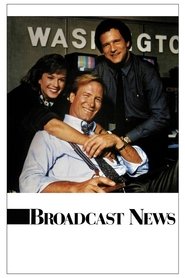
Broadcast News (1987)
Release Broadcast News Blu-ray (The Criterion Collection)
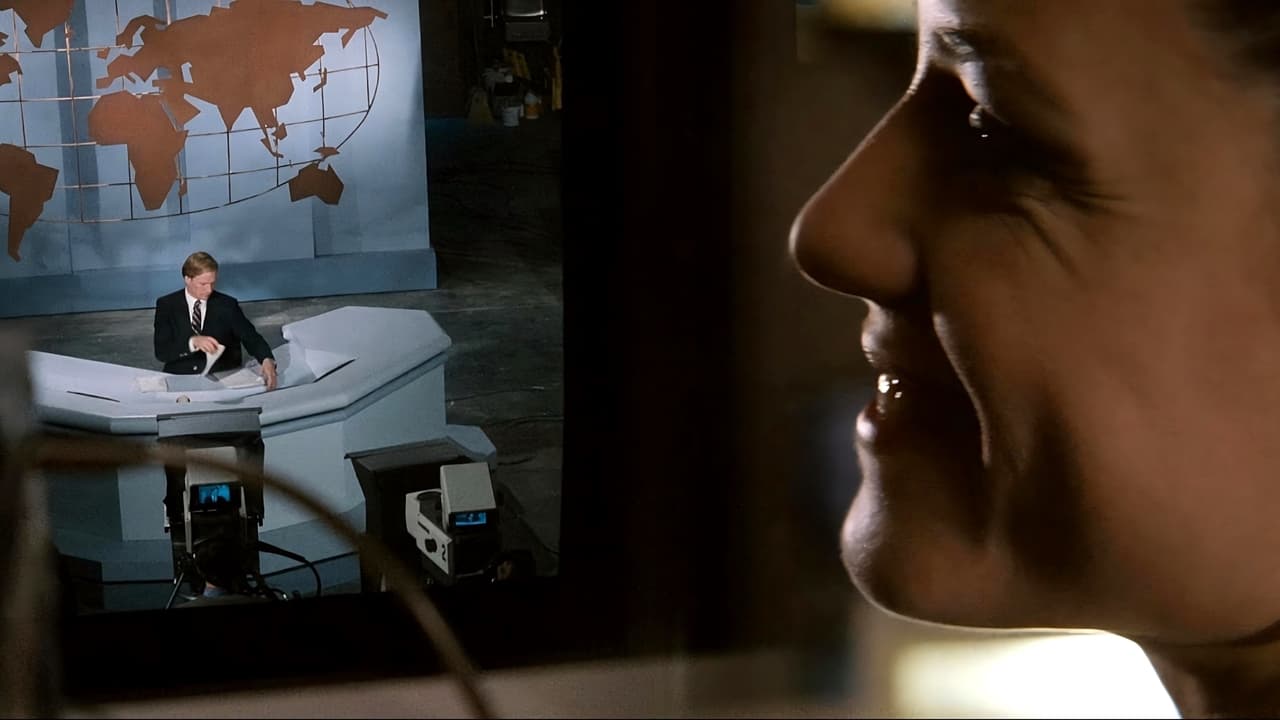
Brooks and Marks discuss the research, casting, rehearsals, and editing of Broadcast News. Brooks recalls studying network news for a year, casting Holly Hunter shortly before filming, waiting for William Hurt, and building the Washington newsroom set. Marks describes a damaged close-up later repaired for the Criterion restoration. They also explain how shooting largely in sequence affected the ending.
- Duration
- 2h 10m
- Talk coverage
- 90%
- Words
- 17,309
- Speakers
- 2
Commentary density
Highlights
Topics
People mentioned
The film
- Director
- James L. Brooks
- Cinematographer
- Michael Ballhaus
- Writer
- James L. Brooks
- Editor
- Richard Marks
- Runtime
- 133 min
- Also on
- OneSheet ↗
- External
- IMDb ↗ TMDB ↗ Find on Amazon ↗
Transcript
17,309 words
Hi, this is Jim Brooks. And this is Richard Marks. We're sort of dedicating this to Polly Platt, who was, is, you know, just one of the trailblazing women in film, associated, just Google her, with more great films than you can imagine. And she was a producer and also had a role to play because she was, in her past, she was a preeminent production designer.
And one of the things we came up with for this was Joel Meyerowitz, who was great at photographing cities, and this took place in Washington, D. C. He gave us this whole notion of red, which you're gonna see again and again in the film. This is the young Bill Hurt we're looking at right now. I think one of the things that happened to us that I was... For some reason, shooting in Washington, D. C. , for some reason, we had a horseshoe in terms of the actors we picked up. You'll see these three kid actors and who they're supposed to look like. And as I recall, it wasn't even that difficult. And I think each time it was sort of nailed. I will.
And this was, you know, for me, I had done one picture before this. I did Terms of Endearment before this, which, you know, had sort of an unsettling existence with the way it was received. And then I just took a long time to just figure out what I was going to do next, because I think I had some notion that I'd get to do something next. And I started to just hang out and not knowing anything about what I do. And a friend of mine invited me to the political conventions in 84. And there I started to hang around with some news people, and that's basically what this came out of. You know, I felt the pressure because I had a friend, my late friend Jerry Belson, who used to heap the pressure on me every day that you're not going to be able to follow it up, and that was an adaptation. You haven't done an original. He used to just do this to me every morning. But it was just... Because of what happened to me on the first movie I directed, it was surreal. I mean, there's no way that you...
wore it as something that happened to you. It was always a little beyond belief, so it didn't impact me as if I had done five pictures and this happened. It was just weird, but I felt... So doing broadcast news was sort of, not that you don't go crazy and not that you don't always have the pressure and not that you don't go to bed sometimes hating the pages you've written, but the research was great. I was fascinated by the subject. The movie I had done gave me entree. I sat in the anchor booth overhanging the conventions. I went down on the floor. I just hung out with all the reporters. You know, it started me out, and what it gives you is a sense of mission beyond yourself. It gives you a sense of responsibility. You don't want these people you've been hanging with to think you were full of shit in the way you treated the movie. You wanted, you know... So you always had a very...
specific audience in your mind a little bit as you something that you had to serve beyond yourself but it was the time between the two movies was sort of like one of the great times of my life this girl i actually i actually did this i think i asked her mom first she had to be startled so with great sensitivity i shot off a gun that she didn't expect
to get that moment. I'm not sure it's the take we used either. I don't think it was. Finish quickly. I don't want you getting obsessive about these things. Good night. What I used to do when I, you know, what I used to do pretty regularly is I used to write some scenes about the main characters as children. And in this case, I wrote them just to sort of, you know, just to sort of as a warmup. And I ended up, you know, leaving it in. So carefully. Then you throw a word like obsessive at me. Now, unless I'm wrong, please correct me if I am. But obsession is practically a psychiatric term concerning people who don't have anything else but the object of their own obsession, who can't stop and do anything else. Well, here I am stopping to tell you this, okay? So would you please try and be a little bit more precise instead of calling a person something like obsessive? Good night.
Holly Hunter, we found, she had no movies out. She had made Raising Arizona, but I hadn't seen it yet and it wasn't released yet. What I'm about to say is literally true. We were two days away from starting the movie and we really didn't have anybody to play this part. We would have gone ahead and it would have just been a very different movie. And then she happened to be in New York at that time, and she happened to come in, and it was just God's blessing. Two days before, two days before, and I was in anguish because I was just going to go ahead with a movie that I didn't quite see with what I had available to me. And then she came. And you read so many actresses. Everybody, yeah. It's 30 minutes before you have to meet me in the lobby. Nudge your mate.
I was hanging out a lot with news people, and I'm sort of a news junkie. And Susan Zirinsky was a producer at CBS News, and there were two other women I spoke to, sort of like, I guess the three of them sort of in some way added up to Holly's character in this picture. Yeah, Susan believes it's all her, but that's part of being Susan, and that's part of what she added to the character. Now, listen, Arnold just said that he's making $3 million a movie now. But the basic story for the movie came from a conversation I had with somebody who is one of the most distinguished journalists we have today, where basically this triangle happened in her life. Half hour in the lobby. Okay, I'll see you in the lobbies. This came... I always have this rule that if you hear something three times in research, you can believe that it's generally true. And three times in the research for this, I heard from women who sort of took crying breaks. Not this literally, but who in the course of a day cried. That's what this came from.
one thing holly's such a great actress and she was uh but she was afraid she couldn't cry on cue so during the rehearsal period and we had an we had a big rehearsal period on this there's polly's credit a big rehearsal period on this um she would have me just at times without warning take her into another room and ask her to cry just so she could be ready for this
Alva Brooks and I were close friends, and I found out long after we finished shooting that people on this crew were cringing because they thought we were fighting all the time when it's the normal way we interacted with each other. This picture was an R. You want to use that? Depends on how big a news day it is. Thanks. I can't believe you said that! I'm very proud of that. It really opened up for you, man. Now, you know, I haven't seen... I saw the movie silently today for timing purposes, but I haven't seen this movie in more than a decade. And the thing that happened to me is, you know, these three leads, which I... It's so hard to think that that would exist today. Each of them studied acting for four years, each of them. Four years of solid studying in one of the top acting schools in the country. Albert and Holly went to Carnegie and Bill went to Juilliard. I mean, that's really unusual. And I'm just gonna, I think I'm just gonna keep on calling attention to the kind of performances they did.
I waited six months for Bill. I didn't know how to make the picture without him because my theory was you could not act charisma, that either you had something leading man in you or you didn't. And he chose to do another picture first, and I just waited. I remember the night that I didn't know what I'd do if he didn't do the picture. And I was going to meet him at a restaurant and finally get his decision. And I can't... I remember... how badly I felt walking to that restaurant because of what I had on the line. And the minute I walked in, the minute I walked in, he told me he was going to do the picture. And then he said, because of some sort of rebellious spirit, he says, let's show the system that we're against it by ordering the most expensive bottle of wine they have in this restaurant and paying for it ourselves. And for some reason, it seemed like a great idea.
Everybody in that restaurant came out and we drank that bottle of wine. I mean, it was an army, a phalanx of people bringing that wine to our table. A major policy change in SALT II nuclear disarmament talks. Here's what they ran instead. Go ahead, please show the tape. Richie, you got to talk about this. This was weeks of your life. This was weeks. Weeks editing this. Weeks mixing it, I think, mostly getting the proper sound. for the dominoes and to make it believable. I know it's good film. I know it's fun. I like fun. The thing that I saw today when we were timing it, look at these people in the audience. They're supposed to be all local anchors. The atmosphere in this picture, the kind of people we had in support, I don't understand how we were able to do it. I mean... These are people who you believe are local anchors. And when we get to the newsroom itself, you'll see that they're part of the cast. Thank you. Here's that red deal. I'll stop talking about the red deal. You'll see it for yourself. I don't think there'll be any Q&A.
I saw this silent today and I forgot what line was there. This is a boy meets girl moment. Hi. Hello. Holly was a very new actress. Bill, I think, had... Did he win the Academy Award? He was nominated for the Academy Award the year we were shooting and maybe won the year before. I'm not sure. I just wanted to tell you how great you were. There was nothing in Holly at the very beginning of her career that felt at all any inequity between what she brought to the game and what Bill brought to the game, and that was very important. There was no little... I want him to like me, there was no little, he's a big deal. There was none of that. These are deeply trained actors who just did their work together. I don't hate them. Well, they say if you can reach even one person, it means something. I think we did three weeks rehearsal, but Bill didn't rehearse, which turned out to be good. He had something else that he was doing. It turned out to be really good because he came in and he was playing catch-up, which was good for his character.
You know what I'm saying? Another thing I can't stand is this doll. No, no, no, no, no. The research for this picture went on forever, and I loved the research because it was an area I loved. It was an area I briefly worked in. I spent easily a year on research. Great year, I mean, and probably a year writing it, I guess. My room is right down here. Do you want to keep talking? Yeah, sure.
Oh, come on. Okay, now, here, this is a small hotel room. This was a ten-page scene. That's a long scene. And I care a lot about staging, and I didn't know what I was gonna do with this. And the actors said to me, we worked last night. Let us show you something. And then they showed me this, where they're kneeling on either side of the bed. And it's just something you'd never think of. And they got these tons of protest mail. So... so they made me anchor. So great, right? Except I'm no good at what I'm being a success at. How are you a back rubs? I think my insight into Bill's character was there was a CBS news show that had gone on in prime time, which was the first that sort of broke the rules of news. And the pretty boy in that show, I spent time interviewing. And the old guard had such antagonists against him and thought he was ill-trained and that he was dumb. But the thing I got from him was he knew they were feeling that way. And that sort of made him an underdog to me. And that sort of...
was an important definition of what we were able to do with Bill's character. Stink! I trust you. I didn't even have a chance to become really good at sports. I mean, I wasn't bad. What about the obvious remedy? He always felt Bill's vulnerability as the character. I mean, he made that so plain in his performance... that it made him so sympathetic. Yeah. No, the person who was right was less sympathetic. The person who was defiling the profession was the most sympathetic. That's true. Did you go to college? Again, you know, I just am in love with what is basically their staging of this scene.
I mean, that's an incredible moment when he says, and I'm making a fortune, that you really feel like he means it. That he's so sympathetic there, and he feels so embarrassed by it. I agree with you. You're not qualified, so get qualified. You can insist on being better prepared. You don't have to just leave it with, I don't write, I'm not schooled, I don't understand the news I'm reading, but at least I'm upset about it, folks.
Just what do you want from me anyway? Permission to be a fake? Stop whining. Do something about it. We don't have to start right now. Always so much underneath the surface with all of them. With all of them. And it wasn't just because you were right.
She just came up with this. She said, roll again, and she just did what you're about to see. No, no, no. Everybody's sitting on some visceral additional truth. I have passed some line someplace. I am beginning to repel people. I'm trying to seduce. He must have been great-looking, right? Why do you say that? Because nobody invites a bad-looking idiot to their bedroom. Okay, let's do me. Sure. I feel like I'm slipping. I mean, these were clearly phone friends who, you know, who were uncomfortable so they had talked about the date with each other at the end of the day. I think they're slipping because their standards are so high. This conversation is... And I think they nailed that. I think they nailed that kind of friendship. Good night. Wouldn't this be a great world if insecurity and desperation made us more attractive? If needy were a turn on? Call if you get weird. Hmm? Take care, doll. I will. Call if you get weird, man. What else do we want to hear? I was just thinking it was the shortest phone conversation we ever had. Um...
I never told you the reason I was telling you everything before. Hey. Those audition tapes I sent out, I've been hired by your network for the Washington Bureau, so I'll probably be seeing you at work. What? Sorry.
You know, unlike Network, a film that I admire so much, and one of the two times Paddy Chayefsky's Stone Cold saw the future, this was a movie very much of its time, but it was a pivotal time where we made it, and it was where everything was changing, where it was that moment of layoffs, the last moment where wholesale layoffs were scandalous. that, you know, when they depleted a news organization by just firing somebody. I mean, right now, it's commonplace and good business. Okay, what about this? This was pretty much before the very big layoffs that they started in the network news bureaus. It was contemporaneous with it. It was happening, you know, CBS had a massive layoff just as we were filming. They allow us to have cameras at an execution in Florida. Do you broadcast tape of the guy in the chair when they turn on the voltage? And that had happened. That had happened. You bet. Nothing like wrestling with a moral dilemma, is there? This was a whole profession going south. Okay, Bobby, go back to 94546. The sound bite in the alley, it starts. So why were you in anger? It was so great.
Ritchie and I are just in the process of post-production on a movie that was set in Washington as well, and we only got to shoot three weeks there because of the exigencies of this time. And, here, we lived there forever, and we never left Washington. And it meant a lot. Here, we took over the... There was an office building. We took over one floor of the office building and built our newsroom in that floor. We were all practical locations. There was nothing at a studio. But having that whole floor to create was extraordinary for us. This was pre-9-11, and you probably never would have been able to do the same thing again. You were right on Pennsylvania Avenue. Yeah. Joan Cusack. In Daley's, she was great. In Daley's, I was worried she was so great that Holly would be in her shadow until the story started to pop. And she had been working out. She has a sort of a small stunt that happens very shortly. We actually had her working out with a hurdle guy in Chicago before we started filming for it. I don't think she's gonna make it.
It was a surprise, and so we at Embassy... You want copy? Yes, all 15. Everybody you see in the newsroom now was carefully cast. Dissolve to the rifle. Now, should I... Just a two-second dissolve! During the research, I was at the NBC station, and I actually saw somebody run, and I said, thank God, they're still running against deadline. And that's what this was based on. ... well's enduring portrait. The return of a fighting man has always been one of the more moving ceremonies of war. We have a minute and a half. It's my responsibility to tell the control room and New York that we won't be ready. Uh-uh, we'll be ready. In 84 seconds! 15 seconds! If I can, again, with three trained actors, just any second you want to see behavior. There's never a second when something complete isn't happening with the three of them. We're not gonna make it! Whoops! Whoops! Bobby, Bobby, Bobby, Bobby, Bobby! This was just a guy being into his character, so... So we... And Joan was the gun. She almost got seriously hurt in the stunt coming up. That one. Whoa! Hey!
Here I had the longest straight line in the world. Here she's running this long, she's going up the stairs. I could never nail the line at the finish. I apologize for the line that happens. I worked real hard on it. It was the best I could do. In other times with other purposes, there might be a band and bunting here at the bus depot for J. D. Singer's arrival home. It was too big a straight line. There's no way to follow it. The return of a fighting man has always been one of the more moving ceremonies of war. Look at that newsroom, man. It was just, we just, it was a newsroom. But J. D. Singer was right. His homecoming was no big deal. Aaron Altman, Lincoln, Nebraska. An American comes home. That's your news. I'm Bill Rorsch. Good evening. At the time we made this picture, 1987, We had had a whole series. We had had the sexual revolution, and we had a whole series of feminist heroines. And consciously, we had had a lot of movies about feminist heroines at the time when everything changed, when the culture pivoted in terms of issues involving women. And I really was trying to think hard about the next step, and the next step...
is exactly the struggle between career and love, heart and head. And it was true of the women that I researched, you know, at that time. I think he went downstairs. Okay, thanks. I can't believe I'm really here, you know. No, I'm wrong. He went to research. I can't believe I'm really here. No kidding. If you're through work now, we can... No. Aaron and I go to Central America on Wednesday, so I am crimming. I thought you were incredible in there. Everybody was. I know how much I have to learn. If I could... I would really a lot appreciate it if... Really a lot appreciate it? You make me nervous. Anyway... If I can pick your brain... Of course, there's nothing more sexless than having somebody wanting to pick your brain when you're a woman, I think. I'm here to teach remedial reporting. And it has nothing to do with the fact that I left your room instead of staying there. When I saw Network, and, you know, when I first saw it, I was very cranky about the heroine in that picture.
I was very cranky about the character Faye Dunaway played because I thought it was farcical. So much of that picture appeared to be like farce. And I was a little snotty about farce. And there she was sitting on this guy, having sex with him and talking about ratings. And then a minute and a half later, that woman was everywhere you went. I mean, it was just extraordinary. And I think the Jane Craig's of the world proliferated after that. You know, the very brilliant type A with hungry hearts and well-fed minds, you know? Really? Well, I'm sure you speak English very well, too. Thank you. These scenes were shot in Florida. We spent two days there. where they had these Cuban, in a little paper cup, like the doctor gives you pills in, they have this Cuban espresso they give you, and we took it at 3 o'clock in the afternoon, and you were guaranteed to be awake for 15 hours after you had it. I was talking about her at the end. That way they'll have to reevaluate me. Okay, here's an interesting moment coming. No, Manny, no!
This is absolutely true when the rules were this scrupulous, when you didn't manipulate anything, when you filmed things that happened. Absolutely true at the time. It's your choice. Okay. I spoke to a lot of reporters who had been in war zones. And being a reporter in a war zone, many said, is something of an aphrodisiac. You are under such stress and you don't know what will happen. So at this moment coming up, all our conversation with the actors was about, at this moment, if Albert had been aware of Holly, at this moment... The first shots were fired about ten seconds ago. He'd have her. She was... She was there, and he was not aware of it. And that's exactly what they're playing. Despite the fact that their weapons have been acting up... See? She's playing turned on because it's one of the absurd truths about being in this kind of danger. Hello, help!
Did you get a shot of the boots? Yeah, of course. So then we can cut back to that at the end, right? I can't believe I just risked my life for a network that tests my face with focus groups. That joke cost him sex and a life with that woman. At this point, the audience started to get the crying. It was a strange anomaly the first time they saw it. And... And something opened up about her character for an audience at this point. It's also interesting how you always chose when we were editing it to stay away from, to stay back from the crying. To never, to not put it in your face. The recovery was always close. But for the crying itself, you always chose to stay back from it. It, I think, allowed the crying to be more accessible for an audience. The first shots were fired not ten seconds ago from over there towards the east. Stand by. Freeze. Freeze it back over ESSA. Congratulations, you two. Finally got a piece in a few minutes early, huh? I hear Bill saw it this morning and he loved it. No kidding, huh? These levels were great. I love levels.
I love things on different levels in a set. It always helps you. It always makes angles more unusual. Maybe I could buy you dinner sometime soon. I just got back. I don't know which end is up. Okay. Jane, Bill Horsch wants to speak to you at the break now. See, now, if you didn't have Jack Nicholson there, this scene doesn't kick because you feel their nervousness. Yes. Well, darling, if it gets any better than that, I'm going to have to bring you up here to New York. Thanks. I just wish you kept the first 20 seconds. Jack Nicholson and I had made friends on terms of endearment, and I just needed somebody to have the weight for this part. And I cornered Jack in my car and pled my case. And he agreed to do the part, which he did in two days. And he had to learn to read news, which is a whole other thing to read news. And he asked that we have a lot of suits for him to pick from when he came down. He came down. There were 12 suits to pick from. He walked away with all 12 suits. Did you tape the interview downstairs? Yes. Thanks. This is one of my favorite moments.
I laugh so I don't think I'm dying inside, but I have so much style that I just said something funny. What did he say? I'll never tell. And you know, to this day, I mean, it's so nice. It's almost like if I run into somebody who works for a magazine or newspaper or anything, there's a ready kinship because I was connected with this movie. And it's been great. It's been great. It's been amazing just, you know, looking at this for the last couple of days and having, you know, it's just been... Got it. You look very hard and a group of people come together. Yeah, right. I mean, it's always great when the sum is greater than all the parts. I mean, that is what everybody hopes for. It's always this thing you say that, you know, I think the big thing is, you know, two actors are going to the set that day, each with an idea of how the scene should work. The director is going there with an idea of how the scene should work. The great day for all of them is when something happens that nobody anticipated. I mean, that's what movies are. I love that there's a little mistake he makes here, which is...
which makes him more sympathetic. The House Armed Services Committee has a secret report which says that the Allen fighting vehicle the Army poured a fortune into, plane won't work. I've got it cold, confirmed. They have $5 million in this thing already. Billion. Right, billion, okay. Of course. They said I could have... And somehow that makes him more sympathetic. And I want you. Susan Zawinski went over everything. The copy was scrupulous. The nature of the stories we did were scrupulous. And Susan took care of all of us and took care of all the graphics and, you know, it was sort of amazing having her there. Susan and also, you know, just her persona, there was no chance that we would ever be inaccurate. You know, what was great about this movie for me, because I'm not trained, my training ground was the Mary Tyler Moore show. We had actors from so many different disciplines. And here...
Again, I can't say it enough, the three actors so perfectly trained was an education for me, and I just asked them a lot of questions about what their training was. Bill's favorite course at Juilliard was mask, where they put on masks and let them do something. So I'd have somebody do off-camera for Bill, meaning they were standing behind the camera, and I'd suddenly put a mask on them. My youngest wanted to meet you. This is Ellie. This is my daughter, Amy, 14 at the time. And I tried so hard not to cast her, and I couldn't find somebody. I believe her performance speaks for itself. And she kept on auditioning for people behind my back and building up a fan base that finally overwhelmed me. And Aaron was on that 14-day raft trip with us last year. Come on, man. Perfect work. Look at that kid. She's wailing. I had that big yellow raincoat on. Oh, yeah. It had a hood. Yeah. Yeah. It was over my head. Yeah. Your hair's different. And she improvised. She improvised that line with one of the most gifted comic actors of his time. Hi, Dad. Did you see it? I'll send you a tape. Yeah, I'm sorry I haven't called. Thing's got a...
A little bumpy for a while. No, it's not important. I'm fine. Hey, Dad. I think I just may be able to do this job. And the fact that he can do this job means the profession has changed. I'm glad you were sure. Ah, our host. Come on in. You know, Susan Zarensky, who was so important, in the research for this picture. The reason I met her is I went to the conventions, and Diane Sawyer was a CBS reporter at the conventions. And I wanted to talk to her. And she had such an aversion to talking to somebody doing a movie about this that she brilliantly pawned me off on Susan and said, this is the person you should talk to. So her... properly avoiding me, because I think it was smart to avoid me, got me onto Susan. Mike Nichols, sort of a genius at directing, always says, who are your buddies on a picture? Who are the people you talk to? Lois Childs and Joan Cusack...
would come to dailies, the only actors who came to dailies every day, and we would go and whisper and they would tell me the truth after every dailies session. It was just amazing for me. Lois Childs was so great. I mean, she had become, you know, really a wonderful actress after coming in as the Revlon girl, which used to be the top model of the year. And like, as I said, a great person who talked to me after dailies who gave so much of this picture. Well, you know, I've been meaning to ask This is very awkward. I want to call attention to a little comedy factoid. There's a kind of laugh a great-looking guy can get doing very little that somebody who's not great-looking can't get. I'm going to call your attention to that in a second.
I mean, I think about him outside of work sometimes, but I know I don't respect him. So what am I talking about? What am I saying to you? You're saying stay away from him. I can't be. We don't have to settle this definitively right now. Wait a minute, wait a minute! Okay, there it is. You try and get a laugh with that if you're not great looking. I never looked at the editing as we went along, did I? You would come in occasionally when you were concerned about a scene, but normally you didn't. You really saw it after we finished. I was afraid looking at the cut footage would... tamper with my will to live. I think Jim shoots his films more in continuity than most directors do. But yeah, you're always editing as the film is being photographed, and you're keeping up with it. I just think we have a bit of a shorthand now that we didn't have initially, and because of the number of times we've worked together.
But basically my approach to editing is always to try and interpret the film as the script directs me to. And certainly that's how I approach this. I actually don't like going to set because I sort of don't want to see what's going on. I kind of like the idea of seeing dailies fresh and not having... to know all the machinations that go into the process. It sort of keeps me a little pure. Were you nominated, man? I was. I lost, but I was nominated. Who'd you lose to, Dino? I don't remember anymore. It's been a long line. I remember who I lost to because the guy came over and rubbed my face in it. Did he really? Yeah, for writing. Okay, this is Michael Ballhouse just coming over to me and having an idea to perfectly tell this part of the story. Sort of a simple shot. It's the simplest thing in the world, and it perfectly tells a story. Okay, right away. Ernie? Tom? Tom. What is it? For me, broadcast news
was the most perfect creative environment I've ever had to work with. I mean, we really felt nothing besides our own needs and instincts. I mean, I think for the whole picture. It was hard enough, but there were never any false issues. All the issues we faced were real issues, and we were protected from all other issues. I mean, I think it's the only time I ever had that experience. That purely. We just never felt anything except... encouragement to try and do our best. So we're going to do the whole report this afternoon from here with Tom. Isn't that true? Yeah, no, I think that's really true. I mean, we were in a paradise. We didn't feel like we were. Well, we were. With hindsight, we were, yes. It's 1. 35, and it's Tom. You can reach me at the office. Paul, forgive me, I'm really sorry. Peter Hackes, who played the president of news...
had been an NBC News correspondent who was let go under many of the same circumstances that are depicted in this movie. A gifted correspondent, a well-schooled correspondent, as they went for a sexier brand. So it was so beautiful that he was in this movie and did as well as he could, because this came after he was a victim of that. Oh, wait a minute. First of all, this line was the key line in the movie. 21 takes, and to my credit, we used... a take in the high teens for the movie. It wasn't take two. So I'm not a fool. I have proof I'm not a fool. It must be nice to always believe you know better. To always think you're the smartest person in the room. No, it's awful. Take 17. But it was what made her who she was. It's everything there is.
Richie said we didn't have shorthand, but we had sort of an amazing thing happen on the first movie I did. Richie was off Godfather II. I was brand new director. And I was in Nebraska. And at that point, Richie was seeing dailies in California, and I was seeing them two days later in Nebraska. And he called me one day and said it was really important that I replace an actor in a key part. And I did. You know, and I hadn't seen it yet. And he flagged it. He flagged it beautifully. And if it hadn't been that day that he told me, and if we hadn't started the hunt at that moment, we wouldn't have gotten John Lithgow for the part who was nominated for it. You know, so the person that we found was nominated. So that sort of started things off between us. And I must add that I was terrified of making that phone call.
I thought very hard about it and sort of figured my job was on the line. I was going to lose in any case, but I had to be honest about it. And I swear to God this is a true story. After Richie made that phone call to me, the next day as I was carrying the weight of this, the actor who was let go was passing underneath my little trailer, and I really... This is a true story. I heard him say... Once you have two days' work, they can't borrow you. It's my game now. That really happened in time and space. You never told me that. We spent a long time figuring out the right French song. Albert can do more takes than anybody alive and still come up with something new. Standby animation. In the scene coming up, the special report, I think it was just a very challenging scene to create both the sense of urgency of the situation and the intimacy between the Bill Hurt character and the Holly Hunter character. All the remotes checked in? Everyone here is programmed clearly? Yeah, everyone's good. This was always building to a key shot where she's in his ear as some symbol of how close
important work can get to important sex. Tom, can you hear me? Tom, can you hear me? Tom? Tom? Tom? Tom? Tom? Damn it! He can't hear me. I told you if there was one thing... I can hear you. I was just teasing. Five, four, three, and announce. Two, one, and cue him with effects. Good afternoon. I'm just marveling at the complexity of it. Um, uh, you know, what we had to create to put on the screens, uh, to make these characters tie into one another. Uh... Pentagon, is everyone back to one inch? U. S. Naval Air Station on the island of Sicily. There are some 500 men and women stationed there. Libyan bombs destroyed a Navy warehouse, which just 30 minutes earlier had been crowded with servicemen. Whoo! Whoo! I never looked for a set longer than this practical location for Albert's house, because later on we were going to have a very long scene in his apartment, and I watched at the levels and we couldn't find it. And the thing that you need is people who don't look at you like you're crazy when you keep pressing.
and people who don't lose heart and people who don't feel burdened but keep on looking and they just came up. I think Christie Zia was the one who finally came up with this place that was so important. You feel insane if people look at you like you're obsessed and it's stupid to be that obsessed and it's stupid to care about a small detail and you feel so blessed if people share it with you and that was right down the line. And by the way, I think Polly's presence on this picture added a lot to that because no one carries the mission of film more in their hearts than Polly. George Well is at the Pentagon and reports that the attack, presumably by a lone Libyan pilot, has resulted in a massive movement of U. S. military might. A lot of alliteration from anxious anchors placed in powerful posts. And I hope it's not pedantic of me or just, you know, but... There's no moment that these guys do that isn't organic and that you go to school for four years to learn. Nothing's empty. Nothing's simply surface.
Said Gaddafi, this is not war. The joint chiefs of staff... The F-14 is one of the most difficult planes to master. They're called Tomcats. Tom? George, isn't the F-14 Tomcat one of the most difficult machines for a pilot to master? I think you're right. In the 70s, the first crop had a number of crashes. There was trouble with them in the early days back in the 70s. Thank you, George. Jennifer Mack is standing by at the White House. I say it here, it comes out there. Jennifer? The White House is preparing a list of contingency... There's a key sound coming up. Richie knows what I'm talking about. Hi. Listen, Gaddafi doesn't phone with the mouth or anything. When you speak to him, he seems... I mean, you've heard huge explosions. You've heard people who have gotten swords to sound right and blows to sound right, but you've never heard anything like this, and it's coming up. You're welcome. So how does this feel to be executive? I gotta go. Me too. Gotta go. Very busy here. Gotta go. We're very busy. By midday tomorrow, the carriers... That sound. It's the Gulf of Sidra. Ha!
Pretty great, huh? I think it's very apparent that there's an incredible intimacy of the moment where she's cueing him into what he's supposed to do. You'll see it coming up. And you'll notice her voice isn't really filtered in a way that you would think it would be filtered as if he were hearing it. but it keeps up the intimacy of the scene by making them both sound like they're actually speaking to each other. And we had come on this on the mix for Terms of Endearment when there was so much on the phone and we decided not to futz it at all. Do you know you have a hit from one of those screens inside your cockpit, or can you actually see your missiles? There you go. That's good. The equipment is very sophisticated, but from a pilot's point of view, you like to see it to confirm it. Thank you, Commander. It has always been considered an outlaw nation. Padapi's still here, by the way. Yes. I mean, among all of us, he's the great survivor. Nice change.
Jane Craig, just a minute. Then we're gonna go to Martin Klein at State for the message from Libya. Then you're gonna have the carrier pilot from the Sidra in time to... What?! No! You missed him! We only have ten minutes left. How can you talk to me about parking problems? No! Not your try. You'll do it! Do it! Or I'll fry your fat ass... OK, this broke every rule. If anybody knows what our Murrow is, this broke every rule of the golden age of broadcast journalism. when he expresses opinion like that. And now, of course, it's commonplace. The latest message seems to indicate that the Libyan pilot was acting on his own without authority from anyone else. In other words, I think we're all okay. Okay, Tom, wrap it up. Who the hell cares what you think? Coming up, you'll see Holly Hunter, whose nose... Because of the set, she wasn't able to look towards anybody. Her nose ends up two inches... from a wall, and she has to act like she's facing everybody. And this whole deal is how close work and sex are.
And there's actually a sort of metaphorical act of coitus coming up just to keep you tuned. One of the most successful men alive is about to enter this film in a bit part that he performs brilliantly, Mark Shaman, who's one of the prominent composers of our time. at the time he was doing special material for Saturday Night Live. There he is. You see him waiting to go on. Bill's about to pass him. There he is, Mr. Mark Shaman, ladies and gentlemen. And the news theme that they're auditioning was written by the composer of Les Mis. Can I help you, gentlemen? We're here to play the new news theme. Okay, here it is, as promised. Amazing woman. What a feeling having you inside my head. Yeah, it was an unusual place to be. Indescribable. You knew just when to feed me the next line. So it's almost literal about that connection. There you go. It's so neat that he found her brain so sexy. And it was so great, we had a great location because I was wondering where to shoot this piece, and I said, where in this newsroom have I not shot yet? And that was the only spot I hadn't shot. It starts off
with this very high-tech synthosequency type thing, like this. That's the news. And the strings take the melody. I never was able to do the idea. My idea was to do this comically and then to do it as an important theme in the movie, and I could never make it work as an important theme in the movie.
Let me talk for a second about Albert Brooks. And, you know, there's a whole theory that when it comes to awards and recognition for actors that, you know, there's a prejudice against comedy. So here is a brilliantly funny man who's a fully trained actor and a filmmaker. So he was nominated for an Academy Award, and he was against Sean Connery in The Untouchables. And, you know, we're friends, and we're just thinking about how we're going. By the way, I mean, okay, this is a comic genius of sorts, but look at the actor he is. So this amazing thing happened. I think Sean Connery was picked as the sexiest man of the year by People magazine that year. And in the article, he referred in sort of a positive way to occasionally hitting a woman. And Albert and I sort of rejoiced because we thought he took himself out of the running with that quote. We thought he can't win the Academy Award if he had that quote, and he did. I started to think about the one thing that makes me feel really good and makes immediate sense, and it's you. Oh, Bubba. I'm going to stop right now.
except I would give anything if you were two people, so I could call up the one who's my friend and tell her about the one that I like so much. And it's the hardest thing. Somebody... He's playing a real person who is casually funny. I'm not gonna say anything. Primarily because I'm about to pass out. Come on, I'll walk you to the corner. You get some sleep. Right now? Oh, man, why does a guy like that have to lose? And the audiences felt the same way. They really did. They did. I think they went this far. I think many in the audience overcame their anti-Semitism. It's one of the killer facts of life, I think, that the kind of intimacy they have as friends... doesn't translate to romance, because this is a specific and fantastic intimacy they have. Hey, we're going to Cap's Bar on 17th and Vermont. Connecticut's clear on Sunday, so take that over to 15th and then straight down Vermont, and we should bypass Thomas Circle that way. If you don't go over 40, we should catch mostly green lights.
We didn't have time for her point of view shot in case anybody misses it. I didn't think you'd make it. Well, I thought I'd check and see if all of you are still here. But, you know, I'll just go in and join the gang, and you two go on. Well, the gang's, like, gone. We were the last one. There's no more gang. Oh. Well, I'll, uh, I'll go in and have a burger. Jennifer, you want to go have another burger? Yeah. Hey, I know how to have a burger by myself. I just feel like a little solitude. I sure know that feeling. You did terrific work today. Right back to you. Thanks. Good night. Good night.
I feel great. Are you sure you don't want to get a taxi? What for? What? You have the greatest car and the greatest driver in all of Washington. You look a little confused. I'm not. Okay, this scene, we were filming in Washington, D. C. ,
My son Cooper was about to be born in Los Angeles, California. I had this scene to do. So this is a very memorable scene to me for a couple of counts. But after this scene, I flew to California, had the baby, turned right around and came back. Where's the bathroom? Oh, through the closet. We went right off the plane back onto the set to keep shooting, as I remember. Yeah.
There was sort of a moment that I think any of us would envy because there's a shadow shot of Bill's phallus coming up. And I gave him the choice of the size. Great solution. Not only the storage, but you can see everything you have. Do you do bunny rabbits? If I remember correctly, we kept having to trim... Pardon the pun. But trim that shot in order to keep our R rating and not get an X rating.
just about everything, foreign bureaus, domestic bureaus, all kinds of personnel, even equipment. Anyway, they seem to be very, very serious about making... There's an absolute fun part of the job, and that's when you fall into something that's sort of perfect for your scene. The two people sitting next to Holly, I just wanted a specific kind of news business person, and I went in the office building where we were filming... And I went to Century 21 and found these two gentlemen. Now, we're going to also be covering the Alaskan serial killer trial on a continuing basis. I'd like it to be signed out of Washington, which means we're going to have to... I was so worried because Holly does something vaguely despicable in this scene, but it was all fine. Who do you think? George Well? Or Jennifer? Jennifer.
Jennifer. Jennifer. I think the first cut of the film was really long. How long, Dito? I believe it was something like three and a half or possibly four hours long. But that's my first cuts, which are long, trying to put everything that's shot into the film. Well, I'm not sure I'd be good company tonight. Eh, I'll be the judge of that. But in the course of taking the film down to size, you start to lose portions, some of which may be represented in the additional material. And you end up cutting things at the end that you never would have imagined cutting. Absolutely. And anyone who tells you that you can really anticipate... in the writing process or in the beginning of the film when you're laying out the film for shooting, if you can anticipate what you're gonna lose, I think that's really not true. Network news, Washington. I love it. What do you do when your real life exceeds your dreams? Keep it to yourself. I think these guys were so amazing in producing a relationship not unlike friendship.
when almost every moment they had showed each of them having total disdain and sort of thinly disguised contempt for the other. And yet something resembling friendship, I think, got built. You can't talk about feeling intimidated when you're on top of the world. It's unseemly. I'm not buying into any of that. I have a load to learn. I'm not going to act as if... You have the job you have. Shut up for a second. Okay.
Pretty peppy party, isn't it, Pat? I made one rule for myself when this started, and I realized I was going to take a lot from you people because of being from sports. And that rule was? Never to pretend to know more than I did. That line comes from a rule I made for myself when I directed for the first time that I think I went three days without breaking. Okay, let's drop it. What? I mean, I am not gonna take a test for you. I mean, if that came up in conversation... We're conversing. Oh, no, the names of the cabinet have slipped my mind. Say, do you know them? Okay, don't name them for me. Just tell me if you know. Yes, Aaron, I know the names of the cabinet. Okay. All 12? Yes. There's only 10.
You're feeling good, aren't you? I'm starting to, yeah. Hey, we may do capitals of the states next. 50. I think it was really good that we gave Bill the last word in this scene after he'd been raked over like that. And Bill telling his little lie about knowing the names of the cabinet. It's just so perfect. Hi. There you are. I mean, I went home. I'm doing this in two sessions, and I went home last night just talking about the actors like I had seen a play for the first time.
Is this it? Yes. I am so exhausted, punchy, sick, tired. I can't think and I can't move. I'm just a dead lump of poured out flesh. Would you like to come out? Maybe we could just sit here and talk a little. OK. I'm going to have to do a story from beginning to end on my own. Eventually. It is such a sexual role reversal. The girl who's listening to the not bright guy who's gorgeous and who she wants to have in her bed. It's just such a... or tell me why it won't work or is in bad journalistic taste or anything like that. Yes, Tom, I think I can manage. Okay. It's about women who are attacked by someone they know on a date. I'm sorry, I'm sorry. I didn't say anything. I didn't mean it. I didn't mean it. Oh. Keep it that way. Wait a minute. I didn't say anything. Steve. I'm innocent before I'm... Innocent. You're guilty before you can be innocent. Door to door.
You know, it's so hard to do commentary because as I see it, you know, my mouth's just agape. I mean, this is... I mean, Holly just has some private moments of behavior here, just... Yes. Tom? Tom, is that you? Yes. Hey, you called me. Is it your... And it's almost with her brain numbed a little by sleep. You know, she becomes sexy. Going to the correspondence dinner. Why? You need me for the story? No. Are you going to go? Uh-huh. Without Bill's enormous gift, that would have been, for somebody else, I think it would have been a thankless role. Good. We could go together. So... So you like me, huh? I like you as much as I can like anyone who thinks I'm an asshole. Street cop say. That fits. Does that last cut good for you, Bobby? Uh, yeah. Great. Thank you for asking. Thank you. According to the FBI, there were more than 87,000 rapes reported last year.
Most people think of a rapist as a violent stranger, but today an attack... If I can just say something, and it's not peculiar to these scenes, you know, Jim does a lot of takes. He does a lot of takes and gets a lot of variations in performance. And it ultimately becomes about this editing process where having so much material... allows us to shape a performance and shape the interactions of the characters. And when he brought me home, he said, could he come up for one beer? And then he would go. So how do you say no to that? My cousin Donna, really? So first, um... It was kind of like this wrestling match. Which was awful enough, because... It got very violent. Why is that? I'm a modest person. And he ripped my clothes off. And he forced me to... Yeah, I think I had read a date rape story, and there were things like this beginning to happen. But the debate in those days, in this moment, was usually won by the purist.
And then shortly after that, things started to change dramatically. I'm sorry. I promised myself I wasn't going to cry. It's just this whole thing has just messed me up. Can I turn on the news for a second? All right, Sex Tears, this must be the news. I'm sorry. You know, it's so funny, since starting this, you know, I just have all these memories going on. And I was talking to Jack Nicholson earlier today about this one moment that's coming up in this scene where his character sees the date rape story on network news, which had never had a story like that. I think he just played it brilliantly because the whole culture just changed with that story.
Malcolm West, on trial for the murders of 15 men, has led police to four more bodies south of Wotahamil. Nice work. I gotta get a crew off the clock. I relate so much to this moment for Bill. You know, it's like when you write something, you're showing your girlfriend your pages or something. It moved me. I did relate to it, I really did. It was unusual for you to cut to yourself when you teared up, and that might not have been my choice. You know, maybe that's the beginning, the beginning of what could have led to love, I guess, you know, when you begin to challenge your own thoughts because somebody else represents the alternative. Okay. Okay.
I think the best writing in the picture is the name of the town in Alaska that Jennifer was banished to. It's a fictitious town. All these people who worked in the newsroom were people, most of them not professional actors, all of them doing important acting jobs by the end. Why do you say we take a walk? Outside? Yeah. Come on. I'm not suggesting the worst will happen. You know, this is a kind of bureau chief, a kind of editor who really existed in the time. There used to be a lot of them were Irishmen with big hearts and who had this feeling of family for the people who worked for them. There was one I knew at CBS News, John Merriman, who died in a plane crash, who was, you know, was in many ways, you know, helped write this guy, helped write Lou Grant on The Mary Tyler Moore Show. Not even going by seniority. There's a recklessness in the air. Do one thing for me. What? Get me one shot at anchoring the weekend news. They've never seen me do that. It could turn it around for me. I could do that this Saturday. Yeah, everybody wants off of the correspondence dinner. Do it then.
Kevin, please, prepare carefully. This couldn't happen at a better time. Prepare what? You have Saturday's news handy? It's a long while since you read the news. I'll have somebody work with you on it. Just on superficial performance things. Plea- Please. Okay. I think I'd better be alone for a while. I understand. I'll go with you. Thanks.
This is very uncomfortable for me. Because, and I don't mean this as a knock, but we approach these things so differently. We sure do. And I don't mean that as a knock either. You know, it's so interesting that, you know, that Tom thought their values were foolish, and eventually, I think, what happened sort of backed up his way of thinking.
Wait. What? Your coat jacket is rising up and back. Okay. When you sit, sit on your coat jacket a little. That'll give you a good line. The jacket thing was just one of the things, if you do research long enough, somebody tells you something like that and you just light up. It just makes you weak. Somebody gives you that back, that tip to sit on your jacket. ... down on the Arabian Peninsula indicate that heavy fighting continues for a second. What are you doing? Don't touch me. Sit on it. No, but just don't handle me. Sit on it. I'm sitting on it. Now look. Don't fit. Fantastic tip. That's great. There used to be coaches, at the first time, there started to be coaches about, mostly for local anchors. But all this is taken from, again, from research on that. You don't want to look shifty, do you? No.
On the right side of your face is the good one. Go ahead. They're going to let me do the news like that? I think the stage direction was a man who will never again show the left side of his face. I think that was the stage direction. Try to punch one word or phrase in every sentence. One idea per story. Punch. You were smoking there toward the end. The pointers were great. I'll study the taste. You go this way. Just remember that you're not just reading the news or narrating. Everybody has to sell a little. You're selling them this idea of you. You know, you're sort of saying, trust me, I'm... You hear that little sound? We augmented a strange, natural sound that's happened in this scene, something with the atmosphere of the building. And we began to hear this weird thing just as he started to talk about all of us really being salesmen, and we just augmented it.
The dress was, everybody went crazy, you know, forever and ever and ever. It was the dress. And it doesn't even matter if you get it right. Somehow, everybody working that hard to try and get it right makes it right, I think. You look like this porcelain thing. You look beautiful. You look beautiful. That's gorgeous.
You know, it may be one of the things, you know, about single life that as much as you try, a friendship this deep is so hard to maintain once either person gets married. Tom, why don't I meet you there? Even if they marry each other. How did you resolve your dilemma? Did you rent the tux or buy it? I knew it. How much? Wow. Okay, I'll see you there. I didn't know you were going with him. You're not going to wear that shirt. No, blue. Let me look at the gray. Look. Not bad, right? Looks nice. So how many pick a tie? OK. He brought all of them. He brought every tie he had. $1,140. No. Yeah. Try this one. OK. Not bad.
about it in a magazine. That's how you can make sure you don't put on too much perfume. You know what's great? One of the best things when you're working on a screenplay, there's no such thing as an empty fact. No matter what you read, automatically it's like you're supposed to have read it because of the movie you're working on. And it was that way with that perfume piece. I hate missing it. I wish I could be there. Me too. Michael Bolhaus was such an important part of the spirit of this picture. His gifts are all over the place. And in those days, it wasn't quite legal for the cinematographer to hold the camera himself. but he did frequently, and it was always so great when he did. And one of the things that happens when you hold the camera yourself is that you're not just trying to hold the frame. You're not just trying to keep everything. His wife was an actress. Michael's wife was an actress. And so that when a cinematographer with that kind of sophistication, that kind of feeling for actors puts his eye to it, he'll go wherever his instinct takes them because of feeling what they're doing.
And Michael did that invariably at various times in the picture. Not, I don't think, in this scene, but the thought occurred. Thanks. Maybe I'll just stand here and guard your corner. I'll be here when you get back. Thanks very much. Don't take Connecticut. Go 19th to Pennsylvania. Take the underpass. Taxi!
I mean, this is the best thing I ever did in my life. Just before the scene started, I put schmutz on Albert. And in dailies, I was thrilled that I had put schmutz on Albert. And afterwards in the film, I was thrilled there was schmutz on Albert, just that kind of thing that catches something. I'm still talking about it. Hey. Way to go. Thanks. This is terrific, Aaron. It's a pleasure to read, really. There's water on the set in case I get an attack of cottonmouth. Yeah, sure. You'll be fine. It's really important for me to use all the research, so a lot of the background conversations you hear is sort of based on an enormous time at research. Best severance pay in the business. He was lecturing me. Finally, I just said, I'm sorry. I refuse to look at it as a negative. I'm young, and my news appeals to people my age. And it isn't as if he just didn't hire a 26-year-old producer himself.
No kidding, 26. I tried to do this whole guy's life was over in that little walk behind Holly. I didn't quite get there, but it was... Oh, this was... I think this was Michael and my main argument. He thought he was against this location, and then he was finally won over. But we needed to look down just to make it a little balcony scene, and there was really no other place that gave me this. And then Bill played the hilt out of it.
If he doesn't see me soon, we're not supposed to be together. Smile and Move coming up was something somebody said about one of the network anchormen at the time, that he was able to work a room in that way. And I once stood, when I went to the 84 convention to do some of the research for this, I was on a balcony like that watching Ted Kennedy work a room, and you saw him light up being there, and I just stood where Holly was standing in this.
It's incredible who's here. Who? Me. It's an outlaw dress. Thank you. Yes. Okay, 20 seconds to air. This, I don't know how many... We went nuts shooting this and trying to get this right. And it began with... I knew that Albert was going to go on the air and have some horrible mishap. And during the writing, and we were friends, we talked every day... And he saw a guy on CNN break into a sweat. And he called me. And the minute he called me, you know, that was what we were going to do. It's so funny. I don't know what it's done to all of us. But that was a big problem for us to figure out how to do this. And now, of course, you do it in post-production. You do it exactly the way you want it. And it would be, you know. And everything is a trick you can do. And here, you know, you've got to miss it a little, don't you?
That's Albert doing the funny voice on the crew member. We worked on this endlessly for months trying to get it right. And there were a number of other editors who were brought in to help make our schedule and get this done. And I think everyone had a pass at this scene. And eventually we were searching the camera runouts of scenes to get it right. and to get the sweating right. But so much of it was about constructing when we saw the sweat, how much we saw of it developing, and ultimately deciding that what you'll see coming up now is a wide shot where he's just totally soaked and they take a break. I think it may be very hard to make out in video how wet he is, but there is the reveal. And this was a much longer scene, as I remember originally, with the sweating developing over a longer period of time. And I think this thing that happened with the map really happened. It was, I believe it was... And then we went back and did... That was a real accident that happened, and then we played with it.
But I think this is an homage to the editorial process. And that's Jim. The bomb had been wired to the suspension bridge... Yeah, he wrote some beautiful stuff. 120 people were reported injured, at least 22 people dead. I wish I were one of them. Remember Brinkley's great line? It's as irrevocable as a hammer. Can I have your autograph for my wife? This was the first days of that endless security that, you know, became a way of life. You finally learned to be flexible. Glad you changed your mind about Tom. Ma'am, can I check your purse? I'd like to know what the contents are myself. Excuse me, sir, may I see that briefcase? I'd like to check the contents, please. Can I see your purse, please? Thank you. We gotta go. Huh? I'm sorry. What? I... You okay? Craig. I'm so sorry I pulled you away from that dinner. I've spent more time than I can imagine
trying to figure out how to get a great movie kiss. I ran more films than anybody would believe. There was a book on movie kisses, which I devoured, that I spent time with, and that's not it. And when I filmed it, I didn't get the kiss I wanted, and I went back for it, and I still think I missed a great movie kiss, but I know I tried.
At least kiss me when you do this. You just can't stop editing me, huh? This is hysterical. And the actors knew they were coming back because I wanted a great kiss. But I'm not going to make that montage of the great movie kisses. I don't know. It's not bad. But that's a pretty great kiss. It's a really believable kiss. And a romantic kiss. Right, right. Isn't she fun to tease? What? More and more lately, I've been watching you in action, seeing all your... I've been wondering what it'd be like to be inside all that energy. It's so great because that's a line that no human being would say, what he just said. I mean, it just wouldn't get said. And instead of questioning it and instead of having an endless conversation about why would he say that, he just took it as part of his job to get that out, you know? And, you know, that's why trust is such a big part of it for any movie, I think.
Also remember how we played with this scene and then finally deciding to stay on her for that whole line and never go to him. So when he says the feeling of being inside of you, we're always playing it on her until you break it. It's great. It's great. And this is just a woman's great brain at work, and she's actually saying it. And it's everything that's wrong with her, too, that that brain is so good that it flits from subject to subject and he can't keep up. I think the only way you could attempt to try and, you know, because we used to have all these arguments about whether it's possible to write somebody much smarter than yourself. Is that doable? And it's sort of not doable unless there's enormous research and you listen very carefully. Her brain just worked differently. Sorry.
Don't yell at me like that again. You scared the life out of me. I know there was always some controversy about people feeling that she should have gone off with the Bill Hurt character and those who were, you know, very much opposed to that. But it was an issue that's a great thing in a movie where it forces people to talk about it after. But that's your great way of saying everybody hated the ending. That may be. Yeah, I think everybody hated the ending. But it was a real ending. It wasn't a movie ending, which is the great thing about it. Some people expect when they go to a movie, they're gonna see an ending for a movie. That's silly. Except I had this historic attack of flop sweat. They're never gonna let me anchor again, ever. Oh, yeah, I lost one of your shoulder pads. I think it drowned.
How was your evening anyway? What do you mean, flop sweat? You're making too much out of this. I bet you were the only one aware of it. We said earlier about looking for the right location for his house. I'm not kidding. They were complaining phone calls because you were so... And this is the beginning of that extended scene where we needed that kind of design. If all that happened, how come you're so chipper? I don't know. I don't know. And I think this scene was the heart of the film, actually. It was. My central nervous system was telling me something. Jane, sweat pouring down... And it's great how this is blocked and how the scene just keeps moving to another place. It's physically how it moves. ... to other people who are covering the stories, which is what I like to do anyway. Yes. And I'm chipper because you finally showed up. I'm gonna cook for us.
Tequila and eggs sound good? By the way, doesn't tequila and eggs sound good? Sounds great. I have to be someplace. This is a practical location. We went looking for a house, and I swear to God, if you built this as set and put any interior scene in it with two people, the scene would be better. It just gives you those kind of playing areas. I may be in love with him.
I knew it. And Ball House was great. I mean, you know, just there's nothing he hated more than a Zoom, you know, never tearing down a wall, never being in an unnatural place, always having a certain, you know, not putting the camera where it couldn't really be put. Come back here. Come on. Don't go. If he has a set, he doesn't want to move the walls because the newsroom was a set. So these practical locations were so perfect for him because it just killed the argument of let's move a wall.
We rehearsed this scene so thoroughly, and there was so much passion in the rehearsal as well. It was always this, you know, mountain there to be climbed. And everything was to sort of just put life in it and to sort of... try and create spontaneity like that moment. What? Give me one minute, please. This is tough. I always think I should have gotten a shot of him looking inside through the door. Through the glass, yeah. I have a good memory of this. I remember you saying that. You are consistent. And it's very important that I think Albert, never having done anything but comedy all his life, nor should he, and also a fully trained actor with two primarily dramatic actors. But when he came in, there's no adjustment anybody made. They all worked together, I think, because of the training. Everything that you're about,
Yeah. And, you know, the talent goes without saying. I know you care about him. I've never seen you like this with anybody, so don't get me wrong when I tell you that Tom, while being a very nice guy... I mean, this set was everything, because if you don't have this set, you have people sitting across from each other talking to each other forever. What do you think the devil's gonna look like if he's around?
To be serious and intimate for a second, the privilege of doing the job is that you get to say stuff like this once in a while. lower our standards where they're important. Just a tiny little bit. Just coax along, flash over substance. Just a tiny little bit. And he'll talk about all of us really being salesmen. And he'll get all the great women. And this dialogue is the heart of the movie.
And the pivot of the speech is, I buried the lead, which I didn't even know that phrase before the research. Friendship? Well, if I were the devil, you'd be the only one I would tell. Well, you were awfully quick to run after Tom's help. All right, fine, yes! Look at these guys. And if things had gone well for me tonight, then I probably wouldn't be saying any of this. I grant you everything. But give me this. He personifies everything that you've been fighting against. And I'm in love with you. How do you like that? I buried the lead. Her reaction to I'm in love with you was Holly being viscerally in touch with her character. And it's an original moment.
I never fought for anyone before. Does anybody win one of these things? You know, I sit here wondering how foolish it is for me to be seeing this film this much after the fact and being, you know, I'm like openly marveling at the actors, just marveling at them. But I think the one thing you can do for starters if you're doing a film, is to have the mindset that we're all there for the actors. I mean, sometimes it's legitimate to be making a movie and have a different agenda. There's kinds of movies where the agenda should be different that tries to be spectacular in a certain way and that, you know... He says you can hardly notice it. But the one thing that you can do is make...
And so that means a set that's conducted in a certain way. That means every conversation with every department is about how you help the actors. That's trying to get the atmosphere, giving them the time, giving the time to the discussion. I mean, part of it's just energy comes out of, all energy comes out of something. Where do the energies of all these people who are working on a movie go to? And you can say all our energies are going to the actors. And that's a place to start. I'm sorry.
I don't think there's such a thing as a bad rehearsal because if you rehearse and nothing happens, if you don't pick up the scripts, if two people argue and you just get to watch that argument and you all have the same memory of that argument, if it had nothing to do with anything, you've still had a good rehearsal that day. I have my father coming through tomorrow. I should get some sleep. Uh-huh. I'll see you at the office.
The first picture I did was an adaptation of one of the great writers about Texas, and I had never been to Texas, so I had to go down there and spend a great deal of time to even have the, I mean, it would have been obscene not to. And so that started me, I actually, in television too, you keep on learning that research is invaluable. And this certainly is a real example of that.
And it was so great, you know, I think as I said earlier, that being without training and being around people who, you know, just went to school to learn this and talking to them, asking questions all the time. And the best question, I think, is because it was, the thing that was very unusual about this picture, which I don't think I, it would be great to repeat it, but it becomes harder and harder and less likely, is that I wrote it willing to change the ending and filming primarily in sequence so that I thought the process would reveal which guy she ended up with and that I'd sort of feel it and then I'd write that for the ending. And the process didn't allow either guy, so I didn't put her with either guy. But there was a moment near the end of the film that we'll come to
when we're at the airport and we're getting ready to film the key scene where she could have run to that people eater and decide to be with him. I mean, if we're lucky, I can show you a scene that I did afterwards to try and solve it. We're looking for it now. And I said to Bill, because we were just waiting between takes because he was playing the character for these months, and I said, what do you think, did the guy really love her? You know, that the script didn't demand an answer to that. And Bill, Bill, very intellectual guy, said, said, it doesn't matter. The important thing is to play the question. And I'm not quite sure what that means, but I think about it all the time. You know, that sometimes you just, you know, playing the question instead of providing the answer, you know, and leaving it to the process. I mean, that's if that makes any any sense.
You want my opinion? The thing that's easy to miss about Jane, Dad... You want my opinion? And it's okay if you don't. Yes, I would. The way she just acted is not the way an affectionate person acts. Yes, it would be my pleasure. Rory. Just when do you start telling people? Almost immediately, Bill. I'd like to take everybody out. But I can't tell you how completely I feel as I look at it that in almost every role, the person that we had was indispensable to the picture as it turned out. And when you look at the people in the background, understand that most of them weren't actors and all of them are acting. I don't know how that happened to us. I've tried to repeat that experience since and I haven't been able to, not like this. Bill. Welcome back to Washington, Bill. Well, thank you. Thank you. I think I whispered to Jack exactly what their past relationship was before we started that scene. How exactly the nature of the affair and what she was like in bed. And I think I just told him that just before we did that. And all because they couldn't program Wednesday nights. You can make it less brutal by knocking a million or so off your salary.
There was one drinking night when somebody said that about the anchorman at his network with the anchorman not present that resulted in that. And that was just some kind of... Again, this man is not an actor and he's perfect. Doesn't indicate any of my feelings, not one. It just shows the kind of stress this represents for all of us. No excuse for it, though. Bill! This handshake was so important to me. Good to see you. Thank you. You know, there's some facts that you can't deal with. You can say it, and people nod. I didn't have Holly Hunter until two days before we started shooting. And there's no way that sentence conveys what it should.
And I think therefore, you know, almost everybody connected with the picture, their lives are a little different because she walked in two days before we started shooting. Did he really? Yes. What? Come here. Come here.
And me. Well, my brother will feel great. Now he's not the only skrull. Tom, Paul wants to see you. Yeah, yeah, they're all going to pay the woman. Bob, I just found out. That's John Cusack, Joan's brother, who was dropping by to see her that day. And that's him throwing the bag down. Ernie, they're calling from work. Tell them I'm on my way in. It's Paul. Joan Richmond, a trailblazing newswoman who... reached the very top of the ladder at CBS News, came by when we were doing layoffs and was in tears because she had been going through it at CBS. And so that as we respected what we were observing, using what we had learned from people who lived it, and they came back, it kept on feeding us and giving us a sense of responsibility all the way. This stopped the movie this moment. What a lovely line. Now, if there's anything I can do for you, then I certainly hope you'll die soon. That's the top movie for... Tom. It's sort of nice we had this much time before the next line. But I love his hair here. I love that he's got... Just from somebody saying something like that to him, his hair got must. 27 people...
in this bureau alone, including technical personnel. We're going to reorganize at the same time. We're gonna drop you out of Washington and assign you to London. You knew they were gonna offer me this before I ever went in there. I can't stand this. This is not... We care for each other too much to be dishonest, so let me tell you the simple truth. I'm leaving. No matter who they replace me with here, they were going to make me leave anyway. And I think it's an important fact that broadcast news was, at best, an extremely modest success financially. I mean, at best. I don't know the exact figures. And it was, I think, including the studio, it was just great for all of us. And that's a nice factory number sometimes. First woman bureau chief we've ever had here. What do they do with you? They booted me out of Washington. Impossible. There isn't a system in the world that wouldn't value one of us. Why? What'd they do to you? It's what he did. I'm proud of him. They told me they'd keep me.
Because they could plug me into any story and my salary was in line. The cost-efficient reporter. So I quit. Jane, I gotta tell you something. Yeah? Except for socially. You're my role model. Oh, we're gonna get him back. Again, everybody in the background, it's just as... as a collective, how much it meant. I'm sorry they're sending you down, but I'm sure you'll make it back. Where are they sending you, anyway? London. London? Yeah. That's a promotion. I don't think so. Yes, that's where they sent Rorsch, for God's sake, before they made him anchor. I can't believe you. They're grooming you for it all. You don't even know it. Keep it down, will you? Hey, let me ask you something. You only had one camera crew on that daybreak piece, right? Yeah. This was sort of neat that that slid by without anybody sort of paying attention to it. It was just this odd thing that happened in the conversation. But for some reason, it didn't tip anything. It just, oh, this guy broke my heart. Just this little moment. Trying to reach your wife, and you have to tell her you don't have your job anymore.
This is one story they're not going to cover. Of course, if the network doesn't cover it, it must not be important. So why worry about it, right? I'm going to miss you. You're a prick in a great way. You know what I mean. No, I like the way it made me sound. Look at these guys play together. I guess I should shut up about this.
By the way, what a great prop, Karen, cleaning out his office. It's not fair, Donny. Thank you, Jane. Thanks, sweetie. Good luck. I'm sorry. When we made this picture, there were still a lot of people who thought of these kind of layoffs as an outrage because costs could have been cut and... different ways that you were cutting at the heart instead of the fingers to begin with. And then it became commonplace and then it became good business. This is the third cut back.
It's so awful. It just hurts. Physically, doesn't it? Like something's wrong with your bones. Like your... organs are shifting inside your body. I knew you hadn't been here long enough. But hey, congratulations on your promotion. Congratulations? How can you say that? To me! I'm sorry, I can't stand here feeling bad because I don't feel worse. This is the most honest soul-bearing that he does in the movie. Until maybe that last scene with her. Do they owe you any time off? I could never get this number right. 14 weeks! Could never get it right. And because I think it needed more of a setup. I think it needed to know that when you worked weekends and when you worked your normal vacation, it built up. And then I said, but it was impossible to get to. But I said, there was a lot of time spent on that. And find out how we are together away from this. You learn how many people it takes for a movie to work and how...
It should be a team sport. I mean, I just never understood auteur stuff. I just never understood it. You have so many people where if they don't do their jobs well, the movie can't maintain its ambitions. So that's always been what I felt I knew. And again, that early training in television where the inmate was allowed to run the asylum because the one thing that's very hard to learn... I always think the hardest adjustment, I tell people who are just starting to direct, that if you've been around movies and stuff like that, you're sort of whispering, they should have done that, they should have done this, they should have done that. And then the transition to do this is an enormous one. And television allows writers the do this of it. No, I'm going away tomorrow, please. All right, I'll meet you at the place near the thing where we went that time. Okay, I'll meet you there.
Anyway, my agent says he has a very hot prospect, the number two station in Portland. The general manager there says he wants to be every bit as good as the networks. Personally, I think he should aim higher. Tell me the God's honest truth. For a tricky scene that had so much rancor in it, this was sort of effortless, as I recall, to film. I mean, they just did it. I should have quit this place three years ago.
You're just trying to say. I think we did it on the run. So I'll feel even worse that you run around. Let's go. I just want to sit here. I mean, the feeling to stay here is powerful.
Why is that? Maybe the best part of your life is over and you don't want to get... You are now required to sit here with me. Come on. Be smart for a second. What do you... think will happen to us? What will happen? Okay, that's very easy. Five, six years from now, I'll be back in town to collect an award representing the surge... It's sort of funny looking at it now, and, you know, I didn't quite have the slant on it, but she's struggling to get the love that he gave her back, I guess. Yes. Anyway, I'll be walking along with my wife and my two lovely children, and we'll bump into you. And my youngest son will say something, and I will tell him it's not nice to make fun of single fat ladies.
But she's amazing. Yeah. There was a bit of a gasp when he said that to her. Yeah. There was. I hope so. No, I'm not really mad. It's the distance, you know, it's hard to remember, you know, my connection with it, even as I remember every single thing that happened.
Jane, do you know how Tom had tears in his eyes in that interview he did with that girl? Ask yourself how we were able to see that when he only had one camera and it was pointed at the girl during the entire interview. I'm fairly sure I was right to tell you.
You know, I have really clear memories of this film. I'm amazed, looking at it after all this time, how much comes back to me. But I have no idea how this key plot point happened, what it came from. And that's because I spent so much time on research. I mean, this is a big scene of Holly's, and as I recall, all I did was play catch. I mean, she just... I think, again, this was effortless. and extraordinary on her part. And what she has to be is transparent, you know, just such a naked scene. Are you okay? Billy used to say that. You know, when we talked about the sex scene, you mind to be naked, he says, all scenes are naked. But, you know, this, the fact that he cried during a story was a plot point and, um, because it was so unheard of. And I don't think you can watch Dateline without everybody being in tears by the end of it. I look nerdy. Tom, it kills me we didn't get you on camera. That's Susan Zarensky's voice. Really? For a second there, I thought you were going to cry yourself. That would have been something. Give me a minute.
I remember how we chased this and chased getting the tear at the right moment and came up with getting the interference on the tape so that we could cut into it.
Total truth. Polly had a very hard time painting all those structural supports.
I went back and tried for an ending because I didn't like everybody hating the end of the movie. So I went back and tried. But it was unthinkable that she would end up with Albert, I think. That you had to solve it with them. And it would have reshaped the film if there hadn't been an accident. This was Bill's idea to wear all that funny stuff. Two people playing totally different value systems. sincerely totally different value systems you know i think about movies when people start to say about movies changing in a bad way i don't think that's ever true about movies because i think no matter what the heart beats true and uh... there's always somebody someplace doing something for all the best reasons in the world, all the most noble reasons in the world, and somebody will make it someplace and it'll have an impact. I think that's true about movies. So I think you can never decry, oh, what's happening to movies. I think everything's fine. And maybe there's a way to think that bloggers and online, maybe that will happen. Maybe that will... But certainly in terms of the function of a...
news organizations that the world watched every night and that they... I don't know. I mean, it's... The value system that Jane Craig had in this movie cannot survive in any television newsroom anymore. I think that's... I don't think anybody would argue that. You can't... Mourn it. It's over. It's complete. You totally crossed the line between what is ethical and what is garbage. It's hard not to cross it. They keep moving a little sucker, don't they? And when I talk to journalists about this movie, the line that is meaningful to, you know, the current generation, to everybody who ever talks to me about this picture, is, um, you totally crossed the line. They keep moving a little sucker, don't they?
Bill is the most sensitive, vulnerable man I ever met. I mean, and he had been, you know, he had a reputation at some times being, you know, powerful on the set, but that was always the way I experienced him. And he told a great story just for somebody who ended up playing this part. His stepfather was, I think, the head of Time Life. And he recalled as a child hearing his father against a plan to create People magazine because of... what that represented as a bump in the road and a switch in a corporate philosophy and he said he remembered being a kid and hearing that conversation and of course that changed the universe and by the way you know this movie has an ending where when he was in a position of power and he controlled things he reached for her you know i think you know that's some marshmallow in your bowl of gruel. And this is where I had the conversation with him just before this, where the important thing is to play the question. Always loved this shot. Michael loved this shot. And certainly the end of the movie did nothing to resolve the question, so...
I didn't know what to do with her and the cab, and one night, I think I heard Susan Zurinski doing something like that, and it was Eureka. The cab driver is somebody who was on Taxi, had a part on Taxi, which was one of my favorite jobs ever. Taxi was one of my great jobs ever.
When they told me Bill had decided to retire and offered me the evening news, I thought it was the same kind of joke we used to pull at the station turning someone's prompter off in the middle of a show. I had been through so much and I cared so much and, you know, I just sweated it so much and it was all like, you know, caring to the point where it's, you know... and all that stuff that you're supposed to do. I think it goes with the job. But I was doing an interview with Holly and Albert in my apartment after the movie came out, and they said, how was it for me, for you? And Holly and Albert knew how I felt and how hard it was and stuff like that, and they started to say how hard it was for us and stuff like that. Then they broke up laughing, and they both looked at me, and they said, man, we had a blast, and it was only you on that trip.
But Albert, who's directed so many pictures and done such a, you know, is so great at it, he said one of the great things was to go home at night knowing how many hours I had left and he was gonna be home in bed. It made him appreciate his job so much. This represents the last day of shooting in Washington, D. C. It was a Friday. And we shot and then the film was over. The principal photography was over. The film was shipped to New York where it was being processed. And Monday morning I got a call at my home in LA from the laboratory in New York telling me there had been an accident in developing the negative. And the accident was that one of the rolls of film, namely a close-up of Holly, was stopped in the developing bath And part of the emulsion, the yellow layer of the emulsion, was ruined. And there was no way they could fix it. This precipitated later on in the process of editing, us going back and deciding to go back and shoot a different ending, not in Washington, but in another location.
Make a long story short, we ultimately decided to stay with the original ending. And there is a cut coming up of Holly that in the film version is horribly distorted in color. There was no way with the technology of the time that we could restore the true color of the shot. And Jim finally decided to go with the distorted color. And it's not until this version that we're pretty much able to solve it with this new technology. Now, it's a legitimate question why Jim decided to go with the distorted color. And because he has the brain of a pea. I thought her performance was so good in this close-up that I wanted that performance. And my theory was... that everybody in every theater would think it was the projector in their theater that was at fault because nobody would release a picture that was distorted in that way. So I would get the performance and not be blamed. There's nobody who didn't catch it. And there's nobody who didn't blame me. But thanks for letting me do that, man. I still like the performance.
Everyone, I mean, everyone who saw the film had a comment about that. What happened to that shot? Okay. Bye, boss. We were like ostriches sticking our head in the sand. Perfect environment. You know, there was no conclusion to this movie, and Saul Bass, who... Brilliant, brilliant, brilliant filmmaker, brilliant graphic designer. He designed planes. He designed films. He was just there was nothing that he that his mind couldn't alter. And I didn't know him at all. And I had a screening for this without the optical that you're about to see the ending of the movie. And he just came over and he was. giant in his field, and he just gave me the gift of his time because he couldn't stand for me to end the picture without an optical, without something that said it was the end, since I wasn't able to quite do it with a script. And it'll be the last visual moment of the picture. But how about somebody just coming over and giving you the gift of their genius?
My experience looking at it after all this time is slack-jawed awe at the actors. And it also was a movie of its time done at the right time. And I think we captured a moment. I think we successfully captured a moment that was worth capturing, that was an important transition. Forget for it or against it or bemoaning it. There's no good or bad about it. was one of legitimate and profound change, and I think we caught it.
Thank you.
with this very high-tech synthosequency type thing, like this. That's the news. And the strings take the melody.
Keep exploring
Other commentaries on related filmmaking topics
-
8 shared topics
The Godfather Part II (1974)
Francis Ford Coppola
-
8 shared topics
Demolition Man (1993)
Marco Brambilla, Daniel Waters
-
8 shared topics
The Northman (2022)
Robert Eggers
-
7 shared topics
Congo (1995)
Kelly Goodner, Jim Hemphill
-
7 shared topics
Dr. No (1962)
John Cork, Ursula Andress, Eunice Gayson
-
7 shared topics
The Lord of the Rings The Return of the King (2003)
Peter Jackson, Fran Walsh, Philippa Boyens