Topics / Writing & development
Research
29 commentaries in the archive discuss this, with 46 total mentions and 35 sampled passages on this page.
Filter commentaries
Filter this topic by the film's decade or the type of commentary.
By decade
Across the archive
ranked by mentions · click any passage for the moment in the transcript
-
-
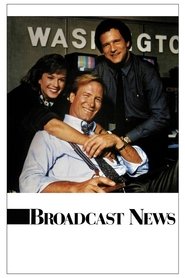
wore it as something that happened to you. It was always a little beyond belief, so it didn't impact me as if I had done five pictures and this happened. It was just weird, but I felt... So doing broadcast news was sort of, not that you don't go crazy and not that you don't always have the pressure and not that you don't go to bed sometimes hating the pages you've written, but the research was great. I was fascinated by the subject.
2:47 · jump to transcript →
-
And three times in the research for this, I heard from women who sort of took crying breaks. Not this literally, but who in the course of a day cried. That's what this came from.
7:09 · jump to transcript →
-
You know what I'm saying? Another thing I can't stand is this doll. No, no, no, no, no. The research for this picture went on forever, and I loved the research because it was an area I loved. It was an area I briefly worked in. I spent easily a year on research. Great year, I mean, and probably a year writing it, I guess. My room is right down here. Do you want to keep talking? Yeah, sure.
13:32 · jump to transcript →
-
-
-
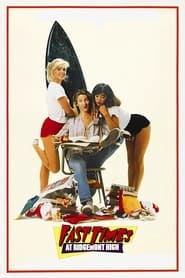
That's good. I remember doing the research for the book. I was really struck at how everybody had jobs in the three years that I had been out of high school, or I think it was longer, four years or something. I noticed that everybody had jobs now, and there was this quest to get the money for records, clothes, and all that stuff, and it changed all their lives. Thank you.
1:06:04 · jump to transcript →
-
And they were getting pregnant, and they were, like, getting fired, and they were having grown-up problems, but they were babies. Stacy, he's not a guy. He's a little prick. It, you know, it really comes across, looking at it now, for sure. One of the lines that I remember from doing the research that I heard someone say was, I don't want to use sex as a weapon. And that was such a...
1:07:57 · jump to transcript →
-
in the movie somewhere because the research is based on a year where Led Zeppelin were coming to town. And so much of the whole school year was getting ready for Led Zeppelin and then Bonham died. And it just took the wind out of the entire school. And I always thought how great to have that be the year that you're studying these guys. That they never got the holy grail of Led Zeppelin coming to town.
1:14:22 · jump to transcript →
-
-
-
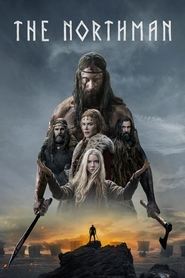
My thinking, based on the research, I'm not alone in this, is that Vikings who had ships burnt, you know, were followers of Odin. You know, the smoke goes straight up to Valhalla, or Valhall in Old Norse, as we're calling it in this movie. But if you were a follower of Freyr, you would be buried. So he has a boar.
1:00:12 · jump to transcript →
-
When we return to the farm, certain privileges will be granted you. Your work will be less burdensome. You will command others' burden. And... Gustav Lind as Thor is pretty excellent in this scene, I gotta say. He was just the nicest guy and great to work with. Really threw himself into the research, and I also just love his face.
1:13:17 · jump to transcript →
-
Anchor up! Sail down! And there's a tattoo on a Rus Viking that is seeable in the film. I also like the leather. It's kind of proto-oil skins on his sailors. I think there could have been a little bit more of that on the other merchant ship in the land of the Rus, maybe, even though Linda very carefully researched the color and design of those other guys' tunics. And to the...
1:51:29 · jump to transcript →
-
-
-
Francis Ford Coppola
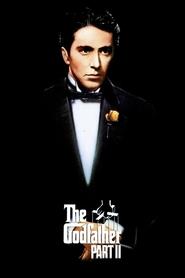
from his days in Sicily through him coming to America and becoming the character who we remember as Marlon Brando in the first Godfather film. And that was all taken from the book, and I did research looking for photographs of real so-called mafia incidents in Sicily and thought it would be wonderful to go back to those same towns that we had seen in the first Godfather.
2:26 · jump to transcript →
-
Francis Ford Coppola
Again, in the style of the earlier Godfather films, we're trying to wrap up a number of murders and settle certain scores set against history. In this case, the final falling apart of the Batista regime that happened that New Year. So I believe I researched it carefully, and everything happening is quite as it was when President Batista announced that they were going to leave.
1:41:01 · jump to transcript →
-
-
-
-
chimps, gorillas, whatever. He fell into it on Greystoke. He was auditioning as an actor and he was kind of into martial arts, things like that. And he ended up getting put in charge of like all the research into the gorillas and whether they could use real gorillas in the movie Greystoke. And he decided, no, you cannot use real gorillas. But he had like, he said, he calls it like method chimping.
16:13 · jump to transcript →
-
I don't know. Like, didn't he bring her on? I don't, you know, I actually don't know if that was her first. I should have researched that. It's early, though. It is early, for sure. And, you know, it's quite a compliment to her. David Lean began as an editor. So him bringing her on, again, to edit an enormous film. And, you know, so she cut, you know, it's like one of the most famous cuts in film history is him blowing out the match and you go to the desert. You know, that's Anne V. Coates for you. So Anne V. Coates edited Lawrence of Arabia, but...
1:30:39 · jump to transcript →
-
-
-
thoroughly researched, chosen, written. If you freeze frame and close in, each one of those articles and quarantine bulletins are actually precise. We wanted the world to be true and rich in texture. We spent a lot of time doing that.
23:05 · jump to transcript →
-
in terms of a person's response to having strangers in their house after three years, the disappointment of it not being his wife and daughter, somebody in his space touching his stuff, you know, the research we did and how people deal with interacting socially once again, you know, after they've been by themselves for so long. But, you know, you bring up this idea, which I think I'm now referring to in my mind, is the ham hock theory, which is, I think, very, very important in movie making, which is,
1:07:47 · jump to transcript →
-
-
-
making it possible for this film to happen. He was the first one to trust us. He shot all of this material, as you can see. He really, he was key. I think without him, I was really nervous whether we had a film at all to go with. And so he became a massive part of the process of making a film. He also introduced me to Juliette and Lauren, her two friends. Yeah, and I certainly remember in the early stages when I first came in, you guys had already been working for a while, getting the research done and getting a lot of this material in.
3:00 · jump to transcript →
-
So it was another moment where we were able to kind of marry several bits and things that had come completely independently to us and turn it into a sequence. All came out of an interview that Nick gave originally, isn't it? We didn't know about this period in Hook. And that's how the picture and the interviews and the edit and the research all kind of cross over. When one person mentions something, we then send the researchers away and they find the footage and then it becomes a sequence in the film because this is not really something that we were at all aware of. Do something so she can't go on tour. She needs help.
1:13:31 · jump to transcript →
-
-
-
-
-
-
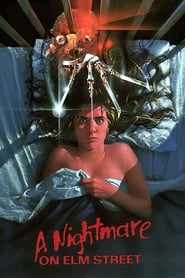
director · 1h 30m 1 mention
A Nightmare on Elm Street (1984)
Wes Craven, Heather Langenkamp, John Saxon, Jacques Haitkin
-
-
-
-
-
-
-
-
-
director · 1h 31m 1 mention
David Steinberg, Dave Foley, David Higgins, Jay Kogen
-
-


Related topics
Other topics that frequently come up in the same commentaries.