other
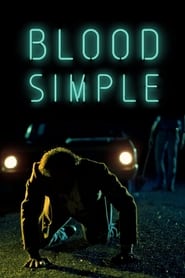
Blood Simple (1984)
Release Director's Cut DVD (Universal Home Video, 2001)
This is not a factual production commentary but a feature-length Coen brothers satire, performed by Jim Piddock as the fictional restoration expert Kenneth Loring. With absolute authority, Loring invents upside-down cars, animatronic animals, wholesale dialogue replacement, and a lost political-romantic subplot involving Bulgarian dictator Todor Zhivkov, Gene Kelly, a ceramic walrus, and a vindictive studio executive. As his supposed scholarship gives way to grievances about his own imaginary restoration career, the track becomes an unusually sustained parody of commentary culture itself: expertise as performance, trivia as mythology, and the promise of direct artistic communication buried beneath one more confident explanation.
- Duration
- 1h 32m
- Talk coverage
- 98%
- Words
- 15,110
- Speaker
- 1
Commentary density
Highlights
Topics
The film
- Director
- Joel Coen
- Cinematographer
- Barry Sonnenfeld
- Writer
- Joel Coen , Ethan Coen
- Editor
- Ethan Coen , Don Wiegmann , Joel Coen
- Runtime
- 97 min
- Also on
- OneSheet ↗
- External
- IMDb ↗ TMDB ↗ Find on Amazon ↗
Transcript
15,110 words
Welcome, viewers, to this special collector's edition of Blood Simple Forever Young. My name is Kenneth Loring, artistic director for Forever Young Film Restoration, and I'll be talking you enthusiasts, or shall we say aficionados, through some of the technical aspects of the filmmaking here, even as the scenes under discussion unfold. But more on myself later during the slower parts of the movie. For now, let's admire some of these so-called... Plate shots, that is, shots that were filmed as background for titles. Although here, as you see, there are actually no titles, so they aren't in fact plate shots, but simply shots, I suppose you'd call them. Very, very lovely. They do set the mood, I think. Very effective. And now we've cut and we're driving. But are we driving? The picture is... a little bit mushy here. Oh, and here's a title. Title of the movie, in fact. So this was a plate shot. Although a mushy one. And yes, just as the suspense mounts, the filmmakers answer our question. We are driving in a car.
Now, here's a technical aside. Though it appears that we're driving, this shot was actually achieved with the car stationary. And the illusion of oncoming traffic, you saw the headlights back there, the illusion of oncoming traffic created by a pair of lights being run at us as if they were headlights. And the sense of motion, it's enhanced by technicians who gently rock our, in fact, stationary car. And the rain, too, is an illusion created by a hose. Simple little... garden hose piddling down on the windscreen, and so we think we're driving in the rain. Now, these pass-bys had to be precisely timed to the dialogue, so this shot had to be done in reverse. That is, if you were there observing on the set, you would have seen these passing lights being pushed, in fact, away from us into the background, not coming at us, so that their moment of entrance, that is, their apparent moment of exit, as it were, could be precisely timed.
And then the film is actually flipped around and all the motion reversed, though I think you'll agree it feels perfectly natural. One could never tell looking all shot in reverse. Of course, what this necessitates, flipping the film around head to tail, the scene must be shot upside down so that when the motion is reversed, the up and down will not also look reversed. And so the scene was actually shot with the car upside down, the actors securely strapped in so they wouldn't be falling up into the roof. And the hair, of course, must have styling mousse rather liberally swabbed on, especially the girls, so that it won't hang wrong. So it's hair moused and clothes heavily starched so you don't get the telltale sags and so forth. And now here's a cut, a series of cuts, and now I believe the car is right side up again. And both cars here, our original car and the mysterious car we now see behind. And here again, the plot thickens. Two cars, not just one, and both of them right side up.
Just a technical note. So the actors here are acting in forward motion once again. No doubt they've taken a few minutes' rest between the upside-down shot and these shots, a few minutes to let the blood rush back out of their heads. Well, not all the blood, of course, but now just the normal amount of blood coursing through their heads. One would presume, anyway, with their not being upside down anymore. And so they talk, and once again, one admires the acting, even if you hear less. demanding, still very impressed. We're totally immersed. One must marvel at that opening scene, not just the technical legerdemain, but the actors doing the scene front to back, as it were, hanging upside down. This requires great concentration from the actors, terrific concentration, and how one does admire them for it. Although it's, of course, not so terribly unusual in film acting, in point of fact, to have to accommodate oneself to the
technical demands of the medium still that long scene it it was one long shot you noticed uninterrupted by cuts and the actors having to do it all in one go hanging upside down and having to mouth the words backwards although we didn't see much of their mouths in that first scene camera angle there being rather more forgiving than here still very very impressive what do you want to do what do you want to do
And now what's this? Some very elaborate lighting effects, once again, from moving lights simulating headlights. And here we have the sex scene, I'm afraid. But these are the realities of the motion picture business, you know. I really must have the sex scene. Leave your Aunt Mabel at home, by all means. And here we are, the proverbial morning after. The coitus finito, or what you will. And he's... He's now talking to the woman's husband on the telephone, it may seem, although the actor playing the husband was just there in the room with them, in fact, just off camera, fingers lightly pinching his larynx and speaking into a Dixie cup so his voice would have the appropriate quality. If you had the sound turned right up there, I think you found it entirely convincing. And now the man's standing up in the...
altogether, though, of course, for the sense of the frame, has been composed to exclude the nether regions. Always a sensitive time on the set, of course, the nudity, sometimes an occasion for embarrassment, although this actor, very manly. In fact, I understand that on the set as he stood up, the makeup girl fainted. And now we're in another place, an envelope. We'll get a look at the characters here in a moment. More people, a new place, the plot thickens. It's going to be rather a great deal of talk, really, and something you could fast-forward past if you were inclined, because it does go on a bit, frankly. We look at the photograph, and then at one fellow, then the other fellow, and then the first fellow again, and so on. Perhaps here I'll take an opportunity to introduce myself a bit more fully. As I said, my name is Ken Loring, Artistic Director at Forever Young Film Restoration, and it's my...
Very special pleasure to be accompanying you through this really quite marvellous aficionado edition of Blood Simple Forever Young. My technical notes on the movie are based, to some extent, on my personal history with the movie, as I hope we'll have time to discuss, but primarily upon extensive, and I do mean extensive, interviews with the filmmakers themselves, relating to every aspect of the production in quite extraordinary detail. Sometimes, to be frank... in tedious detail, but they were so anxious that the viewers of this special video have all the information about how the film was made, as am I. And their excitement in our interviews, I must say, was palpable. It's so refreshing. Elderly now, but their passion for their work unabated and how it does rejuvenate them. Their eyes shine, they wave their arms describing how various scenes were accomplished with the spittle running down their chin. Or chins, really, I suppose, literally speaking. Very, very sweet, in fact. And such wonderful stories they tell. At any rate, my point was that these technical insights come from the filmmakers themselves, in case you were wondering if I was speaking through the proverbial Khyber Pass. No, no, this is the inside story, the real deal, as the filmmakers so excitedly put it.
So here, this scene, you can see that there's nothing really out of the way. Technically, no technical tricks. None of the characters in outer space or undersea or what have you. Full Fathom 5. No, no, just good old-fashioned human dialogue and crack storytelling. No spaceships necessary. Thank you very much. The drama and emotion tensing and tugging and jostling the actor's face here. So much more compelling than any special effect. Isn't that what the cinema is all about? Oh, some gaiety here, and now it seems that these two somewhat tiresome people are about to wind up their interview once again. The human face here, I think, is marvelous, isn't it? Is there anything more marvelous the human face. And this fellow in the interesting wardrobe is on his way, leaving us with the sad man, leaving him to his thoughts. Some more chortling as he goes from the first fellow, and rather a lot of chairs piled up there. Tables and chairs, which I suppose will do for set dressing in a pinch, but then why wouldn't there be tables and chairs? So very commonly used as furnishings, aren't they? And now let's pay very close attention, because here, here is a...
A real tour de force cut, isn't that wonderful? Cutting from one side of the window to the other, and we see it's not actually a window, but one-way glass. To what end, I'm not quite sure. Still, you have to admire that cut. Perhaps the one-way mirror was put there so that we won't see the movie camera that was filming the sad fellow on the other side, which would obviously spoil the illusion. You see, you must keep the movie camera out of shot at all costs, something these filmmakers knew so well, even though this was their first film. And that's a fact we haven't really touched on yet, but they were already so confident, so aware that you must keep the movie's camera out of the film itself. It must be there, of course, to record the scene, but here's the paradox. You mustn't see it in the scene, even if you're shooting, as here, a scene with a mirror, where it can be rather a chore to conceal it. And not just the camera, but the crew and the snacks table for the crew and the first aid fellow and the girl who knits the trousers and so forth. All the things you mustn't see in the mirror.
And you can run this video back if you like, and I think you'll confirm that you didn't see any of those things in the mirror. And this, remember this, their very first film. Absolutely marvelous. And now we have some more talking here, some more bi-play. And once again, I think you have to admire the human face. I, in fact, defy you not to. They've been joined here by the sad, unpleasant character. We know him from the other side of the mirror, don't we? And we know we're not going to like him, really. And that's what storytelling is. and you like some of them and some of them you don't. There's your story. And this one, well, I don't think we like him, do we? And I'd say we've probably heard sufficiently from him and off he'll go. He'll pass. No, he's actually going to talk some more. Tension here. These characters are not really on good terms.
And they've been joined by the bartender, who I think we do like. Oil on troubled waters. Now, now, off he finally goes. And this talking bit here is rather banal, so perhaps I shall take this opportunity to tell you something about this movie's original narrative structure. Oh, well, perhaps I'll do that later, because I see we've cut to the dog, and we'll really want a word about that. What is it they say? Never act with a dog or children or grandmothers. And still... early in the movie and we've already run across the dog. Anyway, so again, you have to admire the confidence there. If you're wondering, as I did, how they got the dog to do these various things on cue and walk to various places, well, of course, it all looks very natural, but if you think about whether you can get a dog to go to a specific place on cue without so much as a wayward step or glance, I think you'll appreciate that it's not so simple, though the explanation is indeed very simple. The dog you see is animatronic.
Now, that's expensive, of course, making the artificial dog, but as compared to the cost of the set time it would have taken to get a real dog to perform all these various tasks precisely where needed, you know, hitting the marks and full crew standing about waiting, well, the cost of fabricating the dog is actually altogether lower. You just create the dog and have done with it. And he's radio-controlled, you see, guided by a technician just out of camera range, so there's no untoward flea scratching or licking the genitals or, well, you know, Also, you don't have to worry about the cost of the soiled rugs and jumping up on the snacks table. The gross bodily movements are actually rather easy to render in the model, but the finer motor operation, the facial expressions and so forth, so much more subtle and so impressive here in what you saw, really is quite fine model work. And you have to admire what got accomplished on an extremely modestly budgeted picture, the level of craftsmanship. And I'll have occasion to say it again.
And again, and again. Quite impressive. And so, just humans here, walking and talking, but as I've said before, the human face, well, that's really good enough for me. We all have one. We like to see the other fellows as well. And now we're back at this bar that we've had occasion to visit before, and Maybe this is a good place with the dramatic music playing on the jukebox. Maybe this is a place to have a word about the technical aspect of sound recording on the set. Here we have a scene where the jukebox music started very loud and our characters were talking rather softly at first to indicate their distance from the camera. And here the camera's moved in close and the characters appear to be talking louder as of course they would be if one were close. And also, though this is subliminal, the music actually plays more softly here to make room for us to
to hear the dialogue. Here we've cut to the back of the bar so the music plays softer still. It's done all the time, and watching you, you don't give it a thought, establishing the perspective, the distance with sound. But in order that the filmmakers can control the relative volume of dialogue against music when they mix the tracks together, you need clean recordings of the jukebox music on the one hand and the dialogue on the other. You don't want them both actually captured on the same microphone. So in a scene like this one, and the principle is the same, whether we actually see the jukebox or not, in any scene like this with music playing, you get the actors to simply mouth their lines without actually speaking them. So you get a nice, clean recording of the jukebox music, and the actors come back later in post-production and speak their lines out loud in a sound studio so that there's then a clean recording of their dialogue. And their lines are then laid in in synchronization with their lip movements. But in fact, they were spoken long, long after the fact.
And this way you can play with a level of dialogue against the music or even equalize the one without affecting the other. Or you could even, in fact, and this will often happen, you could even change the music altogether so that different music seems to be coming from the jukebox than was actually there. The amount of control is unlimited, in fact, or total, I should say. And this is movie magic. When people say movie magic, this is what they mean, you see. The reality of the film being so different from the reality on the set. Quiet on the set, they say, and yet this film is far from quiet. We mentioned it before with the upside-down actors, but here's a case in point having to do with sound. Well, the pleasant man and the rather unpleasant man have their little talk here, and you can see how skilfully, how invisibly their dialogue has been laid in to match their lip movements. You really would never know. In fact, I defy you to find a misstep here in the synchronisation. Words.
Lips. Faces. Eyebrows. All working together in tandem. Now it seems they've finished talking and not a moment too soon as far as I'm concerned. I must say I'm not really warming to this character. And the other character, the pleasant man, walks away now and leaves us here. Brooding. Brooding. Although the mood on the set itself might, of course, have been quite gay. Movie magic. And now we see a rug. And how these filmmakers, how they do love a rug. And here we are later, the unpleasant character. Not much going on here, actually. And in fact, the scene could really have been cut. perhaps should have been cut. But so much effort goes into these scenes. You've no idea the work of so many talented people. And once again here we're looking at the human face. Do we want to cut at this point, really, this marvellous face here? Well, these two marvellous faces. It's very atmospheric as well, so perhaps it shouldn't have been cut, really. At any rate, it hasn't been cut, which is, I suppose, obvious, just looking at the scene.
And so here the scene is. Now we have Rain again, a character in a stationary car. And you might have expected me to say, well, movie magic. That shot was actually done with the car in motion. But you're wrong. No, the car was stationary. These things are so difficult to sort out because the technical processes involved are so very complex. And often, and I've been in the business many years, often still even I might say... How did they do that shot? Car moving, not moving, in front of a blue screen, green screen, front projection, side projection. How? Well, that first shot, case in point, the shot of the character in the parked car, that was done with the car parked. And in fact, it was raining. And it was the real actor. Sometimes even the professional can look and still not know. All right, well, here's more talking, all in order. The characters staged facing each other as they should be in a scene where they converse, but they...
characters apparently very glum. And this is something that will strike the viewer, how very, very remarkably glum these characters are for so much of the film. And this is the screenwriter's art and the actor's art. When they mesh, you have a marriage of an actor and material. Then this glumness, though it, of course, needn't be glumness, whatever the relevant emotion, this inner life, I think, is the point, or this illusion of inner life. Movie magic is achieved. And I'm certain you'll agree that it's definitely been achieved here. Such wonderful actors acting in a rather conventional house set. Although there does appear to be a stray motorcycle in the living room behind the pleasant man. So you might quibble with the set dressing. Tables and chairs might have been in order again, but you certainly can't fault the acting. Let's just enjoy the acting here, shall we?
You'll be all right here. Okay. And this is the musical moment in the film, a moment musical, and several shots had to be made so that the screen wouldn't go blank while the music played. And these are the shots, so let's admire them. Again, effective in mood setting, I think. You may feel that, to your taste, the mood has already been sufficiently set, but, of course, it is a matter of taste, and the editor of the picture apparently thought that we could use a little more mood-setting, and, well, he's the professional, so let us defer. Let's appreciate his art. Every cut, I think, well judged, a frame earlier or later, here or there, and quite a different mood, but this is the mood, so let's revel in his art. And the interplay of light and shadow, the play betwixt them here, as you see only in movies photographed with distinction. This is the cinematographer's art. Cold light and then warm light. We don't usually mix them, not to this extent, but I don't think we want to quibble, do we? We seem to have settled, I think, here on darkness.
Nope, no, we've got some warm light, which I think for a nighttime scene is rather the better choice. Oh, and we're back to cold again, back to cold light. So mixing again, mixing and matching. Oh, yes, I'm not sure I like that jump in, but that's the editor's art, isn't it? And we are not he. No, nor he. Us. Now I'm afraid the implication of sex is rather unavoidable, but off-screen this time, rather tasteful. No reason to grow tense. And once again, came the dawn, as they say, a morning after scene, and again the mood, so thick that you could stand a fork in it. In fact, one's almost tempted to try. And again, I think we're seeing actors and craftsmen firing on all cylinders here. It's all so simple and yet so right. Well, apparently simple, I should have said, because here in a minute... Well, let's first just have a look at the props, all present and accounted for. Silly to have them in the purse if we're not going to take them out and display them every now and again. Quite a wide lens they're using there, isn't it? Not so flattering on the ladies. Well, this is a little bit better. Just off centre there. Oh, and here we...
I have the animatronic dog again. Again, so persuasive ears going up. And now, oh dear, what's all this? A fight or a struggle, more accurately? The return of the unpleasant character. Well, you'd expect a struggle, wouldn't you, with him coming back in? And here it is. All this action, rapid cutting, battle royal, although not really much actually going on. Rather angry acting again from the unpleasant character. See, as he drags her towards the door, and so we move outside. Now, frequently in the making of a motion picture movie film, the location... Ooh, ow, ow. The location used for the exterior of a house will be completely... Ooh, ouch, nasty. Different from the location used for the interior of the same house, and the movie's spatial relations are completely fictive. The reasons for this, this rather obscure and technical... Good Lord, good Lord. and do primarily have to do with the arcana of union agreements. I'm not quite sure, by the way, how that effect was achieved. Certain things I wasn't terribly anxious to touch upon in my interviews with the filmmakers. The extended say, as I was saying, penalty which is levied and wordless glances here among the characters. The master storyteller often doesn't need words. He dispenses with words.
He's gone, in a sense. Well, well beyond words, like a great composer. Although the great composer will always need his notes. So I suppose the analogy doesn't quite hold in that sense. There's the dog again. Wonderful, natural motion. You really would never know, would you? It's remarkable. Anyway, as I was saying, the great composer will never get beyond music, whereas the great writer may sometimes soar well beyond words. And this may be why many consider writing to be the higher art. At any rate, here... wordless glances and whole world beyond words. It's marvelous. Although, there I see a few words. All right, well, forging on, a new scene, the unpleasant character, and we can be quite certain that the plot will develop here. Perhaps now, speaking of plot, and I'll return to this again as the opportunity arises,
during the slower mood-setting scenes. Perhaps now I can begin to tell you about the plot of the movie as originally envisaged by the filmmakers. You see, quite a different movie. The filmmakers' cut was previewed for a test audience, but after the preview, the studio insisted on certain changes which were rather ham-handedly implemented. Rather an old story in Hollywood, I'm afraid. So what you see here is, to no small degree, the result of studio bastardization. dignified, of course, by some wonderful filmmaking, as we've had occasion to see. Still, the filmmaker's original version deserves memorialisation, and perhaps here in the aficionado edition, as we look at the two unpleasant characters, perhaps this would be an opportune place to begin. Some blinking there. Again, one wonders about the set dressing. More blinking. Not the most tasteful of... The character in the hat here, never actually called by name in the movie, this sniggering hat character, began the film, as you'll recall, with a splendid bit of narration, setting the mood for so much of what follows. Well, his speech, as it now stands, over the opening plate shots, not the plate shots, the shots, the opening speech now includes a rather clangorous non sequitur. Having discussed the story's Texas milieu, this character says...
Now in Russia, they've got it mapped out so that everyone pulls for everyone else. A very wonderful speech, this opening bit of narration, marred only by that incongruous reference to communist Russia. Naturally, the line feels awkward because that line was never meant to be spoken. The line as originally written and performed was, In Bulgaria, Dad's got it mapped out so everyone pulls for everyone else. In Bulgaria, you see. And a reference to Dad. A clue obviously meant to pay off later. A bit of intrigue. In Bulgaria, Dad's got it mapped out so that everyone pulls for everyone else. Who is this character we're listening to, we wonder? What is his relationship to Bulgaria and who on earth is Dad? Well, he's sweating here and he's chuckling again as he's sort of wont to do. And there's a fly. He seemed to have drawn the attention of a fly crawling on his temple. Not a real fly, obviously. There's no such thing as a trained fly. And animatronics were out of the question, the scale here defeating the capabilities of even the finest fabricator. No, no, this fly was digitally created by computer artists long after the scene was shot.
As you can imagine, this sort of frame-by-frame animation is really quite painstaking, and this single fly effect took many, many digital artists a number of months to render. Such extremely clever work. I mean, try counting the frames as they go by, and you'll appreciate how much work was actually involved. Again, the level of craft on a modestly budgeted movie is remarkable. Just before completion, the sheer volume of information used to make the fly buzz about blew a mainframe, and there was something of a ripple effect at the computer facility, and downtown Palo Alto was plunged into darkness for the better part of two nights. And, of course, all the work was lost and had to be resumed from scratch. Insurance covered some of the cost, yes, but how disheartening that must have been for the artists. The mind reels at the thought of it, so dreadfully sad, so much work.
And so little appreciated. How many of us watching this movie even realized that a flying insect didn't just happen to be there? At any rate, in Bulgaria, dads got it mapped out so that everyone pulls for everyone else. This is what the line was meant to be. This was the introduction to our narrator, this man with the fly. Some more sweat here, very artfully applied. Movie sweat, of course, not the real thing, especially gathered from the flanks of Palomino horses. Can't claim to know the chemistry of the matter, but apparently it reacts better with the light. No, it's not pleasant for the actor, nor cheap, but you see how much it contributes to the mise-en-scene. You could have this scene without the sweat, certainly. You could have it without the fly, for that matter, but if they're not going to do the thing right, well... Well, these are not filmmakers who do things by half measures. Well, here the...
Other unpleasant characters leaving, very disturbed, again, dead on with the glumness. Our man here, sweating, and we feel a still Texas night. Oh, no, the unpleasant character comes back, and the scene's having a bit of difficulty making up its mind whether it's finished or not, and whether and when the characters should stop talking so that we can move on. But now I've got a feeling they're going to stop talking soon, and yep, yep, we can... We can be allowed momentarily, I think, to proceed. And here we are in darkness. And then light. Somebody's turned on a light. So much of this movie is actually in darkness, and darkness justifiably, and high critical praise in this movie because, of course, light's easy to achieve, as we see here, but darkness, it's quite another thing. The film noir, the film of blackness, literally.
But I think the sense is more of darkness, dark people, dark doings, so marvelously handled here. In Bulgaria, dads got it mapped out so that everyone pulls for everyone else. Well, I finally saw this character, the narrator in his first scene. You'll remember in that wonderfully penumbrous office in the dark, gloomy back of the barn, that critically acclaimed darkness, and I would actually urge you to go back and revel in that darkness and gloom. This character was introduced lighting himself a hand-rolled cigarette with an engraved cigarette lighter, and he puts the lighter down on the desktop in a close insert. Well, I'd urge you to go back and examine that insert carefully, because, you see, it's not the actor's hand depositing it on the desktop. It's someone else's hand. For that insert was shot well after the movie was finished, after the studio preview. That insert showing a cigarette lighter engraved Lauren, presumably the character's name.
replaced the original shot where the engraved lighter had said Todor. So it begins, you see, to make some sense. It's the father's lighter. It's dad's lighter. A family heirloom, presumably. Todor Zhivkov, of course, being the name of the post-war Bulgarian strongman. Not circus strongman, the Bulgarian dictator. Todor Zhivkov. Well, so the plot thickened then. I mean, one was thinking, who is this character, this gruff... marvelous Texas character who appears to be related to an Eastern European communist dictator. How did he come to this lonesome backwater, this dark, dark place where he attracts flies? Well, the studio was having none of it, perhaps believing that the reference to Todor Zhivkov would be too obscure for a mainstream audience. And this is exactly how Hollywood movies get dumbed down, as they say, for the marketplace, how the artist's original vision is sullied and dragged through the muck and mud and grimpen mire. But these are the realities of the motion picture business. The making of the film, or any film, is never a straight line from conception to finished product, good Lord.
Actors hang upside down, computer facilities explode, there are lawsuits from grocers in downtown Palo Alto whose dairy products have gone off, and the fly cannot be in the entire scene, but only the few grudging seconds authorized by the little clerks at the insurance company. And after all of this, and the sacrifice and work and, well, painstaking work and suicide of one of the fly animators who'd seen months of exacting effort obliterated in the blink of an eye, The studio steps in with its changes. Mr Executive steps in, and he demands that the hero be given a girlfriend or whatever, and that that police inspector must have a sidekick or a friend or a partner, and the sidekick must be a Negro, or must not be a Negro, as the case may be. Rarely will the executive demand that the girlfriend be a Negro. So that's something one learns. And yet somehow out of all this, this stew, this salmagundi of many people's efforts, some of them fine, some of them misguided, frankly, and people of wildly differing levels of talent, some of them quite without talent, sometimes still there magically comes together a great film. And so we say, movie magic. Well, our story seems to be moving along, and the Zhivkov character...
Seems to have entered a house that obviously doesn't belong to him. I'm thinking as I watch that this is not a man to be trusted, whether or not he has Slavic roots. The acting's so strong here, isn't it? The face, so strong. But this is evidently a man without a change of clothes. And once again we're being offered a display of all the props. The gun, which we've seen before. Always a smoking or Sticking gun, as they say, when you see a gun. And there's the lighter, which, as you know, is engraved Todor, his father's lighter. So in the original version at this point, once again, we're thinking, why is this Bulgarian here in Texas flicking on and off his father's cigarette lighter? And do watch these footsteps, because these are not the actor's feet, if you'll permit me a technical aside about the filming. Oh, rather, excuse me.
It was the actor's feat, but it wasn't in fact the flaw. The actor was suffering from gout on the day of tournage and was unable to support his own weight. Well, can-do is the motto of these filmmakers, and the flooring was ripped out, tacked up against the ceiling, and the crew, this marvellous can-do crew, inverted the actor and hoisted him up and let him trace his footsteps across the ceiling, gravity defeated. Well, just as the wonderful Fred Astaire did in the fabulous dancing sequence in, I believe it was The Seven Little Foys. For different reasons, of course. Astaire not given to gout, being one of the great dancers. Yes, indeed, a dancer's body. And what an artist, still alive when this film was made, although he declined the part of the son of Todor Zhivkov. The picture would have been different. The saddest words in the English language.
might have been. And yet, this actor, so strong. No complaints from the filmmakers. You get the actor you can afford and get on with it. Marvellous actor. At any rate, the wardrobe would have hung off a stair like a gunny sack. And so, no looking back. And here we are again, a new day, and again the actor playing the unpleasant fellow is squatting just out of camera range with his Dixie cup. A familiar drill at this point. The rim of the cup possibly somewhat worn at this point, or... Or maybe they've even given him a new one. They have their economies, but... Anyway. And now, a rather large cow. Now we're about to see another cigarette lighter insert. The hand model slaps it down here, and not the real Zhivkov, and withdraws rather too quickly to prevent you getting a good look at his hand. You saw how quick that was? Not at all like the slow, bear-like movements of Zhivkov.
You might want to go back and run it again in a freeze frame and you'll see clearly the hands of a younger man. Again, the lighter engraved Lauren having been clumsily inserted by the studio. Cretins. So the two unpleasant characters will talk. I'm referring to my notes here and there's really little of interest in this scene. Oh yes, the... The dark unpleasant fellow, the filmmakers had actually meant to cast Rosemary Clooney. They'd conceived the part quite differently. As in many films noir, many of the stories of Raymond Chandler, for instance, and others, the Mr. Big Figure was conceived as a large, hectoring female. That's one of the stock characters in the genre, the detective genre, the massive, bullying woman. Somehow more monstrous for its being a woman, I suppose. The eternal feminine lures to perfection, so we like to think. but then in our deepest nightmares. Well, Miss Clooney had a number of performing dates which conflicted with the filming, and so the idea came to naught. Saddest words in the English language. Rosemary Clooney and Fred Astaire. But then two wonderful actors here, the faces tell so much, and this is why a film star will frequently have his face insured with Lloyd's of London. These actors' faces not insured, as I understand it.
In such a case, the production company will insist that the actor sign a waiver before the commencement of filming. They can't be held responsible for the actor's face. This is the business side of show business. So here we have the lighter, unpleasant man looking at the object of his desire. Some malarkey and rum doings in the water closet, though we're not meant to know at this point. We think, well, it's just another visit to the WC by the unpleasant fellow with the hair-trigger gag reflex. And here the sweat, you can see, has been liberally reapplied on the larger gentleman. And, oh, hello, here's the fly again. Yes, let's admire the work of the animators. That army of talented men, number diminished by one. Still very fine work. though morale had no doubt been eroded in Palo Alto. Yes, if you're like me, you may be picturing Rosemary Clooney and Fred Astaire exchanging these lines now, although that's not really fair to the film, of course. Rather like imagining that your husband or wife is Raquel Welch, engaging in the act. Not fair to the loved one. No, no, you must love a person for who they are. Films are not so different, really. They too have a soul.
This is where we see again a theme that we saw earlier and recurring here. Recurring being the operative word. It seems to be recurring frequently in this scene because it is, of course, the gastric theme, which gives the character a bit of extra depth. We are made privy to his various digestive sounds, the comings and going of the Kaiman Kaila and the old GI tract. And, of course, a great deal of quiet on the set required here so that the odd gurgles and belches and so forth wouldn't be competing with the whispered chatter of the crew. And so we come to know this character intimately, too intimately for the taste of some people, but then these people are not necessarily adepts in the art of cinema. And here we sense that something is about to happen, if only because little has happened up until now. And our instincts prove right. We're dealing with filmmakers who know what the audience wants, what the audience expects.
the audience must have. It's the gunshot, the dastardly doings, action at last, and then stillness. Man hands misery to man, the human face, the human shirt. One man alive, one dead, or moribund. The fish, definitely dead. With such a presence, we can almost, well, is it our imagination, or can we smell the fish? It's our imagination. How strongly cued, though. I mean, how marvellously suggested. And under the fish, of course, the cigarette lighter, which the studio would have us believe is engraved Lauren, when in fact it says Todor. Now, sadly, no way to tell. And on this fact, the whole story hinges, as we shall come to see. So now we have a bit more fussing about with props. These, um... are actors and filmmakers who do like their hand properties. And why not? You pay the rental, you want to see the money on the screen, as they say. Zhivkov pockets the lucre. We'll maybe see that lighter again as he dons his hat, yes. He's forgetting the lighter and one wants to cry out, Zhivkov, the lighter! Perhaps one imagines Fred Astaire and weeps for what might have been. And yet, this actor leaves us not
unmoved. And the lighter again. And Exeunt, Zhivkov, and lucre. This high shot is done with a sky camera, a rather complicated contrivance that's used to cover sporting events. And we see it begin to move here, and camera operated remote by a technician sitting back in the booth, as they call it. a hushed, soundproof booth. He sits wearing headphones intently, watching his little screen as he operates, eyes occasionally referring to his meters and dials, giving sotto voce instructions to the Skycam crew through his little microphone. A cup of coffee invariably at his elbow there at the console and a mug with a network logo on it. And then the shot is done and the director runs in. Was it a good Skycam shot? Did we make a good shot? And a thumbs up will be the occasion for cheers and cheers Perhaps the cracking open of a magnum of champagne. Or Jeroboam on larger pictures. And if it's a thumbs down, well, you just have another go. There's always take two, isn't there? And let's take a moment to reflect on how important the moving camera is. The moving camera is such a critical element in setting the mood. And the mood being one here of portentous movement. Well, motion pictures.
In the early days of the Nickelodeon, audiences were content to watch film of waves lapping the shore, bustling street scenes, the train pulling into the station, a horse and carriage, what you will, the illusion of motion created by the quick succession of still images, like a flipbook. The principle the same here, though. Here we don't see any motion at all, do we? Just a still doorway.
This doorway here is not actually at the same location as the bar with the cash register. Through the magic of the editor's art, we think the two are in the same place, one just by the other. But in fact, this door was in an econo lodge right across town, but it has a nice dusty rug in front of it that the filmmakers simply fell in love with. So they shot that bit at the econo lodge, and then through the magic of editing, they implied that the doorway was part of our bar, and they got that lovely dust effect. And who would know? Well, they do love their rugs. Well, what we're getting to now is the scene where things get well and truly bollocksed up. The pleasant man doesn't know that the unpleasant man is dead here in the back office, and then he realises that he is dead, when in fact he isn't dead, as we shall so artfully come to be shown. But for the moment, everything's at sixes and sevens. One might ask, why don't these people have children? Then they'd be at home at night instead of contriving absurd situations for themselves. Well, idle hands.
You know the saying. But of course, in the film as originally constructed for the disastrous studio preview, we didn't dawdle here through these frankly rather incredible plot developments. No, this is where a smash cut whisked us away to Zhivkov Jr. realising he's lost his father's cigarette lighter. He panics and drives to the airport in his little clown car, the Volkswagen you'll remember, speeding, swerving, pounding on the horn, all of it cross-cut with his poor sod moping around the bar. Nail-biting suspense. Will Zhivkov make the flight? Will he be too late? And then it turns out he in fact gets to the airport quite early and sits in the frequent flyer lounge eating nut and pretzel mix out of foil bags. And then he flies to Berlin and crosses at Checkpoint Charlie. Quite a shock when we hear this salt-of-the-earth, cracker-barrel fellow speaking fluent German as he hands the border guard his papers. Papieren, you know, and voila, he's in the East.
Well, the more travelling, the conveyance is more ramshackle now, the sky's grey, people hunched and scurrying, and we're behind the Iron Curtain, and finally the onion domes of Muscovy. Not Muscovy, Sofia, I believe. Bulgaria. Anyway. And now, of course, he wears a sable hat. Well, this fellow goes to a rather imposing building block, guarded by men in top-heavy greatcoats. which is to say, great heavy topcoats. And they have the most atrocious skin, and this fellow talks his way through several echelons of guards, speaking fluent Bulgarian, and finally comes to a great echoing room where a hatchet-faced woman asks him his business and then disappears through the great doors, then re-emerges to usher him in. And here we are, face to face with Zhivkov Sr. Todor Zhivkov, quite marvellously played by Gene Kelly. there's one that didn't get away. Well, you can imagine the dialogue. What? You've lost lighter? You must retrieve. Red Army chorus sings that thumping good song they do, you know, Zhivkov Jr. marches back out into the echoing anteroom and out of the building block and back across Checkpoint Charlie. People stop being hunched and walk upright again and he boards a flight for Texas.
Now, on the plane, the Zhivkov fellow nods off, what with the soporific drone of the mighty engines, and we're transported with him into a dream. Well, it's a flashback, really. The man remembers, and this is when the film reaches a new level of inspiration and, to my mind, a really quite marvellous poignancy. Well, we're in a classroom, you see, with late slanting sun setting fire to dancing motes of chalk dust. The children sit in rows of desks. Oh, and then... The blood on the windbreaker there, someone else's. Not really the actor's. They had scratched old wooden desks, perhaps 30 of them. They're children around eight years old, I should think. And one of them is beautiful. An angelic little boy. And this little boy is smiling at the little girl. A quite beautiful little girl with her hair braided into pigtails and tied up in red ribbon. And the girl giggles and covers her face. And the boy whispers to her, I love you, Magda.
But the girl is looking away, you see, and he hisses it again. I love you, Magda. Still looking away. And her girlfriend, the little girl sitting next to her, nudges her and points back to the little boy, and he starts to say, I love you. When a teacher's voice cuts in, Zhivkov, he looks up. And the teacher, that terrible-looking man, beetle-brow, looks a bit like Brezhnev. Zhivkov, he says, you'll have answer for this sum. And all the children are looking at the little lad. And the little boy, this adorable little boy, says, Sir? The teacher goes, Zhivkov, you have answer for some. And the boy says, I'm sorry, sir. I wasn't listening to the lesson. Ah, did not listen. Zhivkov is dreaming. He cannot be bothered with sums. And all the little children laugh, although the little girl doesn't laugh. She looks rather mournful, actually. We must not be disturbing little Zhivkov's dreams, says the teacher.
More laughter. You know how children are. The car was, in fact, moving there. And the teacher, this perfectly dreadful man, says, Perhaps, young Zhivkov, we should put you in place where none disturb. And then we cut to a high shot of Zhivkov Jr. in an empty stone room, alone, a room of dreadful communist detention. And he sits in a chair in the middle of this communist room wearing a dunce cap, and the poor lad is in knee pants. And there's one small high window sending down a shaft of light, but otherwise rather a great deal of murk, and one suspects rats even scuttling about. And this beautiful child begins to sing the Red Army song, but slowly in a high, sweet, piping voice. And I would defy you not to weep, that sweet little voice echoing off the stone. Alone, alone. Such a, such a poignant scene.
but here we hear a low drone under the singing, and we're dissolving back to Zhivkov Alder again on the aeroplane asleep, and a hand is shaking his shoulder, and we hear the stewardess. You must put up your seat back, sir. We're descending into Texas. Well, then, we cap back to this pleasant man here, although now we have, I think, an enriched understanding of who is pleasant and who is unpleasant. I think we sense now that the unpleasant man was perhaps not always unpleasant and endured some difficulties and ill treatment. not being able to talk to Magda and so forth, that this pleasant chap has never had to contend with. So who's to say, really, at the end of the day, moral judgments, they don't come so easy now. At any rate, we're back with the pleasant fellow, and he's contending with a body that has come rather annoyingly back to life. Although the gruesome goings-on that we see here were quite a bit shorter originally, which was more to my taste, anyway.
A little suggestion goes a long way to my mind when you're dealing with a murdered man come back to life. The studio rather embellished these gruesome bits to make up for the time they'd lost cutting the whole Zhivkov episode. But more is not better when you're dealing with wanging a fellow over the head with a shovel. The mind can picture those things so much more compellingly than even the most gifted cineast. Well, this is my argument with the filmmaker who'll show you all the squishy body bits, be it... A death scene or a love scene. I'm quite well acquainted with my own squishy body bits, thank you very much. Don't need to see this, fellows. Or, more to the point, don't need to hear the wang of the shovel against the head. Heard it quite enough in my day. Don't need to hear it in the cinema. Unless you're being artful about it, in which case I'm the first to applaud. Well, the studio had to put something in to replace the marvellous Zhivkov story that they'd hacked to bits. Hacked out altogether.
And they also, incidentally, they also cut out a flash forward with the Magda character, showing us where she was now, an old babushka queuing for toilet paper. Very, very long queue, snowing, and she's lost her looks rather completely, I'm afraid. Legs like baobabs. And her face as well, not a baobab, but truthfully, she looked something like Brezhnev. So we know that her life hasn't been happy either, and this too adds some depth. Face not unlike a baobab, but... Such suffering in it, such dignity. This actually reminds me of a story in Soviet Russia. There's a bakery, it seems. People start queuing very early for a chance at the morning's bread. At 4 o'clock, the queue starts forming. It's dark and snowing, and people are shivering, clasping their thread-worn cloaks to their bosoms. Well, by 4. 30, the sun's still not up, of course. The queue is already a block long. 5 o'clock, two blocks. And people shivering, waiting in silence.
At 5. 15, a man emerges from the bakery and bellows, all Jews out of queue. Grumbling, several people pull out and trudge disconsolately off. The queue closes up, but more people are joining it, and by 6 o'clock, it's three blocks long. A man comes out of the shop again and bellows, all Poles out of queue. Grumbling, more people leave, and the queue closes up, but people are still joining in in its tail. An hour later, the sky is turning a dull grey. The snow continues to fall. Now, it's 7. 30, and the man comes out again. Anyone not member of party out of queue? Well, at this, of course, many people have to leave. They're trudging away in the snow, which is falling quite heavily now. The queue closes up a bit this time, but by 9 o'clock, it's as long as ever. Well, nothing doing till 10. 45, and then the man comes out of the shop and bellows, No bread today. General groan, as you might expect, and the queue begins to break up.
A man turns to his neighbor and he says, Goddamn Jews, they always get preferential treatment. Yes, there's a little moment of levity in my commentary. Hope you don't mind. We don't have to take ourselves too terribly seriously. Not all the time, anyway. Now, this lorry here, incidentally, was shot stop motion. I couldn't get any exposure at the normal frame rate. 24 frames a second, they had to open the shutter for a full three seconds to expose one frame, then close the shutter, inch the vehicle forward, open the shutter again for another three seconds, and so forth. Took four weeks to shoot. Where was I? Yes, I certainly didn't mean to suggest the scenes behind the Iron Curtain in this movie weren't enormously effective. I do so regret that we can't show them to you here. Legendary lost scenes.
The filmmakers begged to have them included in this special aficionado edition, but it seems that all the negative was destroyed in a warehouse fire in New Jersey some years back. Quite a few warehouses in New Jersey, from what I understand. They lose one every now and again. At any rate, negative's gone, and no one's been able to locate a print of the movie containing those scenes. Well, there was only the one print, the cutting copy, because after that quite dispiriting preview, the The studio was firm about wanting some excisions, so no further prints struck of that particular assembly. And the cutting copy, well, no one seems to know where it's gotten to 15 years on. But you never know, I suppose, 40 years from now, someone might blow the dust off an old film canister in the attic and say, Hello, what have we here? Seems to be a print of an old feature film. Let's have a good old look-see, shall we? Well, who never knows? Movie magic.
Lost for the moment, though. Quite infuriating. I was privileged to be at that preview screening 16 years back. Saw the film as it was meant to be seen. I was bowled over, quite frankly. Well, then when I saw the movie again in a commercial cinema, as you see it now, I was stunned. I'd brought several friends, having sung the movie to the skies, and I sat there and watched in horror as the thing played out, completely recut. It was appalling. Where's Zhivkov, I thought. They've cut all the humanity out of the picture. My friend's quite puzzled too. I mean, this is the movie you were over the moon about? I looked an idiot. But, well, never mind me, that's hardly the point. The movie had been butchered. Not that it still doesn't have moments. I talked to Mr Executive, the studio man who was responsible for trimming the picture and then padding it back out to length with these grotesqueries.
You see, I'd sought out the filmmakers, extended my sympathy, and in the course of discussion learned the name of the man they'd been dealing with. And yes, I'll name him for the record. Why not? I mean, the man should be held responsible for his decisions. Everyone else's name is in the credits, and why not this fellow? Adrian Butts. Executive for Circle Films. Former executive, I should say. Not there any longer. What is it they say? You can fool some of the people some of the time. Adrian Butts. British expat, like me in fact. Although not like me in any other respect, let's hope. Short, toady little man, round face, round glasses, hair quite wispy on top. front teeth sticking out and his tongue clattering against them with a quite disconcerting wetness when he's excited. Well, I talked to Mr Adrian Butts. How could you do it, I said. The picture's so powerful, such a statement, such a document of the human condition. Oh, well, people couldn't follow it, you see, could they? That's what he said. When the fellow went to Bulgaria, they were trooping out of the cinema. They hadn't the foggiest idea what was on.
Well, rubbish. I was there. I mean, some people left. True, yes, you're going to lose some people. As soon as they realise they're not simply watching trash entertainment. True, but that's all some people want. But is that an argument for turning everything into rubbish? Lowest common denominator. Well, heaven help us if that's the case. Lord, Lord, only help us. Well, I don't even think, come to that, that this butts fellow succeeded in turning the film into trash entertainment. Doesn't really work on those terms. If you want that sort of thing, there's plenty better out there. Just turn your television on at any time of the day or night and you'll see it. Oh, the house there is a miniature, actually. So the thing's just silly now. You've lost all its virtues and haven't really gained anything in return. Talk about cutting off your nose to spite your face. But try telling that to Mr Executive, who wants to believe he's saved the day. Adrian Butts has to justify his job, doesn't he?
cretins. At any rate, the filmmakers went on to make more movies. The miniature house, by the way, is composited with live action in the foreground here, with the join line being one of the furrows, normal-sized furrows in the foreground around the actor and teeny, tiny furrows in the background around the house, which is surrounded by miniature smoke for atmosphere. Anyway, the filmmakers went on to make more movies, some of them interesting, and I went on... Well, I was a film critic at the time. Oh, a few of those birds here are train birds, the first real animals we've seen in the film, supplemented by computer-generated birds. I went on to forever young film restoration. Oh, by the way, the biggest challenge with train birds, of course, in a shot like that one, is getting them back for take two. I became head of research and acquisition...
We have a library for over 80 movies now, neglected masterpieces mostly, and a few films like this one. They reflect my enthusiasms, I suppose, inevitably, many of them European films. I quite like the European cinema. To me, it's older than your American film. Not older chronologically, of course, but more mature, shall we say, in terms of sensibility, as compared to the American cinema, which is a bit more childish, isn't it? or perhaps adolescent would be the better word. In an American film, I'd suggest that if the female form is on display, you can be certain that the object is titillation, whereas in a European film, well, you could have a naked lady and she'd just be naked in the course of things, as people are, showering, say, or standing under a waterfall. In that context, in the European film, you might... .. about sex necessarily being in the picture.
And then when there is sex, it's presented more as, well, everyday part of life and its variety as we know it. You could have spanking, for instance, and no judgment is passed, just the parade of life. Not the fellow in the black hat and the fellow in the white hat. Life is shades of grey, isn't it? Yes, which is why the original version of this had such power, though you won't feel much of it now. They diced it up a treat. mangled the ending, especially which we'll get to in its place. Such a wonderful ending, the original. But you won't see it here. Thank you, Adrian Butz. But we were talking about Forever Young and its library. Aside from our many Swedish films, we have... Oh, you must notice on the table there in front of the pleasant fellow, our ones.
Hart does go out to the pleasant fellow. On the table in front of him is a ceramic walrus. Not a real walrus, of course, although it is a real ceramic walrus, a piggy bank, in fact. They used to show it to you in a close-up in the old version. Well, it meant something then with the history behind it. You see, they've also cut out the scene near the beginning where the pleasant man and the woman went to the fairgrounds and did all those wonderful things, some of them quite cinematic. For instance, they had them up on the roller coaster, camera pointed up at them as they trundled slowly up the grade. anxiety and anticipation playing across their features. So wonderful to watch. And then, whee, they throw their hands up as we rocket down the decline, and then out on the fairway he hugs her from behind, and they're laughing as she tosses her hair, and one begins to appreciate the depth of the bond that's formed between them, albeit conceived in furtiveness and shame. Their pleasure in each other's company is now so palpable. And then the woman notices this ceramic walrus piggy bank in a booth there on the...
what do you call it, not the fairway, the Grand Promenade, the Midway, that's what they call it, the Midway. There's a sort of test your arm affair and you can win prizes by hurling a softball at pyramids of milk bottles and she jumps up and down and points at the ceramic walrus. Something about it has struck her fancy and she simply must have it. That makes no sense, but you know how lovers are. All done in pantomime with calliope music on the soundtrack. Very effective silent storytelling. Certainly, if you've ever tried telling a story without words, especially a very specific story with walruses and milk bottles and so on, then you appreciate how truly difficult it can be. This was so effortlessly put across. No, apparent effort, that's the distinction I should make. At any rate, the pleasant man buys three chances to win a prize, and lo and behold, he knocks down all three piles of milk bottles. And the man behind the booth...
indicates all the expensive prizes, the very best prizes on the top shelf that the pleasant man can choose from. I think there was a fuzzy pink elephant, a ball in the cup games, that sort of thing. But the pleasant man indicates, no, no, no, he must have that ceramic walrus. What? No, fuzzy elephant? But surely monsieur is not serious. The walrus is one of our least valuable, one of our most modest. No, no, no, we must have the ceramic walrus. Well, they... Anyway, they leave the fairgrounds and at home that evening they have sex behind some gauzy material. Perhaps it even is gauze. It waves around a bit and gives a very lyrical effect. And then the man says to the woman, I love you. And he puts a coin in the ceramic walrus. Plink. And the woman says, I love you. And plink. She drops a coin in. Well, perhaps I'm not doing the scene justice, but certainly at the end of this sequence one really...
really cares for this wonderful man and this charming woman. Now it isn't just a question of having a rooting interest because they're the home team or they're wearing the white hats or they're the young lovers. Of course, they are the young lovers, but we follow them with some interest and some care because we've come to know them a bit, just as we've come to know Zhivkov. So the thing has some depth. All gone now. Saddest words in the English language. might have been. Several Swedish films and quite a few from the golden age of the Dutch cinema that being well just after the heyday of the Danish cinema really. Here at Forever Young Films we don't disseminate the latest Hollywood blockbuster that you might have seen in the local cine. We generally do more obscure titles because after all there are plenty of other companies that will give you your Rambos and so forth.
We serve a rather different audience. I like to think it's a connoisseur audience, interested in the more artfully done sort of thing. And, of course, we couldn't compete in acquiring the Rambos anyway. We just don't have the budget. So we ferret out those movies that have fallen into the public domain, the older movies, sometimes movies from countries not on board with the International Copyright Convention. It doesn't mean they make bad films. Or else films from companies that have gone bust, or again, films like this one. Still in copyright, of course, but not much of a market for them, so you can scoop them up on the cheap. This one is still worth watching, if nothing else, for the story behind the story. Well, I think so, anyway. Still has some, well, perhaps some artistic value overstated a bit, but curiosity value, anyway. They all have a personal connection for me, our films. Many of them...
fortuitous connections in one way or another. This one, because I happened to be at the preview of its original. Or take the Hidden Life series, My Vida Secreta, the Mexican films. Really, quite the stuff. And I just stumbled on them. I happened to be in Tijuana. If you're in Los Angeles, you can vacation there quite reasonably. And I saw this little street urchin setting fire to stray dogs. Well, not setting fire to the dogs. He had... old canisters of film, and would hang a reel off a stick, take the end of the film and tie it round a sleeping dog's tail and then light the film on fire. Then the dog ran away, reeling out of the film. Made quite an effect. Fire racing up the strip of film and the boy's friends howling with laughter. Just an eight-year-old boy. Well, I know nitrate stock when I see it. I'm highly combustible. I said, look here, young chap, this simply won't do. It isn't fair to the dogs, first of all, and...
Secondly, if you show me where this film came from, well, I might be persuaded to give you a few pesos. All in my pidgin Spanish. Really more sign language, actually, than speech. I never studied the tongue, but I certainly made my meaning clear and the little scamp took me home. Well, I had never imagined how many uses canisters of film can be put to. I mean, holding up every piece of furniture. Serving as furniture. piled up willy-nilly in the backyard. I gather that sometime years past, the boy's father had some kind of connection to the film exchange in Ensenada. Couldn't quite catch what. Ensenada, Ensenada, he kept saying. The lad's father, that is. A very personable chap, smiling and trying to explain it to me. Well, we came to terms anyway, and I carted the stuff off, though even that isn't the...
the end of the story, because I noticed leaving that they'd shingled the roof of the entire house with old 78s. Of course, the sides facing up had seen a great deal of weather, but the undersides were in damn good shape, and that's how Forever Young Records was born. Anyway, to get back to the point, I got the film back to Los Angeles, and we slapped it up on the rank, and... Many of these films turned out to be a quite extraordinary series of melodramas filmed in Mexico City in the 40s with the same central character. The footage was rather outrageous. Difficult to describe, as you know, if you've seen any of the films. At the time, we were personally astonished. We knew we had something. We weren't quite sure what. Mr Young, the head of Forever Young Films, Mortimer Young, our jefe. Yes, I do know the odd word. At any rate, Mr Young's Spanish is every bit as shaky as mine, so he brought in his wife's tennis instructor. Not a particularly pleasant sort of chap, I must say. Dressed all in white, a sneering fellow, and not at all anxious to do a chap a favour. Well, finally we came to terms and...
He sat down by the rank and scribbled out the dialogue for us into English. We had the subtitles put on and put the series out and had rather a success. We found out later from our Spanish-speaking viewers that, in fact, the series actually had no sexual component at all. The main character, it turns out, was a masked wrestler, something they know all about in Mexico. They call it lucha libre, our... Never trust the club pro, I suppose, would be the lesson here, if there is one. Still, we had quite a success. Quite a modest success, and people loved the series. Now, here we're about to have another slightly superfluous, perhaps, blood effect. Here it is. Again, not the real actors, but... and other persons altogether. And here's Zhivkov again, looking for that lighter. And if you're like me, perhaps you're growing just a little bit tired of that lighter by now. Doesn't quite bear the weight of the story they try to hang from it, does it? Of course, originally, when we knew its story, all this fuss over the lighter made a little bit of sense. It was relevant to the ending, which we'll get to.
No, we don't get your Rambos at Forever Young, your Bond pictures, or even your Merchant Ivories. I do like a good Merchant Ivory. I used to. Always pleasant to look at. You know you won't be embarrassed if you've taken your Aunt Mabel. I say I used to like them because of what happened when we tried to acquire their catalogue. It was a near thing. They were cheap enough, God knows, but the price wasn't the issue there. I'd flown to London to negotiate the deal, and when I'm shown in to meet with their executive for home video, well, who should it be but Mr Adrian Butts. Well, all right, we're all adults. How do you do? Not so remarkable, really. The movie industry is a small little world in its way. So I'm perfectly pleasant, he's perfectly pleasant, and you move on, don't you? There's a bit of history between you. You let it go. One has to.
That's how business is conducted. I don't like the man, but when I'd first met him, he was one of those expats who makes a point of his Britishness now he's away from home, almost like a stage Brit playing the part with a flourish, if you know what I mean. You know, a fussy bow tie, worsted suits and everything, frightfully this and dare say that, chuffing through his puffy, puffy little red cheeks and little mannequin Adrian butts. But all right, he's back from... from America and home now. He's found a new job and more power to him since he and I have come to terms. But then he tells me he must run the arrangement past messers, merchant and ivory. And the woman who writes their scenarios, Ruth Prawad, Jabber, Jabwala, whatever her name is, why she should have to run it past the creative people, God knows. But all right, absolutely run it past the powers that be. And I go back to my hotel off Russell Square to await what I think is
Well, a more or less pro-former vetting process. Well, the next day, the word comes back that, thank you for your interest, but they don't think their films would fit comfortably in the Forever Young format, whatever that means. I mean, what does that mean? Well, Adrian Butts tells me on the phone, very wetly, I must say, I could hear his little tongue rattling about, that when they'd watched a few of our reissues, they hadn't cared for my commentary. Oh, really? Really? Who hadn't cared for it? Well, there's a little throat-clearing and hesitation here. Finally, well, you didn't hear it from me, but Ruth Jabvala took a look at them and didn't at all fancy the go with. Well, this is a woman. who's adapted Henry James and E. M. Forster. This is not an unsophisticated woman. This is the woman who writes the merchant ivories for the love of mercy, the kind of person who is in fact most likely to appreciate my commentaries. Hello? Something is pretty clearly rotten in the state of Denmark, and, well, I don't think you have to be a terribly suspicious person to arrive rather directly at the conclusion upon which I soon found myself ruminating.
To wit, for his own childish score-settling reasons, Mr Adrian Butts is trying to scuttle the deal. And Forever Young is about to lose all the Merchant Ivories. And Merchant and Ivory and the woman Ruth Prawa Javala have probably not even heard about our offer and are being put to unwitting use in the service of an appallingly petty personal vendetta being waged by a sibilant little rodent named Adrian Butts. Well, we'll see about this. So, of course, I call round to the Merchant Ivory offices and ask to speak to Miss Chabvala. Whom shall I say, sir? Mr Kenneth Loring, Forever Young Films. Is she expecting you? No, no, but if she has a minute, perhaps. I was, you know, in the neighbourhood. Well, the woman was good enough to see me. I'm shown in and she's a small woman, manner perfectly forthright. What can I do for you, Mr Loring? Well, Miss Chabvala...
I believe it's more a question of what we can do for you. I don't know how conversant you are with what we do at Forever Young Films. Oh, yes, she says, I thought Adrian had told you. Yes, we know what you do, but this kind of narrated video doesn't fit in with our plans at present. So, this is interesting. Adrian Butts has been clever enough not to lie outright and conceal the existence of our offer from his principals. But in presenting the offer, his... obviously found a way to poison the well. But this, I thought, can be addressed, and I put it to her. Are you aware, madam, that the man Adrian Butts, the man upon whose advice you act in rejecting our offer, or at any rate the man whose characterization of our offer you're allowing to color your judgment as to whether to accept or reject it, the little man Adrian Butts, and here I'm becoming aware of two things, not unconnected. One, that the office of Ruth Prawer-Jabvala is unconnected.
on the warmish side, and the windows are sealed shut, which always disturbs me. And two, I've begun to sweat and stammer somewhat, as I tend to do in warmish places or enclosed places, and especially warmish enclosed places, so I bring a little more concentration to bear. The man, Adrian Butts, I say... whom you employ as a home video employee, is the same Adrian Butts, who in an earlier position of gravest artistic responsibility saw fit to cut the son of Todor Zhivkov story right out of the movie Blood Simple Forever Young. Not Forever Young at the time, admittedly, so that the movie became utterly incomprehensible until, in point of fact, it came to be supplemented by my... Exegetical notes, which, in a supreme irony, the very same Adrian Butts is now attempting to keep you from having appended to your films. Are you aware of this, madam? Well, the look of confusion on Miss Jabvala's face confirmed for me, as surely as any signed confession, that Mr Adrian Butts had told this company nothing about his history. I don't know why this should have surprised me, but I found it so...
reprehensible, so infuriating, and I was so frustrated at the prospect of having to leave the office of Ruth Prawa Jabvala, thereby leaving the field to Mr Adrian Butts, who would then give my revelations his own invidious spin, that I became rather insistent that the matter be settled immediately. I thought that if we all sat in the room together, Ruth... Prawa Jabvala and Adrian Butts and I and had the thing out, then it would be clear to Miss Jabvala who exactly was wearing the white hat and who the black. So I began to demand, perhaps too loudly but my dander was up, that she summon him, that she bring on Adrian Butts. Bring on Adrian Butts, I said. And I suppose, because of my raised voice, I suppose this is why the door opened. Perhaps I yelled louder as the door opened, because somehow I expected it to be Adrian Butts. But it wasn't him. Although he looked familiar, the man entering. Tall, lined face, not unhandsome. Wearing, and I recognise this as being incongruous, even at the time in my very agitated state, wearing, in addition to blue jeans and a T-shirt that said Black Oak, Arkansas, over some chap's strumming guitars, he was wearing...
powdered wig. And the man looked at me and at Ruth Prowa Jabvala, and he said, American accent and a rather gravelly voice, which was also oddly familiar. He said, is this guy bothering you, Ruthie? He seemed to be the security man, a bouncer of sorts. And the fact that the Merchant Ivory Company was so enamored of its own mystique as to require its goon to ponce about in a periwig, this drove me to absolutely new heights of fury. And if I remember this correctly, I'm I am absolutely ashamed to relate it here, but to preserve the honesty of this account, I must relate it. I'm afraid that in my rage, displaced no doubt onto this fellow from Adrian Butts, well, I screamed that he was an overgrown Nancy boy, and I rushed at him, hand upraised, to slap his face. Now, when I rushed at the tall man in the powdered wig...
Two things happened, it seemed, simultaneously at once. I felt myself being grabbed quite authoritatively from behind, my arms pinned back behind me. And I realised that the man in front of me was that marvellous actor, Nick Nolte. It was only much later, perhaps on the release of the film, I don't know, that I realised he must have been at the office preparing for Jefferson in Paris, a fitting or some such thing. At the moment, though, I only knew that I was being held from behind... by Ruth Prawer-Jabvala, as the wonderful actor Nick Nolte reared back and smashed me in the nose. He hit me a couple of times, actually, and the blood was flowing, fresh hits of blood gouting from my nose, and I was weeping, bastards, as Ruth Prawer-Jabvala finally released my arms. I covered my nose with my hand, weeping, bastards, bastards, as that quite gifted actor Nick Nolte said,
What the hell is going on? And then I believe he said, Who is he, Ruthie? Should I throw him out? Something like that. Some seconds passed at any rate, and then Ruth Prawa Jabvala kicked me in the arse. And she's not a large woman, as I said, but she's compact, very wiry, and managed quite a forceful kick. And she was wearing, and please make no mistake about this, pointy shoes. Well, sadly, I can't now watch any of the Merchant Ivory films without thinking about Ruth Prowar-Jabvale kicking me in the arse. The films are absolutely ruined for me. The nose mends, but this endures. Nick Nolte? Well, no hard feelings. I can see that I might have cut a rather alarming figure there in the office, and I'm the first to admit that I was... However, unintentionally, the provocateur was Job Vala. Well, her actions are a bit more ambiguous, I think. Though my back was to her, it should have been obvious that Nolte had gone a long way towards, well, taking the starch out of me. And yet, still, she struck. Ah, at any rate, we move on. What else can we do? We move on. As for Adrian Butts, well, I never saw the man again.
Yes, I think that brings things around full circle back to this movie. Not quite sure how, but here we are anyway, and I see that we're near the end, Zhivkov making ready to shoot the pleasant man. Gripping stuff, even if in this version the characters have been rather perfunctorily established. Such waste, pointless waste. You can imagine if the earlier scenes at the fair had played, if we'd seen this couple on the rollercoaster, etc. , etc. , you can imagine the impact all this would now have. Lovers with a history, for God's sake. Did I mention that earlier at the fair they stop at a food kiosk, by the way, and they eat a battered sausage on a stick? I must say that stuck with me. Now this, too, is gone. No doubt there's much that... Even I've forgotten when memory dies. Shock here and suspense, though not as much as the once was. Some action for the popcorn crowd and I don't begrudge it. We never actually see the son of Zhivkov on the rooftop there. In fact, on the day the exterior bit was shot, the actor had a commitment to do an automobile show in St. Louis. These are the realities of the movie business.
You schedule the best you can, but sometimes an actor will simply be unavailable for an important scene. He'll be introducing a new line of automobiles to dealers in Missouri or wherever. The filmmaking process is really one of constant improvisation, giving this line to this actor and that line to that actor or whoever's available in a way that hopefully preserves some of the sense. And so there's no dialogue here again. The writer's soaring well beyond words, just a bit of Perspiration for the lady. No fly. These are the decisions, of course, that must be made. No rule for making them, simply a matter of taste and fine judgments. You might be surprised, incidentally, that the auto dealers weren't interested in having her introduce the new line of cars, but I suppose there's a world of negotiation with agents and so forth that we don't have access to. Then again, she might not have cared to go to St. Louis, but these things don't fall within the purview of this commentary.
So it's back to the old WC. We do rather seem to find ourselves here with some frequency. One can't help wishing, given the amount of time that we spend here, that they'd bestirred themselves to, well, to at least decorate the walls. And here we see the ceramic walrus in a close shot now, totally bereft of meaning. Zhivkov. is here feeling the pleasant man's buttocks a stolen moment. And after the briefest detour back into the gents, we shall return to the son of Zhivkov, finally returned from his car show, for which it would appear he neglected to shave. And he lowers above the pleasant man, or what's left of the pleasant man, until he at last administers the final ironic, or what would have been ironic, coup de grace or coup de morse, as it were, destroying the man with his own walrus. But there's no feeling of inevitability in these actions now. The characters simply avail themselves of whatever props come arbitrarily to hand. Yes, what poignancy those rolling coins once had. Pointless now, the whole scene.
The clash of men, neither man evil really. Oh, it's a stunning bath mat there. They do like their rugs. And therein lay the tragedy. But now, thrown away. Ah, the waste. One dreams, doesn't one, of a world where the artist can express himself, where he can speak directly to his audience, to you, the real you, not to the Raquel Welch, as it were. imagined by the Adrian Buttses of the world. I have that dream, anyway. I reckon that's why I'm in the business of film restoration. But how seldom the dream is realised. Anyway, I was going to tell you how the ending of the movie has been changed, and not for the better, as you might have guessed. But an irony that this film should be both about the tragedy of Pointless Waste and a perfect instance of it.
How rich this film, now in unwelcome ironies. The charming woman fleeing a predator she's never seen, a predator who believes she harbours a treasured Bulgarian heirloom. And she, in a surpassing irony, imagines that her pursuer is her husband, who is by now long dead, when in fact the pursuer is the son of Todor Zhivkov, a man ripped from the bosom of his family and his country sent abroad, most likely for a Western education, and now adrift in a In an absurd universe where people drive cars upside down and throw softballs at milk bottles and pin their hands to the windowsill and eat tempura sausages at the county fair. Well, good heavens, all these ironies are lost if we, the audience, aren't told. Good heavens, well, if the point is that she's in the dark, you can't be withholding the man's identity from us. And yet, this is what Adrian Butts, in his wisdom, saw fit to do. Little chipmunk. And now...
At the end, coming up here after she's turned the tables on the son of Zhivkov, if I may anticipate, at the end of the movie when she exposes her ignorance to him, what will he offer in the way of a wry appreciation for this upside-down state of affairs? Now just a feeble punchline shot long after the fact in order to replace the original ending. What is it he says now? Well, I'll give him your regards. Words to that effect, something very banal. his last words in the film. But you see, in the original version, after she says, I've turned the tables on you, dearest, or whatever, and he's lying bullet-riddled on the floor, Zhivkov says, Good Lord, I'm not your husband, madam. I'm Rodopi Zhivkov. And the power of that line was like a fist to the stomach. We'd never before heard the character's Christian name, and to hear it only now, at the moment of his extinction,
humanising him, you see, giving him the ultimate reality at that very moment that his reality is extinguished. I'm Rodopi Zhivkov as he lay dying on the floor. How extraordinary it was. And then as we lingered on his face and savoured the richness of the ironies, we dissolved away to hear music, a high, piping, boyish voice, and we dissolved away the years and were... once again looking at Zhivkov as a young boy, bravely singing in his punishment room such innocence, such promise, only to end here in a latrine, his arms next door not even played by Fred Astaire, such tragedy, such waste, such loss. The saddest words. Well, the audience was sobbing. Yes, it had thinned out a bit, but those of us still there, well, I'll always remember it. And then, abruptly, inevitably, as they must, the credits rolled, and no one, no one who was left in the theatre stirred. Well, here it is, the
The final standoff. They haul themselves through their paces, valiant thespians in viewing after viewing, ever ready to serve, to illuminate the human condition by whatever means they may be called upon to deploy. A simulation of a regional accent, a making of a face, lying still on the floor and holding one's breath and pretending that one's skull has been wanged in. Thank you. Thank you, brave actors, for showing us ourselves. No blame attaches to you if that story which lent meaning to your pantomime has been butchered and violated and mocked. You donned your wardrobe and wielded your guns, your cigarette lighters, your money wads and walruses and all the rest of Thalia's arms. Soldiers in a cause the surrender to which ennobles us all. And in return you ask but for your modest pay and modest place in the credit crawls.
which two they have now violated, by the way. Yes, where the end credits once was scored with a young Zhivkov singing, now it blares a jangling pop tune. Where it once had all the P's and R's printed wrong way round to give you a little bit of the Cyrillic flavour, now it's printed in an utterly undistinguished font. Well, they had to reshoot it, I suppose. Couldn't very well leave in a credit for The Boy Zhivkov or Magda or Test Your Arm Man, names that mean... Absolutely nothing now. Gene Kelly, gone as well. Well, we press on. Always new films to be discovered, or a new slant on the old chestnuts. I hope you've enjoyed this one. Have a glance at the others in our series, please. They've all got their moments. Thank you, as ever, Mortimer Young, for giving me this most wonderful forum for my thoughts on the art of the cinema. Nick Nolte, Cheers, mate, and Ruth, Prawar, Jabvala, and Adrian Butts, see you sometime, and perhaps our tables will turn. Till then, I'm your host, Kenneth Loring. Cheerio.
Keep exploring
Other tracks with shared craft concerns
-
7 shared topics
The Lord of the Rings The Two Towers (2002)
Peter Jackson, Fran Walsh, Philippa Boyens
-
7 shared topics
The Godfather (1972)
Francis Ford Coppola
-
8 shared topics
The Lord of the Rings The Return of the King (2003)
Peter Jackson, Fran Walsh, Philippa Boyens
-
7 shared topics
The Lord of the Rings The Fellowship of the Ring (2001)
Peter Jackson, Fran Walsh, Philippa Boyens
-
8 shared topics
Red Dragon (2002)
Brett Ratner, Ted Tally
-
7 shared topics
Underworld Evolution (2006)
Len Wiseman, Patrick Tatopoulos, Brad Martin